EP0028511B1 - Céphalosporines, procédés pour leur préparation et microorganismes appropriés à leur production - Google Patents
Céphalosporines, procédés pour leur préparation et microorganismes appropriés à leur production Download PDFInfo
- Publication number
- EP0028511B1 EP0028511B1 EP80303870A EP80303870A EP0028511B1 EP 0028511 B1 EP0028511 B1 EP 0028511B1 EP 80303870 A EP80303870 A EP 80303870A EP 80303870 A EP80303870 A EP 80303870A EP 0028511 B1 EP0028511 B1 EP 0028511B1
- Authority
- EP
- European Patent Office
- Prior art keywords
- formula
- compounds
- compound
- strain
- streptomyces
- Prior art date
- Legal status (The legal status is an assumption and is not a legal conclusion. Google has not performed a legal analysis and makes no representation as to the accuracy of the status listed.)
- Expired
Links
Images


Classifications
-
- C—CHEMISTRY; METALLURGY
- C12—BIOCHEMISTRY; BEER; SPIRITS; WINE; VINEGAR; MICROBIOLOGY; ENZYMOLOGY; MUTATION OR GENETIC ENGINEERING
- C12P—FERMENTATION OR ENZYME-USING PROCESSES TO SYNTHESISE A DESIRED CHEMICAL COMPOUND OR COMPOSITION OR TO SEPARATE OPTICAL ISOMERS FROM A RACEMIC MIXTURE
- C12P35/00—Preparation of compounds having a 5-thia-1-azabicyclo [4.2.0] octane ring system, e.g. cephalosporin
- C12P35/08—Preparation of compounds having a 5-thia-1-azabicyclo [4.2.0] octane ring system, e.g. cephalosporin disubstituted in the 7 position
-
- C—CHEMISTRY; METALLURGY
- C12—BIOCHEMISTRY; BEER; SPIRITS; WINE; VINEGAR; MICROBIOLOGY; ENZYMOLOGY; MUTATION OR GENETIC ENGINEERING
- C12N—MICROORGANISMS OR ENZYMES; COMPOSITIONS THEREOF; PROPAGATING, PRESERVING, OR MAINTAINING MICROORGANISMS; MUTATION OR GENETIC ENGINEERING; CULTURE MEDIA
- C12N1/00—Microorganisms; Compositions thereof; Processes of propagating, maintaining or preserving microorganisms or compositions thereof; Processes of preparing or isolating a composition containing a microorganism; Culture media therefor
- C12N1/20—Bacteria; Culture media therefor
- C12N1/205—Bacterial isolates
-
- C—CHEMISTRY; METALLURGY
- C12—BIOCHEMISTRY; BEER; SPIRITS; WINE; VINEGAR; MICROBIOLOGY; ENZYMOLOGY; MUTATION OR GENETIC ENGINEERING
- C12R—INDEXING SCHEME ASSOCIATED WITH SUBCLASSES C12C - C12Q, RELATING TO MICROORGANISMS
- C12R2001/00—Microorganisms ; Processes using microorganisms
- C12R2001/01—Bacteria or Actinomycetales ; using bacteria or Actinomycetales
- C12R2001/465—Streptomyces
Definitions
- This invention relates to improvements in or relating to cephalosporins. More particularly it relates to new cephamycin compounds which may be obtained by fermentation.
- antibiotic C-2801-X is also produced by fermentation of a variety of strains of Streptomyces, including Streptomyces heteromorphus C-2801 (IFO 13575) and Streptomyces panayensis strains C-2878 (IFO 13576) and C-2879 (IFO 13577).
- Antibiotic C-2801-X is also a 7 ⁇ -methoxy-7 ⁇ -(D-5-amino-5-car- boxypentanamido)ceph-3-em-4-carboxylic acid but has an a-methoxy-m,p-dihydroxycinnamoyloxy- methyl group at the 3-position.
- R 1 represents a hydroxyl or sulphooxy (-OS0 3 H) group
- R 2 represents a sulphooxy group together with derivatives thereof.
- Suitable derivatives of the compounds of formula (I) will in general comprise salts, esters, N-protected derivatives, and solvates thereof.
- the compounds of the invention have been found to possess some antibiotic activity against, for example, strains of Haemophilus influenzae and Proteus e.g. Proteus vulgaris and Proteus mirabilis. Moreover, the compounds of the invention have great value as intermediates in the preparation of other cephamycin compounds having antibiotic activity, for example for conversion into the corresponding 3-hydroxymethyl cephamycin whence other compounds having antibiotic activity may be made e.g. cefoxitin.
- Such conversion may be effected enzymidally using, for example, an esterase derived from a suitable source and constitutes another feature of the invention.
- a suitable source includes a yeast source e.g. one or more strains of the species Rhodosporidium toruloides as described in British Patent Specification No. 1,531,212.
- the compounds of the invention have been found easy to extract from fermentation broths.
- Suitable salts of the compounds of the invention include alkali metal, alkaline earth metal, ammonium and organic base salts, for example the sodium, potassium, lithium, calcium, magnesium, ammonium, trimethylammonium and triethylammonium salts. Salts may be formed either with the carboxylic acid functions, or the sulphonic acid functions or both.
- the invention further includes acid- addition salts formed on the amino group with, for example, mineral or other acids, e.g. hydrochloric or tartaric acids.
- a process for the production of a compound of formula (I) as defined above which comprises cultivating a strain of the genus Streptomyces capable of producing a compound of formula (I) and isolating a compound of formula (I) or a derivative thereof from the culture medium, followed, if desired, by formation of the free acid or a derivative thereof.
- Streptomyces strains capable of producing the compounds of formula (I) may be recognised by the following procedure.
- a slope of the strain to be tested may be used to inoculate a growth medium such as Medium 2 described below. This culture may be allowed to grow for up to 3 days at 28°C with agitation.
- the culture may then be used to inoculate (in a quantity of 3%) a fermentation medium such as Medium 3 described below.
- This fermentation stage is preferably carried out at about 22°C for a period of 3 days with agitation.
- An aliquot of the final cultured broth, or concentrated cultured broth may be applied to a t.l.c. (thin layer chromatography) plate along with, as standards, aliquots containing the compounds of the invention.
- a solvent system eg. acetonitrile:water, 7:3
- the plates are overlaid with nutrient agar inoculated with Proteus vulgaris or Comamonas terrigena ATCC 8461 and an indicator (e.g.
- the production of the compound of formula (I) by fermentation of a strain of the genus Streptomyces may be effected by conventional means, i.e. by culturing the strain in the presence of assimilable sources of carbon, nitrogen and mineral salts. Cultivation will preferably be carried out by submerged culture under aerobic conditions.
- the strain of the genus Streptomyces employed will preferably be a strain of Streptomyces rochei, for example strain NRRL 3973, or a high yielding mutant thereof, or a strain similar to Streptomyces rochei, given the number S3907C herein, deposited at the National Collection of Industrial Bacteria, Aberdeen, Scotland under No. NCIB 11533 on 31 Aug. 79, or a high yielding mutant thereof.
- Sources of carbon nitrogen and minerals may be provided by either simple or complex nutrients.
- Sources of carbon will generally include glucose, maltose, starch, glycerol, molasses, dextrin, lactose, sucrose, carboxylic acids, alcohols, for example, methanol, n-paraffins and vegetable oils.
- Sources of carbon will generally comprise from 0.5 to 10% by weight of the fermentation medium.
- Sources of nitrogen will generally include soyabean meal, corn steep liquors, distillers solubles, yeast extracts, cottonseed meal, peptones, ground nut meal, meat extract, molasses, casein, amino acid mixtures, ammonia (gas or solution), ammonium salts or nitrates. Urea and other amides may also be used. Sources of nitrogen will generally comprise from 0.1 to 10% by weight of the fermentation medium.
- Nutrient mineral salts which may be incorporated into the culture medium include the generally used salts capable of yielding sodium, potassium, ammonium, iron, magnesium, zinc, nickel, cobalt, manganese, vanadium, chromium, calcium, phosphate, sulphate chloride and carbonate ions.
- An antifoam may be present to control excessive foaming and added at intervals as required.
- Cultivation of the strain of the genus Streptomyces will generally be effected at a temperature of from 18-37°C preferably of from 20-30°C, and will desirably take place with aeration and agitation e.g. by shaking or stirring.
- the growth medium may initially be inoculated with a small quantity of sporulated suspension of the microorganism but in order to avoid a growth lag a vegetative inoculum of the organism may be prepared by inoculating a small quantity of culture medium with the spore form of the organism, and the vegetative inoculum obtained may be transferred to the fermentation medium, or, more preferably to one or more seed stages where further growth takes place before transfer to the principal fermentation medium.
- the fermentation will generally be carried out in the pH range 5.5 to 7.5, and preferably at a pH of around 6.5.
- a slope of Streptomyces sp.S3907C may be used to inoculate a medium comprising sources of assimilable carbon e.g. glucose and/or glycerol, assimilable nitrogen, e.g. tryptones and/or complex mixtures of assimilable carbon and nitrogen, e.g. Pharmamedia (trademark), corn steep liquor, distiller's solubles and/or soya bean meal and/or yeast extracts, and nutrient minerals.
- This culture may be allowed to grow for up to 3 days at from 25-35°C with agitation.
- the inoculum thus formed may then be used to inoculate (in a quantity of up to about 10%) a similar nutrient medium. Growth will desirably be carried out at from 20-30°C with agitation and aeration, in one or more stages, ending with a final fermentation stage which is normally effected in 2 to 10 days. In the final fermentation stage, it is preferred to use only low levels of phosphate ions.
- the slope employed may be a conventional agar slope but it is preferred to use an agar slope containing lactic casein as the nitrogen source and soluble starch as the carbon source.
- Such a slope may be inoculated from an identical master slope seeded from a freeze-dried ampoule of the microorganism.
- the compounds of the invention may be isolated from the fermentation by conventional isolation techniques.
- the fermentation broth will be subjected to clarification by filtration, centrifugation and/or techniques which will remove solid material and provide a solution containing the fermentation-derived compounds of the invention. It may also be possible to use the unclarified broth in certain adsorption-elution stages.
- the compounds may be isolated by a variety of fractionation and chromatographic techniques, for example adsorption-elution, precipitation, fractional crystallisation, solvent extraction, ion-pair extraction etc. which serve to remove other constituents of the fermentation broth.
- the presence of the sulphooxy groups renders the compounds of the invention readily extractable, particularly by methods involving ion-exchange, in view of their high acidity.
- the compounds of the invention may be separated from unwanted fermentation broth compounds by an ion-exchange extraction process.
- a process may involve either liquid/liquid or liquid/solid ion exchange techniques. If it is desired, this extraction may be preceded by one or more steps to clarify the fermentation broth and remove some unwanted impurities, for example by a filtration or centrifugation step and/or a washing step.
- a suitable liquid/liquid form of extraction involves the formation of an ion-pair with a compound of the invention which partitions favourably into an organic solvent.
- ion-pair extraction may be carried out by extracting an aqueous medium containing the desired compound of the invention and/or a salt thereof with a solution of an amine or a salt thereof in a water-immiscible solvent (e.g. a hydrocarbon such as hexane or kerosene, a halogenated hydrocarbon such as dichloromethane, a ketone such as methylisobutylketone, or an alcohol such as n-butanol).
- a water-immiscible solvent e.g. a hydrocarbon such as hexane or kerosene, a halogenated hydrocarbon such as dichloromethane, a ketone such as methylisobutylketone, or an alcohol such as n-butanol.
- the amine is preferably a compound the same as or similar to those described by Bailes, Hanson and Hughes; Chem. Eng. (1976) 83/18, p. 86 or by Flett D., Chem. and Ind. 1977, pp. 706-712.
- Such an amine may be a primary, secondary or tertiary alkylamine or a quaternary ammonium salt and may carry one or more long-chain aliphatic groups.
- Suitable reagents are, for example, benzyldimethyl-n-hexadecylammonium chloride or trioctylmethylammonium chloride.
- the pH of the system will depend upon the solvent and amine employed.
- the compounds of the invention may then be back- extracted from the organic phase into an aqueous medium containing a suitable anion.
- a suitable anion may be carbonate, hydroxide, sulphate, nitrate or halide preferably in combination with an alkali metal.
- a suitable aqueous solution contains, for example, potassium iodide.
- the compounds of the invention may be extracted from the clarified or unclarified culture broth by a liquid/solid ion exchange technique, e.g. using a conventional solid anion exchange resin.
- a resin may carry either weakly or strongly basic amine groups.
- the resin may, for example, be a polystyrene, polyacrylic, epoxy-polyamine, phenolic-polyamine or cross-linked dextran resin and may be macroreticular or microreticular.
- the term 'resin' is used herein for convenience also to include cellulosic derivatives and the above dextran derivatives which are derived from naturally-occurring polymers.
- Typical resins which may be used include Amberlite (trademark) IRA 93 (styrene-divinylbenzene, weakly basic, macroreticular), Amberlite IRA 68 (acrylic-divinylbenzene, weakly basic, microreticular), Amberlite IRA 400 (styrene-divinylbenzene, strongly basic, microreticular) and Amberlite IRA 900 (styrene-divinylbenzene, strongly basic, macroreticular).
- Amberlite (trademark) IRA 93 styrene-divinylbenzene, weakly basic, macroreticular
- Amberlite IRA 68 acrylic-divinylbenzene, weakly basic, microreticular
- Amberlite IRA 400 styrene-divinylbenzene, strongly basic, microreticular
- Amberlite IRA 900 styrene-divinylbenzene, strongly basic, macroreticular
- Such ion exchange resins are advantageously in salt form when contacted with the solution containing the compounds of the invention.
- the anion is conveniently the chloride ion, but different anions may be used without significant adverse effects. Because of their high acidity, the compounds of the invention are preferentially absorbed over the more weakly acidic impurities of the fermentation broth.
- Compounds more weakly acidic than compounds of the invention will generally be eluted before the compounds of the invention. It may be advantageous to elute the ion-exchange resin with increasing concentrations of eluant in a suitable solvent and/or to fractionate the eluate.
- these will desirably include a centrifugation and/or filtration step to remove coarse matter from the culture broth.
- a washing step may be carried out after filtration and/or centrifugation if desired in order to further reduce the level of unwanted impurities in the culture broth prior to ion-pair or other form of extraction of the compounds of the invention.
- Such washing may be effected using an organic solvent e.g. an ester such as ethyl acetate, an alcohol such as n-butanol or a ketone such as methylisobutylketone.
- the compounds of the invention extracted from fermentation broth may be applied to one or more materials which may retain either the desired compounds or the undesired contaminants.
- the aqueous solution Prior to such application, the aqueous solution may be concentrated e.g. by evaporation.
- the aqueous solution may be treated with an adsorbent carbon on which the fermentation derived compounds of the invention are adsorbed. This assists in separating further unwanted components, particularly unwanted salts, from the desired compounds.
- the aqueous solution may be passed through a carbon bed, e.g. in a column, preferably using just sufficient carbon to adsorb all the desired compound usually in a ratio of about 1 part by volume of carbon to 3-10 parts by volume of solution.
- the desired substances may then be eluted from the carbon with an aqueous water-miscible organic solvent, e.g. an alcohol, such as methanol or ethanol or isopropanol, or a ketone such as methyl ethyl ketone, methyl isobutyl ketone or, preferably, acetone, advantageously at a concentration of from 30% to 95%, preferably 50 to 70%.
- an aqueous water-miscible organic solvent e.g. an alcohol, such as methanol or ethanol or isopropanol
- a ketone such as methyl ethyl ketone, methyl isobutyl ketone or, preferably, acetone
- the carbon is preferably washed e.g. with water, to remove non-adsorbed solution constituents.
- the aqueous solution containing the compounds of the invention may be applied to a non-ionic resin e.g. the polystyrene resin XAD-2 (Surface Area 330 m 2 /gm; Average Pore Diameter 9 nm; Porosity 0.40-0.45) or XAD-4 (Surface Area 7.25 m 2 /gm; Av. Pore Diameter 4 nm; Porosity 0.45) or carbonaceous adsorbent sold under the trademark Ambersorb XE-348, all available from Rohm Et Haas (UK) Ltd., which retain the compounds of the invention but which do not retain several other significant solution components, e.g. salts. Elution may be effected using any of the aqueous water-miscible organic solvents detailed above.
- a non-ionic resin e.g. the polystyrene resin XAD-2 (Surface Area 330 m 2 /gm; Average Pore Diameter 9 nm; Po
- anion-exchange resin will desirably be any of those described above.
- Typical basic resins which may be used also include the quaternary ammonium exchanger sold under the trademarks QAE-Sephadex (by Pharmacia U.K. Ltd.) or Dowex-1 (by Bio-Rad Laboratories Limited).
- Such ion exchange resins are advantageously in salt form when contacted with the solution containing the compounds of the invention.
- the anion is conveniently the chloride ion, but different anions may be used without significant adverse effects.
- an alkali metal salt to elute the compounds of the invention from the anion-exchanger.
- the salt is conveniently sodium chloride.
- Further purification and/or isolation of the compounds of the invention may be effected by further chromatography e.g. on silica or more preferably on an organic solvent-compatible, cross-linked dextran such as that sold under the trademark Sephadex LH 20 (by Pharmacia U.K. Ltd.) which contains hydroxypropyl residues.
- the solution of the compound(s) obtained from previous stages may be too dilute for application to the column and may conveniently be concentrated by evaporation under reduced pressure.
- the column carrying the desired compound may be eluted, for example using a solvent of suitable polarity, e.g. aqueous acetonitrile.
- fractions containing the desired compound(s) may be combined and evaporated to yield the desired compound(s).
- fermentation broth is optionally acidified to about pH 4.0 and the broth is sieved in order to remove coarse solid material.
- the broth may then be clarified e.g. by centrifugation and the clarified broth extracted with an organic solvent, e.g. n-butanol and the organic extract discarded.
- the aqueous broth remaining may than be concentrated e.g. by evaporation which assists in removing further traces of organic solvent.
- the concentrate may then have its pH adjusted e.g. with a base to around neutrality e.g. 6.5 to 7.4 prior to ion-pair extraction.
- lon-pair extraction may be carried out using a quaternary ammonium salt, for example a benzyl dimethyl hexadecyl ammonium halide at about 0.2% w/v in an organic solvent, e.g. a halogenated hydrocarbon such as dichloromethane.
- an organic solvent e.g. a halogenated hydrocarbon such as dichloromethane.
- the phases may be agitated together and then separated by centrifugation.
- the organic solvent extracts may be combined and the activity back extracted using an aqueous salt solution, for example potassium iodide.
- the extracts may be bulked and concentrated and desalted by adsorption on a non-ionic resin e.g.
- aqueous organic solvent e.g. an alcohol or ketone such as methanol or acetone.
- the bulked solution may be examined for principal acid components by h.p.l.c. and their column capacity ratios noted to enable identification.
- an aqueous solution of the mixture may be applied to a strong anion exchange resin e.g. QAE-Sephadex in a chloride cycle.
- the column may be eluted with an alkali metal chloride gradient.
- Various groups of fractions may contain activity and may be individually bulked.
- One group may contain the compound of the invention in which R 1 represents a hydroxy and R 2 represents a sulphooxy group.
- Another group may contain a compound in which R 1 and R 2 represent sulphooxy and another group may contain cephamycin A.
- the individual fractions may be further purified e.g. by desalting on XAD-4, and eluting with an aqueous organic solvent e.g. acetone or methanol.
- the fractions obtained may be bulked and freeze-dried to yield the individual compounds.
- the fermentation broth may simply be filtered, using a filter aid if desired, before ion-pair extraction.
- a similar procedure to that outlined above may then be followed.
- strain Streptomyces rochei NRRL 3973 which may be used in the process of the present invention is a known strain and is described on pages 27 and 28 of British Patent Specification No. 1,321,412 under number MA-2938. Further morphology, and comparative morphology of another strain, Streptomyces sp. S3907C employed in the process of the present invention are given below:
- S3907C was isolated from a Belgian soil sample which was air dried and suspended in sterile distilled water. Dilutions of the supernatant were plated onto starch-casein agar and incubated at 28°C for 10-14 days.
- S.rochei NRRL 3973 was obtained as a freeze-dried ampoule from the Northern Regional Research Laboratories culture collection.
- S3907C grows abundantly and produces aerial mycelium bearing spores in chains forming large hooks and loops.
- the sporophore has a grey colour and the reverse pigment is grey-brown.
- S.rochei NRRL 3973 produces fewer spores in chains of short tight spirals of 3-5 turns.
- the S.rochei NRRL 3973 sporophore is white and the colony has cream reverse pigmentation.
- the spores of both organisms are smooth walled and ellipsoidal to cylindrical in shape.
- S3907C and S.rochei NRRL 3973 were grown on a variety of agar media including some recommended by the International Streptomycete Project (Shirling et a/. (1968). Inst. J. Syst. Bacteriology, 18, 69-189). The cultures were grown at 28°C for 14 days and then scored for substrate mycelium, aerial mycelium, spore colour and reverse pigment. Of the 20 media used, S3907C was similar to S.rochei NRRL 3973 on media 1-7 but the two cultures showed differences in the recorded characteristics on media 8-20 (Table 1).
- H.p.l.c. is higher performance liquid chromatography and was carried out as follows: samples were chromatographed on a column (100 mm x 5 mm diam.) of Partisil (trademark) 10 SAX (10 ⁇ m particle size). The factors were eluted at 10.34 M.Pa (1500 p.s.i.) with water containing a gradient of KH 2 PO 4 which increased from 5 g/litre to 50 g/litre in 3 min and then remained constant at 50 g/litre for a further 3 min. The flow rate of the eluant was 5 ml/min. The factors were detected by their absorption at 280 nm.
- the Column Capacity Ratio is calculated as the difference between the retention times of the retained peak and the unretained peak divided by the retention time of the unretained peak.
- Pharmamedia may be obtained from Traders Oil Mill Company, Fort Worth, Texas, U.S.A.
- Cerelose may be obtained from C.P.C. (United Kingdom) Ltd., Trafford Park, Manchester.
- Scotaferm may be obtained from Thos. Borthwick (Glasglow) Ltd.
- Dicalite was obtained from Steetley Chemicals Ltd., Abbey Mills, Canning Road, Stratford, London E.15.
- S3907C/3 is the compound of the invention in which both R 1 and R 2 represent sulphooxy groups.
- S3907C/4B is the compound of the invention in which R 1 is hydroxyl and R 2 a sulphooxy group.
- the dichloromethane extracts were bulked (158 litres) and the activity back extracted with 3.5% potassium iodide solution (1/50 followed by 1/100 volume). The mix was stirred for 15 mins and then phases separated under gravity. The two potassium iodide extracts were bulked (4.54 litres) and excess solvent removed by rotary evaporation at 30°.
- Streptomyces sp. S3907C was fermented in a manner similar to that of Example 1 (a).
- Harvest broth (440 litres, pH 7.9) was filtered on a rotary drum filter using Rettenmaier cellulose (3 kg) for the bed and adding Dicalite (trademark) 478 (7.5 kg) as filter aid.
- the pH of the filtrate (340 litres, pH 7.9) was adjusted to pH 4 with sulphuric acid (220 ml).
- the concentrated extract (5.74 litres) was passed down a column (1.5 litres) of XAD-4, which was then washed with water (1.5 litres) and eluted with 60% aqueous acetone, the eluate being collected as fractions of 500 ml.
- Fractions 2 and 3 with strong antibacterial activity against Proteus vulgaris were combined, concentrated and freeze-dried to give 18.25 g solid.
- the solid (10 g) was dissolved in the minimum volume of water and applied to a column (460 ml bed vol.) of QAE Sephadex (CI- cycle). This was eluted with a 0-10% (w/v) linear gradient of lithium chloride (total 2.0 litres) then with 10% (w/v) lithium chloride. Eluate was collected as 5 fractions of 50 ml then 135 fractions of 25 ml. Fractions were examined by bioassay against Proteus vulgaris and by h.p.l.c.
- H.p.l.c. showed fractions 51 to 55 to contain cephamycin A and fractions 59 to 66 to contain factor S3907C/4B. These two groups of fractions were each applied to a column of XAD-4 which was eluted with 60% aqueous acetone. The eluate was concentrated and freeze-dried to yield a solid.
- the solid from fractions 51 to 55 (122 mg) contained cephamycin A as the lithium salt; h.p.l.c. showed a column capacity ratio identical to an authentic sample of cephamycin A.
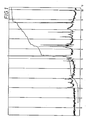
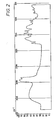
- the solid from fractions 59 to 66 (241 mg) contained factor S3907C/4B as the lithium salt and had the following properties:-
- Streptomyces sp. S3907C were fermented according to the method of Example 1 (a), except that Medium 4 was used for the agar slopes, the calcium carbonate was omitted from Medium 3 and the final fermentation was controlled at pH 6.5 with additions of hydrochloric acid and sodium hydroxide. Broth was harvested after 92 hours.
- Harvest broth (470 litres, pH 6.7) was filtered on a rotary filter using a Rettenmaier cellulose bed (8 kg) and adding Dicalite 478 as filter aid (7.5 kg).
- the filtrate (390 litres, p H 7.1) was extracted with 2x 1/3 volume of dichloromethane containing 0.2% benzyl dimethyl-n-hexadecyl ammonium chloride by the method of Example 2.
- the extracts were back extracted into a potassium iodide solution and the back-extracts treated with XAD-4 in a method similar to that of Example 2, the column being eluted with 60% aqueous methanol and the eluate being collected as fractions of 500 ml.
- Fractions were examined by h.p.l.c. and by bioassay against Proteus vulgaris. Those fractions which were shown by h.p.l.c. to contain factor S3907C/3 were combined, concentrated and freeze-dried to give 25.7 g solid.
- the solid (20 g) was dissolved in 12% (w/v) aqueous NaCl (50 ml) and the solution applied to a column (500 ml bed vol.) of QAE Sephadex in the CI- cycle.
- the column was eluted with 12% (w/v) NaCI, collecting fractions of 25 ml.
- On the basis of h.p.l.c. examination fractions 46-64, containing factor S3907C/3, were combined and desalted by adsorption on a column of XAD-4 (200 ml) and elution with 60% aqueous methanol.
- the active eluates were concentrated and freeze-dried to yield 603 mg crude factor S3907C/3 ( 172 at ⁇ max 288 nm in MeOH).
- the crude solid (500 mg) was further purified by chromatography on a column of Sephadex LH20 (5 cm x 61 cm; 1200 ml bed vol.) packed in acetonitrile-water (7:3).
- the column was eluted with the same solvent, fractions of 25 ml being collected and assayed by h.p.l.c. and by bioassay against Proteus vulgaris. Fractions 48-52 were combined and concentrated to an oil by rotary evaporation.
- Activity was eluted with 60% aqueous methanol and the active eluates combined, concentrated and freeze-dried to yield 7.2 mg cream coloured solid, containing factor S3907C/3 as the sodium salt; ⁇ max 288 nm ( 194 in methanol); ⁇ 1766 ( ⁇ -lactam), 1708 (CO 2 R), 1608 (CO 2 - ) 1270 cm -1 (OSO 3 Na) and 1240cm -1 ( ⁇ OSO 3 Na); n.m.r. consistent with structure.
- Streptomyces sp. S3907C was fermented according to the method of Example 3 except that glucose was also omitted from Medium 3, being added as a continuous feed to give an addition of 0.5% w/v per 24 hours and the pH was not controlled.
- the harvest broth 400 litres, pH 7.65 was filtered as in Example 3, the pH of the filtrate (368 litres, pH 8.0) was adjusted to pH 7 with concentrated sulphuric acid (50 ml) and the filtrate was extracted with dichloromethane containing benzyl dimethyl-n-hexadecyl ammonium chloride by the method of Example 3.
- the extracts were then back extracted into potassium iodide solution and the back extracts treated with XAD-4 according to the method of Example 3.
- the eluate fractions which were shown by h.p.l.c. to contain factor S3907C/3 were combined, concentrated and freeze-dried to give 43 g solid.
- Streptomyces rochei NRRL 3973 was seeded directly from a freeze-dried ampoule onto an agar slope prepared from Medium 1. A dry scraping from this master slope was then used to inoculate further slopes of Medium 1 which were grown at 28°C for 14 days.
- Each flask was then used to provide an inoculation (2 ml) for a flask containing Medium 5 (60 ml).
- the flasks were incubated for 72 hours at 28°C on a rotary shaker.
- reaction mixture was chromatographed at high pressure (1500 psi) (10.34 ⁇ Pa) on Partisil 10 SAX (10 ⁇ m particle size) using a gradient of potassium dihydrogen phosphate (5 g/litre to 50 g/litre) as the elutant.
- the reaction mixture was found to contain a uv-absorbing component not present in the original sample. This new component had a column capacity ratio of 3.0 on Partisil 10 SAX.
- the product of a similar hydrolysis (1 hour at 37°) using 7a-methoxy cephalosporin C (10 mg) as the substrate had the same column capacity ratio on Partisil 10 SAX.
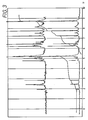
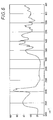
- N.m.r. and I.r. spectra of the side-chain acid are shown in Fig. 5 and Fig. 6 respectively.
Landscapes
- Chemical & Material Sciences (AREA)
- Life Sciences & Earth Sciences (AREA)
- Engineering & Computer Science (AREA)
- Organic Chemistry (AREA)
- Health & Medical Sciences (AREA)
- Zoology (AREA)
- Wood Science & Technology (AREA)
- Genetics & Genomics (AREA)
- Biotechnology (AREA)
- Bioinformatics & Cheminformatics (AREA)
- General Engineering & Computer Science (AREA)
- Microbiology (AREA)
- Biochemistry (AREA)
- General Health & Medical Sciences (AREA)
- Biomedical Technology (AREA)
- Virology (AREA)
- Tropical Medicine & Parasitology (AREA)
- Medicinal Chemistry (AREA)
- Chemical Kinetics & Catalysis (AREA)
- General Chemical & Material Sciences (AREA)
- Preparation Of Compounds By Using Micro-Organisms (AREA)
- Micro-Organisms Or Cultivation Processes Thereof (AREA)
Claims (19)

Priority Applications (1)
| Application Number | Priority Date | Filing Date | Title |
|---|---|---|---|
| AT80303870T ATE7048T1 (de) | 1979-10-31 | 1980-10-30 | Cephalosporine, verfahren zu ihrer herstellung und fuer ihre erzeugung geeignete mikroorganismen. |
Applications Claiming Priority (4)
| Application Number | Priority Date | Filing Date | Title |
|---|---|---|---|
| GB7937737 | 1979-10-31 | ||
| GB7937737 | 1979-10-31 | ||
| GB8016798 | 1980-05-21 | ||
| GB8016798 | 1980-05-21 |
Publications (2)
| Publication Number | Publication Date |
|---|---|
| EP0028511A1 EP0028511A1 (fr) | 1981-05-13 |
| EP0028511B1 true EP0028511B1 (fr) | 1984-04-11 |
Family
ID=26273402
Family Applications (1)
| Application Number | Title | Priority Date | Filing Date |
|---|---|---|---|
| EP80303870A Expired EP0028511B1 (fr) | 1979-10-31 | 1980-10-30 | Céphalosporines, procédés pour leur préparation et microorganismes appropriés à leur production |
Country Status (6)
| Country | Link |
|---|---|
| US (1) | US4379920A (fr) |
| EP (1) | EP0028511B1 (fr) |
| AU (1) | AU545122B2 (fr) |
| DE (1) | DE3067467D1 (fr) |
| DK (1) | DK459980A (fr) |
| GB (1) | GB2064517B (fr) |
Families Citing this family (6)
| Publication number | Priority date | Publication date | Assignee | Title |
|---|---|---|---|---|
| ES2000401A6 (es) * | 1985-09-24 | 1988-02-16 | Yamanouchi Pharma Co Ltd | Un procedimiento para la produccion de acido 7b -(d-5-amino-5-carboxivaleramido)-3-hidroximetil-7-metoxi-3-cefem-4-carboxilico |
| ZA877987B (en) * | 1986-11-12 | 1988-08-31 | Ici Pharma | Antibiotic compounds |
| EP1291436A1 (fr) * | 2001-09-11 | 2003-03-12 | Bayer Ag | Procédé de préparation stéréosélective de diols vicinaux fonctionnalisés |
| WO2013053953A1 (fr) * | 2011-10-14 | 2013-04-18 | Université de Liège | Procédé de mesure d'antibiotiques bêta-lactame |
| CN112295578B (zh) * | 2020-11-20 | 2022-08-12 | 广西钦江药业有限公司 | 一种合成头孢西丁酸的催化剂 |
| CN114921365B (zh) * | 2022-04-16 | 2025-01-21 | 中国农业科学院植物保护研究所 | 一株娄彻氏链霉菌及其应用 |
Family Cites Families (7)
| Publication number | Priority date | Publication date | Assignee | Title |
|---|---|---|---|---|
| US3914157A (en) * | 1970-03-13 | 1975-10-21 | Merck & Co Inc | Preparation of antibiotics by fermentation |
| US4302578A (en) * | 1970-12-09 | 1981-11-24 | Merck & Co., Inc. | Cephalosporin antibiotics |
| IL36281A (en) * | 1970-03-13 | 1977-04-29 | Merck & Co Inc | Cephalosporin derivatives antibiotic mixtures containing them and process for their preparation |
| JPS5611440B2 (fr) * | 1973-09-18 | 1981-03-14 | ||
| JPS5713280B2 (fr) * | 1974-03-11 | 1982-03-16 | ||
| US4103083A (en) * | 1975-02-27 | 1978-07-25 | Meiji Seika Kaisha, Ltd. | Novel antibiotics derivatives and process for preparing the same |
| JPS5931517B2 (ja) * | 1978-12-12 | 1984-08-02 | 山之内製薬株式会社 | 新規7↓−メトキシセファロスポリン誘導体 |
-
1980
- 1980-10-14 US US06/196,525 patent/US4379920A/en not_active Expired - Lifetime
- 1980-10-30 DK DK459980A patent/DK459980A/da not_active Application Discontinuation
- 1980-10-30 DE DE8080303870T patent/DE3067467D1/de not_active Expired
- 1980-10-30 GB GB8034943A patent/GB2064517B/en not_active Expired
- 1980-10-30 EP EP80303870A patent/EP0028511B1/fr not_active Expired
- 1980-10-30 AU AU63846/80A patent/AU545122B2/en not_active Ceased
Also Published As
| Publication number | Publication date |
|---|---|
| AU6384680A (en) | 1981-05-07 |
| DK459980A (da) | 1981-05-01 |
| GB2064517A (en) | 1981-06-17 |
| US4379920A (en) | 1983-04-12 |
| AU545122B2 (en) | 1985-07-04 |
| GB2064517B (en) | 1983-12-14 |
| DE3067467D1 (en) | 1984-05-17 |
| EP0028511A1 (fr) | 1981-05-13 |
Similar Documents
| Publication | Publication Date | Title |
|---|---|---|
| US4151042A (en) | Method for producing maytansinol and its derivatives | |
| JPS6253158B2 (fr) | ||
| CA1307223C (fr) | Preparation d'acide clavulanique et ses sels et esters | |
| CA1072471A (fr) | Acide clavulinique antibiotique du streptomyces jumonjinensis | |
| US4379920A (en) | Cephalosporins | |
| EP0091781B1 (fr) | Production de lankacidines | |
| CA1092999A (fr) | Methode de production du maytansinol et de ses derives | |
| US4366247A (en) | Process for preparing tylactone | |
| US4440857A (en) | Process for preparing mycarosyltylactone | |
| US4550021A (en) | Antitumor antibiotic 81-484 and process for its production | |
| US4335108A (en) | Paulomycin A and B and preparation thereof | |
| US4283492A (en) | Production of antibiotics WS-3442 A, B, C, D and E, and their acyl derivatives | |
| CA1193211A (fr) | Procede de production de la mitomycine a par fermentation | |
| SU582772A3 (ru) | Способ получени деацетоксицефалоспорина с | |
| US4221870A (en) | Process for producing antibiotics | |
| CA1113874A (fr) | Antibiotique bl580 zeta produit par le streptomyces hygroscopicus | |
| AU2012201869A1 (en) | Methods for the production of ansamitocins | |
| EP0050961B1 (fr) | Antibiotiques, procédé pour leur préparation, compositions pharmaceutiques les contenant et souche appartenant au genre streptomyces utilisée dans cette préparation | |
| Mukherjee et al. | Penicillins and related antibiotics | |
| EP0216636A2 (fr) | Procédé pour la préparation d'organomycine E | |
| JP2716728B2 (ja) | 新規微生物並びに9−ケト型16員環マクロライド抗生物質の製法 | |
| EP0442003A1 (fr) | Antibiotique LL-E 19085 alpha | |
| JPH03240791A (ja) | 新規免疫抑制抗生物質m1951―62f2物質およびその製造方法 | |
| CA2110117A1 (fr) | Hispidospermidine | |
| JPH06105696A (ja) | タイロノライド誘導体の製造方法 |
Legal Events
| Date | Code | Title | Description |
|---|---|---|---|
| PUAI | Public reference made under article 153(3) epc to a published international application that has entered the european phase |
Free format text: ORIGINAL CODE: 0009012 |
|
| AK | Designated contracting states |
Designated state(s): AT BE CH DE FR GB IT NL SE |
|
| 17P | Request for examination filed |
Effective date: 19810925 |
|
| ITF | It: translation for a ep patent filed | ||
| GRAA | (expected) grant |
Free format text: ORIGINAL CODE: 0009210 |
|
| AK | Designated contracting states |
Designated state(s): AT BE CH DE FR GB IT LI NL |
|
| REF | Corresponds to: |
Ref document number: 7048 Country of ref document: AT Date of ref document: 19840415 Kind code of ref document: T |
|
| REF | Corresponds to: |
Ref document number: 3067467 Country of ref document: DE Date of ref document: 19840517 |
|
| ET | Fr: translation filed | ||
| PGFP | Annual fee paid to national office [announced via postgrant information from national office to epo] |
Ref country code: FR Payment date: 19841012 Year of fee payment: 5 |
|
| PGFP | Annual fee paid to national office [announced via postgrant information from national office to epo] |
Ref country code: AT Payment date: 19841025 Year of fee payment: 5 |
|
| PGFP | Annual fee paid to national office [announced via postgrant information from national office to epo] |
Ref country code: NL Payment date: 19841031 Year of fee payment: 5 |
|
| PGFP | Annual fee paid to national office [announced via postgrant information from national office to epo] |
Ref country code: DE Payment date: 19841217 Year of fee payment: 5 |
|
| PGFP | Annual fee paid to national office [announced via postgrant information from national office to epo] |
Ref country code: BE Payment date: 19841231 Year of fee payment: 5 |
|
| PLBE | No opposition filed within time limit |
Free format text: ORIGINAL CODE: 0009261 |
|
| STAA | Information on the status of an ep patent application or granted ep patent |
Free format text: STATUS: NO OPPOSITION FILED WITHIN TIME LIMIT |
|
| 26N | No opposition filed | ||
| PG25 | Lapsed in a contracting state [announced via postgrant information from national office to epo] |
Ref country code: AT Effective date: 19851030 |
|
| PG25 | Lapsed in a contracting state [announced via postgrant information from national office to epo] |
Ref country code: LI Effective date: 19851031 Ref country code: CH Effective date: 19851031 Ref country code: BE Effective date: 19851031 |
|
| BERE | Be: lapsed |
Owner name: GLAXO GROUP LTD Effective date: 19851031 |
|
| PG25 | Lapsed in a contracting state [announced via postgrant information from national office to epo] |
Ref country code: NL Effective date: 19860501 |
|
| GBPC | Gb: european patent ceased through non-payment of renewal fee | ||
| PG25 | Lapsed in a contracting state [announced via postgrant information from national office to epo] |
Ref country code: FR Free format text: LAPSE BECAUSE OF NON-PAYMENT OF DUE FEES Effective date: 19860630 |
|
| REG | Reference to a national code |
Ref country code: CH Ref legal event code: PL |
|
| PG25 | Lapsed in a contracting state [announced via postgrant information from national office to epo] |
Ref country code: DE Effective date: 19860701 |
|
| NLV4 | Nl: lapsed or anulled due to non-payment of the annual fee | ||
| REG | Reference to a national code |
Ref country code: FR Ref legal event code: ST |
|
| PG25 | Lapsed in a contracting state [announced via postgrant information from national office to epo] |
Ref country code: GB Effective date: 19881118 |