EP0029603B1 - Procédé de préparation d'alcools allyliques essentiellement substitués en Z - Google Patents
Procédé de préparation d'alcools allyliques essentiellement substitués en Z Download PDFInfo
- Publication number
- EP0029603B1 EP0029603B1 EP80107288A EP80107288A EP0029603B1 EP 0029603 B1 EP0029603 B1 EP 0029603B1 EP 80107288 A EP80107288 A EP 80107288A EP 80107288 A EP80107288 A EP 80107288A EP 0029603 B1 EP0029603 B1 EP 0029603B1
- Authority
- EP
- European Patent Office
- Prior art keywords
- methyl
- process according
- reaction
- singlet
- hydrocarbon group
- Prior art date
- Legal status (The legal status is an assumption and is not a legal conclusion. Google has not performed a legal analysis and makes no representation as to the accuracy of the status listed.)
- Expired
Links
Classifications
-
- C—CHEMISTRY; METALLURGY
- C07—ORGANIC CHEMISTRY
- C07D—HETEROCYCLIC COMPOUNDS
- C07D317/00—Heterocyclic compounds containing five-membered rings having two oxygen atoms as the only ring hetero atoms
- C07D317/08—Heterocyclic compounds containing five-membered rings having two oxygen atoms as the only ring hetero atoms having the hetero atoms in positions 1 and 3
- C07D317/72—Heterocyclic compounds containing five-membered rings having two oxygen atoms as the only ring hetero atoms having the hetero atoms in positions 1 and 3 spiro-condensed with carbocyclic rings
-
- C—CHEMISTRY; METALLURGY
- C07—ORGANIC CHEMISTRY
- C07C—ACYCLIC OR CARBOCYCLIC COMPOUNDS
- C07C29/00—Preparation of compounds having hydroxy or O-metal groups bound to a carbon atom not belonging to a six-membered aromatic ring
- C07C29/36—Preparation of compounds having hydroxy or O-metal groups bound to a carbon atom not belonging to a six-membered aromatic ring increasing the number of carbon atoms by reactions with formation of hydroxy groups, which may occur via intermediates being derivatives of hydroxy, e.g. O-metal
-
- C—CHEMISTRY; METALLURGY
- C07—ORGANIC CHEMISTRY
- C07C—ACYCLIC OR CARBOCYCLIC COMPOUNDS
- C07C33/00—Unsaturated compounds having hydroxy or O-metal groups bound to acyclic carbon atoms
- C07C33/02—Acyclic alcohols with carbon-to-carbon double bonds
- C07C33/025—Acyclic alcohols with carbon-to-carbon double bonds with only one double bond
- C07C33/03—Acyclic alcohols with carbon-to-carbon double bonds with only one double bond in beta-position, e.g. allyl alcohol, methallyl alcohol
-
- C—CHEMISTRY; METALLURGY
- C07—ORGANIC CHEMISTRY
- C07C—ACYCLIC OR CARBOCYCLIC COMPOUNDS
- C07C33/00—Unsaturated compounds having hydroxy or O-metal groups bound to acyclic carbon atoms
- C07C33/05—Alcohols containing rings other than six-membered aromatic rings
-
- C—CHEMISTRY; METALLURGY
- C07—ORGANIC CHEMISTRY
- C07C—ACYCLIC OR CARBOCYCLIC COMPOUNDS
- C07C33/00—Unsaturated compounds having hydroxy or O-metal groups bound to acyclic carbon atoms
- C07C33/05—Alcohols containing rings other than six-membered aromatic rings
- C07C33/14—Alcohols containing rings other than six-membered aromatic rings containing six-membered rings
-
- C—CHEMISTRY; METALLURGY
- C07—ORGANIC CHEMISTRY
- C07C—ACYCLIC OR CARBOCYCLIC COMPOUNDS
- C07C33/00—Unsaturated compounds having hydroxy or O-metal groups bound to acyclic carbon atoms
- C07C33/28—Alcohols containing only six-membered aromatic rings as cyclic part with unsaturation outside the aromatic rings
- C07C33/30—Alcohols containing only six-membered aromatic rings as cyclic part with unsaturation outside the aromatic rings monocyclic
-
- C—CHEMISTRY; METALLURGY
- C07—ORGANIC CHEMISTRY
- C07F—ACYCLIC, CARBOCYCLIC OR HETEROCYCLIC COMPOUNDS CONTAINING ELEMENTS OTHER THAN CARBON, HYDROGEN, HALOGEN, OXYGEN, NITROGEN, SULFUR, SELENIUM OR TELLURIUM
- C07F1/00—Compounds containing elements of Groups 1 or 11 of the Periodic Table
- C07F1/02—Lithium compounds
-
- C—CHEMISTRY; METALLURGY
- C07—ORGANIC CHEMISTRY
- C07B—GENERAL METHODS OF ORGANIC CHEMISTRY; APPARATUS THEREFOR
- C07B2200/00—Indexing scheme relating to specific properties of organic compounds
- C07B2200/09—Geometrical isomers
-
- C—CHEMISTRY; METALLURGY
- C07—ORGANIC CHEMISTRY
- C07C—ACYCLIC OR CARBOCYCLIC COMPOUNDS
- C07C2601/00—Systems containing only non-condensed rings
- C07C2601/02—Systems containing only non-condensed rings with a three-membered ring
-
- C—CHEMISTRY; METALLURGY
- C07—ORGANIC CHEMISTRY
- C07C—ACYCLIC OR CARBOCYCLIC COMPOUNDS
- C07C2601/00—Systems containing only non-condensed rings
- C07C2601/12—Systems containing only non-condensed rings with a six-membered ring
- C07C2601/14—The ring being saturated
-
- C—CHEMISTRY; METALLURGY
- C07—ORGANIC CHEMISTRY
- C07C—ACYCLIC OR CARBOCYCLIC COMPOUNDS
- C07C2603/00—Systems containing at least three condensed rings
- C07C2603/56—Ring systems containing bridged rings
- C07C2603/58—Ring systems containing bridged rings containing three rings
- C07C2603/60—Ring systems containing bridged rings containing three rings containing at least one ring with less than six members
- C07C2603/62—Ring systems containing bridged rings containing three rings containing at least one ring with less than six members containing three- or four-membered rings
- C07C2603/64—Ring systems containing bridged rings containing three rings containing at least one ring with less than six members containing three- or four-membered rings having a tricyclo[2.2.1.0(2,6)]heptstructure
Definitions
- the present invention relates to a process for producing allylic alcohols. More particularly, it relates to a process for producing selectively Z-substituted allylic alcohols of the formula: wherein R' is a straight or branched C 1 ⁇ C 25 alkyl group optionally bearing at least one substituent and/or at least one unsaturated linkage (except ⁇ , ⁇ -unsaturated linkage) and R 2 is a hydrogen atom or a methyl group.
- R' is a straight or branched C 1 ⁇ C 25 alkyl group optionally bearing at least one substituent and/or at least one unsaturated linkage (except ⁇ , ⁇ -unsaturated linkage) and R 2 is a hydrogen atom or a methyl group.
- alkyl as herein used is intended to mean not only an acyclic one but also a cyclic one.
- alkyl group represented by the symbol R' examples are methyl, ethyl, n-propyl, n-butyl, n-pentyl, n-hexyl, n-heptyl, n-octyl, isopropyl, isobutyl, sec-butyl, t-butyl, 2-methylbutyl, 3-methylbutyl, 3,7,11-trimethyldodecyl, 3,7,11,15-tetramethylhexadecyl, 4-pentenyl, 3,7-dimethyl-6-octenyl, cyclopropyl, cyclobutyl, cyclopentyl, cyclohexyl, 4-methylcyclohexyl, (2,3-dimethyltricyclo[2.2.1.0 2,6 ]-heptyl-3-)methyl, (2-methyl-3-methylenenorbornyl-2-)methyl, 2,2-ethylenedioxy-1,7-di
- R' can preferably include alkyl (including cycloalkyl), alkenyl (including cycloalkenyl) (except ⁇ , ⁇ -unsaturated alkenyl), aralkyl (e.g. 2-phenylethyl, 2-(naphthyl-1 )-ethyl) (except a-substitution), etc.
- R 1 are a C 10 polycyclic hydrocarbon group e.g. 2,2-lower alkylenedioxy-1,7-dimethylbicyclo[2.2.1 ]heptyl-7-methyl.
- the Z-substituted allylic alcohols (I) include the following two groups: and wherein R' is as defined above.
- R' is as defined above.
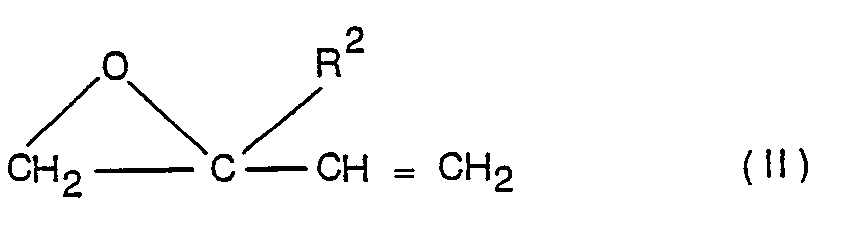
- the present invention provides a process for preparing predominantly Z-substituted allylic alcohols (I) which comprises reacting a vinyl epoxide of the formula: wherein R 2 is as defined above with an organolithium compound, characterised in that the organolithium compound is a compound of the formula: wherein R I is as defined above.
- the process of this invention leads to the Z-substituted allylic alcohol (I) as the main product.
- a base is present in the reaction system, the stereoselectivity is even more enhanced.
- the organolithium compound (III) is obtainable by reacting the corresponding organic halide of the formula: R I X wherein R 1 is as defined above and X is a halogen atom with lithium metal.
- the vinyl epoxide (II) is reacted with the organolithium compound (III), usually in a molar proportion of 1:0.1-10, preferably of around 1:1.
- the reaction is normally effected in an inert solvent under the atmosphere of an inert gas (e.g. nitrogen, argon, helium).
- an inert gas e.g. nitrogen, argon, helium.
- the inert solvent are a hydrocarbon (e.g. pentane, hexane, heptane, benzene, toluene), an ether (e.g. diethyl ether, 1,4-dioxane, tetrahydrofuran, dimethoxyethane), etc. These solvents may be used alone or in combination.
- the amount of the inert solvent may be usually from 0.1 to 50 liters per 1 mol of the vinyl epoxide (II).
- the reaction temperature may be usually not higher than the refluxing temperature of the reaction mixture, preferably between -30°C and ordinary temperature (e.g. 30°C).
- the reaction time is not limitative and may be generally from 5 minutes to 10 hours.
- the presence of an amine or a metal alkoxide as a base in the reaction system is preferred.
- the amine there may be employed any one of primary, secondary and tertiary amines.
- ammonia methylamine, dimethylamine, trimethylamine, ethylamine, diethylamine, triethylamine, propylamine, dipropylamine, tripropylamine, butylamine, dibutylamine, tributylamine, pentylamine, dipentylamine, tripentylamine, hexylamine, dihexylamine, trihexylamine, octylamine, dioctylamine, trioctylamine, decylamine, didecylamine, tridecylamine cyclopropylamine, cyclobutylamine, cyclopentylamine, cyclohexylamine, dimethyloctylamine dimethyldecylamine, dimethyllaurylamine, dimethylcoconutamine, dimethylmyristylamine, dimethylpalmitylamine, dimethylstearylamine, dimethyloleylamine, (S)-2-(
- tertiary amines are preferred from the economical viewpoint.
- the amount of the amine may be not less than 0.05 mol per one mol of the organolithium compound (III).
- the amine When the amine is a liquid, it may be used in a large excessive amount so as to serve itself as the reaction medium. In such case, the use of any other inert solvent may be omitted.
- the liquid amine are triethylamine, tripropylamine, tributylamine, N,N,N',N'-tetramethylethylenediamine, etc.
- R 3 0M As the metal alkoxide, there may be employed the one of the formula: R 3 0M wherein R 3 is lower alkyl (e.g. methyl, ethyl, n-propyl, n-butyl, n-pentyl, n-hexyl, n-heptyl, n-octyl, iso-propyl, iso-butyl, sec-butyl, t-butyl, 2-methylbutyl, 3-methylbutyl, cyclohexyl), lower alkenyl (e.g. allyl), ar(lower)alkyl (e.g.
- R 3 is lower alkyl (e.g. methyl, ethyl, n-propyl, n-butyl, n-pentyl, n-hexyl, n-heptyl, n-octyl, iso-propyl, iso-buty
- the metal alkoxide may be prepared from the corresponding alcohol and the corresponding metal or its compound in the reaction system. In alternative, the metal alkoxide as prepared previously and separately may be introduced into the reaction system. The amount of the metal alkoxide is usually not less than 5 mol % to the organolithium compound (III).
- reaction product from the reaction mixture may be accomplished by a per se conventional procedure.
- the reaction mixture is admixed with saturated ammonium chloride solution under cooling with ice water and extracted with a solvent such as ether or heptane. Removal of the solvent from the extract under reduced pressure gives the objective Z-substituted allylic alcohol (I), which does not substantially contain any by-product such as the 1,2-addition product.
- a solvent such as ether or heptane
- solvent such as ether or heptane
- ⁇ -santalol and ⁇ -santalol which are main constituents of East Indian sandalwood oil are those examples.
- ⁇ -santalol can be produced according to the following scheme including the process of this invention:
- the use of d-camphor as the starting material can afford a-santalol having the same configuration as that of natural ⁇ -santalol.
- Z-substituted allylic alcohols (I) those of the formula Ib wherein R 1 is sec-butyl, iso-butyl, cyclopropyl, cyclohexyl, 2-phenylethyl or 2,2-ethylenedioxy-1,7-dimethylbicyclo[2.2.1]heptyl-7-methyl are novel.
- TMEDA N,N,N',N'- tetramethylethylenediamine
- 3-Lithiomethyl-2,3-dimethyltricycio[2.2.1.0 2,6 ]heptane was prepared from 107 mg of 30% lithium dispersion (containing 2% sodium) and 225 mg of 3-bromomethyl-2,3-dimethyltricyclo-[2.2.1.02.6 heptane in an ether/hexane mixed solvent under argon atmosphere. After cooling the resulting solution to 0°C, 92 mg of 3-methyl-3,4-epoxybutene-1 dissolved in ether was added dropwise thereto. The reaction mixture was stirred at 0°C for 1 hour, and after gradually raised to room temperature, stirred at room temperature for hour.
- the 13 NMR spectral data of 9-octen-1-ol was as follows: (CDCl 3 ) ⁇ ppm: Z-acetate: 60.4 (C ⁇ 1), 135.4 (C-2), 123.4 (C-3), 27.5 (C-4), 29.1 (C-5), 31.4 (C-6), 22.5 (C-7), 14.0 (C-8); E-acetate: 65.2 (C-1), 136.6 (C-2), 123.9 (C-3), 33.2 (C-4), 28.6 (C-5), 31.4 (C-6), 22.5 (C-7), 13.9 (C-8), when the carbon atoms were numbered in the following manner:
Landscapes
- Chemical & Material Sciences (AREA)
- Organic Chemistry (AREA)
- Engineering & Computer Science (AREA)
- Materials Engineering (AREA)
- Chemical Kinetics & Catalysis (AREA)
- Organic Low-Molecular-Weight Compounds And Preparation Thereof (AREA)
Claims (9)


Applications Claiming Priority (10)
| Application Number | Priority Date | Filing Date | Title |
|---|---|---|---|
| JP151877/79 | 1979-11-22 | ||
| JP15187879A JPS6034930B2 (ja) | 1979-11-22 | 1979-11-22 | アリルアルコ−ル類の製造方法 |
| JP15187779A JPS5675443A (en) | 1979-11-22 | 1979-11-22 | Novel allyl alcohol |
| JP151878/79 | 1979-11-22 | ||
| JP4634780A JPS6056124B2 (ja) | 1980-04-08 | 1980-04-08 | アリルアルコ−ル類の製造方法 |
| JP46347/80 | 1980-04-08 | ||
| JP8041380A JPS577429A (en) | 1980-06-13 | 1980-06-13 | Preparation of allyl alcohol |
| JP80413/80 | 1980-06-13 | ||
| JP86873/80 | 1980-06-25 | ||
| JP8687380A JPS5711931A (en) | 1980-06-25 | 1980-06-25 | Production of allyl alcohol |
Publications (2)
| Publication Number | Publication Date |
|---|---|
| EP0029603A1 EP0029603A1 (fr) | 1981-06-03 |
| EP0029603B1 true EP0029603B1 (fr) | 1984-06-13 |
Family
ID=27522539
Family Applications (1)
| Application Number | Title | Priority Date | Filing Date |
|---|---|---|---|
| EP80107288A Expired EP0029603B1 (fr) | 1979-11-22 | 1980-11-21 | Procédé de préparation d'alcools allyliques essentiellement substitués en Z |
Country Status (3)
| Country | Link |
|---|---|
| US (1) | US5004843A (fr) |
| EP (1) | EP0029603B1 (fr) |
| DE (1) | DE3068252D1 (fr) |
Families Citing this family (5)
| Publication number | Priority date | Publication date | Assignee | Title |
|---|---|---|---|---|
| JPS60252408A (ja) * | 1984-05-18 | 1985-12-13 | Nippon Oil Co Ltd | トリシクロ〔2.2.1.0 ↑2,↑6〕ヘプタン誘導体、その製造法およびそれを含有する香料 |
| DE3531609A1 (de) * | 1985-09-04 | 1987-03-05 | Consortium Elektrochem Ind | Alkohole und ester aus der reaktion von butadien mit magnesium und alkylhalogeniden, ihre herstellung und deren verwendung als duftstoffe |
| US4935451A (en) * | 1989-09-11 | 1990-06-19 | Syracuse University | Conversion of optically active epoxy alcohols to allylic alcohols |
| US5087773A (en) * | 1990-04-23 | 1992-02-11 | Syracuse University | Selective tellurium-mediated synthesis of optically active E- or Z-allyl alcohols from optically active epoxy alcohols |
| US5401888A (en) * | 1993-02-09 | 1995-03-28 | Iowa State University Research Foundation, Inc. | Method for preparing allylic alcohols |
Family Cites Families (3)
| Publication number | Priority date | Publication date | Assignee | Title |
|---|---|---|---|---|
| US2583426A (en) * | 1948-04-19 | 1952-01-22 | Phillips Petroleum Co | Production of alcohols |
| US3818043A (en) * | 1969-11-17 | 1974-06-18 | Continental Oil Co | Cuprous chloride as a catalyst for the reaction of an aldehyde with an olefin |
| FR2266682A1 (en) * | 1974-04-05 | 1975-10-31 | Anvar | Diene oligomer mono-and di-ol prodn. - with gaseous oxygen and diene and with alkali metal |
-
1980
- 1980-11-21 EP EP80107288A patent/EP0029603B1/fr not_active Expired
- 1980-11-21 DE DE8080107288T patent/DE3068252D1/de not_active Expired
-
1990
- 1990-05-29 US US07/529,730 patent/US5004843A/en not_active Expired - Fee Related
Non-Patent Citations (1)
| Title |
|---|
| Tetrahedron Letters, 1975, 4419 * |
Also Published As
| Publication number | Publication date |
|---|---|
| US5004843A (en) | 1991-04-02 |
| EP0029603A1 (fr) | 1981-06-03 |
| DE3068252D1 (en) | 1984-07-19 |
Similar Documents
| Publication | Publication Date | Title |
|---|---|---|
| EP0187259B2 (fr) | Procédé de préparation de la vitamine A ou de ses esters carboxyliques et composés intermédiaires utiles dans le procédé | |
| Annunziata et al. | Asymmetric induction in the reduction of optically active N-alkylidenesulphinamides by metal hydrides. A new, efficient enantioselective route to chiral amines | |
| CA2146353C (fr) | Syntheses de d-chiro-3-inosose et de (+)-d-chiro-inositol | |
| EP0029603B1 (fr) | Procédé de préparation d'alcools allyliques essentiellement substitués en Z | |
| US4028385A (en) | Process for preparing stereospecific farnesylacetic acid and ester thereof | |
| Kuroboshi et al. | An efficient generation and selective aldol reaction of the boryl enolates of N, N-dialkyl-2, 3, 3, 3-tetrafluoropropanamides. | |
| GB2030144A (en) | Keto-bicyclooctanes | |
| EP1142859B2 (fr) | Procédé de préparation de 3,7-diméthyl-6-octénol optiquement actif et procédé de préparation d'un intermédiaire pour ce procédé | |
| JPS6328051B2 (fr) | ||
| US4254039A (en) | Process for the preparation of tetrahydrofuran | |
| US6093857A (en) | Preparation of cyclopentanols | |
| US3975451A (en) | Diols and process for preparation thereof | |
| Rojo et al. | Chemical synthesis and spectroscopic characteristics of C18 1, 2-disubstituted cyclopentyl fatty acid methyl esters | |
| US6156941A (en) | Process for producing 1,2-propanediol | |
| Wolinsky et al. | . alpha.,. alpha.'-Dibromocycloalkanols and 3-bromocycloalkene oxides | |
| Harashima et al. | Sodium bis (2-methoxyethoxy)(1, 1, 1, 3, 3, 3-hexafluoro-2-propoxy) aluminum hydride, a new stereoselective reducing agent in a carbacyclin synthesis | |
| US3783135A (en) | Synthesis of codling moth attractant | |
| US6180835B1 (en) | Process for the preparation of cyclopropylacetylene derivatives | |
| US4115466A (en) | Synthesis of acetylenic compounds useful in preparing dehydrophytols and Vitamin E | |
| JP2571080B2 (ja) | 光学活性1,2−アルカンジオールの製造法 | |
| US3294854A (en) | Cyclic octene production | |
| CA2234326C (fr) | Procede de preparation de polyprenols | |
| EP1074541B1 (fr) | Procédé pour la préparation d'amino-alcool | |
| JPS6056124B2 (ja) | アリルアルコ−ル類の製造方法 | |
| Baldwin et al. | Cyclohexyl (2-methylenecyclopropyl) carbinyl carbocationic rearrangements |
Legal Events
| Date | Code | Title | Description |
|---|---|---|---|
| PUAI | Public reference made under article 153(3) epc to a published international application that has entered the european phase |
Free format text: ORIGINAL CODE: 0009012 |
|
| AK | Designated contracting states |
Designated state(s): CH DE FR GB IT NL |
|
| 17P | Request for examination filed |
Effective date: 19811201 |
|
| ITF | It: translation for a ep patent filed | ||
| GRAA | (expected) grant |
Free format text: ORIGINAL CODE: 0009210 |
|
| AK | Designated contracting states |
Designated state(s): CH DE FR GB IT LI NL |
|
| REF | Corresponds to: |
Ref document number: 3068252 Country of ref document: DE Date of ref document: 19840719 |
|
| ET | Fr: translation filed | ||
| PLBE | No opposition filed within time limit |
Free format text: ORIGINAL CODE: 0009261 |
|
| STAA | Information on the status of an ep patent application or granted ep patent |
Free format text: STATUS: NO OPPOSITION FILED WITHIN TIME LIMIT |
|
| 26N | No opposition filed | ||
| ITTA | It: last paid annual fee | ||
| PGFP | Annual fee paid to national office [announced via postgrant information from national office to epo] |
Ref country code: NL Payment date: 19921130 Year of fee payment: 13 |
|
| PGFP | Annual fee paid to national office [announced via postgrant information from national office to epo] |
Ref country code: DE Payment date: 19921212 Year of fee payment: 13 |
|
| PG25 | Lapsed in a contracting state [announced via postgrant information from national office to epo] |
Ref country code: NL Effective date: 19940601 |
|
| NLV4 | Nl: lapsed or anulled due to non-payment of the annual fee | ||
| PG25 | Lapsed in a contracting state [announced via postgrant information from national office to epo] |
Ref country code: DE Effective date: 19940802 |
|
| PGFP | Annual fee paid to national office [announced via postgrant information from national office to epo] |
Ref country code: FR Payment date: 19951109 Year of fee payment: 16 |
|
| PGFP | Annual fee paid to national office [announced via postgrant information from national office to epo] |
Ref country code: GB Payment date: 19951113 Year of fee payment: 16 |
|
| PGFP | Annual fee paid to national office [announced via postgrant information from national office to epo] |
Ref country code: CH Payment date: 19951208 Year of fee payment: 16 |
|
| PG25 | Lapsed in a contracting state [announced via postgrant information from national office to epo] |
Ref country code: GB Effective date: 19961121 |
|
| PG25 | Lapsed in a contracting state [announced via postgrant information from national office to epo] |
Ref country code: LI Effective date: 19961130 Ref country code: CH Effective date: 19961130 |
|
| GBPC | Gb: european patent ceased through non-payment of renewal fee |
Effective date: 19961121 |
|
| REG | Reference to a national code |
Ref country code: CH Ref legal event code: PL |
|
| PG25 | Lapsed in a contracting state [announced via postgrant information from national office to epo] |
Ref country code: FR Effective date: 19970731 |
|
| REG | Reference to a national code |
Ref country code: FR Ref legal event code: ST |