EP0031796B1 - 4-Heterocyclyl-4'-vinyl-stilbene - Google Patents
4-Heterocyclyl-4'-vinyl-stilbene Download PDFInfo
- Publication number
- EP0031796B1 EP0031796B1 EP80810393A EP80810393A EP0031796B1 EP 0031796 B1 EP0031796 B1 EP 0031796B1 EP 80810393 A EP80810393 A EP 80810393A EP 80810393 A EP80810393 A EP 80810393A EP 0031796 B1 EP0031796 B1 EP 0031796B1
- Authority
- EP
- European Patent Office
- Prior art keywords
- alkyl
- alkoxy
- hydrogen
- substituted
- unsubstituted
- Prior art date
- Legal status (The legal status is an assumption and is not a legal conclusion. Google has not performed a legal analysis and makes no representation as to the accuracy of the status listed.)
- Expired
Links
- 150000001875 compounds Chemical class 0.000 claims description 129
- 125000001997 phenyl group Chemical group [H]C1=C([H])C([H])=C(*)C([H])=C1[H] 0.000 claims description 103
- 229910052739 hydrogen Inorganic materials 0.000 claims description 94
- 239000001257 hydrogen Substances 0.000 claims description 94
- -1 cyano, sulfo Chemical group 0.000 claims description 87
- 125000004178 (C1-C4) alkyl group Chemical group 0.000 claims description 83
- 239000000203 mixture Substances 0.000 claims description 74
- ZAMOUSCENKQFHK-UHFFFAOYSA-N Chlorine atom Chemical group [Cl] ZAMOUSCENKQFHK-UHFFFAOYSA-N 0.000 claims description 70
- 239000000460 chlorine Chemical group 0.000 claims description 69
- 229910052801 chlorine Inorganic materials 0.000 claims description 69
- UFHFLCQGNIYNRP-UHFFFAOYSA-N Hydrogen Chemical compound [H][H] UFHFLCQGNIYNRP-UHFFFAOYSA-N 0.000 claims description 57
- 125000002496 methyl group Chemical group [H]C([H])([H])* 0.000 claims description 49
- 125000004435 hydrogen atom Chemical class [H]* 0.000 claims description 42
- 125000000229 (C1-C4)alkoxy group Chemical group 0.000 claims description 41
- 125000001309 chloro group Chemical group Cl* 0.000 claims description 27
- 125000004093 cyano group Chemical group *C#N 0.000 claims description 27
- 238000000034 method Methods 0.000 claims description 24
- 125000000951 phenoxy group Chemical group [H]C1=C([H])C([H])=C(O*)C([H])=C1[H] 0.000 claims description 19
- 229920000728 polyester Polymers 0.000 claims description 17
- 125000001797 benzyl group Chemical group [H]C1=C([H])C([H])=C(C([H])=C1[H])C([H])([H])* 0.000 claims description 15
- 125000001624 naphthyl group Chemical group 0.000 claims description 14
- 125000002887 hydroxy group Chemical group [H]O* 0.000 claims description 13
- 239000000463 material Substances 0.000 claims description 12
- 125000005504 styryl group Chemical group 0.000 claims description 12
- 125000004169 (C1-C6) alkyl group Chemical group 0.000 claims description 11
- 125000003356 phenylsulfanyl group Chemical group [*]SC1=C([H])C([H])=C([H])C([H])=C1[H] 0.000 claims description 11
- 239000011368 organic material Substances 0.000 claims description 10
- ABLZXFCXXLZCGV-UHFFFAOYSA-N Phosphorous acid Chemical compound OP(O)=O ABLZXFCXXLZCGV-UHFFFAOYSA-N 0.000 claims description 9
- 125000000217 alkyl group Chemical group 0.000 claims description 9
- 125000003178 carboxy group Chemical group [H]OC(*)=O 0.000 claims description 8
- 229910052736 halogen Inorganic materials 0.000 claims description 8
- 150000002367 halogens Chemical class 0.000 claims description 8
- 125000003342 alkenyl group Chemical group 0.000 claims description 7
- 125000000000 cycloalkoxy group Chemical group 0.000 claims description 7
- 125000002490 anilino group Chemical group [H]N(*)C1=C([H])C([H])=C([H])C([H])=C1[H] 0.000 claims description 6
- 125000006615 aromatic heterocyclic group Chemical group 0.000 claims description 6
- 125000003917 carbamoyl group Chemical group [H]N([H])C(*)=O 0.000 claims description 6
- HGCIXCUEYOPUTN-UHFFFAOYSA-N cyclohexene Chemical compound C1CCC=CC1 HGCIXCUEYOPUTN-UHFFFAOYSA-N 0.000 claims description 6
- 125000000113 cyclohexyl group Chemical group [H]C1([H])C([H])([H])C([H])([H])C([H])(*)C([H])([H])C1([H])[H] 0.000 claims description 6
- 150000002148 esters Chemical class 0.000 claims description 6
- PJANXHGTPQOBST-UHFFFAOYSA-N stilbene Chemical compound C=1C=CC=CC=1C=CC1=CC=CC=C1 PJANXHGTPQOBST-UHFFFAOYSA-N 0.000 claims description 6
- 235000021286 stilbenes Nutrition 0.000 claims description 6
- 125000000547 substituted alkyl group Chemical group 0.000 claims description 6
- PJANXHGTPQOBST-VAWYXSNFSA-N Stilbene Natural products C=1C=CC=CC=1/C=C/C1=CC=CC=C1 PJANXHGTPQOBST-VAWYXSNFSA-N 0.000 claims description 5
- 125000004769 (C1-C4) alkylsulfonyl group Chemical group 0.000 claims description 4
- 125000000094 2-phenylethyl group Chemical group [H]C1=C([H])C([H])=C(C([H])=C1[H])C([H])([H])C([H])([H])* 0.000 claims description 4
- UFWIBTONFRDIAS-UHFFFAOYSA-N Naphthalene Chemical compound C1=CC=CC2=CC=CC=C21 UFWIBTONFRDIAS-UHFFFAOYSA-N 0.000 claims description 4
- YTPLMLYBLZKORZ-UHFFFAOYSA-N Thiophene Chemical compound C=1C=CSC=1 YTPLMLYBLZKORZ-UHFFFAOYSA-N 0.000 claims description 4
- 125000004453 alkoxycarbonyl group Chemical group 0.000 claims description 4
- 125000004390 alkyl sulfonyl group Chemical group 0.000 claims description 4
- 125000005140 aralkylsulfonyl group Chemical group 0.000 claims description 4
- 125000003118 aryl group Chemical group 0.000 claims description 4
- 125000004104 aryloxy group Chemical group 0.000 claims description 4
- 125000003236 benzoyl group Chemical group [H]C1=C([H])C([H])=C(C([H])=C1[H])C(*)=O 0.000 claims description 4
- 150000001768 cations Chemical class 0.000 claims description 4
- 239000003795 chemical substances by application Substances 0.000 claims description 4
- 125000000753 cycloalkyl group Chemical group 0.000 claims description 4
- 238000004519 manufacturing process Methods 0.000 claims description 4
- VOPWNXZWBYDODV-UHFFFAOYSA-N Chlorodifluoromethane Chemical compound FC(F)Cl VOPWNXZWBYDODV-UHFFFAOYSA-N 0.000 claims description 3
- 125000002777 acetyl group Chemical group [H]C([H])([H])C(*)=O 0.000 claims description 3
- 125000001769 aryl amino group Chemical group 0.000 claims description 3
- 125000002619 bicyclic group Chemical group 0.000 claims description 3
- LPIQUOYDBNQMRZ-UHFFFAOYSA-N cyclopentene Chemical compound C1CC=CC1 LPIQUOYDBNQMRZ-UHFFFAOYSA-N 0.000 claims description 3
- 125000002950 monocyclic group Chemical group 0.000 claims description 3
- 125000001424 substituent group Chemical group 0.000 claims description 3
- 125000005420 sulfonamido group Chemical group S(=O)(=O)(N*)* 0.000 claims description 3
- MALIONKMKPITBV-UHFFFAOYSA-N 2-(3-chloro-4-hydroxyphenyl)-n-[2-(4-sulfamoylphenyl)ethyl]acetamide Chemical compound C1=CC(S(=O)(=O)N)=CC=C1CCNC(=O)CC1=CC=C(O)C(Cl)=C1 MALIONKMKPITBV-UHFFFAOYSA-N 0.000 claims description 2
- RBABXJPJIHMBBP-UHFFFAOYSA-N 2-[2-[4-[2-(2-cyanophenyl)ethenyl]phenyl]ethenyl]benzonitrile Chemical compound N#CC1=CC=CC=C1C=CC(C=C1)=CC=C1C=CC1=CC=CC=C1C#N RBABXJPJIHMBBP-UHFFFAOYSA-N 0.000 claims description 2
- 125000003903 2-propenyl group Chemical group [H]C([*])([H])C([H])=C([H])[H] 0.000 claims description 2
- PXBRQCKWGAHEHS-UHFFFAOYSA-N dichlorodifluoromethane Chemical group FC(F)(Cl)Cl PXBRQCKWGAHEHS-UHFFFAOYSA-N 0.000 claims description 2
- 125000005678 ethenylene group Chemical group [H]C([*:1])=C([H])[*:2] 0.000 claims description 2
- 229930192474 thiophene Natural products 0.000 claims description 2
- 239000006081 fluorescent whitening agent Substances 0.000 claims 6
- 125000003282 alkyl amino group Chemical group 0.000 claims 5
- 230000002087 whitening effect Effects 0.000 claims 3
- 125000004391 aryl sulfonyl group Chemical group 0.000 claims 2
- 150000001555 benzenes Chemical group 0.000 claims 2
- SYGWYBOJXOGMRU-UHFFFAOYSA-N chembl233051 Chemical group C1=CC=C2C3=CC(C(N(CCN(C)C)C4=O)=O)=C5C4=CC=CC5=C3SC2=C1 SYGWYBOJXOGMRU-UHFFFAOYSA-N 0.000 claims 2
- 125000006273 (C1-C3) alkyl group Chemical group 0.000 claims 1
- IQDVGIBHYSRSEU-UHFFFAOYSA-N 3-[4-[2-[4-(2-cyanoethenyl)phenyl]ethenyl]phenyl]prop-2-enenitrile Chemical compound C1=CC(C=CC#N)=CC=C1C=CC1=CC=C(C=CC#N)C=C1 IQDVGIBHYSRSEU-UHFFFAOYSA-N 0.000 claims 1
- 125000004399 C1-C4 alkenyl group Chemical group 0.000 claims 1
- NFGODEMQGQNUKK-UHFFFAOYSA-M [6-(diethylamino)-9-(2-octadecoxycarbonylphenyl)xanthen-3-ylidene]-diethylazanium;chloride Chemical group [Cl-].CCCCCCCCCCCCCCCCCCOC(=O)C1=CC=CC=C1C1=C2C=CC(=[N+](CC)CC)C=C2OC2=CC(N(CC)CC)=CC=C21 NFGODEMQGQNUKK-UHFFFAOYSA-M 0.000 claims 1
- KCNKJCHARANTIP-SNAWJCMRSA-N allyl-{4-[3-(4-bromo-phenyl)-benzofuran-6-yloxy]-but-2-enyl}-methyl-amine Chemical group C=1OC2=CC(OC/C=C/CN(CC=C)C)=CC=C2C=1C1=CC=C(Br)C=C1 KCNKJCHARANTIP-SNAWJCMRSA-N 0.000 claims 1
- JYNZIOFUHBJABQ-UHFFFAOYSA-N allyl-{6-[3-(4-bromo-phenyl)-benzofuran-6-yloxy]-hexyl-}-methyl-amin Chemical group C=1OC2=CC(OCCCCCCN(C)CC=C)=CC=C2C=1C1=CC=C(Br)C=C1 JYNZIOFUHBJABQ-UHFFFAOYSA-N 0.000 claims 1
- 125000004432 carbon atom Chemical group C* 0.000 claims 1
- KOWIGDVPOVFBLV-UHFFFAOYSA-N ethyl 3-[4-[2-[4-(3-ethoxy-3-oxoprop-1-enyl)phenyl]ethenyl]phenyl]prop-2-enoate Chemical compound C1=CC(C=CC(=O)OCC)=CC=C1C=CC1=CC=C(C=CC(=O)OCC)C=C1 KOWIGDVPOVFBLV-UHFFFAOYSA-N 0.000 claims 1
- 229910052760 oxygen Inorganic materials 0.000 claims 1
- 229910052717 sulfur Inorganic materials 0.000 claims 1
- OKKJLVBELUTLKV-UHFFFAOYSA-N Methanol Chemical compound OC OKKJLVBELUTLKV-UHFFFAOYSA-N 0.000 description 181
- XLYOFNOQVPJJNP-UHFFFAOYSA-N water Substances O XLYOFNOQVPJJNP-UHFFFAOYSA-N 0.000 description 94
- ZMXDDKWLCZADIW-UHFFFAOYSA-N N,N-Dimethylformamide Chemical compound CN(C)C=O ZMXDDKWLCZADIW-UHFFFAOYSA-N 0.000 description 81
- 239000000243 solution Substances 0.000 description 75
- YXFVVABEGXRONW-UHFFFAOYSA-N Toluene Chemical compound CC1=CC=CC=C1 YXFVVABEGXRONW-UHFFFAOYSA-N 0.000 description 72
- 239000000047 product Substances 0.000 description 64
- WQDUMFSSJAZKTM-UHFFFAOYSA-N Sodium methoxide Chemical compound [Na+].[O-]C WQDUMFSSJAZKTM-UHFFFAOYSA-N 0.000 description 60
- 238000002844 melting Methods 0.000 description 54
- 230000008018 melting Effects 0.000 description 54
- 239000013078 crystal Substances 0.000 description 40
- QTBSBXVTEAMEQO-UHFFFAOYSA-N Acetic acid Chemical compound CC(O)=O QTBSBXVTEAMEQO-UHFFFAOYSA-N 0.000 description 39
- 150000002431 hydrogen Chemical class 0.000 description 31
- 239000011541 reaction mixture Substances 0.000 description 29
- 239000004744 fabric Substances 0.000 description 25
- MVPPADPHJFYWMZ-UHFFFAOYSA-N chlorobenzene Chemical compound ClC1=CC=CC=C1 MVPPADPHJFYWMZ-UHFFFAOYSA-N 0.000 description 24
- 0 *C(*)=C(c1ccc(C=Cc2ccc(*)cc2)cc1)O* Chemical compound *C(*)=C(c1ccc(C=Cc2ccc(*)cc2)cc1)O* 0.000 description 23
- LFQSCWFLJHTTHZ-UHFFFAOYSA-N Ethanol Chemical compound CCO LFQSCWFLJHTTHZ-UHFFFAOYSA-N 0.000 description 23
- 238000003756 stirring Methods 0.000 description 23
- 238000004061 bleaching Methods 0.000 description 22
- 238000001953 recrystallisation Methods 0.000 description 22
- PCLIMKBDDGJMGD-UHFFFAOYSA-N N-bromosuccinimide Chemical compound BrN1C(=O)CCC1=O PCLIMKBDDGJMGD-UHFFFAOYSA-N 0.000 description 21
- 239000000843 powder Substances 0.000 description 21
- BDZBKCUKTQZUTL-UHFFFAOYSA-N triethyl phosphite Chemical compound CCOP(OCC)OCC BDZBKCUKTQZUTL-UHFFFAOYSA-N 0.000 description 21
- 238000001816 cooling Methods 0.000 description 20
- VLKZOEOYAKHREP-UHFFFAOYSA-N n-Hexane Chemical compound CCCCCC VLKZOEOYAKHREP-UHFFFAOYSA-N 0.000 description 20
- KWYUFKZDYYNOTN-UHFFFAOYSA-M Potassium hydroxide Chemical compound [OH-].[K+] KWYUFKZDYYNOTN-UHFFFAOYSA-M 0.000 description 18
- 238000010992 reflux Methods 0.000 description 18
- VZGDMQKNWNREIO-UHFFFAOYSA-N tetrachloromethane Chemical compound ClC(Cl)(Cl)Cl VZGDMQKNWNREIO-UHFFFAOYSA-N 0.000 description 18
- 230000000694 effects Effects 0.000 description 17
- BDAGIHXWWSANSR-UHFFFAOYSA-N methanoic acid Natural products OC=O BDAGIHXWWSANSR-UHFFFAOYSA-N 0.000 description 16
- 239000000725 suspension Substances 0.000 description 16
- VEXZGXHMUGYJMC-UHFFFAOYSA-N Hydrochloric acid Chemical compound Cl VEXZGXHMUGYJMC-UHFFFAOYSA-N 0.000 description 14
- 230000003287 optical effect Effects 0.000 description 14
- XHXFXVLFKHQFAL-UHFFFAOYSA-N phosphoryl trichloride Chemical compound ClP(Cl)(Cl)=O XHXFXVLFKHQFAL-UHFFFAOYSA-N 0.000 description 14
- 239000002904 solvent Substances 0.000 description 14
- 229960000583 acetic acid Drugs 0.000 description 13
- 239000003513 alkali Substances 0.000 description 12
- 239000003599 detergent Substances 0.000 description 12
- 239000002244 precipitate Substances 0.000 description 12
- 238000006243 chemical reaction Methods 0.000 description 11
- GLDOVTGHNKAZLK-UHFFFAOYSA-N octadecan-1-ol Chemical compound CCCCCCCCCCCCCCCCCCO GLDOVTGHNKAZLK-UHFFFAOYSA-N 0.000 description 11
- 239000003921 oil Substances 0.000 description 11
- 235000019198 oils Nutrition 0.000 description 11
- 238000004043 dyeing Methods 0.000 description 10
- 235000019441 ethanol Nutrition 0.000 description 10
- 239000000835 fiber Substances 0.000 description 10
- 239000004753 textile Substances 0.000 description 10
- FYSNRJHAOHDILO-UHFFFAOYSA-N thionyl chloride Chemical compound ClS(Cl)=O FYSNRJHAOHDILO-UHFFFAOYSA-N 0.000 description 10
- XNWFRZJHXBZDAG-UHFFFAOYSA-N 2-METHOXYETHANOL Chemical compound COCCO XNWFRZJHXBZDAG-UHFFFAOYSA-N 0.000 description 9
- DGAQECJNVWCQMB-PUAWFVPOSA-M Ilexoside XXIX Chemical compound C[C@@H]1CC[C@@]2(CC[C@@]3(C(=CC[C@H]4[C@]3(CC[C@@H]5[C@@]4(CC[C@@H](C5(C)C)OS(=O)(=O)[O-])C)C)[C@@H]2[C@]1(C)O)C)C(=O)O[C@H]6[C@@H]([C@H]([C@@H]([C@H](O6)CO)O)O)O.[Na+] DGAQECJNVWCQMB-PUAWFVPOSA-M 0.000 description 9
- HEMHJVSKTPXQMS-UHFFFAOYSA-M Sodium hydroxide Chemical compound [OH-].[Na+] HEMHJVSKTPXQMS-UHFFFAOYSA-M 0.000 description 9
- 238000009835 boiling Methods 0.000 description 9
- 238000005282 brightening Methods 0.000 description 9
- 239000005457 ice water Substances 0.000 description 9
- KVXMLLMZXPRPNG-VOTSOKGWSA-N methyl (e)-3-(4-formylphenyl)prop-2-enoate Chemical compound COC(=O)\C=C\C1=CC=C(C=O)C=C1 KVXMLLMZXPRPNG-VOTSOKGWSA-N 0.000 description 9
- UEZVMMHDMIWARA-UHFFFAOYSA-M phosphonate Chemical compound [O-]P(=O)=O UEZVMMHDMIWARA-UHFFFAOYSA-M 0.000 description 9
- 229910052708 sodium Inorganic materials 0.000 description 9
- 239000011734 sodium Substances 0.000 description 9
- 238000005406 washing Methods 0.000 description 9
- OSWFIVFLDKOXQC-UHFFFAOYSA-N 4-(3-methoxyphenyl)aniline Chemical compound COC1=CC=CC(C=2C=CC(N)=CC=2)=C1 OSWFIVFLDKOXQC-UHFFFAOYSA-N 0.000 description 8
- CTQNGGLPUBDAKN-UHFFFAOYSA-N O-Xylene Chemical compound CC1=CC=CC=C1C CTQNGGLPUBDAKN-UHFFFAOYSA-N 0.000 description 8
- ISWSIDIOOBJBQZ-UHFFFAOYSA-N Phenol Chemical compound OC1=CC=CC=C1 ISWSIDIOOBJBQZ-UHFFFAOYSA-N 0.000 description 8
- 238000001035 drying Methods 0.000 description 8
- 235000019253 formic acid Nutrition 0.000 description 8
- 239000008187 granular material Substances 0.000 description 8
- 150000003254 radicals Chemical class 0.000 description 8
- 238000009987 spinning Methods 0.000 description 8
- 239000007858 starting material Substances 0.000 description 8
- 239000008096 xylene Substances 0.000 description 8
- UXLFWDWALOMIJU-OWOJBTEDSA-N (e)-3-(4-formylphenyl)prop-2-enenitrile Chemical compound O=CC1=CC=C(\C=C\C#N)C=C1 UXLFWDWALOMIJU-OWOJBTEDSA-N 0.000 description 7
- IAYPIBMASNFSPL-UHFFFAOYSA-N Ethylene oxide Chemical compound C1CO1 IAYPIBMASNFSPL-UHFFFAOYSA-N 0.000 description 7
- CZPWVGJYEJSRLH-UHFFFAOYSA-N Pyrimidine Chemical compound C1=CN=CN=C1 CZPWVGJYEJSRLH-UHFFFAOYSA-N 0.000 description 7
- VYPSYNLAJGMNEJ-UHFFFAOYSA-N Silicium dioxide Chemical compound O=[Si]=O VYPSYNLAJGMNEJ-UHFFFAOYSA-N 0.000 description 7
- 239000000654 additive Substances 0.000 description 7
- 239000007900 aqueous suspension Substances 0.000 description 7
- 229920002678 cellulose Polymers 0.000 description 7
- 239000000126 substance Substances 0.000 description 7
- KZNICNPSHKQLFF-UHFFFAOYSA-N succinimide Chemical compound O=C1CCC(=O)N1 KZNICNPSHKQLFF-UHFFFAOYSA-N 0.000 description 7
- RFFLAFLAYFXFSW-UHFFFAOYSA-N 1,2-dichlorobenzene Chemical compound ClC1=CC=CC=C1Cl RFFLAFLAYFXFSW-UHFFFAOYSA-N 0.000 description 6
- WMFOQBRAJBCJND-UHFFFAOYSA-M Lithium hydroxide Chemical compound [Li+].[OH-] WMFOQBRAJBCJND-UHFFFAOYSA-M 0.000 description 6
- 239000004952 Polyamide Substances 0.000 description 6
- ZMANZCXQSJIPKH-UHFFFAOYSA-N Triethylamine Chemical compound CCN(CC)CC ZMANZCXQSJIPKH-UHFFFAOYSA-N 0.000 description 6
- 239000007859 condensation product Substances 0.000 description 6
- 239000008367 deionised water Substances 0.000 description 6
- 229910021641 deionized water Inorganic materials 0.000 description 6
- 229920002647 polyamide Polymers 0.000 description 6
- 229920000642 polymer Polymers 0.000 description 6
- ZUVJAFILTNGLLW-UHFFFAOYSA-N 4-chloro-6-methyl-2-(4-methylphenyl)pyrimidine Chemical compound C1=CC(C)=CC=C1C1=NC(C)=CC(Cl)=N1 ZUVJAFILTNGLLW-UHFFFAOYSA-N 0.000 description 5
- OMPJBNCRMGITSC-UHFFFAOYSA-N Benzoylperoxide Chemical compound C=1C=CC=CC=1C(=O)OOC(=O)C1=CC=CC=C1 OMPJBNCRMGITSC-UHFFFAOYSA-N 0.000 description 5
- XEEYBQQBJWHFJM-UHFFFAOYSA-N Iron Chemical compound [Fe] XEEYBQQBJWHFJM-UHFFFAOYSA-N 0.000 description 5
- 239000002253 acid Substances 0.000 description 5
- 230000015572 biosynthetic process Effects 0.000 description 5
- 239000001913 cellulose Substances 0.000 description 5
- 239000012043 crude product Substances 0.000 description 5
- 239000006185 dispersion Substances 0.000 description 5
- 239000000706 filtrate Substances 0.000 description 5
- 238000001914 filtration Methods 0.000 description 5
- 238000010438 heat treatment Methods 0.000 description 5
- WQYVRQLZKVEZGA-UHFFFAOYSA-N hypochlorite Chemical compound Cl[O-] WQYVRQLZKVEZGA-UHFFFAOYSA-N 0.000 description 5
- GOQYKNQRPGWPLP-UHFFFAOYSA-N n-heptadecyl alcohol Natural products CCCCCCCCCCCCCCCCCO GOQYKNQRPGWPLP-UHFFFAOYSA-N 0.000 description 5
- 239000007787 solid Substances 0.000 description 5
- 238000003786 synthesis reaction Methods 0.000 description 5
- NIXOWILDQLNWCW-UHFFFAOYSA-N Acrylic acid Chemical compound OC(=O)C=C NIXOWILDQLNWCW-UHFFFAOYSA-N 0.000 description 4
- NLHHRLWOUZZQLW-UHFFFAOYSA-N Acrylonitrile Chemical compound C=CC#N NLHHRLWOUZZQLW-UHFFFAOYSA-N 0.000 description 4
- IJGRMHOSHXDMSA-UHFFFAOYSA-N Atomic nitrogen Chemical compound N#N IJGRMHOSHXDMSA-UHFFFAOYSA-N 0.000 description 4
- XDTMQSROBMDMFD-UHFFFAOYSA-N Cyclohexane Chemical compound C1CCCCC1 XDTMQSROBMDMFD-UHFFFAOYSA-N 0.000 description 4
- IAZDPXIOMUYVGZ-UHFFFAOYSA-N Dimethylsulphoxide Chemical compound CS(C)=O IAZDPXIOMUYVGZ-UHFFFAOYSA-N 0.000 description 4
- KFZMGEQAYNKOFK-UHFFFAOYSA-N Isopropanol Chemical compound CC(C)O KFZMGEQAYNKOFK-UHFFFAOYSA-N 0.000 description 4
- 239000002262 Schiff base Substances 0.000 description 4
- 150000004753 Schiff bases Chemical class 0.000 description 4
- FAPWRFPIFSIZLT-UHFFFAOYSA-M Sodium chloride Chemical compound [Na+].[Cl-] FAPWRFPIFSIZLT-UHFFFAOYSA-M 0.000 description 4
- 150000001299 aldehydes Chemical class 0.000 description 4
- 150000008044 alkali metal hydroxides Chemical class 0.000 description 4
- 229910052784 alkaline earth metal Inorganic materials 0.000 description 4
- 235000019400 benzoyl peroxide Nutrition 0.000 description 4
- 239000007844 bleaching agent Substances 0.000 description 4
- 239000000975 dye Substances 0.000 description 4
- 239000010408 film Substances 0.000 description 4
- AFRJJFRNGGLMDW-UHFFFAOYSA-N lithium amide Chemical compound [Li+].[NH2-] AFRJJFRNGGLMDW-UHFFFAOYSA-N 0.000 description 4
- 125000000956 methoxy group Chemical group [H]C([H])([H])O* 0.000 description 4
- ZCYXXKJEDCHMGH-UHFFFAOYSA-N nonane Chemical compound CCCC[CH]CCCC ZCYXXKJEDCHMGH-UHFFFAOYSA-N 0.000 description 4
- BKIMMITUMNQMOS-UHFFFAOYSA-N normal nonane Natural products CCCCCCCCC BKIMMITUMNQMOS-UHFFFAOYSA-N 0.000 description 4
- 239000003960 organic solvent Substances 0.000 description 4
- KDLHZDBZIXYQEI-UHFFFAOYSA-N palladium Substances [Pd] KDLHZDBZIXYQEI-UHFFFAOYSA-N 0.000 description 4
- 238000006068 polycondensation reaction Methods 0.000 description 4
- 238000006116 polymerization reaction Methods 0.000 description 4
- 238000002360 preparation method Methods 0.000 description 4
- 239000000741 silica gel Substances 0.000 description 4
- 229910002027 silica gel Inorganic materials 0.000 description 4
- 239000002002 slurry Substances 0.000 description 4
- XTTGYFREQJCEML-UHFFFAOYSA-N tributyl phosphite Chemical compound CCCCOP(OCCCC)OCCCC XTTGYFREQJCEML-UHFFFAOYSA-N 0.000 description 4
- 125000000391 vinyl group Chemical group [H]C([*])=C([H])[H] 0.000 description 4
- 125000006528 (C2-C6) alkyl group Chemical group 0.000 description 3
- RYHBNJHYFVUHQT-UHFFFAOYSA-N 1,4-Dioxane Chemical compound C1COCCO1 RYHBNJHYFVUHQT-UHFFFAOYSA-N 0.000 description 3
- LFTAOZHSNOTQHP-UHFFFAOYSA-N 4-[4-(bromomethyl)phenyl]-6-methoxy-2-methylpyrimidine Chemical compound CC1=NC(OC)=CC(C=2C=CC(CBr)=CC=2)=N1 LFTAOZHSNOTQHP-UHFFFAOYSA-N 0.000 description 3
- DPDBYPQAWQATAL-UHFFFAOYSA-N 4-methoxy-6-methyl-2-(4-methylphenyl)pyrimidine Chemical compound COC1=CC(C)=NC(C=2C=CC(C)=CC=2)=N1 DPDBYPQAWQATAL-UHFFFAOYSA-N 0.000 description 3
- LNLJNCDXNGMWOT-UHFFFAOYSA-N 6-methyl-2-(4-methylphenyl)-1h-pyrimidin-4-one Chemical compound C1=CC(C)=CC=C1C1=NC(=O)C=C(C)N1 LNLJNCDXNGMWOT-UHFFFAOYSA-N 0.000 description 3
- 229920000742 Cotton Polymers 0.000 description 3
- 206010013786 Dry skin Diseases 0.000 description 3
- XEKOWRVHYACXOJ-UHFFFAOYSA-N Ethyl acetate Chemical compound CCOC(C)=O XEKOWRVHYACXOJ-UHFFFAOYSA-N 0.000 description 3
- LYCAIKOWRPUZTN-UHFFFAOYSA-N Ethylene glycol Chemical compound OCCO LYCAIKOWRPUZTN-UHFFFAOYSA-N 0.000 description 3
- 229910019142 PO4 Inorganic materials 0.000 description 3
- ZLMJMSJWJFRBEC-UHFFFAOYSA-N Potassium Chemical compound [K] ZLMJMSJWJFRBEC-UHFFFAOYSA-N 0.000 description 3
- 229910010413 TiO 2 Inorganic materials 0.000 description 3
- GWEVSGVZZGPLCZ-UHFFFAOYSA-N Titan oxide Chemical compound O=[Ti]=O GWEVSGVZZGPLCZ-UHFFFAOYSA-N 0.000 description 3
- 150000001298 alcohols Chemical class 0.000 description 3
- 239000002585 base Substances 0.000 description 3
- GDTBXPJZTBHREO-UHFFFAOYSA-N bromine Substances BrBr GDTBXPJZTBHREO-UHFFFAOYSA-N 0.000 description 3
- 229910052794 bromium Inorganic materials 0.000 description 3
- 239000005018 casein Substances 0.000 description 3
- BECPQYXYKAMYBN-UHFFFAOYSA-N casein, tech. Chemical compound NCCCCC(C(O)=O)N=C(O)C(CC(O)=O)N=C(O)C(CCC(O)=N)N=C(O)C(CC(C)C)N=C(O)C(CCC(O)=O)N=C(O)C(CC(O)=O)N=C(O)C(CCC(O)=O)N=C(O)C(C(C)O)N=C(O)C(CCC(O)=N)N=C(O)C(CCC(O)=N)N=C(O)C(CCC(O)=N)N=C(O)C(CCC(O)=O)N=C(O)C(CCC(O)=O)N=C(O)C(COP(O)(O)=O)N=C(O)C(CCC(O)=N)N=C(O)C(N)CC1=CC=CC=C1 BECPQYXYKAMYBN-UHFFFAOYSA-N 0.000 description 3
- 235000021240 caseins Nutrition 0.000 description 3
- 239000003054 catalyst Substances 0.000 description 3
- 239000007795 chemical reaction product Substances 0.000 description 3
- 238000000576 coating method Methods 0.000 description 3
- 239000002131 composite material Substances 0.000 description 3
- 239000000839 emulsion Substances 0.000 description 3
- 239000012065 filter cake Substances 0.000 description 3
- IXCSERBJSXMMFS-UHFFFAOYSA-N hydrogen chloride Substances Cl.Cl IXCSERBJSXMMFS-UHFFFAOYSA-N 0.000 description 3
- 229910000041 hydrogen chloride Inorganic materials 0.000 description 3
- 229910052742 iron Inorganic materials 0.000 description 3
- KVXMLLMZXPRPNG-UHFFFAOYSA-N methyl 3-(4-formylphenyl)prop-2-enoate Chemical compound COC(=O)C=CC1=CC=C(C=O)C=C1 KVXMLLMZXPRPNG-UHFFFAOYSA-N 0.000 description 3
- 238000012986 modification Methods 0.000 description 3
- 239000004745 nonwoven fabric Substances 0.000 description 3
- NBIIXXVUZAFLBC-UHFFFAOYSA-K phosphate Chemical compound [O-]P([O-])([O-])=O NBIIXXVUZAFLBC-UHFFFAOYSA-K 0.000 description 3
- 235000021317 phosphate Nutrition 0.000 description 3
- 239000010452 phosphate Substances 0.000 description 3
- 239000000049 pigment Substances 0.000 description 3
- 229910052700 potassium Inorganic materials 0.000 description 3
- 239000011591 potassium Substances 0.000 description 3
- 229960002317 succinimide Drugs 0.000 description 3
- KUCOHFSKRZZVRO-UHFFFAOYSA-N terephthalaldehyde Chemical compound O=CC1=CC=C(C=O)C=C1 KUCOHFSKRZZVRO-UHFFFAOYSA-N 0.000 description 3
- ILJSQTXMGCGYMG-UHFFFAOYSA-N triacetic acid Chemical compound CC(=O)CC(=O)CC(O)=O ILJSQTXMGCGYMG-UHFFFAOYSA-N 0.000 description 3
- 229920002554 vinyl polymer Polymers 0.000 description 3
- NAWXUBYGYWOOIX-SFHVURJKSA-N (2s)-2-[[4-[2-(2,4-diaminoquinazolin-6-yl)ethyl]benzoyl]amino]-4-methylidenepentanedioic acid Chemical compound C1=CC2=NC(N)=NC(N)=C2C=C1CCC1=CC=C(C(=O)N[C@@H](CC(=C)C(O)=O)C(O)=O)C=C1 NAWXUBYGYWOOIX-SFHVURJKSA-N 0.000 description 2
- 125000006274 (C1-C3)alkoxy group Chemical group 0.000 description 2
- LBOUHDMYVURTMA-AATRIKPKSA-N (e)-3-(4-formylphenyl)prop-2-enoic acid Chemical compound OC(=O)\C=C\C1=CC=C(C=O)C=C1 LBOUHDMYVURTMA-AATRIKPKSA-N 0.000 description 2
- QPFMBZIOSGYJDE-UHFFFAOYSA-N 1,1,2,2-tetrachloroethane Chemical compound ClC(Cl)C(Cl)Cl QPFMBZIOSGYJDE-UHFFFAOYSA-N 0.000 description 2
- RHGRHTGOLGAJBJ-UHFFFAOYSA-N 1-(4-methylphenyl)-3,5-diphenyl-2,4-dihydrotriazine Chemical compound C1=CC(C)=CC=C1N1C=C(C=2C=CC=CC=2)CN(C=2C=CC=CC=2)N1 RHGRHTGOLGAJBJ-UHFFFAOYSA-N 0.000 description 2
- SQYFSTPPUXXNQK-UHFFFAOYSA-N 2-(4-methylphenyl)-6-phenyl-1h-pyrimidin-4-one Chemical compound C1=CC(C)=CC=C1C1=NC(=O)C=C(C=2C=CC=CC=2)N1 SQYFSTPPUXXNQK-UHFFFAOYSA-N 0.000 description 2
- YQHSRAQHJSBAEO-UHFFFAOYSA-N 2-(4-methylphenyl)pyrimidine Chemical compound C1=CC(C)=CC=C1C1=NC=CC=N1 YQHSRAQHJSBAEO-UHFFFAOYSA-N 0.000 description 2
- FQZKKWVNFVKCJV-UHFFFAOYSA-N 2-[4-(bromomethyl)phenyl]-4-methoxy-6-methylpyrimidine Chemical compound COC1=CC(C)=NC(C=2C=CC(CBr)=CC=2)=N1 FQZKKWVNFVKCJV-UHFFFAOYSA-N 0.000 description 2
- UEEGKLMQGNLNSY-UHFFFAOYSA-N 2-[4-(bromomethyl)phenyl]-4-methylpyrimidine Chemical compound CC1=CC=NC(C=2C=CC(CBr)=CC=2)=N1 UEEGKLMQGNLNSY-UHFFFAOYSA-N 0.000 description 2
- WFKJGRCXGLAHOP-UHFFFAOYSA-N 2-[4-(bromomethyl)phenyl]-5-methylpyrimidine Chemical compound N1=CC(C)=CN=C1C1=CC=C(CBr)C=C1 WFKJGRCXGLAHOP-UHFFFAOYSA-N 0.000 description 2
- SGNPBHMIAXJOQL-UHFFFAOYSA-N 2-[4-(bromomethyl)phenyl]pyrimidine Chemical class C1=CC(CBr)=CC=C1C1=NC=CC=N1 SGNPBHMIAXJOQL-UHFFFAOYSA-N 0.000 description 2
- AEAGFABCNNOTGH-UHFFFAOYSA-N 2-[4-(diethoxyphosphorylmethyl)phenyl]-4-methoxy-6-methylpyrimidine Chemical compound C1=CC(CP(=O)(OCC)OCC)=CC=C1C1=NC(C)=CC(OC)=N1 AEAGFABCNNOTGH-UHFFFAOYSA-N 0.000 description 2
- CHBWEMSOQCYQPF-UHFFFAOYSA-N 2-[4-(diethoxyphosphorylmethyl)phenyl]-4-methylpyrimidine Chemical compound C1=CC(CP(=O)(OCC)OCC)=CC=C1C1=NC=CC(C)=N1 CHBWEMSOQCYQPF-UHFFFAOYSA-N 0.000 description 2
- LHIYLFBISVLGPT-UHFFFAOYSA-N 2-[4-[2-(4-bromophenyl)ethenyl]phenyl]-4-methylpyrimidine Chemical compound CC1=CC=NC(C=2C=CC(C=CC=3C=CC(Br)=CC=3)=CC=2)=N1 LHIYLFBISVLGPT-UHFFFAOYSA-N 0.000 description 2
- GYRUFLVDZXUKCK-UHFFFAOYSA-N 2-diethylphosphorylpropanenitrile Chemical compound CCP(=O)(CC)C(C)C#N GYRUFLVDZXUKCK-UHFFFAOYSA-N 0.000 description 2
- ZONSLPXVVCSYRW-UHFFFAOYSA-N 3-(4-formylphenyl)-2-methylprop-2-enenitrile Chemical compound N#CC(C)=CC1=CC=C(C=O)C=C1 ZONSLPXVVCSYRW-UHFFFAOYSA-N 0.000 description 2
- PJCCSZUMZMCWSX-UHFFFAOYSA-N 4,4-Dimethoxy-2-butanone Chemical compound COC(OC)CC(C)=O PJCCSZUMZMCWSX-UHFFFAOYSA-N 0.000 description 2
- ILCHHKXIMMFZNI-UHFFFAOYSA-N 4-(3-methylpyrazol-1-yl)benzaldehyde Chemical compound N1=C(C)C=CN1C1=CC=C(C=O)C=C1 ILCHHKXIMMFZNI-UHFFFAOYSA-N 0.000 description 2
- DYLOJVSWTZSAAA-UHFFFAOYSA-N 4-(3-methylpyrazol-1-yl)benzoic acid Chemical compound N1=C(C)C=CN1C1=CC=C(C(O)=O)C=C1 DYLOJVSWTZSAAA-UHFFFAOYSA-N 0.000 description 2
- RBLXGEXKCXXYMC-UHFFFAOYSA-N 4-(3-methylpyrazol-1-yl)benzoyl chloride Chemical compound N1=C(C)C=CN1C1=CC=C(C(Cl)=O)C=C1 RBLXGEXKCXXYMC-UHFFFAOYSA-N 0.000 description 2
- RCOVTJVRTZGSBP-UHFFFAOYSA-N 4-(chloromethyl)benzoyl chloride Chemical compound ClCC1=CC=C(C(Cl)=O)C=C1 RCOVTJVRTZGSBP-UHFFFAOYSA-N 0.000 description 2
- OHOAPBKBKCWKLR-UHFFFAOYSA-N 4-methyl-2-(4-methylphenyl)-6-phenoxypyrimidine Chemical compound C1=CC(C)=CC=C1C1=NC(C)=CC(OC=2C=CC=CC=2)=N1 OHOAPBKBKCWKLR-UHFFFAOYSA-N 0.000 description 2
- MHMZBNLUQWEDGH-UHFFFAOYSA-N 4-methyl-2-(4-methylphenyl)pyrimidine Chemical compound C1=CC(C)=CC=C1C1=NC=CC(C)=N1 MHMZBNLUQWEDGH-UHFFFAOYSA-N 0.000 description 2
- QWUROWFAQGWMLL-UHFFFAOYSA-N 5-methyl-2-(4-methylphenyl)pyrimidine Chemical compound C1=CC(C)=CC=C1C1=NC=C(C)C=N1 QWUROWFAQGWMLL-UHFFFAOYSA-N 0.000 description 2
- QTBSBXVTEAMEQO-UHFFFAOYSA-M Acetate Chemical compound CC([O-])=O QTBSBXVTEAMEQO-UHFFFAOYSA-M 0.000 description 2
- QGZKDVFQNNGYKY-UHFFFAOYSA-O Ammonium Chemical class [NH4+] QGZKDVFQNNGYKY-UHFFFAOYSA-O 0.000 description 2
- LSNNMFCWUKXFEE-UHFFFAOYSA-M Bisulfite Chemical class OS([O-])=O LSNNMFCWUKXFEE-UHFFFAOYSA-M 0.000 description 2
- WKBOTKDWSSQWDR-UHFFFAOYSA-N Bromine atom Chemical compound [Br] WKBOTKDWSSQWDR-UHFFFAOYSA-N 0.000 description 2
- 229920003043 Cellulose fiber Polymers 0.000 description 2
- RTZKZFJDLAIYFH-UHFFFAOYSA-N Diethyl ether Chemical compound CCOCC RTZKZFJDLAIYFH-UHFFFAOYSA-N 0.000 description 2
- IMROMDMJAWUWLK-UHFFFAOYSA-N Ethenol Chemical compound OC=C IMROMDMJAWUWLK-UHFFFAOYSA-N 0.000 description 2
- CSNNHWWHGAXBCP-UHFFFAOYSA-L Magnesium sulfate Chemical compound [Mg+2].[O-][S+2]([O-])([O-])[O-] CSNNHWWHGAXBCP-UHFFFAOYSA-L 0.000 description 2
- JLTDJTHDQAWBAV-UHFFFAOYSA-N N,N-dimethylaniline Chemical compound CN(C)C1=CC=CC=C1 JLTDJTHDQAWBAV-UHFFFAOYSA-N 0.000 description 2
- LRHPLDYGYMQRHN-UHFFFAOYSA-N N-Butanol Chemical compound CCCCO LRHPLDYGYMQRHN-UHFFFAOYSA-N 0.000 description 2
- SECXISVLQFMRJM-UHFFFAOYSA-N N-Methylpyrrolidone Chemical compound CN1CCCC1=O SECXISVLQFMRJM-UHFFFAOYSA-N 0.000 description 2
- JUJWROOIHBZHMG-UHFFFAOYSA-N Pyridine Chemical compound C1=CC=NC=C1 JUJWROOIHBZHMG-UHFFFAOYSA-N 0.000 description 2
- CDBYLPFSWZWCQE-UHFFFAOYSA-L Sodium Carbonate Chemical compound [Na+].[Na+].[O-]C([O-])=O CDBYLPFSWZWCQE-UHFFFAOYSA-L 0.000 description 2
- VMHLLURERBWHNL-UHFFFAOYSA-M Sodium acetate Chemical compound [Na+].CC([O-])=O VMHLLURERBWHNL-UHFFFAOYSA-M 0.000 description 2
- UIIMBOGNXHQVGW-UHFFFAOYSA-M Sodium bicarbonate Chemical compound [Na+].OC([O-])=O UIIMBOGNXHQVGW-UHFFFAOYSA-M 0.000 description 2
- 229920002472 Starch Polymers 0.000 description 2
- 229920004933 Terylene® Polymers 0.000 description 2
- WYURNTSHIVDZCO-UHFFFAOYSA-N Tetrahydrofuran Chemical compound C1CCOC1 WYURNTSHIVDZCO-UHFFFAOYSA-N 0.000 description 2
- BZHJMEDXRYGGRV-UHFFFAOYSA-N Vinyl chloride Chemical compound ClC=C BZHJMEDXRYGGRV-UHFFFAOYSA-N 0.000 description 2
- 230000002378 acidificating effect Effects 0.000 description 2
- 150000007513 acids Chemical class 0.000 description 2
- 125000002252 acyl group Chemical group 0.000 description 2
- 230000000996 additive effect Effects 0.000 description 2
- 229910001854 alkali hydroxide Inorganic materials 0.000 description 2
- 229910052783 alkali metal Inorganic materials 0.000 description 2
- 229910052910 alkali metal silicate Inorganic materials 0.000 description 2
- 125000003710 aryl alkyl group Chemical group 0.000 description 2
- RDHPKYGYEGBMSE-UHFFFAOYSA-N bromoethane Chemical compound CCBr RDHPKYGYEGBMSE-UHFFFAOYSA-N 0.000 description 2
- 150000001735 carboxylic acids Chemical class 0.000 description 2
- 229940114081 cinnamate Drugs 0.000 description 2
- 238000004132 cross linking Methods 0.000 description 2
- 238000002425 crystallisation Methods 0.000 description 2
- 230000008025 crystallization Effects 0.000 description 2
- MLIREBYILWEBDM-UHFFFAOYSA-N cyanoacetic acid Chemical compound OC(=O)CC#N MLIREBYILWEBDM-UHFFFAOYSA-N 0.000 description 2
- VRLDVERQJMEPIF-UHFFFAOYSA-N dbdmh Chemical compound CC1(C)N(Br)C(=O)N(Br)C1=O VRLDVERQJMEPIF-UHFFFAOYSA-N 0.000 description 2
- 238000000354 decomposition reaction Methods 0.000 description 2
- 150000001993 dienes Chemical class 0.000 description 2
- 238000005530 etching Methods 0.000 description 2
- FYIBGDKNYYMMAG-UHFFFAOYSA-N ethane-1,2-diol;terephthalic acid Chemical compound OCCO.OC(=O)C1=CC=C(C(O)=O)C=C1 FYIBGDKNYYMMAG-UHFFFAOYSA-N 0.000 description 2
- 150000002170 ethers Chemical class 0.000 description 2
- XYIBRDXRRQCHLP-UHFFFAOYSA-N ethyl acetoacetate Chemical compound CCOC(=O)CC(C)=O XYIBRDXRRQCHLP-UHFFFAOYSA-N 0.000 description 2
- 125000001495 ethyl group Chemical group [H]C([H])([H])C([H])([H])* 0.000 description 2
- 238000001704 evaporation Methods 0.000 description 2
- 150000002191 fatty alcohols Chemical class 0.000 description 2
- 239000002657 fibrous material Substances 0.000 description 2
- 239000006260 foam Substances 0.000 description 2
- 239000011888 foil Substances 0.000 description 2
- 239000012362 glacial acetic acid Substances 0.000 description 2
- ZSIAUFGUXNUGDI-UHFFFAOYSA-N hexan-1-ol Chemical compound CCCCCCO ZSIAUFGUXNUGDI-UHFFFAOYSA-N 0.000 description 2
- 229930195733 hydrocarbon Natural products 0.000 description 2
- WGCNASOHLSPBMP-UHFFFAOYSA-N hydroxyacetaldehyde Natural products OCC=O WGCNASOHLSPBMP-UHFFFAOYSA-N 0.000 description 2
- 238000001746 injection moulding Methods 0.000 description 2
- 239000007788 liquid Substances 0.000 description 2
- VZCYOOQTPOCHFL-UPHRSURJSA-N maleic acid Chemical compound OC(=O)\C=C/C(O)=O VZCYOOQTPOCHFL-UPHRSURJSA-N 0.000 description 2
- 239000002609 medium Substances 0.000 description 2
- 239000000155 melt Substances 0.000 description 2
- 230000004048 modification Effects 0.000 description 2
- 239000000178 monomer Substances 0.000 description 2
- 238000000465 moulding Methods 0.000 description 2
- 230000007935 neutral effect Effects 0.000 description 2
- 229910052757 nitrogen Inorganic materials 0.000 description 2
- 230000020477 pH reduction Effects 0.000 description 2
- YJVFFLUZDVXJQI-UHFFFAOYSA-L palladium(ii) acetate Chemical compound [Pd+2].CC([O-])=O.CC([O-])=O YJVFFLUZDVXJQI-UHFFFAOYSA-L 0.000 description 2
- 239000000123 paper Substances 0.000 description 2
- 229920000515 polycarbonate Polymers 0.000 description 2
- 239000004417 polycarbonate Substances 0.000 description 2
- 239000005020 polyethylene terephthalate Substances 0.000 description 2
- 229920002635 polyurethane Polymers 0.000 description 2
- 239000004814 polyurethane Substances 0.000 description 2
- 239000004800 polyvinyl chloride Substances 0.000 description 2
- 229920000915 polyvinyl chloride Polymers 0.000 description 2
- 150000003112 potassium compounds Chemical class 0.000 description 2
- LPNYRYFBWFDTMA-UHFFFAOYSA-N potassium tert-butoxide Chemical compound [K+].CC(C)(C)[O-] LPNYRYFBWFDTMA-UHFFFAOYSA-N 0.000 description 2
- 239000002994 raw material Substances 0.000 description 2
- 229920005989 resin Polymers 0.000 description 2
- 239000011347 resin Substances 0.000 description 2
- 230000000630 rising effect Effects 0.000 description 2
- CPRMKOQKXYSDML-UHFFFAOYSA-M rubidium hydroxide Chemical compound [OH-].[Rb+] CPRMKOQKXYSDML-UHFFFAOYSA-M 0.000 description 2
- 239000000344 soap Substances 0.000 description 2
- 239000011780 sodium chloride Substances 0.000 description 2
- 229940048086 sodium pyrophosphate Drugs 0.000 description 2
- YKLJGMBLPUQQOI-UHFFFAOYSA-M sodium;oxidooxy(oxo)borane Chemical compound [Na+].[O-]OB=O YKLJGMBLPUQQOI-UHFFFAOYSA-M 0.000 description 2
- 239000003381 stabilizer Substances 0.000 description 2
- 239000008107 starch Substances 0.000 description 2
- 235000019698 starch Nutrition 0.000 description 2
- 238000006467 substitution reaction Methods 0.000 description 2
- 239000000758 substrate Substances 0.000 description 2
- UMGDCJDMYOKAJW-UHFFFAOYSA-N thiourea Chemical compound NC(N)=S UMGDCJDMYOKAJW-UHFFFAOYSA-N 0.000 description 2
- VZCYOOQTPOCHFL-UHFFFAOYSA-N trans-butenedioic acid Natural products OC(=O)C=CC(O)=O VZCYOOQTPOCHFL-UHFFFAOYSA-N 0.000 description 2
- WBYWAXJHAXSJNI-VOTSOKGWSA-M trans-cinnamate Chemical compound [O-]C(=O)\C=C\C1=CC=CC=C1 WBYWAXJHAXSJNI-VOTSOKGWSA-M 0.000 description 2
- 239000000080 wetting agent Substances 0.000 description 2
- 210000002268 wool Anatomy 0.000 description 2
- 125000006656 (C2-C4) alkenyl group Chemical group 0.000 description 1
- 125000006729 (C2-C5) alkenyl group Chemical group 0.000 description 1
- WHECQDVQLPVCRX-NSCUHMNNSA-N (e)-3-(4-methylphenyl)prop-2-enenitrile Chemical compound CC1=CC=C(\C=C\C#N)C=C1 WHECQDVQLPVCRX-NSCUHMNNSA-N 0.000 description 1
- YFDYEHIAUKXEDK-UHFFFAOYSA-N (n-hydroxy-c-methylcarbonimidoyl)azanium;chloride Chemical compound Cl.C\C(N)=N\O YFDYEHIAUKXEDK-UHFFFAOYSA-N 0.000 description 1
- LGXVIGDEPROXKC-UHFFFAOYSA-N 1,1-dichloroethene Chemical compound ClC(Cl)=C LGXVIGDEPROXKC-UHFFFAOYSA-N 0.000 description 1
- WSLDOOZREJYCGB-UHFFFAOYSA-N 1,2-Dichloroethane Chemical compound ClCCCl WSLDOOZREJYCGB-UHFFFAOYSA-N 0.000 description 1
- HWKCLILHNFWQFV-UHFFFAOYSA-N 1-(diethoxyphosphorylmethyl)-4-phenylbenzene Chemical group C1=CC(CP(=O)(OCC)OCC)=CC=C1C1=CC=CC=C1 HWKCLILHNFWQFV-UHFFFAOYSA-N 0.000 description 1
- WVELQCKMZFOTRN-UHFFFAOYSA-N 1-[4-(bromomethyl)phenyl]-3,5-diphenyl-2,4-dihydrotriazine Chemical compound C1=CC(CBr)=CC=C1N1C=C(C=2C=CC=CC=2)CN(C=2C=CC=CC=2)N1 WVELQCKMZFOTRN-UHFFFAOYSA-N 0.000 description 1
- TZXKVJQBBGEMSF-UHFFFAOYSA-N 1-ethenyl-4-[2-(4-ethenylphenyl)ethenyl]benzene Chemical compound C1=CC(C=C)=CC=C1C=CC1=CC=C(C=C)C=C1 TZXKVJQBBGEMSF-UHFFFAOYSA-N 0.000 description 1
- UQGOSCWGZSYIJJ-UHFFFAOYSA-N 2,4-dimethoxy-6-pyren-1-yl-1h-triazine Chemical compound COC1=NN(OC)NC(C=2C3=CC=C4C=CC=C5C=CC(C3=C54)=CC=2)=C1 UQGOSCWGZSYIJJ-UHFFFAOYSA-N 0.000 description 1
- SMZOUWXMTYCWNB-UHFFFAOYSA-N 2-(2-methoxy-5-methylphenyl)ethanamine Chemical compound COC1=CC=C(C)C=C1CCN SMZOUWXMTYCWNB-UHFFFAOYSA-N 0.000 description 1
- SBASXUCJHJRPEV-UHFFFAOYSA-N 2-(2-methoxyethoxy)ethanol Chemical compound COCCOCCO SBASXUCJHJRPEV-UHFFFAOYSA-N 0.000 description 1
- OEPOKWHJYJXUGD-UHFFFAOYSA-N 2-(3-phenylmethoxyphenyl)-1,3-thiazole-4-carbaldehyde Chemical compound O=CC1=CSC(C=2C=C(OCC=3C=CC=CC=3)C=CC=2)=N1 OEPOKWHJYJXUGD-UHFFFAOYSA-N 0.000 description 1
- RNAMYOYQYRYFQY-UHFFFAOYSA-N 2-(4,4-difluoropiperidin-1-yl)-6-methoxy-n-(1-propan-2-ylpiperidin-4-yl)-7-(3-pyrrolidin-1-ylpropoxy)quinazolin-4-amine Chemical compound N1=C(N2CCC(F)(F)CC2)N=C2C=C(OCCCN3CCCC3)C(OC)=CC2=C1NC1CCN(C(C)C)CC1 RNAMYOYQYRYFQY-UHFFFAOYSA-N 0.000 description 1
- YHMVBADCDZUAGJ-UHFFFAOYSA-N 2-[4-(bromomethyl)phenyl]-4,6-dichloropyrimidine Chemical compound ClC1=CC(Cl)=NC(C=2C=CC(CBr)=CC=2)=N1 YHMVBADCDZUAGJ-UHFFFAOYSA-N 0.000 description 1
- WRZMLDZFKHIARJ-UHFFFAOYSA-N 2-[4-(bromomethyl)phenyl]-4,6-dimethoxypyrimidine Chemical compound COC1=CC(OC)=NC(C=2C=CC(CBr)=CC=2)=N1 WRZMLDZFKHIARJ-UHFFFAOYSA-N 0.000 description 1
- NJZUTNBPASPKEZ-UHFFFAOYSA-N 2-[4-(bromomethyl)phenyl]-4-methoxy-6-phenylpyrimidine Chemical compound N=1C(OC)=CC(C=2C=CC=CC=2)=NC=1C1=CC=C(CBr)C=C1 NJZUTNBPASPKEZ-UHFFFAOYSA-N 0.000 description 1
- LDDWUUUTQMTDMS-UHFFFAOYSA-N 2-[4-(bromomethyl)phenyl]-4-methyl-6-phenoxypyrimidine Chemical compound N=1C(C=2C=CC(CBr)=CC=2)=NC(C)=CC=1OC1=CC=CC=C1 LDDWUUUTQMTDMS-UHFFFAOYSA-N 0.000 description 1
- NCIXABUASWZQLA-UHFFFAOYSA-N 2-[4-(diethoxyphosphorylmethyl)phenyl]-4-methoxy-6-phenoxypyrimidine Chemical compound C1=CC(CP(=O)(OCC)OCC)=CC=C1C1=NC(OC)=CC(OC=2C=CC=CC=2)=N1 NCIXABUASWZQLA-UHFFFAOYSA-N 0.000 description 1
- AFPFXJQQVGUBQY-UHFFFAOYSA-N 2-[4-(diethoxyphosphorylmethyl)phenyl]-5-methylpyrimidine Chemical compound C1=CC(CP(=O)(OCC)OCC)=CC=C1C1=NC=C(C)C=N1 AFPFXJQQVGUBQY-UHFFFAOYSA-N 0.000 description 1
- FYELSNVLZVIGTI-UHFFFAOYSA-N 2-[4-[2-(2,3-dihydro-1H-inden-2-ylamino)pyrimidin-5-yl]-5-ethylpyrazol-1-yl]-1-(2,4,6,7-tetrahydrotriazolo[4,5-c]pyridin-5-yl)ethanone Chemical compound C1C(CC2=CC=CC=C12)NC1=NC=C(C=N1)C=1C=NN(C=1CC)CC(=O)N1CC2=C(CC1)NN=N2 FYELSNVLZVIGTI-UHFFFAOYSA-N 0.000 description 1
- MFGOFGRYDNHJTA-UHFFFAOYSA-N 2-amino-1-(2-fluorophenyl)ethanol Chemical compound NCC(O)C1=CC=CC=C1F MFGOFGRYDNHJTA-UHFFFAOYSA-N 0.000 description 1
- AKCRQHGQIJBRMN-UHFFFAOYSA-N 2-chloroaniline Chemical compound NC1=CC=CC=C1Cl AKCRQHGQIJBRMN-UHFFFAOYSA-N 0.000 description 1
- SRJAKPZQIWUJKE-UHFFFAOYSA-N 2-methyl-6-(4-methylphenyl)-1h-pyrimidin-4-one Chemical compound C1=CC(C)=CC=C1C1=CC(=O)NC(C)=N1 SRJAKPZQIWUJKE-UHFFFAOYSA-N 0.000 description 1
- MMSGPNSHDIKINF-UHFFFAOYSA-N 3-[4-(bromomethyl)phenyl]prop-2-enenitrile Chemical compound BrCC1=CC=C(C=CC#N)C=C1 MMSGPNSHDIKINF-UHFFFAOYSA-N 0.000 description 1
- KDOAHVPFGIYCEU-UHFFFAOYSA-N 3-ethoxy-2-methylprop-2-enal Chemical compound CCOC=C(C)C=O KDOAHVPFGIYCEU-UHFFFAOYSA-N 0.000 description 1
- QRYPYQSOSIMWAS-UHFFFAOYSA-N 4,6-dimethoxy-2-(4-methylphenyl)pyrimidine Chemical compound COC1=CC(OC)=NC(C=2C=CC(C)=CC=2)=N1 QRYPYQSOSIMWAS-UHFFFAOYSA-N 0.000 description 1
- HYNHBASYVQBGFH-UHFFFAOYSA-N 4-[4-(diethoxyphosphorylmethyl)phenyl]-6-methoxy-2-methylpyrimidine Chemical compound C1=CC(CP(=O)(OCC)OCC)=CC=C1C1=CC(OC)=NC(C)=N1 HYNHBASYVQBGFH-UHFFFAOYSA-N 0.000 description 1
- ZRYZBQLXDKPBDU-UHFFFAOYSA-N 4-bromobenzaldehyde Chemical compound BrC1=CC=C(C=O)C=C1 ZRYZBQLXDKPBDU-UHFFFAOYSA-N 0.000 description 1
- HXCZYWMKXHMEFG-UHFFFAOYSA-N 4-chloro-2-(4-methylphenyl)-6-phenylpyrimidine Chemical compound C1=CC(C)=CC=C1C1=NC(Cl)=CC(C=2C=CC=CC=2)=N1 HXCZYWMKXHMEFG-UHFFFAOYSA-N 0.000 description 1
- XHLQMKQBCHYRLC-UHFFFAOYSA-N 4-hydrazinylbenzoic acid;hydron;chloride Chemical compound Cl.N[NH2+]C1=CC=C(C([O-])=O)C=C1 XHLQMKQBCHYRLC-UHFFFAOYSA-N 0.000 description 1
- KRPOGBRBYHMWMI-UHFFFAOYSA-N 4-methoxy-2-(4-methylphenyl)-6-phenylpyrimidine Chemical compound N=1C(OC)=CC(C=2C=CC=CC=2)=NC=1C1=CC=C(C)C=C1 KRPOGBRBYHMWMI-UHFFFAOYSA-N 0.000 description 1
- ISAVYTVYFVQUDY-UHFFFAOYSA-N 4-tert-Octylphenol Chemical compound CC(C)(C)CC(C)(C)C1=CC=C(O)C=C1 ISAVYTVYFVQUDY-UHFFFAOYSA-N 0.000 description 1
- XVMSFILGAMDHEY-UHFFFAOYSA-N 6-(4-aminophenyl)sulfonylpyridin-3-amine Chemical compound C1=CC(N)=CC=C1S(=O)(=O)C1=CC=C(N)C=N1 XVMSFILGAMDHEY-UHFFFAOYSA-N 0.000 description 1
- UFFRSDWQMJYQNE-UHFFFAOYSA-N 6-azaniumylhexylazanium;hexanedioate Chemical compound [NH3+]CCCCCC[NH3+].[O-]C(=O)CCCCC([O-])=O UFFRSDWQMJYQNE-UHFFFAOYSA-N 0.000 description 1
- OQLZINXFSUDMHM-UHFFFAOYSA-N Acetamidine Chemical compound CC(N)=N OQLZINXFSUDMHM-UHFFFAOYSA-N 0.000 description 1
- USFZMSVCRYTOJT-UHFFFAOYSA-N Ammonium acetate Chemical compound N.CC(O)=O USFZMSVCRYTOJT-UHFFFAOYSA-N 0.000 description 1
- 239000005695 Ammonium acetate Substances 0.000 description 1
- MLMXHLYRYMPOQJ-YKNGABIKSA-N CC1=NC(c2ccc(/C=C\c3ccc(/C=C/C#N)cc3)cc2)NC(C)=C1 Chemical compound CC1=NC(c2ccc(/C=C\c3ccc(/C=C/C#N)cc3)cc2)NC(C)=C1 MLMXHLYRYMPOQJ-YKNGABIKSA-N 0.000 description 1
- DULWWOHPPPXNOM-RNTZQGMKSA-N COC(/C=C\c1ccc(/C=C\c(cc2)ccc2-c2nc3ccccc3[o]2)cc1)=O Chemical compound COC(/C=C\c1ccc(/C=C\c(cc2)ccc2-c2nc3ccccc3[o]2)cc1)=O DULWWOHPPPXNOM-RNTZQGMKSA-N 0.000 description 1
- KYFISKQTRDDILB-VIGIMQEESA-N COC(/C=C\c1ccc(/C=C\c(cc2)ccc2-c2nnc(-c3ccccc3)[o]2)cc1)=O Chemical compound COC(/C=C\c1ccc(/C=C\c(cc2)ccc2-c2nnc(-c3ccccc3)[o]2)cc1)=O KYFISKQTRDDILB-VIGIMQEESA-N 0.000 description 1
- 229920002134 Carboxymethyl cellulose Polymers 0.000 description 1
- VKRZNAWSCAUDRQ-FPLPWBNLSA-N Cc(cc1)cc2c1[o]c(/C=C\c1nc3cc(C)ccc3[o]1)n2 Chemical compound Cc(cc1)cc2c1[o]c(/C=C\c1nc3cc(C)ccc3[o]1)n2 VKRZNAWSCAUDRQ-FPLPWBNLSA-N 0.000 description 1
- LELAVVSPWXGAGV-UHFFFAOYSA-N Cc1nc(NCC=C2)c2[o]1 Chemical compound Cc1nc(NCC=C2)c2[o]1 LELAVVSPWXGAGV-UHFFFAOYSA-N 0.000 description 1
- MQIUGAXCHLFZKX-UHFFFAOYSA-N Di-n-octyl phthalate Natural products CCCCCCCCOC(=O)C1=CC=CC=C1C(=O)OCCCCCCCC MQIUGAXCHLFZKX-UHFFFAOYSA-N 0.000 description 1
- ZAFNJMIOTHYJRJ-UHFFFAOYSA-N Diisopropyl ether Chemical compound CC(C)OC(C)C ZAFNJMIOTHYJRJ-UHFFFAOYSA-N 0.000 description 1
- 102000004190 Enzymes Human genes 0.000 description 1
- 108090000790 Enzymes Proteins 0.000 description 1
- GKKZMYDNDDMXSE-UHFFFAOYSA-N Ethyl 3-oxo-3-phenylpropanoate Chemical compound CCOC(=O)CC(=O)C1=CC=CC=C1 GKKZMYDNDDMXSE-UHFFFAOYSA-N 0.000 description 1
- JIGUQPWFLRLWPJ-UHFFFAOYSA-N Ethyl acrylate Chemical compound CCOC(=O)C=C JIGUQPWFLRLWPJ-UHFFFAOYSA-N 0.000 description 1
- IYXGSMUGOJNHAZ-UHFFFAOYSA-N Ethyl malonate Chemical compound CCOC(=O)CC(=O)OCC IYXGSMUGOJNHAZ-UHFFFAOYSA-N 0.000 description 1
- PXGOKWXKJXAPGV-UHFFFAOYSA-N Fluorine Chemical compound FF PXGOKWXKJXAPGV-UHFFFAOYSA-N 0.000 description 1
- WSFSSNUMVMOOMR-UHFFFAOYSA-N Formaldehyde Chemical compound O=C WSFSSNUMVMOOMR-UHFFFAOYSA-N 0.000 description 1
- 238000007341 Heck reaction Methods 0.000 description 1
- 239000004166 Lanolin Substances 0.000 description 1
- WHXSMMKQMYFTQS-UHFFFAOYSA-N Lithium Chemical compound [Li] WHXSMMKQMYFTQS-UHFFFAOYSA-N 0.000 description 1
- 229920000877 Melamine resin Polymers 0.000 description 1
- 229920002292 Nylon 6 Polymers 0.000 description 1
- 229920002302 Nylon 6,6 Polymers 0.000 description 1
- NTZOELVHWMAMMC-YTLDOUCOSA-N OC(/C=C/c1ccc(/C=C\c(cc2)ccc2-c2nc3ccccc3[o]2)cc1)=O Chemical compound OC(/C=C/c1ccc(/C=C\c(cc2)ccc2-c2nc3ccccc3[o]2)cc1)=O NTZOELVHWMAMMC-YTLDOUCOSA-N 0.000 description 1
- CYTYCFOTNPOANT-UHFFFAOYSA-N Perchloroethylene Chemical group ClC(Cl)=C(Cl)Cl CYTYCFOTNPOANT-UHFFFAOYSA-N 0.000 description 1
- 239000004793 Polystyrene Substances 0.000 description 1
- OFOBLEOULBTSOW-UHFFFAOYSA-N Propanedioic acid Natural products OC(=O)CC(O)=O OFOBLEOULBTSOW-UHFFFAOYSA-N 0.000 description 1
- QQONPFPTGQHPMA-UHFFFAOYSA-N Propene Chemical compound CC=C QQONPFPTGQHPMA-UHFFFAOYSA-N 0.000 description 1
- 229920001131 Pulp (paper) Polymers 0.000 description 1
- WTKZEGDFNFYCGP-UHFFFAOYSA-N Pyrazole Chemical compound C=1C=NNC=1 WTKZEGDFNFYCGP-UHFFFAOYSA-N 0.000 description 1
- 229920000297 Rayon Polymers 0.000 description 1
- KEAYESYHFKHZAL-UHFFFAOYSA-N Sodium Chemical compound [Na] KEAYESYHFKHZAL-UHFFFAOYSA-N 0.000 description 1
- PMZURENOXWZQFD-UHFFFAOYSA-L Sodium Sulfate Chemical compound [Na+].[Na+].[O-]S([O-])(=O)=O PMZURENOXWZQFD-UHFFFAOYSA-L 0.000 description 1
- UIIMBOGNXHQVGW-DEQYMQKBSA-M Sodium bicarbonate-14C Chemical compound [Na+].O[14C]([O-])=O UIIMBOGNXHQVGW-DEQYMQKBSA-M 0.000 description 1
- DWAQJAXMDSEUJJ-UHFFFAOYSA-M Sodium bisulfite Chemical compound [Na+].OS([O-])=O DWAQJAXMDSEUJJ-UHFFFAOYSA-M 0.000 description 1
- PPBRXRYQALVLMV-UHFFFAOYSA-N Styrene Chemical compound C=CC1=CC=CC=C1 PPBRXRYQALVLMV-UHFFFAOYSA-N 0.000 description 1
- XSQUKJJJFZCRTK-UHFFFAOYSA-N Urea Natural products NC(N)=O XSQUKJJJFZCRTK-UHFFFAOYSA-N 0.000 description 1
- 239000001089 [(2R)-oxolan-2-yl]methanol Substances 0.000 description 1
- VJMAITQRABEEKP-UHFFFAOYSA-N [6-(phenylmethoxymethyl)-1,4-dioxan-2-yl]methyl acetate Chemical compound O1C(COC(=O)C)COCC1COCC1=CC=CC=C1 VJMAITQRABEEKP-UHFFFAOYSA-N 0.000 description 1
- OFLXLNCGODUUOT-UHFFFAOYSA-N acetohydrazide Chemical compound C\C(O)=N\N OFLXLNCGODUUOT-UHFFFAOYSA-N 0.000 description 1
- 238000010306 acid treatment Methods 0.000 description 1
- 150000003926 acrylamides Chemical class 0.000 description 1
- 150000001252 acrylic acid derivatives Chemical class 0.000 description 1
- 239000013543 active substance Substances 0.000 description 1
- 125000004442 acylamino group Chemical group 0.000 description 1
- 125000004423 acyloxy group Chemical group 0.000 description 1
- 150000001339 alkali metal compounds Chemical class 0.000 description 1
- 229910000318 alkali metal phosphate Inorganic materials 0.000 description 1
- 150000001340 alkali metals Chemical class 0.000 description 1
- 150000001447 alkali salts Chemical class 0.000 description 1
- 229910001860 alkaline earth metal hydroxide Inorganic materials 0.000 description 1
- 150000001342 alkaline earth metals Chemical class 0.000 description 1
- 125000003302 alkenyloxy group Chemical group 0.000 description 1
- 125000003545 alkoxy group Chemical group 0.000 description 1
- 125000005083 alkoxyalkoxy group Chemical group 0.000 description 1
- 125000005138 alkoxysulfonyl group Chemical group 0.000 description 1
- 229920000180 alkyd Polymers 0.000 description 1
- 125000004397 aminosulfonyl group Chemical group NS(=O)(=O)* 0.000 description 1
- 235000019257 ammonium acetate Nutrition 0.000 description 1
- 229940043376 ammonium acetate Drugs 0.000 description 1
- 229940040526 anhydrous sodium acetate Drugs 0.000 description 1
- 230000000845 anti-microbial effect Effects 0.000 description 1
- 239000004599 antimicrobial Substances 0.000 description 1
- 239000003963 antioxidant agent Substances 0.000 description 1
- 239000002216 antistatic agent Substances 0.000 description 1
- 239000012736 aqueous medium Substances 0.000 description 1
- 125000005098 aryl alkoxy carbonyl group Chemical group 0.000 description 1
- 125000002102 aryl alkyloxo group Chemical group 0.000 description 1
- 125000005161 aryl oxy carbonyl group Chemical group 0.000 description 1
- 150000007514 bases Chemical class 0.000 description 1
- 239000003788 bath preparation Substances 0.000 description 1
- GNHQSAUHXKRQMC-UHFFFAOYSA-N benzene;chlorine Chemical group [Cl].C1=CC=CC=C1 GNHQSAUHXKRQMC-UHFFFAOYSA-N 0.000 description 1
- 230000001588 bifunctional effect Effects 0.000 description 1
- 239000011230 binding agent Substances 0.000 description 1
- 230000033228 biological regulation Effects 0.000 description 1
- BJQHLKABXJIVAM-UHFFFAOYSA-N bis(2-ethylhexyl) phthalate Chemical compound CCCCC(CC)COC(=O)C1=CC=CC=C1C(=O)OCC(CC)CCCC BJQHLKABXJIVAM-UHFFFAOYSA-N 0.000 description 1
- 150000001642 boronic acid derivatives Chemical class 0.000 description 1
- 230000031709 bromination Effects 0.000 description 1
- 238000005893 bromination reaction Methods 0.000 description 1
- 125000005997 bromomethyl group Chemical group 0.000 description 1
- 239000006227 byproduct Substances 0.000 description 1
- 229910052792 caesium Inorganic materials 0.000 description 1
- TVFDJXOCXUVLDH-UHFFFAOYSA-N caesium atom Chemical compound [Cs] TVFDJXOCXUVLDH-UHFFFAOYSA-N 0.000 description 1
- HUCVOHYBFXVBRW-UHFFFAOYSA-M caesium hydroxide Inorganic materials [OH-].[Cs+] HUCVOHYBFXVBRW-UHFFFAOYSA-M 0.000 description 1
- 239000011203 carbon fibre reinforced carbon Substances 0.000 description 1
- 150000004649 carbonic acid derivatives Chemical class 0.000 description 1
- 239000001768 carboxy methyl cellulose Substances 0.000 description 1
- 235000010948 carboxy methyl cellulose Nutrition 0.000 description 1
- 239000008112 carboxymethyl-cellulose Substances 0.000 description 1
- 239000011111 cardboard Substances 0.000 description 1
- 239000000969 carrier Substances 0.000 description 1
- 239000012876 carrier material Substances 0.000 description 1
- 229920003086 cellulose ether Polymers 0.000 description 1
- 229910001919 chlorite Inorganic materials 0.000 description 1
- 229910052619 chlorite group Inorganic materials 0.000 description 1
- 125000004218 chloromethyl group Chemical group [H]C([H])(Cl)* 0.000 description 1
- QBWCMBCROVPCKQ-UHFFFAOYSA-N chlorous acid Chemical compound OCl=O QBWCMBCROVPCKQ-UHFFFAOYSA-N 0.000 description 1
- 238000004587 chromatography analysis Methods 0.000 description 1
- 238000004140 cleaning Methods 0.000 description 1
- 239000011248 coating agent Substances 0.000 description 1
- 238000004040 coloring Methods 0.000 description 1
- 238000004440 column chromatography Methods 0.000 description 1
- 238000009833 condensation Methods 0.000 description 1
- 230000005494 condensation Effects 0.000 description 1
- 229920001577 copolymer Polymers 0.000 description 1
- QKSIFUGZHOUETI-UHFFFAOYSA-N copper;azane Chemical compound N.N.N.N.[Cu+2] QKSIFUGZHOUETI-UHFFFAOYSA-N 0.000 description 1
- 239000003431 cross linking reagent Substances 0.000 description 1
- HPXRVTGHNJAIIH-UHFFFAOYSA-N cyclohexanol Chemical compound OC1CCCCC1 HPXRVTGHNJAIIH-UHFFFAOYSA-N 0.000 description 1
- 125000002933 cyclohexyloxy group Chemical group C1(CCCCC1)O* 0.000 description 1
- FHADSMKORVFYOS-UHFFFAOYSA-N cyclooctanol Chemical compound OC1CCCCCCC1 FHADSMKORVFYOS-UHFFFAOYSA-N 0.000 description 1
- 125000001887 cyclopentyloxy group Chemical group C1(CCCC1)O* 0.000 description 1
- 239000007857 degradation product Substances 0.000 description 1
- 235000014113 dietary fatty acids Nutrition 0.000 description 1
- 235000011180 diphosphates Nutrition 0.000 description 1
- 239000002270 dispersing agent Substances 0.000 description 1
- 238000009826 distribution Methods 0.000 description 1
- 239000003480 eluent Substances 0.000 description 1
- 239000003822 epoxy resin Substances 0.000 description 1
- 230000032050 esterification Effects 0.000 description 1
- 238000005886 esterification reaction Methods 0.000 description 1
- WCQOBLXWLRDEQA-UHFFFAOYSA-N ethanimidamide;hydrochloride Chemical compound Cl.CC(N)=N WCQOBLXWLRDEQA-UHFFFAOYSA-N 0.000 description 1
- 125000002573 ethenylidene group Chemical group [*]=C=C([H])[H] 0.000 description 1
- 230000008020 evaporation Effects 0.000 description 1
- 238000010016 exhaust dyeing Methods 0.000 description 1
- 239000000194 fatty acid Substances 0.000 description 1
- 229930195729 fatty acid Natural products 0.000 description 1
- 229910052731 fluorine Inorganic materials 0.000 description 1
- 239000011737 fluorine Substances 0.000 description 1
- 239000008098 formaldehyde solution Substances 0.000 description 1
- 150000003948 formamides Chemical class 0.000 description 1
- 238000000227 grinding Methods 0.000 description 1
- 125000005843 halogen group Chemical group 0.000 description 1
- 230000026030 halogenation Effects 0.000 description 1
- 238000005658 halogenation reaction Methods 0.000 description 1
- LNEPOXFFQSENCJ-UHFFFAOYSA-N haloperidol Chemical compound C1CC(O)(C=2C=CC(Cl)=CC=2)CCN1CCCC(=O)C1=CC=C(F)C=C1 LNEPOXFFQSENCJ-UHFFFAOYSA-N 0.000 description 1
- 239000012760 heat stabilizer Substances 0.000 description 1
- 229920001519 homopolymer Polymers 0.000 description 1
- 238000005098 hot rolling Methods 0.000 description 1
- 150000002430 hydrocarbons Chemical class 0.000 description 1
- 150000004679 hydroxides Chemical class 0.000 description 1
- 238000005470 impregnation Methods 0.000 description 1
- 238000010348 incorporation Methods 0.000 description 1
- 239000004413 injection moulding compound Substances 0.000 description 1
- 239000000543 intermediate Substances 0.000 description 1
- 239000011872 intimate mixture Substances 0.000 description 1
- 150000002500 ions Chemical class 0.000 description 1
- 238000010409 ironing Methods 0.000 description 1
- 239000004922 lacquer Substances 0.000 description 1
- 229940039717 lanolin Drugs 0.000 description 1
- 235000019388 lanolin Nutrition 0.000 description 1
- 239000000990 laser dye Substances 0.000 description 1
- 229920000126 latex Polymers 0.000 description 1
- 239000010985 leather Substances 0.000 description 1
- 239000004611 light stabiliser Substances 0.000 description 1
- 229910052744 lithium Inorganic materials 0.000 description 1
- 239000000395 magnesium oxide Substances 0.000 description 1
- CPLXHLVBOLITMK-UHFFFAOYSA-N magnesium oxide Inorganic materials [Mg]=O CPLXHLVBOLITMK-UHFFFAOYSA-N 0.000 description 1
- 229910052943 magnesium sulfate Inorganic materials 0.000 description 1
- 235000019341 magnesium sulphate Nutrition 0.000 description 1
- AXZKOIWUVFPNLO-UHFFFAOYSA-N magnesium;oxygen(2-) Chemical compound [O-2].[Mg+2] AXZKOIWUVFPNLO-UHFFFAOYSA-N 0.000 description 1
- 239000011976 maleic acid Substances 0.000 description 1
- 125000005395 methacrylic acid group Chemical class 0.000 description 1
- VYSILAJEIHNOQU-UHFFFAOYSA-N methyl 2-[4-(diethoxyphosphorylmethyl)phenyl]-3-phenylprop-2-enoate Chemical compound C1=CC(CP(=O)(OCC)OCC)=CC=C1C(C(=O)OC)=CC1=CC=CC=C1 VYSILAJEIHNOQU-UHFFFAOYSA-N 0.000 description 1
- HIOHRCOAALMWCD-UHFFFAOYSA-N methyl 3-[4-[(2-chlorophenyl)iminomethyl]phenyl]prop-2-enoate Chemical compound C1=CC(C=CC(=O)OC)=CC=C1C=NC1=CC=CC=C1Cl HIOHRCOAALMWCD-UHFFFAOYSA-N 0.000 description 1
- YTYPSGYDIRZUOQ-UHFFFAOYSA-N methyl 4-(diethoxyphosphorylmethyl)benzoate Chemical compound CCOP(=O)(OCC)CC1=CC=C(C(=O)OC)C=C1 YTYPSGYDIRZUOQ-UHFFFAOYSA-N 0.000 description 1
- 238000006386 neutralization reaction Methods 0.000 description 1
- MGFYIUFZLHCRTH-UHFFFAOYSA-N nitrilotriacetic acid Chemical compound OC(=O)CN(CC(O)=O)CC(O)=O MGFYIUFZLHCRTH-UHFFFAOYSA-N 0.000 description 1
- 239000008041 oiling agent Substances 0.000 description 1
- JRZJOMJEPLMPRA-UHFFFAOYSA-N olefin Natural products CCCCCCCC=C JRZJOMJEPLMPRA-UHFFFAOYSA-N 0.000 description 1
- 150000002894 organic compounds Chemical class 0.000 description 1
- 125000001037 p-tolyl group Chemical group [H]C1=C([H])C(=C([H])C([H])=C1*)C([H])([H])[H] 0.000 description 1
- 150000002940 palladium Chemical class 0.000 description 1
- PNJWIWWMYCMZRO-UHFFFAOYSA-N pent‐4‐en‐2‐one Natural products CC(=O)CC=C PNJWIWWMYCMZRO-UHFFFAOYSA-N 0.000 description 1
- 239000002304 perfume Substances 0.000 description 1
- 239000003208 petroleum Substances 0.000 description 1
- KZHAHJANVBGCOC-UHFFFAOYSA-N phenyl hypochlorite Chemical compound ClOC1=CC=CC=C1 KZHAHJANVBGCOC-UHFFFAOYSA-N 0.000 description 1
- 125000003170 phenylsulfonyl group Chemical group C1(=CC=CC=C1)S(=O)(=O)* 0.000 description 1
- 150000004714 phosphonium salts Chemical group 0.000 description 1
- 125000001476 phosphono group Chemical group [H]OP(*)(=O)O[H] 0.000 description 1
- 229920003023 plastic Polymers 0.000 description 1
- 239000004033 plastic Substances 0.000 description 1
- 239000004014 plasticizer Substances 0.000 description 1
- 229920000647 polyepoxide Polymers 0.000 description 1
- 229920000570 polyether Polymers 0.000 description 1
- 229920000151 polyglycol Polymers 0.000 description 1
- 239000010695 polyglycol Substances 0.000 description 1
- 229920002959 polymer blend Polymers 0.000 description 1
- 229920006324 polyoxymethylene Polymers 0.000 description 1
- 229920001296 polysiloxane Polymers 0.000 description 1
- 229920002223 polystyrene Polymers 0.000 description 1
- 235000021395 porridge Nutrition 0.000 description 1
- 239000011814 protection agent Substances 0.000 description 1
- 235000018102 proteins Nutrition 0.000 description 1
- 102000004169 proteins and genes Human genes 0.000 description 1
- 108090000623 proteins and genes Proteins 0.000 description 1
- 238000000746 purification Methods 0.000 description 1
- UMJSCPRVCHMLSP-UHFFFAOYSA-N pyridine Natural products COC1=CC=CN=C1 UMJSCPRVCHMLSP-UHFFFAOYSA-N 0.000 description 1
- 125000000246 pyrimidin-2-yl group Chemical group [H]C1=NC(*)=NC([H])=C1[H] 0.000 description 1
- 150000003230 pyrimidines Chemical class 0.000 description 1
- 239000012429 reaction media Substances 0.000 description 1
- 239000004627 regenerated cellulose Substances 0.000 description 1
- 238000007142 ring opening reaction Methods 0.000 description 1
- 229910052701 rubidium Inorganic materials 0.000 description 1
- IGLNJRXAVVLDKE-UHFFFAOYSA-N rubidium atom Chemical compound [Rb] IGLNJRXAVVLDKE-UHFFFAOYSA-N 0.000 description 1
- 150000003839 salts Chemical class 0.000 description 1
- 229920006395 saturated elastomer Polymers 0.000 description 1
- 238000007493 shaping process Methods 0.000 description 1
- 239000000377 silicon dioxide Substances 0.000 description 1
- ODZPKZBBUMBTMG-UHFFFAOYSA-N sodium amide Chemical compound [NH2-].[Na+] ODZPKZBBUMBTMG-UHFFFAOYSA-N 0.000 description 1
- 235000017557 sodium bicarbonate Nutrition 0.000 description 1
- 229910000030 sodium bicarbonate Inorganic materials 0.000 description 1
- 229910000029 sodium carbonate Inorganic materials 0.000 description 1
- FQENQNTWSFEDLI-UHFFFAOYSA-J sodium diphosphate Chemical compound [Na+].[Na+].[Na+].[Na+].[O-]P([O-])(=O)OP([O-])([O-])=O FQENQNTWSFEDLI-UHFFFAOYSA-J 0.000 description 1
- JVBXVOWTABLYPX-UHFFFAOYSA-L sodium dithionite Chemical compound [Na+].[Na+].[O-]S(=O)S([O-])=O JVBXVOWTABLYPX-UHFFFAOYSA-L 0.000 description 1
- 235000010267 sodium hydrogen sulphite Nutrition 0.000 description 1
- 229960001922 sodium perborate Drugs 0.000 description 1
- 159000000000 sodium salts Chemical class 0.000 description 1
- RSIJVJUOQBWMIM-UHFFFAOYSA-L sodium sulfate decahydrate Chemical compound O.O.O.O.O.O.O.O.O.O.[Na+].[Na+].[O-]S([O-])(=O)=O RSIJVJUOQBWMIM-UHFFFAOYSA-L 0.000 description 1
- 235000019832 sodium triphosphate Nutrition 0.000 description 1
- 239000012265 solid product Substances 0.000 description 1
- 235000012424 soybean oil Nutrition 0.000 description 1
- 239000003549 soybean oil Substances 0.000 description 1
- 238000001256 steam distillation Methods 0.000 description 1
- 125000005017 substituted alkenyl group Chemical group 0.000 description 1
- 125000005415 substituted alkoxy group Chemical group 0.000 description 1
- DIORMHZUUKOISG-UHFFFAOYSA-N sulfoformic acid Chemical class OC(=O)S(O)(=O)=O DIORMHZUUKOISG-UHFFFAOYSA-N 0.000 description 1
- BDHFUVZGWQCTTF-UHFFFAOYSA-M sulfonate Chemical compound [O-]S(=O)=O BDHFUVZGWQCTTF-UHFFFAOYSA-M 0.000 description 1
- 229920002994 synthetic fiber Polymers 0.000 description 1
- 239000012209 synthetic fiber Substances 0.000 description 1
- 229920003002 synthetic resin Polymers 0.000 description 1
- 239000000057 synthetic resin Substances 0.000 description 1
- 229950011008 tetrachloroethylene Drugs 0.000 description 1
- YLQBMQCUIZJEEH-UHFFFAOYSA-N tetrahydrofuran Natural products C=1C=COC=1 YLQBMQCUIZJEEH-UHFFFAOYSA-N 0.000 description 1
- BSYVTEYKTMYBMK-UHFFFAOYSA-N tetrahydrofurfuryl alcohol Chemical compound OCC1CCCO1 BSYVTEYKTMYBMK-UHFFFAOYSA-N 0.000 description 1
- RYCLIXPGLDDLTM-UHFFFAOYSA-J tetrapotassium;phosphonato phosphate Chemical compound [K+].[K+].[K+].[K+].[O-]P([O-])(=O)OP([O-])([O-])=O RYCLIXPGLDDLTM-UHFFFAOYSA-J 0.000 description 1
- 235000019818 tetrasodium diphosphate Nutrition 0.000 description 1
- 239000001577 tetrasodium phosphonato phosphate Substances 0.000 description 1
- 238000009988 textile finishing Methods 0.000 description 1
- 238000007669 thermal treatment Methods 0.000 description 1
- 125000003944 tolyl group Chemical group 0.000 description 1
- 230000007704 transition Effects 0.000 description 1
- IMFACGCPASFAPR-UHFFFAOYSA-N tributylamine Chemical compound CCCCN(CCCC)CCCC IMFACGCPASFAPR-UHFFFAOYSA-N 0.000 description 1
- 125000002023 trifluoromethyl group Chemical group FC(F)(F)* 0.000 description 1
- RIOQSEWOXXDEQQ-UHFFFAOYSA-N triphenylphosphine Chemical class C1=CC=CC=C1P(C=1C=CC=CC=1)C1=CC=CC=C1 RIOQSEWOXXDEQQ-UHFFFAOYSA-N 0.000 description 1
- LWIHDJKSTIGBAC-UHFFFAOYSA-K tripotassium phosphate Chemical compound [K+].[K+].[K+].[O-]P([O-])([O-])=O LWIHDJKSTIGBAC-UHFFFAOYSA-K 0.000 description 1
- COIOYMYWGDAQPM-UHFFFAOYSA-N tris(2-methylphenyl)phosphane Chemical compound CC1=CC=CC=C1P(C=1C(=CC=CC=1)C)C1=CC=CC=C1C COIOYMYWGDAQPM-UHFFFAOYSA-N 0.000 description 1
- 239000002966 varnish Substances 0.000 description 1
- 235000013311 vegetables Nutrition 0.000 description 1
- 239000003039 volatile agent Substances 0.000 description 1
- 239000001993 wax Substances 0.000 description 1
Classifications
-
- C—CHEMISTRY; METALLURGY
- C07—ORGANIC CHEMISTRY
- C07D—HETEROCYCLIC COMPOUNDS
- C07D231/00—Heterocyclic compounds containing 1,2-diazole or hydrogenated 1,2-diazole rings
- C07D231/02—Heterocyclic compounds containing 1,2-diazole or hydrogenated 1,2-diazole rings not condensed with other rings
- C07D231/10—Heterocyclic compounds containing 1,2-diazole or hydrogenated 1,2-diazole rings not condensed with other rings having two or three double bonds between ring members or between ring members and non-ring members
- C07D231/12—Heterocyclic compounds containing 1,2-diazole or hydrogenated 1,2-diazole rings not condensed with other rings having two or three double bonds between ring members or between ring members and non-ring members with only hydrogen atoms, hydrocarbon or substituted hydrocarbon radicals, directly attached to ring carbon atoms
-
- C—CHEMISTRY; METALLURGY
- C07—ORGANIC CHEMISTRY
- C07C—ACYCLIC OR CARBOCYCLIC COMPOUNDS
- C07C243/00—Compounds containing chains of nitrogen atoms singly-bound to each other, e.g. hydrazines, triazanes
- C07C243/24—Hydrazines having nitrogen atoms of hydrazine groups acylated by carboxylic acids
- C07C243/38—Hydrazines having nitrogen atoms of hydrazine groups acylated by carboxylic acids with acylating carboxyl groups bound to carbon atoms of six-membered aromatic rings
-
- C—CHEMISTRY; METALLURGY
- C07—ORGANIC CHEMISTRY
- C07D—HETEROCYCLIC COMPOUNDS
- C07D237/00—Heterocyclic compounds containing 1,2-diazine or hydrogenated 1,2-diazine rings
- C07D237/02—Heterocyclic compounds containing 1,2-diazine or hydrogenated 1,2-diazine rings not condensed with other rings
- C07D237/06—Heterocyclic compounds containing 1,2-diazine or hydrogenated 1,2-diazine rings not condensed with other rings having three double bonds between ring members or between ring members and non-ring members
- C07D237/10—Heterocyclic compounds containing 1,2-diazine or hydrogenated 1,2-diazine rings not condensed with other rings having three double bonds between ring members or between ring members and non-ring members with hetero atoms or with carbon atoms having three bonds to hetero atoms with at the most one bond to halogen, e.g. ester or nitrile radicals, directly attached to ring carbon atoms
- C07D237/14—Oxygen atoms
-
- C—CHEMISTRY; METALLURGY
- C07—ORGANIC CHEMISTRY
- C07D—HETEROCYCLIC COMPOUNDS
- C07D239/00—Heterocyclic compounds containing 1,3-diazine or hydrogenated 1,3-diazine rings
- C07D239/02—Heterocyclic compounds containing 1,3-diazine or hydrogenated 1,3-diazine rings not condensed with other rings
- C07D239/24—Heterocyclic compounds containing 1,3-diazine or hydrogenated 1,3-diazine rings not condensed with other rings having three or more double bonds between ring members or between ring members and non-ring members
- C07D239/26—Heterocyclic compounds containing 1,3-diazine or hydrogenated 1,3-diazine rings not condensed with other rings having three or more double bonds between ring members or between ring members and non-ring members with only hydrogen atoms, hydrocarbon or substituted hydrocarbon radicals, directly attached to ring carbon atoms
-
- C—CHEMISTRY; METALLURGY
- C07—ORGANIC CHEMISTRY
- C07D—HETEROCYCLIC COMPOUNDS
- C07D239/00—Heterocyclic compounds containing 1,3-diazine or hydrogenated 1,3-diazine rings
- C07D239/02—Heterocyclic compounds containing 1,3-diazine or hydrogenated 1,3-diazine rings not condensed with other rings
- C07D239/24—Heterocyclic compounds containing 1,3-diazine or hydrogenated 1,3-diazine rings not condensed with other rings having three or more double bonds between ring members or between ring members and non-ring members
- C07D239/28—Heterocyclic compounds containing 1,3-diazine or hydrogenated 1,3-diazine rings not condensed with other rings having three or more double bonds between ring members or between ring members and non-ring members with hetero atoms or with carbon atoms having three bonds to hetero atoms with at the most one bond to halogen, directly attached to ring carbon atoms
- C07D239/32—One oxygen, sulfur or nitrogen atom
- C07D239/34—One oxygen atom
-
- C—CHEMISTRY; METALLURGY
- C07—ORGANIC CHEMISTRY
- C07D—HETEROCYCLIC COMPOUNDS
- C07D239/00—Heterocyclic compounds containing 1,3-diazine or hydrogenated 1,3-diazine rings
- C07D239/02—Heterocyclic compounds containing 1,3-diazine or hydrogenated 1,3-diazine rings not condensed with other rings
- C07D239/24—Heterocyclic compounds containing 1,3-diazine or hydrogenated 1,3-diazine rings not condensed with other rings having three or more double bonds between ring members or between ring members and non-ring members
- C07D239/28—Heterocyclic compounds containing 1,3-diazine or hydrogenated 1,3-diazine rings not condensed with other rings having three or more double bonds between ring members or between ring members and non-ring members with hetero atoms or with carbon atoms having three bonds to hetero atoms with at the most one bond to halogen, directly attached to ring carbon atoms
- C07D239/32—One oxygen, sulfur or nitrogen atom
- C07D239/34—One oxygen atom
- C07D239/36—One oxygen atom as doubly bound oxygen atom or as unsubstituted hydroxy radical
-
- C—CHEMISTRY; METALLURGY
- C07—ORGANIC CHEMISTRY
- C07D—HETEROCYCLIC COMPOUNDS
- C07D239/00—Heterocyclic compounds containing 1,3-diazine or hydrogenated 1,3-diazine rings
- C07D239/02—Heterocyclic compounds containing 1,3-diazine or hydrogenated 1,3-diazine rings not condensed with other rings
- C07D239/24—Heterocyclic compounds containing 1,3-diazine or hydrogenated 1,3-diazine rings not condensed with other rings having three or more double bonds between ring members or between ring members and non-ring members
- C07D239/28—Heterocyclic compounds containing 1,3-diazine or hydrogenated 1,3-diazine rings not condensed with other rings having three or more double bonds between ring members or between ring members and non-ring members with hetero atoms or with carbon atoms having three bonds to hetero atoms with at the most one bond to halogen, directly attached to ring carbon atoms
- C07D239/32—One oxygen, sulfur or nitrogen atom
- C07D239/42—One nitrogen atom
-
- C—CHEMISTRY; METALLURGY
- C07—ORGANIC CHEMISTRY
- C07D—HETEROCYCLIC COMPOUNDS
- C07D239/00—Heterocyclic compounds containing 1,3-diazine or hydrogenated 1,3-diazine rings
- C07D239/02—Heterocyclic compounds containing 1,3-diazine or hydrogenated 1,3-diazine rings not condensed with other rings
- C07D239/24—Heterocyclic compounds containing 1,3-diazine or hydrogenated 1,3-diazine rings not condensed with other rings having three or more double bonds between ring members or between ring members and non-ring members
- C07D239/28—Heterocyclic compounds containing 1,3-diazine or hydrogenated 1,3-diazine rings not condensed with other rings having three or more double bonds between ring members or between ring members and non-ring members with hetero atoms or with carbon atoms having three bonds to hetero atoms with at the most one bond to halogen, directly attached to ring carbon atoms
- C07D239/46—Two or more oxygen, sulphur or nitrogen atoms
- C07D239/47—One nitrogen atom and one oxygen or sulfur atom, e.g. cytosine
-
- C—CHEMISTRY; METALLURGY
- C07—ORGANIC CHEMISTRY
- C07D—HETEROCYCLIC COMPOUNDS
- C07D239/00—Heterocyclic compounds containing 1,3-diazine or hydrogenated 1,3-diazine rings
- C07D239/02—Heterocyclic compounds containing 1,3-diazine or hydrogenated 1,3-diazine rings not condensed with other rings
- C07D239/24—Heterocyclic compounds containing 1,3-diazine or hydrogenated 1,3-diazine rings not condensed with other rings having three or more double bonds between ring members or between ring members and non-ring members
- C07D239/28—Heterocyclic compounds containing 1,3-diazine or hydrogenated 1,3-diazine rings not condensed with other rings having three or more double bonds between ring members or between ring members and non-ring members with hetero atoms or with carbon atoms having three bonds to hetero atoms with at the most one bond to halogen, directly attached to ring carbon atoms
- C07D239/46—Two or more oxygen, sulphur or nitrogen atoms
- C07D239/48—Two nitrogen atoms
-
- C—CHEMISTRY; METALLURGY
- C07—ORGANIC CHEMISTRY
- C07D—HETEROCYCLIC COMPOUNDS
- C07D239/00—Heterocyclic compounds containing 1,3-diazine or hydrogenated 1,3-diazine rings
- C07D239/02—Heterocyclic compounds containing 1,3-diazine or hydrogenated 1,3-diazine rings not condensed with other rings
- C07D239/24—Heterocyclic compounds containing 1,3-diazine or hydrogenated 1,3-diazine rings not condensed with other rings having three or more double bonds between ring members or between ring members and non-ring members
- C07D239/28—Heterocyclic compounds containing 1,3-diazine or hydrogenated 1,3-diazine rings not condensed with other rings having three or more double bonds between ring members or between ring members and non-ring members with hetero atoms or with carbon atoms having three bonds to hetero atoms with at the most one bond to halogen, directly attached to ring carbon atoms
- C07D239/46—Two or more oxygen, sulphur or nitrogen atoms
- C07D239/52—Two oxygen atoms
-
- C—CHEMISTRY; METALLURGY
- C07—ORGANIC CHEMISTRY
- C07D—HETEROCYCLIC COMPOUNDS
- C07D239/00—Heterocyclic compounds containing 1,3-diazine or hydrogenated 1,3-diazine rings
- C07D239/02—Heterocyclic compounds containing 1,3-diazine or hydrogenated 1,3-diazine rings not condensed with other rings
- C07D239/24—Heterocyclic compounds containing 1,3-diazine or hydrogenated 1,3-diazine rings not condensed with other rings having three or more double bonds between ring members or between ring members and non-ring members
- C07D239/28—Heterocyclic compounds containing 1,3-diazine or hydrogenated 1,3-diazine rings not condensed with other rings having three or more double bonds between ring members or between ring members and non-ring members with hetero atoms or with carbon atoms having three bonds to hetero atoms with at the most one bond to halogen, directly attached to ring carbon atoms
- C07D239/46—Two or more oxygen, sulphur or nitrogen atoms
- C07D239/52—Two oxygen atoms
- C07D239/54—Two oxygen atoms as doubly bound oxygen atoms or as unsubstituted hydroxy radicals
-
- C—CHEMISTRY; METALLURGY
- C07—ORGANIC CHEMISTRY
- C07D—HETEROCYCLIC COMPOUNDS
- C07D239/00—Heterocyclic compounds containing 1,3-diazine or hydrogenated 1,3-diazine rings
- C07D239/02—Heterocyclic compounds containing 1,3-diazine or hydrogenated 1,3-diazine rings not condensed with other rings
- C07D239/24—Heterocyclic compounds containing 1,3-diazine or hydrogenated 1,3-diazine rings not condensed with other rings having three or more double bonds between ring members or between ring members and non-ring members
- C07D239/28—Heterocyclic compounds containing 1,3-diazine or hydrogenated 1,3-diazine rings not condensed with other rings having three or more double bonds between ring members or between ring members and non-ring members with hetero atoms or with carbon atoms having three bonds to hetero atoms with at the most one bond to halogen, directly attached to ring carbon atoms
- C07D239/46—Two or more oxygen, sulphur or nitrogen atoms
- C07D239/58—Two sulfur atoms
-
- C—CHEMISTRY; METALLURGY
- C07—ORGANIC CHEMISTRY
- C07D—HETEROCYCLIC COMPOUNDS
- C07D249/00—Heterocyclic compounds containing five-membered rings having three nitrogen atoms as the only ring hetero atoms
- C07D249/02—Heterocyclic compounds containing five-membered rings having three nitrogen atoms as the only ring hetero atoms not condensed with other rings
- C07D249/04—1,2,3-Triazoles; Hydrogenated 1,2,3-triazoles
- C07D249/06—1,2,3-Triazoles; Hydrogenated 1,2,3-triazoles with aryl radicals directly attached to ring atoms
-
- C—CHEMISTRY; METALLURGY
- C07—ORGANIC CHEMISTRY
- C07D—HETEROCYCLIC COMPOUNDS
- C07D249/00—Heterocyclic compounds containing five-membered rings having three nitrogen atoms as the only ring hetero atoms
- C07D249/16—Heterocyclic compounds containing five-membered rings having three nitrogen atoms as the only ring hetero atoms condensed with carbocyclic rings or ring systems
- C07D249/18—Benzotriazoles
- C07D249/20—Benzotriazoles with aryl radicals directly attached in position 2
-
- C—CHEMISTRY; METALLURGY
- C07—ORGANIC CHEMISTRY
- C07D—HETEROCYCLIC COMPOUNDS
- C07D249/00—Heterocyclic compounds containing five-membered rings having three nitrogen atoms as the only ring hetero atoms
- C07D249/16—Heterocyclic compounds containing five-membered rings having three nitrogen atoms as the only ring hetero atoms condensed with carbocyclic rings or ring systems
- C07D249/22—Naphthotriazoles
-
- C—CHEMISTRY; METALLURGY
- C07—ORGANIC CHEMISTRY
- C07D—HETEROCYCLIC COMPOUNDS
- C07D251/00—Heterocyclic compounds containing 1,3,5-triazine rings
- C07D251/02—Heterocyclic compounds containing 1,3,5-triazine rings not condensed with other rings
- C07D251/12—Heterocyclic compounds containing 1,3,5-triazine rings not condensed with other rings having three double bonds between ring members or between ring members and non-ring members
- C07D251/14—Heterocyclic compounds containing 1,3,5-triazine rings not condensed with other rings having three double bonds between ring members or between ring members and non-ring members with hydrogen or carbon atoms directly attached to at least one ring carbon atom
- C07D251/24—Heterocyclic compounds containing 1,3,5-triazine rings not condensed with other rings having three double bonds between ring members or between ring members and non-ring members with hydrogen or carbon atoms directly attached to at least one ring carbon atom to three ring carbon atoms
-
- C—CHEMISTRY; METALLURGY
- C07—ORGANIC CHEMISTRY
- C07D—HETEROCYCLIC COMPOUNDS
- C07D261/00—Heterocyclic compounds containing 1,2-oxazole or hydrogenated 1,2-oxazole rings
- C07D261/02—Heterocyclic compounds containing 1,2-oxazole or hydrogenated 1,2-oxazole rings not condensed with other rings
- C07D261/06—Heterocyclic compounds containing 1,2-oxazole or hydrogenated 1,2-oxazole rings not condensed with other rings having two or more double bonds between ring members or between ring members and non-ring members
- C07D261/08—Heterocyclic compounds containing 1,2-oxazole or hydrogenated 1,2-oxazole rings not condensed with other rings having two or more double bonds between ring members or between ring members and non-ring members with only hydrogen atoms, hydrocarbon or substituted hydrocarbon radicals, directly attached to ring carbon atoms
-
- C—CHEMISTRY; METALLURGY
- C07—ORGANIC CHEMISTRY
- C07D—HETEROCYCLIC COMPOUNDS
- C07D261/00—Heterocyclic compounds containing 1,2-oxazole or hydrogenated 1,2-oxazole rings
- C07D261/20—Heterocyclic compounds containing 1,2-oxazole or hydrogenated 1,2-oxazole rings condensed with carbocyclic rings or ring systems
-
- C—CHEMISTRY; METALLURGY
- C07—ORGANIC CHEMISTRY
- C07D—HETEROCYCLIC COMPOUNDS
- C07D263/00—Heterocyclic compounds containing 1,3-oxazole or hydrogenated 1,3-oxazole rings
- C07D263/52—Heterocyclic compounds containing 1,3-oxazole or hydrogenated 1,3-oxazole rings condensed with carbocyclic rings or ring systems
- C07D263/54—Benzoxazoles; Hydrogenated benzoxazoles
- C07D263/56—Benzoxazoles; Hydrogenated benzoxazoles with only hydrogen atoms, hydrocarbon or substituted hydrocarbon radicals, directly attached in position 2
- C07D263/57—Aryl or substituted aryl radicals
-
- C—CHEMISTRY; METALLURGY
- C07—ORGANIC CHEMISTRY
- C07D—HETEROCYCLIC COMPOUNDS
- C07D271/00—Heterocyclic compounds containing five-membered rings having two nitrogen atoms and one oxygen atom as the only ring hetero atoms
- C07D271/02—Heterocyclic compounds containing five-membered rings having two nitrogen atoms and one oxygen atom as the only ring hetero atoms not condensed with other rings
- C07D271/06—1,2,4-Oxadiazoles; Hydrogenated 1,2,4-oxadiazoles
-
- C—CHEMISTRY; METALLURGY
- C07—ORGANIC CHEMISTRY
- C07D—HETEROCYCLIC COMPOUNDS
- C07D271/00—Heterocyclic compounds containing five-membered rings having two nitrogen atoms and one oxygen atom as the only ring hetero atoms
- C07D271/02—Heterocyclic compounds containing five-membered rings having two nitrogen atoms and one oxygen atom as the only ring hetero atoms not condensed with other rings
- C07D271/10—1,3,4-Oxadiazoles; Hydrogenated 1,3,4-oxadiazoles
- C07D271/107—1,3,4-Oxadiazoles; Hydrogenated 1,3,4-oxadiazoles with two aryl or substituted aryl radicals attached in positions 2 and 5
-
- C—CHEMISTRY; METALLURGY
- C07—ORGANIC CHEMISTRY
- C07D—HETEROCYCLIC COMPOUNDS
- C07D271/00—Heterocyclic compounds containing five-membered rings having two nitrogen atoms and one oxygen atom as the only ring hetero atoms
- C07D271/02—Heterocyclic compounds containing five-membered rings having two nitrogen atoms and one oxygen atom as the only ring hetero atoms not condensed with other rings
- C07D271/10—1,3,4-Oxadiazoles; Hydrogenated 1,3,4-oxadiazoles
- C07D271/113—1,3,4-Oxadiazoles; Hydrogenated 1,3,4-oxadiazoles with oxygen, sulfur or nitrogen atoms, directly attached to ring carbon atoms, the nitrogen atoms not forming part of a nitro radical
-
- C—CHEMISTRY; METALLURGY
- C07—ORGANIC CHEMISTRY
- C07D—HETEROCYCLIC COMPOUNDS
- C07D471/00—Heterocyclic compounds containing nitrogen atoms as the only ring hetero atoms in the condensed system, at least one ring being a six-membered ring with one nitrogen atom, not provided for by groups C07D451/00 - C07D463/00
- C07D471/02—Heterocyclic compounds containing nitrogen atoms as the only ring hetero atoms in the condensed system, at least one ring being a six-membered ring with one nitrogen atom, not provided for by groups C07D451/00 - C07D463/00 in which the condensed system contains two hetero rings
- C07D471/04—Ortho-condensed systems
-
- C—CHEMISTRY; METALLURGY
- C07—ORGANIC CHEMISTRY
- C07F—ACYCLIC, CARBOCYCLIC OR HETEROCYCLIC COMPOUNDS CONTAINING ELEMENTS OTHER THAN CARBON, HYDROGEN, HALOGEN, OXYGEN, NITROGEN, SULFUR, SELENIUM OR TELLURIUM
- C07F9/00—Compounds containing elements of Groups 5 or 15 of the Periodic Table
- C07F9/02—Phosphorus compounds
- C07F9/547—Heterocyclic compounds, e.g. containing phosphorus as a ring hetero atom
- C07F9/645—Heterocyclic compounds, e.g. containing phosphorus as a ring hetero atom having two nitrogen atoms as the only ring hetero atoms
- C07F9/6509—Six-membered rings
- C07F9/650905—Six-membered rings having the nitrogen atoms in the positions 1 and 2
-
- C—CHEMISTRY; METALLURGY
- C07—ORGANIC CHEMISTRY
- C07F—ACYCLIC, CARBOCYCLIC OR HETEROCYCLIC COMPOUNDS CONTAINING ELEMENTS OTHER THAN CARBON, HYDROGEN, HALOGEN, OXYGEN, NITROGEN, SULFUR, SELENIUM OR TELLURIUM
- C07F9/00—Compounds containing elements of Groups 5 or 15 of the Periodic Table
- C07F9/02—Phosphorus compounds
- C07F9/547—Heterocyclic compounds, e.g. containing phosphorus as a ring hetero atom
- C07F9/645—Heterocyclic compounds, e.g. containing phosphorus as a ring hetero atom having two nitrogen atoms as the only ring hetero atoms
- C07F9/6509—Six-membered rings
- C07F9/6512—Six-membered rings having the nitrogen atoms in positions 1 and 3
-
- C—CHEMISTRY; METALLURGY
- C07—ORGANIC CHEMISTRY
- C07F—ACYCLIC, CARBOCYCLIC OR HETEROCYCLIC COMPOUNDS CONTAINING ELEMENTS OTHER THAN CARBON, HYDROGEN, HALOGEN, OXYGEN, NITROGEN, SULFUR, SELENIUM OR TELLURIUM
- C07F9/00—Compounds containing elements of Groups 5 or 15 of the Periodic Table
- C07F9/02—Phosphorus compounds
- C07F9/547—Heterocyclic compounds, e.g. containing phosphorus as a ring hetero atom
- C07F9/6515—Heterocyclic compounds, e.g. containing phosphorus as a ring hetero atom having three nitrogen atoms as the only ring hetero atoms
- C07F9/6518—Five-membered rings
-
- C—CHEMISTRY; METALLURGY
- C07—ORGANIC CHEMISTRY
- C07F—ACYCLIC, CARBOCYCLIC OR HETEROCYCLIC COMPOUNDS CONTAINING ELEMENTS OTHER THAN CARBON, HYDROGEN, HALOGEN, OXYGEN, NITROGEN, SULFUR, SELENIUM OR TELLURIUM
- C07F9/00—Compounds containing elements of Groups 5 or 15 of the Periodic Table
- C07F9/02—Phosphorus compounds
- C07F9/547—Heterocyclic compounds, e.g. containing phosphorus as a ring hetero atom
- C07F9/6515—Heterocyclic compounds, e.g. containing phosphorus as a ring hetero atom having three nitrogen atoms as the only ring hetero atoms
- C07F9/6518—Five-membered rings
- C07F9/65188—Five-membered rings condensed with carbocyclic rings or carbocyclic ring systems
-
- C—CHEMISTRY; METALLURGY
- C07—ORGANIC CHEMISTRY
- C07F—ACYCLIC, CARBOCYCLIC OR HETEROCYCLIC COMPOUNDS CONTAINING ELEMENTS OTHER THAN CARBON, HYDROGEN, HALOGEN, OXYGEN, NITROGEN, SULFUR, SELENIUM OR TELLURIUM
- C07F9/00—Compounds containing elements of Groups 5 or 15 of the Periodic Table
- C07F9/02—Phosphorus compounds
- C07F9/547—Heterocyclic compounds, e.g. containing phosphorus as a ring hetero atom
- C07F9/6515—Heterocyclic compounds, e.g. containing phosphorus as a ring hetero atom having three nitrogen atoms as the only ring hetero atoms
- C07F9/6521—Six-membered rings
-
- C—CHEMISTRY; METALLURGY
- C07—ORGANIC CHEMISTRY
- C07F—ACYCLIC, CARBOCYCLIC OR HETEROCYCLIC COMPOUNDS CONTAINING ELEMENTS OTHER THAN CARBON, HYDROGEN, HALOGEN, OXYGEN, NITROGEN, SULFUR, SELENIUM OR TELLURIUM
- C07F9/00—Compounds containing elements of Groups 5 or 15 of the Periodic Table
- C07F9/02—Phosphorus compounds
- C07F9/547—Heterocyclic compounds, e.g. containing phosphorus as a ring hetero atom
- C07F9/6527—Heterocyclic compounds, e.g. containing phosphorus as a ring hetero atom having nitrogen and oxygen atoms as the only ring hetero atoms
- C07F9/653—Five-membered rings
-
- C—CHEMISTRY; METALLURGY
- C07—ORGANIC CHEMISTRY
- C07F—ACYCLIC, CARBOCYCLIC OR HETEROCYCLIC COMPOUNDS CONTAINING ELEMENTS OTHER THAN CARBON, HYDROGEN, HALOGEN, OXYGEN, NITROGEN, SULFUR, SELENIUM OR TELLURIUM
- C07F9/00—Compounds containing elements of Groups 5 or 15 of the Periodic Table
- C07F9/02—Phosphorus compounds
- C07F9/547—Heterocyclic compounds, e.g. containing phosphorus as a ring hetero atom
- C07F9/6527—Heterocyclic compounds, e.g. containing phosphorus as a ring hetero atom having nitrogen and oxygen atoms as the only ring hetero atoms
- C07F9/653—Five-membered rings
- C07F9/65324—Five-membered rings condensed with carbocyclic rings or carbocyclic ring systems
-
- C—CHEMISTRY; METALLURGY
- C07—ORGANIC CHEMISTRY
- C07F—ACYCLIC, CARBOCYCLIC OR HETEROCYCLIC COMPOUNDS CONTAINING ELEMENTS OTHER THAN CARBON, HYDROGEN, HALOGEN, OXYGEN, NITROGEN, SULFUR, SELENIUM OR TELLURIUM
- C07F9/00—Compounds containing elements of Groups 5 or 15 of the Periodic Table
- C07F9/02—Phosphorus compounds
- C07F9/547—Heterocyclic compounds, e.g. containing phosphorus as a ring hetero atom
- C07F9/6561—Heterocyclic compounds, e.g. containing phosphorus as a ring hetero atom containing systems of two or more relevant hetero rings condensed among themselves or condensed with a common carbocyclic ring or ring system, with or without other non-condensed hetero rings
Definitions
- the invention relates to 4-heterocyclyl-4'-vinyl-stilbenes, processes for their preparation and their use for the optical brightening of natural and synthetic organic materials.
- the object of the present invention was to provide new optical brighteners with better pull-on properties.
- heterocyclyl-style planes with a vinyl substituent on one of the terminal phenyl residues are more extensive than previously known heterocyclyl-style planes.
- the new 4-heterocyclyl-4'-vinyl stilbenes correspond to the formula wherein Q is a monocyclic 5- or 6-membered unsubstituted or non-chromophore-substituted aromatic heterocyclic ring containing 0, 1 or 2 fused-on benzene rings or a bicyclic 9-membered aromatic heterocyclic ring, R o hydrogen, unsubstituted or non-chromophore substituted alkyl, R, hydrogen, unsubstituted or non-chromophore substituted alkyl, alkoxycarbonyl, carbamoyl or sulfonamido; Alkenyl, carboxy, alkyl-, aryl- or aralkylsulfonyl, cyano, sulfo or dialkyl phosphonate and R 2 is hydrogen, unsubstituted or non-chromophorically substituted alkyl or alkenyl, at most one of the symbols R 1 and
- non-chromophoric substituents are halogen, optionally substituted alkyl, optionally substituted alkenyl, aryl, aralkyl, optionally substituted alkoxy, alkoxycarbonyl, optionally substituted aminocarbonyl, cyano, alkylsulfonyl, alkoxysulfonyl, optionally substituted aminosulfonyl, acyl, acylamino, hydroxy, aryloxy, aralkyloxy, Alkenyloxy, aryloxycarbonyl, aralkyloxycarbonyl, carboxy, acyloxy or trifluoromethyl.
- Alkyl is in particular C 1 -C 4 -alky), which can be monosubstituted by hydroxy, C 1 -C 4 -alkoxy, cyano, carboxy, C 1 -C 4 -alkoxycarbonyl, aminocarbonyl or chlorine.
- Alkenyl is especially C 2 ⁇ C 5 alkenyl, which can be monosubstituted by hydroxy, C 1 ⁇ C 4 alkoxy, cyano, carboxy, C 1 ⁇ C 4 alkoxycarbonyl or chlorine.
- Halogen is especially fluorine, chlorine or bromine, preferably chlorine.
- Aryl is in particular phenyl optionally substituted by C 1 -C 4 alkyl, chlorine, bromine or C 1 -C 4 alkoxy.
- Aralkyl is in particular phenyl-C 1 -C 4 -alkyl, which can be substituted in the phenyl nucleus by chlorine, methyl or methoxy.
- Alkoxy is in particular C i -C 4 alkoxy or a radical of the formula where R is hydrogen or C 1 ⁇ C 4 alkyl and m is an integer from 1 to 20. Cycloalkyloxy is especially cyclopentyloxy and cyclohexyloxy.
- Acyl is especially C 1 ⁇ C 4 alkylcarbonyl, C 1 ⁇ C 4 alkylsulfonyl, benzoyl optionally substituted by methyl, methoxy or chlorine or benzenesulfonyl optionally substituted by methyl, methoxy or chlorine.
- Suitable substituents for the aminocarbonyl and aminosulfonyl radicals are, in particular, C 1 -C 4 -atkyl, phenyl or phenyl-C 1 -C 4 -alky optionally substituted by methyl, methoxy or chlorine).
- the 4-heterocyclyl-4'-vinyl-stilbenes of the formula (1) according to the invention can be prepared by reacting a compound of the formula in an organic solvent and in the presence of basic condensing agents with a compound of the formula condensed, wherein Q, R 1 , R, and R 2 have the meaning given under formula (1) and of Z 1 and Z 2 one is the OHC group and the other is a grouping of the formula mean in which D represents an unsubstituted or substituted alkyl, aryl, cycloalkyl or arylkyl radical.
- solvents for example hydrocarbons such as toluene or xylene or alcohols such as methanol, ethanol, isopropanol, butanol, glycol, glycol ethers such as 2-methoxyethanol, hexanol, cyclohexanol, cyclooctanol, furthermore ethers such as diisopropyl ether, dioxane, tetrahydrofuran and also formamides or N-methylpyrrolidone.
- Dipolar organic solvents such as dimethylformamide and dimethyl sulfoxide are particularly suitable.
- Strongly basic compounds such as alkali and alkaline earth metal hydroxides, alkali and alkaline earth metal amides and alkali and alkaline earth metal alcoholates, for example potassium hydroxide, sodium hydroxide, potassium tert-butoxide, sodium amide or sodium methylate, furthermore the alkali metal compounds of dimethyl sulfoxide and alkali metal hydroxide and alkali metal hydroxide and alkali metal hydroxide, are suitable as condensing agents .
- the compounds of the invention are also obtained if, instead of phosphono compounds (8) and (9), the corresponding quaternary phosphonium salts, for example the triphenylphosphonium salts, are used and these are condensed with the aldehydes (9) and (8) via the phosphorylene stage .
- the corresponding quaternary phosphonium salts for example the triphenylphosphonium salts
- compounds of the formula (1) can also be prepared by other processes known per se. So you can have a Schiff base of the formula wherein R 0 , R, and R 2 have the meaning given above and h suitably represents hydrogen or chlorine, with a methyl compound of the formula wherein Q has the meaning given above, in the presence of a strongly basic alkali compound in dimethylformamide as the reaction medium.
- Strongly basic alkali compounds are to be understood here as meaning those compounds of the alkali metals which have a base strength of at least approximately that of lithium hydroxide. According to this, it can be compounds of lithium, sodium, potassium, rubidium or cesium of the type for example of the alcoholates, hydroxides or strongly basic ion exchangers.
- Potassium compounds of the composition are advantageously used where m represents an integer from 1 to 6, such as.
- m represents an integer from 1 to 6, such as.
- potassium hydroxide or potassium tert-butoxide In the case of alkali alcoholates, it is necessary to work in a practically anhydrous medium, while in the case of alkali hydroxides, water contents of up to 25% (e.g. crystal water contents) are permitted. In the case of potassium hydroxide, a water content of up to about 10% has proven to be expedient.
- alkali compounds which can be used are: sodium methylate, sodium hydroxide, lithium hydroxide, rubidium hydroxide, cesium hydroxide etc. It is of course also possible to work with mixtures of such bases.
- the compounds (11) are expediently reacted with the Schiff base of the formula (10) in equivalent amounts, so that there is no substantial excess of any component.
- At least the equivalent amount of the alkali compound is advantageously used, i.e. H. at least 1 mole of a compound with e.g. B. a KO group on a mole of Schiff base.
- potassium hydroxide 4 to 8 times the amount is preferably used.
- the reaction can generally be carried out at temperatures in the range between about 10 and 150 ° C. If alcoholates are used as the potassium compound in the reaction, it is generally not necessary to add heat.
- the Schiff base of formula (10) the mixture of the compound of formula (11), the solvent and the potassium alcoholate, advantageously with stirring and in the absence of air, at a temperature between 15 and 30 ° C. , is added, whereupon the reaction takes place with a slight increase in temperature.
- potassium hydroxide it is often necessary to work at a higher temperature. For example, the reaction mixture is slowly heated to 30 to 100 ° C and then for some time, e.g. B. 1/2 to 2 hours, held at this temperature.
- the end products can be isolated from the reaction mixture by customary methods known per se.
- the compounds of formula (1) can also according to the Heck reaction, by reacting an aromatic halide with an acrylic acid derivative in the presence of a palladium derivative, e.g. B. palladium acetate as a catalyst [cf. R. F. Heck and J.-P. Nolley, Jr., J. Org. Chem., 37, 2320-2322 (1972)].
- a palladium derivative e.g. B. palladium acetate
- the compounds according to the invention show a pronounced fluorescence in the dissolved or finely divided state. They can be used for the optical brightening of a wide variety of synthetic, semi-synthetic or natural organic materials or substances which contain such organic materials.
- the materials to be optically brightened can belong to the most varied of processing conditions (raw materials, semi-finished or finished products).
- they can be in the form of a wide variety of shaped structures, i.e. H. for example as predominantly three-dimensionally extended bodies such as plates, profiles, injection moldings, various workpieces, chips, granules or foams, also as predominantly two-dimensionally designed bodies such as films, foils, lacquers, coatings, impregnations and coatings or as predominantly one-dimensionally designed bodies such as threads, fibers, Flakes, wires.
- Said materials can also be in unshaped states in a wide variety of homogeneous or inhomogeneous forms of distribution, such as. B. as powders, solutions, emulsions, dispersions, latices, pastes or waxes.
- Fiber materials can be, for example, as endless threads (drawn or undrawn), staple fibers, flakes, extrudates, textile threads, yarns, threads, non-woven fabrics, felts, wadding, flocking structures or as textile fabrics or textile composites, knitted fabrics, and as papers, cardboards or paper pulps are available.
- the compounds to be used according to the invention come u. a. Importance for the treatment of textile organic materials, especially textile fabrics. If fibers which can be in the form of staple fibers or continuous threads, in the form of strands, fabrics, knitted fabrics, nonwovens, flocked substrates or composites, are to be optically brightened according to the invention, this is advantageously done in an aqueous medium in which the compounds in question are in finely divided form (suspensions, so-called microdispersions, optionally solutions) are present. If necessary, dispersants, stabilizers, wetting agents and other auxiliaries can be added during the treatment.
- the new optical brighteners according to the present invention can furthermore be added to or incorporated into the materials before or during their shaping. They can be added to the molding compound or injection molding compound, for example, in the production of films, foils (for example hot rolling in polyvinyl chloride) or moldings.
- the compounds according to the invention can also be used in combination with other optically brightening compounds.
- compounds to be mixed z For example, consider the following known ones: 1,4-bis (benzoxazol-2'-yl) naphthalene, 4,4'-bis (ethoxycarbonyl-vinyl) stilbene, 4,4'-bis (cyan) vinyl) stilbene, 1,4-bis (2'-cyano-styryl) benzene, 1,5-bis (benzoxazol-2'-yl) thiophene, 1-phenyl-4- (5 ', 7 '-dimethyl-benzoxazol-2'-yl) stilbene, 1,2-bis (5'-methyl-benzoxazol-2'-yl) vinylene, 4- (benzoxazol-2'-yl) -4'- (3 "-methyl-1", 2 ", 4" -oxadiazot-5 "-yl) -stilbene and 2,4-dimethoxytriazin-6-yl-pyren
- C 4 is a benzoxazol-2-yl, pyrimidin-2-yl, 4-methyl-pyrimidin-2-yl or 4,6-dimethyl-pyrimidin-2-yl radical and R "C 2 -C 4 - Alkoxycarbonyl or cyano mean.
- the brightener mixtures which can be prepared in this way contain the compound according to the invention and the known one in a ratio of 1: 9 to 9: 1, preferably 1: 2 or 2: 1.
- the combined treatment can in many cases advantageously be carried out with the aid of corresponding stable preparations which contain the optically brightening compounds in such a concentration that the desired lightening effect is achieved.
- the brighteners are brought to full effect by post-treatment.
- This can be a chemical (e.g. acid treatment), a thermal (e.g. heat) or a combined chemical / thermal treatment.
- a chemical e.g. acid treatment
- a thermal e.g. heat
- a combined chemical / thermal treatment e.g., one proceeds with the optical brightening of a number of fiber substances, e.g. B. polyester fibers, with the brightener according to the invention expedient in such a way that these fibers with the aqueous dispersions (optionally also solutions) of the brightener at temperatures below 75 ° C, z. B. at room temperature, impregnated and subjected to a dry heat treatment at temperatures above 100 ° C, it is generally recommended that the fiber material beforehand at a moderately elevated temperature, eg. B.
- the heat treatment in the dry state is then advantageously carried out at temperatures between 120 and 225 ° C., for example by heating in a drying chamber, by ironing in the specified temperature interval or also by treatment with dry, superheated steam.
- the drying and dry heat treatment can also be carried out immediately one after the other or combined in a single operation.
- the amount of the new optical brightener to be used according to the invention can vary within wide limits. Even with very small quantities, in certain cases e.g. B. those of 0.0001 percent by weight, a clear and durable effect can be achieved. However, amounts of up to about 0.8 percent by weight and optionally up to about 2 percent by weight can also be used. For most practical purposes, amounts between 0.0005 and 0.5 percent by weight are preferred.
- the new optical brighteners are also particularly suitable as additives for wash baths or for commercial and household detergents, and they can be added in various ways. They are expediently added to washing baths in the form of their solutions in water or organic solvents or in finely divided form as an aqueous dispersion. For household or commercial detergents, they are advantageous in any phase of the detergent manufacturing process, e.g. B. the so-called »slurry « before atomizing the washing powder or when preparing liquid detergent combinations. The addition can take place both in the form of a solution or dispersion in water or other solvents and, without auxiliaries, as a dry brightener powder.
- the brighteners can be mixed, kneaded or ground, for example, with the washing-active substances and thus mixed into the finished washing powder. However, they can also be dissolved or predispersed onto the finished detergent.
- Alkalipoly- and polymetaphosphates alkali pyrophosphates, alkali salts of carboxymethyl cellulose and other "Soilredepositionsinhibitoren", also alkali silicates, alkali carbonates, alkali borates, alkali perborates, nitrilotriacetic acid, ethylenediaminotetraacetic acids such as foam stamides, in consideration.
- the detergents may also contain, for example: antistatic agents, lipid-replenishing skin protection agents such as lanolin, enzymes, antimicrobials, perfumes and dyes.
- the new optical brighteners have the particular advantage that they can also be used in the presence of active chlorine donors, such as. B. hypochlorite, are effective and without significant loss of effects in washing baths with non-ionic detergents, for. B. alkylphenol polyglycol ethers can be used.
- the compounds according to the invention are added in amounts of 0.005 to 1% or more, based on the weight of the liquid or powdered, finished detergent. Washing liquors which contain the stated amounts of the brighteners claimed give a brilliant aspect in daylight when washing textiles made from cellulose fibers, polyamide fibers, highly refined cellulose fibers, polyester fibers, wool etc.
- the product crystallizes from toluene with the addition of bleaching agents in yellow crystals with a melting point of 169-170 ° C.
- the 2- (4-bromomethylphenyl) pyrimidines which are substituted in the 4,6-position and are required as starting products for the synthesis of the phosphonates are prepared in the following manner.
- the product has a melting point of 314 ° C (decomposition).
- the product can be purified by recrystallization from ethanol / ethylene glycol monomethyl ether (1: 1). (Melting point 132-134 ° C).
- the product crystallizes from a mixture of cyclohexane / toluene or from tetrachlorethylene in yellow crystals of mp. 110-111 ° C.
- the product crystallizes from a mixture of o-dichlorobenzene / chlorobenzene in a ratio of 1: 1 in yellow crystals with a melting point of 248-250 ° C.
- the compound of the formula is obtained by reacting 2-methyl-4-methoxy-6- (4-diethoxy-phosphorylmethyl-phenyl) pyrimidine with 4-formylcinnamic acid made, mp 240-241 ° C.
- the 2-methyl-4-methoxy-6- (4-diethoxyphosphorylmethyl-phenyl) pyrimidine required for the synthesis is, as described in Example 1, by converting 2-methyl-4-methoxy-6- (4-bromomethyl-phenyl) -pyrimidine made with triethyl phosphite. It is in the form of colorless crystals of mp 82-83 ° C.
- the compound can be purified by recrystallization from chlorobenzene (melting point 278-279 ° C).
- the cleaning is carried out by dissolving in 400 ml of hexane, filtering off a little undissolved brown by-product and evaporating the yellow hexane solution in vacuo.
- the result is a yellow oil which solidifies to pale yellow crystals after cooling. Yield 81 g.
- the product crystallizes from methanol in colorless crystals with a melting point of 78-79 ° C.
- the compound of the formula is obtained by reacting methyl 4-formylcinnamate with the 2,4-dimethoxy-6- (4-dimethoxy-phosphorylmethyl-phenyl) -1,3,5-triazine manufactured: mp. 201-202 ° C.
- the product crystallizes from xylene with the addition of bleaching earth in yellow crystals of mp. 234-235 ° C.
- the compound is purified by column chromatography on silica gel. (Solvent and eluent toluene / ethyl acetate 80:20). 8.2 g of the compound of the formula (1001) of mp. 141-142 ° C. are obtained.
- the 4,6-dichloro-2- (4-diethoxy-phosphorylmethylphenyl) pyrimidine (mp. 111-112 ° C.) required for the synthesis is obtained by converting 4,6-dichloro-2- (4-bromomethylphenyl) pyrimidine (Mp. 155-156 ° C) with triethyl phosphite.
- the product crystallizes from a mixture of xylene and chlorobenzene in a ratio of 4: 6 and in the presence of bleaching earth in green-yellow crystals with a melting point of 266-268 ° C.
- the precipitated sodium salt of 3-methyl-1- (4-carboxyphenyl) pyrazole is dissolved hot in 1000 ml of water and precipitated by adding dilute hydrochloric acid. The precipitate is filtered off with suction, washed with water and dried. After recrystallization from methanol, 361 g, corresponding to 89% of theory, of 3-methyl-1- (4-carboxyphenyl) pyrazole of mp 249-250 ° C. are obtained.
- the product crystallizes from o-dichlorobenzene with the addition of bleaching earth in yellow crystals with a melting point of 313-314 ° C.
- the compound crystallizes from xylene in the presence of bleaching earth in yellow crystals with a melting point of 315-316 ° C.
- the product crystallizes from a little methanol in colorless crystals with a melting point of 150-151 ° C.
- a mixture of 9.4 g is added in portions at 70 ° C. to a solution of 10.7 g of 4-methoxy-6-methyl-2-p-tolylpyrimidine and 0.2 g of dibenzoyl peroxide in 100 ml of anhydrous carbon tetrachloride within 30 minutes N-bromosuccinimide and 0.2 g azoisobutyronitrile and then refluxed for 2 hours. After cooling, the succinimide is filtered off, the filter cake is washed with 200 ml of carbon tetrachloride and the filtrate is evaporated.
- a mixture consisting of 250 g of 2- (4-bromomethylphenyl) -4-methoxy-6-methylpyrimidine and 540 g of triethyl phosphite is slowly heated to 150 ° C. with stirring and then stirred at this temperature for 5 hours. The excess triethyl phosphite is then removed under vacuum. The crude phosphate is obtained as a light brown oil.
- the phosphate of the formula becomes analogous produced, which is obtained as a light brown oil.
- the phosphonate of the formula used is obtained as follows.
- a solution of 108 g of sodium methylate in 260 ml of methanol is added dropwise at 50 ° C. to a solution of 170 g of p-tolylamidine hydrochloride and 150 g of 1-acetyl-2,2-dimethoxyethane in 500 ml of methanol.
- the reaction mixture is then stirred for 4 hours at 50 ° C., poured onto 2000 ml of water and adjusted to pH 7 with acetic acid. The precipitate is filtered off, washed with water and dried.
- 167 g (91% of theory) of 2- (4-methylphenyl) -4-methylpyrimidine of melting point 80 ° -81 ° C. are obtained.
- a mixture consisting of 105 g of 2- (4-bromomethylphenyl) -4-methylpyrimidine and 265 g of triethyl phosphite is slowly heated to 150 ° C. while stirring, with the ethyl bromide formed being distilled off, and then stirred for 5 hours at this temperature. After the excess triethyl phosphite has been distilled off, 125 g of the phosphate are obtained as a light brown, thick oil.
- the product which has crystallized out is filtered off with suction, washed with about 200 ml of methanol / water and dried under vacuum at 70-80.degree. After recrystallization from 200 ml of chlorobenzene with the aid of bleaching earth, 1.5 g of the compound of the formula are obtained as a yellowish powder. Melting point 264-277 ° C.
- the compound crystallizes from chlorobenzene, in the presence of bleaching earth, in pale green-yellow crystals of mp. 290-291 ° C.
- the product crystallizes from tetrachloroethane in the presence of bleaching earth in yellow crystals of mp. 213214 ° C.
- the 4-diethoxyphosphorylmethylphenylcinnamic acid methyl ester (melting point 78-80 ° C.) used for the preparation of compound no. (2551) can be prepared analogously as described in DE-OS 2 602 750 for the 4-diethoxyphosphorylmethylcinnamic acid ethyl ester.
- the phosphonates used are known or can be obtained in a manner known per se, as described above or below or, for example, in DE-OS 2 816 511 or 2 848 149.
- a mixture consisting of 184 g of 2- (4-bromomethylphenyl) -5-methylpyrimidine and 465 g of triethyl phosphite is slowly heated to 150 ° C. while stirring, with the ethyl bromide formed being distilled off, and then stirred at this temperature for 5 hours. After distilling off the excess triethyl phosphite, 220 g of the phosphonate are obtained as a light brown, thick oil.
- a polyester fabric (terylene type 540) is treated on a dyeing machine at a liquor ratio of 1:20 with an aqueous bath which contains 0.1% (based on the weight of the product) of the compound of the formula (101), (108), (401 ), (1701) or (1501) and 1 g / liter of the condensation product of 35 moles of ethylene oxide with 1 mole of stearyl alcohol.
- the bath is then heated from 40 to 120 ° C. within 30 minutes, kept at this temperature for 30 minutes and then cooled internally half past 15 minutes to 15 ° C.
- the fabric is then rinsed in running deionized water and dried at 70 ° C.
- the polyester fabric treated in this way has a high lightening effect.
- a polyester fabric (terylene type 540) is padded at room temperature with a liquor which contains 1 g of the compound of the formula (2502), (2508), (901), (2302) or (1601) per liter and 1 ml of the condensation product of 8 Contains -9 moles of ethylene oxide with 1 mole of p-tert-octylphenol.
- the squeezing effect is 80%. It is then dried at 80 ° C. for 10 minutes and then heat-set at 200 ° C. for 30 seconds.
- the fabric treated in this way has a high lightening effect.
- a polyester-cotton blend is treated on a dyeing machine at a liquor ratio of 1:20 with an aqueous bath which contains 0.1%, based on the weight of the goods, of the compound of the formula (104), (901), (907), (904) or (1507) and 1 g / liter of the condensation product of 35 moles of ethylene oxide with 1 mole of stearyl alcohol.
- the bath is now heated from 40 to 97 ° C. within 30 minutes, kept at this temperature for 30 minutes and then cooled to 15 ° C. within 15 minutes.
- the fabric is then rinsed in flowing, deionized water and dried at 70 ° C.
- the polyester-cotton blend treated in this way is characterized by a high lightening effect.
- a polyamide 6,6 woven tricot is treated on a dyeing machine at a liquor ratio of 1:20 with an aqueous bath which contains 0.2%, based on the weight of the product, of the compound (601), (901), (1601) or (2507) and 3 g / liter of a mixture of 60 parts by weight of sodium hydrosulfite and 40 parts by weight of sodium pyrophosphate.
- the bath is heated from 40 to 130 ° C. within 30 minutes, kept at this temperature for 30 minutes and then cooled to 15 ° C. within 15 minutes.
- the fabric is then rinsed in running deionized water and dried at 60 ° C.
- the polyamide fabric treated in this way has a high lightening effect.
- a triacetate fabric is treated on a dyeing machine at a liquor ratio of 1:20 with an aqueous bath which contains 0.1%, based on the weight of the product, of the compound of the formula (301), (501), (601) or (901) and Contains 1 g / liter of the condensation product of 35 moles of ethylene oxide with 1 mole of stearyl alcohol.
- the bath is now heated from 40 to 97 ° C. in the course of 30 minutes, kept at this temperature for 30 minutes and then cooled to 30 ° C. in the course of 15 minutes.
- the fabric is then rinsed in flowing, deionized water and dried at 60 ° C.
- the triacetate fabric treated in this way has a high lightening effect.
- An acetate satin fabric is treated on a dyeing machine at a liquor ratio of 1:20 with an aqueous bath which contains 0.1%, based on the weight of the product, of the compound of the formula (903), (1001), (1507), (1602) or (2513), 1 1 g / liter of the condensation product of 35 moles of ethylene oxide with 1 mole of stearyl alcohol and 0.5 ml / liter of acetic acid contains 80%.
- the bath is now heated from 40 to 80 ° C. within 30 minutes, kept at this temperature for 30 minutes and then cooled to 20 ° C. within 15 minutes.
- the fabric is then rinsed in flowing, deionized water and dried at 60 ° C.
- the acetate satin fabric treated in this way is characterized by a high lightening effect.
- polyester granules of the ethylene glycol terephthalate type, containing 0.5% TiO 2 are mixed with 0.5 g of a compound of the formula (101), (106), (901) or (904) in a ring gear mixer and so treated granules spun into a multifilament in an extruder spinning system at 280 ° C.
- the resulting threads show an excellent lightening effect with good lightfastness.
- a polyester fabric (Terylen® 540) is treated on a dyeing machine at a 1:20 liquor ratio with an aqueous bath which
- the fabric is then rinsed in running deionized water and dried with a 180-190 ° C iron.
- the fabric treated in this way has a higher lightening effect than the individual mixture components.
- a polyester fabric (Terylen® 540) is padded at room temperature with an aqueous liquor which
Landscapes
- Chemical & Material Sciences (AREA)
- Organic Chemistry (AREA)
- Health & Medical Sciences (AREA)
- Life Sciences & Earth Sciences (AREA)
- Biochemistry (AREA)
- General Health & Medical Sciences (AREA)
- Molecular Biology (AREA)
- Organic Low-Molecular-Weight Compounds And Preparation Thereof (AREA)
- Heterocyclic Carbon Compounds Containing A Hetero Ring Having Nitrogen And Oxygen As The Only Ring Hetero Atoms (AREA)
- Indole Compounds (AREA)
Description
- Gegenstand der Erfindung sind 4-Heterocyclyl-4'-vinyl-stilbene, Verfahren zu deren Herstellung sowie deren Verwendung zum optischen Aufhellen von natürlichen und synthetischen organischen Materialien.
- In Ullmanns Encyklopädie der technischen Chemie Bd, 17 (1979), S, 461-470 sind Stilbenverbindungen beschrieben, welche keine endständige, negative Reste tragende Vinylgruppe aufweisen. Es sind ferner aus der Literatur z. B. DE-A 2 602 750 4,4'-Divinylstilbene und aus den DE-A ' 2 525 684, 2 539 537 und 2 848 193 gewisse 4-Heterocyclyl-stilbene bekannt, welche unbefriedigende Aufzieheigenschaften besitzen.
- Aufgabe der vorliegenden Erfindung war, neue optische Aufheller mit besseren Aufzieheigenschaften zu beschaffen.
- Es wurde nun gefunden, daß Heterocyclylstilbene mit einem Vinylsubstituent an einem derterminalen Phenylreste ausgiebiger sind als bis jetzt bekannte Heterocyclylstilbene.
- Die neuen 4-Heterocyclyl-4'-vinyl-stilbene entsprechen der Formel

- Nicht-chromophore Substituenten sind beispielsweise Halogen, gegebenenfalls substituiertes Alkyl, gegebenenfalls substituiertes Alkenyl, Aryl, Aralkyl, gegebenenfalls substituiertes Alkoxy, Alkoxycarbonyl, gegebenenfalls substituiertes Aminocarbonyl, Cyano, Alkylsulfonyl, Alkoxysulfonyl, gegebenenfalls substituiertes Aminosulfonyl, Acyl, Acylamino, Hydroxy, Aryloxy, Aralkyloxy, Alkenyloxy, Aryloxycarbonyl, Aralkyloxycarbonyl, Carboxy, Acyloxy oder Trifluormethyl.
- Alkyl ist insbesondere C1―C4-Alky), das durch Hydroxy, C1―C4-Alkoxy, Cyano, Carboxy, C1C4-Alkoxycarbonyl, Aminocarbonyl oder Chlor monosubstituiert sein kann.
- Alkenyl ist insbesondere C2―C5-Alkenyl, das durch Hydroxy, C1―C4-Alkoxy, Cyano, Carboxy, C1―C4-Alkoxycarbonyl oder Chlor monosubstituiert sein kann.
- Halogen ist insbesondere Fluor, Chlor oder Brom, vorzugsweise Chlor. Aryl ist insbesondere gegebenenfalls durch C1―C4-Alkyl, Chlor, Brom oder C1―C4-Alkoxy substituiertes Phenyl.
- Aralkyl ist insbesondere Phenyl-Cl-C4-Alkyl, das im Phenylkern noch durch Chlor, Methyl oder Methoxy substituiert sein kann.
- Alkoxy ist insbesondere Ci-C4-Alkoxy oder ein Rest der Formel

- Acyl ist insbesondere C1―C4-Alkylcarbonyl, C1―C4-Alkylsulfonyl, gegebenenfalls durch Methyl, Methoxy oder Chlor substituiertes Benzoyl oder gegebenenfalls durch Methyl, Methoxy oder Chlor substituiertes Benzolsulfonyl.
- Als Substituenten der Aminocarbonyl- und Aminosulfonylreste kommen insbesondere C1―C4-Atkyt, gegebenenfalls durch Methyl, Methoxy oder Chlor substituiertes Phenyl oder Phenyl-C1―C4-Alky) in Betracht.
- Im Rahmen der Verbindungen der Formel (1) sind von Interesse die Verbindungen der Formel


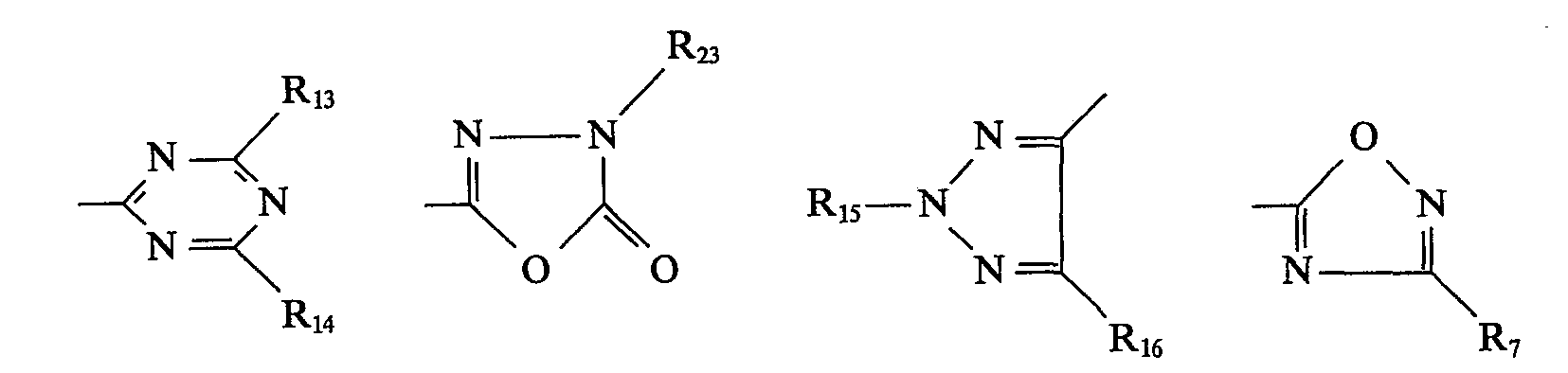


- R3 Wasserstoff, Chlor, C1―C4-Alkyl, Phenyl-C1―C3-Alkyl, Cyclohexyl, Phenyl, C1―C4-Alkoxy, C1―C4-Alkylsulfonyl, C1―C4-Alkoxycarbonyl, Cyano oder Carboxy oder zusammen mit R4 einen gegebenenfalls durch 1 bis 4 Methylgruppen substituierten ankondensierten 1-Cydopenten-, 1-Cyclohexen- oder Benzolring,
- R4 Wasserstoff, Chlor oder C1―C4-Alkyl oder zusammen mit R3 einen gegebenenfalls durch 1 bis 4
- Methylgruppen substituierten ankondensierten 1-Cyclopenten-, 1-Cyclohexen- oder Benzolring, R5 Wasserstoff, C1―C4-Alkyl, Cyano, COOR, worin R für C1―C4-Alkyl steht, Phenyl oder Styryl oder zusammen mit R6 einen gegebenenfalls durch C1―C4-Alky), C1―C4-Alkoxy oder Chlor substituierten ankondensierten Benzolring oder einen ankondensierten Naphthalinring,
- R6 Wasserstoff, C1―C4-Alkyl, Phenyl oder zusammen mit R5 einen gegebenenfalls durch C1―C4-Alkyl, C1―C4-Alkoxy oder Chlor substituierten ankondensierten Benzolring oder einen ankondensierten Naphthalinring,
- R7 unsubstituiertes oder nicht-chromophor substituiertes C1―C4-Alkyl, gegebenenfalls durch C1―C4-Alkyl, C1―C4-Alkoxy, C1―C4-Akkoxycarbonyl, Cyano oder Chlor substituiertes Phenyl, Styryl, Biphenylyl oder Naphthyl,
- R8 Wasserstoff, C1―C4-Alkyl oder unsubstituiertes oder durch Chlor oder Methyl substituiertes Phenyl,
- Rg und R10 unabhängig voneinander Wasserstoff, C1―C4-Alkyl, unsubstituiertes oder durch Chlor oder Methyl substituiertes Phenyl, C1―C4-Alkoxy, C3―C8-Alkoxyalkoxy, unsubstituiertes oder durch Chlor oder Methyl substituiertes Phenoxy, Chlor, C1―C4-Alkylthio, Phenylthio, C1―C4-Alkyl- amino, Di-C1―C4-alkylamino, Morpholino, Piperidino, Piperazino, Pyrrolidino oder Anilino,
- R11 Wasserstoff, C1―C4-Alkyl oder unsubstituiertes oder durch Chlor oder Methyl substituiertes Phenyl,
- R12 C1―C4-Alkoxy, C3-C8-Alkoxyalkoxy, C1―C4-Alkylthio, unsubstituiertes oder durch Chlor oder Methyl substituiertes Phenoxy, Cycloalkoxy, C1―C4-Alkylthio, unsubstituiertes oder durch Chlor oder Methyl substituiertes Phenylthio, C1―C4-Alkylamino, Di-C1―C4-alkylamino, Morpholino, Piperidino, Piperazino, Pyrrolidino oder Anilino,
- R13 und R14 Wasserstoff, Halogen, C1―C4-Alkoxy, Phenyl, Aralkoxy, Cycloalkoxy, Aryloxy, C1―C4-Alkylmercapto, C1―C4-Alkylamino, Di-C1―C4-Alkylamino, Morpholino, Piperidino, Piperazino, Pyrrolidino, Arylamino oder C1―C4-Alkyl,
- R15 unsubstituiertes oder durch Chlor oder C1―C4-Alkyl substituiertes Phenyl,
- R16 Wasserstoff oder C1―C4-Alkyl,
- R17 unsubstituiertes oder durch Chlor oder C1―C4-Alkyl substituiertes Phenyl,
- R18 Wasserstoff oder C1―C4-Alkyl,
- R19 unsubstituiertes oder durch Chlor oder C1―C4-Alkyl substituiertes Phenyl,
- R20 Wasserstoff oder C1―C4-Alkyl,
- R21 Wasserstoff oder C1―C4-Alkyl,
- R22 unsubstituiertes oder durchC1―C4-Alkoxy substituiertes Phenyl,
- R23 Wasserstoff, C1―C4-Alkyl oder unsubstituiertes oder durch C1―C4-Alkyl, Halogen oder Cyano substituiertes Phenyl und
- Z 0, S oder NX bedeuten, worin X für Wasserstoff, C1―C4-Alkyl, Acetyl, Benzoyl oder Phenyl steht.
- Bevorzugte Verbindungen entsprechen der Formel


- -CON(R')(R"), worin R' für Wasserstoff, C1―C6-Alkyl, durch Hydroxy, C1―C4-Alkoxy, C2―C6-Hydroxyalkoxy, ―SO3M oder Mono- oder Di-C1―C4-alkylamino substituiertes C2―C6-Alkyl, Cyclohexyl, Benzyl oder Phenäthyl und R" für Wasserstoff, C1―C6-Alkyl durch Hydroxy, C1―C4-Alkoxy oder C2-C6-Hydroxyalkoxy substituiertes C2―C6-Alkyl stehen,
- -S02N(R')(R") worin R' und R" die vorstehende Bedeutung haben, -S03M, Rx-S02- worin Rx für C1―C6-Alkyl, durch C1―C4-Alkoxy oder C1―C4-Alkoxy-C2―C6-alkoxy substituiertes C2―C6-Alkyl, Phenyl oder Benzyl steht, oder Phosphonsäuredialkylester,
-

- M Wasserstoff oder ein bei optischen Aufhellern übliches, nicht-chromophores Kation, und Q2 einen Rest der Formel


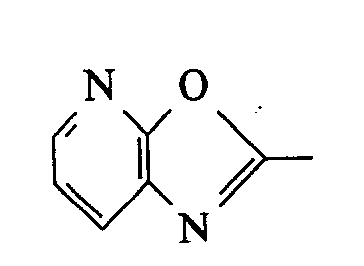
- R3 Wasserstoff, Methyl, Chlor oder C1―C4-Alkoxy,
-

- R5 Wasserstoff, C1―C4-Alkyl, Phenyl oder Styryl oder zusammen mit R6 einen ankondensierten unsubstituierten oder durch C1―C4-Alkyl, C1―C4-Alkoxy oder Chlor substituierten Benzolring oder einen ankondensierten Naphthalinring,
- Re Wasserstoff, C1―C4-Alkyl, Phenyl oder zusammen mit

- R7 unsubstituiertes oder nicht-chromophor substituiertes C1―C4-Alkyl,gegebenenfalls durch C1―C4-Alkyl, C1―C4-Alkoxy, C1―C4-Alkoxycarbonyl, Cyano oder Chlor substituiertes Phenyl, Styryl, Biphenylyl oder Naphthyl,
-

-

- R;o Wasserstoff, unsubstituiertes C1―C4-Alkyl, C1―C4-Alkoxy, unsubstituiertes oder durch Chlor oder Methyl substituiertes Phenyl, unsubstituiertes oder durch Chlor oder Methyl substituiertes Phenoxy, C1―C4-Alkylthio, Phenylthio oder Chlor,
-

- R15 unsubstituiertes oder durch Chlor oder C1―C4-Alkyl substituiertes Phenyl,
- R16 Wasserstoff oder C1―C4-Alkyl und
-

- Weitere bevorzugte Verbindungen der Formel (1) sind solche

-

- M Wasserstoff oder ein bei optischen Aufhellern übliches, nicht-chromophores Kation bedeuten und Q2 die oben angegebene Bedeutung hat. M steht vorteilhaft für Wasserstoff, ein Alkalimetallkation oder für ein unsubstituiertes oder substituiertes Ammoniumkation, z. B. Mono-, Di- oder Tri-(C1―C4-alkyl)- oder (C2―C4-alkanol)-ammonium, wie z. B. Mono-, Di- oder Triäthanol- oder -isopropanolammonium, vorzugsweise Wasserstoff oder Natrium.
- Besonders bevorzugte erfindungsgemäße Verbindungen entsprechen A) der Formel


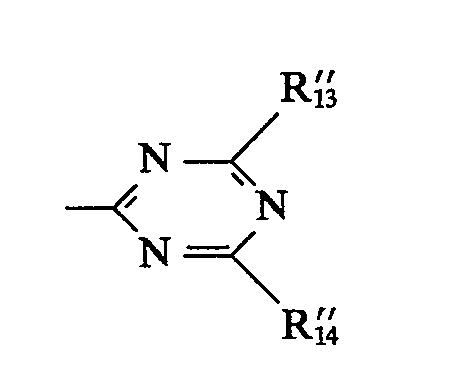
-

-

- R9 Wasserstoff, Methyl, Phenyl, C1―C3-Alkoxy, Methoxyäthoxy oder Phenoxy,

-


- Y' für C1―C4-Alky) und r für eine ganze Zahl von 0 bis 2 stehen, bedeuten,
- B) der Formel


- C) der Formel


- Die erfindungsgemäßen 4-Heterocyclyl-4'-vinyl-stilbene der Formel (1) können dadurch hergestellt werden, daß man in einem organischen Lösungsmittel und in Gegenwart basischer Kondensationsmittel eine Verbindung der Formel



- Als Lösungsmittel verwendet man vorteilhafterweise indifferente Lösungsmittel, beispielsweise Kohlenwasserstoffe wie Toluol oder Xylol oder Alkohole wie Methanol, Äthanol, Isopropanol, Butanol, Glykol, Glykoläther wie 2-Methoxyäthanol, Hexanol, Cyclohexanol, Cyclooctanol, ferner Äther wie Diisopropyläther, Dioxan, Tetrahydrofuran, weiterhin Formamide oder N-Methylpyrrolidon. Besonders geeignet sind dipolare organische Lösungsmittel wie Dimethylformamid und Dimethylsulfoxid.
- Als Kondensationsmittel kommen stark basische Verbindungen in Betracht wie Alkali- und Erdalkalimetallhydroxide, Alkali- und Erdalkaliamide und Alkali- und Erdalkalimetallalkoholate, beispielsweise Kaliumhydroxid, Natriumhydroxid, Kalium-tert.-butylat, Natriumamid oder Natriummethylat, ferner die Alkaliverbindungen des Dimethylsulfoxids und Alkalihydride sowie gegebenenfalls Alkalimetalldispersionen.
- Man arbeitet vorzugsweise im Temperaturbereich von 0 bis 100°C. Die erfindungsgemäßen Verbindungen werden ebenfalls erhalten, wenn man anstelle von Phosphonoverbindungen (8) und (9) die entsprechenden quartären Phosphonium-Salze, beispielsweise die Triphenylphosphoniumsalze, einsetzt und diese über die Stufe der Phosphorylene mit den Aldehyden (9) bzw. (8) kondensiert.
- An den Reaktionsprodukten der vorstehenden Verfahren können natürlich noch weitere an sich bekannte Umwandlungen vorgenommen werden wie Halogenierungen, funktionelle Abwandlungen von Carboxylgruppen, Einführung von Chlormethylgruppen oder Austausch von Halogenatomen gegen Cyangruppen.
- Die Herstellung von Verbindungen der Formel (1) kann aber auch nach anderen an sich bekannten Verfahren erfolgen. So kann man eine Schiff'sche Base der Formel


- Die Verbindungen der Formel (11) worin 0 einen Rest der Formel

- Zweckmäßig werden die Verbindungen (11) mit der Schiff'schen Base der Formel (10) in äquivalenten Mengen zur Umsetzung gebracht, sodaß von keiner Komponente ein wesentlicher Überschuß vorhanden ist. Von der Alkaliverbindung verwendet man mit Vorteil mindestens die äquivalente Menge, d. h. mindestens 1 Mol einer Verbindung mit z. B. einer KO-Gruppe auf ein Mol Schiff'sche Base. Bei der Verwendung von Kaliumhydroxid wird vorzugsweise die 4- bis 8fache Menge angewandt. Die Umsetzung kann generell bei Temperaturen im Bereich zwischen etwa 10 und 150°C durchgeführt werden. Werden bei der Reaktion als Kaliumverbindung Alkoholate verwendet, so ist im allgemeinen keine Wärmezufuhr notwendig. Man verfährt z. B. so, daß man die Schiff'sche Base der Formel (10) dem Gemisch aus der Verbindung der Formel (11) dem Lösungsmittel und dem Kaliumalkoholat, zweckmäßig unter Rühren und unter Ausschluß von Luft, bei einer Temperatur zwischen 15 und 30°C, zusetzt, worauf die Reaktion unter leichtem Temperaturanstieg ohne weiteres stattfindet. Bei der Anwendung von Kaliumhydroxid ist es häufig notwendig, bei höherer Temperatur zu arbeiten. Beispielsweise wird das Reaktionsgemisch langsam auf 30 bis 100°C erwärmt und dann während einiger Zeit, z. B. 1/2 bis 2 Stunden, bei dieser Temperatur gehalten. Aus dem Reaktionsgemisch können die Endstoffe nach üblichen, an sich bekannten Methoden isoliert werden.
- Die Verbindungen der Formel (1) können auch gemäß der Heck'schen Reaktion, durch Umsetzung eines aromatischen Halogenides mit einem Acrylsäurederivat in Gegenwart von einem Palladiumderivat, z. B. Paladiumacetat als Katalysator [vgl. R. F. Heck und J.-P. Nolley, Jr., J. Org. Chem., 37, 2320-2322 (1972)] hergestellt werden.
- Die erfindungsgemäßen Verbindungen zeigen in gelöstem oder feinverteiltem Zustande eine ausgeprägte Fluoreszenz. Sie können zum optischen Aufhellen der verschiedensten synthetischen, halbsynthetischen oder natürlichen organischen Materialien oder Substanzen, welche solche organische Materialien enthalten, verwendet werden.
- Hierfür seien beispielsweise, ohne daß durch die nachfolgende Übersicht irgendeine Beschränkung hierauf ausgedrückt werden soll, die folgenden Gruppen von organischen Materialien, sowie eine optische Aufhellung derselben in Betracht kommt, genannt:
- I. Synthetische organische hochmolekulare Materialien
- a) Polymerisationsprodukte auf Basis mindestens eine polymerisierbare Kohlenstoff-Kohlenstoff-Doppelbindung enthaltender organischer Verbindungen, d. h. deren Homo- oder Copolymerisate sowie deren Nachbehandlungsprodukte wie beispielsweise Vernetzungs-, Pfropfungs- oder Abbauprodukte, Polymerisat-Verschnitte oder durch Modifizierung reaktionsfähiger Gruppen erhaltene Produkte, beispielsweise Polymerisate auf Basis von aß-ungesättigten Carbonsäuren oder Derivaten solcher Carbonsäuren, insbesondere von Acrylverbindungen (wie z. B. Acrylestern, Acrylsäure, Acrylnitril, Acrylamiden und deren Derivaten oder deren Methacryl-Analoga), von Olefin-Kohlenwasserstoffen (wie z. B. Äthylen, Propylen, Styrole oder Diene, ferner sogenannte ABS-Polymerisate), Polymerisate auf Basis von Vinyl- und Vinyliden-Verbindungen (wie z. B. Vinylchlorid, Vinylalkohol, Vinylidenchlorid),
- b) Polymerisationsprodukte, die durch Ringöffnung erhältlich sind, z. B. Polyamide vom Polycaprolactam-Typ, ferner Polymere, die sowohl über Polyaddition als auch Polykondensation erhältlich sind, wie Polyäther oder Polyacetale,
- c) Polykondensationsprodukte oder Vorkondensate auf Basis bi- oder polyfunktioneller Verbindungen mit kondensationsfähigen Gruppen, deren Homo- oder Mischkondensationsprodukte sowie Produkte der Nachbehandlung, wie beispielsweise Polyester, insbesondere gesättigte (z. B. Äthylenglykolterephthalsäure-Polyester) oder ungesättigte (z. B. Maleinsäure-Dialkohol-Polykondensate sowie deren Vernetzungsprodukte mit anpolymerisierbaren Vinylmonomeren), unverzweigte sowie verzweigte (auch auf Basis höherwertiger Alkohole, wie z. B. Alkydharze) Polyester, Polyamide (z. B. Hexamethylendiaminadipat), Maleinatharze, Melaminharze, deren Vorkondensate und Analoga, Polycarbonate, Silikone,
- d) Polyadditionsprodukte wie Polyurethane (vernetzt und unvernetzt), Epoxidharze,
- II. Halbsynthetische organische Materialien, z. B. Celluloseester verschiedener Veresterungsgrade (sogenanntes 21 /2-Acetat, Triacetate) oder Celluloseäther, regenerierte Cellulose (Viskose, Kupferammoniak-Cellulose) oder deren Nachbehandlungsprodukte, Casein-Kunststoffe.
- 111. Natürliche organische Materialien animalischen oder vegetabilischen Ursprungs, beispielsweise auf Basis von Cellulose oder Proteinen wie Baumwolle, Wolle, Leinen, Seide, natürliche Lackharze, Stärke, Casein.
- Die optisch aufzuhellenden Materialien können den verschiedenartigsten Verarbeitungszuständen (Rohstoffe, Halbfabrikate oder Fertigfabrikate) angehören. Sie können andererseits in Form der verschiedenartigsten geformten Gebilde vorliegen, d. h. beispielsweise als vorwiegend dreidimensional ausgedehnte Körperwie Platten, Profile, Spritzgußformlinge, verschiedenartige Werkstücke, Schnitzel, Granulate oder Schaumstoffe, ferner als vorwiegend zweidimensional ausgebildete Körper wie Filme, Folien, Lacke, Überzüge, Imprägnierungen und Beschichtungen oder als vorwiegend eindimensional ausgebildete Körper wie Fäden, Fasern, Flocken, Drähte. Die besagten Materialien können andererseits auch in ungeformten Zuständen in den verschiedenartigsten homogenen oder inhomogenen Verteilungsformen, wie z. B. als Pulver, Lösungen, Emulsionen, Dispersionen, Latices, Pasten oder Wachse vorliegen.
- Fasermaterialien können beispielsweise als endlose Fäden (verstreckt oder unverstreckt), Stapelfasern, Flocken, Strangware, textile Fäden, Garne, Zwirne, Faservliese, Filze, Watten, Beflockungs-Gebilde oder als textile Gewebe oder textile Verbundstoffe, Gewirke sowie als Papiere, Pappen oder Papiermassen vorliegen.
- Den erfindungsgemäß anzuwendenden Verbindungen kommt u. a. Bedeutung für die Behandlung von textilen organischen Materialien, insbesondere textilen Gewebe, zu. Sofern Fasern, welche als Stapelfasern oder Endlosfäden, in Form von Strangen, Geweben, Gewirken, Vliesen, beflockten Substraten oder Verbundstoffen vorliegen können, erfindungsgemäß optisch aufzuhellen sind, geschieht dies mit Vorteil in wäßrigem Medium, worin die betreffenden Verbindungen in feinverteilter Form (Suspensionen, sogenannten Mikrodispersionen, gegebenenfalls Lösungen) vorliegen. Gegebenenfalls können bei der Behandlung Dispergier-, Stabilisier-, Netz- und weitere Hilfsmittel zugesetzt werden.
- In Abhängigkeit vom verwendeten Aufheller-Verbindungstyp kann es sich vorteilhaft erweisen, in neutralem oder alkalischem oder saurem Bade zu arbeiten. Die Behandlung wird üblicherweise bei Temperaturen von etwa 20 bis 140°C, beispielsweise bei Siedetemperatur des Bades oder in deren Nähe (etwa 90°C), durchgeführt. Für die erfindungsgemäße VeredIung textiler Substrate kommen auch Lösungen oder Emulsionen in organischen Lösungsmitteln in Betracht, wie die in der Färbereipraxis in der sogenannten Lösungsmittelfärberei (Foulard-Thermofixierapplikation, Ausziehfärbeverfahren in Färbemaschinen) praktiziert wird.
- Die neuen optischen Aufhellmittel gemäß vorliegender Erfindung können ferner den Materialien vor oder während deren Verformung zugesetzt bzw. einverleibt werden. So kann man sie beispielsweise bei der Herstellung von Filmen, Folien (z. B. Einwalzen in Polyvinylchlorid in der Hitze) oder Formkörpern der Preßmasse oder Spritzgußmasse beifügen.
- Sofern die Formgebung voll- oder halbsynthetischer organischer Materialien durch Spinnverfahren bzw. über Spinnmassen erfolgt, können die optischen Aufheller nach folgenden Verfahren appliziert werden:
- - Zugabe zu den Ausgangssubstanzen (z. B. Monomeren) oder Zwischenprodukten (z. B. Vorkondensaten, Praepolymeren), d. h. vor oder während der Polymerisation, Polykondensation oder Polyaddition,
- - Aufpudern auf Polymerisatschnitzel oder Granulate für Spinnmassen,
- - Badfärbung von Polymerisatschnitzeln oder Granulaten für Spinnmassen,
- - Dosierte Zugabe zu Spinnschmelzen oder Spinnlösungen,
- - Applikation auf Spinnkabel vor dem Verstrecken.
- Die neuen optischen Aufhellmittel gemäß vorliegender Erfindung können beispielsweise auch in folgenden Anwendungsformen eingesetzt werden:
- a) Mischungen mit Farbstoffen (Nuancierung) oder Pigmenten (Farb- oder insbesondere z. B. Weißpigmente) oder als Zusatz zu Färbebädern, Druck-, Ätz- oder Reservepasten. Ferner auch zur Nachbehandlung von Färbungen, Drucken oder Ätzdrucken,
- b) in Mischungen mit sogenannten »Carriern«, Netzmitteln, Weichmachern, Ouellmitteln, Antioxydantien, Lichtschutzmitteln, Hitzestabilisatoren, chemischen Bleichmitteln (Chlorit-Bleiche, Bleichbäder-Zusätze),
- c) in Mischungen mit Vernetzern, Appreturmitteln (z. B. Stärke oder synthetischen Appreturen) sowie in Kombination mit den verschiedensten Textilveredlungsverfahren, insbesondere Kunstharzausrüstungen (z. B. Knitterfest-Ausrüstungen wie »wash-and-wear«, »permanent-press«, »no-iron«), ferner Flammfest-, Weichgriff-, Schmutzablöse (»anti-soiling«)- oder Antistatisch-Ausrüstungen oder antimikrobiellen Ausrüstungen,
- d) Einarbeiten der optischen Aufhellmittel in polymere Trägermaterialien (Polymerisations-, Polykondensations- oder Polyadditionsprodukte) in gelöster oder dispergierter Form für Anwendung z. B. in Beschichtungs-, Imprägnier- oder Bindemitteln (Lösungen, Dispersionen, Emulsionen) für Textilien, Vliese, Papier, Leder,
- e) als Zusätze zu sogenannten »master batches«,
- f) als Zusätze zu den verschiedensten industriellen Produkten, um dieselben marktfähiger zu machen (z. B. Aspektverbesserung von Seifen, Waschmitteln, Pigmenten),
- g) in Spinnbadpräparationen, d. h. als Zusätze zu Spinnbädern wie sie zur Gleitfähigkeitsverbesserung für die Weiterverarbeitung von Synthese-Fasern verwendet werden, oder aus einem speziellen Bad vor der Verstreckung der Faser,
- h) als Szintillatoren, für verschiedene Zwecke photographischer Art, wie z. B. für elektrophotographische Reproduktion oder Supersensibilisierung,
- i) je nach Substitution als Laser-Farbstoffe.
- Die erfindungsgemäßen Verbindungen können auch in Kombination mit anderen optisch aufhellenden Verbindungen verwendet werden. Als zu mischende Verbindungen kommen z. B. die folgenden bekannten in Betracht: 1,4-Bis-(benzoxazol-2'-yl)-naphthalin,4,4'-Bis-(äthoxycarbonyl-vinyl)-stilben, 4,4'-Bis-(cyan-vinyl)-stilben, 1,4-Bis-(2'-cyano-styryl)-benzol, 1,5-Bis-(benzoxazol-2'-yl)-thiophen, 1-Phenyl-4-(5',7'-dimethyl-benzoxazol-2'-yl)-stilben, 1,2-Bis-(5'-methyl-benzoxazol-2'-yl)-vinylen, 4-(benzoxazol-2'-yl)-4'-(3"-methyl-1",2",4"-oxadiazot-5"-yl)-stilbene und 2,4-Dimethoxytriazin-6-yl-pyren. Diese werden vorteilhaft mit Verbindungen der Formel

- Die so erstellbaren Aufhellermischungen enthalten die erfindungsgemäße Verbindung und die bekannte im Verhältnis 1 :9 bis 9:1, vorzugsweise 1 :2 oder 2: 1.
- Wird das Aufhellverfahren mit Textil-Behandlungs- oder Veredlungsmethoden kombiniert, so kann die kombinierte Behandlung in vielen Fällen vorteilhafterweise mit Hilfe entsprechender beständiger Präparate erfolgen, welche die optisch aufhellende Verbindungen in solcher Konzentration enthalten, daß der gewünschte Aufhelleffekt erreicht wird.
- In gewissen Fällen werden die Aufheller durch eine Nachbehandlung zur vollen Wirkung gebracht. Diese kann beispielsweise eine chemische (z. B. Säure-Behandlung), eine thermische (z. B. Hitze) oder eine kombinierte chemisch/thermische Behandlung darstellen. So verfährt man beispielsweise bei der optischen Aufhellung einer Reihe von Fasersubstanzen, z. B. von Polyesterfasern, mit dem erfindungsgemäßen Aufhellern zweckmäßig in der Weise, daß man diese Fasern mit den wäßrigen Dispersionen (gegebenenfalls auch Lösungen) der Aufhellmittel bei Temperaturen unter 75°C, z. B. bei Raumtemperatur, inprägniert und einer trockenen Wärmebehandlung bei Temperaturen über 100°C unterwirft, wobei es sich im allgemeinen empfiehlt, das Fasermaterial vorher noch bei mäßig erhöhter Temperatur, z. B. bei mindestens 60 bis etwa 130°C zu trocknen. Die Wärmebehandlung in trockenem Zustande erfolgt dann vorteilhaft bei Temperaturen zwischen 1 20 und 225°C, beispielsweise durch Erwärmen in einer Trockenkammer, durch Bügeln im angegebenen Temperaturintervall oder auch durch Behandeln mit trockenem, überhitztem Wasserdampf. Die Trocknung und trockene Wärmebehandlung können auch unmittelbar nacheinander ausgeführt oder in einen einzigen Arbeitsgang zusammengelegt werden.
- Die Menge der erfindungsgemäß zu verwendenden neuen optischen Aufheller, bezogen auf das optisch aufzuhellende Material, kann in weiten Grenzen schwanken. Schon mit sehr geringen Mengen, in gewissen Fällen z. B. solchen von 0,0001 Gewichtsprozent, kann ein deutlicher und haltbarer Effekt erzielt werden. Es können aber auch Mengen bis zu etwa 0,8 Gewichtsprozent und gegebenenfalls bis zu etwa 2 Gewichtsprozent zur Anwendung gelangen. Für die meisten praktischen Belange sind vorzugsweise Mengen zwischen 0,0005 und 0,5 Gewichtsprozent von Interesse.
- Aus verschiedenen Gründen ist es oft zweckmäßig, die Aufheller nicht als solche, d. h. rein einzusetzen, sondern vermischt mit den verschiedensten Hilfs- und Coupiermitteln, wie z. B. wasserfreiem Natriumsulfat, Natriumsulfat-decahydrat, Natriumchlorid, Natriumcarbonat, Alkalimetallphosphaten, wie Natrium- oder Kaliumorthophosphat, Natrium- oder Kalimpyrophosphat und Natrium- oder Kaliumtripolyphosphaten oder Alkalimetallsilicaten.
- Die neuen optischen Aufhellmittel eignen sich auch besonders als Zusätze für Waschbäder oder zu Gewerbe- und Haushaltwaschmitteln, wobei sie in verschiedener Weise zugesetzt werden können. Zu Waschbädern werden sie zweckmäßig in Form ihrer Lösungen in Wasser oder organischen Lösungsmitteln oder auch in feiner Verteilung als wäßrige Dispersion zugegeben. Zu Haushalt- oder gewerblichen Waschmittel werden sie vorteilhaft in irgendeiner Phase des Herstellungsprozesses der Waschmittel, z. B. der sogenannten »slurry« vor dem Zerstäuben dem Waschpulver oder bei der Vorbereitung flüssiger Waschmittelkombinationen, zugesetzt. Die Zuagbe kann sowohl in Form einer Lösung oder Dispersion in Wasser oder anderen Lösungsmitteln als auch ohne Hilfsmittel als trockenes Aufhellerpulver erfolgen. Man kann die Aufhellmittel beispielsweise mit den waschaktiven Substanzen vermischen, verkneten oder vermahlen und so dem fertigen Waschpulver zumischen. Sie können jedoch auch gelöst oder vordispergiert auf das fertige Waschmittel aufgesprüht werden.
- Als Waschmittel kommen die bekannten Mischungen von Waschaktivsubstanzen wie beispielsweise Seifen in Form von Schnitzeln und Pulver, Synthetika, lösliche Salze von Sulfonsäurehalbestern höherer Fettalkohole, höher und/oder mehrfach alkylsubstituierten Arylsulfonsäuren, Sulfocarbonsäureester mittlerer bis höherer Alkohole, Fettsäureacylaminoalkyl- oder -aminoarylglycerinsulfonate, Phosphorsäureester von Fettalkoholen usw. in Frage. Als Aufbaustoffe, sogenannte »Builders«, kommen z. B. Alkalipoly- und -polymetaphosphate, Alkalipyrophosphate, Alkalisalze der Carboxymethylcellulose und andere »Soilredepositionsinhibitoren«, ferner Alkalisilikate, Alkalicarbonate, Alkaliborate, Alkaliperborate, Nitrilotriessigsäure, Äthylendiaminotetraessigsäure, Schaumstabilisatoren wie Alkanolamide höherer Fettsäuren, in Betracht. Ferner können in den Waschmitteln beispielsweise enthalten sein: antistatische Mittel, rückfettende Hautschutzmittel wie Lanolin, Enzyme, Antimikrobika, Parfüme und Farbstoffe.
- Die neuen optischen Aufheller haben den besonderen Vorteil, daß sie auch bei Gegenwart von Aktivchlorspendern, wie z. B. Hypochlorit, wirksam sind und ohne wesentliche Einbuße der Effekte in Waschbädern mit nichtionogenen Waschmitteln, z. B. Alkylphenolpolyglykoläthern, verwendet werden können.
- Die erfindungsgemäßen Verbindungen werden in Mengen von 0,005 bis 1 % oder mehr, bezogen auf das Gewicht des flüssigen oder pulverförmigen, fertigen Waschmittels, zugesetzt. Waschflotten, die die angegebenen Mengen der beanspruchten Aufheller enthalten, verleihen beim Waschen von Textilien aus Cellulosefasern, Polyamidfasern, hochveredelten Cellulosefasern, Polyesterfasern, Wolle etc. diesen einen brillanten Aspekt am Tageslicht.
- Die Waschbehandlung wird beispielsweise wie folgt durchgeführt:
- Die angegebenen Textilien werden während 1 bis 30 Minuten bei 20 bis 100°C in einem Waschbad behandelt, das 1 bis 10 g/kg eines aufgebauten, zusammengesetzten Waschmittels und 0,05 bis 1 % bezogen auf das Waschmittelgesetz, der beanspruchten Aufhellmittel enthält. Das Flottenverhältnis kann 1 : 3 bis 1 : 50 betragen. Nach dem Waschen wird wie üblich gespült und getrocknet. Das Waschbad kann als Bleichzusatz 0,2 g/I Aktivchlor (z. B. als Hypochlorit) oder 0,1 bis 2 g/I Natriumperborat enthalten.
- In den Beispielen sind Prozente immer Gewichtsprozente. Schmelz- und Siedepunkte sind, sofern nicht anders vermerkt, unkorrigiert.
- 27,5 g 2-(4-Diäthoxy-phosphorylmethylphenyl)-4,6-dimethoxy-pyrimidin und 14,3 g 4-Formyl- zimtsäuremethylester werden in 150 ml Dimethylformamid gelöst und innerhalb von 30 Minuten in kleinen Portionen mit 4,9 g Natriummethylat versetzt. Das Reaktionsgemisch wird nach 30 Minuten bei Raumtemperatur und dann noch 21/2 Stunden bei 40-45°C gerührt. Nach dem Abkühlen auf Raumtemperatur wird mit Ameisensäure sauer gestellt und in 800 ml Wasser und Eis eingerührt. Das ausgefallene Produkt wird abfiltriert, mit Wasser und Methanol gewaschen und bei 80°C im Vakuum getrocknet. Man erhält 28 g der Verbindung der Formel

- Das Produkt kristallisiert aus Toluol unter Zusatz von Bleichmitteln in gelben Kristallen vom Schmelzpunkt 169-170°C.
- Verfährt man in analoger Weise, dann erhält man aus den entsprechenden Ausgangsstoffen die in Tabelle I aufgeführten Verbindungen der Formel


- Die als Ausgangsprodukte für die Synthese der Phosphonate benötigten in 4,6-Stellung substituierten 2-(4-Brommethylphenyl)-pyrimidine werden auf folgende Weise hergestellt.
- 102,3 g p-Tolylamidinhydrochlorid und 99,3 g Malonsäurediäthylester werden in 520 ml wasserfreiem Äthanol angeschlämmt. Unter gutem Rühren und Kühlung läßt man nun 323,7 g einer 30%igen Natriummethylatlösung einfließen. Danach wird zum Rückfluß erhitzt und 4 bis 5 Stunden am Rückfluß gerührt. Nach Abdestillation des Lösungsmittels wird der Rückstand in 1000 ml Wasser aufgenommen, auf 80°C erhitzt und die etwas trübe Lösung über Kieselsäure filtriert. Nach dem Abkühlen wird mit 15%iger Salzsäure angesäuert. Der dicke Kristallbrei wird abfiltriert, mit Wasser gewaschen und bei 100°C getrocknet. Man erhält 100-110 g der Verbindung der Formel

- Das Produkt hat einen Schmelzpunkt von 314°C (Zersetzung).
- 72,6 g der Dihydroxy-Verbindung werden mit 72,6 g N,N-Dimethylanilin und 363 g Phosphoroxychlorid zum Sieden erhitzt und eine Stunde am Rückfluß gerührt. Nach Abdestillation des überschüssigen Phosphoroxychlorids wird das zurückbleibende Produkt, zur Entfernung des noch anhaftenden Phosphoroxychlorids, mit Eiswasser behandelt, danach mit Eiswasser fein gemahlen, abfiltriert, mit Eiswasser gewaschen und bei 40-50°C im Vakuum getrocknet. Die Ausbeute an der Verbindung der Formel

- 156,1 g einer 30,5%igen Natriummethylatlösung werden mit 700 ml wasserfreiem Methanol verrührt. In die Lösung werden nun innerhalb von 10 Minuten unter leichter Kühlung 95,64 g der Verbindung (110) eingetragen. Danach wird auf Rückfluß erhitzt und 4 Stunden am Sieden gehalten. Nach Abdestillieren des Lösungsmittels wird das zurückbleibende Produkt in 1000 ml Wasser eingetragen. Zur Entfernung des entstandenen Natriumchlorids wird mit Wasser fein gemahlen. Danach abfiltriert, mit Wasser gewaschen und an der Luft getrocknet. Man erhält so 90,4 g der Verbindung der Formel

- Auf analoge Weise werden die in Tabelle II aufgeführten Pyrimidine der Formel



- 115,2 g 4,6-Dimethoxy-2-(4-methylphenyl)-pyrimidin werden mit 500 ml Tetrachlormethan auf 70°C erhitzt. In die Lösung wird danach bei 70-75°C ein Gemisch aus 0,5 g Dibenzoylperoxid, 1 g Azosiobutyronitril und 90,8 g N-Bromsuccinimid unter gleichzeitiger Bestrahlung mit einer 500 Watt Lampe innerhalb von 30 Minuten eingetragen.
- Zur Vervollständigung der Reaktion wird noch 2 1/2 Stunden am Rückfluß erhitzt. Danach wird das Succinimid bei 65°C abfiltriert und das Filtrat zur Trockne eingedampft. Man erhält 144 g Rohprodukt der Formel

- Das Produkt kann durch Umkristallisation aus Äthanol/Äthylenglykolmonomethyläther (1 : 1) gereinigt werden. (Schmelzpunkt 132-134°C).
- In analoger Weise werden die in Tabelle III aufgeführten Brommethylverbindungen der Formel


- 116,4 g 2-(4-Brommethylphenyl)-4,6-dimethoxy-pyrimidin werden mit 400 ml Triäthylphosphit innerhalb von 21 /2 Stunden auf 150-155 °C erhitzt und noch 3 1/2 Stunden bei 150-155 °C gerührt. Nach Abdestillation des überschüssigen Triäthylphosphits erhält man 128 g eines schwachgelben Öls vom Kp13,332Pa 207-210°C, das zu farblosen Kristallen vom Smp. 74-76°C auskristallisiert.
- In analoger Weise wurden auch die folgenden Phosphonate der Formel


- 36,63 g 2-(4-Diäthoxy-phosphoryl-methylphenyl)-4,6-dimethoxy-pyrimidin und 17,62 g 4-Formylzimtsäure werden in 220 ml Dimethylformamid auf 40―45 °C erhitzt. In die Lösung läßt man nun innerhalb von 20 Minuten 35,4 g einer 30,5%igen Natriummethylat-Lösung einfließen. Das dick ausgefallene Reaktionsprodukt wird noch 3 Stunden bei 40 bis 45°C gerührt, auf Raumtemperatur abgekühlt und mit 500 ml Wasser verdünnt. Nach dem Ansäuern mit 15%iger Salzsäure wird das ausgefallene Produkt abfiltriert, mit Wasser gewaschen und im Vakuum bei 80°C getrocknet. Man erhält 36,4 g der Verbindung der Formel
-

- Das Produkt kristallisiert aus wenig Dimethylformamid in gelben Kristallen (Smp. 278-279°C).
- 13,6 g der Säure der Formel (201) werden mit 120 ml Toluol und wenig Dimethylformamid auf 70-75°C erhitzt. Danach läßt man in die Suspension 3,5 ml Thionylchlorid innerhalb von 15 Minuten einfließen. Es entsteht eine Lösung, die bis zur Beendigung der Chlorwasserstoffentwicklung zum Sieden erhitzt wird. Danach werden 30 ml Toluol und der Überschuß an Thionylchlorid abdestilliert. Nach dem Abkühlen auf 80°C läßt man in die Lösung 50 ml Isopropanol einfließen. Es wird erneut zum Sieden erhitzt und bis zur Beendigung der Chlorwasserstoffentwicklung am Sieden gehalten. Der nach dem Abdestillieren des Lösungsmittels erhaltene Rückstand wird zuerst mit Methanol behandelt und danach aus Cyclohexan, in Gegenwart von Bleicherde umkristallisiert. Man erhält 8,2 g der Verbindung der Formel
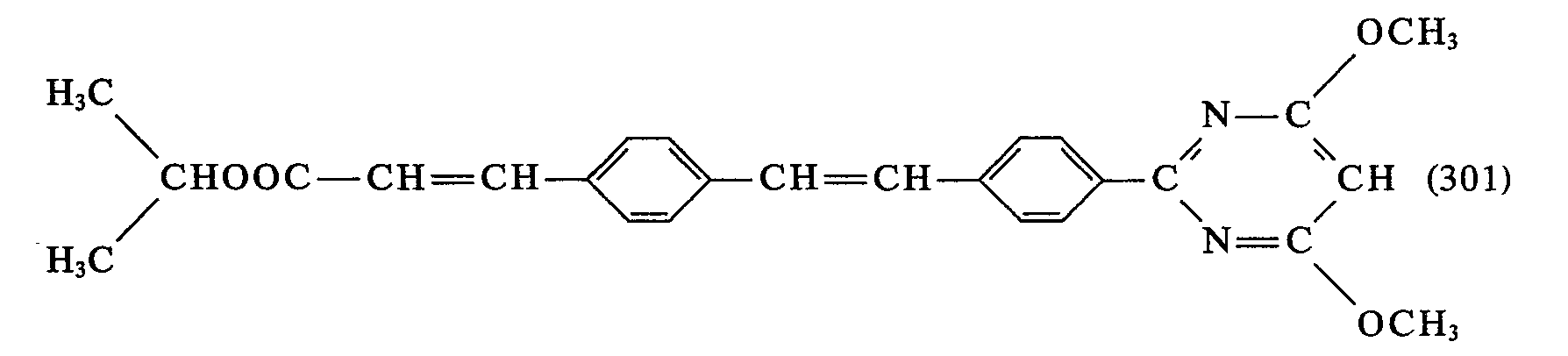
- 16,1 g der nach Beispiel 1 hergestellten Verbindung der Formel (101) werden mit 130 ml Äthylenglykolmonomethyläther auf 110°C erhitzt. In die entstandene Lösung gibt man eine Spatelspitze Lithiumamid. Danach wird auf Rückfluß erhitzt und 1 1/2 Stunden am Rückfluß gehalten. Nach Abdestillation des Lösungsmittels wird das anfallende Produkt mit Methanol behandelt, abfiltriert, mit Methanol gewaschen und getrocknet. Man erhält 14,9 g der Verbindung der Formel
-

- Das Produkt kristallisiert aus einem Gemisch von Cyclohexan/Toluol oder aus Tetrachloräthylen in gelben Kristallen vom Smp. 110-111 °C.
- 13,5 g 1-Methyl-3-(4-diäthoxyphosphorylmethylphenyl)-pyridazinon und 7,6 g 4-Formyl-zimtsäuremethylester werden in 100 ml Dimethylformamid gelöst. In die Lösung werden nun innerhalb von 10 Minuten 2,6 g festes Natriummethylat eingetragen. Man läßt noch für 20 Minuten bei Raumtemperatur ausrühren und erhitzt dann für 2 Stunden auf 40-45°C. Das Reaktionsgemisch wird dann in 800 ml Wasser eingerührt, mit Ameisensäure angesäuert, abfiltriert, mit Wasser und mit Methanol gewaschen und im Vakuum bei 80°C getrocknet. Man erhält 10,9 g der Verbindung der Formel
-

- Das Produkt kristallisiert aus einem Gemisch von o-Dichlorbenzol/Chlorbenzol im Verhältnis 1 : 1 in gelben Kristallen vom Schmelzpunkt 248-250°C.
- Das als Ausgangsprodukt benötigte 1-Methyl-3-(4-diäthoxyphosphorylmethylphenyl)-pyridazinon wird auf folgende Weise hergestellt:
- 110 g 1-Methyl-3-(4-methylphenyl)-pyridazinon und 700 ml Tetrachlormethan werden auf 70°C erhitzt. In die entstandene Lösung wird nun innerhalb von 40 Minuten bei 70-75°C ein Gemisch aus 3,5 g Dibenzoylperoxyd und 103,3 g N-Bromsuccinimid unter gleichzeitiger Bestrahlung mit einer 500 Watt Lampe eingetragen. Anschließend wird noch für weitere 3 Stunden bei Rückflußtemperatur gerührt. Danach wird das Succinimid bei 65°C abfiltriert, der Filterkuchen mit 100 ml heißem Tetrachlormethan nachgewaschen und das Filtrat zur Trockne eingedampft. Der Rückstand wird noch warm mit 100 ml Methanol verrührt, wobei Kristallisation erfolgt. Nach dem Abkühlen wird das Produkt abfiltriert und mit wenig kaltem Methanol gewaschen. Man erhält nach dem Trocknen im Vakuum bei 80°C 115,2 g der Verbindung der Formel


- In analoger Weise wie im Beispiel 5 beschrieben, wird durch Umsatz von 2-Methyl-4-methoxy-6-(4- diäthoxy-phosphorylmethyl-phenyl)-pyrimidin mit 4-Formylzimtsäure die Verbindung der Formel

- Das für die Synthese benötigte 2-Methyl-4-methoxy-6-(4-diäthoxyphosphorylmethyl-phenyl)-pyrimidin wird wie im Beispiel 1 beschrieben durch Umsatz von 2-Methyl-4-methoxy-6-(4-brommethyl- phenyl)-pyrimidin mit Triäthylphosphit hergestellt. Es liegt in Form von farblosen Kristallen vom Smp. 82-83°C vor.
- Das 2-Methyl-4-methoxy-6-(4-brommethylphenyl)-pyrimidin wird wie folgt hergestellt:
- 70,9 g salzsaures Acetamidin und 154,65 g p-Tolylacetessigester werden in 450 ml wasserfreiem Methanol auf 60°C erhitzt. Bei dieser Temperatur läßt man nun innerhalb von einer Stunde 265,6 g einer 30,5%igen Natriummethylatlösung zufließen. Die entstandene Suspension wird noch für weitere 3 Stunden am Rückfluß erhitzt. Nach dem Abkühlen wird das Reaktionsgemisch in 1500 ml Eis und Wasser eingerührt, wobei eine gelbe Lösung entsteht. Nach dem Ansäuren mit 45 ml Eisessig bildet sich ein dicker, farbloser Kristallbrei. Es wird filtriert, mit Wasser säurefrei gewaschen und bei 70-80°C im Vakuum getrocknet. Man erhält 95 g Rohprodukt der Formel

- Die Verbindung läßt sich durch Umkristallisation aus Chlorbenzol reinigen (Schmelzpunkt 278-279°C).
- 76 g des 2-Methyl-4-hydroxy-6-(p-tolyl)-pyrimidin werden unter Kühlung und gutem Rühren innerhalb von 10 Minuten in ein Gemisch bestehend aus 171 g Phosphoroxychlorid und 19 g Triäthylamin eingetragen. Es entsteht ein dicker Brei, der nun innerhalb von 30 Minuten auf 100―105°C erhitzt wird, wobei eine Lösung entsteht, die noch eine Stunde bei 100-105°C gerührt wird. Nach dem Abkühlen auf 50°C läßt man die Reaktionslösung unter schnellem Rühren in ein Gemisch aus 1000 ml Wasser und Eis einfließen. Das ausgefallene Produkt wird noch 20 Minuten eiskalt gerührt, dann abfiltriert, mit eiskaltem Wasser gewaschen und an der Luft getrocknet. Man erhält 86,5 g Rohprodukt der Formel

- Die Reinigung erfolgt durch Lösen in 400 ml Hexan, Abfiltration von wenig ungelöstem braunen Beiprodukt und Eindampfen der gelben Hexan-Lösung im Vakuum. Es resultiert ein gelbes Öl, das nach dem Abkühlen zu schwachgelben Kristallen erstarrt. Ausbeute 81 g.
- 76,51 g des Rohproduktes werden ohne weitere Reinigung in 350 ml wasserfreiem Methanol, enthaltend 69,3 g einer 30%igen Natriummethylatlösung eingetragen, auf Rückfluß erhitzt und 4 Stunden bei Rückflußtemperatur gerührt. Danach wird die Reaktionsmischung zur Trockne eingedampft, der entstandene Kristallbrei mit 1000 ml Eiswasser behandelt, das Produkt abfiltriert mit Wasser gewaschen und bei 40-50°C im Vakuum getrocknet. Man erhält 75,1 g Rohprodukt der Formel

- Das Produkt kristallisiert aus Methanol in farblosen Kristallen vom Schmelzpunkt 78-79°C.
- Das Produkt wurde nun wie unter Beispiel 1 mit N-Bromsuccinimid in der Seitenkette bromiert (Schmelzpunkt des 2-Methyl-4-methoxy-6-(4-brommethylphenyl)-pyrimidin 93-94°C).
- Auf dem gleichen Weg wird auch durch Umsatz von 4-Formylzimtsäuremethylester mit dem 2,4-Dimethoxy-6-(4-dimethoxy-phosphorylmethyl-phenyl)-1,3,5-triazin die Verbindung der Formel

- 8,06 g der Verbindung der Formel (701) werden mit 150 ml Äthylenglykolmonomethyläther und 0,1 g Lithiumamid 1 1/2 Stunden am Rückfluß erhitzt. Nach dem Abdampfen des Lösungsmittels erhält man 7,4 g der Verbindung der Formel
-

- Das Produkt kristallisiert aus einem Gemisch von Toluol/Cyclohexan im Verhältnis 1 : 1 und in Gegenwart von Bleicherde in gelben Kristallen vom Smp. 103-1040C.
- 13,4 g 2-(4-Diäthoxy-phosphorylmethylphenyl)-4,6-dimethyl-pyrimidin und 6,3 g 4-Formylzimtsäurenitril werden in 100 ml Dimethylformamid gelöst. Danach trägt man in die Lösung 2,58 g Natriummethylat innerhalb von 15 Minuten ein. Es wird anschließend noch eine Stunde bei Raumtemperatur, und dann noch 2 Stunden bei 40-45°C nachgerührt. Das Reaktionsgemisch wird in 800 ml Eiswasser eingetragen, mit Ameisensäure sauer gestellt, abfiltriert und mit Wasser und Methanol gewaschen. Nach dem Trocknen erhält man 10,8 g der Verbindung der Formel

- Das Produkt kristallisiert aus Xylol unter Zusatz von Bleicherde in gelben Kristallen vom Smp. 234-235°C.
- Verfährt man in analoger Weise, dann erhält man aus den entsprechenden Ausgangsstoffen die in Tabelle V aufgeführten Verbindungen der Formel



- 13,13 g 4,6-Dichlor-2-(4-diäthoxy-phosphorylmethyl-phenyl)-pyrimidin und 5,5 g 4-Formylzimtsäurenitril werden in 100 ml Dimethylformamid gelöst. In die entstandene Lösung läßt man danach innerhalb von 25 Minuten eine Lösung von 3,4 g Natrium in 65 ml Äthylenglykolmonomethyläther einfließen. Das Reaktionsgemisch wird auf 40°C erhitzt, 2 Stunden bei dieser Temperatur gerührt, anschließend in 800 ml Wasser und Eis eingerührt, mit Ameisensäure sauer gestellt, abfiltriert mit Wasser gewaschen und getrocknet. Man erhält 15,4 g der Verbindung der Formel

- Die Verbindung wird säulenchromatographisch an Kieselgel gereinigt. (Lösungs- und Laufmittel Toluol/Essigester 80:20). Man erhält 8,2 g der Verbindung der Formel (1001) vom Smp. 141-142°C. Das für die Synthese benötigte 4,6-Dichlor-2-(4-diäthoxy-phosphorylmethylphenyl)-pyrimidin (Smp. 111-112°C) wird durch Umsatz von 4,6-Dichlor-2-(4-brommethylphenyl)-pyrimidin (Smp. 155-156°C) mit Triäthylphosphit hergestellt.
- 13,7 g 2-[(4-Dibutoxy-phosphoryl-methyl)phenyl]-5-(p-tolyl)-1,3,4-oxadiazol, 5,7 g 4-Formylzimtsäuremethylester und 80 ml Dimethylformamid werden innerhalb von 10 Minuten bei Raumtemperatur mit 1,95 g Natriummethylat versetzt. Die Suspension wird noch 30 Minuten bei Raumtemperatur und dann noch 21/2 Stunden bei 40-45°C gerührt. Nach dem Ansäuern mit Ameisensäure läßt man die Suspension in 750 ml Wasser und Eis einfließen. Das ausgefallene Produkt wird abfiltriert, mit Wasser und dann mit Methanol gewaschen und getrocknet. Man erhält 8,3 g der Verbindung der Formel
-

- Das Produkt kristallisiert aus einem Gemisch aus Xylol und Chlorbenzol im Verhältnis 4:6 und in Gegenwart von Bleicherde in grüngelben Kristallen vom Schmelzpunkt 266-268°C.
- Verwendet man anstelle der 13,7 g 2-[(4-Dibutoxyphosphorylmethyl)-phenyl]-5-(p-tolyl)-1 ,3,4-oxadiazol äquimolare Mengen 2-[4-Dibutoxy-phosphoryl-methyl)phenyl]-5-(phenyl)-1 ,3,4-oxadiazol, dann erhält man ein Produkt vom Schmelzpunkt 227-228°C der Formel

- Zu einer Lösung von 19,4 g 2-[(4-Diäthoxyphosphorylmethyl)phenyl]-4-phenyl-1,3,4-oxadiazol-2- on (vergleiche EP 9 095) und 9,5 g 4-Formyl-zimtsäuremethylester in 70 ml Dimethylformamid tropft man bei 35°C, innerhalb 15 Minuten 11 g einer 30%igen Natriummethylatlösung zu. Die Temperatur steigt bis auf 40°C. Das Reaktionsgemisch wird hierauf 4 Stunden bei 40°C verrührt, auf ein Gemisch, bestehend aus 160 ml Methanol und 250 ml Wasser gegossen und die wäßrige Suspension mit Eisessig auf pH 7 gestellt. Der Niederschlag wird abgenutscht, mit Wasser gewaschen und getrocknet. Nach mehrmaliger Umkristallisation aus Chlorbenzol werden unter Zuhilfenahme von Bleicherde 14,4 g, entsprechend 68% der Theorie, der Verbindung der Formel

- In analoger Weise, ausgehend von den entsprechenden Ausgangsstoffen, wird auch folgende Verbindung vom Smp. 237-238°C erhalten.

- Zu einer Lösung von 9,3 g 3-Methyl-1-(4-formylphenyl)-pyrazol und 24 g 4-(Diäthoxyphosphoryl- methylphenyl)-zimtsäureäthylester in 100 ml Dimethylformamid trägt man bei Raumtemperatur innerhalb 10 Minuten 3,3 g festes Natriummethylat ein. Die Temperatur steigt bis auf 45°C. Das Reaktionsgemisch wird hierauf 2 Stunden bei 45°C verrührt, auf 500 ml Wasser gegosssen und die wäßrige Suspension mit Essigsäure auf pH 7 gestellt. Der Niederschlag wird abgenutscht, mit Wasser gewaschen und getrocknet. Nach mehrmaliger Umkristallisation aus Chlorbenzol werden unter Zuhilfenahme von Bleicherde 9,7 g, entsprechend 54% der Theorie, der Verbindung der Formel

- In analoger Weise, ausgehend von den entsprechenden Ausgangsstoffen wird auch die folgende Verbindung vom Smp. 249-250°C erhalten.


- Zu einer Suspension von 465 g 4-Carboxyphenylhydrazinhydrochlorid (81 %ig) in 3400 ml Äthanol, die 253 g Pyridin enthalten, tropft man bei Raumtemperatur 264 g 1-Acetyl-2,2-dimethoxyäthan zu. Das Reaktionsgemisch wird hierauf 1 Stunde am Rückfluß gehalten. Nun tropft man eine Lösung von 73 g Chlorwasserstoff in 240 ml Äthanol zu. Das Gemisch wird weitere 18 Stunden bei 80°C gerührt, mit einer Lösung von 240 g Natriumhydroxid in 1500 ml Wasser versetzt und das Äthanol abdestilliert. Das ausgefallene Natriumsalz des 3-Methyl-1-(4-carboxyphenyl)-pyrazols wird in 1000 ml Wasser heiß gelöst und durch Zugabe von verdünnter Salzsäure ausgefällt. Der Niederschlag wird abgenutscht mit Wasser gewaschen und getrocknet. Nach Umkristallisation aus Methanol werden 361 g, entsprechend 89% der Theorie, an 3-Methyl-1-(4-carboxyphenyl)-pyrazol vom Smp. 249-250°C erhalten.
- Eine Suspension von 101 g dieser Säure in 500 ml Hexan und 1 ml Dimethylformamid wird auf 60°C erhitzt. Danach läßt man in die Suspension 71 g Thionylchlorid innerhalb 30 Minuten einfließen. Das Reaktionsgemisch wird nun 18 Stunden am Rückfluß gerührt. Nun werden 100 ml Toluol zugegeben und erneut zum Sieden erhitzt. Die nun klare Lösung wird filtriert und nach dem Abkühlen auf 10°C das ausgefallene 3-Methyl-1-(4-chlorformylphenyl)-pyrazol abgenutscht und getrocknet. Ausbeute 90 g (82% der Theorie) als helle Kristalle vom Smp. 110―111°C.
- 88 g 3-Methyl-1-(4-chlorformylphenyl)-pyrazol werden in 900 ml Xylol unter Zusatz von 0,23 g Thioharnstoff und 9 g Pd/BaS04 5% bei 140°C nach Rosenmund mit Wasserstoff hydriert. Nach dem Abkühlen auf 80°C und Abfiltration des Katalysators wird die xylolische Lösung zur Trockne eingedampft und das ausgefallene Produkt aus einem Gemisch von Hexan und Toluol umkristallisiert. Man erhält 68,3 g an 3-Methyl-1-(4-formylphenyl)-pyrazol als hellgelbe Kristalle vom Smp. 96-98°C.
- 88 g durch Bromieren von 4-Methylzimtsäurenitril mit N-Bromsuccinimid in Tetrachlorkohlenstoff hergestelltes 4-Brommethylzimtsäurenitril vom Smp. 105-107 °C werden mit 256 g Triäthylphosphit vermischt und das Gemisch langsam unter Rühren auf 150°C erwärmt und dann 3 Stunden bei dieser Temperatur gerührt. Anschließend wird unter Vakuum das überschüssige Triäthylphosphit entfernt. Man erhält das rohe Phosphonat der Formel

- 13,78 g 1-(4-Diäthoxy-phosphorylmethylphenyl)-3,5-diphenyltriazin und 4,72 g 4-Formylzimtsäurenitril werden in 100 ml Dimethylformamid gelöst und innerhalb von 15 Minuten mit 2,1 g festem Natriummethylat versetzt. Die Suspension wird 30 Minuten bei Raumtemperatur und zur Vervollständigung der Reaktion, noch 2 Stunden bei 40―50°C gerührt. Nach dem Abkühlen auf Raumtemperatur wird mit Ameisensäure schwach sauer gestellt und in 800 ml Eiswasser eingerührt. Das ausgefallene gelbe Produkt wird abfiltriert, mit Wasser und Methanol gewaschen und bei 80°C im Vakuum getrocknet. Man erhält 12 g der Verbindung der Formel

- Das Produkt kristallisiert aus o-Dichlorbenzol unter Zusatz von Bleicherde in gelben Kristallen vom Schmelzpunkt 313-314°C.
- Verfährt man in analoger Weise, dann erhält man aus den entsprechenden Ausgangsverbindungen die Verbindung der Formel

- Die Verbindung kristallisiert aus Xylol, in Gegenwart von Bleicherde in gelben Kristallen vom Schmelzpunkt 315-316°C.
- Das für die Synthese benötigte 1-(4-Diäthoxy-phosphorylmethylphenyl)-3,5-diphenyl-triazin (Schmelzpunkt 150-151 °C) wird auf folgendem Weg hergestellt:
- 80,84 g 1-(p-Tolyl)-3,5-diphenyl-triazin und 400 ml Äthylenchlorid werden auf 75-80°C erhitzt. In die Lösung werden innerhalb von 30 Minuten ein Gemisch von 37,87 g 1,3-Dibrom-5,5-dimethylhydantoin und 1 g Azoisobutyronitril eingetragen. Anschließend wird noch 5 Stunden am Rückfluß erhitzt. Das nach Abdestillation des Lösungsmittels angefallene Produkt der Formel

- 90,5 g 1-(4-Brommethylphenyl)-3,5-diphenyltriazin und 300 ml Triäthylphosphit werden innerhalb von 6 Stunden auf 155°C erhitzt und anschließend noch 1 Stunde bei 155°C gerührt. Der nach Abdestillation des überschüssigen Triäthylphosphits hinterbleibende ölige Rückstand wird mit Petroläther behandelt, wobei das Produkt kristallisiert. Die Ausbeute beträgt 107 g.
- Das Produkt kristallisiert aus wenig Methanol in farblosen Kristallen vom Schmelzpunkt 150-151 °C.
- Zu einer Lösung von 17,5 g 2-(4-Diäthoxyphosphorylmethylphenyl)-4-methoxy-6-methyl-pyrimidin und 9,5 g 4-Formyl-zimtsäuremethylester in 100 ml Dimethylformamid tropft man, bei Raumtemperatur, innerhalb 16 Minuten 11 g einer 30%igen Natriummethylat-Lösung zu. Die Temperatur steigt bis auf 40°C. Das Reaktionsgemisch wird hierauf 2 Stunden bei 45°C verrührt, auf einem Gemisch bestehend aus 160 ml Methanol und 250 ml Wasser gegossen und die wäßrige Suspension mit Essigsäure auf pH 7 gestellt. Der Niederschlag wird abgenutscht, mit Wasser gewaschen und getrocknet. Nach mehrmaliger Umkristallisation aus Toluol/Ligroin (1 : 1) werden unter Zuhilfenahme von Bleicherde 12,1 g, entsprechend 62% der Theorie, der Verbindung der Formel

- In analoger Weise, ausgehend aus den entsprechenden Ausgangsstoffen werden die in der Tabelle VI aufgeführten Verbindungen der Formel


- Das verwendete 2-(4-Diäthoxyphosphorylmethylphenyl)-4-methoxy-6-methyl-pyrimidin der Formel

- Zu einer Lösung von 85 g p-Tolylamidinhydrochlorid und 80,5 g Acetessigester in 250 ml Methanol wird bei 60°C eine Lösung von 54 g Natriummethylat in 130 ml Methanol zugetropft. Das Reaktionsgemisch wird hierauf 4 Stunden am Rückfluß gehalten, auf 1000 ml Wasser gegossen und mit Essigsäure auf pH 6 bis 7 gestellt. Der Niederschlag wird abgenutscht, mit Wasser gewaschen und getrocknet. Man erhält 94,4 g (94% der Theorie) 4-Hydroxy-6-methyl-2-p-tolylpyrimidin vom Schmelzpunkt 206-207°C.
- Verwendet man anstelle der 80,5 g Acetessigester äquivalente Mengen an Benzoylessigsäure-äthylester, so erhält man bei sonst gleicher Arbeitsweise das 4-Hydroxy-6-phenyl-2-p-tolylpyrimidin vom Schmelzpunkt 282-283°C.
- Es werden 183 g Phosphoroxychlorid bei 5 °C vorgelegt und bei dieser Temperatur werden 20 g Triäthylamin zugetropft. Zu diesem Gemisch werden bei 10-15°C 80 g 4-Hydroxy-6-methyl-2-p-tolyl-pyrimidin eingetragen. Das Reaktionsgemisch wird hierauf innerhalb 30 Minuten auf 100°C erhitzt, 1 Stunde lang bei dieser Temperatur gerührt, abgekühlt und auf Eiswasser gegossen. Nach dem Absaugen, Neutralwaschen und Trocknen erhält man 85,5 g (98% der Theorie) 4-Chlor-6-methyl-2-p-tolyl-pyrimidin vom Schmelzpunkt 103-1040C.
- Verwendet man anstelle der 80 g 4-Hydroxy-6-methyl-2-p-tolylpyrimidin äquivalente Mengen an 4-Hydroxy-6-phenyl-2-p-tolylpyrimidin so erhält man bei sonst gleicher Arbeitsweise das 4-Chlor-6-phenyl-2-p-tolylpyrimidin vom Schmelzpunkt 86-87°C.
- Zu einer Suspension von 76,5 g 4-Chlor-6-methyl-2-p-tolylpyrimidin in 200 ml Methanol wird eine Lösung von 11,5 g Natrium in 100 ml Methanol eingetragen und das Reaktionsgemisch 2 Stunden am Rückfluß erhitzt und auf Wasser gegossen. Nach dem Absaugen, Waschen mit Wasser und Trocknen erhält man 72,9 g (97% der Theorie) 4-Methoxy-6-methyl-2-p-tolylpyrimidin vom Schmelzpunkt 66-67°C.
- Verwendet man anstelle der 76 g 4-Chlor-6-methyl-2-p-tolylpyrimidin äquivalente Mengen 4-Chlor-6-phenyl-2-p-tolylpyrimidin, so erhält man bei sonst gleicher Arbeitsweise das 4-Methoxy-6-phenyl-2-p-tolylpyrimidin vom Schmelzpunkt 99-100°C.
- Zu einer Lösung von 10,7 g 4-Methoxy-6-methyl-2-p-tolylpyrimidin und 0,2 g Dibenzoylperoxid in 100 ml wasserfreiem Tetrachlormethan gibt man bei 70°C portionenweise innerhalb von 30 Minuten eine Mischung aus 9,4 g N-Bromsuccinimid und 0,2 g Azoisobutyronitril und hält anschließend 2 Stunden am Rückfluß. Nach dem Abkühlen wird das Succinimid abgenutscht, das Nutschgut mit 200 ml Tetrachlormethan nachgewaschen und das Filtrat eingedampft. Nach Umkristallisation aus n-Hexan werden 11 g (75% der Theorie) 2-(4-Brommethylphenyl)-4-methoxy-6-methyl-pyrimidin vom Schmelzpunkt 98-99°C erhalten.
- Verwendet man anstelle der 10,7 g 4-Methoxy-6-methyl-2-p-tolylpyrimidin eine äquivalente Menge 4-Methoxy-6-phenyl-2-p-tolylpyrimidin, so erhält man bei sonst gleicher Arbeitsweise das 2-(4-Brom- methylphenyl)-4-methoxy-6-phenylpyrimidin vom Schmelzpunkt 98-1000C.
- Ein Gemisch, bestehend aus 250 g 2-(4-Brommethylphenyl)-4-methoxy-6-methylpyrimidin und 540 g Triäthylphosphit wird langsam unter Rühren auf 150°C erwärmt und dann 5 Stunden bei dieser Temperatur gerührt. Anschließend wird unter Vakuum das überschüssige Triäthylphosphit entfernt. Man erhält das rohe Phosphat als hellbraunes Öl.
- Analog wird auch das Phosphat der Formel

- Das dazu benötigte 2-p-Tolyl-4-methyl-6-phenoxypyrimidin wird wie folgt hergestellt:
- Ein Gemisch, bestehend aus 250 g Phenol und 29,7 g Natriummethylat wird erhitzt unter gleichzeitigem Abdestillieren des gebildeten Methanols bis eine Innentemperatur von 160°C erreicht ist. Anschließend wird die Schmelze auf 120°C abgekühlt, mit 109 g 4-Chlor-6-methyl-2-p-tolylpyrimidin versetzt und 3 Stunden bei 120°C gerührt. Nach dem Abkühlen wird das überschüssige Phenol mit Wasserdampf entfernt, der Rückstand abgesaugt, mit Wasser gewaschen und getrocknet. Nach Umkristallisation aus Methanol werden 119,4 g (86,5% der Theorie) 4-Methyl-6-phenoxy-2-p-tolylpyrimi- din vom Schmelzpunkt 90-91 °C erhalten.
- Die Herstellung von 2-(4-Brommethylphenyl)-4-methyl-6-phenoxypyrimidin vom Schmelzpunkt 126-127°C erfolgt wie oben beschrieben mit N-Bromsuccinimid in einer 76%igen Ausbeute. Die Herstellung des 2-(4-Diäthoxyphosphorylmethylphenyl)-4-methoxy-6-phenoxypyrimidin erfolgt ebenfalls in analoger Weise.
- Die verwendete Diäthoxyphosphorylmethyl-Verbindung der Formel
-

- Ein Gemisch, bestehend aus 89 g 2-(4-Brommethylphenyl)-4-methoxy-6-phenylpyrimidin und 166 g Triäthylphosphit wird langsam unter Rühren auf 150°C erwärmt und dann 5 Stunden bei dieser Temperatur gerührt. Anschließend wird der größte Teil des überschüssigen Triäthylphosphits im Vakuum abdestilliert und der Rückstand über Kieselgel chromatographiert. Ausbeute 79,3 g (77% der Theorie) als farblose Kristalle vom Schmelzpunkt 73-75°C.
- Zu einer Lösung von 16 g 2-(4-Diäthoxyphosphorylmethylphenyl)-4-methylpyrimidin und 7,85 g 4-Formyl-zimtsäurenitril in 100 ml Dimethylformamid tropft man bei Raumtemperatur, innerhalb 15 Minuten 11 1 g einer 30%igen Natriummethylat-Lösung zu. Die Temperatur steigt bis auf 40°C. Das Reaktionsgemisch wird hierauf 4 Stunden bei 45°C verrührt, auf ein Gemisch bestehend aus 160 ml Methanol und 250 ml Wasser gegossen und die wäßrige Suspension mit Essigsäure auf pH 7 gestellt. Der Niederschlag wird abgenutscht, mit Wasser gewaschen und getrocknet. Nach mehrmaliger Umkristallisation aus Toluol werden unter Zuhilfenahme von Bleicherde 10,2 g, entsprechend 63% der Theorie, der Verbindung der Formel

- In analoger Weise, ausgehend aus den entsprechenden Ausgangsstoffen wird auch die folgende Verbindung vom Smp. 207-208°C erhalten

- Das verwendete Phosphonat der Formel

- Zu einer Lösung von 170 g p-Tolylamidinhydrochlorid und 150 g 1-Acetyl-2,2-dimethoxyäthan in 500 ml Methanol wird bei 50°C eine Lösung von 108 g Natriummethylat in 260 ml Methanol zugetropft. Das Reaktionsgemisch wird hierauf 4 Stunden bei 50°C gerührt, auf 2000 ml Wasser gegossen und mit Essigsäure auf pH 7 gestellt. Der Niederschlag wird abgenutscht, mit Wasser gewaschen und getrocknet. Man erhält 167 g (91 % der Theorie) von 2-(4-Methylphenyl)-4-methylpyrimidin vom Smp. 80-81 °C.
- Durch Umsetzung dieses 2-(4-Methylphenyl)-4-methylpyrimidins mit N-Bromsuccinimid wie in Beispiel 15 beschrieben, erhält man, nach Umkristallisation aus Ligroin das 2-(4-Brommethylphenyl)-4-methyl-pyrimidin vom Smp. 104 106°C.
- Ein Gemisch, bestehend aus 105 g 2-(4-Brommethylphenyl)-4-methylpyrimidin und 265 g Triäthylphosphit wird langsam unter Rühren auf 150°C erwärmt, unter gleichzeitiger Abdestillation des gebildeten Äthylbromids, und dann 5 Stunden bei dieser Temperatur gerührt. Nach Abdestillation des überschüssigen Triäthylphosphits erhält man 125 g des Phosphats als hellbraunes dickes Öl.
- 17,8 g der nach Beispiel 16 hergestellten Verbindung der Formel (1602) werden mit 80 ml Äthylenglykolmonomethyläther und 0,1 g Lithiumamid auf 110°C erhitzt. Danach wird die Lösung 6 Stunden bei dieser Temperatur gerührt, das Lösungsmittel abdestilliert und das anfallende Produkt mit Methanol behandelt, abfiltriert, mit Methanol gewaschen und getrocknet. Nach mehrmaliger Umkristallisation aus Ligroin werden unter Zuhilfenahme von Bleicherde 13,9 g, entsprechend 69,4% der Theorie, der Verbindung der Formel
-

- In analoger Weise, ausgehend von den entsprechenden Ausgangsstoffen, wurden auch folgende Verbindungen erhalten.



- Zu 200 ml Toluol und 100 ml Pyridin in einer Rückflußapparatur, die mit einer Barrett-Falle zur Entfernung des aus den Rückflußdämpfen auskondensierten Wassers ausgestattet ist, werden 148 g Terephthalaldehyd, 85 g Cyanessigsäure und 3 g Ammoniumacetat gegeben. Das Reaktionsgemisch wird erwärmt und unter Rühren beim mäßigen Rückflußsieden gehalten, bis kein Wasser mehr gebildet wird (etwa 2-3 Stunden).
- Nach Zugabe von 200 ml Wasser wird das Gemisch der Wasserdampfdestillation unterworfen, wodurch Toluol und andere flüchtige Stoffe entfernt werden. Anschließend wird der Rückstand mit einer Lösung von 300 g Natriumbisulfit in 900 ml Wasser bei 50°C kräftig durchgerührt, auf Raumtemperatur abgekühlt und filtriert. Das Filtrat wird mit 600 ml einer 30%igen wäßrigen FormaldehydLösung versetzt und der abgeschiedene Aldehyd in Toluol aufgenommen. Die toluolische Lösung wird über Magnesiumsulfat getrocknet und nach dem Verdampfen des Toluols wird das 4-Formylzimtsäurenitril destilliert.
- Man erhält 84,5 g des E-Z-Isomerengemisches vom Kp. 132-155°C 13,332 Pa aus dem man die E-Form vom Schmelzpunkt 1 181 19°C durch Kristallisieren aus Methanol erhält.
- 6,1 g 4-(Diäthoxy-phosphoryl-methyl)biphenyl und 4,1 g 4-Formyl-zimtsäuremethylester werden bei 40°C in 40 ml Dimethylformamid unter Rühren gelöst. Dann werden 4,25 ml methanolische Natrium-methylatlösung (Gehalt: 30,7%) zugetropft, wobei die Temperatur durch Kühlung mit Eiswasser unter 45°C gehalten wird. Dann wird 21/2 Stunden bei 40-45°C nachgerührt, die entstandene Suspension auf 10°C abgekühlt, zuerst 67 ml Methanol, dann 94 ml Wasser zugetropft, mit 0,5 ml Essigsäure 50% neutralisiert, nach dem Abkühlen auf 5°C das auskristallierende Produkt abgenutscht, mit etwa 200 ml Methanol/Wasser gewaschen und unter Vakuum bei 70-80°C getrocknet. Nach dem Umkristallisieren aus 200 ml Chlorbenzol unter Zuhilfenahme von Bleicherde erhält man 1,5 g der Verbindung der Formel

- 12,25 g 2-(4-Diäthoxy-phosphorylmethylphenyl)-pyrimidin und 6,3 g 4-Formylzimtsäurenitril werden in 100 ml Dimethylformamid gelöst. Die Lösung wird anschließend innerhalb von 20 Minuten mit 2,59 g Natriummethylat versetzt. Es wird noch 30 Minuten bei Raumtemperatur und anschließend, zur Vervollständigung der Reaktion, noch weitere 2 1/2 Stunden bei 40-41 °C gerührt. Danach wird das Reaktionsgemisch in 800 ml Eis und Wasser eingerührt, mit Ameisensäure schwach sauer gestellt, abfiltriert, mit Wasser und Methanol gewaschen und getrocknet. Man erhält 9,4 g der Verbindung der Formel

- Die Verbindung kristallisiert aus Chlorbenzol, in Gegenwart von Bleicherde, in schwach grüngelben Kristallen vom Smp. 290-291 °C.
- Verwendet man in obiger Vorschrift an Stelle von 12,25 g 2-(4-Diäthoxy-phosphorylmethylphenyl)-pyrimidin die äquivalente Menge an 2-(4-Diäthoxy-phosphorylmethylphenyl)-1,3,5-triazin und verfährt ansonsten wie beschrieben, so erhält man 9,3 g der Verbindung der Formel

- Verwendet man in obiger Vorschrift an Stelle von 6,3 g 4-Formylzimtsäurenitril die äquivalente Menge an 4-Formylzimtsäuremethylester, dann erhält man bei sonst gleicher Arbeitsweise 9,3 g der Verbindung der Formel

- 13,7 g der Verbindung der Formel (2002) werden mit 200 ml Äthylenglykolmonomethyläther und 0,1 g Lithiumamid während 41/2 Stunden am Rückfluß erhitzt. Nach Abdestillation des Lösungsmittels erhält man 11,3 g der Verbindung der Formel

- Das für die Synthese benötigte 2-(4-Diäthoxy-phosphorylmethylphenyl)-pyrimidin wird auf folgendem Weg hergestellt:
- 95,64 g 2-p-Tolyl-4,4-dichlorpyrimidin werden in 1800 ml wasserfreiem Äthanol unter Zusatz von 72,2 g wasserfreiem Natriumacetat und 10 g Pd/C 5% mit Wasserstoff bei Raumtemperatur hydriert. Nach Abfiltration des Katalysators wird die äthanolische Lösung zur Trockne eingedampft und das angefallene feste Produkt mit Wasser behandelt. Nach dem Trocknen erhält man 61,9 g der Verbindung der Formel

- 61,3 g 2-p-Tolyl-pyrimidin werden wie im Beispiel 1 beschrieben mit N-Bromsuccinimid in der Seitenkette bromiert. Man erhält 90,3 g der Verbindung der Formel

- 88,3 g 2-(4-Brommethylphenyl)-pyrimidin der Formel (2005) werden mit 350 ml Triäthylphosphit auf 145-150°C erhitzt und 4 Stunden bei dieser Temperatur gerührt. Nach Abdestillation des überschüssigen Triäthylphosphits im Vakuum erhält man 108 g der Verbindung der Formel

- 12,24 g 2-(4-Diäthoxy-phosphorylmethylphenyl)-pyrimidin und 6,85 g 2-Methyl-3-(4-formylphe- nyl)-2-propennitril (Schmelzpunkt 62-64°C) werden in 80 ml Dimethylformamid gelöst und innerhalb von 10 Minuten mit 2,8 g festem Natriummethylat versetzt. Zur Vervollständigung der Reaktion wird das Reaktionsgemisch noch 2 1/2 Stunden bei 40-45°C gerührt. Danach wird das Gemisch in 800 ml Eiswasser eingerührt, mit Ameisensäure angesäuert, abfiltriert, mit Wasser und Methanol gewaschen und getrocknet. Man erhält 10,7 g der Verbindung der Formel

- Das Produkt kristallisiert aus Tetrachloräthan in Gegenwart von Bleicherde in gelben Kristallen vom Smp.213214°C.
- Das verwendete 2-Methyl-3-(4-formylphenyl)-2-propennitril wird wie folgt erhalten:
- Zu einer Suspension von 134 g Terephthalaldehyd in 500 ml Methanol werden bei 20-25°C 360 g einer 30%igen Natriummethylat-Lösung in Methanol zugetropft. Zur entstandenen Reaktionslösung werden nun bei 20-25°C 191 g 2-(Diäthylphosphoryl)-propionitril [hergestellt gemäß M. L. Raggio und D. S. Watt, J. Org. Chem. 41, 1873 (1976)] langsam zugetropft. Das Reaktionsgemisch wird 6 Stunden bei Zimmertemperatur gerührt, auf 1000 ml Wasser gegossen und die wäßrige Suspension mit Essigsäure auf pH 7 gestellt. Das ausgefallene Produkt wird, nach dem Trocknen, über Kieselgel chromatographiert. Ausbeute 35 g (20,5% der Theorie) als farblose Kristalle vom Smp. 62-64°C. Verwendet man anstelle des 2-(Diäthylphosphoryl)-propionitrils eine äquivalente Menge an 2-(Di- äthylphosphoryl)-propionsäureäthylester so erhält man die Verbindung

- 8,5 g 2-(4-Methylphenyl)-pyrimidin und 15 g 4-(2-Chlor-phenylimino-methyl)-zimtsäuremethylester werden bei 20-22°C in 100 ml Dimethylformamid unter Rühren gelöst. Nun werden 5,4 g Natriummethylat eingetragen, wobei sich das Reaktionsgemisch dunkelbraun färbt und die Temperatur vorübergehend bis auf 27°C ansteigt. Dann wird das Reaktionsgemisch 24 Stunden bei 20-22°C nachgerührt, auf 400 ml Wasser gegossen und das gelb ausgefallene Produkt abgenutscht, mit Wasser gewaschen und getrocknet.
- Nach dem Chromatographieren über Kieselgel erhält man die Verbindung der Formel

- Der verwendete 4-(2-Chlorphenylimino-methyl)-zimtsäuremethylester der Formel

- Zu einer Lösung von 19 g 4-Formylzimtsäuremethylester in 100 ml Methanol bei 60°C werden 14 g 2-Chloranilin eingetragen und die entstandene gelbe Lösung wird 2 Stunden lang am Rückfluß nachgerührt. Nach dem Abkühlen auf 5°C wird der entstandene Niederschlag abgenutscht, mit etwas Methanol gewaschen und bei 50°C getrocknet. Nach dem Umkristallisieren aus einem Gemisch, bestehend aus 120 ml Ligroin und 20 ml Toluol erhält man 22,3 g (74,5% der Theorie) der Schiff'schen Base als gelbe Kristalle vom Smp. 89-90°C.
- Zu einer Lösung von 8,8 g 2-(4'-Bromstilben-4-yl)-4-methyl-pyrimidin, 9,2 g Tri-n-butylamin und 5,3 g Acrylnitril in 20 ml Toluol werden bei 80°C 0,6 g Tri-o-tolyl-phosphin, gefolgt von 0,1 g Palladiumacetat zugegeben. Das Reaktionsgemisch wird hierauf 4 Stunden bei 90-95°C verrührt, mit 20 ml Toluol verdünnt, auf 20°C abgekühlt und der Niederschlag abgenutscht, mit Methanol gewaschen und getrocknet.
- Nach Umkristallisation aus Toluol werden unter Zuhilfenahme von Bleicherde 2,1 g, entsprechend 26% der Theorie, der Verbindung der Formel

- Verwendet man anstelle der 5,3 g Acrylnitril eine äquivalente Menge an Acrylsäureäthylester, so erhält man bei sonst gleicher Arbeitsweise die folgende Verbindung vom Smp. 170-171 °C.

- Das verwendete 2-(4'-Bromstilben-4-yl)-4-methyl-pyrimidin wird wie folgt erhalten.
- Zu einer Lösung von 69 g 2-(4-Diäthoxyphosphorylmethylphenyl)-4-methylpyrimidin und 39 g 4-Brombenzaldehyd in 100 ml Dimethylformamid tropft man bei 40°C 43,5 g einer 30%igen Natriummethylat-Lösung in Methanol zu. Das Reaktionsgemisch wird hierauf 4 Stunden bei 45°C verrührt, auf ein Gemisch, bestehend aus 200 ml Methanol und 200 ml Wasser gegossen und die wäßrige Suspension mit Essigsäure auf pH 7 gestellt. Der Niederschlag wird abgenutscht, mit Wasser gewaschen und getrocknet. Nach dem Umkristallisieren aus einem Gemisch, bestehend aus 250 ml Ligroin und 200 ml Toluol werden 52,2 g, entsprechend 74,5% der Theorie, der Bromverbindung vom Smp. 171-172°C erhalten.
- 4,7 g 4-(Diäthoxy-phosphoryl-methyl)-benzoesäuremethylester und 3,0 g 4-Formylzimtsäuremethylesterwerden in 30 ml Dimethylformamid unter Zugabe von 3,4 g einer methanolischen Natriummethylat-Lösung (Gehalt 30%) wie in Beispiel 19 beschrieben kondensiert und nach Zugabe von 50 ml Methanol und 70 ml Wasser nach Neutralisation mit 0,4 ml Essigsäure 50% wie beschrieben isoliert und getrocknet. Nach Umkristallisation aus 400 ml Chlorbenzol unter Zuhilfenahme von Bleicherde erhält man 2,3 g der Verbindung der Formel

- 5,2 g des Phosphonates der Formel


- Analog wie in den vorstehenden Beispielen beschrieben, erhält man die Verbindungen der Formel


- Der für die Herstellung der Verbindung Nr. (2551) verwendete 4-Diäthoxyphosphorylmethylphenylzimtsäuremethylester (Schmelzpunkt 78-80°C) kann analog hergestellt werden, wie in der DE-OS 2 602 750 für den 4-Diäthoxyphosphorylmethylzimtsäureäthylester beschrieben.
- 11,9 g der Verbindung (2504) werden in 500 ml Methylcellosolve® unter Rühren bei 110°C gelöst. Nach Zugabe einer Lösung von 1,8 g Kaliumhydroxid in 10 ml Wasserwird 30 Minuten bei 1 10―115°C gerührt, anschließend 3,5 ml konz. Salzsäure zugegeben, auf 5°C abgekühlt und das ausgefallene Produkt abgenutscht. Der feuchte Filterkuchen wird dann mit 100 ml Wasser verrührt, das Produkt wieder abgenutscht, mit Wasser gewaschen und unter Vakuum bei 60°C getrocknet. Man erhält so 10,2 g der Verbindung der Formel

- 3,7 g der Verbindung der Formel (2601) werden in 100 ml Toluol mit 0,8 ml Thionylchlorid während einer Stunde bei 80-85°C gerührt, wobei nach je 15 Minuten noch 3 mal je 0,8 ml Thionylchlorid zugegeben werden. Dann wird noch 5 Stunden bei 105―110°C nachgerührt, auf 5°Cabgekühlt, das auskristallisierte Produkt abgenutscht, mit Hexan gewaschen und unter Vakuum getrocknet. Man erhält so 3,6 g der Verbindung der Formel

- 3,6 g der Verbindung der Formel (2602) werden in 100 ml Diäthylenglykolmonomethyläther während 1 1/2 Stunden bei 140°C gerührt. Nach dem Abkühlen auf Raumtemperatur wird das auskristallisierte Produkt abgenutscht, mit Methanol gewaschen und unter Vakuum bei 60°C getrocknet. Man erhält so 3 g der Verbindung der Formel

- Etwa 23 mg Natrium werden in 200 ml Tetrahydrofurfurylalkohol gelöst. Dann werden unter Rühren 3,9 g der Verbindung (2504) eingetragen, auf 120-125°C erhitzt und während einer Stunde bei dieser Temperatur gerührt. Die leicht trübe Lösung wird heiß klärfiltriert, das Filtrat auf Raumtemperatur abgekühlt, das auskristallisierte Produkt abgenutscht und unter Vakuum bei 60°C getrocknet. Man erhält so 4,5 g der Verbindung der Formel


- Schmelzpunkt: 1 82°→ fest → 284°C (es handelt sich hierbei um den Übergang in eine andere Kristallmodifikation).

- 6,5 g der Verbindung der Formel


- 6,5 g der Verbindung der Formel (2801) werden bei 50°C unter Rühren in 400 ml Dimethylformamid gelöst. Dann werden 5,8 g des Phosphonates der Formel


- Die verwendeten Phosphonate sind bekannt oder können in an sich bekannter Weise wie vor- oder nachstehend oder beispielsweise in den DE-OS 2 816 511 oder 2 848 149 beschrieben, erhalten werden.
- A. 64,8 g 2-(p-Tolyl)-naphth[1',2':4,5]-1,2,3-triazol werden unter Rühren bei 70-75°C in 1000 ml Tetrachlorkohlenstoff gelöst. Dann werden unter Einstrahlung von UV-Licht innert 21 Minuten 49,0 g N-Bromsuccinimid und 1,3 g Dibenzoylperoxid portionenweise eingetragen und noch 5 Stunden bei 70-75°C nachgerührt. Nach Abkühlen auf 4°C wird das auskristallisierte Produkt abgenutscht, mit 250 ml Tetrachlorkohlenstoff gewaschen, gut abgepreßt, in 500 ml heißem Wasser suspendiert, wieder abgenutscht, mit 7 Liter heißem Wasser gewaschen und unter Vakuum bei 90 100°C getrocknet. Man erhält so 42,8 g der Verbindung der Formel

- 189,5 g dieser Verbindung werden unter Rühren bei 140-145°C innert einer Stunde in 400 ml Triäthylphosphit eingetragen und noch 6 Stunden bei 145-150°C nachgerührt. Aus dem Reaktionsgemisch wird das überschüssige Triäthylphosphit und das entstandene Athyl-diäthylphosphonat unter Wasserstrahlvakuum abdestilliert. Als Rückstand erhält man so 209,5 g der Verbindung der Formel

- B. 11 g Acetamidoxim-Hydrochlorid werden 200 ml N-Methylpyrrolidon unter Rühren bei Raumtemperatur suspendiert. Nach Zugabe von 8,4 g Natriumbicarbonat wird auf 50°C erhitzt und 30 Minuten ohne weiteres Erwärmen nachgerührt. Dann werden weitere 8,4 g Natriumbicarbonat und anschließend 18,9 g 4-Chlormethylbenzoylchlorid zugegeben, wobei die Temperatur wieder auf 49°C ansteigt. Innert 10 Minuten wird dann auf 160-165°C erhitzt, 5 Minuten bei dieser Temperatur gehalten, Abkühlen gelassen, in 1000 ml Wasser gegossen, das ausgefallene Produkt abgenutscht, mit Wasser gewaschen und unter Vakuum getrocknet. Man erhält so 13,3 g der Verbindung der Formel

- 23,9 g dieser Verbindung werden in 37,5 g Tributylphosphit unter Stickstoff während 10 Minuten auf 210―220°C (Badtemperatur) erhitzt. Dann wird unter Vakuum das überschüssige Tributylphosphit abdestilliert. Man erhält so 38,4 g der Verbindung der Formel

- C. 66,7 g Acethydrazid werden in 5000 ml Dioxan bei Raumtemperatur unter Rühren vorgelegt. Nach Zugabe von 54 g Magnesiumoxid werden 170,1 g 4-Chlormethylbenzoylchlorid langsam zugegeben. Dann wird 18 Stunden bei 40-45°C gerührt, abgenutscht, der Rückstand viermal mit je 4 Liter Dioxan extrahiert und das so erhaltene Produkt aus 1000 ml Chlorbenzol umkristallisiert. Man erhält so 123 g der Verbindung der Formel

- 45,2 g dieser Verbindung werden mit 30,7 g Phosphoroxychlorid in 450 ml Cyclohexan unter Rühren während 2 Stunden unter Rückfluß gekocht. Dann werden noch 18,3 ml Phosphoroxychlorid und 250 ml Toluol zugegeben und weitere 3 Stunden unter Rückfluß gekocht. Nach Zugabe von weiteren 250 ml Toluol wird noch 2 Stunden unter Rückfluß gekocht, von etwas klebrigem Rückstand dekantiert und unter Vakuum zur Trockne eingedampft. Man erhält so 32,5 g der Verbindung der Formel


- Auf analoge Weise wie vorstehend beschrieben, können die in der folgenden Tabelle aufgeführten Verbindungen der Formel


- Zu einer Lösung von 16g 2-(4-Diäthoxyphosphorylmethylphenyl)-5-methylpyrimidin und 9,5 g 4-Formyl-zimtsäuremethylester in 100 ml Dimethylformamid tropft man bei Raumtemperatur innerhalb 15 Minuten 11 g einer 30%igen Natriummethylat-Lösung in Methanol zu. Die Temperatur steigt bis auf 40°C. Das Reaktionsgemisch wird hierauf 2 Stunden bei 40°C verrührt, auf ein Gemisch, bestehend aus 160 ml Methanol und 250 ml Wasser gegossen und die wäßrige Suspension mit Essigsäure auf pH 7 gestellt. Der Niederschlag wird abgenutscht, mit Wasser gewaschen und getrocknet. Nach mehrmaliger Umkristallisation aus o-Dichlorbenzol werden unter Zuhilfenahme von Bleicherde 9,5 g, entsprechend 53% der Theorie, der Verbindung der Formel
-


- Zu einer Lösung von 170 g p-Tolylamidinhydrochlorid und 125 g 3-Äthoxy-2-methyl-acrolein in 500 ml Methanol werden bei 50°C 200 g einer 30%igen Natriummethylat-Lösung in Methanol innerhalb von 45 Minuten zugetropft. Das Reaktionsgemisch wir hierauf 4 Stunden bei 50°C gerührt, auf 2000 ml Wasser gegossen und der Niederschlag abgenutscht, mit Wasser gewaschen und getrocknet. Man erhält 153 g (83% der Theorie) von 2-(4-Methylphenyl)-5-methylpyrimidin vom Smp. 122-123°C.
- Durch Umsetzung dieses 2-(4-Methylphenyl)-5-methylpyrimidin mit N-Bromsuccinimid, wie in Beispiel 15 beschrieben, erhält man, nach Umkristallisation aus Ligroin das 2-(4-Brommethylphenyl)-5-methylpyrimidin vom Smp. 129-131 °C.
- Ein Gemisch, bestehend aus 184 g 2-(4-Brommethylphenyl)-5-methylpyrimidin und 465 g Triäthylphosphit wird langsam unter Rühren auf 150°C erwärmt, unter gleichzeitiger Abdestillation des gebildeten Äthylbromids, und dann 5 Stunden bei dieser Temperatur gerührt. Nach Abdestillation des überschüssigen Triäthylphosphits erhält man 220 g des Phosphonates als hellbraunes dickes Öl.
- Ein Polyestergewebe (Terylen Typ 540) wird auf einen Färbeapparat bei einem Flottenverhältnis von 1 : 20 mit einem wäßrigen Bad behandelt, welches 0,1 %, (bezogen auf das Warengewicht) der Verbindung der Formel (101), (108), (401), (1701) oder (1501) und 1 g/Liter des Kondensationsproduktes von 35 Mol Äthylenoxid mit 1 Mol Stearylalkohol enthält. Man erwärmt nun das Bad innerhalb 30 Minuten von 40 auf 120°C, behält es während 30 Minuten auf dieser Temperatur und kühlt es dann innerhalb 15 Minuten auf 15°C ab. Das Gewebe wird anschließend in fließendem deionisiertem Wasser gespült und bei 70°C getrocknet. Das so behandelte Polyestergewebe weist einen hohen Aufhelleffekt auf.
- Man foulardiert bei Raumtemperatur ein Polyestergewebe (Terylen Typ 540) mit einer Flotte, welche pro Liter 1 g der Verbindung der Formel (2502), (2508), (901), (2302) oder (1601) und 1 ml des Kondensationsproduktes von 8-9 Mol Äthylenoxid mit 1 Mol p-tert.-Octylphenol enthält. Der Abquetscheffekt beträgt 80%. Anschließend wird 10 Minuten bei 80°C getrocknet und dann 30 Sekunden bei 200°C thermofixiert. Das so behandelte Gewebe weist einen hohen Aufhelleffekt auf.
- Ein Polyester-Baumwoll-Mischgewebe wird auf einem Färbeapparat bei einem Flottenverhältnis von 1 : 20 mit einem wäßrigen Bad behandelt, welches 0,1 %, bezogen auf das Warengewicht, der Verbindung der Formel (104), (901), (907), (904) oder (1507) und 1 g/Liter des Kondensationsproduktes von 35 Mol Äthylenoxid mit 1 Mol Stearylalkohol enthält. Man erwärmt nun das Bad innerhalb 30 Minuten von 40 auf 97°C, behält es während 30 Minuten auf dieser Temperatur und kühlt es dann innerhalb 15 Minuten auf 15°C ab. Das Gewebe wird anschließend in fließendem, deionisiertem Wasser gespült und bei 70°C getrocknet. Das so behandelte Polyester-Baumwoll-Mischgewebe zeichnet sich durch einen hohen Aufhelleffekt aus.
- Ein Polyamid-6,6-Webtricot wird auf einem Färbeapparat bei einem Flottenverhältnis von 1 : 20 mit einem wäßrigen Bad behandelt, welches 0,2%, bezogen auf das Warengewicht, der Verbindung (601), (901), (1601) oder (2507) und 3 g/Liter eines Gemisches von 60 Gewichtsteile Natriumhydrosulfit und 40 Gewichtsteile Natriumpyrophosphat enthält. Man erwärmt das Bad innerhalb 30 Minuten von 40 auf 130°C, behält es während 30 Minuten auf dieser Temperatur und kühlt dann innerhalb 15 Minuten auf 15°C ab. Das Gewebe wird anschließend in fließendem deionisiertem Wasser gespült und bei 60°C getrocknet. Das so behandelte Polyamidgewebe weist einen hohen Aufhelleffekt auf.
- Ein Triacetatgewebe wird auf einem Färbeapparat bei einem Flottenverhältnis von 1 : 20 mit einem wäßrigen Bad behandelt, welches 0,1 %, bezogen auf das Warengewicht, der Verbindung der Formel (301), (501), (601) oder (901) und 1 g/Liter des Kondensationsproduktes von 35 Mol Äthylenoxid mit 1 Mol Stearylalkohol enthält. Man erwärmt nun das Bad innerhalb 30 Minuten von 40 auf 97°C, behält es während 30 Minuten auf dieser Temperatur und kühlt es dann innerhalb 15 Minuten auf 30°C ab. Das Gewebe wird anschließend in fließendem, deionisiertem Wasser gespült und bei 60°C getrocknet. Das so behandelte Triacetatgewebe weist einen hohen Aufhelleffekt auf.
- Ein Acetatsatingewebe wird auf einem Färbeapparat bei einem Flottenverhältnis von 1 : 20 mit einem wäßrigen Bad behandelt, welches 0,1 %, bezogen auf das Warengewicht, der Verbindung der Formel (903), (1001), (1507), (1602) oder (2513),1 1 g/Liter des Kondensationsprodukt von 35 Mol Äthylenoxid mit 1 Mol Stearylalkohol und 0,5 ml/Liter Essigsäure 80% enthält. Man erwärmt nun das Bad innerhalb 30 Minuten von 40 auf 80°C, behält es während 30 Minuten bei dieser Temperatur und kühlt es dann innerhalb 15 Minuten auf 20°C ab. Das Gewebe wird anschließend in fließendem, deionisiertem Wasser gespült und bei 60°C getrocknet. Das so behandelte Acetatsatin-Gewebe zeichnet sich durch einen hohen Aufhelleffekt aus.
- 1000 g Polyestergranulat vom Typ Äthylenglykolterephthalat, enthaltend 0,5% TiO2 (Anatastyp), werden mit 0,5 g einer Verbindung der Formel (101), (106), (901) oder (904) in einem Rhönradmischer gemischt und das so behandelte Granulat in einer Extruderspinnanlage bei 280°C zu einem Multifilament versponnen. Die entstandenen Fäden zeigen einen ausgezeichneten Aufhelleffekt von guter Lichtechtheit.
- 100 Teile Polystyrol, enthaltend ca. 1,5% TiO2 (Rutiltyp), werden mit 0,05 Teilen einer Verbindung (1506), (1505), (1601) oder (2515) trocken vermischt und auf einem Extruder bei 180°C zu einem aufgehellten Granulat verarbeitet. Das Granulat wird mit Hilfe einer Kolbenspritzgußmaschine zu Plättchen verformt. Die so erhaltenen Plättchen weisen einen starken Aufhelleffekt von guter Lichtechtheit auf.
- Eine innige Mischung aus 65 Teilen Polyvinylchlorid (Suspensiontyp), 32 Teilen Dioctylphthalat, 3 Teilen eines epoxidierten Sojabohnenöls, 1,5 Teilen eines Stabilisators, 0,5 Teilen eines Costabilisators, 5 Teilen TiO2 (Rutiltyp) und 0,05 Teilen einer Verbindung der Formel (105), (106), (701), (902) oder (1504) werden auf einem Kalander bei 150°C in einer Folie ausgewalzt. Die erhaltene Folie weist einen starken Aufhelleffekt von guter Lichtechtheit auf.
- Ein Polyestergewebe (Terylen® 540) wird auf einem Färbeapparat bei einem Flottenverhältnis 1 : 20 mit einem wäßrigen Bad behandelt, welches
- 0,1 %, bezogen auf das Gewebegewicht, der Aufhellermischung enthaltend im Verhältnis 1 : 2 die Aufheller der Formel (2502) und der Formel

- 1 g/I des Adduktes von 35 Mol Äthylenoxid an 1 Mol Stearylalkohol
- enthält. Die Applikation erfolgt gemäß folgendem Temperaturprogramm:
- von 40 auf 120°C in 30 Minuten; bei 120°C während 30 Minuten
- von 120 auf 40°C in 15 Minuten.
- Das Gewebe wird dann in fließendem deionisiertem Wasser gespült und mit einem 180-190°C warmem Bügeleisen getrocknet. Das so behandelte Gewebe weist einen höheren Aufhelleffekt auf als die einzelnen Mischungskomponenten.
- Eine Mischung enthaltend die Verbindung (2502) und die Verbindung (A) im Verhältnis 2 : bewirkt ebenfalls einen höheren Aufhelleffekt.
- Man foulardiert bei Raumtemperatur ein Polyestergewebe (Terylen® 540) mit einer wäßrigen Flotte, die
- 1 g/I einer Aufhellermischung, bestehend aus den Aufhellern der Formel (1601) und der Formel

- 1 ml/I des Adduktes von 8-9 Mol Äthylenoxid an 1 Mol p-tert. Octylphenol
- enthält, bis zu einer Flottenaufnahme von 80%. Anschließend wird 10 Minuten lang bei 80°C getrocknet und 30 Sekunden bei 180°C thermofixiert. Das so behandelte Gewebe weist einen höheren Aufhelleffekt auf als die einzelnen Mischungskomponenten.
Claims (23)





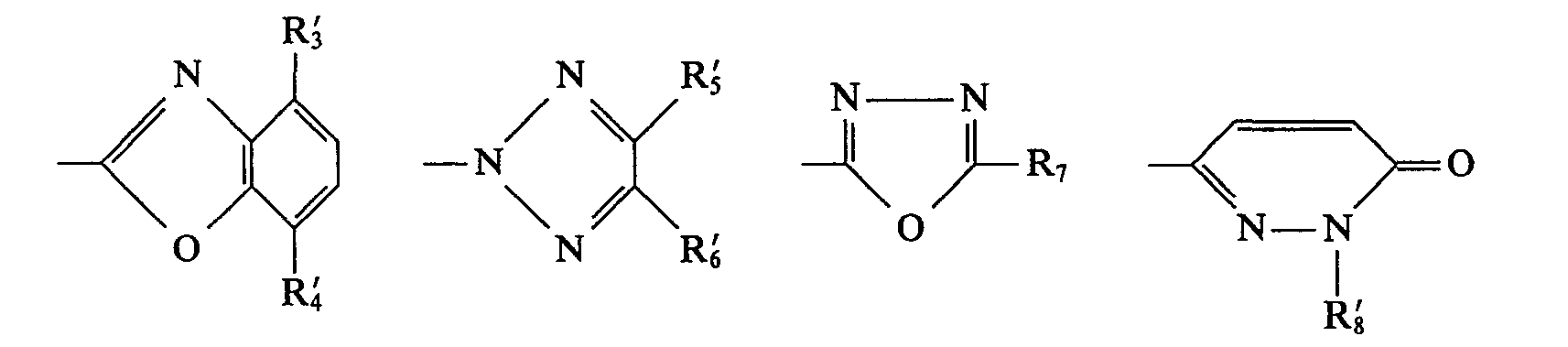
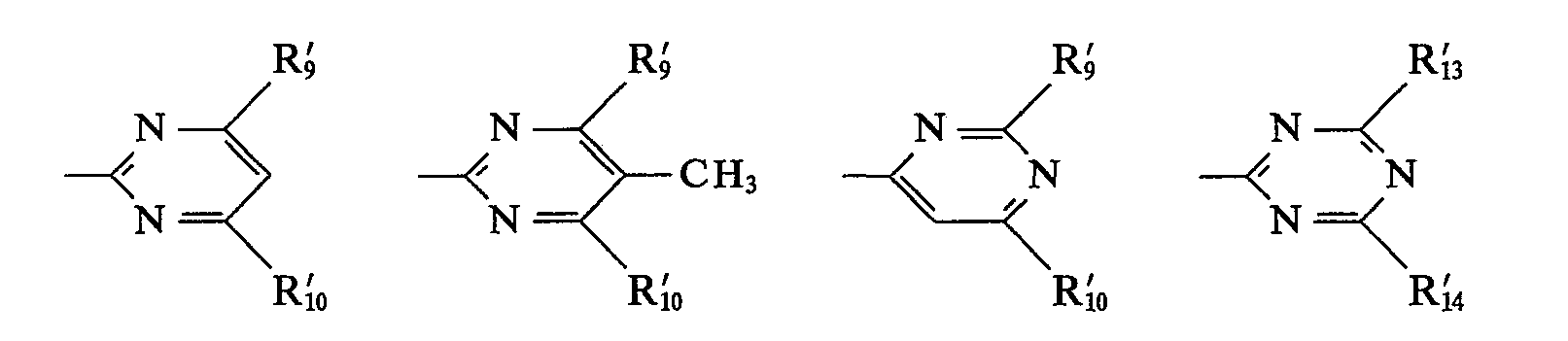

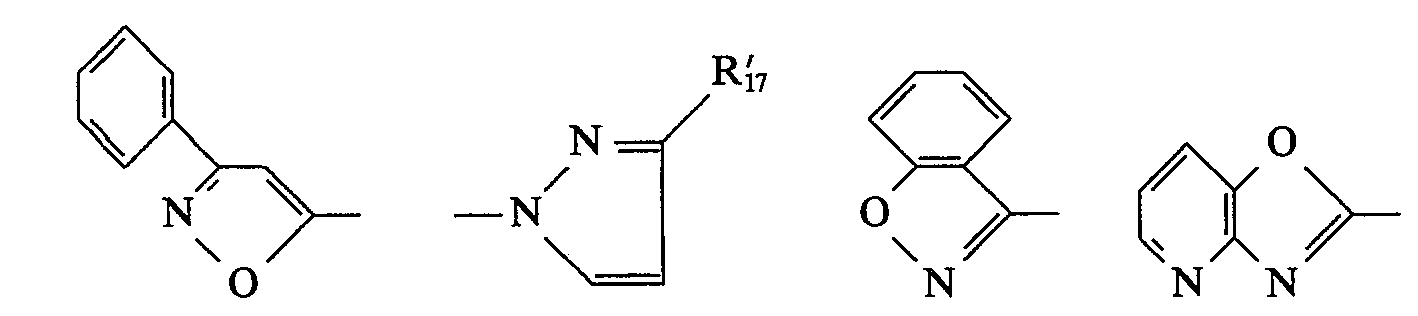


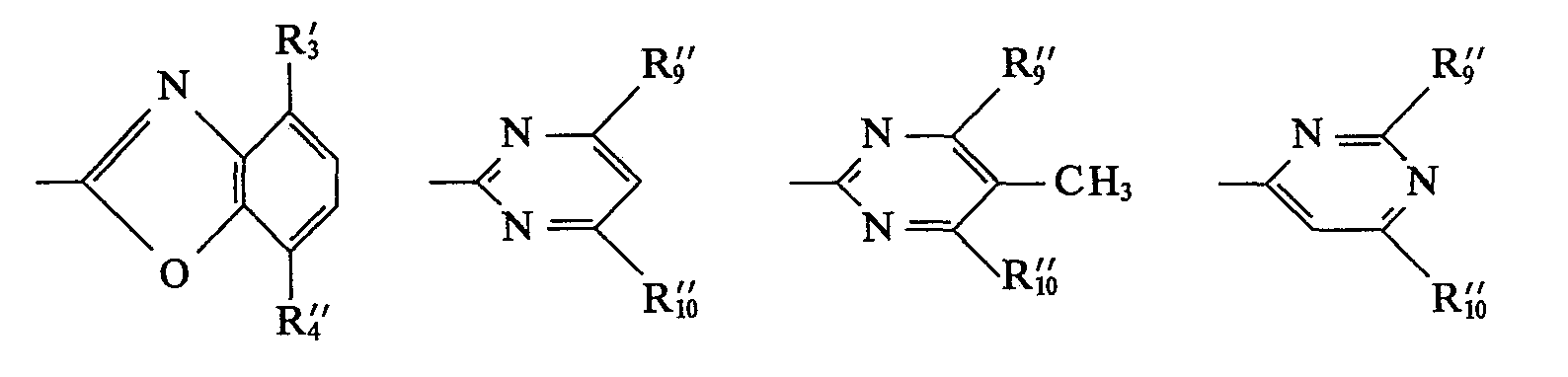


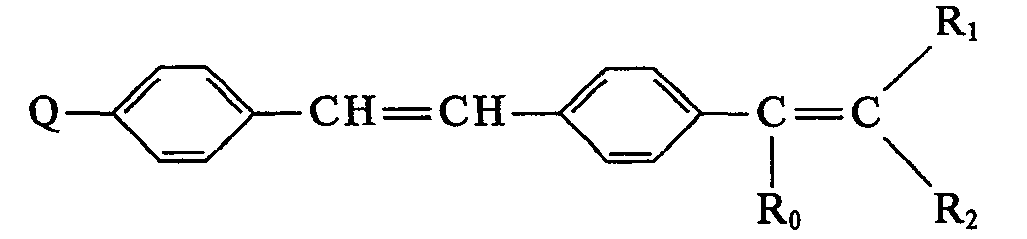
dadurch gekennzeichnet, daß man in Gegenwart basischer Kondensationsmittel eine Verbindung der Formel
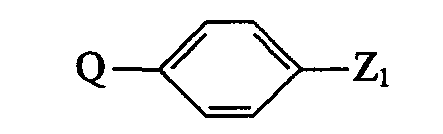


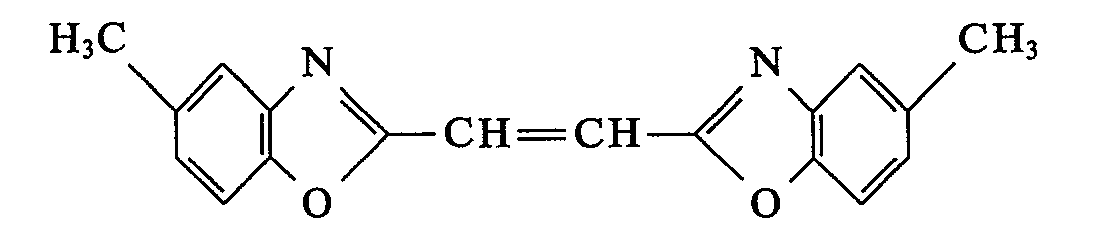
Applications Claiming Priority (4)
| Application Number | Priority Date | Filing Date | Title |
|---|---|---|---|
| CH1140279 | 1979-12-21 | ||
| CH11402/79 | 1979-12-21 | ||
| CH7008/80 | 1980-09-18 | ||
| CH700880 | 1980-09-18 |
Publications (3)
| Publication Number | Publication Date |
|---|---|
| EP0031796A2 EP0031796A2 (de) | 1981-07-08 |
| EP0031796A3 EP0031796A3 (en) | 1981-09-30 |
| EP0031796B1 true EP0031796B1 (de) | 1985-01-23 |
Family
ID=25700565
Family Applications (1)
| Application Number | Title | Priority Date | Filing Date |
|---|---|---|---|
| EP80810393A Expired EP0031796B1 (de) | 1979-12-21 | 1980-12-15 | 4-Heterocyclyl-4'-vinyl-stilbene |
Country Status (5)
| Country | Link |
|---|---|
| US (1) | US4366189A (de) |
| EP (1) | EP0031796B1 (de) |
| BR (1) | BR8008402A (de) |
| DE (1) | DE3070043D1 (de) |
| ES (1) | ES498034A0 (de) |
Cited By (5)
| Publication number | Priority date | Publication date | Assignee | Title |
|---|---|---|---|---|
| DE3246440A1 (de) * | 1981-12-18 | 1983-06-30 | F. Hoffmann-La Roche & Co AG, 4002 Basel | Acetylene |
| EP0336118A1 (de) * | 1988-03-10 | 1989-10-11 | BASF Aktiengesellschaft | 2-Phenylpyridazin-3-on-Verbindungen, Verfahren zur ihrer Herstellung und ihre Verwendung als Herbizide |
| EP0723960B1 (de) * | 1995-01-26 | 2003-04-02 | Basf Aktiengesellschaft | Herbizide 2,6-disubstituierte Pyridine und 2,4-disubstituierte Pyrimidine |
| US7144911B2 (en) | 2002-12-31 | 2006-12-05 | Deciphera Pharmaceuticals Llc | Anti-inflammatory medicaments |
| US7202257B2 (en) | 2003-12-24 | 2007-04-10 | Deciphera Pharmaceuticals, Llc | Anti-inflammatory medicaments |
Families Citing this family (22)
| Publication number | Priority date | Publication date | Assignee | Title |
|---|---|---|---|---|
| CH656379A5 (de) * | 1981-06-12 | 1986-06-30 | Ciba Geigy Ag | Stilbenverbindungen. |
| US4666627A (en) * | 1983-05-08 | 1987-05-19 | Ciba-Geigy Corporation | 4-Heterocyclylvinyl-4-'styryl-biphenyls |
| DE3527530A1 (de) * | 1985-08-01 | 1987-02-12 | Bayer Ag | Stilbenverbindungen |
| CZ290330B6 (cs) * | 1995-01-26 | 2002-07-17 | American Cyanamid Company | 2,6-Disubstituované pyridinové a 2,4-disubstituované pyrimidinové deriváty, způsob a meziprodukty pro jejich výrobu, jejich pouľití a herbicidní prostředky na jejich bázi a způsob potlačování růstu neľádoucích rostlin |
| AU2003256783A1 (en) * | 2002-07-25 | 2004-02-16 | Scios, Inc. | METHODS FOR IMPROVEMENT OF LUNG FUNCTION USING TGF-Beta INHIBITORS |
| US20040146509A1 (en) * | 2002-07-25 | 2004-07-29 | Zhihe Li | Methods for improvement of lung function using TGF-beta inhibitors |
| US7279576B2 (en) * | 2002-12-31 | 2007-10-09 | Deciphera Pharmaceuticals, Llc | Anti-cancer medicaments |
| WO2006071940A2 (en) | 2004-12-23 | 2006-07-06 | Deciphera Pharmaceuticals, Llc | Enzyme modulators and treatments |
| US8188113B2 (en) | 2006-09-14 | 2012-05-29 | Deciphera Pharmaceuticals, Inc. | Dihydropyridopyrimidinyl, dihydronaphthyidinyl and related compounds useful as kinase inhibitors for the treatment of proliferative diseases |
| US7790756B2 (en) | 2006-10-11 | 2010-09-07 | Deciphera Pharmaceuticals, Llc | Kinase inhibitors useful for the treatment of myleoproliferative diseases and other proliferative diseases |
| KR20100014811A (ko) * | 2007-04-20 | 2010-02-11 | 데시페라 파마슈티칼스, 엘엘씨. | 골수증식성 질환 및 기타 증식성 질환의 치료에 유용한 키나제 억제제 |
| US20110189167A1 (en) * | 2007-04-20 | 2011-08-04 | Flynn Daniel L | Methods and Compositions for the Treatment of Myeloproliferative Diseases and other Proliferative Diseases |
| CN102256493A (zh) * | 2008-10-29 | 2011-11-23 | 迪赛孚尔制药有限公司 | 表现出抗癌活性和抗增殖活性的环丙烷酰胺及其类似物 |
| US8461179B1 (en) | 2012-06-07 | 2013-06-11 | Deciphera Pharmaceuticals, Llc | Dihydronaphthyridines and related compounds useful as kinase inhibitors for the treatment of proliferative diseases |
| KR102708177B1 (ko) | 2018-01-31 | 2024-09-23 | 데시페라 파마슈티칼스, 엘엘씨. | 위장관 기질 종양의 치료를 위한 병용 요법 |
| IL276398B2 (en) | 2018-01-31 | 2026-03-01 | Deciphera Pharmaceuticals Llc | Combination therapy for mastocytosis |
| EP3938363A1 (de) | 2019-03-11 | 2022-01-19 | Teva Pharmaceuticals International GmbH | Festkörperformen von ripretinib |
| LT4013412T (lt) | 2019-08-12 | 2026-03-25 | Deciphera Pharmaceuticals, Llc | Ripretinibas, skirtas virškinamojo trakto stromos navikų gydymui |
| PT4013412T (pt) | 2019-08-12 | 2026-03-18 | Deciphera Pharmaceuticals Llc | Ripretinib para o tratamento de tumores estromais gastrointestinais |
| HRP20231699T1 (hr) | 2019-12-30 | 2024-05-10 | Deciphera Pharmaceuticals, Llc | Formulacije inhibitora amorfne kinaze i postupci njihove primjene |
| CN115243681B (zh) | 2019-12-30 | 2024-08-16 | 德西费拉制药有限责任公司 | 1-(4-溴-5-(1-乙基-7-(甲氨基)-2-侧氧基-1,2-二氢-1,6-萘啶-3-基)-2-氟苯基)-3-苯基脲的组合物 |
| US11779572B1 (en) | 2022-09-02 | 2023-10-10 | Deciphera Pharmaceuticals, Llc | Methods of treating gastrointestinal stromal tumors |
Family Cites Families (11)
| Publication number | Priority date | Publication date | Assignee | Title |
|---|---|---|---|---|
| CH540247A (de) * | 1967-04-21 | 1973-09-28 | Ciba Geigy Ag | Verfahren zur Herstellung von heterocyclischen, Asthylendoppelbindungen enthaltenden Verbindungen |
| CH554848A (de) * | 1967-10-03 | 1974-10-15 | Ciba Geigy Ag | Verfahren zur herstellung neuer stilben-derivate. |
| BE793273A (fr) * | 1971-12-24 | 1973-06-22 | Sandoz Sa | Derives du stilbene utilisables comme azureurs optiques |
| DE2525681A1 (de) * | 1974-06-12 | 1976-01-02 | Ciba Geigy Ag | Verfahren zur herstellung von sulfogruppenhaltigen oxazolylstilbenverbindungen |
| CH618057GA3 (en) * | 1974-09-09 | 1980-07-15 | Process for optically brightening textile organic materials with 2-stilbenyl-1,2,3-triazoles | |
| US4172045A (en) * | 1974-09-09 | 1979-10-23 | Ciba-Geigy Corporation | Process for the manufacture of 2-stilbenyl-1,2,3-triazoles which contain carboxyl groups, novel 2-stilbenyl-1,2,3-triazoles which contain carboxyl groups and the use thereof as fluorescent brighteners |
| US4196229A (en) * | 1975-02-05 | 1980-04-01 | Sandoz Ltd. | Substituted divinyl stilbenes as optical brighteners |
| CH603513A5 (de) * | 1975-02-05 | 1978-08-15 | Sandoz Ag | |
| US4113837A (en) * | 1977-09-26 | 1978-09-12 | Union Carbide Corporation | Process for separating polymeric contaminants from aqueous absorbent solutions used to treat organic gas-containing gas streams |
| LU78484A1 (de) * | 1977-11-10 | 1979-06-13 | Ciba Geigy Ag | Verfahren zur herstellung von benzoxazolyl-phenyl-stilbenen |
| US4261853A (en) * | 1979-09-24 | 1981-04-14 | Magnavox Government And Industrial Electronics Co. | Deferred action battery having an improved depolarizer |
-
1980
- 1980-12-10 US US06/214,946 patent/US4366189A/en not_active Expired - Lifetime
- 1980-12-15 EP EP80810393A patent/EP0031796B1/de not_active Expired
- 1980-12-15 DE DE8080810393T patent/DE3070043D1/de not_active Expired
- 1980-12-19 BR BR8008402A patent/BR8008402A/pt not_active IP Right Cessation
- 1980-12-20 ES ES498034A patent/ES498034A0/es active Granted
Non-Patent Citations (1)
| Title |
|---|
| Ullmanns Encyklopädie der technischen Chemie, Bd. 17 (1979), S. 461-470 * |
Cited By (8)
| Publication number | Priority date | Publication date | Assignee | Title |
|---|---|---|---|---|
| DE3246440A1 (de) * | 1981-12-18 | 1983-06-30 | F. Hoffmann-La Roche & Co AG, 4002 Basel | Acetylene |
| EP0336118A1 (de) * | 1988-03-10 | 1989-10-11 | BASF Aktiengesellschaft | 2-Phenylpyridazin-3-on-Verbindungen, Verfahren zur ihrer Herstellung und ihre Verwendung als Herbizide |
| EP0723960B1 (de) * | 1995-01-26 | 2003-04-02 | Basf Aktiengesellschaft | Herbizide 2,6-disubstituierte Pyridine und 2,4-disubstituierte Pyrimidine |
| US7144911B2 (en) | 2002-12-31 | 2006-12-05 | Deciphera Pharmaceuticals Llc | Anti-inflammatory medicaments |
| US7342037B2 (en) | 2002-12-31 | 2008-03-11 | Deciphera Pharmaceuticals, Llc | Anti-inflammatory medicaments |
| US7666895B2 (en) | 2002-12-31 | 2010-02-23 | Deciphera Pharmaceuticals, Llc | Anti-inflammatory medicaments |
| US7737283B2 (en) | 2002-12-31 | 2010-06-15 | Deciphera Pharmaceuticals, Llc | Anti-inflammatory medicaments |
| US7202257B2 (en) | 2003-12-24 | 2007-04-10 | Deciphera Pharmaceuticals, Llc | Anti-inflammatory medicaments |
Also Published As
| Publication number | Publication date |
|---|---|
| EP0031796A2 (de) | 1981-07-08 |
| EP0031796A3 (en) | 1981-09-30 |
| ES8201201A1 (es) | 1981-11-16 |
| BR8008402A (pt) | 1981-07-21 |
| US4366189A (en) | 1982-12-28 |
| ES498034A0 (es) | 1981-11-16 |
| DE3070043D1 (de) | 1985-03-07 |
Similar Documents
| Publication | Publication Date | Title |
|---|---|---|
| EP0031796B1 (de) | 4-Heterocyclyl-4'-vinyl-stilbene | |
| DE2262633C3 (de) | Sulfogruppen und v-Triazolylreste enthaltende 4,4'-Divinyldiphenyl-Verbindungen und deren Salze | |
| US4167628A (en) | Novel benzoxazole compounds | |
| EP0136259B1 (de) | 4-Heterocyclylvinyl-4'-styryl-biphenyle | |
| EP0030917B1 (de) | Optische Aufheller aus Bis-styrylbenzolverbindungen, Verfahren zu deren Herstellung und deren Verwendung | |
| EP0067792B1 (de) | Stilbenverbindungen | |
| EP0020298B1 (de) | Benzoxazolyl-Stilbene, Verfahren zu ihrer Herstellung und ihre Verwendung zum optischen Aufhellen von organischen Materialien | |
| EP0002042A1 (de) | Diamino-1,3,5-triazinylstilbenverbindungen, Verfahren zu deren Herstellung und ihre Verwendung als optische Aufheller | |
| DE2535613A1 (de) | Neue stilbenverbindungen | |
| DE2525684A1 (de) | Neue stilbenverbindungen | |
| DE2209128A1 (de) | Neue Bi's-Stilbenverbindungen | |
| EP0006171B1 (de) | Neue Stilbenverbindungen, Verfahren zu deren Herstellung und deren Verwendung als optische Aufheller | |
| EP0000346B1 (de) | Chinoxalinverbindungen, Verfahren zu deren Herstellung, deren Verwendung zum Weisstönen organischer Materialien und damit weissgetönte Materialien | |
| DE2535612A1 (de) | Neue stilbenverbindungen | |
| EP0054511B1 (de) | 4-Styryl-4'-vinylbiphenyle, Verfahren zu deren Herstellung und deren Verwendung als optische Aufheller | |
| DE2309614A1 (de) | Azolverbindungen, verfahren zu deren herstellung und deren verwendung | |
| EP0022491B1 (de) | Neue Stilbenverbindungen, Verfahren zu deren Herstellung und deren Verwendung als optische Aufheller | |
| DE2332089C2 (de) | 2,7-Distyryl-dibenzofurane und deren Verwendung | |
| DE2712409A1 (de) | Neue 4-(v-triazolyl)-styrylverbindungen | |
| EP0009095A1 (de) | 1,3,4-Oxadiazolon(2)-Verbindungen, Verfahren zu deren Herstellung und deren Verwendung als optische Aufheller | |
| DE2609421A1 (de) | Neue benzoxazol-styryle | |
| DE2535615A1 (de) | Verfahren zur herstellung von styrolderivaten, neue styrolderivate und deren verwendung als optische aufhellmittel | |
| EP0006176B1 (de) | Neue Stilbenverbindungen, Verfahren zu deren Herstellung und deren Verwendung als optische Aufheller | |
| DE3001424A1 (de) | V-triazolyl- eckige klammer auf 4,5-d eckige klammer zu -pyrimidine | |
| DE2712408A1 (de) | Neue 3-phenyl-7-(v-triazol-2-yl)-cumarine |
Legal Events
| Date | Code | Title | Description |
|---|---|---|---|
| PUAI | Public reference made under article 153(3) epc to a published international application that has entered the european phase |
Free format text: ORIGINAL CODE: 0009012 |
|
| 17P | Request for examination filed |
Effective date: 19801217 |
|
| AK | Designated contracting states |
Designated state(s): CH DE FR GB IT |
|
| PUAL | Search report despatched |
Free format text: ORIGINAL CODE: 0009013 |
|
| AK | Designated contracting states |
Designated state(s): CH DE FR GB IT |
|
| ITF | It: translation for a ep patent filed | ||
| GRAA | (expected) grant |
Free format text: ORIGINAL CODE: 0009210 |
|
| AK | Designated contracting states |
Designated state(s): CH DE FR GB IT LI |
|
| REF | Corresponds to: |
Ref document number: 3070043 Country of ref document: DE Date of ref document: 19850307 |
|
| ET | Fr: translation filed | ||
| PLBE | No opposition filed within time limit |
Free format text: ORIGINAL CODE: 0009261 |
|
| STAA | Information on the status of an ep patent application or granted ep patent |
Free format text: STATUS: NO OPPOSITION FILED WITHIN TIME LIMIT |
|
| 26N | No opposition filed | ||
| PGFP | Annual fee paid to national office [announced via postgrant information from national office to epo] |
Ref country code: FR Payment date: 19921023 Year of fee payment: 13 |
|
| PGFP | Annual fee paid to national office [announced via postgrant information from national office to epo] |
Ref country code: GB Payment date: 19921110 Year of fee payment: 13 |
|
| PGFP | Annual fee paid to national office [announced via postgrant information from national office to epo] |
Ref country code: DE Payment date: 19921113 Year of fee payment: 13 |
|
| PGFP | Annual fee paid to national office [announced via postgrant information from national office to epo] |
Ref country code: CH Payment date: 19921222 Year of fee payment: 13 |
|
| ITTA | It: last paid annual fee | ||
| PG25 | Lapsed in a contracting state [announced via postgrant information from national office to epo] |
Ref country code: GB Effective date: 19931215 |
|
| PG25 | Lapsed in a contracting state [announced via postgrant information from national office to epo] |
Ref country code: LI Effective date: 19931231 Ref country code: CH Effective date: 19931231 |
|
| GBPC | Gb: european patent ceased through non-payment of renewal fee |
Effective date: 19931215 |
|
| PG25 | Lapsed in a contracting state [announced via postgrant information from national office to epo] |
Ref country code: FR Effective date: 19940831 |
|
| REG | Reference to a national code |
Ref country code: CH Ref legal event code: PL |
|
| PG25 | Lapsed in a contracting state [announced via postgrant information from national office to epo] |
Ref country code: DE Effective date: 19940901 |
|
| REG | Reference to a national code |
Ref country code: FR Ref legal event code: ST |