EP0032255A1 - Procédé pour la neutralisation directe d'un mélange réactionnel provenant du clivage acide d'un dérivé alpha-hydroxy d'un hydrocarbure aromatique alkyl-substitué et élimination du sel formé - Google Patents
Procédé pour la neutralisation directe d'un mélange réactionnel provenant du clivage acide d'un dérivé alpha-hydroxy d'un hydrocarbure aromatique alkyl-substitué et élimination du sel formé Download PDFInfo
- Publication number
- EP0032255A1 EP0032255A1 EP19800108267 EP80108267A EP0032255A1 EP 0032255 A1 EP0032255 A1 EP 0032255A1 EP 19800108267 EP19800108267 EP 19800108267 EP 80108267 A EP80108267 A EP 80108267A EP 0032255 A1 EP0032255 A1 EP 0032255A1
- Authority
- EP
- European Patent Office
- Prior art keywords
- mixer
- reaction mixture
- settler
- settler means
- stage
- Prior art date
- Legal status (The legal status is an assumption and is not a legal conclusion. Google has not performed a legal analysis and makes no representation as to the accuracy of the status listed.)
- Granted
Links
- 239000011541 reaction mixture Substances 0.000 title claims abstract description 43
- 238000003776 cleavage reaction Methods 0.000 title claims abstract description 36
- 239000002253 acid Substances 0.000 title claims abstract description 31
- 238000006386 neutralization reaction Methods 0.000 title claims abstract description 18
- 150000003839 salts Chemical class 0.000 title claims abstract description 16
- 150000004945 aromatic hydrocarbons Chemical class 0.000 title claims abstract description 15
- 230000007017 scission Effects 0.000 title claims abstract description 15
- 238000000034 method Methods 0.000 title claims description 34
- 239000012074 organic phase Substances 0.000 claims abstract description 51
- 239000008346 aqueous phase Substances 0.000 claims abstract description 50
- XLYOFNOQVPJJNP-UHFFFAOYSA-N water Substances O XLYOFNOQVPJJNP-UHFFFAOYSA-N 0.000 claims abstract description 32
- 125000001867 hydroperoxy group Chemical group [*]OO[H] 0.000 claims abstract description 9
- ISWSIDIOOBJBQZ-UHFFFAOYSA-N Phenol Chemical compound OC1=CC=CC=C1 ISWSIDIOOBJBQZ-UHFFFAOYSA-N 0.000 claims description 64
- QAOWNCQODCNURD-UHFFFAOYSA-N Sulfuric acid Chemical compound OS(O)(=O)=O QAOWNCQODCNURD-UHFFFAOYSA-N 0.000 claims description 16
- NESLWCLHZZISNB-UHFFFAOYSA-M sodium phenolate Chemical compound [Na+].[O-]C1=CC=CC=C1 NESLWCLHZZISNB-UHFFFAOYSA-M 0.000 claims description 14
- FRIBMENBGGCKPD-UHFFFAOYSA-N 3-(2,3-dimethoxyphenyl)prop-2-enal Chemical compound COC1=CC=CC(C=CC=O)=C1OC FRIBMENBGGCKPD-UHFFFAOYSA-N 0.000 claims description 10
- 150000002576 ketones Chemical class 0.000 claims description 5
- 238000007599 discharging Methods 0.000 claims description 3
- 230000007425 progressive decline Effects 0.000 claims description 3
- 230000000750 progressive effect Effects 0.000 claims description 3
- 229910052783 alkali metal Inorganic materials 0.000 claims 1
- 150000001340 alkali metals Chemical class 0.000 claims 1
- RWGFKTVRMDUZSP-UHFFFAOYSA-N cumene Chemical compound CC(C)C1=CC=CC=C1 RWGFKTVRMDUZSP-UHFFFAOYSA-N 0.000 description 94
- CSCPPACGZOOCGX-UHFFFAOYSA-N Acetone Chemical compound CC(C)=O CSCPPACGZOOCGX-UHFFFAOYSA-N 0.000 description 82
- 239000003518 caustics Substances 0.000 description 28
- PMZURENOXWZQFD-UHFFFAOYSA-L Sodium Sulfate Chemical compound [Na+].[Na+].[O-]S([O-])(=O)=O PMZURENOXWZQFD-UHFFFAOYSA-L 0.000 description 26
- 238000007254 oxidation reaction Methods 0.000 description 25
- XYLMUPLGERFSHI-UHFFFAOYSA-N alpha-Methylstyrene Chemical compound CC(=C)C1=CC=CC=C1 XYLMUPLGERFSHI-UHFFFAOYSA-N 0.000 description 23
- 229910052938 sodium sulfate Inorganic materials 0.000 description 22
- 235000011152 sodium sulphate Nutrition 0.000 description 22
- 230000003647 oxidation Effects 0.000 description 21
- 238000011084 recovery Methods 0.000 description 21
- 239000012071 phase Substances 0.000 description 20
- 239000000047 product Substances 0.000 description 13
- HEMHJVSKTPXQMS-UHFFFAOYSA-M Sodium hydroxide Chemical compound [OH-].[Na+] HEMHJVSKTPXQMS-UHFFFAOYSA-M 0.000 description 12
- 238000000926 separation method Methods 0.000 description 12
- 239000000203 mixture Substances 0.000 description 10
- 238000004821 distillation Methods 0.000 description 9
- 230000000694 effects Effects 0.000 description 8
- MHAJPDPJQMAIIY-UHFFFAOYSA-N Hydrogen peroxide Chemical compound OO MHAJPDPJQMAIIY-UHFFFAOYSA-N 0.000 description 7
- 239000000463 material Substances 0.000 description 6
- 238000005185 salting out Methods 0.000 description 5
- -1 aromatic hydrocarbon radical Chemical class 0.000 description 4
- 230000008901 benefit Effects 0.000 description 4
- 238000009835 boiling Methods 0.000 description 4
- 239000006227 byproduct Substances 0.000 description 4
- 239000000243 solution Substances 0.000 description 4
- 239000004215 Carbon black (E152) Substances 0.000 description 3
- 125000004432 carbon atom Chemical group C* 0.000 description 3
- 238000006243 chemical reaction Methods 0.000 description 3
- YQHLDYVWEZKEOX-UHFFFAOYSA-N cumene hydroperoxide Chemical compound OOC(C)(C)C1=CC=CC=C1 YQHLDYVWEZKEOX-UHFFFAOYSA-N 0.000 description 3
- 229930195733 hydrocarbon Natural products 0.000 description 3
- OZXIZRZFGJZWBF-UHFFFAOYSA-N 1,3,5-trimethyl-2-(2,4,6-trimethylphenoxy)benzene Chemical compound CC1=CC(C)=CC(C)=C1OC1=C(C)C=C(C)C=C1C OZXIZRZFGJZWBF-UHFFFAOYSA-N 0.000 description 2
- KWOLFJPFCHCOCG-UHFFFAOYSA-N Acetophenone Chemical compound CC(=O)C1=CC=CC=C1 KWOLFJPFCHCOCG-UHFFFAOYSA-N 0.000 description 2
- VEXZGXHMUGYJMC-UHFFFAOYSA-N Hydrochloric acid Chemical compound Cl VEXZGXHMUGYJMC-UHFFFAOYSA-N 0.000 description 2
- FAPWRFPIFSIZLT-UHFFFAOYSA-M Sodium chloride Chemical compound [Na+].[Cl-] FAPWRFPIFSIZLT-UHFFFAOYSA-M 0.000 description 2
- 230000002411 adverse Effects 0.000 description 2
- 150000004996 alkyl benzenes Chemical group 0.000 description 2
- 125000003118 aryl group Chemical group 0.000 description 2
- QVGXLLKOCUKJST-UHFFFAOYSA-N atomic oxygen Chemical compound [O] QVGXLLKOCUKJST-UHFFFAOYSA-N 0.000 description 2
- 229910052799 carbon Inorganic materials 0.000 description 2
- 230000003197 catalytic effect Effects 0.000 description 2
- 150000001908 cumenes Chemical class 0.000 description 2
- 125000000753 cycloalkyl group Chemical group 0.000 description 2
- 230000003247 decreasing effect Effects 0.000 description 2
- 230000008030 elimination Effects 0.000 description 2
- 238000003379 elimination reaction Methods 0.000 description 2
- XLSMFKSTNGKWQX-UHFFFAOYSA-N hydroxyacetone Chemical compound CC(=O)CO XLSMFKSTNGKWQX-UHFFFAOYSA-N 0.000 description 2
- 239000012535 impurity Substances 0.000 description 2
- SHOJXDKTYKFBRD-UHFFFAOYSA-N mesityl oxide Natural products CC(C)=CC(C)=O SHOJXDKTYKFBRD-UHFFFAOYSA-N 0.000 description 2
- 239000001301 oxygen Substances 0.000 description 2
- 229910052760 oxygen Inorganic materials 0.000 description 2
- VLTRZXGMWDSKGL-UHFFFAOYSA-N perchloric acid Chemical compound OCl(=O)(=O)=O VLTRZXGMWDSKGL-UHFFFAOYSA-N 0.000 description 2
- 150000002989 phenols Chemical class 0.000 description 2
- 239000002244 precipitate Substances 0.000 description 2
- 230000001376 precipitating effect Effects 0.000 description 2
- 239000011780 sodium chloride Substances 0.000 description 2
- RSIJVJUOQBWMIM-UHFFFAOYSA-L sodium sulfate decahydrate Chemical compound O.O.O.O.O.O.O.O.O.O.[Na+].[Na+].[O-]S([O-])(=O)=O RSIJVJUOQBWMIM-UHFFFAOYSA-L 0.000 description 2
- YCCHNFGPIFYNTF-UHFFFAOYSA-N tertiary cymene hydroperoxide Natural products CC1=CC=C(C(C)(C)OO)C=C1 YCCHNFGPIFYNTF-UHFFFAOYSA-N 0.000 description 2
- BQFDWZCVGKLOIN-UHFFFAOYSA-N (1-hydroperoxy-1-phenylethyl)benzene Chemical compound C=1C=CC=CC=1C(OO)(C)C1=CC=CC=C1 BQFDWZCVGKLOIN-UHFFFAOYSA-N 0.000 description 1
- QCRRJEABYLEFAE-UHFFFAOYSA-N (1-hydroperoxycyclohexyl)benzene Chemical compound C=1C=CC=CC=1C1(OO)CCCCC1 QCRRJEABYLEFAE-UHFFFAOYSA-N 0.000 description 1
- NWUYHJFMYQTDRP-UHFFFAOYSA-N 1,2-bis(ethenyl)benzene;1-ethenyl-2-ethylbenzene;styrene Chemical compound C=CC1=CC=CC=C1.CCC1=CC=CC=C1C=C.C=CC1=CC=CC=C1C=C NWUYHJFMYQTDRP-UHFFFAOYSA-N 0.000 description 1
- GRQWCGCHXZBGLH-UHFFFAOYSA-N 1-(1-hydroperoxyethyl)-4-methylbenzene Chemical compound OOC(C)C1=CC=C(C)C=C1 GRQWCGCHXZBGLH-UHFFFAOYSA-N 0.000 description 1
- WOKQZDIMQAQVHI-UHFFFAOYSA-N 1-ethyl-4-(2-hydroperoxypropan-2-yl)benzene Chemical compound CCC1=CC=C(C(C)(C)OO)C=C1 WOKQZDIMQAQVHI-UHFFFAOYSA-N 0.000 description 1
- GQNOPVSQPBUJKQ-UHFFFAOYSA-N 1-hydroperoxyethylbenzene Chemical compound OOC(C)C1=CC=CC=C1 GQNOPVSQPBUJKQ-UHFFFAOYSA-N 0.000 description 1
- BDCFWIDZNLCTMF-UHFFFAOYSA-N 2-phenylpropan-2-ol Chemical compound CC(C)(O)C1=CC=CC=C1 BDCFWIDZNLCTMF-UHFFFAOYSA-N 0.000 description 1
- UFHFLCQGNIYNRP-UHFFFAOYSA-N Hydrogen Chemical compound [H][H] UFHFLCQGNIYNRP-UHFFFAOYSA-N 0.000 description 1
- 230000002378 acidificating effect Effects 0.000 description 1
- 239000002535 acidifier Substances 0.000 description 1
- 125000000217 alkyl group Chemical group 0.000 description 1
- 239000011260 aqueous acid Substances 0.000 description 1
- 239000007864 aqueous solution Substances 0.000 description 1
- 150000001491 aromatic compounds Chemical class 0.000 description 1
- 125000003710 aryl alkyl group Chemical group 0.000 description 1
- 150000005840 aryl radicals Chemical class 0.000 description 1
- 230000015572 biosynthetic process Effects 0.000 description 1
- 239000003054 catalyst Substances 0.000 description 1
- 238000003889 chemical engineering Methods 0.000 description 1
- 125000002592 cumenyl group Chemical group C1(=C(C=CC=C1)*)C(C)C 0.000 description 1
- 238000010586 diagram Methods 0.000 description 1
- 239000006185 dispersion Substances 0.000 description 1
- 230000002349 favourable effect Effects 0.000 description 1
- 239000007789 gas Substances 0.000 description 1
- 239000011491 glass wool Substances 0.000 description 1
- 150000002430 hydrocarbons Chemical class 0.000 description 1
- 239000001257 hydrogen Substances 0.000 description 1
- 229910052739 hydrogen Inorganic materials 0.000 description 1
- YVJRCWCFDJYONJ-UHFFFAOYSA-N hydroperoxymethylbenzene Chemical compound OOCC1=CC=CC=C1 YVJRCWCFDJYONJ-UHFFFAOYSA-N 0.000 description 1
- 125000002887 hydroxy group Chemical group [H]O* 0.000 description 1
- 230000006698 induction Effects 0.000 description 1
- 239000003456 ion exchange resin Substances 0.000 description 1
- 229920003303 ion-exchange polymer Polymers 0.000 description 1
- 239000007791 liquid phase Substances 0.000 description 1
- 238000000622 liquid--liquid extraction Methods 0.000 description 1
- 239000007800 oxidant agent Substances 0.000 description 1
- QBDSZLJBMIMQRS-UHFFFAOYSA-N p-Cumylphenol Chemical compound C=1C=C(O)C=CC=1C(C)(C)C1=CC=CC=C1 QBDSZLJBMIMQRS-UHFFFAOYSA-N 0.000 description 1
- NKTOLZVEWDHZMU-UHFFFAOYSA-N p-cumyl phenol Natural products CC1=CC=C(C)C(O)=C1 NKTOLZVEWDHZMU-UHFFFAOYSA-N 0.000 description 1
- 239000000376 reactant Substances 0.000 description 1
- 238000000638 solvent extraction Methods 0.000 description 1
Images
Classifications
-
- C—CHEMISTRY; METALLURGY
- C07—ORGANIC CHEMISTRY
- C07C—ACYCLIC OR CARBOCYCLIC COMPOUNDS
- C07C37/00—Preparation of compounds having hydroxy or O-metal groups bound to a carbon atom of a six-membered aromatic ring
- C07C37/08—Preparation of compounds having hydroxy or O-metal groups bound to a carbon atom of a six-membered aromatic ring by decomposition of hydroperoxides, e.g. cumene hydroperoxide
-
- C—CHEMISTRY; METALLURGY
- C07—ORGANIC CHEMISTRY
- C07C—ACYCLIC OR CARBOCYCLIC COMPOUNDS
- C07C37/00—Preparation of compounds having hydroxy or O-metal groups bound to a carbon atom of a six-membered aromatic ring
- C07C37/68—Purification; separation; Use of additives, e.g. for stabilisation
- C07C37/685—Processes comprising at least two steps in series
-
- C—CHEMISTRY; METALLURGY
- C07—ORGANIC CHEMISTRY
- C07C—ACYCLIC OR CARBOCYCLIC COMPOUNDS
- C07C37/00—Preparation of compounds having hydroxy or O-metal groups bound to a carbon atom of a six-membered aromatic ring
- C07C37/68—Purification; separation; Use of additives, e.g. for stabilisation
- C07C37/70—Purification; separation; Use of additives, e.g. for stabilisation by physical treatment
- C07C37/72—Purification; separation; Use of additives, e.g. for stabilisation by physical treatment by liquid-liquid treatment
-
- C—CHEMISTRY; METALLURGY
- C07—ORGANIC CHEMISTRY
- C07C—ACYCLIC OR CARBOCYCLIC COMPOUNDS
- C07C45/00—Preparation of compounds having >C = O groups bound only to carbon or hydrogen atoms; Preparation of chelates of such compounds
- C07C45/51—Preparation of compounds having >C = O groups bound only to carbon or hydrogen atoms; Preparation of chelates of such compounds by pyrolysis, rearrangement or decomposition
- C07C45/53—Preparation of compounds having >C = O groups bound only to carbon or hydrogen atoms; Preparation of chelates of such compounds by pyrolysis, rearrangement or decomposition of hydroperoxides
Definitions
- This invention relates to a proces for the recovery of a phenol from a reaction mixture resulting from the acid cleavage of an alpha hydroperoxy derivative of an alkyl-substituted aromatic compound, and, in particular, to a process for the recovery of phenol from a reaction mixture resulting from the acid cleavage of cumene hydroperoxide.
- phenols are prepared by the oxidation of an alkyl-substituted aromatic hydrocarbon and the subsequent acid cleavage of the resulting alpha hydroperoxy derivative thereof to form a reaction mixture comprising a phenol, a ketone and unreacted alkyl-substituted aromatic hydrocarbon.
- the acid cleavage is generally effected in the presence of an aqueous acid catalyst, usually 50 - 98% sulfuric acid in aqueous solution, and preferably at least 70%, or in the presence of an aqueous hydrochloric or perchloric acid solution.
- the present invention is particularly directed to a process wherein phenol is prepared by the air oxidation of cumene and the subsequent sulfuric acid cleavage of the resulting cumene hydroperoxide to form a reaction mixture comprising phenol, acetone and unreacted cumene.
- phenol is prepared by the air oxidation of cumene and the subsequent sulfuric acid cleavage of the resulting cumene hydroperoxide to form a reaction mixture comprising phenol, acetone and unreacted cumene.
- by-products such as mesityl oxide, alpha-methylstyrene, p-cumylphenol, phenyldimethylcarbinol, acetophenone, and higher molecular weight phenols.
- the acidic reaction mixture is initially neutralized, either directly by the addition of caustic, or indire-tly by contact with an ion exchange resin.
- the neutralized reaction mixture is fed to a distillation column, commonly referred to as a crude acetone column, at conditions to effect a crude separation of those materials boiling below phenol whereby an overhead fraction is recovered comprising substantially all of the acetone and lower boiling by-products, as well as a substantial portion of the water and unreacted cumene.
- Acetone is subsequently recovered, as is cumene, by the further distillation of the crude acetone column overhead, the cumene being recycled to the oxidation process.
- the bottoms fraction recovered from the crude acetone column comprising phenol and alpha-methylstyrene as well as the balance of the water and unreacted cumene-, is typically treated for the separation of heavy ends and thereafter fed to a distillation column, commonly referred to as a cumene or alpha-methylstyrene column.
- the last- mentioned column is operated at conditions to separate an overhead fraction comprising water, cumene and alpha-methylstyrene from the higher boiling phenol product.
- the phenol, recovered as the bottoms fraction further contains certain impurities, e. g., mesityl oxide, hydroxy acetone, etc., and said impurities are treated and separated from said bottoms fraction to yield a substantially pure phenol product.
- the overhead fraction from the cumene column will invariably comprise a significant amount of phenol as well as cumene and.alpha-methylstyrene. It has heretofore been the practice to caustic-extract this overhead fraction, and the cumene/ alpha-methylstyrene recovered as a water-immiscible organic phase is either fractionated for alpha-methylstyrene recovery or hydrotreated and recycled to oxidation as cumene.
- the phenol is recovered as sodium phenate in the aqueous phase, a practice which has heretofore necessitated a separate phenol recovery facility wherein the aqueous sodium phenate solution is acid treated, the resulting phenol being recycled and combined with the acid cleavage product for recovery as heretofore described, and the acidifying agent being subsequently caustic-treated for safe disposal.
- the present invention embodies a process for the direct neutralization of a reaction mixture resulting from the acid cleavage of an alpha hydroperoxy derivative of an alkyl-substituted aromatic hydrocarbon which comprises the steps of (a) effecting the direct neutralization of said acid cleavage reaction mixture and forming a reaction mixture comprising a phenol, a ketone, a secondary alkylbenzene and a salt of neutralization; (b) charging the salt-containing reaction mixture to the mixing stage of the first of a plurality of mixer-settler means, and mixing the same therein with a salt-containing aqueous phase admixed thereon or prior to said mixing stage in accordance with step (g); (c) separating an organic phase and an aqueous phase in the settling stage of said first mixer-settler means; (d) charging said organic phase to the mixing stage of each succeeding mixer-settler means from the settling stage of the next preceding mixer-settler means and effecting a progressive decrease
- One of the more specific embodiments of this invention concerns a process for the direct neutralization of a reaction mixture resulting from the sulfuric acid cleavage of cumene hydroperoxide which comprises the steps of (a) contacting the cleavage reaction mixture with sodium phenate and forming a neutralized reaction mixture comprising phenol, acetone, cumene and a sodium sulfate salt of neutralization; (b) charging the sodium sulfate-containing reaction mixture to the mixing stage of a first mixer-settler means and mixing the same therein at a temperature of from about 95° to about 120°F.
- step (g) separating an organic phase and an aqueous phase in the settling stage of said first mixer-settler means at said conditions of temperature and pH; (d) charging the organic 3 hase from the settling stage of said mixer-settler means to the mixing stage of a second mixer-settler means and effecting a progressive decrease in the sodium sulfate concentration of said organic phase at a temperature of from about 95° to about 120°F.
- the overall process to which this invention pertains concerns the oxidation of an alkyl-substituted aromatic hydrocarbon, and the alpha hydroxy derivatives thereof may be represented by the general formula wherein Ar represents an aromatic hydrocarbon radical which may be an aryl radical or an alkaryl radical, and the hydroperoxy group (-O-O-H) is attached to a carbon atom alpha the aromatic nucleus, and R, and R 2 may be hydrogen or the same or different alkyl, cycloalkyl, aryl, aralkyl or alkaryl hydrocarbon radicals, or R 1 and R 2 together with the said alpha carbon atom to which they are attached may form a cycloalkyl group containing up to about 8 carbon atoms, for example, as in the case of 1-phenyl-1-hydroperoxy-cyclohexane.
- R 1 and R 2 are preferably n-alkyl hydrocarbon radicals so that the hydroperoxide is an alpha hydroperoxy derivative of a secondary alkylbenzene.
- the alpha hydroperoxy derivatives of alkyl substituted aromatic hydrocarbons herein contemplated thus include benzyl hydroperoxide,
- the aforesaid oxidation reaction is effected at conditions well known in the art.
- the hydroperoxide oxidation product can be prepared by direct liquid phase oxidation of the selected alkyl-substituted aromatic hydrocarbon with oxygen, or an oxygen-containing gas such as air, usually at an elevated temperature.
- the oxidation reaction proceeds slowly through an initial period, aceelerating to a more favorable rate with the formation of the hydroperoxide which exerts a catalytic effect on the oxidation reaction.
- This initial induction period is eliminated, or substantially re-1uced, by initially including a hydroperoxide in the reaction mixture, usually the hydroperoxide product of the reaction.
- other materials are disclosed in the art which exhibit a similar catalytic effect.
- Temperatures effecting the oxidation reaction range from about room temperature to about the boiling point of the hydrocarbon subjected to oxidation, which, in the case of cumene, is about 305 0 F. In general, it is preferred to utilize an elevated temperature in the range of from about 120 to about 265 0 F. The optimum temperature will depend on the particular alkyl-substituted aromatic hydrocarbon to be oxidized and on the reaction conditions otherwise employed.
- the oxidation can be effected at pressures ranging from about atmospheric to about 500 psig., although a pressure not exceeding about 90 psig. is generally preferred.
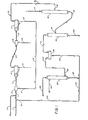
- a reaction mixture resulting from the acid cleavage of cumene hydroperoxide is charged to the phenol recovery process through line 1.
- the cleavage reaction mixture comprises, on an hourly basis, about 115.8 moles of phenol, 123.8 moles of acetone, 37.9 moles of unreacted cumene, 4.8 moles of alpha-methylstyrene, 0.3 moles of sulfuric acid, and 29.9 moles of water.
- Said recycle stream further comprises about 0.3 moles of acetone and 87.2 moles of water discharged into line 1 per hour. In this instance, about 1.6 moles of 98 wt.% sulfuric acid are metered through line 2 per hour to adjust the pH of the combined streams to a pH of about 6 or less and facilitate the subsequent separation of phenol therefrom.
- the resulting mixture is then continued through line 1 to the mixing stage 3 of a first mixer-settler means comprising said mixing stage 3 and a settling stage 4, said mixer-settler means being hereafter referred to as mixer-settler means 3-4.
- said mixture is further admixed with a sodium sulfate-containing aqueous stream charged thereto from line 5 and originating as hereinafter described.
- the effluent from the mixing stage 3 is transferred through line 6 to the settling stage 4, and processed through a coalescing means 7 to promote the separation of the organic and aqueous phases therein.
- the organic and aqueous phases are preferably treated in the mixer-settler means at a temperature in excess of about 90°F., and more preferably at a temperature of from about 95 0 F. to about 120°F. This allows for a maximum concentration of sodium sulfate in the aqueous phase, taking full advantage of the salting-out effect of the sodium sulfate. Further, any sodium sulfate precipitating from the aqueous phase will do so as a free-flowing anhydrous form less apt to deposit and accumulate on a surface and cause a fouling of process equipment.
- the organic phase from line 9 is admixed with a substantially salt-free aqueous phase introduced to said mixing stage 10 at a rate of about 25.3 moles per hour by way of line 12.
- the resulting mixed phases are then transferred through line 13 to the settling stage 11 of the mixer-settler means 10-11.
- the mixture is processed through a coalescing means 14 in the settling stage 11 to facilitate separation of the organic and aqueous phases therein. Essentially all of the sodium sulfate remaining in the organic phase is recovered in the aqueous phase.
- the aqeuous phase is thenwLthdrawn from the settling stage 11 by way of line 5 and transferred to the mixing stage 3 of the first mixer-settler means 3-4 to provide about 61.7 moles of water per hour to said mixing stage.
- About 115.8 moles of phenol are recovered per hour from the bottom of the cumene column 19 by way of line 20, and this product is further treated in distillation means, not shown, for the recovery of a substantially pure phenol product.
- the overhead fraction withdrawn from the cumene column 19 by way of line 21, comprises about 3.3 moles of phenol, 0.3 moles of acetone, 28.7 moles of cumene, 4.8 moles of alpha-methylstyrene and 38.4 moles of water per hour, and this fraction is charged to a settler 22.
- the aqueous phase which settles out comprises substantially all of the water charged to the settler, and this water is withdrawn through line 23 at a rate of about 38.4 moles per hour along with about 0.2 moles of phenol and 0.1 moles of acetone per hour. This material is ultimately recycled to the phenol recovery process as hereinafter described.
- Substantially all of the cumene charged to the settler 22 is recovered in the organic phase which forms therein, and this cumene is ultimately recycled to the oxidation phase of the overall process.
- the organic phase will also comprise acetone, a substantial amount of phenol, and substantially all the alpha-methylstyrene charged to said settler 22. That phenol adversely affects the oxidation phase of the overall process, is well known. Therefore, in keeping with the prior art practice, the organic phase is caustic-treated whereby the phenol js converted to sodium phenate and recovered with the acetone in the resulting aqueous phase.
- the organic phase is recovered from the settler 22 through an overhead line 24 and transferred to the bottom of a caustic wash column 25.
- Said organic phase provides about 3.2 moles of phenol, 0.2 moles of acetone, 28.7 moles of cumene and 4.8 moles of alpha-methylstyrene to the caustic wash column per hour.
- An aqueous caustic stream charged to the upper portion of the caustic wash column through line 28 provides about 48.8 moles of water and 3.9 moles of sodium hydroxide thereto per hour.
- the organic phase passes upwardly in countercurrent contact with the aqueous caustic phase, and, in the process, phenol is recovered in the aqueous caustic phase as sodium phenate.
- the aqueous caustic phase recovered from the bottom of the caustic wash column 25 through line 27 is combined with the aforementioned material recovered from the settler 22 through line 23, and the combined streams are continued through line 23 to be admixed with the acid cleavage reaction mixture in line 1 as heretofore described.
- the mixer-settler means herein contemplated will comprise a mixing stage and a settling stage.
- the mixing stage of the operation may be effected in a vessel separate from the settling stage, or the mixing and settling stages may be affected in a common vessel.
- the settling stage will preferably include a coalescing means, e. g., glass wool, to facilitate separation of the dispersion recovered from the mixing stage.
- the mixer-settler means employed herein are well known to the art of liquid-liquid extraction. Suitable mixer-settler means will be apparent with reference to pp. 415-416, Mass Transfer Operations, Chemical Engineering Series, 2nd Ed., published by McGraw-Hill.
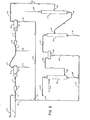
- a reaction mixture resulting from the acid cleavage of cumene hydroperoxide is charged to the phenol recovery process through line 1.
- the cleavage reaction mixture comprises, on an hourly basis, about 115.8 moles of phenol, 123.8 moles of acetone, 37.9 moles of unreacted cumene, 4.8 moles of ⁇ -methylstyrene, 0.3 moles of sulfuric acid, and 29.9 moles of water.
- Said recycle stream further comprises about 0.3 moles of acetone and 87.2 moles of water discharged into line 1 per hour.
- about 1.6 moles of 98 wt.% sulfuric acid are metered through line 2 per hour to adjust the pH of the combined streams to a pH of about 6 or less and facilitate the subsequent separation of phenol therefrom.
- the resulting mixture is then continued through line 1 and a mixing means 3 to a settler 4.
- the mixture is processed through a long coalescing means 5 to promote a separation of the organic and aqueous phases therein.
- the organic and aqueous phases are preferably treated at a temperature in excess of about 90° F., and more preferably at a temperature of from about 95° to about 120 0 F. This allows for a maximum concentration of sodium sulfate in the aqueous phase, taking full advantage of the salting-out effect of the sodium sulfate. Further, any of the sodium sulfate precipitating from the aqueous phase will do so as a free flowing anhydrous form less apt to deposit on a surface and cause the fouling of process equipment.
- Substantially all of the phenol is recovered in the organic phase, the recovery being facilitated by the salting-out effect of the sodium sulfate salt of neutralization recovered in the aqueous phase.
- About 61.2 moles of water and 1.9 moles of sodium sulfate are withdrawn from the settler 4 per hour by way of line 6 and treated for the recovery of entrained organic products in conventional organic recovery means which are not shown.
- a primarily / phase is withdrawn from the settler 4 by way of an overhead line 7, admixed with about 25.3 moles of water per hour from line 8, and continued through line 7 and a mixing means 9 to a second settler 10 to assure the complete separation of sodium sulfate.
- the mixture is processed through a coalescing means 11 to facilitate the further separation of the aqueous and organic phases.
- About 119.1 moles of phenol, 124.1 moles of acetone, 37.9 moles of cumene, 4.8 moles of ⁇ -methylstyrene, and 85.2 moles of water are recovered from the second settler 10 through an overhead line 13 on all hourly basis, and this mixture is charged to a crude acetone column 14.
- the water phase from the settler 10 is recovered and recycled to the first settler 4 by way of lines 12, 21 and 1.
- About 115.8 moles of phenol are recovered per hour from the bottom of the cumene column 17 by way of line 18, and this product is further treated in distillation means, not shown, for the recovery of a substantially pure phenol product.
- the overhead fraction, withdrawn from the cumene column 17 by way of line 19, comprises about 3.3 moles of phenol, 0.3 moles of acetone, 28.7 moles of cumene, 4.8 moles of ⁇ -methylstyrene and 38.4 moles of water per hour, and this fraction is charged to a settler 20.
- the aqueous phase which settles out comprises substantially all of the water charged to the settler, and this water is withdrawn through line 21 at a rate of about 38.4 moles per hour along with about 0.2 moles of phenol and 0.1 moles of acetone per hour. This material is ultimately recycled to the phenol recovery process as hereinafter described.
- Substantially all of the cumene charged to the settler 20 is recovered in the organic phase which forms therein, and this cumene is ultimately recycled to the oxidation phase of the overall process.
- the organic phase will also comprise acetone, a substantial amount of phenol, and substantially all the ⁇ -methylstyrene charged to said settler 20. That phenol adversely affects the oxidation phase of the overall process, is well known. Therefore, in keeping with the prior art practice, the organic phase is caustic-treated Whereby the phenol is converted to sodium phenate and recovered with the acetone in the resulting aqueous phase.
- the organic phase is recovered from the settler 20 through an overhead line 22 and transferred to the bottom of a caustic wash column 23.
- Said organic phase provides about 3.2 moles of phenol, 0.2 moles of acetone, 28.7 moles of cumene and 4.8 moles of ⁇ -methylstyrene to the caustic wash column per hour.
- An aqueous caustic stream charged to the upper portion of the caustic wash column through line 24 provides about 48.8 moles of water and 3.9 moles of sodium hydroxide thereto per hour.
- the organic phase passes upwardly in countercurrent contact with the aqueous caustic phase and, in the process, phenol is recovered in the aqueous caustic phase as sodium phenate.
- the aqueous caustic phase recovered from the bottom of the caustic wash column 23 through line 26 is combined with the aforementioned material recovered from the settler 20 through line 21, and the combined streams are continued through line 21 to be admixed with the acid cleavage reaction mixture in line 1 as heretofore described.
Landscapes
- Chemical & Material Sciences (AREA)
- Organic Chemistry (AREA)
- Organic Low-Molecular-Weight Compounds And Preparation Thereof (AREA)
Applications Claiming Priority (4)
| Application Number | Priority Date | Filing Date | Title |
|---|---|---|---|
| US06/108,750 US4262151A (en) | 1979-12-31 | 1979-12-31 | Process for the recovery of phenol from a reaction mixture resulting from the acid cleavage of cumene hydroperoxide |
| US108750 | 1979-12-31 | ||
| US108736 | 1979-12-31 | ||
| US06/108,736 US4283568A (en) | 1979-12-31 | 1979-12-31 | Process for the recovery of phenol from a reaction mixture resulting from the acid cleavage of cumene hydroperoxide |
Publications (2)
| Publication Number | Publication Date |
|---|---|
| EP0032255A1 true EP0032255A1 (fr) | 1981-07-22 |
| EP0032255B1 EP0032255B1 (fr) | 1984-03-14 |
Family
ID=26806207
Family Applications (1)
| Application Number | Title | Priority Date | Filing Date |
|---|---|---|---|
| EP19800108267 Expired EP0032255B1 (fr) | 1979-12-31 | 1980-12-31 | Procédé pour la neutralisation directe d'un mélange réactionnel provenant du clivage acide d'un dérivé alpha-hydroxy d'un hydrocarbure aromatique alkyl-substitué et élimination du sel formé |
Country Status (3)
| Country | Link |
|---|---|
| EP (1) | EP0032255B1 (fr) |
| DE (1) | DE3067073D1 (fr) |
| ES (1) | ES498285A0 (fr) |
Cited By (8)
| Publication number | Priority date | Publication date | Assignee | Title |
|---|---|---|---|---|
| EP0164568A1 (fr) * | 1984-05-24 | 1985-12-18 | General Electric Company | Procédé pour la préparation de phénol et d'acétone à partir de cumène |
| WO1993020033A1 (fr) * | 1992-04-06 | 1993-10-14 | E.I. Du Pont De Nemours And Company | Procede a rendement eleve de preparation de cyclohexanol et cyclohexanone |
| US5847235A (en) * | 1995-09-20 | 1998-12-08 | General Electric Company | Method of phenol tar desalting |
| US6034282A (en) * | 1994-11-04 | 2000-03-07 | General Electric Company | Method of phenol tar desalting |
| US6489518B1 (en) | 1999-11-11 | 2002-12-03 | Phenolchemie Gmbh & Co. Kg | Process for reducing the salt content of fractions comprising high boilers obtained in the preparation of phenol from cumene, by extraction |
| US7626060B2 (en) | 2003-07-11 | 2009-12-01 | INEOS Phenol GmbH & Co., KG | Process for the preparation of phenolic compounds, for separating phenol from cleavage product mixtures, and an apparatus |
| CN105669383A (zh) * | 2016-03-10 | 2016-06-15 | 张殿豪 | 一种除去苯酚丙酮装置分解液中酸的方法 |
| WO2016160647A1 (fr) * | 2015-03-31 | 2016-10-06 | Uop Llc | Procédé d'hydrogénation |
Citations (2)
| Publication number | Priority date | Publication date | Assignee | Title |
|---|---|---|---|---|
| US3180897A (en) * | 1959-07-15 | 1965-04-27 | Phenolchemie Gmbh | Process for the production of phenols |
| GB1412308A (en) * | 1973-01-11 | 1975-11-05 | Bp Chem Int Ltd | Removal of mineral acid catalyst from cumene hydroperoxide cleavage products |
-
1980
- 1980-12-31 DE DE8080108267T patent/DE3067073D1/de not_active Expired
- 1980-12-31 ES ES498285A patent/ES498285A0/es active Granted
- 1980-12-31 EP EP19800108267 patent/EP0032255B1/fr not_active Expired
Patent Citations (2)
| Publication number | Priority date | Publication date | Assignee | Title |
|---|---|---|---|---|
| US3180897A (en) * | 1959-07-15 | 1965-04-27 | Phenolchemie Gmbh | Process for the production of phenols |
| GB1412308A (en) * | 1973-01-11 | 1975-11-05 | Bp Chem Int Ltd | Removal of mineral acid catalyst from cumene hydroperoxide cleavage products |
Cited By (10)
| Publication number | Priority date | Publication date | Assignee | Title |
|---|---|---|---|---|
| EP0164568A1 (fr) * | 1984-05-24 | 1985-12-18 | General Electric Company | Procédé pour la préparation de phénol et d'acétone à partir de cumène |
| WO1993020033A1 (fr) * | 1992-04-06 | 1993-10-14 | E.I. Du Pont De Nemours And Company | Procede a rendement eleve de preparation de cyclohexanol et cyclohexanone |
| US6034282A (en) * | 1994-11-04 | 2000-03-07 | General Electric Company | Method of phenol tar desalting |
| US5847235A (en) * | 1995-09-20 | 1998-12-08 | General Electric Company | Method of phenol tar desalting |
| US6489518B1 (en) | 1999-11-11 | 2002-12-03 | Phenolchemie Gmbh & Co. Kg | Process for reducing the salt content of fractions comprising high boilers obtained in the preparation of phenol from cumene, by extraction |
| US7626060B2 (en) | 2003-07-11 | 2009-12-01 | INEOS Phenol GmbH & Co., KG | Process for the preparation of phenolic compounds, for separating phenol from cleavage product mixtures, and an apparatus |
| WO2016160647A1 (fr) * | 2015-03-31 | 2016-10-06 | Uop Llc | Procédé d'hydrogénation |
| CN107428640A (zh) * | 2015-03-31 | 2017-12-01 | 环球油品公司 | 氢化方法 |
| EP3277651A4 (fr) * | 2015-03-31 | 2018-10-31 | Uop Llc | Procédé d'hydrogénation |
| CN105669383A (zh) * | 2016-03-10 | 2016-06-15 | 张殿豪 | 一种除去苯酚丙酮装置分解液中酸的方法 |
Also Published As
| Publication number | Publication date |
|---|---|
| EP0032255B1 (fr) | 1984-03-14 |
| ES8201115A1 (es) | 1981-12-01 |
| DE3067073D1 (en) | 1984-04-19 |
| ES498285A0 (es) | 1981-12-01 |
Similar Documents
| Publication | Publication Date | Title |
|---|---|---|
| US4262151A (en) | Process for the recovery of phenol from a reaction mixture resulting from the acid cleavage of cumene hydroperoxide | |
| US4333801A (en) | Recovery of a cumene/alpha-methylstyrene fraction from a mixture thereof with phenol and water | |
| US4262150A (en) | Process for the recovery of phenol from a reaction mixture resulting from the acid cleavage of cumene hydroperoxide | |
| US4283568A (en) | Process for the recovery of phenol from a reaction mixture resulting from the acid cleavage of cumene hydroperoxide | |
| EP0032255B1 (fr) | Procédé pour la neutralisation directe d'un mélange réactionnel provenant du clivage acide d'un dérivé alpha-hydroxy d'un hydrocarbure aromatique alkyl-substitué et élimination du sel formé | |
| JPS6050169B2 (ja) | フエノ−ル類の製造方法 | |
| US4267379A (en) | Decomposition of cumene hydroperoxide and recovery of boron trifluoride catalyst | |
| US4370205A (en) | Recovery of cumene from a mixture thereof with phenol and water | |
| EP0028931B1 (fr) | Procédé pour la production de résorcinol | |
| EP0322245B1 (fr) | Procédé de préparation du résorcinol | |
| US5120902A (en) | Process for the preparation of a cumene feed for cumene oxidation | |
| US5220103A (en) | Process for the preparation of a cumene feed for cumene oxidation | |
| EP0717024B1 (fr) | Procédé pour la récupération de phénol à partir d'un courant aqueux renfermant Na2So4 | |
| EP0322246B1 (fr) | Oxydation et décomposition subséquente de dihydroperoxyde | |
| EP0021848B1 (fr) | Procédé et équipement pour la préparation de phénols | |
| US4825007A (en) | Oxidation process of aromatic compounds | |
| EP0322247B1 (fr) | Décomposition du dihydroperoxyde en résorcinol | |
| US5487816A (en) | Process for the reduction of phenol content in a crude organic stream recovered from a phenol stripper | |
| CA1184941A (fr) | Methode pour recuperer le phenol d'un melange reactif resultant de la coupure par un acide de l'hydroperoxyde de cumene | |
| US5003109A (en) | Destruction of acetone peroxides | |
| EP0149176B1 (fr) | Procédé de préparation de la m-hydroxyacétophénone | |
| US7335797B2 (en) | Process for the synthesis of cumene hydroperoxide | |
| JPS6270333A (ja) | 2,6−ジヒドロキシナフタレンの製造方法 | |
| EP0786443B1 (fr) | Procédé de séparation du phénol | |
| JPS6084235A (ja) | m−ヒドロキシ置換フエノ−ル類の製法 |
Legal Events
| Date | Code | Title | Description |
|---|---|---|---|
| PUAI | Public reference made under article 153(3) epc to a published international application that has entered the european phase |
Free format text: ORIGINAL CODE: 0009012 |
|
| AK | Designated contracting states |
Designated state(s): DE FR GB IT NL |
|
| 17P | Request for examination filed |
Effective date: 19811028 |
|
| ITF | It: translation for a ep patent filed | ||
| GRAA | (expected) grant |
Free format text: ORIGINAL CODE: 0009210 |
|
| AK | Designated contracting states |
Designated state(s): DE FR GB IT NL |
|
| REF | Corresponds to: |
Ref document number: 3067073 Country of ref document: DE Date of ref document: 19840419 |
|
| ET | Fr: translation filed | ||
| PLBE | No opposition filed within time limit |
Free format text: ORIGINAL CODE: 0009261 |
|
| STAA | Information on the status of an ep patent application or granted ep patent |
Free format text: STATUS: NO OPPOSITION FILED WITHIN TIME LIMIT |
|
| 26N | No opposition filed | ||
| ITTA | It: last paid annual fee | ||
| PGFP | Annual fee paid to national office [announced via postgrant information from national office to epo] |
Ref country code: FR Payment date: 19911209 Year of fee payment: 12 |
|
| PGFP | Annual fee paid to national office [announced via postgrant information from national office to epo] |
Ref country code: GB Payment date: 19911223 Year of fee payment: 12 |
|
| PGFP | Annual fee paid to national office [announced via postgrant information from national office to epo] |
Ref country code: NL Payment date: 19911231 Year of fee payment: 12 |
|
| PGFP | Annual fee paid to national office [announced via postgrant information from national office to epo] |
Ref country code: DE Payment date: 19920131 Year of fee payment: 12 |
|
| PG25 | Lapsed in a contracting state [announced via postgrant information from national office to epo] |
Ref country code: GB Effective date: 19921231 |
|
| PG25 | Lapsed in a contracting state [announced via postgrant information from national office to epo] |
Ref country code: NL Effective date: 19930701 |
|
| NLV4 | Nl: lapsed or anulled due to non-payment of the annual fee | ||
| GBPC | Gb: european patent ceased through non-payment of renewal fee |
Effective date: 19921231 |
|
| PG25 | Lapsed in a contracting state [announced via postgrant information from national office to epo] |
Ref country code: FR Effective date: 19930831 |
|
| PG25 | Lapsed in a contracting state [announced via postgrant information from national office to epo] |
Ref country code: DE Effective date: 19930901 |
|
| REG | Reference to a national code |
Ref country code: FR Ref legal event code: ST |