EP0033000A1 - Neues Protein PP15, ein Verfahren zu seiner Herstellung sowie seine Verwendung - Google Patents
Neues Protein PP15, ein Verfahren zu seiner Herstellung sowie seine Verwendung Download PDFInfo
- Publication number
- EP0033000A1 EP0033000A1 EP80107882A EP80107882A EP0033000A1 EP 0033000 A1 EP0033000 A1 EP 0033000A1 EP 80107882 A EP80107882 A EP 80107882A EP 80107882 A EP80107882 A EP 80107882A EP 0033000 A1 EP0033000 A1 EP 0033000A1
- Authority
- EP
- European Patent Office
- Prior art keywords
- protein
- proteins
- albumin
- molecular weight
- precipitation
- Prior art date
- Legal status (The legal status is an assumption and is not a legal conclusion. Google has not performed a legal analysis and makes no representation as to the accuracy of the status listed.)
- Granted
Links
Classifications
-
- G—PHYSICS
- G01—MEASURING; TESTING
- G01N—INVESTIGATING OR ANALYSING MATERIALS BY DETERMINING THEIR CHEMICAL OR PHYSICAL PROPERTIES
- G01N33/00—Investigating or analysing materials by specific methods not covered by groups G01N1/00 - G01N31/00
- G01N33/48—Biological material, e.g. blood, urine; Haemocytometers
- G01N33/50—Chemical analysis of biological material, e.g. blood, urine; Testing involving biospecific ligand binding methods; Immunological testing
- G01N33/53—Immunoassay; Biospecific binding assay; Materials therefor
- G01N33/531—Production of immunochemical test materials
-
- A—HUMAN NECESSITIES
- A61—MEDICAL OR VETERINARY SCIENCE; HYGIENE
- A61P—SPECIFIC THERAPEUTIC ACTIVITY OF CHEMICAL COMPOUNDS OR MEDICINAL PREPARATIONS
- A61P37/00—Drugs for immunological or allergic disorders
- A61P37/02—Immunomodulators
- A61P37/06—Immunosuppressants, e.g. drugs for graft rejection
-
- C—CHEMISTRY; METALLURGY
- C07—ORGANIC CHEMISTRY
- C07K—PEPTIDES
- C07K14/00—Peptides having more than 20 amino acids; Gastrins; Somatostatins; Melanotropins; Derivatives thereof
- C07K14/435—Peptides having more than 20 amino acids; Gastrins; Somatostatins; Melanotropins; Derivatives thereof from animals; from humans
- C07K14/46—Peptides having more than 20 amino acids; Gastrins; Somatostatins; Melanotropins; Derivatives thereof from animals; from humans from vertebrates
- C07K14/47—Peptides having more than 20 amino acids; Gastrins; Somatostatins; Melanotropins; Derivatives thereof from animals; from humans from vertebrates from mammals
- C07K14/4701—Peptides having more than 20 amino acids; Gastrins; Somatostatins; Melanotropins; Derivatives thereof from animals; from humans from vertebrates from mammals not used
- C07K14/4715—Pregnancy proteins, e.g. placenta proteins, alpha-feto-protein, pregnancy specific beta glycoprotein
-
- C—CHEMISTRY; METALLURGY
- C07—ORGANIC CHEMISTRY
- C07K—PEPTIDES
- C07K16/00—Immunoglobulins [IG], e.g. monoclonal or polyclonal antibodies
- C07K16/18—Immunoglobulins [IG], e.g. monoclonal or polyclonal antibodies against material from animals or humans
-
- A—HUMAN NECESSITIES
- A61—MEDICAL OR VETERINARY SCIENCE; HYGIENE
- A61K—PREPARATIONS FOR MEDICAL, DENTAL OR TOILETRY PURPOSES
- A61K39/00—Medicinal preparations containing antigens or antibodies
-
- Y—GENERAL TAGGING OF NEW TECHNOLOGICAL DEVELOPMENTS; GENERAL TAGGING OF CROSS-SECTIONAL TECHNOLOGIES SPANNING OVER SEVERAL SECTIONS OF THE IPC; TECHNICAL SUBJECTS COVERED BY FORMER USPC CROSS-REFERENCE ART COLLECTIONS [XRACs] AND DIGESTS
- Y10—TECHNICAL SUBJECTS COVERED BY FORMER USPC
- Y10S—TECHNICAL SUBJECTS COVERED BY FORMER USPC CROSS-REFERENCE ART COLLECTIONS [XRACs] AND DIGESTS
- Y10S530/00—Chemistry: natural resins or derivatives; peptides or proteins; lignins or reaction products thereof
- Y10S530/827—Proteins from mammals or birds
- Y10S530/85—Reproductive organs or embryos
- Y10S530/851—Placenta; amniotic fluid
Definitions
- the invention relates to a new immunosuppressive protein (PP 15 ) and a method for its production from human placentas.
- the sedimentation equilibrium method was used to determine the molecular weight in the ultracentrifuge.
- the concentration of the protein has been adjusted to an optical density of approximately 1.0.
- the determination was at 9,000 . Rpm made.
- Registration was carried out with UV optics at 280 nm using the photoelectric scanner.
- the substance was dissolved 0.10% in distilled water.
- the electrophoretic mobility was determined in the micromodification with the Microzone R 200 device from Beckman Instruments on cellulose acetate films (from Sartorius) using sodium diethylbarbiturate buffer, pH 8.6.
- the isoelectric point was determined using a column (440 ml) from LKB, Sweden.
- the ampholine (R) mixture used in the study of PP 15 had a pH range of 3-5.
- the amino acid analysis was carried out according to S.Moore, D.H.S Packmann, H.W.Stein, Anal. Chem. 30, page 1185 (1958), using the Multichrom B liquid chromatograph from Beckman.
- Cystine was determined as cysteic acid after oxidation of the protein with performic acid (S. Moore et al., Anal. Chem. 238, page 235 (1963). The tryptophan content is determined directly photometrically according to H. Edelhoch, Biochemistry 6, page 1948 (1967) been.
- the invention further relates to a process for obtaining the PP 15 , characterized in that a solution containing this protein is fractionated using the above properties.
- the PP 15 can be isolated in a practically pure form by an appropriate combination of the measures mentioned, which bring about an enrichment of the PP 15 or a separation of this protein from other proteins.
- the subject of the present invention can be seen in the individual steps for enriching the PP 15 and in the method for cleaning the PP 15 which results from combining the measures for enrichment.
- the enrichment process is characterized by the use of at least one of measures 1 to 7 or its chemical or biochemical preparative equivalents.
- PP 15 has immunosuppressive properties. To measure the inhibitory. Efficacy on lymphocyte transformation in vitro was added to PP 15 in the amounts 150, 100, 50, 10, 1 and 0.1 ⁇ g. MLC cultures. After six days, the amount of C 14 thymidine incorporated in these cultures and control cultures to which no PP 15 was added was measured. The protein PP 15 showed a significant inhibitory activity in the doses 1 - 150 ⁇ g / culture.
Landscapes
- Health & Medical Sciences (AREA)
- Chemical & Material Sciences (AREA)
- Life Sciences & Earth Sciences (AREA)
- Immunology (AREA)
- Organic Chemistry (AREA)
- Engineering & Computer Science (AREA)
- Molecular Biology (AREA)
- General Health & Medical Sciences (AREA)
- Medicinal Chemistry (AREA)
- Biochemistry (AREA)
- Proteomics, Peptides & Aminoacids (AREA)
- Hematology (AREA)
- Urology & Nephrology (AREA)
- Biomedical Technology (AREA)
- Genetics & Genomics (AREA)
- Biophysics (AREA)
- Toxicology (AREA)
- Gastroenterology & Hepatology (AREA)
- General Physics & Mathematics (AREA)
- Pathology (AREA)
- Analytical Chemistry (AREA)
- Physics & Mathematics (AREA)
- Biotechnology (AREA)
- Microbiology (AREA)
- Gynecology & Obstetrics (AREA)
- Pregnancy & Childbirth (AREA)
- Reproductive Health (AREA)
- Food Science & Technology (AREA)
- Zoology (AREA)
- Cell Biology (AREA)
- Bioinformatics & Cheminformatics (AREA)
- Public Health (AREA)
- Chemical Kinetics & Catalysis (AREA)
- General Chemical & Material Sciences (AREA)
- Nuclear Medicine, Radiotherapy & Molecular Imaging (AREA)
- Pharmacology & Pharmacy (AREA)
- Animal Behavior & Ethology (AREA)
- Transplantation (AREA)
- Veterinary Medicine (AREA)
- Peptides Or Proteins (AREA)
Abstract
Description
- Die Erfindung betrifft ein neues Immunsuppressiv wirksames Protein (PP15) und ein Verfahren zu dessen Herstellung aus menschlichen Plazenten.
- Gegenstand der Erfindung ist das Protein PP15, gekennzeichnet durch
- a) einen Kohlenhydratanteil von 3,35 + 0,9 %, bestehend aus 2,8 + 0;5 % Hexosen, 0,3 + 0,2 % Hexosaminen, 0,05 ± 0,05 % Fucose und 0,20 + 0,15% Neuraminsäure;
- b) einen Sedimentationskoeffizienten

- c) ein in der Ultrazentrifuge bestimmtes Molekulargewicht von 30 700 + 3 200;
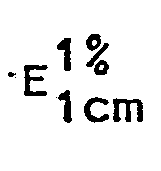
- d) einen Extinktionskoeffizienten

- e) eine elektrophoretische Beweglichkeit im Bereich des Albumins sowie
- f) einen isoelektrischen Punkt von 4,4 + 0,1.
- Zur Erläuterung der kennzeichnenden Merkmale des Proteins sei folgendes ausgeführt :
- Der Sedimentationskoeffizient wurde in einer analytischen Ultrazentrifuge der Firma ßeckman (Spinco-Apparatur, Modell E) bei 60.000 UpM in Doppelsektorzellen mit Hilfe der UV-Scanner Technik bei 280 nm bestimmt. Als Lösungsmittel diente ein 0,05 M Phosphatpuffer (pH 6,8), der 0,2 Mol/1 NaCl enthielt. Die Proteinkonzentration wurde auf eine optische Dichte von etwa 3 eingestellt. Der Sedimentationskoeffizient wurde auf die Basis von Wasser bei 20°C umgerechnet.
- Zur Ermittlung des Molekulargewichts in der Ultrazentrifuge wurde die Sedimentationsgleichgewichtsmethode herangezogen. Die Konzentration des Proteins ist dabei auf eine optische Dichte von etwa 1,0 eingestellt worden. Die Bestimmung wurde bei 9.000 .UpM vorgenommen. Die Registrierung erfolgte mit UV-Optik bei 280 nm unter Einsatz des photoelektrischen Scanners.
- Zur Bestimmung des Extinktionskoeffizienten wurde die Substanz 0,10 %ig in destilliertem Wasser gelöst.
- Die elektrophoretische Beweglichkeit wurde in der Mikromodifikation mit dem Gerät Microzone R 200 von Beckman Instruments auf Zelluloseacetatfolien (Fa. Sartorius) unter Verwendung von Natriumdiäthylbarbiturat-Puffer, pH 8,6, bestimmt.
- Der isoelektrische Punkt wurde mit einer Säule (440 ml) der Firma LKB, Stockholm, bestimmt. Das bei der Untersuchung von PP15 verwendete Ampholin (R) -Gemisch hatte einen pH-Bereich von 3 - 5.
- Die Bestimmung der Kohlenhydrate erfolgte nach der von H.E.Schultze, R.Schmidtberger, H.Haupt, Biochem.Z.,329, Seite 490 (1958), beschriebenen Methode.
- Die Aminosäurenanalyse wurde nach S.Moore, D.H.Spack- mann, H.W.Stein, Anal. Chem. 30, Seite 1185 (1958), unter Verwendung des Flüssigkeitschromatographen Multichrom B der Firma Beckman durchgeführt.
- Cystin wurde nach Oxydation des Proteins mit Perameisensäure (S.Moore et al., Anal. Chem. 238, Seite 235 (1963) als Cysteinsäure bestimmt. Der Tryptophangehalt ist direkt photometrisch nach H.Edelhoch, Biochemistry 6, Seite 1948 (1967) ermittelt worden.
- Tabelle I enthält das Ergebnis der Aminosäurenanalyse von PP15.

- 1) Mit Ammoniumsulfat wird es bei pH 7,0 und 30 - 60 Sättigung aus wässrigen Lösungen gefällt.
- 2) Mit wasserlöslichen Acridinbasen, z.B. 2-Äthoxi-6,9-diaminoacridinlactat (Rivanol(R) wird es bei pH-Werten zwischen 4 - 9 und einer Konzentration der Base von 0,2 bis 0,8 % w/v präzipitiert.
- 3) Unter den Bedingungen einer Euglobulinfällung, nämlich durch Einstellen eines pH-Wertes von 5-6, in einer verdünnten Pufferlösung wird es nicht präzipitiert.
- 4) In der präparativen Elektrophorese wandert es im Bereich des Albumins.
- 5) Bei der Gelfiltration mit sephadex(R) verhält es sich wie Proteine mit Molekulargewichten von 10 000 bis 50 000.
- 6) Es läßt sich an schwach basische Ionenaustauscher wie beispielsweise DEAE-Cellulose oder DEAE-Sephadex bei einer Leitfähigkeit von 0 - 2 mS und einem pH-Wert von etwa pH 7 bis 9 binden.
- 7) An Hydroxylapatit wird es bei Verwendung einer etwa 0,01 M Phosphat-Pufferlösung im pH-Bereich von 6 - 8 nicht adsorbiert.
- Gegenstand der Erfindung ist ferner ein Verfahren zur Gewinnung des PP15, dadurch gekennzeichnet, daß eine Lösung, die dieses Protein enthält, unter Verwendung der obenstehenden Eigenschaften fraktioniert wird.
- Durch eine zweckmäßige Kombination der genannten Maßnahmen, die eine Anreicherung des PP15 oder eine Abtrennung dieses Proteins von anderen Proteinen bewirken, kann das PP15 Isoliert in praktisch reiner Form gewonnen werden.
- Neben Ammoniumsulfat können selbstverständlich auch andere in der präparativen Biochemie üblicherweise eingesetzteiNeutralsalze zur Ausfällung des PP15 verwendet werden. Neben einer Acridinbase ist auch ein wasserlösliches Derivat einer Chinolinbase, wie sie für Proteinfraktionierungen bekannt sind, im Rahmen des erfindungsgemäßen Verfahrens einsetzbar. Entsprechend seinem elektrophoretischen Verhalten wie seinem Molekulargewicht sind zur Isolierung des Proteins auch andere Maßnahmen brauchbar, die geeignet sind, ein Globulin mit Albuminbeweglichkeit von anderen Proteinen abzutrennen. Hierzu können die verschiedenen Methoden der Gelfiltration, Gelchromatographie oder Ultrafiltration oder auch die Eigenschaft des PP15 an schwach basische Ionenaustauscher gebunden und hiervon wieder eluiert werden zu können, verwendet werden.
- Demzufolge Ist der Gegenstand der vorliegenden Erfindung in den einzelnen Schritten zur Anreicherung des PP15 und in dem durch Kombination der Maßnahmen zur Anreicherung sich ergebenden Verfahren zur Reinigung des PP15 zu sehen.
- Das Verfahren zur Anreicherung Ist gekennzeichnet durch die Anwendung mindestens einer der Maßnahmen 1 bis 7 oder deren chemischen oder biochemischen präparativen Äquivalente.
- PP15 hat immunsuppressive Eigenschaften. Zur Messung der inhibitorischen. Wirksamkeit auf die Lymphozytentransformation in vitro wurde PP15 in den Mengen 150, 100, 50, 10, 1 und 0,1 µg.MLC-Kulturen zugesetzt. Nach sechs Tagen wurde die eingebaute Menge von C 14-Thymidin dieser Kulturen und Kontrollkulturen, denen kein PP15 zugesetzt war, gemessen. Das Protein PP15 zeigte in den Dosierungen 1 - 150 µg/Kultur eine signifikante inhibitorische Wirksamkeit.
- Die Erfindung wird am nachstehenden Beispiel erläutert:
- A) Extraktion der Plazenten und Fraktionierung des Extraktes mit Rivanol und Ammoniumsulfat
- 1.000 kg tiefgefrorene menschliche Plazenten werden im Schneldmischer zerkleinert und mit 1.000 1 einer 0,4 %igen (w/w) Kochsalzlösung extrahiert. Der Extrakt wird, nach Abtrennung des Geweberückstandes durch Zentrifugation, mit 20 %iger (w/w) Essigsäure auf pH 6,0 eingestellt und unter Rühren mit 200 1 einer 3 %igen (w:w) Lösung von 2-Äthoxy-6,9-Diamino- acridin-Lactat (Rivanol (R) Hoechst AG) versetzt. Den durch Zentrifugation abgetrennten Niederschlag versetzt man mit 500 1 einer 2,5 %igen (w:w) NaCl-Lösung, rührt 4 Stunden und zentrifugiert vom abgeschiedenen Chlorid des 2-Äthoxy-6,9-Diaminoacridins ab. Die Lösung versetzt man unter Rühren langsam mit soviel festem Ammoniumsulfat, daß eine Endkonzentration von 30 % (w/v) erreicht wird, wodurch PP15 zusammen mit anderen Proteinen ausfällt. Der Niederschlag wird abzentrifugiert. Man erhält etwa 4,5 kg einer feuchten Paste, die im Nachfolgenden als Fraktion A bezeichnet wird.
- B) Gelfiltration an Sephadex G-150 1.500 g der Fraktion A werden in Wasser gelöst und gegen einen 0,01 M Tris-HCI-Puffer (pH 8,0), der 0,05 % NaN3 enthält (Pufferlösung I) dialysiert. Die zurückbleibende Lösung wird auf eine mit Sephadex G-150 gefüllte Säule (60 x 56 cm) aufgetragen und mit Pufferlösung I eluiert. Die Eluate, die Proteine mit Molekulargewichten zwischen 10 000 bis 50 000 enthalten, werden gesammelt und als Fraktion B bezeichnet.
- C) Chromatographie an DEAE-Cellulose Fraktion B wird an DEAE-Cellulose (Säule 10 x 28 cm) adsorbiert. Man spült die Säule mit Pufferlösung I und eluiert mit 0,85 %iger (w:v) Kochsalzlösung solange, bis im Durchlauf mit Trichloressigsäure keine Fällung mehr entsteht. Aus dem Eluat werden die Proteine durch Zusatz von soviel Ammoniumsulfat, daß die Konzentration 30 % (w/v) beträgt, ausgefällt. Der Niederschlag wird abzentrifugiert (Fraktion C).
- D) Euglobulinfällung Fraktion C wird in Wasser gelöst und gegen Pufferlösung I dialysiert. Man stellt die Lösung durch Zugabe von 2 N Essigsäure unter Rühren auf pH 5,5 ein. Der Niederschlag, der im wesentlichen nur Begleitproteine enthält, wird abzentrifugiert. Der Überstand wird gegen eine 0,1 M Ammoniumbicarbonatpuffer dialysiert (Fraktion D).
- E) Präparative Zonenelektrophorese Mit der präparativen Zonenelektrophorese wurde weitergereinigt. Als Puffer wird dabei eine 0,1 M Ammoniumbicarbonatlösung verwendet. Fraktion D wird hierzu in eine Apparatur zur präparativen Elektrophorese, wie sie beispielsweise von N.Heimburger und R.Schmidtberger in Behringwerke-Mitteilungen, Heft 43, Seite 83 ff., insbesondere auf Seite 119 - 120, beschrieben wird, eingetragen. Bei dem Gerät handelt es sich um die horizontale Anordnung einer Trägerelektrophorese in einem offenen Trog, in welchem das Trägermaterial zur Abführung der bei der Elektrophorese auftretenden Joule' schen Wärme auf unter 10°C gekühlt wird. Als Trägermaterial dienen gegenüber Proteinen indifferente Substanzen, vorteilhaft Polyvinylchlorid, oder dessen Copolymerisate in Form eines feinen Granulats.. Es ist empfehlenswert, die Elektrophorese bei einer Feldstärke von 4 - 6 Volt/cm vorzunehmen. Das Protein PP15 wandert im elektrischen Feld schneller als die α1-Globuline. Die das neue Protein enthaltende Zone wird nach der Auftrennung herausgeschnitten und mit Wasser eluiert. Die Eluate werden anschließend lyophilisiert oder auf einem Ultrafilter eingeengt (Fraktion E).
- F) Chromatographie an Hydroxylapatit Zur Weiterreinigung wurde an Hydroxylapatit (Säule 4 x 20 cm) unter Verwendung eines 0,01 M Phosphatpuffers, pH 6,8, chromatographiert. Das Protein PP15 erscheint dabei im Durchlauf, während die noch vorhandenen Begleitproteine an Hydroxylapatit adsorbiert werden. Der Durchlauf, der das Protein PP15 in reiner Form enthält, wird auf einem Ultrafilter eingeengt, gegen Wasser dialysiert und lyophilisiert.
Claims (5)

hat, einer oder mehreren zur Isolierung von Proteeinen bekannten Verfahrensmaßnahmen unterworfen wird, wobei jedenfalls das Material gewonnen wird, welches das Protein mit den angegebenen Eigenschaften enthält, und das Protein gewinnt.

Priority Applications (1)
| Application Number | Priority Date | Filing Date | Title |
|---|---|---|---|
| AT80107882T ATE7601T1 (de) | 1979-12-31 | 1980-12-13 | Neues protein pp15, ein verfahren zu seiner herstellung sowie seine verwendung. |
Applications Claiming Priority (2)
| Application Number | Priority Date | Filing Date | Title |
|---|---|---|---|
| DE19792952792 DE2952792A1 (de) | 1979-12-31 | 1979-12-31 | Neues protein (pp(pfeil abwaerts)15(pfeil abwaerts)) mit immunsuppressiver wirkung |
| DE2952792 | 1979-12-31 |
Publications (2)
| Publication Number | Publication Date |
|---|---|
| EP0033000A1 true EP0033000A1 (de) | 1981-08-05 |
| EP0033000B1 EP0033000B1 (de) | 1984-05-23 |
Family
ID=6089905
Family Applications (1)
| Application Number | Title | Priority Date | Filing Date |
|---|---|---|---|
| EP80107882A Expired EP0033000B1 (de) | 1979-12-31 | 1980-12-13 | Neues Protein PP15, ein Verfahren zu seiner Herstellung sowie seine Verwendung |
Country Status (6)
| Country | Link |
|---|---|
| US (1) | US4348316A (de) |
| EP (1) | EP0033000B1 (de) |
| JP (1) | JPS56100797A (de) |
| AT (1) | ATE7601T1 (de) |
| CA (1) | CA1154438A (de) |
| DE (2) | DE2952792A1 (de) |
Cited By (7)
| Publication number | Priority date | Publication date | Assignee | Title |
|---|---|---|---|---|
| EP0141326A3 (en) * | 1983-10-22 | 1986-03-26 | Behringwerke Aktiengesellschaft | Protein pp20, process for its recovery and its use |
| EP0100522A3 (en) * | 1982-07-30 | 1986-05-21 | Behringwerke Aktiengesellschaft | Protein pp17, process for concentrating and obtaining it and its use |
| EP0118246A3 (de) * | 1983-03-04 | 1986-06-11 | The University Of Liverpool | Für die Behandlung von spontanen Abortussen zu verwendender Stoff |
| EP0123307A3 (en) * | 1983-04-26 | 1987-08-26 | Behringwerke Aktiengesellschaft | Tissue protein pp4, process for its preparation and its use |
| EP0101603B1 (de) * | 1982-08-20 | 1988-11-09 | BEHRINGWERKE Aktiengesellschaft | Neues Protein (PP13), Verfahren zu seiner Anreicherung und Gewinnung sowie seine Verwendung |
| EP0333134A3 (en) * | 1988-03-18 | 1990-06-06 | Behringwerke Aktiengesellschaft | Pp15 protein prepared by genetic engineering |
| EP0410950A1 (de) * | 1989-07-24 | 1991-01-30 | Monsanto Company | Immunosuppressive Agenzien |
Families Citing this family (8)
| Publication number | Priority date | Publication date | Assignee | Title |
|---|---|---|---|---|
| DE3109629A1 (de) * | 1981-03-13 | 1982-09-23 | Behringwerke Ag, 3550 Marburg | "neues protein (pp(pfeil abwaerts)1(pfeil abwaerts)(pfeil abwaerts)6(pfeil abwaerts)), verfahren zu seiner anreicherung und gewinnung sowie seine verwendung" |
| DE3334405A1 (de) * | 1983-09-23 | 1985-04-04 | Behringwerke Ag, 3550 Marburg | Membranassoziierte proteine (mp(pfeil abwaerts)2(pfeil abwaerts)), verfahren zu ihrer gewinnung sowie ihre verwendung |
| CA1265446A (en) * | 1985-09-30 | 1990-02-06 | Masahiro Maki | Anticoagulating substance, process for preparing same and anticoagulant comprising same as an effective component |
| US4937324A (en) * | 1987-02-06 | 1990-06-26 | Zymogenetics, Inc. | Chromatographic purification of human proteins having anticoagulant and anti-inflammatory activity |
| US5188933A (en) * | 1988-03-18 | 1993-02-23 | Behringwerke Aktiengesellschaft | Protein PP15 prepared by genetic manipulation |
| US5968477A (en) * | 1994-01-24 | 1999-10-19 | Neorx Corporation | Radiolabeled annexin conjugates with hexose and a chelator |
| US20030220233A1 (en) * | 1994-01-24 | 2003-11-27 | Neorx Corporation | Radiolabeled annexins |
| RU2137486C1 (ru) * | 1998-05-15 | 1999-09-20 | Зимницкий Александр Николаевич | Аллогенный препарат плаценты человека, обладающий противовоспалительным, репаративным, антимикробным, ранозаживляющим действием, и способ его получения |
Citations (1)
| Publication number | Priority date | Publication date | Assignee | Title |
|---|---|---|---|---|
| EP0009715A1 (de) * | 1978-09-29 | 1980-04-16 | BEHRINGWERKE Aktiengesellschaft | Neues ubiquitäres Gewebsprotein PP8 und Verfahren zu seiner Anreicherung |
Family Cites Families (4)
| Publication number | Priority date | Publication date | Assignee | Title |
|---|---|---|---|---|
| DE2640387C3 (de) * | 1976-09-08 | 1981-01-22 | Behringwerke Ag, 3550 Marburg | Gewebespezifisches Protein und Verfahren zu dessen Herstellung |
| DE2720704C2 (de) * | 1977-05-07 | 1986-09-25 | Behringwerke Ag, 3550 Marburg | Neues Glycoprotein, Verfahren zu seiner Herstellung und seine Verwendung |
| DE2726886A1 (de) * | 1977-06-15 | 1979-01-18 | Behringwerke Ag | Neues glykoprotein und verfahren zu dessen herstellung |
| DE2854759A1 (de) * | 1978-12-19 | 1980-07-10 | Behringwerke Ag | Neues plazentaspezifisches gewebsprotein pp tief 10 |
-
1979
- 1979-12-31 DE DE19792952792 patent/DE2952792A1/de not_active Withdrawn
-
1980
- 1980-12-13 DE DE8080107882T patent/DE3067977D1/de not_active Expired
- 1980-12-13 EP EP80107882A patent/EP0033000B1/de not_active Expired
- 1980-12-13 AT AT80107882T patent/ATE7601T1/de not_active IP Right Cessation
- 1980-12-25 JP JP18297280A patent/JPS56100797A/ja active Granted
- 1980-12-29 US US06/220,848 patent/US4348316A/en not_active Expired - Lifetime
- 1980-12-30 CA CA000367732A patent/CA1154438A/en not_active Expired
Patent Citations (1)
| Publication number | Priority date | Publication date | Assignee | Title |
|---|---|---|---|---|
| EP0009715A1 (de) * | 1978-09-29 | 1980-04-16 | BEHRINGWERKE Aktiengesellschaft | Neues ubiquitäres Gewebsprotein PP8 und Verfahren zu seiner Anreicherung |
Cited By (7)
| Publication number | Priority date | Publication date | Assignee | Title |
|---|---|---|---|---|
| EP0100522A3 (en) * | 1982-07-30 | 1986-05-21 | Behringwerke Aktiengesellschaft | Protein pp17, process for concentrating and obtaining it and its use |
| EP0101603B1 (de) * | 1982-08-20 | 1988-11-09 | BEHRINGWERKE Aktiengesellschaft | Neues Protein (PP13), Verfahren zu seiner Anreicherung und Gewinnung sowie seine Verwendung |
| EP0118246A3 (de) * | 1983-03-04 | 1986-06-11 | The University Of Liverpool | Für die Behandlung von spontanen Abortussen zu verwendender Stoff |
| EP0123307A3 (en) * | 1983-04-26 | 1987-08-26 | Behringwerke Aktiengesellschaft | Tissue protein pp4, process for its preparation and its use |
| EP0141326A3 (en) * | 1983-10-22 | 1986-03-26 | Behringwerke Aktiengesellschaft | Protein pp20, process for its recovery and its use |
| EP0333134A3 (en) * | 1988-03-18 | 1990-06-06 | Behringwerke Aktiengesellschaft | Pp15 protein prepared by genetic engineering |
| EP0410950A1 (de) * | 1989-07-24 | 1991-01-30 | Monsanto Company | Immunosuppressive Agenzien |
Also Published As
| Publication number | Publication date |
|---|---|
| DE2952792A1 (de) | 1981-07-02 |
| US4348316A (en) | 1982-09-07 |
| JPH0132840B2 (de) | 1989-07-10 |
| EP0033000B1 (de) | 1984-05-23 |
| ATE7601T1 (de) | 1984-06-15 |
| CA1154438A (en) | 1983-09-27 |
| JPS56100797A (en) | 1981-08-12 |
| DE3067977D1 (en) | 1984-06-28 |
Similar Documents
| Publication | Publication Date | Title |
|---|---|---|
| DE2720704C2 (de) | Neues Glycoprotein, Verfahren zu seiner Herstellung und seine Verwendung | |
| DE3315000C2 (de) | ||
| EP0000134B1 (de) | Glykoprotein, Verfahren zu seiner Herstellung, seine Verwendung zur Gewinnung von Antiserum sowie das Antiserum | |
| EP0033000B1 (de) | Neues Protein PP15, ein Verfahren zu seiner Herstellung sowie seine Verwendung | |
| EP0060491B1 (de) | Protein (PP16), Verfahren zu seiner Anreicherung und Gewinnung sowie seine Verwendung | |
| EP0009715B1 (de) | Neues ubiquitäres Gewebsprotein PP8 und Verfahren zu seiner Anreicherung | |
| DE2640387C3 (de) | Gewebespezifisches Protein und Verfahren zu dessen Herstellung | |
| EP0014756B1 (de) | Plazentaspezifisches Gewebsprotein PP10 und Verfahren zu seiner Anreicherung | |
| EP0101603B1 (de) | Neues Protein (PP13), Verfahren zu seiner Anreicherung und Gewinnung sowie seine Verwendung | |
| EP0100522B1 (de) | Neues Protein (PP17), Verfahren zu seiner Anreicherung und Gewinnung sowie seine Verwendung | |
| EP0037963B1 (de) | Neues Protein PP9, Verfahren zu seiner Gewinnung sowie seine Verwendung | |
| EP0165476A2 (de) | Gewebeprotein PP18, Verfahren zu seiner Gewinnung sowie seine Verwendung | |
| EP0141326B1 (de) | Neues Protein PP20, Verfahren zu seiner Gewinnung sowie seine Verwendung | |
| EP0029191B1 (de) | Neues Protein PP11, ein Verfahren zu seiner Gewinnung und seine Verwendung | |
| DE3410694C2 (de) | ||
| EP0151463B1 (de) | Gewebeprotein PP19, Verfahren zu seiner Gewinnung sowie seine Verwendung | |
| EP0137345B1 (de) | Membranassoziierte Proteine (MP2), Verfahren zu ihrer Gewinnung sowie ihre Verwendung | |
| DE2445677A1 (de) | Hochmolekulares alpha-globulin und verfahren zu dessen herstellung | |
| AT330358B (de) | Diagnostisches mittel zum nachweis und zur uberwachung einer schwangerschaft |
Legal Events
| Date | Code | Title | Description |
|---|---|---|---|
| PUAI | Public reference made under article 153(3) epc to a published international application that has entered the european phase |
Free format text: ORIGINAL CODE: 0009012 |
|
| AK | Designated contracting states |
Designated state(s): AT CH DE FR GB IT |
|
| 17P | Request for examination filed |
Effective date: 19810922 |
|
| ITF | It: translation for a ep patent filed | ||
| GRAA | (expected) grant |
Free format text: ORIGINAL CODE: 0009210 |
|
| AK | Designated contracting states |
Designated state(s): AT CH DE FR GB IT LI |
|
| REF | Corresponds to: |
Ref document number: 7601 Country of ref document: AT Date of ref document: 19840615 Kind code of ref document: T |
|
| REF | Corresponds to: |
Ref document number: 3067977 Country of ref document: DE Date of ref document: 19840628 |
|
| ET | Fr: translation filed | ||
| PLBE | No opposition filed within time limit |
Free format text: ORIGINAL CODE: 0009261 |
|
| STAA | Information on the status of an ep patent application or granted ep patent |
Free format text: STATUS: NO OPPOSITION FILED WITHIN TIME LIMIT |
|
| 26N | No opposition filed | ||
| ITTA | It: last paid annual fee | ||
| REG | Reference to a national code |
Ref country code: CH Ref legal event code: PUE Owner name: BEHRINGWERKE AKTIENGESELLSCHAFT TRANSFER- BEHRING |
|
| REG | Reference to a national code |
Ref country code: CH Ref legal event code: PFA Free format text: BEHRING DIAGNOSTICS GMBH TRANSFER- DADE BEHRING MARBURG GMBH |
|
| PGFP | Annual fee paid to national office [announced via postgrant information from national office to epo] |
Ref country code: FR Payment date: 19981118 Year of fee payment: 19 |
|
| PGFP | Annual fee paid to national office [announced via postgrant information from national office to epo] |
Ref country code: GB Payment date: 19981119 Year of fee payment: 19 |
|
| PGFP | Annual fee paid to national office [announced via postgrant information from national office to epo] |
Ref country code: DE Payment date: 19981120 Year of fee payment: 19 |
|
| PGFP | Annual fee paid to national office [announced via postgrant information from national office to epo] |
Ref country code: AT Payment date: 19981123 Year of fee payment: 19 |
|
| PGFP | Annual fee paid to national office [announced via postgrant information from national office to epo] |
Ref country code: CH Payment date: 19981130 Year of fee payment: 19 |
|
| REG | Reference to a national code |
Ref country code: FR Ref legal event code: TP |
|
| REG | Reference to a national code |
Ref country code: FR Ref legal event code: CD |
|
| PG25 | Lapsed in a contracting state [announced via postgrant information from national office to epo] |
Ref country code: GB Free format text: LAPSE BECAUSE OF NON-PAYMENT OF DUE FEES Effective date: 19991213 Ref country code: AT Free format text: LAPSE BECAUSE OF NON-PAYMENT OF DUE FEES Effective date: 19991213 |
|
| PG25 | Lapsed in a contracting state [announced via postgrant information from national office to epo] |
Ref country code: LI Free format text: LAPSE BECAUSE OF NON-PAYMENT OF DUE FEES Effective date: 19991231 Ref country code: CH Free format text: LAPSE BECAUSE OF NON-PAYMENT OF DUE FEES Effective date: 19991231 |
|
| GBPC | Gb: european patent ceased through non-payment of renewal fee |
Effective date: 19991213 |
|
| PG25 | Lapsed in a contracting state [announced via postgrant information from national office to epo] |
Ref country code: FR Free format text: LAPSE BECAUSE OF NON-PAYMENT OF DUE FEES Effective date: 20000831 |
|
| PG25 | Lapsed in a contracting state [announced via postgrant information from national office to epo] |
Ref country code: DE Free format text: LAPSE BECAUSE OF NON-PAYMENT OF DUE FEES Effective date: 20001003 |
|
| REG | Reference to a national code |
Ref country code: FR Ref legal event code: ST |