EP0033582B1 - Verfahren zur Gewinnung von Faktor VIII - Google Patents
Verfahren zur Gewinnung von Faktor VIII Download PDFInfo
- Publication number
- EP0033582B1 EP0033582B1 EP19810300069 EP81300069A EP0033582B1 EP 0033582 B1 EP0033582 B1 EP 0033582B1 EP 19810300069 EP19810300069 EP 19810300069 EP 81300069 A EP81300069 A EP 81300069A EP 0033582 B1 EP0033582 B1 EP 0033582B1
- Authority
- EP
- European Patent Office
- Prior art keywords
- plasma
- heparin
- cryoprecipitate
- factor viii
- resolubilised
- Prior art date
- Legal status (The legal status is an assumption and is not a legal conclusion. Google has not performed a legal analysis and makes no representation as to the accuracy of the status listed.)
- Expired
Links
Images
Classifications
-
- C—CHEMISTRY; METALLURGY
- C07—ORGANIC CHEMISTRY
- C07K—PEPTIDES
- C07K14/00—Peptides having more than 20 amino acids; Gastrins; Somatostatins; Melanotropins; Derivatives thereof
- C07K14/435—Peptides having more than 20 amino acids; Gastrins; Somatostatins; Melanotropins; Derivatives thereof from animals; from humans
- C07K14/745—Blood coagulation or fibrinolysis factors
- C07K14/755—Factors VIII, e.g. factor VIII C (AHF), factor VIII Ag (VWF)
-
- A—HUMAN NECESSITIES
- A61—MEDICAL OR VETERINARY SCIENCE; HYGIENE
- A61K—PREPARATIONS FOR MEDICAL, DENTAL OR TOILETRY PURPOSES
- A61K38/00—Medicinal preparations containing peptides
Definitions
- This invention is concerned with a method of obtaining Factor VIII without the use of chemical precipitating agents.
- the technique relies on the heparin-induced coprecipitation of Factor VIII with a plasma protein called cold-insoluble globulin (Clg).
- This cold-insoluble globulin (Clg) is known to be a normal plasma glycoprotein that is structurally and immunochemically distinct from fibrinogen and all other plasma proteins. Clg normally circulates at plasma levels of 0.33 ⁇ 0.1 g/litre. Cold-insoluble globulin in its various forms has been designated by a variety of terms, of which "fibronectin” has recently become most accepted (The structure and Biologic Activities of Plasma Fibronectin, Mosesson et al, Blood, Volume 56, No. 2, pages 145-158).
- the heparin is preferably added to the A.H.F.-rich concentrate in addition to citrate.
- a preferred method of conducting the double anticoagulant addition is to add the heparin to the cryoprecipitate in the form of a heparinized, citrated-saline solution.
- heparin is preferably added twice, once to the initial cryoprecipitate and subsequently to the further fractionated A.H.F. concentrate. In each case, heparin is preferably added along with citrate as a second anticoagulant.
- the yield of Factor VIII is improved from 13.6 to 12.5% in the non-heparinized procedure to 17% in the heparinized procedure.
- Fekete indicates that this increase of approximately 4% represents a 25% increase over the non-heparinized procedure.
- Example 1 would indicate, the total yield from the cryoprecipitate is as low as 35%, representing only 350 units per litre of starting plasma. Therefore, the 17% recovery in the final product represents only 170 units per litre of starting plasma.
- cold-insoluble globulin was distinguished from antihemophilic factor (Factor VIII) by amino acid analysis and by the position of elution from 4% agarose gels and by the electrophoretic migration in polyacrylamide gels.
- Factor VIII antihemophilic factor
- This invention is based, at least in part, on the discovery that if heparin is present in plasma that is frozen and if cryoprecipitate obtained from that plasma is resolubilised, buffered with a buffer including heparin and is then incubated, the incubation results in the formation of a precipitate that is rich in Factor VIII so that desirable yields of Factor VIII can then be obtained from this precipitate.
- the method of obtaining Factor VIII according to the invention comprises freezing plasma that is freshly obtained blood plasma collected into a calcium chelating agent or that is obtained by plasmapheresis using a calcium chelating agent, resolubilising the frozen plasma, resolubilising a cryoprecipitate obtained from the resolubilised plasma, adding a citrate saline buffer to the resolubilised.
- cryoprecipitate and separting Factor VIII from the resolubilised cryoprecipitate are characterized in that heparin is incorporated with the plasma before it is frozen, the buffer includes heparin and the separation of the Factor VIII from the resolubilised cryoprecipitate is effected by incubating the resolubilised cryoprecipitate in the presence of cold insoluble globulin that is precipitatable by heparin and thereby obtaining a precipitate rich in Factor VIII and also including cold insoluble globulin, and isolating Factor VIII from this precipitate.
- the plasma that is to be frozen is freshly obtained blood plasma that has been collected into a calcium chelating anticoagulant, preferably a citrate phosphate dextrose anticoagulant, and to which heparin is added or is blood plasma obtained by plasmapheresis using heparin and a calcium chelating anticoagulant, generally sodium citrate.
- a calcium chelating anticoagulant preferably a citrate phosphate dextrose anticoagulant
- heparin is added or is blood plasma obtained by plasmapheresis using heparin and a calcium chelating anticoagulant, generally sodium citrate.
- the plasma is frozen, typically at about -80°C. It may then be resolubilised generally at a temperature of from 0°C to 10°C for 30 to 120 minutes, preferably at about 4°C for about 75 minutes.
- a cryoprecipitate may be isolated from the resolubilised plasma by centrifuging and may be resolubilised at a temperature of about 37°C for 2 to 5 minutes.
- the resolubilisation may be conducted in a conventional blood transfusion bag and the amount of citrate saline heparin buffer added to each resolubilised cryoprecipitate bag may be from 2 to 10 ml.
- the buffered, resolubilised cryoprecipitate is incubated under conditions, such as a temperature of from 0 to 10°C for a time of at least 1 hour, such that Factor VIII present in the cryoprecipitate is insolubilised using heparin-precipitatable cold-insoluble globulin so as to form a Factor VIII-rich precipitate.
- conditions such as a temperature of from 0 to 10°C for a time of at least 1 hour, such that Factor VIII present in the cryoprecipitate is insolubilised using heparin-precipitatable cold-insoluble globulin so as to form a Factor VIII-rich precipitate.
- the incubation is conducted at about 0°C for about 2 hours.
- the calcium chelating anticoagulant can be selected from any of the well known anticoagulants which function by lowering the physiological level of calcium in the blood or blood plasma.
- the preferred such anticoagulants are the citrate anticoagulants, ethylenediaminetetraacetic acid (EDTA) and oxalates. Of these, the citrate anticoagulants are preferred.
- the preferred citrate anticoagulants include acid-citrate-dextrose (ACD) and citrate-phosphate-dextrose (CPD).
- the essential steps of the method of this invention are the addition of the citrate saline heparin (CSH) buffer to the resolubilised cryoprecipitate and the incubation of the cryoprecipitate.
- CSH citrate saline heparin
- the buffer is preferably added in amounts ranging from about 2 to about 4 ml per cryoprecipitate bag and, most preferably, an addition of 2.5 ml per cryoprecipitate bag is made.
- the buffer preferably has a composition of 0.2 M sodium citrate, 0.9% by weight of sodium chloride and 1 unit per ml of buffer of sodium heparin. The pH of the buffer is maintained at 7.2.
- Cold insoluble globulin (Clg) is not insolubilised after treatment of CPD plasma with heparin.
- the precipitate of the Clg is not formed until a specific set of conditions is met.
- these conditions include introduction of heparin to fresh CPD plasma, this is not sufficient in itself to produce Clg. Indeed, visual observation indicated that this step alone does not produce the Clg since, when present, this material is seen as a white deposit at the bottom of a blood bag.
- These steps are the addition of the CSH buffer to the cryoprecipitate and the cold incubation step which permits formation of the precipitating globulin. If these combined steps are not employed, cold-insoluble globulin is not formed even in the presence of heparin.
- Factor VIII may be isolated from the Factor VIII-rich precipitate in the cold at a temperature of from 0°C to 10°C, preferably at about 0°C, by washing with citrate saline heparin buffer. The precipitate is then drained and resolubilised with further citrate saline heparin buffer, preferably at about 37°C for 2 to 5 min. The Factor VIII-rich solution can then be separated from the remaining debris, most easily by centrifugation. The Factor VIII-rich solution obtained will be of intermediate purity when the starting plasma is obtained from whole blood from which the red blood cells have been separated. In the case where the starting plasma is pheresis plasma, the Factor VIII will have an activity which qualifies it as high purity.
- the Factor VIII-rich precipitate can be subjected to conventional processes for obtaining high purity Factor VIII, examples of which are fractionation by precipitation, by glycine, ethanol, ethanol-glycine, polyethylene glycol, or glycine-polyethylene glycol precipitation and/or other known purification agents.
- the heparin is preferably added at a concentration of 1 unit heparin per ml of plasma, although a range of from about 1 to about 10 units heparin per ml of plasma is effective. Sodium, heparin has proved effective in this method.
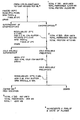
- the method in precise terms involves freezing the fresh CPD plasma with the heparin added thereto at -80°C and then resolubilizing at 4°C for 75 minutes, after which it is centrifuged (spin 7000 x g, 7 min. at O O C). The resulting cryoprecipitate is allowed to resolubilize at 37°C for 2-5 minutes, after which 2.5 ml of CSH (citrate saline heparin) buffer is added per cryoprecipitate bag. The resolubilized, pooled cryoprecipitate is then incubated at 0°C for two hours in a refrigerated water bath.
- CSH citrate saline heparin
- the Factor VIII present in the cryoprecipitate pool now insolubilizes along with the cold-insoluble globulin, and the total insoluble precipitate is then separated from the Factor VIII-poor supernatant by centrifugation (spin 7000 x g, 7 min. at 0°C). After draining off the supernatant, the cold-insoluble precipitate is washed at 0°C with 10 ml of cold CSH buffer, drained and allowed to resolubilize at 37°C for five minutes with from 2-10 ml, preferably two ml, of CSH buffer per original cryoprecipitate bag.. A further centrifugation (spin 3700 x g, 6 min.) is conducted and the Factor VIII-rich solution is separated from the debris.
- CPD plasma was separated from red blood cells (RBC) and made to one unit with sodium heparin, per ml of freshly-obtained human blood blasma.
- the plasma was frozen (-80°C) and stored (-60°C) with cryoprecipitate prepared within 5 days. Approximately 9 mls volume was kept in each bag. Six bags or units of plasma were used to illustrate the method.
- the Table sets out the total units of Factor VIII present in each of three Fractions obtained in sequence (Fraction 1 is the starting plasma, Fraction 2 of the cryoprecipitate pool and Fraction 3 the cold-insoluble precipitate); the Factor VIII recovery level in comparison to the starting level; the protein recovery level; the specific activity of the Factor VIII units per milligram of protein; the purity of the Factor VIII; the volumes of each of the fractions; and the volume level.
- cryoprecipitate pool and the cold-insoluble globulin precipitate fractions respectively provide 886 and 666 units per litre of Factor VIII or 81 % and 62% recovery. This can be compared with the 17% recovery reported by Fekete et al in column 5, Example 1 of the US Reissue Patent discussed above; this recovery figure represents only 170 units per litre of starting plasma.
- Table 2 gives an analysis of the total contents of Fractions 1, 2 and 3.
- Factor VIII was purified from the cryoprecipitate by cold-incubation at 0°C for 2 hours in the presence of CSH buffer.
- the 6 bags of CPD plasma to which heperin had been added were pooled after cryoprecipitate.
- the percentage component recovery figures were determined relative to the levels in the starting plasma.
- Protein was determined by Lowry assay with bovine serum albumin as standard.
- RID Diadial Immunodiffusion
- plates for albumin or fibrinogen were used to determine the concentration of these components. Standard plasma containing known amounts of albumin and fibrinogen were provided by Behring Diagnostics.
- the data indicate that, when using plasmapheresis plasma, it is possible to increase the recovery to produce a concentrate with a specific activity which qualifies the compound as high purity (greater than 1 unit/mg).
- Four volunteers (3 0's 1A) were plasmapheresed on a model 50 Haemonetics pheresis machine with 1 part 4 g% sodium citrate per 14 parts blood. They were also collected into CPD or citrate tubes as usual.
Landscapes
- Health & Medical Sciences (AREA)
- Chemical & Material Sciences (AREA)
- Organic Chemistry (AREA)
- Life Sciences & Earth Sciences (AREA)
- Biophysics (AREA)
- Medicinal Chemistry (AREA)
- Zoology (AREA)
- Biochemistry (AREA)
- Toxicology (AREA)
- General Health & Medical Sciences (AREA)
- Genetics & Genomics (AREA)
- Gastroenterology & Hepatology (AREA)
- Molecular Biology (AREA)
- Proteomics, Peptides & Aminoacids (AREA)
- Hematology (AREA)
- Medicines That Contain Protein Lipid Enzymes And Other Medicines (AREA)
- Medicines Containing Material From Animals Or Micro-Organisms (AREA)
- Pharmaceuticals Containing Other Organic And Inorganic Compounds (AREA)
Claims (10)
Priority Applications (1)
| Application Number | Priority Date | Filing Date | Title |
|---|---|---|---|
| AT81300069T ATE7030T1 (de) | 1980-01-18 | 1981-01-08 | Verfahren zur gewinnung von faktor viii. |
Applications Claiming Priority (4)
| Application Number | Priority Date | Filing Date | Title |
|---|---|---|---|
| CA344000 | 1980-01-18 | ||
| CA344,000A CA1115637A (en) | 1980-11-26 | 1980-01-18 | Method of obtaining intermediate purity factor viii |
| US210385 | 1980-11-26 | ||
| US06/210,385 US4289691A (en) | 1980-01-18 | 1980-11-26 | Method of obtaining intermediate purity factor VIII |
Publications (3)
| Publication Number | Publication Date |
|---|---|
| EP0033582A2 EP0033582A2 (de) | 1981-08-12 |
| EP0033582A3 EP0033582A3 (en) | 1981-11-18 |
| EP0033582B1 true EP0033582B1 (de) | 1984-04-11 |
Family
ID=25669029
Family Applications (1)
| Application Number | Title | Priority Date | Filing Date |
|---|---|---|---|
| EP19810300069 Expired EP0033582B1 (de) | 1980-01-18 | 1981-01-08 | Verfahren zur Gewinnung von Faktor VIII |
Country Status (2)
| Country | Link |
|---|---|
| EP (1) | EP0033582B1 (de) |
| DE (1) | DE3163003D1 (de) |
Families Citing this family (5)
| Publication number | Priority date | Publication date | Assignee | Title |
|---|---|---|---|---|
| CA1178887A (en) * | 1981-10-01 | 1984-12-04 | Gail A. Rock | Factor viii concentrates prepared from heparinized plasma by the application of a cold precipitation technique |
| DE3170868D1 (en) * | 1981-10-12 | 1985-07-11 | Armour Pharma | Process for the preparation of highly purified antihemophilic factor |
| GB8505882D0 (en) * | 1985-03-07 | 1985-04-11 | Central Blood Lab Authority | Purification of blood coagulation factor viii |
| GB8708181D0 (en) * | 1987-04-06 | 1987-05-13 | Wensley R | Extraction of protein from blood |
| RU2293570C2 (ru) * | 2005-02-01 | 2007-02-20 | Государственное учреждение Гематологический научный центр РАМН (ГУ ГНЦ РАМН) | Способ обогащения фактором viii криопреципитата плазмы донорской крови |
Family Cites Families (8)
| Publication number | Priority date | Publication date | Assignee | Title |
|---|---|---|---|---|
| BE713764A (de) * | 1967-05-01 | 1968-09-16 | Baxter Travenol Lab | |
| US3652530A (en) * | 1967-08-28 | 1972-03-28 | American Nat Red Cross | Antihemophilic factor prepared from blood plasma using polyethylene glycol |
| US3803115A (en) * | 1972-05-17 | 1974-04-09 | Baxter Laboratories Inc | Stabilization of ahf using heparin |
| US4104266A (en) * | 1977-04-14 | 1978-08-01 | American National Red Cross | Method for preparation of antihemophilic factor |
| CA1074698A (en) * | 1977-12-19 | 1980-04-01 | Gail A. Rock | Method of collecting anti-hemophilic factor viii from blood and blood plasma |
| DE2848529A1 (de) * | 1978-11-09 | 1980-05-29 | Behringwerke Ag | Verfahren zur herstellung des kaelteunloeslichen globulins und dieses enthaltende arzneimittel |
| US4278594A (en) * | 1979-06-19 | 1981-07-14 | David Amrani | Process for separation and isolation of AHF, von Willebrand's ristocetin cofactor (VWF:RCF) and fibronectin from blood plasma |
| US4210580A (en) * | 1979-06-19 | 1980-07-01 | David Amrani | Process for separation and isolation of AHF and fibronectin from blood plasma |
-
1981
- 1981-01-08 EP EP19810300069 patent/EP0033582B1/de not_active Expired
- 1981-01-08 DE DE8181300069T patent/DE3163003D1/de not_active Expired
Also Published As
| Publication number | Publication date |
|---|---|
| EP0033582A3 (en) | 1981-11-18 |
| EP0033582A2 (de) | 1981-08-12 |
| DE3163003D1 (en) | 1984-05-17 |
Similar Documents
| Publication | Publication Date | Title |
|---|---|---|
| US4203891A (en) | Method of collecting anti-hemophilic factor VIII from blood and blood plasma using heparin or sodium heparin | |
| US4289691A (en) | Method of obtaining intermediate purity factor VIII | |
| Nachman et al. | Characterization of human platelet vascular permeability-enhancing activity | |
| Musial et al. | Inhibition of platelet adhesion to surfaces of extracorporeal circuits by disintegrins: RGD-containing peptides from viper venoms | |
| Fox et al. | Actin filament content and organization in unstimulated platelets. | |
| US3631018A (en) | Production of stable high-potency human ahf using polyethylene glycol and glycine to fractionate a cryoprecipitate of ahf concentrate | |
| USRE29698E (en) | Stabilization of AHF using heparin | |
| US3682881A (en) | Fractionation of plasma using glycine and polyethylene glycol | |
| Ratnoff et al. | Studies on the purification of antihemophilic factor (factor VIII): II. Separation of partially purified antihemophilic factor by gel filtration of plasma | |
| Santoro et al. | Adsorption of von Willebrand factor by fibrillar collagen—implications concerning the adhesion of platelets to collagen | |
| EP0035202A2 (de) | Verfahren zur Fraktionierung von Blutplasma | |
| US4758657A (en) | Method of purifying Factor VIII:C | |
| EP0148843B1 (de) | Antihämophilie-faktor-viii-konzentrat und dessen herstellungsverfahren | |
| US4383989A (en) | Factor VIII concentrates prepared from heparinized plasma by the application of a cold precipitation technique | |
| SI9012034A (en) | Process for preparing a concentrate of blood coagulation factor viii - von willebrand factor complex from total plasma | |
| US4397841A (en) | Production of blood coagulation factor VIII:C | |
| US4348315A (en) | Process in purification and concentration of the factor VIII-complex | |
| CA1107649A (en) | Method of separating a factor ix preparation from plasma | |
| EP0155852A2 (de) | Thrombinbindender Stoff und Verfahren zu seiner Herstellung | |
| US4455300A (en) | Fibronectin compositions | |
| CA1046406A (en) | Compounds of the plasminogen type and method for obtaining such compounds from placental pulps | |
| EP0033582A2 (de) | Verfahren zur Gewinnung von Faktor VIII | |
| US4977246A (en) | High recovery process for antihemophilic factor | |
| CA1182748A (en) | Method for synthesizing procoagulant factor viii activity | |
| US4745053A (en) | Process for producing human interferon and method for assaying the interferon productivity of blood |
Legal Events
| Date | Code | Title | Description |
|---|---|---|---|
| PUAI | Public reference made under article 153(3) epc to a published international application that has entered the european phase |
Free format text: ORIGINAL CODE: 0009012 |
|
| AK | Designated contracting states |
Designated state(s): AT BE CH DE FR GB NL SE |
|
| PUAL | Search report despatched |
Free format text: ORIGINAL CODE: 0009013 |
|
| AK | Designated contracting states |
Designated state(s): AT BE CH DE FR GB NL SE |
|
| 17P | Request for examination filed |
Effective date: 19820430 |
|
| GRAA | (expected) grant |
Free format text: ORIGINAL CODE: 0009210 |
|
| AK | Designated contracting states |
Designated state(s): AT BE CH DE FR GB LI NL SE |
|
| REF | Corresponds to: |
Ref document number: 7030 Country of ref document: AT Date of ref document: 19840415 Kind code of ref document: T |
|
| REF | Corresponds to: |
Ref document number: 3163003 Country of ref document: DE Date of ref document: 19840517 |
|
| ET | Fr: translation filed | ||
| PLBE | No opposition filed within time limit |
Free format text: ORIGINAL CODE: 0009261 |
|
| STAA | Information on the status of an ep patent application or granted ep patent |
Free format text: STATUS: NO OPPOSITION FILED WITHIN TIME LIMIT |
|
| 26N | No opposition filed | ||
| PGFP | Annual fee paid to national office [announced via postgrant information from national office to epo] |
Ref country code: AT Payment date: 19890111 Year of fee payment: 9 |
|
| PGFP | Annual fee paid to national office [announced via postgrant information from national office to epo] |
Ref country code: FR Payment date: 19890112 Year of fee payment: 9 |
|
| PGFP | Annual fee paid to national office [announced via postgrant information from national office to epo] |
Ref country code: SE Payment date: 19890116 Year of fee payment: 9 Ref country code: CH Payment date: 19890116 Year of fee payment: 9 |
|
| PGFP | Annual fee paid to national office [announced via postgrant information from national office to epo] |
Ref country code: BE Payment date: 19890125 Year of fee payment: 9 |
|
| PGFP | Annual fee paid to national office [announced via postgrant information from national office to epo] |
Ref country code: NL Payment date: 19890131 Year of fee payment: 11 Ref country code: GB Payment date: 19890131 Year of fee payment: 9 Ref country code: DE Payment date: 19890131 Year of fee payment: 9 |
|
| PG25 | Lapsed in a contracting state [announced via postgrant information from national office to epo] |
Ref country code: GB Effective date: 19900108 Ref country code: AT Effective date: 19900108 |
|
| PG25 | Lapsed in a contracting state [announced via postgrant information from national office to epo] |
Ref country code: SE Effective date: 19900109 |
|
| PG25 | Lapsed in a contracting state [announced via postgrant information from national office to epo] |
Ref country code: LI Effective date: 19900131 Ref country code: CH Effective date: 19900131 Ref country code: BE Effective date: 19900131 |
|
| BERE | Be: lapsed |
Owner name: PALMER DOUGLAS STEPHEN Effective date: 19900131 Owner name: ROCK GAIL ANN Effective date: 19900131 Owner name: THE CANADIAN RED CROSS SOCIETY Effective date: 19900131 |
|
| PG25 | Lapsed in a contracting state [announced via postgrant information from national office to epo] |
Ref country code: NL Effective date: 19900801 |
|
| GBPC | Gb: european patent ceased through non-payment of renewal fee | ||
| NLV4 | Nl: lapsed or anulled due to non-payment of the annual fee | ||
| PG25 | Lapsed in a contracting state [announced via postgrant information from national office to epo] |
Ref country code: FR Effective date: 19900928 |
|
| REG | Reference to a national code |
Ref country code: CH Ref legal event code: PL |
|
| PG25 | Lapsed in a contracting state [announced via postgrant information from national office to epo] |
Ref country code: DE Effective date: 19901002 |
|
| REG | Reference to a national code |
Ref country code: FR Ref legal event code: ST |
|
| EUG | Se: european patent has lapsed |
Ref document number: 81300069.2 Effective date: 19901106 |