EP0036274A2 - Méthode pour contrôler des microorganismes et milieux de culture - Google Patents
Méthode pour contrôler des microorganismes et milieux de culture Download PDFInfo
- Publication number
- EP0036274A2 EP0036274A2 EP81300928A EP81300928A EP0036274A2 EP 0036274 A2 EP0036274 A2 EP 0036274A2 EP 81300928 A EP81300928 A EP 81300928A EP 81300928 A EP81300928 A EP 81300928A EP 0036274 A2 EP0036274 A2 EP 0036274A2
- Authority
- EP
- European Patent Office
- Prior art keywords
- impedance
- medium
- micro
- organism
- monitoring
- Prior art date
- Legal status (The legal status is an assumption and is not a legal conclusion. Google has not performed a legal analysis and makes no representation as to the accuracy of the status listed.)
- Granted
Links
Images






Classifications
-
- C—CHEMISTRY; METALLURGY
- C12—BIOCHEMISTRY; BEER; SPIRITS; WINE; VINEGAR; MICROBIOLOGY; ENZYMOLOGY; MUTATION OR GENETIC ENGINEERING
- C12M—APPARATUS FOR ENZYMOLOGY OR MICROBIOLOGY; APPARATUS FOR CULTURING MICROORGANISMS FOR PRODUCING BIOMASS, FOR GROWING CELLS OR FOR OBTAINING FERMENTATION OR METABOLIC PRODUCTS, i.e. BIOREACTORS OR FERMENTERS
- C12M41/00—Means for regulation, monitoring, measurement or control, e.g. flow regulation
- C12M41/30—Means for regulation, monitoring, measurement or control, e.g. flow regulation of concentration
- C12M41/36—Means for regulation, monitoring, measurement or control, e.g. flow regulation of concentration of biomass, e.g. colony counters or by turbidity measurements
-
- G—PHYSICS
- G01—MEASURING; TESTING
- G01N—INVESTIGATING OR ANALYSING MATERIALS BY DETERMINING THEIR CHEMICAL OR PHYSICAL PROPERTIES
- G01N33/00—Investigating or analysing materials by specific methods not covered by groups G01N1/00 - G01N31/00
- G01N33/48—Biological material, e.g. blood, urine; Haemocytometers
- G01N33/483—Physical analysis of biological material
- G01N33/487—Physical analysis of biological material of liquid biological material
- G01N33/48707—Physical analysis of biological material of liquid biological material by electrical means
- G01N33/48735—Investigating suspensions of cells, e.g. measuring microbe concentration
Definitions
- the present invention relates to a method of monitoring micro-organisms. More particulary, the invention concerns methods of monitoring micro-organisms impedametrically, i.e. by measuring changes in electrical impedance of nutrient media upon which such micro-organisms are grown. The invention also concerns media which are used in carrying out the methods.
- identification of micro-organisms have usually relied on a biological character test in which discriminative identification of the micro-organism is primarily made on the basis of changes in color of an indicator as used.
- an indicator for example, in the case where organisms which are of interest and importance from the medical or clinical standpoint, a variety of indicators and reagents required for the microbiological character identification are added to nutrient agar media on which sampled organisms are inoculated to be subsequently cultured for 18 to 48 hours, wherein changes in color of the indicators as brought about by metabolic products discharged by the micro-organisms as the organisms achieve growth are visually observed to confirm the identity of the organisms.
- the hitherto known methods of identifying the micro-organisms suffer many shortcomings. For example, a lot of time is required for a sampled organism to achieve growth sufficiently for affording the identification. As the consequence, in the case of medical diagnosis such long delay may force the physician to blindly initiate therapy without positive confirmation of the identity of the offending organisms, giving rise to a serious problem. Further, visual observation and discrimination of the cultured specimens require troublesome procedures of time-consumption and nevertheless provide sometimes the results of lessened reliability.
- the impedametrical method is based on the fact that as the living organism grows in a liquid nutrient medium, they take in nutrients and discharge waste products, such process being generally known as the metabolic process, resulting in that electrical impedance of the medium undergoes corresponding variations. It has already been experimentally established that when suitable nutrient medium is employed, the rate of increase in the electrical impedance of a medium and the number of organisms correspond proportionately to the increase in the quantity of metabolic products produced as the organisms achieve the growth. Usually, the impedance tends to be decreased as the growth of organism proceeds.
- the impedametrical method which is a typical one of the hitherto known automatic and rapid organism identifying methods
- the metabolic products of organism as cultured are detected as electro-chemical changes of the whole nutrient media to thereby determine the rate of growth of the organism.
- the resultant impedance curve involves complexities in evaluation thereof.
- the impedametrical method is not widely and generally adopted in the area of clinical bacteriology but restricted in application to the tests of antibiotic sensitivity and high speed measurement of the number of bacteria or organisms in urine.
- application of the impedametric method to the identification of organisms or bacteria has been suggested, there have been yet no concrete proposal. At present, such application is considered to be difficult in practice.
- the impedametrical process is not made use of at all in the test con- cerning utilization of carbohydrates among the biological character tests.
- An object of the invention is therefore to provide a method of impedametrically monitoring micro-organisms which is immune to the drawbacks of the hitherto known method and which is capable of identifying the organisms with a sufficiently high speed for practical applications on the basis of particular variations in the electrical impedance of a nutrient or supporting medium.
- Another object of the invention is to provide novel media for use in carrying out the methods according to the invention.
- the invention starts from the experimentally observed and confirmed fact that the impedance of a whole medium of a certain nature or composition is decreased initally as metabolic products are increased, which is followed, after elapse of a predetermined time, by increasing in impedance. It is believed that the increasing in impedance occurs in the metabolic process of carbohydrates.
- variation in electrical impedance of a medium having a predetermined composition which variation is brought about by the growth of organisms or bacteria and includes decrease and increase in impedance is measured and utilized through evaluation in examining the organisms cultured on the medium.
- the rates of decrease and increase in impedance for a unit time as well as time durations in which the impedance changes occur and the rate of decrease in impedance immediately before impedance is subsequently increased are detected to thereby allow identification of the micro-organism to be effected in a much facilitated manner.
- quantities of various carbohydrates taken in by organisms are detected as variations in impedance of a nutrient medium to thereby identify the organisms on the basis of the results of determination made as to whether the organisms are positive or negative to carbohydrates.
- a basal medium (Bacto-Peptone available from Difco Company) was added and mixed with a predetermined quantity of glucose to prepare a medium for use in identification. Since glucose or dextrose is a material which has a low electrical conductivity and exhibits a much higher impedance as compared with that of the components of the basal medium, increase and/or decrease in impedance which is directly ascribable to decrease of glucose due to consumption thereof by enteric bacteria could not be detected. In other words, no noticeable variation or change occurred in impedance of the supporting medium regardless of the growth of bacteria. Influence to impedance of the medium exerted by organic acids resulted from metabolic activity of bacteria could be observed only slightly.
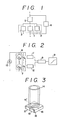
- Fig. 1 shows an electrically equivalent circuit of cultivation medium contained within a cultivating and measuring cell used in the experiments described just above
- reference numeral 1 denotes an impedance component provided by the basal medium which contains scarcely sodium salts such as sodium chloride, disodium hydrogen phosphate or the like and electrolyte compounds such as potassium salts, calcium salts, magnesium salts or the like.
- Numeral 2 represents an impedance component provided by carbohydrates including glucose mannitol, and other carbohydrates.
- Numeral 3 represents an impedance component provided by inorganic salts including sodium chloride, disodium hydrogen phosphate, sodium dihydrogen phosphate and the like.
- the inorganic salt impedance component 3, the basal medium impedance component 1 and the carbohydrate impedance component 2 constitute medium impedance of the nutrient medium.
- Numeral 4 represents subtractive impedance provided by metabolic products including organic acids which exhibit lower impedance than the medium impedance mentioned above.
- Numeral 5 represents additive impedance provided by the metabolic products including organic acid, carbonic acid gases, hydrogen gas, water, ethanol and the like. It will be readily appreciated that the additive impedance component 5 and the subtractive impedance component 4 are ascribable to the progressive growth of bacteria.
- the impedance components describec above are composed of a pure resistance component for electrical conductivity and an electrostatic capacitance component of an aqueous electrolytic solution of the supporting medium, wherein the resistance and the capacitance are connected in parallel with each other.
- the supporting medium of the composition represented by the equivalent circuit diagram shown in Fig. 1 is inoculated with bacteria and incubated at a predetermined temperature. Then, growth of bacteria begins. As the growth proceeds, metabolic products are discharged. These metabolic products having respective electro-chemical constants cause impedance of the medium to be decreased and/or increased. Thus, when the impedance value of the medium is small before tne growth of bacteria begins, the subtractive impedance component due to the metabolic products which is effective to decrease impedance of the medium as a whole is difficult to be detected. On the contrary, the additive impedance component which is ascribable to the products resulted from the metabolic activity of bacteria and effective to increase impedance of the medium as a whole becomes easier to be detected.
- the subtractive impedance component ascribable to the metabolic products is easy to be detected, while the additive impedance component becomes difficult to be detected.
- the variation in impedance will proceed only in the sense of decreasing in the case of the conventionally employed media.
- the metabolic products of glucose supplied as nutrient will contain arganic acids such as acetic acid, succinic acid, latic acid or the like and additionally carbonic acid gas and water.
- Acetic acid and the like which are weak electrolytes exhibit relatively low electric conductivity and play a noticeable role in increasing impedance of the medium. The same applies true for carbonic acid gas and water.
- carboxylic acids such as acetic acid and the like are ionized in the aqueous solution.
- sodium ions Na +
- carboxylate ions RCOO -
- organic acids contained in the metabolic product can be detected as an increase in impedance with a high sensitivity and reliability by adding disodium hydrogen phosphate as well as strong electrolytes such as sodium, potasium salts or the like to the medium.
- the inventor of the present application conducted similar experiments on several species of bacteria and obtained similar results. It is thus expected that substantially same or similar results can be obtained for other bacteria for which glucose can be utilized as nutrient. Further, under the same experimental conditions, different species of micro-organisms give rise to generation of impedance variation patterns each unique to each of organisms. Thus, it is possible to identify micro-organisms or bacteria on the basis of different impedance variation patterns.
- decarboxylase test which has hitherto been adopted as one of the biological character tests that is important for identifying enteric bacteria can be carried out in a much facilitated and reliable manner by making use of the peculiar variation or change in impedance ascribable to the use of glucose as nutrient.
- decarboxylase test it is intended to mean the test in which a medium added with proper quantities of grape sugar and aminoacid is inoculated with bacteria for incubation. Then, certain species of bacteria will, after acids have been produced through fermentation of glucose take in aminoacid and bring about decarboxylating reaction. Thus, change in color of an indicator as added allows bacteria to be identified.
- any noticeable impedance variation will not make appearance if the media used heretofore in the decarboxylase test is employed. It has been found that difference in decarboxylation becomes significant only when weak electrolyte such as disodium hydrogen phosphate or the like salt is added to the hitherto used medium.
- weak electrolyte such as disodium hydrogen phosphate or the like salt is added to the hitherto used medium.
- acids are produced by bacteria from glucose after the growth has been initiated, involving decrease in the impedance value of the medium which is followed by an increase in the impedance value after a predetermined time has elapsed.
- the impedance . value will not be increased but continuously being decreased. This phenomenon may be explained by the fact that when bacteria take in aminoacid, the latter is decomposed into carbonic acid gas and amines involving decrease in impedance by cancelling out action of RCOO - Na + ions.
- the culture medium according to the invention is constituted by of proteins a basal medium which includes hydrolyzate/as a main component and added with at least carbohydrates and salts and/or aminoacid.
- the basal medium should preferably contain 2.5 to 10 gr/l (gram per litre) of carbohydrates and 1.0 to 10 gr/l of salts dissolved in distilled water.
- the basal medium functions as a nutrient source for the growth of micro-organism and contains as main components proteins such as peptones, triptones, meat extracts or the like which are used as aminoacid in bacteria.
- Carbohydrates are source of energy required for the growing of bacteria and may contain monosaccharides such as glucose, (dextrose), inositol, xylose, glycerols, arabinose, galactose, mannose, rhamnose, mannitol, sorbitol, adonitol or the like, disaccharides such as lactose, sucrose, trehalose, melibiose, cellobiose or the like, and polysaccharide such as raffinose, melezitose, dulcitol, amygdalin, salicin, fructose, (levulose) or the like.
- Salts as added serve to catch metabolic products discharged by bacteria in a medium to thereby present peculiar changes in impedance of the medium, and may primarily include inorganic strong electrolytes such as sodium, potassium, magnesium, calcium and the like. Salt may be a mixture containing two or more components described above. There may be applications where vitamins are additionally added to the medium.
- Inocula in liquid phase were prepared through pure culture for 18 hours by using Heart Infusion Medium which is available from Eiken Chemistry Co. Ltd., in Japan. 10 ⁇ l of thus prepared inoculum was used for inoculation.
- Disodium hydrogen phosphate and sodium chloride were used.
- the basal medium as used was Bacto-Peptone (10 gr/l) available from Difco Company.
- the media used in the exemplary experiments include the basal medium itself (medium1), medium prepared by adding to the basal medium with 10 gr/l of carbonydrate (medium 2), medium prepared by adding to the basal medium with 10 gr/l of carbohydrate and disodium hydrogen phosphate (medium 3), medium prepared by adding to the basal medium with 10 gr/l of carbohydrate and sodium chloride (medium 4), and medium prepared by adding to the basal medium with 5 gr/l of glucose, 2.5 gr/l of disodium hydrogen phosphate and 10 gr/l of aminoacid (medium 5).
- the media employed was 2 ml in volume. Different concentrations of disodium hydrogen phosphate and sodium chloride were employed.
- the tool used for measuring the impedance variations brought about by the grouwth of bacteria was an instrument which is commercially available from Japan Tectron Instruments Co. Ltd. in Japan under the trade name "Micro-organism Culture Automatic Measuring Apparatus" of Type Orga-6
- Fig. 2 shows the measuring apparatus Orga-6 described above in a schematic block diagram.
- a sample cell 6 and a reference cell 7 are directly connected in an A.C. excitation circuit. Voltages appearing across the sample cell 6 and the reference cell 7 are measured and the ratio of these voltages is arithmetically determined.
- the measured value is given by (VSo/VRo - VSt/VRt) / (VSo/VRo) after having been normalized by a base value of VSo/VRo.
- the measured value is arithmetically processed in an arithmetic operation circuit 8, whereby the impedance change as determined is recorded by a recording apparatus.
- Reference numeral 10 denotes a power supply source, and 11 and 12 denote amplifier circuits.
- a cell for cultivating and measuring bacteria as employed in the experimental examples is shown in Fig. 3.
- the cell comprises a plat- form 13 of about 20 mm square on which a cylindrical body 14 of about 40 mm in height is fixedly and integrally secured.
- a pair of electrodes 16 and 16' formed purely of gold are disposed on an inner bottom of the cylindrical body 14 with terminals 15 and 15' for the electrodes being provided on the platform 13. Impedance value of medium is measured between the electrodes 16 and 16'.
- the cell is made of hard glass so as to be re-usable after vapor sterilization at 121°C for 15 minutes.
- the conditions for measuring impedance are as follows:
- Three types of the media 1, 2 and 3 were prepared each in duplicate for each type of bacteria. More specifically, three specimen cells were used. A first cell was charged with 2 ml of medium 1, the second specimen or sample cell was charged with 2ml of medium 2 and the third was charged with 2 ml of medium 3. The media 4 and 3 were added with 10 gr/l of grape sugar. The medium 3 was further added with 2.5 gr/l of disodium hydrogen phosphate.
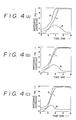
- Figs. 4 (A) to 4(F) show the results of impedance measurement for Escherichia coli
- Fig. 4(B) is for Serratia marcescens
- Fig. 4(C) is for Klebsiella pneumonia
- Fig. 4(D) is for Klebsiella ozaenae
- Fig. 4(A) shows the results of impedance measurement for Escherichia coli
- Fig. 4(B) is for Serratia marcescens
- Fig. 4(C) is for Klebsiella pneumonia
- Fig. 4(D) is for Klebsiella ozaenae
- FIG. 4(E) is for Proteus vulgaris
- Fig. 4(F) is for Enterobacter cloacae.
- attached reference numeral 1 represents the case where the medium 1 is used
- numeral 2 represents the use of the medium2
- numeral 3 represents the use of the medium 3.
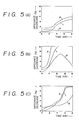
- Figs. 5(A) to 5(C) Three supporting media 1, 2 and 3 were prepared in the quite same manner as in the case of Example 1 and inoculated, respectively, with bacteria of the types j, k and 1 enemerated hereinbefore. Impedance changes were measured and recorded in the same manner. The results as obtained are graphically illustrated in Figs. 5(A) to 5(C). More specifically, the graph shown in Fig. 5(A) represents the experimental results obtained for Staphylococcus aureus (bacterium j), the graph of Fig. 5(b) is for Streptococcus faecalis (bacterium k), and the graph of Fig. 5(C) is for Pseudomonas aeruginosu (bacterium 1). Further, curves 1, 2 and 3 represent impedance change characteristics of the media 1, 2 and 3, respectively.
- the transition point from the decrease to the increase in impedance corresponds to a time lapse of about 2 hours, while the transition point in the case of Streptococcus faecalis occurs after time lapse of about 8 hours.
- Example 1 Four kinds of bacteria, i.e. Escherichia coli, Klebsiella pneumonia, Proteus vulgaris and Staphylococcus aureus were used in the present Example. Cultivation and inoculation were effected in the same manner as in the case of Example 1.
- the curves 1 correspones to Ogr/1 of disodium hydrogen phosphate.
- Curve 2 corresponds to 0.25.gr/l of disodium hydrogen phosphate.
- the curves 3, 4, 5, 6, 7 and 8 correspond, respectively, to 0.5 gr/l, 1 gr/1, 2.5 gr/1, 5 gr/l, 10 gr/1 and 20 gr/l of disodium hydrogen phosphate.
- the effective concentration of disodium hydrogen phosphate is in a range from 1.0 gr/l to 10 gr/l. More preferably, the concentration range from 2.5 gr/1 to 5 gr/l makes more discriminative the difference in the impedance changes brought about by different types of bacteria. In the case of examples illustrated in Fig. 6(D), the curves 3, 4, 5 and 6 are flat, because rate of impedance change is positive.
- Example 1 Escherichia coli, . Klebsiella pneumonia, Proteus vulgaris, Staphylococcus aureus were used.
- the cultivation and inoculation were processed in the same manner as in the case of Example 1. Further, six dissolved concentrations were employed which were same as the first to the six concentrations in the series described above in conjunction with Example 3.
- Figs. 7(A) to 7(D) graphically illustrates the results of measurements as obtained with the aid of the apparatus Orga 6. More specifically, Fig. 7(A) illustrates impedance changes brought about in the media by Echerichia coli. By the same token, Fig. 7(B) is for Klebsiella pneumonia, Fig. 7(C) is for Proteus vulgaris and Fig. 7(D) is for Staphylococcus aureus. Further, curves 1 to 6 in each of these figures correspond to the different concentrations of sodium chloride as employed.
- impedance change was observed when only electrolyte component was added to a medium with a view to determining whether or not identification of bacteria is possible in the medium which contains no carbohydrates.
- Escherichia coli was employed. Cultivation and inoculation were performed in the same manner as in the case of Example 1. Sodium chloride was used as an electrolyte with six different concentrations of dissolution in the same concentration series as in the case of Example 4.
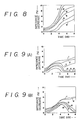
- Fig. 8 shows the results of measurements obtained by using the instrument Orga 6.
- Curves 1, 2, 3, 4, 5 and 6 corresponds to the different concentrations of added sodium chloride of 0 gr/l, 0.25 gr/l, 0.5 gr/l, 1.0 gr/1, 2.5 gr/l and 5.0 gr/l, respectively, as in the case of Example 4.
- the experiment is intended to determine influence of the concentration of dissolved carbohydrates exerted to impedance change of the medium.
- a reference or control medium was prepared by adding 5 gr/l of disodium hydrogen phosphate to the basal medium containing 10 gr/l of peptone. Further, specimen or sample media were prepared by adding to the reference or control medium glucose in 1 gr/1, 2.5 gr/1, 5 gr/l, 10 gr/l and 20 gr/l, respectively.
- Figs. 9(A) and 9(B) The results of measurements made for the two types of bacteria mentioned above by using these media in the apparatus Orga 6 are graphically illustrated in Figs. 9(A) and 9(B).
- the impedance changes brought about by Escherichia coli are represented by curves 1, 2, 3, 4, 5 and 6 for the six different concentrations of glucose mentioned above in Fig. 9(A), while Fig. 9(B) illustrates impedance changes of the different media upon which Proteus vulgaris was grown.
- Impedance changes brought about by consumption of various carbohydrates by enteric bacteria were experimentally determined to ascertain that degree of utilization or consumption becomes different in dependence on the types or kinds of carbohydrates contained in the media, whereby impedance changes characteristic of different bacteria are also rendered different.
- Carbohydrates as employed includes glucose, mannitol, inositol, sorbitol, rhamnose, sucrose, melibiose,and arabinose.
- Mine types of bacteria were used. They are Escherichia coli, Serratia marcescens, Klebsiella penumonia, Klebsiella ozaenae, Proteus vulgaris, Enterobater cloacae, Proteus mirabilis, Hafnia alveri and Citrobacter freundi.
- Eight types of sample cells each of 2 ml were prepared each by adding to the basal medium with one of carbohydrates mentioned above together with 5 gr/l of disodium hydrogen phosphate.
- Liquid inocula each of 10 ⁇ l to be inoculated in the samples were prepared by the same procedures as in the case of the Example 1.
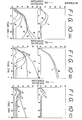
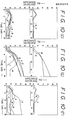
- Figs. 10(A) to 10(1) graphically illustrate results of the measurements made by using the apparatus Orga 6.
- Fig. 10(A) represents the measurement results for Escherichia coli
- Fig. 10(B) is for Serratia marcescens
- Fig. 10(C) is for Klebsiella pneumonia
- Fig. 10(D) is for Klebsiella ozaenae
- Fig. 10(E) is Proteus vulgaris
- Fig. 10(F) is for Enterobacter cloacae
- Fig. 10(G) is for Proteus mirabilis
- Fi b . 10(H) is for Hafhia alvei
- Fig. 10(1) is for Citrobacter freundi.
- impedance characteristic curves 1, 2, 3, 4, 5, 6, 7 and 8 correspond to the uses of glucose, mannitol, inositol, solbitol, rhamnose, sucrose, melibiose and arab
- bacteria are decided to be posite for carbohydrate for which the impedance value of the associated media turn to increase on the way. Such decision is made for each of the eight types of carbohydrates and utilized for identifying bacteria through comparison with the known data.
- Table 1 utilizations of carbohydrates by various bacteria are listed. In this table, plus sign (+) means that bacteria are positive, while minus sign (-) means that bacteria are negative.
- API 20E commentially available bacterium identifying kit
- Aminoacids employed in this example includes alginine, lysine and ornithine.
- Nine types of bacteria were used. They are Escherichia coli, Serratia marcescens, Klebsiella pneumonia, Klebsiella ozaenae, Proteus vulgaris, Enterobacter cloacae, Proteus rrdrabilis, Hafnia alvei and Citrobacter freundi.
- the media were prepared by adding 5 gr/l of grape sugar and 2.5 gr/l of disodium hydrogen phosphate to 10 gr/1 of the basal medium and further added with each of aminoacids described above in 10 gr/l.
- the liquid inocula each of 10 1 to be grown on these cells were obtained through the same procedures as in the case of Example 1.
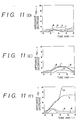
- Figs. 11(A) to Fig. 11(I) The results of impedance measurements made by using the instrument Orga 6 are graphically illustrated in Figs. 11(A) to Fig. 11(I). More specifically, Fig. 11(A) graphically illustrates the measurement results for Escherichia coli, Fig. 11(B) is for Seratia marcescens, Fig. 11(C) is for Klebsiella pneumonia, Fig. 11(D) is for Klebsiella ozaenae, Fig. 11(E) is for Proteus vulgaris, Fig. 11(F) is for Enterobacter cloacae, Fig. 11(G) is for Proteus mirabilis, Fig. 11(H) is for Hafnia alvei, and Fig. 11(A) graphically illustrates the measurement results for Escherichia coli, Fig. 11(B) is for Seratia marcescens, Fig. 11(C) is for Klebs
- curves 1, 2 and 3 represent the impedance characteristic curves obtained for the uses of alginine, lysine and omithine, respectively.
- a curve 4 corresponds to the case where no aminoacids are added.
- the impedametrical method according to the invention allows decarboxylation reaction to be evaluated within six hours, which is very advantageous over the hitherto known agar plate method which requires an overnight cultivation.
- Such evaluation may be made by determining whether bacteria in concern are positive or negative for these three types of aminoacids and comparing with known data to thereby identify bacteria.
- utilizations of aminoacids by bacteria are represented by plus sign (positive) and minus sign (negative). It has been confirmed that the results listed in the Table 2 coincide with those obtained by using the commertially available enteric bacteria identifying kit "API 20E" stated above.
- decarboxylation process can be detected as significant impedance changes when media which are prepared by adding glucose (5 gr/1), aminoacids (each 10 gr/1) and additionally disodium hydrogen phosphate (2.5 gr/1) are used.
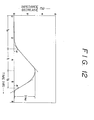
- a curve representing impedance change by unknown bacterium is depicted in a manner illustrated in Fig. 12 and compared with the corresponding curves of known bacteria to thereby identify the unknown bacterium.
- Parameters of an impedance characteristic curve involved in the comparative identification include rate ⁇ of impedance decrease for a unit time, rate ⁇ of impedance increase for a unit time, a period t 1 during which impedance decreases, a period t 2 during which impedance increases and rate I of impedance decrease immediately before impedance begins to increase, and, if required, a time span t o lying between the start of culture and the beginning of the impedance decrease.
- Unknown bacteria are monitored under the same conditions and the resultant data are compared with the reference data to check whether the data obtained for the unknown bacteria coincide with the reference data within a per- rissible tolerance range. If the coincidence is found, it is estimated that the unknown bacteria are same types as those of reference.
- Example 7 Utilizations of various carbohydrates by bacteria are detected in terms of impedance changes, whereby identification of bacteria is made by determining whether bacterium in concern is negative or positive.
- Example 8 the results obtained in the Example 8 are used. Decarboxylations of various aminoacids by bacteria are detected in terms of impedance changes, whereby identification of bacteria is made by determining whether bacteria are positive or negative to aminoacids.
- an electronic computer or data processing apparatus may be advantageously employed for carrying out the bacteria identifying methods described above in accordance with appropriately prepared programs in automated manner with a high accuracy without requiring a lot of time.
- the invention has now provided methods and media which allow identification of bacteria to be fade by measuring impedance change including decrease and increase in impedance which are brought about as bacteria achieve the growth.
- the method according to the invention can be applied to carbohydrate utilization test as well as decarboxylation test in which difficulty has heretofore been encountered in identifying micro-organisms by the conventional impedametrical method.
- the invention can be applied to identification of micro-organisms which are capable of utilizing carbohydrates, most of bacteria which are of interest in clinical areas can be identified by adopting the inventive method. Further, automated identification process can be realized on the basis of peculiar impedance change with a higher speed and higher accuracy as compared with the hitherto known identification which relies on change in color of indicators. Further, identification of bacteria on the basis of change in color reauires a lot of time because growth of bacteria takes a relatively long period. In contrast thereto, the impedance change which is of interest to the present invention occurs within a relatively short time. Thus, the time required for establishing identity of bacteria can be significantly reduced.
Landscapes
- Health & Medical Sciences (AREA)
- Engineering & Computer Science (AREA)
- Life Sciences & Earth Sciences (AREA)
- Chemical & Material Sciences (AREA)
- Biomedical Technology (AREA)
- Physics & Mathematics (AREA)
- Zoology (AREA)
- Organic Chemistry (AREA)
- Wood Science & Technology (AREA)
- Biochemistry (AREA)
- Bioinformatics & Cheminformatics (AREA)
- General Health & Medical Sciences (AREA)
- Analytical Chemistry (AREA)
- Molecular Biology (AREA)
- Urology & Nephrology (AREA)
- General Physics & Mathematics (AREA)
- Immunology (AREA)
- Pathology (AREA)
- Food Science & Technology (AREA)
- Biotechnology (AREA)
- Microbiology (AREA)
- Sustainable Development (AREA)
- Medicinal Chemistry (AREA)
- Hematology (AREA)
- General Engineering & Computer Science (AREA)
- Genetics & Genomics (AREA)
- Biophysics (AREA)
- Measuring Or Testing Involving Enzymes Or Micro-Organisms (AREA)
- Micro-Organisms Or Cultivation Processes Thereof (AREA)
- Investigating Or Analyzing Materials By The Use Of Electric Means (AREA)
Applications Claiming Priority (4)
| Application Number | Priority Date | Filing Date | Title |
|---|---|---|---|
| JP28581/80 | 1980-03-08 | ||
| JP28582/80 | 1980-03-08 | ||
| JP55028582A JPS592277B2 (ja) | 1980-03-08 | 1980-03-08 | インピ−ダンス法における炭水化物利用試験用培地 |
| JP2858180A JPS56125652A (en) | 1980-03-08 | 1980-03-08 | Microorganism measuring method by impedance method |
Publications (3)
| Publication Number | Publication Date |
|---|---|
| EP0036274A2 true EP0036274A2 (fr) | 1981-09-23 |
| EP0036274A3 EP0036274A3 (en) | 1984-01-18 |
| EP0036274B1 EP0036274B1 (fr) | 1986-11-05 |
Family
ID=26366715
Family Applications (1)
| Application Number | Title | Priority Date | Filing Date |
|---|---|---|---|
| EP19810300928 Expired EP0036274B1 (fr) | 1980-03-08 | 1981-03-05 | Méthode pour contrôler des microorganismes et milieux de culture |
Country Status (3)
| Country | Link |
|---|---|
| EP (1) | EP0036274B1 (fr) |
| CA (1) | CA1158968A (fr) |
| DE (1) | DE3175570D1 (fr) |
Cited By (9)
| Publication number | Priority date | Publication date | Assignee | Title |
|---|---|---|---|---|
| EP0096095A1 (fr) * | 1982-06-14 | 1983-12-21 | Corporation Ohmicron | Dispositif semi-conducteur, capteur et méthode pour déterminer la concentration d'une substance dans un milieu |
| GB2177801A (en) * | 1985-07-04 | 1987-01-28 | Malthus Instr Limited | Apparatus for detecting growth of microorganisms |
| GB2211615A (en) * | 1987-10-23 | 1989-07-05 | Mb Group Plc | Methods of detecting micro-organisms |
| EP0397362A1 (fr) * | 1989-05-08 | 1990-11-14 | CarnaudMetalbox plc | Détection électrochimique de la croissance de micro-organismes |
| US5300428A (en) * | 1989-05-08 | 1994-04-05 | Cmb Packaging (Uk) Limited | Electrochemical detection of growth of micro-organisms |
| EP0803728A1 (fr) * | 1996-04-24 | 1997-10-29 | Celsis International Plc | Méthode pour mesurer la conductivité des fluides |
| WO1998046985A1 (fr) * | 1997-04-16 | 1998-10-22 | Kaiku Limited | Evaluation de la composition des liquides |
| FR2934371A1 (fr) * | 2008-07-25 | 2010-01-29 | Nanotec Solution | Dispositif capteur de biomasse a usage unique, procede de realisation de ce dispositif et bioreacteur a usage unique integrant ce capteur |
| FR2951457A1 (fr) * | 2009-10-19 | 2011-04-22 | Centre Nat Rech Scient | Dispositif de controle de l'evolution d'une culture cellulaire |
Families Citing this family (1)
| Publication number | Priority date | Publication date | Assignee | Title |
|---|---|---|---|---|
| DE4328689A1 (de) * | 1993-08-26 | 1995-03-02 | Beiersdorf Ag | Verfahren zur Detektion und Zählung von Mikroorganismen |
Family Cites Families (7)
| Publication number | Priority date | Publication date | Assignee | Title |
|---|---|---|---|---|
| GB1299363A (en) * | 1968-09-27 | 1972-12-13 | Amiram Ur | Monitoring of chemical, bio-chemical and biological reactions, particularly blood-clotting |
| GB1433887A (en) * | 1973-04-19 | 1976-03-17 | Bactomatic Inc | Microbiological detection apparatus |
| US3984766A (en) * | 1974-10-15 | 1976-10-05 | Bactomatic Inc. | Digital apparatus for rapidly detecting the growth of and identifying micro-biological organisms |
| US4009078A (en) * | 1975-01-24 | 1977-02-22 | The United States Of America As Represented By The Administrator Of The National Aeronautics And Space Administration | Detecting the presence of microorganisms |
| GB1585067A (en) * | 1976-10-19 | 1981-02-25 | Nat Res Dev | Detection of bacterial activity |
| DD129579B1 (de) * | 1976-11-24 | 1981-03-25 | Karlheinz Gernand | Nachweis harnpathogener bakterien durch elektro-chemische messung des sauerstoff-bzw.kohlendioxidgehalts im harn |
| JPS5529940A (en) * | 1978-08-23 | 1980-03-03 | Kyowa Hakko Kogyo Co Ltd | Method and apparatus for determining activity of microorganism |
-
1981
- 1981-03-05 EP EP19810300928 patent/EP0036274B1/fr not_active Expired
- 1981-03-05 DE DE8181300928T patent/DE3175570D1/de not_active Expired
- 1981-03-06 CA CA000372494A patent/CA1158968A/fr not_active Expired
Cited By (13)
| Publication number | Priority date | Publication date | Assignee | Title |
|---|---|---|---|---|
| EP0096095A1 (fr) * | 1982-06-14 | 1983-12-21 | Corporation Ohmicron | Dispositif semi-conducteur, capteur et méthode pour déterminer la concentration d'une substance dans un milieu |
| GB2177801A (en) * | 1985-07-04 | 1987-01-28 | Malthus Instr Limited | Apparatus for detecting growth of microorganisms |
| GB2211615A (en) * | 1987-10-23 | 1989-07-05 | Mb Group Plc | Methods of detecting micro-organisms |
| EP0397362A1 (fr) * | 1989-05-08 | 1990-11-14 | CarnaudMetalbox plc | Détection électrochimique de la croissance de micro-organismes |
| US5300428A (en) * | 1989-05-08 | 1994-04-05 | Cmb Packaging (Uk) Limited | Electrochemical detection of growth of micro-organisms |
| EP0803728A1 (fr) * | 1996-04-24 | 1997-10-29 | Celsis International Plc | Méthode pour mesurer la conductivité des fluides |
| WO1998046985A1 (fr) * | 1997-04-16 | 1998-10-22 | Kaiku Limited | Evaluation de la composition des liquides |
| US6511851B1 (en) | 1997-04-16 | 2003-01-28 | Kaiku Limited | Identifying changes in composition of liquids |
| FR2934371A1 (fr) * | 2008-07-25 | 2010-01-29 | Nanotec Solution | Dispositif capteur de biomasse a usage unique, procede de realisation de ce dispositif et bioreacteur a usage unique integrant ce capteur |
| US9567561B2 (en) | 2008-07-25 | 2017-02-14 | Hamilton Bonaduz Ag | Single-use biomass sensing device, method for producing this device and single-use bioreactor incorporating this sensor |
| FR2951457A1 (fr) * | 2009-10-19 | 2011-04-22 | Centre Nat Rech Scient | Dispositif de controle de l'evolution d'une culture cellulaire |
| WO2011047954A3 (fr) * | 2009-10-19 | 2011-08-11 | Centre National De La Recherche Scientifique (Cnrs) | Dispositif de contrôle de l'évolution d'une culture cellulaire |
| US9121006B2 (en) | 2009-10-19 | 2015-09-01 | Centre National De La Recherche Scientifique (Cnrs) | Device for monitoring cell culture development |
Also Published As
| Publication number | Publication date |
|---|---|
| EP0036274A3 (en) | 1984-01-18 |
| DE3175570D1 (en) | 1986-12-11 |
| EP0036274B1 (fr) | 1986-11-05 |
| CA1158968A (fr) | 1983-12-20 |
Similar Documents
| Publication | Publication Date | Title |
|---|---|---|
| US4288544A (en) | Method and apparatus for measuring microorganism activity | |
| US4304853A (en) | Method of determination for proteases and antiproteases | |
| Moriarty | Improved method using muramic acid to estimate biomass of bacteria in sediments | |
| Matsunaga et al. | Electrode system for the determination of microbial populations | |
| EP0036274B1 (fr) | Méthode pour contrôler des microorganismes et milieux de culture | |
| Riedel et al. | An electrochemical method for determination of cell respiration | |
| Abbott et al. | Effect of growth rate and nutrient limitation on the composition and biomass yield of Acinetobacter calcoaceticus | |
| Allison et al. | The method of electrical conductivity in studies on bacterial metabolism | |
| US7238496B2 (en) | Rapid and automated electrochemical method for detection of viable microbial pathogens | |
| Singer et al. | A comparison of the acid-base metabolisms of pooled human dental plaque and salivary sediment | |
| Gale | Determination of amino acids by use of bacterial amino acid decarboxylases | |
| JPH0574355B2 (fr) | ||
| US4030979A (en) | Method of detecting hydrogen-producing bacteria | |
| Douglas et al. | Electrophoretic studies on bacteria. 3. The growth cycle of Bacillus megaterium, the behaviour of cells and the changes produced by lysozyme | |
| JPS592277B2 (ja) | インピ−ダンス法における炭水化物利用試験用培地 | |
| JPH0574354B2 (fr) | ||
| Karube | [11] Hybrid biosensors for clinical analysis and fermentation control | |
| JPH045440B2 (fr) | ||
| SU992570A1 (ru) | Способ определени глюкозы в растворах | |
| JPS58162289A (ja) | 微生物学的検定装置 | |
| Ward | The apparent oxidation-reduction potentials of bright platinum electrodes in synthetic media cultures of bacteria | |
| Junter | Potentiometric detection and study of bacterial activity | |
| Sguros et al. | AEROBIC GLUCOSE DISSIMILATION BY ACHROMOBACTER SPECIES I: Fate of the Carbon Substrate | |
| JPH0691821B2 (ja) | 細胞の電気化学的制御方法 | |
| JPS62104594A (ja) | クエン酸塩利用能検査用培地組成物 |
Legal Events
| Date | Code | Title | Description |
|---|---|---|---|
| PUAI | Public reference made under article 153(3) epc to a published international application that has entered the european phase |
Free format text: ORIGINAL CODE: 0009012 |
|
| AK | Designated contracting states |
Designated state(s): DE FR GB SE |
|
| 17P | Request for examination filed |
Effective date: 19820203 |
|
| PUAL | Search report despatched |
Free format text: ORIGINAL CODE: 0009013 |
|
| AK | Designated contracting states |
Designated state(s): DE FR GB SE |
|
| GRAA | (expected) grant |
Free format text: ORIGINAL CODE: 0009210 |
|
| AK | Designated contracting states |
Kind code of ref document: B1 Designated state(s): DE FR GB SE |
|
| PG25 | Lapsed in a contracting state [announced via postgrant information from national office to epo] |
Ref country code: SE Effective date: 19861130 |
|
| REF | Corresponds to: |
Ref document number: 3175570 Country of ref document: DE Date of ref document: 19861211 |
|
| ET | Fr: translation filed | ||
| PLBE | No opposition filed within time limit |
Free format text: ORIGINAL CODE: 0009261 |
|
| STAA | Information on the status of an ep patent application or granted ep patent |
Free format text: STATUS: NO OPPOSITION FILED WITHIN TIME LIMIT |
|
| 26N | No opposition filed | ||
| PGFP | Annual fee paid to national office [announced via postgrant information from national office to epo] |
Ref country code: GB Payment date: 19920225 Year of fee payment: 12 |
|
| PGFP | Annual fee paid to national office [announced via postgrant information from national office to epo] |
Ref country code: FR Payment date: 19920228 Year of fee payment: 12 |
|
| PGFP | Annual fee paid to national office [announced via postgrant information from national office to epo] |
Ref country code: DE Payment date: 19920513 Year of fee payment: 12 |
|
| PG25 | Lapsed in a contracting state [announced via postgrant information from national office to epo] |
Ref country code: GB Effective date: 19930305 |
|
| GBPC | Gb: european patent ceased through non-payment of renewal fee |
Effective date: 19930305 |
|
| PG25 | Lapsed in a contracting state [announced via postgrant information from national office to epo] |
Ref country code: FR Effective date: 19931130 |
|
| PG25 | Lapsed in a contracting state [announced via postgrant information from national office to epo] |
Ref country code: DE Effective date: 19931201 |
|
| REG | Reference to a national code |
Ref country code: FR Ref legal event code: ST |