EP0036733A1 - Procédé de séparation par distillation d'oxyde de carbone d'hydrocarbures légers - Google Patents
Procédé de séparation par distillation d'oxyde de carbone d'hydrocarbures légers Download PDFInfo
- Publication number
- EP0036733A1 EP0036733A1 EP81301086A EP81301086A EP0036733A1 EP 0036733 A1 EP0036733 A1 EP 0036733A1 EP 81301086 A EP81301086 A EP 81301086A EP 81301086 A EP81301086 A EP 81301086A EP 0036733 A1 EP0036733 A1 EP 0036733A1
- Authority
- EP
- European Patent Office
- Prior art keywords
- carbon dioxide
- ethane
- azeotrope
- acid gas
- additional component
- Prior art date
- Legal status (The legal status is an assumption and is not a legal conclusion. Google has not performed a legal analysis and makes no representation as to the accuracy of the status listed.)
- Granted
Links
Images


Classifications
-
- F—MECHANICAL ENGINEERING; LIGHTING; HEATING; WEAPONS; BLASTING
- F25—REFRIGERATION OR COOLING; COMBINED HEATING AND REFRIGERATION SYSTEMS; HEAT PUMP SYSTEMS; MANUFACTURE OR STORAGE OF ICE; LIQUEFACTION SOLIDIFICATION OF GASES
- F25J—LIQUEFACTION, SOLIDIFICATION OR SEPARATION OF GASES OR GASEOUS OR LIQUEFIED GASEOUS MIXTURES BY PRESSURE AND COLD TREATMENT OR BY BRINGING THEM INTO THE SUPERCRITICAL STATE
- F25J3/00—Processes or apparatus for separating the constituents of gaseous or liquefied gaseous mixtures involving the use of liquefaction or solidification
- F25J3/02—Processes or apparatus for separating the constituents of gaseous or liquefied gaseous mixtures involving the use of liquefaction or solidification by rectification, i.e. by continuous interchange of heat and material between a vapour stream and a liquid stream
- F25J3/0228—Processes or apparatus for separating the constituents of gaseous or liquefied gaseous mixtures involving the use of liquefaction or solidification by rectification, i.e. by continuous interchange of heat and material between a vapour stream and a liquid stream characterised by the separated product stream
- F25J3/0266—Processes or apparatus for separating the constituents of gaseous or liquefied gaseous mixtures involving the use of liquefaction or solidification by rectification, i.e. by continuous interchange of heat and material between a vapour stream and a liquid stream characterised by the separated product stream separation of carbon dioxide
-
- B—PERFORMING OPERATIONS; TRANSPORTING
- B01—PHYSICAL OR CHEMICAL PROCESSES OR APPARATUS IN GENERAL
- B01D—SEPARATION
- B01D3/00—Distillation or related exchange processes in which liquids are contacted with gaseous media, e.g. stripping
- B01D3/14—Fractional distillation or use of a fractionation or rectification column
- B01D3/143—Fractional distillation or use of a fractionation or rectification column by two or more of a fractionation, separation or rectification step
- B01D3/146—Multiple effect distillation
-
- B—PERFORMING OPERATIONS; TRANSPORTING
- B01—PHYSICAL OR CHEMICAL PROCESSES OR APPARATUS IN GENERAL
- B01D—SEPARATION
- B01D3/00—Distillation or related exchange processes in which liquids are contacted with gaseous media, e.g. stripping
- B01D3/14—Fractional distillation or use of a fractionation or rectification column
- B01D3/32—Other features of fractionating columns ; Constructional details of fractionating columns not provided for in groups B01D3/16 - B01D3/30
- B01D3/322—Reboiler specifications
-
- B—PERFORMING OPERATIONS; TRANSPORTING
- B01—PHYSICAL OR CHEMICAL PROCESSES OR APPARATUS IN GENERAL
- B01D—SEPARATION
- B01D3/00—Distillation or related exchange processes in which liquids are contacted with gaseous media, e.g. stripping
- B01D3/34—Distillation or related exchange processes in which liquids are contacted with gaseous media, e.g. stripping with one or more auxiliary substances
-
- C—CHEMISTRY; METALLURGY
- C07—ORGANIC CHEMISTRY
- C07C—ACYCLIC OR CARBOCYCLIC COMPOUNDS
- C07C7/00—Purification; Separation; Use of additives
- C07C7/04—Purification; Separation; Use of additives by distillation
- C07C7/05—Purification; Separation; Use of additives by distillation with the aid of auxiliary compounds
-
- C—CHEMISTRY; METALLURGY
- C10—PETROLEUM, GAS OR COKE INDUSTRIES; TECHNICAL GASES CONTAINING CARBON MONOXIDE; FUELS; LUBRICANTS; PEAT
- C10L—FUELS NOT OTHERWISE PROVIDED FOR; NATURAL GAS; SYNTHETIC NATURAL GAS OBTAINED BY PROCESSES NOT COVERED BY SUBCLASSES C10G OR C10K; LIQUIFIED PETROLEUM GAS; USE OF ADDITIVES TO FUELS OR FIRES; FIRE-LIGHTERS
- C10L3/00—Gaseous fuels; Natural gas; Synthetic natural gas obtained by processes not covered by subclass C10G, C10K; Liquefied petroleum gas
- C10L3/06—Natural gas; Synthetic natural gas obtained by processes not covered by C10G, C10K3/02 or C10K3/04
- C10L3/10—Working-up natural gas or synthetic natural gas
- C10L3/101—Removal of contaminants
- C10L3/102—Removal of contaminants of acid contaminants
-
- F—MECHANICAL ENGINEERING; LIGHTING; HEATING; WEAPONS; BLASTING
- F25—REFRIGERATION OR COOLING; COMBINED HEATING AND REFRIGERATION SYSTEMS; HEAT PUMP SYSTEMS; MANUFACTURE OR STORAGE OF ICE; LIQUEFACTION SOLIDIFICATION OF GASES
- F25J—LIQUEFACTION, SOLIDIFICATION OR SEPARATION OF GASES OR GASEOUS OR LIQUEFIED GASEOUS MIXTURES BY PRESSURE AND COLD TREATMENT OR BY BRINGING THEM INTO THE SUPERCRITICAL STATE
- F25J3/00—Processes or apparatus for separating the constituents of gaseous or liquefied gaseous mixtures involving the use of liquefaction or solidification
- F25J3/02—Processes or apparatus for separating the constituents of gaseous or liquefied gaseous mixtures involving the use of liquefaction or solidification by rectification, i.e. by continuous interchange of heat and material between a vapour stream and a liquid stream
- F25J3/0204—Processes or apparatus for separating the constituents of gaseous or liquefied gaseous mixtures involving the use of liquefaction or solidification by rectification, i.e. by continuous interchange of heat and material between a vapour stream and a liquid stream characterised by the feed stream
- F25J3/0209—Natural gas or substitute natural gas
-
- F—MECHANICAL ENGINEERING; LIGHTING; HEATING; WEAPONS; BLASTING
- F25—REFRIGERATION OR COOLING; COMBINED HEATING AND REFRIGERATION SYSTEMS; HEAT PUMP SYSTEMS; MANUFACTURE OR STORAGE OF ICE; LIQUEFACTION SOLIDIFICATION OF GASES
- F25J—LIQUEFACTION, SOLIDIFICATION OR SEPARATION OF GASES OR GASEOUS OR LIQUEFIED GASEOUS MIXTURES BY PRESSURE AND COLD TREATMENT OR BY BRINGING THEM INTO THE SUPERCRITICAL STATE
- F25J3/00—Processes or apparatus for separating the constituents of gaseous or liquefied gaseous mixtures involving the use of liquefaction or solidification
- F25J3/02—Processes or apparatus for separating the constituents of gaseous or liquefied gaseous mixtures involving the use of liquefaction or solidification by rectification, i.e. by continuous interchange of heat and material between a vapour stream and a liquid stream
- F25J3/0228—Processes or apparatus for separating the constituents of gaseous or liquefied gaseous mixtures involving the use of liquefaction or solidification by rectification, i.e. by continuous interchange of heat and material between a vapour stream and a liquid stream characterised by the separated product stream
- F25J3/0233—Processes or apparatus for separating the constituents of gaseous or liquefied gaseous mixtures involving the use of liquefaction or solidification by rectification, i.e. by continuous interchange of heat and material between a vapour stream and a liquid stream characterised by the separated product stream separation of CnHm with 1 carbon atom or more
-
- F—MECHANICAL ENGINEERING; LIGHTING; HEATING; WEAPONS; BLASTING
- F25—REFRIGERATION OR COOLING; COMBINED HEATING AND REFRIGERATION SYSTEMS; HEAT PUMP SYSTEMS; MANUFACTURE OR STORAGE OF ICE; LIQUEFACTION SOLIDIFICATION OF GASES
- F25J—LIQUEFACTION, SOLIDIFICATION OR SEPARATION OF GASES OR GASEOUS OR LIQUEFIED GASEOUS MIXTURES BY PRESSURE AND COLD TREATMENT OR BY BRINGING THEM INTO THE SUPERCRITICAL STATE
- F25J3/00—Processes or apparatus for separating the constituents of gaseous or liquefied gaseous mixtures involving the use of liquefaction or solidification
- F25J3/02—Processes or apparatus for separating the constituents of gaseous or liquefied gaseous mixtures involving the use of liquefaction or solidification by rectification, i.e. by continuous interchange of heat and material between a vapour stream and a liquid stream
- F25J3/0228—Processes or apparatus for separating the constituents of gaseous or liquefied gaseous mixtures involving the use of liquefaction or solidification by rectification, i.e. by continuous interchange of heat and material between a vapour stream and a liquid stream characterised by the separated product stream
- F25J3/0238—Processes or apparatus for separating the constituents of gaseous or liquefied gaseous mixtures involving the use of liquefaction or solidification by rectification, i.e. by continuous interchange of heat and material between a vapour stream and a liquid stream characterised by the separated product stream separation of CnHm with 2 carbon atoms or more
-
- F—MECHANICAL ENGINEERING; LIGHTING; HEATING; WEAPONS; BLASTING
- F25—REFRIGERATION OR COOLING; COMBINED HEATING AND REFRIGERATION SYSTEMS; HEAT PUMP SYSTEMS; MANUFACTURE OR STORAGE OF ICE; LIQUEFACTION SOLIDIFICATION OF GASES
- F25J—LIQUEFACTION, SOLIDIFICATION OR SEPARATION OF GASES OR GASEOUS OR LIQUEFIED GASEOUS MIXTURES BY PRESSURE AND COLD TREATMENT OR BY BRINGING THEM INTO THE SUPERCRITICAL STATE
- F25J3/00—Processes or apparatus for separating the constituents of gaseous or liquefied gaseous mixtures involving the use of liquefaction or solidification
- F25J3/02—Processes or apparatus for separating the constituents of gaseous or liquefied gaseous mixtures involving the use of liquefaction or solidification by rectification, i.e. by continuous interchange of heat and material between a vapour stream and a liquid stream
- F25J3/0228—Processes or apparatus for separating the constituents of gaseous or liquefied gaseous mixtures involving the use of liquefaction or solidification by rectification, i.e. by continuous interchange of heat and material between a vapour stream and a liquid stream characterised by the separated product stream
- F25J3/0247—Processes or apparatus for separating the constituents of gaseous or liquefied gaseous mixtures involving the use of liquefaction or solidification by rectification, i.e. by continuous interchange of heat and material between a vapour stream and a liquid stream characterised by the separated product stream separation of CnHm with 4 carbon atoms or more
-
- F—MECHANICAL ENGINEERING; LIGHTING; HEATING; WEAPONS; BLASTING
- F25—REFRIGERATION OR COOLING; COMBINED HEATING AND REFRIGERATION SYSTEMS; HEAT PUMP SYSTEMS; MANUFACTURE OR STORAGE OF ICE; LIQUEFACTION SOLIDIFICATION OF GASES
- F25J—LIQUEFACTION, SOLIDIFICATION OR SEPARATION OF GASES OR GASEOUS OR LIQUEFIED GASEOUS MIXTURES BY PRESSURE AND COLD TREATMENT OR BY BRINGING THEM INTO THE SUPERCRITICAL STATE
- F25J2205/00—Processes or apparatus using other separation and/or other processing means
- F25J2205/50—Processes or apparatus using other separation and/or other processing means using absorption, i.e. with selective solvents or lean oil, heavier CnHm and including generally a regeneration step for the solvent or lean oil
-
- F—MECHANICAL ENGINEERING; LIGHTING; HEATING; WEAPONS; BLASTING
- F25—REFRIGERATION OR COOLING; COMBINED HEATING AND REFRIGERATION SYSTEMS; HEAT PUMP SYSTEMS; MANUFACTURE OR STORAGE OF ICE; LIQUEFACTION SOLIDIFICATION OF GASES
- F25J—LIQUEFACTION, SOLIDIFICATION OR SEPARATION OF GASES OR GASEOUS OR LIQUEFIED GASEOUS MIXTURES BY PRESSURE AND COLD TREATMENT OR BY BRINGING THEM INTO THE SUPERCRITICAL STATE
- F25J2220/00—Processes or apparatus involving steps for the removal of impurities
- F25J2220/60—Separating impurities from natural gas, e.g. mercury, cyclic hydrocarbons
- F25J2220/66—Separating acid gases, e.g. CO2, SO2, H2S or RSH
-
- F—MECHANICAL ENGINEERING; LIGHTING; HEATING; WEAPONS; BLASTING
- F25—REFRIGERATION OR COOLING; COMBINED HEATING AND REFRIGERATION SYSTEMS; HEAT PUMP SYSTEMS; MANUFACTURE OR STORAGE OF ICE; LIQUEFACTION SOLIDIFICATION OF GASES
- F25J—LIQUEFACTION, SOLIDIFICATION OR SEPARATION OF GASES OR GASEOUS OR LIQUEFIED GASEOUS MIXTURES BY PRESSURE AND COLD TREATMENT OR BY BRINGING THEM INTO THE SUPERCRITICAL STATE
- F25J2245/00—Processes or apparatus involving steps for recycling of process streams
- F25J2245/02—Recycle of a stream in general, e.g. a by-pass stream
-
- Y—GENERAL TAGGING OF NEW TECHNOLOGICAL DEVELOPMENTS; GENERAL TAGGING OF CROSS-SECTIONAL TECHNOLOGIES SPANNING OVER SEVERAL SECTIONS OF THE IPC; TECHNICAL SUBJECTS COVERED BY FORMER USPC CROSS-REFERENCE ART COLLECTIONS [XRACs] AND DIGESTS
- Y02—TECHNOLOGIES OR APPLICATIONS FOR MITIGATION OR ADAPTATION AGAINST CLIMATE CHANGE
- Y02C—CAPTURE, STORAGE, SEQUESTRATION OR DISPOSAL OF GREENHOUSE GASES [GHG]
- Y02C20/00—Capture or disposal of greenhouse gases
- Y02C20/40—Capture or disposal of greenhouse gases of CO2
-
- Y—GENERAL TAGGING OF NEW TECHNOLOGICAL DEVELOPMENTS; GENERAL TAGGING OF CROSS-SECTIONAL TECHNOLOGIES SPANNING OVER SEVERAL SECTIONS OF THE IPC; TECHNICAL SUBJECTS COVERED BY FORMER USPC CROSS-REFERENCE ART COLLECTIONS [XRACs] AND DIGESTS
- Y02—TECHNOLOGIES OR APPLICATIONS FOR MITIGATION OR ADAPTATION AGAINST CLIMATE CHANGE
- Y02P—CLIMATE CHANGE MITIGATION TECHNOLOGIES IN THE PRODUCTION OR PROCESSING OF GOODS
- Y02P20/00—Technologies relating to chemical industry
- Y02P20/151—Reduction of greenhouse gas [GHG] emissions, e.g. CO2
Definitions
- This invention is in the field of distillation.
- Ethylene also forms an azeotrope with carbon dioxide. Additionally, it is known that the acid gas hydrogen sulfide forms azeotropes with both ethane and propane. These and other possible azeotropes between acid gases and light hydrocarbons present limitations similar to those described for the carbon dioxide/ethane system when efforts are made to perform distillative separations on such systems.
- the invention provides a distillative method of separating a mixture containing an acid gas and a light hydrocarbon into an acid gas rich fraction and a light hydrocarbon rich fraction said acid gas and light hydrocarbon being liable to form an azeotrope therebetween, characterised in that an additional component is added to the mixture under distillation to prevent formation of an azeotrope between the acid gas and light hydrocarbon.
- the acid gas is for example carbon dioxide or hydrogen sulfide.
- the light hydrocarbon is for example ethane or ethylene; and when the acid gas is hydrogen sulfide the light hydrocarbon is ethane or propane.
- the additional component is for example miscible in the liquid phase with the acid gas and light hydrocarbon.
- the invention also provides a method of separating a carbon dioxide rich fraction from a mixture containing carbon dioxide and ethane,
- the additional component comprises for example a C 3- C 6 alkane e.g. n-butane or a mixture of C 3 -C 6 alkanes.
- the invention also comprehends a method according to the invention, wherein the additional component significantly alters the relative volatility between the acid gas (e.g. carbon dioxide) and the light hydrocarbon (e.g. ethane) to prevent azeotrope formation.
- the additional component significantly alters the relative volatility between the acid gas (e.g. carbon dioxide) and the light hydrocarbon (e.g. ethane) to prevent azeotrope formation.
- Embodiments of the invention are described hereinafter by way of example. These embodiments involve the distillative separation of acid gases from light hydrocarbons in mixtures wherein such separations are normally limited by the tendency to form an azeotrope.
- the feed mixtures can, of course, contain additional components e.g. higher hydrocarbons, nitrogen and hydrogen, etc.
- a distillation column is used to separate an acid gas and light hydrocarbon, both present in the feed, into an overhead and bottoms product which are not limited by the azeotrope composition of the acid gas or light hydrocarbon.
- This is achieved by adding to the distillation column a component which prevents formation of the acid gas/light hydrocarbon azeotrope.
- a component which prevents azeotrope formation can be employed in the distillative separation of a binary of carbon dioxide and ethane to produce an overhead stream having significantly more than two thirds carbon dioxide, which is the limitation when an azeotrope forms.
- this method has other inherent advantages.
- the energy requirements are lower than in the corresponding separation without the additional component because the relative volatility is improved or because the separation can be made at higher temperatures. This, of course, can lower the cost of the separation.
- natural gas typically contains butane, which can be an effective agent for preventing azeotrope formation between carbon dioxide and ethane.
- butane can be an effective agent for preventing azeotrope formation between carbon dioxide and ethane.
- the mere presence of such materials in the feed is not in itself sufficient to prevent azeotrope formation, such material can be separated from bottoms product and added back to the column at an appropriate point to prevent azeotrope formation. This takes advantage of materials already present in the feed as a convenient source of the additional component.
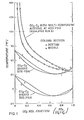
- Figure 1 contains vapor-liquid equilibria data for a binary mixture of carbon dioxide and ethane at both 578 psia and 335 psia. Data for these binary mixtures were obtained by Arthur D. Little, Inc. using an in-house computer program and employing the Soave-Redlich-Kwong equation of state. As can be seen from the data, the binary mixtures form a minimum boiling point azeotrope at both pressures in the range of about 65-70% carbon dioxide.
- Figure 3 is a plot of vapor-liquid equilibria data for a binary system of hydrogen sulfide and propane.
- the hydrogen sulfide/propane system exhibits azeotrope formation at both 200 and 400 psia.
- the azeotrope occurs at a somewhat higher mole fraction of hydrogen sulfide, e.g., 84-85 mole percent, nevertheless the azeotrope formation does interfere with a more complete distillative separation.
- Figure 4 presents vapor-liquid equilibria data for a binary hydrogen sulfide/propane system as well as this system with n-butane added to prevent azeotrope formation between hydrogen sulfide and propane. It can be seen that the azeotrope illustrated in Figures 3 and 4, which occurs at 200 psia for the pure binary, is eliminated by the addition of n-butane to a level of 20%. The pinched portion of the vapor-liquid equilibrium plot is opened even more when n-butane is added to a level of 40%. Thus, in addition to eliminating the azeotrope, the n-butane additive also increases the relative volatility of hydrogen sulfide to propane near the azeotrope composition.
- n-butane also increases the column temperatures, which lowers the energy requirements for refrigeration. Because of these factors, it might be desirable to add n-butane to hydrogen sulfide/propane systems even though the separation will not be extended beyond the azeotrope composition.
- Figure 5 is a plot of the relative volatility of hydrogen sulfide to propane, with and without n-butane as an additive. As illustrated, with no additive, the relative volatility falls below 1 for mole percentages of hydrogen sulfide above about 84%. Addition of n-butane raises the relative volatility well above 1, even for the higher percentages of hydrogen sulfide. Thus, as noted above, it can be desirable to add the additional componentto enhance relative volatility even below the azeotrope composition, as illustrated.
- Figure 6 is a plot of vapor-liquid equilibria data for the binary hydrogen sulfide/ethane system and for this system with n-butane at a level of 20% added to the liquid phase.
- the light hydrocarbon ethane is more volatile than the acid gas hydrogen sulfide below the azeotrope.
- the azeotrope present in the binary is eliminated by the addition of n-butane to a level of 20%.
- the feeds presented in the three simulations of 87%, 63% and 78% are on both the high and low sides of the azeotrope composition.
- the respective bottom products lean in carbon dioxide of 25%, 7% and 4% are significantly lower than the feed composition.
- the overhead products, rich in carbon dioxide at 95%, 95% and 98%, are significantly richer in carbon dioxide content than the azeotrope composition.
- the additive has made possible a more complete separation of carbon dioxide from ethane in all three simulations. A distillation without additive could not have produced such complete separations.
- Simulation 3 is particularly noteworthy in that the carbon dioxide overhead stream was substantially free of ethane and the ethane bottoms product was substantially free of carbon dioxide. Even more complete separations could be achieved.
- Simulated Run 2 has the least consumption of heating .and cooling whereas Simulated Run 3 has the greatest consumption of each.
- Simulation Run 1 has the least thorough split whereas Simulated Run 3 has the most thorough split.
- any material or mixture of materials which causes the relative volatility of an acid gas to a light hydrocarbon from which it is to be separated by distillation to be significantly different than 1 over the range of interest is satisfactory as an additional component.
- Liquids which are miscible with the acid gas and light hydrocarbon, such as C 3 - C 6 alkanes, are preferred because they are typically present in feed mixtures, are easy to separate and recycle, and often have a very beneficial effect in causing the acid gas to be more volatile relative to the light hydrocarbon.
- Natural gas liquids (NGL) contain such alkanes and can often be separated from bottoms product in conventional separation equipment. Thus, NGL or components thereof can be conveniently recycled to provide the additional component.
- NGL Natural gas liquids
- materials satisfactory as the additional component need not be pure material.
- the component should be liquid at the overhead conditions in the distillation column, and it is desirable to have components which have volatilities lower than the components to be separated.
- the additional component should also have a freezing point sufficiently low to avoid solids formation in the
- the amount of additional component added will be dependent upon factors such as e.g. the composition of the feed, operating pressure, throughput of the column, recovery of overhead and bottoms product desired. Such factors can be taken into account by those skilled in the art by determining the operative amounts for any given separation using no more than routine experimentation.
- the additional component is added to the column at a point above where feed is introduced since this is where azeotrope formation normally occurs. Although some materials which are suitable are contained in the feed in some cases, this alone is in the embodiments of the invention not sufficient to prevent azeotrope formation. This is because the additional component is usually not sufficiently volatile to rise up the column to the problem area. Thus, even if present in the feed, the component is separated and added to a point above the feed.
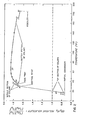
- feed mixture 10 containing a mixture of carbon dioxide and ethane, and usually other components e.g. heavier hydrocarbons, and nitrogen, enters through feed line 12 into distillation column 14.
- Column 14 contains a number of vapor-liquid contact stages such as trays or packing, with the exact number of contact stages depending upon the required operating conditions.
- Overhead stream 20 is rich in carbon dioxide and passes to partial condenser 22 from which the remaining vapor stream 24 exits as carbon dioxide product.
- This product stream also contains components present in the feed which are more volatile than carbon dioxide, such as any nitrogen present in the feed. Liquid from the partial condenser returns to column 14 in line 26 where it serves as reflux for tower 14. Condenser 22 is cooled by external cooling source 28.
- the bottoms strean exits from the lower portion of column 14 in bottoms line 30 and contains ethane and other less volatile hydrocarbons or other components, and any component added to prevent azeotrope formation.
- a portion of the bottoms product is passed through reboiler 32 and back to column 14 in line 34.
- Reboiler 32 is heated by an external heat source 36.
- the bottoms product passes in line 38 to further separation equipment 40, such as another distillation column. Separation equipment 40 is employed to separate out the additional component which is recycled in line 42 back to the column. The amount of recycled agent can be controlled by flow control valve 46. An ethane fraction is also separated in equipment 40 and is directed in line 44 to suitable ethane product facilities.
- separation equipment 40 such as another distillation column. Separation equipment 40 is employed to separate out the additional component which is recycled in line 42 back to the column. The amount of recycled agent can be controlled by flow control valve 46.
- An ethane fraction is also separated in equipment 40 and is directed in line 44 to suitable ethane product facilities.
- Component for preventing azeotrope formation may also be added to the system through line 50 and flow control valve 52.
- Such externally added agent may be used in lieu of recycled agent or in conjunction with recycled agent.
- the agent is cooled in heat exchanger 54, cooled by cooling source 56, and directed through flow lines 58 back towards the column 14.
- the additional component can be added at a number of different locations, either individually or at several locations simultaneously. As illustrated, the component can be directed in line 64 to flow control valve 66 and flow line 68 and introduced directly onto a tray in the upper section of column 14 above the feed line 12. Similarly, the component can be added to a higher column tray, such as by passing it in line 70 through control valve 72 and line 74. The component can also be introduced into condenser 22 by directing it through line 60, flow control valve 62 and line 63. Other suitable points of addition can be determined for each particular separation being performed.
Landscapes
- Engineering & Computer Science (AREA)
- Chemical & Material Sciences (AREA)
- Chemical Kinetics & Catalysis (AREA)
- Mechanical Engineering (AREA)
- General Engineering & Computer Science (AREA)
- Thermal Sciences (AREA)
- Physics & Mathematics (AREA)
- Oil, Petroleum & Natural Gas (AREA)
- Organic Chemistry (AREA)
- General Chemical & Material Sciences (AREA)
- Analytical Chemistry (AREA)
- Water Supply & Treatment (AREA)
- Organic Low-Molecular-Weight Compounds And Preparation Thereof (AREA)
- Hydrogen, Water And Hydrids (AREA)
- Carbon And Carbon Compounds (AREA)
- Vaporization, Distillation, Condensation, Sublimation, And Cold Traps (AREA)
- Physical Or Chemical Processes And Apparatus (AREA)
Applications Claiming Priority (2)
| Application Number | Priority Date | Filing Date | Title |
|---|---|---|---|
| US13141680A | 1980-03-18 | 1980-03-18 | |
| US131416 | 1980-03-18 |
Publications (2)
| Publication Number | Publication Date |
|---|---|
| EP0036733A1 true EP0036733A1 (fr) | 1981-09-30 |
| EP0036733B1 EP0036733B1 (fr) | 1984-07-04 |
Family
ID=22449376
Family Applications (1)
| Application Number | Title | Priority Date | Filing Date |
|---|---|---|---|
| EP81301086A Expired EP0036733B1 (fr) | 1980-03-18 | 1981-03-16 | Procédé de séparation par distillation d'oxyde de carbone d'hydrocarbures légers |
Country Status (10)
| Country | Link |
|---|---|
| EP (1) | EP0036733B1 (fr) |
| JP (1) | JPS57500500A (fr) |
| AT (1) | ATE8242T1 (fr) |
| AU (1) | AU550665B2 (fr) |
| CA (1) | CA1156137A (fr) |
| DE (1) | DE3164515D1 (fr) |
| IN (1) | IN154541B (fr) |
| MX (1) | MX158585A (fr) |
| NZ (1) | NZ196107A (fr) |
| WO (1) | WO1981002776A1 (fr) |
Cited By (4)
| Publication number | Priority date | Publication date | Assignee | Title |
|---|---|---|---|---|
| EP2467199A4 (fr) * | 2009-08-21 | 2013-08-07 | IOR Technology PTY LTD | Séparation d hydrocarbures légers et d espèces acides à partir d un gaz acide |
| US9114351B2 (en) | 2009-03-25 | 2015-08-25 | Fluor Technologies Corporation | Configurations and methods for high pressure acid gas removal |
| CN109096039A (zh) * | 2018-08-22 | 2018-12-28 | 青岛科技大学 | 一种采用离子液体萃取精馏分离乙烷和二氧化碳的方法 |
| WO2022018669A1 (fr) * | 2020-07-22 | 2022-01-27 | 8 Rivers Capital, Llc | Séparation de dioxyde de carbone et de matériaux sulfureux de mélanges gazeux |
Families Citing this family (1)
| Publication number | Priority date | Publication date | Assignee | Title |
|---|---|---|---|---|
| CN116351212B (zh) * | 2021-12-27 | 2026-01-20 | 中国石油天然气股份有限公司 | 一种乙烯裂解气脱酸性气单元黄油减量化方法及装置 |
Citations (5)
| Publication number | Priority date | Publication date | Assignee | Title |
|---|---|---|---|---|
| GB541572A (en) * | 1940-06-14 | 1941-12-02 | British Oxygen Co Ltd | Improvements in or relating to the separation by rectification of mixtures comprising carbon dioxide, ethane and ethylene |
| US2744394A (en) * | 1953-06-02 | 1956-05-08 | Badger Mfg Company | Separation of gaseous mixtures by fractionation |
| US3236057A (en) * | 1962-05-28 | 1966-02-22 | Conch Int Methane Ltd | Removal of carbon dioxide and/or hydrogen sulphide from methane |
| CA1033952A (fr) * | 1974-08-21 | 1978-07-04 | Antonio R. Valdes | Recuperation a basse temperature du gaz de petrole liquefie et des gaz acides et elimination des impuretes indesirables du gaz natural acide |
| US4246015A (en) * | 1979-12-31 | 1981-01-20 | Atlantic Richfield Company | Freeze-wash method for separating carbon dioxide and ethane |
Family Cites Families (6)
| Publication number | Priority date | Publication date | Assignee | Title |
|---|---|---|---|---|
| DE1095866B (de) * | 1959-09-30 | 1960-12-29 | Linde S Eismaschinen Ag Zweign | Verfahren und Einrichtung zur Abscheidung von Kohlendioxyd aus Druckgasen |
| US3595782A (en) * | 1968-12-05 | 1971-07-27 | Fluor Corp | Method for separating crabon dioxide from hydrocarbons |
| US4012212A (en) * | 1975-07-07 | 1977-03-15 | The Lummus Company | Process and apparatus for liquefying natural gas |
| US4035167A (en) * | 1976-02-13 | 1977-07-12 | Continental Oil Company | Recovery of ethane and ethylene from gaseous mixtures |
| US4185978A (en) * | 1977-03-01 | 1980-01-29 | Standard Oil Company (Indiana) | Method for cryogenic separation of carbon dioxide from hydrocarbons |
| US4311495A (en) * | 1979-12-28 | 1982-01-19 | Atlantic Richfield Company | Separating carbon dioxide and ethane by liquid-liquid extraction |
-
1981
- 1981-01-26 NZ NZ196107A patent/NZ196107A/xx unknown
- 1981-02-11 IN IN152/CAL/81A patent/IN154541B/en unknown
- 1981-02-13 JP JP56501178A patent/JPS57500500A/ja active Pending
- 1981-02-13 AU AU70344/81A patent/AU550665B2/en not_active Ceased
- 1981-02-13 WO PCT/US1981/000191 patent/WO1981002776A1/fr not_active Ceased
- 1981-02-24 MX MX186103A patent/MX158585A/es unknown
- 1981-03-09 CA CA000372535A patent/CA1156137A/fr not_active Expired
- 1981-03-16 EP EP81301086A patent/EP0036733B1/fr not_active Expired
- 1981-03-16 AT AT81301086T patent/ATE8242T1/de not_active IP Right Cessation
- 1981-03-16 DE DE8181301086T patent/DE3164515D1/de not_active Expired
Patent Citations (5)
| Publication number | Priority date | Publication date | Assignee | Title |
|---|---|---|---|---|
| GB541572A (en) * | 1940-06-14 | 1941-12-02 | British Oxygen Co Ltd | Improvements in or relating to the separation by rectification of mixtures comprising carbon dioxide, ethane and ethylene |
| US2744394A (en) * | 1953-06-02 | 1956-05-08 | Badger Mfg Company | Separation of gaseous mixtures by fractionation |
| US3236057A (en) * | 1962-05-28 | 1966-02-22 | Conch Int Methane Ltd | Removal of carbon dioxide and/or hydrogen sulphide from methane |
| CA1033952A (fr) * | 1974-08-21 | 1978-07-04 | Antonio R. Valdes | Recuperation a basse temperature du gaz de petrole liquefie et des gaz acides et elimination des impuretes indesirables du gaz natural acide |
| US4246015A (en) * | 1979-12-31 | 1981-01-20 | Atlantic Richfield Company | Freeze-wash method for separating carbon dioxide and ethane |
Cited By (5)
| Publication number | Priority date | Publication date | Assignee | Title |
|---|---|---|---|---|
| US9114351B2 (en) | 2009-03-25 | 2015-08-25 | Fluor Technologies Corporation | Configurations and methods for high pressure acid gas removal |
| EP2467199A4 (fr) * | 2009-08-21 | 2013-08-07 | IOR Technology PTY LTD | Séparation d hydrocarbures légers et d espèces acides à partir d un gaz acide |
| US9192876B2 (en) | 2009-08-21 | 2015-11-24 | IOR Technology PTY Ltd. | Separation of light hydrocarbons and sour species from a sour gas |
| CN109096039A (zh) * | 2018-08-22 | 2018-12-28 | 青岛科技大学 | 一种采用离子液体萃取精馏分离乙烷和二氧化碳的方法 |
| WO2022018669A1 (fr) * | 2020-07-22 | 2022-01-27 | 8 Rivers Capital, Llc | Séparation de dioxyde de carbone et de matériaux sulfureux de mélanges gazeux |
Also Published As
| Publication number | Publication date |
|---|---|
| DE3164515D1 (en) | 1984-08-09 |
| EP0036733B1 (fr) | 1984-07-04 |
| JPS57500500A (fr) | 1982-03-25 |
| NZ196107A (en) | 1983-04-12 |
| AU7034481A (en) | 1981-10-09 |
| ATE8242T1 (de) | 1984-07-15 |
| CA1156137A (fr) | 1983-11-01 |
| IN154541B (fr) | 1984-11-10 |
| WO1981002776A1 (fr) | 1981-10-01 |
| MX158585A (es) | 1989-02-16 |
| AU550665B2 (en) | 1986-03-27 |
Similar Documents
| Publication | Publication Date | Title |
|---|---|---|
| US4350511A (en) | Distillative separation of carbon dioxide from light hydrocarbons | |
| US4383841A (en) | Distillative separation of carbon dioxide from hydrogen sulfide | |
| US4462814A (en) | Distillative separations of gas mixtures containing methane, carbon dioxide and other components | |
| US4293322A (en) | Distillative separation of carbon dioxide from hydrogen sulfide | |
| AU537308B2 (en) | Cryogenic distillative separation of acid gases from methane | |
| US4459142A (en) | Cryogenic distillative removal of CO2 from high CO2 content hydrocarbon containing streams | |
| US4753666A (en) | Distillative processing of CO2 and hydrocarbons for enhanced oil recovery | |
| EP0117052B1 (fr) | Séparation par distillation utilisant des additifs à base de produits de queue | |
| US4185978A (en) | Method for cryogenic separation of carbon dioxide from hydrocarbons | |
| US4444576A (en) | Energy-saving distillative separation using low-temperature heat input | |
| US4383842A (en) | Distillative separation of methane and carbon dioxide | |
| GB2153060A (en) | A method and apparatus for separating carbon dioxide and other acid gases from methane by the use of distillation and a controlled freezing zone | |
| US4149864A (en) | Separation of carbon dioxide and other acid gas components from hydrocarbon feeds | |
| WO2017019423A1 (fr) | Procédés de refroidissement d'un flux de gaz naturel | |
| US4451274A (en) | Distillative separation of methane and carbon dioxide | |
| EP0036733A1 (fr) | Procédé de séparation par distillation d'oxyde de carbone d'hydrocarbures légers | |
| US5345772A (en) | Single column distillative separation employing bottom additives | |
| US3384577A (en) | Fractionation method | |
| US4170548A (en) | Energy efficient distillation process | |
| US2910435A (en) | Controlling the b.t.u. content of residue gas from a hydrocarbon separation system | |
| US4601739A (en) | Process for fractional distillation | |
| CA1041004A (fr) | Separation de bioxyde de carbone et d'elements gazeux acides dans un debit d'hydrocarbures | |
| NO162419B (no) | Fremgangsmaate ved ekstraktiv destillasjon av carbondioxydog ethan. | |
| US3083147A (en) | Dehydration of propane by distillation and side stream recovery | |
| NO158698B (no) | Fremgangsm te ved fraksjonert destillasjon av en blav methan og carbondioxyd. |
Legal Events
| Date | Code | Title | Description |
|---|---|---|---|
| PUAI | Public reference made under article 153(3) epc to a published international application that has entered the european phase |
Free format text: ORIGINAL CODE: 0009012 |
|
| AK | Designated contracting states |
Designated state(s): AT BE CH DE FR GB IT LI NL SE |
|
| 17P | Request for examination filed |
Effective date: 19811029 |
|
| ITF | It: translation for a ep patent filed | ||
| GRAA | (expected) grant |
Free format text: ORIGINAL CODE: 0009210 |
|
| RAP1 | Party data changed (applicant data changed or rights of an application transferred) |
Owner name: KOCH PROCESS SYSTEMS, INC. |
|
| AK | Designated contracting states |
Designated state(s): AT BE CH DE FR GB IT LI NL SE |
|
| PG25 | Lapsed in a contracting state [announced via postgrant information from national office to epo] |
Ref country code: SE Effective date: 19840704 Ref country code: LI Effective date: 19840704 Ref country code: CH Effective date: 19840704 Ref country code: AT Effective date: 19840704 |
|
| REF | Corresponds to: |
Ref document number: 8242 Country of ref document: AT Date of ref document: 19840715 Kind code of ref document: T |
|
| REF | Corresponds to: |
Ref document number: 3164515 Country of ref document: DE Date of ref document: 19840809 |
|
| ET | Fr: translation filed | ||
| REG | Reference to a national code |
Ref country code: CH Ref legal event code: PL |
|
| PLBE | No opposition filed within time limit |
Free format text: ORIGINAL CODE: 0009261 |
|
| STAA | Information on the status of an ep patent application or granted ep patent |
Free format text: STATUS: NO OPPOSITION FILED WITHIN TIME LIMIT |
|
| 26N | No opposition filed | ||
| PGFP | Annual fee paid to national office [announced via postgrant information from national office to epo] |
Ref country code: NL Payment date: 19870331 Year of fee payment: 7 |
|
| PG25 | Lapsed in a contracting state [announced via postgrant information from national office to epo] |
Ref country code: NL Effective date: 19881001 |
|
| NLV4 | Nl: lapsed or anulled due to non-payment of the annual fee | ||
| PG25 | Lapsed in a contracting state [announced via postgrant information from national office to epo] |
Ref country code: FR Free format text: LAPSE BECAUSE OF NON-PAYMENT OF DUE FEES Effective date: 19881130 |
|
| PG25 | Lapsed in a contracting state [announced via postgrant information from national office to epo] |
Ref country code: DE Effective date: 19881201 |
|
| REG | Reference to a national code |
Ref country code: FR Ref legal event code: ST |
|
| PG25 | Lapsed in a contracting state [announced via postgrant information from national office to epo] |
Ref country code: BE Effective date: 19890331 |
|
| PGFP | Annual fee paid to national office [announced via postgrant information from national office to epo] |
Ref country code: GB Payment date: 19890331 Year of fee payment: 9 |
|
| BERE | Be: lapsed |
Owner name: KOCH PROCESS SYSTEMS INC. Effective date: 19890331 |
|
| PG25 | Lapsed in a contracting state [announced via postgrant information from national office to epo] |
Ref country code: GB Effective date: 19900316 |
|
| GBPC | Gb: european patent ceased through non-payment of renewal fee |