EP0037178B1 - Elektrochemische Erhaltung der Aktivität von kupferhaltigen Katalysatoren bei kupferkatalysierten Nitrilhydrolyseverfahren und die Herstellung von Amiden durch solche Hydrolyseverfahren - Google Patents
Elektrochemische Erhaltung der Aktivität von kupferhaltigen Katalysatoren bei kupferkatalysierten Nitrilhydrolyseverfahren und die Herstellung von Amiden durch solche Hydrolyseverfahren Download PDFInfo
- Publication number
- EP0037178B1 EP0037178B1 EP81300902A EP81300902A EP0037178B1 EP 0037178 B1 EP0037178 B1 EP 0037178B1 EP 81300902 A EP81300902 A EP 81300902A EP 81300902 A EP81300902 A EP 81300902A EP 0037178 B1 EP0037178 B1 EP 0037178B1
- Authority
- EP
- European Patent Office
- Prior art keywords
- copper
- ionic
- surface coverage
- partial surface
- monolayers
- Prior art date
- Legal status (The legal status is an assumption and is not a legal conclusion. Google has not performed a legal analysis and makes no representation as to the accuracy of the status listed.)
- Expired
Links
- 239000010949 copper Substances 0.000 title claims description 176
- RYGMFSIKBFXOCR-UHFFFAOYSA-N Copper Chemical compound [Cu] RYGMFSIKBFXOCR-UHFFFAOYSA-N 0.000 title claims description 173
- 229910052802 copper Inorganic materials 0.000 title claims description 166
- 239000003054 catalyst Substances 0.000 title claims description 89
- 238000000034 method Methods 0.000 title claims description 35
- 230000008569 process Effects 0.000 title claims description 33
- 238000006460 hydrolysis reaction Methods 0.000 title claims description 30
- 230000007062 hydrolysis Effects 0.000 title claims description 21
- 150000001408 amides Chemical class 0.000 title claims description 20
- 230000000694 effects Effects 0.000 title claims description 12
- 238000004519 manufacturing process Methods 0.000 title claims description 3
- 238000012423 maintenance Methods 0.000 title description 4
- 238000010641 nitrile hydrolysis reaction Methods 0.000 title description 3
- 150000002825 nitriles Chemical class 0.000 claims description 31
- 230000003197 catalytic effect Effects 0.000 claims description 29
- 239000000243 solution Substances 0.000 claims description 23
- NLHHRLWOUZZQLW-UHFFFAOYSA-N Acrylonitrile Chemical group C=CC#N NLHHRLWOUZZQLW-UHFFFAOYSA-N 0.000 claims description 22
- XLYOFNOQVPJJNP-UHFFFAOYSA-N water Substances O XLYOFNOQVPJJNP-UHFFFAOYSA-N 0.000 claims description 18
- BERDEBHAJNAUOM-UHFFFAOYSA-N copper(I) oxide Inorganic materials [Cu]O[Cu] BERDEBHAJNAUOM-UHFFFAOYSA-N 0.000 claims description 10
- KRFJLUBVMFXRPN-UHFFFAOYSA-N cuprous oxide Chemical group [O-2].[Cu+].[Cu+] KRFJLUBVMFXRPN-UHFFFAOYSA-N 0.000 claims description 8
- 229940112669 cuprous oxide Drugs 0.000 claims description 8
- ORTQZVOHEJQUHG-UHFFFAOYSA-L copper(II) chloride Chemical compound Cl[Cu]Cl ORTQZVOHEJQUHG-UHFFFAOYSA-L 0.000 claims description 4
- OPQARKPSCNTWTJ-UHFFFAOYSA-L copper(ii) acetate Chemical compound [Cu+2].CC([O-])=O.CC([O-])=O OPQARKPSCNTWTJ-UHFFFAOYSA-L 0.000 claims description 4
- 238000012935 Averaging Methods 0.000 claims description 3
- JJLJMEJHUUYSSY-UHFFFAOYSA-L Copper hydroxide Chemical compound [OH-].[OH-].[Cu+2] JJLJMEJHUUYSSY-UHFFFAOYSA-L 0.000 claims description 2
- 239000005750 Copper hydroxide Substances 0.000 claims description 2
- 229910021591 Copper(I) chloride Inorganic materials 0.000 claims description 2
- 229910001956 copper hydroxide Inorganic materials 0.000 claims description 2
- RFKZUAOAYVHBOY-UHFFFAOYSA-M copper(1+);acetate Chemical compound [Cu+].CC([O-])=O RFKZUAOAYVHBOY-UHFFFAOYSA-M 0.000 claims description 2
- OXBLHERUFWYNTN-UHFFFAOYSA-M copper(I) chloride Chemical compound [Cu]Cl OXBLHERUFWYNTN-UHFFFAOYSA-M 0.000 claims description 2
- 229940076286 cupric acetate Drugs 0.000 claims description 2
- 229960003280 cupric chloride Drugs 0.000 claims description 2
- 229940045803 cuprous chloride Drugs 0.000 claims description 2
- 239000002344 surface layer Substances 0.000 claims description 2
- 239000008151 electrolyte solution Substances 0.000 claims 2
- 238000012544 monitoring process Methods 0.000 claims 1
- 238000006243 chemical reaction Methods 0.000 description 35
- HRPVXLWXLXDGHG-UHFFFAOYSA-N Acrylamide Chemical compound NC(=O)C=C HRPVXLWXLXDGHG-UHFFFAOYSA-N 0.000 description 17
- 239000003792 electrolyte Substances 0.000 description 9
- QPLDLSVMHZLSFG-UHFFFAOYSA-N Copper oxide Chemical class [Cu]=O QPLDLSVMHZLSFG-UHFFFAOYSA-N 0.000 description 8
- -1 acrylonitrile Chemical class 0.000 description 7
- 239000007864 aqueous solution Substances 0.000 description 7
- 230000003301 hydrolyzing effect Effects 0.000 description 7
- JPVYNHNXODAKFH-UHFFFAOYSA-N Cu2+ Chemical compound [Cu+2] JPVYNHNXODAKFH-UHFFFAOYSA-N 0.000 description 6
- 239000008188 pellet Substances 0.000 description 6
- 239000000376 reactant Substances 0.000 description 6
- 239000011541 reaction mixture Substances 0.000 description 6
- 238000012360 testing method Methods 0.000 description 6
- 239000005749 Copper compound Substances 0.000 description 5
- 230000007423 decrease Effects 0.000 description 5
- 150000008040 ionic compounds Chemical class 0.000 description 5
- 239000002356 single layer Substances 0.000 description 5
- QTBSBXVTEAMEQO-UHFFFAOYSA-N Acetic acid Chemical compound CC(O)=O QTBSBXVTEAMEQO-UHFFFAOYSA-N 0.000 description 4
- 150000001880 copper compounds Chemical class 0.000 description 4
- 239000012528 membrane Substances 0.000 description 4
- 229910052751 metal Inorganic materials 0.000 description 4
- 239000002184 metal Substances 0.000 description 4
- 239000000203 mixture Substances 0.000 description 4
- BASFCYQUMIYNBI-UHFFFAOYSA-N platinum Chemical compound [Pt] BASFCYQUMIYNBI-UHFFFAOYSA-N 0.000 description 4
- 230000009467 reduction Effects 0.000 description 4
- WEVYAHXRMPXWCK-UHFFFAOYSA-N Acetonitrile Chemical compound CC#N WEVYAHXRMPXWCK-UHFFFAOYSA-N 0.000 description 3
- VMQMZMRVKUZKQL-UHFFFAOYSA-N Cu+ Chemical compound [Cu+] VMQMZMRVKUZKQL-UHFFFAOYSA-N 0.000 description 3
- UFHFLCQGNIYNRP-UHFFFAOYSA-N Hydrogen Chemical compound [H][H] UFHFLCQGNIYNRP-UHFFFAOYSA-N 0.000 description 3
- 229910021607 Silver chloride Inorganic materials 0.000 description 3
- VMHLLURERBWHNL-UHFFFAOYSA-M Sodium acetate Chemical compound [Na+].CC([O-])=O VMHLLURERBWHNL-UHFFFAOYSA-M 0.000 description 3
- QVGXLLKOCUKJST-UHFFFAOYSA-N atomic oxygen Chemical compound [O] QVGXLLKOCUKJST-UHFFFAOYSA-N 0.000 description 3
- JFDZBHWFFUWGJE-UHFFFAOYSA-N benzonitrile Chemical compound N#CC1=CC=CC=C1 JFDZBHWFFUWGJE-UHFFFAOYSA-N 0.000 description 3
- 238000005868 electrolysis reaction Methods 0.000 description 3
- 239000011521 glass Substances 0.000 description 3
- 239000001257 hydrogen Substances 0.000 description 3
- 229910052739 hydrogen Inorganic materials 0.000 description 3
- 239000012535 impurity Substances 0.000 description 3
- 239000007788 liquid Substances 0.000 description 3
- 239000012299 nitrogen atmosphere Substances 0.000 description 3
- 239000001301 oxygen Substances 0.000 description 3
- 229910052760 oxygen Inorganic materials 0.000 description 3
- 238000011069 regeneration method Methods 0.000 description 3
- 229910052709 silver Inorganic materials 0.000 description 3
- 239000004332 silver Substances 0.000 description 3
- HKZLPVFGJNLROG-UHFFFAOYSA-M silver monochloride Chemical compound [Cl-].[Ag+] HKZLPVFGJNLROG-UHFFFAOYSA-M 0.000 description 3
- 239000001632 sodium acetate Substances 0.000 description 3
- 235000017281 sodium acetate Nutrition 0.000 description 3
- XKRFYHLGVUSROY-UHFFFAOYSA-N Argon Chemical compound [Ar] XKRFYHLGVUSROY-UHFFFAOYSA-N 0.000 description 2
- IJGRMHOSHXDMSA-UHFFFAOYSA-N Atomic nitrogen Chemical compound N#N IJGRMHOSHXDMSA-UHFFFAOYSA-N 0.000 description 2
- OKTJSMMVPCPJKN-UHFFFAOYSA-N Carbon Chemical compound [C] OKTJSMMVPCPJKN-UHFFFAOYSA-N 0.000 description 2
- XEEYBQQBJWHFJM-UHFFFAOYSA-N Iron Chemical compound [Fe] XEEYBQQBJWHFJM-UHFFFAOYSA-N 0.000 description 2
- 229920000557 Nafion® Polymers 0.000 description 2
- WCUXLLCKKVVCTQ-UHFFFAOYSA-M Potassium chloride Chemical compound [Cl-].[K+] WCUXLLCKKVVCTQ-UHFFFAOYSA-M 0.000 description 2
- 238000004458 analytical method Methods 0.000 description 2
- 150000001450 anions Chemical class 0.000 description 2
- 230000015572 biosynthetic process Effects 0.000 description 2
- 229910052799 carbon Inorganic materials 0.000 description 2
- 125000004432 carbon atom Chemical group C* 0.000 description 2
- 229910001431 copper ion Inorganic materials 0.000 description 2
- 229960004643 cupric oxide Drugs 0.000 description 2
- 230000006866 deterioration Effects 0.000 description 2
- UQSQSQZYBQSBJZ-UHFFFAOYSA-N fluorosulfonic acid Chemical compound OS(F)(=O)=O UQSQSQZYBQSBJZ-UHFFFAOYSA-N 0.000 description 2
- 239000007789 gas Substances 0.000 description 2
- 238000004817 gas chromatography Methods 0.000 description 2
- 230000036571 hydration Effects 0.000 description 2
- 238000006703 hydration reaction Methods 0.000 description 2
- 239000000463 material Substances 0.000 description 2
- 239000007800 oxidant agent Substances 0.000 description 2
- 230000001590 oxidative effect Effects 0.000 description 2
- 229910052697 platinum Inorganic materials 0.000 description 2
- 229920000867 polyelectrolyte Polymers 0.000 description 2
- 239000012429 reaction media Substances 0.000 description 2
- 230000008929 regeneration Effects 0.000 description 2
- 239000002002 slurry Substances 0.000 description 2
- 239000002904 solvent Substances 0.000 description 2
- 239000000126 substance Substances 0.000 description 2
- FUSNOPLQVRUIIM-UHFFFAOYSA-N 4-amino-2-(4,4-dimethyl-2-oxoimidazolidin-1-yl)-n-[3-(trifluoromethyl)phenyl]pyrimidine-5-carboxamide Chemical compound O=C1NC(C)(C)CN1C(N=C1N)=NC=C1C(=O)NC1=CC=CC(C(F)(F)F)=C1 FUSNOPLQVRUIIM-UHFFFAOYSA-N 0.000 description 1
- QTBSBXVTEAMEQO-UHFFFAOYSA-M Acetate Chemical compound CC([O-])=O QTBSBXVTEAMEQO-UHFFFAOYSA-M 0.000 description 1
- 229910000838 Al alloy Inorganic materials 0.000 description 1
- VEXZGXHMUGYJMC-UHFFFAOYSA-M Chloride anion Chemical compound [Cl-] VEXZGXHMUGYJMC-UHFFFAOYSA-M 0.000 description 1
- 239000005751 Copper oxide Substances 0.000 description 1
- DGAQECJNVWCQMB-PUAWFVPOSA-M Ilexoside XXIX Chemical compound C[C@@H]1CC[C@@]2(CC[C@@]3(C(=CC[C@H]4[C@]3(CC[C@@H]5[C@@]4(CC[C@@H](C5(C)C)OS(=O)(=O)[O-])C)C)[C@@H]2[C@]1(C)O)C)C(=O)O[C@H]6[C@@H]([C@H]([C@@H]([C@H](O6)CO)O)O)O.[Na+] DGAQECJNVWCQMB-PUAWFVPOSA-M 0.000 description 1
- GYCMBHHDWRMZGG-UHFFFAOYSA-N Methylacrylonitrile Chemical compound CC(=C)C#N GYCMBHHDWRMZGG-UHFFFAOYSA-N 0.000 description 1
- 238000002441 X-ray diffraction Methods 0.000 description 1
- 239000008351 acetate buffer Substances 0.000 description 1
- 239000002253 acid Substances 0.000 description 1
- BTGRAWJCKBQKAO-UHFFFAOYSA-N adiponitrile Chemical compound N#CCCCCC#N BTGRAWJCKBQKAO-UHFFFAOYSA-N 0.000 description 1
- 150000008044 alkali metal hydroxides Chemical class 0.000 description 1
- 229910001413 alkali metal ion Inorganic materials 0.000 description 1
- 150000001340 alkali metals Chemical class 0.000 description 1
- 229910001420 alkaline earth metal ion Inorganic materials 0.000 description 1
- JRBRVDCKNXZZGH-UHFFFAOYSA-N alumane;copper Chemical compound [AlH3].[Cu] JRBRVDCKNXZZGH-UHFFFAOYSA-N 0.000 description 1
- 150000003868 ammonium compounds Chemical class 0.000 description 1
- 238000013459 approach Methods 0.000 description 1
- 229910052786 argon Inorganic materials 0.000 description 1
- KVNRLNFWIYMESJ-UHFFFAOYSA-N butyronitrile Chemical compound CCCC#N KVNRLNFWIYMESJ-UHFFFAOYSA-N 0.000 description 1
- 239000006227 byproduct Substances 0.000 description 1
- 229940043430 calcium compound Drugs 0.000 description 1
- 150000001674 calcium compounds Chemical class 0.000 description 1
- 238000006555 catalytic reaction Methods 0.000 description 1
- 238000005341 cation exchange Methods 0.000 description 1
- 150000001768 cations Chemical class 0.000 description 1
- 230000008859 change Effects 0.000 description 1
- 230000000536 complexating effect Effects 0.000 description 1
- 150000001875 compounds Chemical class 0.000 description 1
- 239000004020 conductor Substances 0.000 description 1
- JGDFBJMWFLXCLJ-UHFFFAOYSA-N copper chromite Chemical compound [Cu]=O.[Cu]=O.O=[Cr]O[Cr]=O JGDFBJMWFLXCLJ-UHFFFAOYSA-N 0.000 description 1
- IYRDVAUFQZOLSB-UHFFFAOYSA-N copper iron Chemical class [Fe].[Cu] IYRDVAUFQZOLSB-UHFFFAOYSA-N 0.000 description 1
- 229910000431 copper oxide Inorganic materials 0.000 description 1
- PVGRIQYJDHKRFC-UHFFFAOYSA-N copper;oxomolybdenum Chemical compound [Cu].[Mo]=O PVGRIQYJDHKRFC-UHFFFAOYSA-N 0.000 description 1
- NKKMVIVFRUYPLQ-NSCUHMNNSA-N crotononitrile Chemical compound C\C=C\C#N NKKMVIVFRUYPLQ-NSCUHMNNSA-N 0.000 description 1
- 230000009849 deactivation Effects 0.000 description 1
- 230000003247 decreasing effect Effects 0.000 description 1
- 230000002950 deficient Effects 0.000 description 1
- 230000003635 deoxygenating effect Effects 0.000 description 1
- 238000006392 deoxygenation reaction Methods 0.000 description 1
- 230000001419 dependent effect Effects 0.000 description 1
- 230000001627 detrimental effect Effects 0.000 description 1
- 238000002474 experimental method Methods 0.000 description 1
- 239000012530 fluid Substances 0.000 description 1
- 239000011888 foil Substances 0.000 description 1
- 238000009472 formulation Methods 0.000 description 1
- ZTOMUSMDRMJOTH-UHFFFAOYSA-N glutaronitrile Chemical compound N#CCCCC#N ZTOMUSMDRMJOTH-UHFFFAOYSA-N 0.000 description 1
- 239000012493 hydrazine sulfate Substances 0.000 description 1
- 229910000377 hydrazine sulfate Inorganic materials 0.000 description 1
- 125000001183 hydrocarbyl group Chemical group 0.000 description 1
- 230000006872 improvement Effects 0.000 description 1
- 229910052742 iron Inorganic materials 0.000 description 1
- 239000010410 layer Substances 0.000 description 1
- 239000012263 liquid product Substances 0.000 description 1
- 238000012986 modification Methods 0.000 description 1
- 230000004048 modification Effects 0.000 description 1
- 229910052757 nitrogen Inorganic materials 0.000 description 1
- 239000000615 nonconductor Substances 0.000 description 1
- 230000003647 oxidation Effects 0.000 description 1
- 238000007254 oxidation reaction Methods 0.000 description 1
- 238000003969 polarography Methods 0.000 description 1
- 235000011164 potassium chloride Nutrition 0.000 description 1
- 239000001103 potassium chloride Substances 0.000 description 1
- 150000003112 potassium compounds Chemical class 0.000 description 1
- 238000002360 preparation method Methods 0.000 description 1
- 239000000047 product Substances 0.000 description 1
- FVSKHRXBFJPNKK-UHFFFAOYSA-N propionitrile Chemical compound CCC#N FVSKHRXBFJPNKK-UHFFFAOYSA-N 0.000 description 1
- 150000003839 salts Chemical class 0.000 description 1
- 229910052708 sodium Inorganic materials 0.000 description 1
- 239000011734 sodium Substances 0.000 description 1
- 150000003388 sodium compounds Chemical class 0.000 description 1
- 239000007784 solid electrolyte Substances 0.000 description 1
- 238000005063 solubilization Methods 0.000 description 1
- 230000007928 solubilization Effects 0.000 description 1
- 238000001179 sorption measurement Methods 0.000 description 1
- 239000010935 stainless steel Substances 0.000 description 1
- 229910001220 stainless steel Inorganic materials 0.000 description 1
- 238000003756 stirring Methods 0.000 description 1
- IAHFWCOBPZCAEA-UHFFFAOYSA-N succinonitrile Chemical compound N#CCCC#N IAHFWCOBPZCAEA-UHFFFAOYSA-N 0.000 description 1
- 238000004832 voltammetry Methods 0.000 description 1
- 238000005406 washing Methods 0.000 description 1
Images
Classifications
-
- B—PERFORMING OPERATIONS; TRANSPORTING
- B01—PHYSICAL OR CHEMICAL PROCESSES OR APPARATUS IN GENERAL
- B01J—CHEMICAL OR PHYSICAL PROCESSES, e.g. CATALYSIS OR COLLOID CHEMISTRY; THEIR RELEVANT APPARATUS
- B01J23/00—Catalysts comprising metals or metal oxides or hydroxides, not provided for in group B01J21/00
- B01J23/90—Regeneration or reactivation
- B01J23/94—Regeneration or reactivation of catalysts comprising metals, oxides or hydroxides of the iron group metals or copper
Definitions
- This invention relates to hydrolysis of nitriles with water to produce their corresponding amides in the presence of a copper catalyst. More particularly, this invention relates to the hydrolysing of nitriles such as acrylonitrile, preferably in aqueous solution, in the presence of a catalyst comprising metallic copper and having an optimum surface film coverage of ionic copper, to produce corresponding amides such as acrylamide.
- amides by hydrolysing nitriles with water in the presence of copper ions is taught by Greene et al. in U.S. Reissue Patent No. 28,525.
- the effective copper species are disclosed as being catalytic combinations of at least two selected from Cu° and/or Cu(i) and/or Cu(II).
- U.S. Patent No. 3,631,104, to Habermann et al. discloses catalysts of copper, copper oxides, copper-chromium oxide, copper-molybdenum oxide or mixtures thereof for the hydration of nitriles and water to their corresponding amides.
- Habermann et al. teach that it is desirable to reduce the cupric oxide to cuprous oxide and that in preferred catalysts, the copper content is essentially cuprous oxide containing a minor amount of copper metal.
- the conversion of acrylontrile to acrylamide in the examples generally decreased with time when cupreous catalysts alone were used.
- U.S. Patent No. 3,944,609, Fetchin et al. discloses catalysts consisting of reduced copper-iron compounds containing from 0.2% up to about 5% iron. The conversion of acrylonitrile to acrylamide is shown to decrease with respect to the amount of time the catalyst is stored.
- U.S. Patent Nos. 3,920,740; 4,000,195 and 4,014,820 to Svarz et al. disclose copper-aluminium alloy catalysts pretreated with alkali metal hydroxides, useful for hydrolyzing acrylonitrile to acrylamide.
- U.S. Patent No. 3,755,100 to Epple discloses the use of copper electrodes to electrolyze aqueous solutions of acrylonitrile with A.C. current to produce acrylamide. Epple teaches that the pH of the aqueous solution must be alkaline, adjusted to about 9.5-14.
- U.S. Patent No. 3,764,494 to Allain et al. discloses the use of copper electrodes to electrolyze aqueous solutions of acrylonitrile with D.C. current to produce acrylamide. Allain et al. teach that the pH of the aqueous solution is critical and that it should be in the range of 7-10.5. A D.C. voltage of 10 V at 5 amp was applied to the cell, reversing polarity every 5 seconds. Yield of acrylamide from acrylonitrile was about 37%.
- U.S. Patent No. 3,645,913 to Habermann discloses the regeneration of copper-containing catalysts by oxidizing the spent catalyst with an oxygen-containing gas at an elevated temperature and thereafter reducing the catalyst.
- U.S. Patent No. 3,766,088 to Yashimura et al. discloses the regeneration of metallic copper catalysts by treating the spent catalyst with an aqueous solution of sodium compounds, potassium compounds, calcium compounds or ammonium compounds and thereafter washing the catalyst fully with water.
- U.S. Patent No. 3,869,511 to Johnson et al. discloses maintaining or improving catalytic activity of copper catalysts defective in hydrolyzing nitriles to amides by introducing anions such as CI-, Br-, NO;, N03 into the reactant feedstream.
- Cations such as alkali metal and alkaline earth metal ions, including sodium, are taught to be inert with respect to any improvement of catalytic activity, and anions such as acetate are taught to be either inert or to have detrimental effect on catalytic activity.
- the copper catalyst utilized comprises elemental or metallic copper having upon its surface a film of thickness of at least 0.75 monolayers of ionic copper, and preferably of a thickness of no more than 12.5 monolayers of ionic copper.
- the present invention therefore provides a process for maintaining the activity of a copper-containing catalyst comprising elemental copper having disposed thereon at least a partial surface coverage of ionic copper of an average thickness of at least 0.75 monolayers useful in producing amides from nitriles by hydrolysis comprising:
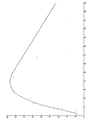
- the single figure of the accompanying drawing which will be referred to herein is a graph on which is plotted the average number of monolayers of ionic copper partially covering the surface of metallic copper catalysts versus the molar percent conversion of acrylonitrile to acrylamide resulting when using the copper-containing catalysts in the hydrolysis of acrylonitrile.
- copper containing catalysts have been used for hydrolyzing nitriles with water to produce amides, such as in the preparation of acrylamide from acrylonitrile and water.
- These catalysts have been described as being either essentially one of or a combination of the various species of copper, that is, copper in the elemental or in the various oxidized states.
- the maximum catalytic efficiency in the copper-catalyzed hydrolysis process occurs when the copper catalyst utilized comprises elemental, or metallic, copper having upon its surface a film of ionic copper, that is, copper in an oxidized state.
- This optimized catalyst comprises Cu° having at least partial surface coverage by an average of 0.75 to preferably 12.5 monolayers of one or more ionic copper compounds, that is Cu(i) or Cu(II).
- the ionic copper species is substantially C U2 0 film thickness of this surface coverage is optimally in the range of 3.5 ⁇ 10 -8 cms to 50 ⁇ 10 -8 cms (3.5 A to 50 A). It is preferred that the surface coverage not be complete, and that there be at least some Cu° on the surface to contact the reaction solution.
- a test was devised to measure very small differences in catalytic activity between copper-containing catalysts of different species, that is, between catalysts containing copper in one or more ionization or oxidation states, including metallic copper, Cu° and ionic copper Cu(I) and Cu(II). Because of the mild conditions of the test, the conversions exhibited are not equal to the high conversions obtained under more rigorous conditions, but are proportionally accurate with respect to each other. We found a surprising and dramatic increase in catalystic activity when an elemental copper catalyst was utilized which had a surface which was partially covered with a film of ionic copper, the film being from 0.75 to 12.5 monolayers thick.
- the catalytic activity of the copper catalyst then begins to decline as more monolayers of ionic copper are added to the film, until after an average film thickness of 12.5 monolayers of ionic copper is achieved, the catalytic activity of the catalyst decreases to an extent comparable to the activity of the catalyst before an average of a 0.75 monolayer thick film has been deposited.
- the ionic copper which comprises the surface film upon the elemental copper catalyst is preferably C U2 0 and/or CuO, preferably Cu 2 0.
- This invention is not, however, limited to copper oxide films but includes surface films composed of any other chemically combined form of Cu(i) or Cu(ll), such as copper hydroxide, cupric acetate, cuprous acetate, cuprous chloride, cupric chloride and the like, the identity of the ionic compounds depending upon conditions such as the hydrolysis solution, or reaction mix utilized.
- the ionic copper compound or compounds should have low solubility in the reaction mixture employed in order to prevent rapid depletion of the ionic copper film, but should have sufficient affinity, as determined by partial solubility to render the ionic compounds, together with any metallic copper present at the surface, capable of coordinating the reactants.
- Example 1-8 an ionic copper film was produced chemically upon a metallic copper-containing catalyst.
- Raney copper which had been stored in a closed bottle in a N z glove bag, was transferred to a vacuum oven and dried at ambient temperature for about 16 hours.
- Several 1.05 g portions of the dried copper were then weighed in air, and transferred in a nitrogen-purged glove bag to a hydrogen reduction apparatus.
- the reduction apparatus consisted of a source of hydrogen connected sequentially, via stainless stell tubing to a deoxygenating furnace and to catalyst-containing hypovials seated within an electrically heated block furnace. An exit for the hydrogen was provided by stainless steel tubing which was routed to a flowmeter.
- the weight samples were reduced for four hours at the temperatures noted in Table 1, with a gas mixture consisting of 20% H 2/ 80%N 2 , using flow rates as listed in Table 1.
- the reduced copper was transferred to a small glass vial, closed and sealed under a N 2 atmosphere.
- the ionic copper present as a surface film on these samples was determined to be C U2 0.
- the samples were washed with 3 portions of a reducing acid solution, consisting of 0.2 molar HCI, 0.02 molar hydrazine sulfate and excess chloride 0.12 molar from NaCI.
- the three washes were combined and analyzed for dissolved cuprous oxide by polarography.
- the residual elemental copper was dissolved in concentrated HN0 3 and copper content was determined polarographically.
- the total sample weight was derived from the combined total of the two polarographic analyses, and the amount of unreduced C U2 0 was calculated.
- Examples 9-14 Rayen copper which had been stored as an aqueous slurry in a closed bottle in a N 2 glove bag was transferred to a vacuum oven and dried at ambient temperature for approximately 7 hours. A 0.50 g portion of the dried copper was then weighed in air and pressed into a pellet of 0.035 inch thickness (0.89 mm) and 13 mm diameter at two tons (1800 kg) pressure for 5 minutes. The pressed pellet was then mounted in the reaction compartment of a 20 ml electrochemical cell/reactor.
- both compartments of the reactor were drained and refilled with deoxygenated aqueous acrylonitrile solution, containing about 7.2% acrylonitrile based upon the weight of the water.
- the reactor was placed in an 80°C oven where hydrolysis was conducted for one hour.
- the liquid product was then analyzed for acrylamide by gas chromatography.
- the amount of copper ion coverage on the electro-chemically pretreated metallic copper pellets was determined from coulombs consumed during the 16 hour electrolytic pretreatment process, as set forth below.
- the results of the hydrolysis carried out in Examples 9-14 are contained in Table II, including the average number of monolayers formed on the catalytic copper electrode during the pretreatment electrolysis, the potential applied during pretreatment, the rest potential of the treated electrode, and the conversion of acrylonitrile to acrylamide using the subject catalyst.
- the average number of monolayers disposed upon the surface of the metallic copper electrode was determined in the following manner.
- the surface area of the catalysts were determined by the dynamic nitrogen adsorption method. It was determined that the ionic copper compounds formed on the metallic copper electrodes under the reaction conditions of the examples was almost exclusively cuprous oxide (Cu 2 0). This determination was made and corroborated by x-ray diffraction, voltammetry and electron spectroscopic chemical analysis.
- a potential was applied to the catalytic electrode in an electrochemical cell in order to reduce copper Cu(I) to Cu° according to the half-cell formula: The amount of current required to reduce the cuprous oxide to copper metal was measured and the number of coulombs required to reduce the oxide was determined.
- the average thickness of the cuprous oxide layer was determined according to the following formula: where Q is the number of coulombs required, MW is the molecular weight of the ionic compound, n is the number of electrons required to convert the ionic copper species to elemental copper, d is the density of the ionic compound and A is the surface area of the catalyst.
- Q is the number of coulombs required
- MW is the molecular weight of the ionic compound
- n is the number of electrons required to convert the ionic copper species to elemental copper
- d is the density of the ionic compound
- A is the surface area of the catalyst.
- the average thickness of the ionic copper coverage was divided by the thickness of one monolayer of the ionic compound in order to determine the average number of monolayers.
- the activity of copper-containing catalysts for the hydrolysis of nitriles to amides is optimized when the catalyst comprises at least some copper metal having disposed upon its surface at least a partial coverage or film of ionic copper, this film having an average thickness of 0.75 to 12.5 monolayers of ionic copper material.
- this partial average surface coverage tends to either decrease or increase, depending upon the conditions imposed on the reaction mixture.
- the ionic copper may solubilize and be lost from the catalytic surface, which would tend to lessen the surface coverage, or additional elemental copper may oxidize due to impurities or oxygen contained in the reaction medium which would tend to increase the coverage of ionic copper.
- the ionic copper might also complex with either the reactant nitrile with the product amide and be unavailable for further catalytic reaction.
- the optimum catalytic activity of copper-containing catalysts may be maintained for extended periods, by maintaining a partial surface coverage on the metallic copper-containing catalyst of an ionic copper film of 0.75 to 12.5 monolayers.
- the partial surface coverage averages 2.5 to 9 monolayers, and more preferably averages 3 to 6 monolayers.
- maintenance of the optimum catalytic activity may be accomplished by electro- chemically maintaining the required relation between the metallic copper and the ionic copper film which together comprise the catalyst.
- a ratio between metallic and ionic copper can be controlled through the application of a D.C. potential to the reactor.
- the copper-containing electrode having a particular relation between the metallic and ionic copper present will exhibit a distinctive D.C. potential with respect to a reference electrode, for that particular electrochemical reactor.
- This characteristic potential is best measured in terms of rest potential, that is the potential (voltage) difference between the working electrode and a reference electrode (bot immersed in the same liquid) when current flow through the reactor is negligible (i.e., no electrical power is applied to the reactor).
- the rest potential is also dependent upon the size and type of electrodes used, the size and type of the electrochemical reactor, the electrolyte utilized, temperature and the like. For a given system, however, the optimum rest potential corresponding to the optimum ionic copper surface coverage can be determined and the same maintained via an electrical control such as a potentiostat.
- a rest potential varies with the extent of surface coverage by ionic copper of the metallic copper electrode.
- electric potential control such as with a potentiostat
- a corrective potential may be applied in order to oxidize metallic copper to produce ionic copper.
- a corrective potential may be applied in order to reduce ionic copper to the elemental state.
- the working electrode therefore, may at times be an anode, and at other times be a cathode during the course of a reaction run.
- the relation between the metallic and ionic copper present in the copper-containing electrode catalyst (working electrode) can be identified by the potential difference between the working electrode and the auxiliary electrode (such as a carbon electrode) provided the potential of the auxiliary electrode remains relatively constant.
- the potential difference between the working and auxiliary electrodes can be monitored, and corrective potentials can be applied to the reactor in order to maintain the desired catalytic identity and thus activity.
- a hydrolysis reactor contains a copper-containing catalyst which is operated as the working electrode of an electro-chemical reactor.
- the copper catalyst itself functions as either the cathodic or anodic electrode as conditions require, and may take the form of any conventional electrode, such as wire, pressed pellets, screens, foil, copper powder, copper shot, copper deposited on a conductor or a non-conductor, and the like.
- the copper catalyst may be formed predominantly as metallic copper with 0.75 to 12.5 monolayers of ionic copper providing at least partial surface coverage, as is preferred, or may contain an amount of a copper-containing material, having at least some metallic copper in association with at least a partial surface coverage of ionic copper in the amounts stated above.
- the reaction compartment may also contain an additional electrode of fixed potential, such as a silver/silver chloride reference electrode, in the hydrolysis reaction medium.
- the reaction compartment is preferably separated from a smaller auxiliary compartment by a permeable membrane of a type commonly used in large scale electrochemical reactors, such as the perfluorosulfonic acid membrane mentioned in the above examples.
- the auxiliary electrode may be any conventional electrochemical electrode such as a platinum electrode or a carbon electrode and the like.
- the hydrolysis reaction feed containing the nitrile and water, may contain an electrolyte in sufficient concentration to avoid excessive power losses due to high electrical resistance.
- the electrolyte may be an electrolytically conductive salt, such as sodium acetate, potassium chloride and the like, or may comprise a solid electrolyte permanently mounted in the electrochemical reactor, such as a natural or synthetic polyelectrolyte.
- a small D.C. potential approximately equal to the desired rest potential (or potential difference) for the system may be applied to the electrochemical reactor to maintain optimized catalytic activity by maintaining the optimum relation between the metallic and ionic copper in the catalyst electrode such that at least a partial surface coverage of an average of 0.75 to 12.5 monolayers of ionic copper is present on the metallic copper catalyst.
- the actual potential required depends on the electrolyte used, concentration of the electrolyte, pH of the reaction mixture, reaction temperature, amounts and composition of oxidizing impurities to which the catalyst is inadvertently exposed, and the like, as set forth above.
- D.C. potential control may be used continuously during hydrolysis and may be monitored by a recording current metering device. In some cases, however, intermittent application of D.C. potential is sufficient to maintain optimum catalytic activity. In such a case, rest potential (potential difference) of the reactor is monitored to determine whether D.C. power application is needed. Power is applied when the reactor rest potential (potential difference) drifts outside preset rest potential (potential difference) limits. The amperage required depends upon the nature of and thus the resistance of the reactor and reaction system. Electrochemical control of catalytic activity can be used with fixed bed, fluid bed or slurry type reactors.
- nitriles which may be used in the present invention are those having the structure R-(CN). wherein R is a hydrocarbon group having from 1 to 10 carbon atoms and x is a number of from 1 to 4. Particularly preferred are nitriles of the foregoing structure wherein R is a member selected from the group consisting of an aromatic hydrocarbon radical, an alkyl radical, an alkylene radical, an alicyclic radical and an olefinic radical having from 1 to 8 carbon atoms and x is a number from 1 to 2.
- nitriles useful in the present invention include acetonitrile, propionitrile, butyronitrile, acrylonitrile, methacrylonitrile, crotonitrile, maleic dinitrile, glutaronitrile, succinonitrile, adiponitrile, cyclobutane-1,2-dicyanide, benzonitrile, and the like, and others.
- the hydrolysis process may be carried out in any solution capable of containing both the nitrile and water, provided that the solvent used does not participate in a competing reaction at the reaction conditions used.
- An aqueous nitrile solution is, however, preferred.
- the reaction solution may contain an electrolyte in a concentration sufficient to allow passage of a direct current potential through the solution in order to maintain optimum catalytic activity by the maintenance of an optimum average surface coverge of ionic copper upon the metallic copper electrode catalyst, or may be in contact with a polyelectrolyte.
- the reaction solution may have a pH of 2.5 to 12.5. It is preferred, however, that the reaction solution for the process for preparing amides from nitriles by electrochemically maintaining optimum copper catalytic activity be conducted at a pH of 5 to 9 in particular below 7. Depending upon the solvent and electrolyte utilized, electrochemical maintenance outside this range could possibly induce the formation of other ionic species which would compete with the hydrolysis process to form unwanted byproducts.
- the hydrolysis reaction may be run at a temperature of about 20°C to about 150°C, but is preferably maintained between about 40°C to about 100°C and is most preferably run at about 80°C. The reaction may be run at sub-atmospheric, atmospheric, or superatmospheric pressures.
- a Raney copper catalyst was pretreated at potentials ranging from -0.10 to -0.60 volts (versus a silver/silver chloride electrode) as in Examples 9-14 in order to achieve an initial desired surface state prior to the hydrolysis reaction.
- the pretreatment was conducted in 1.0 molar acetate buffer, of pH 5, in the absence of nitrile.
- Each pretreated catalyst was then controlled at the pretreatment potential during hydrolysis by the application of potential as required. Surface coverage of ionic copper during the hydrolysis test was calculated from total coulombs consumed in each experiment.
- the electrochemical cell/reactor used in the hydrolysis reactions of Examples 15-22 was described in Examples 9-14 above.
- the D.C. potential of the working electrode catalyst was controlled by a potentiostat.
- the working electrode catalyst was 0.5 grams Raney copper, pressed into a pellet and treated as set forth above.
- the reactant solution was an aqueous solution of 7.2% acrylonitrile by weight of water, containing 0.1 molar sodium acetate electrolyte buffered to pH 5 with actic acid.
- the hydrolysis reaction was carried out at 80°C for about 1 hour.
- Table III includes a listing of the average number of ionic copper monolayers providing partial surface coverage on each catalyst, and the conversion of acrylonitrile to acrylamide for each example. Table III also lists the pretreatment and control potential used for the catalysts. It was determined that the ionic copper compound which provided surface coverage of the metallic copper electrode was cuprous oxide.
- the catalytic activity of the catalyst decreases until at an average thickness of 12.5 monolayers of ionic copper the activity has begun dropping below the level exhibited by a copper catalyst having a partial ionic copper coverage of about 1 monolayer average thickness.
- film thicknesses are an average thickness, and that the surface of the catalyst may contain metallic copper, which may aid in the complexing or coordination of the reactants in the hydrolysis process.
- a Raney copper catalyst was prepared and charged to a 10 ml sealed vial containing 7.5 ml of a 6.5% aqueous acrylonitrile solution for one hour at 80°C.
- the amount of catalyst, average amount of monolayers of ionic copper present, and stirring conditions are listed in Table IV, together with the conversion of acrylonitrile to acrylamide observed. From Table IV, it can be seen that the process of the present invention can be utilized to obtain high conversions of nitrile to amide.
Landscapes
- Chemical & Material Sciences (AREA)
- Engineering & Computer Science (AREA)
- Materials Engineering (AREA)
- Organic Chemistry (AREA)
- Chemical Kinetics & Catalysis (AREA)
- Catalysts (AREA)
- Organic Low-Molecular-Weight Compounds And Preparation Thereof (AREA)
- Electrolytic Production Of Non-Metals, Compounds, Apparatuses Therefor (AREA)
- Low-Molecular Organic Synthesis Reactions Using Catalysts (AREA)
Claims (15)
Applications Claiming Priority (2)
| Application Number | Priority Date | Filing Date | Title |
|---|---|---|---|
| US06/136,191 US4313803A (en) | 1980-04-01 | 1980-04-01 | Electrochemical maintenance of optimum catalytic activity in copper-catalyzed nitrile hydrolysis processes |
| US136191 | 1999-05-27 |
Publications (2)
| Publication Number | Publication Date |
|---|---|
| EP0037178A1 EP0037178A1 (de) | 1981-10-07 |
| EP0037178B1 true EP0037178B1 (de) | 1984-08-01 |
Family
ID=22471747
Family Applications (1)
| Application Number | Title | Priority Date | Filing Date |
|---|---|---|---|
| EP81300902A Expired EP0037178B1 (de) | 1980-04-01 | 1981-03-04 | Elektrochemische Erhaltung der Aktivität von kupferhaltigen Katalysatoren bei kupferkatalysierten Nitrilhydrolyseverfahren und die Herstellung von Amiden durch solche Hydrolyseverfahren |
Country Status (5)
| Country | Link |
|---|---|
| US (1) | US4313803A (de) |
| EP (1) | EP0037178B1 (de) |
| JP (1) | JPS56139133A (de) |
| CA (1) | CA1189821A (de) |
| DE (1) | DE3165157D1 (de) |
Families Citing this family (3)
| Publication number | Priority date | Publication date | Assignee | Title |
|---|---|---|---|---|
| DE3264935D1 (en) * | 1981-10-29 | 1985-08-29 | Allied Colloids Ltd | Hydration of nitriles |
| US4820872A (en) * | 1984-07-17 | 1989-04-11 | Allied Colloids Ltd. | Process for hydrolyzing nitriles |
| KR101613066B1 (ko) * | 2011-12-06 | 2016-04-29 | 고꾸리쯔 다이가꾸 호우징 오사까 다이가꾸 | 고체산화물의 가공방법 |
Citations (1)
| Publication number | Priority date | Publication date | Assignee | Title |
|---|---|---|---|---|
| US3764494A (en) * | 1972-06-01 | 1973-10-09 | Nalco Chemical Co | Production of organic amides from organic nitriles |
Family Cites Families (16)
| Publication number | Priority date | Publication date | Assignee | Title |
|---|---|---|---|---|
| USRE28525E (en) | 1965-06-30 | 1975-08-19 | Process for hydrolyzing nitriles | |
| US3767706A (en) * | 1969-01-16 | 1973-10-23 | Dow Chemical Co | Hydration of aliphatic nitriles to amides using copper metal catalysts |
| US3597481A (en) * | 1969-01-16 | 1971-08-03 | Dow Chemical Co | Heterogeneous catalyst for the liquid phase hydrolysis of nitriles to amides |
| US3994973A (en) * | 1969-01-16 | 1976-11-30 | The Dow Chemical Company | Catalysts for the hydration of nitriles to amides |
| BE753365A (fr) * | 1969-07-24 | 1970-12-16 | Mitsui Toatsu Chemicals | Procede de production d'acrylamide et de methacrylamide |
| US3645913A (en) * | 1969-12-05 | 1972-02-29 | Dow Chemical Co | Regeneration of copper oxide and copper chromite catalysts |
| JPS547754B1 (de) * | 1970-12-24 | 1979-04-10 | ||
| US3755100A (en) * | 1972-06-09 | 1973-08-28 | Nalco Chemical Co | Method for producing acrylamide from acrylonitrile |
| US3869511A (en) * | 1972-12-20 | 1975-03-04 | American Cyanamid Co | Improved catalytic hydration of nitriles |
| US3944609A (en) * | 1973-06-01 | 1976-03-16 | American Cyanamid Company | Catalyst preparation method |
| US3920740A (en) * | 1973-10-19 | 1975-11-18 | Nalco Chemical Co | Method of producing acrylamide with a raney copper catalyst |
| US4000195A (en) * | 1974-04-05 | 1976-12-28 | Nalco Chemical Company | Method of producing acrylamide with a raney copper catalyst |
| ES425701A1 (es) * | 1974-04-05 | 1976-06-16 | Nalco Chemical Co | Un procedimiento para hidrolizar cataliticamente acriloni- trilo a acrilamida. |
| US3928443A (en) * | 1974-09-20 | 1975-12-23 | Nalco Chemical Co | Copper catalyst and processes for making and using |
| US3997606A (en) * | 1975-12-03 | 1976-12-14 | Nalco Chemical Company | Method of producing dry acrylamide |
| JPS52100418A (en) * | 1976-02-17 | 1977-08-23 | Mitsui Toatsu Chem Inc | Purification of acrylamide aqueous solution |
-
1980
- 1980-04-01 US US06/136,191 patent/US4313803A/en not_active Expired - Lifetime
- 1980-12-17 CA CA000366942A patent/CA1189821A/en not_active Expired
-
1981
- 1981-02-18 JP JP2286881A patent/JPS56139133A/ja active Pending
- 1981-03-04 EP EP81300902A patent/EP0037178B1/de not_active Expired
- 1981-03-04 DE DE8181300902T patent/DE3165157D1/de not_active Expired
Patent Citations (1)
| Publication number | Priority date | Publication date | Assignee | Title |
|---|---|---|---|---|
| US3764494A (en) * | 1972-06-01 | 1973-10-09 | Nalco Chemical Co | Production of organic amides from organic nitriles |
Also Published As
| Publication number | Publication date |
|---|---|
| EP0037178A1 (de) | 1981-10-07 |
| JPS56139133A (en) | 1981-10-30 |
| CA1189821A (en) | 1985-07-02 |
| DE3165157D1 (en) | 1984-09-06 |
| US4313803A (en) | 1982-02-02 |
Similar Documents
| Publication | Publication Date | Title |
|---|---|---|
| Tsuneto et al. | Lithium-mediated electrochemical reduction of high pressure N2 to NH3 | |
| Jitaru et al. | Electrochemical reduction of carbon dioxide on flat metallic cathodes | |
| US3427235A (en) | Electrolytic production of olefine oxides | |
| EP0004169B1 (de) | Elektrochemische Zelle mit einer einen Elektrokatalysator tragenden Elektrode; Herstellung dieser Zelle | |
| Kirk et al. | A study of anodic dissolution of gold in aqueous alkaline cyanide | |
| EP0147012A2 (de) | Verfahren und Apparat zur Abtrennung von Sauerstoff aus einem Gasgemisch | |
| US4431494A (en) | Method for electrolytic production of alkaline peroxide solutions | |
| WO1991014802A1 (en) | Electrochemical synthesis of hydrogen peroxide | |
| US4269670A (en) | Electrode for electrochemical processes | |
| GB1602404A (en) | Electroplating of chromium | |
| EP0037178B1 (de) | Elektrochemische Erhaltung der Aktivität von kupferhaltigen Katalysatoren bei kupferkatalysierten Nitrilhydrolyseverfahren und die Herstellung von Amiden durch solche Hydrolyseverfahren | |
| US4214970A (en) | Novel electrocatalytic electrodes | |
| US4589959A (en) | Process for electrolytic treatment of metal by liquid power feeding | |
| US4381977A (en) | Electrochemical maintenance of optimum catalytic activity in copper-catalyzed nitrile hydrolysis processes | |
| JP3231556B2 (ja) | ジスルフィド化合物の電解還元方法 | |
| US5861091A (en) | Process for electrochemically dissolving a metal such as zinc or tin | |
| US3379626A (en) | Process and apparatus for oxidizing olefins | |
| Gorodyskii et al. | Electrocatalytic properties of the Ti (OH) 3− Mo (III) system in the reduction of molecular nitrogen | |
| JP2004073926A (ja) | 硝酸態窒素含有廃水の処理方法 | |
| US4543423A (en) | Hydration of nitriles | |
| US4596638A (en) | Method for the electrochemical production of adiponitrile using anodes having NiCo2 O4 catalyst | |
| SU722507A3 (ru) | Способ подготовки к эксплуатации электрохимического генератора | |
| US4409076A (en) | Indirect electrochemical furan synthesis | |
| JP7495717B2 (ja) | 二酸化塩素溶液の生成方法 | |
| Tran et al. | Graphite pre-treatment for deposition of platinum catalysts |
Legal Events
| Date | Code | Title | Description |
|---|---|---|---|
| PUAI | Public reference made under article 153(3) epc to a published international application that has entered the european phase |
Free format text: ORIGINAL CODE: 0009012 |
|
| AK | Designated contracting states |
Designated state(s): BE CH DE FR GB IT LU NL SE |
|
| 17P | Request for examination filed |
Effective date: 19820320 |
|
| ITF | It: translation for a ep patent filed | ||
| GRAA | (expected) grant |
Free format text: ORIGINAL CODE: 0009210 |
|
| AK | Designated contracting states |
Designated state(s): BE CH DE FR GB IT LI LU NL SE |
|
| REF | Corresponds to: |
Ref document number: 3165157 Country of ref document: DE Date of ref document: 19840906 |
|
| ET | Fr: translation filed | ||
| PG25 | Lapsed in a contracting state [announced via postgrant information from national office to epo] |
Ref country code: LU Free format text: LAPSE BECAUSE OF NON-PAYMENT OF DUE FEES Effective date: 19850331 |
|
| PLBE | No opposition filed within time limit |
Free format text: ORIGINAL CODE: 0009261 |
|
| STAA | Information on the status of an ep patent application or granted ep patent |
Free format text: STATUS: NO OPPOSITION FILED WITHIN TIME LIMIT |
|
| 26N | No opposition filed | ||
| PGFP | Annual fee paid to national office [announced via postgrant information from national office to epo] |
Ref country code: LU Payment date: 19860130 Year of fee payment: 6 |
|
| PGFP | Annual fee paid to national office [announced via postgrant information from national office to epo] |
Ref country code: NL Payment date: 19870331 Year of fee payment: 7 |
|
| PG25 | Lapsed in a contracting state [announced via postgrant information from national office to epo] |
Ref country code: SE Effective date: 19880305 |
|
| PG25 | Lapsed in a contracting state [announced via postgrant information from national office to epo] |
Ref country code: LI Effective date: 19880331 Ref country code: CH Effective date: 19880331 |
|
| BERE | Be: lapsed |
Owner name: THE STANDARD OIL CY Effective date: 19880331 |
|
| PG25 | Lapsed in a contracting state [announced via postgrant information from national office to epo] |
Ref country code: NL Effective date: 19881001 |
|
| NLV4 | Nl: lapsed or anulled due to non-payment of the annual fee | ||
| PG25 | Lapsed in a contracting state [announced via postgrant information from national office to epo] |
Ref country code: GB Free format text: LAPSE BECAUSE OF NON-PAYMENT OF DUE FEES Effective date: 19881118 |
|
| GBPC | Gb: european patent ceased through non-payment of renewal fee | ||
| PG25 | Lapsed in a contracting state [announced via postgrant information from national office to epo] |
Ref country code: FR Free format text: LAPSE BECAUSE OF NON-PAYMENT OF DUE FEES Effective date: 19881130 |
|
| REG | Reference to a national code |
Ref country code: CH Ref legal event code: PL |
|
| REG | Reference to a national code |
Ref country code: FR Ref legal event code: ST |
|
| PG25 | Lapsed in a contracting state [announced via postgrant information from national office to epo] |
Ref country code: DE Effective date: 19890201 |
|
| PG25 | Lapsed in a contracting state [announced via postgrant information from national office to epo] |
Ref country code: BE Effective date: 19890331 |
|
| EUG | Se: european patent has lapsed |
Ref document number: 81300902.4 Effective date: 19881205 |