EP0041233A1 - Substituierte Phenoxy-aminopropanol-Derivate, Zwischenprodukte und Verfahren zu ihrer Herstellung sowie diese enthaltende Arzneimittel - Google Patents
Substituierte Phenoxy-aminopropanol-Derivate, Zwischenprodukte und Verfahren zu ihrer Herstellung sowie diese enthaltende Arzneimittel Download PDFInfo
- Publication number
- EP0041233A1 EP0041233A1 EP81104078A EP81104078A EP0041233A1 EP 0041233 A1 EP0041233 A1 EP 0041233A1 EP 81104078 A EP81104078 A EP 81104078A EP 81104078 A EP81104078 A EP 81104078A EP 0041233 A1 EP0041233 A1 EP 0041233A1
- Authority
- EP
- European Patent Office
- Prior art keywords
- phenoxy
- general formula
- propanol
- isopropylamino
- ethoxy
- Prior art date
- Legal status (The legal status is an assumption and is not a legal conclusion. Google has not performed a legal analysis and makes no representation as to the accuracy of the status listed.)
- Granted
Links
- XWRRTQDJCSIRFL-SECBINFHSA-N C[C@@]1(C=CC(C)=CC=C1)F Chemical compound C[C@@]1(C=CC(C)=CC=C1)F XWRRTQDJCSIRFL-SECBINFHSA-N 0.000 description 1
Classifications
-
- C—CHEMISTRY; METALLURGY
- C07—ORGANIC CHEMISTRY
- C07C—ACYCLIC OR CARBOCYCLIC COMPOUNDS
- C07C215/00—Compounds containing amino and hydroxy groups bound to the same carbon skeleton
-
- C—CHEMISTRY; METALLURGY
- C07—ORGANIC CHEMISTRY
- C07C—ACYCLIC OR CARBOCYCLIC COMPOUNDS
- C07C29/00—Preparation of compounds having hydroxy or O-metal groups bound to a carbon atom not belonging to a six-membered aromatic ring
- C07C29/132—Preparation of compounds having hydroxy or O-metal groups bound to a carbon atom not belonging to a six-membered aromatic ring by reduction of an oxygen containing functional group
- C07C29/136—Preparation of compounds having hydroxy or O-metal groups bound to a carbon atom not belonging to a six-membered aromatic ring by reduction of an oxygen containing functional group of >C=O containing groups, e.g. —COOH
- C07C29/147—Preparation of compounds having hydroxy or O-metal groups bound to a carbon atom not belonging to a six-membered aromatic ring by reduction of an oxygen containing functional group of >C=O containing groups, e.g. —COOH of carboxylic acids or derivatives thereof
-
- A—HUMAN NECESSITIES
- A61—MEDICAL OR VETERINARY SCIENCE; HYGIENE
- A61P—SPECIFIC THERAPEUTIC ACTIVITY OF CHEMICAL COMPOUNDS OR MEDICINAL PREPARATIONS
- A61P9/00—Drugs for disorders of the cardiovascular system
-
- A—HUMAN NECESSITIES
- A61—MEDICAL OR VETERINARY SCIENCE; HYGIENE
- A61P—SPECIFIC THERAPEUTIC ACTIVITY OF CHEMICAL COMPOUNDS OR MEDICINAL PREPARATIONS
- A61P9/00—Drugs for disorders of the cardiovascular system
- A61P9/06—Antiarrhythmics
-
- A—HUMAN NECESSITIES
- A61—MEDICAL OR VETERINARY SCIENCE; HYGIENE
- A61P—SPECIFIC THERAPEUTIC ACTIVITY OF CHEMICAL COMPOUNDS OR MEDICINAL PREPARATIONS
- A61P9/00—Drugs for disorders of the cardiovascular system
- A61P9/12—Antihypertensives
-
- C—CHEMISTRY; METALLURGY
- C07—ORGANIC CHEMISTRY
- C07C—ACYCLIC OR CARBOCYCLIC COMPOUNDS
- C07C215/00—Compounds containing amino and hydroxy groups bound to the same carbon skeleton
- C07C215/02—Compounds containing amino and hydroxy groups bound to the same carbon skeleton having hydroxy groups and amino groups bound to acyclic carbon atoms of the same carbon skeleton
-
- C—CHEMISTRY; METALLURGY
- C07—ORGANIC CHEMISTRY
- C07C—ACYCLIC OR CARBOCYCLIC COMPOUNDS
- C07C43/00—Ethers; Compounds having groups, groups or groups
- C07C43/02—Ethers
- C07C43/03—Ethers having all ether-oxygen atoms bound to acyclic carbon atoms
- C07C43/14—Unsaturated ethers
- C07C43/178—Unsaturated ethers containing hydroxy or O-metal groups
- C07C43/1782—Unsaturated ethers containing hydroxy or O-metal groups containing six-membered aromatic rings
-
- C—CHEMISTRY; METALLURGY
- C07—ORGANIC CHEMISTRY
- C07C—ACYCLIC OR CARBOCYCLIC COMPOUNDS
- C07C43/00—Ethers; Compounds having groups, groups or groups
- C07C43/02—Ethers
- C07C43/03—Ethers having all ether-oxygen atoms bound to acyclic carbon atoms
- C07C43/14—Unsaturated ethers
- C07C43/178—Unsaturated ethers containing hydroxy or O-metal groups
- C07C43/1786—Unsaturated ethers containing hydroxy or O-metal groups containing halogen
-
- C—CHEMISTRY; METALLURGY
- C07—ORGANIC CHEMISTRY
- C07C—ACYCLIC OR CARBOCYCLIC COMPOUNDS
- C07C43/00—Ethers; Compounds having groups, groups or groups
- C07C43/02—Ethers
- C07C43/20—Ethers having an ether-oxygen atom bound to a carbon atom of a six-membered aromatic ring
- C07C43/23—Ethers having an ether-oxygen atom bound to a carbon atom of a six-membered aromatic ring containing hydroxy or O-metal groups
-
- C—CHEMISTRY; METALLURGY
- C07—ORGANIC CHEMISTRY
- C07C—ACYCLIC OR CARBOCYCLIC COMPOUNDS
- C07C45/00—Preparation of compounds having >C = O groups bound only to carbon or hydrogen atoms; Preparation of chelates of such compounds
- C07C45/61—Preparation of compounds having >C = O groups bound only to carbon or hydrogen atoms; Preparation of chelates of such compounds by reactions not involving the formation of >C = O groups
- C07C45/67—Preparation of compounds having >C = O groups bound only to carbon or hydrogen atoms; Preparation of chelates of such compounds by reactions not involving the formation of >C = O groups by isomerisation; by change of size of the carbon skeleton
- C07C45/68—Preparation of compounds having >C = O groups bound only to carbon or hydrogen atoms; Preparation of chelates of such compounds by reactions not involving the formation of >C = O groups by isomerisation; by change of size of the carbon skeleton by increase in the number of carbon atoms
- C07C45/70—Preparation of compounds having >C = O groups bound only to carbon or hydrogen atoms; Preparation of chelates of such compounds by reactions not involving the formation of >C = O groups by isomerisation; by change of size of the carbon skeleton by increase in the number of carbon atoms by reaction with functional groups containing oxygen only in singly bound form
- C07C45/71—Preparation of compounds having >C = O groups bound only to carbon or hydrogen atoms; Preparation of chelates of such compounds by reactions not involving the formation of >C = O groups by isomerisation; by change of size of the carbon skeleton by increase in the number of carbon atoms by reaction with functional groups containing oxygen only in singly bound form being hydroxy groups
-
- C—CHEMISTRY; METALLURGY
- C07—ORGANIC CHEMISTRY
- C07C—ACYCLIC OR CARBOCYCLIC COMPOUNDS
- C07C49/00—Ketones; Ketenes; Dimeric ketenes; Ketonic chelates
- C07C49/76—Ketones containing a keto group bound to a six-membered aromatic ring
- C07C49/84—Ketones containing a keto group bound to a six-membered aromatic ring containing ether groups, groups, groups, or groups
-
- C—CHEMISTRY; METALLURGY
- C07—ORGANIC CHEMISTRY
- C07C—ACYCLIC OR CARBOCYCLIC COMPOUNDS
- C07C59/00—Compounds having carboxyl groups bound to acyclic carbon atoms and containing any of the groups OH, O—metal, —CHO, keto, ether, groups, groups, or groups
- C07C59/40—Unsaturated compounds
- C07C59/58—Unsaturated compounds containing ether groups, groups, groups, or groups
- C07C59/64—Unsaturated compounds containing ether groups, groups, groups, or groups containing six-membered aromatic rings
- C07C59/66—Unsaturated compounds containing ether groups, groups, groups, or groups containing six-membered aromatic rings the non-carboxylic part of the ether containing six-membered aromatic rings
Definitions
- the present invention relates to substituted phenoxy-aminopropanol derivatives.
- it relates to substituted phenoxy-aminopropanol derivatives, a process for their preparation and pharmaceutical preparations containing them.
- the invention also relates to the use of these derivatives.
- the substituted phenoxy-aminopropanol derivatives according to the invention are compounds of the general formula wherein R is a branched alkyl group containing 3 to 4 carbon atoms, R is hydrogen, halogen or lower alkyl and R 2 and R 3 are each hydrogen, halogen, lower alkyl, lower alkoxy or lower alkyl mean thio, and pharmaceutically acceptable acid addition salts thereof.
- lower alkyl used in this specification denotes straight-chain or branched alkyl groups which preferably contain 1 to 4 carbon atoms (e.g. methyl, ethyl, propyl, isopropyl, butyl, isobutyl and t-butyl).
- the branched alkyl group R containing 3 to 4 carbon atoms is isopropyl, isobutyl, s-butyl or t-butyl.
- lower alkoxy denotes straight-chain or branched alkoxy groups, which preferably contain 1 to 4 carbon atoms (e.g. methoxy, ethoxy, propoxy, isopropoxy, butoxy and the like).
- lower alkylthio means alkylthio groups which preferably contain 1 to 4 carbon atoms (e.g. methylthio, ethylthio, etc.).
- halogen means fluorine, chlorine, bromine and iodine.
- a special class of compounds of the general formula I includes those in which R is in the ortho position to the 3-alkylamino-2-hydroxypropoxy group, R is hydrogen and R and R 2 are as defined above.
- a preferred class of compounds of general formula I includes those in which R is isopropyl or t-butyl.
- reaction of an epoxide of the formula II with an amine of the formula III can be carried out in a manner known per se Way.
- the reaction can be carried out in the presence or absence of an inert organic solvent. If an inert organic solvent is used, for example lower alcohols, such as methanol, ethanol or the like, are suitable.
- excess amine of formula III can also serve as a solvent. Is advantageously carried out in a temperature range from about 0 ° C to about room temperature: preferably at room temperature and at atmospheric pressure.
- the reaction of an alkali metal derivative of a phenol of the formula IV with a compound of the formula V, according to process variant b), is advantageously carried out in an inert organic solvent.
- Suitable inert organic solvents are, for example, dimethylformamide, dioxane, dimethoxyethane and tetrahydrofuran, with dimethylformamide being preferred.
- the alkali metal derivative of a phenol of the formula IV is preferably prepared in situ from a corresponding phenol and an alkali metal, an alkali metal hydride or an alkali metal amide, preferably an alkali metal hydride, in particular sodium hydride.
- the reaction is advantageously carried out at elevated temperature, preferably at about 60 ° C.
- the group denoted by Z in a compound of the general formula V is preferably a lower alkylsulphonyloxy group (e.g. methanesulphonyloxy), but can also be an arylsulphonyloxy group (e.g. benzenesulphonyloxy or p-toluenesulphonyloxy).
- the compounds of the general formula I have an asymmetrically substituted carbon atom and can therefore occur in racemic or optically active forms.
- the present invention encompasses both the racemates and the optically active forms.
- a racemate obtained can, if desired, be cleaved into the optical antipodes by methods known per se; at for example by fractional crystallization of salts obtained with optically active acids.
- the phenol of formula IV used as the starting material can also be used in optically active form, and thus an optically active compound of general formula I is obtained.
- the compounds of formula I can be treated with a pharmaceutically acceptable inorganic acid (for example hydrochloric acid, hydrobromic acid, sulfuric acid, phosphoric acid, etc.) or with a pharmaceutically acceptable organic acid (for example acetic acid, tartaric acid, citric acid, fumaric acid, maleic acid, Malic acid, methanesulfonic acid, p-toluenesulfonic acid, etc.) can be converted into pharmaceutically acceptable acid addition salts.
- a pharmaceutically acceptable inorganic acid for example hydrochloric acid, hydrobromic acid, sulfuric acid, phosphoric acid, etc.
- a pharmaceutically acceptable organic acid for example acetic acid, tartaric acid, citric acid, fumaric acid, maleic acid, Malic acid, methanesulfonic acid, p-toluenesulfonic acid, etc.
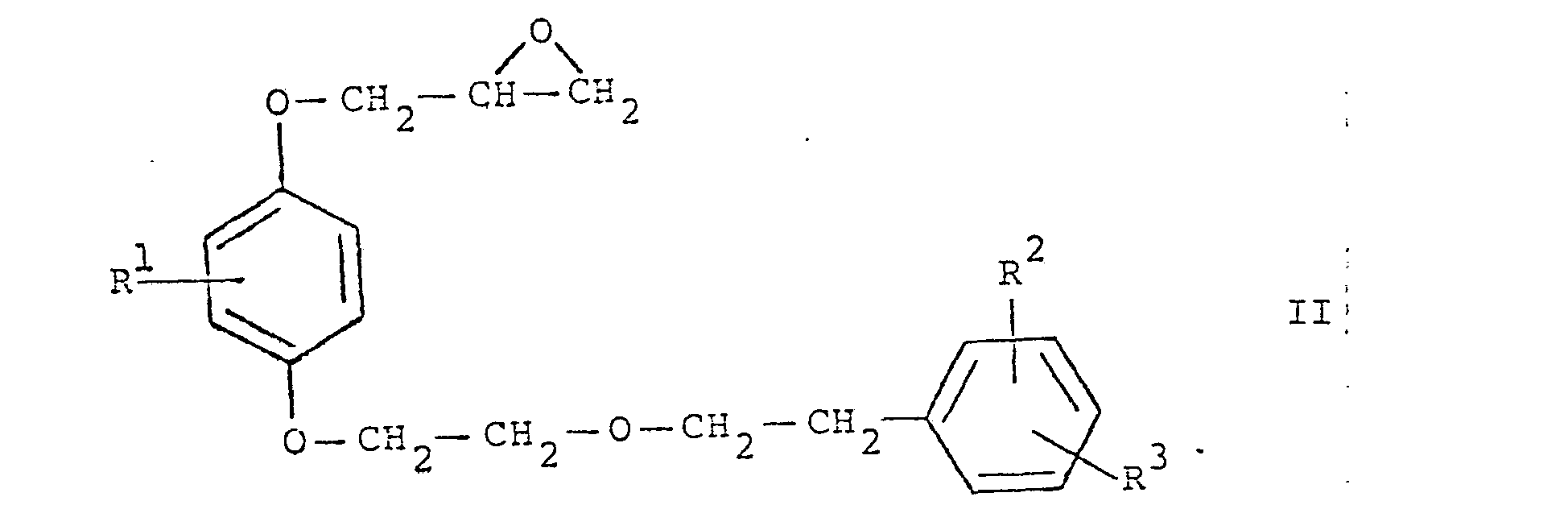
- the epoxides of the general formula II used as starting materials in process variant a) are new and likewise the subject of the present invention. They can be prepared by using an alkali metal derivative of a phenol of the general formula wherein R 1 , R 2 and R 3 have the above meaning, reacted with epichlorohydrin or epibromohydrin.
- reaction of an alkali metal derivative of a phenol of the formula VI with epichlorohydrin or epibromohydrin, preferably with epichlorohydrin can be carried out analogously to the reaction of an alkali metal derivative of a phenol of the formula IV with a compound of the formula V. leads.
- the phenols of the general formula VI above are new and also a subject of the present invention. They can be prepared by using an alkali metal derivative of a phenol of the general formula wherein R 1 has the above meaning, and Bz is benzyl, with a compound of the above general formula V and the resulting compound of the general formula wherein R 1 , R 2 , R and B z have the above meaning, debenzylated.
- reaction of an alkali metal derivative of a phenol of the general formula VII with a compound of the general formula V can be carried out analogously to the reaction of an alkali metal derivative of a phenol of the general formula IV with a compound of the general formula V.
- the debenzylation of a compound of the general formula VIII can be carried out in a manner known per se; for example using hydrogen in Presence of a catalyst (e.g. palladium / carbon or the like) or using hydrogen bromide in glacial acetic acid.
- a catalyst e.g. palladium / carbon or the like
- hydrogen bromide in glacial acetic acid.
- the compounds of general formula VIII are new and also a subject of the present invention.
- Phenols of the general formula V I in which R 2 and R 3 are each hydrogen, halogen, lower alkyl or lower alkoxy, can also be prepared by using an alkali metal derivative of a phenol of the general formula wherein R 1 has the above meaning, with a compound of the above general formula V, wherein - R 2 and R 3 are each hydrogen, halogen, lower alkyl or lower alkoxy, and in the compound of the general formula obtained wherein R has the above meaning and R 20 and R 30 each represent hydrogen, halogen, lower alkyl or lower alkoxy, the acetyl group replaced by hydroxy.
- reaction of an alkali metal derivative of a phenol of the general formula IX with a compound of the general formula V can be carried out analogously to the reaction of an alkali metal derivative of a phenol of the general formula IV with a compound of the general formula V.
- the acetyl group in a compound of the general formula X can be replaced by hydroxy in a manner known per se; for example by oxidation with an organic peracid such as m-chloroperbenzoic acid, suitably in an inert organic solvent, for example in a halogenated hydrocarbon (e.g. methylene chloride), and subsequent treatment with an alkali metal lower alkoxide in a corresponding lower alcohol (e.g. sodium ethoxide in ethanol).
- an organic peracid such as m-chloroperbenzoic acid
- an inert organic solvent for example in a halogenated hydrocarbon (e.g. methylene chloride)
- an alkali metal lower alkoxide in a corresponding lower alcohol e.g. sodium ethoxide in ethanol
- phenols of the general formula IX can be prepared as described in the examples below or can be prepared analogously.
- the compounds of the general formula X are new and also a subject of the present invention.
- the phenols of the general formula IV used as starting materials are known compounds, or can be prepared analogously to the known compounds in a manner known per se.
- the compounds of the general formula V used as starting materials belong to a class of substances known per se and can be prepared, for example, by first using an alcohol of the general formula wherein R 2 and R have the above meaning, reacted with chloroacetic acid and thus an acid of the general formula where R 2 and R 3 are as defined above.
- reaction of an alcohol of the general formula XI (which is a known compound or can be prepared analogously to the preparation of the known compounds in a manner known per se) with chloroacetic acid can be carried out in an inert organic solvent, such as dimethylformamide or dimethyl sulfoxide, and in the presence of an alkali metal -Base, such as an alkali metal hydride (eg sodium hydride) and at an elevated temperature (eg about 60-120 ° C).
- an inert organic solvent such as dimethylformamide or dimethyl sulfoxide
- an alkali metal -Base such as an alkali metal hydride (eg sodium hydride) and at an elevated temperature (eg about 60-120 ° C).
- the reduction of an acid of the general formula XII is carried out in a manner known per se; for example using lithium aluminum hydride in an inert organic solvent such as tetrahydrofuran and at about room temperature.
- the substituted phenoxy-aminopropanol derivatives according to the invention have cardioselective ⁇ -adrenergic blocker properties and can therefore be used in combating or preventing heart diseases, such as angina pectoris and cardiac arrhythmias. They can also be used as antihypertensive agents.
- the ß-adrenergic blocker n features of the present substituted phenoxy-aminopropanol derivatives of ⁇ 1 - and ⁇ 2 -Adrenalin receptors can be demonstrated by means of standard test procedures. In such a test method, these properties are shown in rats by determining the dose of the compound to be tested in ⁇ g / kg iv which is necessary to measure the isoprenaline-induced tachycardia [ED 50 (HR)] and the isoprenaline-induced hypotension reaction Reduce [ED 50 (BD)] by 50%.
- BD ED 50
- HR ED 50
- the substituted phenoxy-aminopropanol derivatives according to the invention can be used as medicaments in the form of pharmaceutical preparations, which they can contain in combination with a compatible pharmaceutical carrier material.
- This carrier material can be an inert organic or inorganic carrier material which is suitable for enteral (eg oral) or parenteral administration.
- carrier materials include water, gelatin, lactose, starch, magnesium stearate, talc, gum arabic, polyalkylene glycols, vegetable oils, petroleum jelly and the like.
- the pharmaceutical preparations can be produced in a conventional manner and are present in solid dosage forms (for example as tablets, dragées, suppositories or capsules) or in liquid dosage forms (for example as solutions, suspensions or emulsions).
- the pharmaceutical preparations can be subjected to conventional pharmaceutical post-treatment measures, such as sterilization. Furthermore, the pharmaceutical preparations can contain conventional auxiliaries such as preservatives, stabilizers, emulsifiers, flavorings, wetting agents, salts to change the osmotic pressure, buffers and the like.
- conventional auxiliaries such as preservatives, stabilizers, emulsifiers, flavorings, wetting agents, salts to change the osmotic pressure, buffers and the like.
- the substituted phenoxyaminopropanol derivatives according to the invention can be administered to adults in a daily dose of about 1 mg / kg to 10 mg / kg in a single dose or in multiple doses. It should be noted that the above dosage information is given as examples only, and that the up or down dosages are dependent on factors such as the substituted phenoxy-aminopropanol derivative to be administered, the mode of administration and the patient's needs, as determined by the attending doctor may vary.
- Tablets containing the following ingredients can be made in a conventional manner:
- Capsules containing the following ingredients can be made in a conventional manner:
- the capsule filling mass obtained is expediently filled into hard gelatin capsules No. 4.
Landscapes
- Chemical & Material Sciences (AREA)
- Organic Chemistry (AREA)
- Health & Medical Sciences (AREA)
- Chemical Kinetics & Catalysis (AREA)
- Medicinal Chemistry (AREA)
- Pharmacology & Pharmacy (AREA)
- Cardiology (AREA)
- General Chemical & Material Sciences (AREA)
- Bioinformatics & Cheminformatics (AREA)
- Nuclear Medicine, Radiotherapy & Molecular Imaging (AREA)
- Engineering & Computer Science (AREA)
- Heart & Thoracic Surgery (AREA)
- Life Sciences & Earth Sciences (AREA)
- Animal Behavior & Ethology (AREA)
- General Health & Medical Sciences (AREA)
- Public Health (AREA)
- Veterinary Medicine (AREA)
- Organic Low-Molecular-Weight Compounds And Preparation Thereof (AREA)
- Acyclic And Carbocyclic Compounds In Medicinal Compositions (AREA)
Abstract
Description
- Die vorliegende Erfindung betrifft substituierte Phenoxy-aminopropanol-Derivate. Im speziellen betrifft sie substituierte Phenoxy-aminopropanol-Derivate, ein Verfahren zu ihrer Herstellung und diese enthaltende pharmazeutische Präparate. Die Erfindung betrifft ebenfalls die Verwendung dieser Derivate.
- Die erfindungsgemässen substituierten Phenoxy-aminopropanol-Derivate sind Verbindungen der allgemeinen Formel

- Der in dieser Beschreibung verwendete Ausdruck "niederes Alkyl" bezeichnet geradkettige oder verzweigte Alkylgruppen, welche vorzugsweise 1 bis 4 Kohlenstoffatome enthalten (z.B. Methyl, Aethyl, Propyl, Isopropyl, Butyl, Isobutyl und t-Butyl). Die 3 bis 4 Kohlenstoffatome enthaltende verzweigte Alkylgruppe R ist Isopropyl, Isobutyl, s-Butyl oder t-Butyl. Der Ausdruck "niederes Alkoxy" bezeichnet geradkettige oder verzweigte Alkoxygruppen, welche vorzugsweise 1 bis 4 Kohlenstoffatome enthalten (z.B. Methoxy, Aethoxy, Propoxy, Isopropoxy, Butoxy und dergleichen). Der Ausdruck "niederes Alkylthio" bezeichnet Alkylthiogruppen, welche vorzugsweise 1 bis 4 Kohlenstoffatome enthalten (z.B. Methylthio, Aethylthio, usw.). Der Ausdruck "Halogen" bedeutet Fluor, Chlor, Brom und Jod.
- Eine spezielle Klasse von Verbindungen der allgemeinen Formel I umfasst solche, worin R in ortho-Stellung zur 3-Alkylamino-2-hydroxypropoxy-gruppe steht, R Wasserstoff bedeutet und R und R 2 obige Bedeutung besitzen.
- Eine bevorzugte Klasse von Verbindungen der allgemeinen Formel I umfasst solche, worin R Isopropyl oder t-Butyl bedeutet.
- Besonders bevorzugte Verbindungen der allgemeinen Formel I sind:
- 1-/4-[2-(4-Methylphenäthyloxy)äthoxy]phenoxy/-3-isopropylamino-2-propanol,
- 1-/4-[2-(4-Methylthiophenäthyloxy)äthoxy]phenoxy/-3-isopropylamino-2-propanol,
- 1-t-Butylamino-3-[4-(2-phenäthyloxyäthoxy)phenoxy]-2-propanol,
- 1-/2-Chlor-4-[2-(phenäthyloxy)äthoxy]phenoxy/-3-isopropylamino-2-propanol,
- 1-/2-Methyl-4-[2-(phenäthyloxy)äthoxy]phenoxy/-3-isopropylamino-2-propanol,
- 1-/4-[2-(4-Methoxyphenäthyloxy)äthoxy]phenoxy/-3-isopropylamino-2-propanol,
- 1-/4-[2-(4-Chlorphenäthyloxy)äthoxy]phenoxy/-3-isopropylamino-2-propanol,
- 1-/2-Fluor-4-[2-(4-fluorphenäthyloxy)äthoxy]phenoxy/-3-isopropylamino-2-propanol,
- 1-/3-Fluor-4-[2-(4-fluorphenäthyloxy)äthoxy]phenoxy/-3-isopropylamino-2-propanol und
- 1-/4-[2-(2,4-Difluorphenäthyloxy)äthoxy]phenoxy/-3-isopropylamino-2-propanol.
- Ganz besonders bevorzugte Verbindungen der allgemeinen Formel I sind:
- 1-Isopropylamino-3-[4-(2-phenäthyloxyäthoxy)phenoxy]-2-propanol und
- 1-/4-[2-(4-Fluorphenäthyloxy)äthoxy]phenoxy/-3-isopropylamino-2-propanol.
- Die substituierten Phenoxy-aminopropanol-Derivate der allgemeinen Formel I und ihre pharmazeutisch annehmbaren Säureadditionssalze können erfindungsgemäss dadurch hergestellt werden, dass man
- a) ein Epoxid der allgemeinen Formel


- b) ein Alkalimetall-Derivat eines Phenols der allgemeinen Formel


- c) erwünschtenfalls ein erhaltenes Racemat in die optischen Antipoden spaltet, und/oder
- d) erwünschtenfalls eine erhaltene Verbindung der allgemeinen Formel 1 in ein pharmazeutisch annehmbares Säureadditionssalz überführt.
- Die Reaktion eines Epoxides der Formel II mit einem Amin der Formel III (das eine bekannte Verbindung ist), gemäss Verfahrensvariante a), kann in an sich bekannter Weise durchgeführt werden. Die Reaktion kann in Gegenwart oder in Abwesenheit eines inerten organischen Lösungsmittels durchgeführt werden. Verwendet man ein inertes organisches Lösungsmittel, so kommen beispielsweise niedere Alkohole, wie-Methanol, Aethanol oder dergleichen, in Frage. Andererseits kann auch überschüssiges Amin der Formel III als Lösungsmittel dienen. Vorteilhafterweise arbeitet man in einem Temperaturbereich von etwa 0°C bis etwa Raumtemperatur, :vorzugsweise bei-Raumtemperatur, und bei Atmosphärendruck.
- Die Reaktion eines Alkalimetall-Derivates eines Phenols der Formel IV mit einer Verbindung der Formel V, gemäss Verfahrensvariante b), wird zweckmässigerweise in einem inerten organischen Lösungsmittel durchgeführt. Geeignete inerte organische Lösungsmittel sind beispielsweise Dimethylformamid, Dioxan, Dimethoxyäthan und Tetrahydrofuran, wobei Dimethylformamid bevorzugt wird. Das Alkalimetall-Derivat eines Phenols der Formel IV wird vorzugsweise in situ aus einem entsprechenden Phenol und einem Alkalimetall, einem Alkalimetallhydrid oder einem Alkalimetallamid, vorzugsweise einem Alkalimetallhydrid, insbesondere Natriumhydrid, hergestellt. Die Reaktion wird vorteilhafterweise bei erhöhter Temperatur, vorzugsweise bei etwa 60°C, durchgeführt. Die mit Z bezeichnete Gruppe in einer Verbindung der allgemeinen Formel V ist vorzugsweise eine niedere Alkylsulphonyloxygruppe (z.B. Methansulphonyloxy), kann aber auch eine Arylsulphonyloxygruppe sein (z.B. Benzolsulphonyloxy oder p-Toluolsulphonyloxy).
- Es sei besonders hervorgehoben, dass die Verbindungen der allgemeinen Formel I ein asymmetrisch substituiertes Kohlenstoffatom besitzen und somit in racemischen oder optischen aktiven Formen auftreten können. Die vorliegende Erfindung umfasst sowohl die Racemate als auch die optisch aktiven Formen. Gemäss Verfahrensvariante c) kann ein erhaltenes Racemat erwünschtenfalls nach an sich bekannten Methoden in die optischen Antipoden gespalten werden; beispielsweise durch fraktionierte Kristallisation von Salzen, welche mit optisch aktiven Säuren erhalten wurden. Es sei noch erwähnt, dass man das als Ausgangsmaterial verwendete Phenol der Formel IV auch in optisch aktiver Form einsetzen kann, und somit eine optisch aktive Verbindung der allgemeinen Formel I erhält.
- Gemäss Verfahrensvariante d) können die Verbindungen der Formel I durch Behandeln mit einer pharmazeutisch annehmbaren anorganischen Säure (z.B. Salzsäure, Bromwasserstoffsäure, Schwefelsäure, Phosphorsäure, etc.) oder mit einer pharmazeutisch annehmbaren organischen Säure (z.B. Essigsäure, Weinsäure, Zitronensäure, Fumarsäure, Maleinsäure, Apfelsäure, Methansulfonsäure, p-Toluolsulfonsäure, etc.) in pharmazeutisch annehmbare Säureadditionssalze übergeführt werden.
- Die in Verfahrensvariante a) als Ausgangsstoffe verwendeten Epoxide der allgemeinen Formel II sind neu und ebenfalls Gegenstand der vorliegenden Erfindung. Sie können hergestellt werden, indem man ein Alkalimetall-Derivat eines Phenols der allgemeinen Formel

- Die Reaktion eines Alkalimetall-Derivates eines Phenols der Formel VI mit Epichlorhydrin oder Epibromhydrin, vorzugsweise mit Epichlorhydrin, kann in Analogie zur Reaktion eines Alkalimetall-Derivates eines Phenols der Formel IV mit einer Verbindung der Formel V durchgeführt werden.
- Die Phenole der obigen allgemeinen Formel VI sind neu und ebenfalls Gegenstand der vorliegenden Erfindung. Sie können hergestellt werden, indem man ein Alkalimetall-Derivat eines Phenols der allgemeinen Formel


- Die Reaktion eines Alkalimetall-Derivates eines Phenols der allgemeinen Formel VII mit einer Verbindung der allgemeinen Formel V kann in Analogie zur Reaktion eines Alkalimetall-Derivates eines Phenols der allgemeinen Formel IV mit einer Verbindung der allgemeinen Formel V durchgeführt werden.
- Die Debenzylierung einer Verbindung der allgemeinen Formel VIII kann in an sich bekannter Weise durchgeführt werden; beispielsweise unter Verwendung von Wasserstoff in Gegenwart eines Katalysators (z.B. Palladium/Kohle oder dergleichen) oder unter Verwendung von Bromwasserstoff in Eisessig.
- Die Phenole der allgemeinen Formel VII, sofern sie noch nicht bekannt sind, können wie in den nachfolgenden Beispielen beschrieben oder in Analogie dazu hergestellt werden.
- Die Verbindungen der allgemeinen Formel VIII sind neu und ebenfalls Gegenstand der vorliegenden Erfindung.
- Phenole der allgemeinen Formel VI, worin R 2 und R 3 je Wasserstoff, Halogen, niederes Alkyl oder niederes Alkoxy bedeuten, können auch dadurch hergestellt werden, dass man ein Alkalimetall-Derivat eines Phenols der allgemeinen Formel


- Die Reaktion eines Alkalimetall-Derivates eines Phenols der allgemeinen Formel IX mit einer Verbindung der allgemeinen Formel V kann in Analogie zur Reaktion eines Alkalimetall-Derivates eines Phenols der allgemeinen Formel IV mit einer Verbindung der allgemeinen Formel V durchgeführt werden.
- Der Ersatz der Acetylgruppe in einer Verbindung der allgemeinen Formel X durch Hydroxy kann in an sich bekannter Weise erfolgen; beispielsweise durch Oxydation mit einer organischen Persäure, wie m-Chlorperbenzoesäure, zweckmässigerweise in einem inerten organischen Lösungsmittel, beispielsweise in einem halogenierten Kohlenwasserstoff (z.B. Methylenchlorid), und nachfolgender Behandlung mit einem Alkalimetall-niederalkoxyd in einem entsprechenden niederen Alkohol (z.B. Natriumäthoxyd in Aethanol).
- Die Phenole der allgemeinen Formel IX, sofern sie noch nicht bekannt sind, können wie in den nachfolgenden Beispielen beschrieben oder in Analogie dazu hergestellt werden.
- Die Verbindungen der allgemeinen Formel X sind neu und ebenfalls Gegenstand der vorliegenden Erfindung.
- Die als Ausgangsstoffe verwendeten Phenole der allgemeinen Formel IV sind bekannte Verbindungen, oder können in Analogie zu den bekannten Verbindungen in an sich bekannter Weise hergestellt werden.
- Die als Ausgangsstoffe verwendeten Verbindungen der allgemeinen Formel V gehören einer an sich bekannten Stoffklasse an und können beispielsweise hergestellt werden, indem man zuerst einen Alkohol der allgemeinen Formel


- Die Reaktion eines Alkohols der allgemeinen Formel XI (das eine bekannte Verbindung ist oder in Analogie zur Herstellung der bekannten Verbindungen in an sich bekannter Weise hergestellt werden kann) mit Chloressigsäure kann in einem inerten organischen Lösungsmittel, wie Dimethylformamid oder Dimethylsulfoxyd, und in Gegenwart einer Alkalimetall-Base, wie einem Alkalimetallhydrid (z.B. Natriumhydrid) und bei erhöhter Temperatur (z.B. etwa 60-120°C) durchgeführt werden.
- Eine so erhaltene Säure der allgemeinen Formel XII wird anschliessend zu einem Alkohol der allgemeinen Formel

- Die Reduktion einer Säure der allgemeinen Formel XII wird in an sich bekannter Weise durchgeführt; beispielsweise unter Verwendung von Lithiumaluminiumhydrid in einem inerten organischen Lösungsmittel, wie Tetrahydrofuran, und bei etwa Raumtemperatur.
- Schliesslich wird ein Alkohol der allgemeinen Formel XIII durch Sulphonylierung in eine Verbindung der allgemeinen Formel V übergeführt. Diese Sulphonylierung wird in an sich bekannter Weise durchgeführt; beispielsweise durch Reaktion mit einem niederen Alkylsulfonyl- oder Arylsulfony-halogenid (z.B. Methansulfonylchlorid, etc.) in Gegenwart einer tertiären organischen Base, wie Triäthylamin oder Pyridin, bei etwa Raumtemperatur.
- Die erfindungsgemässen substituierten Phenoxy-aminopropanol-Derivate besitzen kardioselektive ß-adrenergische Blockereigenschaften und können demnach bei der Bekämpfung bzw. Verhütung von Herzkrankheiten, wie beispielsweise Angina pectoris und Herzrhythmusstörungen, verwendet werden. Sie können auch als antihypertensive Wirkstoffe verwendet werden.
- Die ß-adrenergischenBlockereigenschaften der vorliegenden substituierten Phenoxy-aminopropanol-Derivate an β1- und β2-Adrenalin-Rezeptoren können mittels Standardtestverfahren nachgewiesen werden. In einem solchen Testverfahren werden diese Eigenschaften an Ratten dadurch gezeigt, dass man diejenige Dosierung der zu testenden Verbindung in µg/kg i.v. ermittelt, welche notwendig ist, um die durch Isoprenalin induzierte Tachykardie [ED50(HR)] und die durch Isoprenalin induzierte Blutdrucksenkungsreaktion [ED50(BD)] um 50% zu reduzieren. Ist für eine getestete Verbindung die ED50(BD) signifikant höher als die ED50(HR) so blockiert diese Verbindung selektiver die β1-Adrenalin-Rezeptoren als die β2-Adrenalin-Rezeptoren (d.h. sie ist kardioselektiv).
- Die im vorliegenden Test mit repräsentativen Vertretern der erfindungsgemässen, substituierten Phenoxy-aminopropanol-Derivate und dem Atenolol (ein allgemein bekanntes und häufig verwendetes cardioselektives β-adrenergisches Blockermittel) erhaltenen Resultate sind in der folgenden Tabelle zusammengefasst:

- Die erfindungsgemässen substituierten Phenoxy-aminopropanol-Derivate können als Arzneimittel in Form von pharmazeutischen Präparaten, welche diese in Kombination mit einem verträglichen pharmazeutischen Trägermaterial enthalten können, verwendet werden. Dieses Trägermaterial kann ein inertes organisches oder anorganisches Trägermaterial sein, das für die enterale (z.B. orale) oder parenterale Verabreichung geeignet ist. Als Beispiele solcher Trägermaterialien seien Wasser, Gelatine, Lactose, Stärke, Magnesiumstearat, Talk, Gummi arabicum, Polyalkylenglykole, pflanzliche Oele, Vaselin und dergleichen genannt. Die pharmazeutischen Präparate können in herkömmlicher Weise hergestellt werden und in festen Dosierungsformen (z.B. als Tabletten, Dragees, Suppositorien oder Kapseln) oder in flüssigen Dosierungsformen (z.B. als Lösungen, Suspensionen oder Emulsionen) vorliegen. Die pharmazeutischen Präparate können herkömmlichen pharmazeutischen Nachbehandlungsmassnahmen, wie Sterilisation, unterworfen werden. Weiterhin können die pharmazeutischen Präparate herkömmliche Hilfsmittel, wie Konservierungsmittel, Stabilisierungsmittel, Emulgiermittel, Aromastoffe, Netzmittel, Salze, um den osmotischen Druck zu verändern, Puffer und dergleichen enthalten.
- Die erfindungsgemässen, substituierten Phenoxy-aminopropanol-Derivate können Erwachsenen in einer täglichen Dosierung von etwa 1 mg/kg bis 10 mg/kg in einer einzigen Dosis oder in mehreren Dosen verabreicht werden. Es sei festgehalten, dass die obigen Dosierungsangaben lediglich als Beispiele dienen, und dass die Dosierungen nach oben oder nach unten, in Abhängigkeit von Faktoren, wie das zu verabreichende, substituierte Phenoxy-aminopropanol-Derivat, die Art der Verabreichung und die Bedürfnisse des Patienten, wie sie vom behandelnden Arzt festgestellt werden, variieren können.
- Die folgenden Beispiele erläutern das erfindungsgemässe Verfahren.
- 4,5 g (20 mMol) 1-Isopropylamino-3-(4-hydroxyphenoxy)-2-propanol in 20 ml Dimethylformamid werden mit 0,96 g (20 mMol) Natriumhydrid (50-proz. Oeldispersion) behandelt. Die erhaltene Mischung wird während 5 Minuten gerührt, mit 4,88 g (20 mMol) 2-(2-Phenyläthoxy)äthyl-methansulfonat versetzt und anschliessend während 0,5 Stunden unter Rühren auf 60°C erhitzt. Man dampft die Mischung zur Trockene ein und verteilt den Rückstand zwischen 2N Natronlauge und Methylenchlorid. Die organische Phase wird abgetrennt, gut mit Wasser gewaschen, über Natriumsulfat getrocknet, filtriert und eingedampft. Man nimmt den Rückstand in 20 ml Aethanol auf, sättigt die erhaltene Lösung mit Chlorwasserstoff und dampft zur Trockene ein. Der kristalline Rückstand liefert nach Umkristallisieren aus Isopropanol 4,2 g (51%) 1-Isopropylamino-3-[4-(2-phenäthyl- oxyäthoxy)phenoxy]-2-propanol-hydrochlorid vom Schmelzpunkt 105-107°C.
- Das als Ausgangsmaterial verwendete 2-(2-Phenyläthoxy)-äthyl-meth-ansulfonat kann wie folgt hergestellt werden:
- a) 6,1 g (50 mMol) Phenäthylalkohol in 100 ml Dimethylformamid werden mit 4,8 g (100 mMol)- Natriumhydrid (50-proz. Oeldispersion).behandelt. Man rührt die Mischung während 10 Minuten bei 60°C, versetzt mit 4,73 g (50 mMol) Chloressigsäure und erhitzt unter Rühren während 0,5 Stunden auf 60°C. Man dampft zur Trockene ein und verteilt den Rückstand zwischen Wasser und Diäthyläther. Die wässrige Phase wird mit konzentrierter Salzsäure auf pH 1 gestellt und mit Essigester extrahiert. Die organische Phase wird gut mit Wasser gewaschen, über Natriumsulfat getrocknet, filtriert und zur Trockene eingedampft. Der Rückstand liefert nach Umkristallisieren aus Essigester/Hexan 7,65 g (85%) 2-Phenyläthoxyessigsäüre vom Schmelzpunkt 46-48°C.
- b) Man löst das unter a) erhaltene Material in 50 ml Tetrahydrofuran, gibt die erhaltene Lösung über einen Zeitraum von 10 Minuten tropfenweise zu einer gerührten und in einem Eisbad gekühlten Suspension von 1,62 g (42,5 mMol) Lithiumaluminiumhydrid in 50 ml Tetrahydrofuran und rührt die erhaltene Mischung während 0,5 Stunden bei Raumtemperatur. Man zerstört das überschüssige Lithiumaluminiumhydrid durch Zugabe von 1,6 ml Wasser, 1,6 ml 15-proz. wässriger Natronlauge und schliesslich 5 ml Wasser. Die anorganischen Festkörper werden abfiltriert und gut mit Diäthyläther gewaschen. Durch Eindampfen der Filtrate erhält man 6,50 g (92%) 2-(2-Phenyläthoxy)äthanol als Oel, das chromatographisch einheitlich ist. Dieses Produkt kann durch Destillation unter vermindertem Druck gereinigt werden; Siedepunkt 140-142°C/15 mmHg.
- c) Man löst das unter b) erhaltene Material in 100 ml Pyridin, behandelt die Lösung mit 4,4'8 g (39 mMol) Methansulfonylchlorid und rührt die erhaltene Mischung während 0,5 Stunden bei Raumtemperatur. Man dampft ein und verteilt den Rückstand zwischen Essigester und 2N Salzsäure. Die organische Phase wird mit Wasser gewaschen, über Natriumsulfat getrocknet, filtriert und eingedampft. Man erhält 8,1 g (85%) 2-(2-Phenyläthoxy)äthyl-methansulfonat als Oel, das chromatographisch einheitlich ist.
- In Analogie zu den Angaben im ersten Absatz von Beispiel 1 erhält man aus 1,69 g 1-Isopropylamino-3-(4-hydroxyphenoxy)-2-propanol und 1,97 g 2-[2-(4-Fluorphenyl)-äthoxy]äthylmethansulfonat 1,6 g (50%) 1-/4-[2-(4-Fluor- phenäthyloxy)äthoxy]phenoxy/-3-isopropylamino-2-propanol-hydrochlorid vom Schmelzpunkt 88-92°C (aus Isopropanol).
- Das als Ausgangsmaterial verwendete 2-[2-(4-Fluorphenyl)äthoxy]äthyl-methansulfonat kann wie folgt hergestellt werden:
- a) 7,0 g (50 mMol) 4-Fluorphenäthylalkohol werden in Analogie zu den Angaben in Beispiel 1 a) mit 4,73 g (50 mMol) Chloressigsäure umgesetzt. Man erhält 7,8 g (79%) 2-(4-Fluorphenyl)äthoxyessigsäure vom Schmelzpunkt 82-85°C (aus Methylcyclohexan).
- b) Das unter a) erhaltene Material wird in Analogie zu den Angaben in Beispiel 1 b) mit Lithiumaluminiumhydrid reduziert. Man erhält 6,6 g (91%) 2-[2-(4-Fluorphenyl)-äthoxy]äthanol als Oel, das chromatographisch einheitlich ist.
- c) Das unter b) erhaltene Material wird in Analogie zu den Angaben in Beispiel 1 c) mit Methansulfonylchlorid sulfonyliert. Man erhält 8,2 g (87%) 2-[2-(4-Fluorphenyl)-äthoxyläthyl-methansulfonat als Oel, das chromatographisch einheitlich ist.
- In Analogie zu den Angaben im ersten Absatz von Beispiel 1 erhält man aus 1,69 g 1-Isopropylamino-3-(4-hydroxy- phenoxy)-2-propanol und 1,94 g 2-[2-(4-Methylphenyl)-äthoxy]äthyl-methansulfonat 1,6 g (50%) 1-/4-[2-(4-Methyl- phenäthyloxy)äthoxy]phenoxy/-3-isopropylamino-2-propanol-hydrochlorid vom Schmelzpunkt 104-106°C (aus Isopropanol).
- Das als Ausgangsmaterial verwendete 2-[2-(4-Methylphenyl)äthoxy]äthyl-methansulfonat kann wie folgt hergestellt werden:
- a) 6,8 g (50 mMol) 4-Methylphenäthylalkohol werden in Analogie zu den Angaben in Beispiel 1 a) mit 4,73 g (50 mMol) Chloressigsäure umgesetzt. Man erhält 8,1 g (84%) 2-(4-Methylphenyl)äthoxyessigsäure vom Schmelzpunkt 65-67°C (aus Methylcyclohexan).
- b) Das unter a) erhaltene Material wird in Analogie zu den Angaben in Beispiel 1 b) mit Lithiumaluminiumhydrid reduziert. Man erhält 6,6 g (88%) 2-[2-(4-Methylphenyl)-äthoxy]äthanol als Oel, das chromatographisch einheitlich ist.
- c) Das unter b) erhaltene Material wird in Analogie zu den Angaben in Beispiel 1 c) mit Methansulfonylchlorid sulfonyliert. Man erhält 7,8 g (83%) .2-[2-(4-Methylphenyl)-äthoxy]äthyl-methansulfonat als Oel, das chromatographisch einheitlich ist.
- In Analogie zu den Angaben im ersten Absatz von Beispiel 1 erhält man aus 1,69 g 1-Isopropylamino-3-(4-hydroxyphenoxy)-2-propanol und 2,16 g 2-[2-(4-Methylthiophenyl)äthoxyläthyl-methansulfonat 1,40 g (41%) 1-/-4-[2-(4-Methylthiophenäthyloxy)äthoxy]phenoxy/-3-isopropylamino-2-propanol-hydrochlorid vom Schmelzpunkt 98-101°C (aus Essigester).
- Das als Ausgangsmaterial verwendete 2-[2-(4-Methylthiophenyl)äthoxy]äthyl-methansulfonat kann wie folgt hergestellt werden:
- a) Man behandelt 6,27 g (37 mMol) 4-Methylthiophenäthylalkohol in 100 ml Dimethylsulfoxyd mit 3,58 g (74 mMol) Natriumhydrid (50-proz. Oeldispersion), rührt die erhaltene Mischung während 10 Minuten bei 60°C, versetzt mit 3,53 g (37 mMol) Chloressigsäure und erhitzt anschliessend noch während 3 Stunden unter Rühren auf 80°C. Man kühlt ab, giesst auf Wasser und wäscht mit Essigester. Die wässrige Phase wird mit konzentrierter Salzsäure auf pH 1 gestellt und mit Essigester ausgeschüttelt. Der organische Auszug wird abgetrennt, mit Wasser gut gewaschen, über Natriumsulfat getrocknet, filtriert und zur Trockene eingedampft. Der Rückstand wird aus Toluol/Hexan umkristallisiert und liefert 3,89 g (46%) 2-(4-Methylthiophenyl)äthoxyessigsäure vom Schmelzpunkt 58-60°C.
- b) Das unter a) erhaltene Material wird in Analogie zu den Angaben in Beispiel 1 b) mit Lithiumaluminiumhydrid reduziert. Man erhält 1,97 g (54%) 2-[2-(4-Methylthiophenyl)äthoxy]äthanol als Oel, das chromatographisch einheitlich ist.
- c) Das unter b) erhaltene Material wird in Analogie zu den Angaben in Beispiel 1 c) mit Methansulfonylchlorid sulfonyliert. Man erhält 2,41 g (90%) 2-[2-(4-Methylthiophenyl)äthoxyläthylmethansulfonat als Oel, das chromatographisch einheitlich ist.
- In Analogie zu den Angaben im ersten Absatz von Beispiel 1, jedoch unter Verwendung von 1-t-Butylamino-3-(4-hydroxyphenoxy)-2-propanol anstelle von 1-Isopropylamino-3-(4-hydroxyphenoxy)-2-propanol, erhält man 1-t-Butyl- amino-3-[4-(2-phenäthyloxyäthoxy)phenoxy]-2-propanol-hydrochlorid vom Schmelzpunkt 87-88°C (aus Aethanol/ Diäthyläther).
- Man löst 3,09 g (12 mMol) 4-(2-Phenäthyloxyäthoxy)-phenol in 50 ml Dimethylformamid und rührt die Lösung zusammen mit 0,58 g (12 mMol) Natriumhydrid (50-proz. Oeldispersion) während 5 Minuten. Man versetzt anschliessend mit 10 ml Epichlorhydrin, rührt während 0,5 Stunden bei 60°C, entfernt das Lösungsmittel und überschüssiges Epichlorhydrin unter vermindertem Druck und verteilt den Rückstand zwischen Essigester und Wasser. Die organische Phase wird abgetrennt, über Natriumsulfat getrocknet, filtriert und eingedampft.'Man erhält 3,2 g Epoxid, das ohne weitere Reinigung in 50 ml Aethanol, das 15 ml Isopropylamin enthält, aufgenommen wird. Die Mischung wird anschliessend über Nacht bei Raumtemperatur stehengelassen. Man dampft zur Trockene ein. Aus dem Rückstand erhält man 2,7 g (59%) 1-Isopropylamino-3-C4-(2-phenäthyloxyäthoxy)-phenoxy]-2-propanol-hydrochlorid. Dieses Material ist mit dem im ersten Absatz von Beispiel 1 erhaltenen identisch.
- Das als Ausgangsmaterial verwendete 4-(2-Phenäthyloxy- äthoxy)phenol kann wie folgt hergestellt werden:
- a) Man behandelt 10 g (50 mMol) 4-Benzyloxyphenol in 120 ml Dimethylformamid mit 2,4 g (50 mMol) Natriumhydrid (50-proz. Oeldispersion), rührt die erhaltene Mischung während 5 Minuten, versetzt mit 12,2 g (50 mMol) 2-(2-Phenyläthoxy)äthyl-methansulfonat [hergestellt wie in Beispiel 1 a) beschrieben] und rührt die Mischung während 0,5 Stunden bei 60°C. Man dampft zur Trockene ein und verteilt den Rückstand zwischen. 2N Natronlauge und Essigester. Die organische Phase wird abgetrennt, gut mit Wasser gewaschen, über Natriumsulfat getrocknet, filtriert und eingedampft. Der Rückstand wird aus Methylcyclohexan umkristallisiert und liefert 16,1 g (93%) 1-Benzyloxy-4-(2-phenäthyloxyäthoxy)benzol vom Schmelzpunkt 46-49°C.
- b) Man löst das unter a) erhaltene Material in 200 ml Aethanol und 200 ml Essigester und hydriert über Nacht bei Atmosphärendruck und Raumtemperatur in Gegenwart von 0,4 g 10-proz. Palladium/Kohle. Der Katalysator wird abfiltriert und das Filtrat wird eingedampft. Man erhält 10,8 g (91%) 4-(2-Phenäthyloxyäthoxy)phenol als Oel, das chromatographisch einheitlich ist.
- In Analogie zu den Angaben im ersten Absatz von Beispiel 6 erhält man aus 2-Chlor-4-(2-phenäthyloxyäthoxy)-phenol 1-/2-Chlor-4-[2-(phenäthyloxy)äthoxy]phenoxy/-3-isopropylamino-2-propanol-hydrochlorid vom Schmelzpunkt 82-84°C (aus Isopropanol).
- Das als Ausgangsmaterial verwendete 2-Chlor-4-(2-phenäthyloxyäthoxy)phenol kann wie folgt hergestellt werden:
- a) Man löst 8,9 g (36 mMol) 3-Chlor-4-benzyloxybenzaldehyd in 150 ml Methylenchlorid, das 7,3 g (36 mMol) m-Chlorperbenzoesäure enthält und rührt die erhaltene Lösung uber Nacht bei Raumtemperatur. Die Mischung wird zuerst mit gesättigter Natriummetabisulfitlösung und anschliessend mit gesättigter Natriumbicarbonatlösung und Wasser gewaschen. Die organische Phase wird abgetrennt, über Natriumsulfat getrocknet, filtriert und zur Trockene eingedampft. Man löst den Rückstand in 100 ml Aethanol, das 2,5 g (36 mMol) Natriumäthoxyd enthält, und rührt die Lösung während 1 Stunde bei Raumtemperatur. Nach Entfernen des Lösungsmittels durch Eindampfen wird der Rückstand mit 2N Salzsäure sauer gestellt und anschliessend mit Essigester extrahiert. Die organische Phase wird abgetrennt, mit Wasser gewaschen, über Natriumsulfat getrocknet, filtriert und zur Trockene eingedampft. Umkristallisieren des kristallinen Rückstandes aus Hexan liefert 5,1 g (60%) 3-Chlor-4-benzyloxyphenol vom Schmelzpunkt 49-51°C.
- b) In Analogie zu den Angaben in Beispiel 6.a) erhält man aus 4,12 g 3-Chlor-4-benzyloxyphenol ein Rohprodukt, das nach Reinigung durch Säulenchromatographie an Kieselgel unter Eluieren mit Chloroform 4,30 g (64%) 1-Benzyloxy-2-chlor-4-(2-phenäthyloxyäthoxy)benzol als Oel liefert, das chromatographisch einheitlich ist.
- c) Das unter b) erhaltene 1-Benzyloxy-2-chlor-4-(2-phenäthyloxyäthoxy)benzol wird während 30 Minuten bei 25°C in 20 ml 48-proz. Bromwasserstoff in Eisessig gerührt. Man dampft die Lösung zur Trockene ein und verteilt den Rückstand zwischen 2N Natronlauge und Diäthyläther. Die wässrige Phase wird mit konzentrierter Salzsäure auf pH 6 gestellt und mit Essigester extrahiert. Die organische Phase wird mit Wasser gewaschen, über Natriumsulfat getrocknet, filtriert und eingedampft. Man erhält 2,06 g (76%) 2-Chlor-4-(2-phenäthyloxyäthoxy)phenol als Oel, das chromatographisch einheitlich ist.
- In Analogie zu den Angaben im ersten Absatz von Beispiel 6 erhält man aus 2-Methyl-4-(2-phenäthyloxyäthoxy)-phenol 1-/2-Methyl-4-[2-(phenäthyloxy)äthoxy]phenoxy/-3-isopropylamino-2-propanol-hydrochlorid vom Schmelzpunkt 85-87°C (aus Essigester).
- Das als Ausgangsmaterial verwendete 2-Methyl-4-(2-phenäthyloxyäthoxy)phenol kann wie folgt hergestellt werden:
- a) In Analogie zu den Angaben in Beispiel 6 a) erhält man aus 3,0 g 4-Hydroxy-2-methylacetophenon 5,90 g (99%) 2-Methyl-4-(2-phenäthyloxyäthoxy)acetophenon als Oel, das chromatographisch einheitlich ist.
- b) Man löst das unter a) erhaltene 2-Methyl-4-(2-phen- äthyloxyäthoxy)acetophenon in 80 ml Methylenchlorid, das 3,91 g (20 mMol) m-Chlorperbenzoesäure enthält, lässt die Lösung während 5 Tagen bei Raumtemperatur stehen, wäscht die Lösung zuerst mit gesättigter Natriummetabisulfitlösung und anschliessend mit gesättigter Natriumbicarbonatlösung, trocknet über Natriumsulfat, filtriert und dampft ein. Man nimmt das Rohprodukt in 250 ml Methanol, das 2,25 g Natriummethoxyd enthält, auf und lässt während 1 Stunde bei Raumteperatur stehen. Man entfernt das Lösungsmittel unter vermindertem Druck und verteilt den Rückstand zwischen verdünnter Salzsäure und Methylenchlorid: Die organische Phase wird abgetrennt, mit Wasser gewaschen, über Natriumsulfat getrocknet, filtriert und eingedampft. Der Rückstand wird durch Chromatographieren an Kieselgel unter Eluieren mit 40% Chloroform/Hexan gereinigt. Durch Eindampfen des Eluates erhält man 3,3 g (61%) 2-Methyl-4-(2-phenäthyloxyäthoxy)phenol als Oel, das chromatographisch einheitlich ist.
- In Analogie zu den Angaben im ersten Absatz von Beispiel 1 erhält man aus 2,25 g 1-Isopropylamino-3-(4-hydroxyphenoxy)-2-propanol und 2,74 g 2-[2-(4-Methoxyphenyl)äthoxy]äthyl-methansulfonat 3,4 g (77%) 1-/4-[2-(4-Methoxyphenäthyloxy)äthoxy]phenoxy/-3-isopropylamino-2-propanol-hydrochlorid vom Schmelzpunkt 99-101°C (aus Isopropanol).
- Das als Ausgangsmaterial verwendete 2-[2-(4-Methoxyphenyl)äthoxy]äthyl-methansulfonat kann wie folgt hergestellt werden:
- a) 6,08 g 4-Methoxyphenäthylalkohol werden in Analogie zu den Angaben in Beispiel 4 a) mit 3,8 g Chloressigsäure umgesetzt. Man erhält 6,64 g (79%) 2-(4-Methoxyphenyl)-äthoxyessigsäure vom Schmelzpunkt 82-84°C (aus Toluol).
- b) Die unter a) erhaltene 2-(4-Methoxyphenyl)äthoxyessig- säure wird in Analogie zu den Angaben in Beispiel 1 b) mit Lithiumaluminiumhydrid reduziert. Man erhält 5,4 g (96%) 2-[2-(4-Methoxyphenyl)äthoxy]äthanol als Oel, das chromatographisch einheitlich ist.
- c) Das unter b) erhaltene 2-[2-(4-Methoxyphenyl)äthoxy]-äthanol wird in Analogie zu den Angaben in Beispiel 1 c) mit Methansulfonylchlorid sulfonyliert. Man erhält 8,05 g (100%) 2-[2-(4-Methoxyphenyl)äthoxy]äthyl-methansulfonat als Oel, das chromatographisch einheitlich ist.
- In Analogie zu den Angaben im ersten Absatz von Beispiel 1 erhält man aus 1,08 g 1-Isopropylamino-3-(4-hydroxyphenoxy)-2-propanol und 1,42 g 2-[2-(4-Chlorphenyl)-äthoxy]äthyl-methansulfonat 1,3 g (57%) 1-/4-[2-(4-Chlor- phenäthyloxy)äthoxy]phenoxy/-3-isopropylamino-2-propanol-hydrochlorid vom Schmelzpunkt 99-101°C (aus Essigester).
- Das als Ausgangsmaterial verwendete 2-[2-(4-Chlorphenyl)äthoxy]äthyl-methansulfonat kann wie folgt hergestellt werden:
- a) 3,15 g 4-Chlorphenäthylalkohol werden in Analogie zu den Angaben in Beispiel 1 a) mit 2,2 g Chloressigsäure umgesetzt. Man erhält 4,55 g (91%) 2-(4-Chlorphenyl)äthoxy- essigsäure vom Schmelzpunkt 75-77°C (aus Essigester/Hexan).
- b) Die unter a) erhaltene 2-(4-Chlorphenyl)äthoxyessig- säure wird in Analogie zu den Angaben in Beispiel 1 b) mit Lithiumaluminiumhydrid reduziert. Man erhält 1,6 g (43%) 2-[2-(4-Chlorphenyl)äthoxy]äthanol als Oel, das chromatographisch einheitlich ist.
- c) Das unter b) erhaltene 2-[2-(4-Chlorphenyl)äthoxy]-äthanol wird in Analogie zu den Angaben in Beispiel 1 c)' mit Methansulfonylchlorid sulfonyliert. Man erhält 1,5 g (92%) 2-[2-(4-Chlorphenyl)äthoxy]äthyl-methansulfonat als Oel, das chromatographisch einheitlich ist.
- In Analogie zu den Angaben im ersten Absatz von Beispiel 6 erhält man aus 2-Fluor-4-[2-(4-fluorphenäthyloxy)-äthoxy]phenol 1-/2-Fluor-4-[2-(4-fluorphenäthyloxy)äthoxy]-phenoxy/-3-isopropylamino-2-propanöl-p-toluolsulfonat vom Schmelzpunkt 77-80°C (aus Isopropanol).
- Das als Ausgangsmaterial verwendet 2-Fluor-4-[2-(4- fluorphenäthyloxy)äthoxy]phenol kann wie folgt hergestellt werden:
- a) Man behandelt 4,32 g (28 mMol) 3-Fluor-4-hydroxyaceto- phenon in 50 ml Dimethylformamid mit 1,35 g (28 mMol) Natriumhydrid (50-proz. Oeldispersion), rührt die Mischung während 5 Minuten, versetzt mit 4,79 g (28 mMol) Benzylbromid und erhitzt die Mischung während 0,5 Stunden unter Rühren auf 60°C. Man dampft zur Trockene ein und verteilt den Rückstand zwischen 1N Natronlauge und Essigester. Die organische Phase wird abgetrennt, mit Wasser gut gewaschen, über Natriumsulfat getrocknet, filtriert und eingedampft. Umkristallisieren des gelben Festkörpers aus Essigester/Petroläther liefert 4,99 g (73%) 3-Fluor-4-benzyloxyacetophenon vom Schmelzpunkt 82-85°C.
- b) Das unter a) erhaltene substituierte Acetophenon wird in 100 ml Methylenchlorid, das 4,12 g (20,3 mMol) m-Chlorperbenzoesäure enthält, aufgelöst. Man lässt die Lösung während 5 Tagen bei Raumtemperatur stehen, wäscht mit gesättigter Natriummetabisulfitlösung und anschliessend mit gesättigter Natriumbicarbonatlösung, trocknet über Natriumsulfat, filtriert und dampft ein. Man nimmt das Rohprodukt in 100 ml Methanol, das 1,2 g Natriummethoxyd enthält, auf und lässt die Mischung bei Raumtemperatur während 5 Minuten stehen. Man entfernt das Lösungsmittel unter vermindertem Druck und verteilt den Rückstand zwischen verdünnter Salzsäure und Essigester. Die organische Phase wird abgetrennt, mit Wasser gewaschen, über Natriumsulfat getrocknet, filtriert und eingedampft. Kristallisieren des Rückstandes aus Methylcyclohexan liefert 2,53 g (57%) 3-Fluor-4-benzyloxyphenol vom Schmelzpunkt 80-82°C.
- c) In Analogie zu den Angaben in Beispiel 6 a) erhält . man aus 2,42 g 3-Fluor-4-benzyloxyphenol und 2,91 g 2-[2-(4-Fluorphenyl)äthoxy]äthylmethansulfonat [hergestellt wie in Beispiel 2 a) beschrieben] 4,23 g (99%) 1-Benzyloxy-2-fluor-4-[2-(4-fluorphenäthyloxy)äthoxy]benzol als Oel, das chromatographisch einheitlich ist.
- d) Aus dem unter c) erhaltenen 1-Benzyloxy-2-fluor-4-[2-(4-fluorphenäthyloxy)äthoxy]benzol erhält man in Analogie zu den Angaben in Beispiel 6 b) 2,95 g (91%) 2-Fluor-4-[2-(4-fluorphenäthyloxy)äthoxy]phenol als Oel, das chromatographisch einheitlich ist.
- In Analogie zu den Angaben im ersten Absatz von Beispiel 6 erhält man aus 3-Fluor-4-[2-(4-fluorphenäthyloxy)-äthoxy]phenol 1-/3-Fluor-4-[2-(4-fluorphenäthyloxy)äthoxy]-phenoxy/-3-isopropylamino-2-propanol-hydrochlorid vom Schmelzpunkt 74-76°C (aus Isopropanol).
- Das als Ausgangsmaterial verwendete 3-Fluor-4-[2-(4- fluorphenäthyloxy)äthoxy]phenol kann wie folgt hergestellt werden:
- a) In Analogie zu den Angaben in Beispiel 6 a) erhält man aus 1,21 g 3-Fluor-4-hydroxyacetophenon und 2,06 g 2-[2-(4-Fluorphenyl)äthoxy]äthyl-methansulfonat [hergestellt wie in'Beispiel 2 a) beschrieben] 2,18 g (87%) 3-Fluor-4-[2-(4-fluorphenäthyloxy)äthoxy]acetophenon als Oel, das chromatographisch einheitlich ist.
- b) Man löst das unter a) erhaltene substituierte Acetophenon in 30 ml Methylenchlorid, das 1,38 g (6,8 mMol) m-Chlorperbenzoesäure enthält, lässt die Lösung während 5 Tagen bei Raumtemperatur stehen, wäscht mit gesättigter Natriummetabisulfitlösung und anschliessend mit gesättigter Natriumbicarbonatlösung, trocknet über Natriumsulfat, filtriert und dampft ein. Man nimmt das Rohprodukt in 50 ml Methanol, das 0,4 g Natriummethoxyd enthält, auf und lässt die Mischung während 1 Stunde bei Raumtemperatur stehen. Man entfernt das Lösungsmittel unter vermindertem Druck und verteilt den Rückstand zwischen verdünnter Salzsäure und Methylenchlorid. Die organische Phase wird abgetrennt, mit Wasser gewaschen, über Natriumsulfat getrocknet, filtriert und eingedampft. Der Rückstand wird an Kieselgel unter Eluieren mit 70% Chloroform/Hexan chromatographiert. Nach Eindampfen des Eluates erhält man 1,0 g (50%) 3-Fluor-4-[2-(4-fluorphenäthyloxy)äthoxy]-phenol als Oel, das chromatographisch einheitlich ist.
- In Analogie zu den Angaben im ersten Absatz von Beispiel 1 erhält man aus 2,52 g 1-Isopropylamino-3-(4-hydroxy- phenoxy)-2-propanol und 3,12 g 2-[2-(2,4-Difluorphenyl)-äthoxy]äthyl-methansulfonat 2,3 g (46%) 1-/-4-[2-(2,4-Di- fluorphenäthyloxy)äthoxy]phenoxy/-3-isopropylamino-2-propanol-hydrochlorid vom Schmelzpunkt 69-72°C (aus Isopropanol/Diäthyläther).
- Das als Ausgangsmaterial verwendete 2-[2-(2,4-Difluorphenyl)äthoxy]äthyl-methansulfonat kann wie folgt hergestellt werden:
- a) Eine Lösung von 25,7 g (124 mMol) 2,4-Difluorbenzylbromid in 100 ml Tetrahydrofuran wird tropfenweise zu einer gerührten Suspension von 3,0 g (124 mMol) Magnesiumspäne in 30 ml Tetrahydrofuran über einen Zeitraum von 0,5 Stunden gegeben. Nach beendeter Zugabe rührt man noch während 10 Minuten und behandelt anschliessend während 1 Stunde mit gasförmigem Kohlendioxyd. Man dampft zur Trockene ein und verteilt den Rückstand zwischen Diäthyläther und verdünnter Salzsäure. Die Diäthylätherphase wird abgetrennt und mit 2N Natronlauge ausgeschüttelt. Der alkalische Extrakt wird mit konzentrierter Salzsäure sauer gestellt und mit Diäthyläther ausgeschüttelt. Man erhält 5,1 g (24%) rohe 2,4-Difluorphenylessigsäure, welche ohne weitere Reinigung in 25 ml Tetrahydrofuran gelöst wird. Diese Lösung gibt man tropfenweise zu einer gerührten Suspension von 2,0 g Lithiumaluminiumhydrid in 100 ml Tetrahydrofuran. Nach beendeter Zugabe rührt man noch während 1 Stunde und zerstört anschliessend das überschüssige Lithiumaluminiumhydrid durch tropfenweise Zugabe von 2 ml Wasser in 20 ml Tetrahydrofuran gefolgt von 2 ml 15-proz. Natronlauge und 6 ml Wasser. Man filtriert die Suspension unter Verwendung einer Filtrierhilfe und unter gutem Nachwaschen mit Diäthyläther. Die vereinigten Filtrate werden zur Trockene eingedampft. Man nimmt den Rückstand in Methylenchlorid auf, trocknet über Natriumsulfat, filtriert und dampft ein. Man erhält 3,95 g (84%) 2,4-Difluorphenäthylalkohol als Oel, das chromatographisch einheitlich ist.
- b) 3,63 g (23 mMol) 2,4-Difluorphenäthylalkohol werden in Analogie zu den Angaben in Beispiel 1 a), jedoch unter Erhitzen der Reaktionsmischung auf 120°C während 1 Stunde, mit 2,17 g (23 mMol) Chloressigsäure umgesetzt. Man erhält 2,7 g (54%) 2-(2,4-Difluorphenyl)äthoxyessigsäure als Oel, das chromatographisch einheitlich ist.
- c) Die unter b) erhaltene 2-(2,4-Difluorphenyl)äthoxy- essigsäure wird in Analogie zu den Angaben in Beispiel 1 b) mit Lithiumaluminiumhydrid reduziert. Man erhält 2,31 g (93%) 2-[2-(2,4-Difluorphenyl)äthoxy]äthanol als Oel, das chromatogräphisch einheitlich ist.
- d) Das unter c) erhaltene 2-[2-(2,4-Difluorphenyl)äthoxy]-äthanol wird in 40 ml Methylenchlorid, das 1,13 g Triäthylamin enthält, aufgenommen. Man behandelt die erhaltene Lösung mit 1,28 g Methansulfonylchlorid, rührt während 15 Minuten, und wäscht gut mit Wasser. Die organische Phase wird abgetrennt, über Natriumsulfat getrocknet, filtriert und eingedampft. Man erhält 3,12 g (100%) 2-[2-(2,4-Difluorphenyl)äthoxy]äthyl-methansulfonat als Oel, das chromatographisch einheitlich ist.
- Die folgenden Beispiele betreffen typische pharmazeutische Präparate, enthaltend die erfindungsgemässen substituierten Phenoxy-aminopropanol-Derivate:
- Tabletten, enthaltend die folgenden Bestandteile, können in herkömmlicher Weise hergestellt werden:

- Kapseln, enthaltend die folgenden Bestandteile, können in herkömmlicher Weise hergestellt werden:

- Die erhaltene Kapselabfüllmasse wird zweckmässigerweise in Hartgelatinekapseln Nr. 4 abgefüllt.
Claims (21)




Applications Claiming Priority (4)
| Application Number | Priority Date | Filing Date | Title |
|---|---|---|---|
| GB8017983 | 1980-06-02 | ||
| GB8017983 | 1980-06-02 | ||
| GB8108345 | 1981-03-17 | ||
| GB8108345 | 1981-03-17 |
Publications (2)
| Publication Number | Publication Date |
|---|---|
| EP0041233A1 true EP0041233A1 (de) | 1981-12-09 |
| EP0041233B1 EP0041233B1 (de) | 1984-02-15 |
Family
ID=26275709
Family Applications (1)
| Application Number | Title | Priority Date | Filing Date |
|---|---|---|---|
| EP81104078A Expired EP0041233B1 (de) | 1980-06-02 | 1981-05-27 | Substituierte Phenoxy-aminopropanol-Derivate, Zwischenprodukte und Verfahren zu ihrer Herstellung sowie diese enthaltende Arzneimittel |
Country Status (27)
| Country | Link |
|---|---|
| US (1) | US4649160A (de) |
| EP (1) | EP0041233B1 (de) |
| KR (2) | KR840001919B1 (de) |
| AR (2) | AR227046A1 (de) |
| AT (1) | ATE6250T1 (de) |
| AU (1) | AU538634B2 (de) |
| BR (1) | BR8103439A (de) |
| CA (1) | CA1220488A (de) |
| CS (2) | CS221962B2 (de) |
| DD (1) | DD159327A5 (de) |
| DE (1) | DE3162256D1 (de) |
| DK (1) | DK154021C (de) |
| ES (2) | ES8207505A1 (de) |
| FI (1) | FI811706A7 (de) |
| GR (1) | GR75681B (de) |
| HU (1) | HU182341B (de) |
| IE (1) | IE51812B1 (de) |
| IL (1) | IL62970A (de) |
| MC (1) | MC1387A1 (de) |
| NO (1) | NO150152C (de) |
| NZ (1) | NZ197184A (de) |
| PH (1) | PH16940A (de) |
| PL (2) | PL135306B1 (de) |
| PT (1) | PT73113B (de) |
| SU (2) | SU1194270A3 (de) |
| YU (2) | YU133581A (de) |
| ZW (1) | ZW9881A1 (de) |
Cited By (3)
| Publication number | Priority date | Publication date | Assignee | Title |
|---|---|---|---|---|
| GB2132611A (en) * | 1980-07-09 | 1984-07-11 | Sandoz Ltd | 4-hydroxyphenylalkyl and 4- hydroxyphenoxyalkyl ethers and thioethers |
| EP1159242A4 (de) * | 2000-01-05 | 2004-11-24 | Appleton Paper Inc | Modifikatorverbindungen |
| US12258540B2 (en) | 2017-10-30 | 2025-03-25 | Takeda Pharmaceutical Company Limited | Environmentally compatible detergents for inactivation of lipid-enveloped viruses |
Families Citing this family (4)
| Publication number | Priority date | Publication date | Assignee | Title |
|---|---|---|---|---|
| CA1262729A (en) * | 1983-10-19 | 1989-11-07 | Leo Alig | Phenoxypropanolamines |
| US5380755A (en) * | 1992-07-24 | 1995-01-10 | The Du Pont Merck Pharmaceutical Company | Alkyl and alkylbenzyl ethers of substituted hydroquinones |
| US6835691B2 (en) | 2000-01-05 | 2004-12-28 | Appleton Papers Inc. | Thermally-responsive record material |
| EP2007372B1 (de) * | 2006-04-18 | 2015-03-04 | Emisphere Technologies, Inc. | Dialkylether-abgabewirkstoffe |
Citations (4)
| Publication number | Priority date | Publication date | Assignee | Title |
|---|---|---|---|---|
| DD8731A (de) * | ||||
| DE2316727A1 (de) * | 1972-04-04 | 1974-01-10 | Haessle Ab | Aminderivate, verfahren zu deren herstellung und sie enthaltende arzneimittel |
| DE2400693A1 (de) * | 1973-01-17 | 1974-07-18 | Ciba Geigy Ag | Neue amine und verfahren zu ihrer herstellung |
| DE2020864B2 (de) * | 1969-05-21 | 1980-05-08 | Ab Haessle, Moelndal (Schweden) | p-Substituierte 1-Phenoxy-3-alkylaminopropan-2-ole, Herstellungsverfahren und Arzneimittel |
Family Cites Families (4)
| Publication number | Priority date | Publication date | Assignee | Title |
|---|---|---|---|---|
| CA956632A (en) * | 1969-05-16 | 1974-10-22 | Yoshitomi Pharmaceutical Industries | Phenoxy-aminopropanol derivatives |
| GB1320453A (en) * | 1971-03-24 | 1973-06-13 | Biosedra Lab | Aromatic diethers |
| FR2330383A1 (fr) * | 1975-11-06 | 1977-06-03 | Synthelabo | Nouveaux ethers de phenols substitues, leurs sels, leur preparation et les medicaments qui les renferment |
| GB2079750B (en) * | 1980-07-09 | 1984-08-22 | Sandoz Ltd | 3 aminopropoxyphenyl derivatives their preparation and pharmaceutical compositions containing them |
-
1981
- 1981-04-27 ZW ZW98/81A patent/ZW9881A1/xx unknown
- 1981-05-25 YU YU01335/81A patent/YU133581A/xx unknown
- 1981-05-25 NZ NZ197184A patent/NZ197184A/en unknown
- 1981-05-26 DK DK231581A patent/DK154021C/da not_active IP Right Cessation
- 1981-05-26 AU AU71014/81A patent/AU538634B2/en not_active Ceased
- 1981-05-27 AT AT81104078T patent/ATE6250T1/de not_active IP Right Cessation
- 1981-05-27 IL IL62970A patent/IL62970A/xx unknown
- 1981-05-27 MC MC811516A patent/MC1387A1/fr unknown
- 1981-05-27 CS CS813919A patent/CS221962B2/cs unknown
- 1981-05-27 DE DE8181104078T patent/DE3162256D1/de not_active Expired
- 1981-05-27 CA CA000378440A patent/CA1220488A/en not_active Expired
- 1981-05-27 EP EP81104078A patent/EP0041233B1/de not_active Expired
- 1981-05-27 CS CS818913A patent/CS221963B2/cs unknown
- 1981-05-29 HU HU811603A patent/HU182341B/hu unknown
- 1981-06-01 BR BR8103439A patent/BR8103439A/pt unknown
- 1981-06-01 SU SU813293346A patent/SU1194270A3/ru active
- 1981-06-01 ES ES502649A patent/ES8207505A1/es not_active Expired
- 1981-06-01 DD DD81230464A patent/DD159327A5/de unknown
- 1981-06-01 PH PH25700A patent/PH16940A/en unknown
- 1981-06-01 NO NO811852A patent/NO150152C/no unknown
- 1981-06-01 GR GR65110A patent/GR75681B/el unknown
- 1981-06-01 KR KR1019810001952A patent/KR840001919B1/ko not_active Expired
- 1981-06-01 PT PT73113A patent/PT73113B/pt unknown
- 1981-06-02 PL PL1981231453A patent/PL135306B1/pl unknown
- 1981-06-02 PL PL1981235910A patent/PL135317B1/pl unknown
- 1981-06-02 FI FI811706A patent/FI811706A7/fi not_active Application Discontinuation
- 1981-06-02 IE IE1212/81A patent/IE51812B1/en unknown
- 1981-06-21 AR AR285561A patent/AR227046A1/es active
-
1982
- 1982-01-06 AR AR288049A patent/AR226946A1/es active
- 1982-01-29 ES ES82509168A patent/ES8301888A1/es not_active Expired
- 1982-05-19 SU SU823438752A patent/SU1155154A3/ru active
-
1983
- 1983-07-21 YU YU1568/83A patent/YU42079B/xx unknown
-
1984
- 1984-07-23 KR KR1019840004367A patent/KR840001920B1/ko not_active Expired
-
1985
- 1985-09-06 US US06/773,390 patent/US4649160A/en not_active Expired - Fee Related
Patent Citations (4)
| Publication number | Priority date | Publication date | Assignee | Title |
|---|---|---|---|---|
| DD8731A (de) * | ||||
| DE2020864B2 (de) * | 1969-05-21 | 1980-05-08 | Ab Haessle, Moelndal (Schweden) | p-Substituierte 1-Phenoxy-3-alkylaminopropan-2-ole, Herstellungsverfahren und Arzneimittel |
| DE2316727A1 (de) * | 1972-04-04 | 1974-01-10 | Haessle Ab | Aminderivate, verfahren zu deren herstellung und sie enthaltende arzneimittel |
| DE2400693A1 (de) * | 1973-01-17 | 1974-07-18 | Ciba Geigy Ag | Neue amine und verfahren zu ihrer herstellung |
Cited By (3)
| Publication number | Priority date | Publication date | Assignee | Title |
|---|---|---|---|---|
| GB2132611A (en) * | 1980-07-09 | 1984-07-11 | Sandoz Ltd | 4-hydroxyphenylalkyl and 4- hydroxyphenoxyalkyl ethers and thioethers |
| EP1159242A4 (de) * | 2000-01-05 | 2004-11-24 | Appleton Paper Inc | Modifikatorverbindungen |
| US12258540B2 (en) | 2017-10-30 | 2025-03-25 | Takeda Pharmaceutical Company Limited | Environmentally compatible detergents for inactivation of lipid-enveloped viruses |
Also Published As
Similar Documents
| Publication | Publication Date | Title |
|---|---|---|
| EP0004920B1 (de) | Carbazolyl-(4)-oxy-propanolamin-Derivate, Verfahren zu ihrer Herstellung und diese Verbindungen enthaltende Arzneimittel | |
| EP0339416A1 (de) | Gegebenenfalls alpha-substituierte 4-(Chinolin-2-yl-methoxy)phenylessigsäuren und -ester | |
| EP0004532A1 (de) | 1-Aryloxy-3-nitratoalkylamino-2-propanole, Verfahren zu ihrer Herstellung und ihre pharmazeutischen Zubereitungen | |
| EP0167121B1 (de) | Neue substituierte Phenylpiperazinyl-propanole, Verfahren zu ihrer Herstellung und ihre Vewendung sowei diese Verbindungen enthaltende Zubereitungen | |
| CH647511A5 (en) | Process for the preparation of hydantoin derivatives | |
| EP0041233B1 (de) | Substituierte Phenoxy-aminopropanol-Derivate, Zwischenprodukte und Verfahren zu ihrer Herstellung sowie diese enthaltende Arzneimittel | |
| EP0034831B1 (de) | Substituierte Phenoxy-aminopropanol-Derivate, Zwischenprodukte und Verfahren zu deren Herstellung sowie diese enthaltende Arzneimittel | |
| EP0030380A1 (de) | 2,3-Indoldionderivate, Verfahren zu ihrer Herstellung, Zwischenprodukte, Arzneimittel enthaltend solche 2,3-Indoldionderivate und ihre pharmazeutische Verwendung | |
| EP0074873B1 (de) | Derivate von 3-Phenoxy-2-propanolen, ihre Herstellung und ihre therapeutische Verwendung | |
| EP0027928B1 (de) | Piperidinderivate von 4,5-Dialkyl-3-hydroxy-pyrrol-2-carbonsäureestern, ihre Herstellung und diese enthaltende pharmazeutische Zubereitungen | |
| EP0071175B1 (de) | Phenylalkyloxirancarbonsäuren, Verfahren zu ihrer Herstellung, ihre Anwendung und sie enthaltende Arzneimittel | |
| EP0011747A1 (de) | Aminopropanolderivate des 6-Hydroxy-2,3,4,5-tetrahydro-1H-1-benzazepin-2-ons, Verfahren zu ihrer Herstellung und diese enthaltende pharmazeutische Zubereitungen | |
| EP0008108B1 (de) | Aminopropanolderivate des 2-(o-Hydroxyphenyl)-pyrrols, Verfahren zu ihrer Herstellung und diese enthaltende pharmazeutische Zubereitungen | |
| EP0009683B1 (de) | Neue basische Phenyläther, diese enthaltende pharmazeutische Zubereitungen und die Herstellung dieser Äther und Zubereitungen | |
| DE2720613A1 (de) | Aminoderivate von substituierten hydroxy-thiophenen | |
| EP0030688B1 (de) | Piperidinderivate von 3-Hydroxy-thiophen-2-carbonsäureestern, ihre Herstellung und diese enthaltende pharmazeutische Zubereitungen | |
| EP0030030A1 (de) | Derivate des 2-Amino-äthanols, Verfahren zu ihrer Herstellung, pharmazeutische Präparate enthaltend solche Verbindungen und Verwendung von letzteren | |
| DE2943406A1 (de) | Aminoderivate des 2-methyl-5-(2-hydroxystyryl)-1,3,4-thiadiazols | |
| EP0061379A1 (de) | Pyridinderivate, ihre Herstellung und ihre therapeutische Anwendung | |
| DE3143950A1 (de) | Neue n,n'-methylen-bis-oxazolidine | |
| DE2014346A1 (de) | Neue ungesättigte Amine und Verfahren zu ihrer Herstellung | |
| DE2711382A1 (de) | Aminoderivate des 3-methyl-4-hydroxy- 1,2-benzisoxazols, verfahren zu ihrer herstellung und ihrer verwendung als arzneimittel | |
| DE2704794B2 (de) | Aminopropanolderivate des 4-Hydroxy-l,2-benzisothiazols | |
| DE3732386A1 (de) | Hydroxyethylazolyl-derivate enthaltende antimykotische mittel |
Legal Events
| Date | Code | Title | Description |
|---|---|---|---|
| PUAI | Public reference made under article 153(3) epc to a published international application that has entered the european phase |
Free format text: ORIGINAL CODE: 0009012 |
|
| 17P | Request for examination filed |
Effective date: 19810527 |
|
| AK | Designated contracting states |
Designated state(s): AT BE CH DE FR GB IT LU NL SE |
|
| ITF | It: translation for a ep patent filed | ||
| GRAA | (expected) grant |
Free format text: ORIGINAL CODE: 0009210 |
|
| AK | Designated contracting states |
Designated state(s): AT BE CH DE FR GB IT LI LU NL SE |
|
| REF | Corresponds to: |
Ref document number: 6250 Country of ref document: AT Date of ref document: 19840315 Kind code of ref document: T |
|
| PGFP | Annual fee paid to national office [announced via postgrant information from national office to epo] |
Ref country code: LU Payment date: 19840307 Year of fee payment: 4 |
|
| REF | Corresponds to: |
Ref document number: 3162256 Country of ref document: DE Date of ref document: 19840322 |
|
| ET | Fr: translation filed | ||
| PG25 | Lapsed in a contracting state [announced via postgrant information from national office to epo] |
Ref country code: LU Free format text: LAPSE BECAUSE OF NON-PAYMENT OF DUE FEES Effective date: 19840531 |
|
| PGFP | Annual fee paid to national office [announced via postgrant information from national office to epo] |
Ref country code: SE Payment date: 19840630 Year of fee payment: 4 |
|
| PLBE | No opposition filed within time limit |
Free format text: ORIGINAL CODE: 0009261 |
|
| STAA | Information on the status of an ep patent application or granted ep patent |
Free format text: STATUS: NO OPPOSITION FILED WITHIN TIME LIMIT |
|
| 26N | No opposition filed | ||
| PG25 | Lapsed in a contracting state [announced via postgrant information from national office to epo] |
Ref country code: SE Effective date: 19880528 |
|
| PGFP | Annual fee paid to national office [announced via postgrant information from national office to epo] |
Ref country code: BE Payment date: 19890323 Year of fee payment: 9 |
|
| PGFP | Annual fee paid to national office [announced via postgrant information from national office to epo] |
Ref country code: FR Payment date: 19890418 Year of fee payment: 9 |
|
| PGFP | Annual fee paid to national office [announced via postgrant information from national office to epo] |
Ref country code: GB Payment date: 19890430 Year of fee payment: 9 |
|
| PGFP | Annual fee paid to national office [announced via postgrant information from national office to epo] |
Ref country code: DE Payment date: 19890518 Year of fee payment: 9 |
|
| ITTA | It: last paid annual fee | ||
| PGFP | Annual fee paid to national office [announced via postgrant information from national office to epo] |
Ref country code: NL Payment date: 19890531 Year of fee payment: 9 Ref country code: CH Payment date: 19890531 Year of fee payment: 9 Ref country code: AT Payment date: 19890531 Year of fee payment: 9 |
|
| ITPR | It: changes in ownership of a european patent |
Owner name: CESSIONE;F. HOFFMANN - LA ROCHE AG |
|
| NLS | Nl: assignments of ep-patents |
Owner name: F. HOFFMANN-LA ROCHE AG TE BAZEL, ZWITSERLAND. |
|
| REG | Reference to a national code |
Ref country code: FR Ref legal event code: TP |
|
| REG | Reference to a national code |
Ref country code: CH Ref legal event code: PUE Owner name: F. HOFFMANN-LA ROCHE AG |
|
| PG25 | Lapsed in a contracting state [announced via postgrant information from national office to epo] |
Ref country code: GB Effective date: 19900527 Ref country code: AT Effective date: 19900527 |
|
| PG25 | Lapsed in a contracting state [announced via postgrant information from national office to epo] |
Ref country code: LI Effective date: 19900531 Ref country code: CH Effective date: 19900531 Ref country code: BE Effective date: 19900531 |
|
| REG | Reference to a national code |
Ref country code: GB Ref legal event code: 732 |
|
| BERE | Be: lapsed |
Owner name: F. HOFFMANN-LA ROCHE A.G. Effective date: 19900531 |
|
| PG25 | Lapsed in a contracting state [announced via postgrant information from national office to epo] |
Ref country code: NL Effective date: 19901201 |
|
| NLV4 | Nl: lapsed or anulled due to non-payment of the annual fee | ||
| GBPC | Gb: european patent ceased through non-payment of renewal fee | ||
| PG25 | Lapsed in a contracting state [announced via postgrant information from national office to epo] |
Ref country code: FR Effective date: 19910131 |
|
| REG | Reference to a national code |
Ref country code: CH Ref legal event code: PL |
|
| PG25 | Lapsed in a contracting state [announced via postgrant information from national office to epo] |
Ref country code: DE Effective date: 19910201 |
|
| REG | Reference to a national code |
Ref country code: FR Ref legal event code: ST |
|
| EUG | Se: european patent has lapsed |
Ref document number: 81104078.1 Effective date: 19890510 |