EP0041344A2 - Procédé de préparation de l'Interféron - Google Patents
Procédé de préparation de l'Interféron Download PDFInfo
- Publication number
- EP0041344A2 EP0041344A2 EP81302263A EP81302263A EP0041344A2 EP 0041344 A2 EP0041344 A2 EP 0041344A2 EP 81302263 A EP81302263 A EP 81302263A EP 81302263 A EP81302263 A EP 81302263A EP 0041344 A2 EP0041344 A2 EP 0041344A2
- Authority
- EP
- European Patent Office
- Prior art keywords
- cells
- interferon
- microcarrier
- process according
- macromolecular material
- Prior art date
- Legal status (The legal status is an assumption and is not a legal conclusion. Google has not performed a legal analysis and makes no representation as to the accuracy of the status listed.)
- Granted
Links
- 102000014150 Interferons Human genes 0.000 title claims abstract description 60
- 108010050904 Interferons Proteins 0.000 title claims abstract description 60
- 229940079322 interferon Drugs 0.000 title claims abstract description 60
- 238000000034 method Methods 0.000 title claims description 43
- 210000004027 cell Anatomy 0.000 claims abstract description 74
- 239000000463 material Substances 0.000 claims abstract description 28
- 239000002799 interferon inducing agent Substances 0.000 claims abstract description 26
- 210000004102 animal cell Anatomy 0.000 claims abstract description 8
- JYGXADMDTFJGBT-VWUMJDOOSA-N hydrocortisone Chemical compound O=C1CC[C@]2(C)[C@H]3[C@@H](O)C[C@](C)([C@@](CC4)(O)C(=O)CO)[C@@H]4[C@@H]3CCC2=C1 JYGXADMDTFJGBT-VWUMJDOOSA-N 0.000 claims description 20
- 229920002134 Carboxymethyl cellulose Polymers 0.000 claims description 14
- 235000010948 carboxy methyl cellulose Nutrition 0.000 claims description 14
- 210000001840 diploid cell Anatomy 0.000 claims description 12
- 239000003862 glucocorticoid Substances 0.000 claims description 11
- 229960000890 hydrocortisone Drugs 0.000 claims description 10
- 229920002307 Dextran Polymers 0.000 claims description 9
- 229960002086 dextran Drugs 0.000 claims description 9
- 229960005205 prednisolone Drugs 0.000 claims description 7
- OIGNJSKKLXVSLS-VWUMJDOOSA-N prednisolone Chemical compound O=C1C=C[C@]2(C)[C@H]3[C@@H](O)C[C@](C)([C@@](CC4)(O)C(=O)CO)[C@@H]4[C@@H]3CCC2=C1 OIGNJSKKLXVSLS-VWUMJDOOSA-N 0.000 claims description 7
- -1 diethylaminopropyl group Chemical group 0.000 claims description 6
- 239000001768 carboxy methyl cellulose Substances 0.000 claims description 5
- 239000008112 carboxymethyl-cellulose Substances 0.000 claims description 5
- 229960000633 dextran sulfate Drugs 0.000 claims description 5
- 108091032973 (ribonucleotides)n+m Proteins 0.000 claims description 4
- 102000040650 (ribonucleotides)n+m Human genes 0.000 claims description 4
- 239000002245 particle Substances 0.000 claims description 4
- 229910019142 PO4 Inorganic materials 0.000 claims description 3
- 125000003178 carboxy group Chemical group [H]OC(*)=O 0.000 claims description 3
- 229960003957 dexamethasone Drugs 0.000 claims description 3
- UREBDLICKHMUKA-CXSFZGCWSA-N dexamethasone Chemical compound C1CC2=CC(=O)C=C[C@]2(C)[C@]2(F)[C@@H]1[C@@H]1C[C@@H](C)[C@@](C(=O)CO)(O)[C@@]1(C)C[C@@H]2O UREBDLICKHMUKA-CXSFZGCWSA-N 0.000 claims description 3
- NBIIXXVUZAFLBC-UHFFFAOYSA-K phosphate Chemical compound [O-]P([O-])([O-])=O NBIIXXVUZAFLBC-UHFFFAOYSA-K 0.000 claims description 3
- 239000010452 phosphate Substances 0.000 claims description 3
- QAOWNCQODCNURD-UHFFFAOYSA-L sulfate group Chemical group S(=O)(=O)([O-])[O-] QAOWNCQODCNURD-UHFFFAOYSA-L 0.000 claims description 3
- MZVQCMJNVPIDEA-UHFFFAOYSA-N [CH2]CN(CC)CC Chemical group [CH2]CN(CC)CC MZVQCMJNVPIDEA-UHFFFAOYSA-N 0.000 claims description 2
- 210000005260 human cell Anatomy 0.000 claims description 2
- 239000000203 mixture Substances 0.000 claims description 2
- 239000002253 acid Substances 0.000 claims 2
- 239000002609 medium Substances 0.000 description 49
- 238000011534 incubation Methods 0.000 description 27
- 210000002966 serum Anatomy 0.000 description 19
- 244000309466 calf Species 0.000 description 17
- 238000004519 manufacturing process Methods 0.000 description 14
- RJURFGZVJUQBHK-UHFFFAOYSA-N actinomycin D Natural products CC1OC(=O)C(C(C)C)N(C)C(=O)CN(C)C(=O)C2CCCN2C(=O)C(C(C)C)NC(=O)C1NC(=O)C1=C(N)C(=O)C(C)=C2OC(C(C)=CC=C3C(=O)NC4C(=O)NC(C(N5CCCC5C(=O)N(C)CC(=O)N(C)C(C(C)C)C(=O)OC4C)=O)C(C)C)=C3N=C21 RJURFGZVJUQBHK-UHFFFAOYSA-N 0.000 description 12
- YPHMISFOHDHNIV-FSZOTQKASA-N cycloheximide Chemical compound C1[C@@H](C)C[C@H](C)C(=O)[C@@H]1[C@H](O)CC1CC(=O)NC(=O)C1 YPHMISFOHDHNIV-FSZOTQKASA-N 0.000 description 12
- 239000006228 supernatant Substances 0.000 description 10
- 238000003756 stirring Methods 0.000 description 7
- 108010092160 Dactinomycin Proteins 0.000 description 6
- RJURFGZVJUQBHK-IIXSONLDSA-N actinomycin D Chemical compound C[C@H]1OC(=O)[C@H](C(C)C)N(C)C(=O)CN(C)C(=O)[C@@H]2CCCN2C(=O)[C@@H](C(C)C)NC(=O)[C@H]1NC(=O)C1=C(N)C(=O)C(C)=C2OC(C(C)=CC=C3C(=O)N[C@@H]4C(=O)N[C@@H](C(N5CCC[C@H]5C(=O)N(C)CC(=O)N(C)[C@@H](C(C)C)C(=O)O[C@@H]4C)=O)C(C)C)=C3N=C21 RJURFGZVJUQBHK-IIXSONLDSA-N 0.000 description 6
- 238000012136 culture method Methods 0.000 description 6
- 229960000640 dactinomycin Drugs 0.000 description 6
- 230000001419 dependent effect Effects 0.000 description 6
- BFSVOASYOCHEOV-UHFFFAOYSA-N 2-diethylaminoethanol Chemical compound CCN(CC)CCO BFSVOASYOCHEOV-UHFFFAOYSA-N 0.000 description 5
- 229920005654 Sephadex Polymers 0.000 description 5
- 239000012507 Sephadex™ Substances 0.000 description 5
- 241000700605 Viruses Species 0.000 description 5
- 230000010261 cell growth Effects 0.000 description 5
- 230000016396 cytokine production Effects 0.000 description 5
- 230000035755 proliferation Effects 0.000 description 5
- 239000011521 glass Substances 0.000 description 4
- 239000001963 growth medium Substances 0.000 description 4
- 230000001939 inductive effect Effects 0.000 description 4
- 230000005764 inhibitory process Effects 0.000 description 4
- 230000000340 anti-metabolite Effects 0.000 description 3
- 229940100197 antimetabolite Drugs 0.000 description 3
- 239000002256 antimetabolite Substances 0.000 description 3
- 230000000694 effects Effects 0.000 description 3
- 239000000411 inducer Substances 0.000 description 3
- 239000000047 product Substances 0.000 description 3
- 241001465754 Metazoa Species 0.000 description 2
- 241000711975 Vesicular stomatitis virus Species 0.000 description 2
- QVGXLLKOCUKJST-UHFFFAOYSA-N atomic oxygen Chemical compound [O] QVGXLLKOCUKJST-UHFFFAOYSA-N 0.000 description 2
- 229920002678 cellulose Polymers 0.000 description 2
- 239000001913 cellulose Substances 0.000 description 2
- 235000010980 cellulose Nutrition 0.000 description 2
- 239000003795 chemical substances by application Substances 0.000 description 2
- 230000002708 enhancing effect Effects 0.000 description 2
- 230000001976 improved effect Effects 0.000 description 2
- 238000011031 large-scale manufacturing process Methods 0.000 description 2
- 229920000609 methyl cellulose Polymers 0.000 description 2
- 239000001923 methylcellulose Substances 0.000 description 2
- 229910052760 oxygen Inorganic materials 0.000 description 2
- 239000001301 oxygen Substances 0.000 description 2
- 229920000642 polymer Polymers 0.000 description 2
- 230000037452 priming Effects 0.000 description 2
- 102000004169 proteins and genes Human genes 0.000 description 2
- 108090000623 proteins and genes Proteins 0.000 description 2
- 229920001353 Dextrin Polymers 0.000 description 1
- 239000004375 Dextrin Substances 0.000 description 1
- HTTJABKRGRZYRN-UHFFFAOYSA-N Heparin Chemical compound OC1C(NC(=O)C)C(O)OC(COS(O)(=O)=O)C1OC1C(OS(O)(=O)=O)C(O)C(OC2C(C(OS(O)(=O)=O)C(OC3C(C(O)C(O)C(O3)C(O)=O)OS(O)(=O)=O)C(CO)O2)NS(O)(=O)=O)C(C(O)=O)O1 HTTJABKRGRZYRN-UHFFFAOYSA-N 0.000 description 1
- 102000008072 Lymphokines Human genes 0.000 description 1
- 108010074338 Lymphokines Proteins 0.000 description 1
- 206010028980 Neoplasm Diseases 0.000 description 1
- 108010020346 Polyglutamic Acid Proteins 0.000 description 1
- 239000004793 Polystyrene Substances 0.000 description 1
- 239000004372 Polyvinyl alcohol Substances 0.000 description 1
- 108091034057 RNA (poly(A)) Proteins 0.000 description 1
- 230000006819 RNA synthesis Effects 0.000 description 1
- 229920002472 Starch Polymers 0.000 description 1
- 239000003470 adrenal cortex hormone Substances 0.000 description 1
- 125000003277 amino group Chemical group 0.000 description 1
- 210000004369 blood Anatomy 0.000 description 1
- 239000008280 blood Substances 0.000 description 1
- 238000004113 cell culture Methods 0.000 description 1
- 230000004663 cell proliferation Effects 0.000 description 1
- RKHQGWMMUURILY-UHRZLXHJSA-N cortivazol Chemical compound C([C@H]1[C@@H]2C[C@H]([C@]([C@@]2(C)C[C@H](O)[C@@H]1[C@@]1(C)C2)(O)C(=O)COC(C)=O)C)=C(C)C1=CC1=C2C=NN1C1=CC=CC=C1 RKHQGWMMUURILY-UHRZLXHJSA-N 0.000 description 1
- 239000012228 culture supernatant Substances 0.000 description 1
- 210000004748 cultured cell Anatomy 0.000 description 1
- 235000019425 dextrin Nutrition 0.000 description 1
- 235000015872 dietary supplement Nutrition 0.000 description 1
- 201000010099 disease Diseases 0.000 description 1
- 208000037265 diseases, disorders, signs and symptoms Diseases 0.000 description 1
- 239000012530 fluid Substances 0.000 description 1
- 239000012737 fresh medium Substances 0.000 description 1
- 229920000370 gamma-poly(glutamate) polymer Polymers 0.000 description 1
- 150000004676 glycans Chemical class 0.000 description 1
- 229920000669 heparin Polymers 0.000 description 1
- 229960002897 heparin Drugs 0.000 description 1
- 238000000338 in vitro Methods 0.000 description 1
- 230000006698 induction Effects 0.000 description 1
- 230000002401 inhibitory effect Effects 0.000 description 1
- 230000000977 initiatory effect Effects 0.000 description 1
- 230000003834 intracellular effect Effects 0.000 description 1
- 230000001678 irradiating effect Effects 0.000 description 1
- 238000002955 isolation Methods 0.000 description 1
- 238000005259 measurement Methods 0.000 description 1
- 238000001668 nucleic acid synthesis Methods 0.000 description 1
- 238000010979 pH adjustment Methods 0.000 description 1
- 239000005022 packaging material Substances 0.000 description 1
- 239000001814 pectin Substances 0.000 description 1
- 229920001277 pectin Polymers 0.000 description 1
- 235000010987 pectin Nutrition 0.000 description 1
- 229920000058 polyacrylate Polymers 0.000 description 1
- 229920000193 polymethacrylate Polymers 0.000 description 1
- 229920001282 polysaccharide Polymers 0.000 description 1
- 239000005017 polysaccharide Substances 0.000 description 1
- 229920002223 polystyrene Polymers 0.000 description 1
- 229920002451 polyvinyl alcohol Polymers 0.000 description 1
- 238000000746 purification Methods 0.000 description 1
- 239000002356 single layer Substances 0.000 description 1
- 241000894007 species Species 0.000 description 1
- 239000008107 starch Substances 0.000 description 1
- 235000019698 starch Nutrition 0.000 description 1
- 230000003068 static effect Effects 0.000 description 1
- 230000004936 stimulating effect Effects 0.000 description 1
- 230000000638 stimulation Effects 0.000 description 1
- 208000003265 stomatitis Diseases 0.000 description 1
- 239000000126 substance Substances 0.000 description 1
- 238000004114 suspension culture Methods 0.000 description 1
- 238000003786 synthesis reaction Methods 0.000 description 1
- 229920001059 synthetic polymer Polymers 0.000 description 1
- 230000001225 therapeutic effect Effects 0.000 description 1
- 231100000331 toxic Toxicity 0.000 description 1
- 230000002588 toxic effect Effects 0.000 description 1
- 230000003612 virological effect Effects 0.000 description 1
Images
Classifications
-
- C—CHEMISTRY; METALLURGY
- C12—BIOCHEMISTRY; BEER; SPIRITS; WINE; VINEGAR; MICROBIOLOGY; ENZYMOLOGY; MUTATION OR GENETIC ENGINEERING
- C12N—MICROORGANISMS OR ENZYMES; COMPOSITIONS THEREOF; PROPAGATING, PRESERVING, OR MAINTAINING MICROORGANISMS; MUTATION OR GENETIC ENGINEERING; CULTURE MEDIA
- C12N5/00—Undifferentiated human, animal or plant cells, e.g. cell lines; Tissues; Cultivation or maintenance thereof; Culture media therefor
- C12N5/0068—General culture methods using substrates
- C12N5/0075—General culture methods using substrates using microcarriers
-
- C—CHEMISTRY; METALLURGY
- C07—ORGANIC CHEMISTRY
- C07K—PEPTIDES
- C07K14/00—Peptides having more than 20 amino acids; Gastrins; Somatostatins; Melanotropins; Derivatives thereof
- C07K14/435—Peptides having more than 20 amino acids; Gastrins; Somatostatins; Melanotropins; Derivatives thereof from animals; from humans
- C07K14/52—Cytokines; Lymphokines; Interferons
- C07K14/555—Interferons [IFN]
-
- C—CHEMISTRY; METALLURGY
- C12—BIOCHEMISTRY; BEER; SPIRITS; WINE; VINEGAR; MICROBIOLOGY; ENZYMOLOGY; MUTATION OR GENETIC ENGINEERING
- C12N—MICROORGANISMS OR ENZYMES; COMPOSITIONS THEREOF; PROPAGATING, PRESERVING, OR MAINTAINING MICROORGANISMS; MUTATION OR GENETIC ENGINEERING; CULTURE MEDIA
- C12N2533/00—Supports or coatings for cell culture, characterised by material
- C12N2533/70—Polysaccharides
-
- Y—GENERAL TAGGING OF NEW TECHNOLOGICAL DEVELOPMENTS; GENERAL TAGGING OF CROSS-SECTIONAL TECHNOLOGIES SPANNING OVER SEVERAL SECTIONS OF THE IPC; TECHNICAL SUBJECTS COVERED BY FORMER USPC CROSS-REFERENCE ART COLLECTIONS [XRACs] AND DIGESTS
- Y10—TECHNICAL SUBJECTS COVERED BY FORMER USPC
- Y10S—TECHNICAL SUBJECTS COVERED BY FORMER USPC CROSS-REFERENCE ART COLLECTIONS [XRACs] AND DIGESTS
- Y10S435/00—Chemistry: molecular biology and microbiology
- Y10S435/811—Interferon
Definitions
- This invention relates to a process for producing interferon and more particularly to an improved method for the production of interferon by treating animal cells proliferated on a positively charged microcarrier with an interferon inducer.
- Interferon is a protein produced by animal cells by the stimulus of an inducer such as a variety of viruses or double-stranded RNA which is active in inhibiting intracellular proliferation of viruses. Whereas interferon is non-specific for virus species, it is specific for animal species. In other words, an interferon produced with cells of an animal species is not active on another species. In recent years, possible use of interferon as a medicinal has called attention since therapeutic effects-of interferon on certain virus diseases and tumors were discovered. In order to achieve application of interferon as a medicinal it is necessary to implement in vitro production.,.isolation and purification of interferon using a member of human cells.
- Leucocyte separated from blood was often employed as the cell for producing interferon, but more recently, foetal or neonatal diploid cells have been used instead.
- Supply of leucocyte necessarily depends upon a group of a large number of non-specified persons, and the interferon products thus prepared will highly possibly be contaminated with various lymphokines. It is therefore difficult to assure safety of the interferon products obtained from leucocyte.
- Roux bottle or a roller bottle for the cultivation of anchorage dependent cells such as diploid cells.
- anchorage dependent cells such as diploid cells.
- cultivation of a large amount of anchorage dependent cells by such method is considered rather difficult. This is because cultivation on a large scale by this method in which the cells proliferate in monolayer on the bottom of a Roux bottle or on the side of a roller bottle needs a large number of Roux bottles or roller bottles to be handled.
- DEAE Sephadex A50 has some problems as microcarrier because it has toxic effect on cell growth a D. W. Levine et al improved cell growth by addition of negatively charged polymer such as carboxymethyl cellulose to DEAE Sephadex A50 (see U.S. Patent 4,036,693). Further, Levine et al found diethylaminoethylated bridged dextran with lower charge density than DEAE Sephadex A50 is good microcarrier for cultivating anchorage dependent cell and developed a culture method which is suitable for the large-scale cultivation of anchorage dependent cells (see U.S. Patent 4,189,534).
- the method consists of inoculating seed cells in a medium composed of a suspended positively charged microcarrier (called microcarrier for short hereinbelow) and carrying out a suspension culture.
- the inoculated cells attached to surfaces of the microcarrier on which the cells proliferate.
- the micro- carrier culture method readily increases the surface area on which the cells are attached and is easy to handle. The method therefore can be regarded as a culture method quite suitable for the large-scale cultivation of anchorage dependent cells.
- the interferon production-promoting material are used negatively charged water-soluble macromolecular materials.
- Negatively charged water-soluble macromolecular materials prevent the interferon inducer to be insufficiently active for the cells on the microcarrier and are effective for producing high-potency interferon at a relatively stable rate. They are also effective for contacting the interferon inducer which is an expensive material efficiently with the cells thereby enabling decrease in concentration of the inducer, that is, decrease in amount of the inducer used.
- a negatively charged water-soluble macromolecular material with glucocorticoid may be employed.
- the negatively charged water-soluble macromolecular material and the glucocorticoid respectively exert an interferon production-enhancing action with the result that synergism is attained.
- Glucocorticoid is effective for maintaining the cells on the microcarrier under conditions suitable for the production of interferon, namely, appropriately controlling cytopathy caused by the interferon inducer to stablize production of a high-potency interferon by the cells.
- a medium containing a microcarrier suspended therein and, as required, serum at an appropriate concentration is inoculated with seed cells and incubated with slow stirring at an appropriate temperature.
- microcarrier a microparticulate matter composed of a polysaccharide such as dextran, dextrin, starch, cellulose or a substituted derivative thereof, or a synthetic polymer such as polyvinyl alcohol, hydroxy-substituted polyacrylate or polymethacrylate or polystyrene with which a positively charged group, for example, an amine group such as diethylaminoethyl or dimethylaminopropyl is combined to an appropriate degree.
- a polysaccharide such as dextran, dextrin, starch, cellulose or a substituted derivative thereof
- synthetic polymer such as polyvinyl alcohol, hydroxy-substituted polyacrylate or polymethacrylate or polystyrene with which a positively charged group, for example, an amine group such as diethylaminoethyl or dimethylaminopropyl is combined to an appropriate degree.
- concentration of the microcarrier may vary depending upon.such factors as nature of the microcarrier and nature of the cell to be cultivated, it is preferably in the range such that surface area of the microcarrier per ml. of the medium is from about 10cm 2 to 100cm 2. Composition of the medium and concentration of the serum may appropriately determined depending upon nature of the cell to be cultivated, concentration of the cells and the like.
- the inoculated cells attach to surfaces of the microcarrier, start proliferation, and by continuously cultivating at an appropriate temperature for a period from several days to 10 days, proliferate to such an extent that the microcarrier surfaces are almost completely covered with the cells.
- proliferation as required, such operations as oxygen supply, pH adjustment, nutrient supplement and medium renewal are performed.
- the cell culture prior to interferon induction is incubated in a medium containing a low-potency interferon for a period from several hours to one day to enhance the production of interferon.
- the present invention essentially comprising adding a negatively charged water-soluble macromolecular material to a medium in which the microcarrier particles with cells attached and proliferated are suspended at a time when or before an interferon inducer is added.
- water-soluble macromolecular material are preferably employed water-soluble carboxyl-containing macromolecular materials, for example, carboxymethylcellulose (called CMC for short herein below), polyalginate, polyglutamate and pectin, water-soluble phosphate-containing macromolecular materials, for example, cellulose phosphate and water-soluble sulfate-containing macromolecular materials, for example, dextran sulfate and heparin.
- concentration and time of addition of such water-soluble macromolecular material may be determined appropriately depending upon nature of the macromolecular material.
- CMC which contains carboxyl of a weaker acidity
- an amount corresponding to a concentration from 0.0001% to 0.01% is preferably added immediately or at longest one hour prior to the addition of an interferon inducer.
- negative- ly charged macromolecular material such as carboxymethyl cellulose was added to improve cell growth on positively charged microcarrier such as DEAE Sephadex A50.
- negatively charged polymer was added before or during cell growth phase to improve cell growth by lowering the positive charge density of the micro- carrier.
- Table 1 shows number of the cells produced when 200 ml. of Eagle's MEM medium containing 5% calf serum, CMC at various concentrations and 0.25% diethylaminoethylated bridged dextran microcarrier was inoculated with 2 x 10 7 human diploid cells and a cultivation was carried out with stirring at 37°C for 7 days.
- addition of the water-soluble macromolecular material during the cell proliferation phase greatly inhibits proliferation of the cells.
- the glucocorticoid used is hydrocortisone, prednisolone, dexamethasone or the like but is not limited thereto.
- concentration of hydrocortisone, prednisolone or dexamethasone is usually in the range from 0.01 to 100 micromoles (PM) and preferably from 0.1 to 10 pM. It is preferred to add the glucocorticoid from 72 to 6 hours, particularly 48 hours prior to the addition of an interferon inducer.
- Glucocorticoid at a concentration exerting an interferon production enhancing effect increases RNA synthesis without producing no effect upon DNA and protein syntheses.
- the interferon production enhancing effect of corticoid is constantly manifested in the microcarrier culture cells, although also it is sometimes apparent in the plate culture cells. In this respect, it is particularly useful in a large-scale production of interferon using microcarrier culture cells.
- Glucocorticoid is effective for maintaining the cells on the microcarrier under conditions suitable for the production of interferon, more particularly, for appropriately controlling cytopathy caused by the interferon inducer to stabilize production of a high-potency interferon by the cells.
- an interferon inducing treatment is performed by a so-called superinduction or UV method.
- An interferon inducer is added to a medium in which microcarrier particles with the cells attached and proliferated are suspended. Then, when a superinduction method is used, an antimetabolite such as cycloheximide or actinomycin D is added at an appropriate concentration and on an appropriate time schedule, followed by incubation for an appropriate period of-time.
- the used medium containing the agents as mentioned above is preferably replaced by a fresh medium which is then incubated, for example, for about one day to produce interferon in the medium.
- interferon inducer which is an agent inducing interferon in the cell
- a double-stranded RNA such as poly(I):poly(C), or poly(A):poly(U).
- concentration of the interferon inducer varies depending upon nature of the cell, nature of the interferon inducer, etc.
- concentration of the microcarrier that is, concentration of the cells can be increased to some degrees prior to the interferon inducing treatment to reduce ' the amounts of the interferon inducer, the antimetabolite and others for an more economical operation.
- the cultivation, interferon inducing treatment and other procedures are usually operated with stirring and may be in a fluid bed, or. if oxygen supply is satisfactory, they may be operated under static condition.
- Eagle's MEM medium 2l., containing 5% calf serum and 0.25% diethylaminoethylated bridged dextran microcarrier was inoculated with human normal diploid cells at a ratio of 10 5 cells per ml.
- An incubation was carried out with slow stirring in a glass spinner flask at 37°C. for 7 days.
- the culture medium was replaced twice by a fresh Eagle's MEM medium containing 5% calf serum. Number of the cells thus produced was 1.05 x 10 6 per ml.
- the medium containing the cells and the microcarrier, each 100 ml. was dispensed in 10 small spinner culture flasks.
- the cells and the microcarrier were settled, and the supernatant medium was discarded.
- a medium containing 100 IU/ml. interferon and 2% calf serum was added in an amount equal to the amount of the discarded medium.
- CMC To a portion of the spinner flasks was added CMC respectively at a predetermined concentration. An incubation was carried out at 37°C. for about.20 hours.
- Eagle's MEM medium 2 1., containing 5% calf serum and 0.25% diethylaminoethylated bridged dextran was inoculated with human normal diploid cells at a ratio of 1.5 x 10 5 cells per ml.
- An incubation was carried out in a glass spinner culture flask with slow stirring at 37°C. for 4 days. In the course of the incubation, the culture medium was replaced by a fresh Eagle's MEM medium containing 5% calf serum. Number of the cells thus produced was 6.8 x 10 5 per ml. Then, the cells and the microcarrier were settled, and the supernatant medium was discarded.
- interferon and 2% calf serum in an amount equal to the discarded amount was added.
- An incubation was performed at 37°C. for about 20 hours.
- the medium containing the cells and the microcarrier 200 ml. each, was dispensed in 6 small spinner culture flasks.
- dextran sulfate was added to a portion of the spinner flasks.
- An incubation was carried out at 37°C. for one hour.
- Eagle's MEM medium 1,200 ml., containing 5% calf serum and 0.3% diethylaminoethylated bridged dextran carrier was inoculated with human normal diploid cells at a ratio of 10 5 cells per ml.
- An incubation was carried out in a glass spinner culture flask with slow stirring at 37°C. for 5 days.
- the culture medium was replaced twice by a fresh Eagle's MEM medium containing 5% calf serum. Number of the cells thus produced was 0.9 x 10 6 /ml.
- the medium containing the cells and the microcarrier 200 ml. each, was dispensed in 4 small spinner culture flasks.
- the cells and the microcarrier were settled, and the supernatant medium was discarded. There were added to one of the flasks a fresh Eagle's MEM medium containing 1 uM hydrocorticone and 5% calf serum, to another one of the flasks a fresh Eagle's MEM medium containing 1 ⁇ M prednisolone and 5% calf serum and to the remaining two a fresh Eagle's MEM medium containing 5% calf serum, respectively in an amount equal to the amount of the discarded medium. The incubation was continued for an additional day. Then, the cells and the microcarrier were settled, the supernatant medium was discarded, and an amount of a medium containing 100 IU/ml.
- poly(I):poly(C) to a concentration of 50 ⁇ g/ml. and cycloheximide to a concentration of 10 ⁇ g/ml.
- An incubation was carried out at 37°C. for additional 4 hours.
- actinomycin D was added to a concentration of 4 pg/ml. followed by an incubation at 37°C. for an additional hour.
- the microcarrier with the cells attached was settled, and the supernatant was discarded.
- Eagle's MEM medium containing 0.2% CMC was then added in an amount equal to the discarded amount. The procedure was repeated once more. Finally, the medium was incubated at 37°C. for about 48 hours.
- Eagle's MEM medium 1.4 1., containing 5% calf serum and 0.3% diethylaminoethylated bridged dextran microcarrier was inoculated with human normal diploid cells at a ratio of 1.5 x 10 5 cells per ml.
- An incubation was carried out in a glass spinner culture flask with slow stirring at 37°C. for 4 days. In the course of the incubation, the culture medium was once replaced by a fresh Eagle's MEM medium containing 5% calf serum. Number of the cells thus produced was 6.8 x 10 5 /ml.
- the medium containing the cells and the micro- carrier 200 ml. each, was dispensed in 7 small spinner culture flask.
- the cells and the microcarrier were settled, and the supernatant was discarded.
- hydrocortisone respectively at a predetermined concentration.
- an incubation was carried out at 37°C. for one day.
- the cells and the microcarrier were again settled, and the supernatant medium was discarded.
- To the flasks were added interferon to a concentration of 100 IU/ml., calf serum to a concentration of 2% and CMC to a concentration of 0.2%.
- hydrocortisone previously added respectively at a predetermined concentration was added hydrocortisone respective to the same concentration as before.
- An incubation was then performed at 37°C. for about 20 hours.
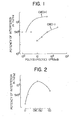
- Figs. 1 and 2 show the results of Example 1.
- the x-axis is concentration of poly(I):poly(C) in ⁇ g/ml. and the y-axis potency of interferon in IU/ml. Interferon production wherein concentration of methylcellulose added is 0.25% is marked circle and the one in which it is 0% is marked triangle.
- Fig.2 indicates interferon production wherein concentration of poly(I):poly(C) added is 10 pg/ml.
- concentration of poly(I):poly(C) added is 10 pg/ml.
- the x-axis is concentration of carboxymethylcellulose added in %, and the y-axis potency of interferon.
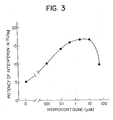
- Fig.3 shows the results of Example 4.
- the x-axis is concentration of hydrocortisone in ⁇ M, and the y-axis potency of interferon in IU/ml.
Landscapes
- Health & Medical Sciences (AREA)
- Life Sciences & Earth Sciences (AREA)
- Chemical & Material Sciences (AREA)
- Organic Chemistry (AREA)
- Genetics & Genomics (AREA)
- Engineering & Computer Science (AREA)
- Zoology (AREA)
- Biochemistry (AREA)
- General Health & Medical Sciences (AREA)
- Wood Science & Technology (AREA)
- Bioinformatics & Cheminformatics (AREA)
- Biomedical Technology (AREA)
- Biotechnology (AREA)
- Toxicology (AREA)
- General Engineering & Computer Science (AREA)
- Cell Biology (AREA)
- Microbiology (AREA)
- Gastroenterology & Hepatology (AREA)
- Biophysics (AREA)
- Medicinal Chemistry (AREA)
- Molecular Biology (AREA)
- Proteomics, Peptides & Aminoacids (AREA)
- Preparation Of Compounds By Using Micro-Organisms (AREA)
- Medicines That Contain Protein Lipid Enzymes And Other Medicines (AREA)
Applications Claiming Priority (2)
| Application Number | Priority Date | Filing Date | Title |
|---|---|---|---|
| JP70862/80 | 1980-05-29 | ||
| JP7086280A JPS56167624A (en) | 1980-05-29 | 1980-05-29 | Method of interferon production |
Publications (3)
| Publication Number | Publication Date |
|---|---|
| EP0041344A2 true EP0041344A2 (fr) | 1981-12-09 |
| EP0041344A3 EP0041344A3 (en) | 1981-12-16 |
| EP0041344B1 EP0041344B1 (fr) | 1984-05-02 |
Family
ID=13443790
Family Applications (1)
| Application Number | Title | Priority Date | Filing Date |
|---|---|---|---|
| EP81302263A Expired EP0041344B1 (fr) | 1980-05-29 | 1981-05-21 | Procédé de préparation de l'Interféron |
Country Status (4)
| Country | Link |
|---|---|
| US (1) | US4433052A (fr) |
| EP (1) | EP0041344B1 (fr) |
| JP (1) | JPS56167624A (fr) |
| DE (1) | DE3163366D1 (fr) |
Cited By (5)
| Publication number | Priority date | Publication date | Assignee | Title |
|---|---|---|---|---|
| GB2123835A (en) * | 1982-07-12 | 1984-02-08 | Damon Biotech Inc | Interferon E |
| EP0097907A3 (fr) * | 1982-06-25 | 1985-01-09 | Flow General, Inc. | Micro-supports pour culture de cellules |
| GB2161487A (en) * | 1984-07-06 | 1986-01-15 | Damon Biotech Inc | Interferon epsilon |
| WO1998041617A1 (fr) * | 1997-03-18 | 1998-09-24 | Ascendia Ab | Stimulation, culture et preservation de cellules pancreatiques et d'autrs cellules |
| US7588755B1 (en) | 1980-04-03 | 2009-09-15 | Biogen Idec Ma Inc. | DNA sequences, recombinant DNA molecules and processes for producing human fibroblast interferon-like polypeptides |
Family Cites Families (6)
| Publication number | Priority date | Publication date | Assignee | Title |
|---|---|---|---|---|
| US3773924A (en) * | 1970-12-24 | 1973-11-20 | M Ho | Interferon production |
| US4007086A (en) * | 1975-01-23 | 1977-02-08 | The Upjohn Company | Interferon induction |
| GB1525022A (en) * | 1975-05-21 | 1978-09-20 | Beecham Group Ltd | Cell culture method |
| US4036693A (en) * | 1976-02-02 | 1977-07-19 | Massachusetts Institute Of Technology | Treatment of cell culture microcarries |
| US4189534A (en) * | 1976-11-11 | 1980-02-19 | Massachusetts Institute Of Technology | Cell culture microcarriers |
| EP0005476B1 (fr) * | 1978-05-17 | 1981-12-30 | Dr. Karl Thomae GmbH | Procédé de préparation d'interféron humain |
-
1980
- 1980-05-29 JP JP7086280A patent/JPS56167624A/ja active Granted
-
1981
- 1981-05-20 US US06/265,369 patent/US4433052A/en not_active Expired - Lifetime
- 1981-05-21 DE DE8181302263T patent/DE3163366D1/de not_active Expired
- 1981-05-21 EP EP81302263A patent/EP0041344B1/fr not_active Expired
Cited By (7)
| Publication number | Priority date | Publication date | Assignee | Title |
|---|---|---|---|---|
| US7588755B1 (en) | 1980-04-03 | 2009-09-15 | Biogen Idec Ma Inc. | DNA sequences, recombinant DNA molecules and processes for producing human fibroblast interferon-like polypeptides |
| US7635466B1 (en) | 1980-04-03 | 2009-12-22 | Biogen Idec Ma Inc. | DNA sequences, recombinant DNA molecules and processes for producing human fibroblast interferon-like polypeptides |
| EP0097907A3 (fr) * | 1982-06-25 | 1985-01-09 | Flow General, Inc. | Micro-supports pour culture de cellules |
| GB2123835A (en) * | 1982-07-12 | 1984-02-08 | Damon Biotech Inc | Interferon E |
| AU573528B2 (en) * | 1982-07-12 | 1988-06-16 | Damon Biotech Inc. | Interferon-epsilon |
| GB2161487A (en) * | 1984-07-06 | 1986-01-15 | Damon Biotech Inc | Interferon epsilon |
| WO1998041617A1 (fr) * | 1997-03-18 | 1998-09-24 | Ascendia Ab | Stimulation, culture et preservation de cellules pancreatiques et d'autrs cellules |
Also Published As
| Publication number | Publication date |
|---|---|
| EP0041344A3 (en) | 1981-12-16 |
| DE3163366D1 (en) | 1984-06-07 |
| JPS56167624A (en) | 1981-12-23 |
| JPS624117B2 (fr) | 1987-01-28 |
| EP0041344B1 (fr) | 1984-05-02 |
| US4433052A (en) | 1984-02-21 |
Similar Documents
| Publication | Publication Date | Title |
|---|---|---|
| Schimmer | [52] Adrenocortical Y1 cells | |
| Roger et al. | Factors controlling proliferation and differentiation of canine thyroid cells cultured in reduced serum conditions: effects of thyrotropin, cyclic AMP and growth factors | |
| De et al. | Requirements and functions of vesicular stomatitis virus L and NS proteins in the transcription process invitro | |
| US4608199A (en) | Bone protein purification process | |
| Wheelock | Interferon-like virus-inhibitor induced in human leukocytes by phytohemagglutinin | |
| Medrano et al. | Prevalent deficiency in tumor cells of cycloheximide-induced cycle arrest. | |
| Mohler et al. | Radiation response of mammalian cells grown in culture: III. Modification of X-ray survival of Chinese hamster cells by 5-bromodeoxyuridine | |
| EP0000520B1 (fr) | Amélioration se rapportant à un procédé de production d'interféron | |
| Zoon et al. | Production of human lymphoblastoid interferon by Namalva cells | |
| EP0058687A4 (fr) | Procede d'augmentation de la production d'interferon. | |
| Zajac et al. | Autogenous and virus-induced interferons from lines of lymphoblastoid cells | |
| Lipton et al. | Serum requirements for survival of 3T3 and SV3T3 fibroblasts | |
| EP0041344B1 (fr) | Procédé de préparation de l'Interféron | |
| US3773924A (en) | Interferon production | |
| Reuveny et al. | Factors effecting cell attachment, spreading, and growth on derivatized microcarriers: II introduction of hydrophobic elements | |
| Speeg Jr et al. | Characteristics of alkaline phosphatase from two continuous lines of human choriocarcinoma cells | |
| US5468635A (en) | In vitro method for stimulating cell growth by culturing cells in a serum-free culture medium comprising human lysozyme | |
| IE47060B1 (en) | Process for the cultivation of viruses | |
| JP2859679B2 (ja) | 新規細胞株 | |
| CS251766B2 (en) | Method of interferon production | |
| Alarcon et al. | pppA2'p5A'blocks vesicular stomatitis virus replication in intact cells | |
| EP0048283B1 (fr) | Substance inhibant les virus et procede de preparation de celle-ce | |
| JPS641119B2 (fr) | ||
| Farnham | Effect of aminonucleoside (of puromycin) on normal and encephalomyocarditis (EMC) virus-infected L cells | |
| JPH0123119B2 (fr) |
Legal Events
| Date | Code | Title | Description |
|---|---|---|---|
| PUAI | Public reference made under article 153(3) epc to a published international application that has entered the european phase |
Free format text: ORIGINAL CODE: 0009012 |
|
| PUAL | Search report despatched |
Free format text: ORIGINAL CODE: 0009013 |
|
| AK | Designated contracting states |
Designated state(s): BE DE FR GB IT NL |
|
| AK | Designated contracting states |
Designated state(s): BE DE FR GB IT NL |
|
| 17P | Request for examination filed |
Effective date: 19820522 |
|
| ITF | It: translation for a ep patent filed | ||
| GRAA | (expected) grant |
Free format text: ORIGINAL CODE: 0009210 |
|
| AK | Designated contracting states |
Designated state(s): BE DE FR GB IT NL |
|
| REF | Corresponds to: |
Ref document number: 3163366 Country of ref document: DE Date of ref document: 19840607 |
|
| ET | Fr: translation filed | ||
| PLBE | No opposition filed within time limit |
Free format text: ORIGINAL CODE: 0009261 |
|
| STAA | Information on the status of an ep patent application or granted ep patent |
Free format text: STATUS: NO OPPOSITION FILED WITHIN TIME LIMIT |
|
| 26N | No opposition filed | ||
| ITTA | It: last paid annual fee | ||
| PGFP | Annual fee paid to national office [announced via postgrant information from national office to epo] |
Ref country code: FR Payment date: 20000510 Year of fee payment: 20 |
|
| PGFP | Annual fee paid to national office [announced via postgrant information from national office to epo] |
Ref country code: GB Payment date: 20000517 Year of fee payment: 20 |
|
| PGFP | Annual fee paid to national office [announced via postgrant information from national office to epo] |
Ref country code: DE Payment date: 20000522 Year of fee payment: 20 |
|
| PGFP | Annual fee paid to national office [announced via postgrant information from national office to epo] |
Ref country code: NL Payment date: 20000531 Year of fee payment: 20 |
|
| PGFP | Annual fee paid to national office [announced via postgrant information from national office to epo] |
Ref country code: BE Payment date: 20000717 Year of fee payment: 20 |
|
| BE20 | Be: patent expired |
Free format text: 20010521 *TORAY INDUSTRIES INC. |
|
| PG25 | Lapsed in a contracting state [announced via postgrant information from national office to epo] |
Ref country code: GB Free format text: LAPSE BECAUSE OF EXPIRATION OF PROTECTION Effective date: 20010520 |
|
| PG25 | Lapsed in a contracting state [announced via postgrant information from national office to epo] |
Ref country code: NL Free format text: LAPSE BECAUSE OF EXPIRATION OF PROTECTION Effective date: 20010521 |
|
| REG | Reference to a national code |
Ref country code: GB Ref legal event code: PE20 Effective date: 20010520 |
|
| NLV7 | Nl: ceased due to reaching the maximum lifetime of a patent |
Effective date: 20010521 |