EP0041665A2 - Capsules médicinales pour application rectale - Google Patents
Capsules médicinales pour application rectale Download PDFInfo
- Publication number
- EP0041665A2 EP0041665A2 EP81104132A EP81104132A EP0041665A2 EP 0041665 A2 EP0041665 A2 EP 0041665A2 EP 81104132 A EP81104132 A EP 81104132A EP 81104132 A EP81104132 A EP 81104132A EP 0041665 A2 EP0041665 A2 EP 0041665A2
- Authority
- EP
- European Patent Office
- Prior art keywords
- capsule
- effective ingredient
- medicament
- rectal
- rectal application
- Prior art date
- Legal status (The legal status is an assumption and is not a legal conclusion. Google has not performed a legal analysis and makes no representation as to the accuracy of the status listed.)
- Granted
Links
Images


Classifications
-
- A—HUMAN NECESSITIES
- A61—MEDICAL OR VETERINARY SCIENCE; HYGIENE
- A61K—PREPARATIONS FOR MEDICAL, DENTAL OR TOILETRY PURPOSES
- A61K9/00—Medicinal preparations characterised by special physical form
- A61K9/48—Preparations in capsules, e.g. of gelatin, of chocolate
- A61K9/4816—Wall or shell material
-
- A—HUMAN NECESSITIES
- A61—MEDICAL OR VETERINARY SCIENCE; HYGIENE
- A61K—PREPARATIONS FOR MEDICAL, DENTAL OR TOILETRY PURPOSES
- A61K9/00—Medicinal preparations characterised by special physical form
- A61K9/02—Suppositories; Bougies; Bases therefor; Ovules
- A61K9/025—Suppositories; Bougies; Bases therefor; Ovules characterised by shape or structure, e.g. hollow layered, coated
-
- C—CHEMISTRY; METALLURGY
- C08—ORGANIC MACROMOLECULAR COMPOUNDS; THEIR PREPARATION OR CHEMICAL WORKING-UP; COMPOSITIONS BASED THEREON
- C08B—POLYSACCHARIDES; DERIVATIVES THEREOF
- C08B11/00—Preparation of cellulose ethers
- C08B11/20—Post-etherification treatments of chemical or physical type, e.g. mixed etherification in two steps, including purification
-
- C—CHEMISTRY; METALLURGY
- C08—ORGANIC MACROMOLECULAR COMPOUNDS; THEIR PREPARATION OR CHEMICAL WORKING-UP; COMPOSITIONS BASED THEREON
- C08B—POLYSACCHARIDES; DERIVATIVES THEREOF
- C08B13/00—Preparation of cellulose ether-esters
Definitions
- the present invention relates to a novel medicament capsule for rectal application. More particularly, the invention relates to a medicament form of a hard capsule made of a novel enterosoluble cellulose derivative encapsulating a therapeutically effective ingredient capable of being absorbed through the rectum.
- a variety of medicines are used in a medicament form suitable for rectal application with an object either to obtain a systemic action or to obtain a local action of the effective ingredient.
- Several of the examples of the medicines of which a systemic action is desired by the rectal application include antipyretic, anodynic and antiphlogistic agents such as aspirin, aminopyrine, sulpyrin , phenylbutazone, oxyphenbutazone, indomethacin and antispasmodic agents such as butyl scopolamine bromide and the like, antibiotics such as erythromycin and the like, antituberculosis agents such as ethionamide and the like, and others.
- Those medicines of which a local action is desired include, on the other hand, astringents, local anesthetics and bactericidal agents with or without admixture of an adrenocortical hormone for haemorrhoids.
- the effective ingredient in the medicine administrated by rectal application is directly absorbed in the venous plexus of the rectum to be distributed throughout the body by the blood circulation without passing the portal vein and the liver. Therefore, a rectally applicable medicament form is preferable particularly for the medicines of which the effective ingredient causes a'disorder in the stomach when orally administrated or the ingredient is susceptible to decomposition in the digestive tract or in the liver resulting in decreased effectiveness of the medicine.
- the medicament forms for rectal application in general include suppositories and so-called rectal capsules
- Suppositories as a medicament form are prepared usually by dispersing the therapeutically acitve ingredient in a base such as cacao butter, polyethyleneglycol, mixture of higher fatty acid glycerides and the like solidifying and shaping the blend into a desired form, e.g. a conical or cannonball-like form, suitable for insertion into the coelom through the anus.
- Suppositories are the most widely used medicament form for rectal application and effective by releasing the effective ingredient in the rectum when melted at the body temperature or dissolved in the rectal fluid.
- Suppositories present a very convenient means for rectal application of the medicine but not without various problems in the preparation and storage thereof.
- Several of the problems are that an efficient means is required for the uniform dispersion of the effective ingredient in the highly consistent suppository base, that suppositories are not a suitable medicament form for an ingredient susceptible to thermal decomposition because the ingredient must be distributed in the base molten by heating, that suppositories must be stored in a cool place because deformation of suppositories is unavoidable at a relatively high temperature and that specific facilities are necessary for the preparation thereof to be in compliance with the aforementioned problems.
- a rectal capsule is a modification of the suppository in a sense and can be prepared in a manner similar to the preparation of soft capsules. That is, the therapeutically effective ingredient, alone or with admixture of other additives according to need, is shaped by lightly compressing and encapsulated and further shaped with a capsule base such as gelatin. Therefore, preparation of rectal capsules also requires specific facilities and skillful works.
- a further problem in the medicament capsules for rectal application is that the disintegrability of the capsules and the absorbability of the effective ingredients in the rectum are widely diversified among the individuals administrated with the capsules by rectal-application.
- an object of the present invention is to provide a very ccnvenient and reliable method for the administration of a rectally absorbable therapeutically effective medicament in a form of a capsule for rectal application.
- Another object of the invention is to provide a novel and improved medicament capsule for rectal application with which the problems in the conventional suppositories and rectal capsules as well as the problems involved in the application of ordinary hard or soft capsules to the rectal use are completely solved.
- the medicament capsule for rectal application comprises (a) a hard capsule shell made of a mixed ester of a cellulose ester susbtituted by hydroxy-substituted and/or unsubstituted alkyl groups and esterified with aliphatic monoacyl groups and acidic succinyl groups and (b) a therapeutically effective ingredient capable of being rectally absorbed and encapsulated in the said hard capsule shell.
- the hard capsule shell used in the inventive medicament capsule for rectal application is shaped of the above mentioned enteric cellulose derivative and has many advantages, in addition to the excellent enterosolubility, of the intoxicity to the living body and the chemical stability in the lapse of time without the danger of producing'any toxic or harmful decomposition products during storage as well as excellent physical stability over a long period of time to retain the mechanical properties such as pliability even without formulation of a plasticizer.
- the enteric cellulose derivative for shaping the shell of the inventive medicament capsule is a mixed ester of a cellulose ether substituted or etherified by alkyl groups and/or hydroxyalkyl groups and esterified by aliphatic monoacyl groups and acidic succinyl groups.
- the preparation of such a mixed ester of cellulose ether is described, for example, in U.S. Patent No. 4,226,981.
- the mixed ester of the cellulose ether used for shaping the capsule shell has two kinds of esterifying substituent groups; i.e. aliphatic monoacyl groups represented by the general formula R-CO-, in which R is a monovalent aliphatic group or, in particular, an alkyl group, and acidic succinyl groups expressed by the formula HO-CO-CH 2 CH 2 -CO- bonded to the cellulose ether through ester linkages and obtained by the esterification reaction of a cellulose ether with succinic anhydride and an anhydride of an aliphatic monocarboxylic acid.
- R-CO- aliphatic monoacyl groups represented by the general formula R-CO-, in which R is a monovalent aliphatic group or, in particular, an alkyl group
- acidic succinyl groups expressed by the formula HO-CO-CH 2 CH 2 -CO- bonded to the cellulose ether through ester linkages and obtained by the esterification reaction of a cellulose ether with
- the cellulose ether above mentioned has necessarily alkyl groups and/or hydroxyalkyl groups as the substituent groups bonded to the glucose residue through ether linkages and is exemplified by alkylcelluloses such as methylcellulose, ethylcellulose, propylcellulose and the like, hydroxyalkylcelluloses such as hydroxyethylcellulose, hydroxypropylcellulose, hydroxybutylcellulose and the like and hydroxyalkyl alkylcelluloses such as hydroxyethyl methylcellulose, hydroxyethyl ethylcellulose, hydroxypropyl methylcellulose, hydroxypropyl ethylcellulose, hydroxybutyl methylcellulose, hydroxybutyl ethylcellulose and the like as well as those cellulose ethers having two kinds or more of the hydroxyalkylgroups such as hydroxyethyl hydroxypropylcellulose, hydroxyethyl hydroxybutylcellulose, hydroxyethyl hydroxypropyl methylcellulose and the like.
- cellulose ethers are not particularly limitative in respect of the molecular weight and the degree of substitution by the alkyl groups and/or hydroxyalkyl groups.
- the cellulose ether is an alkylcellulose or a hydroxyalkyl alkylcellulose, however, it should be noted that the difficulty in the esterification reaction with the above mentioned acid anhydrides is increased if the degree of substitution by the alkyl groups is excessively large over a limit of, say, 2.5 alkyl groups per glucose residue.
- the anhydride of the aliphatic monocarboxylic acid used in the esterification of the cellulose ether in combination with succinic anhydride is exemplified by the anhydrides of acetic, propionic, butyric and valeric acids. These acid anhydrides as well as succinic anhydride may not be of special grades and commercially available ones can be used without further purification.
- the esterification reaction of the cellulose ether with the acid anhydrides is carried out in several different ways.
- the cellulose ether and the acid anhydrides are reacted in a carboxylic acid such as acetic acid, propionic acid butyric acid and the like as the reaction medium in the presence of an alkali metal salt of a carboxylic acid such as sodium acetate, potassium acetate and the like as a catalyst.
- the reaction is carried out in a suitable organic solvent such as dimethylformamide, acetone and the like in the presence of a basic catalyst such as a-picoline, pyridine and the like.
- the average degrees of substitution per glucose unit by the acidic succinyl groups and the aliphatic acyl groups are determined in accordance with the desired performance of the mixed ester product as well as the type of the cellulose ether as the starting material. Generally speaking, the average numbers of the substituent groups are desirably at least 0.1 and at least 0.05 per glucose unit for the acidic succinyl groups and the aliphatic monoacyl groups, respectively, since smaller degrees of substitution result in unsatisfactory pliability and enteric solubility of the cellulose derivative.
- the shaping procedure of the capsule shells from the above described cellulose derivative is rather conventional and may be performed by the dipping method using molding pins.
- a suitable solvent which is an organic solvent or a mixture of an organic solvent and water into a dipping solution of an adequate concentration and, after defoaming, if necessary, a molding pin is dipped therein and then pulled up gradually so as that the viscous film of the solution adhering to the molding pin is dried and converted to a solid film of the form of a capsule shell, which is detached from the molding pin followed, if necessary, by finishing to give a capsule shell of the desired size and form.
- the organic solvent used for the preparation of the above mentioned dipping solution is exemplified by methyl alcohol, ethyl alcohol, acetone, ethyleneglycol monomethyl ether, ethyleneglycol monoethyl ether, ethyl acetate and the like, which may be used either alone or in combination of two kinds or more.
- the concentration of the dipping solution is of course determined in consideration of the workability in the shaping procedure by the dipping method as well as the desired wall thickness of the finished capsule shells.
- capsule shells of a smaller wall thickness are prepared by use of a less concentrated solution and the concentration should be increased when capsule shells of a larger wall thickness are to be prepared.
- the wall thickness of the capsule shells is usually in the range from 100 to 150 ⁇ m or, preferably, from 100 to 120,um in consideration of the balance of the bioavailability of the effective ingredient therein and the physical properties of the capsules.
- the dipping solution may be formulated with admixture of several conventional additives according to need such as coloring agents, taste- and flavor-improvers, flavors, plasticizers and the like. Needless to say, the amounts of these optional additives to be added to the dipping solution are limited not to adversely affect the advantageous properties inherent to the mixed ester of the cellulose derivative.
- any other conventional shaping methods can be used such as compression molding under heating.
- the cellulose ether compounds as the starting materials used in this preparation and denoted by abridgements in Table 1 were as follows.
- liPC hydroxypropylcellulose, the average number of substitution with hydroxypropoxyl groups per glucose unit 3.0
- H PMC hydroxypropyl methylcellulose, the average numbers of substitution with hydroxypropoxyl groups and methoxy groups per glucose unit 0.27 and 1.82, respectively
- HEHPC hydroxyethyl hydroxypropylcellulose, the average numbers of substitution with hydroxyethoxy groups and hydroxypropoxyl groups per glucose unit 2.5 and 0.32, espectively
- the cellulose derivative kept standing for 6 days or 12 days in atmospheric conditions of 100 % relative humidity at 60 °C was subjected to extraction with diethyl ether for 5 hours in a Soxhlet extractor and the aliphatic monocarboxylic acid contained in the ether extract was determined by the gas chromatography
- the cellulose derivative kept standing in the same atmospheric conditions as above was dissolved in a 1:1 by volume mixed solvent of methylene chloride and methyl alcohol and further admixed with n-hexane.
- the solution was then extracted with water and the overall amount of the free acids in the water extract was determined by titration with a 0.1 N aqueous solution of sodium hydroxide and the amount of the free acids other than the aliphatic monocarboxylic acid was obtained by the difference between this value and the amount of the free aliphatic monocarboxylic acid obtained in a) above.
- Films were prepared by the casting method from a solution of the cellulose derivative dissolved in a 1:1 by volume mixed solvent of methylene chloride and methyl alcohol. Measurement of the elongation was performed on an automatic recording tensile tester at 25 °C.
- a viscous dipping solution was prepared by dissolving 90 g of the Sample No. 2 prepared in Preparation 1 above in 210 g of a 6:4 by volume mixed solvent of acetone and ethyl alcohol followed by defoaming by standing at room temperature.
- a molding pin either for capsule cap or for capsule body of the size No.0 after mold-release treatment was dipped in the above prepared dipping solution and then gradually pulled up from the solution to form a film of the viscous solution adhering around the molding pin.
- Complete drying of the liquid film aound the molding pin at 40 to 42 °C gave a capsule shell half having a wall thickness of 150 pm which was demounted from the molding pin and finished to a clear capsule shell half rich in pliability.
- a capsule made by coupling the above prepared capsule cap and body was filled with lactose powder and sealed around the coupling portion with the same viscous solution of the cellulose derivative.
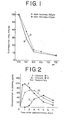
- the disintegrability of the thus prepared capsules was tested in the first and the second solutions having a pH of 1.2 or 7.5, respectively, according to the Ninth Revised Japanese Pharmacopoeia or the McIlvaine buffer solutions having a pH of 4.5, 5.0, 5.5 or 6.0.
- the dissolvability behavior of the capsules in each of the test solutions was as follows.
- Capsule shells having a wall thickness of 150 ⁇ m were prepared in the same manner as in Preparation 2 above except that the dipping solution used for pin molding was a solution of 20 g of the Sample No. 1 prepared in Preparation 1 in 80 g of a 8:2 by volume mixed solvent of ethyl alcohol and water.
- the capsules were also clear and rich in pliability.
- Capsule shells having a wall thickness of 150 ⁇ m were prepared in the same manner as in Preparation 2 above except that the viscous dipping solution used for pin molding was a solution of 25 g of the Sample No. 3 prepared in Preparation 1 in 75 g of a 1:1 by volume mixed solvent of acetone and ethyleneglycol monomethyl ether. The capsules were also clear and rich in pliability.
- the capsule was dissolved and broken to release the content after 15 to 25 minutes, in the second solution at pH 7.5.
- Capsule shells of No. 0 size were prepared with a hydroxypropyl methylcellulose acetate succinate in a similar.manner to Preparation 2 in two different wall thicknesses of (A) 150 ⁇ m and (B) 100 ⁇ m each weighing 125 mg or 110 mg, respectively, for the capsule cap and body coupled together.
- the capsules were stable at pH 5.0 for 2 hours or longer irrespective of the wall thickness.
- the dissolution of the capsules took place only at a pH of 5.5 or higher and was considerably rapid at a pH of 6.0 or higher with somewhat larger velocities for the capsules of smaller wall thickness than for those with larger wall thickness.
- Simulating capsules were prepared by filling the comparative capsules A and B prepared in Preparation 5 above with a 30 % by weight suspension of barium sulfate in water or in sesame oil as a contrast medium.
- the capsules were inserted each into the rectum of a male rabbit having a body weight of about 3 kg after a fasting period of 17 hours about 3 cm deep from the anus and traced roentgenographically with soft X-rays by use of an apparatus Model Softex CMEW-2, manufactured by Nippon Softex Co., Japan, to examine thein.vivo dissolvability behavior of the capsules.
- the results of the average time in minutes for the dissolution of the capsules in the rabbit recta were as shown in Table 3 below.
- the time to the dissolution of the capsule A was about twice as long as that with the capsule B in parallel with the general trend in the in vitro test described in Preparation 5 and illustrated in FIGURE 1.
- the aqueous suspension filling the capsule apparently accelerated the dissolution of the capsule in comparison with the suspension in sesame oil.
- the medicament capsules according to the present invention are very suitable as a dosage form for rectal application. It may be concluded from the above results that (a) the wall thickness of the capsule in the invention can be the same as or slightly smaller than in the ordinary capsules for oral administration provided no troubles are caused in rectal application and (b) the form of the capsule is desirably conical or cannonball-like in order to facilitate rectal application but the conventional capsule assemblage of cap and body coupled together having dome-like or semispherical closed ends are well suitable for the purpose.
- the medicines to fill the inventive medicament capsules are not limited to particular ones and may include all kinds of medicines hitherto formulated in suppositories as the therapeutically effective ingredient such as antipyretics, anodynes, antiphlogistics, antispasmodics, antibiotics, antituberculosis agents, astringents, local anesthetics, bactericides, laxatives and the like.
- the inventive medicament capsules are practically very advantageous because the dosage form preparation is very easy and no special care is needed in the storage thereof by virtue of the utilization of a hard capsule made of a specific material having excellent stability.
- medicament capsules were prepared of the capsule shells having a wall thickness of 100 ⁇ m obtained in Preparation 5.
- Medicament capsules were prepared by filling the capsules with a suspension of sulfamethoxazole as the test ingredient in water or in sesame oil in such an amount that each capsule contained 240 mg of the effective ingredient.
- suppositories were prepared as a dosage form for control by casting a uniform blend of sulfamethoxazole in a molten suppository base at 50 °C, which was a mixture of mono-, di- and triglycerides of saturated fatty acids having from 12 to 18 carbon atoms in a molecule (Witepsol, a product by Dynamit Nobel Co.) into a conventional suppository form.
- Each piece of the suppositories also contained 240 mg of the effective ingredient.
- Each a piece of the above test capsules and the control suppositories was composed of the respective materials in amounts indicated in Table 5 in mg.
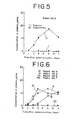
- Each of the above prepared capsules and suppositories was inserted to the rectum about 3 cm deep from the anus of a male rabbit having a body weight of 2.9 to 3.1 kg after a fasting period of 17 hours and blood was taken periodically from the vein on the earlobe. Blood plasma was obtained from the blood by centrifugal separation and the concentration of sulfamethoxazole in the plasma was determined to give the results as plotted in
- FIGURE 2 is a diagrammatic representation of FIGURE 1
- the inventive capsule containing the aqueous suspension of the medicine gave a larger velocity of increase in the concentration of the medicine in the blood plasma as well as a higher maximum concentration than with the Witepsol- based suppository.
- a pasty mixture was prepared by uniformly blending 50 g of sulfamethoxazole and 30 g of olive oil and a capsule shell having a wall thickness of 100 pm obtained in Preparation 5 was filled with 800 mg of the paste containing 500 mg of the effective ingredient to give a rectally applicable medicament capsule which was subjected to the animal test in the same manner as in Dose Test 1 above to give equally good results.
- a pasty mixture was prepared by uniformly blending 22.5 g of sulfamethoxazole and 36 g of olive oil and a capsule shell of No. 2 size having a wall thickness of 100 ⁇ m prepared in the same manner as in Preparation 5 was filled with 390 mg of the paste containing 150 mg of the effective ingredient to give a rectally applicable medicament capsule which was subjected to the animal test in the same manner as in Dose Test 1 to give equally good results.
- An oily suspension was prepared by uniformly blending 75 g of aspirin, 141 g of olive oil and further 7.8 g of a finely divided silicic anhydride and a capsule shell obtained in Preparation 5 was filled with 746 mg of the suspension containing 250 mg of aspirin to give a rectally applicable medicament capsule which was subjected to the animal test in a manner similar to Dose Test 1 above to give equally good results.
- An oily suspension was prepared by uniformly blending 50 mg of betamethasone, 63.6 g of sesame oil and further 2.6 g of a finely divided silicic anhydride and a capsule shell of No. 0 size obtained in Preparation 5 was filled with 663 mg of the suspension containing 0.5 mg of the effective ingredient to give a rectally applicable medicament capsule which was subjected to the animal test in a manner similar to Dose Test 1 above to give equally good results.
- the medicament capsules according to the present invention are very advantagesous over the conventional dosage forms for rectal application in that a wide versatility is obtained in the form of the medicines to be contained in the capsule shells including any kind of aqueous liquid medicines such as aqueous solutions, aqueous suspensions, emulsions and the like which hitherto have been considered to be quite unsuitable for rectal application.
- medicament capsules were prepared by use of the capsule shells obtained in Preparation 5 above, each capsule being filled with an aqueous solution of 70 mg of sulfamethoxazole in 600 mg of a 0.001 N hydrochloric acid containing 2 % by weight of a hydroxypropylcellulose.
- suppositories were prepared, each being composed of 70 mg of sulfamethoxazole and 930 mg of Witepsol as the suppository base.
- FIGURES 3 to 6 of which FIGURES 3 to 5 give a comparison between the medicament capsule and the suppository in the rabbits No. 1, No. 2 and No. 3, respectively, the solid lines being for the capsules and the broken lines being for the suppositories and FIGURE 6 gives the results with the capsules in the rabbits No. 4 to No. 7 by the curves IV to VII,respectively.
- FIGURE 6 more clearly indicates the dependency of the absorbability of a medicine on individuals in the rectal application of medicament capsules.
- the osmotic pressure of the liquid medicine contained in the capsule should be substantially higher than that of the body fluid or, in particular, the rectal fluid so that the disintegration of the capsule is uniformly accelerated without being affected by the fluctuating living body conditions since the rectal fluid is positively taken into the capsule through the capsule walls and, as a consequence, the difference in the absorbability of the effective ingredient through the rectum is minimized among individuals to overcome the above described serious problem encountered in the dose tests with rabbits as the test animals.
- the osmotic pressure of human body fluids or, in particular, the rectal fluid is usually in the range from 280 to 300 m Osm/kg H 2 0. Therefore, the osmotic pressure of the liquid medicine contained in the rectally applicable medicament capsule should be kept substantially higher than above. It should be noted, however, a liquid medicine having an excessively high osmotic pressure may cause diarrhoea when administrated rectally so that the osmotic pressure should be controlled within a range from 350 to 2000 m Osm/kg H20 or, preferably, in the range from 500 to 1600 m Osm/kg H 2 0. Meanwhile, the osmotic pressure of the content of the rectally applied capsules in the above described dose tests exhibited in FIGURES 3 to 6 was about 20 m Osm/kg H 2 0.
- the osmotic pressure of the liquid content can be freely controlled by adding a suitable amount of an osmosis adjustment agent to the content of the capsule.
- an osmosis adjustment agent must satisfy several requirements (a) that the capsule shell is not affected thereby, (b) that the liquid content can be made sufficiently hypertonic by the addition of a small amount thereof, and (c) that it is not irritative to the mucous membrane of the rectum not to cause diarrhoea. Therefore, the osmosis adjustment agent should be selected with consideration of these requirements.
- osmosis adjustment agents are inorganic salts such as sodium chloride, potassium chloride, ammonium chloride and the like and organic compounds such as glucose, fructose, sorbitol, xylitol, mannitol, glycerin, low-molecular dextran and the like.
- the amount of the osmosis adjustment agent to be added to the liquid content of the capsule is usually in the range from 1 to 20 % by weight in the case of the inorganic salts above mentioned and from 5 to 30 % by weight in the case of the above mentioned organic compounds.
- the amount should be sufficient to make the liquid content of the capsule more hypertonic than the rectal fluid while an excessive amount of the osmosis adjustment agent is undesirable in several respects with a too high osmotic pressure of the liquid content of the capsule in addition to the difficulty in introducing the agent into the capsule.
- auxiliary means in such a case is the replacement of a part of the above mentioned osmosis adjustment agent with different kinds of additives such as a salt of an organic acid, e.g. potassium citrate, potassium acetate, potassium gluconate and the like in an amount of 1 to 10 % by weight and/or an acidic amino acid or a derivative thereof, e.g. glutamin, glutamic acid, asparagine, aspartic acid and the like in an amount of 0.1 to 1 % by weight.
- a salt of an organic acid e.g. potassium citrate, potassium acetate, potassium gluconate and the like in an amount of 1 to 10 % by weight
- an acidic amino acid or a derivative thereof e.g. glutamin, glutamic acid, asparagine, aspartic acid and the like in an amount of 0.1 to 1 % by weight.
- the pH value of the content of the capsule should be kept in the range from 3 to 4 in order to ensure stability of the capsule shells so that it is sometimes undertaken to add a small amount of hydrochloric acid to the content of the capsule according to need.
- the pH is too high above 4, the stability of the capsule shell formed of the enteric cellulose derivative is decreased while an excessively acidic content is undesirable due to the increased irritation to the mucous membrane of the rectum.
- the liquid content of the inventive medicament capsule may be admixed with various kinds of additives according to need depending on the properties of the content which may be an aqueous solution, suspension in water or in oil, aqueous emulsion and the like.
- additives for example, carboxymethylcellulose, hydroxypropylcellulose, polyvinyl pyrrolidone, propyleneglycol, gum arabic and gum tragacanth as well as fatty acid esters of-sucrose, polyoxyethylene castor oil derivatives, bile acid and salts thereof and the like may be added either alone or in combination of two kinds or more as a thickening agent, dispersing agent or suspending agent in accordance with the particular object.
- the above described control of the osmotic pressure of the liquid content of the inventive medicament capsule for rectal application is very effective in that, with the liquid content of.thecapsule kept more hypertonic than the rectal fluid, the disintegration of the capsule is accelerated with minimum influence of the variation factors in the living body so that the release velocity of the effective ingredients in the capsule is increased uniformly among the individuals resulting in the enhancement of the bioavailability of the medicine with very much decreased variations among the individual patients.
- Medicament capsules were prepared with the hard capsule shells obtained in Preparation 5, each capsule containing 70 mg of sulfamethoxazole, 12 mg of sodium chloride and 588 mg of a solution containing 2 % by weight of a hydroxypropylcellulose in a 0.001 N hydrochloric acid.
- the osmotic pressure of the liquid content of the capsules was 580 m Osm/kg H 2 0.
- the absorption of the effective ingredient was remarkably improved in the test rabbits No. 2 and No. 3 which showed very poor absorption in the comparative tests shown in FIGURES 4 and 5, respectively-. This effect was especially remarkable in the rabbit No. 3.
- the absorbability of the effective ingredient administrated with the inventive capsules with a controlled osmotic pressure was about the same level as in the administration in the form of suppositories. It was noted that.the absorption of the effective ingredient in the rabbits No. 4 to No. 7 was also improved in comparison with the results shown in FIGURE 6 with less variation among the rabbits.
- Medicament capsules were prepared in the same manner as above, each capsule containing 70 mg of sulfamethoxazole, 2 mg of gum tragacanth, 125 mg of glucose and 473 mg of 0.001 N hydrochloric acid.
- the osmotic pressure of the liquid content of the capsules was 1350 m Osm/kg H 2 0.
- the capsule were rectally applied to several rabbits and the absorption of the effective ingredient was examined by the concentration of it in the blood plasma in the same manner as in Dose Test 6.
- the absorption of the effective ingredient was apparently improved by the addition of glucose as an osmosis adjustment agent.
Landscapes
- Chemical & Material Sciences (AREA)
- Health & Medical Sciences (AREA)
- Life Sciences & Earth Sciences (AREA)
- Medicinal Chemistry (AREA)
- Public Health (AREA)
- Epidemiology (AREA)
- Animal Behavior & Ethology (AREA)
- General Health & Medical Sciences (AREA)
- Pharmacology & Pharmacy (AREA)
- Veterinary Medicine (AREA)
- Engineering & Computer Science (AREA)
- Biochemistry (AREA)
- Materials Engineering (AREA)
- Chemical Kinetics & Catalysis (AREA)
- Polymers & Plastics (AREA)
- Organic Chemistry (AREA)
- Medicinal Preparation (AREA)
Priority Applications (1)
| Application Number | Priority Date | Filing Date | Title |
|---|---|---|---|
| AT81104132T ATE14978T1 (de) | 1980-06-05 | 1981-05-29 | Medizinische kapseln zur rektalen verwendung. |
Applications Claiming Priority (4)
| Application Number | Priority Date | Filing Date | Title |
|---|---|---|---|
| JP7626480A JPS572218A (en) | 1980-06-05 | 1980-06-05 | Capsule agent for rectal administration |
| JP76264/80 | 1980-06-05 | ||
| JP26624/81 | 1981-02-24 | ||
| JP56026624A JPS57140710A (en) | 1981-02-24 | 1981-02-24 | Capsule agent for rectal administration |
Publications (3)
| Publication Number | Publication Date |
|---|---|
| EP0041665A2 true EP0041665A2 (fr) | 1981-12-16 |
| EP0041665A3 EP0041665A3 (en) | 1983-01-05 |
| EP0041665B1 EP0041665B1 (fr) | 1985-08-21 |
Family
ID=26364434
Family Applications (1)
| Application Number | Title | Priority Date | Filing Date |
|---|---|---|---|
| EP19810104132 Expired EP0041665B1 (fr) | 1980-06-05 | 1981-05-29 | Capsules médicinales pour application rectale |
Country Status (4)
| Country | Link |
|---|---|
| EP (1) | EP0041665B1 (fr) |
| DE (1) | DE3171905D1 (fr) |
| ES (1) | ES8702133A1 (fr) |
| GB (1) | GB2077691B (fr) |
Cited By (5)
| Publication number | Priority date | Publication date | Assignee | Title |
|---|---|---|---|---|
| EP0401832A3 (fr) * | 1989-06-08 | 1991-05-15 | Shin-Etsu Chemical Co., Ltd. | Procédé de préparation de capsules dures pour médicaments |
| EP0391852A3 (fr) * | 1989-04-03 | 1992-09-09 | Warner-Lambert Company | Compositions pharmaceutiques |
| FR2703908A1 (fr) * | 1993-04-13 | 1994-10-21 | Asta Medica Ag | Forme pharmaceutique pour administration rectale de composés pharmacologiquement actifs. |
| WO2000067723A3 (fr) * | 1999-05-10 | 2001-05-31 | Roland Bodmeier | Forme galenique pour administration dans des orifices corporels |
| WO2014031448A1 (fr) * | 2012-08-24 | 2014-02-27 | Dow Global Technologies Llc | Procédé pour la préparation d'un ester d'un éther de cellulose en présence d'un carboxylate de métal alcalin |
Family Cites Families (4)
| Publication number | Priority date | Publication date | Assignee | Title |
|---|---|---|---|---|
| FR959520A (fr) * | 1947-01-11 | 1950-03-31 | ||
| GB2006011B (en) * | 1977-08-04 | 1982-04-21 | Rhodes J | Carminative preparations containing essential oila their active components |
| US4226981A (en) * | 1977-09-28 | 1980-10-07 | Shin-Etsu Chemical Co., Ltd. | Ether-ester derivatives of cellulose and their applications |
| US4365060A (en) * | 1979-04-28 | 1982-12-21 | Shin-Etsu Chemical Co. Ltd. | Enterosoluble capsules |
-
1981
- 1981-05-28 GB GB8116332A patent/GB2077691B/en not_active Expired
- 1981-05-29 DE DE8181104132T patent/DE3171905D1/de not_active Expired
- 1981-05-29 EP EP19810104132 patent/EP0041665B1/fr not_active Expired
- 1981-06-03 ES ES502737A patent/ES8702133A1/es not_active Expired
Cited By (7)
| Publication number | Priority date | Publication date | Assignee | Title |
|---|---|---|---|---|
| EP0391852A3 (fr) * | 1989-04-03 | 1992-09-09 | Warner-Lambert Company | Compositions pharmaceutiques |
| EP0401832A3 (fr) * | 1989-06-08 | 1991-05-15 | Shin-Etsu Chemical Co., Ltd. | Procédé de préparation de capsules dures pour médicaments |
| FR2703908A1 (fr) * | 1993-04-13 | 1994-10-21 | Asta Medica Ag | Forme pharmaceutique pour administration rectale de composés pharmacologiquement actifs. |
| EP0624365A1 (fr) * | 1993-04-13 | 1994-11-17 | ASTA Medica Aktiengesellschaft | Forme pharmaceutique pour administration rectale de composés pharmacologiquement actifs |
| US5433958A (en) * | 1993-04-13 | 1995-07-18 | Asta Medica Aktiengesellschaft | Pharmaceutical dosage unit for rectal administration |
| WO2000067723A3 (fr) * | 1999-05-10 | 2001-05-31 | Roland Bodmeier | Forme galenique pour administration dans des orifices corporels |
| WO2014031448A1 (fr) * | 2012-08-24 | 2014-02-27 | Dow Global Technologies Llc | Procédé pour la préparation d'un ester d'un éther de cellulose en présence d'un carboxylate de métal alcalin |
Also Published As
| Publication number | Publication date |
|---|---|
| DE3171905D1 (en) | 1985-09-26 |
| GB2077691A (en) | 1981-12-23 |
| GB2077691B (en) | 1983-11-02 |
| ES502737A0 (es) | 1987-01-01 |
| EP0041665B1 (fr) | 1985-08-21 |
| EP0041665A3 (en) | 1983-01-05 |
| ES8702133A1 (es) | 1987-01-01 |
Similar Documents
| Publication | Publication Date | Title |
|---|---|---|
| US4402692A (en) | Medicament capsules for rectal application | |
| US4443497A (en) | Method of preparing microcapsules | |
| FI85439C (fi) | Foerfarande foer framstaellning av ett laekemedelspreparat som doseras oralt och moejliggoer en kontrollerad frigoerelse. | |
| US4138013A (en) | Enteric capsules | |
| KR100501966B1 (ko) | 지연된 즉시 방출형 경구용 제형 및 이의 제조방법 | |
| US4708834A (en) | Preparation of gelatin-encapsulated controlled release composition | |
| US5213811A (en) | Oral sustained-release drug compositions | |
| TW201127370A (en) | Acid resistant capsules | |
| US4798724A (en) | Solid, stable dosage forms with an elastic film coating | |
| JP2703920B2 (ja) | 持続放出性剤型 | |
| EP0056825B1 (fr) | Procédé pour la préparation de capsules pharmaceutiques ayant des propriétés entériques | |
| EP0101418B1 (fr) | Mixture pharmaceutique | |
| JPH064531B2 (ja) | 大腸崩壊性硬質カプセル | |
| US4155993A (en) | Prolonged-release pharmaceutical compositions for oral administration, their methods of making and use | |
| EP0041665B1 (fr) | Capsules médicinales pour application rectale | |
| JP2002505290A (ja) | 水分吸収に対して安定であるセフロキシムアクセチルを含む医薬組成物 | |
| CA2411045A1 (fr) | Composition pharmaceutique a administration orale liberee au niveau colique et son procede de preparation | |
| DE2336807A1 (de) | Darmloesliche kapseln | |
| JPS62266060A (ja) | 医薬用硬質カプセルの製造方法 | |
| US4411882A (en) | Galenical compositions | |
| CA1163558A (fr) | Capsules de medicaments pour administration par voie rectale | |
| JPH0128043B2 (fr) | ||
| JPS6051124A (ja) | 腸溶性材コ−ティング液 | |
| PT89105B (pt) | Processo para a preparacao de composicoes farmaceuticas contendo tetraciclina | |
| JPS62249935A (ja) | サイクロデキストリンを含有する製剤用のゼラチン基質 |
Legal Events
| Date | Code | Title | Description |
|---|---|---|---|
| PUAI | Public reference made under article 153(3) epc to a published international application that has entered the european phase |
Free format text: ORIGINAL CODE: 0009012 |
|
| AK | Designated contracting states |
Designated state(s): AT CH DE FR IT NL SE |
|
| PUAL | Search report despatched |
Free format text: ORIGINAL CODE: 0009013 |
|
| AK | Designated contracting states |
Designated state(s): AT CH DE FR IT LI NL SE |
|
| 17P | Request for examination filed |
Effective date: 19830705 |
|
| ITF | It: translation for a ep patent filed | ||
| GRAA | (expected) grant |
Free format text: ORIGINAL CODE: 0009210 |
|
| AK | Designated contracting states |
Designated state(s): AT CH DE FR IT LI NL SE |
|
| REF | Corresponds to: |
Ref document number: 14978 Country of ref document: AT Date of ref document: 19850915 Kind code of ref document: T |
|
| REF | Corresponds to: |
Ref document number: 3171905 Country of ref document: DE Date of ref document: 19850926 |
|
| ET | Fr: translation filed | ||
| PLBE | No opposition filed within time limit |
Free format text: ORIGINAL CODE: 0009261 |
|
| STAA | Information on the status of an ep patent application or granted ep patent |
Free format text: STATUS: NO OPPOSITION FILED WITHIN TIME LIMIT |
|
| 26N | No opposition filed | ||
| ITTA | It: last paid annual fee | ||
| EAL | Se: european patent in force in sweden |
Ref document number: 81104132.6 |
|
| PGFP | Annual fee paid to national office [announced via postgrant information from national office to epo] |
Ref country code: FR Payment date: 19950510 Year of fee payment: 15 |
|
| PGFP | Annual fee paid to national office [announced via postgrant information from national office to epo] |
Ref country code: AT Payment date: 19950512 Year of fee payment: 15 |
|
| PGFP | Annual fee paid to national office [announced via postgrant information from national office to epo] |
Ref country code: SE Payment date: 19950517 Year of fee payment: 15 |
|
| PGFP | Annual fee paid to national office [announced via postgrant information from national office to epo] |
Ref country code: DE Payment date: 19950523 Year of fee payment: 15 |
|
| PGFP | Annual fee paid to national office [announced via postgrant information from national office to epo] |
Ref country code: CH Payment date: 19950524 Year of fee payment: 15 |
|
| PGFP | Annual fee paid to national office [announced via postgrant information from national office to epo] |
Ref country code: NL Payment date: 19950531 Year of fee payment: 15 |
|
| PG25 | Lapsed in a contracting state [announced via postgrant information from national office to epo] |
Ref country code: AT Effective date: 19960529 |
|
| PG25 | Lapsed in a contracting state [announced via postgrant information from national office to epo] |
Ref country code: SE Effective date: 19960530 |
|
| PG25 | Lapsed in a contracting state [announced via postgrant information from national office to epo] |
Ref country code: LI Effective date: 19960531 Ref country code: CH Effective date: 19960531 |
|
| PG25 | Lapsed in a contracting state [announced via postgrant information from national office to epo] |
Ref country code: NL Effective date: 19961201 |
|
| REG | Reference to a national code |
Ref country code: CH Ref legal event code: PL |
|
| PG25 | Lapsed in a contracting state [announced via postgrant information from national office to epo] |
Ref country code: FR Effective date: 19970131 |
|
| PG25 | Lapsed in a contracting state [announced via postgrant information from national office to epo] |
Ref country code: DE Effective date: 19970201 |
|
| EUG | Se: european patent has lapsed |
Ref document number: 81104132.6 |
|
| NLV4 | Nl: lapsed or anulled due to non-payment of the annual fee |
Effective date: 19961201 |
|
| REG | Reference to a national code |
Ref country code: FR Ref legal event code: ST |