EP0042505A2 - Verfahren zur Herstellung von Polymerisaten mit mindestens einer endständigen primären Hydroxylgruppe - Google Patents
Verfahren zur Herstellung von Polymerisaten mit mindestens einer endständigen primären Hydroxylgruppe Download PDFInfo
- Publication number
- EP0042505A2 EP0042505A2 EP81104202A EP81104202A EP0042505A2 EP 0042505 A2 EP0042505 A2 EP 0042505A2 EP 81104202 A EP81104202 A EP 81104202A EP 81104202 A EP81104202 A EP 81104202A EP 0042505 A2 EP0042505 A2 EP 0042505A2
- Authority
- EP
- European Patent Office
- Prior art keywords
- group
- hydroxyl groups
- mol
- acetal
- oxirane
- Prior art date
- Legal status (The legal status is an assumption and is not a legal conclusion. Google has not performed a legal analysis and makes no representation as to the accuracy of the status listed.)
- Granted
Links
Classifications
-
- C—CHEMISTRY; METALLURGY
- C08—ORGANIC MACROMOLECULAR COMPOUNDS; THEIR PREPARATION OR CHEMICAL WORKING-UP; COMPOSITIONS BASED THEREON
- C08L—COMPOSITIONS OF MACROMOLECULAR COMPOUNDS
- C08L71/00—Compositions of polyethers obtained by reactions forming an ether link in the main chain; Compositions of derivatives of such polymers
- C08L71/02—Polyalkylene oxides
-
- C—CHEMISTRY; METALLURGY
- C08—ORGANIC MACROMOLECULAR COMPOUNDS; THEIR PREPARATION OR CHEMICAL WORKING-UP; COMPOSITIONS BASED THEREON
- C08G—MACROMOLECULAR COMPOUNDS OBTAINED OTHERWISE THAN BY REACTIONS ONLY INVOLVING UNSATURATED CARBON-TO-CARBON BONDS
- C08G18/00—Polymeric products of isocyanates or isothiocyanates
- C08G18/06—Polymeric products of isocyanates or isothiocyanates with compounds having active hydrogen
- C08G18/28—Polymeric products of isocyanates or isothiocyanates with compounds having active hydrogen characterised by the compounds used containing active hydrogen
- C08G18/40—High-molecular-weight compounds
- C08G18/48—Polyethers
-
- C—CHEMISTRY; METALLURGY
- C08—ORGANIC MACROMOLECULAR COMPOUNDS; THEIR PREPARATION OR CHEMICAL WORKING-UP; COMPOSITIONS BASED THEREON
- C08G—MACROMOLECULAR COMPOUNDS OBTAINED OTHERWISE THAN BY REACTIONS ONLY INVOLVING UNSATURATED CARBON-TO-CARBON BONDS
- C08G18/00—Polymeric products of isocyanates or isothiocyanates
- C08G18/06—Polymeric products of isocyanates or isothiocyanates with compounds having active hydrogen
- C08G18/28—Polymeric products of isocyanates or isothiocyanates with compounds having active hydrogen characterised by the compounds used containing active hydrogen
- C08G18/40—High-molecular-weight compounds
- C08G18/48—Polyethers
- C08G18/50—Polyethers having heteroatoms other than oxygen
- C08G18/5003—Polyethers having heteroatoms other than oxygen having halogens
- C08G18/5006—Polyethers having heteroatoms other than oxygen having halogens having chlorine and/or bromine atoms
- C08G18/5009—Polyethers having heteroatoms other than oxygen having halogens having chlorine and/or bromine atoms having chlorine atoms
-
- C—CHEMISTRY; METALLURGY
- C08—ORGANIC MACROMOLECULAR COMPOUNDS; THEIR PREPARATION OR CHEMICAL WORKING-UP; COMPOSITIONS BASED THEREON
- C08G—MACROMOLECULAR COMPOUNDS OBTAINED OTHERWISE THAN BY REACTIONS ONLY INVOLVING UNSATURATED CARBON-TO-CARBON BONDS
- C08G18/00—Polymeric products of isocyanates or isothiocyanates
- C08G18/06—Polymeric products of isocyanates or isothiocyanates with compounds having active hydrogen
- C08G18/28—Polymeric products of isocyanates or isothiocyanates with compounds having active hydrogen characterised by the compounds used containing active hydrogen
- C08G18/67—Unsaturated compounds having active hydrogen
- C08G18/6795—Unsaturated polyethers
-
- C—CHEMISTRY; METALLURGY
- C08—ORGANIC MACROMOLECULAR COMPOUNDS; THEIR PREPARATION OR CHEMICAL WORKING-UP; COMPOSITIONS BASED THEREON
- C08G—MACROMOLECULAR COMPOUNDS OBTAINED OTHERWISE THAN BY REACTIONS ONLY INVOLVING UNSATURATED CARBON-TO-CARBON BONDS
- C08G65/00—Macromolecular compounds obtained by reactions forming an ether link in the main chain of the macromolecule
- C08G65/02—Macromolecular compounds obtained by reactions forming an ether link in the main chain of the macromolecule from cyclic ethers by opening of the heterocyclic ring
- C08G65/26—Macromolecular compounds obtained by reactions forming an ether link in the main chain of the macromolecule from cyclic ethers by opening of the heterocyclic ring from cyclic ethers and other compounds
- C08G65/2603—Macromolecular compounds obtained by reactions forming an ether link in the main chain of the macromolecule from cyclic ethers by opening of the heterocyclic ring from cyclic ethers and other compounds the other compounds containing oxygen
- C08G65/2606—Macromolecular compounds obtained by reactions forming an ether link in the main chain of the macromolecule from cyclic ethers by opening of the heterocyclic ring from cyclic ethers and other compounds the other compounds containing oxygen containing hydroxyl groups
-
- C—CHEMISTRY; METALLURGY
- C08—ORGANIC MACROMOLECULAR COMPOUNDS; THEIR PREPARATION OR CHEMICAL WORKING-UP; COMPOSITIONS BASED THEREON
- C08G—MACROMOLECULAR COMPOUNDS OBTAINED OTHERWISE THAN BY REACTIONS ONLY INVOLVING UNSATURATED CARBON-TO-CARBON BONDS
- C08G65/00—Macromolecular compounds obtained by reactions forming an ether link in the main chain of the macromolecule
- C08G65/02—Macromolecular compounds obtained by reactions forming an ether link in the main chain of the macromolecule from cyclic ethers by opening of the heterocyclic ring
- C08G65/32—Polymers modified by chemical after-treatment
-
- C—CHEMISTRY; METALLURGY
- C09—DYES; PAINTS; POLISHES; NATURAL RESINS; ADHESIVES; COMPOSITIONS NOT OTHERWISE PROVIDED FOR; APPLICATIONS OF MATERIALS NOT OTHERWISE PROVIDED FOR
- C09K—MATERIALS FOR MISCELLANEOUS APPLICATIONS, NOT PROVIDED FOR ELSEWHERE
- C09K23/00—Use of substances as emulsifying, wetting, dispersing, or foam-producing agents
-
- C—CHEMISTRY; METALLURGY
- C09—DYES; PAINTS; POLISHES; NATURAL RESINS; ADHESIVES; COMPOSITIONS NOT OTHERWISE PROVIDED FOR; APPLICATIONS OF MATERIALS NOT OTHERWISE PROVIDED FOR
- C09K—MATERIALS FOR MISCELLANEOUS APPLICATIONS, NOT PROVIDED FOR ELSEWHERE
- C09K23/00—Use of substances as emulsifying, wetting, dispersing, or foam-producing agents
- C09K23/42—Ethers, e.g. polyglycol ethers of alcohols or phenols
Definitions
- rthylene oxide to compounds with acidic hydrogen produces polymerization products with terminal primary hydroxyl groups, which are easily accessible for further reactions.
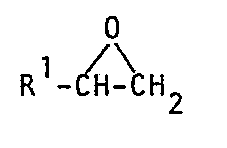
- oxiranes of the formula are used where R is as defined above, polymerization products are formed which predominantly have secondary hydroxyl groups.
- the polypropylene oxides have the advantage of greater hydrophobicity and are therefore preferred for various fields of application, for example for the production of special polyurethane foams.
- the secondary hydroxyl groups are significantly less reactive than the primary hydroxyl groups.
- the reactivity of primary hydroxyl groups with isocyanates compared to secondary hydroxyl groups with isocyanates is 1: 0.3.
- This reduced reactivity is particularly noticeable when compounds with primary hydroxyl groups are also reacted simultaneously with the reaction of such polymerization products with secondary hydroxyl groups with isocyanates.
- These primary hydroxyl groups react preferentially with the isocyanates. This leads to the formation of homopolyme risks instead of heteropolymers with a statistically controlled structure. In extreme cases you can. the compounds with secondary hydroxyl groups completely escape the reaction. This naturally worsens the application properties of the products, since such unreacted compounds can act, for example, as plasticizers, migrate in the polymers and can show the known bleeding effects.
- the physical properties of the polymers are correspondingly impaired. The tensile strength and extensibility of the polymers as examples of such properties are greatly reduced.
- oxiranes of the above formula I have very desirable application properties in the form of their polymers, there is a desire and the task of converting these polymers into a form in which their reactivity is increased. There is a particular need for polymers of such oxiranes to produce which have at least one primary hydroxyl group.
- a polyhydric alcohol having at least three hydroxyl groups, of which at least two hydroxyl groups are present in the form of an actal or ketal and. at least one of these two hydroxyl groups is a primary one. Hydroxyl group is attached and the acetal or ketal group cleaves after the addition in a manner known per se by the action of acid.
- the group R 1 can be an alkyl group with 1 to 30 carbon atoms.
- R 1 is preferably an alkyl group having 1 to 4, in particular 1 to 2, carbon atoms. If R 1 is a methyl group, it is propylene oxide.
- the alkyl group can optionally be halogenated and have, for example, chlorine radicals. An example of such a halogenated group R is the CH 2 Cl group.
- the alkyl group can also be unsaturated. An example of such an unsaturated alkyl group is the vinyl or allyl group.
- the group R 1 can also be a phenyl group which is optionally substituted.
- the oxirane is then styrene oxide.
- the group R can also have the meaning of the group -CH 2 -OR 2 , where R 2 is an alkyl or alkenyl group.
- R 2 is an alkyl or alkenyl group.
- An example of a suitable alkyl group is the butyl group;
- An example of a suitable alkenyl group is the vinyl or allyl group.
- the meaning of the group R can be the same or different.
- a polymer can be built up from structural units in which R has the meaning of a methyl group and from other structural units in which R has the meaning of the group CH 2 0R 2 in which R is a vinyl group.
- R has the meaning of a methyl group
- R has the meaning of the group CH 2 0R 2 in which R is a vinyl group.
- all other combinations are also possible. They are essentially determined by the properties that the polymer to be produced should have.
- the oxiranes of the general formula I are added to alcohols having at least three hydroxyl groups, at least two of which are present in the form of an acetal or ketal. At least one of these two hydroxyl groups must be a primary one. Be hydroxyl group. Examples of such alcohols are: glycerol, pentaerythritol, pentites (arabitol, adonitol, xylitol), hexites (sorbitol, mannitol, dulcitol).
- acetals or ketals can be obtained from the underlying alcohols in a simple manner by reaction with aldehydes, such as formaldehyde, acetaldehyde, n-butyraldehyde, isobutyraldehyde, n-valeraldehyde, iso-valeraldehyde, n-caproaldehyde, n-heptaldehyde, stearaldehyde, Acrolein, crotonaldehyde, benzaldehyde, furfurol, or ketones, such as methyl ethyl ketone, methyl propyl ketone, diethyl ketone, hexanone, methyl isobutyl ketone, dipropyl ketone, diisopropyl ketone, di-n-butyl ketone, diisobutyl ketone, stearone, chloroacetone, benzlorophenone
- 2,2-dimethyl-1,3-diaxolane-4 methanol is particularly preferred.
- Such catalysts are complex compounds, in particular Zn-hexacyano-ferrate (III), Zn-hexacyano-ferrite (II), Ni (II) -hexacyano-ferrate (II), Ni (III) -hexacyano-ferrate (III), Zn -hexacyano-ferrate (III) hydrate, Co (II) hexacyano-ferrate (III), Ni (II) -hexacyano-ferrate (III) hydrate, Fe (II) -hexacyano-ferrate (III), Co (II ) - hexacyano-cobaltate (III), Zn-hexacyano-cobaltate (III) hydrate, which are complexed with a substantially water-soluble, saturated, acyclic, aliphatic polyether, which is free of active hydrogen atoms and has a molecular weight up to about 400 .
- the acetal or ketal group is cleaved in a manner known per se, for example by the action of dilute aqueous hydrochloric acid or sulfuric acid in the presence of a particularly lower alcohol. If possible, the excess acid is separated off by distillation or otherwise neutralized with alkali metal hydroxides or alkali metal carbonates. The lower alcohol used is also distilled off. This produces a 1,2-diol, i.e. a compound in which a primary and a secondary hydroxyl group are present vicinally.
- a compound of the general formula is initially formed where m is an integer> 1. Cleavage of the ketal results in a compound of the formula which has a primary hydroxyl group and two secondary hydroxyl groups.
- the primary hydroxyl group is now accessible to the desired further reaction.
- the reaction also sterically hinders the neighboring secondary hydroxyl group.
- the reactivity of the neighboring secondary hydroxyl group, which is already reduced per se, is thereby further reduced.
- the products produced according to the invention can be used directly as surfactants.
- the compounds produced according to the invention have the advantage of being easy to produce.
- the compounds produced according to the invention are also valuable starting products for further reactions, e.g. as an alcoholic component in the production of polyurethanes.
- Hydroxyl groups, e.g. 1,4-butanediol the reactivity of the compounds obtained according to the invention is now comparable with the butanediols. This results in a statistical structure of the block copolymers which have particularly favorable chemical and physical properties.
- the compounds prepared according to the invention have at least one primary hydroxyl group. However, it is often desirable for the polymers to have several primary hydroxyl groups. This can be done in a relatively simple manner in the context of a further development of the method according to the invention by the polyadditi reaction product of the oxirane before the splitting of the acetal or ketal group with at least difunctional compounds which are reactive with respect to the free hydroxyl groups.
- Compounds with isocyanate groups are particularly suitable as reactive, at least difunctional compounds, since the urethanes formed are particularly stable under the conditions of acidic cleavage of the acetals or ketals.
- the reactive compound used is preferably a polyisocyanate of the general formula Q 1 (NCO), in which p is a number> 2, Q 1 is an optionally substituted p-valent hydrocarbon group or a group of the formula Q 2- ZQ 2 , where Q 2 is a at least divalent hydrocarbon group and Z the radical -0-, -CO-, -S-, -SQ 2 S- or is.
- Q 1 NCO
- Q 1 is an optionally substituted p-valent hydrocarbon group or a group of the formula Q 2- ZQ 2
- Q 2 is a at least divalent hydrocarbon group and Z the radical -0-, -CO-, -S-, -SQ 2 S- or is.
- polyisocyanates examples include 2,4- and 2,6-tolylene diisocyanate and mixtures of these isocyanates, diphenylmethane-4,4'-diisocyanate; 1,3- and 1,4-phenylene diisocyanate; Naphthylene-1,5-diisocyanate; 1,4-tetramethylene diisocyanate; 1,6-hexamethylene diisocyanate; Cyclohexane-1,3- and -1,4-diisocyanate; iso-phorone diisocyanate triphenylmethane-4,4'-and -4,2-triisocyanate; 2,4,6-toluene triisocyanate; Thiophosphorus tris (p-isocyanatophenyl ester); Reaction products of tritethylolprapan with tolylene diisocyanate or with isophore diisocyanate, reaction products of hexamethylene-1,6-diis
- difunctional or higher-functional acid chlorides such as e.g. Use adipic acid dichloride, phthalic acid dichloride, terephthalic acid dichloride.
- Suitable coupling partners are di- or tri- or tetrahalosilanes or siloxanes or the corresponding alkoxysilanes.
- Di- or polyhaloalkanes such as e.g. Dibromomethane; 1,2-dibromoethane; 1,4-dibromobutane; Chlorobromomethane.
- the compounds produced according to this embodiment of the process according to the invention have two or more primary hydroxyl groups and are correspondingly reactive.
- the polyether produced according to 1 A) is mixed in a weight ratio of 2: 1: with 1 N aqueous hydrochloric acid and ethanol and heated under reflux at 80 ° C. for 4 h. After completion of the reaction, all volatile components in the area. distilled from 70 to 80 ° C under a vacuum of 10 mm Hg column; Residual amounts of water are removed azeotropically with toluene.
- the hydroxyl value of the obtained P olyrelihers is 55.5, the water content is below 0.01%.
- the determination of the ratio of primary and secondary hydroxyl groups is carried out by F 19- K ernresonanzspektro- copy of the esterification with trifluoroacetic acid. The percentage distribution is 30% (31% theor.) Primary and 70 % (69% theor.) Secondary hydroxyl groups.
- thermocouple Ni / Ni-Cr
- x, y recorder The time from the start of the reaction to the maximum temperature is taken as a measure of the reactivity of the polyether; this time is approximately 16 to 18 minutes.
- a mixture of 100 g (0.034 mol) of a polypropylene oxide diol (prepared in the usual manner by alkaline catalyzed addition of propylene oxide to 1,4-butanediol ( M n 2970), 9.9 g (0.035 mol) of MDI and 0.2 g of triethylenediamine are treated for comparison as the mixture with the polyether according to the invention.
- the time to the maximum temperature is 20 to 24 minutes.
- 100 g (0.034 mol) of the polyether obtained in 1 B) are mixed with 10 g (0.111 mol) of 1,4-butanediol, 60.7 g (0.17 mol) of a liquid polyurethane prepolymer based on MDI, ethylene glycol and carbodiimide and 0 , 09 g of triethylenediamine in a polyethylene cup. stirred vigorously and freed from stirred-in air bubbles in a vacuum at 10 mm Hg column at room temperature. The mixture is kept at room temperature for 24 hours and finally heated to 120 ° C. for 2 hours.
- the polyether prepared according to 2A) is mixed in a weight ratio of 1: 1: 1 with 1N aqueous sulfuric acid and ethanol and heated under reflux for 5 hours at 80 ° C. After the reaction has ended, the still hot reaction mixture is made up with 50% aqueous Sodium hydroxide solution neutralized. All volatile constituents in the range from 70 to 80 ° C. are then distilled off under a vacuum of 10 mm Hg column. The resulting Na 2 SO 4 can be completely separated with the aid of a silicate-based filter aid.
- the hydroxyl number of the polyether obtained is 76.3, the water content is below 0.1%.
- the determination of the ratio of primary to secondary hydroxyl groups gives a distribution of 29.5% (31% theor.) Primary and 70.5% (69% theor.) Secondary hydroxyl groups.
- a mixture of 100 g (0.045 mol) of the polyether obtained in accordance with 2B), 10 g (0.111 mol) of 1,4-butanediol and 67.7 g (0.19 mol) of a liquid polyurethane prepolymer based on MDI, ethylene glycol and carbodiimide and 0.08 g of triethylenediamine is treated according to Example 1 C 2 ).
- the tensile strength of the test specimens is 14.9 N / mm 2 and the elongation at break is 181%.
- the polyether coupled according to 3 B is mixed in a weight ratio of 2: 1: 1 1 with 1 N aqueous hydrochloric acid and ethanol and heated under reflux at 80 ° C. for 4 hours. After the reaction has ended, all volatile constituents in the range from 70 to 80 ° C. are distilled off under a vacuum of 10 mm Hg column; Residual amounts of water are removed azeotropically with toluene.
- the hydroxyl number of the polyether obtained is 41.2, which corresponds to a molecular weight of 5450 with an assumed functionality of 4.
- 100 g (approx. 0.019 mol) of a polyether which has been prepared as a catalyst by addition of propylene glycol to butanediol-1, 4 with Zn 3 [Co (CN) 6 ], complexed with dinethyl glycol, and a molecular weight of 5250 has, 5.60 g (0.02 mol) of MDI and 0.2 g of triethylenediamine treated as the mixture containing the polyether according to the invention.
- the time to the maximum temperature is 28 to 30 minutes.
- the residual monomer is removed at 80 to 90 ° C. under vacuum.
- 75 g of water are then first added at 80 ° C. for 0.5 h and then 10 g of 30% phosphoric acid in the course of 20 min; it is stirred for 0.25 h and adjusted to pH 7 with NaH 2 PO 4 .
- the water is then distilled off at 80 to 90 ° C. in a vacuum of 10 mm Hg column and the product is filtered off with 10 g of a filter aid based on silicate.
- the hydroxyl number of the product obtained is 56.3; which corresponds to a molecular weight of 996 with an assumed functionality of 1.
- the polyether coupled according to 4 B) is mixed in a weight ratio of 2: 1: 1 with 1N aqueous hydrochloric acid and ethanol and heated under reflux at 80 ° C. for 4 hours. After the reaction has ended, all volatile constituents in the range from 70 to 80 ° C. are distilled off under a vacuum of 10 mm Hg column; Residual amounts of water are removed azeotropically with toluene.
- the hydroxyl number of the polyether obtained is 104.8, which corresponds to a molecular weight of 2140 with an assumed functionality of 4.
- the determination of the ratio of primary and secondary hydroxyl groups gives 48.2% (50% theor.) Primary and 51.8% (50% theor.) Secondary hydroxyl groups according to F 19 nuclear magnetic resonance spectroscopy.
- a mixture of 104 g (0.05 mol) of the polyether obtained according to 4 C), 10.4 g (0.111 mol) of 1,4-butanediol and 60.8 g (0.169 mol) of a liquid Polyurethane prepolymers based on MDI, ethylene glycol and carbodiimide and 0.05 g of triethylenediamine are treated according to Example 3 C 2 ).
- the tensile strength of the test specimens is 18.1 N / mm 2 and the elongation at break is 230%.
- the hydroxyl number of the product obtained is 27.9, which, assuming a functionality of 1, corresponds to a molecular weight of 2010.
- the hydroxyl number of the resulting product is 2.4.
- the product obtained under B) is in a weight ratio of 2: 1 50% aqueous acetic acid heated to 80 ° C for 6 h and then the volatile components were distilled off at 80 to 90 ° C under a vacuum of 10 mm Hg column.
- the hydroxyl number of the colorless, clear product is 55.7, which corresponds to a molecular weight of 4030 with an assumed functionality of 4.
- a mixture of 100 g (approx. 0.025 mol) of the polyether obtained according to 5 C), 10 g (0.111 mol) of 1,4-butanediol and 51.0 g (0.143 mol) of a liquid polyurethane prepolymer based on MDI, ethylene glycol and carbodiimide and 0.2 g of triethylenediamine is treated according to Example 1 D 2 ).
- the tensile strength of the test specimens is 15.2 N / mm 2 and the elongation at break is 420%.
- the intermolecularly linked polyether according to 6 A) is mixed in a weight ratio of 2: 1: 1 with 1 N aqueous hydrochloric acid and ethanol and heated under reflux at 80 ° C. for 4 hours. After the reaction has ended, all volatile constituents in the range from 70 to 80 ° C. are distilled off under a vacuum of 10 mm Hg column; Residual amounts of water are removed azeotropically with toluene.
- the hydroxyl number of the polyether obtained is 104.8, the water content is below 0.01%.
- the determination of the ratio of primary and secondary hydroxyl groups gives 48.2% (50% theor.) Primary and 51.8% according to F 19 nuclear magnetic resonance spectroscopy. (50% theor.) Secondary hydroxyl groups.
- a mixture of 104 g (0.05 mol) of the polyether obtained according to 6 B ), 10.4 g (0.111 mol) of 1,4-butanediol and 60.8 g (0.169 mol) of a liquid polyurethane prepolymer based on MDI, ethylene glycol and carbodiimide and 0.05 g of triethylenediamine are treated according to Example 1 C 2 ).
- the tensile strength of the test specimens is 18.1 N / mm 2 and the elongation at break is 230%.
Landscapes
- Chemical & Material Sciences (AREA)
- Organic Chemistry (AREA)
- Health & Medical Sciences (AREA)
- Chemical Kinetics & Catalysis (AREA)
- Medicinal Chemistry (AREA)
- Polymers & Plastics (AREA)
- Engineering & Computer Science (AREA)
- Materials Engineering (AREA)
- General Chemical & Material Sciences (AREA)
- Polyurethanes Or Polyureas (AREA)
Abstract

Description
- Die Erfindung betrifft ein Verfahren zur Herstellung von Derivaten von Polymerisaten der Struktureinheit

- wobei R eine gegebenenfalls halogenierte Kohlenwasserstoffgruppe mit 1 bis 30 Kohlenstoffatomen oder die Gruppe -CH2-O-R2, in der R2 eine Alkyl- oder Alkenylgruppe ist, bedeutet,
- Bei der Anlagerung von Rthylenoxid an Verbindungen mit acidem Wasserstoff entstehen Polymerisationsprodukte mit endständigen primären Hydroxylgruppen, die weiteren Reaktionen leicht zugänglich sind. Verwendet man jedoch Oxirane der Formel

entstehen Polymerisationsprodukte, welche vorwiegend sekundäre Hydroxylgruppen aufweisen. Das einfachste bekannte Oxiran dieser Formel ist Propylenoxid (R 1 = CH3). Verglichen mit Polyäthylenoxiden haben die Polypropylenoxide den Vorteil größerer Hydrophobie und werden deshalb für verschiedene Anwendungsgebiete, z.B. für die Herstellung spezieller Polyurethanschaumstoffe, bevorzugt werden. Die sekundären Hydroxylgruppen sind jedoch deutlich weniger reaktiv als die primären Hydroxylgruppen. So verhält sich beispielsweise die Reaktivität von primären Hydroxylgruppen mit Isocyanaten im Vergleich zu sekundären Hydroxylgruppen mit Isocyanaten wie 1 : 0,3. Diese verringerte Reaktionsfähigkeit macht sich insbesondere dann störend bemerkbar, wenn bei der Umsetzung derartiger Polymerisationsprodukte mit sekundären Hydroxylgruppen mit Isocyanaten gleichzeitig auch Verbindungen mit primären Hydroxylgruppen umgesetzt werden. Diese primären Hydroxylgruppen reagieren bevorzugt mit den Isocyanaten. Es kommt deshalb zur Bildung von Homopolymsrisaten anstelle von Heteropolymerisaten mit statistisch geregeltem Aufbau. Im Extremfalle können. sich die Verbindungen mit sekundären Hydroxylgruppen ganz der Umsetzung entziehen. Hierdurch werden die anwendungstechnischen Eigenschaften der Produkte, natürlich verschlechtert, da derartige, nicht umgesetzte Verbindungen z.B. als Weichmacher fungieren können, in den Polymerisaten wandern und die bekannten Ausschwitzeffekte zeigen können. Entsprechend werden auch die physikalischen Eigenschaften der Polymerisate beeinträchtigt. Zugfestigkeit und Dehnbarkeit der Polymerisate als Beispiele solcher Eigenschaften sind stark herabgesetzt. - Da Oxirane der obengenannten Formel I aber in Form ihrer Polymerisate sehr erwünschte anwendungstechnische Eigenschaften .aufweisen, besteht der Wunsch und die Aufgabe, diese Polymerisate in eine Form zu überführen, in der ihre Reaktivität gesteigert ist..Es besteht insbesondere das Bedürfnis, Polymerisate derartiger Oxirane herzustellen, welche mindestens eine primäre Hydroxylgruppe aufweisen.
- Man hat bereits versucht, z.B. an Polymerisate des Propylenoxids endständig Äthylenoxid anzulagern, um auf diese Art am Ende der Kette des Polymerisates Einheiten mit primären Hydroxylgruppen zu bilden. Derartige Produkte sind auch im Handel erhältlich. Sie haben jedoch den Nachteil, daß durch die zusätzliche Anlagerung des Äthylenoxids die Produkte hydrophiler werden und außerdem eine Homopolymerisation des Äthylenaxids konkurrierend erfolgen kann, so daß immer nur ein Teil des Äthylenoxids an die Kette des Propylenoxids angelagert wird und durch die zusätzliche Anwesenheit des Polyäthylenoxids die anwendungstechnischen Eigenschaften weiter beeinträchtigt werden. Hierdurch kann somit die der Erfindung zugrunde liegende Aufgabe nicht gelöst werden.
- Überraschenderweise hat sich nunmehr gezeigt, daß diese Aufgabe in einfacher Weise durch das erfindungsgemäße Verfahren gelöst werden kann.
- Dieses ist dadurch gekennzeichnet, daß man ein Oxiran der allgemeinen Formel

- in an sich bekannter Weise an einen mindestens drei Hydroxylgruppen aufweisenden mehrwertigen Alkohol, von dem mindestens zwei Hydroxylgruppen in Form eines Actals oder Ketals vorliegen und. mindestens eine dieser beiden Hydroxylgruppen eine primäre. Hydroxylgruppe ist, anlagert und die Acetal- oder.Ketalgruppe nach der Anlagerung in an sich bekannter Weise durch Einwirkung von Säure spaltet.
- Die Gruppe R1 kann eine.Alkylgruppe mit 1 bis 30 Kohlenstoffatomen sein. Bevorzugt ist R1 eine Alkylgruppe mit 1 bis 4, insbesondere 1 bis 2, Kohlenstoffatomen. Ist R1 eine Methylgruppe, handelt es sich um Propylenoxid. Die Alkylgruppe kann gegebenenfalls halogeniert sein und z.B. Chlorreste aufweisen. Beispiel einer solchen halogenierten Gruppe R ist die CH2Cl-Gruppe. Die Alkylgruppe kann auch ungesättigt sein. Beispiel einer solchen ungesättigten Alkylgruppe ist die Vinyl- oder Allylgruppe.
- Die Gruppe R1 kann auch eine Phenylgruppe, die gegebenenfalls substituiert ist, sein. Im einfachsten Falle handelt es sich bei dem Oxiran dann um Styroloxid.
- Die Gruppe R kann auch die Bedeutung der Gruppe -CH2-O-R2 haben, wobei R2 eine Alkyl- oder Alkenylgruppe ist. Beispiel einer geeigneten Alkylgruppe ist die Butylgruppe; Beispiel einer geeigneten Alkenylgruppe ist die Vinyl- oder Allylgruppe.
- Innerhalb des Polymerisats kann die Bedeutung der Gruppe R gleich oder verschieden sein. So kann beispielsweise ein Polymerisat aus Struktureinheiten aufgebaut sein, bei denen R die Bedeutung einer Methylgruppe hat sowie aus anderen Struktureinheiten, bei denen R die Bedeutung der Gruppe CH20R2, in der R eine Vinylgruppe ist, hat. Selbstverständlich sind auch alle anderen Kombinationen mögliche sie werden im wesentlichen von den Eigenschaften bestimmt, die das herzustellende Polymerisat aufweisen soll.
- Die Anlagerung der Oxirane der allgemeinen Formel I erfolgt an Alkohole mit mindestens drei Hydroxylgruppen, von denen mindestens zwei Hydroxylgruppen in Form eines.Acetals oder Ketals vorliegen. Mindestens eine dieser beiden Hydroxylgruppen muß eine primäre. Hydroxylgruppe sein. Beispiele derartiger Alkohole sind: Glycerin, Pentaerythrit, Pentite (Arabit, Adonit, Xylit), Hexite (Sorbit, Mannit, Dulcit).
- Die Acetale bzw. Ketale können aus den zugrunde liegenden Alkoholen in einfacher Weise durch Umsetzung mit Aldehyden, wie Formaldehyd, Acetaldehyd, n-Butyraldehyd, iso-Butyraldehyd, n-Valeraldehyd, iso-Valeraldehyd, n-Caproaldehyd, n-Heptaldehyd, Stearaldehyd, Acrolein, Crotonaldehyd, Benzaldehyd, Furfurol, oder Ketonen, wie Methyläthylketon, Methylpropylketon, Diäthylketon, Hexanon, Methylisobutylketon, Dipropylketon, Diisopropylketon, Di-n-butylketon, Diisobutylketon, Stearon, Chloraceton, Dichloraceton, Cyclohexanon, Phoron, Benzophenon, Acetophenon, hergestellt werden.
- Von den aus den genannten mehrwertigen Alkoholen und Ketonen erhaltenen Verbindungen ist insbesondere das 2,2-Dimethyl-1,3-diaxolan-4 methanol bevorzugt.
- Die Anlagerung erfolgt in an sich bekannter Weise mit Katalysatoren, welche den Acetal- oder Ketalring nicht aufspalten. Es verbietet sich somit die Verwendung saurer Katalysatoren. Die Anlagerung gelingt deshalb unter Verwendung der für derartige Anlagerungsreaktionen bekannten basischen Katalysatoren, wie z.B. Natriumhydroxid, Kaliumhydroxid, Calciumhydroxid, Magnesiumhydroxid sowie deren Alkoholate, insbesondere deren Methanolate. Zur Herstellung von Polymerisationsprodukten besonders hohen Molekulargewichtes haben sich die aus den US-Patentschriften 3 278 457, 3 278 458 und 3 278 459 bekannten Doppe7metallcyanatkca-nplex- katalysatoren besonders bewährt. Beispiele derartiger Katalysatoren sind Komplexverbindungen, insbesondere Zn-hexacyano-ferrat(III), Zn-hexacyano-ferrit(II), Ni(II)-hexacyano-ferrat(II), Ni(III)-hexacyano-ferrat (III) , Zn-hexacyano-ferrat (III) -hydrat, Co (II) hexacyano-ferrat (III), Ni (II) -hexacyano-ferrat (III) -hydrat, Fe (II) -hexacyano-ferrat(III), Co (II) - hexacyano-cobaltat(III), Zn-hexacyano-cobaltat(III)-hydrat, die mit einem im wesentlichen wasserlöslichen, gesättigten, acyclischen, aliphatischen Polyäther komplexiert sind, der frei von aktiven Wasserstoffatomen ist und ein Molekulargewicht bis zu etwa 400 aufweist.
- Nach Anlagerung der gewünschten Oxiranmenge und Erreichen des geforderten Molekulargewichtes wird die Acetal- bzw. Ketalgruppe in an sich bekannter Weise sauer, z.B. durch Einwirken verdünnter, wäßriger Salzsäure oder Schwefelsäure in Gegenwart eines insbesondere niederen Alkohols gespalten. Die überschüssige Säure wird, falls möglich, destillativ abgetrennt oder sonst mit Alkalihydroxiden oder Alkalicarbonaten neutralisiert. Der verwendete niedere Alkohol wird ebenfalls abdestilliert. Es entsteht dabei ein 1,2-Diol,.d.h. eine Verbindung, bei der vicinal eine primäre und eine sekundäre Hydroxylgruppe vorliegt. Lagert man z.B. Propylenoxid an 2,2-Dimethyl-1,3-dioxolan-4-methanol an, entsteht zunächst eine Verbindung der allgemeinen Formel


- Die primäre Hydroxylgruppe ist nun der gewünschten weiteren Umsetzung zugänglich. Durch die Umsetzung wird die benachbarte sekundäre Hydroxylgruppe zusätzlich sterisch behindert. Hierdurch wird die an sich schon verminderte Reaktivität der benachbarten sekundären Hydroxylgruppe noch weiter vermindert.
- Die erfindungsgemäß hergestellten Produkte können direkt als Tenside verwendet werden. So ist es beispielsweise bekannt, langkettige 1,2-Diole in Form von hydrolysierten a-Olefinepoxiden mit höheren Alkylgruppen in der Kosmetik zu verwenden (A. Rutzen "Fette, Seifen, Anstrichmittel", 82, (1980), 23). Im Gegensatz zu diesen Verbindungen haben die erfindungsgemäß hergestellten Verbindungen den Vorteil der leichten Herstellbarkeit.
- Die erfindungsgemäß hergestellten Verbindungen sind daneben wertvolle Ausgangsprodukte für weitere Umsetzungen, z.B. als alkoholische Komponente bei der Herstellung von Polyurethanen.. So ist es beispielsweise möglich, die erfindungsgemäß erhaltenen Verbindungen mit mehrfunktionellen Isocyanaten umzusetzen und diese Umsetzung gleichzeitig zusammen mit anderen Verbindungen mit primären. Hydroxylgruppen, z.B. Butandiol-1,4, durchzuführen, wobei nun die Reaktivität der erfindungsgemäß erhaltenen Verbindungen mit den Butandiolen vergleichbar ist. Hierdurch kommt es zu einem statistischen Aufbau der Blockmischpolymerisate, die besonders günstige chemische und physikalische Eigenschaften aufweisen.
- Die erfindungsgemäß hergestellten Verbindungen weisen mindestens eine primäre Hydroxylgruppe auf. Häufig ist es jedoch erwünscht, daß die Polymerisate mehrere primäre Hydroxylgruppen aufweisen. Dies kann in verhältnismäßig einfacher Weise im Rahmen einer weiteren Ausbildung des erfindungsgemäßen Verfahrens dadurch geschehen, daß man das Polyadditionsprodukt des Oxirans vor der Aufspaltung der Acetal- oder Ketalgruppe mit in bezug auf die freien Hydroxylgruppen reaktionsfähigen, mindestens difunktionellen Verbindungen umsetzt.
- Als reaktionsfähige, mindestens difunktionelle Verbindungen sind insbesondere Verbindungen mit Isocyanatgruppen geeignet, da die gebildeten Urethane unter den Bedingungen der sauren Spaltung der Acetale bzw. Ketale besonders stabil sind.
- Vorzugsweise verwendet man als reaktive Verbindung ein Polyisocyanat der allgemeinen Formel Q1(NCO) , in welcher p eine Zahl > 2 ist, Q1 eine gegebenenfalls substituierte p-wertige Kohlenwasserstoffgruppe oder eine Gruppe der Formel Q2-Z-Q2, wobei Q2 eine mindestens zweiwertige Kohlenwasserstoffgruppe und Z der Rest -0-, -CO-, -S-, -SQ2S- oder

- Beispiele besonders geeigneter Polyisocyanate sind 2,4- und 2,6-Toluylendiisocyanat sowie Gemische dieser Isocyanate, Diphenylmethan-4,4'-diisocyanat; 1,3- und 1,4-Phenylendiisocyanat; Naphthylen-1,5-diisocyanat; 1,4-Tetramethylendiisocyanat; 1,6-Hexamethylendiisocyanat; Cyclohexan-1,3- und -1,4-diisocyanat; iso-Phorondiisocyanati Triphenylmethan-4,4'-und -4,2-triisocyanat; 2,4,6-Toluoltriisocyanat; Thiophosphortris(p-iso- cyanatophenylester); Umsetzungsprodukte von Tritnethylolprapan mit Toluylendiisocyanat oder mit iso-Phorondiisocyanat, Umsetzungsprodukte von Hexamethylen-1,6-diisocyanat und Wasser.
- Anstelle der Isocyanate kann man auch difunktionelle oder höherfunktionelle Säurechloride, wie z.B. Adipinsäuredichlorid, Phthalsäuredichlorid, Terephthalsäuredichlorid, verwenden.
- Andere geeignete Kopplungspartner sind Di- oder Tri- oder Tetrahalogensilane oder -siloxane oder die entsprechenden Alkoxysilane. Ferner geeignet sind Di- oder Polyhalogenalkane, wie z.B. Dibrommthan; 1,2-Dibromäthan; 1,4-Dibrombutan; Chlorbrommethan.
- Nach der Kopplung der zunächst hergestellten Polymerisate durch die vorgenannten Verknüpfungsprinzipien erfolgt die Spaltung der Acetal- bzw.
- Ketalgruppen durch Einwirkung von Säure. Dabei entstehen schließlich Verbindungen, z.B. folgender Struktur


- Das erfindungsgemäße Verfahren wird anhand der folgenden Beispiele noch näher erläutert.
- In 264 g (2 Mol) 2,2-Dimethyl-1,3-dioxolan-4-irnthanol werden mit einem scherkraftreichen Rührer 12,3 g Zn3Co(CN)6 komplexiert mit Dimethylglykol als Katalysator dispergiert. Das Gemisch wird in einen Reaktor mit einem zwangsfördernden Umlaufsystem gebracht. Nach sorgfältiger Spülung mit Reinstickstoff wird der Reaktor auf 110°C geheizt und 5900 g (101,5 Mol) Propylenoxid so schnell zugegeben, daß die Reaktorinnentemperatur einen Wert von 120°C und der Druck einen Wert von 3 bar nicht überschreiten. Nach vollständiger Einleitung des Propylenoxids wird die Temperatur solange auf 120°C gehalten, bis gleichbleibender Druck das Ende der Nachreaktion anzeigt. Nach Beendigung der Reaktion wird bei 80 bis 90°C unter Vakuum die Entfernung des Restmonomeren vorgenommen.
- Die Hydroxylzahl des erhaltenen Produktes beträgt 19,1 (a M = 2940) und der Wassergehalt 0,1 %.
- Der gemäß 1 A) hergestellte Polyäther wird im Gewichtsverhältnis 2 : 1 : mit 1 n wäßriger Salzsäure und Äthanol vermischt und für 4 h bei 80°C unter Rückfluß erhitzt. Nach Beendigung der Reaktion werden alle flüchtigen Bestandteile im Bereich. von 70 bis 80°C bei einem Vakuum von 10 mm Hg-Säule abdestilliert; Restmengen an Wasser werden azeotrop mit Toluol entfernt.
- Die Hydroxylzahl des erhaltenen Polyäthers beträgt 55,5, der Wassergehalt liegt unter 0,01 %. Die Bestimmung des Verhältnisses von primären und sekundären Hydroxylgruppen erfolgt durch F 19- Kernresonanzspektro- skopie über die Veresterung mit Trifluoressigsäure. Als prozentuale Verteilung ergeben sich zu 30 % (31 % theoret.) primäre und 70 % (69 % theoret.) sekundäre Hydroxylgruppen.
- 100 g (0,034 Mol) des gemäß Beispiel 1 B) erhaltenen Polyäthers werden mit 14,5 g (0,052 Mol) 4,4'-Diphenylmethandiisocyanat (MDI) intensiv vermischt. Gleichzeitig wird ein Thermoelement (Ni/Ni-Cr) in die Reaktionslösung gebracht und der Temperatur-Zeit-Verlauf der exothermen Reaktion mit Hilfe eines x,y-Schreibers aufgenommen. Die Zeit vom Reaktionsbeginn bis zum Maximum der Temperatur wird als Maß für die Reaktivität des Polyäthers betrachtet; diese Zeit liegt bei etwa 16 bis 18 min.
- Ein Gemisch aus 100 g (0,034 Mol) eines in üblicher.Weise durch alkalisch katalysierte Anlagerung von Propylenoxid an Butandiol-1,4 hergestellten Polypropylenoxiddiols (
M n = 2970), 9,9 g (0,035 Mol) MDI und 0,2 g Triäthylendiamin wird zum Vergleich wie das Gemisch mit dem erfindungsgemäßen Polyäther behandelt. Die Zeit bis zum Temperatur-Maximum beträgt 20 bis 24 min. - 100 g (0,034 Mol) des gemäß 1 B) erhaltenen Polyäthers werden mit 10 g (0,111 Mol) Butandiol-1,4, 60,7 g (0,17 Mol) eines flüssigen Polyurethanpräpolymeren auf Basis von MDI, Äthylenglykol und Carbodiimid und 0,09 g Triäthylendiamin in einem Polyäthylen-Becher. intensiv verrührt und im Vakuum bei 10 mm Hg-Säule bei Raumtemperatur von eingerührten luftblasen befreit. Der Ansatz wird 24 h bei Raumtemperatur aufbewahrt und schließlich auf 120°C 2 h lang erhitzt. Nach Abkühlung werden 1 mm dicke Probehörper mit Hilfe einer Lederspaltmaschine geschnitten und der Zugdehnungsmessung nach DIN 53 455 unterworfen. Die Zugfestigkeit ergibt sich zu 13,6 N/mm bei einer Bruchdehnung von 208 %.
- Demgegenüber werden mit Gemischen aus 100 g (0,034 Mol) des oben be- schriebenen Polypropylenoxiddiols des Standes der Technik (
M n = 2970), 10 g (0,111 Mol) Butandiol-1,4 und 54,6 g (0,15 Mol) Polyurethanpräpolymeren und 0,08 g Triäthylendiamin nur klebrig-pastöse, zähe Pro- dukte erhalten. - In 264 g (2 Mol) 2,2-Dinethyl-1,3-dioxolan-4-methanol werden bei 80°C 15,6 g (0,2 Mol) Kaliummethylat im Reaktor in Lösung gebracht. Danach wird wie in Beispiel 1 A) verfahren, wobei 4360 g (75,1 Mol) Propylenoxid angelagert werden.
- Nach Beendigung der Reaktion werden 90 g Wasser bei. 80°C für 0,5 h eingerührt. Anschließend werden 65 g 30 %ige Phosphorsäure im Verlauf von 20 min zugegeben; es wird 0,25 h lang gerührt und mit NaH2PO4 auf pH 7 eingestellt. Danach wird das Wasser bei 80 bis 90°C in einem Vakuum von 10 mm Hg-Säule abdestilliert und das Produkt mit 10 g eines Filterhilfsmittels auf Silikatbasis abfiltriert.
- Die Hydroxylzahl des erhaltenen Produktes beträgt 27,9 (
M n = 2010) und der Wassergehalt 0,15 %. - Der gemäß 2 A) hergestellte Polyäther wird im Gewichtsverhältnis 1 : 1 : 1 mit 1 n wäßriger Schwefelsäure und Äthanol vermischt und 5 h lang bei 80°C unter Rückfluß erhitzt.. Nach Beendigung der Reaktion wird das noch heiße Reaktionsgemisch mit 50 %iger wäßriger Natronlauge neutralisiert. Anschließend werden alle flüchtigen Bestandteile im Bereich von 70 bis 80°C bei einem Vakuum von 10 mm Hg-Säule abdestilliert. Das anfallende Na2SO4 läßt sich mit Hilfe eines Filterhilfsmittels auf Silikatbasis in der Wärme vollständig abscheiden.
- Die Hydroxylzahl des erhaltenen Polyäthers beträgt 76,3, der Wassergehalt liegt unter 0,1 %. Die Bestimmung des Verhältnisses von primären zu sekundären Hydroxylgruppen ergibt eine Verteilung von 29,5 % (31 % theoret.) primären und 70,5 % (69 % theoret.) sekundären Hydroxylgruppen.
- C1) Bestimmung der Reaktivität eines Polyäther-Diisocyanat-Gemisches 100 g (0,045 Mol) des gemäß Beispiel 2 B) erhaltenen Polyäthers werden mit 20,0 g (0,072 Mol) MDI und 0,2 g Triäthylendiamin vermischt und gemäß Beispiel 1 C1) aus dem Temperatur-Zeit Verlauf ein Temperatur-Maximum nach 12 bis 14 min ermittelt.
- Für eine Mischung aus 100 g (0,049 Mol) eines Polypropylenoxiddiols mit
M = 2020, 14,5 g (0,052 Mol) MDI und 0,2 g Triäthylendiamin wird im Vergleichsversuch eine Zeit bis zum Temperatur-Maximum von 22 bis 24 min ermittelt. - Ein Gemisch aus 100 g (0,045 Mol) des gemäß 2 B) erhaltenen Polyäthers, 10 g (0,111 Mol) Butandiol-1,4 und 67,7 g (0,19 Mol) eines flüssigen Polyurethanpräpolymren auf Basis von MDI, Äthylenglykol und Carbodiimid und 0,08 g Triäthylendiamin wird gemäß Beispiel 1 C2) behandelt. Die Zugfestigkeit der Probekörper ergibt sich zu 14,9 N/mm2 und die Bruchdehnung zu 181 %.
- Demgegenüber werden mit Gemischen aus 100 g (0,049 Mol) eines Polypropylenoxiddiols des Standes der Technik (
M n = 2020), 10 g (0,111 Mol) Butandiol-1,4 und 60,7 g (0,17 Mol) des Polyurethanpräpolymexen und 0,08 g Triäthylendiamin nur klebrig-pastöse Produkte erhalten. -
- A) Durchführung der Polymerisation gemäß Beispiel 1 A)
- B) Intermolekulare Verknüpfung
- In 2940 g (1 Mol) des unter 3 A) erhaltenen Produktes werden bei 120°C unter einem Stickstoffstrom in Gegenwart von 3 g Dibutylzinndilaurat und 9 g Triäthylendiamin 116,5 g (0,525 Mol) Isophorondiisocyanat innerhalb von 1 h zugetropft. Nach beendeter Zugabe wird 2 h lang bei 120°C eine Nachreaktion zugelassen. Die über eine Diäthylamin-Anlagerung ermittelte Isocyanat-Zahl beträgt 0,05 %, die Hydroxylzahl 0,7.
- Der gemäß 3 B) gekoppelte Polyäther wird im Gewichtsverhältnis 2:1:1 1 mit 1 n wäßriger Salzsäure und Äthanol vermischt und 4 h lang bei 80°C unter Rückfluß erhitzt. Nach Beendigung der Reaktion werden alle flüchtigen Bestandteile im Bereich von 70 bis 80°C bei einem Vakuum von 10 mm Hg-Säule abdestilliert; Restmengen an Wasser werden azeotrop mit Toluol entfernt.
- Die Hydroxylzahl des erhaltenen Polyäthers beträgt 41,2, was bei einer angenommenen Funktionalität von 4 einem Molekulargewicht von 5450 entspricht.
- 100 g (ca. 0,018 Mol) des gemäß 3 C) erhaltenen Polyäthers werden mit 10,6 g (0,038 Mol) 4,4'-Diphenylmethandiisocyanat (MDI) und 0,2 g Triäthylendiamin intensiv vermischt. Gleichzeitig wird ein Thermoelement (Ni/Ni-Cr) in die Reaktionslösung gebracht und der Temperatur-Zeit-Verlauf der exothermen Reaktion mit Hilfe eines x,y-Schreibers aufgenommen. Die Zeit vom Reaktionsbeginn bis zum Maximum der Temperatur wird als Maß für die Reaktivität des Polyäthers betrachtet, diese Zeit liegt bei etwa 15 bis 17 min.
- Zum Vergleich werden 100 g (ca. 0,019 Mol) eines Polyäthers, der durch Anlagerung von Propylenglykol an Butandiol-1, 4 mit Zn3[Co(CN)6], komplexiert mit Dinethylglykol, als Katalysator hergestellt worden ist und ein Molekulargewicht von 5250 besitzt, 5,60 g (0,02 Mol) MDI und 0,2 g Triäthylendiamin wie das Gemisch, welches den erfindungsgemäßen Polyäther enthält, behandelt. Die Zeit bis zum Temperatur-Maximum beträgt 28 bis 30 min.
- 100 g (ca. 0,019 Mol) des gemäß 3 C) erhaltenen Polyäthers werden mit 10 g (0,111 Mol) Butandiol-1,4, 48,9 g (0,137 Mol) eines flüssigen Polyurethanpräpolymeren auf Basis von MDI, Äthylenglykol und Carbodiimid und 0,2 g Triäthylendiamin in einem Polyäthylen-Becher intensiv verrührt und im Vakuum bei 10 mm Hg-Säule bei Raumtemperatur von eingerührten Luftblasen befreit. Der Ansatz wird 24 h bei Raumtemperatur aufbewahrt und schließlich auf 120°C 2 h erhitzt. Nach Abkühlung werden 1 mn dicke Probekörper mit Hilfe einer Lederspaltmaschine geschnitten und der Zugdehnungsmessung nach DIN 53 455 unterworfen. Die Zugfestigkeit ergibt sich zu 10,5 N/mm2 bei einer Bruchdehnung von 540 %.
- Demgegenüber werden mit Gemischen aus 100 g (ca. 0,019 Mol) des oben beschriebenen Polypropylenoxiddiols des Standes der Technik, 10 g (0,111 Mol) Butandiol-1,4 und 49,3 g (0,137 Mol) Polyurethanpräpolymeren und 0,2 g Triäthylendiamin nur klebrig-pastöse, zähe Produkte erhalten.
- In 132 g (ca. 1 Mol) 2,2-Dimethyl-1,3-dioxolan-4-methanol werden bei 80°C 78 g (0,1 Mol) Kaliummethylat in Lösung gebracht. Danach wird wie in Beispiel 3 A) verfahren, wobei 933 g (ca. 16,1 Mol) Propylenoxid angelagert werden.
- Nach Beendigung der Reaktion wird bei 80 bis 90°C unter Vakuum die Entfernung des Restmonomeren vorgenommen. Anschließend werden zunächst 75 g Wasser bei 80°C für 0,5 h und dann 10 g 30 %ige Phosphorsäure im Verlauf von 20 min zugegeben; es wird 0,25 h lang gerührt und mit NaH2PO4 auf pH 7 eingestellt. Danach wird das Wasser bei 80 bis 90°C in einem Vakuum von 10 mm Hg-Säule abdestilliert und das Produkt mit 10 g eines Filterhilfsmittels auf Silikatbasis abfiltriert.
- Die Hydroxylzahl des erhaltenen Produktes beträgt 56,3; was bei einer angenommenen Funktionalität von 1 einem Molekulargewicht von 996 entspricht.
- In 249 g (ca. 0,25 Mol) eines mit 2,2-Dimethyl-1,3-dioxolan-4-methanol gestarteten Polypropylenoxides werden bei 120°C unter einem Stickstoffstrcm innerhalb von 0,5 h 21 g (0,125 Mol) Hexamethylendiisocyanat zugetropft. Nach beendeter Zugabe wird 2 h lang bei 120°C eine Nachreaktion zugelassen. Die über eine Diäthylamin-Anlagerung ermittelte Isocyanat-Zahl beträgt 0,05 %.
- Der gemäß 4 B) gekoppelte Polyäther wird im Gewichtsverhältnis 2 : 1 : 1 mit 1 n wäßriger Salzsäure und Äthanol vermischt und 4 h lang bei 80°C unter Rückfluß erhitzt. Nach Beendigung der Reaktion werden alle flüchtigen Bestandteile im Bereich von 70 bis 80°C bei einem Vakuum von 10 mm Hg-Säule abdestilliert; Restmengen an Wasser werden azeotrop mit Toluol entfernt.
- Die Hydroxylzahl des erhaltenen Polyäthers beträgt 104,8, was bei einer angenommenen Funktionalität von 4 einem Molekulargewicht von 2140 entspricht. Die Bestimmung des Verhältnisses von primären und sekundären Hydroxylgruppen ergibt nach der F 19-Kemresonanzspektroskopie 48,2 % (50 % theoret.) primäre und 51,8 % (50 % theoret.) sekundäre Hydroxylgruppen.
- D1) Bestimmung der Reaktivität eines Polyäther-Diisocyanat-Gemisches 104 g (ca. 0,05 Mol) des gemäß Beispiel 4 C) erhaltenen Polyäthers werden mit 29,4 g (0,105 Mol) MDI und 0,2 g Triäthylendiamin vermischt und gemäß Beispiel 1 C1) aus dem Temperatur-Zeit-Verlauf ein Tamperatur-Maximum nach 8 bis 10 min ermittelt.
- Für eine Mischung aus 108 g (ca. 0,05 Mol) eines Polypropylenoxiddiols des Standes der Technik, 29,4 g (0,0525 Mol) MDI und 0,2 g Triäthylendiamin wird im Vergleichsversuch eine Zeit bis zum Tempe.ratur-Maximm von 22 bis 24 min ermittelt.
- Ein Gemisch aus 104 g (0,05 Mol) des gemäß 4 C) erhaltenen Polyäthers, 10,4 g (0,111 Mol) Butandiol-1,4 und 60,8 g (0,169 Mol) eines flüssigen Polyurethanpräpolymeren auf Basis von MDI, Äthylenglykol und Carbodiimid und 0,05 g Triäthylendiamin wird gemäß Beispiel 3 C2) behandelt. Die Zugfestigkeit der Probekörper ergibt sich zu 18,1 N/mm2 und die Bruchdehnung zu 230 %.
- In 348 g (ca. 2 Mol) 2,2-Dimethyl-5-hydroxymethyl-5-äthyl-1,3-dioxan werden bei 80°C 15,6 g (ca. 0,2 Mol) Kaliummethylat in Lösung gebracht. Danach wird wie in Beispiel 1 A) verfahren, wobei 4360 g (ca. 75,1 Mol) Propylenoxid angelagert werden.
- Nach Beendigung der Reaktion werden 90 g Wasser bei 80°C für 0,5 h eingerührt. Anschließend werden 65 g 30 %ige Phosphorsäure im Verlauf von 20 min zugegeben, es wird 0,25 h lang gerührt und mit Na2HPO4 auf pH 7 eingestellt. Danach wird das Wasser bei 80 bis 90°C in einem Vakuum von 10 mm Hg-Säule abdestilliert und das Produkt mit 10 g eines Filterhilfsmittels auf Silikatbasis abfiltriert.
- Die Hydroxylzahl des erhaltenen Produktes beträgt 27,9, was unter Annahme einer Funktionalität von 1 einem Molekulargewicht von 2010 entspricht.
- 2010 g (ca. 1 Mol) des unter 5 A) erhaltenen Polypropylenoxids werden unter Reinstickstoff auf 80°C erwärmt. Sodann werden 96,1 g (0,525 Mol) Adipinsäuredichlorid zugegeben und die Mischung für 3 h bei 120°C zur Reaktion gebracht, wobei der entstehende Chlorwasserstoff abdestilliert wird.
- Die Hydroxylzahl des entstandenen Produktes beträgt 2,4.
- Das unter B) erhaltene Produkt wird im Gewichtsverhältnis 2 : 1 mit 50 %iger wäßriger Essigsäure für 6 h auf 80°C erwärmt und danach die flüchtigen Anteile bei 80 bis 90°C bei einem Vakuum von 10 mm Hg-Säule abdestilliert.
- Die Hydroxylzahl des farblosen, klaren Produktes beträgt 55,7, was bei einer angenommenen Funktionalität von 4 einem Molekulargewicht von 4030 entspricht.
- D1) Bestimmung der Reaktivität eines Polyäther-Diisocyanat-Gemisches 100 g(ca. 0,025 Mol) des gemäß 5 C) erhaltenen Polyäthers werden mit 14,7 g (0,0525 Mol) MDI und 0,2 g Triäthylendiamin vermischt und gemäß Beispiel 1 C1) aus dem Temperatur-Zeit-Verlauf ein Temperatur-Maximum nach 11 bis 14 min ermittelt.
- Für eine Mischung aus 100 g (ca. 0,026 Mol) eines Polypropylenoxiddiols des Standes der Technik, 15,3 g (0,0273 Mol) MDI und 0,2 g Triäthylendiamin wird im Vergleich eine Zeit bis zum Temperatur-Maximum von 26 bis 28 min ermittelt.
- Ein Gemisch aus 100 g (ca. 0,025 Mol) des gemäß 5 C) erhaltenen Polyäthers, 10 g (0,111 Mol) Butandiol-1,4 und 51,0 g (0,143 Mol) eines flüssigen Polyurethanpräpolymeren auf Basis von MDI, Äthylenglykol und Carbodiimid und 0,2 g Triäthylendiamin wird gemäß Beispiel 1 D2) behandelt. Die Zugfestigkeit der Probekörper ergibt sich zu 15,2 N/mm2 und die Bruchdehnung zu 420 %.
- In 249 g (0,25 Mol) eines mit 2,2-Dimethyl-1,3-dioxolan-4-methanol gestarteten Polypropylenoxides werden bei 120°C unter einem Stickstoffstrom innerhalb von 0,5 h 21 g (0,125 Mol) Hexamethylendiisocyanat zugetropft. Nach beendeter Zugabe wird 2 h lang bei 120°C eine Nachreaktion zugelassen. Die über eine Diäthylamin-Anlagerung ermittelte Isocyanat-Zahl beträgt 0,05 %.
- Der gemäß 6 A) intermolekular verknüpfte Polyäther wird im Gewichtsverhältnis 2 : 1 : 1 mit 1 n wäßriger Salzsäure und Äthanol vermischt und 4 h lang bei 80°C unter Rückfluß erhitzt. Nach Beendigung der Reaktion werden alle flüchtigen Bestandteile im Bereich von 70 bis 80°C bei einem Vakuum von 10 mm Hg-Säule abdestilliert; Restmengen an Wasser werden azeotrop mit Toluol entfernt.
- Die Hydroxylzahl des erhaltenen Polyäthers beträgt 104,8, der Wassergehalt liegt unter 0,01 %. Die Bestimmung des Verhältnisses von primären und sekundären Hydroxylgruppen ergibt nach der F 19-Kernresonanzspektroskopie 48,2 % (50 % theoret.) primäre und 51,8 %. (50 % theoret.) sekundäre Hydroxylgruppen.
- C1) Bestimmung der Reaktivität eines Polyäther-Diisocyanat-Gemisches 104 g (0,05 Mol) des gemäß Beispiel 6 B) erhaltenen Polyäthers werden mit 29,4 g (0,0525 Mol) MDI und 0,2 g Triäthylendiamin vermischt und gemäß Beispiel 1 C1) aus dem Temperatur-Zeit-Verlauf ein Temperatur-Maximum nach 8 bis 10 min ermittelt.
- Für eine Mischung aus 108 g (0,05 Mol) eines Polypropylenoxiddiols des Standes der Technik, 29,4 g (0,0525 Mol) MDI und 0,2 g Triäthylendiamin wird im Vergleichsversuch eine Zeit bis zum Temperatur-Maximum von 22 bis 24 min ermittelt.
- Ein Gemisch aus 104 g (0,05 Mol) des gemäß 6 B) erhaltenen Polyäthers, 10,4 g (0,111 Mol) Butandiol-1,4 und 60,8 g (0,169 Mol) eines flüssigen Polyurethanpräpolymeren auf Basis von MDI, Äthylenglykol und Carbodiimid und 0,05 g Triäthylendiamin wird gemäß Beispiel 1 C2) behandelt. Die Zugfestigkeit der Prcbekörper ergibt sich zu 18,1 N/mm2 und die Bruchdehnung zu 230 %.
mit mindestens einer endständigen primären Hydroxylgruppe.
Claims (5)
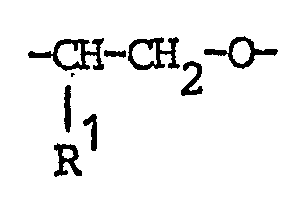
mit mindestens einer endständigen primären Hydroxylgruppe, dadurch gekennzeichnet, daß man ein Oxiran der allgemeinen Formel

in an sich bekannter Weise an einen mindestens drei Hydroxylgruppen aufweisenden mehrwertigen Alkohol, von dem mindestens zwei Hydroxylgruppen in Form eines Acetals oder Ketals vorliegen und mindestens eine dieser beiden Hydroxylgruppen eine primäre Hydroxylgruppe ist, anlagert und die Acetal- oder Ketalgruppe nach der Anlagerung in an sich bekannter Weise durch Einwirkung von Säure spaltet.

Priority Applications (1)
| Application Number | Priority Date | Filing Date | Title |
|---|---|---|---|
| AT81104202T ATE7034T1 (de) | 1980-06-20 | 1981-06-02 | Verfahren zur herstellung von polymerisaten mit mindestens einer endstaendigen primaeren hydroxylgruppe. |
Applications Claiming Priority (4)
| Application Number | Priority Date | Filing Date | Title |
|---|---|---|---|
| DE3023059 | 1980-06-20 | ||
| DE3023059A DE3023059C2 (de) | 1980-06-20 | 1980-06-20 | Verfahren zur Herstellung von Polymerisaten mit mindestens einer endständigen primären Hydroxylgruppe |
| DE3049746A DE3049746C2 (de) | 1981-02-10 | 1981-02-10 | Verfahren zur Herstellung von Polymerisaten mit mindestens zwei endständigen primären Hydroxylgruppen |
| DE3049746 | 1981-02-10 |
Publications (3)
| Publication Number | Publication Date |
|---|---|
| EP0042505A2 true EP0042505A2 (de) | 1981-12-30 |
| EP0042505A3 EP0042505A3 (en) | 1982-06-30 |
| EP0042505B1 EP0042505B1 (de) | 1984-04-11 |
Family
ID=25786101
Family Applications (1)
| Application Number | Title | Priority Date | Filing Date |
|---|---|---|---|
| EP81104202A Expired EP0042505B1 (de) | 1980-06-20 | 1981-06-02 | Verfahren zur Herstellung von Polymerisaten mit mindestens einer endständigen primären Hydroxylgruppe |
Country Status (2)
| Country | Link |
|---|---|
| EP (1) | EP0042505B1 (de) |
| DE (1) | DE3163056D1 (de) |
Cited By (12)
| Publication number | Priority date | Publication date | Assignee | Title |
|---|---|---|---|---|
| EP0060430A3 (en) * | 1981-03-13 | 1983-07-20 | Th. Goldschmidt Ag | Method for the preparation of polymers containing polyoxyalkylene side chains |
| EP0103147A3 (de) * | 1982-08-19 | 1984-09-26 | Th. Goldschmidt AG | Verfahren zur Herstellung von Polymerisaten mit seitenständig gebundenen langkettigen Alkylresten und/oder Arylresten |
| EP0141253A1 (de) * | 1983-09-27 | 1985-05-15 | Union Carbide Corporation | Polyole und ihre Anwendungen |
| FR2641985A1 (de) * | 1989-01-26 | 1990-07-27 | Oreal | |
| EP0380409A1 (de) * | 1989-01-26 | 1990-08-01 | L'oreal | Verfahren zur Herstellung von nichtionischen grenzflächenaktiven Stoffen aus Isopropyliden-1,2-epoxypropyl-3-glycerol und aus hydroxylierten Verbindungen, nichtionische grenzflächenaktive Stoffe und Verwendung von diesen |
| EP0153031B1 (de) * | 1984-02-15 | 1991-06-19 | Imperial Chemical Industries Plc | Polyetherpolyol-Zusammensetzungen und ihre Verwendung für die Herstellung von Polyurethanen |
| US5164521A (en) * | 1985-08-30 | 1992-11-17 | Minnesota Mining And Manufacturing Company | Primary hydroxyl-terminated polyglycidyl azide |
| WO1996022956A1 (en) * | 1995-01-23 | 1996-08-01 | Perstorp Ab | Selectively hydroxysubstituted triol |
| US5741997A (en) * | 1985-07-01 | 1998-04-21 | Minnesota Mining And Manufacturing Company | Low polydispersity glycidyl azide polymer |
| EP0852243A4 (de) * | 1995-04-14 | 1998-08-26 | Kataoka Kazunori | Polyethylenoxide mit einer saccharidgruppe an einem ende und einer anderen funktionellen gruppe am anderem ende sowie verfahren zu deren herstellung |
| US20230416459A1 (en) * | 2020-12-10 | 2023-12-28 | AGC Inc. | Oxyalkylene polymer, method for producing same, curable composition and cured product |
| CN118702905A (zh) * | 2024-08-28 | 2024-09-27 | 山东一诺威新材料有限公司 | 缩合物基硬泡聚醚多元醇的制备方法 |
Family Cites Families (3)
| Publication number | Priority date | Publication date | Assignee | Title |
|---|---|---|---|---|
| US3278457A (en) * | 1963-02-14 | 1966-10-11 | Gen Tire & Rubber Co | Method of making a polyether using a double metal cyanide complex compound |
| DE2136572A1 (de) * | 1971-07-22 | 1973-01-25 | Bayer Ag | Verfahren zur herstellung von polyhydroxypolyaethern |
| GB2020702A (en) * | 1978-05-12 | 1979-11-21 | Ici Ltd | Polyester dyeing |
-
1981
- 1981-06-02 DE DE8181104202T patent/DE3163056D1/de not_active Expired
- 1981-06-02 EP EP81104202A patent/EP0042505B1/de not_active Expired
Cited By (15)
| Publication number | Priority date | Publication date | Assignee | Title |
|---|---|---|---|---|
| EP0060430A3 (en) * | 1981-03-13 | 1983-07-20 | Th. Goldschmidt Ag | Method for the preparation of polymers containing polyoxyalkylene side chains |
| EP0103147A3 (de) * | 1982-08-19 | 1984-09-26 | Th. Goldschmidt AG | Verfahren zur Herstellung von Polymerisaten mit seitenständig gebundenen langkettigen Alkylresten und/oder Arylresten |
| EP0141253A1 (de) * | 1983-09-27 | 1985-05-15 | Union Carbide Corporation | Polyole und ihre Anwendungen |
| EP0153031B1 (de) * | 1984-02-15 | 1991-06-19 | Imperial Chemical Industries Plc | Polyetherpolyol-Zusammensetzungen und ihre Verwendung für die Herstellung von Polyurethanen |
| US5741997A (en) * | 1985-07-01 | 1998-04-21 | Minnesota Mining And Manufacturing Company | Low polydispersity glycidyl azide polymer |
| US5164521A (en) * | 1985-08-30 | 1992-11-17 | Minnesota Mining And Manufacturing Company | Primary hydroxyl-terminated polyglycidyl azide |
| FR2643828A1 (fr) * | 1989-01-26 | 1990-09-07 | Oreal | Procede de preparation de tensio-actifs non-ioniques a partir de l'isopropylidene-1,2 epoxypropyl-3 glycerol et de composes hydroxyles, nouveaux tensio-actifs non ioniques et leur utilisation |
| EP0380410A1 (de) * | 1989-01-26 | 1990-08-01 | L'oreal | Verfahren zur Herstellung von nichtionischen grenzflächenaktiven Stoffen aus Isopropyliden-1,2-epoxypropyl-3-glycerol und aus einem Merkaptan, grenzflächenaktive Produkte und Verwendung von diesen |
| EP0380409A1 (de) * | 1989-01-26 | 1990-08-01 | L'oreal | Verfahren zur Herstellung von nichtionischen grenzflächenaktiven Stoffen aus Isopropyliden-1,2-epoxypropyl-3-glycerol und aus hydroxylierten Verbindungen, nichtionische grenzflächenaktive Stoffe und Verwendung von diesen |
| FR2641985A1 (de) * | 1989-01-26 | 1990-07-27 | Oreal | |
| WO1996022956A1 (en) * | 1995-01-23 | 1996-08-01 | Perstorp Ab | Selectively hydroxysubstituted triol |
| EP0852243A4 (de) * | 1995-04-14 | 1998-08-26 | Kataoka Kazunori | Polyethylenoxide mit einer saccharidgruppe an einem ende und einer anderen funktionellen gruppe am anderem ende sowie verfahren zu deren herstellung |
| US20230416459A1 (en) * | 2020-12-10 | 2023-12-28 | AGC Inc. | Oxyalkylene polymer, method for producing same, curable composition and cured product |
| CN118702905A (zh) * | 2024-08-28 | 2024-09-27 | 山东一诺威新材料有限公司 | 缩合物基硬泡聚醚多元醇的制备方法 |
| CN118702905B (zh) * | 2024-08-28 | 2024-12-13 | 山东一诺威新材料有限公司 | 缩合物基硬泡聚醚多元醇的制备方法 |
Also Published As
| Publication number | Publication date |
|---|---|
| EP0042505A3 (en) | 1982-06-30 |
| EP0042505B1 (de) | 1984-04-11 |
| DE3163056D1 (en) | 1984-05-17 |
Similar Documents
| Publication | Publication Date | Title |
|---|---|---|
| DE2625684C2 (de) | Verfahren zur Herstellung von gegebenenfalls verschäumten Polyisocyanuraten und gegebenenfalls verschäumten Polyurethanen | |
| DE3819940C2 (de) | ||
| DE2559759C2 (de) | Flüssiges Polyoxyalkylen-Polyoxyäthylen-Polyol | |
| EP0042505B1 (de) | Verfahren zur Herstellung von Polymerisaten mit mindestens einer endständigen primären Hydroxylgruppe | |
| EP1091993B1 (de) | Verfahren zur herstellung von polycarbonaten mit terminalen oh-gruppen | |
| DE2524834C3 (de) | Verfahren zur Herstellung von Polyurethanschaumstoffen mit geschlossener Außenhaut | |
| DE1950275A1 (de) | Stoffgemische und Verfahren zur Herstellung von Polyurethanen | |
| DE2317161A1 (de) | Synchronverfahren zur gewinnung thermisch haertbarer polyurethane | |
| DE3880102T2 (de) | Polyisocyanat-Zusammensetzungen. | |
| EP0060430B1 (de) | Verfahren zur Herstellung von Polymerisaten mit seitenständig gebundenen Polyalkylenoxidketten | |
| DE2621582C2 (de) | Verfahren zur Herstellung von flammfesten, keinen Rauch entwickelnden Polyurethanschaumstoffen | |
| DE1923934A1 (de) | Verfahren zur Herstellung von Polyurethanen | |
| EP2089446B1 (de) | Isocyanatprepolymer mit unterschiedlich reaktiven nco-gruppen | |
| DE2414841A1 (de) | Polyolmischung fuer die verwendung in einer polyurethanschaumbildenden verbindung bzw. masse | |
| DE3049746C2 (de) | Verfahren zur Herstellung von Polymerisaten mit mindestens zwei endständigen primären Hydroxylgruppen | |
| DE2102489A1 (de) | Offenzelliger, nicht schrumpfender Polyurethanschaumstoff und Verfahren zu seiner Herstellung | |
| DE2102604B2 (de) | Verfahren zur Herstellung von Polymerschaumstoffen mit Carb-odiimid-Isocyanurat- und NCO-Gruppen | |
| DE69406656T2 (de) | Verfahren zur herstellung eines weichschaumstoffs | |
| CH661049A5 (de) | Polyol als abfangmittel zum abfangen aromatischer amine. | |
| DE1243865B (de) | Polyisocyanatmischungen zur Herstellung von Kunststoffen | |
| DE3100080C2 (de) | Verfahren zur Herstellung von Blockpolymerisaten mit mindestens drei Polyalkylenoxidblöcken | |
| DE3390309T1 (de) | Warm aushärtendes Polyolharz | |
| DE3023059A1 (de) | Verfahren zur herstellung von polymerisaten mit mindestens einer endstaendigen primaeren hydroxylgruppe | |
| DE2354952A1 (de) | Tertiaere amine | |
| EP0003102B1 (de) | Verfahren zur Herstellung von Sulfonsäurealkylester-Gruppen aufweisenden Polyisocyanaten, sowie deren Verwendung als Ausgangsmaterial zur Herstellung von Polyadditionsprodukten |
Legal Events
| Date | Code | Title | Description |
|---|---|---|---|
| PUAI | Public reference made under article 153(3) epc to a published international application that has entered the european phase |
Free format text: ORIGINAL CODE: 0009012 |
|
| 17P | Request for examination filed |
Effective date: 19810611 |
|
| AK | Designated contracting states |
Designated state(s): AT BE CH DE FR GB IT LU NL SE |
|
| PUAL | Search report despatched |
Free format text: ORIGINAL CODE: 0009013 |
|
| AK | Designated contracting states |
Designated state(s): AT BE CH DE FR GB IT LU NL SE |
|
| ITF | It: translation for a ep patent filed | ||
| GRAA | (expected) grant |
Free format text: ORIGINAL CODE: 0009210 |
|
| AK | Designated contracting states |
Designated state(s): AT BE CH DE FR GB IT LI LU NL SE |
|
| REF | Corresponds to: |
Ref document number: 7034 Country of ref document: AT Date of ref document: 19840415 Kind code of ref document: T |
|
| PGFP | Annual fee paid to national office [announced via postgrant information from national office to epo] |
Ref country code: AT Payment date: 19840508 Year of fee payment: 4 |
|
| REF | Corresponds to: |
Ref document number: 3163056 Country of ref document: DE Date of ref document: 19840517 |
|
| PG25 | Lapsed in a contracting state [announced via postgrant information from national office to epo] |
Ref country code: LU Free format text: LAPSE BECAUSE OF NON-PAYMENT OF DUE FEES Effective date: 19840630 |
|
| PGFP | Annual fee paid to national office [announced via postgrant information from national office to epo] |
Ref country code: SE Payment date: 19840630 Year of fee payment: 4 |
|
| ET | Fr: translation filed | ||
| PLBE | No opposition filed within time limit |
Free format text: ORIGINAL CODE: 0009261 |
|
| STAA | Information on the status of an ep patent application or granted ep patent |
Free format text: STATUS: NO OPPOSITION FILED WITHIN TIME LIMIT |
|
| 26N | No opposition filed | ||
| PG25 | Lapsed in a contracting state [announced via postgrant information from national office to epo] |
Ref country code: AT Effective date: 19850602 |
|
| PG25 | Lapsed in a contracting state [announced via postgrant information from national office to epo] |
Ref country code: SE Effective date: 19850603 |
|
| ITTA | It: last paid annual fee | ||
| EUG | Se: european patent has lapsed |
Ref document number: 81104202.7 Effective date: 19860728 |
|
| PGFP | Annual fee paid to national office [announced via postgrant information from national office to epo] |
Ref country code: GB Payment date: 19960524 Year of fee payment: 16 |
|
| PGFP | Annual fee paid to national office [announced via postgrant information from national office to epo] |
Ref country code: FR Payment date: 19960611 Year of fee payment: 16 |
|
| PGFP | Annual fee paid to national office [announced via postgrant information from national office to epo] |
Ref country code: DE Payment date: 19960612 Year of fee payment: 16 |
|
| PGFP | Annual fee paid to national office [announced via postgrant information from national office to epo] |
Ref country code: CH Payment date: 19960620 Year of fee payment: 16 |
|
| PGFP | Annual fee paid to national office [announced via postgrant information from national office to epo] |
Ref country code: NL Payment date: 19960626 Year of fee payment: 16 |
|
| PGFP | Annual fee paid to national office [announced via postgrant information from national office to epo] |
Ref country code: BE Payment date: 19960731 Year of fee payment: 16 |
|
| PG25 | Lapsed in a contracting state [announced via postgrant information from national office to epo] |
Ref country code: GB Effective date: 19970602 |
|
| PG25 | Lapsed in a contracting state [announced via postgrant information from national office to epo] |
Ref country code: LI Free format text: LAPSE BECAUSE OF NON-PAYMENT OF DUE FEES Effective date: 19970630 Ref country code: CH Free format text: LAPSE BECAUSE OF NON-PAYMENT OF DUE FEES Effective date: 19970630 Ref country code: BE Effective date: 19970630 |
|
| BERE | Be: lapsed |
Owner name: TH. GOLDSCHMIDT A.G. Effective date: 19970630 |
|
| PG25 | Lapsed in a contracting state [announced via postgrant information from national office to epo] |
Ref country code: NL Effective date: 19980101 |
|
| GBPC | Gb: european patent ceased through non-payment of renewal fee |
Effective date: 19970602 |
|
| REG | Reference to a national code |
Ref country code: CH Ref legal event code: PL |
|
| PG25 | Lapsed in a contracting state [announced via postgrant information from national office to epo] |
Ref country code: FR Free format text: LAPSE BECAUSE OF NON-PAYMENT OF DUE FEES Effective date: 19980227 |
|
| NLV4 | Nl: lapsed or anulled due to non-payment of the annual fee |
Effective date: 19980101 |
|
| PG25 | Lapsed in a contracting state [announced via postgrant information from national office to epo] |
Ref country code: DE Free format text: LAPSE BECAUSE OF NON-PAYMENT OF DUE FEES Effective date: 19980303 |
|
| REG | Reference to a national code |
Ref country code: FR Ref legal event code: ST |
|
| REG | Reference to a national code |
Ref country code: FR Ref legal event code: ST |