EP0043647A1 - Procédé pour la conversion et l'emmagasinage de l'énergie - Google Patents
Procédé pour la conversion et l'emmagasinage de l'énergie Download PDFInfo
- Publication number
- EP0043647A1 EP0043647A1 EP81302514A EP81302514A EP0043647A1 EP 0043647 A1 EP0043647 A1 EP 0043647A1 EP 81302514 A EP81302514 A EP 81302514A EP 81302514 A EP81302514 A EP 81302514A EP 0043647 A1 EP0043647 A1 EP 0043647A1
- Authority
- EP
- European Patent Office
- Prior art keywords
- cell
- fecl
- energy
- electrochemical
- reaction
- Prior art date
- Legal status (The legal status is an assumption and is not a legal conclusion. Google has not performed a legal analysis and makes no representation as to the accuracy of the status listed.)
- Ceased
Links
- 238000006243 chemical reaction Methods 0.000 title claims abstract description 109
- 238000000034 method Methods 0.000 title claims abstract description 31
- 230000008569 process Effects 0.000 title claims abstract description 30
- 238000003860 storage Methods 0.000 title description 7
- 229910021578 Iron(III) chloride Inorganic materials 0.000 claims abstract description 59
- RBTARNINKXHZNM-UHFFFAOYSA-K iron trichloride Chemical compound Cl[Fe](Cl)Cl RBTARNINKXHZNM-UHFFFAOYSA-K 0.000 claims abstract description 59
- NMCUIPGRVMDVDB-UHFFFAOYSA-L iron dichloride Chemical compound Cl[Fe]Cl NMCUIPGRVMDVDB-UHFFFAOYSA-L 0.000 claims abstract description 43
- 229910021577 Iron(II) chloride Inorganic materials 0.000 claims abstract description 42
- 239000003792 electrolyte Substances 0.000 claims abstract description 29
- 239000003638 chemical reducing agent Substances 0.000 claims abstract description 18
- 238000010438 heat treatment Methods 0.000 claims abstract description 12
- 230000002441 reversible effect Effects 0.000 claims abstract description 6
- 238000007600 charging Methods 0.000 claims description 60
- XEEYBQQBJWHFJM-UHFFFAOYSA-N Iron Chemical compound [Fe] XEEYBQQBJWHFJM-UHFFFAOYSA-N 0.000 claims description 36
- 229910001510 metal chloride Inorganic materials 0.000 claims description 26
- 238000009835 boiling Methods 0.000 claims description 21
- 238000007599 discharging Methods 0.000 claims description 20
- 150000001805 chlorine compounds Chemical class 0.000 claims description 19
- 229910052742 iron Inorganic materials 0.000 claims description 16
- FAPWRFPIFSIZLT-UHFFFAOYSA-M Sodium chloride Chemical compound [Na+].[Cl-] FAPWRFPIFSIZLT-UHFFFAOYSA-M 0.000 claims description 14
- 238000010325 electrochemical charging Methods 0.000 claims description 11
- 239000000203 mixture Substances 0.000 claims description 11
- 238000007710 freezing Methods 0.000 claims description 8
- 230000008014 freezing Effects 0.000 claims description 8
- 230000008859 change Effects 0.000 claims description 7
- 238000010326 electrochemical discharging Methods 0.000 claims description 7
- 239000011780 sodium chloride Substances 0.000 claims description 7
- -1 AlC13 Substances 0.000 claims description 6
- 229910015400 FeC13 Inorganic materials 0.000 claims description 6
- 239000000155 melt Substances 0.000 claims description 6
- 238000001816 cooling Methods 0.000 claims description 5
- 150000001875 compounds Chemical class 0.000 claims description 4
- 229910021554 Chromium(II) chloride Inorganic materials 0.000 claims description 2
- 229910021556 Chromium(III) chloride Inorganic materials 0.000 claims description 2
- QSWDMMVNRMROPK-UHFFFAOYSA-K chromium(3+) trichloride Chemical compound [Cl-].[Cl-].[Cl-].[Cr+3] QSWDMMVNRMROPK-UHFFFAOYSA-K 0.000 claims description 2
- 239000011636 chromium(III) chloride Substances 0.000 claims description 2
- XBWRJSSJWDOUSJ-UHFFFAOYSA-L chromium(ii) chloride Chemical compound Cl[Cr]Cl XBWRJSSJWDOUSJ-UHFFFAOYSA-L 0.000 claims description 2
- 239000007795 chemical reaction product Substances 0.000 abstract 1
- 239000000047 product Substances 0.000 abstract 1
- 230000001172 regenerating effect Effects 0.000 abstract 1
- 210000004027 cell Anatomy 0.000 description 166
- VYPSYNLAJGMNEJ-UHFFFAOYSA-N Silicium dioxide Chemical compound O=[Si]=O VYPSYNLAJGMNEJ-UHFFFAOYSA-N 0.000 description 13
- 239000007789 gas Substances 0.000 description 12
- 239000010453 quartz Substances 0.000 description 10
- 230000036647 reaction Effects 0.000 description 10
- VEXZGXHMUGYJMC-UHFFFAOYSA-M Chloride anion Chemical compound [Cl-] VEXZGXHMUGYJMC-UHFFFAOYSA-M 0.000 description 8
- 239000000463 material Substances 0.000 description 8
- OKTJSMMVPCPJKN-UHFFFAOYSA-N Carbon Chemical compound [C] OKTJSMMVPCPJKN-UHFFFAOYSA-N 0.000 description 7
- 239000000126 substance Substances 0.000 description 7
- 150000003839 salts Chemical class 0.000 description 6
- 239000000243 solution Substances 0.000 description 6
- 230000000694 effects Effects 0.000 description 5
- 238000003487 electrochemical reaction Methods 0.000 description 5
- BASFCYQUMIYNBI-UHFFFAOYSA-N platinum Chemical compound [Pt] BASFCYQUMIYNBI-UHFFFAOYSA-N 0.000 description 5
- 239000011734 sodium Substances 0.000 description 5
- UFHFLCQGNIYNRP-UHFFFAOYSA-N Hydrogen Chemical compound [H][H] UFHFLCQGNIYNRP-UHFFFAOYSA-N 0.000 description 4
- VSCWAEJMTAWNJL-UHFFFAOYSA-K aluminium trichloride Chemical compound Cl[Al](Cl)Cl VSCWAEJMTAWNJL-UHFFFAOYSA-K 0.000 description 4
- 230000003247 decreasing effect Effects 0.000 description 4
- 229910002804 graphite Inorganic materials 0.000 description 4
- 239000010439 graphite Substances 0.000 description 4
- 229910052739 hydrogen Inorganic materials 0.000 description 4
- 239000001257 hydrogen Substances 0.000 description 4
- 238000009833 condensation Methods 0.000 description 3
- 230000005494 condensation Effects 0.000 description 3
- 239000005350 fused silica glass Substances 0.000 description 3
- 229910021397 glassy carbon Inorganic materials 0.000 description 3
- 239000007788 liquid Substances 0.000 description 3
- 230000007774 longterm Effects 0.000 description 3
- 230000008018 melting Effects 0.000 description 3
- 238000002844 melting Methods 0.000 description 3
- 239000000376 reactant Substances 0.000 description 3
- 229910052708 sodium Inorganic materials 0.000 description 3
- 229910001538 sodium tetrachloroaluminate Inorganic materials 0.000 description 3
- CWYNVVGOOAEACU-UHFFFAOYSA-N Fe2+ Chemical compound [Fe+2] CWYNVVGOOAEACU-UHFFFAOYSA-N 0.000 description 2
- 239000000470 constituent Substances 0.000 description 2
- 230000007423 decrease Effects 0.000 description 2
- 238000002474 experimental method Methods 0.000 description 2
- 230000004927 fusion Effects 0.000 description 2
- 239000010931 gold Substances 0.000 description 2
- 239000007800 oxidant agent Substances 0.000 description 2
- 230000001590 oxidative effect Effects 0.000 description 2
- 229910052697 platinum Inorganic materials 0.000 description 2
- 238000001556 precipitation Methods 0.000 description 2
- 229920006395 saturated elastomer Polymers 0.000 description 2
- 238000009834 vaporization Methods 0.000 description 2
- 230000008016 vaporization Effects 0.000 description 2
- XLYOFNOQVPJJNP-UHFFFAOYSA-N water Substances O XLYOFNOQVPJJNP-UHFFFAOYSA-N 0.000 description 2
- DGAQECJNVWCQMB-PUAWFVPOSA-M Ilexoside XXIX Chemical compound C[C@@H]1CC[C@@]2(CC[C@@]3(C(=CC[C@H]4[C@]3(CC[C@@H]5[C@@]4(CC[C@@H](C5(C)C)OS(=O)(=O)[O-])C)C)[C@@H]2[C@]1(C)O)C)C(=O)O[C@H]6[C@@H]([C@H]([C@@H]([C@H](O6)CO)O)O)O.[Na+] DGAQECJNVWCQMB-PUAWFVPOSA-M 0.000 description 1
- 239000012494 Quartz wool Substances 0.000 description 1
- 238000010521 absorption reaction Methods 0.000 description 1
- 229910052783 alkali metal Inorganic materials 0.000 description 1
- 150000001340 alkali metals Chemical class 0.000 description 1
- 238000004458 analytical method Methods 0.000 description 1
- 239000007864 aqueous solution Substances 0.000 description 1
- 230000003190 augmentative effect Effects 0.000 description 1
- 230000015572 biosynthetic process Effects 0.000 description 1
- 210000003850 cellular structure Anatomy 0.000 description 1
- 150000003841 chloride salts Chemical class 0.000 description 1
- 238000005253 cladding Methods 0.000 description 1
- 230000007797 corrosion Effects 0.000 description 1
- 238000005260 corrosion Methods 0.000 description 1
- 238000000354 decomposition reaction Methods 0.000 description 1
- 238000010586 diagram Methods 0.000 description 1
- 230000003467 diminishing effect Effects 0.000 description 1
- 238000012983 electrochemical energy storage Methods 0.000 description 1
- 238000004146 energy storage Methods 0.000 description 1
- 229910001448 ferrous ion Inorganic materials 0.000 description 1
- 230000004992 fission Effects 0.000 description 1
- 239000002803 fossil fuel Substances 0.000 description 1
- 238000002194 freeze distillation Methods 0.000 description 1
- 239000000446 fuel Substances 0.000 description 1
- PCHJSUWPFVWCPO-UHFFFAOYSA-N gold Chemical compound [Au] PCHJSUWPFVWCPO-UHFFFAOYSA-N 0.000 description 1
- 229910052737 gold Inorganic materials 0.000 description 1
- UCHOFYCGAZVYGZ-UHFFFAOYSA-N gold lead Chemical compound [Au].[Pb] UCHOFYCGAZVYGZ-UHFFFAOYSA-N 0.000 description 1
- 238000009413 insulation Methods 0.000 description 1
- 150000002500 ions Chemical class 0.000 description 1
- 150000002505 iron Chemical class 0.000 description 1
- FBAFATDZDUQKNH-UHFFFAOYSA-M iron chloride Chemical compound [Cl-].[Fe] FBAFATDZDUQKNH-UHFFFAOYSA-M 0.000 description 1
- 239000011244 liquid electrolyte Substances 0.000 description 1
- 238000004519 manufacturing process Methods 0.000 description 1
- 238000005259 measurement Methods 0.000 description 1
- 229910052751 metal Inorganic materials 0.000 description 1
- 239000002184 metal Substances 0.000 description 1
- 229910001507 metal halide Inorganic materials 0.000 description 1
- 230000005012 migration Effects 0.000 description 1
- 238000013508 migration Methods 0.000 description 1
- 239000003758 nuclear fuel Substances 0.000 description 1
- 230000003647 oxidation Effects 0.000 description 1
- 238000007254 oxidation reaction Methods 0.000 description 1
- 239000012071 phase Substances 0.000 description 1
- 239000011148 porous material Substances 0.000 description 1
- 230000009467 reduction Effects 0.000 description 1
- 230000008929 regeneration Effects 0.000 description 1
- 238000011069 regeneration method Methods 0.000 description 1
- 238000011160 research Methods 0.000 description 1
- 238000007789 sealing Methods 0.000 description 1
- 239000007787 solid Substances 0.000 description 1
- 239000007784 solid electrolyte Substances 0.000 description 1
- 239000007790 solid phase Substances 0.000 description 1
- 239000002904 solvent Substances 0.000 description 1
- 230000026676 system process Effects 0.000 description 1
- 239000002699 waste material Substances 0.000 description 1
- 238000005303 weighing Methods 0.000 description 1
Images

Classifications
-
- H—ELECTRICITY
- H01—ELECTRIC ELEMENTS
- H01M—PROCESSES OR MEANS, e.g. BATTERIES, FOR THE DIRECT CONVERSION OF CHEMICAL ENERGY INTO ELECTRICAL ENERGY
- H01M10/00—Secondary cells; Manufacture thereof
- H01M10/36—Accumulators not provided for in groups H01M10/05-H01M10/34
- H01M10/39—Accumulators not provided for in groups H01M10/05-H01M10/34 working at high temperature
- H01M10/399—Cells with molten salts
-
- H—ELECTRICITY
- H01—ELECTRIC ELEMENTS
- H01M—PROCESSES OR MEANS, e.g. BATTERIES, FOR THE DIRECT CONVERSION OF CHEMICAL ENERGY INTO ELECTRICAL ENERGY
- H01M8/00—Fuel cells; Manufacture thereof
- H01M8/18—Regenerative fuel cells, e.g. redox flow batteries or secondary fuel cells
- H01M8/182—Regeneration by thermal means
-
- Y—GENERAL TAGGING OF NEW TECHNOLOGICAL DEVELOPMENTS; GENERAL TAGGING OF CROSS-SECTIONAL TECHNOLOGIES SPANNING OVER SEVERAL SECTIONS OF THE IPC; TECHNICAL SUBJECTS COVERED BY FORMER USPC CROSS-REFERENCE ART COLLECTIONS [XRACs] AND DIGESTS
- Y02—TECHNOLOGIES OR APPLICATIONS FOR MITIGATION OR ADAPTATION AGAINST CLIMATE CHANGE
- Y02E—REDUCTION OF GREENHOUSE GAS [GHG] EMISSIONS, RELATED TO ENERGY GENERATION, TRANSMISSION OR DISTRIBUTION
- Y02E60/00—Enabling technologies; Technologies with a potential or indirect contribution to GHG emissions mitigation
- Y02E60/10—Energy storage using batteries
-
- Y—GENERAL TAGGING OF NEW TECHNOLOGICAL DEVELOPMENTS; GENERAL TAGGING OF CROSS-SECTIONAL TECHNOLOGIES SPANNING OVER SEVERAL SECTIONS OF THE IPC; TECHNICAL SUBJECTS COVERED BY FORMER USPC CROSS-REFERENCE ART COLLECTIONS [XRACs] AND DIGESTS
- Y02—TECHNOLOGIES OR APPLICATIONS FOR MITIGATION OR ADAPTATION AGAINST CLIMATE CHANGE
- Y02E—REDUCTION OF GREENHOUSE GAS [GHG] EMISSIONS, RELATED TO ENERGY GENERATION, TRANSMISSION OR DISTRIBUTION
- Y02E60/00—Enabling technologies; Technologies with a potential or indirect contribution to GHG emissions mitigation
- Y02E60/30—Hydrogen technology
- Y02E60/50—Fuel cells
Definitions
- This invention relates to an energy conversion and storage process which utilizes an electrochemical reaction at low temperature yielding electrical energy, with a high temperature regeneration reaction that is the thermal reversal of the electrochemical process.
- U.S. Patent 3,553,017 discloses electrochemical power units, more particularly storage batteries, utilizing the electrochemical reaction 1.5 FeCl 2 (aq) ⁇ 0.5 Fe(s) + FeCl 3 (aq) where (aq) refers to an aqueous solution and (s) refers to solid phase.
- This is an aqueous system not involving gaseous FeCl 3 as a product which is necessary in the present invention.
- M. Warshay and L. D. Wright, J. Electrochem. Soc. 124, 173 .(1977) discuss cost and size estimates for electrochemical bulk energy storage for use by electrical utilities via the aqueous reaction:
- German Patent 2,605,899 discloses a storage battery probably utilizing the following reaction: where (FS) refers to fused salt chloride melt. Again, this patent does not teach gaseous FeCl 3 , an essential product of the present invention.
- U.S. Patent 3,374,120 discloses decomposition of fused salts, including iron halides, into their elemental constituents as a basis for the generation of electrical energy from thermal energy.
- U.S. Patent 4,064,325 discloses electric storage batteries utilizing a molten alkali metal negative electrode and an iron III/iron II or iron III/iron metal halide redox couple at the positive electrode, the nature and proportions of said materials being chosen to insure that a liquid state is maintained.
- None of the prior art discloses electrochemical heat engine processes for the conversion of thermal energy, e.g., solar energy, to stored electrochemical energy and subsequently to electrical energy utilizing the chemical reactions of the present invention.
- the present invention provides long-term storage of electrochemical energy and utilizes readily available and economical materials.
- the oxidant product, gaseous FeCl 3 results in an unexpectedly large decrease in the free energy change for the electrochemical reaction of the cell, upon charging, per 100°C rise in temperature.
- mobility may be imparted to both redox products, for example, Fe(s) and FeCl 3 (g). Fe(s) is magnetic and easily moved by means of magnetic fields and FeC1 3 is volatile above 316°C and hence can be removed as gas from solution above this temperature.
- the present invention provides an energy conversion process for converting thermal energy into stored electrochemical energy and then into electrical energy, comprising the steps of:
- the present invention provides, in another embodiment, an energy conversion process for converting thermal energy into stored electrochemical energy and then into electrical energy comprising the steps of:
- the process of the invention has five major steps, hereinafter for brevity (a) is referred to as charging, (b) as separating, (c) as cooling, (d) as storing, and (e) as discharging.
- the FeCl 2 -containing electrolyte melt of the charging and discharging cells may independently contain one or more other metal chloride compounds, namely metal chlorides such as Na 3 CrCl 6 , NaFeCl 4 , CrCl 3 , NaCl, KC1, AlCl 3 , Na 3 CrC1 5 , NaFeCl 3 , CrCl 2 , and mixtures thereof, such that during charging at high temperatures (between the boiling point of FeCl 3 and slightly above the boiling point of FeCl 2 ) FeCl 2 is oxidized to gaseous FeCl 3 at the positive electrode and the appropriate metal chloride is reduced to Fe, Na or a metal chloride at the negative electrode.
- FeCl 3 is reduced to FeCl 2 at the positive electrode and Fe, Na or a reduced metal chloride is oxidized to the corresponding metal chloride at the negative electrode.
- equations for general reactions to convert and store electrochemical energy and produce electrical energy in this invention are: and the more specific reactions, the forward reactions taking place in the charging cell and the reverse reactions taking place in the discharging cell.
- Reaction (8) requires a sodium ion-conducting solid electrolyte as a cell separator. Where mixed reactants are present, one or more of the above reactions may take place, equations 2, 3, 5, 6, and 7 generally taking place preferentially over 1, 4, and 8.
- the charging cell for all the above-mentioned reactions is operated between 316° and 1050°C at about one atmosphere gas pressure (between the boiling point of FeCl 3 and slightly above the boiling point of FeCl 2 ) and preferably between 500°C and 750°C.
- gas pressure between the boiling point of FeCl 3 and slightly above the boiling point of FeCl 2
- the discharging cell is operated at temperatures lower than those in the charging cell and preferably, for maximum efficiency, at temperatures between 200°C and 350°C.
- mixtures of salts exhibit the known effect of providing a lower freezing point than any of the salts would have alone and this effect is advantageous in both the charging and discharging cells.
- the boiling points of these compounds vary with a change in pressure under which they exist.
- Removal of FeCl 3 as a gaseous product in the charging cell depends on its relatively low boiling point of 316°C.
- Metal chloride compounds useful as components of the FeCl 2 -containing electrolyte melt do not inhibit the volatility of gaseous FeCl 3 at its normal boiling point.
- NaCl, KC1, or AlC1 3 are useful as said metal chloride components of the melt to reduce the freezing point of the melt and to increase its electrical conductivity.
- the other metal chloride components viz., NaCl, KC1, or A1C1 3
- the other metal chloride components be non-volative.
- FeCl 3 it is not necessary that FeCl 3 be the only cell component that volatilizes alone. FeCl 3 may be part of a volatilizing mixture if it can be separated therefrom in the separating step.
- the electrolyte melt in the positive electrode chamber be as close as possible to saturation with respect to FeCl 2 .
- Such a melt, for a given temperature and pressure, ensures the lowest possible charging voltage, for a given composition of negative chamber electrolyte.
- the present invention provides a practical, efficient, and economical process for conversion of high temperature heat, preferably solar heat, to electrochemical energy, and subsequently to electrical energy.
- Electrical energy is produced by charging an electrochemical cell at higher temperature under conditions of lower voltage and discharging at lower temperature under conditions of higher voltage. It has been found that the charging voltage required in the charging cell decreases by about 0.23 volt for every 100°C increase in operating temperature of the charging cell.
- a method is provided for the storing of electrochemical energy at low temperatures (i.e., 315°C or below) for extended periods.
- the electrochemical charging cell chemical feed materials are regenerated by the electrochemical discharging cell.
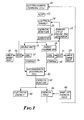
- either FeCl 2 or a mixture of FeCl 2 and other chloride salts is fed as feed into a reaction chamber of electrochemical charging cell 20 where it is heated 22, e.g., by means of solar energy, to an appropriately high temperature (for example, 500°C to 750°C) such that the free energy necessary for causing a chemical charging reaction 26 [e.g., reaction equation (1) proceeding to the right] to take place is small.
- the supply of heat to the reaction chamber is continued as necessary to maintain, by use of a temperature sensing element, the desired high temperature and, if the free energy change is zero or positive, electrical energy 24 is applied across the electrodes of the cell 20.
- the chemical potentials for the reactant materials for a desired reaction temperature are maintained as near as possible to that of the pure reactant materials in their standard states in order to minimize the required electrical energy.
- no electrical potential and no electrodes may be needed in the charging step for reaction equations (2), (3), (5), (6) and (7), for charging temperatures above about 600°C.
- Electrical potential is supplied to the cell and consumed therein when it is operated between 316 0 C and 1024°C at about one atmosphere of pressure.
- the products of chemical reaction 26 are separated 27 by means relying on their different states or magnetic properties, each separated product being then cooled and stored, the high grade heat 30, 31 (i.e., 100°C or above) from cooling being converted to electrical energy 24 in a Rankine cycle heat engine and electrical generator 23.
- the electrical energy 24 is then utilized to help charge the system.
- the cooled separated ferric chloride gas and reductant product can be conveyed directly to discharging cell 40.
- Lower grade energy heat 28, 29 is available for other purposes.
- Lower grade heat as used herein refers to heat below 100°C which is useful for space heating and hot water heating but is not useful in the electrochemical charging cell 20.
- the products of the reaction are continuously generated, separated, and cooled, and stored or recombined.
- the products 32, 34 are cooled 35, 37 and may be sent to storage 36, 38 or conveyed to and reacted in an electrochemical discharging cell 40 at a lower temperature of 350°C or below.
- the chemical reaction 42 e.g., reaction (1) proceeding to the left
- the FeCl 2 -enriched product stream of this electrochemical reaction, the chemical feed 46 is recycled to cell 20, as described below (e.g., in FIG. 5) providing a closed loop process.
- the process is closed to the atmosphere and preferably there is no material loss. If it is desirable to add chemical feed, this may be accomplished by the introduction of make-up feed 48 into the chemical feed 46 or into the charging cell 20.
- Fe2+(FS) is a ferrous ion in the fused chloride electrolyte and e is an electron.
- the anode which is also called the "negative electrode” is defined to be that electrode which takes up electrons from the external electrical circuit during charging of the electrochemical cell and gives up electrons to the external circuit during discharging of the cell.
- the cathode which is also called the “positive electrode” gives up electrons to and takes up electrons from the external electrical circuit during charging and discharging of the cell, respectively.
- the voltage of an electrochemical cell is given by: where
- a measure of the thermal chargeability of an electrochemical cell in this invention is -d V oc /dT.
- -dV oc /dT should be large and positive, and hence, an electrochemical cell reaction is desired with a large positive entropy of reaction for the charging reaction per Faraday of charge transferred in the cell reaction.
- a fused salt chloride solvent may be used with a long liquid range, such as NaAlCl 4 , which melts at about 151°C and has a partial pressure of AlCl 3 of about 0.05 atmosphere at 600°C.
- V oc the open circuit cell voltage (V oc ) is given by: where V oc and T are as defined above and R is the Boltzman gas constant having the value 1.987 cal/°Kmol and where (FeCl 3 ) and (FeCl 2 ) are the mole fractions of FeCl 3 and FeCl 2 , respectively, in the fused chloride solutions in the cell. FeCl 3 is present only in the cathode half cell. FeCl 2 is present in both half cells in about equal mole fractions. In equation III for V oc , the rigorous expression has the corresponding thermodynamic activities of FeCl 3 and FeCl 2 in place of mole fractions.
- Mc Carnot thermal/electrochemical energy conversion efficiency
- the charging reaction of this invention involves the materials undergoing a chemical reaction in the reaction chamber using heat (preferably, solar heat since it does not deplete energy resources) and advantageously only a small amount of electrical energy. This has been demonstrated in the laboratory, as will be described.
- Cell A 96 is arranged on the left and Cell B 98 on the right.
- the cathode (i.e., positive electrode) half cells 99, 100 of Cell A and Cell B are connected by a 3 cm I.D. quartz 102 tube as shown so that FeCl 3 gas (g) can be distilled from one cathode half cell fused chloride electrolyte 104 to the other via this connecting tube.
- 105, 106 are high density graphite anodes (i.e., negative electrodes) 6 cm long x 2 cm wide x 0.4 cm thick.
- vitreous carbon cathodes i.e., positive electrodes
- the graphite anodes 105, 106 are connected to the external electrical circuit via about 0.051 cm diameter platinum (Pt) lead wires 109, 110 (enclosed in quartz capillary tubes lll, 112) and the vitreous carbon cathodes 107, 108 are connected to the external electrical circuit via about 0.10 cm diameter gold (Au) lead wires 113, 114 (enclosed in quartz capillary tubes 115, 116).
- Graphite anodes 105, 106 were each partially covered with iron sheets each about 0.1 cm thick x 2 cm wide x 7 cm long weighing about 10 grams bent into a U shape and fitted tightly over the bottom portion of each graphite electrode. The purpose of this iron cladding was to insure that iron metal would always be present on anodes 105, 106 so as to obtain open circuit cell voltages representative of iron anodes.
- the fused chloride electrolyte 104 consisted of about 0.489 moles (i.e., 62 grams) of FeCl 2 , 0.353 moles of A1C1 3 and 0.353 moles of NaCl of volume about 70 cm3 to 75 cm 3 in each of the four half cells.
- the 0.353 mole of A1C1 3 and 0.353 mole of NaCl combine chemically on heating to about 170°C to form 0.353 mole of NaAlCl 4 fused salt electrolyte which has a melting point of about 151°C.
- 118 shows the approximate location of the top surface of the fused chloride electrolyte in each half cell at 300°C to 400°C.
- the maximum depth of the fused chloride electrolyte 104 was about 8.5 cm in each half cell.
- Thermodynamic calculations based on solubility measurements show that 0.353 mole of fused NaAlCl 4 electrolyte will dissolve about 0.011 mole of Fed- at 300°C and about 0.105 mole of FeCl 2 at 600°C.
- each cell has a fused quartz frit separator 119, 120 of 15 to 40 micron porosity separating the anode half cells 121, 122 from the cathode half cells 99, 100 of both Cell A 96 and Cell B 98 to minimize the migration of FeCl 3 from the cathode half cells 99, 100 into the anode half cells 121, 122 where it can react with the Fe metal on the anodes 105, 106 and waste electrochemical energy.
- Four inverted fused quartz domes 123, 124 and 125, 126 with central quartz capillary tubes 111, 112 and 115, 116, respectively (bore size 0.15 cm diameter), are shown.
- the space between the capillary tube and dome wall was packed with quartz wool 128 for thermal insulation to prevent thermal convection currents and help establish a step negative temperature gradient upward along the domes so that condensation of FeCl 3 vapor did not take place on the bottom of the domes but condensed in the annular spaces 130.
- One of these domes was inserted in each of the upper extensions of the four half cells 99, 100, 121, 122 to provide a means for quasi-sealing the overall cell from the surrounding air atmosphere. This is augmented by the condensation of a small amount of FeCl 3 vapor in the annular spaces 130.
- Each dome is blanketed with N 2 gas admitted via quartz tubes 132.
- Bypass quartz capillary tubes 133, 134 connect the anode half cells 121, 122 to the cathode half cells 99, 100 in Cell A and Cell B. Their purpose is to make it possible to equalize gas pressures between chambers 99 and 121 and between chambers 100 and 122 to prevent liquid electrolyte from being forced through quartz frit separators 119 and 120 due to gas pressure differences.
- the bypass quartz capillary tubes 133 and 134 were generally kept at about 400°C to prevent FeC1 3 gas condensation in them but could be cooled to lower temperature to allow FeCl 3 to condense and seal off the bypasses if desired.
- V(A) is the applied charging voltage to Cell A
- I c (A) is electric current passing through Cell A
- V (A) is the open circuit voltage generated by Cell A.
- V oc (A) of Cell A had increased by 0.705 volt even though no charging current had been passed through Cell A.
- V (A) at the end of the 21.81 hours of charging Cell B was 0.375 volt greater than V oc (B) of Cell B.
- V oc (A) increased to 1.080 volts and V oc (B) increased to 1.592 showing that most of the newly generated FeCl 3 had transferred from charging Cell A at 598°C to non-charging Cell B at 298°C.
- the external d.c. voltage source was disconnected and Cell A and Cell B were electrically coupled by connecting the gold lead wires from cathodes 107, 108.
- the platinum lead wires from anodes 105, 106 were connected to opposite sides of the 1 ohm external resistance.
- a current of 42.5 ma started to flow through the external resistance because the V (B) of Cell B at 299°C was 0.546 volt greater than V oc (A) of Cell A at 595°C.
- the source of the electrical energy supplied to the external circuit consisting of the 1 ohm resistance was the heat absorbed in Cell A at 595°C.
- V oc (B) - V oc (A) and I c (A) approached zero as the temperature difference between the two cells approached zero.
- V oc (B)-V oc (A) and I c (A) reversed also.
- thermal/ electrical energy conversion efficiency including electrochemical energy storage
- overall solar/ electrical energy conversion efficiency 0.19, assuming sunlight can be converted to usable 700°C thermal energy at an efficiency of about 0.60.
Landscapes
- Engineering & Computer Science (AREA)
- Manufacturing & Machinery (AREA)
- Chemical & Material Sciences (AREA)
- Chemical Kinetics & Catalysis (AREA)
- Electrochemistry (AREA)
- General Chemical & Material Sciences (AREA)
- Life Sciences & Earth Sciences (AREA)
- Sustainable Development (AREA)
- Sustainable Energy (AREA)
- Hybrid Cells (AREA)
- Secondary Cells (AREA)
- Fuel Cell (AREA)
Applications Claiming Priority (2)
| Application Number | Priority Date | Filing Date | Title |
|---|---|---|---|
| US163514 | 1980-06-27 | ||
| US06/163,514 US4312927A (en) | 1980-06-27 | 1980-06-27 | Energy conversion and storage process |
Publications (1)
| Publication Number | Publication Date |
|---|---|
| EP0043647A1 true EP0043647A1 (fr) | 1982-01-13 |
Family
ID=22590348
Family Applications (1)
| Application Number | Title | Priority Date | Filing Date |
|---|---|---|---|
| EP81302514A Ceased EP0043647A1 (fr) | 1980-06-27 | 1981-06-05 | Procédé pour la conversion et l'emmagasinage de l'énergie |
Country Status (4)
| Country | Link |
|---|---|
| US (1) | US4312927A (fr) |
| EP (1) | EP0043647A1 (fr) |
| JP (1) | JPS5743367A (fr) |
| CA (1) | CA1168698A (fr) |
Cited By (10)
| Publication number | Priority date | Publication date | Assignee | Title |
|---|---|---|---|---|
| EP0595688A1 (fr) * | 1992-10-21 | 1994-05-04 | Nippon Telegraph And Telephone Corporation | Batterie à différence de température |
| WO2010128333A1 (fr) | 2009-05-07 | 2010-11-11 | Acal Energy Limited | Piles à combustible |
| US8492048B2 (en) | 2006-07-19 | 2013-07-23 | Acal Energy Limited | Fuel cells |
| US8603684B2 (en) | 2007-09-20 | 2013-12-10 | Acal Energy Limited | Fuel cells |
| US8647781B2 (en) | 2008-01-23 | 2014-02-11 | Acal Energy Limited | Redox fuel cells |
| US8753783B2 (en) | 2006-04-25 | 2014-06-17 | ACAL Enegy Limited | Fuel cells with improved resistance to fuel crossover |
| US8951695B2 (en) | 2008-01-23 | 2015-02-10 | Acal Energy Limited | Redox fuel cell with catholyte redox mediator |
| US9005828B2 (en) | 2006-03-24 | 2015-04-14 | Acal Energy Limited | Redox fuel cells with a catholyte solution containing a polyoxometallate |
| US9029042B2 (en) | 2007-09-24 | 2015-05-12 | Acal Energy Limited | Redox fuel cell |
| US9136554B2 (en) | 2006-07-19 | 2015-09-15 | Acal Energy Limited | Fuel cells |
Families Citing this family (26)
| Publication number | Priority date | Publication date | Assignee | Title |
|---|---|---|---|---|
| JP2007522916A (ja) * | 2003-12-05 | 2007-08-16 | エンサイン−ビツクフオード・エアロスペース・アンド・デフエンス・カンパニー | ガス発生構造とガス発生法及び発生ガスを用いる動力源 |
| US7193839B2 (en) * | 2004-04-13 | 2007-03-20 | James Scott Hacsi | Methods of storing and retrieving electric energy |
| US7185493B1 (en) * | 2005-04-07 | 2007-03-06 | Bruce Connelly | Solar energy power plant and method of producing electricity |
| US20070141420A1 (en) * | 2005-12-19 | 2007-06-21 | Voss Mark G | Fuel cell thermal management system and method |
| EP1989159A2 (fr) * | 2006-02-27 | 2008-11-12 | Ensign-Bickford Aerospace & Defense Company | Elements solides de combustible a base d'hydrogene et leurs procedes de fabrication |
| JP4928978B2 (ja) * | 2007-02-23 | 2012-05-09 | 三菱重工業株式会社 | 電動圧縮機 |
| US8309259B2 (en) | 2008-05-19 | 2012-11-13 | Arizona Board Of Regents For And On Behalf Of Arizona State University | Electrochemical cell, and particularly a cell with electrodeposited fuel |
| EP2478583B1 (fr) * | 2009-09-18 | 2014-09-17 | Fluidic, Inc. | Système de pile électrochimique rechargeable avec une commutation de mode de charge et de décharge d'une électrode de charge dans les piles |
| JP5734989B2 (ja) * | 2009-10-08 | 2015-06-17 | フルイディック, インク.Fluidic, Inc. | 流れ管理システムを備えた電気化学電池 |
| US20110151289A1 (en) * | 2009-12-18 | 2011-06-23 | General Electric Company | Energy storage device and associated method |
| BR112012018441A2 (pt) | 2010-01-25 | 2019-09-24 | Univ Ramot | sistema de armazenamento e geração de energia, método para manter uma pressão eletrólito e gás diferente dentro de uma pilha de células de combustível, e, método para armazenar e gerar energia. |
| AU2011270747B2 (en) | 2010-06-24 | 2015-06-11 | Fluidic, Inc. | Electrochemical cell with stepped scaffold fuel anode |
| CN102403525B (zh) | 2010-09-16 | 2016-02-03 | 流体公司 | 具有渐进析氧电极/燃料电极的电化学电池系统 |
| EP2966722B1 (fr) | 2010-10-20 | 2018-08-29 | Fluidic, Inc. | Procédé de remise de batterie pour électrode à combustible d'échafaudage |
| JP5908251B2 (ja) | 2010-11-17 | 2016-04-26 | フルイディック,インク.Fluidic,Inc. | 階層型アノードのマルチモード充電 |
| US11289700B2 (en) | 2016-06-28 | 2022-03-29 | The Research Foundation For The State University Of New York | KVOPO4 cathode for sodium ion batteries |
| JP2019521497A (ja) | 2016-07-22 | 2019-07-25 | ナントエナジー,インク. | 電気化学セル内の水分及び二酸化炭素管理システム |
| AU2017298995B2 (en) | 2016-07-22 | 2019-08-29 | Form Energy, Inc. | Mist elimination system for electrochemical cells |
| AU2017329058A1 (en) | 2016-09-15 | 2019-04-11 | Nantenergy, Inc. | Hybrid battery system |
| BR112019008041A2 (pt) | 2016-10-21 | 2019-07-02 | Nantenergy Inc | elétrodo de combustível corrugado |
| EP3333964B1 (fr) * | 2016-12-12 | 2021-03-03 | General Electric Company | Procédés de traitement pour cellules électrochimiques |
| US12237548B2 (en) | 2018-06-29 | 2025-02-25 | Form Energy, Inc. | Stack of electric batteries including series of fluidly connected unit cells |
| US12261281B2 (en) | 2018-06-29 | 2025-03-25 | Form Energy, Inc. | Metal air electrochemical cell architecture |
| US11251476B2 (en) | 2019-05-10 | 2022-02-15 | Form Energy, Inc. | Nested annular metal-air cell and systems containing same |
| US12308414B2 (en) | 2019-06-28 | 2025-05-20 | Form Energy, Inc. | Device architectures for metal-air batteries |
| US12381244B2 (en) | 2020-05-06 | 2025-08-05 | Form Energy, Inc. | Decoupled electrode electrochemical energy storage system |
Family Cites Families (3)
| Publication number | Priority date | Publication date | Assignee | Title |
|---|---|---|---|---|
| US3374120A (en) * | 1962-10-23 | 1968-03-19 | Aerojet General Co | Apparatus and method regarding generation of electrical energy from thermal energy |
| US3553017A (en) * | 1966-09-02 | 1971-01-05 | Joseph B Morrill | Storage battery constituting a closed system |
| GB1533853A (en) * | 1975-02-14 | 1978-11-29 | Chloride Group Ltd | Electric storage batteries |
-
1980
- 1980-06-27 US US06/163,514 patent/US4312927A/en not_active Expired - Lifetime
-
1981
- 1981-05-26 CA CA000378317A patent/CA1168698A/fr not_active Expired
- 1981-06-05 EP EP81302514A patent/EP0043647A1/fr not_active Ceased
- 1981-06-26 JP JP56099530A patent/JPS5743367A/ja active Pending
Non-Patent Citations (1)
| Title |
|---|
| PATENT ABSTRACTS OF JAPAN, unexamined applications, Section E, Vol. 4, No. 32, March 19, 1980, page 51 E2, & JP-A-55 004 816 (MATSUSHITA) * |
Cited By (12)
| Publication number | Priority date | Publication date | Assignee | Title |
|---|---|---|---|---|
| EP0595688A1 (fr) * | 1992-10-21 | 1994-05-04 | Nippon Telegraph And Telephone Corporation | Batterie à différence de température |
| US9005828B2 (en) | 2006-03-24 | 2015-04-14 | Acal Energy Limited | Redox fuel cells with a catholyte solution containing a polyoxometallate |
| US8753783B2 (en) | 2006-04-25 | 2014-06-17 | ACAL Enegy Limited | Fuel cells with improved resistance to fuel crossover |
| US8492048B2 (en) | 2006-07-19 | 2013-07-23 | Acal Energy Limited | Fuel cells |
| US9136554B2 (en) | 2006-07-19 | 2015-09-15 | Acal Energy Limited | Fuel cells |
| US8603684B2 (en) | 2007-09-20 | 2013-12-10 | Acal Energy Limited | Fuel cells |
| US9029042B2 (en) | 2007-09-24 | 2015-05-12 | Acal Energy Limited | Redox fuel cell |
| US8647781B2 (en) | 2008-01-23 | 2014-02-11 | Acal Energy Limited | Redox fuel cells |
| US8951695B2 (en) | 2008-01-23 | 2015-02-10 | Acal Energy Limited | Redox fuel cell with catholyte redox mediator |
| WO2010128333A1 (fr) | 2009-05-07 | 2010-11-11 | Acal Energy Limited | Piles à combustible |
| CN102422474A (zh) * | 2009-05-07 | 2012-04-18 | Acal能源公司 | 燃料电池 |
| CN102422474B (zh) * | 2009-05-07 | 2014-09-24 | Acal能源公司 | 燃料电池 |
Also Published As
| Publication number | Publication date |
|---|---|
| US4312927A (en) | 1982-01-26 |
| JPS5743367A (en) | 1982-03-11 |
| CA1168698A (fr) | 1984-06-05 |
Similar Documents
| Publication | Publication Date | Title |
|---|---|---|
| CA1168698A (fr) | Methode de conversion et de stockage d'energie | |
| US4410606A (en) | Low temperature thermally regenerative electrochemical system | |
| KR102339641B1 (ko) | 나트륨 이온 전도성 세라믹 세퍼레이터를 지니는 나트륨-알루미늄 배터리 | |
| US5213908A (en) | Alkali metal carbon dioxide electrochemical system for energy storage and/or conversion of carbon dioxide to oxygen | |
| Chum | Review of Thermally Regenerative Electrochemical Systems: No distinctive title | |
| US2384463A (en) | Fuel cell | |
| US3057946A (en) | Fuel cell system | |
| US5264298A (en) | Lewis acid thermoelectrochemical converter | |
| Licht et al. | Molten air–a new, highest energy class of rechargeable batteries | |
| US5632870A (en) | Energy generation apparatus | |
| KR20110084980A (ko) | 수용성 애노드를 가진 하이브리드 전기화학 발생기 | |
| US20130288153A1 (en) | Sodium-Sulfur Battery | |
| US4064325A (en) | Electric storage batteries | |
| US5470669A (en) | Thermoelectrochemical system and method | |
| Rosen et al. | Battery technology: from fundamentals to thermal behavior and management | |
| US3441441A (en) | Galvanic cell electrolyte | |
| JPH05275107A (ja) | 熱的再生燃料電池 | |
| CN109411712A (zh) | 一种新型的铝氯混合离子电池 | |
| CN111244560B (zh) | 双金属电极二次电池 | |
| Ito et al. | Electrode heat balances of electrochemical cells: Application to water electrolysis | |
| US3522101A (en) | Power module including thermally regenerative battery and fuel cell and method of operation | |
| Yeager | Fuel Cells: They produce more electricity per pound of fuel than any other nonnuclear method of power production. | |
| Jacob | A new type of SOFC for conversion of high temperature heat to electricity without Carnot limitation | |
| Chum et al. | Review of thermally regenerative electrochemical systems. Volume I. Synopsis and executive summary | |
| Roberts | The Fuel Cell round Table |
Legal Events
| Date | Code | Title | Description |
|---|---|---|---|
| PUAI | Public reference made under article 153(3) epc to a published international application that has entered the european phase |
Free format text: ORIGINAL CODE: 0009012 |
|
| AK | Designated contracting states |
Designated state(s): CH DE FR GB IT NL SE |
|
| 17P | Request for examination filed |
Effective date: 19820628 |
|
| STAA | Information on the status of an ep patent application or granted ep patent |
Free format text: STATUS: THE APPLICATION HAS BEEN REFUSED |
|
| 18R | Application refused |
Effective date: 19850215 |
|
| RIN1 | Information on inventor provided before grant (corrected) |
Inventor name: SALMON, OLIVER N. |