EP0044595B1 - Procédé pour la préparation de copolymères d'éthylène et d'au moins un autre alcène-1 - Google Patents
Procédé pour la préparation de copolymères d'éthylène et d'au moins un autre alcène-1 Download PDFInfo
- Publication number
- EP0044595B1 EP0044595B1 EP81200798A EP81200798A EP0044595B1 EP 0044595 B1 EP0044595 B1 EP 0044595B1 EP 81200798 A EP81200798 A EP 81200798A EP 81200798 A EP81200798 A EP 81200798A EP 0044595 B1 EP0044595 B1 EP 0044595B1
- Authority
- EP
- European Patent Office
- Prior art keywords
- halogen
- compound
- groups
- process according
- metal
- Prior art date
- Legal status (The legal status is an assumption and is not a legal conclusion. Google has not performed a legal analysis and makes no representation as to the accuracy of the status listed.)
- Expired
Links
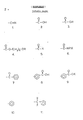
- 0 CC(CCC1)(CCC1C(O*)=O)C1CCCC1 Chemical compound CC(CCC1)(CCC1C(O*)=O)C1CCCC1 0.000 description 2
Images
Classifications
-
- C—CHEMISTRY; METALLURGY
- C08—ORGANIC MACROMOLECULAR COMPOUNDS; THEIR PREPARATION OR CHEMICAL WORKING-UP; COMPOSITIONS BASED THEREON
- C08F—MACROMOLECULAR COMPOUNDS OBTAINED BY REACTIONS ONLY INVOLVING CARBON-TO-CARBON UNSATURATED BONDS
- C08F210/00—Copolymers of unsaturated aliphatic hydrocarbons having only one carbon-to-carbon double bond
- C08F210/16—Copolymers of ethene with alpha-alkenes, e.g. EP rubbers
Definitions
- the invention relates to a process for the preparation of copolymers consisting of 25-85 % by wt. of ethylene, 15-75 % by wt. of at least one other 1-alkene and optionally up to 20% by wt. of a polyunsaturated compound, with application of a catalyst system containing a compound of a metal from the sub-groups IVto VI of the periodic system and a compound of a metal from groups I to III of the periodic system, in which at least one hydrocarbon group is bound directly to the metal atom via a carbon atom.
- the conversion products of the perchlorocrotonic acid compounds partly remain behind in the polymer and cannot be removed from it to a sufficient degree through the usual steps for removal of catalyst residues, so that the polymers obtained with application of these compounds have a high chlorine content.
- the properties of the products particularly the resistance to aging under the influence of climatic conditions, are adversely affected by a high chlorine content.
- a high chlorine content in the polymer appears to give rise to corrosion phenomena in the processing equipment. Consequently, there remained a need for a process for the preparation of copolymers of ethylene with at least one other 1-alkene and optionally a polyunsaturated compound by which a high polymer yield per weight unit of catalyst as well as a low halogen content of the product could be obtained.
- Suitable compounds are for instance para-nitrobenzyl chloride, para-nitrobenzyl bromide, alkyl esters of monochloro (4-nitrobenzyl) acetic acid, such as the ethyl or butyl ester, alkyl esters of monobromo (4-nitrophenyl) acetic acid, alkyl esters of dichloro (4-nitrophenyl) acetic acid, alkyl esters of mono- or dichloro (2-nitrophenyl) acetic acid, phenyl (4-nitrophenyl) dichloromethane, phenyl (2-nitrophenyl) dichloromethane, phenyl (4-nitrophenyl) dibromomethane.
- alkyl esters of monochloro (4-nitrobenzyl) acetic acid such as the ethyl or butyl ester
- alkyl esters of monobromo (4-nitrophenyl) acetic acid alkyl esters of dichloro (4-nitrophen
- Such compounds can be obtained for instance by the method described in Bull Soc. Chim. de France 1959 pp. 850 through 853 by M. Julia and M. Baillargé, or by analogous methods.
- the catalyst systems applied in the process according to the invention contain compounds of metals from groups I to III of the periodic system, with at least one hydrocarbon group bound directly to the metal atom via a carbon atom, and compounds of metals from the sub-groups IV to VI.
- Suitable compounds of metals from groups I to III of the periodic system with at least one hydrocarbon group bound directly to the metal atom via a carbon atom are, for instance, the compounds of sodium, lithium, zinc and magnesium and in particular aluminium.
- the hydrocarbon group bound to the metal atom in these compounds will preferably contain 1 to 30 carbon atoms, more in particular 1-10 carbon atoms.
- suitable compounds are amyl sodium, butyl lithium, diethyl zinc, butyl magnesium chloride and dibutyl magnesium.
- aluminium compounds notably trialkyl aluminium compounds, such as triethyl aluminium, alkyl aluminium hydrides, such as diisobutyl aluminium hydride, alkyl alkoxy aluminium compounds, and halogen-containing aluminium compounds, such as diethyl aluminium chloride, diisobutyl aluminium chloride, monoethyl aluminium dichloride and ethyl aluminium sesquichloride. Mixtures of such compounds may also be used.
- compounds of titanium and vanadium are suitable in particular, but compounds of other metals, such as chromium, molybdenum, tungsten and zirconium may also be used.
- Suitable compounds are the halides, oxyhalides, the alkoxides and the acetyl acetonates, such as titanium tetrachloride, titanium tetrabromide, tetrabutoxy titanium, vanadium tetrachloride, vanadium oxytrichloride, vanadium acetyl acetonate, chromium trichloride, molybdenum pentachloride, tungsten hexachloride and zirconium tetrachloride. Preference is given to vanadium compounds which are soluble in the polymerization medium.
- the molar ratio of the organometallic compound to the compound from groups IV-VI may be varied between wide limits. Generally, this ratio will lie betwen 1:1 and 1500: 1. Preferably, it is chosen between 2:1 and 300:1, more in particular between 3:1 and 50:1.
- the activating halogen-containing compounds are applied in such a quantity that the molar ratio relative to the metal from groups IV-VI is between 0.1:1 and 300: 1, by preference it is chosen between 1:1 1 and 50:1, more in particular between 2:1 and 30:1.
- additional substances may be added to the catalyst if this is advantageous.
- Such additional substances could be Lewis bases, which may also be used as catalyst component. Addition of such compounds is by no means required though to achieve a high polymer yield per weight unit of catalyst.
- Suitable 1-alkenes which may be applied as monomer beside ethylene are the 1-alkenes with at most 12 carbon atoms, for instance propylene, butene-1, pentene-1, hexene-1, octene-1, the branched isomers thereof, for instances 4-methyl pentene-1, styrene, alpha-methyl styrene or mixtures of the alkenes described in the foregoing.
- propylene and/or butene-1 are/is suitable.
- the aliphatic polyunsaturated compounds generally contain 3 to 30 carbon atoms, the double bonds being either conjugated or, preferably, non-conjugated.
- Examples are: 1-3-butadien, isoprene, 2,3-dimethyl butadiene 1-3,2-ethyl butadiene 1-3, piperylene, myrcene, allene, 1,2-butadiene, 1,4,9-decatrienes, 1,4-hexadiene, 1,5-hexadiene and 4-methyl hexadiene 1-4.
- the alicyclic polyunsaturated compounds, in which a bridge group may be present or absent, may be either mono- or polycyclic.
- Generally applicable are for instance norbornadiene and its alkyl derivatives; the alkylidene norbornenes, in particular the 5-alkylidene norbornenes-2, in which the alkylidene group contains 1 to 20, preferably 1 to 8 carbon atoms; the alkenyl norbornenes, in particular the 5-alkenyl norbornenes-2, in which the alkenyl group contains 2 to 20, preferably 2 to 10 carbon atoms, for instance vinyl norbornene, 5-(2'-methyl-2'butenyl)-norbornene-2 and 5-(3'-methyl-2'-butenyl)-norbornene-2; diclopentadiene and the polyunsaturated compounds of bicycio-(2,2,1)-heptane, bicyclo-(2,2,2)-octane, bicyclo-(3,2,1
- such compounds as 4,7,8,9-tetrahydroindene and isopropylidene tetrahydroindene may be used.
- diclopentadiene, 5-methylene or 5-ethylidene norbornene-2, or hexadiene 1-4 are used. Mixtures of the compounds described in the foregoing may also be used.
- the polyunsaturated compounds may be present in the polymer in quantities of up to 20% by wt., preferably up to 10% by wt., however.
- an unsaturated compound with one or more functional groups such as, for instance, halogen atoms, OH-, OR-, COOH-, COOR- or NH 2 -groups, may be incorporated in the polymer, if desired, in a quantity of up to 20% by wt.
- Such functional monomers generally have an adverse effect on the activity of the polymerization catalyst.
- the molar ratio of the monomers applied depends on the desired polymer composition. Since the polymerization rate of the monomers varies widely, generally valid ranges of molar ratios cannot be given. In the copolymerization of ethylene and propylene, however, generally a molar ratio between 1:1 and 1:5 will be chosen. If a polyunsaturated compound is included in the polymerization, the molar ratio relative to ethylene will in most cases be 0.001:1 to 1:1.
- the polymerization reaction is usually carried out at a temperature between -40 and 100°C, preferably between 10 and 80°C.
- the pressure will usually be 1-50 bar, but higher or lower pressures are also possible.
- the process is carried out continuously, but it may also be carried out semi- continuously or batchwise.
- the residence time in the polymerization reaction may vary from a few seconds to a few hours. In general a residence time of between a few minutes and one hour will be chosen.
- the polymerization takes place in a liquid which is inert relative to the catalyst, for instance one or more saturated aliphatic hydrocarbons, such as butane, pentane, hexane, heptane, pentamethyl heptane or petroleum fractions; aromatic hydrocarbons, for instance benzene or toluene, or halogenated aliphatic or aromatic hydrocarbons, for instance tetrachloroethylene.
- the temperature and the pressure may be chosen so that one or more of the monomers used, in particular the 1-alkene, for instance propylene, is liquid and is present in such a large quantity that it functions as distributor. Another distributor is not required then.
- the processs according to the invention may be carried out in a polymerization reactor filled either with gas and liquid or with liquid only.
- the molecular weight of the polymers can be influenced in general by the application of so-called chain regulators, for instance acetylene, zinc alkyls and alkyl halides and preferably by hydrogen. Even very small quantities of hydrogen influence the molecular weight to a sufficient degree and are still soluble in the polymerization medium.
- chain regulators for instance acetylene, zinc alkyls and alkyl halides and preferably by hydrogen.
- the polymer can, optionally after deactivation of the catalyst with water, with alcohol or with an acid, be separated out in the usual way by distillation, optionally whilst adding water, steam or methanol.
- copolymers obtained by the process according to the invention contain between 25 and 85% by wt. of ethylene. Preference is given, however, to products with an ethylene content of between 40 and 75% by wt.
- the process according to the invention is used for the preparation of copolymers of an elastomeric nature. Such copolymers are suitable for a wide variety of applications, for instance for the manufacture of hose, conveyor belts, sealing profiles. If desired, they may be vulcanized by the usual methods with application of substances which yield free radicals such as peroxides, or with sulphur.
- the polymerization was carried out in a steel 2.5-litre reactor, provided with a stirrer, a cooling jacket and the necessary feed and discharge lines.
- Gasoline was supplied to the reactor at a rate of 3 I/h. Ethylene and propylene in the form of gas were introduced into the reactor in the amounts stated in the table. Gasoline solutions of ethyl aluminium sesquichloride and vanadium oxytrichloride were supplied to the reactor at a rate of 0.6 I/h.
- the termonomer, ethylidene norbornene (EN), and the activator were dissolved in gasoline andd were also supplied to the reactor at a rate of 0.6 I/h.
- the concentrations of the various solutions were such that the concentrations of the termonomer and the catalyst components in the reactor were maintained at the values stated in the table.
- the volume in the reactor was maintained at 0.6 I by continuously draining the polymer solution, while the temperature in the reactor was kept at 50°C and the pressure at 6.4 bar.
- the reaction mixture drained from the reactor was deactivated by addition of methanol, and the polymer concentration was determined.
- the polymer concentration of the solution is a measure of the activity of the catalyst system.
Landscapes
- Chemical & Material Sciences (AREA)
- Health & Medical Sciences (AREA)
- Chemical Kinetics & Catalysis (AREA)
- Medicinal Chemistry (AREA)
- Polymers & Plastics (AREA)
- Organic Chemistry (AREA)
- Transition And Organic Metals Composition Catalysts For Addition Polymerization (AREA)
- Addition Polymer Or Copolymer, Post-Treatments, Or Chemical Modifications (AREA)
- Medicinal Preparation (AREA)
Claims (7)



Priority Applications (1)
| Application Number | Priority Date | Filing Date | Title |
|---|---|---|---|
| AT81200798T ATE16016T1 (de) | 1980-07-11 | 1981-07-10 | Verfahren zur herstellung von copolymerisaten aus aethylen und mindestens einem anderen 1-alken. |
Applications Claiming Priority (4)
| Application Number | Priority Date | Filing Date | Title |
|---|---|---|---|
| NL8003997 | 1980-07-11 | ||
| NL8003997 | 1980-07-11 | ||
| NL8102723A NL8102723A (nl) | 1980-07-11 | 1981-06-05 | Werkwijze voor de bereiding van copolymeren van etheen met tenminste een ander 1-alkeen. |
| NL8102723 | 1981-06-05 |
Publications (2)
| Publication Number | Publication Date |
|---|---|
| EP0044595A1 EP0044595A1 (fr) | 1982-01-27 |
| EP0044595B1 true EP0044595B1 (fr) | 1985-10-09 |
Family
ID=26645639
Family Applications (1)
| Application Number | Title | Priority Date | Filing Date |
|---|---|---|---|
| EP81200798A Expired EP0044595B1 (fr) | 1980-07-11 | 1981-07-10 | Procédé pour la préparation de copolymères d'éthylène et d'au moins un autre alcène-1 |
Country Status (8)
| Country | Link |
|---|---|
| US (1) | US4420595A (fr) |
| EP (1) | EP0044595B1 (fr) |
| AU (1) | AU546220B2 (fr) |
| BR (1) | BR8104440A (fr) |
| CA (1) | CA1179450A (fr) |
| DE (1) | DE3172603D1 (fr) |
| NL (1) | NL8102723A (fr) |
| NO (1) | NO160376C (fr) |
Families Citing this family (3)
| Publication number | Priority date | Publication date | Assignee | Title |
|---|---|---|---|---|
| US4808387A (en) * | 1987-05-15 | 1989-02-28 | Exxon Chemical Patents Inc. | Stabilization of vanadium tetrachloride |
| EP0967230B1 (fr) * | 1998-06-24 | 2003-01-02 | Bayer Aktiengesellschaft | Système catalytique pour la préparation de (co)polymères d'oléfines |
| KR101391693B1 (ko) | 2012-11-14 | 2014-05-07 | 주식회사 엘지화학 | 3원계 탄성 공중합체 및 이의 제조 방법 |
Family Cites Families (8)
| Publication number | Priority date | Publication date | Assignee | Title |
|---|---|---|---|---|
| NL123148C (fr) * | 1963-08-26 | |||
| US3432513A (en) * | 1964-02-12 | 1969-03-11 | Continental Oil Co | Olefin polymerization process for producing highly isotactic polymers |
| US3629212A (en) * | 1965-05-08 | 1971-12-21 | Huels Chemische Werke Ag | Reactivation of ziegler-type catalysts |
| US3723348A (en) * | 1967-03-20 | 1973-03-27 | Du Pont | Coordination catalyst |
| JPS4742141Y1 (fr) * | 1968-02-10 | 1972-12-20 | ||
| JPS5016837B1 (fr) * | 1969-03-14 | 1975-06-16 | ||
| BE791657A (fr) * | 1971-11-26 | 1973-05-21 | Snam Progetti | Procede de fabrication de polymeres et copolymeres d'isobutylene et polymeres ainsi obtenus |
| JPS4931757B2 (fr) * | 1972-02-28 | 1974-08-24 |
-
1981
- 1981-06-05 NL NL8102723A patent/NL8102723A/nl not_active Application Discontinuation
- 1981-07-08 AU AU72664/81A patent/AU546220B2/en not_active Ceased
- 1981-07-10 BR BR8104440A patent/BR8104440A/pt not_active IP Right Cessation
- 1981-07-10 CA CA000381561A patent/CA1179450A/fr not_active Expired
- 1981-07-10 EP EP81200798A patent/EP0044595B1/fr not_active Expired
- 1981-07-10 US US06/282,012 patent/US4420595A/en not_active Expired - Lifetime
- 1981-07-10 NO NO812379A patent/NO160376C/no unknown
- 1981-07-10 DE DE8181200798T patent/DE3172603D1/de not_active Expired
Also Published As
| Publication number | Publication date |
|---|---|
| EP0044595A1 (fr) | 1982-01-27 |
| AU546220B2 (en) | 1985-08-22 |
| AU7266481A (en) | 1982-01-14 |
| NL8102723A (nl) | 1982-02-01 |
| US4420595A (en) | 1983-12-13 |
| NO160376B (no) | 1989-01-02 |
| NO812379L (no) | 1982-01-12 |
| CA1179450A (fr) | 1984-12-11 |
| DE3172603D1 (en) | 1985-11-14 |
| NO160376C (no) | 1989-04-12 |
| BR8104440A (pt) | 1982-03-30 |
Similar Documents
| Publication | Publication Date | Title |
|---|---|---|
| EP0044119B1 (fr) | Procédé pour la préparation de copolymères d'éthylène et d'au moins un autre alcène-1 | |
| US4871523A (en) | Vanadium tetrachloride stabilization | |
| US4167616A (en) | Polymerization with diborane adducts or oligomers of boron-containing monomers | |
| EP0994906B1 (fr) | Copolymere elastomere et procede de preparation | |
| EP0532098B1 (fr) | Catalyseur et procédé de préparation d'un polymère d'oléfine | |
| US3045001A (en) | Polymerization process | |
| US4181790A (en) | Copolymerization of ethylene employing an organic chlorine compound-activated Ziegler-Natta catalyst | |
| EP0705284B1 (fr) | Procede de preparation de copolymeres d'ethylene et d'au moins un autre 1-alcene, d'un faible poids moleculaire | |
| EP0044595B1 (fr) | Procédé pour la préparation de copolymères d'éthylène et d'au moins un autre alcène-1 | |
| US3748316A (en) | Functionally substituted terpolymers and tetrapolymers of alpha-olefins and process for manufacturing functional substituted copolymers | |
| EP0901457B1 (fr) | Promoteur de catalyseur de polymerisation | |
| US3674755A (en) | Process for copolymerizing alpha-monoolefins with or without a polyene,using catalyst comprising organoaluminum compound and vanadyl compound containing cyclic hydrocarbon group | |
| US3718632A (en) | Continuous process for the production of ethylene copolymers | |
| US3624056A (en) | Olefin interpolymers prepared with a catalyst system of a titanium compound, alkyl aryl halide and diaryl magnesium | |
| EP0792296B1 (fr) | Procede pour la preparation d'un copolymere semblable a du caoutchouc | |
| EP0134079B1 (fr) | Procédé de préparation de poly-(alpha)-oléfines | |
| EP0950670B1 (fr) | Procédé de polymérisation d'oléfine et systéme catalytique pour ce procédé | |
| WO1990006325A1 (fr) | Catalyseur au valadium pour la production de polyolefines ayant u ne distribution controlee du poids moleculaire | |
| JPH0456042B2 (fr) | ||
| EP0489536A2 (fr) | Catalyseur pour la polymérisation d'oléfines | |
| JPH05500080A (ja) | 狭いmwdと広い組成分布を有するアルファーオレフィンコポリマー | |
| US3702840A (en) | Reduction of polymer build-up in ethylene copolymerization | |
| US5262372A (en) | Supported vanadium catalyst for prodution of polyolefins of controlled molecular weight distribution |
Legal Events
| Date | Code | Title | Description |
|---|---|---|---|
| PUAI | Public reference made under article 153(3) epc to a published international application that has entered the european phase |
Free format text: ORIGINAL CODE: 0009012 |
|
| 17P | Request for examination filed |
Effective date: 19811022 |
|
| AK | Designated contracting states |
Designated state(s): AT BE CH DE FR GB IT LI NL SE |
|
| RBV | Designated contracting states (corrected) |
Designated state(s): AT BE CH DE FR GB IT LI NL SE |
|
| ITF | It: translation for a ep patent filed | ||
| GRAA | (expected) grant |
Free format text: ORIGINAL CODE: 0009210 |
|
| AK | Designated contracting states |
Designated state(s): AT BE CH DE FR GB IT LI NL SE |
|
| REF | Corresponds to: |
Ref document number: 16016 Country of ref document: AT Date of ref document: 19851015 Kind code of ref document: T |
|
| REF | Corresponds to: |
Ref document number: 3172603 Country of ref document: DE Date of ref document: 19851114 |
|
| ET | Fr: translation filed | ||
| RAP2 | Party data changed (patent owner data changed or rights of a patent transferred) |
Owner name: STAMICARBON B.V. |
|
| PLBE | No opposition filed within time limit |
Free format text: ORIGINAL CODE: 0009261 |
|
| STAA | Information on the status of an ep patent application or granted ep patent |
Free format text: STATUS: NO OPPOSITION FILED WITHIN TIME LIMIT |
|
| 26N | No opposition filed | ||
| PGFP | Annual fee paid to national office [announced via postgrant information from national office to epo] |
Ref country code: CH Payment date: 19920610 Year of fee payment: 12 |
|
| PGFP | Annual fee paid to national office [announced via postgrant information from national office to epo] |
Ref country code: SE Payment date: 19920611 Year of fee payment: 12 |
|
| PGFP | Annual fee paid to national office [announced via postgrant information from national office to epo] |
Ref country code: AT Payment date: 19920622 Year of fee payment: 12 |
|
| PGFP | Annual fee paid to national office [announced via postgrant information from national office to epo] |
Ref country code: BE Payment date: 19920629 Year of fee payment: 12 |
|
| PGFP | Annual fee paid to national office [announced via postgrant information from national office to epo] |
Ref country code: GB Payment date: 19920706 Year of fee payment: 12 |
|
| ITTA | It: last paid annual fee | ||
| REG | Reference to a national code |
Ref country code: CH Ref legal event code: PUE Owner name: DSM N.V. |
|
| NLS | Nl: assignments of ep-patents |
Owner name: DSM N.V. TE HEERLEN. |
|
| ITPR | It: changes in ownership of a european patent |
Owner name: CESSIONE;DSM N.V. |
|
| REG | Reference to a national code |
Ref country code: GB Ref legal event code: 732E |
|
| REG | Reference to a national code |
Ref country code: FR Ref legal event code: TP |
|
| PG25 | Lapsed in a contracting state [announced via postgrant information from national office to epo] |
Ref country code: GB Effective date: 19930710 Ref country code: AT Effective date: 19930710 |
|
| PG25 | Lapsed in a contracting state [announced via postgrant information from national office to epo] |
Ref country code: SE Effective date: 19930711 |
|
| PG25 | Lapsed in a contracting state [announced via postgrant information from national office to epo] |
Ref country code: LI Effective date: 19930731 Ref country code: CH Effective date: 19930731 Ref country code: BE Effective date: 19930731 |
|
| BERE | Be: lapsed |
Owner name: DSM N.V. Effective date: 19930731 |
|
| GBPC | Gb: european patent ceased through non-payment of renewal fee |
Effective date: 19930710 |
|
| REG | Reference to a national code |
Ref country code: CH Ref legal event code: PL |
|
| EUG | Se: european patent has lapsed |
Ref document number: 81200798.7 Effective date: 19940210 |
|
| PGFP | Annual fee paid to national office [announced via postgrant information from national office to epo] |
Ref country code: FR Payment date: 19980630 Year of fee payment: 18 |
|
| PGFP | Annual fee paid to national office [announced via postgrant information from national office to epo] |
Ref country code: NL Payment date: 19980720 Year of fee payment: 18 |
|
| PGFP | Annual fee paid to national office [announced via postgrant information from national office to epo] |
Ref country code: DE Payment date: 19980828 Year of fee payment: 18 |
|
| PG25 | Lapsed in a contracting state [announced via postgrant information from national office to epo] |
Ref country code: FR Free format text: THE PATENT HAS BEEN ANNULLED BY A DECISION OF A NATIONAL AUTHORITY Effective date: 19990731 |
|
| PG25 | Lapsed in a contracting state [announced via postgrant information from national office to epo] |
Ref country code: NL Free format text: LAPSE BECAUSE OF NON-PAYMENT OF DUE FEES Effective date: 20000201 |
|
| NLV4 | Nl: lapsed or anulled due to non-payment of the annual fee |
Effective date: 20000201 |
|
| PG25 | Lapsed in a contracting state [announced via postgrant information from national office to epo] |
Ref country code: DE Free format text: LAPSE BECAUSE OF NON-PAYMENT OF DUE FEES Effective date: 20000503 |
|
| REG | Reference to a national code |
Ref country code: FR Ref legal event code: ST |