EP0046813B1 - Semipermeable Membrane - Google Patents
Semipermeable Membrane Download PDFInfo
- Publication number
- EP0046813B1 EP0046813B1 EP80104992A EP80104992A EP0046813B1 EP 0046813 B1 EP0046813 B1 EP 0046813B1 EP 80104992 A EP80104992 A EP 80104992A EP 80104992 A EP80104992 A EP 80104992A EP 0046813 B1 EP0046813 B1 EP 0046813B1
- Authority
- EP
- European Patent Office
- Prior art keywords
- semipermeable membrane
- group
- vinyl polymer
- membrane
- modified vinyl
- Prior art date
- Legal status (The legal status is an assumption and is not a legal conclusion. Google has not performed a legal analysis and makes no representation as to the accuracy of the status listed.)
- Expired
Links
- 239000012528 membrane Substances 0.000 title claims description 121
- 229920002554 vinyl polymer Polymers 0.000 claims description 42
- 125000000391 vinyl group Chemical group [H]C([*])=C([H])[H] 0.000 claims description 37
- XLYOFNOQVPJJNP-UHFFFAOYSA-N water Substances O XLYOFNOQVPJJNP-UHFFFAOYSA-N 0.000 claims description 27
- 239000007864 aqueous solution Substances 0.000 claims description 16
- 238000000034 method Methods 0.000 claims description 16
- 150000003839 salts Chemical class 0.000 claims description 16
- 239000002253 acid Substances 0.000 claims description 15
- 229920000642 polymer Polymers 0.000 claims description 15
- FAPWRFPIFSIZLT-UHFFFAOYSA-M Sodium chloride Chemical compound [Na+].[Cl-] FAPWRFPIFSIZLT-UHFFFAOYSA-M 0.000 claims description 13
- 229920002301 cellulose acetate Polymers 0.000 claims description 13
- 238000001223 reverse osmosis Methods 0.000 claims description 13
- 239000003795 chemical substances by application Substances 0.000 claims description 12
- 229920002689 polyvinyl acetate Polymers 0.000 claims description 11
- 239000011118 polyvinyl acetate Substances 0.000 claims description 11
- 150000007513 acids Chemical class 0.000 claims description 9
- 229920002678 cellulose Polymers 0.000 claims description 9
- 230000008569 process Effects 0.000 claims description 9
- 239000011780 sodium chloride Substances 0.000 claims description 8
- XTXRWKRVRITETP-UHFFFAOYSA-N Vinyl acetate Chemical compound CC(=O)OC=C XTXRWKRVRITETP-UHFFFAOYSA-N 0.000 claims description 7
- 125000003668 acetyloxy group Chemical group [H]C([H])([H])C(=O)O[*] 0.000 claims description 6
- 229920001577 copolymer Polymers 0.000 claims description 6
- 238000010612 desalination reaction Methods 0.000 claims description 6
- PPBRXRYQALVLMV-UHFFFAOYSA-N Styrene Chemical compound C=CC1=CC=CC=C1 PPBRXRYQALVLMV-UHFFFAOYSA-N 0.000 claims description 4
- 239000004135 Bone phosphate Chemical class 0.000 claims description 3
- 125000001931 aliphatic group Chemical group 0.000 claims description 3
- 125000003118 aryl group Chemical group 0.000 claims description 3
- 125000004432 carbon atom Chemical group C* 0.000 claims description 3
- 239000007788 liquid Substances 0.000 claims description 3
- 238000000926 separation method Methods 0.000 claims description 3
- VGGSQFUCUMXWEO-UHFFFAOYSA-N Ethene Chemical compound C=C VGGSQFUCUMXWEO-UHFFFAOYSA-N 0.000 claims description 2
- 239000005977 Ethylene Substances 0.000 claims description 2
- WHNWPMSKXPGLAX-UHFFFAOYSA-N N-Vinyl-2-pyrrolidone Chemical compound C=CN1CCCC1=O WHNWPMSKXPGLAX-UHFFFAOYSA-N 0.000 claims description 2
- BZHJMEDXRYGGRV-UHFFFAOYSA-N Vinyl chloride Chemical compound ClC=C BZHJMEDXRYGGRV-UHFFFAOYSA-N 0.000 claims description 2
- 229910052799 carbon Inorganic materials 0.000 claims description 2
- 150000001805 chlorine compounds Chemical class 0.000 claims description 2
- 150000001875 compounds Chemical class 0.000 claims description 2
- 229920001519 homopolymer Polymers 0.000 claims description 2
- 238000002360 preparation method Methods 0.000 claims description 2
- 239000007795 chemical reaction product Substances 0.000 claims 2
- 229940117958 vinyl acetate Drugs 0.000 claims 2
- 150000008064 anhydrides Chemical class 0.000 claims 1
- 239000000203 mixture Substances 0.000 claims 1
- 230000004907 flux Effects 0.000 description 13
- 239000000463 material Substances 0.000 description 10
- 230000003716 rejuvenation Effects 0.000 description 9
- 239000000243 solution Substances 0.000 description 9
- 239000012527 feed solution Substances 0.000 description 8
- 230000000694 effects Effects 0.000 description 6
- 230000004888 barrier function Effects 0.000 description 4
- 150000001735 carboxylic acids Chemical class 0.000 description 4
- FPYJFEHAWHCUMM-UHFFFAOYSA-N maleic anhydride Chemical compound O=C1OC(=O)C=C1 FPYJFEHAWHCUMM-UHFFFAOYSA-N 0.000 description 4
- 239000002904 solvent Substances 0.000 description 4
- KWYUFKZDYYNOTN-UHFFFAOYSA-M Potassium hydroxide Chemical compound [OH-].[K+] KWYUFKZDYYNOTN-UHFFFAOYSA-M 0.000 description 3
- HEMHJVSKTPXQMS-UHFFFAOYSA-M Sodium hydroxide Chemical compound [OH-].[Na+] HEMHJVSKTPXQMS-UHFFFAOYSA-M 0.000 description 3
- 230000008859 change Effects 0.000 description 3
- 239000002131 composite material Substances 0.000 description 3
- 230000007547 defect Effects 0.000 description 3
- 238000011156 evaluation Methods 0.000 description 3
- 230000007774 longterm Effects 0.000 description 3
- 230000035699 permeability Effects 0.000 description 3
- 239000013535 sea water Substances 0.000 description 3
- 230000000153 supplemental effect Effects 0.000 description 3
- 238000000108 ultra-filtration Methods 0.000 description 3
- FALRKNHUBBKYCC-UHFFFAOYSA-N 2-(chloromethyl)pyridine-3-carbonitrile Chemical compound ClCC1=NC=CC=C1C#N FALRKNHUBBKYCC-UHFFFAOYSA-N 0.000 description 2
- VHUUQVKOLVNVRT-UHFFFAOYSA-N Ammonium hydroxide Chemical compound [NH4+].[OH-] VHUUQVKOLVNVRT-UHFFFAOYSA-N 0.000 description 2
- IAZDPXIOMUYVGZ-UHFFFAOYSA-N Dimethylsulphoxide Chemical compound CS(C)=O IAZDPXIOMUYVGZ-UHFFFAOYSA-N 0.000 description 2
- 239000004952 Polyamide Substances 0.000 description 2
- OFOBLEOULBTSOW-UHFFFAOYSA-N Propanedioic acid Natural products OC(=O)CC(O)=O OFOBLEOULBTSOW-UHFFFAOYSA-N 0.000 description 2
- UIIMBOGNXHQVGW-UHFFFAOYSA-M Sodium bicarbonate Chemical compound [Na+].OC([O-])=O UIIMBOGNXHQVGW-UHFFFAOYSA-M 0.000 description 2
- 150000008065 acid anhydrides Chemical class 0.000 description 2
- 150000001412 amines Chemical class 0.000 description 2
- 235000011114 ammonium hydroxide Nutrition 0.000 description 2
- 238000006243 chemical reaction Methods 0.000 description 2
- 239000003153 chemical reaction reagent Substances 0.000 description 2
- 150000002148 esters Chemical class 0.000 description 2
- 230000007062 hydrolysis Effects 0.000 description 2
- 238000006460 hydrolysis reaction Methods 0.000 description 2
- 230000006872 improvement Effects 0.000 description 2
- VZCYOOQTPOCHFL-UPHRSURJSA-N maleic acid Chemical compound OC(=O)\C=C/C(O)=O VZCYOOQTPOCHFL-UPHRSURJSA-N 0.000 description 2
- 239000011976 maleic acid Substances 0.000 description 2
- 238000004519 manufacturing process Methods 0.000 description 2
- XNGIFLGASWRNHJ-UHFFFAOYSA-N phthalic acid Chemical compound OC(=O)C1=CC=CC=C1C(O)=O XNGIFLGASWRNHJ-UHFFFAOYSA-N 0.000 description 2
- 229920002647 polyamide Polymers 0.000 description 2
- 229920002480 polybenzimidazole Polymers 0.000 description 2
- 239000010865 sewage Substances 0.000 description 2
- CDBYLPFSWZWCQE-UHFFFAOYSA-L sodium carbonate Substances [Na+].[Na+].[O-]C([O-])=O CDBYLPFSWZWCQE-UHFFFAOYSA-L 0.000 description 2
- 229940014800 succinic anhydride Drugs 0.000 description 2
- VZCYOOQTPOCHFL-UHFFFAOYSA-N trans-butenedioic acid Natural products OC(=O)C=CC(O)=O VZCYOOQTPOCHFL-UHFFFAOYSA-N 0.000 description 2
- ARCGXLSVLAOJQL-UHFFFAOYSA-N trimellitic acid Chemical compound OC(=O)C1=CC=C(C(O)=O)C(C(O)=O)=C1 ARCGXLSVLAOJQL-UHFFFAOYSA-N 0.000 description 2
- GGAUUQHSCNMCAU-ZXZARUISSA-N (2s,3r)-butane-1,2,3,4-tetracarboxylic acid Chemical compound OC(=O)C[C@H](C(O)=O)[C@H](C(O)=O)CC(O)=O GGAUUQHSCNMCAU-ZXZARUISSA-N 0.000 description 1
- CEGRHPCDLKAHJD-UHFFFAOYSA-N 1,1,1-propanetricarboxylic acid Chemical compound CCC(C(O)=O)(C(O)=O)C(O)=O CEGRHPCDLKAHJD-UHFFFAOYSA-N 0.000 description 1
- SMZOUWXMTYCWNB-UHFFFAOYSA-N 2-(2-methoxy-5-methylphenyl)ethanamine Chemical compound COC1=CC=C(C)C=C1CCN SMZOUWXMTYCWNB-UHFFFAOYSA-N 0.000 description 1
- NIXOWILDQLNWCW-UHFFFAOYSA-N 2-Propenoic acid Natural products OC(=O)C=C NIXOWILDQLNWCW-UHFFFAOYSA-N 0.000 description 1
- NLHHRLWOUZZQLW-UHFFFAOYSA-N Acrylonitrile Chemical compound C=CC#N NLHHRLWOUZZQLW-UHFFFAOYSA-N 0.000 description 1
- IMROMDMJAWUWLK-UHFFFAOYSA-N Ethenol Chemical group OC=C IMROMDMJAWUWLK-UHFFFAOYSA-N 0.000 description 1
- 239000004698 Polyethylene Substances 0.000 description 1
- 239000004642 Polyimide Substances 0.000 description 1
- 239000004372 Polyvinyl alcohol Substances 0.000 description 1
- KDYFGRWQOYBRFD-UHFFFAOYSA-N Succinic acid Natural products OC(=O)CCC(O)=O KDYFGRWQOYBRFD-UHFFFAOYSA-N 0.000 description 1
- 238000005299 abrasion Methods 0.000 description 1
- 238000010521 absorption reaction Methods 0.000 description 1
- 150000001242 acetic acid derivatives Chemical class 0.000 description 1
- 125000002777 acetyl group Chemical group [H]C([H])([H])C(*)=O 0.000 description 1
- 239000003513 alkali Substances 0.000 description 1
- 229910001854 alkali hydroxide Inorganic materials 0.000 description 1
- 150000008044 alkali metal hydroxides Chemical class 0.000 description 1
- 125000005907 alkyl ester group Chemical group 0.000 description 1
- 239000000908 ammonium hydroxide Substances 0.000 description 1
- 235000012206 bottled water Nutrition 0.000 description 1
- KDYFGRWQOYBRFD-NUQCWPJISA-N butanedioic acid Chemical compound O[14C](=O)CC[14C](O)=O KDYFGRWQOYBRFD-NUQCWPJISA-N 0.000 description 1
- 150000007942 carboxylates Chemical class 0.000 description 1
- 239000001913 cellulose Substances 0.000 description 1
- 238000012512 characterization method Methods 0.000 description 1
- 238000000576 coating method Methods 0.000 description 1
- LDHQCZJRKDOVOX-NSCUHMNNSA-N crotonic acid Chemical compound C\C=C\C(O)=O LDHQCZJRKDOVOX-NSCUHMNNSA-N 0.000 description 1
- 230000003247 decreasing effect Effects 0.000 description 1
- 238000010586 diagram Methods 0.000 description 1
- 238000007598 dipping method Methods 0.000 description 1
- 239000006185 dispersion Substances 0.000 description 1
- 239000003651 drinking water Substances 0.000 description 1
- 238000004070 electrodeposition Methods 0.000 description 1
- 239000003792 electrolyte Substances 0.000 description 1
- 239000003995 emulsifying agent Substances 0.000 description 1
- 239000013505 freshwater Substances 0.000 description 1
- 150000004820 halides Chemical class 0.000 description 1
- 239000012510 hollow fiber Substances 0.000 description 1
- 230000003301 hydrolyzing effect Effects 0.000 description 1
- 238000007654 immersion Methods 0.000 description 1
- 238000002329 infrared spectrum Methods 0.000 description 1
- 150000002500 ions Chemical class 0.000 description 1
- 229910052751 metal Inorganic materials 0.000 description 1
- 239000002184 metal Substances 0.000 description 1
- WSFSSNUMVMOOMR-NJFSPNSNSA-N methanone Chemical compound O=[14CH2] WSFSSNUMVMOOMR-NJFSPNSNSA-N 0.000 description 1
- 235000013336 milk Nutrition 0.000 description 1
- 239000008267 milk Substances 0.000 description 1
- 210000004080 milk Anatomy 0.000 description 1
- 239000002480 mineral oil Substances 0.000 description 1
- 238000002156 mixing Methods 0.000 description 1
- 230000004048 modification Effects 0.000 description 1
- 238000012986 modification Methods 0.000 description 1
- 235000015205 orange juice Nutrition 0.000 description 1
- 229920000620 organic polymer Polymers 0.000 description 1
- 239000003960 organic solvent Substances 0.000 description 1
- 238000010422 painting Methods 0.000 description 1
- 238000007747 plating Methods 0.000 description 1
- 229920000412 polyarylene Polymers 0.000 description 1
- -1 polyethylene Polymers 0.000 description 1
- 229920000573 polyethylene Polymers 0.000 description 1
- 229920001721 polyimide Polymers 0.000 description 1
- 150000007519 polyprotic acids Polymers 0.000 description 1
- 229920002451 polyvinyl alcohol Polymers 0.000 description 1
- 238000000746 purification Methods 0.000 description 1
- 230000009257 reactivity Effects 0.000 description 1
- 238000011084 recovery Methods 0.000 description 1
- 238000010992 reflux Methods 0.000 description 1
- 230000008929 regeneration Effects 0.000 description 1
- 238000011069 regeneration method Methods 0.000 description 1
- 238000012827 research and development Methods 0.000 description 1
- 238000007127 saponification reaction Methods 0.000 description 1
- 230000035939 shock Effects 0.000 description 1
- 229910000030 sodium bicarbonate Inorganic materials 0.000 description 1
- 235000017557 sodium bicarbonate Nutrition 0.000 description 1
- 229910000029 sodium carbonate Inorganic materials 0.000 description 1
- 238000001179 sorption measurement Methods 0.000 description 1
- 238000005507 spraying Methods 0.000 description 1
- 239000000758 substrate Substances 0.000 description 1
- 239000004094 surface-active agent Substances 0.000 description 1
- 238000012360 testing method Methods 0.000 description 1
- LDHQCZJRKDOVOX-UHFFFAOYSA-N trans-crotonic acid Natural products CC=CC(O)=O LDHQCZJRKDOVOX-UHFFFAOYSA-N 0.000 description 1
- 230000007704 transition Effects 0.000 description 1
- 229920003169 water-soluble polymer Polymers 0.000 description 1
Images

Classifications
-
- B—PERFORMING OPERATIONS; TRANSPORTING
- B01—PHYSICAL OR CHEMICAL PROCESSES OR APPARATUS IN GENERAL
- B01D—SEPARATION
- B01D67/00—Processes specially adapted for manufacturing semi-permeable membranes for separation processes or apparatus
- B01D67/0081—After-treatment of organic or inorganic membranes
- B01D67/0088—Physical treatment with compounds, e.g. swelling, coating or impregnation
Definitions
- This invention relates to a semipermeable membrane for liquid separation having improved rejection performance, especially to reverse osmosis membranes and ultrafiltration membranes, and also to a process for preparation of such semipermeable membranes. Furthermore, the invention is directed to a process for improving the salt rejection of semipermeable membranes made of cellulose esters, and finally to the use of said semipermeable membranes in a process for desalination of saline water by reverse osmosis.
- solvent permeability is the quantity of permeated solvent per unit period and unit area, generally in terms of m 3 /m 2 day.
- Solute rejection (%) is calculated as follows: C o is the concentration of solute in the feed solution and C is the concentration of solute in the permeated solution.
- semipermeable membranes produced for reverse osmosis are composed of either asymmetric membranes or composite membranes.
- Asymmetric membranes have been produced from various polymeric materials such as cellulose derivatives, polyamides, polyimides, polybenzimidazoles, polyarylene oxides, polysulfonamides and other polymeric materials, in which the semipermeability of the membrane results from the function of a thin dense skin layer located at one surface of the membrane, with the remaining major part of the membrane providing a more porous supporting layer formed by the same polymer.
- the composite membranes such as those called “PA-300” and NS-200", etc. have been developed recently, wherein the semipermeability results from the function of an ultrathin solute barrier layer of one material which is formed separately and is supported on an underlying porous substrate that may be made from a different polymer from the ultrathin film.
- the performance of the membrane is determined by the thickness of the thin dense skin layer or the ultrathin solute barrier layer. Accordingly, a thinner layer leads the membrane to higher performance, especially in respect of solvent permeability.
- the thin dense skin layer or the ultrathin solute barrier layer possesses poor resistance to deformation and abrasion at the time of membrane fabrication and of membrane element fabrication.
- the decrease of rejection performance of the membrane may have been caused by hydrolysis of the membrane.
- defects in the thin dense skin layer or the ultrathin solute barrier layer may be caused by minor mechanical shocks or deformation during long term operation of reverse osmosis or ultrafiltration. Therefore, it is important to be able to treat the membrane with a supplemental material in order to improve or to rejuvenate the solute rejection performance of the membrane.
- U.S. Patent No. 3,877,978 discloses such treatment using a supplemental polymeric material containing a substantial amount of acetyl groups comprising a copolymer of vinyl acetate and acids such as maleic acid, crotonic acid and lower alkyl esters of acrylic acid.
- GB-A-602 974 discloses aqueous solutions of polyvinyl acetate derivatives, particularly of an acid ester of a partially esterified polyvinyl alcohol, in which the vinyl alcohol groups are partly esterified by one or more polybasic acids and partly acetylated and partly unreplaced. These aqueous solutions have a greatly improved stability especially in the presence of water-soluble electrolytes. j Thus, these solutions are used as emulsifying agents, for example for mineral oils.
- the yield rate of the membrane and of the element can be heightened by applying the membrane treatment for overcoming the defects.
- the useful life of the membrane can be lengthened by means of the rejuvenation treatment.
- a high performance, particularly rejection performance of the membrane, can be attained with a membrane treating agent of this invention to a previously unattained level.
- the Figure is a diagram showing change of the membrane performance of a semipermeable membrane treated with a membrane treating agent of the present invention.
- each has an acetoxy group and at least one group comprising either or both of the Formulas (I) and (11):
- R is a radical selected from the group consisting of aliphatic, aromatic and heterocyclic radicals having 1 to 9 carbon atoms, and n is an integer from 1 to 3.
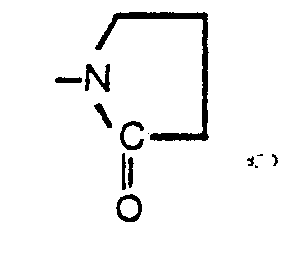
- Examples of groups represented by the Formula (I) are the following groups represented by the Formulas (A) to (G), the preferable ones being (A) and (B):
- the modified vinyl polymers can be derived from homopolymers or copolymers of vinyl acetate.
- Ethylene, vinyl chloride, styrene, N-vinyl pyrrolidone etc. can be employed as a comonomer with vinyl acetate.
- Preferred modified vinyl polymers of the present invention are polymers having repeating units represented by the Formula (III) as the polymer main chain:
- X is at least one radical selected from the group represented by the Formulas (I) and (11) and Y is at least one radical selected from the group consisting of -OH, -H, -CI, -Br, -I, ⁇ C 6 H 5 , and
- Such groups represented by the Formulas (I) and (II) alter the vinyl polymer into a water soluble vinyl polymer having excellent affinity and adsorption-ability for semipermeable membranes, particularly for membranes made of cellulose acetate.
- the rejection performance of the membrane can be remarkably potentiated, even if the modified vinyl polymer is not insolubilized.
- the modification is well achieved by reacting polyvinyl acetate, its copolymers and their partially or fully saponified polymers, with at least one compound selected from the group consisting of dibasic acids, tribasic acids, tetrabasic acids, acid anhydrides thereof and/or acid chlorides thereof.
- modified vinyl polymers used in the present invention are modified polymers having the group represented by the Formula (A) or (B) and are obtained by reacting a partially saponified vinyl acetate with maleic anhydride or succinic anhydride.
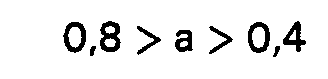
- the molar fractions a, b and c in the modified vinyl polymer represented by the Formula (III) should satisfy the aforementioned equations, and should preferably satisfy the following equation:
- modified vinyl polymers having good water solubility and excellent capacity for rejuvenating or improving the rejection performance of the membrane.
- modified vinyl polymers can be easily prepared by methods well known in prior art, for example those disclosed in Japanese Patent Publication No. 16,150/1965.
- One of the representative methods for preparing the modified vinyl polymers is as follows:
- the modified vinyl polymers of the present invention may also be obtained by reacting a partially saponified polyvinyl acetate with acrylonitrile or cyan ions and formaldehyde, and then hydrolising the resulting cyanomethylated or cyanoethylated polyvinyl acetate.
- the water solubility of the modified vinyl polymers obtained by reacting the partially saponified polyvinyl acetate with the carboxylic acids depends on the reaction ratio of the carboxylic acids to the partially saponified vinyl polymers. When the reaction ratio of the carboxylic acids to the partially saponified vinyl acetate is lower, the solubility of the modified polymers becomes poor.
- these modified vinyl polymers can be converted to water soluble polymers by controlling the pH in an aqueous solution by adding alkali hydroxides such as sodium hydroxide, potassium hydroxide or ammonium hydroxide, organic amines, etc.
- alkali hydroxides such as sodium hydroxide, potassium hydroxide or ammonium hydroxide, organic amines, etc.
- pH water solubility
- the modified vinyl polymers of the present invention have such good affinity and absorption-ability relative to the semipermeable membrane, that the membrane treating effect does not disappear even after long-term operation.
- the content of acetoxy groups contained in the modified vinyl polymers is preferably within the range of about 20 to 90 mol%, more preferably about 40 to 80 mol% relative to the repeating units of the modified vinyl polymer chain.
- the insolubilization or fixation of the modified vinyl polymers may be achieved by adding various reagents which have reactivity to the groups represented by the Formula (I). Examples of such reagent include multivalent organic amines, etc.
- the membrane treating agent of the present invention may be applied to semipermeable membranes having various shapes such as films, tubes, or hollow fibers, or Leob type asymmetric or composite membranes which comprise various organic polymers such as cellulose esters, polyamides, polybenzimidazoles, etc.
- the membrane treating agents of the present invention give an excellent effect to the semipermeable membrane comprising cellulose esters, particularly cellulose acetate.
- the membrane treating agents of the present invention are employed as either aqueous solutions, organic solvent solutions or dispersions, etc. containing an effective amount of the modified vinyl polymer.
- the membrane treating agents are usually used as aqueous solutions containing about 0.0001 to 1.0% by weight, preferably about 0.0003 to 0.01% by weight of the modified vinyl polymer.
- the pH of such aqueous solution is preferably about 3 to 9, more preferably about 4 to 8.
- the addition of surfactant to the aqueous solution may give good effects in some cases.
- Membrane treating can be achieved by well-known methods, for example dipping the membrane into the aqueous solution containing the membrane treating agent, spraying the aqueous solution on the membrane or, more easily, the membrane treating agent may be added to the feed solution during the operation of the reverse osmosis or ultrafiltration procedure.
- a modified vinyl polymer was prepared by reacting partically saponified polyvinyl acetate with maleic anhydride as follows:
- This polymer was dissolved in a dilute ammonia water and was stored as a 10% solution having a pH of 7, at a room temperature.
- a cellulose acetate asymmetric reverse osmosis membrane was evaluated under the following conditions:
- the asymmetric membrane exhibited a salt rejection of 98.7% and a water flux of 0.30 m 3 /m 2 day.
- the modified vinyl polymer obtained in Example 1 was added to a feed solution (3.5% sodium chloride) so that the polymer was supplied to the membrane at about 100 ppm while the evaluation was continued. After one hour, salt rejection improved to 99.35% and water reflux was reduced to 0.25 m 3 /m 2 day. After this the feed solution was changed to fresh 3.5% sodium chloride; performance improved by the treatment was maintained even after 24 hours test.
- the number (1) designates initial membane performance, and (4) in the drawing is improved membrane performance after treatment by this example.
- a modified vinyl polymer was prepared by using succinic anhydride instead of maleic anhydride. The other conditions were the same as Exampie 1.
- the cellulose acetate asymmetric reverse osmosis membrane before treatment exhibited a salt rejection of 97.27% and a water flux of 0.36 m 3 /m 2 day under the same conditions as Example 2.
- Membrane treatment was accomplished by adding the modified vinyl polymer to the feed solution at 10 ppm, while the evaluation was continued. After 24 hours the salt rejection improved to 99.37% and the water flux was reduced to 0.33 m 3 /m 2 day. This performance did not change after 24 hours' operation on a fresh sodium chloride solution.
- a cellulose acetate asymmetric membrane was immersed in an aqueous solution containing 0.15% of sodium bicarbonate and sodium carbonate for 20 hours at 30°C, in which the pH was 11. By this immersion the membrane performance was reduced by hydrolysis, the salt rejection decreased to 95.0% from 98.0% and the water flux increased to 0.70 m 3 /m 2 day from 0.60 m 3 /m 2 day under the following conditions:
- Example 2 30 ppm of the modified vinyl polymer obtained in Example 1 were added to the solution and the evaluation was continued for an hour. Then membrane performance was rejuvenated, and found to exhibit a salt rejection of 97.7% and a water flux of 0.60 m 3 /m 2 day, which was maintained after 24 hours' operation using a fresh feed solution.
- Asymmetric cellulose acetate membranes were piled on a polyethylene net ("Vexar" made be E.I. duPont de Nemours & Co.) and evaluated under the following conditions:
- the membrane performance was degenerated by deformation.
- the membrane treatment was performed by using the modified vinyl polymer of Example 1, while the concentration was changed. The results are listed in Table 1.
- the spirally wound cellulose acetate membrane element for sea water desalination (SC-5100 made by Toray Inc. of Tokyo, Japan), exhibited a salt rejection of 96% and a water flux of 2.1 m 3 day element under the following conditions:
- a spirally wound cellulose acetate membrane element for brackish water desalination (SC-3100 made by Toray, Inc. of Tokyo Japan) exhibited 98.1 % salt rejection and 3.91 m 2 day, element water flux under the following conditions:
- the membrane treatment was performed as in Example 6. After 5 hours' operation salt rejection improved to 99.3% and the water flux was 3.33 m 3 day. element. Improved performance was maintained after 540 hours operation followed by treatment; the membrane exhibited 99.2% salt rejection and 3.2 m 3 day.element water flux.
- a cellulose acetate asymmetric reverse osmosis membrane was evaluated in the same manner as in Example 2, but the membrane was deformed as in Example 5.
- the membrane performance was 88% salt rejection and 0.4 m 3 /m 2 . day water flux.
- This membrane was regenerated to 97% salt rejection and 0.32 m 3 /m 2 day water flux, after the membrane treatment using an aqueous solution containing 50 ppm of the modified vinyl polymer of Example 1. This effect is also illustrated in Figure 1, where (2) is degenerated membrane performance and (3) is rejuvenated membrane performance.
- a two stage water desalination system using spirally wound cellulose acetate membrane elements was degenerated after 4000 hours operation.
- the degenerated performance of the first stage was rejuvenated by applying the membrane treating agent of Example 3.
- the rejection performance of the membrane element recovered from 91% to 93% with slight decrease of flux.
- the membrane treating agent was added at a level of 5 ppm in sea water for 10 minutes. This effect was maintained after 2000 hours operation which followed.
Landscapes
- Chemical & Material Sciences (AREA)
- Inorganic Chemistry (AREA)
- Engineering & Computer Science (AREA)
- Manufacturing & Machinery (AREA)
- Chemical Kinetics & Catalysis (AREA)
- Separation Using Semi-Permeable Membranes (AREA)
Claims (18)






Priority Applications (2)
| Application Number | Priority Date | Filing Date | Title |
|---|---|---|---|
| DE8080104992T DE3068112D1 (en) | 1980-08-21 | 1980-08-21 | A semipermeable membrane |
| EP80104992A EP0046813B1 (de) | 1980-08-21 | 1980-08-21 | Semipermeable Membrane |
Applications Claiming Priority (1)
| Application Number | Priority Date | Filing Date | Title |
|---|---|---|---|
| EP80104992A EP0046813B1 (de) | 1980-08-21 | 1980-08-21 | Semipermeable Membrane |
Publications (2)
| Publication Number | Publication Date |
|---|---|
| EP0046813A1 EP0046813A1 (de) | 1982-03-10 |
| EP0046813B1 true EP0046813B1 (de) | 1984-06-06 |
Family
ID=8186762
Family Applications (1)
| Application Number | Title | Priority Date | Filing Date |
|---|---|---|---|
| EP80104992A Expired EP0046813B1 (de) | 1980-08-21 | 1980-08-21 | Semipermeable Membrane |
Country Status (2)
| Country | Link |
|---|---|
| EP (1) | EP0046813B1 (de) |
| DE (1) | DE3068112D1 (de) |
Families Citing this family (1)
| Publication number | Priority date | Publication date | Assignee | Title |
|---|---|---|---|---|
| DE102024119050A1 (de) | 2024-07-04 | 2026-01-08 | Koehler Innovation & Technology Gmbh | Wärmeempfindliches aufzeichnungsmaterial |
Citations (1)
| Publication number | Priority date | Publication date | Assignee | Title |
|---|---|---|---|---|
| GB602974A (en) * | 1945-11-14 | 1948-06-07 | Ralph Robert Lyne | Improvements in or relating to the production of aqueous solutions of polyvinyl acetate derivatives |
Family Cites Families (3)
| Publication number | Priority date | Publication date | Assignee | Title |
|---|---|---|---|---|
| NL58581C (de) * | 1938-09-24 | |||
| US3373056A (en) * | 1964-08-28 | 1968-03-12 | Aerojet General Co | Modifying cellulose ester osmotic membranes |
| US3808303A (en) * | 1971-12-30 | 1974-04-30 | Du Pont | Ether treatment of nitrogen-containing polymer membranes |
-
1980
- 1980-08-21 DE DE8080104992T patent/DE3068112D1/de not_active Expired
- 1980-08-21 EP EP80104992A patent/EP0046813B1/de not_active Expired
Patent Citations (1)
| Publication number | Priority date | Publication date | Assignee | Title |
|---|---|---|---|---|
| GB602974A (en) * | 1945-11-14 | 1948-06-07 | Ralph Robert Lyne | Improvements in or relating to the production of aqueous solutions of polyvinyl acetate derivatives |
Also Published As
| Publication number | Publication date |
|---|---|
| DE3068112D1 (en) | 1984-07-12 |
| EP0046813A1 (de) | 1982-03-10 |
Similar Documents
| Publication | Publication Date | Title |
|---|---|---|
| US4964998A (en) | Use of treated composite polyamide membranes to separate concentrated solute | |
| Cadotte et al. | Interfacial synthesis in the preparation of reverse osmosis membranes | |
| EP0085111B1 (de) | Zusammengestellte halbdurchlässige membran, verfahren zu deren herstellung und verwendung | |
| US4872984A (en) | Interfacially synthesized reverse osmosis membrane containing an amine salt and processes for preparing the same | |
| US4960517A (en) | Treatment of composite polyamide membranes via substitution with amine reactive reagents | |
| US7165682B1 (en) | Defect free composite membranes, method for producing said membranes and use of the same | |
| US3549016A (en) | Permeable membrane and method of making and using the same | |
| US4737325A (en) | Composite semipermeable membrane and process for preparation thereof | |
| AU609178B2 (en) | Novel water softening membranes | |
| EP2576027B1 (de) | Dünnschichtkompositmembranen | |
| US4927540A (en) | Ionic complex for enhancing performance of water treatment membranes | |
| EP0277834B1 (de) | Verfahren zur Herstellung von stabilen Umkehrosmose-Membranen aus sulfonierten Polyaryläthern | |
| EP0031730A2 (de) | Halbdurchlässige Composite-Membranen und Verfahren zu ihrer Herstellung | |
| US4828700A (en) | Rejection enhancing coatings for reverse osmosis membranes | |
| EP0432358A1 (de) | Behandelte Polyamid-Verbundmembranen zur Trennung eines konzentrierten Lösungsprodukts | |
| US4069215A (en) | Semipermeable membranes of sulphonated polybenz-1,3-oxazin-2,4-diones | |
| EP0112631B1 (de) | Verbundmaterial, Verfahren zu seiner Herstellung und seine Verwendung in der osmotischen Reinigung von Flüssigkeiten | |
| US4026978A (en) | Method of making asymmetric cellulose triacetate membranes | |
| EP0190212B1 (de) | Abtrennung von wasser aus organischen flüssigkeiten | |
| US4894165A (en) | Rejection enhancing coatings for reverse osmosis membranes | |
| US4478717A (en) | Semipermeable membrane treated with modified vinyl polymer | |
| US4941972A (en) | Chlorine-stable membrane compositions | |
| EP0046813B1 (de) | Semipermeable Membrane | |
| US4410568A (en) | Process for preparing selective permeable membrane | |
| JP3646362B2 (ja) | 半透膜およびその製造方法 |
Legal Events
| Date | Code | Title | Description |
|---|---|---|---|
| PUAI | Public reference made under article 153(3) epc to a published international application that has entered the european phase |
Free format text: ORIGINAL CODE: 0009012 |
|
| AK | Designated contracting states |
Designated state(s): DE FR GB IT |
|
| 17P | Request for examination filed |
Effective date: 19820330 |
|
| ITF | It: translation for a ep patent filed | ||
| GRAA | (expected) grant |
Free format text: ORIGINAL CODE: 0009210 |
|
| AK | Designated contracting states |
Designated state(s): DE FR GB IT |
|
| REF | Corresponds to: |
Ref document number: 3068112 Country of ref document: DE Date of ref document: 19840712 |
|
| ET | Fr: translation filed | ||
| PLBE | No opposition filed within time limit |
Free format text: ORIGINAL CODE: 0009261 |
|
| STAA | Information on the status of an ep patent application or granted ep patent |
Free format text: STATUS: NO OPPOSITION FILED WITHIN TIME LIMIT |
|
| 26N | No opposition filed | ||
| ITTA | It: last paid annual fee | ||
| PGFP | Annual fee paid to national office [announced via postgrant information from national office to epo] |
Ref country code: GB Payment date: 19980812 Year of fee payment: 19 |
|
| PGFP | Annual fee paid to national office [announced via postgrant information from national office to epo] |
Ref country code: FR Payment date: 19980814 Year of fee payment: 19 |
|
| PGFP | Annual fee paid to national office [announced via postgrant information from national office to epo] |
Ref country code: DE Payment date: 19980831 Year of fee payment: 19 |
|
| PG25 | Lapsed in a contracting state [announced via postgrant information from national office to epo] |
Ref country code: GB Free format text: LAPSE BECAUSE OF NON-PAYMENT OF DUE FEES Effective date: 19990821 |
|
| GBPC | Gb: european patent ceased through non-payment of renewal fee |
Effective date: 19990821 |
|
| PG25 | Lapsed in a contracting state [announced via postgrant information from national office to epo] |
Ref country code: FR Free format text: LAPSE BECAUSE OF NON-PAYMENT OF DUE FEES Effective date: 20000428 |
|
| PG25 | Lapsed in a contracting state [announced via postgrant information from national office to epo] |
Ref country code: DE Free format text: LAPSE BECAUSE OF NON-PAYMENT OF DUE FEES Effective date: 20000601 |
|
| REG | Reference to a national code |
Ref country code: FR Ref legal event code: ST |