EP0048110A2 - Selektive Abtrennung mit zusammengesetzten Materialien - Google Patents
Selektive Abtrennung mit zusammengesetzten Materialien Download PDFInfo
- Publication number
- EP0048110A2 EP0048110A2 EP81304002A EP81304002A EP0048110A2 EP 0048110 A2 EP0048110 A2 EP 0048110A2 EP 81304002 A EP81304002 A EP 81304002A EP 81304002 A EP81304002 A EP 81304002A EP 0048110 A2 EP0048110 A2 EP 0048110A2
- Authority
- EP
- European Patent Office
- Prior art keywords
- gel
- chemical species
- support material
- active material
- permeable
- Prior art date
- Legal status (The legal status is an assumption and is not a legal conclusion. Google has not performed a legal analysis and makes no representation as to the accuracy of the status listed.)
- Granted
Links
Images
Classifications
-
- B—PERFORMING OPERATIONS; TRANSPORTING
- B01—PHYSICAL OR CHEMICAL PROCESSES OR APPARATUS IN GENERAL
- B01J—CHEMICAL OR PHYSICAL PROCESSES, e.g. CATALYSIS OR COLLOID CHEMISTRY; THEIR RELEVANT APPARATUS
- B01J20/00—Solid sorbent compositions or filter aid compositions; Sorbents for chromatography; Processes for preparing, regenerating or reactivating thereof
- B01J20/281—Sorbents specially adapted for preparative, analytical or investigative chromatography
- B01J20/291—Gel sorbents
-
- B—PERFORMING OPERATIONS; TRANSPORTING
- B01—PHYSICAL OR CHEMICAL PROCESSES OR APPARATUS IN GENERAL
- B01J—CHEMICAL OR PHYSICAL PROCESSES, e.g. CATALYSIS OR COLLOID CHEMISTRY; THEIR RELEVANT APPARATUS
- B01J20/00—Solid sorbent compositions or filter aid compositions; Sorbents for chromatography; Processes for preparing, regenerating or reactivating thereof
- B01J20/28—Solid sorbent compositions or filter aid compositions; Sorbents for chromatography; Processes for preparing, regenerating or reactivating thereof characterised by their form or physical properties
- B01J20/28014—Solid sorbent compositions or filter aid compositions; Sorbents for chromatography; Processes for preparing, regenerating or reactivating thereof characterised by their form or physical properties characterised by their form
- B01J20/28026—Particles within, immobilised, dispersed, entrapped in or on a matrix, e.g. a resin
-
- B—PERFORMING OPERATIONS; TRANSPORTING
- B01—PHYSICAL OR CHEMICAL PROCESSES OR APPARATUS IN GENERAL
- B01J—CHEMICAL OR PHYSICAL PROCESSES, e.g. CATALYSIS OR COLLOID CHEMISTRY; THEIR RELEVANT APPARATUS
- B01J20/00—Solid sorbent compositions or filter aid compositions; Sorbents for chromatography; Processes for preparing, regenerating or reactivating thereof
- B01J20/28—Solid sorbent compositions or filter aid compositions; Sorbents for chromatography; Processes for preparing, regenerating or reactivating thereof characterised by their form or physical properties
- B01J20/28014—Solid sorbent compositions or filter aid compositions; Sorbents for chromatography; Processes for preparing, regenerating or reactivating thereof characterised by their form or physical properties characterised by their form
- B01J20/28033—Membrane, sheet, cloth, pad, lamellar or mat
-
- B—PERFORMING OPERATIONS; TRANSPORTING
- B01—PHYSICAL OR CHEMICAL PROCESSES OR APPARATUS IN GENERAL
- B01J—CHEMICAL OR PHYSICAL PROCESSES, e.g. CATALYSIS OR COLLOID CHEMISTRY; THEIR RELEVANT APPARATUS
- B01J20/00—Solid sorbent compositions or filter aid compositions; Sorbents for chromatography; Processes for preparing, regenerating or reactivating thereof
- B01J20/28—Solid sorbent compositions or filter aid compositions; Sorbents for chromatography; Processes for preparing, regenerating or reactivating thereof characterised by their form or physical properties
- B01J20/28014—Solid sorbent compositions or filter aid compositions; Sorbents for chromatography; Processes for preparing, regenerating or reactivating thereof characterised by their form or physical properties characterised by their form
- B01J20/28047—Gels
-
- B—PERFORMING OPERATIONS; TRANSPORTING
- B01—PHYSICAL OR CHEMICAL PROCESSES OR APPARATUS IN GENERAL
- B01J—CHEMICAL OR PHYSICAL PROCESSES, e.g. CATALYSIS OR COLLOID CHEMISTRY; THEIR RELEVANT APPARATUS
- B01J2220/00—Aspects relating to sorbent materials
- B01J2220/50—Aspects relating to the use of sorbent or filter aid materials
- B01J2220/54—Sorbents specially adapted for analytical or investigative chromatography
Definitions
- the present invention relates to composite materials.
- the present invention relates to composite materials for the selective retention of chemical species from a fluid substance, the preparation of such composite materials and their use.
- a large number of organic and inorganic materials have useful active properties in being able selectively to retain chemical species from a fluid.
- many suffer from undesirable physical characteristics which can give rise to difficulties in use, particularly when the use is on a large, industrial scale.
- sorbent inorganic materials are finely divided powders which can be difficult to use in industrial applications due to problems in quantitative removal of suspended material from a batch stirred tank reactor or due to poor flow rates when used in a packed bed or column reactor.
- sorbent organic materials e.g. ion exchangers
- sorbent organic materials are highly compressible and can change size at various stages in use.
- inorganic and organic materials having undesirable physical properties as discussed above may be incorporated in a supported, permeable gel and thus made easier to handle and use.
- a thin layer medium for use in chromatographic or electrophoretic processes or radioimmunoassy procedures comprising an exposed surface layer of discrete particles of solid material containing sorbed water, said particles being of a size on No. 18 screen U.S. Standard Sieve Series, said particles being bonded to a sheet of hydrated gel material, said sheet being a continuous layer formed by the gelling of an aqueous solution of gelling agent.
- the scoring may be effected with, for example, a scalpel and it is disclosed that, optionally, the sheet may be bonded to a support member such as glass or polyethylene terephthalate.
- the active material is not "exposed” but is protected in a permeable gel which is enmeshed with a support material and thus any tendency for active material to be lost by attrition which would be encountered with.exposed active material is substantially avoided.
- the permeable gel in accordance with the present invention is not scored nor cut to expose the active material and thus any weakness in the permeable gel which would be introduced by scoring or cutting is substantially avoided.
- a composite material for the selective retention of chemical species from a fluid substance containing said chemical species which composite material is characterised by comprising a support material, a permeable gel retained on the support material and, in the permeable gel, an active material capable of selectively retaining the chemical species, the active material being retained and distributed in the permeable gel on the support material and at least some of the permeable gel being enmeshed with the support material.
- a method for the preparation of a composite material for the selective retention of chemical species from a fluid containing said chemical species characterised by applying a gel precursor to a support material, said g el precursor containing an active material capable of selectively retaining the chemical species, and gelling the gel precursor to form.
- a composite material comprising the support material, a permeable gel retained on the support material, and, in the permeable gel, the active material, the active material being retained and distributed in the permeable gel on the support material and at least some of the permeable gel being enmeshed with the support material.
- a precursor for the active material can be retained in the permeable gel in accordance with the present invention and subsequently converted to the active material per se.
- the gel precursor, the permeable gel, the gelling and support material are selected to permit at least some of the permeable gel to be enmeshed with the support material.
- permeable gel it is meant in this specification that the permeable gel is capable of permitting chemical species which are to be retained selectively by the active material to migrate through from the fluid substance to reach the active material.
- the permeable gel can be formed from any gel precursor which can be converted to a stable permeable gel capable of (i) being retained on the support material with at least some permeable gel being enmeshed with the support material and (ii) retaining the active material.
- permeable gel should not be such that it interacts adversely with either the active material, the support material or the fluid and chemical species with which it comes into contact in use.
- the active material is such that it can interact with the chemical species thereby selectively to retain the chemical species.
- the active material may have sorptive properties. Sorptive properties include absorption and adsorption (which includes physisorption and chemisorption).
- the active material can be chosen such that the interaction between it and the chemical species is predominantly chemical (e.g. ion exchange) or predominantly physical (e.g. gel permeation and gel filtration).
- the active material can be chosen from a wide range of organic and inorganic materials which have useful active properties in being able selectively to retain chemical species from a fluid.
- Materials which may be used as the active material in accordance with the present invention include many minerals, clays and inorganic powders, (e.g. alumino-silicates (such as those available under the trade names Alusil and Fuller's Earth), zinc oxide, titania, hydroxylapatite) and organic materials (e.g. ion exchangers based on a carbohydrate back-bone such as DEAE-cellulose).
- the gel precursor can, for example, contain the active material and a gel forming material which can be gelled after application to the support material thereby to form a permeable gel in which the active material is retained.
- the rheological properties of the gel precursor containing the active material are chosen to facilitate the application to the support material. It is also preferred, that the rheological properties of the precursor are chosen to facilitate retention thereof on the support material prior to and during the gelling and/or to inhibit sedimentation of the active material prior to, and during, gelling.
- the rheological properties of the gel precursor can optionally be controlled by the addition thereto of a viscosity enhancing agent.
- a viscosity enhancing agent can be controlled by the addition thereto of a viscosity enhancing agent.
- Viscosity enhancing agents are discussed in more detail hereinafter.
- the gel precursor can be formed, for example, by suspending the active material in a gel forming material and/or a viscosity enhancing agent depending upon the chosen constituents of a particular gel precursor.
- the gel forming material, if used, and viscosity enhancing agent, if used, should be such that there is no adverse interaction with either the active material or the support material nor any substantial disruption of the gel structure as a result of any permanent grafting of the gel to the viscosity enhancing agent.
- the permeable gel formed by gelling the gel precursor should be such that it does not adversely interact with the support material nor with fluids and chemical species with which it comes into contact in use.
- the permeable g el is preferably a hydrogel.
- the choice of support material and the rheological properties of the gel precursor may, for example, be such that the gel precursor can be spread onto a support material and such that substantially none of the gel precursor applied to the support material leaves the support material prior to and during the gelling of the precursor.
- lower viscosity gel precursors can be used in conjunction with a mould which retains the gel precursor in contact with the support material during gelling.
- Such lower viscosity gel precursors should have rheological properties such as to inhibit the settling out (i.e. sedimentation) of the active material prior to and during the gelling.
- the support material which is to provide dimensional stability to the composite material can be any suitable two-or three-dimensionally stable material capable of retaining the permeable gel and capable of allowing at least some of the permeable gel to enmesh with it.
- two-dimensionally stable materials are nylon mesh, steel mesh and woven materials such as loosely woven cloth (e.g. that available under the trade name "J-cloth” available from Johnson and Johnson Limited).
- the permeable gel can be enmeshed with the support in the sense that the some of the gel precursor will have passed through holes of the mesh or cloth weave with the result that, after gelling, there is permeable gel on both sides of the mesh or cloth so that the support material is encased by, and enmeshed with, the permeable gel.
- the support material thus acts to "reinforce" the permeable gel.
- the thickness of the gel is preferably not greater than that which can be protected by the mesh or cloth (e.g. typically not more than 3mm away from the face of the mesh or cloth).
- the surface of the support material is either rough, irregular, porous or otherwise capable of allowing at least some of the permeable gel to "key" to it and thereby to allow at least some of the permeable gel to enmesh with the support material.
- Examples of three-dimensionally stable support materials are porous materials such as porous particles made by a method as disclosed in British Patent No. 1,421,531 (UKAEA).
- support materials are thin section sponges, roughened metal plates and ceramic surfaces.
- porous support material e.g. porous particles
- inter-connected internal porosity it can be arranged if desired, that the majority of permeable gel containing the active material is present within the pores of the porous support material rather than on the surface thereof.
- the gel precursor containing active material may be applied to the support material in a volume sufficient just to fill the pore volume.
- any loosely bound permeable gel prior to using the composite material for effecting selective retention.
- a composite material suitable for use in a packed bed reactor and comprising porous particles with permeable gel contacting active material in the pores of the particles, it is preferred to remove permeable gel which is not stably enmeshed within the particles. It will be appreciated that this is to remove loose, non-rigid, permeable gel from between the particles and thereby inhibit the tendency of a bed to compress in use.
- the gelling of the gel precursor can be effected in a number of ways depending upon the composition thereof.
- the gel precursor contains a gel forming material which is a polymerisable material and gelling is then effected by polymerising said polymerisable material.
- gelling may be effected by forming a homo-polymer within the gel precursor thereby to give a permeable gel.
- predominantly homo-polymeric gels can be formed by radical initiation of monomers such as acrylic or vinyl monomers.
- the monomer is preferably water soluble (e.g. acrylamide, hydroxyethylmethacrylate, acrylic acid, a high molecular weight diacrylate, a high molecular weight methacrylate or a mixture of these) or is such that it can be maintained in a micro-emulsion (e.g. acrylonitrile).
- di-functional compound can be acrylics such as h T N'-methylene-bis -acrylamide or glyoxal-bis-acrylamide.
- Radicals may be generated for example by use of persulphate, peroxide or radiation (ultra violet or gamma) or or transition metal ions.
- gelling of the precursor can be effected, for example, by grafting polymer to the viscosity enhancing agent.
- Some degree of grafting to the viscosity enhancing agent can be expected in many polymerisations, but is likely to be greatest when one electron transfer agent is introduced to the gel precursor.
- electron transfer agents include Fe(II), Ce(IV) and Ti(III).
- gelling of the gel precursor can be effected, for example, by cross-linking the gel forming material and/or the viscosity enhancing agent (when present in the gel precursor).
- alginate esters can be cross-linked to form a permeable gel by use of diamine.
- gel forming materials such as viscous polymers can be gelled directly.
- alginic and polygalacturonic acids can be cross-linked by calcium ions and maleic anhydride co-polymer can be cross-linked with polyvinyl alcohol.
- maleic anhydride co-polymer can be cross-linked with polyvinyl alcohol.
- permeable gel is an organic polymeric gel
- polymers which form gels with very low solids contents i.e. less than 10% weight per volume are preferred since this gives a high porosity to the gel and facilitates access of chemical species for selective retention by the active material.
- the gel precursor can contain a solution of an organic polymeric material at a temperature above ambient which is capable of setting to a gel on cooling.
- a solution of an organic polymeric material is agar solution which can be heated to enable it to be spread onto a support material and subsequently cooled to give a rigid permeable gel.
- the gel precursor is applied to the support material by spreading the gel precursor thereon.
- the spreading may be effected, for example, with the aid of a brush.
- the rheological properties of the gel precursor can be controlled, inter alia, by the use of a viscosity enhancing agent. (This is discussed in more detail hereinafter).
- the gel precursor containing the active material is to be applied by spreading (e.g. with the aid of a paint brush, glass rod or plate spreader) onto a support material
- the gel precursor is controlled to have a viscosity which, whilst permitting application by spreading, is also sufficiently high to enable the applied gel precursor containing the active material to remain on the support material during the subsequent gelling operation.
- the rheological properties are selected to permit entry of the gel precursor into the pores.
- the viscosity can be sufficient to inhibit the settling of the active material prior to, and during gelling.
- the viscosity enhancing agent should not inhibit gelling particularly when gelling is effected by polymerisation.
- gel precursors with a viscosity of approximately 1000 cp are convenient for spreading onto horizontal or sloping surfaces.
- the rheological properties of a gel precursor can be chosen to suit a particular circumstance.
- gel precursors having other viscosities e.g. between a 100 and 10,000 cp may be useful in carrying out the method of the present invention where the gel precursor is applied to a support material by spreading thereon.
- the viscosity is preferably such that the gel precursor is sufficiently fluid to be spread evenly on the surface but sufficiently viscous to remain as a coating during subsequent treatment to effect gelling.
- aqueous solutions and hydrocolloid suspensions are examples of substances suitable for use as viscosity enhancing agents in accordance with the present invention:
- viscosity enhancing agents e.g. acrylic acid, polymers and co-polymers, pectins and other non-toxic polymers.
- a sheet of composite material for the selective retention of chemical species from a fluid containing said chemical species is prepared by pouring a gel precursor containing an active material capable of retaining the chemical species onto a horizontally stretched cloth or mesh, spreading the gel precursor substantially evenly over the cloth or mesh and thereafter treating the gel precursor on the cloth or mesh to form a permeable gel.
- the cloth or mesh carrying the gel precursor may be treated to form a permeable gel by floating the cloth or mesh carrying the gel precursor in a reagent capable of celling the gel precursor.
- a sheet of composite material for the selective retention of chemical species from a fluid containing said chemical species is prepared by spreading a gel precursor containing an active material capable of retaining the chemical species, a gel forming material and an . inactivated gelling initiator onto a horizontally stretched cloth or mesh and subsequently activating the gelling initiator thereby to form a permeable gel from the gel precursor.
- the cloth carrying the gel precursor may be placed on a smooth surface and the inactivated gelling initiator activated to form a permeable gel.
- Activation of the gelling initiator can be, for example, by irradiation or by removing oxygen (e.g. by means of vacuum or purging with an inert gas such as nitrogen).
- the support material may be held between two glass plates separated by a rubber (e.g. silicone) gasket and the g el precursor poured into the remaining space and subsequently gelled.
- a rubber e.g. silicone
- the proportion of a viscosity enhancing agent when used can be chosen just to keep particles suspended prior to and during gelling without making the gel precursor capable of being spread and retained on a support material.
- a 0.01% Xanthan gum is sufficient to give a viscosity in the range 2cp - 20cp to inhibit inorganic particles (e.g. of titania) from settling out of the gel precursor.
- a sheet of composite material prepared in accordance with the present invention may be used in its flat form to effect selective retention of chemical species.
- a sheet of composite material prepared in accordance with the present invention can be wound co-axially to give a cylindrical module for use in selective retention of chemical species.
- an inert spacer is provided between adjacent permeable gel surfaces to provide adequate lumen.
- this may be achieved by rolling a sheet of composite material and a sheet of inert material together to give a substantially cylindrical "swiss roll" configuration in which radially adjacent permeable gel surfaces are separated by the inert material.
- Composite materials may be prepared in filamentatious form in accordance with the present invention and tied together so as to pack co-axially in a column.
- a method for the selective retention of chemical species from a fluid substance containing said chemical species which comprises contacting a fluid containing chemical species to be selectively retained with a composite material prepared by a method in accordance with the present invention.
- the chemical species may be subsequently recovered from the composite material (e.g. by elution) as desired.
- the invention also provides a composite material prepared by a method in accordance with the invention.
- Examples of chemical species which can be selectively retained using a composite material in accordance with the present invention are macromolecules (i.e. molecules of high molecular weight such as protein molecules).
- macromolecules i.e. molecules of high molecular weight such as protein molecules.
- macromolecules are serum albumin, ⁇ -globulin, haemoglobin, lyzozyme, ribonuclease, phospholycerate kinase, lactate dehydrogenase, cytochrome c, urease, ovalbumin, myoglobin, thymus DNA and yeast RNA.
- An active material comprising titania powder (May & Baker, 6 grams) was suspended in a gel forming material comprising 2% w/v agar solution (Oxide 60 mls) at 50°C.
- the resulting viscous gel precursor was spread onto a support material comprising a 16 x 36cm piece of loosely woven cloth (available under the trade name "J-cloth” from Johnson & Johnson Li-ited) and allowed to cool and thereby form a permeable gel containing titania.
- An active material comprising diethylaminoethyl cellulose (ex Whatman 3 grams) was suspended in a gel forming material comprising a 2% w/v agar solution (Oxoid, 30 mls) at 50°C.
- the resulting viscous gel precursor was spread onto a support material comprising a 14 x 18cm piece of loosely woven cloth (available under the trade name "J-cloth” from Johnson & Johnson Limited) and was allowed to cool and thereby set to form a permeable gel containing diethylaminoethyl cellulose.
- the resulting viscous gel precursor was spread onto a support material comprising a 16 x l8cm piece of loosely woven cloth (available under the trade name "J-cloth” from Johnson & Johnson Limited) and was allowed to cool and thereby set to form a permeable gel containing hydroxylapatite.
- a composite material comprising a cloth impregnated with a permeable gel (having retained therein an active material) prepared as in Example 1 was cut into separate pieces and the pieces used to test the adsorption/desorption of protein at various concentrations.
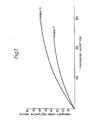
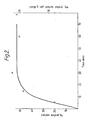
- the separate pieces of composite material were placed in dilute solutions of haemoglobin at various concentrations of 5mg/ml (Example 4) 10 mg/ml (Example 5) and 20 mg/ml (Example 6) (volume 15 mls) and left for 45 minutes at 20°C.
- the samples were then washed with distilled water until no further protein was eluted and the sorbed protein was desorbed using 1M sodium carbonate solution (l5mls).
- the quantity of protein desorbed from each sample is shown in Table 1. Subsequent washing with more carbonate and .lM sodium hydroxide increased the total protein desorbed only by a further 10%.
- a composite material containing as an active material hydrocxylapatite as prepared in Example 3 was tested for its ability to absorb and desorb lysozyme.
- the composite material prepared as in Example 3 was washed with water and a third placed in a solution of lysozyme (2.5mg protein/ml; l5ml) for 45 minutes. 57% of the lysozyme was sorbed and could be desorbed subsequently from the material by 0.1M sodium carbonate solution.
- An active material comprising Alusil N (Trade Mark) (12g) was suspended in a gel forming material comprising 2% agar w/v solution (Oxoid; 80 mls) at 50°C.
- the resulting viscous gel precursor was spread onto a support material comprising a 14 x 36cm strip of cloth (available under the trade name "J-cloth” from Johnson & Johnson Limited) held horizontally between clips and allowed to cool to room temperature and thereby set (in ⁇ 30 sec.) to form on the support material a permeable gel containing the active material Alusil N.
- the resulting composite material was washed in cold water.
- the quantity of protein sorbed by each portion was calculated by difference taking into account the 4ml of fluid held within the composite material.
- An active material comprising dry powdered aluminium hydroxide (3g) was suspended in a gel forming material comprising 2% agar solution (Oxoid, 30ml) at 50°C.
- the resulting viscous paste gel precursor was spread evenly onto a support material comprising a 16 x 36cm strip of cloth (available under the trade name "J-cloth” from Johnson & J ohnson Limited) held horizontally between clips and allowed to cool to room temperature and thereby set (in ⁇ 30 secs) to form on the support material a permeable gel containing the active material (aluminium hydroxide).
- the resulting composite material was washed in cold water.
- Example 17 A one-third portion of the composite material prepared in Example 17 was placed in a solution of hammerstein casein (ex BDH 2.5mg/ml, 15ml) for 45 minutes. 15% of the protein was sorbed and was subsequently removed from the composite material by elution with 0.1M sodium carbonate solution.
- An active material comprising titania powder (3g, ex May and Baker) was suspended in a gel forming material comprising 10% acrylamide/0.2% NN'-methylene-bis-acrylamide and 1% Xanthan gum (Sigma) in 0.1M phosphate buffer pH7 (30g). The resulting mixture was purged with nitrogen for 5 minutes, and TEMED solution (10% v/v, 0.3ml) and ammonium persulphate solution (10% w/v, 0.3ml) were added.
- the resulting viscous paste gel precursor was spread evenly on a support material comprising a 16 x 36cm strip of "J-cloth" held between two clips. A glass rod was used to spread the paste evenly.
- the cloth and gel precursor were then placed in a vaccum dessiccator for 15 minutes to gel the gel precursor and form on the support material a permeable gel containing the active material (titania).
- the resulting composite material was washed in water.
- a one-third portion of the composite material prepared in Example 19 was placed in a haemoglobin solution (10mg/1m1;15ml).
- Titania powder (3g, May & Baker) was suspended in 10% w/v acrylamide/0.25% bis acrylamide made up in 0.5% Xanthan gum/0.1M phosphate buffer (pH6, 30g). Nitrogen gas was bubbled through the resulting mixture for 5 minutes and the titania powder evenly distributed in the mixture. 10% w/v ammonium persulphate solution (0.5ml) and 10% v/v TEMED solution (0.6ml) were added, the resulting mixture well stirred and then poured into a frame formed by two glass plates separated by a 1/8" silicone gasket and containing a 18 x l5cm section of J-cloth held in a nylon bag. After 15 minutes a gel/cloth composite had formed and was removed from the frame.
- 10% w/v acrylamide/0.25% bis acrylamide made up in 0.5% Xanthan gum/0.1M phosphate buffer (pH6, 30g). Nitrogen gas was bubbled through the resulting mixture for 5 minutes and the titania powder evenly distributed in the
- the composite was washed to remove unreacted precursors and loosely bound powder.
- the composite could be transferred easily and quickly from one fluid bath to another and could be wound spirally (i.e. in a "swiss roll" configuration) for use in a column reactor.
Landscapes
- Chemical & Material Sciences (AREA)
- Analytical Chemistry (AREA)
- Organic Chemistry (AREA)
- Chemical Kinetics & Catalysis (AREA)
- Dispersion Chemistry (AREA)
- Solid-Sorbent Or Filter-Aiding Compositions (AREA)
- Manufacture Of Macromolecular Shaped Articles (AREA)
Applications Claiming Priority (2)
| Application Number | Priority Date | Filing Date | Title |
|---|---|---|---|
| GB8029342 | 1980-09-11 | ||
| GB8029342 | 1980-09-11 |
Publications (3)
| Publication Number | Publication Date |
|---|---|
| EP0048110A2 true EP0048110A2 (de) | 1982-03-24 |
| EP0048110A3 EP0048110A3 (en) | 1982-05-12 |
| EP0048110B1 EP0048110B1 (de) | 1986-06-11 |
Family
ID=10516007
Family Applications (1)
| Application Number | Title | Priority Date | Filing Date |
|---|---|---|---|
| EP81304002A Expired EP0048110B1 (de) | 1980-09-11 | 1981-09-02 | Selektive Abtrennung mit zusammengesetzten Materialien |
Country Status (5)
| Country | Link |
|---|---|
| US (1) | US4443339A (de) |
| EP (1) | EP0048110B1 (de) |
| JP (1) | JPS5781830A (de) |
| DE (1) | DE3174809D1 (de) |
| DK (1) | DK400281A (de) |
Cited By (10)
| Publication number | Priority date | Publication date | Assignee | Title |
|---|---|---|---|---|
| EP0099586A3 (en) * | 1982-07-23 | 1984-03-28 | Amf Incorporated | Fibrous media containing millimicron-sized particulates |
| EP0154751A3 (en) * | 1983-12-19 | 1986-05-21 | United Kingdom Atomic Energy Authority | Composite materials comprising porous, hollow particles, preparation and use thereof |
| EP0266580A3 (de) * | 1986-11-03 | 1988-09-14 | Excorim Kb | Methode zum Überziehen von festen Partikeln mit einem hydrophilen Gel und nach dieser Methode überzogene Partikel |
| EP0288310A3 (en) * | 1987-04-24 | 1989-02-15 | Unilever Plc | Substrate and process for making a substrate |
| EP0316642A3 (en) * | 1987-10-30 | 1989-06-21 | Fmc Corporation | Gel-in-matrix containing a fractured hydrogel |
| EP0324177A1 (de) * | 1987-12-29 | 1989-07-19 | Mitsubishi Kasei Corporation | Trennungsmittelzusammensetzung |
| WO1989008500A1 (en) * | 1988-03-19 | 1989-09-21 | Eric Robinson | Composite adsorbents |
| GB2224668A (en) * | 1988-11-09 | 1990-05-16 | Domnick Hunter Filters Ltd | Filter |
| WO1992002814A1 (de) * | 1990-07-31 | 1992-02-20 | Wulff Guenter | Mischbettsäulen für die flüssigchromatographie und verfahren zu ihrer füllung |
| GB2252260A (en) * | 1991-01-16 | 1992-08-05 | Medical Research Int | Method for filtration of biological material |
Families Citing this family (22)
| Publication number | Priority date | Publication date | Assignee | Title |
|---|---|---|---|---|
| JPS58145481A (ja) * | 1982-02-25 | 1983-08-30 | Canon Inc | 記録装置 |
| DE3407814A1 (de) * | 1984-03-02 | 1985-09-12 | Max-Planck-Gesellschaft zur Förderung der Wissenschaften e.V., 3400 Göttingen | Phasentraeger fuer die verteilungschromatographie von makromolekuelen, verfahren zu ihrer herstellung und ihre verwendung |
| US5167812A (en) * | 1984-11-28 | 1992-12-01 | Trustees Of The Univ. Of Penna. | Affinity chromatogry using dried calcium alginate-magnetite separation media in a magnetically stabilized fluidized bed |
| US5167811A (en) * | 1984-11-28 | 1992-12-01 | Trustees Of The University Of Pennsylvania | Affinity chromatography using dried calcium alginate-magnetite separation media in a magnetically stabilized fluidized bed |
| US4814128A (en) * | 1985-08-01 | 1989-03-21 | Gte Laboratories Incorporated | Process for making a homogeneous doped silicon nitride article |
| US4834928A (en) * | 1985-08-01 | 1989-05-30 | Gte Laboratories Incorporated | Doped silicon nitride article |
| US4840904A (en) * | 1987-09-18 | 1989-06-20 | The United States Of America As Represented By The United States Department Of Energy | Recovery and reuse of cellulase catalyst in an exzymatic cellulose hydrolysis process |
| US5283123A (en) * | 1989-05-03 | 1994-02-01 | Carter Deborah H | Adsorption material and method |
| US5628943A (en) * | 1991-03-27 | 1997-05-13 | Woog; Manfred J. | Method of making resin kernels and foam-like material containing reactive media |
| US5445732A (en) * | 1992-06-19 | 1995-08-29 | Sepracor Inc. | Passivated porous polymer supports and methods for the preparation and use of same |
| US5906734A (en) * | 1992-06-19 | 1999-05-25 | Biosepra Inc. | Passivated porous polymer supports and methods for the preparation and use of same |
| US5470463A (en) * | 1992-06-19 | 1995-11-28 | Sepracor Inc. | Passivated porous supports and methods for the preparation and use of same |
| US5268097A (en) * | 1992-06-19 | 1993-12-07 | Sepracor Inc. | Passivated and stabilized porous mineral oxide supports and method for the preparation and use of same |
| US5728301A (en) * | 1994-09-29 | 1998-03-17 | Truett; William L. | Apparatus and method for thin layer chromatography |
| US5906747A (en) * | 1995-11-13 | 1999-05-25 | Biosepra Inc. | Separation of molecules from dilute solutions using composite chromatography media having high dynamic sorptive capacity at high flow rates |
| US5711015A (en) * | 1996-01-19 | 1998-01-20 | Tofe; Andrew J. | Chemical decontamination using natural or artificial bone |
| US20040122141A1 (en) * | 2000-10-19 | 2004-06-24 | Todd Terry A | Composite media for ion processing and a method for making the composite media |
| US6514566B2 (en) * | 2000-10-19 | 2003-02-04 | Bechtel Bwxt Idaho, Llc | Ion processing element with composite media |
| US7629292B2 (en) * | 2000-10-19 | 2009-12-08 | Battelle Energy Alliance, Llc | Composite media for ion processing |
| US20040104156A1 (en) * | 2002-11-26 | 2004-06-03 | Kolesinski Henry S. | Chromatographic separation processes and apparatus |
| AU2003299566A1 (en) * | 2002-11-26 | 2004-06-18 | Prime Separations Incorporated | Chromatographic separation process |
| US7710389B2 (en) * | 2005-11-04 | 2010-05-04 | Xerox Corporation | Multi-layer display device using dot field applicators |
Family Cites Families (19)
| Publication number | Priority date | Publication date | Assignee | Title |
|---|---|---|---|---|
| US2979157A (en) * | 1942-10-23 | 1961-04-11 | American Viscose Corp | Process for producing gas-proof and gas-adsorbent materials and the articles so produced |
| FR84651E (fr) * | 1962-08-06 | 1965-03-26 | Lloyd And Hillman Ltd | Matières microporeuses et leur procédé de préparation |
| DE2155780A1 (de) * | 1971-11-10 | 1973-05-17 | Basf Ag | Verfahren zur herstellung semipermeabler membranen |
| JPS5216400B2 (de) * | 1971-12-17 | 1977-05-09 | ||
| US3837960A (en) * | 1972-06-09 | 1974-09-24 | Marine Colloids Inc | Method of making hydratable gel sheets |
| US3922432A (en) * | 1973-02-01 | 1975-11-25 | Marine Colloids Inc | Medium for separation processes |
| US3878100A (en) * | 1973-02-01 | 1975-04-15 | Marine Colloids Inc | Separation medium |
| GB1527753A (en) * | 1974-09-26 | 1978-10-11 | Mitsubishi Rayon Co | Method of manufacturing adsorbent materials and their use in waste water purification |
| DE2460835C2 (de) * | 1974-12-21 | 1982-11-18 | Chemie-Anlagenbau Bischofsheim GmbH, 4500 Osnabrück | Verfahren zur Herstellung von Filtermaterial |
| JPS51145483A (en) * | 1975-06-10 | 1976-12-14 | Toyo Cloth Kk | Method of producing adsorbing filter |
| JPS568901Y2 (de) * | 1975-07-23 | 1981-02-26 | ||
| JPS5221998A (en) * | 1975-08-10 | 1977-02-18 | Sumitomo Heavy Ind Ltd | Hexagon-forming,arranging,and conveying apparatus of cyrindrical bodie s |
| GB1574414A (en) * | 1975-12-15 | 1980-09-03 | Atomic Energy Authority Uk | Composite materials |
| US4335017A (en) * | 1975-12-15 | 1982-06-15 | United Kingdom Atomic Energy Authority | Composite materials comprising deformable xerogel within the pores of particulate rigid supports useful in chromatography |
| DE2558363A1 (de) * | 1975-12-23 | 1977-07-07 | Alvaro Prof Dr Affonso | Membranelement zum selektiven entfernen von stoffen aus menschlichem blut |
| DE2705734C3 (de) * | 1977-02-11 | 1982-04-22 | Akzo Gmbh, 5600 Wuppertal | Dialysemembran für die Hämodialyse |
| DE2655024C3 (de) * | 1976-12-04 | 1982-04-22 | Fa. Carl Freudenberg, 6940 Weinheim | Trägerschicht für eine semipermeable Membran |
| US4251597A (en) * | 1978-12-01 | 1981-02-17 | Rohm And Haas Company | Coating, impregnating and adhesive compositions curable at ambient temperature, and methods of using them |
| JPS5498095A (en) * | 1978-01-18 | 1979-08-02 | Kuraray Co | Adsorptive blood purifier |
-
1981
- 1981-09-02 DE DE8181304002T patent/DE3174809D1/de not_active Expired
- 1981-09-02 EP EP81304002A patent/EP0048110B1/de not_active Expired
- 1981-09-03 US US06/299,294 patent/US4443339A/en not_active Expired - Fee Related
- 1981-09-09 DK DK400281A patent/DK400281A/da not_active Application Discontinuation
- 1981-09-11 JP JP56143750A patent/JPS5781830A/ja active Pending
Cited By (12)
| Publication number | Priority date | Publication date | Assignee | Title |
|---|---|---|---|---|
| EP0099586A3 (en) * | 1982-07-23 | 1984-03-28 | Amf Incorporated | Fibrous media containing millimicron-sized particulates |
| EP0154751A3 (en) * | 1983-12-19 | 1986-05-21 | United Kingdom Atomic Energy Authority | Composite materials comprising porous, hollow particles, preparation and use thereof |
| EP0266580A3 (de) * | 1986-11-03 | 1988-09-14 | Excorim Kb | Methode zum Überziehen von festen Partikeln mit einem hydrophilen Gel und nach dieser Methode überzogene Partikel |
| US4971833A (en) * | 1986-11-03 | 1990-11-20 | Excorim Kb | Method of coating solid particles with a hydrophilic gel |
| EP0288310A3 (en) * | 1987-04-24 | 1989-02-15 | Unilever Plc | Substrate and process for making a substrate |
| US4965289A (en) * | 1987-04-24 | 1990-10-23 | Unilever Patent Holdings B.V. | Substrate and process for making a substrate |
| EP0316642A3 (en) * | 1987-10-30 | 1989-06-21 | Fmc Corporation | Gel-in-matrix containing a fractured hydrogel |
| EP0324177A1 (de) * | 1987-12-29 | 1989-07-19 | Mitsubishi Kasei Corporation | Trennungsmittelzusammensetzung |
| WO1989008500A1 (en) * | 1988-03-19 | 1989-09-21 | Eric Robinson | Composite adsorbents |
| GB2224668A (en) * | 1988-11-09 | 1990-05-16 | Domnick Hunter Filters Ltd | Filter |
| WO1992002814A1 (de) * | 1990-07-31 | 1992-02-20 | Wulff Guenter | Mischbettsäulen für die flüssigchromatographie und verfahren zu ihrer füllung |
| GB2252260A (en) * | 1991-01-16 | 1992-08-05 | Medical Research Int | Method for filtration of biological material |
Also Published As
| Publication number | Publication date |
|---|---|
| EP0048110A3 (en) | 1982-05-12 |
| US4443339A (en) | 1984-04-17 |
| EP0048110B1 (de) | 1986-06-11 |
| DE3174809D1 (en) | 1986-07-17 |
| DK400281A (da) | 1982-03-12 |
| JPS5781830A (en) | 1982-05-22 |
Similar Documents
| Publication | Publication Date | Title |
|---|---|---|
| EP0048110B1 (de) | Selektive Abtrennung mit zusammengesetzten Materialien | |
| CA1180290A (en) | Composite material containing an immobilized biological active species | |
| Sun et al. | The adsorption of basic dyes from aqueous solution on modified peat–resin particle | |
| US5902834A (en) | Method of manufacturing particles, and particles that can be produced in accordance with the method | |
| Chiou et al. | Equilibrium and kinetic modeling of adsorption of reactive dye on cross-linked chitosan beads | |
| Vecchio et al. | Heavy metal biosorption by bacterial cells | |
| Khoo et al. | Biosorption of gold by immobilized fungal biomass | |
| EP0172579B1 (de) | Kieselträger | |
| DE69531617T2 (de) | Polymere mikrokugen und herstellungsverfahren | |
| CN104759265B (zh) | 一种多孔泡沫体重金属吸附材料的制备方法 | |
| EP0066630B1 (de) | Zusammengesetztes adsorbierendes formstück und verfahren zu dessen herstellung | |
| Ma et al. | Electrospun polyethersulfone affinity membrane: Membrane preparation and performance evaluation | |
| JPH08502534A (ja) | 多孔物質の細孔サイズ選択的修飾法 | |
| GB2163064A (en) | Self-supporting absorbent structure | |
| Anirudhan et al. | Adsorption characteristics of humic acid-immobilized amine modified polyacrylamide/bentonite composite for cationic dyesin aqueous solutions | |
| AU778045B2 (en) | Process for making fluorinated polymer adsorbent particles | |
| US5906747A (en) | Separation of molecules from dilute solutions using composite chromatography media having high dynamic sorptive capacity at high flow rates | |
| CN105289557A (zh) | 利用Pickering-高内相乳液模板法制备磁性气凝胶吸附材料的方法 | |
| Denizli | Preparation of immuno-affinity membranes for cholesterol removal from human plasma | |
| EP2741605B1 (de) | Polymeres sorptionsmittel zur entfernung von verunreinigungen aus vollblut und blutprodukten | |
| Unsal et al. | DNA adsorption onto polyethylenimine-attached poly (p-chloromethylstyrene) beads | |
| CN109967026A (zh) | 一种改性氨氮吸附材料及其制备方法 | |
| CN115678043B (zh) | 沸石-纤维素聚丙烯酰胺复合水凝胶及其制备和应用 | |
| WO1992000805A1 (de) | Poröse, nichtpartikuläre und konvektiv permeable matrix | |
| Arpa et al. | Adsorption of heavy metal ions on polyhydroxyethylmethacrylate microbeads carrying Cibacron Blue F3GA |
Legal Events
| Date | Code | Title | Description |
|---|---|---|---|
| PUAI | Public reference made under article 153(3) epc to a published international application that has entered the european phase |
Free format text: ORIGINAL CODE: 0009012 |
|
| PUAL | Search report despatched |
Free format text: ORIGINAL CODE: 0009013 |
|
| AK | Designated contracting states |
Designated state(s): CH DE GB SE |
|
| AK | Designated contracting states |
Designated state(s): CH DE GB SE |
|
| 17P | Request for examination filed |
Effective date: 19821028 |
|
| GRAA | (expected) grant |
Free format text: ORIGINAL CODE: 0009210 |
|
| AK | Designated contracting states |
Kind code of ref document: B1 Designated state(s): CH DE GB LI SE |
|
| REF | Corresponds to: |
Ref document number: 3174809 Country of ref document: DE Date of ref document: 19860717 |
|
| PLBE | No opposition filed within time limit |
Free format text: ORIGINAL CODE: 0009261 |
|
| STAA | Information on the status of an ep patent application or granted ep patent |
Free format text: STATUS: NO OPPOSITION FILED WITHIN TIME LIMIT |
|
| 26N | No opposition filed | ||
| PG25 | Lapsed in a contracting state [announced via postgrant information from national office to epo] |
Ref country code: SE Effective date: 19890903 |
|
| PG25 | Lapsed in a contracting state [announced via postgrant information from national office to epo] |
Ref country code: LI Effective date: 19890930 Ref country code: CH Effective date: 19890930 |
|
| PGFP | Annual fee paid to national office [announced via postgrant information from national office to epo] |
Ref country code: GB Payment date: 19890930 Year of fee payment: 9 |
|
| REG | Reference to a national code |
Ref country code: CH Ref legal event code: PL |
|
| PG25 | Lapsed in a contracting state [announced via postgrant information from national office to epo] |
Ref country code: DE Effective date: 19900601 |
|
| PG25 | Lapsed in a contracting state [announced via postgrant information from national office to epo] |
Ref country code: GB Effective date: 19900902 |
|
| GBPC | Gb: european patent ceased through non-payment of renewal fee | ||
| EUG | Se: european patent has lapsed |
Ref document number: 81304002.9 Effective date: 19900521 |