EP0048119A2 - Verfahren zur Herstellung von Polyimiden und daraus bestehende Gegenstände - Google Patents
Verfahren zur Herstellung von Polyimiden und daraus bestehende Gegenstände Download PDFInfo
- Publication number
- EP0048119A2 EP0048119A2 EP81304061A EP81304061A EP0048119A2 EP 0048119 A2 EP0048119 A2 EP 0048119A2 EP 81304061 A EP81304061 A EP 81304061A EP 81304061 A EP81304061 A EP 81304061A EP 0048119 A2 EP0048119 A2 EP 0048119A2
- Authority
- EP
- European Patent Office
- Prior art keywords
- precursor
- microwave radiation
- polyimide
- diamines
- diamine
- Prior art date
- Legal status (The legal status is an assumption and is not a legal conclusion. Google has not performed a legal analysis and makes no representation as to the accuracy of the status listed.)
- Withdrawn
Links
Images
Classifications
-
- C—CHEMISTRY; METALLURGY
- C08—ORGANIC MACROMOLECULAR COMPOUNDS; THEIR PREPARATION OR CHEMICAL WORKING-UP; COMPOSITIONS BASED THEREON
- C08J—WORKING-UP; GENERAL PROCESSES OF COMPOUNDING; AFTER-TREATMENT NOT COVERED BY SUBCLASSES C08B, C08C, C08F, C08G or C08H
- C08J9/00—Working-up of macromolecular substances to porous or cellular articles or materials; After-treatment thereof
- C08J9/02—Working-up of macromolecular substances to porous or cellular articles or materials; After-treatment thereof using blowing gases generated by the reacting monomers or modifying agents during the preparation or modification of macromolecules
-
- C—CHEMISTRY; METALLURGY
- C08—ORGANIC MACROMOLECULAR COMPOUNDS; THEIR PREPARATION OR CHEMICAL WORKING-UP; COMPOSITIONS BASED THEREON
- C08G—MACROMOLECULAR COMPOUNDS OBTAINED OTHERWISE THAN BY REACTIONS ONLY INVOLVING UNSATURATED CARBON-TO-CARBON BONDS
- C08G73/00—Macromolecular compounds obtained by reactions forming a linkage containing nitrogen with or without oxygen or carbon in the main chain of the macromolecule, not provided for in groups C08G12/00 - C08G71/00
- C08G73/06—Polycondensates having nitrogen-containing heterocyclic rings in the main chain of the macromolecule
- C08G73/10—Polyimides; Polyester-imides; Polyamide-imides; Polyamide acids or similar polyimide precursors
- C08G73/1003—Preparatory processes
- C08G73/1007—Preparatory processes from tetracarboxylic acids or derivatives and diamines
- C08G73/1025—Preparatory processes from tetracarboxylic acids or derivatives and diamines polymerised by radiations
-
- C—CHEMISTRY; METALLURGY
- C08—ORGANIC MACROMOLECULAR COMPOUNDS; THEIR PREPARATION OR CHEMICAL WORKING-UP; COMPOSITIONS BASED THEREON
- C08J—WORKING-UP; GENERAL PROCESSES OF COMPOUNDING; AFTER-TREATMENT NOT COVERED BY SUBCLASSES C08B, C08C, C08F, C08G or C08H
- C08J2379/00—Characterised by the use of macromolecular compounds obtained by reactions forming in the main chain of the macromolecule a linkage containing nitrogen with or without oxygen, or carbon only, not provided for in groups C08J2361/00 - C08J2377/00
- C08J2379/04—Polycondensates having nitrogen-containing heterocyclic rings in the main chain; Polyhydrazides; Polyamide acids or similar polyimide precursors
- C08J2379/08—Polyimides; Polyester-imides; Polyamide-imides; Polyamide acids or similar polyimide precursors
Definitions
- our invention relates to polyimides and, more particularly, to novel, improved methods for preparing polymers of that character.
- polyimides are extremely valuable materials because of their chemical inertness, strength, and temperature resistance.
- polyimides There are also certain classes of proprietary polyimides which have such additional advantages as retention of strength, resiliency, and flexibility at cryogenic temperatures; resistance to hydrolysis and ultraviolet degration; capability of undergoing oxidative degradation without generating toxic products or smoke; a novel closed cell structure which suits them for applications in which they are in contact with moving parts; the capacity to be transformed into porous fibers and other shapes and into rigid panels, cushioning, thermal acoustical insulation and a host of other novel products.
- These polyimides are disclosed in, inter alia, U.S. patents nos.
- These proprietary polyimides are prepared by reacting 3,3', 4,4'-benzophenonetetracarboxylic acid or a dianhydride of that acid with a lower alkyl alcohol to form a half ester of the acid and then adding one or more primary diamines to the half ester solution to form an essentially monomeric precursor. This monomer is then converted to a polyimide by heating it.
- the foam can be employed as such-in a seat cushion or as insulation, for example.
- the flexible, resilient polyimide foam can be converted to a dense, rigid, structurally strong, intumescent material by heating it under pressure.
- the foam can also be comminuted and used as a molding powder as described in patent no. 3,726,834.
- the foaming of the precursor and the curing of the foam to develop the polyimide chemical structure have been accomplished by heating the precursor in a circulating air oven.
- polyimide foams of superior quality can be produced, typically in less time, by employing microwave heating to cure the precursor.
- microwave heating has the advantages of producing foams with a more homogeneous cellular structure and of making it unnecessary to handle the fragile, uncured foam which is generated as the precursor is heated.
- Exemplary of the polyimide foams which can be prepared to advantage by the use of microwave heating in accord with the principles of the present invention are the, copolymers described in U.S. Reissue Patent No. 30,213 and the terpolymers described in copending application no. 186,668.
- the patented copolymers are derived from precursors which, in their preferred forms, are essentially equimolar mixtures of a lower alkyl half ester of BTDA and two primary diamines.
- One of the diamines is a heterocyclic diamine, and the other is an aromatic meta- or para-substituted diamine which is free of aliphatic moieties.
- a ratio of 0.4 to 0.6 mole of heterocyclic diamine per mole of 3,3', 4,4'-benzophenonetetracarboxylic acid ester is preferred as this results in foams with optimal mechanical properties.
- precursors having a heterocyclic diamine/acid ester ratio of 0.3 have also successfully been employed.
- the terpolyimides described in copending application no. 186,668 differ chemically from the copolyimides just described in that they are made from precursors which include an aliphatic diamine in addition to the aromatic and heterocyclic diamines employed in the copolyimide precursors.
- From 0.05 to 0.3 mole of aliphatic diamine per 1.0 mole of benzophenonetetracarboxylic acid ester can be employed, and from 0.1 to 0.3 mole of heterocyclic diamine per mole of ester can be used.
- aromatic and heterocyclic diamines that can be employed in the just described copolyimides are:
- Aromatic and heterocyclic diamines selected from those listed in the literature can also be utilized in copolyimides and terpolyimides of the character described above.
- Aliphatic diamines having from three to 12 carbon atoms have been employed in the terpolyimides. However, diamines having no more than six carbon atoms will typically prove preferable. Also, aliphatic diamines with even numbered chains are preferred.
- Aliphatic diamines we have used include:
- the precursors of the polyimides with which we are concerned are prepared by first reacting 3,3 1 , 4,4'-benzophenonetetracarboxylic acid (or preferably, its dianhydride) with an esterification agent to form an alkyl diester or half ester.
- esterification agents are methyl, ethyl, propyl, and isopropyl alcohols.
- Methanol is in many cases preferred because of its widespread availability, low cost, and other attributes; because its use facilitates conversion of the precursor to a polyimide foam; and because the foams made from the methyl esters tend to be more flexible, resilient, and compression set resistant.
- Ethanol is also a preferred esterification agent.
- the esterification reaction is followed by the addition of the diamine or diamines, which are dissolved in the reaction mixture.
- the temperature is kept below the reflux temperature of the esterification agent during dissolution of the diamines and low enough to avoid polymerization of the diamines and ester.
- Graphite, glass, and other fibers as well as other fillers such as glass microballoons and additives such as cross-linking agents can be added to the resulting composition to impart wanted properties to the final product.
- a surfactant can also be added to increase fatigue resistance and to make the foam more flexible and resilient by increasing its bubble stability and the uniformity of the cellular structure.
- One preferred surfactant is FS-B, a nonionic, fluorinated, polyalkylene copolymer manufactured by E. I. DuPont de Nemours and Company.
- surfactants that have been successfully employed are FS-C, AS-2, and X-3, nonionic surfactants of the same general chemical composition as FS-B and manufactured by the same company and L-530, L-5410, and L-5430, which are silicone surfactants manufactured by Union Carbide Company. We employ from 0.015 to 1.5 percent of surfactant based on the weight of the ester and diamine constituents.
- the material existing after dissolution of the diamines and the addition of any additives may range in form from a "liquid resin" to a spreadable, pastelike formulation depending upon the nature and quantity of any fillers added to the resin.
- the material may be used in the form just described; or it can be transformed into an amorphous powder capable of being converted into a flexible, resilient, terpolyimide foam.
- spray drying be employed for this purpose because the liquid resin can thereby be transformed on a continuous basis and in one step into a dry powder. Also, spray drying allows for modification of the precursor in ways which can be used to vary the properties of the final product.
- the dried precursor is comminuted and/or screened, if necessary, to a size distribution of about 300 microns X O before it is converted to the corresponding polyimide by microwave heating.
- Dry particulate precursors produced by the technique just described can be converted to polyimide foams by the free rise technique; by an open mold, constrained rise technique in which spacers are employed to limit the rise of the foam; or in a closed mold.
- Foaming-curing parameters that have proven satisfactory in converting representative precursors to flexible, resilient foams are two to 55 minutes exposure to high frequency radiation in an oven operating at a frequency of 915 to 2450 mHz and at 3.75 to 15 kW power and a power output to precursor unit weight ratio of 0.6 to 1 kW/kg.
- dry particulate precursors are preheated before they are exposed to microwave radiation. This contributes to higher foam rise, a more homogeneous cellular structure, and a reduced scrap rate.
- the microwave energy is not required, and pulsed or cyclic exposure of the precursor to the microwave energy may even produce superior results.
- the duration of the microwave energy pulses and the intervals therebetween will be on the order of 60 and 20 seconds, respectively.
- conductive fillers can often advantageously be incorporated in the precursor to promote its conversion to a polyimide by generating additional thermal energy. From 5 to 20 weight percent of activated carbon or graphite can be employed for that purpose.
- Another technique that can be used to advantage in making polyimide foams and artifacts including such foams by the practice of the present invention is thermal heating of the microwave cavity. Temperatures in the range of 121.1 to 232.2°C (250 to 450°F) are employed.
- an optimum product can in many, if not most, cases be obtained by heating the substrate or mold on or in which the precursor is foamed to a temperature of 121.1 to 148.9°C (250 to 300°F) before the precursor is exposed to microwave energy.
- quality may in many cases be optimized by employing different microwave energy power levels to foam the precursor and to subsequently cure the foam.
- a power level of 10 kW for foaming followed by one of 15 kW has been selected as optimum (for terpolyimide systems, power levels of 10 and 8.4 kW were chosen).
- the depth and loading of the particulate precursor on the substrate are important to the development of a stable, homogeneous structure in the foam to which the precursor is converted.
- the powder should be at least 0.5 cm deep. Powder loadings as low as 1.6 kg/m 2 have been successfully employed. However, loadings in the range of 4.3 to 15 kg/m 2 are preferred; and loading of ca. 4.3 and 7.7 kg/m 2 are thought to be optimum in most cases for terpolyimide and copolyimide systems, respectively.
- the precursor it is not essential that the precursor be dried before it is foamed.
- the use of a liquid resin precursor can often be employed to advantage -- e.g., in making composite products such as reinforced panels.
- Another aspect of our invention resides in novel, improved processes for making artifacts of the type just described and others of comparable character.
- a liquid resin precursor as described above and compounded with selected fillers is spread on glass cloth (e.g., Owens Corning Style L20) wet with the resin.
- glass cloth e.g., Owens Corning Style L20
- a second resin wetted glass cloth is placed on top the compounded resin.
- Solvent is removed by heating the resulting sandwich in a circulating air oven at a temperature of not nore than 300 and preferably about 250°F for 2 to 16 hours or by exposing it to microwave radiation for 2.25 to 12 ninutes, typically at a power level on the order of 1.25 to 2 kW.
- Foaming and curing of the precursor by the open mold, constrained rise technique using the process parameters described above follows the solvent removal step; and this is typically succeeded by thermal postcuring as described hereinafter.
- fillers including glass strands and microballoons can be employed in panels made by the techniques just described. From 5 to 40 weight percent of filler based on the weight of the polyimide into which the precursor is converted can be used.
- One exemplary combination of fillers that has proven satisfactory is 7.5 to 10 weight percent of unsized or heat cleaned, glass strands and 12.5 to 15 weight percent of glass microballoons (e.g., 3M Company C-15X).
- liquid resin precursor will typically be diluted with an alkyl alcohol in a ratio of 20 parts per hundred (phr) of resin in the case of coployimide systems and 30 phr if terpolyimide resins are involved before the filler(s) is added.
- phr parts per hundred
- terpolyimide resins are involved before the filler(s) is added.
- the quality of the product is optimized by reducing the solvent content of the resin and reinforcement mixture to a level of 29-31 weight percent by thermal or microwave drying before the precursor is foamed.
- the microwave heating step or steps can often be followed to advantage by the thermal postcure of the polyimide mentioned above. This is accomplished by heating the product of the microwave heating step in a circulating air oven at a temperature of 500 to 550°F for 30 to 200 minutes to complete the curing of the polyimide.
- Substrate and mold materials that have been found suitable include Ridout Plastics Company polypropylenes lined with a Teflon coated glass (Taconic 7278); Pyroceram (a Corning Glass crystalline ceramic made from glass by controlled nucleation); and glass filled polyimides. Other materials possessing the necessary attributes discussed above can also be employed.
- one primary object of the present invention resides in the provision of novel, improved methods of preparing polyimide foams from their precursors and for preparing artifacts containing such foams.
- Another important, and primary, object of the present invention resides in the provision of novel, improved methods of manufacturing polyimide foams and foam-containing artifacts in which microwave heating is employed to foam the precursor and to cure the foam.
- polyimide systems which have been foamed and cured by the techniques disclosed herein and subsequently evaluated are 1701-1 and 1702-1, both copolyimides, and 1720-1 which is a terpolyimide.
- the 1702-1 precursor was prepared by adding 3,3', 4,4'-benzophenonetetracarboxylic acid dianhydride (322.2 g, 1.0 mole) to 240 ml of methyl alcohol and 24 ml of H 2 0 in a one-liter, three-neck flask equipped with a thermometer, a mechanical stirrer, and a reflux condenser. After addition, the mixture was heated and refluxed until clear. The mixture was then refluxed for an additional 60 minutes to ensure complete esterification of the acid to its half ester.
- reaction mixture was then cooled to 40-50°C (104-122°F).
- FS-B surfactant was next added to the mixture in an amount of 0.1 percent based on the weight of the methyl half ester and the diamines.
- liquid resin precursor this produced was converted to a dry particulate form using the spray drying technique described in copending application no. 186,670 with a spray dryer inlet temperature of 100° C , an outlet temperature of 63-70°C, and an atomizer speed of 30,000 to 32,000 rpm.
- the precursor was diluted with methanol in a ratio of 20 parts of the alcohol to 100 parts of resin before it was spray dried.
- the dried powder was collected, sieved through a No. 48 Tyler mesh screen (297 micron diameter openings) and rolled for 30 minutes in a round plastic bottle to eliminate lumps.
- the 1701-1 precursors (liquid resin and dry powder) were prepared in the manner just described from the same compounds using a 3,3', 4,4'-benzophenonetetracarboxylic acid methyl ester: 2,6-diamino pyridine: p,p'- methylene dianiline molar ratio of 1.0:0.4:0.6.
- the 1720-1 terpolyimide precursors were prepared by forming the methyl half ester of 3,3', 4,4'-benzophenonetetracarboxylic acid in the manner described above.
- the half ester solution was cooled to 25-35°C (77-95°F); and 2,6 diaminopyriding (32.8 g, 0.3 mole) and p,p-methylene dianiline (99.1 g, 0.5 mole) were added and the contents of the flask mixed for 15 minutes. 1,6 Diaminohexane (23.7 g, 0.2 mole) was then added at a slow enough rate to keep the reaction temperature from exceeding 65°C (l49°F), completing the preparation of the liquid resin.
- FS-B surfactant 0.1 weight percent was added to the liquid resin, the latter diluted with 30 phr of methyl alcohol, and the resulting liquid spray dried with the reactor operated at an inlet temperature of 100°C and outlet temperatures in the range of 69-75°C.
- Foam rise, cellular structure, resiliency, striations, density, fatigue, compression set,indentation load deflection, hydrolytic stability, and flammability were determined although not all of these parameters were measured in every test.
- ILD Indentation load deflection
- Compression set is the permanent deformation obtained by subjecting a foam to a specified compressive stress (load and time). Compressive set is also indicative of the seatability of a foam and, in addition, is a measure of its durability.
- Compression set of the foams at 90 percent compression was determined according to ASTM Standard D-1564, Method B, using two steel plates held parallel to each other by clamps with the space between the plates adjusted to the required thickness by spacers.
- the resistance of the foam to cyclic shear loadings was determined in accordance with ASTM Standard D-1564, Procedure B, with the exception that examination and measurement of the foam for loss of thickness was made at 10,000 and 20,000 cycles.
- the fatigue tester was constructed in accordance with the ASTM Standard just identified.
- the flammability characteristics of the foams were obtained by determination of the smoke density in accordance with the procedure for utilizing the NBS Smoke Density Chamber (see American Instrument Co., Aminco Catalog No. 4-5800, Instruction No. 941).
- the relative flammabilities of the foams were determined by measuring the minimum of oxygen and nitrogen that will just support combustion of the material (LOI).
- the test apparatus for this determination was prepared in accordance with ASTM Standard D-2863.
- Density tests were made in accordance with ASTM Standard D-1564, Suffix W. Density of the polyimide foam is important because most physical properties of a polymeric foam approach a straight-line relationship to density. Among the important properties of which this is true are indentation load deflection and compression set.
- preheating of the precursor before it is exposed to microwave radiation can be employed to advantage.
- the effects of preheat are demonstrated by a study in which the effect of preheat temperature at constant preheat time was evaluated at four different temperatures using 1701-1 precursors modified with 0.015 and 0.05 weight percent of AS-2 surfactant. These were 121.1°C (250°F), 176.7°C (350°F), 232.2°C (450°F), and 287.8°C (550°F).
- the time of preheat was kept constant at 2 minutes.
- the data show that preheating the polyimide precursor at temperatures below 300°F (149°C) prior to microwave foaming contributes to higher foam rise, lower scrap rate, and a more homogeneous cellular structure.
- the microwave foaming process is carried out after preheating the powder at 300°F and higher, the foam rise is erratic; and cavities, large flaws, and striations were observed.
- the data also indicate that the compression set properties are independent of preheat temperature when the time is kept constant.
- Still another technique that can on occasion be employed to advantage in the practice of the present invention is the incorporation of a conductive filler in the precursor.
- Appropriate fillers are capable of interacting with the microwave field and consequentially producing sufficient thermal energy to permit foaming and curing of polyimide precursors in a single step.
- Graphite proved capable of producing a temperature increase of 191°C (375°F) and partial curing of the foams.
- the temperature increase was in excess of 315 0 C (600°F) (and possibly higher because the foams began to char). None of the other additives produced any significant thermal effect.
- the energy absorbed during the microwave heating step was found to be dependent on the size of the precursor charge.
- foaming and curing occurred at filler concentrations as low as four to five percent.
- the 915 mHz tests were started at a power of 10 kW with the highest foam rise at 15 to 20 kW.
- the 915 mHz frequency will therefore foam polyimide resin precursors; but the interaction of the precursors at this frequency is not as rapid as at the 2450 mHz frequency, and foaming is more dependent on the size of the charge being processed.
- Pulsing was carried out by automatically and alternately switching the microwave power ON for 60 seconds and OFF for 20 seconds during the foaming and curing process.
- a power output of 8.4 kW for 15 minutes was used for foaming, and this was followed by a microwave radiation cure at 15 kW for 15 minutes and a thermal cure in the circulating air oven at 243°C (470 * F) for 1-2 hours depending upon the particular test.
- the foams obtained by this pulsing technique using 10 kg/m 2 loading possessed a very homogeneous cellular structure and were practically free of reticulation and flaws.
- the thickness of the precursor charge and the loading factor (weight per unit area) also have a considerable effect on the foaming of the particulate precursor. This is demonstrated by tests employing 1702-1 and 1720-1 precursors, the procedure of Example I, a microwave radiation frequency of 2450 mHz, a power output of 10 kW, and a 3 to 6 minute heating cycle.
- the data show that greater thicknesses contribute to curing and that the quality of the foam is highly dependent on the thickness of the charge and on the powder loading factor.
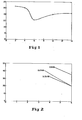
- Example II One study in accord with the procedure of Example I of the effects of foaming time on foam properties was carried out using 1720-1 terpolyimide precursors containing 0.05 percent AS-2 surfactant. Foaming was at power outputs of 2.5, 3.75, and 5.0 kW. Results of this study are shown graphically in Figure 2.
- the optimum time of exposure to the microwave radiation will, of course, vary from application to application depending upon a variety of factors such as the polyimide system involved, the presence or absence of conductive fillers (see Example V), the thickness and loading factor of the precursor charge, the power output, etc.
- Exemplary of many studies in which this was confirmed was one in which 600 g lots of 1701-1 powder precursors modified with 0.015 and 0.02 percent of AS-2 surfactant were foamed on Teflon substrates in the 5 kW microwave oven by the free rise technique. The foams were then thermally postcured in the circulating air oven at temperatures of 260, 288, 315 and 330°C (500, 550, 600, and 625°F). The curing times at each temperature were 30, 60, and 90 minutes.
- the properties of the foam -- of which compression set is exemplary -- are highly dependent on the temperature employed in the postcure cycle and on the duration of that cycle as well.
- the following example deals with the constrained rise, open mold technique.
- the foams were generally acceptable. However, compression set was considerably inferior to that of foams produced by free rise techniques.
- Teflon-coated glass Teflon-coated glass
- glass filled polyimide molded sheets Pyrex glass
- polypropylene The mold was lined with high porosity Teflon-coated glass (Taconic, 7278) to permit the escape of the volatiles formed during foaming.
- Teconic, 7278 high porosity Teflon-coated glass
- the process involved placing a 1701-1 precursor in the mold followed by foaming in the 5 kW microwave oven.
- the foams were removed from the mold after foaming and thermally postcured at 288°C (55 ⁇ °F) for one hour.
- One procedure for preparing rigid panels which also demonstrates that our invention can be used to process liquid resin precursors as well as powders, includes the step of compounding a liquid resin precursor with selected fillers in a variable speed, ABBE double shaft mixer until the filler is thoroughly wetted. Glass cloth (120 style) wetted with resin is placed on a sheet of aluminum foil. The resin mixture is spread over the cloth to a depth depending upon the density and thickness desired. The top surface of the panel is then covered with another piece of wetted glass cloth.
- Solvent is removed by drying the wet panel in a circulating air oven at 82°C (180°F) for 120 minutes or in a microwave oven until 29-31 percent of the solvent has been removed for a phr dilution ratio of 20.
- the aluminum foil is removed from the dried panel and the sample placed between two sheets of Teflon-coated glass cloth.
- the dried panel is further processed by foaming and curing. Foaming of the panel is carried out in the microwave oven at a power output of 5.0-10 kW between two sheets of microwave compatible material.
- the samples were cured in a circulating air oven at a temperature of 287.7°C (550°F) for 30 minutes and cut to the desired dimensions.
- Microwave drying in this and other applications of our invention involving the drying of a precursor containing a liquid resin are in general preferred.
- the advantages of this technique are shorter drying cycles and more even drying, which results in a superior product.
- the substrate or mold prior to foaming the precursor be it a liquid resin or dry powder. This results in greater expansion and a consequent reduction in foam dw withdrawal tests.
- Compression tests used the procedure described in ASTM Standard C365.
- the apparatus was an Instron Model TM-SM compression tester with a full-scale load range of 500 g and a crosshead speed range of 0.05 to 10.0 cm/min.
- Determination of the flexural strength was carried out by a modified form of MIL-STD-401 using a test specimen size of approximately 7.5 x 17.5 cm (19 x 6.9 in).
- the burning characteristics of the rigid panels were obtained by observing flame penetration at various time intervals up to 10 minutes when the specimen was subjected to a Meker burner, by determination of the smoke density in accordance with the NBS procedure identified in Example I, and by measuring the relative flammability of the panels from determination of the oxygen index (L O I).
- a 1702-1 liquid resin modified with 2.2 weight percent of Imperial Chemical Company L-170 crosslinking agent was used to make a panel by the process described in Example XII.
- the filler was composed of Owens Corning type 405 glass strands which had been heated at 800°F to remove the sizing. Unsized or heat cleaned strands tend to separate into individual small diameter fibers when blended with the liquid resin. This results in a lower foam rise and a finer, higher density cellular structure. Therefore, a lower less expensive concentration of heat cleaned strands can be used.
- the resulting product is a low density reinforced polyimide which is suited for use as the core of a wall panel in aircraft interiors, for example.
- Another specific procedure for making a rigid panel differs from that described generally above and from the specific procedure of the preceding example primarily by the technique employed to lay up the panel.
- Half of the resin and reinforcement mixture was spread on the wetted glass cloth, and this was followed by microwave drying. The remaining mixture was laid up on this layer; this was followed by second stage drying.
- a typical drying cycle for a 1.11 m 2 (12 ft 2 ) panel was 15 minutes for the first stage followed by 30 minutes for the second stage using a power output of 10 kW.
- One rigid panel was produced by the technique just described using 1.59 cm (.625 in) thick Pyrex plates and the following process parameters.
- Dry particulate precursors can also be employed in manufacturing rigid polyimides by processes employing microwave radiation in accord with the principles of our invention.
- One such process utilizes a powder precursor in conjunction with microwave heating and constrained foam rise.
- Additives are mixed with the powder resin in an Osterizer Blender for 1-2 minutes, and the powder composition is spread on a sheet of Teflon-coated glass.
- the lay-up techniques used for composites containing liquid resins can be employed to form the panel and to foam and cure the precursor.
- panels having dimensions of 0.81 x 1.22 m 32 x 48 in.
- panels having dimensions of 0.81 x 1.22 m 32 x 48 in.
- Example XV panels having dimensions of 0.81 x 1.22 m (32 x 48 in.) were produced essentially as described in Example XV from a 1702-1 powder resin modified with 3 percent AS-2 and 1.5 percent.Imperial Chemical Company L-170 cross-linking agent and foamed between two coated 120 style satin weave glass fabrics at 10 kW for 20 minutes followed by a thermal postcure at 288°C (55 ⁇ °F) for a period of one hour.
- This one-step microwave process produced a panel with facing skins bonded to the core.
- One other representative type of product that can be advantageously manufactured by employing our invention is thermal acoustical insulation.
- These materials are produced from essentially the same particulate polyimide foam precursors and by the same processes used to make flexible resilient foams.
- Glass fibers, glass microballoons, and other additives are compounded into the powder by milling in a ball mill or by blending in a high speed blender. These compositions are foamed by microwave techniques.
- One thermal acoustical insulation was produced as just described by microwave processing of a 1702-1 precursor modified with 3 percent AS-2 surfactant and 20 percent Fiberfrax milled fibers.
Landscapes
- Chemical & Material Sciences (AREA)
- Health & Medical Sciences (AREA)
- Chemical Kinetics & Catalysis (AREA)
- Medicinal Chemistry (AREA)
- Polymers & Plastics (AREA)
- Organic Chemistry (AREA)
- Engineering & Computer Science (AREA)
- Materials Engineering (AREA)
- Manufacture Of Porous Articles, And Recovery And Treatment Of Waste Products (AREA)
- Macromolecular Compounds Obtained By Forming Nitrogen-Containing Linkages In General (AREA)
- Compositions Of Macromolecular Compounds (AREA)
Applications Claiming Priority (6)
| Application Number | Priority Date | Filing Date | Title |
|---|---|---|---|
| US06/186,629 US4305796A (en) | 1980-09-12 | 1980-09-12 | Methods of preparing polyimides and artifacts composed thereof |
| US06/262,519 US4439381A (en) | 1980-09-12 | 1981-05-11 | Methods of preparing polyimides and artifacts composed thereof |
| US06/262,520 US4361453A (en) | 1980-09-12 | 1981-05-11 | Methods of preparing polyimides and artifacts composed thereof |
| US262520 | 1981-05-11 | ||
| US262519 | 1981-05-11 | ||
| US186629 | 2002-07-02 |
Publications (2)
| Publication Number | Publication Date |
|---|---|
| EP0048119A2 true EP0048119A2 (de) | 1982-03-24 |
| EP0048119A3 EP0048119A3 (de) | 1982-08-11 |
Family
ID=27392129
Family Applications (1)
| Application Number | Title | Priority Date | Filing Date |
|---|---|---|---|
| EP81304061A Withdrawn EP0048119A3 (de) | 1980-09-12 | 1981-09-07 | Verfahren zur Herstellung von Polyimiden und daraus bestehende Gegenstände |
Country Status (2)
| Country | Link |
|---|---|
| EP (1) | EP0048119A3 (de) |
| CA (1) | CA1213099A (de) |
Cited By (6)
| Publication number | Priority date | Publication date | Assignee | Title |
|---|---|---|---|---|
| EP0465858A1 (de) * | 1990-07-11 | 1992-01-15 | International Business Machines Corporation | Verfahren zur Herstellung eines Polyimids |
| US5191182A (en) * | 1990-07-11 | 1993-03-02 | International Business Machines Corporation | Tuneable apparatus for microwave processing |
| WO2007117372A1 (en) * | 2006-03-31 | 2007-10-18 | E. I. Du Pont De Nemours And Company | Process for preparing polyimide based compositions useful in high frequency circuitry applications |
| WO2020148067A1 (en) * | 2019-01-16 | 2020-07-23 | Evonik Operations Gmbh | Novel foaming process for production of foam materials |
| CN113185747A (zh) * | 2021-05-11 | 2021-07-30 | 贵州航天天马机电科技有限公司 | 一种硬质聚酰亚胺泡沫材料的制备方法 |
| US12233582B2 (en) | 2019-01-16 | 2025-02-25 | Evonik Operations Gmbh | Foaming of blowing agent containing polymers through the use of microwaves |
Family Cites Families (3)
| Publication number | Priority date | Publication date | Assignee | Title |
|---|---|---|---|---|
| BE654850A (de) * | 1963-11-01 | 1965-04-26 | ||
| US3726834A (en) * | 1972-07-03 | 1973-04-10 | Int Harvester Co | Thermoplastic copolyimides |
| DE2916929A1 (de) * | 1979-04-26 | 1980-11-06 | Bosch Gmbh Robert | Verfahren zum aushaerten von reaktionsharzen |
-
1981
- 1981-09-07 EP EP81304061A patent/EP0048119A3/de not_active Withdrawn
- 1981-09-10 CA CA000385572A patent/CA1213099A/en not_active Expired
Cited By (10)
| Publication number | Priority date | Publication date | Assignee | Title |
|---|---|---|---|---|
| EP0465858A1 (de) * | 1990-07-11 | 1992-01-15 | International Business Machines Corporation | Verfahren zur Herstellung eines Polyimids |
| US5191182A (en) * | 1990-07-11 | 1993-03-02 | International Business Machines Corporation | Tuneable apparatus for microwave processing |
| US5241040A (en) * | 1990-07-11 | 1993-08-31 | International Business Machines Corporation | Microwave processing |
| US5317081A (en) * | 1990-07-11 | 1994-05-31 | International Business Machines Corporation | Microwave processing |
| WO2007117372A1 (en) * | 2006-03-31 | 2007-10-18 | E. I. Du Pont De Nemours And Company | Process for preparing polyimide based compositions useful in high frequency circuitry applications |
| WO2020148067A1 (en) * | 2019-01-16 | 2020-07-23 | Evonik Operations Gmbh | Novel foaming process for production of foam materials |
| US11904514B2 (en) | 2019-01-16 | 2024-02-20 | Evonik Operations Gmbh | Foaming process for production of foam materials |
| US12233582B2 (en) | 2019-01-16 | 2025-02-25 | Evonik Operations Gmbh | Foaming of blowing agent containing polymers through the use of microwaves |
| CN113185747A (zh) * | 2021-05-11 | 2021-07-30 | 贵州航天天马机电科技有限公司 | 一种硬质聚酰亚胺泡沫材料的制备方法 |
| CN113185747B (zh) * | 2021-05-11 | 2022-07-05 | 贵州航天天马机电科技有限公司 | 一种硬质聚酰亚胺泡沫材料的制备方法 |
Also Published As
| Publication number | Publication date |
|---|---|
| EP0048119A3 (de) | 1982-08-11 |
| CA1213099A (en) | 1986-10-21 |
Similar Documents
| Publication | Publication Date | Title |
|---|---|---|
| US4305796A (en) | Methods of preparing polyimides and artifacts composed thereof | |
| US4361453A (en) | Methods of preparing polyimides and artifacts composed thereof | |
| US4439381A (en) | Methods of preparing polyimides and artifacts composed thereof | |
| CA1162699A (en) | Methods of preparing polyimides and polyimide precursors | |
| US4315076A (en) | Polyimides | |
| US4367296A (en) | Structural materials and components | |
| CA1221500A (en) | Polyimide foams with blowing agents | |
| US4363690A (en) | Structural materials and components | |
| US4353998A (en) | Structural materials and components | |
| EP0116759B1 (de) | Herstellung von Strukturen aus Makrobläschen | |
| US4360604A (en) | Polyimide foams | |
| US4315077A (en) | Polyimides | |
| US4363883A (en) | Structural materials and components | |
| US4346182A (en) | Polyimides | |
| US4332656A (en) | Polyimide foams | |
| US4369261A (en) | Polyimide foams | |
| US4355120A (en) | Polyimide foams | |
| US4315080A (en) | Polyimides | |
| US4656198A (en) | Polyimide foams and methods of making same | |
| CA2039562A1 (en) | Polyetherimide foam procursors and foams having improved physical properties and methods of making them | |
| EP0048119A2 (de) | Verfahren zur Herstellung von Polyimiden und daraus bestehende Gegenstände | |
| US4273886A (en) | Polyimides | |
| EP0376337A2 (de) | Herstellung von Polyimidschäumen | |
| US5077318A (en) | Method for producing polyimide foam of desired density | |
| US5234966A (en) | Polyimide foam of desired density |
Legal Events
| Date | Code | Title | Description |
|---|---|---|---|
| PUAI | Public reference made under article 153(3) epc to a published international application that has entered the european phase |
Free format text: ORIGINAL CODE: 0009012 |
|
| AK | Designated contracting states |
Designated state(s): CH DE FR GB IT LI NL SE |
|
| PUAL | Search report despatched |
Free format text: ORIGINAL CODE: 0009013 |
|
| AK | Designated contracting states |
Designated state(s): CH DE FR GB IT LI NL SE |
|
| 17P | Request for examination filed |
Effective date: 19830120 |
|
| RAP1 | Party data changed (applicant data changed or rights of an application transferred) |
Owner name: I M L CORPORATION |
|
| STAA | Information on the status of an ep patent application or granted ep patent |
Free format text: STATUS: THE APPLICATION IS DEEMED TO BE WITHDRAWN |
|
| 18D | Application deemed to be withdrawn |
Effective date: 19860506 |
|
| RIN1 | Information on inventor provided before grant (corrected) |
Inventor name: GAGLIANI, JOHN Inventor name: LEE, RAYMOND Inventor name: WILCOXSON, ANTHONY L. |