EP0049874A2 - Verfahren zum hydrothermischen Aktivieren von zur Brotherstellung dienendem Getreide - Google Patents
Verfahren zum hydrothermischen Aktivieren von zur Brotherstellung dienendem Getreide Download PDFInfo
- Publication number
- EP0049874A2 EP0049874A2 EP81108093A EP81108093A EP0049874A2 EP 0049874 A2 EP0049874 A2 EP 0049874A2 EP 81108093 A EP81108093 A EP 81108093A EP 81108093 A EP81108093 A EP 81108093A EP 0049874 A2 EP0049874 A2 EP 0049874A2
- Authority
- EP
- European Patent Office
- Prior art keywords
- hours
- conditioning
- activation
- water content
- bread
- Prior art date
- Legal status (The legal status is an assumption and is not a legal conclusion. Google has not performed a legal analysis and makes no representation as to the accuracy of the status listed.)
- Granted
Links
- 235000013339 cereals Nutrition 0.000 title claims abstract description 18
- 238000000034 method Methods 0.000 title claims abstract description 15
- 235000008429 bread Nutrition 0.000 title claims abstract description 11
- 230000004913 activation Effects 0.000 title abstract description 16
- 230000003750 conditioning effect Effects 0.000 claims abstract description 29
- XLYOFNOQVPJJNP-UHFFFAOYSA-N water Substances O XLYOFNOQVPJJNP-UHFFFAOYSA-N 0.000 claims abstract description 10
- 239000004464 cereal grain Substances 0.000 claims abstract description 8
- 238000004519 manufacturing process Methods 0.000 claims abstract description 3
- 239000002344 surface layer Substances 0.000 claims abstract 2
- 230000003213 activating effect Effects 0.000 claims description 2
- 230000008569 process Effects 0.000 abstract description 4
- 238000001994 activation Methods 0.000 description 15
- 102000004190 Enzymes Human genes 0.000 description 6
- 108090000790 Enzymes Proteins 0.000 description 6
- 230000000052 comparative effect Effects 0.000 description 4
- 238000002474 experimental method Methods 0.000 description 4
- 230000006872 improvement Effects 0.000 description 4
- 241000209140 Triticum Species 0.000 description 3
- 235000021307 Triticum Nutrition 0.000 description 3
- 230000000694 effects Effects 0.000 description 3
- 239000004615 ingredient Substances 0.000 description 3
- 239000002243 precursor Substances 0.000 description 3
- 230000015556 catabolic process Effects 0.000 description 2
- 235000016709 nutrition Nutrition 0.000 description 2
- 230000035764 nutrition Effects 0.000 description 2
- 239000002985 plastic film Substances 0.000 description 2
- 229920006255 plastic film Polymers 0.000 description 2
- 230000009471 action Effects 0.000 description 1
- 150000001413 amino acids Chemical class 0.000 description 1
- 230000015572 biosynthetic process Effects 0.000 description 1
- 150000001720 carbohydrates Chemical class 0.000 description 1
- 235000014633 carbohydrates Nutrition 0.000 description 1
- 230000008859 change Effects 0.000 description 1
- 230000001143 conditioned effect Effects 0.000 description 1
- 239000000470 constituent Substances 0.000 description 1
- 238000009826 distribution Methods 0.000 description 1
- 230000002255 enzymatic effect Effects 0.000 description 1
- 230000002349 favourable effect Effects 0.000 description 1
- 239000000796 flavoring agent Substances 0.000 description 1
- 235000019634 flavors Nutrition 0.000 description 1
- 230000036571 hydration Effects 0.000 description 1
- 238000006703 hydration reaction Methods 0.000 description 1
- 229910052500 inorganic mineral Inorganic materials 0.000 description 1
- 230000004060 metabolic process Effects 0.000 description 1
- 239000011707 mineral Substances 0.000 description 1
- 229920000642 polymer Polymers 0.000 description 1
- 102000004169 proteins and genes Human genes 0.000 description 1
- 108090000623 proteins and genes Proteins 0.000 description 1
- 238000003860 storage Methods 0.000 description 1
- 230000001550 time effect Effects 0.000 description 1
- 229940088594 vitamin Drugs 0.000 description 1
- 229930003231 vitamin Natural products 0.000 description 1
- 235000013343 vitamin Nutrition 0.000 description 1
- 239000011782 vitamin Substances 0.000 description 1
- 150000003722 vitamin derivatives Chemical class 0.000 description 1
Images

Classifications
-
- B—PERFORMING OPERATIONS; TRANSPORTING
- B02—CRUSHING, PULVERISING, OR DISINTEGRATING; PREPARATORY TREATMENT OF GRAIN FOR MILLING
- B02B—PREPARING GRAIN FOR MILLING; REFINING GRANULAR FRUIT TO COMMERCIAL PRODUCTS BY WORKING THE SURFACE
- B02B1/00—Preparing grain for milling or like processes
- B02B1/08—Conditioning grain with respect to temperature or water content
Definitions
- the invention relates to a process for the hydrothermal activation of cereal used for bread production, in which the whole cereal grains are moistened to a water content of the seedling and the outer grain boundary layers of approx. 40% by weight, in the moist state then for conditioning for more than two hours at one Temperature between 10 ° C and below 20 ° C and finally dried back to a total water content of at most 20 wt .-%.
- the cereal ingredients are there can be made accessible to nutrition in their full value and mass fraction in an improved manner that hydrothermal activation takes place before the processing of the cereal grains.
- the procedure is such that the cereal grains are first carefully cleaned, moistened in the process and then subjected to thermal conditioning in the moist state.
- This conditioning leads to an activation of the cereal metabolism, which should lead to natural vitaminization, in general to the biological quality increase of the cereal, a natural enrichment of important amino acids and overall to a positive change in the vitamin and mineral distribution of the cereal for human nutrition (DE -OS 24 20 910; DE-OS 16 92 752).
- the hydrothermal conditioning must take place at temperatures which are clearly above room temperature, conditioning temperatures of 25 to 35 ° C. or 20 to 30 ° C. being regarded as particularly preferred.
- DE-OS 29 21 682 proposes to carry out the conditioning in the manner mentioned at the outset for more than two hours at a temperature between 10 ° C. and below 20 ° C., DE-OS 29 21 682 teaching in particular a conditioning time of to use for two to nine hours.
- the invention is therefore based on the object of developing the method according to DE-OS 29 21 682 in such a way that the baking properties of the activated grain and the taste acceptance of the bread to be produced therewith are further improved.
- this object is achieved in the generic method in that the conditioning time is more than nine hours.
- Particularly preferred embodiments of the invention result from the subclaims.
- the invention is based on the surprising finding that it is possible to further improve the baking properties and the taste acceptance by using conditioning times of not more than two to nine hours, but instead of the teaching of DE-OS 29 21 682, of more than nine hours . It turned out that the feared effect an excessive enzyme activation with a very long conditioning time, as claimed according to the invention, does not occur under the conditions of cold storage, but on the other hand the activation achieved remains constant and, due to the time effect, causes further positive changes in the formation of so-called precursors for flavorings and, in general, the baking properties clearly be improved.
- Example 2 The procedure was as in Example 1, but a conditioning time of 48 hours was selected at the same conditioning temperature. An amylogram maximum of 540 was shown (FIG. 3). The gelatinization temperature was 64 ° C., compared to 62.5 ° C. in the comparative test (FIG. 1) and 62.5 ° C. in example 1 (FIG. 2).
- the enzymatic breakdown of higher polymer carbohydrates and proteins plays a special role here, since the breakdown products are the precursors of flavorings.
- Baking tests carried out have proven the positive influence of the activation carried out according to the invention on the bread quality both in wheat and in rye.
- the breads produced using cereal grains activated according to the invention were loosened better than the comparison bread and tasted more rounded. Both are due to the action of the enzymes during activation as well as when preparing and baking dough.
- the taste of bread improves, a sign that the optimized enzyme activity is maintained over a long period of time, so that the enzymes formed can have an optimal effect on the flavor precursors.
Landscapes
- Bakery Products And Manufacturing Methods Therefor (AREA)
Abstract
Description
- Die Erfindung betrifft ein Verfahren zum hydrothermischen Aktivieren von zur Brotherstellung dienendem Getreide, bei dem die ganzen Getreidekörner auf einen Wassergehalt des Keimlings und der äußeren Kornrandschichten von ca. 40 Gew.-% angefeuchtet, in feuchtem Zustand sodann zur Konditionierung mehr als zwei Stunden bei einer Temperatur zwischen 10° C und unter 20° C gehalten und schließlich auf einen Gesamtwassergehalt von höchstens 20 Gew.-% zurückgetrocknet werden.
- Es ist bekannt, daß die Getreideinhaltsstoffe dadurch in ihrem vollen Wert und Massenanteil in verbesserter Weise der Ernährung zugänglich gemacht werden können, daß vor der Verarbeitung der Getreidekörner eine hydrothermische Aktivierung erfolgt. Dabei wird in der Weise vorgegangen, daß die Getreidekörner zunächst sorgfältig gereinigt, dabei angefeuchtet und anschließend im feuchten Zustand einer thermischen Konditionierung unterworfen werden. Diese Konditionierung führt zu einer Aktivierung des Getreidestoffwechsels, wobei es zur natürlichen Vitaminisierung, ganz allgemein zur biologischen Qualitätserhöhung des Getreides, einer natürlichen Anreicherung von wichtigen Aminosäuren sowie insgesamt zu einer für die menschliche Ernährung positiven Veränderung der Vitamin- und Mineralstoffverteilung des Getreides kommen soll (DE-OS 24 20 910; DE-OS 16 92 752). Allgemein wird bei den bekannten Verfahren zur Aktivierung der Korninhaltsstoffe davon ausgegangen, daß die hydrothermische Konditionierung bei Temperaturen erfolgen muß, die deutlich oberhalb der Raumtemperatur liegen, wobei als besonders bevorzugt Konditionierungstemperaturen von 25 bis 35°C bzw. 20 bis 30°C angesehen werden.
- Es hat sich gezeigt, daß der bei herkömmlichen Aktivierungsverfahren (Schäfer, W., Altrogge, L., "Wissenschaft und Praxis der Getreidekonditionierung", Detmold: Moritz Schäfer 1960) unter Verwendung der als optimal angesehenen erhöhten Konditionierungstemperaturen von oberhalb 25°C, erzielbare Aktivierungsgrad noch unbefriedigend ist.
- Zur verbesserten Aktivierung der Korninhaltsstoffe schlägt die DE-OS 29 21 682 daher vor, die Konditionierung in der eingangs genannten Art mehr als zwei Stunden bei einer Temperatur zwischen 10°C und unter 20°C durchzuführen, wobei die DE-OS 29 21 682 insbesondere lehrt, eine Konditionierungszeit von zwei bis neun Stunden zu verwenden.
- Das Verfahren nach der DE-OS 29 21 682 hat sich grundsätzlich bewährt, jedoch hat es sich gezeigt, daß ein Bedürfnis nach einer weiteren Verbesserung der Backeigenschaften sowie der geschmacklichen Akzeptanz des herzustellenden Brotes besteht.
- Der Erfindung liegt daher die Aufgabe zugrunde, das Verfahren nach der DE-OS 29 21 682 dahingehend weiterzubilden, daß die Backeigenschaften des aktivierten Getreides sowie die geschmackliche Akzeptanz des damit herzustellenden Brotes weiter verbessert werden.
- Erfindungsgemäß wird diese Aufgabe bei dem gattungsgemäßen Verfahren dadurch gelöst, daß die Konditionierungszeit mehr als neun Stunden beträgt. Besonders bevorzugte Ausführungsformen der Erfindung ergeben sich aus den Unteransprüchen.
- Der Erfindung liegt die überraschende Erkenntnis zugrunde, daß es gelingt, die Backeigenschaften sowie die geschmackliche Akzeptanz weiter zu verbessern, indem abweichend von der Lehre der DE-OS 29 21 682nicht Konditionierungszeiten von zwei bis neun Stunden, sondern solche von mehr als neun Stunden verwendet werden. Es hat sich nämlich herausgestellt, daß der an sich befürchtete Effekt einer übermäßigen Enzymaktivierung bei sehr langer Konditionierungszeit, wie sie erfindungsgemäß beansprucht wird, unter den Bedingungen der Kühllagerung nicht auftritt, jedoch andererseits die erreichte Aktivierung konstant bleibt und durch den Zeiteffekt weitere positive Veränderungen in der Bildung von sogenannten Vorläufern für Geschmacksstoffe hervorruft und allgemein die Backeigenschaften deutlich verbessert werden.
- Die Erfindung wird nachstehend unter Bezugnahme auf die Zeichnung anhand von Ausführungsbeispielen erläutert. Dabei zeigt:
- Fig. 1 ein Amylogramm eines Vergleichsversuches;
- Fig. 2 ein Amylogramm eines Versuches mit einer Konditionierungszeit von 24 Stunden;
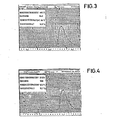
- Fig. 3 ein Amylogramm eines Versuches mit einer Konditionierungszeit von 48 Stunden; und
- Fig. 4 ein Amylogramm eines Versuches mit einer Konditionierungszeit von 72 Stunden.
- 5 kg Weizenkörner, gereinigt, wurden in 90 Minuten bei Raumtemperatur auf einen Feuchtigkeitsgehalt des Keimlings und der Kornrandschichten von ca.40 Gew.-% mit Wasser benetzt. Anschließend wurden die Weizenkörner gasdicht in Kunststoffolie eingeschweißt und daraufhin im Wasserbad 24 Stunden lang bei 14°C konditioniert. Anschließend wurden die Getreidekörner aus der Kunststoffolie herausgenommen und 90 Minuten lang bei einer Umgebungstemperatur von 38°C auf einen Gesamt-Restwassergehalt von ca. 16 Gew.-% getrocknet.
- Die auf diese Weise behandelten Getreidekörner zeigen im Amylogramm ein Maximum von 560, während ein Vergleichsversuch, bei dem bei ansonsten gleichen Bedingungen die Konditionierungstemperatur 40°C betrug, nur ein Amylogramm-Maximum von 460 ergab. (Fig. 2 bzw. Fig. 1).
- Es wurde vorgegangen wie in Beispiel 1, wobei jedoch bei gleicher Konditionierungstemperatur eine Konditionierungszeit von 48 Stunden gewählt wurde. Dabei zeigte sich ein Amylogramm-Maximum von 540 (Fig. 3). Die Verkleisterungstemperatur betrug 64°C, im Vergleich zu 62,5°C beim Vergleichsversuch (Fig. 1) und 62,5°C bei Beispiel 1 (Fig. 2).
- Es wurde wie in Beispiel 2 vorgegangen, wobei aber die Konditionierungszeit 72 Stunden betrug. Das Amylogramm-Maximum betrug 580, die Verkleisterungstemperatur 62,5°C (Fig. 4).
- Die Ergebnisse der vorstehenden Beispiele sowie des Vergleichsversuches zeigen, daß die erfindungsgemäß durchgeführte Konditionierung bei der Temperatur von 14°C im Vergleich zu den herkömmlichen Konditionierungstemperaturen von beispielsweise 40°C eine drastische Verbesserung des relativen Aktivierungsgrades mit sich bringt. Weiterhin zeigt sich, daß auch die langen Konditionierungszeiten von 24, 48 und 72 Stunden zu keiner bedeutenden Steigerung der Enzymaktivierung führen, woraus hervorgeht, daß sich auf diese Weise optimale Aktivierungsgrade unter entsprechender Verbesserung der Backeigenschaften sowie der geschmacklichen Akzeptanz erzielen lassen.
- Die Verbesserung der geschmacklichen Akzeptanz des aus erfindungsgemäß aktiviertem Getreide hergestellten Brotes beruht vermutlich darauf, daß aufgrund der starken Hydratisierung der Kornrandschichten (Wassergehalt = 40 %) die Enzyme auf die Inhaltsstoffe bei dem erfindungsgemäß vorgesehenen langen Aktivierungszeiten besonders günstig einwirken können. Dabei spielt der enzymatische Abbau von höherpolymeren Kohlehydraten sowie von Proteinen eine besondere Rolle, da die hierbei anfallenden Abbauprodukte die Vorläufer von Geschmacksstoffen sind. Durchgeführte Backversuche haben den positiven Einfluß der erfindungsgemäß vorgenommenen Aktivierung auf die Brotqualität sowohl bei Weizen als auch bei Roggen einwandfrei belegt. Die unter Verwendung erfindungsgemäß aktivierter Getreidekörner hergestellten Brote waren gegenüber dem Vergleichsbrot besser gelockert und schmeckten abgerundeter. Beides ist auf die Wirkung der Enzyme sowohl während der Aktivierung als auch beim Teigbereiten und Backen zurückzuführen. Mit wachsender Aktivierungszeit wird der Brotgeschmack immer besser, ein Zeichen dafür, daß die optimierte Enzymaktivität über einen langen Zeitraum aufrechterhalten bleibt, so daß die entstandenen Enzyme optimal auf die Geschmacksstoffvorläufer einwirken können.
- Die in der vorstehenden Beschreibung, in der Zeichnung sowie in den Ansprüchen offenbarten Merkmale der Erfindung können sowohl einzeln als auch in beliebigen Kombinationen für die Verwirklichung der Erfindung in ihren verschiedenen Ausführungsformen wesentlich sein.
Claims (4)
Priority Applications (1)
| Application Number | Priority Date | Filing Date | Title |
|---|---|---|---|
| AT81108093T ATE17660T1 (de) | 1980-10-11 | 1981-10-09 | Verfahren zum hydrothermischen aktivieren von zur brotherstellung dienendem getreide. |
Applications Claiming Priority (2)
| Application Number | Priority Date | Filing Date | Title |
|---|---|---|---|
| DE3038463 | 1980-10-11 | ||
| DE3038463A DE3038463C2 (de) | 1980-10-11 | 1980-10-11 | Verfahren zum hydrothermischen Aktivieren von zur Brotherstellung dienendem Getreide |
Publications (3)
| Publication Number | Publication Date |
|---|---|
| EP0049874A2 true EP0049874A2 (de) | 1982-04-21 |
| EP0049874A3 EP0049874A3 (en) | 1984-03-28 |
| EP0049874B1 EP0049874B1 (de) | 1986-01-29 |
Family
ID=6114168
Family Applications (1)
| Application Number | Title | Priority Date | Filing Date |
|---|---|---|---|
| EP81108093A Expired EP0049874B1 (de) | 1980-10-11 | 1981-10-09 | Verfahren zum hydrothermischen Aktivieren von zur Brotherstellung dienendem Getreide |
Country Status (3)
| Country | Link |
|---|---|
| EP (1) | EP0049874B1 (de) |
| AT (1) | ATE17660T1 (de) |
| DE (1) | DE3038463C2 (de) |
Cited By (3)
| Publication number | Priority date | Publication date | Assignee | Title |
|---|---|---|---|---|
| WO1993006927A1 (en) * | 1991-10-04 | 1993-04-15 | The Pillsbury Company | Rapidly producing stable flour from newly harvested wheat |
| RU2484901C1 (ru) * | 2011-10-06 | 2013-06-20 | Федеральное государственное бюджетное образовательное учреждение высшего профессионального образования "Государственный университет - учебно-научно-производственный комплекс" (ФГБОУ ВПО "Госуниверситет - УНПК") | Способ гидротермической обработки зерна гречихи |
| RU2672331C1 (ru) * | 2017-12-18 | 2018-11-13 | Федеральное государственное бюджетное образовательное учреждение высшего образования "Алтайский государственный технический университет им. И.И. Ползунова" (АлтГТУ), отдел интеллектуальной и промышленной собственности (ОИПС) | Способ гидротермической обработки зерна |
Family Cites Families (3)
| Publication number | Priority date | Publication date | Assignee | Title |
|---|---|---|---|---|
| DE1692752A1 (de) * | 1951-01-28 | 1972-03-16 | Rheinische Reform Und Vollkorn | Verfahren und Anlage zur Aufbereitung von Getreide fuer die Brot- oder Flockenherstellung |
| US3925564A (en) * | 1974-07-22 | 1975-12-09 | Ned W Finnell | Method of curing and drying wild rice |
| DE2921682C3 (de) * | 1979-05-29 | 1982-06-24 | Lieken-Batscheider Mühlen- und Backbetriebe GmbH, 6500 Mainz | Verfahren zum hydrothermischen Aktivieren von zur Brotherstellung dienendem Getreide |
-
1980
- 1980-10-11 DE DE3038463A patent/DE3038463C2/de not_active Expired
-
1981
- 1981-10-09 AT AT81108093T patent/ATE17660T1/de not_active IP Right Cessation
- 1981-10-09 EP EP81108093A patent/EP0049874B1/de not_active Expired
Cited By (3)
| Publication number | Priority date | Publication date | Assignee | Title |
|---|---|---|---|---|
| WO1993006927A1 (en) * | 1991-10-04 | 1993-04-15 | The Pillsbury Company | Rapidly producing stable flour from newly harvested wheat |
| RU2484901C1 (ru) * | 2011-10-06 | 2013-06-20 | Федеральное государственное бюджетное образовательное учреждение высшего профессионального образования "Государственный университет - учебно-научно-производственный комплекс" (ФГБОУ ВПО "Госуниверситет - УНПК") | Способ гидротермической обработки зерна гречихи |
| RU2672331C1 (ru) * | 2017-12-18 | 2018-11-13 | Федеральное государственное бюджетное образовательное учреждение высшего образования "Алтайский государственный технический университет им. И.И. Ползунова" (АлтГТУ), отдел интеллектуальной и промышленной собственности (ОИПС) | Способ гидротермической обработки зерна |
Also Published As
| Publication number | Publication date |
|---|---|
| EP0049874B1 (de) | 1986-01-29 |
| DE3038463A1 (de) | 1982-07-29 |
| DE3038463C2 (de) | 1982-12-09 |
| EP0049874A3 (en) | 1984-03-28 |
| ATE17660T1 (de) | 1986-02-15 |
Similar Documents
| Publication | Publication Date | Title |
|---|---|---|
| DE69101877T2 (de) | Verfahren zur Herstellung vom Magermilchpulver mit hohem Galacto-Oligosaccharid-Gehalt. | |
| DE68902802T2 (de) | Verfahren zur herstellung von parboil-reis. | |
| DE19616210C1 (de) | Verwendung hochdruckbehandelter Stärke in Lebensmitteln | |
| EP0049874B1 (de) | Verfahren zum hydrothermischen Aktivieren von zur Brotherstellung dienendem Getreide | |
| DE2950315A1 (de) | Verfahren zum herstellen von trockenen nahrungsmittelprodukten, wie gari oder farinha de mandioca, aus cassava-wurzeln | |
| WO1998025478A1 (de) | Neuartiges flockenfutter insbesondere für wassertiere | |
| DE69502571T2 (de) | Prozess für die Herstellung von fermentierbarem Material | |
| EP0019868B1 (de) | Verfahren zum Aktivieren von Brotgetreide | |
| DE3515254C2 (de) | ||
| EP0154135A2 (de) | Verfahren zum Herstellen eines Brotteiges | |
| DE2812544C2 (de) | Vorquellen von zur Brotherstellung dienenden ganzen Getreidekörnern | |
| DE2338466C3 (de) | Mälzen von Getreide | |
| DE3624012A1 (de) | Verfahren zur regeneration oder verbesserung von boeden | |
| DE3211332C2 (de) | Verfahren zur Herstellung eines Nahrungsmittelproduktes aus Getreidemalz | |
| DE2812543B1 (de) | Behandeln von angekeimten Getreidekoernern fuer die Brotherstellung | |
| DE68905955T2 (de) | Verfahren zur herstellung von einem basismaterial fuer rinderfutter und nach diesem verfahren hergestelltes basismaterial. | |
| DE2352306A1 (de) | Verfahren und vorrichtung zur bearbeitung von angekeimten getreidekoernern bei der herstellung von brot, trockenflachbrot, backwaren | |
| DE3617905C2 (de) | ||
| DE3102793A1 (de) | Verfahren zur herstellung eines in frischem zustand lang anhaltend lagerfaehigen flockenbrotes | |
| DE69101011T2 (de) | Verfahren zur Entwässerung von Nahrungsmitteln, wie Suppen, Breien, Musen oder Kompotten. | |
| DE3028361A1 (de) | Hochdiastatisches malz und verfahren zu seiner herstellung | |
| DE1642748A1 (de) | Verfahren fuer die Herstellung eines Extraktes aus mehlhaltigen Stoffen | |
| DE2347845A1 (de) | Verfahren zur behandlung von getreidekoernern | |
| DE2814972A1 (de) | Mechanische und hydrothermische zubereitung von koernerprodukten | |
| EP0124074A2 (de) | Verfahren zum Herstellen von Weizenbrot unter Verwendung von acetatangereichertem Sauerteig |
Legal Events
| Date | Code | Title | Description |
|---|---|---|---|
| PUAI | Public reference made under article 153(3) epc to a published international application that has entered the european phase |
Free format text: ORIGINAL CODE: 0009012 |
|
| AK | Designated contracting states |
Designated state(s): AT BE CH FR GB IT LU NL SE |
|
| RAP1 | Party data changed (applicant data changed or rights of an application transferred) |
Owner name: LIEKEN-BATSCHEIDER MUEHLEN- UND BACKBETRIEBE GMBH |
|
| PUAL | Search report despatched |
Free format text: ORIGINAL CODE: 0009013 |
|
| AK | Designated contracting states |
Designated state(s): AT BE CH FR GB IT LI LU NL SE |
|
| 17P | Request for examination filed |
Effective date: 19840606 |
|
| ITF | It: translation for a ep patent filed | ||
| GRAA | (expected) grant |
Free format text: ORIGINAL CODE: 0009210 |
|
| AK | Designated contracting states |
Designated state(s): AT BE CH FR GB IT LI LU NL SE |
|
| REF | Corresponds to: |
Ref document number: 17660 Country of ref document: AT Date of ref document: 19860215 Kind code of ref document: T |
|
| ET | Fr: translation filed | ||
| PLBE | No opposition filed within time limit |
Free format text: ORIGINAL CODE: 0009261 |
|
| STAA | Information on the status of an ep patent application or granted ep patent |
Free format text: STATUS: NO OPPOSITION FILED WITHIN TIME LIMIT |
|
| 26N | No opposition filed | ||
| ITTA | It: last paid annual fee | ||
| EPTA | Lu: last paid annual fee | ||
| EAL | Se: european patent in force in sweden |
Ref document number: 81108093.6 |
|
| PGFP | Annual fee paid to national office [announced via postgrant information from national office to epo] |
Ref country code: LU Payment date: 19951001 Year of fee payment: 15 |
|
| PGFP | Annual fee paid to national office [announced via postgrant information from national office to epo] |
Ref country code: GB Payment date: 19951002 Year of fee payment: 15 |
|
| PGFP | Annual fee paid to national office [announced via postgrant information from national office to epo] |
Ref country code: FR Payment date: 19951010 Year of fee payment: 15 |
|
| PGFP | Annual fee paid to national office [announced via postgrant information from national office to epo] |
Ref country code: AT Payment date: 19951011 Year of fee payment: 15 |
|
| PGFP | Annual fee paid to national office [announced via postgrant information from national office to epo] |
Ref country code: SE Payment date: 19951017 Year of fee payment: 15 |
|
| PGFP | Annual fee paid to national office [announced via postgrant information from national office to epo] |
Ref country code: NL Payment date: 19951024 Year of fee payment: 15 |
|
| PGFP | Annual fee paid to national office [announced via postgrant information from national office to epo] |
Ref country code: CH Payment date: 19951030 Year of fee payment: 15 |
|
| PGFP | Annual fee paid to national office [announced via postgrant information from national office to epo] |
Ref country code: BE Payment date: 19951201 Year of fee payment: 15 |
|
| PG25 | Lapsed in a contracting state [announced via postgrant information from national office to epo] |
Ref country code: LU Free format text: LAPSE BECAUSE OF NON-PAYMENT OF DUE FEES Effective date: 19961009 Ref country code: GB Effective date: 19961009 Ref country code: AT Effective date: 19961009 |
|
| PG25 | Lapsed in a contracting state [announced via postgrant information from national office to epo] |
Ref country code: SE Effective date: 19961010 |
|
| PG25 | Lapsed in a contracting state [announced via postgrant information from national office to epo] |
Ref country code: LI Effective date: 19961031 Ref country code: CH Effective date: 19961031 Ref country code: BE Effective date: 19961031 |
|
| BERE | Be: lapsed |
Owner name: LIEKEN-BATSCHEIDER MUHLEN- UND BACKBETRIEDE G.M.B Effective date: 19961031 |
|
| PG25 | Lapsed in a contracting state [announced via postgrant information from national office to epo] |
Ref country code: NL Effective date: 19970501 |
|
| GBPC | Gb: european patent ceased through non-payment of renewal fee |
Effective date: 19961009 |
|
| REG | Reference to a national code |
Ref country code: CH Ref legal event code: PL |
|
| PG25 | Lapsed in a contracting state [announced via postgrant information from national office to epo] |
Ref country code: FR Effective date: 19970630 |
|
| NLV4 | Nl: lapsed or anulled due to non-payment of the annual fee |
Effective date: 19970501 |
|
| EUG | Se: european patent has lapsed |
Ref document number: 81108093.6 |
|
| REG | Reference to a national code |
Ref country code: FR Ref legal event code: ST |