EP0051404A1 - Norbornyl-Äther, ihre Herstellung und Verwendung zur Erhöhung des Aromas von Verbrauchsartikeln, Tuch oder Geweben - Google Patents
Norbornyl-Äther, ihre Herstellung und Verwendung zur Erhöhung des Aromas von Verbrauchsartikeln, Tuch oder Geweben Download PDFInfo
- Publication number
- EP0051404A1 EP0051404A1 EP81304984A EP81304984A EP0051404A1 EP 0051404 A1 EP0051404 A1 EP 0051404A1 EP 81304984 A EP81304984 A EP 81304984A EP 81304984 A EP81304984 A EP 81304984A EP 0051404 A1 EP0051404 A1 EP 0051404A1
- Authority
- EP
- European Patent Office
- Prior art keywords
- composition
- compound
- alkyl
- compounds
- grams
- Prior art date
- Legal status (The legal status is an assumption and is not a legal conclusion. Google has not performed a legal analysis and makes no representation as to the accuracy of the status listed.)
- Granted
Links
- 230000003190 augmentative effect Effects 0.000 title claims abstract description 5
- 239000000463 material Substances 0.000 title claims description 10
- 239000004744 fabric Substances 0.000 title claims description 8
- -1 Norbornyl ethers Chemical class 0.000 title abstract description 9
- 238000002360 preparation method Methods 0.000 title description 21
- 150000001875 compounds Chemical class 0.000 claims abstract description 135
- 239000000203 mixture Substances 0.000 claims abstract description 112
- 239000002304 perfume Substances 0.000 claims abstract description 23
- 238000000034 method Methods 0.000 claims abstract description 20
- 239000003599 detergent Substances 0.000 claims abstract description 15
- 125000003342 alkenyl group Chemical group 0.000 claims abstract description 9
- 125000002877 alkyl aryl group Chemical group 0.000 claims abstract description 9
- 125000003710 aryl alkyl group Chemical group 0.000 claims abstract description 9
- 125000000753 cycloalkyl group Chemical group 0.000 claims abstract description 9
- 239000002979 fabric softener Substances 0.000 claims abstract description 8
- 239000007788 liquid Substances 0.000 claims abstract description 7
- 230000002708 enhancing effect Effects 0.000 claims abstract description 4
- 239000007787 solid Substances 0.000 claims abstract description 4
- 125000000129 anionic group Chemical group 0.000 claims abstract description 3
- 125000002091 cationic group Chemical group 0.000 claims abstract description 3
- 239000011968 lewis acid catalyst Substances 0.000 claims abstract 2
- 238000006243 chemical reaction Methods 0.000 claims description 58
- OJOWICOBYCXEKR-KRXBUXKQSA-N (5e)-5-ethylidenebicyclo[2.2.1]hept-2-ene Chemical compound C1C2C(=C/C)/CC1C=C2 OJOWICOBYCXEKR-KRXBUXKQSA-N 0.000 claims description 27
- KZMGYPLQYOPHEL-UHFFFAOYSA-N Boron trifluoride etherate Chemical compound FB(F)F.CCOCC KZMGYPLQYOPHEL-UHFFFAOYSA-N 0.000 claims description 25
- LFQSCWFLJHTTHZ-UHFFFAOYSA-N Ethanol Chemical compound CCO LFQSCWFLJHTTHZ-UHFFFAOYSA-N 0.000 claims description 17
- 239000011248 coating agent Substances 0.000 claims description 13
- 238000000576 coating method Methods 0.000 claims description 13
- 239000000758 substrate Substances 0.000 claims description 12
- QAOWNCQODCNURD-UHFFFAOYSA-N Sulfuric acid Chemical compound OS(O)(=O)=O QAOWNCQODCNURD-UHFFFAOYSA-N 0.000 claims description 9
- 239000000376 reactant Substances 0.000 claims description 9
- 239000003054 catalyst Substances 0.000 claims description 6
- 239000003377 acid catalyst Substances 0.000 claims description 4
- 229910052500 inorganic mineral Inorganic materials 0.000 claims description 4
- 239000011707 mineral Substances 0.000 claims description 4
- 239000002841 Lewis acid Substances 0.000 claims description 3
- 239000002253 acid Substances 0.000 claims description 3
- 239000012442 inert solvent Substances 0.000 claims description 3
- 150000007517 lewis acids Chemical class 0.000 claims description 3
- 125000001449 isopropyl group Chemical group [H]C([H])([H])C([H])(*)C([H])([H])[H] 0.000 claims 5
- 125000000094 2-phenylethyl group Chemical group [H]C1=C([H])C([H])=C(C([H])=C1[H])C([H])([H])C([H])([H])* 0.000 claims 1
- 125000003903 2-propenyl group Chemical group [H]C([*])([H])C([H])=C([H])[H] 0.000 claims 1
- 150000007513 acids Chemical class 0.000 claims 1
- 125000000217 alkyl group Chemical group 0.000 claims 1
- 239000008199 coating composition Substances 0.000 claims 1
- 125000000113 cyclohexyl group Chemical group [H]C1([H])C([H])([H])C([H])([H])C([H])(*)C([H])([H])C1([H])[H] 0.000 claims 1
- 239000002781 deodorant agent Substances 0.000 abstract description 4
- INYHZQLKOKTDAI-UHFFFAOYSA-N 5-ethenylbicyclo[2.2.1]hept-2-ene Chemical compound C1C2C(C=C)CC1C=C2 INYHZQLKOKTDAI-UHFFFAOYSA-N 0.000 abstract 1
- 239000001993 wax Substances 0.000 abstract 1
- 239000007795 chemical reaction product Substances 0.000 description 62
- 239000000243 solution Substances 0.000 description 45
- 238000000655 nuclear magnetic resonance spectrum Methods 0.000 description 39
- HEMHJVSKTPXQMS-UHFFFAOYSA-M Sodium hydroxide Chemical compound [OH-].[Na+] HEMHJVSKTPXQMS-UHFFFAOYSA-M 0.000 description 33
- 239000000047 product Substances 0.000 description 31
- WQYVRQLZKVEZGA-UHFFFAOYSA-N hypochlorite Chemical compound Cl[O-] WQYVRQLZKVEZGA-UHFFFAOYSA-N 0.000 description 28
- 238000002329 infrared spectrum Methods 0.000 description 26
- 239000000126 substance Substances 0.000 description 26
- CDBYLPFSWZWCQE-UHFFFAOYSA-L Sodium Carbonate Chemical compound [Na+].[Na+].[O-]C([O-])=O CDBYLPFSWZWCQE-UHFFFAOYSA-L 0.000 description 20
- 238000010992 reflux Methods 0.000 description 16
- XLYOFNOQVPJJNP-UHFFFAOYSA-N water Substances O XLYOFNOQVPJJNP-UHFFFAOYSA-N 0.000 description 16
- NWAHEBOSNFVHJN-UHFFFAOYSA-N 4-(4-bicyclo[2.2.1]heptanyloxy)bicyclo[2.2.1]heptane Chemical class C1CC(C2)CCC12OC1(C2)CCC2CC1 NWAHEBOSNFVHJN-UHFFFAOYSA-N 0.000 description 14
- 0 CCC1(C2*C3C1)C2C3O* Chemical compound CCC1(C2*C3C1)C2C3O* 0.000 description 14
- 238000004821 distillation Methods 0.000 description 14
- SUKJFIGYRHOWBL-UHFFFAOYSA-N sodium hypochlorite Chemical compound [Na+].Cl[O-] SUKJFIGYRHOWBL-UHFFFAOYSA-N 0.000 description 12
- 239000012071 phase Substances 0.000 description 11
- 238000003756 stirring Methods 0.000 description 11
- 239000007844 bleaching agent Substances 0.000 description 10
- 239000012044 organic layer Substances 0.000 description 10
- 229910000029 sodium carbonate Inorganic materials 0.000 description 10
- YXFVVABEGXRONW-UHFFFAOYSA-N Toluene Chemical compound CC1=CC=CC=C1 YXFVVABEGXRONW-UHFFFAOYSA-N 0.000 description 9
- 239000012298 atmosphere Substances 0.000 description 9
- KFZMGEQAYNKOFK-UHFFFAOYSA-N Isopropanol Chemical compound CC(C)O KFZMGEQAYNKOFK-UHFFFAOYSA-N 0.000 description 8
- 239000005708 Sodium hypochlorite Substances 0.000 description 8
- 235000019568 aromas Nutrition 0.000 description 7
- 239000003205 fragrance Substances 0.000 description 7
- 239000004615 ingredient Substances 0.000 description 7
- WMFOQBRAJBCJND-UHFFFAOYSA-M Lithium hydroxide Chemical compound [Li+].[OH-] WMFOQBRAJBCJND-UHFFFAOYSA-M 0.000 description 6
- 230000005923 long-lasting effect Effects 0.000 description 6
- 239000000843 powder Substances 0.000 description 6
- 239000000344 soap Substances 0.000 description 6
- LYCAIKOWRPUZTN-UHFFFAOYSA-N Ethylene glycol Chemical compound OCCO LYCAIKOWRPUZTN-UHFFFAOYSA-N 0.000 description 5
- 239000002537 cosmetic Substances 0.000 description 5
- 235000019645 odor Nutrition 0.000 description 5
- 230000000717 retained effect Effects 0.000 description 5
- IMNFDUFMRHMDMM-UHFFFAOYSA-N N-Heptane Chemical compound CCCCCCC IMNFDUFMRHMDMM-UHFFFAOYSA-N 0.000 description 4
- 239000007864 aqueous solution Substances 0.000 description 4
- 238000010438 heat treatment Methods 0.000 description 4
- LWXVCCOAQYNXNX-UHFFFAOYSA-N lithium hypochlorite Chemical compound [Li+].Cl[O-] LWXVCCOAQYNXNX-UHFFFAOYSA-N 0.000 description 4
- 239000012074 organic phase Substances 0.000 description 4
- RWFOPHMMVSBOBO-UHFFFAOYSA-N 6-ethyl-3-propan-2-yl-1,2,3,4,5,7-hexahydrotricyclo[2.2.1.0^{2,6}]heptane Chemical compound C1C2C3(CC)C2C(C(C)C)C1C3 RWFOPHMMVSBOBO-UHFFFAOYSA-N 0.000 description 3
- UHOVQNZJYSORNB-UHFFFAOYSA-N Benzene Chemical compound C1=CC=CC=C1 UHOVQNZJYSORNB-UHFFFAOYSA-N 0.000 description 3
- RTZKZFJDLAIYFH-UHFFFAOYSA-N Diethyl ether Natural products CCOCC RTZKZFJDLAIYFH-UHFFFAOYSA-N 0.000 description 3
- OKKJLVBELUTLKV-UHFFFAOYSA-N Methanol Chemical compound OC OKKJLVBELUTLKV-UHFFFAOYSA-N 0.000 description 3
- DNIAPMSPPWPWGF-UHFFFAOYSA-N Propylene glycol Chemical compound CC(O)CO DNIAPMSPPWPWGF-UHFFFAOYSA-N 0.000 description 3
- QQQCWVDPMPFUGF-ZDUSSCGKSA-N alpinetin Chemical compound C1([C@H]2OC=3C=C(O)C=C(C=3C(=O)C2)OC)=CC=CC=C1 QQQCWVDPMPFUGF-ZDUSSCGKSA-N 0.000 description 3
- 239000011203 carbon fibre reinforced carbon Substances 0.000 description 3
- 235000009508 confectionery Nutrition 0.000 description 3
- 244000013123 dwarf bean Species 0.000 description 3
- 230000000694 effects Effects 0.000 description 3
- 239000003921 oil Substances 0.000 description 3
- WEFHSZAZNMEWKJ-KEDVMYETSA-N (6Z,8E)-undeca-6,8,10-trien-2-one (6E,8E)-undeca-6,8,10-trien-2-one (6Z,8E)-undeca-6,8,10-trien-3-one (6E,8E)-undeca-6,8,10-trien-3-one (6Z,8E)-undeca-6,8,10-trien-4-one (6E,8E)-undeca-6,8,10-trien-4-one Chemical compound CCCC(=O)C\C=C\C=C\C=C.CCCC(=O)C\C=C/C=C/C=C.CCC(=O)CC\C=C\C=C\C=C.CCC(=O)CC\C=C/C=C/C=C.CC(=O)CCC\C=C\C=C\C=C.CC(=O)CCC\C=C/C=C/C=C WEFHSZAZNMEWKJ-KEDVMYETSA-N 0.000 description 2
- XSONVSSWLOPVDC-UHFFFAOYSA-N 2-[(3-ethylidene-5-bicyclo[2.2.1]heptanyl)oxy]ethanol Chemical compound C1C(OCCO)C2C(=CC)CC1C2 XSONVSSWLOPVDC-UHFFFAOYSA-N 0.000 description 2
- WRMNZCZEMHIOCP-UHFFFAOYSA-N 2-phenylethanol Chemical compound OCCC1=CC=CC=C1 WRMNZCZEMHIOCP-UHFFFAOYSA-N 0.000 description 2
- DFAHIMHECXLSIS-UHFFFAOYSA-N 3-ethylidene-5-propan-2-yloxybicyclo[2.2.1]heptane Chemical compound C1C(OC(C)C)C2C(=CC)CC1C2 DFAHIMHECXLSIS-UHFFFAOYSA-N 0.000 description 2
- HAGGTYAQNUQSHM-UHFFFAOYSA-N 6-ethyl-3-(2-methylpropoxy)-1,2,3,4,5,7-hexahydrotricyclo[2.2.1.0^{2,6}]heptane Chemical compound C1C2C3(CC)C2C(OCC(C)C)C1C3 HAGGTYAQNUQSHM-UHFFFAOYSA-N 0.000 description 2
- 241000207199 Citrus Species 0.000 description 2
- LCGLNKUTAGEVQW-UHFFFAOYSA-N Dimethyl ether Chemical compound COC LCGLNKUTAGEVQW-UHFFFAOYSA-N 0.000 description 2
- 241000116713 Ferula gummosa Species 0.000 description 2
- 208000008454 Hyperhidrosis Diseases 0.000 description 2
- AFVFQIVMOAPDHO-UHFFFAOYSA-N Methanesulfonic acid Chemical compound CS(O)(=O)=O AFVFQIVMOAPDHO-UHFFFAOYSA-N 0.000 description 2
- 244000170916 Paeonia officinalis Species 0.000 description 2
- 235000006484 Paeonia officinalis Nutrition 0.000 description 2
- NBIIXXVUZAFLBC-UHFFFAOYSA-N Phosphoric acid Chemical compound OP(O)(O)=O NBIIXXVUZAFLBC-UHFFFAOYSA-N 0.000 description 2
- 235000008331 Pinus X rigitaeda Nutrition 0.000 description 2
- 235000011613 Pinus brutia Nutrition 0.000 description 2
- 241000018646 Pinus brutia Species 0.000 description 2
- WYURNTSHIVDZCO-UHFFFAOYSA-N Tetrahydrofuran Chemical compound C1CCOC1 WYURNTSHIVDZCO-UHFFFAOYSA-N 0.000 description 2
- XXROGKLTLUQVRX-UHFFFAOYSA-N allyl alcohol Chemical compound OCC=C XXROGKLTLUQVRX-UHFFFAOYSA-N 0.000 description 2
- VSCWAEJMTAWNJL-UHFFFAOYSA-K aluminium trichloride Chemical compound Cl[Al](Cl)Cl VSCWAEJMTAWNJL-UHFFFAOYSA-K 0.000 description 2
- 239000008346 aqueous phase Substances 0.000 description 2
- 235000020971 citrus fruits Nutrition 0.000 description 2
- 238000001704 evaporation Methods 0.000 description 2
- 230000008020 evaporation Effects 0.000 description 2
- 235000013305 food Nutrition 0.000 description 2
- 238000009472 formulation Methods 0.000 description 2
- 239000004864 galbanum Substances 0.000 description 2
- 239000008266 hair spray Substances 0.000 description 2
- ZSIAUFGUXNUGDI-UHFFFAOYSA-N hexan-1-ol Chemical compound CCCCCCO ZSIAUFGUXNUGDI-UHFFFAOYSA-N 0.000 description 2
- 229930195733 hydrocarbon Natural products 0.000 description 2
- 150000002430 hydrocarbons Chemical class 0.000 description 2
- PHTQWCKDNZKARW-UHFFFAOYSA-N isoamylol Chemical compound CC(C)CCO PHTQWCKDNZKARW-UHFFFAOYSA-N 0.000 description 2
- ZXEKIIBDNHEJCQ-UHFFFAOYSA-N isobutanol Chemical compound CC(C)CO ZXEKIIBDNHEJCQ-UHFFFAOYSA-N 0.000 description 2
- 235000010755 mineral Nutrition 0.000 description 2
- 238000002156 mixing Methods 0.000 description 2
- 231100000252 nontoxic Toxicity 0.000 description 2
- 230000003000 nontoxic effect Effects 0.000 description 2
- JFNLZVQOOSMTJK-KNVOCYPGSA-N norbornene Chemical compound C1[C@@H]2CC[C@H]1C=C2 JFNLZVQOOSMTJK-KNVOCYPGSA-N 0.000 description 2
- BDERNNFJNOPAEC-UHFFFAOYSA-N propan-1-ol Chemical compound CCCO BDERNNFJNOPAEC-UHFFFAOYSA-N 0.000 description 2
- 238000010791 quenching Methods 0.000 description 2
- 230000000171 quenching effect Effects 0.000 description 2
- 239000011541 reaction mixture Substances 0.000 description 2
- 238000009991 scouring Methods 0.000 description 2
- 239000002904 solvent Substances 0.000 description 2
- 208000013460 sweaty Diseases 0.000 description 2
- VNDYJBBGRKZCSX-UHFFFAOYSA-L zinc bromide Chemical compound Br[Zn]Br VNDYJBBGRKZCSX-UHFFFAOYSA-L 0.000 description 2
- JIAARYAFYJHUJI-UHFFFAOYSA-L zinc dichloride Chemical compound [Cl-].[Cl-].[Zn+2] JIAARYAFYJHUJI-UHFFFAOYSA-L 0.000 description 2
- TXUICONDJPYNPY-UHFFFAOYSA-N (1,10,13-trimethyl-3-oxo-4,5,6,7,8,9,11,12,14,15,16,17-dodecahydrocyclopenta[a]phenanthren-17-yl) heptanoate Chemical compound C1CC2CC(=O)C=C(C)C2(C)C2C1C1CCC(OC(=O)CCCCCC)C1(C)CC2 TXUICONDJPYNPY-UHFFFAOYSA-N 0.000 description 1
- NWUYHJFMYQTDRP-UHFFFAOYSA-N 1,2-bis(ethenyl)benzene;1-ethenyl-2-ethylbenzene;styrene Chemical compound C=CC1=CC=CC=C1.CCC1=CC=CC=C1C=C.C=CC1=CC=CC=C1C=C NWUYHJFMYQTDRP-UHFFFAOYSA-N 0.000 description 1
- XNWFRZJHXBZDAG-UHFFFAOYSA-N 2-METHOXYETHANOL Chemical compound COCCO XNWFRZJHXBZDAG-UHFFFAOYSA-N 0.000 description 1
- YYYIFEBEXAZOMN-UHFFFAOYSA-N 2-[(6-ethyl-1,2,3,4,5,7-hexahydrotricyclo[2.2.1.0^{2,6}]heptan-3-yl)oxy]ethanol Chemical compound C1C2C3(CC)C2C(OCCO)C1C3 YYYIFEBEXAZOMN-UHFFFAOYSA-N 0.000 description 1
- UMAYRRVBFPGUON-UHFFFAOYSA-N 3-butan-2-yloxy-6-ethyl-1,2,3,4,5,7-hexahydrotricyclo[2.2.1.0^{2,6}]heptane Chemical compound C12CC3C(OC(C)CC)C1C2(CC)C3 UMAYRRVBFPGUON-UHFFFAOYSA-N 0.000 description 1
- JDRLBWWJHATCEW-UHFFFAOYSA-N 3-cyclohexyloxy-6-ethyl-1,2,3,4,5,7-hexahydrotricyclo[2.2.1.0^{2,6}]heptane Chemical compound CCC12CC3CC1C2C3OC1CCCCC1 JDRLBWWJHATCEW-UHFFFAOYSA-N 0.000 description 1
- HDYABBGKUAAYIC-UHFFFAOYSA-N 3-ethylidene-5-(2-methoxyethoxy)bicyclo[2.2.1]heptane Chemical compound C1C2C(OCCOC)CC1CC2=CC HDYABBGKUAAYIC-UHFFFAOYSA-N 0.000 description 1
- KLJWEHMWYJOFDX-UHFFFAOYSA-N 3-ethylidene-5-(2-methylpropoxy)bicyclo[2.2.1]heptane Chemical compound C1C(OCC(C)C)C2C(=CC)CC1C2 KLJWEHMWYJOFDX-UHFFFAOYSA-N 0.000 description 1
- HEGXHPDOESTXRY-UHFFFAOYSA-N 3-ethylidene-5-(2-phenylethoxy)bicyclo[2.2.1]heptane Chemical compound C1C2C(=CC)CC1CC2OCCC1=CC=CC=C1 HEGXHPDOESTXRY-UHFFFAOYSA-N 0.000 description 1
- ZITVXIBNAORZHR-UHFFFAOYSA-N 3-ethylidene-5-(3-methylbutoxy)bicyclo[2.2.1]heptane Chemical compound C1C(OCCC(C)C)C2C(=CC)CC1C2 ZITVXIBNAORZHR-UHFFFAOYSA-N 0.000 description 1
- QYRXEYCQWVIAAV-UHFFFAOYSA-N 3-ethylidene-5-hexoxybicyclo[2.2.1]heptane Chemical compound C1C2C(OCCCCCC)CC1CC2=CC QYRXEYCQWVIAAV-UHFFFAOYSA-N 0.000 description 1
- JURLNXPXCMWCHE-UHFFFAOYSA-N 3-ethylidenebicyclo[2.2.1]heptane Chemical compound C1CC2C(=CC)CC1C2 JURLNXPXCMWCHE-UHFFFAOYSA-N 0.000 description 1
- WVYWICLMDOOCFB-UHFFFAOYSA-N 4-methyl-2-pentanol Chemical compound CC(C)CC(C)O WVYWICLMDOOCFB-UHFFFAOYSA-N 0.000 description 1
- RNKVXBIBXVKVOS-UHFFFAOYSA-N 5-butan-2-yloxy-3-ethylidenebicyclo[2.2.1]heptane Chemical compound C1C2C(OC(C)CC)CC1CC2=CC RNKVXBIBXVKVOS-UHFFFAOYSA-N 0.000 description 1
- VXUPNFNXESKKKF-UHFFFAOYSA-N 5-cyclohexyloxy-3-ethylidenebicyclo[2.2.1]heptane Chemical compound C1C2C(=CC)CC1CC2OC1CCCCC1 VXUPNFNXESKKKF-UHFFFAOYSA-N 0.000 description 1
- GBAXTEBQILIHBL-UHFFFAOYSA-N 6-ethoxy-3-hexoxy-1,2,3,4,5,7-hexahydrotricyclo[2.2.1.0^{2,6}]heptane Chemical compound C12CC3C(OCCCCCC)C1C2(OCC)C3 GBAXTEBQILIHBL-UHFFFAOYSA-N 0.000 description 1
- GRGBRAOVGAKNNZ-UHFFFAOYSA-N 6-ethyl-3-(2-methoxyethoxy)-1,2,3,4,5,7-hexahydrotricyclo[2.2.1.0^{2,6}]heptane Chemical compound C1C2C3(CC)C2C(OCCOC)C1C3 GRGBRAOVGAKNNZ-UHFFFAOYSA-N 0.000 description 1
- JMZRENRBGLZLIA-UHFFFAOYSA-N 6-ethyl-3-(3-methylbutoxy)-1,2,3,4,5,7-hexahydrotricyclo[2.2.1.0^{2,6}]heptane Chemical compound C1C2C3(CC)C2C(OCCC(C)C)C1C3 JMZRENRBGLZLIA-UHFFFAOYSA-N 0.000 description 1
- AMEBYVBSNVJRGZ-UHFFFAOYSA-N 6-ethyl-3-(4-methylpentan-2-yloxy)-1,2,3,4,5,7-hexahydrotricyclo[2.2.1.0^{2,6}]heptane Chemical compound C1C2C3(CC)C2C(OC(C)CC(C)C)C1C3 AMEBYVBSNVJRGZ-UHFFFAOYSA-N 0.000 description 1
- 244000215068 Acacia senegal Species 0.000 description 1
- 229910015900 BF3 Inorganic materials 0.000 description 1
- 108010010803 Gelatin Proteins 0.000 description 1
- 229920000084 Gum arabic Polymers 0.000 description 1
- 229910021626 Tin(II) chloride Inorganic materials 0.000 description 1
- 229910021627 Tin(IV) chloride Inorganic materials 0.000 description 1
- 239000002250 absorbent Substances 0.000 description 1
- 230000002745 absorbent Effects 0.000 description 1
- 239000000205 acacia gum Substances 0.000 description 1
- 235000010489 acacia gum Nutrition 0.000 description 1
- 239000000443 aerosol Substances 0.000 description 1
- 150000001298 alcohols Chemical class 0.000 description 1
- 150000001299 aldehydes Chemical class 0.000 description 1
- 229910000147 aluminium phosphate Inorganic materials 0.000 description 1
- 239000002216 antistatic agent Substances 0.000 description 1
- 239000003788 bath preparation Substances 0.000 description 1
- LPTWEDZIPSKWDG-UHFFFAOYSA-N benzenesulfonic acid;dodecane Chemical compound OS(=O)(=O)C1=CC=CC=C1.CCCCCCCCCCCC LPTWEDZIPSKWDG-UHFFFAOYSA-N 0.000 description 1
- 238000009835 boiling Methods 0.000 description 1
- BTANRVKWQNVYAZ-UHFFFAOYSA-N butan-2-ol Chemical compound CCC(C)O BTANRVKWQNVYAZ-UHFFFAOYSA-N 0.000 description 1
- 238000005354 coacervation Methods 0.000 description 1
- 238000001816 cooling Methods 0.000 description 1
- 229920001577 copolymer Polymers 0.000 description 1
- 239000006071 cream Substances 0.000 description 1
- 239000012043 crude product Substances 0.000 description 1
- HPXRVTGHNJAIIH-UHFFFAOYSA-N cyclohexanol Chemical compound OC1CCCCC1 HPXRVTGHNJAIIH-UHFFFAOYSA-N 0.000 description 1
- JJSGABFIILQOEY-UHFFFAOYSA-M diethylalumanylium;bromide Chemical compound CC[Al](Br)CC JJSGABFIILQOEY-UHFFFAOYSA-M 0.000 description 1
- YNLAOSYQHBDIKW-UHFFFAOYSA-M diethylaluminium chloride Chemical compound CC[Al](Cl)CC YNLAOSYQHBDIKW-UHFFFAOYSA-M 0.000 description 1
- FPAFDBFIGPHWGO-UHFFFAOYSA-N dioxosilane;oxomagnesium;hydrate Chemical compound O.[Mg]=O.[Mg]=O.[Mg]=O.O=[Si]=O.O=[Si]=O.O=[Si]=O.O=[Si]=O FPAFDBFIGPHWGO-UHFFFAOYSA-N 0.000 description 1
- SYELZBGXAIXKHU-UHFFFAOYSA-N dodecyldimethylamine N-oxide Chemical compound CCCCCCCCCCCC[N+](C)(C)[O-] SYELZBGXAIXKHU-UHFFFAOYSA-N 0.000 description 1
- 238000010410 dusting Methods 0.000 description 1
- 150000002148 esters Chemical class 0.000 description 1
- 150000002170 ethers Chemical class 0.000 description 1
- JFICPAADTOQAMU-UHFFFAOYSA-L ethylaluminum(2+);dibromide Chemical compound CC[Al](Br)Br JFICPAADTOQAMU-UHFFFAOYSA-L 0.000 description 1
- UAIZDWNSWGTKFZ-UHFFFAOYSA-L ethylaluminum(2+);dichloride Chemical compound CC[Al](Cl)Cl UAIZDWNSWGTKFZ-UHFFFAOYSA-L 0.000 description 1
- 238000011156 evaluation Methods 0.000 description 1
- 238000000605 extraction Methods 0.000 description 1
- 239000000834 fixative Substances 0.000 description 1
- 229920000159 gelatin Polymers 0.000 description 1
- 239000008273 gelatin Substances 0.000 description 1
- 235000019322 gelatine Nutrition 0.000 description 1
- 235000011852 gelatine desserts Nutrition 0.000 description 1
- WGCNASOHLSPBMP-UHFFFAOYSA-N hydroxyacetaldehyde Natural products OCC=O WGCNASOHLSPBMP-UHFFFAOYSA-N 0.000 description 1
- 239000003456 ion exchange resin Substances 0.000 description 1
- 229920003303 ion-exchange polymer Polymers 0.000 description 1
- 150000002576 ketones Chemical class 0.000 description 1
- 239000004922 lacquer Substances 0.000 description 1
- 150000002596 lactones Chemical class 0.000 description 1
- 239000010410 layer Substances 0.000 description 1
- 239000006210 lotion Substances 0.000 description 1
- 238000004519 manufacturing process Methods 0.000 description 1
- 229940098779 methanesulfonic acid Drugs 0.000 description 1
- 239000003607 modifier Substances 0.000 description 1
- ADXNPXDFKKWVGE-UHFFFAOYSA-N n,n-dimethyltridecan-1-amine Chemical compound CCCCCCCCCCCCCN(C)C ADXNPXDFKKWVGE-UHFFFAOYSA-N 0.000 description 1
- 150000002825 nitriles Chemical class 0.000 description 1
- 239000004745 nonwoven fabric Substances 0.000 description 1
- UMRZSTCPUPJPOJ-KNVOCYPGSA-N norbornane Chemical compound C1C[C@H]2CC[C@@H]1C2 UMRZSTCPUPJPOJ-KNVOCYPGSA-N 0.000 description 1
- 238000006053 organic reaction Methods 0.000 description 1
- 229940067107 phenylethyl alcohol Drugs 0.000 description 1
- 239000003380 propellant Substances 0.000 description 1
- ROSDSFDQCJNGOL-UHFFFAOYSA-N protonated dimethyl amine Natural products CNC ROSDSFDQCJNGOL-UHFFFAOYSA-N 0.000 description 1
- 230000001953 sensory effect Effects 0.000 description 1
- 238000000926 separation method Methods 0.000 description 1
- 239000002453 shampoo Substances 0.000 description 1
- 239000013042 solid detergent Substances 0.000 description 1
- 238000001228 spectrum Methods 0.000 description 1
- 239000001119 stannous chloride Substances 0.000 description 1
- 235000011150 stannous chloride Nutrition 0.000 description 1
- 239000007858 starting material Substances 0.000 description 1
- 239000004575 stone Substances 0.000 description 1
- 230000000475 sunscreen effect Effects 0.000 description 1
- 239000000516 sunscreening agent Substances 0.000 description 1
- 239000012438 synthetic essential oil Substances 0.000 description 1
- 235000012222 talc Nutrition 0.000 description 1
- RJSZFSOFYVMDIC-UHFFFAOYSA-N tert-butyl n,n-dimethylcarbamate Chemical compound CN(C)C(=O)OC(C)(C)C RJSZFSOFYVMDIC-UHFFFAOYSA-N 0.000 description 1
- YLQBMQCUIZJEEH-UHFFFAOYSA-N tetrahydrofuran Natural products C=1C=COC=1 YLQBMQCUIZJEEH-UHFFFAOYSA-N 0.000 description 1
- HPGGPRDJHPYFRM-UHFFFAOYSA-J tin(iv) chloride Chemical compound Cl[Sn](Cl)(Cl)Cl HPGGPRDJHPYFRM-UHFFFAOYSA-J 0.000 description 1
- JOXIMZWYDAKGHI-UHFFFAOYSA-N toluene-4-sulfonic acid Chemical compound CC1=CC=C(S(O)(=O)=O)C=C1 JOXIMZWYDAKGHI-UHFFFAOYSA-N 0.000 description 1
- 239000000341 volatile oil Substances 0.000 description 1
- 229940102001 zinc bromide Drugs 0.000 description 1
- 239000011592 zinc chloride Substances 0.000 description 1
- 235000005074 zinc chloride Nutrition 0.000 description 1
Images







Classifications
-
- A—HUMAN NECESSITIES
- A23—FOODS OR FOODSTUFFS; TREATMENT THEREOF, NOT COVERED BY OTHER CLASSES
- A23G—COCOA; COCOA PRODUCTS, e.g. CHOCOLATE; SUBSTITUTES FOR COCOA OR COCOA PRODUCTS; CONFECTIONERY; CHEWING GUM; ICE-CREAM; PREPARATION THEREOF
- A23G3/00—Sweetmeats; Confectionery; Marzipan; Coated or filled products
- A23G3/34—Sweetmeats, confectionery or marzipan; Processes for the preparation thereof
- A23G3/36—Sweetmeats, confectionery or marzipan; Processes for the preparation thereof characterised by the composition containing organic or inorganic compounds
-
- A—HUMAN NECESSITIES
- A23—FOODS OR FOODSTUFFS; TREATMENT THEREOF, NOT COVERED BY OTHER CLASSES
- A23G—COCOA; COCOA PRODUCTS, e.g. CHOCOLATE; SUBSTITUTES FOR COCOA OR COCOA PRODUCTS; CONFECTIONERY; CHEWING GUM; ICE-CREAM; PREPARATION THEREOF
- A23G4/00—Chewing gum
- A23G4/06—Chewing gum characterised by the composition containing organic or inorganic compounds
-
- A—HUMAN NECESSITIES
- A23—FOODS OR FOODSTUFFS; TREATMENT THEREOF, NOT COVERED BY OTHER CLASSES
- A23L—FOODS, FOODSTUFFS OR NON-ALCOHOLIC BEVERAGES, NOT OTHERWISE PROVIDED FOR; PREPARATION OR TREATMENT THEREOF
- A23L27/00—Spices; Flavouring agents or condiments; Artificial sweetening agents; Table salts; Dietetic salt substitutes; Preparation or treatment thereof
- A23L27/20—Synthetic spices, flavouring agents or condiments
- A23L27/203—Alicyclic compounds
-
- C—CHEMISTRY; METALLURGY
- C07—ORGANIC CHEMISTRY
- C07C—ACYCLIC OR CARBOCYCLIC COMPOUNDS
- C07C43/00—Ethers; Compounds having groups, groups or groups
- C07C43/02—Ethers
- C07C43/18—Ethers having an ether-oxygen atom bound to a carbon atom of a ring other than a six-membered aromatic ring
- C07C43/188—Unsaturated ethers
-
- C—CHEMISTRY; METALLURGY
- C07—ORGANIC CHEMISTRY
- C07C—ACYCLIC OR CARBOCYCLIC COMPOUNDS
- C07C43/00—Ethers; Compounds having groups, groups or groups
- C07C43/02—Ethers
- C07C43/20—Ethers having an ether-oxygen atom bound to a carbon atom of a six-membered aromatic ring
-
- C—CHEMISTRY; METALLURGY
- C11—ANIMAL OR VEGETABLE OILS, FATS, FATTY SUBSTANCES OR WAXES; FATTY ACIDS THEREFROM; DETERGENTS; CANDLES
- C11B—PRODUCING, e.g. BY PRESSING RAW MATERIALS OR BY EXTRACTION FROM WASTE MATERIALS, REFINING OR PRESERVING FATS, FATTY SUBSTANCES, e.g. LANOLIN, FATTY OILS OR WAXES; ESSENTIAL OILS; PERFUMES
- C11B9/00—Essential oils; Perfumes
- C11B9/0042—Essential oils; Perfumes compounds containing condensed hydrocarbon rings
-
- C—CHEMISTRY; METALLURGY
- C11—ANIMAL OR VEGETABLE OILS, FATS, FATTY SUBSTANCES OR WAXES; FATTY ACIDS THEREFROM; DETERGENTS; CANDLES
- C11B—PRODUCING, e.g. BY PRESSING RAW MATERIALS OR BY EXTRACTION FROM WASTE MATERIALS, REFINING OR PRESERVING FATS, FATTY SUBSTANCES, e.g. LANOLIN, FATTY OILS OR WAXES; ESSENTIAL OILS; PERFUMES
- C11B9/00—Essential oils; Perfumes
- C11B9/0042—Essential oils; Perfumes compounds containing condensed hydrocarbon rings
- C11B9/0046—Essential oils; Perfumes compounds containing condensed hydrocarbon rings containing only two condensed rings
-
- C—CHEMISTRY; METALLURGY
- C11—ANIMAL OR VEGETABLE OILS, FATS, FATTY SUBSTANCES OR WAXES; FATTY ACIDS THEREFROM; DETERGENTS; CANDLES
- C11B—PRODUCING, e.g. BY PRESSING RAW MATERIALS OR BY EXTRACTION FROM WASTE MATERIALS, REFINING OR PRESERVING FATS, FATTY SUBSTANCES, e.g. LANOLIN, FATTY OILS OR WAXES; ESSENTIAL OILS; PERFUMES
- C11B9/00—Essential oils; Perfumes
- C11B9/0061—Essential oils; Perfumes compounds containing a six-membered aromatic ring not condensed with another ring
-
- C—CHEMISTRY; METALLURGY
- C11—ANIMAL OR VEGETABLE OILS, FATS, FATTY SUBSTANCES OR WAXES; FATTY ACIDS THEREFROM; DETERGENTS; CANDLES
- C11D—DETERGENT COMPOSITIONS; USE OF SINGLE SUBSTANCES AS DETERGENTS; SOAP OR SOAP-MAKING; RESIN SOAPS; RECOVERY OF GLYCEROL
- C11D17/00—Detergent materials or soaps characterised by their shape or physical properties
- C11D17/04—Detergent materials or soaps characterised by their shape or physical properties combined with or containing other objects
- C11D17/041—Compositions releasably affixed on a substrate or incorporated into a dispensing means
- C11D17/047—Arrangements specially adapted for dry cleaning or laundry dryer related applications
-
- C—CHEMISTRY; METALLURGY
- C11—ANIMAL OR VEGETABLE OILS, FATS, FATTY SUBSTANCES OR WAXES; FATTY ACIDS THEREFROM; DETERGENTS; CANDLES
- C11D—DETERGENT COMPOSITIONS; USE OF SINGLE SUBSTANCES AS DETERGENTS; SOAP OR SOAP-MAKING; RESIN SOAPS; RECOVERY OF GLYCEROL
- C11D3/00—Other compounding ingredients of detergent compositions covered in group C11D1/00
- C11D3/50—Perfumes
Definitions
- the instant invention relates to the use for augmenting or enhancing the aroma of perfumes, perfumed articles and colognes of compounds having the generic structures: either taken alone or in admixture wherein R represents c 3 -C 6 alkyl; C 3 -C 6 alkenyl; C 6 -C 10 aralkyl; C 6 -C 10 alkaryl; hydroxy-C2-C6-alkyl; C 1 -C 4 -alkoxy-C 2 -C 6 alkyl; and C 5 -C 8 cycloalkyl; and wherein the R moieties in each structure are the same.
- the compounds of our invention may be prepared by reacting ethylidene norbornene having the structure: with ROH, and alcohol wherein R represents C 3 -C 6 alkyl; C 3 -C 6 alkenyl; C 6 -C 10 aralkyl; C 6 -C 10 alkaryl; hydroxy-C 2 -C 6 -alkyl; C 1 -C 4 -alkoxy-C 2 -C 6 alkyl and C s -C a cycloalkyl in the presence of a catalyst which is either a mineral acid or a Lewis acid.
- mineral acid catalysts are sulfuric acid, phosphoric acid, para-toluene sulfonic acid, methane sulfonic acid and acid ion-exchange resin.
- Lewis acids which can be used as catalysts are boron trifluoride etherate, aluminum chloride, zinc chloride, stannic chloride, stannous chloride, zinc bromide, diethyl aluminum chloride, ethyl aluminum dichloride, ethyl aluminum dibromide and diethyl aluminum bromide.
- the reaction preferably takes place in the presence of an inert solvent such as tetrahydrofuran, toluene or benzene.
- the reaction may take place in the absence of the inert solvent and in the presence of an excess of the alcohol reactant, the excess of the alcohol reactant being used as the "solvent".
- the reaction temperature may vary from about 25°C up to 120°C with reflux temperature being preferred.
- the reflux temperature depends upon the pressure in the reactor and the particular solvent being used as well as its concentration.
- the mole ratio of acid catalyst to ethylidene norbornene may vary from about 1:99 up to about 1:10.
- the mole ratio of ethylidene norbornene reactant to ROH alcohol reactant may vary from about 1:1 up to about 1:2 with a mole ratio of 1:1.5 of norbornene: alcohol reactant being preferred.
- the reaction to produce the compounds of my invention may be shown thusly:
- the compounds of my invention are usually prepared in admixture with compounds having the generic structure: being prepared along with compounds having the structure:
- the compounds having the structures exist in isomeric forms and are produced in admixture.
- the mixture of these "endo” and “exo” and “cis” and “trans” isomers may be separated from one another by means of standard separation techniques including preparative GLC techniques whereby the individual isomers may be separated and then utilized individually. Structures of these isomers are as follows:
- the norbornyl ether derivative(s) and one or more auxiliary perfume ingredients including, for example, hydrocarbons, alcohols, ketones, aldehydes, nitriles, esters, lactones, ethers other than said norbornyl ether derivative(s), hydrocarbons, synthetic essential oils and natural essential oils may be admixed so that the combined odors of the individual components produce a pleasant and desired fragrance, particularly and preferably in citrusy and/or green woody and/or piney fragrances.
- Such perfume compositions usually contain (a) the main note or the "bouquet" or foundation stone of the composition; (b) modifiers which round off and accompany the main note; (c) fixatives which include odorous substances which lend a particular note to the perfume throughout all stages of evaporation and substances which retard evaporation; and (d) topnotes which are usually low-boiling, fresh- smelling materials.
- perfume compositions it is the individual components which contribute to their particular olfactory characteristics, however, the over-all sensory effect of the perfume composition will be at least the sum total of the effects of each of the ingredients.
- one or more of the norbornyl ether derivative(s) of my invention can be used to alter, modify or enhance the aroma characteristic of a perfume composition, for example, by utilizing or moderating the olfactory reaction contributed by another ingredient in the composition.
- norbornyl ether derivative(s) of my invention which will be effective in perfume compositions as well as in perfumed articles and colognes depends upon many factors, including the other ingredients, their amounts and the effects which are desired. It has been found that perfume compositions containing as little as 0.005% of norbornyl ether derivative(s) or even less (e.g.
- 0.002% can be used to impart fresh, green bean, rosey, citrus, petitgrain-like, fruity, anisic, green, raw-potato-like, twiggy, herbaceous, sweet, sweaty, green pea-like, chocolate-like, floral, carrot-like and creamy aroma nuances with galbanum topnotes and anther-like and anise-like undertones to soaps, cosmetics, detergents (including anionic, nonionic, zwitterionic and cationic solid or liquid detergents) or other products.
- the amount employed can range up to 70% of the fragrance components and will depend upon considerations of cost, nature of the end product, the effect desired on the finished product and the particular fragrance sought.
- the norbornyl ether derivative(s) of my invention are useful (taken alone or together with other detergents in perfume compositions) in detergents and soaps, space odorants and deodorants, perfumes, colognes, toilet water, bath preparations such as lacquers, brilliantines, pomades and shampoos; cosmetic preparations such as creams, deodorants, hand lotions and sun screens; powders such as talcs, dusting powders, face powders and the like.
- As little as 0.25% of the norbornyl ether derivative(s) will suffice to impart an intense, green, petitgrain-like, rosey and citrusy note to citrusy, woody, floral and piney perfume formulations.
- no more than 5% of the norbornyl ether derivative(s) based on the ultimate end product is required to be used as is or in the perfume composition.
- the range of use of the norbornyl ether derivative(s) of my invention in perfumed articles may vary from 0.25% up to 5% by weight based on the total weight of the perfumed article.
- the perfume composition or fragrance composition of my invention can contain a vehicle, or carrier for the norbornyl ether derivative(s).
- vehicle can be a liquid such as a non-toxic alcohol, e.g., ethanol, a non-toxic glycol, e.g., propylene glycol or the like.
- the carrier can also be an absorbent solid, such as a gum (e.g., gum arabic), or components for encapsulating the composition by means of coacervation (such as gelatin).
- a gum e.g., gum arabic
- components for encapsulating the composition by means of coacervation such as gelatin.
- Examples I(B) and XII - XIV serve to illustrate processes for specifically producing the norbornyl ether derivative(s) useful in our invention.
- Vinylidene norbornene (480 grams) is added over a 90 minute period to a stirred solution of isopropanol (300 grams) and boron trifluoride etherate (12 grams) at reflux (temperature varies from 75°C to 97°C). The reaction mass is quenched with 1 liter of water. The organic layer is subsequently washed with 500 ml of 10% NaOH. Distillation through a 1-1/2" X 12" Goodloe packed column affords 651 grams or product (b.p. 75°C at 5 mm/Hg. pressure).
- Figure 1 sets forth the GLC profile for the crude reaction product of this example containing the compounds having the structures:
- Figure 1(A) is the GLC profile of the purified reaction product of this example containing the compounds having the structures: wherein peak 2 on said figure 1(A) is the compound having the structure: and peak 3 on said figure 1(A) consists of the compound having the structure:
- Figure 2 sets forth the NMR spectrum of the product mixture consisting of 2-ethyl-5-isopropyltricyclo[2.2.1,0 (2.6) ] heptane and 2-ethylidene-6-isopropoxynorbornane having, respectively, the structures:
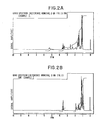
- Figure 2(A) sets forth the NMR spectrum for peak 2 of the GLC profile of figure 1(A) consisting of the compound having the structure:
- Figure 2(B) sets forth the NMR spectrum for peak 3 of the GLC profile of figure 1 (A) consisting of the compound having the structure:
- Figure 3 sets forth the infra-red spectrum of the product mixture consisting of 2-ethyl-5-isopropyltricyclo [2.2.1.0 (2,6) ] heptane and 2-ethylidene-6-isopropoxynorbor- name.
- Figure 3(A) sets for the infra-red spectrum for peak 2 of the GLC profile of figure 1(A) consisting of the compound having the structure:
- Figure 3(B) sets forth the infra-red spectrum for peak 3 of the GLC profile of figure l(A) consisting of the compound having the structure:
- Figure 3(C) represents the GLC profile for the reaction product of this example containing the compounds having the structures:
- Figure 3(D) represents the NMR spectrum for the reaction product of this example containing the compounds having the structures:
- Ethylidene norbornene (480 grams) is added over a 90 minute period to a stirred solution of toluene (250 ml), allyl alcohol (267 grams), and BF 3 etherate (15 ml) at reflux.
- the reaction mass is quenched with 1 liter of water and the organic layer is washed with 500 ml of 10% sodium carbonate.
- the toluene is removed on a rotary evaporator.
- the organic solution is distilled through a 1-1/2" X 12" Goodloe packed column to afford 490 grams of product (b.p. 60°C at 3 mm/Hg pressure).
- Figure 4 represents the GLC profile of the crude product (conditions: 150°C isothermal, 10' X 1/4", 10% SE-30 packed column).
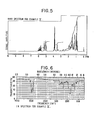
- Figure 5 shows the NMR spectrum of the mixture consisting of 2-ethyl-5-allyltricyclo[2.2.1.0 (2,6) ]heptane and 2-ethylidene-6-allylnorbornane, respectively, having the structures;
- Figure 6 sets forth the infra-red spectrum of the mixture consisting of 2-ethyl-5-allyltricyclo[2.2.1.0( 2,6 )]heptane and 2-ethylidene-6-allylnorbornane.
- Ethylidene norbornene (480 grams) is added over a 4-1/2 hour period to a stirred solution of ethylene glycol (186 grams) and boron trifluoride etherate (15 ml), at 60°C. At the end of this period the resulting organic reaction mass is washed two times with 500 ml of water and washed once with 500 ml of 10% sodium carbonate solution.
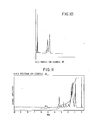
- Figure 7 sets forth the GLC profile of the crude reaction product (conditions: 180°C, isothermal, 10' X 1/4", 10% SE-30 packed column).
- Figure 8 sets forth the NMR spectrum for the reaction product consisting of 2-ethyl-5-( ⁇ -hydroxyethoxy)-tri- cyclo-[2.2.1.0 (2,6) ]heptane and 2-ethylidene-6-(S-hydroxy- ethoxy)-norbornane having, respectively, the structures:
- Figure 9 sets forth the infra-red spectrum for the product mixture consisting of 2-ethyl-5-(S-hydroxyethoxy)-tricyclo[2.2.1.0 (2,6) ]heptane and 2-ethylidene-6-( ⁇ -hydroxy- ethoxy)-norbornane.
- Ethylidene norbornene (480 grams) is added over a two hour period to a stirred solution of hexyl alcohol (510 grams) and boron trifluoride etherate at 95°C.
- the reaction mass is poured into one liter of water and the organic layer is subsequently washed with 500 mls of a 10% sodium carbonate solution. Distillation through a 1-1/2" X 12" Goodloe packed column affords 523 grams of product (b.p. 6°C at 1 mm/Hg pressure)
- Figure 10 represents the GLC profile for the crude reaction product (conditions: 180°C, isothermal, 10' X 1 ⁇ 4" 10%, SE-30 packed column).
- Figure 11 sets forth the NMR spectrum of the product mixture consisting of the compounds having the structures:
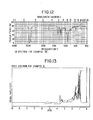
- Figure 12 sets forth the infra-red spectrum of the product mixture consisting of the compounds having the structures:
- Ethylidene norbornene (480 grams) is added over a two hour period to a stirred solution of s-butyl alcohol (444 grams) and boron trifluoride etherate at 85°C.
- the reaction mass is poured into one liter of water and the organic layer is washed with 500 ml of a 10% sodium carbonate solution. Distillation through a 1' X 1-1/2" Goodloe packed column affords 513 grams of product (b.p. 78°C at 5 mm/Hg. pressure).
- Figure 13 sets'forth the NMR spectrum of the product mixture consisting of the compounds having the structures:
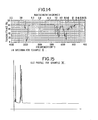
- Figure 14 sets forth the infra-red spectrum of the product mixture consisting of the compounds having the structures:
- Ethylidene norbornene 360 grams is added to a stirred solution of ⁇ -methoxyethanol (304 grams) and boron trifluoride etherate (30 ml) at 60°C over a two hour period.
- the reaction mass is then poured into 500 ml of water and washed with a 10% sodium carbonate solution. Distillation through a 1" X 12" Goodloe packed column affords 348 grams of product (b.p. 75°C at 0.3 mm/Hg.).
- Figure 15 sets forth GLC profile of the crude reaction product (conditions: 180°C, isothermal, 10' X 1/4" 10% SE-30 packed column).
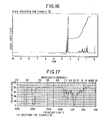
- Figure 16 sets forth the MMR spectrum of the product mixture consisting of the compounds having the structures:
- Figure 17 sets forth the infra-red spectrum of the product mixture consisting of the compounds having the structures:
- Ethylidene norbornene (408 grams) is added over a two hour period to a solution of isoamyl alcohol (360 grams) and boron trifluoride etherate (30 ml) at 75°C.
- the reaction mixture is heated at 75°C for a period of two hours whereupon it is quenched with one liter of water.
- the reaction mass is then washed with a 10% sodium carbonate solution. Distillation through a 1-1/2" X 12" Goodloe packed column affords 446 grams or product (b.p. 79°C at 0.4 mm/Hg. pressure).
- Figure 18 represents the GLC profile of the crude reaction product (conditions: 220°C, isothermal, 10' X 1/4" 10% SE-30 packed column).
- Figure 19 sets forth the NMR spectrum of the product mixture consisting of the compounds having the structures:
- Figure 20 sets forth the infra-red spectrum of the product mixture consisting of the compounds having the structures:
- Figure 21 represents the GLC profile of the crude reaction product (conditions: 220°C, isothermal; 10' X 1/4" 10%, SE-30 packed column).
- Figure 22 sets forth the NMR spectrum of the product mixture consisting of the compounds having the structures:
- Figure 23 sets forth the infra-red spectrum of the product mixture consisting of the compounds having the structures:
- Ethylidene norbornene (360 grams) is added to a solution of 4-methyl-2-pentanol (408 grams) and boron trifluoride etherate (30 ml) over a two hour period at 60°C.
- the reaction mass is then heated at 75°C for two hours and quenched in 500 ml of water.
- the resulting organic layer is washed with 500 ml of a 10% sodium carbonate solution. Distillation through a 1-1/2" X 12" Goodloe packed column yields 236 grams of product (b.p. 70°C at 0.4 mm/Hg. pressure).
- Figure 24 sets forth the GLC profile of the crude reaction mixture (conditions: 220°C, isothermal; 10' X 1/4", 10% SE-30 packed column).
- Figure 25 sets forth the NMR spectrum of the product consisting of the compounds having the structures:
- Figure 26 sets forth the infra-red spectrum of the reaction product consisting of the compounds having the structures:
- Ethylidene norbornene (480 grams) is added to a solution of isobutanol (407 grams) and boron trifluoride etherate at 80°C over a 90 minute period.
- the reaction mass is stirred at 80°C for one hour whereupon 700 ml of water is added thereto.
- the organic layer is washed with 500 ml of a 10% sodium carbonate solution and distilled through a 1/2" X 12" Goodloe packed column to afford 662 grams of product (b.p. 55°C at 1 mm/Hg. pressure).
- Figure 27 represents the GLC profile of the crude reaction product (conditions: 180°C, isothermal, 10' X 1/4" 10% SE-30 packed column).
- Figure 28 sets forth the NMR spectrum of the product mixture consisting of the compounds having the structures:
- Figure 29 sets forth the infra-red spectrum of the reaction product mixture consisting of the compounds having the structures: -
- Ethylidene norbornene 360 grams is added to a stirred solution of cyclohexanol (450 grams) and sulfuric acid (9 grams) at 80°C over a 90 minute period.
- the reaction mass is stirred at 90°C for a further 90 minutes whereupon 500 ml of water are added thereto.
- the organic layer is washed with 500 ml of a 10% sodium carbonate solution and distilled through a 1-1/2" X 12" Goodloe packed column to afford 528 grams of product (b.p. 90°C at 0.9 mm/Hg. pressure).
- Figure 30 represents the GLC profile of the crude reaction product (conditions: 180°C, isothermal, 10' X 1/4" SE-30- packed column).
- Figure 31 represents the NMR spectrum of the reaction product mixture consisting of the compounds having the structures:
- Figure 32 sets forth the infra-red spectrum of the reaction product mixture consisting of the compounds having the structures:
- one of the dashed lines is a carbon-carbon bond and the other of the dashed lines represents no bond.
- reaction mass is then quenched with 400 ml water.
- the resulting two phases are separated and the oil phase is washed with 200 ml of 10% sodium hydroxide solution.
- the reaction product is then distilled on a 12" X 1.5" Goodloe column yielding the following fractions:
- Figure 33 is the GLC profile for the reaction mass just prior to distillation.
- Figure 35 is the NMR spectrum for ethylidene norbornene methyl ether, for peak 2 of the GLC profile of figure 33 and it is the NMR spectrum for the compound having the structure:
- Figure 34 is the NMR spectrum for ethylidene norbornene methyl ether, peak 1 of the GLC profile of figure 33 and it is for the compound having the structure:
- Peak 1 having the structure:
- the compound having the structure has a harsh, green, ketonic, slight linalyl-like aroma profile.
- Figure 36 is the GLC profile for the reaction mass after 2 hours and 40 minutes of reaction.
- Figure 38 is the NMR spectrum for ethylidene norbornene peak 2 and is for the compound having the structure:
- Figure 37 is the NMR spectrum for ethylidene norbornene ethyl ether, peak 1 of the GLC profile of figure 36 and it is for the compound having the structure:
- the mixture containing the compounds having the structures has a green, gassy aroma with catonic (e.g., acetone-like) notes; lacking green bean and lemon-like notes.
- the compound having the structure has a very volatile green, aniseed-like aroma.
- the compound having the structure has a pyridene-like, fruity, nutty, dirty hair-like aroma with camphoraceous undertones.
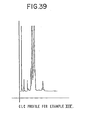
- Figure 39 is the GLC profile of the reaction product subsequent to quenching but prior to distillation.
- Figure 40 is the NMR spectrum for ethylidene norbornene n-propyl ether, peak 1 of the GLC profile of figure 39 and it is for the compound having the structure:
- Figure 41 is the NMR spectrum for ethylidene norbornene n-propyl ether, peak 2 and is for the compound having the structure:
- the mixture of compounds prior to distillation has a harsh, anise-like, sweet, metallic aroma lacking fresh, clean, herbaceous notes but having a strong fruity nuance.
- the compound having the structure has an aniseed-like, woody aroma with a slight fruity character.
- the compound having the structure has a light, fresh, slightly herbaceous aroma which is relatively long-lasting.
- a cosmetic powder is prepared by mixing in a ball mill, 100 grams of talcum powder with 0.25 grams of one of the substances set forth in Table III below.
- the resulting cosmetic powder has a pleasant aroma as set forth in Table III below.
- Concentrated liquid detergents (lysine salt of n-dodecylbenzene sulfonic acid as more specifically described in U.S. Patent No. 3,948,818, issued on April 6, 1976) with fragrance profiles as defined in Table III of Example XVI are prepared containing 0.10%, 0.15%, 0.20%, 0.25%, 0.30% and 0.35% of the substance as set forth in Table III of Example XVI. They are prepared by adding and homogeneously mixing the appropriate quantity of substance as set forth in Table III of Example XVI in the liquid detergent. The detergents all possess excellent intense aromas as defined according to the profiles of Table III of Example XVI, the intensity increasing with greater concentrations of said substance as set forth in Table III of Example XVI.
- Substances set forth in Table III of Example XVI are each individually incorporated into colognes at concentrations' of 2.0%, 2.5%, -3.0%, 3.5%, 4.0%, 4.5% and 5.0% in 75%, 80%, 85% and 90% aqueous food grade ethanol; and into handkerchief perfumes at concentrations of 15%, 20% and 30% in 95% aqueous food grade ethanol.
- Distinctive and definitive long-lasting warm aromas as defined according to Table III of Example XVI are all imparted to the cologne and to the handkerchief perfumes at all levels as indicated above.
- Detergents are prepared from the following ingredients according to Example I of Canadian Patent No. 1,007,948:
- This detergent is a "phosphate-free" detergent.
- a total of 100 grams of said detergent is admixed with 0.10, 0.15, 0.20 and 0.25 grams of the substance as set forth in Table III of Example XVI.
- Each of the detergent samples has excellent, warm aromas as indicated in Table III of Example XVI.
- Example I of column 15 of U.S. Patent No. 3,632,396 a non-woven cloth substrate useful as a dryer-added fabric softening article of manufacture prepared wherein the substrate, the substrate coating and the outer coating and the perfuming material are as follows:
- Aromox® DMC-W and Aromox® DMMC-W are 30% aqueous solutions of dimethyl cocoamine oxide; and Aromox® NCMDW is a 40% aqueous solution of N-cocomorpholine oxide produced by Armac Division of AKZO of Chicago, Illinois.
- Aromox® DMMC-W in various quantities is mixed with 0.1 grams of one of the substances set forth in Table III of Example XVI.
- the resulting premixes are then added to 200 grams of an aqueous 5% sodium hypochlorite solution.
- Sufficient 12.5M aqueous NaOH is added to bring the pH of the mixture up to 13.
- the following results are obtained: When the 5% aqueous sodium hypochlorite solution is used as a laundry bleach, the resulting laundry on dry-out, in an atmosphere of 65% relative humidity, yields substantially no characteristic "hypochlorite” odor, but does have a faint, pleasant aroma as set forth in Table III of Example XVI. Furthermore, no such characteristic "hypochlorite” aroma is retained on the hands of the individual handling such laundry in both the wet and the dry states.
- Aromox® DMMC-W is admixed with eight drops of one of the substances set forth in Table III of Example XVI.
- the premix is then added with stirring to 200 grams of a 7% aqueous solution of lithium hypochlorite.
- Sufficient 3M aqueous LiOH is added to bring the pH of the solution to 13.4.
- the mixture is then heated to l20°F and maintained at that temperature with stirring for a period of 1 week.
- the resulting solution remains clear in a single phase.
- the resulting bleached laundry When used as a laundry bleach, the resulting bleached laundry, on dry-out in an atmosphere of 50% relative humidity, retains a "clean" warm aroma as set forth in Table III of Example XVI; whereas without the use of the substance set forth in Table III of Example XVI the bleached laundry has a faint characteristic disagreeable "hypochlorite" aroma.
- Aromox® DMMC-W is admixed with eight drops of one of the substances of Table III of Example XVI. This premix is then added, with stirring, to 200 grams of a mixture containing 4.5% aqueous sodium hypochlorite and 4.5% aqueous lithium hypochlorite. Sufficient 4M aqueous LiOH is added to bring the pH of the solution to-13.4. The mixture is then heated to 120°F and maintained at that temperature for a period of one week. The resulting solution remains clear in a single phase.
- the resulting bleached laundry on dry-out in an atmosphere of 50% relative humidity retains a "clean fresh” warm aroma as set forth in Table III of Example XVI; whereas without the use of the substance set forth in Table III of Example XVI, the bleached laundry has a faint characteristic disagreeable "hypochlorite" aroma.
- Aromox® DMMC-W is admixed with eight drops of one of the substances set forth in Table III of Example XVI. This premix is then added with stirring to 200 grams of a mixture containing 4.5% aqueous sodium hypochlorite and 4.5% aqueous lithium hypochlorite. Sufficient 2M aqueous NaOH is added to bring the pH of the solution to 13.4. The mixture is then heated to 100°F and maintained at that temperature with stirring for a period of 2 weeks. The resulting solution remains clear as a single phase when used as a laundry bleach.
- the resulting laundry bleach on dry-out in an atmosphere of 50% relative humidity, retains an aroma as set forth in Table III of Example XVI, whereas without the use of the substance set forth in Table III of Example XVI, the bleached laundry has a faint characteristic disagreeable "hypochlorite" aroma.
- Example XVI Four drops of one of the substances set forth in Table II I of Example XVI is added to 1-gram of n-undecyl dimethyl amine oxide to produce a clear premix.
- the clear premix is added to 200 grams of Clorox® with stirring resulting in a clear stable single phase solution.
- Sufficient 1M aqueous NaOH is added to bring the pH of the mixture up to 12.8.
- the solution remains substantially stable at 120°F for a period of 7 days.
- the 5% aqueous sodium hypochlorite solution is used as a laundry bleach, the resulting laundry on dry-out in an atmosphere of 65% relative humidity yields substantially no characteristic "hypochlorite" odor but does have a faint pleasant warm aroma as set forth in Table III of Example XVI.
- no such characteristic "hypochlorite” aroma is retained on the hands of the individual handling such laundry in both the wet and the dry states.
- n-tridecyl dimethyl amine oxide is admixed with eight drops of one of the substances as set forth in Table III of Example XVI. This premix is then added with. stirring to 200 grams of a 7% aqueous solution of lithium hypochlorite. Sufficient 3M aqueous LiOH is added to bring the pH of the solution to 13.4. The mixture is then heated to 120°F and maintained at that temperature with stirring for a period of one week. The resulting solution remains clear in a single phase.
- the resulting bleached laundry on dry-out in an atmosphere of 50% relative humidity retains a warm, fresh aroma described in Table III of Example XVI whereas without the use of one of the substances of Table III of Example XVI, the bleached laundry has a faint characteristic disagreeable "hypochlorite" aroma.
- a "soft-feel, good-hold” hair spray is produced containing the following ingredients:
- the PVP/VA copolymers are first dissolved in alcohol and all other ingredients are added until uniform.
- the propellant is then pressurized and used as an aerosol.
- the resulting hair-spray has a pleasant aroma as set forth in Table III of Example XVI.
- a scouring cleanser composition is prepared in accordance with Example I, at columns 11 and 12 of U.S. Patent No. 4,193,888 issued on March 18, 1980.
- a substance as set forth in Table III of Example XVI is added at the level of 0.250% as set forth in the Table in said Example I of U.S. Patent No. 4, 193,888 yielding an aroma on using said cleanser in ordinary circumstances which is quite pleasant and described in said Table III of Example XVI.
- a fabric softening article prepared substantially as set forth in Example VIII of Canadian Patent No. 1,069,260 is prepared, containing 0.21 percent by weight of a perfuming substance as set forth in Table III of Example XVI and yielding on use in a dryer, a faint aroma as set forth in Table III of Example XVI.
- Figure 1 sets forth the GLC profile for the crude reaction product of Example I(A) containing the compounds having the structures:
- Figure 1(A) is the GLC profile of the purified reaction product of Example I(A) containing the compounds having the structures: wherein peak 2 on said figure 1(A) is the compound having the structure: and peak 3 on said figure 1(A) consists of the compound having the structure:
- Figure 2 sets forth the NMR spectrum for the reaction product of Example 1(A) containing the compounds having the structures:
- Figure 2(A) represents the NMR spectrum for peak 2 of the GLC profile of figure 1(A) and consists of the compound having the structure:
- Figure 2(B) is the NMR spectrum for peak 3 of the GLC profile of figure 1(A) and consists essentially of the compound having the structure:
- Figure 3 sets forth the infra-red spectrum for the reaction product of Example I(A) containing the compounds having the structures:
- Figure 3(A) represents the infra-red spectrum for peak 2 of the GLC profile of figure 1(A) which peak consists essentially of the compound having the structure:
- Figure 3(B) represents the infra-red spectrum for peak 3 of the GLC profile of figure 1(A) and consists essentially of the compound having the structure:
- Figure 3(C) represents the GLC profile for the reaction product of Example I(B) containing the compounds having the structures:
- Figure 3(D) represents the NMR spectrum for the reaction product of Example I(B) containing the compounds having the structures:
- Figure 4 sets forth the GLC profile for the reaction product of Example II containing the compounds having the structures:
- Figure 5 sets forth the NMR spectrum for the reaction product of Example II containing the compounds having the structures:
- Figure 6 is the infra-red spectrum for the reaction product of Example II containing the compounds having the structures:
- Figure 7 sets forth the GLC profile for the reaction product of Example III containing the compounds having the structures:
- Figure 8 represents the NMR spectrum for the reaction product of Example III containing the compounds having the structures:
- Figure 9 sets forth the infra-red spectrum for the reaction product of Example III containing the compounds having the structures:
- Figure 10 represents the GLC profile for the reaction product of Example IV containing the compounds having the structures:
- Figure 11 sets forth the NMR spectrum for the reaction product of Example IV containing the compounds having the structures:
- Figure 12 represents the infra-red spectrum for the reaction product of Example IV containing the compounds having the structures:
- Figure 13 is the NMR spectrum for the reaction product of Example V containing the compounds having the structures:
- Figure 14 sets forth the infra-red spectrum for the reaction product of Example V containing the compounds having the structures:
- Figure 15 represents the GLC profile for the reaction product of Example VI containing the compounds having the structures:
- Figure 16 sets forth the NMR spectrum for the reaction product of Example VI containing the compounds having the structures:
- Figure 17 represents the infra-red spectrum for the reaction product of Example VI containing the compounds having the structures:
- Figure 18 sets forth the GLC profile for the reaction product of Example VII containing the compounds having the structures:
- Figure 19 sets forth the NMR spectrum for the reaction product of Example VII containing the compounds having the structures:
- Figure 20 sets forth the infra-red spectrum for the reaction product of Example VII containing the compounds having the structures:
- Figure 21 sets forth the GLC profile for the reaction product of Example VIII containing the compounds having the structures:
- Figure 22 sets forth the NMR spectrum for the reaction product of Example VIII containing the compounds having the structures:
- Figure 23 sets forth the infra-red spectrum for the reaction product of Example VIII containing the compounds having the structures:
- Figure 24 sets forth the GLC profile for the reaction pro-uct of Example IX containing the compounds having the structures:
- Figure 25 sets forth the NMR spectrum for the reaction product of Example IX containing the compounds having the structures:
- Figure 26 sets forth the infra-red spectrum for the reaction product of Example IX containing the compounds having the structures:
- Figure 27 sets forth the GLC profile for the reaction product of Example X containing the compounds having the structures:
- Figure 28 sets forth the NMR spectrum for the reaction product of Example X containing the compounds having the structures:
- Figure 29 sets forth the infra-red spectrum for the reaction product of Example X containing the compounds having the structures:
- Figure 30 sets forth the GLC profile for the reaction product of Example XI containing the compounds having the structures:
- Figure 31 sets forth the NMR spectrum for the reaction product of Example XI containing the compounds having the structures:
- Figure 32 sets forth the infra-red spectrum for the reaction product of Example XI containing the compounds having the structures:
- Figure 33 is the GLC profile for the reaction mass just prior to distillation of Example XII containing the compounds having the structures:
- Figure 34 is the NMR spectrum for peak 1 of the GLC profile of figure 33 of the reaction product of Example XII containing the compounds defined according to the structure:
- Figure 35 is the NMR spectrum for peak 2 of the GLC profile of figure 33 (of the reaction product of Example XII) and is for the structure:
- Figure 36 is the GLC profile for the reaction mass of Example XIII after 2 hours and 40 minutes of reaction; the reaction mass containing compounds having the structures:
- Figure 37 is the NMR spectrum for peak 1 of the GLC profile of figure 36 for the reaction mass of Example XIII and is for the compound having the structure:
- Figure 38 is the NMR spectrum for peak 2 of the GLC profile of figure 36 for the reaction product of Example XIII and is for the compound having the structure:
- Figure 39 is the GLC profile for the reaction product subsequent to quenching but prior to distillation product for Example XIV containing the compounds having the structures:
- Figure 40 is the NMR spectrum for peak 1 of the GLC profile of figure 39 for the reaction product of Example XIV containing the compound having the structure:
- Figure 41 is the NMR spectrumfor peak 2 of the GLC profile of figure 39 for the reaction product of Example XIV and is the for compound having the structure:
- Figure 1(A) is the GLC profile for the reaction product produced according to Example I(A) and contains starting material having the structure: as well as reaction products:
- Reference “2" indicates the peak of the GLC profile which consists essentially of the compound having the structure:
- Reference “3” indicates the peak of the GLC profile which consists essentially of the compound having the structure:
Landscapes
- Chemical & Material Sciences (AREA)
- Organic Chemistry (AREA)
- Life Sciences & Earth Sciences (AREA)
- Engineering & Computer Science (AREA)
- Chemical Kinetics & Catalysis (AREA)
- Wood Science & Technology (AREA)
- Oil, Petroleum & Natural Gas (AREA)
- Food Science & Technology (AREA)
- Polymers & Plastics (AREA)
- Inorganic Chemistry (AREA)
- Health & Medical Sciences (AREA)
- Nutrition Science (AREA)
- Organic Low-Molecular-Weight Compounds And Preparation Thereof (AREA)
- Fats And Perfumes (AREA)
- Cosmetics (AREA)
- Catalysts (AREA)
- Low-Molecular Organic Synthesis Reactions Using Catalysts (AREA)
- Detergent Compositions (AREA)
- Treatments For Attaching Organic Compounds To Fibrous Goods (AREA)
- Paints Or Removers (AREA)
Applications Claiming Priority (4)
| Application Number | Priority Date | Filing Date | Title |
|---|---|---|---|
| US200012 | 1980-10-23 | ||
| US06/200,012 US4311861A (en) | 1980-10-23 | 1980-10-23 | Norbornyl ethers |
| US06/220,351 US4308159A (en) | 1980-10-23 | 1980-12-29 | Use of norbornyl ethers in augmenting or enhancing the aroma of fabric softener articles |
| US220351 | 1980-12-29 |
Publications (2)
| Publication Number | Publication Date |
|---|---|
| EP0051404A1 true EP0051404A1 (de) | 1982-05-12 |
| EP0051404B1 EP0051404B1 (de) | 1984-06-13 |
Family
ID=26895380
Family Applications (1)
| Application Number | Title | Priority Date | Filing Date |
|---|---|---|---|
| EP81304984A Expired EP0051404B1 (de) | 1980-10-23 | 1981-10-22 | Norbornyl-Äther, ihre Herstellung und Verwendung zur Erhöhung des Aromas von Verbrauchsartikeln, Tuch oder Geweben |
Country Status (6)
| Country | Link |
|---|---|
| US (1) | US4308159A (de) |
| EP (1) | EP0051404B1 (de) |
| JP (1) | JPH01316338A (de) |
| CA (1) | CA1327976C (de) |
| DE (1) | DE3164217D1 (de) |
| ES (1) | ES507007A0 (de) |
Families Citing this family (7)
| Publication number | Priority date | Publication date | Assignee | Title |
|---|---|---|---|---|
| US4374746A (en) * | 1981-02-19 | 1983-02-22 | International Flavors & Fragrances Inc. | Cyclohexyl phenethylether derivatives, process for preparing same and uses thereof in combatting tobacco beetles and in augmenting or enhancing the aroma of perfumes, colognes and perfumed articles |
| US7087572B2 (en) * | 2002-04-10 | 2006-08-08 | Ecolab Inc. | Fabric treatment compositions and methods for treating fabric in a dryer |
| US7786069B2 (en) * | 2002-04-10 | 2010-08-31 | Ecolab Inc. | Multiple use solid fabric conditioning compositions and treatment in a dryer |
| US7381697B2 (en) * | 2002-04-10 | 2008-06-03 | Ecolab Inc. | Fabric softener composition and methods for manufacturing and using |
| JP5391002B2 (ja) * | 2009-09-08 | 2014-01-15 | Jx日鉱日石エネルギー株式会社 | ビニルエーテル重合体 |
| JP5492711B2 (ja) * | 2009-09-10 | 2014-05-14 | Jx日鉱日石エネルギー株式会社 | イソブチレン系重合体 |
| WO2024027922A1 (en) * | 2022-08-05 | 2024-02-08 | Symrise Ag | A fragrance mixture (ii) |
Citations (1)
| Publication number | Priority date | Publication date | Assignee | Title |
|---|---|---|---|---|
| GB1291739A (en) * | 1969-05-16 | 1972-10-04 | Sumitomo Chemical Co | Process for producing 2-alkylidene norbornane derivatives |
Family Cites Families (4)
| Publication number | Priority date | Publication date | Assignee | Title |
|---|---|---|---|---|
| US3632396A (en) * | 1969-04-28 | 1972-01-04 | Procter & Gamble | Dryer-added fabric-softening compositions |
| US4076853A (en) * | 1977-02-04 | 1978-02-28 | International Flavors & Fragrances Inc. | Flavoring with substituted norbornane derivatives |
| US4140724A (en) * | 1977-08-11 | 1979-02-20 | Rohm And Haas Company | Selective preparation of polyol monoethers of dicyclopentadiene |
| JPH032920A (ja) * | 1989-05-31 | 1991-01-09 | Hitachi Ltd | 情報処理システムにおけるメッセージ出力処理方式 |
-
1980
- 1980-12-29 US US06/220,351 patent/US4308159A/en not_active Expired - Fee Related
-
1981
- 1981-07-30 CA CA000382917A patent/CA1327976C/en not_active Expired - Fee Related
- 1981-10-22 ES ES507007A patent/ES507007A0/es active Granted
- 1981-10-22 DE DE8181304984T patent/DE3164217D1/de not_active Expired
- 1981-10-22 EP EP81304984A patent/EP0051404B1/de not_active Expired
-
1989
- 1989-04-28 JP JP1111920A patent/JPH01316338A/ja active Granted
Patent Citations (1)
| Publication number | Priority date | Publication date | Assignee | Title |
|---|---|---|---|---|
| GB1291739A (en) * | 1969-05-16 | 1972-10-04 | Sumitomo Chemical Co | Process for producing 2-alkylidene norbornane derivatives |
Non-Patent Citations (1)
| Title |
|---|
| Canadian Journal of Chemistry, Vol. 49 1971, Ottawa T.C. SHIELDS "Electrophilic Additions to Ethylidenenorbornene and Vinylnorbornene" pages 1142 to 1146 * page 1143, scheme 2 * * |
Also Published As
| Publication number | Publication date |
|---|---|
| ES8206412A1 (es) | 1982-08-16 |
| US4308159A (en) | 1981-12-29 |
| JPH01316338A (ja) | 1989-12-21 |
| EP0051404B1 (de) | 1984-06-13 |
| DE3164217D1 (en) | 1984-07-19 |
| CA1327976C (en) | 1994-03-22 |
| ES507007A0 (es) | 1982-08-16 |
| JPH0581574B2 (de) | 1993-11-15 |
Similar Documents
| Publication | Publication Date | Title |
|---|---|---|
| US6271193B1 (en) | Carbon containing functional group substituted 4,5,6,7-tetrahydro-polyalkylated-4-indanes, isomers thereof, processes for preparing same and uses thereof | |
| EP0051404B1 (de) | Norbornyl-Äther, ihre Herstellung und Verwendung zur Erhöhung des Aromas von Verbrauchsartikeln, Tuch oder Geweben | |
| EP0159532A2 (de) | Isomergerichtetes Verfahren zur Herstellung von asymmetrischen Ketonen, die Verfahrensprodukte und diese Produkte enthaltende Zusammensetzungen | |
| US4397789A (en) | Alkyl-4-cyclooctenyl carbonates and uses thereof in augmenting or enhancing the aroma of perfume compositions, colognes and perfumed articles | |
| EP0162465A2 (de) | Verbindungen verwendet in Parfüms | |
| US5665698A (en) | Methyl substituted tetrahydroindane alkyl enol ethers, perfumery uses thereof, processes for preparing same, and process intermediates | |
| US5358930A (en) | 2-ethoxy-4-formyl phenyl ester of propionic acid and use in augmenting or enhancing the aroma of perfume compositions, colognes and perfumed articles | |
| US4452730A (en) | Alkyl-4-cyclooctenyl carbonates and uses thereof in augmenting or enhancing the aroma of perfume compositions, colognes and perfumed articles | |
| US4420423A (en) | Methyl substituted-2-oxohexane derivatives and process for preparing and using same | |
| US4443633A (en) | Norbornyl oxybutyraldehyde | |
| EP0470426B1 (de) | 2,2,3-Trimethylcyclopentenylaceton-Derivate, ihre organoleptische Verwendung und Verfahren zu ihrer Herstellung | |
| US4614611A (en) | Organoleptic uses of para-methylacetophenone dimethylacetal | |
| US4375004A (en) | Norbornyl alkyl ethers | |
| US4421679A (en) | Methyl substituted-2-oxohexane derivatives and processes for preparing and using same | |
| EP0485061B1 (de) | Substituierte Cyclopentenyl-oxabicyclooctane, Cyclopentenyl-formylcyclohexene, Cyclopentenylhydroxymethyl-cyclohexene und Camphonyl-spirocyclooctan enthaltende Kompositionen, organoleptische Anwendungen davon und Prozess zu deren Darstellung | |
| US4914083A (en) | Oxy-substituted-2-phenyl pyran derivatives and process for preparing same and perfumery uses thereof | |
| US4512919A (en) | 2-Methoxy-4-(2-methylpropenyl) phenyl ester of isobutyric acid, and use in augmenting or enhancing aroma of perfume compositions, colognes and perfumed articles | |
| US4373108A (en) | Bridged tricyclic alcohol, process for preparing same and perfumery use thereof | |
| US4464280A (en) | Organoleptic uses of phenyl ethyl methyl carbonate mixtures | |
| US4380658A (en) | Mixture of aliphatic C10 -branched olefin epoxides and use thereof in augmenting or enhancing the aroma of perfumes and/or articles | |
| JPH032920B2 (de) | ||
| US5486502A (en) | 2-methoxy-4-formyl phenyl ester of propionic acid and use in augmenting or enhancing the aroma of perfume compositions, colognes and perfumed articles | |
| US4503259A (en) | Methyl substituted-2-oxohexane derivatives and processes for preparing and using same | |
| US4532361A (en) | Methyl substituted-2-oxohexane derivatives and processes for preparing and using same | |
| US5077274A (en) | Bicyclo[10.2.0]tetradecan-13-one, fragrance use thereof, process for preparing same and dichlorinated intermediate used in said process |
Legal Events
| Date | Code | Title | Description |
|---|---|---|---|
| PUAI | Public reference made under article 153(3) epc to a published international application that has entered the european phase |
Free format text: ORIGINAL CODE: 0009012 |
|
| AK | Designated contracting states |
Designated state(s): CH DE FR GB NL |
|
| 17P | Request for examination filed |
Effective date: 19820426 |
|
| GRAA | (expected) grant |
Free format text: ORIGINAL CODE: 0009210 |
|
| AK | Designated contracting states |
Designated state(s): CH DE FR GB LI NL |
|
| PG25 | Lapsed in a contracting state [announced via postgrant information from national office to epo] |
Ref country code: NL Effective date: 19840613 |
|
| REF | Corresponds to: |
Ref document number: 3164217 Country of ref document: DE Date of ref document: 19840719 |
|
| ET | Fr: translation filed | ||
| NLV1 | Nl: lapsed or annulled due to failure to fulfill the requirements of art. 29p and 29m of the patents act | ||
| PLBE | No opposition filed within time limit |
Free format text: ORIGINAL CODE: 0009261 |
|
| STAA | Information on the status of an ep patent application or granted ep patent |
Free format text: STATUS: NO OPPOSITION FILED WITHIN TIME LIMIT |
|
| 26N | No opposition filed | ||
| PGFP | Annual fee paid to national office [announced via postgrant information from national office to epo] |
Ref country code: CH Payment date: 19940919 Year of fee payment: 14 |
|
| PGFP | Annual fee paid to national office [announced via postgrant information from national office to epo] |
Ref country code: DE Payment date: 19950919 Year of fee payment: 15 |
|
| PG25 | Lapsed in a contracting state [announced via postgrant information from national office to epo] |
Ref country code: LI Effective date: 19951031 Ref country code: CH Effective date: 19951031 |
|
| REG | Reference to a national code |
Ref country code: CH Ref legal event code: PL |
|
| PGFP | Annual fee paid to national office [announced via postgrant information from national office to epo] |
Ref country code: FR Payment date: 19960926 Year of fee payment: 16 |
|
| PG25 | Lapsed in a contracting state [announced via postgrant information from national office to epo] |
Ref country code: DE Effective date: 19970701 |
|
| PG25 | Lapsed in a contracting state [announced via postgrant information from national office to epo] |
Ref country code: FR Free format text: THE PATENT HAS BEEN ANNULLED BY A DECISION OF A NATIONAL AUTHORITY Effective date: 19971031 |
|
| REG | Reference to a national code |
Ref country code: FR Ref legal event code: ST |
|
| PGFP | Annual fee paid to national office [announced via postgrant information from national office to epo] |
Ref country code: GB Payment date: 19990917 Year of fee payment: 19 |
|
| PG25 | Lapsed in a contracting state [announced via postgrant information from national office to epo] |
Ref country code: GB Free format text: LAPSE BECAUSE OF NON-PAYMENT OF DUE FEES Effective date: 20001022 |
|
| GBPC | Gb: european patent ceased through non-payment of renewal fee |
Effective date: 20001022 |