EP0052844A1 - Vakuumdichte Anordnung - Google Patents
Vakuumdichte Anordnung Download PDFInfo
- Publication number
- EP0052844A1 EP0052844A1 EP81109681A EP81109681A EP0052844A1 EP 0052844 A1 EP0052844 A1 EP 0052844A1 EP 81109681 A EP81109681 A EP 81109681A EP 81109681 A EP81109681 A EP 81109681A EP 0052844 A1 EP0052844 A1 EP 0052844A1
- Authority
- EP
- European Patent Office
- Prior art keywords
- closure member
- vacuum
- expansion
- ceramic body
- titanium
- Prior art date
- Legal status (The legal status is an assumption and is not a legal conclusion. Google has not performed a legal analysis and makes no representation as to the accuracy of the status listed.)
- Granted
Links
Images

Classifications
-
- H—ELECTRICITY
- H01—ELECTRIC ELEMENTS
- H01J—ELECTRIC DISCHARGE TUBES OR DISCHARGE LAMPS
- H01J61/00—Gas-discharge or vapour-discharge lamps
- H01J61/02—Details
- H01J61/30—Vessels; Containers
-
- H—ELECTRICITY
- H01—ELECTRIC ELEMENTS
- H01J—ELECTRIC DISCHARGE TUBES OR DISCHARGE LAMPS
- H01J61/00—Gas-discharge or vapour-discharge lamps
- H01J61/02—Details
- H01J61/36—Seals between parts of vessels; Seals for leading-in conductors; Leading-in conductors
-
- Y—GENERAL TAGGING OF NEW TECHNOLOGICAL DEVELOPMENTS; GENERAL TAGGING OF CROSS-SECTIONAL TECHNOLOGIES SPANNING OVER SEVERAL SECTIONS OF THE IPC; TECHNICAL SUBJECTS COVERED BY FORMER USPC CROSS-REFERENCE ART COLLECTIONS [XRACs] AND DIGESTS
- Y10—TECHNICAL SUBJECTS COVERED BY FORMER USPC
- Y10T—TECHNICAL SUBJECTS COVERED BY FORMER US CLASSIFICATION
- Y10T403/00—Joints and connections
- Y10T403/21—Utilizing thermal characteristic, e.g., expansion or contraction, etc.
Definitions
- This invention relates to sealing of cavities in high density polycrystalline ceramic bodies and, more particularly, to the sealing of high pressure discharge lamps composed of alumina, yttria and the like.
- alumina alumina and niobium metal have nearly equal thermal coefficients of expansion
- a niobium tube or a niobium wire is used in high pressure sodium vapor lamps to conduct electrical current through the ends of the alumina arc tube.
- the joint between the niobium metal and the alumina is typically filled with a meltable frit based on calcium aluminate.
- the feedthrough assembly not only seals the discharge tube but also conducts electrical current through the end of the alumina arc tube.
- niobium While niobium is generally satisfactory as a closure member for alumina arc tubes, it is a relatively expensive metal and is in potentially short supply under certain world conditions. It is, therefore, desirable to provide a substitute for niobium in the sealing of high pressure arc discharge tubes.
- a vacuum tight assembly includes a high density polycrystalline ceramic body having a cavity and means for sealing the cavity from the atmosphere.
- the ceramic body has a thermal coefficient of expansion between about 55 x 10 -7 /°C and 105 x 10" /°C.
- the means for sealing comprises at least one closure member formed from a molybdenum alloy containing between 2 and 98 atom percent of a metal selected from the group consisting of titanium, vanadium, chromium and mixtures thereof and a sealing material.
- the closure member and the sealing material have thermal coefficients of expansion closely matched to the thermal coefficient of expansion of the ceramic body over a wide temperature range.
- an alumina discharge tube is sealed by a closure member formed from a molybdenum alloy containing between 35 and 65 atom percent titanium.
- a polycrysta.lline ceramic body such as a high pressure discharge tube, having a cavity is sealed with a molybdenum alloy and a sealing material to form a vacuum-tight assembly.
- Polycrystalline alumina having an average thermal expansion coefficient of 81 x 10 /°C between the temperatures of 25°C and 800°C, is commonly used for discharge tubes in high pressure sodium vapor arc lamps.
- Yttria having an average thermal expansion coefficient of 78 x 10 -7 /°C between 25°C and 800°C, is also used in the fabrication of discharge tubes.
- the operational temperature of the seal region of high pressure sodium discharge tubes is typically between ambient temperature, or about 25°C, when the device is turned off and 800°C when fully warmed up.
- the closure member and the sealing material have thermal coefficients of expansion closely matched to the thermal coefficient of expansion of the ceramic body over the operating temperature range of the seal region.
- high pressure sodium discharge tubes have a typical operating temperature range between 25°C and 800°C
- other vacuum-tight assemblies according to the present invention can experience greater or lesser operating temperature ranges and thus require matching of thermal expansion coefficients over a correspondingly greater or lesser temperature range.
- the closure members and the sealing material should have thermal coefficients of expansion which are matched within seven percent to the thermal coefficient of expansion of the ceramic body to provide a reliable seal.
- the maximum temperature of the seal region of the discharge tube during normal operation is about 800°C
- the process used to seal the discharge tube employs temperatures of about 1400°C. Therefore, the closure member material must have a relatively high melting point.
- the material used to seal the discharge tube should have a low vapor pressure in order to avoid darkening of the lamp outer jacket and should be unreactive toward the discharge tube fill material.
- molybdenum is alloyed with titanium, vanadium, chromium, or mixtures thereof to form a closure member for a cavity in a polycrystalline ceramic body.
- Vanadium and chromium have body centered cubic structures which form a continuous series of body centered cubic solid solutions with molybdenum.
- Titanium forms a continuous series of body centered cubic solid solutions with molybdenum above 882°C or when the titanium concentration is below a critical concentration that decreases with decreasing temperature.
- a second hexagonal phase can separate at higher titanium concentrations as shown by Hansen in "Constitution of Binary Alloys", McGraw-Hill, N.Y., 1958, pp 976-978.
- the titanium concentration is between 35 and 65 atom percent and the temperature at which a second phase of a--Ti can precipitate is between room temperature and 400°C.
- these alloys are allowed to cool below this temperature range, no evidence of such a-Ti phase separation has been seen in x-ray diffraction patterns, probably because of the slow kinetics of such a low temperature phase precipitation.
- the absence of intermetallic compounds in the molybdenum alloys of the present invention insures that closure members formed therefrom are not brittle.
- Molybdenum a refractory metal
- Molybdenum has an average thermal expansion coefficient of 55 x 10 /°C between 25° C and 800°C.
- Titanium, vanadium and chromium have average thermal expansion coefficients of 104 x 10 /°C, 1 05 x 10 -7 /°C, and 100 x 10 -7 /°C, respectively, between 25°C and 800°C.
- the average thermal expansion coefficient between 25°C and 800°C is adjusted upward from that of molybdenum, such that it closely matches the thermal expansion coefficient of the ceramic body to be sealed.
- a molybdenum-titanium alloy containing 50 atom percent of each element has an average thermal expansion coefficient of 81 x 10 -7 /°C between 25°C and 800°C. Therefore, this .alloy has a coefficient of thermal expansion substantially equal to that of alumina and can be used as a closure member for alumina arc discharge tubes.
- Other thermal coefficients of expansion between about 55 x 10 /°C and 105 x 10 -7 /°C can be attained by varying the concentration of titanium, vanadium or chromium relative to molybdenum.
- the thermal coefficient of expansion of the molybdenum alloy increases more or less linearly from 55 x 10 -7 /°C as the concentration of titanium, vanadium, or chromium is increased.
- the average thermal coefficients of expansion of molybdenum-vanadium, molybdenum-titanium, and molybdenum-chromium alloys are plotted in Fig. 1 as a function of atom percent molybdenum.
- the valuesrfor the molybdenum-vanadium and molybdenum-chromium.alloys were derived from thermal expansion data in "Thermophysical Properties of Matter" (IFI-Plenum, New York, 1975), V ol. 12 pp. 923-925 and pp.
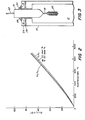
- Fig. 2 there is shown a graphic diagram illustrating the expansion curves of alumina, yttria and a molybdenum alloy containing 50 atom percent titanium as a function of temperature.
- the closely matched thermal characteristics of alumina and the molybdenum alloy of the present invention are illustrated in Fig. 2.
- Fig. 2 also illustrates the matching in thermal characteristics between yttria and the molybdenum alloy of the present invention.
- the molybdenum alloy containing between 2 and 98 atom percent of a metal selected from the group consisting of titanium, vanadium, chromium and mixtures thereof can be used as the closure member for sealing a cavity in a high density polycrystalline ceramic body when the ceramic body has a thermal coefficient of expansion between about 55 x 101°C and 105 x 10 -7 /°C.
- the ceramic body is alumina or yttria
- the molybdenum alloy contain between 35 and 65 atom percent of a metal selected from the group consisting of titanium, vanadium, chromium and mixtures thereof.
- a molybdenum alloy containing between 35 and 65 atom percent titanium is particularly preferred as a closure member for the sealing of alumina.
- the metal alloyed with the molybdenum is outside the range of 35 to 65 atom percent, the resultant molybdenum alloy does not have thermal characteristics which sufficiently match those of alumina or yttria to provide reliable sealing.
- the molybdenum alloys of the present invention can be prepared by arc melting appropriate quantities of pure elements. Pieces of molybdenum rod or wire and titanium or vanadium metal sponge or chips are placed on a water cooled copper hearth in an electric arc melter and heated to the melting point by a high power electric arc in argon purified by passage over hot titanium. The titanium or vanadium melts first and dissolves the molybdenum as the temperature is increased. Care must be taken to insure complete dissolution of the molybdenum.
- metal powders of molybdenum and titanium, vanadium, or chromium are mixed, pressed into a pellet, vacuum out- gassed and arc melted as above. In both cases, the resulting ingot is annealed at 1300-1700°C for about one hour, cooled, cut and machined to the desired size and shape to form a closure member for an arc discharge tube.
- a discharge tube 10 formed from alumina, yttria or other transparent ceramic material includes a cavity 12 which contains the lamp fill material and an opening through an end thereof.
- a closure member 14 formed from a molybdenum alloy, as described hereinabove, is located in the opening in the discharge tube 10.
- the closure member 14 can be solid or tubular and is slightly smaller than the opening in the discharge tube 10.
- Molybdenum wires 16 spot welded to the closure member 14 hold the closure member 14 in position during the sealing process.
- An electrode assembly includes a tungsten rod 18 and a tungsten coil 20 impregnated with emissive,activator material such as calcium barium tungstate.
- the tungsten rod 18 and a molybdenum connection lead 22 are pressed into holes at opposite ends of the closure member 14 and welded tight in an inert gas by an electric arc or laser beam.
- a ring of sealing material 24 and a ceramic washer 26 are placed over the opening in the discharge tube 10.
- the sealing material 24 is typically a ring pressed from a meltable frit based on calcium aluminate. Compositions useful as sealants for alumina are well known in the prior art and have been used in conjunction with niobium feedthrough assemblies.
- the sealing material 24 is sandwiched between the discharge tube 10 and the ceramic washer 26.
- the assembly is then heated in the feedthrough region to about 1400°C to melt the sealing material 24 and cause it to flow into the spaces between the discharge tube 10, the closure member 14 and the ceramic washer 26, thereby providing a vacuum-tight feedthrough assembly.
- the thermal expansion of a 1/8" x 1/8" x 0.8955" long specimen was measured using a dilato- meter calibrated against platinum.
- the thermal expansion of the molybdenum alloy is plotted in Fig. 2.
- the average thermal coefficient of expansion between 25°C and 800°C was determined to be 80.7 x 10 -7 /°C.
- a sample of a molybdenum alloy containing 50 atom percent titanium was prepared by arc melting in purified argon. After annealing at 1700°C for one hour, a sample was machined to a cylindrical configuration having a 0.125" outside diameter. The sample was sealed in a 150 watt high pressure sodium lamp alumina discharge tube using the sealing configuration shown in Fig. 3 and described hereinabove with the exception that the tungsten rod 18, the tungsten coil 20, and the connection lead 22 were omitted.
- the sealing material was a standard frit based on calcium aluminate. The sample was raised to 1400°C to melt the sealing material and complete the seal. The assembly was cycled between room temperature and 800°C in the sealing furnace at 200 torr argon.
- the assembly was then cycled three times between 200°C and 800°C.
- the assembly was leak checked after the temperature cycling and found to be vacuum-tight.
Landscapes
- Vessels And Coating Films For Discharge Lamps (AREA)
Applications Claiming Priority (2)
| Application Number | Priority Date | Filing Date | Title |
|---|---|---|---|
| US06/209,242 US4366410A (en) | 1980-11-21 | 1980-11-21 | Vacuum-tight assembly particularly for a discharge tube |
| US209242 | 1980-11-21 |
Publications (2)
| Publication Number | Publication Date |
|---|---|
| EP0052844A1 true EP0052844A1 (de) | 1982-06-02 |
| EP0052844B1 EP0052844B1 (de) | 1985-05-15 |
Family
ID=22777950
Family Applications (1)
| Application Number | Title | Priority Date | Filing Date |
|---|---|---|---|
| EP81109681A Expired EP0052844B1 (de) | 1980-11-21 | 1981-11-13 | Vakuumdichte Anordnung |
Country Status (5)
| Country | Link |
|---|---|
| US (1) | US4366410A (de) |
| EP (1) | EP0052844B1 (de) |
| JP (1) | JPS57111943A (de) |
| CA (1) | CA1165378A (de) |
| DE (1) | DE3170544D1 (de) |
Cited By (6)
| Publication number | Priority date | Publication date | Assignee | Title |
|---|---|---|---|---|
| EP0122052A1 (de) * | 1983-03-10 | 1984-10-17 | GTE Products Corporation | Verfahren zur Herstellung einer Bogenentladungsröhre |
| FR2560435A1 (fr) * | 1984-02-29 | 1985-08-30 | Iwasaki Electric Co Ltd | Tube photo-emeteur et son procede de production |
| EP0262736A3 (de) * | 1986-09-29 | 1990-03-14 | Koninklijke Philips Electronics N.V. | Stromzuführungshalter für Entladungskolben |
| EP0609477A1 (de) * | 1993-02-05 | 1994-08-10 | Patent-Treuhand-Gesellschaft für elektrische Glühlampen mbH | Keramisches Entladungsgefäss für Hochdruckentladungslampe und Herstellungsverfahren derselben und damit verbundene Dichtungsmaterialien |
| WO2007065822A3 (de) * | 2005-12-09 | 2007-08-09 | Patent Treuhand Ges Fuer Elektrische Gluehlampen Mbh | Hochdruckentladungslampe mit keramischem entladungsgefäss |
| WO2007065819A3 (de) * | 2005-12-09 | 2008-03-20 | Patent Treuhand Ges Fuer Elektrische Gluehlampen Mbh | Metallhalogenidlampe |
Families Citing this family (11)
| Publication number | Priority date | Publication date | Assignee | Title |
|---|---|---|---|---|
| US4537323A (en) * | 1984-01-09 | 1985-08-27 | Gte Laboratories Incorporated | Mo-Ti members with non-metallic sintering aids |
| US4704557A (en) * | 1986-03-11 | 1987-11-03 | The United States Of America As Represented By The United States Department Of Energy | Cermet insert high voltage holdoff for ceramic/metal vacuum devices |
| US4774431A (en) * | 1986-09-29 | 1988-09-27 | North American Philips Lighting Corp. | Arc tube wire support |
| US4806826A (en) * | 1986-12-16 | 1989-02-21 | Gte Products Corporation | High pressure sodium vapor discharge device |
| US7525252B2 (en) * | 2002-12-27 | 2009-04-28 | General Electric Company | Sealing tube material for high pressure short-arc discharge lamps |
| US7453212B2 (en) * | 2005-01-31 | 2008-11-18 | Osram Sylvania Inc. | Ceramic discharge vessel having tungsten alloy feedthrough |
| US7755291B2 (en) * | 2005-06-27 | 2010-07-13 | Osram Sylvania Inc. | Incandescent lamp that emits infrared light and a method of making the lamp |
| US7923932B2 (en) * | 2007-08-27 | 2011-04-12 | Osram Sylvania Inc. | Short metal vapor ceramic lamp |
| DE102007055399A1 (de) | 2007-11-20 | 2009-05-28 | Osram Gesellschaft mit beschränkter Haftung | Hochdruckentladungslampe |
| US7710038B2 (en) | 2007-12-21 | 2010-05-04 | Osram Sylvania Inc. | Ceramic discharge vessel having molybdenum alloy feedthrough |
| JP2024174805A (ja) * | 2023-06-05 | 2024-12-17 | 株式会社神戸製鋼所 | 放熱材料、放熱部品、静電チャック及び放熱材料の製造方法 |
Citations (6)
| Publication number | Priority date | Publication date | Assignee | Title |
|---|---|---|---|---|
| US3588577A (en) * | 1969-03-17 | 1971-06-28 | Gen Electric | Calcia alumina magnesia baria seal composition |
| US3588573A (en) * | 1967-12-29 | 1971-06-28 | Westinghouse Electric Corp | Alumina-rare earth oxide ceramic to metal seals for containing high temperature vapors |
| US3716744A (en) * | 1970-08-27 | 1973-02-13 | D Nguyen | Hermetic end seals for envelope of a metal vapor lamp |
| US3848151A (en) * | 1973-10-23 | 1974-11-12 | Gen Electric | Ceramic envelope lamp having metal foil inleads |
| US4004173A (en) * | 1965-12-27 | 1977-01-18 | Sydney Alfred Richard Rigden | Niobium alumina sealing and product produced thereby |
| GB1496323A (en) * | 1975-09-11 | 1977-12-30 | Philips Electronic Associated | High-pressure gas discharge lamp |
Family Cites Families (9)
| Publication number | Priority date | Publication date | Assignee | Title |
|---|---|---|---|---|
| US3061664A (en) * | 1959-11-13 | 1962-10-30 | Kimble Glass Co | Glass-to-metal seals and method of fabricating same |
| US3275358A (en) * | 1963-03-14 | 1966-09-27 | Gen Electric | Glass-to-metal and glass-to-ceramic seals |
| US3435180A (en) * | 1967-08-03 | 1969-03-25 | Gen Electric | Method of making a molybdenum-tungsten thimble seal |
| US3761744A (en) * | 1971-12-02 | 1973-09-25 | Bell Telephone Labor Inc | Semiconductor charge transfer devices |
| US3882344A (en) * | 1974-03-04 | 1975-05-06 | Westinghouse Electric Corp | Tubular electrode support for ceramic discharge lamp |
| GB1465212A (en) | 1975-05-12 | 1977-02-23 | Gen Electric | Electric discharge lamps |
| HU174714B (hu) * | 1977-01-06 | 1980-03-28 | Egyesuelt Izzolampa | Ehlektricheskaja razrjadnaja lampa |
| US4197957A (en) * | 1978-12-26 | 1980-04-15 | Gte Laboratories Incorporated | Vacuum tight assembly |
| US4291250A (en) * | 1979-05-07 | 1981-09-22 | Westinghouse Electric Corp. | Arc discharge tube end seal |
-
1980
- 1980-11-21 US US06/209,242 patent/US4366410A/en not_active Expired - Lifetime
-
1981
- 1981-11-13 EP EP81109681A patent/EP0052844B1/de not_active Expired
- 1981-11-13 DE DE8181109681T patent/DE3170544D1/de not_active Expired
- 1981-11-19 CA CA000390446A patent/CA1165378A/en not_active Expired
- 1981-11-20 JP JP56185541A patent/JPS57111943A/ja active Pending
Patent Citations (6)
| Publication number | Priority date | Publication date | Assignee | Title |
|---|---|---|---|---|
| US4004173A (en) * | 1965-12-27 | 1977-01-18 | Sydney Alfred Richard Rigden | Niobium alumina sealing and product produced thereby |
| US3588573A (en) * | 1967-12-29 | 1971-06-28 | Westinghouse Electric Corp | Alumina-rare earth oxide ceramic to metal seals for containing high temperature vapors |
| US3588577A (en) * | 1969-03-17 | 1971-06-28 | Gen Electric | Calcia alumina magnesia baria seal composition |
| US3716744A (en) * | 1970-08-27 | 1973-02-13 | D Nguyen | Hermetic end seals for envelope of a metal vapor lamp |
| US3848151A (en) * | 1973-10-23 | 1974-11-12 | Gen Electric | Ceramic envelope lamp having metal foil inleads |
| GB1496323A (en) * | 1975-09-11 | 1977-12-30 | Philips Electronic Associated | High-pressure gas discharge lamp |
Cited By (10)
| Publication number | Priority date | Publication date | Assignee | Title |
|---|---|---|---|---|
| EP0122052A1 (de) * | 1983-03-10 | 1984-10-17 | GTE Products Corporation | Verfahren zur Herstellung einer Bogenentladungsröhre |
| FR2560435A1 (fr) * | 1984-02-29 | 1985-08-30 | Iwasaki Electric Co Ltd | Tube photo-emeteur et son procede de production |
| EP0262736A3 (de) * | 1986-09-29 | 1990-03-14 | Koninklijke Philips Electronics N.V. | Stromzuführungshalter für Entladungskolben |
| EP0609477A1 (de) * | 1993-02-05 | 1994-08-10 | Patent-Treuhand-Gesellschaft für elektrische Glühlampen mbH | Keramisches Entladungsgefäss für Hochdruckentladungslampe und Herstellungsverfahren derselben und damit verbundene Dichtungsmaterialien |
| WO1994018693A1 (en) * | 1993-02-05 | 1994-08-18 | Patent-Treuhand-Gesellschaft für elektrische Glühlampen mbH | Ceramic discharge vessel and method of manufacture |
| US5637960A (en) * | 1993-02-05 | 1997-06-10 | Patent-Treuhand-Gesellschaft Fur Elektrische Gluhlampen Mbh | Ceramic discharge vessel for a high-pressure discharge lamp, having a filling bore sealed with a plug, and method of its manufacture |
| WO2007065822A3 (de) * | 2005-12-09 | 2007-08-09 | Patent Treuhand Ges Fuer Elektrische Gluehlampen Mbh | Hochdruckentladungslampe mit keramischem entladungsgefäss |
| WO2007065819A3 (de) * | 2005-12-09 | 2008-03-20 | Patent Treuhand Ges Fuer Elektrische Gluehlampen Mbh | Metallhalogenidlampe |
| CN100578726C (zh) * | 2005-12-09 | 2010-01-06 | 奥斯兰姆有限公司 | 金属卤化物灯 |
| US7863819B2 (en) | 2005-12-09 | 2011-01-04 | Osram Gesellschaft Mit Beschraenkter Haftung | Metal halide lamp with adhesive layer sealing molybdenum/vandium alloy leadthrough |
Also Published As
| Publication number | Publication date |
|---|---|
| CA1165378A (en) | 1984-04-10 |
| US4366410A (en) | 1982-12-28 |
| JPS57111943A (en) | 1982-07-12 |
| EP0052844B1 (de) | 1985-05-15 |
| DE3170544D1 (en) | 1985-06-20 |
Similar Documents
| Publication | Publication Date | Title |
|---|---|---|
| US4366410A (en) | Vacuum-tight assembly particularly for a discharge tube | |
| US5725827A (en) | Sealing members for alumina arc tubes and method of making same | |
| US5532552A (en) | Metal-halide discharge lamp with ceramic discharge vessel, and method of its manufacture | |
| US4076991A (en) | Sealing materials for ceramic envelopes | |
| EP1434247B1 (de) | Dichtungshülse für Hochdruck-Bogenlampen | |
| CA2241714A1 (en) | Metal-halide discharge lamp having a ceramic discharge vessel closed by elements of cermet | |
| US5159239A (en) | Electric lamp with SiO2 vessel and seal therefor | |
| US4334628A (en) | Vacuum-tight assembly | |
| US3428846A (en) | Closure of tubes of refractory oxide material | |
| US4004173A (en) | Niobium alumina sealing and product produced thereby | |
| US5057048A (en) | Niobium-ceramic feedthrough assembly and ductility-preserving sealing process | |
| US4537323A (en) | Mo-Ti members with non-metallic sintering aids | |
| US4539509A (en) | Quartz to metal seal | |
| US4208605A (en) | Alumina, calcia, baria sealing composition optionally modified with B2 3 | |
| US5077505A (en) | Electric lamp and seal structure therefor | |
| US3983440A (en) | Discharge lamp component | |
| US5754005A (en) | Electric lamps containing electrical leads of a molybdenum and tungsten alloy | |
| US5095246A (en) | Niobium-ceramic feedthrough assembly | |
| US6674001B2 (en) | Solder glass and electrical device employing same | |
| JP3075506B2 (ja) | 低融点ガラスおよびそれを用いたランプシール | |
| CA1227223A (en) | Solder glass and electrical device employing same | |
| US4056752A (en) | Ceramic lamp having tubular inlead containing yttrium-zirconium mixture | |
| JP3772547B2 (ja) | 石英ガラス封着用材料およびランプ | |
| JPS60221946A (ja) | 低圧水銀蒸気放電灯用アマルガム | |
| GB2083279A (en) | Metal vapor arc lamp having thermal link diminishable in heat conduction |
Legal Events
| Date | Code | Title | Description |
|---|---|---|---|
| PUAI | Public reference made under article 153(3) epc to a published international application that has entered the european phase |
Free format text: ORIGINAL CODE: 0009012 |
|
| 17P | Request for examination filed |
Effective date: 19811113 |
|
| AK | Designated contracting states |
Designated state(s): DE FR GB NL |
|
| GRAA | (expected) grant |
Free format text: ORIGINAL CODE: 0009210 |
|
| AK | Designated contracting states |
Designated state(s): DE FR GB NL |
|
| REF | Corresponds to: |
Ref document number: 3170544 Country of ref document: DE Date of ref document: 19850620 |
|
| ET | Fr: translation filed | ||
| PLBE | No opposition filed within time limit |
Free format text: ORIGINAL CODE: 0009261 |
|
| STAA | Information on the status of an ep patent application or granted ep patent |
Free format text: STATUS: NO OPPOSITION FILED WITHIN TIME LIMIT |
|
| 26N | No opposition filed | ||
| PGFP | Annual fee paid to national office [announced via postgrant information from national office to epo] |
Ref country code: GB Payment date: 19891031 Year of fee payment: 9 |
|
| PGFP | Annual fee paid to national office [announced via postgrant information from national office to epo] |
Ref country code: FR Payment date: 19891122 Year of fee payment: 9 |
|
| PGFP | Annual fee paid to national office [announced via postgrant information from national office to epo] |
Ref country code: NL Payment date: 19891130 Year of fee payment: 9 |
|
| PGFP | Annual fee paid to national office [announced via postgrant information from national office to epo] |
Ref country code: DE Payment date: 19891229 Year of fee payment: 9 |
|
| PG25 | Lapsed in a contracting state [announced via postgrant information from national office to epo] |
Ref country code: GB Effective date: 19901113 |
|
| PG25 | Lapsed in a contracting state [announced via postgrant information from national office to epo] |
Ref country code: NL Effective date: 19910601 |
|
| GBPC | Gb: european patent ceased through non-payment of renewal fee | ||
| NLV4 | Nl: lapsed or anulled due to non-payment of the annual fee | ||
| PG25 | Lapsed in a contracting state [announced via postgrant information from national office to epo] |
Ref country code: FR Effective date: 19910731 |
|
| PG25 | Lapsed in a contracting state [announced via postgrant information from national office to epo] |
Ref country code: DE Effective date: 19910801 |
|
| REG | Reference to a national code |
Ref country code: FR Ref legal event code: ST |