EP0054189A1 - Verfahren zur photochemischen Dampfabscheidung - Google Patents
Verfahren zur photochemischen Dampfabscheidung Download PDFInfo
- Publication number
- EP0054189A1 EP0054189A1 EP81109700A EP81109700A EP0054189A1 EP 0054189 A1 EP0054189 A1 EP 0054189A1 EP 81109700 A EP81109700 A EP 81109700A EP 81109700 A EP81109700 A EP 81109700A EP 0054189 A1 EP0054189 A1 EP 0054189A1
- Authority
- EP
- European Patent Office
- Prior art keywords
- radiation
- reaction
- window
- vapor deposition
- chamber
- Prior art date
- Legal status (The legal status is an assumption and is not a legal conclusion. Google has not performed a legal analysis and makes no representation as to the accuracy of the status listed.)
- Granted
Links
- 238000000034 method Methods 0.000 title claims abstract description 38
- 238000007740 vapor deposition Methods 0.000 title claims abstract description 30
- 238000006243 chemical reaction Methods 0.000 claims abstract description 77
- 239000000463 material Substances 0.000 claims abstract description 74
- 239000010453 quartz Substances 0.000 claims abstract description 69
- VYPSYNLAJGMNEJ-UHFFFAOYSA-N silicon dioxide Inorganic materials O=[Si]=O VYPSYNLAJGMNEJ-UHFFFAOYSA-N 0.000 claims abstract description 69
- 230000005855 radiation Effects 0.000 claims abstract description 59
- 239000000853 adhesive Substances 0.000 claims abstract description 9
- 230000001070 adhesive effect Effects 0.000 claims abstract description 9
- 229920000570 polyether Polymers 0.000 claims abstract description 7
- 239000004721 Polyphenylene oxide Substances 0.000 claims abstract description 6
- 238000000151 deposition Methods 0.000 claims description 34
- 230000008021 deposition Effects 0.000 claims description 31
- 239000000758 substrate Substances 0.000 claims description 23
- 238000006552 photochemical reaction Methods 0.000 claims description 18
- 230000005540 biological transmission Effects 0.000 claims description 11
- 239000000376 reactant Substances 0.000 claims description 11
- 229910052581 Si3N4 Inorganic materials 0.000 claims description 10
- 238000005137 deposition process Methods 0.000 claims description 10
- HQVNEWCFYHHQES-UHFFFAOYSA-N silicon nitride Chemical compound N12[Si]34N5[Si]62N3[Si]51N64 HQVNEWCFYHHQES-UHFFFAOYSA-N 0.000 claims description 10
- 239000007795 chemical reaction product Substances 0.000 claims description 7
- 238000010438 heat treatment Methods 0.000 claims description 5
- 239000000203 mixture Substances 0.000 claims description 4
- 238000005019 vapor deposition process Methods 0.000 abstract description 8
- 239000010408 film Substances 0.000 description 22
- QSHDDOUJBYECFT-UHFFFAOYSA-N mercury Chemical compound [Hg] QSHDDOUJBYECFT-UHFFFAOYSA-N 0.000 description 10
- 239000007789 gas Substances 0.000 description 9
- QGZKDVFQNNGYKY-UHFFFAOYSA-N Ammonia Chemical compound N QGZKDVFQNNGYKY-UHFFFAOYSA-N 0.000 description 6
- BLRPTPMANUNPDV-UHFFFAOYSA-N Silane Chemical compound [SiH4] BLRPTPMANUNPDV-UHFFFAOYSA-N 0.000 description 6
- 230000001939 inductive effect Effects 0.000 description 5
- 229910052753 mercury Inorganic materials 0.000 description 5
- 229920000642 polymer Polymers 0.000 description 5
- OAKJQQAXSVQMHS-UHFFFAOYSA-N Hydrazine Chemical compound NN OAKJQQAXSVQMHS-UHFFFAOYSA-N 0.000 description 4
- 239000011248 coating agent Substances 0.000 description 4
- 238000000576 coating method Methods 0.000 description 4
- 230000000977 initiatory effect Effects 0.000 description 4
- 229910000077 silane Inorganic materials 0.000 description 4
- XUIMIQQOPSSXEZ-UHFFFAOYSA-N Silicon Chemical compound [Si] XUIMIQQOPSSXEZ-UHFFFAOYSA-N 0.000 description 3
- 229910021529 ammonia Inorganic materials 0.000 description 3
- 230000007423 decrease Effects 0.000 description 3
- 230000003292 diminished effect Effects 0.000 description 3
- 239000010702 perfluoropolyether Substances 0.000 description 3
- 229910052710 silicon Inorganic materials 0.000 description 3
- 239000010703 silicon Substances 0.000 description 3
- 229910001220 stainless steel Inorganic materials 0.000 description 3
- 239000010935 stainless steel Substances 0.000 description 3
- 238000001771 vacuum deposition Methods 0.000 description 3
- HEDRZPFGACZZDS-UHFFFAOYSA-N Chloroform Chemical compound ClC(Cl)Cl HEDRZPFGACZZDS-UHFFFAOYSA-N 0.000 description 2
- RTZKZFJDLAIYFH-UHFFFAOYSA-N Diethyl ether Chemical compound CCOCC RTZKZFJDLAIYFH-UHFFFAOYSA-N 0.000 description 2
- 238000009825 accumulation Methods 0.000 description 2
- 229910052782 aluminium Inorganic materials 0.000 description 2
- XAGFODPZIPBFFR-UHFFFAOYSA-N aluminium Chemical compound [Al] XAGFODPZIPBFFR-UHFFFAOYSA-N 0.000 description 2
- 238000010586 diagram Methods 0.000 description 2
- 238000010494 dissociation reaction Methods 0.000 description 2
- 230000005593 dissociations Effects 0.000 description 2
- 229910052751 metal Inorganic materials 0.000 description 2
- 239000002184 metal Substances 0.000 description 2
- 230000001443 photoexcitation Effects 0.000 description 2
- 239000000047 product Substances 0.000 description 2
- 238000005507 spraying Methods 0.000 description 2
- 238000002207 thermal evaporation Methods 0.000 description 2
- BOSAWIQFTJIYIS-UHFFFAOYSA-N 1,1,1-trichloro-2,2,2-trifluoroethane Chemical compound FC(F)(F)C(Cl)(Cl)Cl BOSAWIQFTJIYIS-UHFFFAOYSA-N 0.000 description 1
- 229920006384 Airco Polymers 0.000 description 1
- PXGOKWXKJXAPGV-UHFFFAOYSA-N Fluorine Chemical compound FF PXGOKWXKJXAPGV-UHFFFAOYSA-N 0.000 description 1
- 239000004809 Teflon Substances 0.000 description 1
- 229920006362 Teflon® Polymers 0.000 description 1
- 239000012080 ambient air Substances 0.000 description 1
- 230000015572 biosynthetic process Effects 0.000 description 1
- 125000004432 carbon atom Chemical group C* 0.000 description 1
- 150000001875 compounds Chemical class 0.000 description 1
- 238000011109 contamination Methods 0.000 description 1
- 238000012217 deletion Methods 0.000 description 1
- 230000037430 deletion Effects 0.000 description 1
- 230000001419 dependent effect Effects 0.000 description 1
- 239000003989 dielectric material Substances 0.000 description 1
- 230000005281 excited state Effects 0.000 description 1
- 229910052731 fluorine Inorganic materials 0.000 description 1
- 239000011737 fluorine Substances 0.000 description 1
- 239000012634 fragment Substances 0.000 description 1
- 238000003780 insertion Methods 0.000 description 1
- 230000037431 insertion Effects 0.000 description 1
- 238000004519 manufacturing process Methods 0.000 description 1
- 238000012986 modification Methods 0.000 description 1
- 230000004048 modification Effects 0.000 description 1
- 150000004767 nitrides Chemical class 0.000 description 1
- 238000010422 painting Methods 0.000 description 1
- 238000005950 photosensitized reaction Methods 0.000 description 1
- 229920006254 polymer film Polymers 0.000 description 1
- 238000002203 pretreatment Methods 0.000 description 1
- 238000012545 processing Methods 0.000 description 1
- 238000005096 rolling process Methods 0.000 description 1
- 229920006395 saturated elastomer Polymers 0.000 description 1
- 239000004065 semiconductor Substances 0.000 description 1
- 239000002904 solvent Substances 0.000 description 1
- 239000010409 thin film Substances 0.000 description 1
Images
Classifications
-
- C—CHEMISTRY; METALLURGY
- C23—COATING METALLIC MATERIAL; COATING MATERIAL WITH METALLIC MATERIAL; CHEMICAL SURFACE TREATMENT; DIFFUSION TREATMENT OF METALLIC MATERIAL; COATING BY VACUUM EVAPORATION, BY SPUTTERING, BY ION IMPLANTATION OR BY CHEMICAL VAPOUR DEPOSITION, IN GENERAL; INHIBITING CORROSION OF METALLIC MATERIAL OR INCRUSTATION IN GENERAL
- C23C—COATING METALLIC MATERIAL; COATING MATERIAL WITH METALLIC MATERIAL; SURFACE TREATMENT OF METALLIC MATERIAL BY DIFFUSION INTO THE SURFACE, BY CHEMICAL CONVERSION OR SUBSTITUTION; COATING BY VACUUM EVAPORATION, BY SPUTTERING, BY ION IMPLANTATION OR BY CHEMICAL VAPOUR DEPOSITION, IN GENERAL
- C23C16/00—Chemical coating by decomposition of gaseous compounds, without leaving reaction products of surface material in the coating, i.e. chemical vapour deposition [CVD] processes
- C23C16/04—Coating on selected surface areas, e.g. using masks
- C23C16/047—Coating on selected surface areas, e.g. using masks using irradiation by energy or particles
-
- C—CHEMISTRY; METALLURGY
- C23—COATING METALLIC MATERIAL; COATING MATERIAL WITH METALLIC MATERIAL; CHEMICAL SURFACE TREATMENT; DIFFUSION TREATMENT OF METALLIC MATERIAL; COATING BY VACUUM EVAPORATION, BY SPUTTERING, BY ION IMPLANTATION OR BY CHEMICAL VAPOUR DEPOSITION, IN GENERAL; INHIBITING CORROSION OF METALLIC MATERIAL OR INCRUSTATION IN GENERAL
- C23C—COATING METALLIC MATERIAL; COATING MATERIAL WITH METALLIC MATERIAL; SURFACE TREATMENT OF METALLIC MATERIAL BY DIFFUSION INTO THE SURFACE, BY CHEMICAL CONVERSION OR SUBSTITUTION; COATING BY VACUUM EVAPORATION, BY SPUTTERING, BY ION IMPLANTATION OR BY CHEMICAL VAPOUR DEPOSITION, IN GENERAL
- C23C16/00—Chemical coating by decomposition of gaseous compounds, without leaving reaction products of surface material in the coating, i.e. chemical vapour deposition [CVD] processes
- C23C16/44—Chemical coating by decomposition of gaseous compounds, without leaving reaction products of surface material in the coating, i.e. chemical vapour deposition [CVD] processes characterised by the method of coating
- C23C16/48—Chemical coating by decomposition of gaseous compounds, without leaving reaction products of surface material in the coating, i.e. chemical vapour deposition [CVD] processes characterised by the method of coating by irradiation, e.g. photolysis, radiolysis, particle radiation
- C23C16/488—Protection of windows for introduction of radiation into the coating chamber
Definitions
- This invention relates generally to an apparatus and method for the photochemical vapor deposition of a layer of a selected material, and, more particularly, to such an apparatus and method using a selected polymeric coating on the window through which the initiating radiation for the photochemical reaction must pass.
- a layer of a selected material such as a dielectric material, a semiconductive material, or a metal
- this deposition may be most satisfactorily accomplished by a photochemical reaction, i.e., a chemical reaction which is induced or initated by radiation of a chosen wavelength.
- a photochemical reaction i.e., a chemical reaction which is induced or initated by radiation of a chosen wavelength.
- Si 3 N 4 silicon nitride
- SiH 4 silane
- N 2 H 4 hydrazine
- mercury is excited by radiation of a particular wavelength (i.e. 2537 angstroms) to form mercury in an excited state ( H g * ).
- Hg * then collides with the SiH 4 and the N 2 H 4 to cause these molecules to form radicals which then react to form S i 3 N 4 .
- the photochemical vapor deposition process is initiated by the transmission of ultraviolet radiation (e.g. 2537 angstroms) through a quartz window which forms the top surface of the vacuum deposition chamber.
- the photochemical vapor deposition reaction then occurs in the deposition chamber and the selected material, such as silicon nitride, is deposited on the surface of a selected substrate or other target.
- the selected material such as silicon nitride
- additional deposits of the same selected material are also formed on the internal face of the quartz window of the deposition chamber.
- this deposited material is opaque to the ultraviolet radiation, as silicon nitride is, this deposited material diminishes the transparency of the quartz window, which, in turn, diminishes the amount of radiation which can enter the deposition chamber to initiate the desired photochemical reaction. Since the rate of the photochemical reaction is dependent upon the amount of initiating radiation entering the deposition chamber, this unwanted deposit of ultraviolet-opaque material on the quartz window significantly decreases the rate of the deposition reaction, and ultimately the reaction may cease altogether.
- This copending application discloses a mobile transparent window apparatus and method for use in a photochemical vapor deposition system having a reaction chamber with a quartz window integral with the top surface thereof, in which a film of a predetermined material is drawn across the internal face of the quartz window within the reaction chamber.
- the predetermined material is transparent to the selected wavelength of radiation required for the selected photochemical reaction.
- the film placed at the internal face of the quartz window during the deposition process prevents undesirable or extraneous deposits of the selected material on the internal face of the quartz window.
- the movement of the film across the internal face of the quartz window removes the selected material deposited on the film from close proximity to the internal face of the window.
- the process and apparatus of the present invention provide yet another means for alleviating the prior art problem of diminished window transparency in a photochemical vapor deposition process.
- the general purpose of this invention is to provide a new and improved apparatus and method for the photochemical vapor deposition of a layer of a selected radiation-opaque material on the surface of a chosen substrate which possesses most, if not all, of the advantages of the prior art photochemical vapor deposition processes and apparatuses, while overcoming their above- mentioned significant disadvantages.
- a photochemical vapor deposition apparatus comprising: (a) a reaction chamber having.at least a portion thereof formed of quartz to provide a quartz window for the transmission of a selected wavelength of radiation through the quartz window into the reaction chamber; (b) a film of a predetermined material deposited on the internal face of the quartz window to a predetermined thickness, with this predetermined material being transparent to the selected wavelength of radiation and having a relatively low adhesive affinity for the selected material to be deposited; (c) means for introducing a reactant gas mixture into the reaction chamber; (d) means for heating a substrate within the reaction chamber; (e) means for producing radiation of the selected wavelength and introducing this radiation into the reaction chamber through the quartz window; and (f) means for producing a vacuum in the reaction chamber of sufficiently low pressure to enable the deposition reaction to occur.
- the film formed on the internal face of the quartz window prevents undesirable or extraneous deposits of the selected radiation-opaque material from forming on or immediately in front of the internal face of the quartz window.
- the window is maintained in a clean and transparent state which provides continuous transmission of the reaction-inducing radiation into the reaction chamber, and thus enhances the efficiency and rate of the deposition process.
- Another purpose is to provide an apparatus of the type described which significantly increases the rate at which a selected radiation-opaque material may be deposited on a substrate.
- Still another purpose is to provide an apparatus of the type described which prevents unwanted deposition of the selected material on the internal face of the quartz window of a reaction chamber.
- a further purpose of the present invention is to provide an apparatus of the type described which maintains the quartz window in a clean and transparent state throughout an extended time period required for the deposition process.
- Another purpose is to provide a new and improved apparatus of the type described which permits the deposition of a uniform and high quality layer of a desired material on a substrate.
- Yet another purpose of the present invention is to provide a new and improved photochemical vapor deposition method which minimizes the resistance to the transmission of reaction-inducing radiation caused by extraneous deposition products, and thus maximizes the efficiency and rate of the vapor deposition reaction.
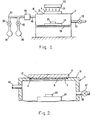
- FIG. 1 shows, in simplified form, one photochemical vapor deposition system incorporating the coated quartz window in accordance with the present invention.
- the reaction chamber 3, which may be formed of stainless steel, aluminum, or other suitable structural material, has a window 4 which is made integral with the top surface of the reaction chamber 3 as described in further detail with reference to FIG. 2.
- the window 4 is formed of a material which is transmissive to the selected wavelength of radiation used to initiate the desired photochemical reaction, such as quartz.
- This radiation 20 is produced by the radiation-producing means 22 which may be, for example, an array of low pressure mercury vapor arc lamps.
- the internal face of the quartz window 4 is coated with a film of a predetermined material as described in greater detail with respect to FIG. 2.
- a substrate holder 24 which holds the substrate 26 onto which a layer of a selected material is to be deposited.
- the substrate 26 may be formed of any material which is capable of being subjected to a photochemical vapor deposition reaction.
- heating elements 28 External to the reaction chamber 3 at the bottom surface thereof, there are heating elements 28 which are used to heat the substrate 26 to the required temperature so that appropriate film properties, such as density, may be obtained.
- a tube 30 leads from the reaction chamber 3 and passes through a valve 32 and then to a vacuum-producing means (not shown).
- the chambers 34 and 36 which contain the individual reactant gases for the selected photochemical reaction, for example, silane and ammonia.
- the chambers 34 and 36 are connected to the valves 38 and 40, respectively, which are used to control the amounts of reactants that are introduced into a tube 42.
- the reactant gases flow through the tube 42 into a chamber 44 which contains a pool of mercury having mercury vapor above it.
- the reactant gases thus become mixed in the chamber 44 with mercury vapor and this reactant gas mixture then passes through the tube 46 into the reaction chamber 3, where the photochemical reaction may be brought about.
- the components of the apparatus shown in FIG. 1 may be constructed of stainless steel or aluminum unless otherwise specified.
- the reaction chamber 3 with the flat quartz window 4 integral with the top surface thereof as shown in FIG. 1 is but one example of a reaction chamber embodying the present invention.
- the reaction chamber 3 may have any configuration in which at least a portion thereof is formed of quartz or other material which is transmissive to the selected wavelength of radiation, to allow this radiation to enter the reaction chamber.
- the reaction chamber 3 may comprise a hollow quartz tube with the entire internal surface or a selected portion thereof coated with the predetermined radiation-transparent, low surface energy material in accordance with the present invention, as described in relation to FIG. 2.
- the present invention may also be used in a photochemical vapor deposition process in which a reactant gas is directly dissociated by photo-excitation, without the use of a mercury sensitizer.
- a direct dissociation process the apparatus is the same as that described in relation to FIG. 1 with the deletion of the chamber 44 for containing the mercury.
- FIG. 2 Attention is now directed to FIG. 2 for a more particular consideration of the quartz window 4.
- a layer or film of a predetermined material is deposited on one surface of the quartz window 4, which will ultimately become the internal face 5 of the quartz window 4 when the quartz window 4 is incorporated into the chamber 3 as shown in FIG. 2.
- the term "internal face" of the quartz window is used herein to mean that face of the quartz window which is internal to the reaction chamber.
- This predetermined material is selected to be transparent to the selected wavelength of radiation used to initiate the desired photochemical reaction, and further, to have a relatively low adhesive affinity for the material to be deposited on the substrate.
- adheresive affinity is used herein to mean the probability for attraction and adhesion of-the photochemical reaction products or fragments thereof on the predetermined material.
- this predetermined material must be stable at the elevated temperature required for the deposition reaction and must have sufficiently low vapor pressure so as not to significantly increase the evacuation time nor to produce contamination of the deposited layer.
- a perfluorinated polyether i.e. a polymer with repeating ether linkages (-C-O-C-bonds) and carbon atoms saturated with fluorine.
- One particular perfluoropolyether which may be used is a compound sold under the trademark name Fomblin Y25 by the Montecatini-Edison Company.
- a layer or film of the predetermined material is deposited on the internal face 5 of the quartz window 4 to a thickness in the range of 0.2 to 2.0 micrometers, for example, by spraying, painting, or rolling a solution of the Fomblin Y25 polymer in trichlorotrifluoroethane or chloroform onto the internal face 5 and then allowing or causing the solvent to evaporate, as is known in the art of forming polymer films.
- the relatively thin film 6 of the predetermined material is formed on the internal face 5 of the quartz window 4 as shown in FIG. 2. After the film 6 has been deposited on the internal face 5 of the quartz window 4, the quartz window 4 is positioned on the top surface of the reaction chamber 3 as illustrated in FIG.
- the material to be deposited such as silicon nitride, does not adhere to film 6 of the predetermined material. It is believed that this predetermined material has a molecular structure and surface energy such that this predetermined material has a low adhesive affinity for the material to be deposited on the substrate.
- the film 6 of the predetermined material prevents reactant gases from coming in contact with the internal face 5 of the quartz window 4 and, further, prevents extraneous and unwanted deposits from forming either on the internal face 5 of the quartz window or immediately in front of this internal face 5 (i.e. on the film 6 itseif).
- the internal face 5 of the quartz window 4 is maintained in a clean and transparent state by the process of the present invention since the accumulation of deposition products on the internal face 5 which are opaque to reaction-inducing radiation and would attenuate, absorb, or provide a resistance to the radiation entering the deposition chamber through the quartz window 4 has been avoided. (These materials which are opaque to the reaction-inducing radiation are referred to herein as "radiation-opaque" materials). Since the rate of deposition is directly proportional to the intensity of the radiation passing through the quartz window 4, the rate of the deposition reaction is significantly increased by the process of the present invention because the internal face 5 of the quartz window 4 is maintained in a clean and transparent state which provides continuous transmission of the reaction-inducing radiation into the reaction chamber.
- a layer of silicon'nitride was photochemically deposited on a silicon substrate by the reaction of silane, ammonia, and mercury vapor.
- the source 22 of the ultraviolet radiation 20 shown in FIG. 1 was an array of low pressure mercury vapor arc lamps which produced radiation having a wavelength of 2537 angstroms.
- the film 6 was formed of Fomblin Y25 obtained from the Montecatini-Edison Company of Italy, and was a perfluorinated polyether. The layer 6 was formed to a thickness of approximately 4,000 to 5,000 angstroms by the spraying procedure previously described herein.
- a photochemical vapor deposition process was used which is similiar to that described in U.S. Patent No.
- the reaction chamber 3 with the coated quartz window 4 in place as shown in FIG. 2 herein, was evacuated to a pressure of 10 -3 Torr.
- the heating elements 28 were activated to heat the substrate 26 to a temperature of 150°C.
- a layer of silicon nitride was deposited on a silicon substrate at a rate in excess of 4,000 angstroms per hour.
- the deposition rate of the prior art process discussed herein is typically 50 angstroms per minute initially and decreases rapidly due to the accumulation of ultraviolet radiation-absorbing deposits on the quartz window.
- Deposition of the silicon nitride in such prior art processes typically ceases after approximately 45 minutes, providing a total maximum film thickness of approximately 1000 to 1400 angstroms.
- a significant increase in the deposition rate can be achieved by using the apparatus and process of the present invention.
- the process of the present invention is particularly useful for avoiding the prior art leveling-out problem during a continuous photochemical vapor deposition process, in which the amount of material deposited decreases significantly with extended processing time periods.
- the deposition rate of the present invention can be maintained essentially constant for a period in excess of 3 hours.
- one polymer-coated quartz window may be used for four successive deposition processes in accordance with the process of the present invention. After such time, the polymer coating degrades and must be removed and a new polymer coating formed on the quartz window.
- the scope of the invention is not limited to the photochemical vapor deposition of silicon nitride, which was used merely as an example, but is intended to include the photochemical vapor deposition of any material which is opaque to the radiation used to initiate or induce the photochemical reaction.
- it is intended to include within the scope of the present invention any process in which radiation is introduced into a reaction chamber through a transparent window, including both mercury-sensitized photochemical reactions and direct dissociation of a reactant gas or gases by photoexcitation.
- the predetermined material of which the film is made may be selected as required in order to provide a film that is transparent to the wavelength of radiation necessary to initiate the desired photochemical reaction and that has a low adhesive affinity for the material to be deposited.
- the predetermined material may be deposited as a film onto the quartz window in accordance with known processes for forming such films and is not limited to the particular process described herein.
- the reaction chamber window may be made of any material which is suitable for the desired photochemical reaction process.
- a method for depositing a layer of a selected material on a substrate or target in a predetermined pattern, such as lines or stripes, rather than as a continuous film would require that the initiating radiation for the photochemical reaction be caused to strike only selected portions of the substrate or target onto which it is desired to form a deposit.
- the radiation could be focused on selected portions of the target or the radiation could be passed through a mask, such as a stainless steel mask placed over the target within the reaction chamber, to cause the radiation to strike selected portions of the ' target.
- a layer of the perfluoropolyether material which is used to protect the internal face of the quartz window may also be formed on the surface of the substrate in a predetermined pattern to serve as a mask during the photochemical vapor deposition of the selected material on the substrate in a predetermined pattern.
- laser radiation of the appropriate wavelength could provide the required limited and directed radiation for depositing such a patterned layer.
Landscapes
- Chemical & Material Sciences (AREA)
- Materials Engineering (AREA)
- Toxicology (AREA)
- General Chemical & Material Sciences (AREA)
- Chemical Kinetics & Catalysis (AREA)
- Engineering & Computer Science (AREA)
- Health & Medical Sciences (AREA)
- Mechanical Engineering (AREA)
- Metallurgy (AREA)
- Organic Chemistry (AREA)
- Chemical Vapour Deposition (AREA)
- Physical Or Chemical Processes And Apparatus (AREA)
- Formation Of Insulating Films (AREA)
Applications Claiming Priority (2)
| Application Number | Priority Date | Filing Date | Title |
|---|---|---|---|
| US21604180A | 1980-12-15 | 1980-12-15 | |
| US216041 | 1980-12-15 |
Publications (2)
| Publication Number | Publication Date |
|---|---|
| EP0054189A1 true EP0054189A1 (de) | 1982-06-23 |
| EP0054189B1 EP0054189B1 (de) | 1988-04-20 |
Family
ID=22805435
Family Applications (1)
| Application Number | Title | Priority Date | Filing Date |
|---|---|---|---|
| EP81109700A Expired EP0054189B1 (de) | 1980-12-15 | 1981-11-14 | Verfahren zur photochemischen Dampfabscheidung |
Country Status (10)
| Country | Link |
|---|---|
| EP (1) | EP0054189B1 (de) |
| JP (1) | JPS57154839A (de) |
| KR (1) | KR850001974B1 (de) |
| AU (1) | AU530027B2 (de) |
| CA (1) | CA1181719A (de) |
| DE (1) | DE3176707D1 (de) |
| DK (1) | DK553981A (de) |
| GB (1) | GB2089377A (de) |
| IL (1) | IL64258A0 (de) |
| ZA (1) | ZA817910B (de) |
Cited By (4)
| Publication number | Priority date | Publication date | Assignee | Title |
|---|---|---|---|---|
| WO1986000938A1 (en) * | 1984-07-31 | 1986-02-13 | Hughes Aircraft Company | Barrel reactor and method for photochemical vapor deposition |
| EP0171605A3 (en) * | 1984-07-11 | 1986-06-25 | Hitachi, Ltd. | Method of manufacturing semiconductor integrated circuit involving an organic film |
| EP0175456A3 (en) * | 1984-09-18 | 1987-04-29 | Kabushiki Kaisha Toshiba | Phototreating apparatus |
| WO1989007667A1 (en) * | 1988-02-09 | 1989-08-24 | Aron Vecht And Company Limited | Methods and apparatus for depositing thin films |
Families Citing this family (5)
| Publication number | Priority date | Publication date | Assignee | Title |
|---|---|---|---|---|
| DE3407089A1 (de) * | 1984-02-27 | 1985-08-29 | Siemens Ag | Verfahren und vorrichtung zur lichtinduzierten, fotolytischen abscheidung |
| JPS6118123A (ja) * | 1984-07-04 | 1986-01-27 | Semiconductor Energy Lab Co Ltd | 薄膜形成装置 |
| GB2162207B (en) * | 1984-07-26 | 1989-05-10 | Japan Res Dev Corp | Semiconductor crystal growth apparatus |
| JPS6362867A (ja) * | 1986-09-02 | 1988-03-19 | Seikosha Co Ltd | 有色物品 |
| CN113718233A (zh) * | 2021-08-30 | 2021-11-30 | 上海华力微电子有限公司 | 一种石英透镜的移除方法 |
Citations (4)
| Publication number | Priority date | Publication date | Assignee | Title |
|---|---|---|---|---|
| US3678889A (en) * | 1970-02-06 | 1972-07-25 | Tokyo Shibaura Electric Co | Reflector assembly for reflecting the vapors of high temperature volatile materials |
| US3904505A (en) * | 1970-03-20 | 1975-09-09 | Space Sciences Inc | Apparatus for film deposition |
| US3951698A (en) * | 1974-11-25 | 1976-04-20 | The United States Of America As Represented By The Secretary Of The Army | Dual use of epitaxy seed crystal as tube input window and cathode structure base |
| US3992233A (en) * | 1975-03-10 | 1976-11-16 | The Secretary Of State For Defence In Her Britannic Majesty's Government Of The United Kingdom Of Great Britain And Northern Ireland | Surface treatment of III-V compound crystals |
Family Cites Families (1)
| Publication number | Priority date | Publication date | Assignee | Title |
|---|---|---|---|---|
| US4022928A (en) * | 1975-05-22 | 1977-05-10 | Piwcyzk Bernhard P | Vacuum deposition methods and masking structure |
-
1981
- 1981-11-10 IL IL64258A patent/IL64258A0/xx not_active IP Right Cessation
- 1981-11-13 GB GB8134329A patent/GB2089377A/en not_active Withdrawn
- 1981-11-14 DE DE8181109700T patent/DE3176707D1/de not_active Expired
- 1981-11-14 EP EP81109700A patent/EP0054189B1/de not_active Expired
- 1981-11-16 ZA ZA817910A patent/ZA817910B/xx unknown
- 1981-11-18 CA CA000390328A patent/CA1181719A/en not_active Expired
- 1981-12-04 AU AU78255/81A patent/AU530027B2/en not_active Ceased
- 1981-12-08 KR KR1019810004788A patent/KR850001974B1/ko not_active Expired
- 1981-12-14 DK DK553981A patent/DK553981A/da not_active Application Discontinuation
- 1981-12-15 JP JP56201054A patent/JPS57154839A/ja active Granted
Patent Citations (4)
| Publication number | Priority date | Publication date | Assignee | Title |
|---|---|---|---|---|
| US3678889A (en) * | 1970-02-06 | 1972-07-25 | Tokyo Shibaura Electric Co | Reflector assembly for reflecting the vapors of high temperature volatile materials |
| US3904505A (en) * | 1970-03-20 | 1975-09-09 | Space Sciences Inc | Apparatus for film deposition |
| US3951698A (en) * | 1974-11-25 | 1976-04-20 | The United States Of America As Represented By The Secretary Of The Army | Dual use of epitaxy seed crystal as tube input window and cathode structure base |
| US3992233A (en) * | 1975-03-10 | 1976-11-16 | The Secretary Of State For Defence In Her Britannic Majesty's Government Of The United Kingdom Of Great Britain And Northern Ireland | Surface treatment of III-V compound crystals |
Cited By (4)
| Publication number | Priority date | Publication date | Assignee | Title |
|---|---|---|---|---|
| EP0171605A3 (en) * | 1984-07-11 | 1986-06-25 | Hitachi, Ltd. | Method of manufacturing semiconductor integrated circuit involving an organic film |
| WO1986000938A1 (en) * | 1984-07-31 | 1986-02-13 | Hughes Aircraft Company | Barrel reactor and method for photochemical vapor deposition |
| EP0175456A3 (en) * | 1984-09-18 | 1987-04-29 | Kabushiki Kaisha Toshiba | Phototreating apparatus |
| WO1989007667A1 (en) * | 1988-02-09 | 1989-08-24 | Aron Vecht And Company Limited | Methods and apparatus for depositing thin films |
Also Published As
| Publication number | Publication date |
|---|---|
| GB2089377A (en) | 1982-06-23 |
| DE3176707D1 (en) | 1988-05-26 |
| ZA817910B (en) | 1982-10-27 |
| KR830008409A (ko) | 1983-11-18 |
| AU530027B2 (en) | 1983-06-30 |
| KR850001974B1 (ko) | 1985-12-31 |
| CA1181719A (en) | 1985-01-29 |
| IL64258A0 (en) | 1982-02-28 |
| DK553981A (da) | 1982-06-16 |
| AU7825581A (en) | 1982-07-22 |
| JPS649728B2 (de) | 1989-02-20 |
| JPS57154839A (en) | 1982-09-24 |
| EP0054189B1 (de) | 1988-04-20 |
Similar Documents
| Publication | Publication Date | Title |
|---|---|---|
| US4265932A (en) | Mobile transparent window apparatus and method for photochemical vapor deposition | |
| US5356672A (en) | Method for microwave plasma assisted supersonic gas jet deposition of thin films | |
| US5256205A (en) | Microwave plasma assisted supersonic gas jet deposition of thin film materials | |
| US4824690A (en) | Pulsed plasma process for treating a substrate | |
| EP0191855B1 (de) | Zylindrischer reaktor und verfahren zur photochemischen abscheidung aus der dampfphase | |
| US4268711A (en) | Method and apparatus for forming films from vapors using a contained plasma source | |
| US4612085A (en) | Photochemical patterning | |
| JPH03257182A (ja) | 表面加工装置 | |
| JPS60236219A (ja) | プラズマ生成したソースガスを用いた蒸着方法 | |
| US4058638A (en) | Method of optical thin film coating | |
| GB2089377A (en) | Improved photochemical vapor deposition apparatus and method | |
| US3939798A (en) | Optical thin film coater | |
| Schoenholtz et al. | Plasma-enhanced deposition of silicon oxynitride films | |
| JPS60245217A (ja) | 薄膜形成装置 | |
| US4933207A (en) | Laser and thermal assisted chemical vapor deposition of mercury containing compounds | |
| JPS59208065A (ja) | レ−ザ金属堆積方法 | |
| JPS629189B2 (de) | ||
| SU901352A1 (ru) | Устройство дл нанесени покрытий | |
| JPS6046372A (ja) | 薄膜形成方法 | |
| JPS60178622A (ja) | 半導体装置の製造方法 | |
| JPH0658889B2 (ja) | 薄膜形成方法 | |
| JPS60236215A (ja) | レ−ザcvd方法 | |
| RU2017191C1 (ru) | Способ формирования маскирующего слоя фотошаблона | |
| JPS6118125A (ja) | 薄膜形成装置 | |
| JPS59209643A (ja) | 光化学気相成長装置 |
Legal Events
| Date | Code | Title | Description |
|---|---|---|---|
| PUAI | Public reference made under article 153(3) epc to a published international application that has entered the european phase |
Free format text: ORIGINAL CODE: 0009012 |
|
| AK | Designated contracting states |
Designated state(s): CH DE FR IT LI NL SE |
|
| 17P | Request for examination filed |
Effective date: 19821209 |
|
| RAP1 | Party data changed (applicant data changed or rights of an application transferred) |
Owner name: HUGHES AIRCRAFT COMPANY |
|
| ITF | It: translation for a ep patent filed | ||
| GRAA | (expected) grant |
Free format text: ORIGINAL CODE: 0009210 |
|
| AK | Designated contracting states |
Kind code of ref document: B1 Designated state(s): CH DE FR IT LI NL SE |
|
| REF | Corresponds to: |
Ref document number: 3176707 Country of ref document: DE Date of ref document: 19880526 |
|
| ET | Fr: translation filed | ||
| PG25 | Lapsed in a contracting state [announced via postgrant information from national office to epo] |
Ref country code: SE Effective date: 19881115 |
|
| PLBE | No opposition filed within time limit |
Free format text: ORIGINAL CODE: 0009261 |
|
| STAA | Information on the status of an ep patent application or granted ep patent |
Free format text: STATUS: NO OPPOSITION FILED WITHIN TIME LIMIT |
|
| 26N | No opposition filed | ||
| PGFP | Annual fee paid to national office [announced via postgrant information from national office to epo] |
Ref country code: FR Payment date: 19941007 Year of fee payment: 14 |
|
| PGFP | Annual fee paid to national office [announced via postgrant information from national office to epo] |
Ref country code: DE Payment date: 19941024 Year of fee payment: 14 |
|
| PGFP | Annual fee paid to national office [announced via postgrant information from national office to epo] |
Ref country code: CH Payment date: 19941025 Year of fee payment: 14 |
|
| PGFP | Annual fee paid to national office [announced via postgrant information from national office to epo] |
Ref country code: NL Payment date: 19941130 Year of fee payment: 14 |
|
| EUG | Se: european patent has lapsed |
Ref document number: 81109700.5 Effective date: 19890726 |
|
| PG25 | Lapsed in a contracting state [announced via postgrant information from national office to epo] |
Ref country code: LI Effective date: 19951130 Ref country code: CH Effective date: 19951130 |
|
| PG25 | Lapsed in a contracting state [announced via postgrant information from national office to epo] |
Ref country code: NL Effective date: 19960601 |
|
| REG | Reference to a national code |
Ref country code: CH Ref legal event code: PL |
|
| PG25 | Lapsed in a contracting state [announced via postgrant information from national office to epo] |
Ref country code: FR Effective date: 19960731 |
|
| NLV4 | Nl: lapsed or anulled due to non-payment of the annual fee |
Effective date: 19960601 |
|
| PG25 | Lapsed in a contracting state [announced via postgrant information from national office to epo] |
Ref country code: DE Effective date: 19960801 |
|
| REG | Reference to a national code |
Ref country code: FR Ref legal event code: ST |