EP0054515A1 - Reaktivfarbstoffe, deren Herstellung und Verwendung - Google Patents
Reaktivfarbstoffe, deren Herstellung und Verwendung Download PDFInfo
- Publication number
- EP0054515A1 EP0054515A1 EP81810491A EP81810491A EP0054515A1 EP 0054515 A1 EP0054515 A1 EP 0054515A1 EP 81810491 A EP81810491 A EP 81810491A EP 81810491 A EP81810491 A EP 81810491A EP 0054515 A1 EP0054515 A1 EP 0054515A1
- Authority
- EP
- European Patent Office
- Prior art keywords
- formula
- dye
- dyes
- reactive
- meanings given
- Prior art date
- Legal status (The legal status is an assumption and is not a legal conclusion. Google has not performed a legal analysis and makes no representation as to the accuracy of the status listed.)
- Withdrawn
Links
- 238000002360 preparation method Methods 0.000 title claims description 11
- 239000000975 dye Substances 0.000 claims abstract description 94
- 239000000985 reactive dye Substances 0.000 claims abstract description 59
- 239000000460 chlorine Chemical group 0.000 claims abstract description 39
- -1 polyazo Polymers 0.000 claims abstract description 36
- 229910052801 chlorine Inorganic materials 0.000 claims abstract description 35
- ZAMOUSCENKQFHK-UHFFFAOYSA-N Chlorine atom Chemical group [Cl] ZAMOUSCENKQFHK-UHFFFAOYSA-N 0.000 claims abstract description 28
- WKBOTKDWSSQWDR-UHFFFAOYSA-N Bromine atom Chemical group [Br] WKBOTKDWSSQWDR-UHFFFAOYSA-N 0.000 claims abstract description 25
- GDTBXPJZTBHREO-UHFFFAOYSA-N bromine Chemical group BrBr GDTBXPJZTBHREO-UHFFFAOYSA-N 0.000 claims abstract description 25
- 229910052794 bromium Chemical group 0.000 claims abstract description 25
- 239000011737 fluorine Substances 0.000 claims abstract description 17
- 229910052731 fluorine Inorganic materials 0.000 claims abstract description 17
- 238000004043 dyeing Methods 0.000 claims abstract description 11
- 125000001153 fluoro group Chemical group F* 0.000 claims abstract description 10
- 229910052739 hydrogen Inorganic materials 0.000 claims abstract description 10
- 239000001257 hydrogen Substances 0.000 claims abstract description 10
- 239000000463 material Substances 0.000 claims abstract description 6
- 125000004435 hydrogen atom Chemical group [H]* 0.000 claims abstract description 5
- IEQIEDJGQAUEQZ-UHFFFAOYSA-N phthalocyanine Chemical compound N1C(N=C2C3=CC=CC=C3C(N=C3C4=CC=CC=C4C(=N4)N3)=N2)=C(C=CC=C2)C2=C1N=C1C2=CC=CC=C2C4=N1 IEQIEDJGQAUEQZ-UHFFFAOYSA-N 0.000 claims abstract description 5
- VEPOHXYIFQMVHW-XOZOLZJESA-N 2,3-dihydroxybutanedioic acid (2S,3S)-3,4-dimethyl-2-phenylmorpholine Chemical compound OC(C(O)C(O)=O)C(O)=O.C[C@H]1[C@@H](OCCN1C)c1ccccc1 VEPOHXYIFQMVHW-XOZOLZJESA-N 0.000 claims abstract description 4
- PCNDJXKNXGMECE-UHFFFAOYSA-N Phenazine Natural products C1=CC=CC2=NC3=CC=CC=C3N=C21 PCNDJXKNXGMECE-UHFFFAOYSA-N 0.000 claims abstract description 4
- PYKYMHQGRFAEBM-UHFFFAOYSA-N anthraquinone Natural products CCC(=O)c1c(O)c2C(=O)C3C(C=CC=C3O)C(=O)c2cc1CC(=O)OC PYKYMHQGRFAEBM-UHFFFAOYSA-N 0.000 claims abstract description 4
- 150000004056 anthraquinones Chemical class 0.000 claims abstract description 4
- PPSZHCXTGRHULJ-UHFFFAOYSA-N dioxazine Chemical compound O1ON=CC=C1 PPSZHCXTGRHULJ-UHFFFAOYSA-N 0.000 claims abstract description 4
- NYGZLYXAPMMJTE-UHFFFAOYSA-M metanil yellow Chemical group [Na+].[O-]S(=O)(=O)C1=CC=CC(N=NC=2C=CC(NC=3C=CC=CC=3)=CC=2)=C1 NYGZLYXAPMMJTE-UHFFFAOYSA-M 0.000 claims abstract description 4
- 125000004999 nitroaryl group Chemical group 0.000 claims abstract description 4
- PJANXHGTPQOBST-UHFFFAOYSA-N stilbene Chemical class C=1C=CC=CC=1C=CC1=CC=CC=C1 PJANXHGTPQOBST-UHFFFAOYSA-N 0.000 claims abstract description 4
- VMGAPWLDMVPYIA-HIDZBRGKSA-N n'-amino-n-iminomethanimidamide Chemical compound N\N=C\N=N VMGAPWLDMVPYIA-HIDZBRGKSA-N 0.000 claims abstract description 3
- BOLDJAUMGUJJKM-LSDHHAIUSA-N renifolin D Natural products CC(=C)[C@@H]1Cc2c(O)c(O)ccc2[C@H]1CC(=O)c3ccc(O)cc3O BOLDJAUMGUJJKM-LSDHHAIUSA-N 0.000 claims abstract description 3
- 150000001875 compounds Chemical class 0.000 claims description 85
- UHOVQNZJYSORNB-UHFFFAOYSA-N Benzene Chemical compound C1=CC=CC=C1 UHOVQNZJYSORNB-UHFFFAOYSA-N 0.000 claims description 72
- 125000000664 diazo group Chemical group [N-]=[N+]=[*] 0.000 claims description 45
- 230000008878 coupling Effects 0.000 claims description 41
- 238000010168 coupling process Methods 0.000 claims description 41
- 238000005859 coupling reaction Methods 0.000 claims description 41
- 238000000034 method Methods 0.000 claims description 34
- 125000002496 methyl group Chemical group [H]C([H])([H])* 0.000 claims description 28
- 150000002790 naphthalenes Chemical class 0.000 claims description 24
- 239000000987 azo dye Substances 0.000 claims description 16
- 125000001495 ethyl group Chemical group [H]C([H])([H])C([H])([H])* 0.000 claims description 15
- 125000001449 isopropyl group Chemical group [H]C([H])([H])C([H])(*)C([H])([H])[H] 0.000 claims description 14
- 230000008569 process Effects 0.000 claims description 14
- 125000001309 chloro group Chemical group Cl* 0.000 claims description 13
- 239000007859 condensation product Substances 0.000 claims description 13
- 238000009833 condensation Methods 0.000 claims description 11
- 230000005494 condensation Effects 0.000 claims description 11
- DAWXDSAWBDCHBE-UHFFFAOYSA-N 4,6-dichloro-2-methyl-5-methylsulfonylpyrimidine Chemical compound CC1=NC(Cl)=C(S(C)(=O)=O)C(Cl)=N1 DAWXDSAWBDCHBE-UHFFFAOYSA-N 0.000 claims description 10
- PXGOKWXKJXAPGV-UHFFFAOYSA-N Fluorine Chemical compound FF PXGOKWXKJXAPGV-UHFFFAOYSA-N 0.000 claims description 10
- 239000003795 chemical substances by application Substances 0.000 claims description 10
- 239000002243 precursor Substances 0.000 claims description 10
- 125000000623 heterocyclic group Chemical group 0.000 claims description 9
- 125000001424 substituent group Chemical group 0.000 claims description 8
- 125000000020 sulfo group Chemical group O=S(=O)([*])O[H] 0.000 claims description 7
- UFHFLCQGNIYNRP-UHFFFAOYSA-N Hydrogen Chemical compound [H][H] UFHFLCQGNIYNRP-UHFFFAOYSA-N 0.000 claims description 6
- 150000004696 coordination complex Chemical class 0.000 claims description 6
- 238000004519 manufacturing process Methods 0.000 claims description 6
- 239000007858 starting material Substances 0.000 claims description 5
- NAWXUBYGYWOOIX-SFHVURJKSA-N (2s)-2-[[4-[2-(2,4-diaminoquinazolin-6-yl)ethyl]benzoyl]amino]-4-methylidenepentanedioic acid Chemical compound C1=CC2=NC(N)=NC(N)=C2C=C1CCC1=CC=C(C(=O)N[C@@H](CC(=C)C(O)=O)C(O)=O)C=C1 NAWXUBYGYWOOIX-SFHVURJKSA-N 0.000 claims description 4
- 229910052736 halogen Inorganic materials 0.000 claims description 4
- 150000002367 halogens Chemical class 0.000 claims description 4
- 125000000738 acetamido group Chemical group [H]C([H])([H])C(=O)N([H])[*] 0.000 claims description 3
- 125000004453 alkoxycarbonyl group Chemical group 0.000 claims description 3
- 125000004397 aminosulfonyl group Chemical group NS(=O)(=O)* 0.000 claims description 3
- 125000003917 carbamoyl group Chemical group [H]N([H])C(*)=O 0.000 claims description 3
- 125000002023 trifluoromethyl group Chemical group FC(F)(F)* 0.000 claims description 3
- PHRVJZNHPVJYOM-UHFFFAOYSA-N 5-acetamido-2-aminobenzenesulfonic acid Chemical compound CC(=O)NC1=CC=C(N)C(S(O)(=O)=O)=C1 PHRVJZNHPVJYOM-UHFFFAOYSA-N 0.000 claims description 2
- HBZVNWNSRNTWPS-UHFFFAOYSA-N 6-amino-4-hydroxynaphthalene-2-sulfonic acid Chemical compound C1=C(S(O)(=O)=O)C=C(O)C2=CC(N)=CC=C21 HBZVNWNSRNTWPS-UHFFFAOYSA-N 0.000 claims description 2
- RYGMFSIKBFXOCR-UHFFFAOYSA-N Copper Chemical group [Cu] RYGMFSIKBFXOCR-UHFFFAOYSA-N 0.000 claims description 2
- 150000004699 copper complex Chemical class 0.000 claims description 2
- 229910001385 heavy metal Inorganic materials 0.000 claims description 2
- 238000007127 saponification reaction Methods 0.000 claims description 2
- 125000002924 primary amino group Chemical group [H]N([H])* 0.000 claims 2
- 229920003043 Cellulose fiber Polymers 0.000 claims 1
- DMLAVOWQYNRWNQ-UHFFFAOYSA-N azobenzene Chemical compound C1=CC=CC=C1N=NC1=CC=CC=C1 DMLAVOWQYNRWNQ-UHFFFAOYSA-N 0.000 claims 1
- 239000004753 textile Substances 0.000 claims 1
- 125000004178 (C1-C4) alkyl group Chemical group 0.000 abstract description 2
- QJGQUHMNIGDVPM-UHFFFAOYSA-N nitrogen group Chemical group [N] QJGQUHMNIGDVPM-UHFFFAOYSA-N 0.000 abstract description 2
- YMWUJEATGCHHMB-UHFFFAOYSA-N Dichloromethane Chemical compound ClCCl YMWUJEATGCHHMB-UHFFFAOYSA-N 0.000 description 21
- 238000006243 chemical reaction Methods 0.000 description 20
- 239000000243 solution Substances 0.000 description 19
- 235000002639 sodium chloride Nutrition 0.000 description 17
- XLYOFNOQVPJJNP-UHFFFAOYSA-N water Substances O XLYOFNOQVPJJNP-UHFFFAOYSA-N 0.000 description 16
- 150000003839 salts Chemical class 0.000 description 14
- ZMXDDKWLCZADIW-UHFFFAOYSA-N N,N-Dimethylformamide Chemical compound CN(C)C=O ZMXDDKWLCZADIW-UHFFFAOYSA-N 0.000 description 12
- 150000003254 radicals Chemical class 0.000 description 12
- 229920000742 Cotton Polymers 0.000 description 10
- CSCPPACGZOOCGX-UHFFFAOYSA-N Acetone Chemical compound CC(C)=O CSCPPACGZOOCGX-UHFFFAOYSA-N 0.000 description 8
- IAZDPXIOMUYVGZ-UHFFFAOYSA-N Dimethylsulphoxide Chemical compound CS(C)=O IAZDPXIOMUYVGZ-UHFFFAOYSA-N 0.000 description 8
- 125000004432 carbon atom Chemical group C* 0.000 description 8
- HEMHJVSKTPXQMS-UHFFFAOYSA-M sodium hydroxide Inorganic materials [OH-].[Na+] HEMHJVSKTPXQMS-UHFFFAOYSA-M 0.000 description 8
- 239000003960 organic solvent Substances 0.000 description 7
- QTBSBXVTEAMEQO-UHFFFAOYSA-N Acetic acid Chemical compound CC(O)=O QTBSBXVTEAMEQO-UHFFFAOYSA-N 0.000 description 6
- YXFVVABEGXRONW-UHFFFAOYSA-N Toluene Chemical compound CC1=CC=CC=C1 YXFVVABEGXRONW-UHFFFAOYSA-N 0.000 description 6
- WFDIJRYMOXRFFG-UHFFFAOYSA-N acetic acid anhydride Natural products CC(=O)OC(C)=O WFDIJRYMOXRFFG-UHFFFAOYSA-N 0.000 description 6
- 239000004744 fabric Substances 0.000 description 5
- 230000007935 neutral effect Effects 0.000 description 5
- 239000002904 solvent Substances 0.000 description 5
- 238000003756 stirring Methods 0.000 description 5
- OQSDNPKOXNCWJH-UHFFFAOYSA-N 4,6-dibromo-2-methyl-5-methylsulfonylpyrimidine Chemical compound CC1=NC(Br)=C(S(C)(=O)=O)C(Br)=N1 OQSDNPKOXNCWJH-UHFFFAOYSA-N 0.000 description 4
- RTZKZFJDLAIYFH-UHFFFAOYSA-N Diethyl ether Chemical compound CCOCC RTZKZFJDLAIYFH-UHFFFAOYSA-N 0.000 description 4
- SECXISVLQFMRJM-UHFFFAOYSA-N N-Methylpyrrolidone Chemical compound CN1CCCC1=O SECXISVLQFMRJM-UHFFFAOYSA-N 0.000 description 4
- UFWIBTONFRDIAS-UHFFFAOYSA-N Naphthalene Chemical compound C1=CC=CC2=CC=CC=C21 UFWIBTONFRDIAS-UHFFFAOYSA-N 0.000 description 4
- KFSLWBXXFJQRDL-UHFFFAOYSA-N Peracetic acid Chemical compound CC(=O)OO KFSLWBXXFJQRDL-UHFFFAOYSA-N 0.000 description 4
- 125000003277 amino group Chemical group 0.000 description 4
- 125000002887 hydroxy group Chemical group [H]O* 0.000 description 4
- 239000000047 product Substances 0.000 description 4
- CLSPKVOJWVOOMA-UHFFFAOYSA-N 4,6-difluoro-2-methyl-5-methylsulfonylpyrimidine Chemical compound CC1=NC(F)=C(S(C)(=O)=O)C(F)=N1 CLSPKVOJWVOOMA-UHFFFAOYSA-N 0.000 description 3
- KRHYYFGTRYWZRS-UHFFFAOYSA-N Fluorane Chemical compound F KRHYYFGTRYWZRS-UHFFFAOYSA-N 0.000 description 3
- VEXZGXHMUGYJMC-UHFFFAOYSA-N Hydrochloric acid Chemical compound Cl VEXZGXHMUGYJMC-UHFFFAOYSA-N 0.000 description 3
- DGAQECJNVWCQMB-PUAWFVPOSA-M Ilexoside XXIX Chemical compound C[C@@H]1CC[C@@]2(CC[C@@]3(C(=CC[C@H]4[C@]3(CC[C@@H]5[C@@]4(CC[C@@H](C5(C)C)OS(=O)(=O)[O-])C)C)[C@@H]2[C@]1(C)O)C)C(=O)O[C@H]6[C@@H]([C@H]([C@@H]([C@H](O6)CO)O)O)O.[Na+] DGAQECJNVWCQMB-PUAWFVPOSA-M 0.000 description 3
- KWYUFKZDYYNOTN-UHFFFAOYSA-M Potassium hydroxide Chemical compound [OH-].[K+] KWYUFKZDYYNOTN-UHFFFAOYSA-M 0.000 description 3
- FAPWRFPIFSIZLT-UHFFFAOYSA-M Sodium chloride Chemical compound [Na+].[Cl-] FAPWRFPIFSIZLT-UHFFFAOYSA-M 0.000 description 3
- ZMANZCXQSJIPKH-UHFFFAOYSA-N Triethylamine Chemical compound CCN(CC)CC ZMANZCXQSJIPKH-UHFFFAOYSA-N 0.000 description 3
- 125000002252 acyl group Chemical group 0.000 description 3
- 229910052783 alkali metal Inorganic materials 0.000 description 3
- 150000001340 alkali metals Chemical class 0.000 description 3
- 229910052784 alkaline earth metal Inorganic materials 0.000 description 3
- 125000000484 butyl group Chemical group [H]C([*])([H])C([H])([H])C([H])([H])C([H])([H])[H] 0.000 description 3
- 229910052804 chromium Inorganic materials 0.000 description 3
- 239000010949 copper Substances 0.000 description 3
- 239000000835 fiber Substances 0.000 description 3
- 230000026030 halogenation Effects 0.000 description 3
- 238000005658 halogenation reaction Methods 0.000 description 3
- 229910000040 hydrogen fluoride Inorganic materials 0.000 description 3
- XHXFXVLFKHQFAL-UHFFFAOYSA-N phosphoryl trichloride Chemical compound ClP(Cl)(Cl)=O XHXFXVLFKHQFAL-UHFFFAOYSA-N 0.000 description 3
- 125000001436 propyl group Chemical group [H]C([*])([H])C([H])([H])C([H])([H])[H] 0.000 description 3
- 239000000126 substance Substances 0.000 description 3
- 210000002268 wool Anatomy 0.000 description 3
- AVQQQNCBBIEMEU-UHFFFAOYSA-N 1,1,3,3-tetramethylurea Chemical compound CN(C)C(=O)N(C)C AVQQQNCBBIEMEU-UHFFFAOYSA-N 0.000 description 2
- SGQWCRMKJYYBKC-UHFFFAOYSA-M 14986-57-3 Chemical compound [K+].[O-]S(F)=O SGQWCRMKJYYBKC-UHFFFAOYSA-M 0.000 description 2
- ZMCHBSMFKQYNKA-UHFFFAOYSA-N 2-aminobenzenesulfonic acid Chemical compound NC1=CC=CC=C1S(O)(=O)=O ZMCHBSMFKQYNKA-UHFFFAOYSA-N 0.000 description 2
- UBFNIYHSOHOUPF-UHFFFAOYSA-N 4,6-dichloro-2-methyl-5-methylsulfanylpyrimidine Chemical compound CSC1=C(Cl)N=C(C)N=C1Cl UBFNIYHSOHOUPF-UHFFFAOYSA-N 0.000 description 2
- CPELXLSAUQHCOX-UHFFFAOYSA-M Bromide Chemical compound [Br-] CPELXLSAUQHCOX-UHFFFAOYSA-M 0.000 description 2
- 0 C*(C1=*(C)CC1)N Chemical compound C*(C1=*(C)CC1)N 0.000 description 2
- HEDRZPFGACZZDS-UHFFFAOYSA-N Chloroform Chemical compound ClC(Cl)Cl HEDRZPFGACZZDS-UHFFFAOYSA-N 0.000 description 2
- MHAJPDPJQMAIIY-UHFFFAOYSA-N Hydrogen peroxide Chemical compound OO MHAJPDPJQMAIIY-UHFFFAOYSA-N 0.000 description 2
- CSNNHWWHGAXBCP-UHFFFAOYSA-L Magnesium sulfate Chemical compound [Mg+2].[O-][S+2]([O-])([O-])[O-] CSNNHWWHGAXBCP-UHFFFAOYSA-L 0.000 description 2
- MZRVEZGGRBJDDB-UHFFFAOYSA-N N-Butyllithium Chemical compound [Li]CCCC MZRVEZGGRBJDDB-UHFFFAOYSA-N 0.000 description 2
- PHSPJQZRQAJPPF-UHFFFAOYSA-N N-alpha-Methylhistamine Chemical compound CNCCC1=CN=CN1 PHSPJQZRQAJPPF-UHFFFAOYSA-N 0.000 description 2
- PCLIMKBDDGJMGD-UHFFFAOYSA-N N-bromosuccinimide Chemical compound BrN1C(=O)CCC1=O PCLIMKBDDGJMGD-UHFFFAOYSA-N 0.000 description 2
- JRNVZBWKYDBUCA-UHFFFAOYSA-N N-chlorosuccinimide Chemical compound ClN1C(=O)CCC1=O JRNVZBWKYDBUCA-UHFFFAOYSA-N 0.000 description 2
- JUJWROOIHBZHMG-UHFFFAOYSA-N Pyridine Chemical compound C1=CC=NC=C1 JUJWROOIHBZHMG-UHFFFAOYSA-N 0.000 description 2
- CDBYLPFSWZWCQE-UHFFFAOYSA-L Sodium Carbonate Chemical compound [Na+].[Na+].[O-]C([O-])=O CDBYLPFSWZWCQE-UHFFFAOYSA-L 0.000 description 2
- VMHLLURERBWHNL-UHFFFAOYSA-M Sodium acetate Chemical compound [Na+].CC([O-])=O VMHLLURERBWHNL-UHFFFAOYSA-M 0.000 description 2
- UIIMBOGNXHQVGW-UHFFFAOYSA-M Sodium bicarbonate Chemical compound [Na+].OC([O-])=O UIIMBOGNXHQVGW-UHFFFAOYSA-M 0.000 description 2
- WYURNTSHIVDZCO-UHFFFAOYSA-N Tetrahydrofuran Chemical compound C1CCOC1 WYURNTSHIVDZCO-UHFFFAOYSA-N 0.000 description 2
- 239000002253 acid Substances 0.000 description 2
- 230000002378 acidificating effect Effects 0.000 description 2
- 230000009471 action Effects 0.000 description 2
- 230000010933 acylation Effects 0.000 description 2
- 238000005917 acylation reaction Methods 0.000 description 2
- 239000003513 alkali Substances 0.000 description 2
- 229910001515 alkali metal fluoride Inorganic materials 0.000 description 2
- 150000008044 alkali metal hydroxides Chemical class 0.000 description 2
- 125000000217 alkyl group Chemical group 0.000 description 2
- 239000012736 aqueous medium Substances 0.000 description 2
- 239000002585 base Substances 0.000 description 2
- HTZCNXWZYVXIMZ-UHFFFAOYSA-M benzyl(triethyl)azanium;chloride Chemical compound [Cl-].CC[N+](CC)(CC)CC1=CC=CC=C1 HTZCNXWZYVXIMZ-UHFFFAOYSA-M 0.000 description 2
- 238000009835 boiling Methods 0.000 description 2
- 239000003054 catalyst Substances 0.000 description 2
- 229920002678 cellulose Polymers 0.000 description 2
- 239000001913 cellulose Substances 0.000 description 2
- 238000001816 cooling Methods 0.000 description 2
- 229910052802 copper Inorganic materials 0.000 description 2
- 125000004093 cyano group Chemical group *C#N 0.000 description 2
- 125000005843 halogen group Chemical group 0.000 description 2
- GNOIPBMMFNIUFM-UHFFFAOYSA-N hexamethylphosphoric triamide Chemical compound CN(C)P(=O)(N(C)C)N(C)C GNOIPBMMFNIUFM-UHFFFAOYSA-N 0.000 description 2
- 150000007529 inorganic bases Chemical class 0.000 description 2
- 125000000959 isobutyl group Chemical group [H]C([H])([H])C([H])(C([H])([H])[H])C([H])([H])* 0.000 description 2
- 229910052751 metal Inorganic materials 0.000 description 2
- 239000002184 metal Substances 0.000 description 2
- 239000000203 mixture Substances 0.000 description 2
- LQNUZADURLCDLV-UHFFFAOYSA-N nitrobenzene Chemical compound [O-][N+](=O)C1=CC=CC=C1 LQNUZADURLCDLV-UHFFFAOYSA-N 0.000 description 2
- 150000007530 organic bases Chemical class 0.000 description 2
- 239000007800 oxidant agent Substances 0.000 description 2
- 238000007254 oxidation reaction Methods 0.000 description 2
- 239000003208 petroleum Substances 0.000 description 2
- 239000002798 polar solvent Substances 0.000 description 2
- 125000002914 sec-butyl group Chemical group [H]C([H])([H])C([H])([H])C([H])(*)C([H])([H])[H] 0.000 description 2
- 239000011734 sodium Substances 0.000 description 2
- 229910052708 sodium Inorganic materials 0.000 description 2
- 239000001632 sodium acetate Substances 0.000 description 2
- 235000017281 sodium acetate Nutrition 0.000 description 2
- 239000011780 sodium chloride Substances 0.000 description 2
- JQWHASGSAFIOCM-UHFFFAOYSA-M sodium periodate Chemical compound [Na+].[O-]I(=O)(=O)=O JQWHASGSAFIOCM-UHFFFAOYSA-M 0.000 description 2
- LJRGBERXYNQPJI-UHFFFAOYSA-M sodium;3-nitrobenzenesulfonate Chemical compound [Na+].[O-][N+](=O)C1=CC=CC(S([O-])(=O)=O)=C1 LJRGBERXYNQPJI-UHFFFAOYSA-M 0.000 description 2
- HXJUTPCZVOIRIF-UHFFFAOYSA-N sulfolane Chemical compound O=S1(=O)CCCC1 HXJUTPCZVOIRIF-UHFFFAOYSA-N 0.000 description 2
- 125000000999 tert-butyl group Chemical group [H]C([H])([H])C(*)(C([H])([H])[H])C([H])([H])[H] 0.000 description 2
- 239000002562 thickening agent Substances 0.000 description 2
- FYSNRJHAOHDILO-UHFFFAOYSA-N thionyl chloride Chemical compound ClS(Cl)=O FYSNRJHAOHDILO-UHFFFAOYSA-N 0.000 description 2
- 239000008096 xylene Substances 0.000 description 2
- 150000003738 xylenes Chemical class 0.000 description 2
- 125000006527 (C1-C5) alkyl group Chemical group 0.000 description 1
- YLHUPYSUKYAIBW-UHFFFAOYSA-N 1-acetylpyrrolidin-2-one Chemical compound CC(=O)N1CCCC1=O YLHUPYSUKYAIBW-UHFFFAOYSA-N 0.000 description 1
- IXPNQXFRVYWDDI-UHFFFAOYSA-N 1-methyl-2,4-dioxo-1,3-diazinane-5-carboximidamide Chemical compound CN1CC(C(N)=N)C(=O)NC1=O IXPNQXFRVYWDDI-UHFFFAOYSA-N 0.000 description 1
- LAAFGFCPKSXKEM-UHFFFAOYSA-N 1-pentylsulfinylpentane Chemical compound CCCCCS(=O)CCCCC LAAFGFCPKSXKEM-UHFFFAOYSA-N 0.000 description 1
- JVMSQRAXNZPDHF-UHFFFAOYSA-N 2,4-diaminobenzenesulfonic acid Chemical compound NC1=CC=C(S(O)(=O)=O)C(N)=C1 JVMSQRAXNZPDHF-UHFFFAOYSA-N 0.000 description 1
- YAIKCRUPEVOINQ-UHFFFAOYSA-N 2-aminonaphthalene-1,5-disulfonic acid Chemical compound OS(=O)(=O)C1=CC=CC2=C(S(O)(=O)=O)C(N)=CC=C21 YAIKCRUPEVOINQ-UHFFFAOYSA-N 0.000 description 1
- 125000004493 2-methylbut-1-yl group Chemical group CC(C*)CC 0.000 description 1
- YNJSNEKCXVFDKW-UHFFFAOYSA-N 3-(5-amino-1h-indol-3-yl)-2-azaniumylpropanoate Chemical compound C1=C(N)C=C2C(CC(N)C(O)=O)=CNC2=C1 YNJSNEKCXVFDKW-UHFFFAOYSA-N 0.000 description 1
- NHQDETIJWKXCTC-UHFFFAOYSA-N 3-chloroperbenzoic acid Chemical compound OOC(=O)C1=CC=CC(Cl)=C1 NHQDETIJWKXCTC-UHFFFAOYSA-N 0.000 description 1
- DROUVIKCNOHKBA-UHFFFAOYSA-N 4,6-dichloro-2-methylsulfonylpyrimidine Chemical compound CS(=O)(=O)C1=NC(Cl)=CC(Cl)=N1 DROUVIKCNOHKBA-UHFFFAOYSA-N 0.000 description 1
- ROSBBSDKXNQVMQ-UHFFFAOYSA-N 4,6-dichloro-5-ethylsulfonyl-2-propan-2-ylpyrimidine Chemical compound CCS(=O)(=O)C1=C(Cl)N=C(C(C)C)N=C1Cl ROSBBSDKXNQVMQ-UHFFFAOYSA-N 0.000 description 1
- MCLDVUCSDZGNRR-UHFFFAOYSA-N 4,6-difluoropyrimidine Chemical compound FC1=CC(F)=NC=N1 MCLDVUCSDZGNRR-UHFFFAOYSA-N 0.000 description 1
- APRRQJCCBSJQOQ-UHFFFAOYSA-N 4-amino-5-hydroxynaphthalene-2,7-disulfonic acid Chemical compound OS(=O)(=O)C1=CC(O)=C2C(N)=CC(S(O)(=O)=O)=CC2=C1 APRRQJCCBSJQOQ-UHFFFAOYSA-N 0.000 description 1
- BPSGVKFIQZZFNH-UHFFFAOYSA-N 4-hydroxy-2-methyl-1h-pyrimidin-6-one Chemical compound CC1=NC(O)=CC(=O)N1 BPSGVKFIQZZFNH-UHFFFAOYSA-N 0.000 description 1
- BVKZGUZCCUSVTD-UHFFFAOYSA-M Bicarbonate Chemical class OC([O-])=O BVKZGUZCCUSVTD-UHFFFAOYSA-M 0.000 description 1
- KRHYYFGTRYWZRS-UHFFFAOYSA-M Fluoride anion Chemical compound [F-] KRHYYFGTRYWZRS-UHFFFAOYSA-M 0.000 description 1
- FXHOOIRPVKKKFG-UHFFFAOYSA-N N,N-Dimethylacetamide Chemical compound CN(C)C(C)=O FXHOOIRPVKKKFG-UHFFFAOYSA-N 0.000 description 1
- IOVCWXUNBOPUCH-UHFFFAOYSA-N Nitrous acid Chemical compound ON=O IOVCWXUNBOPUCH-UHFFFAOYSA-N 0.000 description 1
- 239000004952 Polyamide Substances 0.000 description 1
- ZLMJMSJWJFRBEC-UHFFFAOYSA-N Potassium Chemical compound [K] ZLMJMSJWJFRBEC-UHFFFAOYSA-N 0.000 description 1
- KEAYESYHFKHZAL-UHFFFAOYSA-N Sodium Chemical compound [Na] KEAYESYHFKHZAL-UHFFFAOYSA-N 0.000 description 1
- NINIDFKCEFEMDL-UHFFFAOYSA-N Sulfur Chemical compound [S] NINIDFKCEFEMDL-UHFFFAOYSA-N 0.000 description 1
- DHXVGJBLRPWPCS-UHFFFAOYSA-N Tetrahydropyran Chemical compound C1CCOCC1 DHXVGJBLRPWPCS-UHFFFAOYSA-N 0.000 description 1
- XSTXAVWGXDQKEL-UHFFFAOYSA-N Trichloroethylene Chemical group ClC=C(Cl)Cl XSTXAVWGXDQKEL-UHFFFAOYSA-N 0.000 description 1
- XSQUKJJJFZCRTK-UHFFFAOYSA-N Urea Chemical compound NC(N)=O XSQUKJJJFZCRTK-UHFFFAOYSA-N 0.000 description 1
- 125000002777 acetyl group Chemical group [H]C([H])([H])C(*)=O 0.000 description 1
- 150000007513 acids Chemical class 0.000 description 1
- 125000004442 acylamino group Chemical group 0.000 description 1
- 150000001342 alkaline earth metals Chemical class 0.000 description 1
- 239000012670 alkaline solution Substances 0.000 description 1
- 125000003545 alkoxy group Chemical group 0.000 description 1
- 125000003282 alkyl amino group Chemical group 0.000 description 1
- 125000002490 anilino group Chemical group [H]N(*)C1=C([H])C([H])=C([H])C([H])=C1[H] 0.000 description 1
- 239000007864 aqueous solution Substances 0.000 description 1
- 239000007900 aqueous suspension Substances 0.000 description 1
- 150000004945 aromatic hydrocarbons Chemical class 0.000 description 1
- 150000005840 aryl radicals Chemical class 0.000 description 1
- 125000004429 atom Chemical group 0.000 description 1
- 125000003236 benzoyl group Chemical group [H]C1=C([H])C([H])=C(C([H])=C1[H])C(*)=O 0.000 description 1
- WEDIIKBPDQQQJU-UHFFFAOYSA-N butane-1-sulfonyl chloride Chemical compound CCCCS(Cl)(=O)=O WEDIIKBPDQQQJU-UHFFFAOYSA-N 0.000 description 1
- 125000004106 butoxy group Chemical group [*]OC([H])([H])C([H])([H])C(C([H])([H])[H])([H])[H] 0.000 description 1
- 239000004202 carbamide Substances 0.000 description 1
- 150000004649 carbonic acid derivatives Chemical class 0.000 description 1
- 150000001805 chlorine compounds Chemical class 0.000 description 1
- 238000004140 cleaning Methods 0.000 description 1
- 239000013078 crystal Substances 0.000 description 1
- 150000003950 cyclic amides Chemical class 0.000 description 1
- 150000004292 cyclic ethers Chemical class 0.000 description 1
- 239000012024 dehydrating agents Substances 0.000 description 1
- 239000003599 detergent Substances 0.000 description 1
- 150000008049 diazo compounds Chemical class 0.000 description 1
- 239000012954 diazonium Substances 0.000 description 1
- 150000001989 diazonium salts Chemical class 0.000 description 1
- CCAFPWNGIUBUSD-UHFFFAOYSA-N diethyl sulfoxide Chemical compound CCS(=O)CC CCAFPWNGIUBUSD-UHFFFAOYSA-N 0.000 description 1
- 238000009792 diffusion process Methods 0.000 description 1
- HPYNZHMRTTWQTB-UHFFFAOYSA-N dimethylpyridine Natural products CC1=CC=CN=C1C HPYNZHMRTTWQTB-UHFFFAOYSA-N 0.000 description 1
- 239000002270 dispersing agent Substances 0.000 description 1
- BRDYCNFHFWUBCZ-UHFFFAOYSA-N dodecaneperoxoic acid Chemical compound CCCCCCCCCCCC(=O)OO BRDYCNFHFWUBCZ-UHFFFAOYSA-N 0.000 description 1
- 238000001914 filtration Methods 0.000 description 1
- 239000012025 fluorinating agent Substances 0.000 description 1
- IXCSERBJSXMMFS-UHFFFAOYSA-N hydrogen chloride Substances Cl.Cl IXCSERBJSXMMFS-UHFFFAOYSA-N 0.000 description 1
- 229910000041 hydrogen chloride Inorganic materials 0.000 description 1
- 238000011065 in-situ storage Methods 0.000 description 1
- 239000012442 inert solvent Substances 0.000 description 1
- 229910052500 inorganic mineral Inorganic materials 0.000 description 1
- 239000013067 intermediate product Substances 0.000 description 1
- 125000001972 isopentyl group Chemical group [H]C([H])([H])C([H])(C([H])([H])[H])C([H])([H])C([H])([H])* 0.000 description 1
- 239000010985 leather Substances 0.000 description 1
- 239000003446 ligand Substances 0.000 description 1
- 229910052943 magnesium sulfate Inorganic materials 0.000 description 1
- 235000019341 magnesium sulphate Nutrition 0.000 description 1
- 239000002609 medium Substances 0.000 description 1
- QARBMVPHQWIHKH-UHFFFAOYSA-N methanesulfonyl chloride Chemical compound CS(Cl)(=O)=O QARBMVPHQWIHKH-UHFFFAOYSA-N 0.000 description 1
- POULHZVOKOAJMA-UHFFFAOYSA-N methyl undecanoic acid Natural products CCCCCCCCCCCC(O)=O POULHZVOKOAJMA-UHFFFAOYSA-N 0.000 description 1
- 235000010755 mineral Nutrition 0.000 description 1
- 239000011707 mineral Substances 0.000 description 1
- 238000002156 mixing Methods 0.000 description 1
- 230000004048 modification Effects 0.000 description 1
- 238000012986 modification Methods 0.000 description 1
- 229910000403 monosodium phosphate Inorganic materials 0.000 description 1
- 235000019799 monosodium phosphate Nutrition 0.000 description 1
- 229910052759 nickel Inorganic materials 0.000 description 1
- 125000000449 nitro group Chemical group [O-][N+](*)=O 0.000 description 1
- 229910052757 nitrogen Inorganic materials 0.000 description 1
- 150000002894 organic compounds Chemical class 0.000 description 1
- 230000003647 oxidation Effects 0.000 description 1
- 230000020477 pH reduction Effects 0.000 description 1
- 238000009980 pad dyeing Methods 0.000 description 1
- 125000001147 pentyl group Chemical group C(CCCC)* 0.000 description 1
- 239000003444 phase transfer catalyst Substances 0.000 description 1
- 229920002647 polyamide Polymers 0.000 description 1
- 239000011591 potassium Substances 0.000 description 1
- 229910052700 potassium Inorganic materials 0.000 description 1
- JDWCUDYOWWEXAQ-UHFFFAOYSA-M potassium;methanesulfinate Chemical compound [K+].CS([O-])=O JDWCUDYOWWEXAQ-UHFFFAOYSA-M 0.000 description 1
- 239000002244 precipitate Substances 0.000 description 1
- 230000001737 promoting effect Effects 0.000 description 1
- AQAAVCJTEANSGJ-UHFFFAOYSA-N propane-2-sulfinic acid Chemical compound CC(C)S(O)=O AQAAVCJTEANSGJ-UHFFFAOYSA-N 0.000 description 1
- JEXVQSWXXUJEMA-UHFFFAOYSA-N pyrazol-3-one Chemical compound O=C1C=CN=N1 JEXVQSWXXUJEMA-UHFFFAOYSA-N 0.000 description 1
- 150000003242 quaternary ammonium salts Chemical class 0.000 description 1
- 239000012429 reaction media Substances 0.000 description 1
- 239000011541 reaction mixture Substances 0.000 description 1
- 230000009257 reactivity Effects 0.000 description 1
- 238000010992 reflux Methods 0.000 description 1
- 239000004627 regenerated cellulose Substances 0.000 description 1
- 229920006395 saturated elastomer Polymers 0.000 description 1
- 239000012047 saturated solution Substances 0.000 description 1
- 239000000661 sodium alginate Substances 0.000 description 1
- 235000010413 sodium alginate Nutrition 0.000 description 1
- 229940005550 sodium alginate Drugs 0.000 description 1
- 235000017557 sodium bicarbonate Nutrition 0.000 description 1
- 229910000030 sodium bicarbonate Inorganic materials 0.000 description 1
- 229910000029 sodium carbonate Inorganic materials 0.000 description 1
- AJPJDKMHJJGVTQ-UHFFFAOYSA-M sodium dihydrogen phosphate Chemical compound [Na+].OP(O)([O-])=O AJPJDKMHJJGVTQ-UHFFFAOYSA-M 0.000 description 1
- 239000012312 sodium hydride Substances 0.000 description 1
- 229910000104 sodium hydride Inorganic materials 0.000 description 1
- 125000000542 sulfonic acid group Chemical group 0.000 description 1
- 150000003462 sulfoxides Chemical class 0.000 description 1
- 239000011593 sulfur Substances 0.000 description 1
- 229910052717 sulfur Inorganic materials 0.000 description 1
- QHMQWEPBXSHHLH-UHFFFAOYSA-N sulfur tetrafluoride Chemical compound FS(F)(F)F QHMQWEPBXSHHLH-UHFFFAOYSA-N 0.000 description 1
- YLQBMQCUIZJEEH-UHFFFAOYSA-N tetrahydrofuran Natural products C=1C=COC=1 YLQBMQCUIZJEEH-UHFFFAOYSA-N 0.000 description 1
- QEMXHQIAXOOASZ-UHFFFAOYSA-N tetramethylammonium Chemical class C[N+](C)(C)C QEMXHQIAXOOASZ-UHFFFAOYSA-N 0.000 description 1
- 230000004584 weight gain Effects 0.000 description 1
- 235000019786 weight gain Nutrition 0.000 description 1
Classifications
-
- C—CHEMISTRY; METALLURGY
- C09—DYES; PAINTS; POLISHES; NATURAL RESINS; ADHESIVES; COMPOSITIONS NOT OTHERWISE PROVIDED FOR; APPLICATIONS OF MATERIALS NOT OTHERWISE PROVIDED FOR
- C09B—ORGANIC DYES OR CLOSELY-RELATED COMPOUNDS FOR PRODUCING DYES, e.g. PIGMENTS; MORDANTS; LAKES
- C09B62/00—Reactive dyes, i.e. dyes which form covalent bonds with the substrates or which polymerise with themselves
- C09B62/02—Reactive dyes, i.e. dyes which form covalent bonds with the substrates or which polymerise with themselves with the reactive group directly attached to a heterocyclic ring
- C09B62/20—Reactive dyes, i.e. dyes which form covalent bonds with the substrates or which polymerise with themselves with the reactive group directly attached to a heterocyclic ring to a pyrimidine ring
Definitions
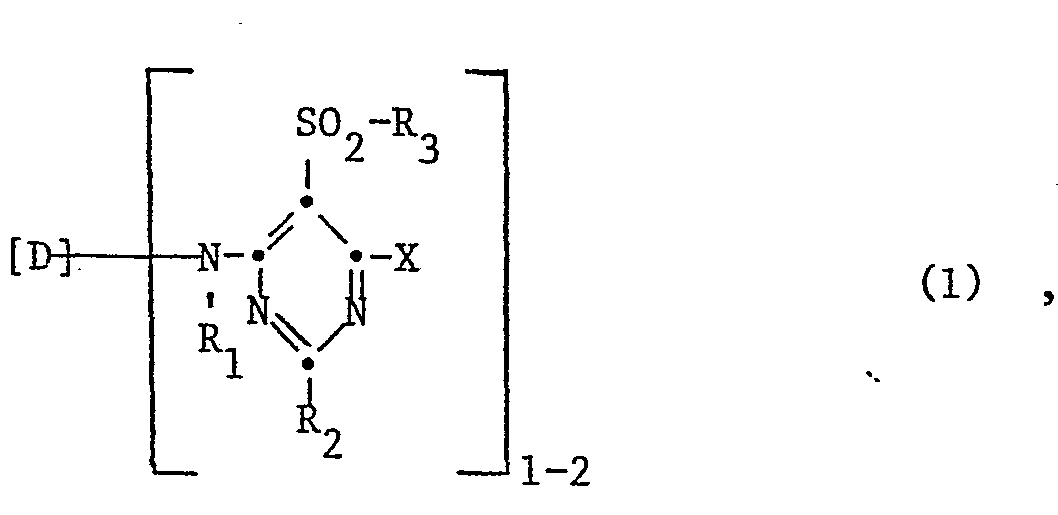
- the invention thus relates to reactive dyes of the formula where D is the residue of an organic dye of the mono- or polyazo, metal complex azo, anthraquinone, phthalocyanine, formazane, azomethine, nitroaryl, dioxazine, phenazine or stilbene series, R 1 is hydrogen or optionally substituted C1-C4- Alkyl, R 2 and R 3 independently of one another are straight-chain or branched C 1 -C 5 -alkyl and X is fluorine, chlorine or bromine.
- a particularly valuable dye is the reactive dye of the formula.
- the radical D in formula (1) can be substituted in the customary manner, in particular the radical D contains one or more sulfonic acid groups.
- alkyl groups with 1 to 4 carbon atoms such as methyl, ethyl, propyl, isopropyl and butyl
- alkoxy groups with 1 to 4 carbon atoms such as methoxy, ethoxy, propoxy, isopropoxy and butoxy
- acylamino groups with 1 up to 6 carbon atoms such as acetylamino and propionylamino
- benzoylamino amino, alkylamino with 1 to 4 carbon atoms, phenylamino, alkoxycarbonyl with 1 to 4 carbon atoms in the alkoxy radical, nitro, cyano, trifluoromethyl
- halogen such as fluorine, chlorine and bromine, sulfamoyl, carbamoyl, Ureido, hydroxy, carboxy, sulfomethyl and sulfo.
- Those reactive dyes in which D is the residue of an azo dye contain, in particular, methyl, ethyl, methoxy, benzoylamino, amino, ureido, sulfomethyl, hydroxy and sulfo as substituents.
- the alkyl radical for R in formula (1) is a straight-chain or branched alkyl radical, which can also be substituted, for example by halogen, hydroxy or cyano.
- R 1 include: methyl, ethyl, propyl, isopropyl, butyl, isobutyl, sec-butyl, tert-butyl and ⁇ -hydroxybutyl.
- a straight-chain or branched alkyl radical having 1 to 5 carbon atoms is suitable as the alkyl radical for R 2 and independently of it also for R 3 in formula (1).
- R 2 or R 3 are: methyl, ethyl, propyl, isopropyl, butyl, isobutyl, sec-butyl, tert-butyl, pentyl and 2- or 3-methylbutyl.
- Preferred alkyl radicals for R 2 are methyl, ethyl and isopropyl. Above all, R 2 and R 3 are each methyl.
- the dyes of the formula (1) are fiber-reactive because they contain 1 removable halogen atom in the pyrimidine radical.
- Fiber-reactive compounds are to be understood as those which are able to react with the hydroxyl groups of cellulose or with the amino groups of natural or synthetic polyamides to form covalent chemical bonds.
- the preparation of the reactive dyes of the formula (1) is characterized in that organic dyes of the formula or dye precursors with at least one equivalent of a compound of the formula wherein D, R 1 , R 2 , R 3 and X in formulas (7) and (8) have the meanings given under formula (1), condensed to a reactive dye of formula (1), and that in the case of use of dye precursors, converts them into the desired final dyes.
- the reactive dyes of the formula (1) can be obtained by one component of the dye of the formula (7), the one Group contains, with a ver bond of formula (8) condensed, and then reacted with the other component of the dye of formula (7).
- the preferred reactive dyes of formula (2) are prepared by mixing organic dyes of formula (7) with at least one equivalent of a compound of formula wherein R 2 and X have the meanings given under formula (1), condensed.
- R 2 is methyl, ethyl or isopropyl
- R 2 is the methyl group.
- the dyes of the formula (1) in which D is the remainder of an organic dye composed of two or more than two components, can be prepared in such a way that one component of the Dye of the formula (7), the one Contains group, condensed with a compound of formula (8) and then reacted with the other or the other component (s) of the dye of formula (7) to a dye of formula (1).
- organic dyes composed of two or more than two components are: monoazo, disazo, trisazo, tetrazo, metal complex, formazan and azomethine dyes.
- the process variant described above is particularly important for the preparation of dyes of the formula (1), in which D is the remainder of an azo dye.
- D is the remainder of an azo dye.
- the part of the azo dye residue to which the reactive residue is directly bound can be either the rest of the diazo component or the rest of the coupling component. This results in two variants of the process modification described above.
- One of the two variants is characterized in that one has a diazo component of the dye, the one Contains group, with a compound of formula (8), wherein both X are fluorine, chlorine or bromine and R 2 and R 3 have the meanings given under formula (1), the resulting condensation product is diazotized and coupled to a coupling component.
- the second variant is characterized in that a coupling component of the dye, the one Group contains with a compound of the formula (8) in which both X are fluorine, chlorine or bromine and R 2 and R 3 have the meanings given under formula (1), and couples a diazotized diazo component to the condensation product thus obtained.
- reactive dyes of the formula (1) which contain two reactive radicals can be prepared by adding a diazo component, the one Contains group, with a compound of formula (8), wherein both X are fluorine, chlorine or bromine and R and R 3 have the meanings given under formula (1), that a coupling component which is a Group contains, with a compound of formula (8), wherein both X are fluorine, chlorine or bromine, and R 2 and R 3 have the meanings given under formula (1), and that the condensation product of the diazo component is diazotized and on the condensation product of the coupling component couples, wherein R 1 , R 2 , R 3 and X in the condensation product of the diazo component are independent of R 1 , R 2 , R 3 and X in the condensation product of the coupling component.
- Dyes which contain two or more than two reactive radicals can also be prepared in such a way that dyes of the formula (7) which are in D further Groups included, with a corresponding one
- the amount of the acylating agent of the formula (8) is condensed so that two or more than two corresponding radicals are introduced into the dye molecule.
- a preferred embodiment is characterized in that organic dyes of the formula wherein D 1 is the residue of a diazo component of the benzene or naphthalene series and K the residue of a coupling component of the benzene or naphthalene series or the heterocyclic series and R is hydrogen or C 1 -C 4 alkyl, with compounds of the formula (9), in which X is chlorine is and R 2 has the meaning given under formula (1), condensed, the condensation on the Group of the diazo component or on the Group of the coupling component takes place, or with two compounds of formula (9), wherein X is chlorine and R 2 has the meaning given under formula (1), condensed, the condensation on the Group of the diazo component and on the Group of the coupling component takes place.
- a further preferred production process is characterized in that compounds of the formula (7) in which D is the residue of an azo dye of the benzene or naphthalene series which contains metallizable groups, with at least one equivalent of the compound of the formula (9) and with heavy metal donors is implemented, wherein R, R and X in the formulas (7) and (9) have the meanings given under formula (1).
- a process is preferred in which a monoazo dye of the benzene or naphthalene series which contains groups which can be metallized in the ortho position to the azo bridge is reacted with a compound of the formula (10) and with copper-donating agents in any order to give a 1: 1 copper complex azo dye .
- the preferred reactive dyes of formula (4) are made by using organic dyes of formula or dye precursors with compounds of the formula condensed, and that in the case of the use of dye precursors, these are converted into the desired end dyes.
- R2 is methyl, eth y l or isopropyl.
- R2 is the methyl group.
- the dyes of the formula (7) used as starting materials can be substituted in the radical D as described above.
- Organic dyes of the formula (7) are preferably used, in which D is the residue of an azo dye which may contain methyl, ethyl, methoxy, benzoylamino, amino, ureido, sulfomethyl, hydroxy and sulfo as substituents.
- the valuable reactive dye of the formula (6) is prepared in such a way that it contains the by coupling diazotized 1-amino-4-acetylaminobenzene-6-sulfonic acid to 2-amino-8-hydroxynaphthalene-6-sulfonic acid and subsequent saponification of the acetylamino group Azo dye condensed with 4,6-dichloro-2-methyl-5-methylsulfonylpyrimidine.
- the condensation of the compounds of formula (8) with the organic dyes of formula (7) or the one Group-containing diazotizable and / or couplable components are preferably carried out in aqueous solution or suspension, at low temperature and at weakly acidic, neutral to weakly alkaline pH, and so that in the finished dye of the formula (1) there is also an X as a cleavable residue is left.
- the hydrogen fluoride, chlorine or bromine released during the condensation is advantageously continuously neutralized by adding aqueous alkali metal hydroxides, carbonates or bicarbonates.
- acyl is, for example, acetyl or optionally substituted benzoyl.
- Cr and Co complexes can contain the azo compound of the above formula once or twice, ie they can be symmetrical or unsymmetrical with any other ligand groups.
- the condensed rings indicated by dashed lines represent alternative naphthalene systems.
- Pc represents the Cu or Ni phthalocyanine residue.
- the total number of substituents on the Pc framework is 4.
- the dyes of the formulas given above can be further substituted in the alkyl or aryl radicals, in particular by the substituents mentioned in the explanation of D in formula (1).
- azo dyes of the formula (11) are particularly important azo dyes of the formula (11): and wherein K is the residue of a coupling component of the benzene, naphthalene or heterocyclic series, acyl is a low molecular weight, aliphatic acyl radical containing at most 3 carbon atoms or an aromatic radical containing at most 8 carbon atoms, and R is the meanings given in the explanation of formula (1) has, as well as the metal complex azo dyes of the formulas and wherein R and acyl have the meanings given above and Me stands for Cu, Cr or Co.
- the 2-alkyl-5-alkylsulfonyl-4,6-dihalopyrimidines of formula (8) are prepared by either using a salt of a dianion of formula with a compound of the formula to a compound of the formula or a salt of a compound of formula (32), or by making a compound of formula wherein Y 2 is fluorine, chlorine or bromine, in the presence of a polar solvent with a compound of the formula is converted into a compound of the formula (32) and the compound of the formula (32) obtained by the two processes described above or its salt is converted into a compound of the formula (8) by treatment with an agent introducing chlorine, bromine and / or fluorine, or by using a compound of formula in the presence of a chlorine, bromine and / or fluorine-introducing and water-releasing agent with a compound of the formula to a compound of the formula is reacted, the compound of the formula (37) is reacted with a mild oxidizing agent to give a compound of the formula (8)
- R 2 , R 3 and X have the meanings given under formula (1), Z represents a halogen atom or -O-SO 2 -R 2 and Z 1 is an alkali metal or Alkaline earth metal cation.
- Suitable salts of dianions of the formula (30) or of compounds of the formula (32) are salts with inorganic or organic bases, e.g. Alkali metal and alkaline earth metal salts as well as quaternary ammonium salts. Examples include sodium, potassium and tetramethylammonium salts.
- the salts mentioned above can be prepared in a manner known per se before the further reaction or in the reaction medium itself.
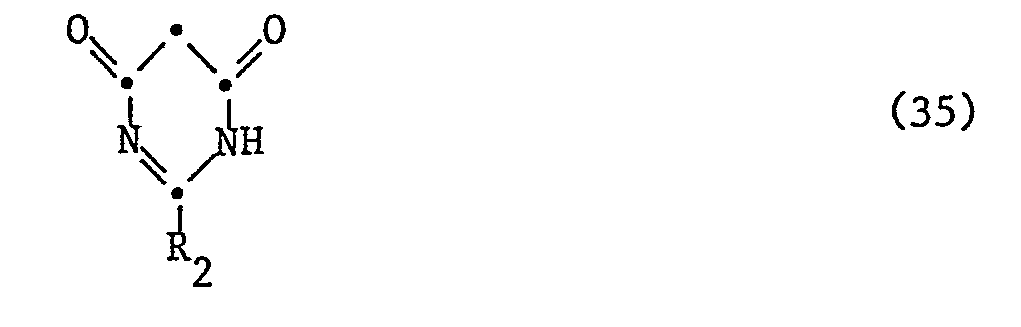
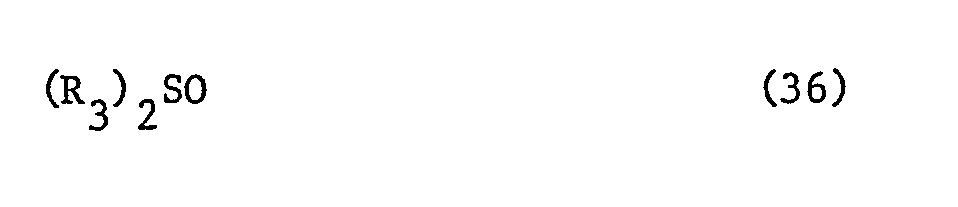
- the starting products of the formulas (30), (31), (33), (34), (35) and (36) are known or can be prepared by methods known per se.
- Suitable starting products of the formulas (31), (34) and (36) are, for example, methanesulfonic acid chloride, n-butanesulfonic acid chloride, sodium and potassium methanesulfinate, isopropanesulfinate, diethyl sulfoxide and di-n-pentyl sulfoxide.
- reaction of the salts of dianions of the formula (30) with the compounds of the formula (31) is advantageously carried out in the presence of a strong inorganic or organic base, such as, for example, alkali metal hydroxides or alkyl lithium compounds.
- the above reaction can be carried out in an aqueous medium, in an inert organic solvent or a mixture of various organic solvents, in a mixture of water and one or more inert organic solvents or in a two-phase solvent system.
- suitable organic solvents are N, N-dimethylformamide, acetone, K-methyl-2-pyrrolidone, dimethyl sulfoxide and pyridine.
- solvent two-phase systems are Water / methylene chloride or water / toluene.
- reaction in aqueous medium is carried out at a pH of 11 or higher, the salts of dianions of the formula (30) generally being formed in situ.
- Sodium or potassium hydroxide is used as the base.
- reaction of the salts of dianions of the formula (30) with the compounds of the formula (31) is advantageously carried out at temperatures between -20 ° C and + 100 ° C and optionally in the presence of a phase transfer catalyst such as benzyltriethylammonium chloride.
- the compounds of the formula (32) fall directly or after acidification of the reaction solution, e.g. with concentrated hydrochloric acid in the form of salts or as free acids.
- acidification e.g. with concentrated hydrochloric acid in the form of salts or as free acids.
- concentrated hydrochloric acid for cleaning can be recrystallized from water.
- the salts can be converted into the free 5-alkylsulfonyl derivatives in a manner known per se.
- reaction temperatures are 50 to 200 ° C.
- Agents introducing chlorine, bromine and / or fluorine and optionally releasing water for converting compounds of the formula (32) or their salts into compounds of the formula (8) or for reacting compounds of the formula (35) with compounds of the formula ( 36) are suitable, for example: phosphorus (V) oxychloride, bromide and fluoride, thionyl chloride or bromide and sulfur tetrafluoride or mixed thionyl halides such as SOC1F or SOBrCl.
- the conversion of the compounds of the formula (32) or of salts thereof into compounds of the formula (8) is expediently carried out in the presence of a catalyst such as, for example, triethylamine or N, N-dimethylformamide.
- a catalyst such as, for example, triethylamine or N, N-dimethylformamide.
- the catalysts are generally used in an amount of 1-200 mol%, based on the amount of the compound of the formula (32) used.
- reaction of compounds of formula (32) with chlorine, bromine and / or fluorine-introducing agents is carried out at temperatures between 20 ° and 250 ° C.
- reaction of compounds of the formula (35) in the presence of a chlorine, bromine and / or fluorine-introducing and simultaneously dehydrating agent with compounds of the formula (36) is carried out at temperatures between 0 ° and 150 ° C. and in the presence of an inert organic solvent such as dichloromethane performed.
- Examples of mild oxidizing agents for the conversion of the compounds of formula (37) to compounds of formula (8) are peracetic acid, 3-chloroperbenzoic acid, perbenzoic acid, hydrogen peroxide, sodium periodate, perlauric acid, iodobenzodichloride, N-chlorosuccinimide, N-bromosuccinimide and chlorine.
- the above reaction is conveniently carried out in the presence of an inert solvent such as e.g. Dichloromethane, chloroform, acetic acid, acetic anhydride and water.
- the oxidation temperatures are generally between -50 ° C and + 50 ° C. Similar oxidation reactions are described, for example, in Tetrahedron Letters, 1973, page 2365; see also "Organic Compounds of Bivalent Sulfur", Volume 2, page 64 (Chemical Publishing Co., New York, 1960).
- Compounds of formula (8) in which the X are bromine or fluorine atoms can also be prepared by reacting compounds of formula (8) in which both X are chlorine atoms until one or all of the chlorine atoms are reacted by bromine or fluorine atoms with a brominating or fluorinating agent, such as phosphorus tribromide, anhydrous hydrogen fluoride, alkali metal fluorides or potassium fluorosulfinate.
- a brominating or fluorinating agent such as phosphorus tribromide, anhydrous hydrogen fluoride, alkali metal fluorides or potassium fluorosulfinate.
- the compounds of the formula (8) in which the two X are chlorine and R 2 and R have the meanings given can be converted into the bromine or fluorine analogs by using 5-alkylsulfonyl-2-alkyl-4,6- dihalopyrimidine, for example the 5-methylsulfonyl-2-methyl-4,6-dichloropyrimidine, by reaction with phosphorus tribromide, which can also serve as a solvent, converted into the corresponding 5-methylsulfonyl-2-methyl-4,6-dibromopyrimidine, or by the undiluted chlorine compounds are converted into the corresponding 4,6-difluoropyrimidine compound by reaction with anhydrous hydrogen fluoride, with potassium fluorosulfinate or with an alkali metal fluoride or in the presence of a high-boiling aprotic organic solvent.
- 5-alkylsulfonyl-2-alkyl-4,6- dihalopyrimidine for example the 5-methylsulfonyl-2
- Suitable solvents for this halogenation are, for example, aromatic hydrocarbons, such as toluene and xylenes; N, N-dialkylamides of aliphatic monocarboxylic acids of the aforementioned type, such as N, N-dimethylformamide and N, N-dimethylacetamide; Dialkyl sulfoxides, especially dimethyl sulfoxide; cyclic ethers and cyclic amides such as tetrahydrofuran, tetrahydropyran, N-methyl-2-pyrrolidone and N-acetyl-2-pyrrolidone; Hexamethylphosphoric triamide (hexametapol); N, N, N ', N'-tetramethylurea, tetrahydrothiophene dioxide (sulfolane).
- aromatic hydrocarbons such as toluene and xylenes
- reaction temperatures for the halogenation are expediently between 20 ° and 250 ° C. and preferably between 50 ° and 150 ° C.
- the intermediate products containing a diazotizable amino group are generally diazotized by the action of nitrous acid in aqueous mineral acid solution at low temperature, the coupling at weakly acidic, neutral to weakly alkaline pH values.
- the reactive dyes of formula (1) are new, they are characterized by a high reactivity and high degree of fixation.
- They are suitable for dyeing and printing a wide variety of materials, such as silk, leather, wool, superpolyamide fibers and superpolyurethanes, but in particular cellulosic materials with a fibrous structure, such as linen, cellulose, regenerated cellulose and especially cotton. They are suitable for dyeing according to the pad dyeing process, after which the goods are impregnated with aqueous and optionally also salt-containing dye solutions, and the dyes are fixed after an alkali treatment or in the presence of alkali, if appropriate with the action of heat.
- They are also suitable for printing, especially on cotton, but also for printing nitrogen-containing fibers, e.g. Wool, silk, or blended fabrics containing wool.
- nitrogen-containing fibers e.g. Wool, silk, or blended fabrics containing wool.
- Example 2 8.76 parts of the dye of the formula are dissolved neutral in 300 parts of water and mixed with 6.68 parts of sodium acetate. A solution of 5.3 parts of 2-methyl-4,6-dichloro-5-methylsulfonylpyrimidine in 40 parts of acetone is added to the resulting solution at room temperature with vigorous stirring. After complete acylation, the solution is clarified by filtration. The resulting reactive dye is salted out with common salt, filtered off, buffered with a saturated solution of sodium dihydrogen phosphate and dried in vacuo at about 50 °.
- the dye thus obtained dyes cotton in bluish red tones using the pad-steam process.
- Example 3 3.76 parts of 2,4-diaminobenzene sulfonic acid are dissolved neutral in 200 parts of water and mixed with 6.6 parts of sodium acetate. A solution of 5.3 parts of 2-methyl-5-methylsulfonyl-4,6-dichloropyrimidine in 40 parts of acetone is then added to this solution at room temperature with vigorous stirring. The condensation product of the formula obtained in this way is then diazotized in a conventional manner and combined with a soda-alkaline solution of 1- (2 ', 5'-dichlorophenyl) -3-methyl-pyrazolone-4'-sulfonic acid.
- the dye thus obtained dyes cotton in greenish yellow tones.
- Example 4 A solution of 5.3 parts of 2-methyl-5- is added to a neutral solution of 6.38 g parts of 1-amino-8-hydroxynaphthalene-3,6-disulfonic acid in 200 parts of water at room temperature with vigorous stirring. methylsulfonyl-4,6-dichloropyrimidine in 30 parts of acetone and keeps the pH between 5 and 7 during the condensation by dropwise addition of 1N sodium hydroxide solution.
- Example 2 2 parts of the dye obtained in Example 2 are dissolved in 100 parts of water with the addition of 0.5 part of sodium m-nitrobenzenesulfonate. A cotton fabric is impregnated with the solution obtained so that it increases by 75% of its weight, and then dried.
- the fabric is impregnated with a 20 ° warm solution containing 5 grams of sodium hydroxide and 300 grams of sodium chloride per liter, squeezed to 75% weight gain, the dye is dampened for 30 seconds at 100 ° to 101 °, rinsed and soaped for a quarter of an hour in a 0.3% boiling solution of an ion-free detergent, rinsed and dried.
- the printing paste thus obtained is used to print a cotton fabric on a Rouleaux printing machine, and the printed material obtained is dried and steamed for 2 to 8 minutes at 100 ° in saturated steam. The printed fabric is then rinsed thoroughly in cold and hot water, the non-chemically fixed portions being very easily removed from the fiber, and then dried.
Landscapes
- Chemical & Material Sciences (AREA)
- Organic Chemistry (AREA)
- Coloring (AREA)
Abstract
Reaktivfarbstoffe der Formel <IMAGE> worin D der Rest eines organischen Farbstoffes der Mono- oder Polyazo-, Metallkomplexazo-, Anthrachinon-, Phthalocyanin-, Formazan-, Azomethin-, Nitroaryl-, Dioxazin-, Phenazin- oder Stilbenreihe, R1 Wasserstoff oder gegebenenfalls substituiertes C1-C4-Alkyl, R2 und R3 unabhängig voneinander geradkettig oder verzweigtes C1-C5-Alkyl und X Fluor, Chlor oder Brom sind; Verfahren zur ihrer Herstellung. Die Reaktivfarbstoffe eignen sich zum Färben und Bedrucken cellulose-haltiger oder stickstoffhaltiger Materialien.
Description
- Reaktivfarbstoffe sind bis heute in grosser Zahl bekannt geworden. Jedoch lassen deren applikatorische Eigenschaften, insbesondere deren Anwendbarkeit für verschiedene Färbeverfahren vielfach zu wünschen übrig. Es bestand daher die Aufgabe, neue Reaktivfarbstoffe mit applikatorisch grösserer Anwendungsbreite zu finden. Es hat sich gezeigt, dass die weiter unten definierten neuen Reaktivfarbstoffe diese Aufgabe weitgehend erfüllen.
- Gegenstand der Erfindung sind somit Reaktivfarbstoffe der Formel
- Wichtige Untergruppen der Reaktivfarbstoffe der Formel (1) sind
- a) Reaktivfarbstoffe der Formel
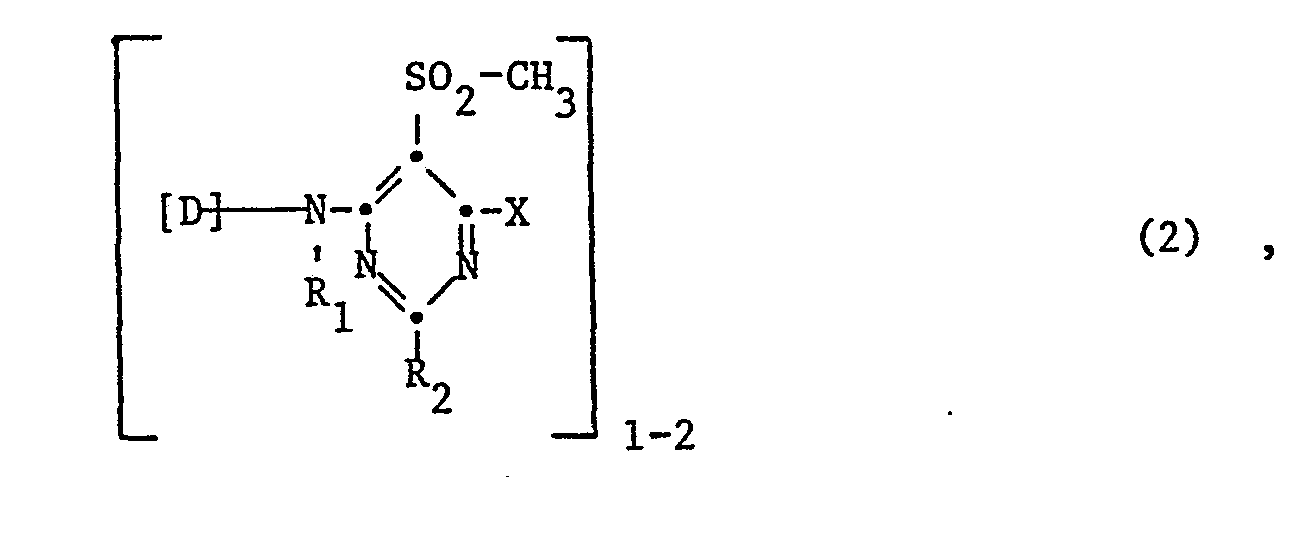
- b) Reaktivfarbstoffe der Formel (2), worin D, R1 und R2 die unter Formel (1) angegebenen Bedeutungen haben, und X Chlor ist.
- c) Reaktivfarbstoffe der Formel (2), worin D und R1 die unter Formel (1) angegebenen Bedeutungen haben, R2 Methyl, Aethyl oder Isopropyl und X Chlor ist.
- d) Reaktivfarbstoffe der Formel (2), worin D und R1 die unter Formel (1) angegebenen Bedeutungen haben, R2 Methyl und X Chlor ist.
- e) Reaktivfarbstoffe der Formel (2), worin D der Rest eines Mono-oder Disazofarbstoffes ist.
- f) Reaktivfarbstoffe der Formel (2), worin D der Rest eines Metallkomplexazofarbstoffes der Benzol- oder Naphthalinreihe ist, und R1, R2 und X die unter Formel (1) angegebenen Bedeutungen haben.
- g) Reaktivfarbstoffe der Formel (2), worin der Rest D ein 1:1-Kupferkomplexmonoazofarbstoff der Benzol- oder Naphthalinreihe ist, und das Kupferatom an jeweils eine metallisierbare Gruppe in ortho-Position zur Azobrücke gebunden ist und R1 und R2 die unter Formel (1) angegebenen Bedeutungen haben und X Chlor ist. Bevorzugt sind insbesondere
- h) Reaktivstoffe der Formel

Bevorzugt sind ferner - i) Reaktivfarbstoffe der Formel

- j) Reaktivfarbstoffe der Formel (4), worin D der Rest eines Mono- oder Disazofarbstoffes ist.
- k) Reaktivfarbstoffe der Formel

- 1) Reaktivfarbstoffe der Formel (5), worin D1, K und R die unter Formel (5) angegebenen Bedeutungen haben und R2 Methyl, Aethyl oder Isopropyl ist.
- m) Reaktivfarbstoffe der Formel (5), worin D1, K und R die unter Formel (5) angegebenen Bedeutungen haben und R2 Methyl ist.
- Ein besonders wertvoller Farbstoff ist der Reaktivfarbstoff der Formel .

- Als Beispiele für weitere Substituenten am Rest D seien genannt: Alkylgruppen mit 1 bis 4 Kohlenstoffatomen, wie Methyl, Aethyl, Propyl, Isopropyl und Butyl, Alkoxygruppen mit 1 bis 4 Kohlenstoffatomen, wie Methoxy, Aethoxy, Propoxy, Isopropoxy und Butoxy, Acylaminogruppen mit 1 bis 6 Kohlenstoffatomen, wie Acetylamino und Propionylamino, Benzoylamino, Amino, Alkylamino mit 1 bis 4 Kohlenstoffatomen, Phenylamino, Alkoxycarbonyl mit 1 bis 4 Kohlenstoffatomen im Alkoxyrest, Nitro, Cyano, Trifluormethyl, Halogen, wie Fluor, Chlor und Brom, Sulfamoyl, Carbamoyl, Ureido, Hydroxy, Carboxy, Sulfomethyl und Sulfo.
- Diejenigen Reaktivfarbstoffe, worin D der Rest eines Azofarbstoffes ist, enthalten als Substituenten insbesondere Methyl, Aethyl, Methoxy, Benzoylamino, Amino, Ureido, Sulfomethyl, Hydroxy und Sulfo.
- Als Alkylrest kommt für R in Formel (1) ein geradkettiger oder verzweigter Alkylrest in Betracht, der auch substituiert sein kann, z.B. durch Halogen, Hydroxy oder Cyan. Als Beispiele für R1 seien genannt: Methyl, Aethyl, Propyl, Isopropyl, Butyl, Isobutyl, sek.-Butyl, tert.-Butyl und ß-Hydroxybutyl.
- Als Alkylrest kommt für R2 und unabhängig davon auch für R3 in Formel (1) ein geradkettiger oder verzweigter Alkylrest mit 1 bis 5 Kohlenstoffatomen in Betracht. Als Beispiele für R2 oder R3 seien genannt: Methyl, Aethyl, Propyl, Isopropyl, Butyl, Isobutyl, sek.-Butyl, tert.-Butyl, Pentyl und 2- oder 3-Methylbutyl.
- Bevorzugte Alkylreste sind für R2 Methyl, Aethyl und Isopropyl. Vor allem ist R2 und R3 jeweils Methyl.
- Die Farbstoffe der Formel (1) sind faserreaktiv, da sie in dem Pyrimidinrest 1 abspaltbares Halogenatom enthalten.
- Unter faserreaktiven Verbindungen sind solche zu verstehen, die mit den Hydroxygruppen der Cellulose oder mit den Aminogruppen von natürlichen oder synthetischen Polyamiden unter Bildung kovalenter chemischer Bindungen zu reagieren vermögen.
- Die Herstellung der Reaktivfarbstoffe der Formel (1) ist dadurch gekennzeichnet, dass man organische Farbstoffe der Formel


- Falls man von Farbstoffvorprodukten ausgeht, gelangt man zu den Reaktivfarbstoffen der Formel (1), indem man eine Komponente des Farbstoffes der Formel (7), die eine

- Die bevorzugten Reaktivfarbstoffe der Formel (2) werden hergestellt, indem man organische Farbstoffe der Formel (7) mit mindestens einem Aequivalent einer Verbindung der Formel

- Vorzugsweise kondensiert man mit einer Verbindung der Formel

- Bevorzugt verwendet man als Ausgangsstoffe Verbindungen der Formel (10), worin R2 Methyl, Aethyl oder Isopropyl ist. Vor allem ist R2 die Methylgruppe.
- Vorzugsweise verwendet man ferner Verbindungen der Formel (7), worin D der Rest eines Mono- oder Disazofarbstoffes ist.
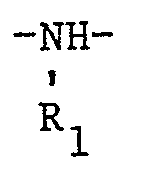
- Nach der oben beschriebenen Verfahrensvariante, bei welcher man von Farbstoffvorprodukten ausgeht, können die Farbstoffe der Formel (1), worin D der Rest eines aus zwei oder mehr als zwei Komponenten zusammengesetzten organischen Farbstoffes ist, in der Weise hergestellt werden, dass man eine Komponente des Farbstoffes der Formel (7), die eine
- Beispiele für derartige, aus zwei oder mehr als zwei Komponenten zusammengesetzte organische Farbstoffe sind: Monoazo-, Disazo-, Trisazo-, Tetrazo-, Metallkomplex-, Formazan- und Azomethinfarbstoffe.
- Die oben beschriebene Verfahrensvariante ist vor allem wichtig für die Herstellung von Farbstoffen der Formel (1), worin D der Rest eines Azofarbstoffes ist. In diesen kann derjenige Teil des Azofarbstoffrestes, an den der Reaktivrest unmittelbar gebunden ist, entweder der Rest der Diazokomponente oder der Rest der Kupplungskomponente sein. Dadurch ergeben sich zwei Varianten der oben beschriebenen Verfahrensabänderung.
- Die eine der beiden Varianten ist dadurch gekennzeichnet, dass man eine Diazokomponente des Farbstoffes, die eine

- Die zweite Variante ist dadurch gekennzeichnet, dass man eine Kupplungskomponente des Farbstoffes, die eine

- Nach dieser Herstellungsvariante können Reaktivfarbstoffe der Formel (1), die zwei Reaktivreste enthalten, hergestellt werden, indem man eine Diazokomponente, die eine


- Farbstoffe, die zwei oder mehr als zwei Reaktivreste enthalten, sind auch in der Weise herstellbar, dass man Farbstoffe der Formel (7), die in D weitere

- Menge des Acylierungsmittels der Formel (8) kondensiert, so dass zwei oder mehr als zwei entsprechende Reste in das Farbstoffmolekül eingeführt werden.
- Eine bevorzugte Ausführungsform ist dadurch gekennzeichnet, dass man organische Farbstoffe der Formel


- Ein weiteres bevorzugtes Herstellungsverfahren ist dadurch gekennzeichnet, dass man Verbindungen der Formel (7), worin D der Rest eines Azofarbstoffes der Benzol- oder Naphthalinreihe ist, der metallisierbare Gruppen enthält, mit mindestens einem Aequivalent der Verbindung der Formel (9) und mit schwermetallabgebenden Mitteln umsetzt, wobei R , R und X in den Formeln (7) und (9) die unter Formel (1) angegebenen Bedeutungen haben.
- Bevorzugt ist ein Verfahren, nach dem man einen Monoazofarbstoff der Benzol- oder Naphthalinreihe, der in ortho-Position zur Azobrücke metallisierbare Gruppen enthält, mit einer Verbindung der Formel (10) und mit kupferabgebenden Mitteln in beliebiger Reihenfolge zu einem 1:1-Kupferkomplexazofarbstoff umsetzt.
- Die bevorzugten Reaktivfarbstoffe der Formel (4) werden hergestellt, indem man organische Farbstoffe der Formel
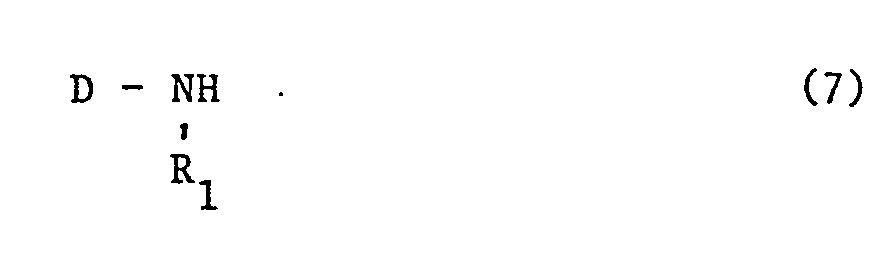

- Insbesondere verwendet man dabei Verbindungen der Formel (7), worin D der Rest eines Mono- oder Disazofarbstoffes ist.
- Die Herstellung der ebenfalls bevorzugten Reaktivfarbstoffe der Formel


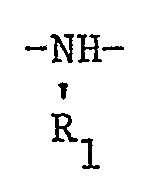

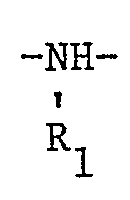
- Insbesondere verwendet man dabei Verbindungen der Formel (13), worin R2 Methyl, Aethyl oder Isopropyl ist. Vor allem ist R2 die Methylgruppe.
- Die als Ausgangsstoffe verwendeten Farbstoffe der Formel (7) können im Rest D wie weiter vorne beschrieben substituiert sein. Vorzugsweise geht man von organischen Farbstoffen der Formel (7) aus, worin D der Rest eines Azofarbstoffes ist, der als Substituenten Methyl, Aethyl, Methoxy, Benzoylamino, Amino, Ureido, Sulfomethyl, Hydroxy und Sulfo enthalten kann.
- Der wertvolle Reaktivfarbstoff der Formel (6) wird in der Weise hergestellt, dass man den durch Kupplung von diazotierter l-Amino-4- acetylaminobenzol-6-sulfonsäure auf 2-Amino-8-hydroxynaphthalin-6-sulfonsäure und anschliessende Verseifung der Acetylaminogruppe enthaltenen Azofarbstoff mit 4,6-Dichlor-2-methyl-5-methylsulfonylpyrimi- din kondensiert.
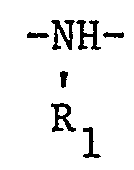
- Die Kondensation der Verbindungen der Formel (8) mit den organischen Farbstoffen der Formel (7) bzw. den eine
- Als Ausgangsstoffe zur Herstellung der Reaktivfarbstoffe der Formel (1) seien genannt:
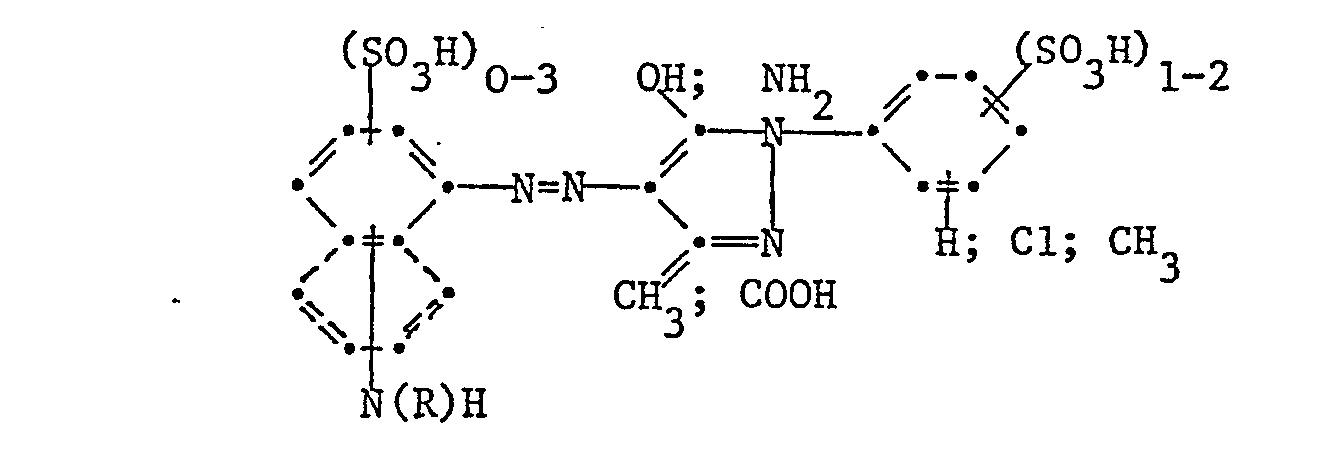
- Farbstoffe der folgenden Strukturtypen





- Metallkomplexe von Farbstoffen der Formeln:
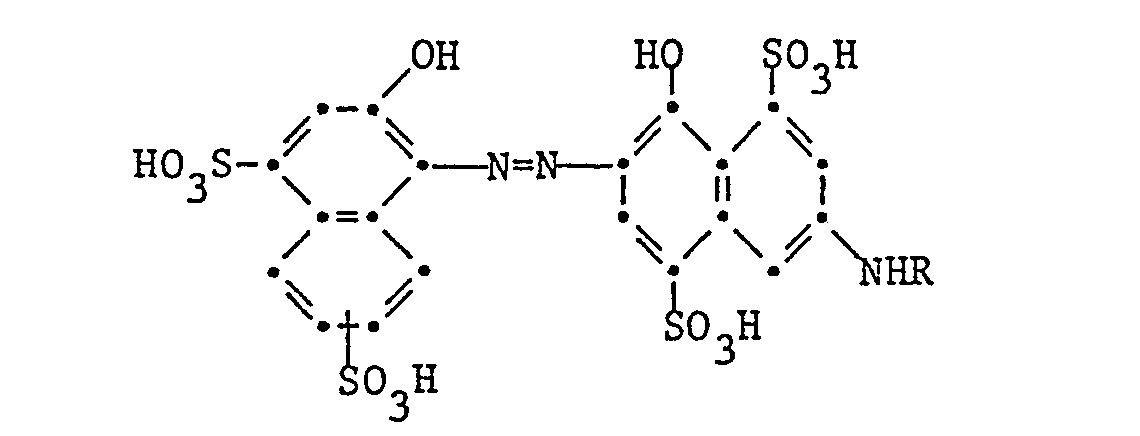


- Als Metallatom sind Cu (1:1-Komplex) oder Cr und Co (l:2-Komplex) bevorzugt. Cr- und Co-Komplexe können die Azoverbindung der oben angegebenen Formel einmal oder zweimal enthalten, d.h. sie können symmetrisch oder mit beliebigen anderen Ligandengruppen unsymmetrisch aufgebaut sein.

- Die durch Strichelungen angedeuteten kondensierten Ringe stehen für alternativ mögliche Naphthalinsysteme.


- In dieser Formel steht Pc für den Cu- oder Ni-Phthalocyaninrest. Die Gesamtzahl der Substituenten am Pc-Gerüst ist dabei 4.

- Die Farbstoffe der oben angegebenen Formeln können in den Alkyl- oder Arylresten weitersubstituiert sein, insbesondere durch die bei der Erläuterung von D in Formel (1) genannten Substituenten.
- Besonders wichtige Azofarbstoffe der Formel (11) sind die folgenden:




- Die 2-Alkyl-5-alkylsulfonyl-4,6-dihalogenpyrimidine der Formel (8) werden hergestellt, indem man entweder ein Salz eines Dianions der Formel
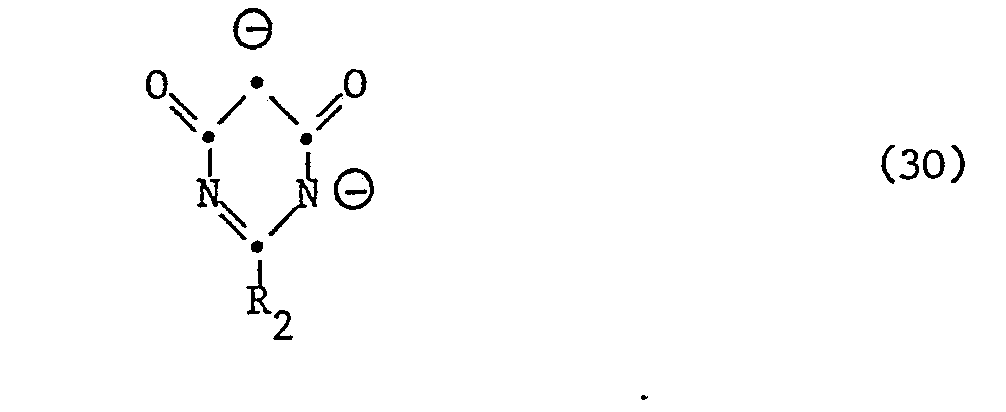

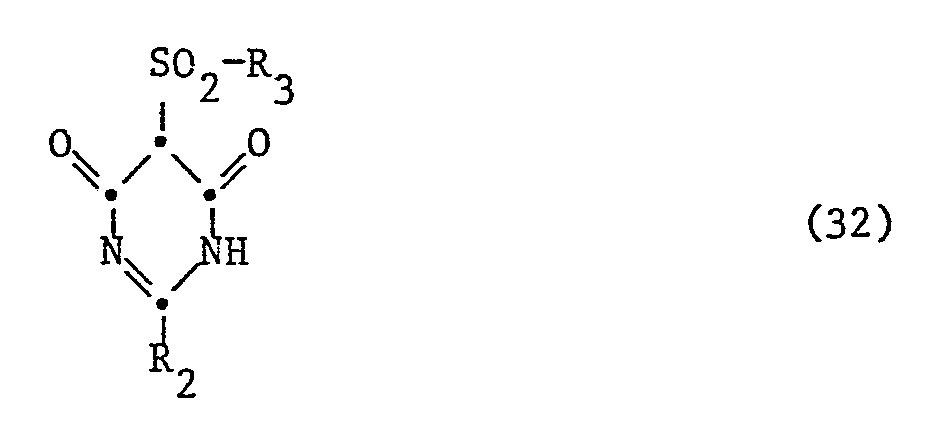
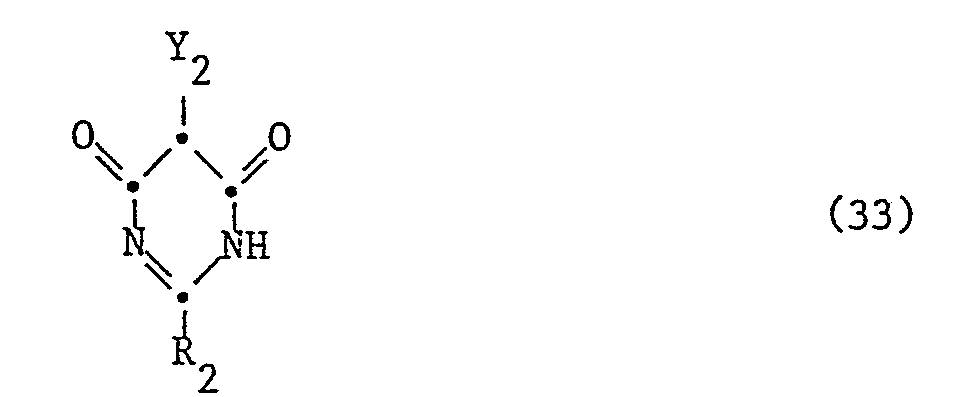


- Als Salze von Dianionen der Formel (30) bzw. von Verbindungen der Formel (32) kommen Salze mit anorganischen oder organischen Basen in Betracht, z.B. Alkalimetall- und Erdalkalimetallsalze sowie quartäre Ammoniumsalze. Als Beispiele seien genannt Natrium-, Kalium- und Tetramethylammoniumsalze.
- Die Herstellung der oben erwähnten Salze kann auf an sich bekannte Weise vor der weiteren Umsetzung oder im Reaktionsmedium selbst erfolgen.
- Die Ausgangsprodukte der Formeln (30), (31), (33), (34), (35) und (36) sind bekannt oder können nach an sich bekannten Methoden hergestellt werden.
- Geeignete Ausgangsprodukte der Formeln (31), (34) und (36) sind beispielsweise Methansulfonsäurechlorid, n-Butansulfonsäurechlorid, Natrium- und Kaliummethansulfinat, -isopropansulfinat, Diäthylsulfoxid und Di-n-pentylsulfoxid.
- Die Umsetzung der Salze von Dianionen der Formel (30) mit den Verbindungen der Formel (31) wird zweckmässig in Gegenwart einer starken anorganischen oder organischen Base vorgenommen, wie beispielsweise Alkalimetallhydroxide oder Alkyllithiumverbindungen.
- Die obige Umsetzung kann in wässrigem Medium, in einem inerten organischen Lösungsmittel oder einem Gemisch verschiedener organischer Lösungsmittel, in einem Gemisch von Wasser und einem oder mehreren inerten organischen Lösungsmitteln oder auch in einem Lösungsmittel-Zweiphasensystem vorgenommen werden. Als organische Lösungsmittel sind beispielsweise N,N-Dimethylformamid, Aceton, K-Methyl-2-pyrrolidon, Dimethylsulfoxid und Pyridin geeignet. Als Lösungsmittel-Zweiphasensysteme kommen z.B. Wasser/Methylenchlorid oder Wasser/Toluol in Betracht.
- Die Umsetzung in wässrigem Medium wird bei einem pH-Wert von 11 oder höher ausgeführt, wobei die Salze von Dianionen der Formel (30) im allgemeinen in situ gebildet werden. Als Basen verwendet man Natrium-oder Kaliumhydroxid.
- Für die Umsetzung in organischem Medium verwendet man als Base beispielsweise Natriumhydrid oder Butyllithium.
- Die Umsetzung der Salze von Dianionen der Formel (30) mit den Verbindungen der Formel (31) wird zweckmässig bei Temperaturen zwischen -20°C und +100°C und gegebenenfalls in Gegenwart eines Phasentransferkatalysators wie Benzyltriäthylammoniumchlorid durchgeführt.
- Nach beendeter Umsetzung fallen die Verbindungen der Formel (32) direkt oder nach Ansäuern der Reaktionslösung, z.B. mit konzentrierter Salzsäure in Form von Salzen oder als freie Säuren aus. Zur Reinigung kann aus Wasser umkristallisiert werden. Die Salze können auf an sich bekannte Weise in die freien 5-Alkylsulfonylderivate überführt werden.
- Als polare Lösungsmittel für die Umsetzung von Verbindungen der Formel (33) mit den Alkalimetall- oder Erdalkalimetallsulfinaten der Formel (34) können z.B. N,N-Dimethylformamid, N-Methyl-2-pyrrolidon, Tetramethylharnstoff oder Dimethylsulfoxid verwendet werden. Die Reaktionstemperaturen liegen bei 50 bis 200°C.
- Als Chlor, Brom und/oder Fluor einführende und gegebenenfalls Wasser abspaltende Mittel für die Ueberführung von Verbindungen der Formel (32) bzw. deren Salzen in Verbindungen der Formel (8) oder die Umsetzung von Verbindungen der Formel (35) mit Verbindungen der Formel (36) kommen beispielsweise in Betracht: Phosphor(V)-oxichlorid, -bromid und -fluorid, Thionylchlorid oder -bromid und Schwefeltetrafluorid oder aber gemischte Thionylhalogenide wie SOC1F oder SOBrCl.
- Die Ueberführung der Verbindungen der Formel (32) bzw. von Salzen davon in Verbindungen der Formel (8) wird zweckmässig in Gegenwart eines Katalysators wie beispielsweise Triäthylamin oder N,N-Dimethylformamid ausgeführt. Die Katalysatoren werden im allgemeinen in einer Menge von 1-200 Mol% bezogen auf die verwendete Menge der Verbindung der Formel (32) eingesetzt.
- Die vorerwähnten Umsetzungen mit einem Chlor, Brom und/oder Fluor und gegebenenfalls wasserabspaltenden Mittel werden in einem inerten organischen Lösungsmittel vorgenommen. Geeignet hierfür sind z.B. Xylole, Nitrobenzol, Dichlormethan und Trichloräthylen. Als Lösungsmittel kann auch überschüssiges Chlor, Brom und/oder Fluor einführendes Mittel, besonders Phosphor(V)oxichlorid, dienen.
- Die Umsetzung von Verbindungen der Formel (32) mit Chlor, Brom und/ oder Fluor einführenden Mitteln wird bei Temperaturen zwischen 20° und 250°C vorgenommen.
- Die Umsetzung von Verbindungen der Formel (35) in Gegenwart eines Chlor, Brom und/oder Fluor einführenden und gleichzeitig dehydratisierenden Mittels mit Verbindungen der Formel (36) wird bei Temperaturen zwischen 0° und 150°C und in Gegenwart eines inerten organischen Lösungsmittels wie Dichlormethan vorgenommen.
- Beispiele milder Oxidationsmittel für die Umsetzung der Verbindungen der Formel (37) zu Verbindungen der Formel (8) sind Peressigsäure, 3-Chlorperbenzoesäure, Perbenzoesäure, Wasserstoffperoxid, Natriumperjodat, Perlaurinsäure, Jodbenzodichlorid, N-Chlorsuccinimid, N-Bromsuccinimid und Chlor. Die obige Umsetzung wird zweckmässig in Gegenwart eines inerten Lösungsmittels wie z.B. Dichlormethan, Chloroform, Essigsäure, Essigsäureanhydrid und Wasser vorgenommen. Die Oxidationstemperaturen liegen im allgemeinen zwischen -50°C und +50°C. Aehnliche Oxidationsreaktionen sind beispielsweise in Tetrahedron Letters, 1973, Seite 2365 beschrieben; siehe dazu auch "Organic Compounds of Bivalent Sulfur", Band 2, Seite 64 (Chemical Publishing Co., New York, 1960).
- Verbindungen der Formel (8), worin die X Brom- oder Fluoratome sind, lassen sich auch dadurch herstellen, dass man Verbindungen der Formel (8), worin beide X Chloratome sind, bis zum Ersatz von einem oder allen beiden Chloratomen durch Brom- oder Fluoratome mit einem Bromierungs- oder Fluorierungsmittel, wie Phosphortribromid, wasserfreiem Fluorwasserstoff, Alkalimetallfluoriden oder Kaliumfluorosulfinat, umsetzt.
- So können z.B. die Verbindungen der Formel (8), worin die beiden X Chlor bedeuten und R2 und R die angegebenen Bedeutungen haben, in die Brom- oder Fluoranalogen übergeführt werden, indem man 5-Alkylsulfonyl-2-alkyl-4,6-dihalogenpyrimidin, z.B. das 5-Methylsulfonyl-2-methyl-4,6-dichlorpyrimidin, durch Umsetzung mit Phosphortribromid, das auch als Lösungsmittel dienen kann, in das entsprechende 5-Methylsulfonyl-2-methyl-4,6-dibrompyrimidin überführt, oder indem man die Chlor-Verbindungen durch Umsetzung mit wasserfreiem Fluorwasserstoff, mit Kaliumfluorosulfinat oder einem Alkalimetallfluorid unverdünnt oder in Gegenwart eines hochsiedenden aprotischen organischen Lösungsmittels in die entsprechende 4,6-Difluorpyrimidinverbindung überführt. Geeignete Lösungsmittel für diese Umhalogenierung sind z.B. aromatische Kohlenwasserstoffe, wie Toluol und Xylole; N,N-Dialkylamide von aliphatischen Monocarbonsäuren der vorerwähnten Art, wie N,N-Dimethylformamid und N,N-Dimethylacetamid; Dialkylsulfoxide, vor allem Dimethylsulfoxid; cyclische Aether und cyclische Amide, wie Tetrahydrofuran, Tetrahydropyran, N-Methyl-2-pyrrolidon und N-Acetyl-2-pyrrolidon; Hexamethylphosphorsäuretriamid (Hexametapol); N,N,N',N'-Tetramethylharnstoff, Tetrahydrothiophendioxid (Sulfolan).
- Die Reaktionstemperaturen für die Umhalogenierung liegen zweckmässig zwischen 20° und 250°C und bevorzugt zwischen 50° und 150°C.
- Als Beispiele für Verbindungen der Formel (8) seien genannt:
- 5-Methylsulfonyl-2-methyl-4,6-difluorpyrimidin,
- 5-Methylsulfonyl-2-methyl-4,6-dichlorpyrimidin,
- 5-Methylsulfonyl-2-methyl-4,6-dibrompyrimidin.
- Bei der Herstellung der bevorzugten Farbstoffe der Formel (1), worin D der Rest eines Azofarbstoffes, insbesondere eines Mono- oder Disazofarbstoffes ist, erfolgt die Diazotierung der eine diazotierbare Aminogruppe enthaltenden Zwischenprodukte in der Regel durch Einwirkung salpetriger Säure in wässrigmineralsaurer Lösung bei tiefer Temperatur, die Kupplung bei schwach sauren, neutralen bis schwach alkalischen pH-Werten.
- Die Reaktivfarbstoffe der Formel (1) sind neu, sie zeichnen sich durch eine hohe Reaktivität und hohen Fixiergrad aus.
- Sie eignen sich zum Färben und Bedrucken der verschiedensten Materialien, wie Seide, Leder, Wolle, Superpolyamidfasern und Superpolyurethanen, insbesondere aber cellulosehaltiger Materialien faseriger Struktur, wie Leinen, Zellstoff, regenerierte Cellulose und vor allem Baumwolle. Sie eignen sich zum Färben nach dem Foulardfärbeverfahren, wonach die Ware mit wässrigen und gegebenenfalls auch salzhaltigen Farbstofflösungen imprägniert wird, und die Farbstoffe nach einer Alkalibehandlung oder in Gegenwart von Alkali, gegebenenfalls unter Wärmeeinwirkung fixiert werden.
- Sie eignen sich auch zum Druck, insbesondere auf Baumwolle, ebenso aber auch zum Bedrucken von stickstoffhaltigen Fasern, z.B. Wolle, Seide, oder Wolle enthaltenden Mischgeweben.
- Es empfiehlt sich, die Färbungen und Drucke einem gründlichen Spülen mit kaltem und heissem Wasser, gegebenenfalls unter Zusatz eines dispergierend wirkenden und die Diffusion der nicht fixierten Anteile fördernden Mittels zu unterwerfen.
- In den nachfolgenden Beispielen bedeuten die Teile Gewichtsteile, und die Temperaturen sind in Celsiusgraden angegeben.
- 37,8 g (0,3 Mol) 2-Methyl-4,6-dihydroxypyrimidin werden in 150 ml Phosphor(V)oxichlorid und 100 ml Dichlormethan suspendiert. Innerhalb von 2 1/2 Stunden werden unter Kühlung bei 20-25° 26,6 g (0,34 Mol) Dimethylsulfoxid zugetropft. Das Reaktionsgemisch wird über Nacht bei Raumtemperatur gerührt und dann langsam erwärmt. Bei 50-55° setzt Chlorwasserstoffentwicklung ein. Das Dichlormethan wird dabei abdestilliert, und die Lösung wird während 12 Stunden am Rückfluss gekocht. Dann wird der Kolbeninhalt auf Wasser gegossen und die Temperatur durch Eiszugabe auf ca. 25° gehalten. Das Produkt wird mit Dichlormethan extrahiert, die Lösung über Magnesiumsulfat getrocknet, eingedampft, und der Rückstand wird im Hochvakuum destilliert. Das Destillat vom Sdp. 50-64°/0,13 mbar gibt aus Petroläther farblose Kristalle vom Smp. 59-60°.
- Analyse:
- berechnet C: 34,46%; H: 2,89%; N: 13,40%; S: 15,33%; Cl: 33,91% gefunden C: 34,52%; H: 2,82%; N: 13,49%; S: 14,96%; Cl: 34,26%.
- 20,9 g (0,1 Mol) 2-Methyl-5-methylthio-4,6-dichlor-pyrimidin werden in einer Lösung von 10 ml Acetanhydrid in 150 ml Essigsäure gelöst. Unter gutem Rühren werden innerhalb einer Stunde 42 g 40%-ige (0,22 Mol) Peressigsäure zugetropft. Die Temperatur wird durch leichte Kühlung auf 40-45° gehalten. Die Reaktionslösung wird noch 4-5 Stunden bei dieser Temperatur gehalten, bei Raumtemperatur über Nacht ausgerührt und dann auf 15° abgekühlt. Der Niederschlag wird filtriert und aus Petroläther umkristallisiert. Das Produkt hat den Smp. 138-140°.
- Beispiel 2: 8,76 Teile des Farbstoffes der Formel

- Der so erhaltene Farbstoff färbt Baumwolle nach dem Pad-Steam-Verfahren in blaustichig roten Tönen.
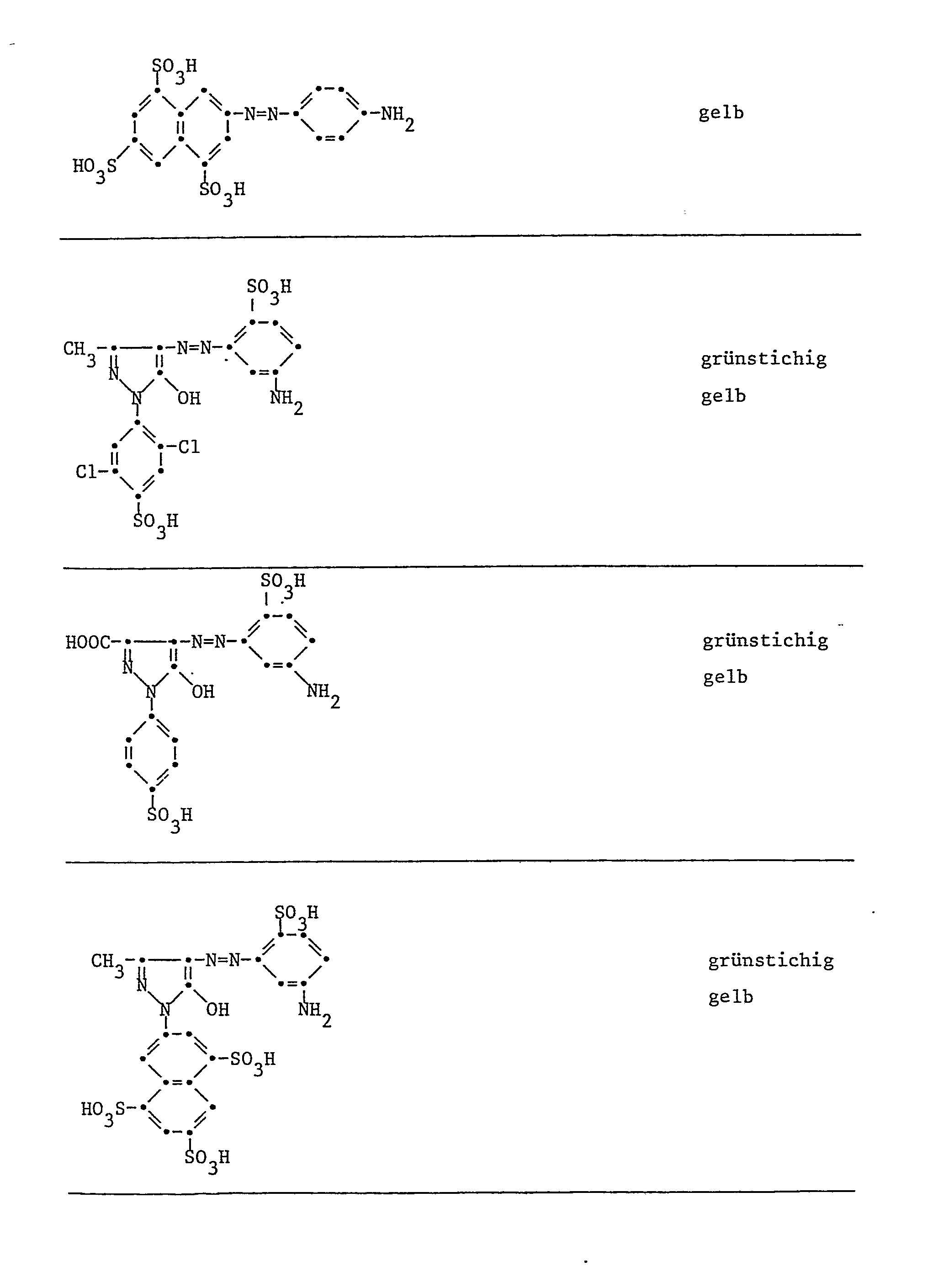
- In der folgenden Tabelle sind weitere aminogruppenhaltige Chromophore aufgeführt, die mit 2-Methyl-4,6-dichlor-5-methylsulfonylpyrimidin zu Reaktivfarbstoffen umgesetzt werden können, die Baumwolle in den angegebenen Nuancen färben.
-



- Aehnliche Farbstoffe werden erhalten, wenn anstelle von 2-Methyl-5-methylsulfonyl-4,6-dichlorpyrimidin für die Acylierung der oben genannten aminogruppenhaltigen Chromophore äquivalente Mengen von 2-Isopropyl-5-äthylsulfonyl-4,6-dichlorpyrimidin, 2-Methyl-5-methylsulfonyl-4,6-difluorpyrimidin, 2-Methyl-5-methylsulfonyl-4,6-dibrom- pyrimidin, 2-Aethyl-5-methylsulfonyl-4,6-dichlor oder -difluorpyrimidin oder 2-Methyl-5-äthylsulfonyl-4,6-dichlor oder-difluorpyrimidin verwendet werden.
- Beispiel 3: 3,76 Teile 2,4-Diaminobenzol-sulfonsäure werden in 200 Teilen Wasser neutral gelöst und mit 6,6 Teilen Natriumacetat versetzt. Zu dieser Lösung gibt man hierauf bei Zimmertemperatur unter kräftigem Rühren eine Lösung von 5,3 Teilen 2-Methyl-5-methylsulfonyl-4,6-dichlorpyrimidin in 40 Teilen Aceton. Das auf dise Weise erhaltene Kondensationsprodukt der Formel

- Der so erhaltene Farbstoff färbt Baumwolle in grünstichig gelben Tönen.
- Verwendet man anstelle des obigen Pyrazolons eine äquivalente Menge der in Kolonne 1 der folgenden Tabelle 2 angegebenen Kupplungskomponenten, so erhält man Farbstoffe, die Baumwolle in den in Kolonne II angegebenen Tönen färben.


- Beispiel 4: Zu einer neutralen Lösung von 6,38 g Teilen 1-Amino-8-hydroxynaphthalin-3,6-disulfonsäure in 200 Teilen Wasser gibt man bei Zimmertemperatur unter kräftigem Eühren eine Lösung von 5,3 Teilen 2-Methyl-5-methylsulfonyl-4,6-dichlor-pyrimidin in 30 Teilen Aceton und hält das pH während der Kondensation durch Zutropfen von 1-n Natriumhydroxydlösung zwischen 5 und 7.
- Die erhaltene Lösung der Kupplungskomponente der Formel

- wird hierauf mit 4 Teilen Natriumbicarbonat versetzt. Nach Zugabe der aus 3,46 Teilen Orthanilsäure in übliche Weise hergestellten Diazoverbindung entsteht ein Farbstoff, der Baumwolle in roten Tönen färbt.
- Verwendet man anstelle von diazotierter Orthanilsäure eine äquivalente Menge des Diazoniumsalzes der 2-Amino-naphthalin-1,5-disulfonsäure, so erhält man einen Farbstoff, der Baumwolle in blaustichig roten Tönen färbt.
- 2 Teile des gemäss Beispiel 2 erhaltenen Farbstoffes werden unter Zusatz von 0,5 Teilen m-nitrobenzolsulfonsaurem Natrium in 100 Teilen Wasser gelöst. Mit der erhaltenen Lösung wird ein Baumwollgewebe imprägniert, so dass es um 75% seines Gewichtes zunimmt, und dann getrocknet.
- Danach imprägniert man das Gewebe mit einer 20° warmen Lösung, die pro Liter 5 Gramm Natriumhydroxyd und 300 Gramm Natriumchlorid enthält, quetscht auf 75% Gewichtszunahme ab, dämpft die Färbung während 30 Sekunden bei 100° bis 101°, spült, seift während einer Viertelstunde in einer 0,3%igen kochenden Lösung eines ionenfreien Waschmittels, spült und trocknet.
- 2 Teile des gemäss Beispiel 2 hergestellten Farbstoffes werden unter schnellem Rühren in 100 Teile einer Stammverdickung, enthaltend 45 Teile 5%ige Natriumalginatverdickung, 32 Teile Wasser, 20 Teile Harnstoff, 1 Teil m-nitrobenzolsulfonsaures Natrium sowie 2 Teile Natriumcarbonat, eingestreut.
- Mit der so erhaltenen Druckpaste bedruckt man ein Baumwollgewebe auf einer Rouleauxdruckmaschine, trocknet und dämpft den erhaltenen bedruckten Stoff 2 bis 8 Minuten bei 100° in gesättigtem Dampf. Das bedruckte Gewebe wird dann in kaltem und heissem Wasser gründlich gespült, wobei sich die nicht chemisch fixierten Anteile sehr leicht von der Faser entfernen lassen, und anschliessend getrocknet.
Claims (48)
1. Reaktivfarbstoffe der Formel

worin D der Rest eines organischen Farbstoffes der Mono- oder Polyazo-, Metallkomplexazo-, Anthrachinon-, Phthalocyanin-, Formazan-, Azomethin-, Nitroaryl-, Dioxazin-, Phenazin- oder Stilbenreihe, R1 Wasserstoff oder gegebenenfalls substituiertes C1-C4-Alkyl, R2 und R3 unabhängig voneinander geradkettig oder verzweigtes C1-C5-Alkyl und X Fluor, Chlor oder Brom sind.
2. Reaktivfarbstoffe gemäss Anspruch 1 der Formel

worin D, R1, R2 und X die in Anspruch 1 angegebenen Bedeutungen haben.
3. Reaktivfarbstoffe gemäss Anspruch 2, worin D, R1 und R2 die in Anspruch 2 angegebenen Bedeutungen haben, und X Chlor ist.
4. Reaktivfarbstoffe gemäss Anspruch 3, worin D, R1 und X die in Anspruch 3 angegebenen Bedeutungen haben, und R2 Methyl, Aethyl oder Isopropyl ist.
5. Reaktivfarbstoffe gemäss Anspruch 4, worin D, R1 und X die in Anspruch 4 angegebenen Bedeutungen haben und R2 Methyl ist.
6. Reaktivfarbstoffe gemäss Anspruch 2, worin D der Rest eines Mono-oder Disazofarbstoffes ist.
7. Reaktivfarbstoffe gemäss Anspruch 2, worin D der Rest eines Metallkomplexazofarbstoffes der Benzol- oder Naphthalinreihe ist und R1, R2 und X die in Anspruch 2 angegebenen Bedeutungen haben.
8. Reaktivfarbstoffe gemäss Anspruch 7, worin der Rest D ein 1:1-Kupferkomplexmonoazofarbstoff der Benzol- oder Naphthalinreihe ist, und das Kupferatom an jeweils eine metallisierbare Gruppe in ortho-Position zur Azobrücke gebunden ist und worin R1 und R2 die in Anspruch 7 angegebenen Bedeutungen haben und X Chlor ist.
9. Reaktivfarbstoffe gemäss Anspruch 3 der Formel

worin D der Rest einer Diazokomponente der Benzol- oder Naphthalinreihe und K der Rest einer Kupplungskomponente der Benzol- oder Naphthalinreihe oder der heterocyclischen Reihe ist, und der Reaktivrest an die Diazokomponente oder an die Kupplungskomponente gebunden ist, oder je ein Reaktivrest sowohl an die Diazokomponente als auch an die Kupplungskomponente gebunden ist und worin R1 und R2 die in Anspruch 3 angegebenen Bedeutungen haben.
10. Reaktivfarbstoffe gemäss Anspruch 1 der Formel

worin D, R1, R2 und R3 die in Anspruch 1 angegebenen Bedeutungen haben.
11. Reaktivfarbstoffe gemäss Anspruch 10, worin D der Rest eines Mono-oder Disazofarbstoffes ist.
12. Reaktivfarbstoffe gemäss Anspruch 11 der Formel

worin D1 der Rest einer Diazokomponente der Benzol- oder Naphthalinreihe und K der Rest einer Kupplungskomponente der Benzol- oder Naphthalinreihe oder der heterocyclischen Reihe ist, und R1 Wasserstoff oder gegebenenfalls substituiertes C1-C4-Alkyl und R geradkettig oder verzweigtes C1-C5-Alkyl ist, und der Reaktivrest an die Diazokomponente oder an die Kupplungskomponente oder aber je ein Reaktivrest sowohl an die Diazokomponente als auch an die Kupplungskomponente gebunden ist.
13. Reaktivfarbstoffe gemäss Anspruch 12, worin D1, K und R1 die in Anspruch 12 angegebenen Bedeutungen haben und R2 Methyl, Aethyl oder Isopropyl ist.
14. Reaktivfarbstoffe gemäss Anspruch 13, worin D1, R und R die in Anspruch 13 angegebenen Bedeutungen haben und R Methyl ist.
15. Reaktivfarbstoffe gemäss den Ansprüchen 6 und 11, worin der Rest D als Substituenten C1-C4-Alkyl, C1-C4-Alkoxy, Cl-C6-Acylamino, Amino, Alkoxycarbonyl, Nitro, Cyano, Acetyl, Trifluormethyl, Halogen, Sulfamoyl, Carbamoyl, Ureido, Hydroxy, Carboxy, Sulfomethyl und Sulfo enthalten kann.
16. Reaktivfarbstoffe gemäss Anspruch 15, worin der Rest D als Substituenten Methyl, Aethyl, Methoxy, Benzoylamino, Amino, Ureido, Hydroxy, Sulfomethyl und Sulfo enthalten kann.
17. Der Reaktivfarbstoff gemäss Anspruch 9 der Formel
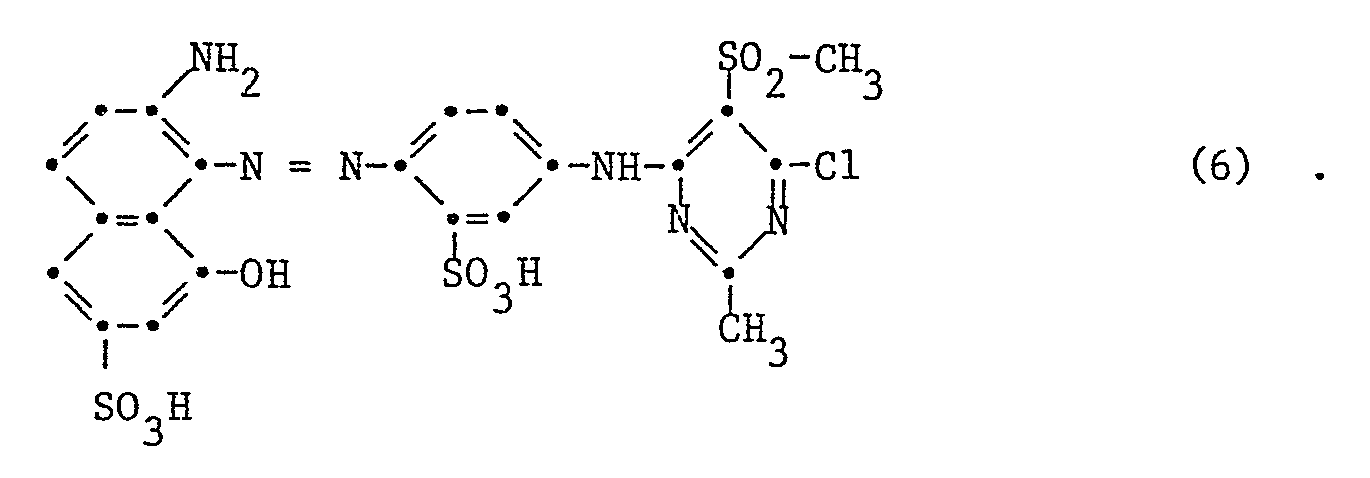
18. Verfahren zur Herstellung von Reaktivfarbstoffen der Formel

worin D der Rest eines organischen Farbstoffes der Mono- oder Polyazo-, Metallkomplexazo-, Anthrachinon-, Phthalocyanin-, Formazan-, Azomethin-, Nitroaryl-, Dioxazin-, Phenazin- oder Stilbenreihe, R Wasserstoff oder gegebenenfalls substituiertes C1-C4-Alkyl, R2 und R3 unabhängig voneinander geradkettig oder verzweigtes C1-C5-Alkyl und X Fluor, Chlor oder Brom ist, dadurch gekennzeichnet, dass man organische Farbstoffe der Formel

oder Farbstoffvorprodukte mit mindestens einem Aequivalent einer Verbindung der Formel
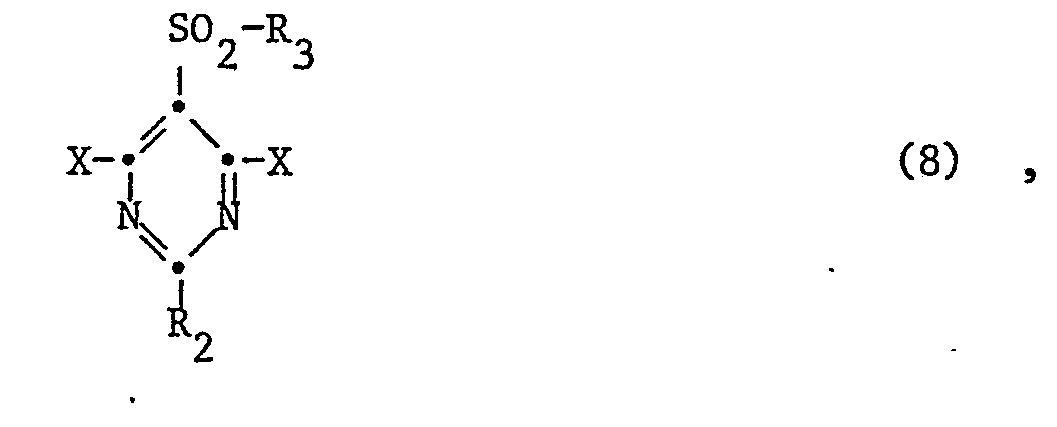
wobei D, R12 R2, R3 und X in den Formeln (7) und (8) die unter Formel (1) angegebenen Bedeutungen haben, zu einem Reaktivfarbstoff der Formel (1) kondensiert, und dass man im Falle der Verwendung von Farbstoffvorprodukten, diese in die gewünschten Endfarbstoffe umwandelt.
19. Verfahren gemäss Anspruch 18, zur Herstellung von Reaktivfarbstoffen der Formel (1), dadurch gekennzeichnet, dass man eine Komponente des Farbstoffes der Formel (7), die eine

enthält, mit einer Verbindung der Formel (8) kondensiert und dann mit der anderen Komponente des Farbstoffes der Formel (7) umsetzt.
20. Verfahren gemäss Anspruch 18, zur Herstellung von Reaktivfarbstoffen der Formel

worin D, R1, R2 und X die in Anspruch 18 angegebenen Bedeutungen haben dadurch gekennzeichnet, dass man organische Farbstoffe der Formel (7) mit mindestens einem Aequivalent einer Verbindung der Formel

worin R2 und X die in Anspruch 18 angegebenen Bedeutungen haben, kondensiert.
21. Verfahren gemäss Anspruch 20, dadurch gekennzeichnet, dass man organische Farbstoffe der Formel (7), worin D und R1 die in Anspruch 20 angegebenen Bedeutungen haben, mit einer Verbindung der Formel

worin R2 die in Anspruch 20 angegebene Bedeutung hat, kondensiert.
22. Verfahren gemäss Anspruch 21, dadurch gekennzeichnet, dass man organische Farbstoffe der Formel (7), worin D und R1 die in Anspruch 21 angegebenen Bedeutungen haben, mit einer Verbindung der Formel (10), worin R- Methyl, Aethyl oder Isopropyl ist, kondensiert.
23. Verfahren gemäss Anspruch 22, dadurch gekennzeichnet, dass man organische Farbstoffe der Formel (7), worin D und R1 die in Anspruch 22 angegebenen Bedeutungen haben, mit einer Verbindung der Formel (10), worin R2 Methyl ist, kondensiert.
24. Verfahren gemäss Anspruch 20, dadurch gekennzeichnet, dass man Verbindungen der Formel (7), worin D der Rest eines Mono- oder Disazofarbstoffes ist, mit mindestens einem Aequivalent der Verbindung der Formel (9) kondensiert, und wobei R1, R2 und X in den Formeln (7) und
(9) die in Anspruch 20 angegebenen Bedeutungen haben.
25. Verfahren gemäss Anspruch 19, dadurch gekennzeichnet, dass man eine Diazokomponente des Farbstoffes, die eine

enthält, mit einer Verbindung der Formel (8), worin R2 und R3 unabhängig voneinander geradkettig oder verzweigtes C1-C5-Alkyl und X Fluor, Chlor oder Brom ist, kondensiert, das erhaltene Kondensationsprodukt diazotiert und auf eine Kupplungskomponente kuppelt.
26. Verfahren gemäss Anspruch 19, dadurch gekennzeichnet, dass man eine Kupplungskomponente des Farbstoffes, die eine

enthält, mit einer Verbindung der Formel (8), worin R2 und R3 unabhängig voneinander geradkettig oder verzweigtes C1-C5-Alkyl und X Fluor, Chlor oder Brom ist, kondensiert, und auf das so erhaltene Kondensationsprodukt eine diazotierte Diazokomponente kuppelt.
27. Verfahren gemäss Anspruch 19, dadurch gekennzeichnet, dass man eine Diazokomponente, die eine

enthält, mit einer Verbindung der Formel (8), worin R2 und R3 unabhängig voneinander geradkettig oder verzweigtes C1-C5-Alkyl und X Fluor, Chlor oder Brom ist, kondensiert, dass man ferner eine Kupplungskomponente, die eine

enthält, mit einer Verbindung der Formel (8),-worin R2 und R3 unabhängig voneinander geradkettig oder verzweigtes C1-C5-Alkyl und X Fluor, Chlor oder Brom ist, kondensiert, und dass man das Kondensationsprodukt der Diazokomponente diazotiert und auf das Kondensationsprodukt der Kupplungskomponente kuppelt, wobei Rl, R2, R3 und X im Kondensationsprodukt der Diazokomponente unabhängig ist von R1, R2, R3 und X im Kondensationsprodukt der Kupplungskomponente.
28. Verfahren gemäss Anspruch 20, zur Herstellung von Reaktiv-Metallkomplexazofarbstoffen, dadurch gekennzeichnet, dass man Verbindungen der Formel (7), worin D der Rest eines Azofarbstoffes der Benzol-oder Naphthalinreihe ist, der metallisierbare Gruppen enthält, mit mindestens einem Aequivalent der Verbindung der Formel (9) und mit schwermetallabgebenden Mitteln umsetzt, und wobei R1, R und X in den Formeln (7) und (9) die in Anspruch 20 angegebenen Bedeutungen haben.
29. Verfahren gemäss Anspruch 28, zur Herstellung von Reaktiv-Metallkomplexazofarbstoffen, dadurch gekennzeichnet, dass man Verbindungen der Formel (7), worin D der Rest eines Monoazofarbstoffes der Benzol-oder Naphthalinreihe ist, der metallisierbare Gruppen in ortho-Position zur Azobrücke enthält und worin R die in Anspruch 28 angegebene Bedeutung hat, mit einer Verbindung der Formel (9), worin R2 die in Anspruch 28 angegebene Bedeutung hat und X Chlor ist, und mit kupferabgebenden Mitteln in beliebiger Reihenfolge zu einem 1:1-Kupferkomplexazofarbstoff umsetzt.
30. Verfahren gemäss Anspruch 24, dadurch gekennzeichnet, dass man organische Farbstoffe der Formel

worin D1 der Rest einer Diazokomponente der Benzol- oder Naphthalinreihe und K der Rest einer Kupplungskomponente der Benzol- oder Naphthalinreihe oder der heterocyclischen Reihe und R1 Wasserstoff oder Cl-C4-Alkyl ist, mit Verbindungen der Formel (9), worin X Chlor ist und R2 die in Anspruch 24 angegebene Bedeutung hat, kondensiert, wobei die Kondensation an der

der Diazokomponente oder an der

der Kupplungskomponente erfolgt, oder mit zwei Verbindungen der Formel (9), worin X Chlor ist und R2 die in Anspruch 24 angegebene Bedeutung hat, kondensiert, wobei die Kondensation an der
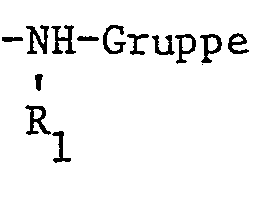
der Diazokomponente und an der

der Kupplungskomponente erfolgt.
31. Verfahren gemäss Anspruch 18, zur Herstellung von Reaktivfarbstoffen der Formel

worin D, R1, R2 und R3 die in Anspruch 18 angegebenen Bedeutungen haben, dadurch gekennzeichnet, dass man organische Farbstoffe der Formel

oder Farbstoffvorprodukte mit Verbindungen der Formel
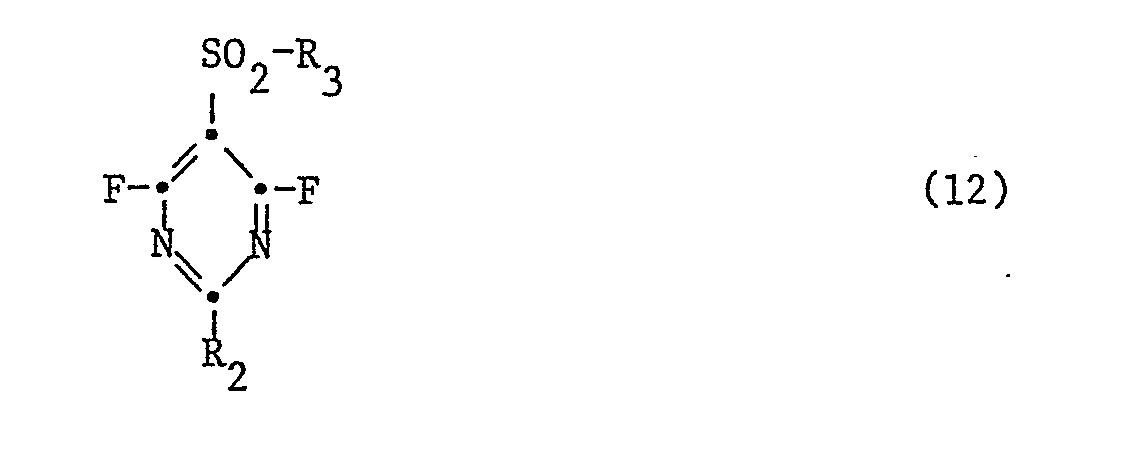
kondensiert, und dass man im Falle der Verwendung von Farbstoffvorprodukten, diese in die gewünschten Endfarbstoffe umwandelt.
32. Verfahren gemäss Anspruch 31, dadurch gekennzeichnet, dass man Verbindungen der Formel (7), worin D der Rest eines Mono- oder Disazofarbstoffes ist, mit mindestens einem Aequivalent einer Verbindung der Formel (12) kondensiert.
33. Verfahren gemäss Anspruch 32, zur Herstellung von Reaktivfarbstoffen der Formel

worin D1 der Rest einer Diazokomponente der Benzol- oder Naphthalinreihe und K der Rest einer Kupplungskomponente der Benzol- oder Naphthalinreihe oder der heterocyclischen Reihe ist, und R Wasserstoff oder gegebenenfalls substituiertes C1-C4-Alkyl und R2 geradkettig oder verzweigtes C1-C5-Alkyl ist, dadurch gekennzeichnet, dass man einen organischen Farbstoff der Formel

mit Verbindungen der Formel

worin K, D, R1 und R2 in den Formeln (11) und (13) die unter Formel (5) angegebenen Bedeutungen haben, kondensiert, wobei die Kondensation an der
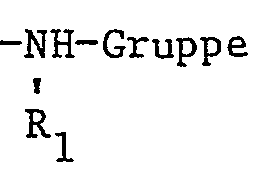
der Diazokomponente oder an der

der Kupplungskomponente erfolgt, oder mit zwei Verbindungen der Formel (13), worin R2 die unter Formel (5) angegebene Bedeutung hat, kondensiert, wobei die Kondensation an der

der Diazokomponente und an der

der Kupplungskomponente erfolgt.
34. Verfahren gemäss Anspruch 33, dadurch gekennzeichnet, dass man Verbindungen der Formel (11), worin D1, K und R1 die in Anspruch 33 angegebenen Bedeutungen haben, mit mindestens einem Aequivalent einer Verbindung der Formel (13), worin R2 Methyl, Aethyl oder Isopropyl ist, kondensiert.
35. Verfahren gemäss Anspruch 34, dadurch gekennzeichnet, dass man Verbindungen der Formel (11), worin D1, K und R die in Anspruch 34 angegebenen Bedeutungen haben, mit mindestens einem Aequivalent einer Verbindung der Formel (13), worin R2 Methyl ist, kondensiert.
36. Verfahren gemäss den Ansprüchen 24 und 32, dadurch gekennzeichnet, dass man Verbindungen der Formel (7), worin der Rest D als Substi- tuenten C1-C4 Alkyl, Cl-C4-Alkoxy, CI-C6-Acylamino, Amino, Alkoxycarbonyl, Nitro, Cyano, Acetyl, Trifluormethyl, Halogen, Sulfamoyl, Carbamoyl, Ureido, Hydroxy, Carboxy, Sulfomethyl und Sulfo enthalten kann, als Ausgangsstoffe verwendet.
37. Verfahren gemäss Anspruch 36, dadurch gekennzeichnet, dass man Verbindungen der Formel (7), worin der Rest D als Substituenten Methyl, Aethyl, Methoxy, Benzoylamino, Amino, Ureido, Hydroxy, Sulfomethyl und Sulfo enthalten kann, als Ausgangsstoffe verwendet.
38. Verfahren gemäss Anspruch 30, zur Herstellung des Reaktivfarbstoffes der Formel

dadurch gekennzeichnet, dass man den durch Kupplung von diazotierter 1-Amino-4-acetylaminobenzol-6-sulfonsäure auf 2-Amino-8-hydroxynaphthalin-6-sulfonsäure und anschliessender Verseifung der Acetylaminogruppe erhaltenen Azofarbstoff mit 4,6-Dichlor-2-methyl-5-methylsulfonylpyri- midin kondensiert.
39. Die gemäss den Beispielen erhaltenen Reaktivfarbstoffe.
40. Verfahren gemäss den angegebenen Beispielen.
41. Die gemäss den Ansprüchen 18 bis 38 erhältlichen Farbstoffe.
42. Verfahren gemäss den Färbe- und Druckbeispielen.
43. Verwendung der Reaktivfarbstoffe gemäss den Ansprüchen 1 bis 17 bzw. der gemäss den Ansprüchen 18 bis 38 erhaltenen Reaktivfarbstoffe zum Färben und Bedrucken.
44. Verfahren zum Färben und Bedrucken unter Verwendung der Farbstoffe gemäss Anspruch 1.
45. Verfahren gemäss Anspruch 44 zum Färben von Cellulosefasern.
46. Färbe- bzw. Druckpräparate, die Farbstoffe gemäss den Ansprüchen 1 bis 17 enthalten.
47. Das gemäss Anspruch 45 oder 46 gefärbte oder bedruckte Material, insbesondere das Textilmaterial.
Applications Claiming Priority (2)
| Application Number | Priority Date | Filing Date | Title |
|---|---|---|---|
| CH9302/80 | 1980-12-17 | ||
| CH930280 | 1980-12-17 |
Publications (1)
| Publication Number | Publication Date |
|---|---|
| EP0054515A1 true EP0054515A1 (de) | 1982-06-23 |
Family
ID=4350522
Family Applications (1)
| Application Number | Title | Priority Date | Filing Date |
|---|---|---|---|
| EP81810491A Withdrawn EP0054515A1 (de) | 1980-12-17 | 1981-12-11 | Reaktivfarbstoffe, deren Herstellung und Verwendung |
Country Status (2)
| Country | Link |
|---|---|
| EP (1) | EP0054515A1 (de) |
| JP (1) | JPS57125264A (de) |
Cited By (1)
| Publication number | Priority date | Publication date | Assignee | Title |
|---|---|---|---|---|
| EP0568876A1 (de) | 1992-05-04 | 1993-11-10 | Bayer Ag | Reaktivfarbstoffe, deren Herstellung und Verwendung |
Citations (6)
| Publication number | Priority date | Publication date | Assignee | Title |
|---|---|---|---|---|
| FR1466567A (fr) * | 1964-12-10 | 1967-01-20 | Bayer Ag | Nouveaux colorants réactifs et procédé pour leur préparation |
| DE1544499A1 (de) * | 1964-12-10 | 1969-08-21 | Bayer Ag | Reaktivfarbstoffe und Verfahren zu deren Herstellung |
| DE1544542A1 (de) * | 1965-09-13 | 1970-04-02 | Bayer Ag | Reaktivfarbstoffe und Verfahren zu deren Herstellung |
| DE1544512A1 (de) * | 1965-02-20 | 1970-05-06 | Bayer Ag | Reaktivfarbstoffe und Verfahren zu deren Herstellung |
| DE1544517A1 (de) * | 1965-04-13 | 1970-05-21 | Bayer Ag | Faerbemittel,Reaktivfarbstoffe und Verfahren zu deren Herstellung |
| DE2819787A1 (de) * | 1977-05-09 | 1978-11-23 | Ciba Geigy Ag | Neue farbstoffe, deren herstellung und verwendung |
-
1981
- 1981-12-11 EP EP81810491A patent/EP0054515A1/de not_active Withdrawn
- 1981-12-17 JP JP20263481A patent/JPS57125264A/ja active Pending
Patent Citations (7)
| Publication number | Priority date | Publication date | Assignee | Title |
|---|---|---|---|---|
| FR1466567A (fr) * | 1964-12-10 | 1967-01-20 | Bayer Ag | Nouveaux colorants réactifs et procédé pour leur préparation |
| DE1544499A1 (de) * | 1964-12-10 | 1969-08-21 | Bayer Ag | Reaktivfarbstoffe und Verfahren zu deren Herstellung |
| DE1544512A1 (de) * | 1965-02-20 | 1970-05-06 | Bayer Ag | Reaktivfarbstoffe und Verfahren zu deren Herstellung |
| DE1544517A1 (de) * | 1965-04-13 | 1970-05-21 | Bayer Ag | Faerbemittel,Reaktivfarbstoffe und Verfahren zu deren Herstellung |
| DE1544542A1 (de) * | 1965-09-13 | 1970-04-02 | Bayer Ag | Reaktivfarbstoffe und Verfahren zu deren Herstellung |
| DE2819787A1 (de) * | 1977-05-09 | 1978-11-23 | Ciba Geigy Ag | Neue farbstoffe, deren herstellung und verwendung |
| FR2390478A1 (fr) * | 1977-05-09 | 1978-12-08 | Ciba Geigy Ag | Colorants a radicaux d'alkylsulfonylpyrimidines |
Cited By (1)
| Publication number | Priority date | Publication date | Assignee | Title |
|---|---|---|---|---|
| EP0568876A1 (de) | 1992-05-04 | 1993-11-10 | Bayer Ag | Reaktivfarbstoffe, deren Herstellung und Verwendung |
Also Published As
| Publication number | Publication date |
|---|---|
| JPS57125264A (en) | 1982-08-04 |
Similar Documents
| Publication | Publication Date | Title |
|---|---|---|
| EP0076782A2 (de) | Reaktivfarbstoffe, deren Herstellung und Verwendung | |
| EP0107614B1 (de) | Reaktivfarbstoffe, deren Herstellung und Verwendung | |
| EP0626429A1 (de) | Faserreaktive Farbstoffe, ihre Herstellung und Verwendung | |
| DE69522455T2 (de) | Reaktive monoazofarbstoffe | |
| EP1247841B1 (de) | Reaktivfarbstoffe, Verfahren zu deren Herstellung und deren Verwendung | |
| DE2748929A1 (de) | Wasserloesliche farbstoffe, verfahren zu ihrer herstellung, deren verwendung als faserreaktive farbstoffe zum faerben und bedrucken von fasermaterialien und fasermaterialien, die mit ihnen gefaerbt wurden | |
| EP0568876B1 (de) | Reaktivfarbstoffe, deren Herstellung und Verwendung | |
| CH514658A (de) | Verfahren zur Herstellung von Azofarbstoffen | |
| EP0028787B1 (de) | Kupfer-Formazanverbindungen, Verfahren zu ihrer Herstellung und ihre Verwendung als Farbstoffe | |
| DE3102287A1 (de) | Wasserloesliche monoazoverbindungen, verfahren zu ihrer herstellung und ihre verwendung als farbstoffe | |
| EP0675172B1 (de) | Wasserlösliche Azoverbindungen, Verfahren zu ihrer Herstellung und ihre Verwendung als Farbstoffe | |
| EP0548795B1 (de) | Wasserlösliche faserreaktive Farbstoffe, Verfahren zu ihrer Herstellung und ihre Verwendung | |
| EP0501252A1 (de) | Bifunktionelle Reaktivfarbstoffe | |
| EP0065479A2 (de) | Reaktivfarbstoffe, Verfahren zu ihrer Herstellung und ihre Verwendung zum Färben und Bedrucken von hydroxylgruppen- oder stickstoffhaltigen Materialien | |
| EP0345577B1 (de) | Reaktivfarbstoffe | |
| DE3879476T2 (de) | Faserreaktiv-azofarbstoffe, verfahren zu ihrer herstellung und ihre verwendung zum faerben von hydroxy und/oder carboxamidgruppen enthaltendem fasermaterial. | |
| EP0069703B1 (de) | Reaktivfarbstoffe, deren Herstellung und Verwendung | |
| EP0603116B1 (de) | Azoreaktivfarbstoffe | |
| EP0794233B1 (de) | Anionische Säurefarbstoffe, Verfahren zu deren Herstellung und deren Verwendung | |
| EP0794234A1 (de) | Farbstoffmischungen, Verfahren zu deren Herstellung und deren Verwendung | |
| EP0029106B1 (de) | Reaktivfarbstoffe, die eine Halogenalkanoylamido- oder Halogenacryloylamido-Gruppe enthalten, deren Herstellung und Verwendung, sowie die Halogenalkanoylamido- bzw. Halogenacryloylamido-Zwischenverbindung | |
| EP0045278B1 (de) | Reaktivfarbstoffe, deren Herstellung und Verwendung | |
| EP1088858B1 (de) | Reaktivfarbstoffe, enthaltend einen Formazan- und einen Monoazofarbstoffrest, Verfahren zu deren Herstellung und deren Verwendung | |
| DE69324430T2 (de) | Reaktivfarbstoffe | |
| DE19636483C2 (de) | Wasserlösliche Azoverbindungen, Verfahren zu ihrer Herstellung und ihre Verwendung als Farbstoffe |
Legal Events
| Date | Code | Title | Description |
|---|---|---|---|
| PUAI | Public reference made under article 153(3) epc to a published international application that has entered the european phase |
Free format text: ORIGINAL CODE: 0009012 |
|
| 17P | Request for examination filed |
Effective date: 19811214 |
|
| AK | Designated contracting states |
Designated state(s): CH DE FR GB |
|
| STAA | Information on the status of an ep patent application or granted ep patent |
Free format text: STATUS: THE APPLICATION HAS BEEN WITHDRAWN |
|
| 18W | Application withdrawn |
Withdrawal date: 19840614 |
|
| RIN1 | Information on inventor provided before grant (corrected) |
Inventor name: SEITZ, KARL, DR. Inventor name: HOEGERLE, KARL, DR. |