EP0054733A1 - Agent tensioactif, procédé de fabrication dudit agent et son usage - Google Patents
Agent tensioactif, procédé de fabrication dudit agent et son usage Download PDFInfo
- Publication number
- EP0054733A1 EP0054733A1 EP81109402A EP81109402A EP0054733A1 EP 0054733 A1 EP0054733 A1 EP 0054733A1 EP 81109402 A EP81109402 A EP 81109402A EP 81109402 A EP81109402 A EP 81109402A EP 0054733 A1 EP0054733 A1 EP 0054733A1
- Authority
- EP
- European Patent Office
- Prior art keywords
- hydrolysis
- weight
- water
- parts
- acrylonitrile
- Prior art date
- Legal status (The legal status is an assumption and is not a legal conclusion. Google has not performed a legal analysis and makes no representation as to the accuracy of the status listed.)
- Granted
Links
- 239000004094 surface-active agent Substances 0.000 title claims abstract description 9
- 238000000034 method Methods 0.000 title claims description 14
- QGZKDVFQNNGYKY-UHFFFAOYSA-N Ammonia Chemical compound N QGZKDVFQNNGYKY-UHFFFAOYSA-N 0.000 claims abstract description 30
- 238000006460 hydrolysis reaction Methods 0.000 claims abstract description 19
- 230000007062 hydrolysis Effects 0.000 claims abstract description 18
- 229910021529 ammonia Inorganic materials 0.000 claims abstract description 15
- 239000002351 wastewater Substances 0.000 claims abstract description 12
- NLHHRLWOUZZQLW-UHFFFAOYSA-N Acrylonitrile Chemical compound C=CC#N NLHHRLWOUZZQLW-UHFFFAOYSA-N 0.000 claims abstract description 10
- 229910052757 nitrogen Inorganic materials 0.000 claims abstract description 10
- 238000004519 manufacturing process Methods 0.000 claims abstract description 9
- QQONPFPTGQHPMA-UHFFFAOYSA-N propylene Natural products CC=C QQONPFPTGQHPMA-UHFFFAOYSA-N 0.000 claims abstract description 7
- 125000004805 propylene group Chemical group [H]C([H])([H])C([H])([*:1])C([H])([H])[*:2] 0.000 claims abstract description 7
- 229910052799 carbon Inorganic materials 0.000 claims abstract description 4
- 229910052739 hydrogen Inorganic materials 0.000 claims abstract description 3
- IJGRMHOSHXDMSA-UHFFFAOYSA-N Atomic nitrogen Chemical compound N#N IJGRMHOSHXDMSA-UHFFFAOYSA-N 0.000 claims description 16
- 239000003513 alkali Substances 0.000 claims description 8
- 239000000654 additive Substances 0.000 claims description 6
- 230000000996 additive effect Effects 0.000 claims description 6
- 238000000926 separation method Methods 0.000 claims description 3
- 239000000470 constituent Substances 0.000 claims description 2
- 239000008233 hard water Substances 0.000 claims description 2
- 239000006185 dispersion Substances 0.000 claims 1
- 229910052500 inorganic mineral Inorganic materials 0.000 claims 1
- 239000011707 mineral Substances 0.000 claims 1
- XLYOFNOQVPJJNP-UHFFFAOYSA-N water Substances O XLYOFNOQVPJJNP-UHFFFAOYSA-N 0.000 description 25
- 229910001868 water Inorganic materials 0.000 description 25
- HEMHJVSKTPXQMS-UHFFFAOYSA-M Sodium hydroxide Chemical compound [OH-].[Na+] HEMHJVSKTPXQMS-UHFFFAOYSA-M 0.000 description 24
- 239000000047 product Substances 0.000 description 19
- OKKJLVBELUTLKV-UHFFFAOYSA-N Methanol Chemical compound OC OKKJLVBELUTLKV-UHFFFAOYSA-N 0.000 description 15
- NLYAJNPCOHFWQQ-UHFFFAOYSA-N kaolin Chemical compound O.O.O=[Al]O[Si](=O)O[Si](=O)O[Al]=O NLYAJNPCOHFWQQ-UHFFFAOYSA-N 0.000 description 13
- 239000007787 solid Substances 0.000 description 13
- 239000005995 Aluminium silicate Substances 0.000 description 12
- 235000012211 aluminium silicate Nutrition 0.000 description 12
- 230000000694 effects Effects 0.000 description 11
- 238000005406 washing Methods 0.000 description 9
- VTYYLEPIZMXCLO-UHFFFAOYSA-L Calcium carbonate Chemical compound [Ca+2].[O-]C([O-])=O VTYYLEPIZMXCLO-UHFFFAOYSA-L 0.000 description 7
- ODINCKMPIJJUCX-UHFFFAOYSA-N calcium oxide Inorganic materials [Ca]=O ODINCKMPIJJUCX-UHFFFAOYSA-N 0.000 description 7
- 239000003795 chemical substances by application Substances 0.000 description 7
- 235000019441 ethanol Nutrition 0.000 description 7
- LFQSCWFLJHTTHZ-UHFFFAOYSA-N Ethanol Chemical compound CCO LFQSCWFLJHTTHZ-UHFFFAOYSA-N 0.000 description 6
- 239000010440 gypsum Substances 0.000 description 6
- 229910052602 gypsum Inorganic materials 0.000 description 6
- 239000000203 mixture Substances 0.000 description 6
- 238000009835 boiling Methods 0.000 description 5
- 239000000292 calcium oxide Substances 0.000 description 4
- 235000012255 calcium oxide Nutrition 0.000 description 4
- 238000006243 chemical reaction Methods 0.000 description 4
- 238000001556 precipitation Methods 0.000 description 4
- 239000000725 suspension Substances 0.000 description 4
- 239000008399 tap water Substances 0.000 description 4
- 235000020679 tap water Nutrition 0.000 description 4
- MHAJPDPJQMAIIY-UHFFFAOYSA-N Hydrogen peroxide Chemical compound OO MHAJPDPJQMAIIY-UHFFFAOYSA-N 0.000 description 3
- 239000004480 active ingredient Substances 0.000 description 3
- 150000001875 compounds Chemical class 0.000 description 3
- 238000010411 cooking Methods 0.000 description 3
- 238000000502 dialysis Methods 0.000 description 3
- 239000000843 powder Substances 0.000 description 3
- HGINCPLSRVDWNT-UHFFFAOYSA-N Acrolein Chemical compound C=CC=O HGINCPLSRVDWNT-UHFFFAOYSA-N 0.000 description 2
- -1 aliphatic alcohols Chemical class 0.000 description 2
- 229910052925 anhydrite Inorganic materials 0.000 description 2
- 239000002585 base Substances 0.000 description 2
- 230000015572 biosynthetic process Effects 0.000 description 2
- 229910000019 calcium carbonate Inorganic materials 0.000 description 2
- OSGAYBCDTDRGGQ-UHFFFAOYSA-L calcium sulfate Chemical compound [Ca+2].[O-]S([O-])(=O)=O OSGAYBCDTDRGGQ-UHFFFAOYSA-L 0.000 description 2
- 239000004927 clay Substances 0.000 description 2
- 230000002349 favourable effect Effects 0.000 description 2
- 239000000945 filler Substances 0.000 description 2
- 238000009472 formulation Methods 0.000 description 2
- 238000005194 fractionation Methods 0.000 description 2
- LELOWRISYMNNSU-UHFFFAOYSA-N hydrogen cyanide Chemical compound N#C LELOWRISYMNNSU-UHFFFAOYSA-N 0.000 description 2
- 238000005339 levitation Methods 0.000 description 2
- 150000002825 nitriles Chemical class 0.000 description 2
- 239000002244 precipitate Substances 0.000 description 2
- 238000003756 stirring Methods 0.000 description 2
- QGZKDVFQNNGYKY-UHFFFAOYSA-O Ammonium Chemical compound [NH4+] QGZKDVFQNNGYKY-UHFFFAOYSA-O 0.000 description 1
- BVKZGUZCCUSVTD-UHFFFAOYSA-M Bicarbonate Chemical compound OC([O-])=O BVKZGUZCCUSVTD-UHFFFAOYSA-M 0.000 description 1
- CFSFEIZUJGTCRB-UHFFFAOYSA-N CC1CC(C2)C2C1 Chemical compound CC1CC(C2)C2C1 CFSFEIZUJGTCRB-UHFFFAOYSA-N 0.000 description 1
- OKTJSMMVPCPJKN-UHFFFAOYSA-N Carbon Chemical compound [C] OKTJSMMVPCPJKN-UHFFFAOYSA-N 0.000 description 1
- BVKZGUZCCUSVTD-UHFFFAOYSA-L Carbonate Chemical compound [O-]C([O-])=O BVKZGUZCCUSVTD-UHFFFAOYSA-L 0.000 description 1
- 229920000298 Cellophane Polymers 0.000 description 1
- 238000006887 Ullmann reaction Methods 0.000 description 1
- 239000002253 acid Substances 0.000 description 1
- 239000013543 active substance Substances 0.000 description 1
- 229910001854 alkali hydroxide Inorganic materials 0.000 description 1
- 150000008044 alkali metal hydroxides Chemical class 0.000 description 1
- 150000001447 alkali salts Chemical class 0.000 description 1
- 150000001408 amides Chemical class 0.000 description 1
- 235000012216 bentonite Nutrition 0.000 description 1
- BRPQOXSCLDDYGP-UHFFFAOYSA-N calcium oxide Chemical compound [O-2].[Ca+2] BRPQOXSCLDDYGP-UHFFFAOYSA-N 0.000 description 1
- 159000000007 calcium salts Chemical class 0.000 description 1
- 150000001732 carboxylic acid derivatives Chemical class 0.000 description 1
- 230000003197 catalytic effect Effects 0.000 description 1
- 239000004568 cement Substances 0.000 description 1
- 238000004140 cleaning Methods 0.000 description 1
- 239000011248 coating agent Substances 0.000 description 1
- 238000000576 coating method Methods 0.000 description 1
- 238000002485 combustion reaction Methods 0.000 description 1
- 230000007797 corrosion Effects 0.000 description 1
- 238000005260 corrosion Methods 0.000 description 1
- 239000013078 crystal Substances 0.000 description 1
- 230000003111 delayed effect Effects 0.000 description 1
- 150000001991 dicarboxylic acids Chemical class 0.000 description 1
- 239000002270 dispersing agent Substances 0.000 description 1
- 238000004821 distillation Methods 0.000 description 1
- 238000005553 drilling Methods 0.000 description 1
- 238000001035 drying Methods 0.000 description 1
- 238000001704 evaporation Methods 0.000 description 1
- 230000008020 evaporation Effects 0.000 description 1
- 239000007789 gas Substances 0.000 description 1
- 238000010438 heat treatment Methods 0.000 description 1
- 238000009413 insulation Methods 0.000 description 1
- 150000002500 ions Chemical class 0.000 description 1
- 238000002955 isolation Methods 0.000 description 1
- 238000005259 measurement Methods 0.000 description 1
- 239000012528 membrane Substances 0.000 description 1
- GBMDVOWEEQVZKZ-UHFFFAOYSA-N methanol;hydrate Chemical compound O.OC GBMDVOWEEQVZKZ-UHFFFAOYSA-N 0.000 description 1
- 239000002808 molecular sieve Substances 0.000 description 1
- 150000002763 monocarboxylic acids Chemical class 0.000 description 1
- 229910052901 montmorillonite Inorganic materials 0.000 description 1
- 239000003960 organic solvent Substances 0.000 description 1
- 239000002245 particle Substances 0.000 description 1
- 239000011505 plaster Substances 0.000 description 1
- 239000011814 protection agent Substances 0.000 description 1
- 238000000746 purification Methods 0.000 description 1
- 238000012958 reprocessing Methods 0.000 description 1
- 230000000979 retarding effect Effects 0.000 description 1
- 230000000630 rising effect Effects 0.000 description 1
- 238000007127 saponification reaction Methods 0.000 description 1
- 229920006395 saturated elastomer Polymers 0.000 description 1
- 239000002002 slurry Substances 0.000 description 1
- URGAHOPLAPQHLN-UHFFFAOYSA-N sodium aluminosilicate Chemical compound [Na+].[Al+3].[O-][Si]([O-])=O.[O-][Si]([O-])=O URGAHOPLAPQHLN-UHFFFAOYSA-N 0.000 description 1
- 238000001694 spray drying Methods 0.000 description 1
- 239000004575 stone Substances 0.000 description 1
- 239000000126 substance Substances 0.000 description 1
- 230000001502 supplementing effect Effects 0.000 description 1
- 230000003313 weakening effect Effects 0.000 description 1
Images


Classifications
-
- C—CHEMISTRY; METALLURGY
- C02—TREATMENT OF WATER, WASTE WATER, SEWAGE, OR SLUDGE
- C02F—TREATMENT OF WATER, WASTE WATER, SEWAGE, OR SLUDGE
- C02F5/00—Softening water; Preventing scale; Adding scale preventatives or scale removers to water, e.g. adding sequestering agents
- C02F5/08—Treatment of water with complexing chemicals or other solubilising agents for softening, scale prevention or scale removal, e.g. adding sequestering agents
- C02F5/10—Treatment of water with complexing chemicals or other solubilising agents for softening, scale prevention or scale removal, e.g. adding sequestering agents using organic substances
- C02F5/12—Treatment of water with complexing chemicals or other solubilising agents for softening, scale prevention or scale removal, e.g. adding sequestering agents using organic substances containing nitrogen
-
- C—CHEMISTRY; METALLURGY
- C09—DYES; PAINTS; POLISHES; NATURAL RESINS; ADHESIVES; COMPOSITIONS NOT OTHERWISE PROVIDED FOR; APPLICATIONS OF MATERIALS NOT OTHERWISE PROVIDED FOR
- C09K—MATERIALS FOR MISCELLANEOUS APPLICATIONS, NOT PROVIDED FOR ELSEWHERE
- C09K23/00—Use of substances as emulsifying, wetting, dispersing, or foam-producing agents
- C09K23/16—Amines or polyamines
-
- C—CHEMISTRY; METALLURGY
- C02—TREATMENT OF WATER, WASTE WATER, SEWAGE, OR SLUDGE
- C02F—TREATMENT OF WATER, WASTE WATER, SEWAGE, OR SLUDGE
- C02F2101/00—Nature of the contaminant
- C02F2101/30—Organic compounds
- C02F2101/38—Organic compounds containing nitrogen
Definitions
- the invention relates to a new surface-active agent and a process for its production from the wastewater obtained in the production of acrylonitrile, and the use thereof.
- the vast majority of the solids contained in the wash water consist of previously undefined products, which are formed, for example, by the reaction of acrylonitrile or acrolein with ammonia, water and hydrogen cyanide. So far, the washing water of the acrylonitrile process has generally been fed to the incineration, since no usability is known that is worth reprocessing. Try this rich tion are known from Japanese Patent Application Sho 50/43 124. The untreated waste water should then be able to be used as a cement additive.
- An object of the invention is to use these previously destroyed connections economically.
- Another task is to create new surfactants by treating this waste water.
- the invention accordingly relates to a surface-active agent, which is characterized in that it is obtained from the wastewater which is obtained in the production of acrylonitrile from propylene by ammoxidation by hydrolysis at alkaline pH values until the major amount of the released ammonia has escaped and, if appropriate Separation of low molecular weight components is available and contains 2.5 to 4.0 wt .-% H, 29.0 to 31.0 wt .-% C and 5.0 to 6.0 wt .-% N.
- Another object of the invention is a process for obtaining the surface-active agent, which is characterized in that the wastewater obtained in the production of acrylonitrile from propylene by ammoxidation is treated with an amount of strong alkali which is at least equimolar in its content of organic, bound nitrogen. until the ammonia evolution has ended.
- the hydrolysis takes place in an alkaline environment.
- the process can also be carried out with a stoichiometric excess of alkali. However, less favorable results are obtained.
- the hydrolysis can also be carried out with other bases, such as calcium oxide.
- bases such as calcium oxide.
- the reaction is slower than with NaOH or Na 2 C0 3 .
- the calcium salts of the carboxylic acid formed show a markedly lower interfacial activity than the alkali salts.
- the end of ammonia evolution indicates the end of hydrolysis, which is generally achieved after a cooking time of 30 to 60 minutes.
- An H 2 0 2 or Na202 addition has a catalytic effect and considerably shortens the hydrolysis time.
- the wastewater is hydrolyzed directly without any previous treatment.
- precipitation of the solids before hydrolysis with organic solvents such as aliphatic alcohols, of which methanol is preferred, can limit alkali consumption.
- the combustion of the remaining water content is easy.
- fractionation can be carried out, for example, by dialysis or the use of a molecular sieve.
- fractional precipitation with lower aliphatic alcohols, preferably methanol.
- the amount and effectiveness of the precipitated products depends on the water-methanol ratio. The range from 1 part by weight of water to 4 to 9 parts by weight of methanol proved to be particularly favorable. In this way, 20 to 25% by weight of the hydrolyzed solid contained in the wash water can be isolated. An increase in this proportion results in a weakening of the dispersing effect.
- the ammonium ion can be replaced by an alkali ion after the ineffective component in the enriched higher molecular part has been separated off. This is done in a known manner by reacting the solution with alkali hydroxide or carbonate. Hydrolysis at elevated pressure is also advantageous when alkali is added.
- the individual process variants be it the direct alkali treatment of the wastewater or the hydrolysis after previous alcohol precipitation, lead to the same product.
- the surface-active effect can only be improved by enriching certain fractions.
- the agents according to the invention can be used either directly in the form of their solution or dried and optionally ground. In the latter case, a free-flowing, non-hygroscopic powder is produced.
- the agents according to the invention can be used as dispersants. A small addition increases the suspension of the dispersed particles in low solids slurries.
- the agents according to the invention act as liquefiers of solid suspensions, such as kaolin suspensions, pastes made of clay, bentonites and montmorillonites.
- the agents are also heat-stable, which is why they can be used in drilling muds.
- the agents according to the invention cause a significant time delay in the stiffening and hardening of the gypsum or anhydrite paste.
- the final strength of the gypsum products is not affected. This makes use in dry fillers and gypsum boards an advantage.
- Another application is to delay or suppress crystal growth in boiler systems. From boiling hard water, the calcium carbonate, dissolved as hydrogen carbonate, precipitates as stalky to fibrous aragonite.
- the agents according to the invention By adding the agents according to the invention, the precipitation of the calcium carbonate in the boiling point is initially significantly delayed. Instead of the expected aragonite formation, small calcitrhombohedra ultimately precipitate out. Because of this effect, the substances according to the invention are suitable as an additive in cleaning, corrosion protection and stone protection agent formulations.
- the solution obtained has a solids content of 50%. 0.8 part by weight of the solution is dissolved in 200 parts by weight of tap water (degree of hardness 13.5 ° H) at room temperature and then 200 parts by weight of a commercially available china clay with a stirrer (60 seconds at 6000 rpm) dispersed.
- the viscosity is compared with a suspension free of washing water hydrolyzate using a rotary viscometer at various pH values, each of which is adjusted by adding NaOH.
- Fig. 1 of the drawing shows the liquefaction effect. Without the addition of the hydrolyzate, the dynamic viscosity is more than 20 Pa.s.
- Example 1 100 parts by weight of the washing water as described in Example 1 are heated in the presence of 26 parts by weight of NaOH and 5.5 parts by weight (0.25 mol per mol of organically bound nitrogen) H 2 0 2 to boiling.
- the released ammonia is collected in a template charged with 0.1 n H 2 S0 4 .
- the hydrolysis rate which is easy to determine by gradually supplementing the acid consumption, is shown in FIG. 2 of the drawing in comparison with H 2 0 2 -free hydrolysis.
- the kaolin liquefying effect of the product obtained after 20 minutes of hydrolysis is identical to the effect of the hydrolysis product according to Example 1.
- wash water according to Example 1 100 parts by weight of wash water according to Example 1 are heated in an autoclave from 20 to 135 ° C. in the course of 3 hours without stirring.
- the internal pressure rises to 4.2 bar.
- it rises to 4.5 bar without external heat supply.
- the cooled and relaxed solution is, as described in Example 1, used to liquefy a coating clay.
- Example 3 The procedure is as in Example 3, but with the addition of 15.8 parts by weight of perhydrol.
- the temperature is raised from 20 to 100 ° C. in the course of 60 minutes, the internal pressure rising to 10 bar. With further heating to 130 ° C over 180 minutes, the internal pressure rises to 12 bar.
- the kaolin liquefaction is measured as described in Example 1.
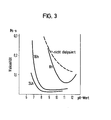
- Example 5 100 parts by weight of the hydrolyzate from Example 5 are dialyzed against tap water in a dialysis cell (membrane area - commercially available cellophane with a basis weight of 31.7 g / m 2 - 100 cm 2 ).
- the dialysis duration is 8 hours in the first case, 16 hours in the second case and 24 hours in the third case.
- Figure 3 shows the increase in potency with kaolin. In each case 0.2% liquefier, based on kaolin, is added.
- washing water concentrated to 60% solids content according to Example 1 100 parts by weight of washing water concentrated to 60% solids content according to Example 1 are stirred into a mixture of 250 parts by weight of methyl alcohol and 75 parts by weight of ethyl alcohol. After separation and drying 8% of the solid used are obtained. 12 parts by weight of this product are then kept at boiling temperature with 8% by weight of NaOH and 180 parts by weight of water with simultaneous removal of the ammonia released. The solids yield is 20 parts by weight, corresponding to 13% of the wash water solids used.
- Wash water hydrolyzate according to Example 1 Product III. Measurement of the liquefaction also according to example 1. Viscosity values in mPa's.
- the hydrolyzate obtained according to Example 1 gives a free-flowing product which can be used as an additive for powdered formulations, e.g. Plaster-based fillers, suitable.
- the subsequently spray-dried product is a light-colored, hardly hygroscopic product.
Landscapes
- Chemical & Material Sciences (AREA)
- Engineering & Computer Science (AREA)
- Organic Chemistry (AREA)
- Environmental & Geological Engineering (AREA)
- Hydrology & Water Resources (AREA)
- Life Sciences & Earth Sciences (AREA)
- General Chemical & Material Sciences (AREA)
- Water Supply & Treatment (AREA)
- Chemical Kinetics & Catalysis (AREA)
- Materials Engineering (AREA)
- Emulsifying, Dispersing, Foam-Producing Or Wetting Agents (AREA)
- Preparation Of Clay, And Manufacture Of Mixtures Containing Clay Or Cement (AREA)
- Organic Low-Molecular-Weight Compounds And Preparation Thereof (AREA)
- Addition Polymer Or Copolymer, Post-Treatments, Or Chemical Modifications (AREA)
Priority Applications (1)
| Application Number | Priority Date | Filing Date | Title |
|---|---|---|---|
| AT81109402T ATE8466T1 (de) | 1980-12-11 | 1981-10-30 | Grenzflaechenaktives mittel und verfahren zu seiner herstellung und dessen verwendung. |
Applications Claiming Priority (2)
| Application Number | Priority Date | Filing Date | Title |
|---|---|---|---|
| DE19803046742 DE3046742A1 (de) | 1980-12-11 | 1980-12-11 | Grenzflaechenaktives mittel und verfahren zu seiner herstellung und dessen verwendung |
| DE3046742 | 1980-12-11 |
Publications (2)
| Publication Number | Publication Date |
|---|---|
| EP0054733A1 true EP0054733A1 (fr) | 1982-06-30 |
| EP0054733B1 EP0054733B1 (fr) | 1984-07-18 |
Family
ID=6118923
Family Applications (1)
| Application Number | Title | Priority Date | Filing Date |
|---|---|---|---|
| EP81109402A Expired EP0054733B1 (fr) | 1980-12-11 | 1981-10-30 | Agent tensioactif, procédé de fabrication dudit agent et son usage |
Country Status (4)
| Country | Link |
|---|---|
| EP (1) | EP0054733B1 (fr) |
| JP (1) | JPS606691B2 (fr) |
| AT (1) | ATE8466T1 (fr) |
| DE (2) | DE3046742A1 (fr) |
Cited By (1)
| Publication number | Priority date | Publication date | Assignee | Title |
|---|---|---|---|---|
| EP0290166A3 (fr) * | 1987-04-28 | 1989-03-15 | Kingston Technologies, Inc. | Emulsions stables |
Citations (6)
| Publication number | Priority date | Publication date | Assignee | Title |
|---|---|---|---|---|
| FR972433A (fr) * | 1941-03-13 | 1951-01-30 | Centre Nat Rech Scient | Utilisation des produits contenus dans les liqueurs usées de tannerie |
| DE1954450A1 (de) * | 1968-10-30 | 1970-05-06 | Nitto Chemical Industry Co Ltd | Verfahren zur Gewinnung von Ammoniumsulfat aus Abwasser |
| DE2127622A1 (de) * | 1970-06-06 | 1971-12-16 | Sumitomo Chemical Co | Verfahren zur Reinigung von Cyanidionen, Sulfationen und organische Verbindungen enthaltenden Abwässern |
| DE1719432A1 (de) * | 1964-10-01 | 1972-04-13 | Nalco Chemical Co | Verfahren zum Stabilisieren von Suspensionen und Dispergieren von Feststoffen in Fluessigkeiten |
| DE2615036A1 (de) * | 1976-04-07 | 1977-10-27 | Erdoelchemie Gmbh | Verfahren zur entfernung von stickstoffverbindungen aus abwasser der acrylnitrilherstellung |
| DE2741213A1 (de) * | 1976-09-13 | 1978-03-16 | Du Pont | Verfahren zur gewinnung von produkten aus abfallstroemen bei der herstellung von acrylnitril |
-
1980
- 1980-12-11 DE DE19803046742 patent/DE3046742A1/de not_active Ceased
-
1981
- 1981-10-30 DE DE8181109402T patent/DE3164912D1/de not_active Expired
- 1981-10-30 EP EP81109402A patent/EP0054733B1/fr not_active Expired
- 1981-10-30 AT AT81109402T patent/ATE8466T1/de not_active IP Right Cessation
- 1981-12-11 JP JP56198725A patent/JPS606691B2/ja not_active Expired
Patent Citations (6)
| Publication number | Priority date | Publication date | Assignee | Title |
|---|---|---|---|---|
| FR972433A (fr) * | 1941-03-13 | 1951-01-30 | Centre Nat Rech Scient | Utilisation des produits contenus dans les liqueurs usées de tannerie |
| DE1719432A1 (de) * | 1964-10-01 | 1972-04-13 | Nalco Chemical Co | Verfahren zum Stabilisieren von Suspensionen und Dispergieren von Feststoffen in Fluessigkeiten |
| DE1954450A1 (de) * | 1968-10-30 | 1970-05-06 | Nitto Chemical Industry Co Ltd | Verfahren zur Gewinnung von Ammoniumsulfat aus Abwasser |
| DE2127622A1 (de) * | 1970-06-06 | 1971-12-16 | Sumitomo Chemical Co | Verfahren zur Reinigung von Cyanidionen, Sulfationen und organische Verbindungen enthaltenden Abwässern |
| DE2615036A1 (de) * | 1976-04-07 | 1977-10-27 | Erdoelchemie Gmbh | Verfahren zur entfernung von stickstoffverbindungen aus abwasser der acrylnitrilherstellung |
| DE2741213A1 (de) * | 1976-09-13 | 1978-03-16 | Du Pont | Verfahren zur gewinnung von produkten aus abfallstroemen bei der herstellung von acrylnitril |
Cited By (1)
| Publication number | Priority date | Publication date | Assignee | Title |
|---|---|---|---|---|
| EP0290166A3 (fr) * | 1987-04-28 | 1989-03-15 | Kingston Technologies, Inc. | Emulsions stables |
Also Published As
| Publication number | Publication date |
|---|---|
| DE3046742A1 (de) | 1982-07-08 |
| JPS606691B2 (ja) | 1985-02-20 |
| JPS57131294A (en) | 1982-08-14 |
| DE3164912D1 (en) | 1984-08-23 |
| ATE8466T1 (de) | 1984-08-15 |
| EP0054733B1 (fr) | 1984-07-18 |
Similar Documents
| Publication | Publication Date | Title |
|---|---|---|
| DE2803590C2 (de) | Verfahren zum Reinigen von Natriumhexafluorosilikat | |
| EP0054733B1 (fr) | Agent tensioactif, procédé de fabrication dudit agent et son usage | |
| DE69628754T2 (de) | Leicht absorbierbares kalzium enthaltende zusammensetzung und verfahren zu ihrer herstellung | |
| DE69908181T2 (de) | Methode zur herstellung eines antitumormittels und dadurch erhaltenes tumormittel | |
| DE3104997A1 (de) | Verfahren zur herstellung von waessrigen natriummethioninat-loesungen (a) | |
| DE2528895A1 (de) | Verfahren zur herstellung vanadiumarmer alkaliphosphatloesungen | |
| DE475429C (de) | Verfahren zur Herstellung eines dauernd streufaehigen Duengemittels aus eingedickter Melasseschlempe | |
| DE2407203C3 (de) | Verfahren zur Herstellung von rieselfähigem EisenOQ-sulfat-Heptahydrat | |
| DE1933692A1 (de) | Verfahren zur Herstellung von Phosphorsaeure | |
| CH635229A5 (de) | Verfahren zur herstellung von ammoniumlactat enthaltenden mischungen. | |
| DE3105007A1 (de) | Verfahren zur herstellung von waessrigen natriummethioninat-loesungen (d) | |
| DE2107970C3 (de) | Verfahren zur Herstellung sulfathaltiger, basischer Aluminiumchloride | |
| DE3105006C2 (fr) | ||
| DE516677C (de) | Verfahren zur Herstellung von Kondensationsprodukten aus Phenolen und Aldehyden | |
| DE915453C (de) | Verfahren zur Herstellung von Mischduengern | |
| DE965271C (de) | Verfahren zur Herstellung von Polymerisaten oder Mischpolymerisaten von ungesaettigten Verbindungen | |
| DE935967C (de) | Verfahren zur Gewinnung von monocyclischen Polycarbonsaeuren | |
| AT239262B (de) | Verfahren zur Herstellung von L-Lysin oder Salzen desselben | |
| DE970966C (de) | Verfahren zur Copolymerisierung von Butadien und Acrylsaeurenitril | |
| DE1157216B (de) | Verfahren zur Gewinnung von Alkali- und Erdalkalisalzen von ª‡-Hydroxy-ª†-methylmercaptobuttersaeure | |
| DE681730C (de) | Verfahren zur Herstellung von vitamin-A-haltigen Extrakten aus Fischoelen, insbesondere Fischleberoelen | |
| DE1079619B (de) | Verfahren zur Gewinnung von Citronensaeure aus ihren waessrigen Loesungen | |
| DE388226C (de) | Verfahren zur Gewinnung von Salzen wasserloeslicher Saeuren | |
| AT79103B (de) | Verfahren zur Herstellung neuer Isovaleriansäurepräparate. | |
| DE635618C (de) | Verfahren zur Gewinnung von calciumchloridfreiem Calciumhypochlorit |
Legal Events
| Date | Code | Title | Description |
|---|---|---|---|
| PUAI | Public reference made under article 153(3) epc to a published international application that has entered the european phase |
Free format text: ORIGINAL CODE: 0009012 |
|
| AK | Designated contracting states |
Designated state(s): AT DE FR IT NL SE |
|
| 17P | Request for examination filed |
Effective date: 19820621 |
|
| ITF | It: translation for a ep patent filed | ||
| GRAA | (expected) grant |
Free format text: ORIGINAL CODE: 0009210 |
|
| AK | Designated contracting states |
Designated state(s): AT DE FR IT NL SE |
|
| REF | Corresponds to: |
Ref document number: 8466 Country of ref document: AT Date of ref document: 19840815 Kind code of ref document: T |
|
| REF | Corresponds to: |
Ref document number: 3164912 Country of ref document: DE Date of ref document: 19840823 |
|
| PG25 | Lapsed in a contracting state [announced via postgrant information from national office to epo] |
Ref country code: AT Effective date: 19841030 |
|
| PG25 | Lapsed in a contracting state [announced via postgrant information from national office to epo] |
Ref country code: SE Effective date: 19841031 |
|
| ET | Fr: translation filed | ||
| PG25 | Lapsed in a contracting state [announced via postgrant information from national office to epo] |
Ref country code: NL Effective date: 19850501 |
|
| PLBE | No opposition filed within time limit |
Free format text: ORIGINAL CODE: 0009261 |
|
| STAA | Information on the status of an ep patent application or granted ep patent |
Free format text: STATUS: NO OPPOSITION FILED WITHIN TIME LIMIT |
|
| NLV4 | Nl: lapsed or anulled due to non-payment of the annual fee | ||
| PG25 | Lapsed in a contracting state [announced via postgrant information from national office to epo] |
Ref country code: FR Free format text: LAPSE BECAUSE OF NON-PAYMENT OF DUE FEES Effective date: 19850628 |
|
| PG25 | Lapsed in a contracting state [announced via postgrant information from national office to epo] |
Ref country code: DE Effective date: 19850702 |
|
| 26N | No opposition filed | ||
| REG | Reference to a national code |
Ref country code: FR Ref legal event code: ST |
|
| EUG | Se: european patent has lapsed |
Ref document number: 81109402.8 Effective date: 19851007 |