EP0054952B1 - Procédé pour la détermination d'antigènes, d'anticorps et de complexes immunologiques - Google Patents
Procédé pour la détermination d'antigènes, d'anticorps et de complexes immunologiques Download PDFInfo
- Publication number
- EP0054952B1 EP0054952B1 EP19810110656 EP81110656A EP0054952B1 EP 0054952 B1 EP0054952 B1 EP 0054952B1 EP 19810110656 EP19810110656 EP 19810110656 EP 81110656 A EP81110656 A EP 81110656A EP 0054952 B1 EP0054952 B1 EP 0054952B1
- Authority
- EP
- European Patent Office
- Prior art keywords
- derivative
- chloramine
- fluorescein
- antibodies
- antigen
- Prior art date
- Legal status (The legal status is an assumption and is not a legal conclusion. Google has not performed a legal analysis and makes no representation as to the accuracy of the status listed.)
- Expired
Links
Images
Classifications
-
- G—PHYSICS
- G01—MEASURING; TESTING
- G01N—INVESTIGATING OR ANALYSING MATERIALS BY DETERMINING THEIR CHEMICAL OR PHYSICAL PROPERTIES
- G01N33/00—Investigating or analysing materials by specific methods not covered by groups G01N1/00 - G01N31/00
- G01N33/48—Biological material, e.g. blood, urine; Haemocytometers
- G01N33/50—Chemical analysis of biological material, e.g. blood, urine; Testing involving biospecific ligand binding methods; Immunological testing
- G01N33/58—Chemical analysis of biological material, e.g. blood, urine; Testing involving biospecific ligand binding methods; Immunological testing involving labelled substances
- G01N33/582—Chemical analysis of biological material, e.g. blood, urine; Testing involving biospecific ligand binding methods; Immunological testing involving labelled substances with fluorescent label
Definitions
- the invention relates to a method for the quantitative and qualitative determination of antigens, antibodies and their complexes by means of a chemiluminescent labeling substance and an excitation agent for this using heterogeneous assays known per se.
- the radioimmunoassay is described in Journal Clinical Endocrinology 27 (1967), p. 973 and Ibid 28 (1968), p. 343.
- the main disadvantage of this assay lies in the necessary handling of radiation-emitting isotopes and in the complex equipment required to carry out such an assay.
- the disadvantage of labeling a reaction component with an enzyme is that this labeling is complicated to carry out and the reaction product produced is difficult to store and use.
- the enzymes to be used are biologically active substances of extremely complex nature, on which the difficulties mentioned go back.
- the substrates ultimately used to detect the bound enzyme are also carcinogenic. That is disadvantageous.
- the enzyme assay of the type described is dealt with in Bull. World Health Organ 53 (1976).
- chemiluminescent substances previously used for chemiluminescence are those which are very difficult to bind to the reaction partners of a serological reaction and, moreover, lose up to 99.3% of their original luminescence after binding. This results in. B. from Nature, Vol. 299 (1979), pp. 646-647. Furthermore, Journal of Immunological Methods 21 (1978), pp. 178-184 reports that the chemiluminescent luminol is therefore unsuitable for routine clinical laboratory tests.
- Luminol is specified there as a particularly suitable compound for this purpose. Hydrogen peroxide or calcium hypochlorite should be considered as stimulants for chemiluminescence. This U.S. patent also mentions fluorescein isothiocyanate for a homogeneous fluorescence assay.
- the invention has for its object to find from the large number of known chemiluminescent marking substances and excitation such combinations thereof that make it possible to improve the method described in the introduction in such a way that it can be carried out safely, easily and with high efficiency.
- Antigens are substances that cause the formation of antibodies after introduction into the human and animal organism. Proteins of foreign species of animal and vegetable origin act as antigens, especially those of infectious agents, as well as many substances of a complicated nature with a fat, saccharide (or sugar), amine and azo-like structure. So it can be substances, e.g. B. act proteins, proteins, polysaccharides, lipids or nucleic acids that cause the formation of antibodies in the organism of vertebrates and humans and react specifically with them.
- Haptens which are also called “incomplete antigens” and which, because of their small size, do not cause the formation of antibodies alone, are to be counted here in general, but with the corresponding antibodies can enter into a specific bond.
- Antigens can e.g. B. fours, bacteria or fungi or parts of these.
- B. also subordinate certain hormones, vitamins, enzymes or certain medications to the term "antigen”.
- antibodies are specific products of the immune response, which are formed in the vertebrate or human organism after contact with an antigen and can react specifically with the antigen.
- specific binding proteins that specifically target one or more substances, such as e.g. B. antibodies can bind.
- An example of this is protein A.
- the antibodies which are subordinate to the immunoglobulins of the IgG, IgM, IgA and IgE classes. These are described in detail in Kabat "Introduction to Immunochemistry and Immunology", Springer Verlag, 1971, pp. 143-197.
- the method according to the invention for the detection of antigens and antibodies in viral and bacterial diseases is of particular importance.
- the detection of the surface antigen of the hepatitis B virus is of particular importance. It is also particularly advantageous to detect antibodies against the herpes or toga viruses.
- fluorescein or fluorescein derivatives When using fluorescein or fluorescein derivatives, it has been shown that they can be bound particularly well to proteins or proteids. This means that fluorescein is substituted with one or more groups which favor its affinity with regard to coupling with the antigens and antibodies mentioned.
- the isothiocyanate and isocyanate groups have proven to be particularly advantageous as coupling-promoting or favorable substituents.
- a particularly preferred position of the isothiocyanate group results from the following formula (FITC).
- the coupling ability of the fluorescein which can optionally also be provided with non-coupling substituents in addition to the coupling-promoting or mediating substituents, can be brought about or improved by adding a suitable reagent that causes a coupling reaction or bridging between the fluorescent base body and the respective antigen or antibody or their equivalents.
- the antigen to be labeled cannot or cannot react sufficiently with the chemiluminescent labeling substance used in each case.
- proteins or proteids familiar to the person skilled in the art are used which are first bound to the antigen, so that the labeling substance is subsequently bound to the protein of the reaction product formed.
- the procedure can also be reversed by first binding the labeling substance to the protein or proteid and interacting with such a chemiluminescent conjugate with the antigen in question.
- the sensitivity of the present assays can be increased considerably if the chemiluminescent labeling substance in the form of fluorescein or its derivatives on a protein, in the form of fluorescein or its derivatives, is used in the preparation of the chemiluminescent conjugate. in particular an immunoglobolin is bound.
- the excitation agents to be used according to the invention basically react with the chemiluminescent labeling substance coupled to the antigen, the antibody or their complexes in such a way that the latter emits photons.
- Chloramine T is preferred among the chloramines in question. Chloramine T is the international free name for N-chloro-4-toluenesulfonamide sodium or tosylchloramide sodium.
- Calcium hypochlorite which is used as an excitation agent in the case of the use of fluorescein isocyanate, shows various remarkable advantages, especially in aqueous solution. This enables the assay to be reproduced exceptionally precisely.
- concentration of the excitation agent desired in the individual case can easily be determined. In general it can be said that an approximately 0.1 to 20% by weight and in particular a 0.2 to 10% by weight calcium hypochlorite solution. leads to advantageous results. An approximately 1.0 to 4.0% by weight solution is very particularly preferred, a 2% by weight solution proving to be very particularly favorable.
- the method according to the invention can be carried out on the basis of heterogeneous assays which are known per se. Such methods are described in a variety of ways in the literature. For this purpose, reference should be made, for example, to US Pat. No. 4,238,195 (see in particular columns 7 to 11, line 15).
- the method according to the invention can consequently be implemented in a variety of ways, which can be readily recognized by the person skilled in the art. Basically, what happens in a manner known per se must first of all form the antigen / antibody complex on the basis of a serological reaction. This can be done in a number of ways, first by either the antigen and the antibody being in solution or by a partner, i. H. the antigen or antibody is bound to a solid phase. This is referred to as either a liquid phase or a solid phase assay. After completion of the serological reaction, the antigen / antibody complex is separated from the remaining reaction medium in both cases.
- the separation takes place, for example, by centrifuging with subsequent decanting or filtering, in particular by ultrafiltration, chromatography and the like.
- the antigen / antibody complex isolated in the manner described or in a similar manner is then brought into contact with a liquid medium which contains the chemiluminescent conjugate to be interacted with.
- the chemiluminescent conjugate contains one of the aforementioned chemiluminescent labeling substances in addition to the antigen or antibody (or protein).
- a new chemiluminescent complex is formed from the chemiluminescent conjugate and the antigen / antibody complex, which is isolated, for example, using one or more of the aforementioned separation methods. It may already be present in the measuring cell or may have originated in it, or may be transferred to such a cell. In any case, the respective excitation agent is added before the measurement is carried out, for which it is not essential in what type of solvent, if necessary, it is present.
- An aqueous medium in particular an alkaline medium, in which the excitation agent is contained is preferred.
- chemiluminescent labeling substance is “indirectly” bound to the respective reaction partner of a serological reaction.
- a direct assay Either an antigen or an antibody is specified.
- an antibody or antigen conjugate (with the chemiluminescent labeling substance) is added and a chemiluminescent complex is formed, which is then isolated. This is followed by the chemiluminescence measurement after adding the excitation agent.
- a sandwich assay can basically be used as part of a Liquid phase as well as a solid phase assay can be used.
- the essential characteristic of a chemiluminescent conjugate formed in the course of a sandwich assay is that the reactant to be detected in the form of an antigen or an antibody in the complex measured for chemiluminescence reacted with both its conjugated and its non-conjugated reactant .
- the coupled labeling substance is disregarded, it is a symmetrically structured complex in which the central reaction component is the antigen or the antibody that is to be detected.
- the specified reaction partner or the specified reaction component interacts with it on two sides of these central reaction components.
- a reaction partner of a serological reaction is marked on the one hand and not marked on the other hand. These two reactants interact with a corresponding other reactant.
- the first reaction partner (labeled or unlabeled) can be an antigen.
- the second reactant is an antibody.
- the first labeled reaction partner and second reaction partner (antigen or antibody) are specified in terms of quantity.
- Chemiluminescence can be measured with commercially available photometers.
- the procedure can be such that a calibration curve is determined using predetermined known amounts of antigen and antibody. Values determined with an unknown substance (be it an antigen or an antibody) are then quantitatively evaluated on the basis of the calibration curve.
- the radioimmunoassay previously regarded as particularly sensitive to detection, which has the disadvantages described above, is far below the sensitivity of the method according to the invention in most of the fields of application.
- the antibody titer of a hyperimmune serum against bovine serum albumin, produced in rabbits was found to be 1: 4069 in the radioimmunoassay, while a sensitivity of 1: 32788 (! Can be achieved according to the invention (H 2 0 2 / chloramine - FITC). This means that the sensitivity is almost 8 times as great.
- Other common assays were far less sensitive than those compared above.
- the following antibody titers were determined using known assays:
- the advantages that can be achieved with the invention can be seen in particular in the fact that the chemiluminescent labeling substance used in each case is extraordinarily easy to bind to a reaction partner of a serological reaction, namely in the form of antigens and antibodies or binding proteins.
- the marking substances which are suitable according to the invention and the excitation agent are simple in construction and are safe for the personnel involved in the method according to the invention, in particular with regard to the release of toxic compounds.
- the conjugates or complexes produced in this way are relatively stable, which is advantageous for carrying out the process.
- the blank value of the device for measurements without FITC was at most 380 photons / sec under these conditions.
- the detection limit for pure FITC is therefore 32 ng / ml.
- the FITC was bound to goat immunoglobolin in G by the method of BT Wood, SH Thomson and G. Goldstein, described in Journal of Immunology 95 (1964), p. 225 .
- the absorbance at 495 nm of the chemiluminescent conjugate prepared in this way was likewise measured in the photometer, and the amount of bound FITC was thus determined.
- a series of dilutions of 10 dilutions was also made and the chemiluminescence of a 20 ⁇ l sample of each dilution was measured. The result of the series of measurements is shown in the following series of numbers.
- the detection limit for the FITC-protein conjugate was therefore 0.064 ng / ml. It follows from this that the FITC conjugates are exceptionally well suited for the detection of antigens, antibodies or their complexes via a serological reaction by means of chemiluminescence.
- Methylene blue and thionine were given in a volume of 20 ⁇ l each in the amounts shown in the table below.
- Methylene blue was excited by adding 100 ⁇ l of an aqueous chloramine T solution (16 mg / ml) and 100 ⁇ l of a 10 vol.% Hydrogen peroxide solution.
- Thionine was excited by adding 20 ⁇ l of an aqueous chloramine T solution (20 mg / ml) and 100 ⁇ l of a 5 vol .-% hydrogen peroxide solution.
- the excellent photon yields shown in the table below were measured with a reaction time of 30 seconds.
- BSA was absorbed on a flexible microtiter plate.
- the BSA was dissolved in an amount of 0.1 mg / ml in a solution which had been buffered to a pH of 9.6 with a sodium carbonate buffer. 100 ⁇ l of each were pipetted into a well of the microtiter plate. The plate was then incubated at 4 ° C for 16 h. After suction and three times Wa the plate with a phosphate-buffered saline solution with a pH of 7.4, the 1% sorbimacrogollaurate (cf. Römpp's Chemielexikon, 7th edition, 1967, Vol. 6, p. 3711, 1st column under T.
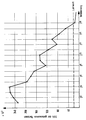
- the numerical values on the abscissa express the degree of dilution of the rabbit hyperimmune serum, while the blank value is a value that was determined in a special way.
- the average blank values X were determined from several blank values and the product of 2.58 xa was added to this, the factor ⁇ representing the standard deviation.
- the figure shows that the limit titer of rabbit serum is approximately 1: 32788.
- the same rabbit serum had a limit titer of 1: 512 in the solid phase radioimmunoassay.
Landscapes
- Life Sciences & Earth Sciences (AREA)
- Health & Medical Sciences (AREA)
- Engineering & Computer Science (AREA)
- Molecular Biology (AREA)
- Biomedical Technology (AREA)
- Chemical & Material Sciences (AREA)
- Hematology (AREA)
- Immunology (AREA)
- Urology & Nephrology (AREA)
- Cell Biology (AREA)
- Microbiology (AREA)
- Biotechnology (AREA)
- Food Science & Technology (AREA)
- Medicinal Chemistry (AREA)
- Physics & Mathematics (AREA)
- Analytical Chemistry (AREA)
- Biochemistry (AREA)
- General Health & Medical Sciences (AREA)
- General Physics & Mathematics (AREA)
- Pathology (AREA)
- Investigating Or Analysing Materials By The Use Of Chemical Reactions (AREA)
Claims (7)
Priority Applications (1)
| Application Number | Priority Date | Filing Date | Title |
|---|---|---|---|
| AT81110656T ATE9845T1 (de) | 1980-12-22 | 1981-12-21 | Verfahren zur bestimmung von antigenen, antikoerpern und deren komplexen. |
Applications Claiming Priority (8)
| Application Number | Priority Date | Filing Date | Title |
|---|---|---|---|
| DE3048477A DE3048477C2 (de) | 1980-12-22 | 1980-12-22 | Fixierwalze |
| DE3048477 | 1980-12-22 | ||
| DE3106444 | 1981-02-20 | ||
| DE3106444 | 1981-02-20 | ||
| DE3131615 | 1981-08-10 | ||
| DE3131615 | 1981-08-10 | ||
| DE3143423 | 1981-11-02 | ||
| DE19813143423 DE3143423C2 (de) | 1980-12-22 | 1981-11-02 | Verfahren zur Bestimmung von Antigenen, Antikörpern und deren Komplexen |
Publications (2)
| Publication Number | Publication Date |
|---|---|
| EP0054952A1 EP0054952A1 (fr) | 1982-06-30 |
| EP0054952B1 true EP0054952B1 (fr) | 1984-10-10 |
Family
ID=27432606
Family Applications (1)
| Application Number | Title | Priority Date | Filing Date |
|---|---|---|---|
| EP19810110656 Expired EP0054952B1 (fr) | 1980-12-22 | 1981-12-21 | Procédé pour la détermination d'antigènes, d'anticorps et de complexes immunologiques |
Country Status (2)
| Country | Link |
|---|---|
| EP (1) | EP0054952B1 (fr) |
| CA (1) | CA1170568A (fr) |
Families Citing this family (1)
| Publication number | Priority date | Publication date | Assignee | Title |
|---|---|---|---|---|
| DE3379179D1 (en) * | 1982-09-10 | 1989-03-16 | Welsh Nat School Med | Immunological procedure for quantifying substances |
Family Cites Families (2)
| Publication number | Priority date | Publication date | Assignee | Title |
|---|---|---|---|---|
| US4193983A (en) * | 1978-05-16 | 1980-03-18 | Syva Company | Labeled liposome particle compositions and immunoassays therewith |
| US4238195A (en) * | 1979-01-18 | 1980-12-09 | Miles Laboratories, Inc. | Fluorescer-labeled specific binding assays |
-
1981
- 1981-12-21 EP EP19810110656 patent/EP0054952B1/fr not_active Expired
- 1981-12-21 CA CA000392833A patent/CA1170568A/fr not_active Expired
Also Published As
| Publication number | Publication date |
|---|---|
| CA1170568A (fr) | 1984-07-10 |
| EP0054952A1 (fr) | 1982-06-30 |
Similar Documents
| Publication | Publication Date | Title |
|---|---|---|
| DE2849708C2 (fr) | ||
| DE3587793T2 (de) | Lumineszierende metallchelatmarker und mittel zu deren nachweis. | |
| DE3650513T2 (de) | Verzögerter immunologischer Test in fester Phase | |
| EP0023989B1 (fr) | Essai immunoenzymatique pour la détection d'anticorps spécifiques aux pathogènes et trousse de réactifs pour sa mise en oeuvre | |
| DE69121849T2 (de) | Bindung von Liganden an Gold | |
| DE68911674T2 (de) | Testverfahren und reagenzsatz dazu. | |
| DE2743444C3 (de) | Immunchemisches Meßverfahren und Reagens zu seiner Durchführung | |
| DE3877179T2 (de) | Homogene biospezifische bestimmungsmethode mit lanthanidchelaten-marker. | |
| DE3486052T2 (de) | Verfahren zur unabaenderlichen bindung von proteinen auf polystyren-oberflaechen mit aufrechterhaltung ihrer biologischen wirksamkeit, derart erhaltene polystyren-oberflaechen und ihre verwendung. | |
| DE68920140T2 (de) | Gerät und verfahren zur schnellen qualitativen und quantitativen bestimmung der anwesenheit eines reaktiven liganden in einer flüssigkeit. | |
| DE68910758T2 (de) | Bestimmung mit Affinitätssubstanzen und HPLC-Schritt. | |
| EP0046563B1 (fr) | Procédé pour la réalisation de déterminations analytiques par la méthode de luminescence chimique et application du procédé aux immuno-essais | |
| DE2751588B2 (de) | Verfahren zur Bestimmung eines Liganden oder der Liganden-Bindungskapazität in einem flüssigen Medium | |
| DE2952498A1 (de) | Spezifische bindungsuntersuchungsmethode zum nachweisen eines liganden in einem fluessigen medium und reagentien zur durchfuehrung der methode | |
| DE2913549A1 (de) | Chemisch induzierter fluoreszenz- immuntest und testreagens zu dessen durchfuehrung | |
| DE2705897B2 (de) | Verfahren zur radioimmunologischen Bestimmung von cyclischen! Adenosin-3', 5'-monophosphat und/oder cyclischen! Guanosin-3',5'-monophosphat | |
| DE2322562C2 (de) | Verfahren zur Bestimmung von Antigenen in einer Probe | |
| DE1598832A1 (de) | Auf der Beobachtung eines Agglutinationsvorganges beruhendes Verfahren zum Nachweis von Choriongonadotropin in Koerperfluessigkeiten | |
| DE2919835A1 (de) | Immuntest zur bestimmung eines analyten sowie reagens und testpackung zur durchfuehrung des tests | |
| DE69417039T2 (de) | Verfahren zur bestimmung einer immunologischen aktiven substanz mittels magnetischer latexteilchen und nichtmagnetischer teilchen | |
| DE69331570T2 (de) | Agglutinationstest unter Anwendung eines multivalenten Liganden | |
| DE1192367B (de) | Verfahren zur Herstellung eines immunologischen Reagens | |
| DE2557419A1 (de) | Reagens zum nachweis von analyt- koerpern | |
| WO1982002252A1 (fr) | Procede de determination d'antigenes, d'anticorps et de leurs complexes | |
| EP0716304A1 (fr) | Essais immunologiques pour des haptènes et des complexes d'haptènes-traceurs-d'anticorps pour être utilisé à cet égard et aussi méthode de leur production |
Legal Events
| Date | Code | Title | Description |
|---|---|---|---|
| PUAI | Public reference made under article 153(3) epc to a published international application that has entered the european phase |
Free format text: ORIGINAL CODE: 0009012 |
|
| AK | Designated contracting states |
Designated state(s): AT BE CH FR GB IT LI NL SE |
|
| 17P | Request for examination filed |
Effective date: 19820519 |
|
| RAP1 | Party data changed (applicant data changed or rights of an application transferred) |
Owner name: FRENZEL, BERND, DR. Owner name: SEROMED MEDIZINISCHE VERTRIEBS GMBH |
|
| ITF | It: translation for a ep patent filed | ||
| GRAA | (expected) grant |
Free format text: ORIGINAL CODE: 0009210 |
|
| PGFP | Annual fee paid to national office [announced via postgrant information from national office to epo] |
Ref country code: SE Payment date: 19840930 Year of fee payment: 4 |
|
| AK | Designated contracting states |
Designated state(s): AT BE CH FR GB IT LI NL SE |
|
| REF | Corresponds to: |
Ref document number: 9845 Country of ref document: AT Date of ref document: 19841015 Kind code of ref document: T |
|
| PGFP | Annual fee paid to national office [announced via postgrant information from national office to epo] |
Ref country code: BE Payment date: 19841231 Year of fee payment: 4 |
|
| ET | Fr: translation filed | ||
| PLBE | No opposition filed within time limit |
Free format text: ORIGINAL CODE: 0009261 |
|
| STAA | Information on the status of an ep patent application or granted ep patent |
Free format text: STATUS: NO OPPOSITION FILED WITHIN TIME LIMIT |
|
| 26N | No opposition filed | ||
| PGFP | Annual fee paid to national office [announced via postgrant information from national office to epo] |
Ref country code: NL Payment date: 19871231 Year of fee payment: 7 |
|
| PG25 | Lapsed in a contracting state [announced via postgrant information from national office to epo] |
Ref country code: GB Effective date: 19881221 |
|
| PG25 | Lapsed in a contracting state [announced via postgrant information from national office to epo] |
Ref country code: SE Effective date: 19881222 |
|
| PG25 | Lapsed in a contracting state [announced via postgrant information from national office to epo] |
Ref country code: BE Effective date: 19881231 |
|
| BERE | Be: lapsed |
Owner name: FRENZEL BERND Effective date: 19881231 Owner name: SEROMED MEDIZINISCHE VERTRIEBS G.M.B.H. Effective date: 19881231 |
|
| PG25 | Lapsed in a contracting state [announced via postgrant information from national office to epo] |
Ref country code: NL Effective date: 19890701 |
|
| NLV4 | Nl: lapsed or anulled due to non-payment of the annual fee | ||
| GBPC | Gb: european patent ceased through non-payment of renewal fee | ||
| PGFP | Annual fee paid to national office [announced via postgrant information from national office to epo] |
Ref country code: AT Payment date: 19901221 Year of fee payment: 10 |
|
| ITTA | It: last paid annual fee | ||
| PGFP | Annual fee paid to national office [announced via postgrant information from national office to epo] |
Ref country code: CH Payment date: 19910121 Year of fee payment: 10 |
|
| PGFP | Annual fee paid to national office [announced via postgrant information from national office to epo] |
Ref country code: FR Payment date: 19911211 Year of fee payment: 11 |
|
| PG25 | Lapsed in a contracting state [announced via postgrant information from national office to epo] |
Ref country code: AT Effective date: 19911221 |
|
| PG25 | Lapsed in a contracting state [announced via postgrant information from national office to epo] |
Ref country code: LI Effective date: 19911231 Ref country code: CH Effective date: 19911231 |
|
| REG | Reference to a national code |
Ref country code: CH Ref legal event code: PL |
|
| PG25 | Lapsed in a contracting state [announced via postgrant information from national office to epo] |
Ref country code: FR Effective date: 19930831 |
|
| REG | Reference to a national code |
Ref country code: FR Ref legal event code: ST |
|
| EUG | Se: european patent has lapsed |
Ref document number: 81110656.6 Effective date: 19891205 |