EP0055843A1 - Verfahren zur Zeitmessung von Wettläufen und Gerät zum Ausführen des Verfahrens - Google Patents
Verfahren zur Zeitmessung von Wettläufen und Gerät zum Ausführen des Verfahrens Download PDFInfo
- Publication number
- EP0055843A1 EP0055843A1 EP81110634A EP81110634A EP0055843A1 EP 0055843 A1 EP0055843 A1 EP 0055843A1 EP 81110634 A EP81110634 A EP 81110634A EP 81110634 A EP81110634 A EP 81110634A EP 0055843 A1 EP0055843 A1 EP 0055843A1
- Authority
- EP
- European Patent Office
- Prior art keywords
- camera
- race
- document
- events
- finish
- Prior art date
- Legal status (The legal status is an assumption and is not a legal conclusion. Google has not performed a legal analysis and makes no representation as to the accuracy of the status listed.)
- Granted
Links
- 238000000034 method Methods 0.000 title claims abstract description 17
- 230000035484 reaction time Effects 0.000 claims abstract description 10
- 239000007858 starting material Substances 0.000 claims description 9
- 230000000694 effects Effects 0.000 claims 1
- 230000000386 athletic effect Effects 0.000 abstract 1
- 238000005474 detonation Methods 0.000 description 4
- 230000033001 locomotion Effects 0.000 description 3
- 238000009527 percussion Methods 0.000 description 3
- 230000008901 benefit Effects 0.000 description 2
- 230000005540 biological transmission Effects 0.000 description 2
- 238000009434 installation Methods 0.000 description 2
- 230000001360 synchronised effect Effects 0.000 description 2
- 241000283086 Equidae Species 0.000 description 1
- 239000000470 constituent Substances 0.000 description 1
- 239000013078 crystal Substances 0.000 description 1
- 238000010586 diagram Methods 0.000 description 1
- 238000004880 explosion Methods 0.000 description 1
- 238000011905 homologation Methods 0.000 description 1
- 230000008447 perception Effects 0.000 description 1
- 230000002028 premature Effects 0.000 description 1
- 230000000284 resting effect Effects 0.000 description 1
- BWMISRWJRUSYEX-SZKNIZGXSA-N terbinafine hydrochloride Chemical compound Cl.C1=CC=C2C(CN(C\C=C\C#CC(C)(C)C)C)=CC=CC2=C1 BWMISRWJRUSYEX-SZKNIZGXSA-N 0.000 description 1
- 201000004647 tinea pedis Diseases 0.000 description 1
- 230000001960 triggered effect Effects 0.000 description 1
Images

Classifications
-
- G—PHYSICS
- G07—CHECKING-DEVICES
- G07C—TIME OR ATTENDANCE REGISTERS; REGISTERING OR INDICATING THE WORKING OF MACHINES; GENERATING RANDOM NUMBERS; VOTING OR LOTTERY APPARATUS; ARRANGEMENTS, SYSTEMS OR APPARATUS FOR CHECKING NOT PROVIDED FOR ELSEWHERE
- G07C1/00—Registering, indicating or recording the time of events or elapsed time, e.g. time-recorders for work people
- G07C1/22—Registering, indicating or recording the time of events or elapsed time, e.g. time-recorders for work people in connection with sports or games
- G07C1/24—Race time-recorders
-
- G—PHYSICS
- G04—HOROLOGY
- G04F—TIME-INTERVAL MEASURING
- G04F13/00—Apparatus for measuring unknown time intervals by means not provided for in groups G04F5/00 - G04F10/00
- G04F13/02—Apparatus for measuring unknown time intervals by means not provided for in groups G04F5/00 - G04F10/00 using optical means
Definitions
- the present invention relates to a method for timing races and a device for implementing this method comprising a camera for recording second events occurring at the finish of the race in line with a line of arrival.
- a device of this kind is known from the disclosure of invention CH 399 028 in which is described a timing device comprising a photographic camera, the film of which advances with a uniform movement and means making it possible not to to photograph only a narrow space or a line at a time and means allowing to project time indications on the film.
- a method for determining the times separating the passages of mobiles in line with a reference line substantially perpendicular to their trajectory is also known from the description of invention CH 590 518.
- the installation represented comprises a television camera constituted by a conventional camera, the two scans of which have been swapped so that the fastest scan takes place in a vertical direction, and the slower scan of which has been eliminated.
- FIG. 1 attached to this description will show the timing as it appears according to the techniques used until now and as it has been described for example in the review "Die Uhr" No 12,: 25 June 1972 (pages 14 to 18).
- the race lanes of which only one 1 has been shown in the drawing, each comprise a starting machine 2 represented here in the form of a starting block for a sprint race.
- This block includes a switch 3 which will be actuated by the athlete's foot at the time of departure as well as a loudspeaker 4 intended to transmit the orders given by the starter and the start signal.
- the starter transmits his race preparation orders by means of a microphone 5, the signal of which is amplified by the amplifier 6.
- the starter gives the start signal by pressing the trigger on the pistol 7.
- the detonation, captured by the microphone 5, is perceived by the runner in the loudspeaker 4.
- the pistol 7 has an incorporated contact 8 which closes in synchronism with the detonation produced by the percussion of the pistol cartridge 7. Closing of the contact 8 starts the counter of an apparatus 9 called central control of false starts.
- the difference between the start signal communicated to the center by line 10 and the actual departure of the runner arriving at said center by line 11 is recorded on a strip of paper 12. If there was premature departure, a false start signal 13 is emitted by the central 9 then amplified by the amplifier 6 to finally reach the headphones 14 worn by the starter who then has the leisure to cancel the start.
- Figure 1 also shows that at the end of the corridor 1 is the finish line 15 on which the shooting camera is turned 16.
- the line 17 which connects the contact 8 of the gun 7 to the camera 16 allows the start of the counter incorporated in said camera. Shortly before the finish of the race, the operator starts the film contained in the camera, which results, on the one hand, in recording the arrival times, on the other hand, the photograph of each runner crossing the finish line. The film 18 is then developed to serve as a witness to the results obtained by the competitors.
- the start time of the camera's electronic counter does not always correspond to the time when the athlete perceives the order to leave, even if he benefits from the sound transmission installation described in FIG. 1 and materialized by the microphone 5, the amplifier 6 and the speaker 4. Then, no document is available. provides proof that the camera counter has been set to zero and that it is engaged simultaneously with the start signal. Then again the system is based on the examination of two separate documents: the first (strip of paper 12) provides information on the events that take place at the start of the race (start signal, reaction time of the athletes), the second (photo 18) on events occurring at the finish line (photo, recorded timescale). Finally, it is not proven that, for an announced figure of the wind speed, this figure corresponds to. the race reflected in the photographic document.
- the proposed system is complicated and that it uses a mobile camera subject to frequent mechanical disturbances.
- the proposed system requires two documents to accurately judge the time and ranking of competitors. Contrary to what has just been said, it will be seen that the device described in the present invention uses only a single camera and a single document on which all the race data are present, thus eliminating any dispute or risk of error.
- the present invention proposes to remedy the drawbacks mentioned by implementing the means which appear in the claims.
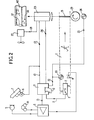
- the athlete sets up, feet resting on the starting block 2 in lane 1 and facing the finish line 15.
- I1 receives a preparation order from the starter via the microphone 5, the amplifier 6 and the loudspeaker 4. If we want to avoid the time of sound transmission between the pistol and the rider's ear which can extend up to six hundredths of a second, it is the same loudspeaker 4 which goes transmit to it the starting signal given mainly by the percussion of the cartridge being in the pistol 7.
- the triggering of the counter of the camera actuated by the switch 8 of the pistol 7 does not take place necessarily when the rider hears the detonation.
- each starting block with a light flash 20.
- This flash is activated by closing the contact 8 via line 10, the central unit 21 and line 22.
- the switch 8 via line 17 simultaneously activates the counter of the camera 23, there is no more difference between the start of the counter and the perception by the athlete of the starting signal so that the imprecision mentioned above was eliminated.
- the proposed system is perfectly reproducible since it is a single and same switch 8 which activates both the counter and the flash.
- the switch 3 linked to the starting block 2 is connected to the central unit 21 by the line 11. The same is true for all the other blocks not shown.
- this provision allows the starter to interrupt the race if there has been a false start.
- the invention proposes to record this difference on the document produced by the camera 23 and this via the line 26 which communicates to the said camera all the reaction times of the runners. It is clear that if printing on paper tape is deemed superfluous, it would be possible to abandon it.
- Figure 2 shows an anemometer 27 which measures the wind speed. The value of this speed is transmitted to the document produced by the camera by means of line 28.
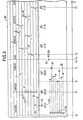
- Figure 3 is an example of what this single document might contain. Although not limited to this method, as will appear later, it will be assumed that the document is a photographic film driven in a camera with uniform motion. We will also refer to Figure 2 to explain the events that appear on the document.
- the film 40 comprises at 30 a time scale where the large vertical bars 31 represent the tenths of a second and the small vertical bars 32 represent the hundredths of a second. Below this scale appears in 33 the marking of the minutes and in 34 the marking of the seconds and tenths of a second.
- the means used to achieve the scale and the marking have been sufficiently explained in the description cited CH 399 028 so that it is not necessary to extend it here. It should be noted, however, that the gas tubes which were envisaged in this patent can advantageously be replaced by a more modern technique which uses light-emitting diodes (LEDs).
- LEDs light-emitting diodes
- the film also includes an identification inscription 35 which, according to a known method, consists in filming a text located on a drum rotating in the extension of the finish line.
- This tam bour is represented at 29 in FIG. 2. It makes it possible both to identify the stroke and to ensure dynamic control of the alignment of the film.
- the camera 23 is turned on. From this moment, the time scale 30 is written on the film with an arbitrary marking 33, 34, that is to say that corresponding to the content of the counter of the camera, for example 19 minutes 47 seconds and 2 tenths . From this moment also, one may want to check whether the departure control center 21 is ready for operation. If this is the case, said central unit 21 emits by line 26 a pulse per starting machine 2. These pulses each excite a light source which comes to impress the film by leaving a trace 36 of triangular shape there for example. The upper triangle corresponds to the first race lane and the lower triangle to the last race lane.
- this marking 36 could be worn on the first upper half opposite the race lanes 42 which are filmed by the camera as soon as it is switched on.
- the same remark applies to the starting marking 38 which will be explained below.
- the starter gives the start signal. From this moment the camera counter is set to zero and starts counting from this value. Also at this instant, the lightning given by the flash 24 impresses the film by leaving a vertical trace 37 there. It is recalled here that the trace 37 is synchronized exactly with all the individual starting light signals 20 or, if these n do not exist, is synchronized to within a few hundredths of a second with the starting signal corresponding to the detonation of the pistol cartridge 7. Trace 37 has another advantage: if for one reason or another (line 17 cut for example ) the camera counter was not set to zero at time ti, it would still be possible to determine the time of each runner by making the difference between the finish time and the start time entered opposite the light trace.
- the competitors each leave their starting block by actuating the switch 3 which, via line 11, the central unit 21 and line 26, sends a pulse by runner on camera 23.
- These pulses excite light sources which impress the film, leaving the triangular traces 38 which are offset in the direction of the height to allow the identification of the race lanes.
- the first runner starts at time t 2 , is in the fifth lane and his reaction time was 0.11 s.
- the last runner starts at time t 3 , is in the second lane and his reaction time was 0.25 s.
- the film can be stopped (time t 4 ).
- the camera is restarted.
- the counter which has not been stopped, re-writes the time elapsed since the start signal.
- the anemometer 27 sends via line 28 an indication relating to the wind speed which is marked on the film at location 39 by means of techniques similar to those used for marking time. It will be understood that this indication of the wind speed could also be made when the film is stationary, for example during the period between the times t 4 and t 5 .
- the invention is not limited to a photographic document with continuous scrolling. It also applies to any document obtained by other processes, the essential being in obtaining a single document containing all the data necessary to assess the progress of a race from its start to its arrival. Thus the use of a frame-by-frame film could just as well be suitable. Methods of recording by television camera and video recorder with a single vertical scan or with a conventional line / frame scan would be conceivable by analogy.
- the invention is not limited either to the practical embodiment which has been given here in the description and in the drawing. It will be understood, for example, that the marking of the starting reaction times (t 2 , t 3 ) could consist of points or vertical lines in place of the triangles described. Similarly, the light flashes 20 and 24 for rait be actuated by the opening of the contact 8 instead of they are by the closing of said contact as has been explained above. Finally, it is obvious that the flash 24 could be, relative to the camera 23, below the finish line 15 rather than beyond it as shown in FIG. 2.
Landscapes
- Physics & Mathematics (AREA)
- General Physics & Mathematics (AREA)
- Camera Data Copying Or Recording (AREA)
- Studio Devices (AREA)
Applications Claiming Priority (2)
| Application Number | Priority Date | Filing Date | Title |
|---|---|---|---|
| FR8027958A FR2497369B1 (fr) | 1980-12-31 | 1980-12-31 | Procede pour chronometrage de courses et dispositif pour la mise en oeuvre de ce procede |
| FR8027958 | 1980-12-31 |
Publications (2)
| Publication Number | Publication Date |
|---|---|
| EP0055843A1 true EP0055843A1 (de) | 1982-07-14 |
| EP0055843B1 EP0055843B1 (de) | 1986-07-02 |
Family
ID=9249739
Family Applications (1)
| Application Number | Title | Priority Date | Filing Date |
|---|---|---|---|
| EP81110634A Expired EP0055843B1 (de) | 1980-12-31 | 1981-12-21 | Verfahren zur Zeitmessung von Wettläufen und Gerät zum Ausführen des Verfahrens |
Country Status (4)
| Country | Link |
|---|---|
| US (1) | US4523204A (de) |
| EP (1) | EP0055843B1 (de) |
| DE (1) | DE3174905D1 (de) |
| FR (1) | FR2497369B1 (de) |
Cited By (1)
| Publication number | Priority date | Publication date | Assignee | Title |
|---|---|---|---|---|
| EP0549436A1 (de) * | 1991-12-24 | 1993-06-30 | Plusmic | Kamera für sich bewegende Gegenstände |
Families Citing this family (20)
| Publication number | Priority date | Publication date | Assignee | Title |
|---|---|---|---|---|
| EP0207675B1 (de) * | 1985-06-19 | 1990-05-02 | Yamaguchi Cinema Corporation | Aufnahme- und Wiedergabegerät für Videosignale |
| US4752764A (en) * | 1986-12-29 | 1988-06-21 | Eastman Kodak Company | Electronic timing and recording apparatus |
| DE3716987C1 (de) * | 1987-05-21 | 1988-04-28 | Augustin Imhof | Verfahren und Vorrichtung zur Bestimmung der Zeit zwischen Start und Ziel von Wettkaempfern od.dgl. |
| FR2648594B1 (fr) * | 1989-06-15 | 1993-03-05 | Omega Electronics Sa | Appareil pour le chronometrage de courses |
| US5513103A (en) * | 1991-01-10 | 1996-04-30 | Charlson; Cary | Method of acquiring and disseminating handicapping information |
| US5367286A (en) * | 1991-04-02 | 1994-11-22 | Swiss Timing Ltd. | System for instantaneously displaying the ranking of a competitor in a race with sequential starts |
| JP3237124B2 (ja) * | 1991-04-19 | 2001-12-10 | ソニー株式会社 | 映像信号処理装置 |
| US5467652A (en) * | 1994-01-03 | 1995-11-21 | Richards; Katy S. | Apparatus and method for determining response parameters of a runner to a start signal |
| JP2819016B2 (ja) * | 1995-08-30 | 1998-10-30 | セイコーインスツルメンツ株式会社 | 着順判定装置 |
| EP0805595B1 (de) * | 1996-04-30 | 2002-03-20 | Plusmic Corporation | Bewegtbild-Beurteilungsgerät |
| US6072751A (en) * | 1997-02-28 | 2000-06-06 | Kirson; Allan M. | Athletic training device and method |
| ATE239277T1 (de) * | 1997-08-22 | 2003-05-15 | Omega Electronics Sa | System mit einem photosensor, insbesonder zur zeitmessung bei wettkämpfen, und einstellverfahren zum ausrichten eines solchen systems auf eine ziellinie |
| US5831940A (en) * | 1997-08-27 | 1998-11-03 | Gillette; Warren | Solo electronic starter and timer system |
| US6433817B1 (en) * | 2000-03-02 | 2002-08-13 | Gavin Guerra | Apparatus and method for determining the winner of a race |
| US7901292B1 (en) * | 2004-04-15 | 2011-03-08 | Navteq North America, Llc | Method for comparing performances on remotely located courses |
| US20060146132A1 (en) * | 2005-01-05 | 2006-07-06 | Hy Mayerson | Video system having multiple video cameras for capturing events |
| US20170230622A9 (en) * | 2010-12-31 | 2017-08-10 | Flashtiming LLC | Systems and methods for timing athletic events |
| US8675452B2 (en) * | 2010-12-31 | 2014-03-18 | Flashtiming LLC | Systems and methods for timing athletic events |
| US20140221159A1 (en) * | 2012-12-21 | 2014-08-07 | Wendell Lawrence | Force feedback starting blocks |
| US10154650B2 (en) * | 2015-03-02 | 2018-12-18 | Dueling Dogs LLC | Aquatic race assembly for canines |
Citations (5)
| Publication number | Priority date | Publication date | Assignee | Title |
|---|---|---|---|---|
| US2590389A (en) * | 1946-08-23 | 1952-03-25 | Douglas J Doyle | Time recording apparatus for race tracks |
| CH399028A (fr) * | 1963-03-06 | 1965-04-15 | Omega Brandt & Freres Sa Louis | Appareil pour chronométrage |
| US3502009A (en) * | 1967-12-22 | 1970-03-24 | Fred J Connors | Race timer system |
| US3678189A (en) * | 1969-12-11 | 1972-07-18 | Robert A Oswald | Method of producing time-position records of objects |
| DE2535539A1 (de) * | 1974-08-09 | 1976-02-19 | Longines Montres Comp D | Verfahren zur bestimmung der zeitunterschiede, mit denen bewegliche gegenstaende ueber eine genau senkrecht zur bewegungsrichtung ausgerichtete bezugslinie kommen, sowie vorrichtung zur durchfuehrung des verfahrens |
Family Cites Families (4)
| Publication number | Priority date | Publication date | Assignee | Title |
|---|---|---|---|---|
| GB410630A (en) * | 1932-07-01 | 1934-05-24 | Electrical Res Prod Inc | Improvements in or relating to apparatus for timing races or other events |
| US2641523A (en) * | 1947-08-11 | 1953-06-09 | Beckman & Whitley Inc | Photographic time recording |
| US2819942A (en) * | 1953-12-21 | 1958-01-14 | Crowley Jones Camera Corp | Photofinish camera and direct reading photographing timer |
| JPS5570778A (en) * | 1978-11-22 | 1980-05-28 | Ricoh Co Ltd | Camera taking picture of stop watch |
-
1980
- 1980-12-31 FR FR8027958A patent/FR2497369B1/fr not_active Expired
-
1981
- 1981-12-21 DE DE8181110634T patent/DE3174905D1/de not_active Expired
- 1981-12-21 EP EP81110634A patent/EP0055843B1/de not_active Expired
-
1984
- 1984-04-09 US US06/597,566 patent/US4523204A/en not_active Expired - Fee Related
Patent Citations (5)
| Publication number | Priority date | Publication date | Assignee | Title |
|---|---|---|---|---|
| US2590389A (en) * | 1946-08-23 | 1952-03-25 | Douglas J Doyle | Time recording apparatus for race tracks |
| CH399028A (fr) * | 1963-03-06 | 1965-04-15 | Omega Brandt & Freres Sa Louis | Appareil pour chronométrage |
| US3502009A (en) * | 1967-12-22 | 1970-03-24 | Fred J Connors | Race timer system |
| US3678189A (en) * | 1969-12-11 | 1972-07-18 | Robert A Oswald | Method of producing time-position records of objects |
| DE2535539A1 (de) * | 1974-08-09 | 1976-02-19 | Longines Montres Comp D | Verfahren zur bestimmung der zeitunterschiede, mit denen bewegliche gegenstaende ueber eine genau senkrecht zur bewegungsrichtung ausgerichtete bezugslinie kommen, sowie vorrichtung zur durchfuehrung des verfahrens |
Non-Patent Citations (1)
| Title |
|---|
| Technische Rundschau, Volume 57, No. 23, 28 Mai 1965 J. ECUYER "Zeit und Rangbestimmung bei Wettkampfen", pages 49-57 * en entier * * |
Cited By (2)
| Publication number | Priority date | Publication date | Assignee | Title |
|---|---|---|---|---|
| EP0549436A1 (de) * | 1991-12-24 | 1993-06-30 | Plusmic | Kamera für sich bewegende Gegenstände |
| US5630186A (en) * | 1991-12-24 | 1997-05-13 | Plusmic | Moving body camera |
Also Published As
| Publication number | Publication date |
|---|---|
| US4523204A (en) | 1985-06-11 |
| DE3174905D1 (en) | 1986-08-07 |
| FR2497369A1 (fr) | 1982-07-02 |
| FR2497369B1 (fr) | 1985-06-07 |
| EP0055843B1 (de) | 1986-07-02 |
Similar Documents
| Publication | Publication Date | Title |
|---|---|---|
| EP0055843B1 (de) | Verfahren zur Zeitmessung von Wettläufen und Gerät zum Ausführen des Verfahrens | |
| EP1374187B1 (de) | Vorrichtung zum speichern einer visuellen sequenz nach der aussendung eines alarmsignales an bord eines fahrzeuges | |
| EP0402749B1 (de) | Zeitnahmevorrichtung für Rennen | |
| BE886249R (fr) | Dispositif de memorisation de la position instantanee d'une bande magnetique contenue dans une cassette | |
| CH619060A5 (de) | ||
| FR2673737A1 (fr) | Procede de conversion d'un enregistrement magnetique d'un ticket de route a peage. | |
| CN102025905A (zh) | 摄影装置及摄影装置的控制方法 | |
| FR2648656A1 (fr) | Systeme d'enregistrement et de reproduction dans un appareil video a image fixe | |
| FR2520914A1 (fr) | Systeme de disque d'enregistrement sonore numerique | |
| FR2600196A1 (fr) | Appareil d'enregistrement et de reproduction d'un signal de commande | |
| FR2633132A1 (fr) | Procede et dispositif pour eliminer les seances publicitaires d'une emission de television | |
| EP2172000B1 (de) | Verfahren zum erzeugen einer klangserie von fotografien und vorrichtungen zum erzeugen und wiedergeben solcher klangserien | |
| FR2619449A1 (fr) | Procede de prise d'images d'un objet se deplacant rapidement au moyen d'une technique video | |
| FR2488026A1 (fr) | Appareil servant a reproduire un support d'enregistrement rotatif | |
| FR2470504A1 (fr) | Procede et systeme de changement de pistes video | |
| FR2615296A1 (fr) | Procede et appareil de transfert en synchronisme, sur un support d'enregistrement commun, des images d'un film cinematographique et du son enregistre | |
| EP0002412B1 (de) | Verfahren und Vorrichtung für die Synchronisierung der Wiedergabe von akustischer und visueller Information | |
| EP0473677A1 (de) | Vorrichtung zur Kinofilm-Tonwiedergabe in HiFi-Qualität. | |
| FR2680579A1 (fr) | Procede et dispositif de mesure de la distance d'un objet en vol. | |
| FR2472813A1 (fr) | Dispositif de discrimination ou detection des types de bobines a bande de cassettes video et analogue | |
| FR2661582A1 (fr) | Appareil photo electronique a image fixe et disque magnetique. | |
| FR2480546A1 (fr) | Appareil photographique pour images televisees | |
| FR1449714A (fr) | Procédés et appareils d'enseignement | |
| EP0002870A1 (de) | Chronometrische Einrichtung mit Fernsehaufnahmegerät | |
| BE886149A (fr) | Procede de chauffage avec reduction de la pression d'air et dispositif pour sa mise en oeuvre |
Legal Events
| Date | Code | Title | Description |
|---|---|---|---|
| PUAI | Public reference made under article 153(3) epc to a published international application that has entered the european phase |
Free format text: ORIGINAL CODE: 0009012 |
|
| AK | Designated contracting states |
Designated state(s): CH DE GB SE |
|
| 17P | Request for examination filed |
Effective date: 19830114 |
|
| RAP1 | Party data changed (applicant data changed or rights of an application transferred) |
Owner name: OMEGA ELECTRONICS S.A. |
|
| GRAA | (expected) grant |
Free format text: ORIGINAL CODE: 0009210 |
|
| AK | Designated contracting states |
Kind code of ref document: B1 Designated state(s): CH DE GB LI SE |
|
| REF | Corresponds to: |
Ref document number: 3174905 Country of ref document: DE Date of ref document: 19860807 |
|
| PLBE | No opposition filed within time limit |
Free format text: ORIGINAL CODE: 0009261 |
|
| STAA | Information on the status of an ep patent application or granted ep patent |
Free format text: STATUS: NO OPPOSITION FILED WITHIN TIME LIMIT |
|
| 26N | No opposition filed | ||
| EAL | Se: european patent in force in sweden |
Ref document number: 81110634.3 |
|
| PGFP | Annual fee paid to national office [announced via postgrant information from national office to epo] |
Ref country code: SE Payment date: 20001127 Year of fee payment: 20 |
|
| PGFP | Annual fee paid to national office [announced via postgrant information from national office to epo] |
Ref country code: CH Payment date: 20001128 Year of fee payment: 20 |
|
| PGFP | Annual fee paid to national office [announced via postgrant information from national office to epo] |
Ref country code: GB Payment date: 20001129 Year of fee payment: 20 |
|
| PGFP | Annual fee paid to national office [announced via postgrant information from national office to epo] |
Ref country code: DE Payment date: 20001206 Year of fee payment: 20 |
|
| PG25 | Lapsed in a contracting state [announced via postgrant information from national office to epo] |
Ref country code: LI Free format text: LAPSE BECAUSE OF EXPIRATION OF PROTECTION Effective date: 20011220 Ref country code: GB Free format text: LAPSE BECAUSE OF EXPIRATION OF PROTECTION Effective date: 20011220 Ref country code: CH Free format text: LAPSE BECAUSE OF EXPIRATION OF PROTECTION Effective date: 20011220 |
|
| REG | Reference to a national code |
Ref country code: GB Ref legal event code: PE20 Effective date: 20011220 |
|
| REG | Reference to a national code |
Ref country code: CH Ref legal event code: PL |
|
| EUG | Se: european patent has lapsed |
Ref document number: 81110634.3 |