EP0055858A2 - Photographische Produkte, photographisches Diffusionstransferverfahren und dafür verwendete Verbindungen - Google Patents
Photographische Produkte, photographisches Diffusionstransferverfahren und dafür verwendete Verbindungen Download PDFInfo
- Publication number
- EP0055858A2 EP0055858A2 EP81110833A EP81110833A EP0055858A2 EP 0055858 A2 EP0055858 A2 EP 0055858A2 EP 81110833 A EP81110833 A EP 81110833A EP 81110833 A EP81110833 A EP 81110833A EP 0055858 A2 EP0055858 A2 EP 0055858A2
- Authority
- EP
- European Patent Office
- Prior art keywords
- compound
- processing composition
- image
- aqueous alkaline
- layer
- Prior art date
- Legal status (The legal status is an assumption and is not a legal conclusion. Google has not performed a legal analysis and makes no representation as to the accuracy of the status listed.)
- Granted
Links
- 150000001875 compounds Chemical class 0.000 title claims abstract description 100
- 238000012546 transfer Methods 0.000 title claims abstract description 40
- 238000009792 diffusion process Methods 0.000 title claims abstract description 37
- 238000000034 method Methods 0.000 title claims description 34
- 230000008569 process Effects 0.000 title claims description 26
- 238000012545 processing Methods 0.000 claims abstract description 83
- 239000000203 mixture Substances 0.000 claims abstract description 77
- 238000011161 development Methods 0.000 claims abstract description 55
- 150000001450 anions Chemical class 0.000 claims abstract description 12
- GGCZERPQGJTIQP-UHFFFAOYSA-N sodium;9,10-dioxoanthracene-2-sulfonic acid Chemical compound [Na+].C1=CC=C2C(=O)C3=CC(S(=O)(=O)O)=CC=C3C(=O)C2=C1 GGCZERPQGJTIQP-UHFFFAOYSA-N 0.000 claims abstract description 10
- 238000003776 cleavage reaction Methods 0.000 claims abstract description 9
- 239000002243 precursor Substances 0.000 claims abstract description 9
- 230000007017 scission Effects 0.000 claims abstract description 8
- LSDPWZHWYPCBBB-UHFFFAOYSA-N Methanethiol Chemical compound SC LSDPWZHWYPCBBB-UHFFFAOYSA-N 0.000 claims abstract description 6
- 125000002373 5 membered heterocyclic group Chemical group 0.000 claims abstract description 5
- 125000004070 6 membered heterocyclic group Chemical group 0.000 claims abstract description 5
- 229910052783 alkali metal Inorganic materials 0.000 claims abstract description 5
- 150000001340 alkali metals Chemical class 0.000 claims abstract description 5
- 229910052709 silver Inorganic materials 0.000 claims description 78
- 239000004332 silver Substances 0.000 claims description 78
- 239000000839 emulsion Substances 0.000 claims description 61
- -1 silver halide Chemical class 0.000 claims description 60
- 239000000463 material Substances 0.000 claims description 26
- 125000001997 phenyl group Chemical group [H]C1=C([H])C([H])=C(*)C([H])=C1[H] 0.000 claims description 16
- 125000000217 alkyl group Chemical group 0.000 claims description 13
- AZQWKYJCGOJGHM-UHFFFAOYSA-N 1,4-benzoquinone Chemical compound O=C1C=CC(=O)C=C1 AZQWKYJCGOJGHM-UHFFFAOYSA-N 0.000 claims description 10
- 125000003118 aryl group Chemical group 0.000 claims description 7
- GWEVSGVZZGPLCZ-UHFFFAOYSA-N Titan oxide Chemical group O=[Ti]=O GWEVSGVZZGPLCZ-UHFFFAOYSA-N 0.000 claims description 6
- 125000004429 atom Chemical group 0.000 claims description 6
- 125000004432 carbon atom Chemical group C* 0.000 claims description 5
- 230000008030 elimination Effects 0.000 claims description 4
- 238000003379 elimination reaction Methods 0.000 claims description 4
- 230000007062 hydrolysis Effects 0.000 claims description 4
- 238000006460 hydrolysis reaction Methods 0.000 claims description 4
- LGRLWUINFJPLSH-UHFFFAOYSA-N methanide Chemical compound [CH3-] LGRLWUINFJPLSH-UHFFFAOYSA-N 0.000 claims description 4
- 125000003107 substituted aryl group Chemical group 0.000 claims description 4
- 125000003710 aryl alkyl group Chemical group 0.000 claims description 3
- 230000000694 effects Effects 0.000 claims description 3
- 239000004408 titanium dioxide Substances 0.000 claims description 3
- 229910006074 SO2NH2 Inorganic materials 0.000 claims 2
- 239000000049 pigment Substances 0.000 claims 2
- 238000007068 beta-elimination reaction Methods 0.000 claims 1
- 125000003831 tetrazolyl group Chemical group 0.000 claims 1
- 239000010410 layer Substances 0.000 description 115
- 239000000975 dye Substances 0.000 description 66
- 108010010803 Gelatin Proteins 0.000 description 53
- 229920000159 gelatin Polymers 0.000 description 53
- 239000008273 gelatin Substances 0.000 description 53
- 235000019322 gelatine Nutrition 0.000 description 53
- 235000011852 gelatine desserts Nutrition 0.000 description 53
- BQCADISMDOOEFD-UHFFFAOYSA-N Silver Chemical compound [Ag] BQCADISMDOOEFD-UHFFFAOYSA-N 0.000 description 35
- VLKZOEOYAKHREP-UHFFFAOYSA-N n-Hexane Chemical compound CCCCCC VLKZOEOYAKHREP-UHFFFAOYSA-N 0.000 description 27
- ZUNKMNLKJXRCDM-UHFFFAOYSA-N silver bromoiodide Chemical compound [Ag].IBr ZUNKMNLKJXRCDM-UHFFFAOYSA-N 0.000 description 20
- DRSHXJFUUPIBHX-UHFFFAOYSA-N COc1ccc(cc1)N1N=CC2C=NC(Nc3cc(OC)c(OC)c(OCCCN4CCN(C)CC4)c3)=NC12 Chemical compound COc1ccc(cc1)N1N=CC2C=NC(Nc3cc(OC)c(OC)c(OCCCN4CCN(C)CC4)c3)=NC12 DRSHXJFUUPIBHX-UHFFFAOYSA-N 0.000 description 19
- GGZHVNZHFYCSEV-UHFFFAOYSA-N 1-Phenyl-5-mercaptotetrazole Chemical compound SC1=NN=NN1C1=CC=CC=C1 GGZHVNZHFYCSEV-UHFFFAOYSA-N 0.000 description 18
- XEKOWRVHYACXOJ-UHFFFAOYSA-N Ethyl acetate Chemical compound CCOC(C)=O XEKOWRVHYACXOJ-UHFFFAOYSA-N 0.000 description 18
- 239000000047 product Substances 0.000 description 18
- 230000006870 function Effects 0.000 description 15
- 239000000243 solution Substances 0.000 description 15
- 239000002904 solvent Substances 0.000 description 15
- 239000011229 interlayer Substances 0.000 description 14
- 229920002401 polyacrylamide Polymers 0.000 description 14
- 239000002585 base Substances 0.000 description 13
- AJDUTMFFZHIJEM-UHFFFAOYSA-N n-(9,10-dioxoanthracen-1-yl)-4-[4-[[4-[4-[(9,10-dioxoanthracen-1-yl)carbamoyl]phenyl]phenyl]diazenyl]phenyl]benzamide Chemical compound O=C1C2=CC=CC=C2C(=O)C2=C1C=CC=C2NC(=O)C(C=C1)=CC=C1C(C=C1)=CC=C1N=NC(C=C1)=CC=C1C(C=C1)=CC=C1C(=O)NC1=CC=CC2=C1C(=O)C1=CC=CC=C1C2=O AJDUTMFFZHIJEM-UHFFFAOYSA-N 0.000 description 13
- 239000001043 yellow dye Substances 0.000 description 13
- DWYHDSLIWMUSOO-UHFFFAOYSA-N 2-phenyl-1h-benzimidazole Chemical compound C1=CC=CC=C1C1=NC2=CC=CC=C2N1 DWYHDSLIWMUSOO-UHFFFAOYSA-N 0.000 description 12
- KFDVPJUYSDEJTH-UHFFFAOYSA-N 4-ethenylpyridine Chemical compound C=CC1=CC=NC=C1 KFDVPJUYSDEJTH-UHFFFAOYSA-N 0.000 description 12
- WEVYAHXRMPXWCK-UHFFFAOYSA-N Acetonitrile Chemical compound CC#N WEVYAHXRMPXWCK-UHFFFAOYSA-N 0.000 description 12
- IJGRMHOSHXDMSA-UHFFFAOYSA-N Atomic nitrogen Chemical compound N#N IJGRMHOSHXDMSA-UHFFFAOYSA-N 0.000 description 12
- OKKJLVBELUTLKV-UHFFFAOYSA-N Methanol Chemical compound OC OKKJLVBELUTLKV-UHFFFAOYSA-N 0.000 description 12
- UIIMBOGNXHQVGW-UHFFFAOYSA-M Sodium bicarbonate Chemical compound [Na+].OC([O-])=O UIIMBOGNXHQVGW-UHFFFAOYSA-M 0.000 description 12
- 230000000903 blocking effect Effects 0.000 description 12
- 239000000837 restrainer Substances 0.000 description 12
- 125000001424 substituent group Chemical group 0.000 description 11
- 239000004372 Polyvinyl alcohol Substances 0.000 description 10
- 229910052757 nitrogen Inorganic materials 0.000 description 10
- 229920002451 polyvinyl alcohol Polymers 0.000 description 10
- 235000019422 polyvinyl alcohol Nutrition 0.000 description 10
- 238000002360 preparation method Methods 0.000 description 10
- 239000004354 Hydroxyethyl cellulose Substances 0.000 description 9
- 229920000663 Hydroxyethyl cellulose Polymers 0.000 description 9
- VYPSYNLAJGMNEJ-UHFFFAOYSA-N Silicium dioxide Chemical compound O=[Si]=O VYPSYNLAJGMNEJ-UHFFFAOYSA-N 0.000 description 9
- 235000019447 hydroxyethyl cellulose Nutrition 0.000 description 9
- 239000007787 solid Substances 0.000 description 9
- XLYOFNOQVPJJNP-UHFFFAOYSA-N water Substances O XLYOFNOQVPJJNP-UHFFFAOYSA-N 0.000 description 9
- SFTLCQGBKKNCHU-UHFFFAOYSA-N 2-phenylsulfanyl-1h-pyrrole Chemical class C=1C=CC=CC=1SC1=CC=CN1 SFTLCQGBKKNCHU-UHFFFAOYSA-N 0.000 description 8
- RTZKZFJDLAIYFH-UHFFFAOYSA-N Diethyl ether Chemical compound CCOCC RTZKZFJDLAIYFH-UHFFFAOYSA-N 0.000 description 8
- PPBRXRYQALVLMV-UHFFFAOYSA-N Styrene Chemical compound C=CC1=CC=CC=C1 PPBRXRYQALVLMV-UHFFFAOYSA-N 0.000 description 8
- 239000000706 filtrate Substances 0.000 description 8
- 238000001914 filtration Methods 0.000 description 8
- 239000005020 polyethylene terephthalate Substances 0.000 description 8
- CARFETJZUQORNQ-UHFFFAOYSA-N 1h-pyrrole-2-thiol Chemical class SC1=CC=CN1 CARFETJZUQORNQ-UHFFFAOYSA-N 0.000 description 7
- 239000003086 colorant Substances 0.000 description 7
- 239000013078 crystal Substances 0.000 description 7
- 229920000139 polyethylene terephthalate Polymers 0.000 description 7
- 229910052799 carbon Inorganic materials 0.000 description 6
- NROKBHXJSPEDAR-UHFFFAOYSA-M potassium fluoride Chemical compound [F-].[K+] NROKBHXJSPEDAR-UHFFFAOYSA-M 0.000 description 6
- 239000011541 reaction mixture Substances 0.000 description 6
- 230000002829 reductive effect Effects 0.000 description 6
- OKTJSMMVPCPJKN-UHFFFAOYSA-N Carbon Chemical compound [C] OKTJSMMVPCPJKN-UHFFFAOYSA-N 0.000 description 5
- 239000002253 acid Substances 0.000 description 5
- 239000003054 catalyst Substances 0.000 description 5
- 238000006243 chemical reaction Methods 0.000 description 5
- 230000001419 dependent effect Effects 0.000 description 5
- 150000002391 heterocyclic compounds Chemical class 0.000 description 5
- OMNKZBIFPJNNIO-UHFFFAOYSA-N n-(2-methyl-4-oxopentan-2-yl)prop-2-enamide Chemical compound CC(=O)CC(C)(C)NC(=O)C=C OMNKZBIFPJNNIO-UHFFFAOYSA-N 0.000 description 5
- 230000007935 neutral effect Effects 0.000 description 5
- XCZKKZXWDBOGPA-UHFFFAOYSA-N phenyl-hydroquinone Natural products OC1=CC=C(O)C(C=2C=CC=CC=2)=C1 XCZKKZXWDBOGPA-UHFFFAOYSA-N 0.000 description 5
- 229910000030 sodium bicarbonate Inorganic materials 0.000 description 5
- 235000017557 sodium bicarbonate Nutrition 0.000 description 5
- 229920006029 tetra-polymer Polymers 0.000 description 5
- CSCPPACGZOOCGX-UHFFFAOYSA-N Acetone Chemical compound CC(C)=O CSCPPACGZOOCGX-UHFFFAOYSA-N 0.000 description 4
- DGAQECJNVWCQMB-PUAWFVPOSA-M Ilexoside XXIX Chemical compound C[C@@H]1CC[C@@]2(CC[C@@]3(C(=CC[C@H]4[C@]3(CC[C@@H]5[C@@]4(CC[C@@H](C5(C)C)OS(=O)(=O)[O-])C)C)[C@@H]2[C@]1(C)O)C)C(=O)O[C@H]6[C@@H]([C@H]([C@@H]([C@H](O6)CO)O)O)O.[Na+] DGAQECJNVWCQMB-PUAWFVPOSA-M 0.000 description 4
- 239000005909 Kieselgur Substances 0.000 description 4
- CERQOIWHTDAKMF-UHFFFAOYSA-N Methacrylic acid Chemical compound CC(=C)C(O)=O CERQOIWHTDAKMF-UHFFFAOYSA-N 0.000 description 4
- PCSMJKASWLYICJ-UHFFFAOYSA-N Succinic aldehyde Chemical compound O=CCCC=O PCSMJKASWLYICJ-UHFFFAOYSA-N 0.000 description 4
- QAOWNCQODCNURD-UHFFFAOYSA-L Sulfate Chemical compound [O-]S([O-])(=O)=O QAOWNCQODCNURD-UHFFFAOYSA-L 0.000 description 4
- WYURNTSHIVDZCO-UHFFFAOYSA-N Tetrahydrofuran Chemical compound C1CCOC1 WYURNTSHIVDZCO-UHFFFAOYSA-N 0.000 description 4
- 239000011358 absorbing material Substances 0.000 description 4
- FUSUHKVFWTUUBE-UHFFFAOYSA-N buten-2-one Chemical compound CC(=O)C=C FUSUHKVFWTUUBE-UHFFFAOYSA-N 0.000 description 4
- CQEYYJKEWSMYFG-UHFFFAOYSA-N butyl acrylate Chemical compound CCCCOC(=O)C=C CQEYYJKEWSMYFG-UHFFFAOYSA-N 0.000 description 4
- 239000006229 carbon black Substances 0.000 description 4
- 229920002678 cellulose Polymers 0.000 description 4
- 239000001913 cellulose Substances 0.000 description 4
- 230000008859 change Effects 0.000 description 4
- 239000003795 chemical substances by application Substances 0.000 description 4
- 238000005859 coupling reaction Methods 0.000 description 4
- 238000001035 drying Methods 0.000 description 4
- 238000002474 experimental method Methods 0.000 description 4
- 229920000578 graft copolymer Polymers 0.000 description 4
- 125000000623 heterocyclic group Chemical group 0.000 description 4
- 230000003647 oxidation Effects 0.000 description 4
- 238000007254 oxidation reaction Methods 0.000 description 4
- 238000002390 rotary evaporation Methods 0.000 description 4
- 229910052708 sodium Inorganic materials 0.000 description 4
- 239000011734 sodium Substances 0.000 description 4
- 238000004809 thin layer chromatography Methods 0.000 description 4
- OBTZDIRUQWFRFZ-UHFFFAOYSA-N 2-(5-methylfuran-2-yl)-n-(4-methylphenyl)quinoline-4-carboxamide Chemical compound O1C(C)=CC=C1C1=CC(C(=O)NC=2C=CC(C)=CC=2)=C(C=CC=C2)C2=N1 OBTZDIRUQWFRFZ-UHFFFAOYSA-N 0.000 description 3
- 239000004698 Polyethylene Substances 0.000 description 3
- XFOZBWSTIQRFQW-UHFFFAOYSA-M benzyl-dimethyl-prop-2-enylazanium;chloride Chemical compound [Cl-].C=CC[N+](C)(C)CC1=CC=CC=C1 XFOZBWSTIQRFQW-UHFFFAOYSA-M 0.000 description 3
- 239000003153 chemical reaction reagent Substances 0.000 description 3
- 229920001577 copolymer Polymers 0.000 description 3
- 230000008878 coupling Effects 0.000 description 3
- 238000010168 coupling process Methods 0.000 description 3
- RAXXELZNTBOGNW-UHFFFAOYSA-N imidazole Natural products C1=CNC=N1 RAXXELZNTBOGNW-UHFFFAOYSA-N 0.000 description 3
- 230000006872 improvement Effects 0.000 description 3
- 238000000655 nuclear magnetic resonance spectrum Methods 0.000 description 3
- 229920002037 poly(vinyl butyral) polymer Polymers 0.000 description 3
- 229920000573 polyethylene Polymers 0.000 description 3
- 235000003270 potassium fluoride Nutrition 0.000 description 3
- 239000011698 potassium fluoride Substances 0.000 description 3
- 125000002914 sec-butyl group Chemical group [H]C([H])([H])C([H])([H])C([H])(*)C([H])([H])[H] 0.000 description 3
- 229910052717 sulfur Inorganic materials 0.000 description 3
- 238000012360 testing method Methods 0.000 description 3
- 150000003536 tetrazoles Chemical class 0.000 description 3
- 238000002211 ultraviolet spectrum Methods 0.000 description 3
- FMCAFXHLMUOIGG-JTJHWIPRSA-N (2s)-2-[[(2r)-2-[[(2s)-2-[[(2r)-2-formamido-3-sulfanylpropanoyl]amino]-3-methylbutanoyl]amino]-3-(4-hydroxy-2,5-dimethylphenyl)propanoyl]amino]-4-methylsulfanylbutanoic acid Chemical compound O=CN[C@@H](CS)C(=O)N[C@@H](C(C)C)C(=O)N[C@@H](C(=O)N[C@@H](CCSC)C(O)=O)CC1=CC(C)=C(O)C=C1C FMCAFXHLMUOIGG-JTJHWIPRSA-N 0.000 description 2
- FMCAFXHLMUOIGG-IWFBPKFRSA-N (2s)-2-[[(2s)-2-[[(2s)-2-[[(2r)-2-formamido-3-sulfanylpropanoyl]amino]-3-methylbutanoyl]amino]-3-(4-hydroxy-2,5-dimethylphenyl)propanoyl]amino]-4-methylsulfanylbutanoic acid Chemical compound O=CN[C@@H](CS)C(=O)N[C@@H](C(C)C)C(=O)N[C@H](C(=O)N[C@@H](CCSC)C(O)=O)CC1=CC(C)=C(O)C=C1C FMCAFXHLMUOIGG-IWFBPKFRSA-N 0.000 description 2
- VWEVMPNHFUKVAW-UHFFFAOYSA-N 1-dodecylpurin-2-amine Chemical compound N1=C(N)N(CCCCCCCCCCCC)C=C2N=CN=C21 VWEVMPNHFUKVAW-UHFFFAOYSA-N 0.000 description 2
- WUIJTQZXUURFQU-UHFFFAOYSA-N 1-methylsulfonylethene Chemical compound CS(=O)(=O)C=C WUIJTQZXUURFQU-UHFFFAOYSA-N 0.000 description 2
- KJUGUADJHNHALS-UHFFFAOYSA-N 1H-tetrazole Substances C=1N=NNN=1 KJUGUADJHNHALS-UHFFFAOYSA-N 0.000 description 2
- SMZOUWXMTYCWNB-UHFFFAOYSA-N 2-(2-methoxy-5-methylphenyl)ethanamine Chemical compound COC1=CC=C(C)C=C1CCN SMZOUWXMTYCWNB-UHFFFAOYSA-N 0.000 description 2
- NIXOWILDQLNWCW-UHFFFAOYSA-N 2-Propenoic acid Natural products OC(=O)C=C NIXOWILDQLNWCW-UHFFFAOYSA-N 0.000 description 2
- SHKUUQIDMUMQQK-UHFFFAOYSA-N 2-[4-(oxiran-2-ylmethoxy)butoxymethyl]oxirane Chemical compound C1OC1COCCCCOCC1CO1 SHKUUQIDMUMQQK-UHFFFAOYSA-N 0.000 description 2
- HRPVXLWXLXDGHG-UHFFFAOYSA-N Acrylamide Chemical compound NC(=O)C=C HRPVXLWXLXDGHG-UHFFFAOYSA-N 0.000 description 2
- LFQSCWFLJHTTHZ-UHFFFAOYSA-N Ethanol Chemical compound CCO LFQSCWFLJHTTHZ-UHFFFAOYSA-N 0.000 description 2
- VEXZGXHMUGYJMC-UHFFFAOYSA-N Hydrochloric acid Chemical compound Cl VEXZGXHMUGYJMC-UHFFFAOYSA-N 0.000 description 2
- JUJWROOIHBZHMG-UHFFFAOYSA-N Pyridine Chemical compound C1=CC=NC=C1 JUJWROOIHBZHMG-UHFFFAOYSA-N 0.000 description 2
- PMZURENOXWZQFD-UHFFFAOYSA-L Sodium Sulfate Chemical compound [Na+].[Na+].[O-]S([O-])(=O)=O PMZURENOXWZQFD-UHFFFAOYSA-L 0.000 description 2
- OKRCXSCDWKJWSW-UHFFFAOYSA-N [4-(chloromethyl)phenyl] acetate Chemical compound CC(=O)OC1=CC=C(CCl)C=C1 OKRCXSCDWKJWSW-UHFFFAOYSA-N 0.000 description 2
- 125000002777 acetyl group Chemical group [H]C([H])([H])C(*)=O 0.000 description 2
- 239000003513 alkali Substances 0.000 description 2
- QRUDEWIWKLJBPS-UHFFFAOYSA-N benzotriazole Chemical compound C1=CC=C2N[N][N]C2=C1 QRUDEWIWKLJBPS-UHFFFAOYSA-N 0.000 description 2
- 239000012964 benzotriazole Substances 0.000 description 2
- 230000015572 biosynthetic process Effects 0.000 description 2
- 150000001721 carbon Chemical group 0.000 description 2
- 238000001460 carbon-13 nuclear magnetic resonance spectrum Methods 0.000 description 2
- 239000011248 coating agent Substances 0.000 description 2
- 238000000576 coating method Methods 0.000 description 2
- 238000004440 column chromatography Methods 0.000 description 2
- 238000002425 crystallisation Methods 0.000 description 2
- 230000008025 crystallization Effects 0.000 description 2
- 239000006185 dispersion Substances 0.000 description 2
- 239000012153 distilled water Substances 0.000 description 2
- 230000009977 dual effect Effects 0.000 description 2
- 125000002887 hydroxy group Chemical group [H]O* 0.000 description 2
- 238000005213 imbibition Methods 0.000 description 2
- 238000002329 infrared spectrum Methods 0.000 description 2
- 239000003112 inhibitor Substances 0.000 description 2
- 239000000543 intermediate Substances 0.000 description 2
- 230000007246 mechanism Effects 0.000 description 2
- 230000004048 modification Effects 0.000 description 2
- 238000012986 modification Methods 0.000 description 2
- 125000004433 nitrogen atom Chemical group N* 0.000 description 2
- 150000002923 oximes Chemical group 0.000 description 2
- 230000002028 premature Effects 0.000 description 2
- 238000011160 research Methods 0.000 description 2
- 230000000717 retained effect Effects 0.000 description 2
- 150000003378 silver Chemical class 0.000 description 2
- 229910052938 sodium sulfate Inorganic materials 0.000 description 2
- 235000011152 sodium sulphate Nutrition 0.000 description 2
- 125000006850 spacer group Chemical group 0.000 description 2
- 238000003756 stirring Methods 0.000 description 2
- 239000000126 substance Substances 0.000 description 2
- 239000000725 suspension Substances 0.000 description 2
- YLQBMQCUIZJEEH-UHFFFAOYSA-N tetrahydrofuran Natural products C=1C=COC=1 YLQBMQCUIZJEEH-UHFFFAOYSA-N 0.000 description 2
- 150000000178 1,2,4-triazoles Chemical class 0.000 description 1
- YXIWHUQXZSMYRE-UHFFFAOYSA-N 1,3-benzothiazole-2-thiol Chemical class C1=CC=C2SC(S)=NC2=C1 YXIWHUQXZSMYRE-UHFFFAOYSA-N 0.000 description 1
- 150000000183 1,3-benzoxazoles Chemical class 0.000 description 1
- OXFSTTJBVAAALW-UHFFFAOYSA-N 1,3-dihydroimidazole-2-thione Chemical class SC1=NC=CN1 OXFSTTJBVAAALW-UHFFFAOYSA-N 0.000 description 1
- QIGBRXMKCJKVMJ-UHFFFAOYSA-N 1,4-Benzenediol Natural products OC1=CC=C(O)C=C1 QIGBRXMKCJKVMJ-UHFFFAOYSA-N 0.000 description 1
- MOXZSKYLLSPATM-UHFFFAOYSA-N 1-(4-hydroxyphenyl)-2h-tetrazole-5-thione Chemical compound C1=CC(O)=CC=C1N1C(=S)N=NN1 MOXZSKYLLSPATM-UHFFFAOYSA-N 0.000 description 1
- 238000001644 13C nuclear magnetic resonance spectroscopy Methods 0.000 description 1
- BRDIEXWCAJNNQS-UHFFFAOYSA-N 2-(4-methylphenyl)benzene-1,4-diol Chemical compound C1=CC(C)=CC=C1C1=CC(O)=CC=C1O BRDIEXWCAJNNQS-UHFFFAOYSA-N 0.000 description 1
- FECNOIODIVNEKI-UHFFFAOYSA-N 2-[(2-aminobenzoyl)amino]benzoic acid Chemical class NC1=CC=CC=C1C(=O)NC1=CC=CC=C1C(O)=O FECNOIODIVNEKI-UHFFFAOYSA-N 0.000 description 1
- 125000001731 2-cyanoethyl group Chemical group [H]C([H])(*)C([H])([H])C#N 0.000 description 1
- FLFWJIBUZQARMD-UHFFFAOYSA-N 2-mercapto-1,3-benzoxazole Chemical class C1=CC=C2OC(S)=NC2=C1 FLFWJIBUZQARMD-UHFFFAOYSA-N 0.000 description 1
- JCUVRDGYUZQUAW-UHFFFAOYSA-N 2-methyl-3-phenylbenzene-1,4-diol Chemical compound CC1=C(O)C=CC(O)=C1C1=CC=CC=C1 JCUVRDGYUZQUAW-UHFFFAOYSA-N 0.000 description 1
- 125000000094 2-phenylethyl group Chemical group [H]C1=C([H])C([H])=C(C([H])=C1[H])C([H])([H])C([H])([H])* 0.000 description 1
- PJAIMBYNTXNOCN-UHFFFAOYSA-N 3,6-dibromo-1h-indole Chemical compound BrC1=CC=C2C(Br)=CNC2=C1 PJAIMBYNTXNOCN-UHFFFAOYSA-N 0.000 description 1
- CQZIEDXCLQOOEH-UHFFFAOYSA-N 3-bromopropanenitrile Chemical compound BrCCC#N CQZIEDXCLQOOEH-UHFFFAOYSA-N 0.000 description 1
- RUBRCWOFANAOTP-UHFFFAOYSA-N 3h-1,3,4-oxadiazole-2-thione Chemical class S=C1NN=CO1 RUBRCWOFANAOTP-UHFFFAOYSA-N 0.000 description 1
- JLAMDELLBBZOOX-UHFFFAOYSA-N 3h-1,3,4-thiadiazole-2-thione Chemical class SC1=NN=CS1 JLAMDELLBBZOOX-UHFFFAOYSA-N 0.000 description 1
- OCVLSHAVSIYKLI-UHFFFAOYSA-N 3h-1,3-thiazole-2-thione Chemical class SC1=NC=CS1 OCVLSHAVSIYKLI-UHFFFAOYSA-N 0.000 description 1
- LHCPRYRLDOSKHK-UHFFFAOYSA-N 7-deaza-8-aza-adenine Chemical compound NC1=NC=NC2=C1C=NN2 LHCPRYRLDOSKHK-UHFFFAOYSA-N 0.000 description 1
- KLSJWNVTNUYHDU-UHFFFAOYSA-N Amitrole Chemical group NC1=NC=NN1 KLSJWNVTNUYHDU-UHFFFAOYSA-N 0.000 description 1
- 238000006845 Michael addition reaction Methods 0.000 description 1
- WTKZEGDFNFYCGP-UHFFFAOYSA-N Pyrazole Chemical class C=1C=NNC=1 WTKZEGDFNFYCGP-UHFFFAOYSA-N 0.000 description 1
- KAESVJOAVNADME-UHFFFAOYSA-N Pyrrole Chemical class C=1C=CNC=1 KAESVJOAVNADME-UHFFFAOYSA-N 0.000 description 1
- KEAYESYHFKHZAL-UHFFFAOYSA-N Sodium Chemical class [Na] KEAYESYHFKHZAL-UHFFFAOYSA-N 0.000 description 1
- FZWLAAWBMGSTSO-UHFFFAOYSA-N Thiazole Chemical compound C1=CSC=N1 FZWLAAWBMGSTSO-UHFFFAOYSA-N 0.000 description 1
- 238000010521 absorption reaction Methods 0.000 description 1
- 230000009471 action Effects 0.000 description 1
- 230000000274 adsorptive effect Effects 0.000 description 1
- 239000012670 alkaline solution Substances 0.000 description 1
- 150000001336 alkenes Chemical class 0.000 description 1
- 150000003851 azoles Chemical class 0.000 description 1
- 230000008901 benefit Effects 0.000 description 1
- 150000001556 benzimidazoles Chemical class 0.000 description 1
- IOJUPLGTWVMSFF-UHFFFAOYSA-N benzothiazole Chemical class C1=CC=C2SC=NC2=C1 IOJUPLGTWVMSFF-UHFFFAOYSA-N 0.000 description 1
- 125000001797 benzyl group Chemical group [H]C1=C([H])C([H])=C(C([H])=C1[H])C([H])([H])* 0.000 description 1
- NDKBVBUGCNGSJJ-UHFFFAOYSA-M benzyltrimethylammonium hydroxide Chemical compound [OH-].C[N+](C)(C)CC1=CC=CC=C1 NDKBVBUGCNGSJJ-UHFFFAOYSA-M 0.000 description 1
- 239000011230 binding agent Substances 0.000 description 1
- 230000005540 biological transmission Effects 0.000 description 1
- 229920001400 block copolymer Polymers 0.000 description 1
- 238000009835 boiling Methods 0.000 description 1
- DZTGIRNXWSZBIM-UHFFFAOYSA-N chembl3086883 Chemical compound C1=C(O)C(C)=CC(N=NC=2C=CC(=CC=2)S(=O)(=O)NC=2N=CC=CC=2)=C1N DZTGIRNXWSZBIM-UHFFFAOYSA-N 0.000 description 1
- 239000008119 colloidal silica Substances 0.000 description 1
- 238000006482 condensation reaction Methods 0.000 description 1
- 239000002178 crystalline material Substances 0.000 description 1
- 125000004093 cyano group Chemical group *C#N 0.000 description 1
- 230000003247 decreasing effect Effects 0.000 description 1
- 230000004069 differentiation Effects 0.000 description 1
- 125000006575 electron-withdrawing group Chemical group 0.000 description 1
- 238000000921 elemental analysis Methods 0.000 description 1
- 125000004185 ester group Chemical group 0.000 description 1
- 230000004907 flux Effects 0.000 description 1
- 125000000687 hydroquinonyl group Chemical group C1(O)=C(C=C(O)C=C1)* 0.000 description 1
- 238000007654 immersion Methods 0.000 description 1
- 238000011065 in-situ storage Methods 0.000 description 1
- 230000005764 inhibitory process Effects 0.000 description 1
- 238000003402 intramolecular cyclocondensation reaction Methods 0.000 description 1
- 230000000670 limiting effect Effects 0.000 description 1
- 230000007774 longterm Effects 0.000 description 1
- 238000005259 measurement Methods 0.000 description 1
- AFVFQIVMOAPDHO-UHFFFAOYSA-N methanesulfonic acid Substances CS(O)(=O)=O AFVFQIVMOAPDHO-UHFFFAOYSA-N 0.000 description 1
- 229940098779 methanesulfonic acid Drugs 0.000 description 1
- AGJSNMGHAVDLRQ-HUUJSLGLSA-N methyl (2s)-2-[[(2r)-2-[[(2s)-2-[[(2r)-2-amino-3-sulfanylpropanoyl]amino]-3-methylbutanoyl]amino]-3-(4-hydroxy-2,3-dimethylphenyl)propanoyl]amino]-4-methylsulfanylbutanoate Chemical compound SC[C@H](N)C(=O)N[C@@H](C(C)C)C(=O)N[C@@H](C(=O)N[C@@H](CCSC)C(=O)OC)CC1=CC=C(O)C(C)=C1C AGJSNMGHAVDLRQ-HUUJSLGLSA-N 0.000 description 1
- AGJSNMGHAVDLRQ-IWFBPKFRSA-N methyl (2s)-2-[[(2s)-2-[[(2s)-2-[[(2r)-2-amino-3-sulfanylpropanoyl]amino]-3-methylbutanoyl]amino]-3-(4-hydroxy-2,3-dimethylphenyl)propanoyl]amino]-4-methylsulfanylbutanoate Chemical compound SC[C@H](N)C(=O)N[C@@H](C(C)C)C(=O)N[C@H](C(=O)N[C@@H](CCSC)C(=O)OC)CC1=CC=C(O)C(C)=C1C AGJSNMGHAVDLRQ-IWFBPKFRSA-N 0.000 description 1
- 230000003472 neutralizing effect Effects 0.000 description 1
- JRZJOMJEPLMPRA-UHFFFAOYSA-N olefin Natural products CCCCCCCC=C JRZJOMJEPLMPRA-UHFFFAOYSA-N 0.000 description 1
- 230000003287 optical effect Effects 0.000 description 1
- 230000020477 pH reduction Effects 0.000 description 1
- 239000002245 particle Substances 0.000 description 1
- 239000012466 permeate Substances 0.000 description 1
- 229920001992 poloxamer 407 Polymers 0.000 description 1
- 229920003229 poly(methyl methacrylate) Polymers 0.000 description 1
- 229920000642 polymer Polymers 0.000 description 1
- 239000004926 polymethyl methacrylate Substances 0.000 description 1
- 229920001451 polypropylene glycol Polymers 0.000 description 1
- 230000001737 promoting effect Effects 0.000 description 1
- 238000000425 proton nuclear magnetic resonance spectrum Methods 0.000 description 1
- UMJSCPRVCHMLSP-UHFFFAOYSA-N pyridine Natural products COC1=CC=CN=C1 UMJSCPRVCHMLSP-UHFFFAOYSA-N 0.000 description 1
- 150000003230 pyrimidines Chemical class 0.000 description 1
- 238000001953 recrystallisation Methods 0.000 description 1
- 238000006479 redox reaction Methods 0.000 description 1
- 230000000452 restraining effect Effects 0.000 description 1
- 150000003839 salts Chemical class 0.000 description 1
- 238000000926 separation method Methods 0.000 description 1
- 230000003595 spectral effect Effects 0.000 description 1
- 238000005507 spraying Methods 0.000 description 1
- 239000007858 starting material Substances 0.000 description 1
- 239000012258 stirred mixture Substances 0.000 description 1
- 239000000758 substrate Substances 0.000 description 1
- 125000004434 sulfur atom Chemical group 0.000 description 1
- 239000002562 thickening agent Substances 0.000 description 1
- 125000003944 tolyl group Chemical group 0.000 description 1
- 150000003852 triazoles Chemical class 0.000 description 1
- 238000003828 vacuum filtration Methods 0.000 description 1
- 239000012463 white pigment Substances 0.000 description 1
- 229910052724 xenon Inorganic materials 0.000 description 1
- FHNFHKCVQCLJFQ-UHFFFAOYSA-N xenon atom Chemical compound [Xe] FHNFHKCVQCLJFQ-UHFFFAOYSA-N 0.000 description 1
Images
Classifications
-
- G—PHYSICS
- G03—PHOTOGRAPHY; CINEMATOGRAPHY; ANALOGOUS TECHNIQUES USING WAVES OTHER THAN OPTICAL WAVES; ELECTROGRAPHY; HOLOGRAPHY
- G03C—PHOTOSENSITIVE MATERIALS FOR PHOTOGRAPHIC PURPOSES; PHOTOGRAPHIC PROCESSES, e.g. CINE, X-RAY, COLOUR, STEREO-PHOTOGRAPHIC PROCESSES; AUXILIARY PROCESSES IN PHOTOGRAPHY
- G03C8/00—Diffusion transfer processes or agents therefor; Photosensitive materials for such processes
Definitions
- This application relates generally to photography and, more specifically, to diffusion transfer photographic systems including products and processes.
- multicolour transfer images are formed by processing an exposed multicolour photosensitive silver halide element with an aqueous alkaline processing composition distributed between two sheet-like elements, one of these elements including an image receiving layer.
- the processing composition is so applied and confined within and between the two sheet-like elements as not to contact or wet outer surfaces of the two superposed elements, thus providing a film unit whose external surfaces are dry.
- the processing composition preferably is distributed in viscous form from a pressure rupturable container.
- U.S. Patent 3,260,597 discloses that mercaptoazole development restrainers or "arrestors", such as' 1-phenyl-5-mercaptotetrazole, can not be used in the aqueous alkaline processing composition in any appreciable amount because development of exposed silver halide will be stopped prematurely particularly in the outer blue and green sensitive emulsion layers of a multicolour system.
- blocked development restrainers which are designed to provide a timed release of a development restrainer during the development process. See, for example, U.S. Patent 3,698,898 which discloses the use of quinone- or naphthoquinone-methide precursors which release a photographic reagent such as 1-phenyl-5-mercaptotetrazole in the presence of alkali; U.S.. patent 4,009,029 which discloses a class of cyanoethyl-containing blocked development restrainers; German Offenlegungsschrift 2,427,183 which discloses various blocked development restrainers, and U.S. Patents 3,260,597 and 3,265,498, referred to above, which disclose hydrolyzable blocked restrainers.
- the present application relates to a diffusion transfer photographic system wherein the development process is carried out in the presence of phenylmercaptoazoles which are. substituted on the phenyl ring.
- Yet another object is to provide a diffusion transfer photographic process wherein the pH of the processing composition initially is substantially equal to or greater than thepKa of the substituent on the phenyl ring of the phenylmercaptoazole compound and subsequently, during development, the pH is lowered below the pKa.
- Still another object is to provide a diffusion transfer photographic system wherein the substituted phenylmercaptoazole compounds may be incorporated in the aqueous alkaline processing composition.
- a further object is to provide a diffusion transfer photographic system wherein the substituted phenylmercaptotetrazole compounds may be incorporated in the photosensitive element.
- Yet another object is to provide a diffusion transfer photographic system wherein the photographic speed of one or more silver halide emulsions may be increased.
- a still further object is to provide a diffusion transfer photographic system wherein fog development may be decreased.
- Another object is to provide novet colour diffusion transfer photographic products and process.
- X represents the nonmetallic atoms necessary to form a nucleus which completes a 5- or 6-membered heterocyclic moiety on said structure including substituted rings and fused rings
- R is H, an alkali metal or a group which is cleavable in a photographic aqueous alkaline processing composition
- R 1 is either a group which has a pKa of from about 7 to about 14 which is ionizable to an anion, preferably about 8.5 or above, whereby the silver salt of the mercaptan (resulting from cleavage colonization of -SR) is rendered more soluble in the pH range within which R is ionized to an anion than it is below that pH range, or a precursor of such a group.
- the compounds which are useful according to the invention are generally phenylmercaptoazoles wherein the substituted phenyl moiety is attached to either a nitrogen atom or a carbon atom of the azole moiety. Accordingly, the compounds may be represented by either of the following formulas which are both within generic Formula A.
- the heterocyclic moieties formed by X preferably include those wherein the heterocyclic atoms (i.e., atoms other than carbon) are members of a single heterocyclic ring as contrasted with compounds containing fused or condensed heterocyclic rings in which the heterocyclic atoms are members of more than one heterocyclic ring.
- Typical suitable compounds include monoazoles such as benzoxazoles. benzothiazoles, etc.; diazoles such as benzimidazoles; triazoles such as 1,2,4-triazoles, etc.; tetrazoles and pyrimidines.
- the compounds include a tetrazole nucleus.
- the substituent (R 1 ) on the phenyl moiety may be either any suitable substituent which has a pKa of from about 7 to about 14 which is ionizable to an anion whereby the silver salt of the mercaptan (resulting from cleavage or ionization of -SR) is rendered more soluble in the pH range within which R 1 is ionized to an anion than it is below that pH range, or a precursor of such a substituent.
- Typical suitable substituents are: where Z is H, alkyl having from 1 to 10 carbon atoms, aralkyl such as benzyl or phenethyl, phenyl or substituted phenyl.
- the compounds may include a mercaptan group attached to a carbon atom of the azole nucleus or may include a blocking group attached to the sulfur atom with the blocking group designed to cleave from the molecule in an aqueous alkaline medium to provide a timed release of the desired phenylmercaptoazole compound.
- R is a blocking group it may be any suitable blocking group such as, for example, those which cleave by hydrolysis; those which cleave by quinone methide elimination (e.g., R is such as disclosed in U.S.
- Patent 3,698,898 those which cleave by hydrolysis followed by quinone methide elimination (e.g., R is and those which cleave by ß-eliraination (e.g. R is CH 2 -CH 2 -Ch, where R 2 is alkyl, and where R 3 and R 4 are H or alkyl).
- Typical suitable blocking groups include, for example, and succinimido groups which are substituted on the nitrogen atom with alkyl or aryl as disclosed in U.S. patent 3,888,677.
- R is -CH 2 -CH 2 SO 2 R 5 where R 5 is alkyl, aryl or substituted aryl.
- Cleavage of the blocking group in aqueous alkaline medium releases, in a timed fashion during development, the substituted phenylmercaptoazole moiety.
- Cleavage of the blocking group occurs according to the following reaction sequence: where R' is R minus a proton.
- the rate of release of the substituted phenylmercaptoazole moiety- is temperature dependent, that is, more is released as the temperature at which processing of the film unit is effected rises.
- more of the substituted phenylmercaptoazole moiety is made available at elevated temperatures, i.e., above room temperature, where more is typically desired, less is released at room temperature and even less below room temperature where lesser amounts are needed.
- these blocked compounds which are utilized according to the invention provide more uniform sensitometry for the film units of the invention over a wide temperature range of processing.
- the sensitometry of the film units which include such blocked compounds according to the invention is less temperature dependent than would otherwise be the case.
- the compounds which are useful according to the invention have been found to modify and/or control the sensitometry when present during diffusion transfer processing of an exposed photosensitive element, particularly when such processing is carried out at elevated temperatures, e.g., at about 35°C.
- modification and/or control include a speed increase for one or more of the silver halide emulsions in a multicolour diffusion transfer photographic system and/or an increase in the D max of one or more of the individual colours due to control of fog development, as will be illustrated in detail below herein.
- the advantageous resluts obtained through the use of the mercaptoazole compounds according to the invention are not completely understood.
- the proposed theoretical mechanism by which the advantageous results are thought to be effected will be discussed here. It should be understood, however, that the diffusion transfer photographic system has been proved to be operative and highly effective through extensive experimentation and the proposed theoretical mechanism is not to be construed as being limiting of the invention. It is theorized that the results obtained according to the invention are due to the compounds performing different functions at different stages of the development process, that is, as weak silver solvents and promoters of development at one stage of the development process and as development inhibitors, or restrainers, at another stage of the development process, and that the dual functions of these compounds within the diffusion transfer photographic system are pH dependent.
- the processing composition employed in the process has a very high pH, e.g., from about 13-14, and during the development process each layer of the multilayer film unit goes through a broad pH range which includes very high pH levels and relatively low pH levels.
- the pH is substantially equal to or above the pKa of the substituent R 1 on the phenyl ring, the dianion is formed, for example, and acts as a weak silver solvent to form relatively soluble silver salts, thus promoting development.
- the pH falls below the pKa of the substituent R 1 , the monoanion is formed, for example, and the silver salt of the monoanion of the compound is very low in solubility resulting in a development restrainer action.
- the compounds used according to the invention may be incorporated in various locations within the diffusion transfer film unit such as, for example, in the processing composition, in one or more layers within the photosensitive element or in one or more layers in the image-receiving element such as the image-receiving layer.
- development of the exposed photosensitive element is carried out with a processing composition having an initial pH substantially equal to or above the pKa of R1, at least for some period of time after the processing composition comes into contact with the mercaptoazole compound so as to enable the substituent to ionize to form the dianion.
- the pH of the environment where the compound is located is reduced below the pKa of R 1 so as to form the monoanion.
- the mercaptoazole compounds which are useful according to the invention may be prepared by reactions which are well known in the art.
- 2-mercaptoimidazoles can be prepared by the reactions disclosed in The Chemistry of Heterocyclic Compounds Vol. 6: Imidazole and Its Derivatives, Part I, Hofmann, Interscience Publishers, Inc., New York, 1953, pages 77-85;
- mercaptothiazoles and mercaptobenzothiazoles can be prepared according to the methods disclosed in The Chemistry of Heterocyclic Compounds Vol.
- Mer- capto-1,2,4-triazoles can be prepared by known literature techniques as described, for example, in Jour. Chem. Soc. E. Haggarth 1163 (1949).
- the compounds within Formulas A, B and C where R is a blocking group can be prepared also by known reactions such as by preforming the monosodium salt of the appropriate mercaptoazole derivative and carrying out a condensation reaction with the appropriate blocking group in a solvent such as acetone, ethanol, acetonitrile, etc., or by reacting the mercaptoazole derivative with the appropriate blocking group in a suitable solvent in the presence of one equivalent of sodium bicarbonate.
- the appropriate mercaptoazole derivative can be.formed and the blocking group attached by means of a Michael addition with an appropriate olefin.
- R 1 may also be a precursor of a substituent which has the requisite properties and the desired substituent may be formed in sit .
- R 1 may also be a precursor of a substituent which has the requisite properties and the desired substituent may be formed in sit .
- R 1 may also be a precursor of a substituent which has the requisite properties and the desired substituent may be formed in sit .
- R 1 may also be a precursor of a substituent which has the requisite properties and the desired substituent may be formed in sit .
- R 1 may also be a precursor of a substituent which has the requisite properties and the desired substituent may be formed in sit .
- the compound when incorporated in the processing composition for a period of time, for example, about a week or more, prior to processing of the exposed photosensitive element, the compound does not provide the the desired results, thus indicating that it has long term instability characteristics in the aqueous alkaline processing composition. It is therefore preferred to incorporate the compound elsewhere in the film unit, for example, in the photosensitive element.
- Table I lists the pKa of various substituents in certain of the compounds illustrated above.
- compound II is a weak to moderate silver solvent at high pH while PMT is not. Further, it is evident that when the oxime substituent is protonated it reverts to behaviour which is similar to that of PMT. In fact, compound II forms an even less soluble salt in neutral solution than does PMT, thus giving it greater differentiation on the availability of silver in soluble form as the pH drops in the diffusion transfer development process.
- the compounds which areemployed according to the invention may be incorporated in any location in the film unit with the preferred location in any particular instance being dependent upon various factors such as the compound itself, the type of film unit and the results desired.
- the compounds generally may be incorporated in the film unit in any useful amount. Routine scoping tests may be used to ascertain the concentration appropriate for any given film unit and location.
- the compounds When the compounds are incorporated in the processing composition they are present preferably in an amount of from about 0.02 to about 0.07 % by weight.
- the compounds When incorporated in a layer in the photosensitive element the compounds are typically present in a ratio of from about 1 mg/m 2 to about 3 mg/m 2 to about 3800 mg/m' of silver.
- the total amount required per film unit to give a desired result is less than that required when the compound is incorporated in the processing composition. It has also been observed that too great an amount of the compounds can lead to reduced control of one ore more of the image dye-providing materials which results in high D min values in the photographic reproduction or can lead to a loss in Dmax for one or more colours as will be apparent from the Examples.
- compounds according to the invention can be incorporated in more than one location in the diffusion transfer film unit.
- part of the total.quantity of the substituted phenylmercaptoazole compound can be incorporated in the processing composition and the remainder in the photosensitive element.
- the quantity available can be appropriate to provide a speed increase for on or more silver halide emulsions (silver solvent effect) without providing any undesired premature development restraint and the additional quantity dissolved during processing could give a total concentration desired to prevent further development.
- This embodiment is particularly useful where R is H or an alkali metal for the compound incorporated in the processing composition and R is a cleavable group for the compound incorporated in the photosensitive element.
- the compounds used in accordance with the invention may be used generally in association with any silver halide emulsion. It is preferred to use the compounds in a diffusion transfer photographic system which includes a negative silver halide emulsion, i.e., one which develops in the areas of exposure.
- the diffusion transfer photographic system of the invention may include any image dye-providing material in association with the silver halide emulsion(s).
- the image dye-providing materials which can be utilized generally may be characterized as either (1) initially soluble or diffusible in the processing composition but which are selectively rendered nondiffusible imagewise as a function of development; or (2) initially insoluble or nondiffusible in the processing composition but which selectively provide a diffusible product imagewise as a function of development.
- the image dye-providing materials may be complete dyes or dye intermediates, e.g., colour couplers.
- the requisite differential in mobility or solubility may be obtained, for example, by a chemical reaction such as a redox reaction, a coupling reaction or a cleavage reaction.
- the image dye-providing materials are dye developers which are initially diffusible materials.
- the dye developers contain, in the same molecule, both the chromophoric system of a dye and a silver halide developing function as is described in U.S. Patent 2,983,606.
- Other image dye-providing materials which may be used include, for example, initially diffusible coupling dves such as are useful in the diffusion transfer process described in U.S. Patent 3,087,817 and which are rendered nondiffusible by coupling with the oxidation product of a colour developer; initially nondiffusible dyes which release a diffusible dye following oxidation, sometimes referred to as "redox dye releaser" dyes, such as described in U.S.
- Patents 3,725,062 and 4,076,529 initially nondiffusible image dye-providing materials which release a diffusible dye following oxidation and intramolecular ring closure as are described in U.S. Patent 3,433,939 or undergo silver assisted cleavage to release a diffusible dye in accordance with the disclousre of U.S. Patent 3,719,489; and initially. nondiffusible image dye-providing materials which release a diffusible dye following coupling with an oxidized colour developer as described in U.S. Patent 3,227,550.
- the compounds may be incorporated into the photographic elements by any suitable technique.
- the compounds are incorporated in a separate discrete layer or in a silver halide emulsion layer they are typically coated from a water dispersion and the layer includes a binder material such as gelatin or the like.
- the diffusion transfer film units of the invention include those wherein the image receiving element is designed to be separated from the photosensitive element after processing and integral positive-negative diffusion transfer, film units which are retained intact after processing.
- the diffusion transfer film units of the invention utilize initially diffusible dye developers as the image dye-providing materials.
- a photosensitive element containing a dye developer and a silver halide emulsion is photoexposed and a processing composition applied thereto, for example, by immersion, coating, spraying, flowing, etc., in the dark.
- the exposed photosensitive element is superposed prior to, during, or after the processing composition is applied, on a sheet-like support element which may be utilized as an image-receiving element.
- the processing composition is applied to the exposed photosensitive element in a substantially uniform layer as the photosensitive element is brought into superposed relationship with the image-receiving layer.
- the processing composition positioned intermediate the photosensitive element and the image-receiving layer, permeates the emulsion to initiate development of the latent image contained therein.
- the dye developer is immobilized or precipitated in exposed areas as a consequence of the development of the latent image. This immobilization is apparently, at least in part, due to a change in the solubility characteristics of the dye developer upon oxidation and especially as regards its solubility in alkaline solutions.
- the dye developer is unreacted and diffusible and thus provides an imagewise distribution of unoxidized dye developer, diffusible in the processing composition, as a function of the point-to-point degree of exposure of the silver halide emulsion. At least part of this imagewise distribution of unoxidized dye developer is transferred, by imbibition, to a superposed image-receiving layer or element, said transfer substantially excluding oxidized dye developer.
- the image-receiving layer receives a depthwise diffusion, from the developed emulsion, of unoxididized dye developer without appreciably disturbing the imagewise distribution thereof to provide a reversed or positive colour image of the developed image.
- the image-receiving element may contain agents adapted to mordant or otherwise fix the diffused, unoxidized dye developer.
- the desired positive image is revealed by separating the image-receiving layer from the photosensitive element at the end of a suitable imbibition period.
- the image-receiving layer need not be separated from its superposed contact with the photosensitive element, subsequent to transfer image formation, if the support for the image- . receiving layer, as well as any other layers intermediate said support and image-receiving layer, is transparent and a processing composition containing a substance, e.g., a white pigment, effective to mask the developed silver halide emulsion or emulsions is applied between the image-receiving layer and said silver halide emulsion or emulsions.
- a processing composition containing a substance, e.g., a white pigment effective to mask the developed silver halide emulsion or emulsions is applied between the image-receiving layer and said silver halide emulsion or emulsions.
- Dye developers are compounds which contain, in the same molecule, both the chromophoric system of a dye and also a silver halide developing function.
- a silver halide developing function is meant a grouping adapted to develop exposed silver halide.
- a preferred silver halide development function is a hydroquinonyl group.
- the development function includes a benzonoid developing function, that is, an aromatic developing group which forms quinonoid or quinone substances when oxidized.
- Multicolour images may be obtained using dye developers in diffusion transfer processes by several techniques.
- One such technique contemplates obtaining multicolour transfer images utilizing dye developers by employment of an integral multilayer photosensitive element, such as is disclosed in the aforementioned U.S. Patent No. 2,983,606 and in U.S. Patent No. 3,345,163, wherein at least two selectively sensitized photosensitive strata, superposed on a single support, are processed, simultaneously and without separation, with a single common imaqe-receivinq layer.
- a suitable arrangement of this type comprises a support carrying a red-sensitive silver halide emulsion stratum, a green-sensitive silver halide emulsion stratum and a blue-sensitive silver halide emulsion stratum, said emulsions having associated therewith, respectively, for example, a cyan dye developer, a magenta dye developer and a yellow dye developer.
- the dye developer may be utilized in the silver halide emulsion stratum, for example in the form of particles, or it may be disposed in a stratum behind the appropriate silver halide emulsion strata.
- Each set of silver halide emulsion and associated dye developer strata may be separated from other sets by suitable interlayers, for example, by a layer or stratum of gelatin or polyvinyl alcohol.
- suitable interlayers for example, by a layer or stratum of gelatin or polyvinyl alcohol.
- a yellow dye developer of the appropriate spectral characteristics and present in a state capable of functioning as a yellow filter may be so employed and a separate yellow filter omitted.
- U.S. Patent No. 3,415,644 discloses photographic products wherein a photosensitive element and an image-receiving element are maintained in fixed relationship prior to exposure, and this relationship is maintained as a laminate after processing and image formation. In these products, the final image is viewed through a transparent (support) element against a light-reflecting, i.e., white background. Photoexposure is made through said transparent element and application of the processing composition provides a layer of light-reflecting material to provide a white background.
- the light-reflecting material (referred to in said patent as an "opacifying agent”) is preferably titanium dioxide, and it also performs an opacifying function, i.e.
- U.S. Patent No. 3,647,437 is concerned with improvements in products and processes disclosed in said U.S. Patent No. 3,415,644, and discloses the provision of light-absorbing materials to permit such processes to be performed, outside of the camera in which photoexposure is effected, under much more intense ambient light conditions.
- a light-absorbing material or reagent preferably a pH-sensitive phthalein dye, is provided so positioned and/or constituted as not to interfere with photoexposure but so positioned between the photoexposed silver halide emulsions and the transparent support during processing after photoexposure as to absorb light which otherwise might fog the photoexposed emulsions.
- the light-absorbing material is so positioned and/or constituted after processing as not to interfere with viewing the desired image shortly after said image has been formed.
- the light-absorbing material also sometimes . referred to as an optical filter agent, is initially contained in the processing composition together with a. light-reflecting material, e.g., titanium dioxide.
- the concentration of the light-absorbing dye is selected to provide the light transmission opacity required to perform the particular process under the selected light conditions.
- the light-absorbing dye is highly coloured at the. pH of the processing composition, e.g., 13-14, but is substantially non-absorbing of visible light at a lower pH, e.g., less than 10-12.
- This pH reduction may be effected by an acid-reacting reagent appropriately positioned in the film unit, e.g.., in a layer between the transparent support and the image-receiving layer.
- the dye developers are preferably selected for their ability to provide colors that are useful in carrying out substractive colour photography, that is, the previously mentioned cyan, magenta and yellow.
- the dye developers employed may be incorporated in the respective silver halide emulsion or, in the preferred embodiment, in a separate layer behind the respective silver halide emulsion, and such a layer of dye developer may be applied by use of a coating solution containing the respective dye developer distributed, in a concentration calculated to give the desired coverage of dye developer per unit area, in a film-forming natural, or synthetic, polymer, for example, gelatin, polyvinyl alcohol, and the like, adapted to be permeated by the processing composition.
- a particularly useful film unit according to the invention is one wherein the photosensitive element includes a light-reflecting layer between the silver halide layer and the image dye-providing layer (as described in Canadian Patent 668,952), the substrate of the photosensitive element carries the,polymeric acid neutralizing layer which -in turn carries the timing layer (as described in U.S. Patent 3,573,043) and the processing composition includes an oximated polydiacetone acrylamide thickening agent (as described in U.S. Patent 4,202,694).
- the photosensitive element comprised a subcoated transparent polyethylene terephthalate photographic film base having coated thereon the following layers in succession:
- the image-receiving element comprised a transparent poly- ethyleneterephthalate film base coated with the following layers in succession:
- the film unit was processed with an aqueous alkaline processing composition as follows:
- a film unit according to the invention was prepared identical to the control with the exception that the processing composition further included 0.05 % of compound II.
- the film units were processed at room temperature as follows: one half of each film unit was exposed through the transparent base of the image-receiving element to light from a Xenon source (100 meter candle seconds) which was passed in turn through an ultraviolet filter, neutral density filters to reduce the film plane light flux to 0.5 m c s, and a Wratten 47B blue filter; the other half of each film unit was not exposed.
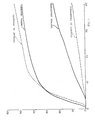
- the film units were then processed by passing them through a pair of rollers at a gap spacing of about 0.08 mm and the relative amount of silver developed (a function of the infra-red light absorbed) was measured as a function of time for both the exposed and unexposed areas. The relative amount of developed silver vs time curves are shown in Fig. 1.
- the photosensitive element comprised a subcoated opaque polyethylene terephthalate photographic film base having coated thereon the following layers in succession:
- the image-receiving element was identical to that described in Example I.
- the film unit was processed with a control aqueous alkaline processing composition which was the same as the control described in Example I with the exception that it included 0.55 g of benzotriazole and did not include any 4-amino- pyrazolo (3,4-d)pyrimidine.
- the film unit was exposed (0.5 meter-candle-seconds) on a sensitometer to a photographic test exposure scale, or step wedge, through the transparent support of the image-receiving element and processed at 24°C with the processing composition by passing the film unit through a pair of pressure rollers set at a gap spacing of about 0.08 mm.
- the film unit was retained intact and viewed through the transparent base. There was obtained a well developed image.
- the neutral density column of the image was read on the densitometer to obtain the D max values for red, green and blue curves, respectively.
- the speed of the red, green and blue curves, respectively (defined as the negative log of the relative exposure required to give red, green and blue absorption in the neutral column a reflection density of 0.75) was measured. The values obtained are shown in Table IV.
- Example II The experiment described in Example II was repeated with six film units (IIIA-IIIF) which included compound II in the amounts shown in Table V. In addition, certain of the film units were also processed at 35°C. The room temperature data for the control film unit of Example II were used for comparison. In addition, a control film unit was processed at 35°C.
- a control film unit was prepared as follows:
- the photosensitive element comprised a subcoated opaque polyethylene terephthalate photographic film base having coated thereon in succession:
- the image-receiving element comprised a transparent subcoated polyethylene terephthalate film base on which the following layers were coated in succession:
- the film unit was processed with the processing composition described in Example I as a control with the exception that it included 0.55 g of benzotriazole and 0.93 g of the aqueous colloidal silica dispersion.
- This experiment represents a comparison of compounds I and II and phenylmercaptotetrazole (PMT) with a control at room temperature.
- control film unit comprised a subcoated opaque film base having the following layers coated thereon in succession:
- the image-receiving element comprised a transparent base having coated thereon in succession:
- control film unit was processed with a processing composition as described in Example V.
- the photosensitive element comprised a subcoated transparent polyethylene terephthalate photographic film base having coated thereon the following layers in succession:
- the image-receiving element was identical to that described in Example V.
- the film unit was processed with a processing composition as described in Example V.
- Film Units VIIA-VIIC further included 1 mg/m 2 , 2 mg/m 2 and 3 mg/m 2 , respectively, of compound II in layer 5 of the photosensitive element and Film Units VIID-VIIF further included 1 mg/m 2 , 2 mg/m 2 and 3 mg/m 2 of compound XI in layer 5 of the photosensitive element.
- An identical set of film units was also processed 35°C. The results are shown in Table IX. u
- a catalyst was prepared by stirring a mixture of Celite ® (10 g) (diatomaceous earth available from Johns Manville) and potassium fluoride dihydrate (15 g) in 250 ml of distilled water for 30 minutes. The water was removed on a rotary evaporator and the solids dried overnight at room temperature under high vacuum. The catalyst was further dried in a vacuum oven at 58-60°C for about two days.
- a catal st was prepared by stirring a mixture of 10 g of Celite (diatomaceous earth available from Johns Manville) and 15 g of potassium fluoride in 250 ml of distilled water for about 30 minutes, removing the water on a rotary evaporator at 56°C and drying the solid under vacuum at 58°-60°C to calculated weight, 196 g.
- the catalyst (1 g) was added to a stirred solution of 5 g of compound I and 1.8 g -of methyl vinyl ketone in 50 ml of dry tetrahydrofuran, and the suspension was stirred under nitrogen at room temperature for three days.
- the oily residue was taken up in 100 ml of ethyl acetate, washed with 80 ml of saturated sodium bicarbonate and twice with 80 ml of water, dried over sodium sulfate and activated charcoal and the mixture vacuum filtered through diatomaceous earth to give a light yellow solution.
- the solvent was stripped from the solution by rotary evaporation to give 12.5.g of a light yellow oil.
- the oil was taken up in a mixture of 20 ml of ethyl acetate and 80 ml of hexane and the solution allowed to stand in a refrigerator overnight. The solvent was stripped by rotary evaporation to give an oily residue which was taken up in 100 ml of hexane and allowed to stand.
- the negative element comprised an opaque subcoated polyethylene terephthalate film base on which the following layers were coated in succession.
- the image-receiving element comprised a transparent subcoated polyethylene terephthalate film base upon which there was coated an image-receiving layer coated at a coverage of about.3229 mg/m 2 of: (a) 3 parts of a mixture of 2 parts polyvinyl alcohol and 1 part poly-4-vinylpyridine and (b) 1 part of a graft copolymer comprised of 4-vinylpyridine (4VP) and vinyl benzyl trimethyl ammonium chloride (TMQ) grafted onto hydroxyethyl cellulose (HEC) at a ratio HEC/4VP/TMQ of 2.2/2.2/1; and about 53.8 mg/m 2 of 1,4-butanediol diglycidyl ether.
- 4VP 4-vinylpyridine
- TMQ vinyl benzyl trimethyl ammonium chloride
- the film unit was processed with a processing composition made up as follows:
- the negative element was exposed (2 meter-candle-seconds) on a sensitometer to a test exposure scale with white light, and then brought together with the image-receiving element and processed at room temperature (24°C) by passing the film unit through a pair of rollers set at a gap spacing of about 0.066 mm.
- the film unit was kept intact and viewed through the base of the image-receiving element.
Landscapes
- Physics & Mathematics (AREA)
- General Physics & Mathematics (AREA)
- Silver Salt Photography Or Processing Solution Therefor (AREA)
Applications Claiming Priority (8)
| Application Number | Priority Date | Filing Date | Title |
|---|---|---|---|
| US22250481A | 1981-01-05 | 1981-01-05 | |
| US222542 | 1981-01-05 | ||
| US06/222,502 US4390613A (en) | 1981-01-05 | 1981-01-05 | Diffusion transfer photographic system utilizing substituted phenylmercaptoazoles |
| US222502 | 1981-01-05 | ||
| US06/222,542 US4355101A (en) | 1981-01-05 | 1981-01-05 | Phenylmercaptoazole compounds |
| US06/222,543 US4355092A (en) | 1981-01-05 | 1981-01-05 | Novel phenylmercaptoazole compounds |
| US222504 | 1981-01-05 | ||
| US222543 | 1994-04-04 |
Publications (3)
| Publication Number | Publication Date |
|---|---|
| EP0055858A2 true EP0055858A2 (de) | 1982-07-14 |
| EP0055858A3 EP0055858A3 (en) | 1983-03-16 |
| EP0055858B1 EP0055858B1 (de) | 1986-01-08 |
Family
ID=27499274
Family Applications (1)
| Application Number | Title | Priority Date | Filing Date |
|---|---|---|---|
| EP19810110833 Expired EP0055858B1 (de) | 1981-01-05 | 1981-12-29 | Photographische Produkte, photographisches Diffusionstransferverfahren und dafür verwendete Verbindungen |
Country Status (3)
| Country | Link |
|---|---|
| EP (1) | EP0055858B1 (de) |
| AU (1) | AU548237B2 (de) |
| DE (1) | DE3173480D1 (de) |
Citations (20)
| Publication number | Priority date | Publication date | Assignee | Title |
|---|---|---|---|---|
| US2983606A (en) | 1958-07-14 | 1961-05-09 | Polaroid Corp | Processes and products for forming photographic images in color |
| US3087817A (en) | 1956-10-03 | 1963-04-30 | Polaroid Corp | Process and product for forming color images from complete dyes |
| CA665952A (en) | 1963-07-02 | N. Phillips Leslie | Polyurethane resinous materials | |
| US3227550A (en) | 1962-09-07 | 1966-01-04 | Eastman Kodak Co | Photographic color reproduction process and element |
| US3260597A (en) | 1960-12-02 | 1966-07-12 | Eastman Kodak Co | Photographic multicolor diffusion transfer process using dye developers and development arrestors |
| US3265498A (en) | 1960-08-22 | 1966-08-09 | Polaroid Corp | Diffusion transfer photographic process utilizing development restrainers |
| US3295976A (en) | 1964-09-01 | 1967-01-03 | Eastman Kodak Co | Novel inhibitors for use in the black and white development of color reversal film |
| US3345163A (en) | 1956-02-13 | 1967-10-03 | Polaroid Corp | Photographic diffusion transfer color processes |
| US3415644A (en) | 1967-03-10 | 1968-12-10 | Polaroid Corp | Novel photographic products and processes |
| US3433939A (en) | 1965-10-22 | 1969-03-18 | Kenneth A Sieloff | Decorative night light |
| US3573043A (en) | 1967-03-10 | 1971-03-30 | Polaroid Corp | Photographic diffusion transfer color process and composite film unit for use therein |
| US3594165A (en) | 1968-05-13 | 1971-07-20 | Polaroid Corp | Novel photographic products and processes |
| US3647437A (en) | 1970-12-18 | 1972-03-07 | Polaroid Corp | Photographic products, processes and compositions |
| US3698898A (en) | 1970-12-17 | 1972-10-17 | Polaroid Corp | Photographic products and processes employing a compound which in the presence of alkali releases a diffusible photographic reagent |
| US3719489A (en) | 1971-06-21 | 1973-03-06 | Polaroid Corp | Novel photographic processes and products |
| US3725062A (en) | 1971-07-06 | 1973-04-03 | Eastman Kodak Co | Color diffusion processes utilizing hydroquinones which provide dye image materials upon oxidation in alkaline conditions |
| DE2427183A1 (de) | 1973-06-05 | 1974-12-12 | Eastman Kodak Co | Photographisches aufzeichnungsmaterial |
| US3888677A (en) | 1972-10-13 | 1975-06-10 | Du Pont | Silver halide photographic material containing antifog agent with protected mercapto group |
| US4009029A (en) | 1973-06-05 | 1977-02-22 | Eastman Kodak Company | Cyanoethyl-containing blocked development restrainers |
| US4076529A (en) | 1972-08-22 | 1978-02-28 | Eastman Kodak Company | Photographic diffusion transfer films, processes and compositions with color moiety releasing compound |
Family Cites Families (7)
| Publication number | Priority date | Publication date | Assignee | Title |
|---|---|---|---|---|
| GB1119799A (en) * | 1964-09-01 | 1968-07-10 | Eastman Kodak Co | Substituted mercapto-tetrazoles and their use in photographic processing methods |
| AU421758B2 (en) * | 1968-05-24 | 1972-02-24 | International Polaroid Corporation | Development process in diffusion transfer photographic systems |
| JPS5119987B2 (de) * | 1973-02-05 | 1976-06-22 | ||
| JPS513231A (en) * | 1974-06-26 | 1976-01-12 | Fuji Photo Film Co Ltd | Karaakakusantenshahoshashinzairyo |
| DE2529488A1 (de) * | 1975-07-02 | 1977-01-27 | Agfa Gevaert Ag | Photographisches material fuer das farbstoffdiffusionsuebertragungsverfahren |
| US4190666A (en) * | 1975-08-11 | 1980-02-26 | E. I. Du Pont De Nemours And Company | Anti-inflammatory 4,5-diarly-2-(substituted-thio)imidazoles and their corresponding sulfoxides and sulfones |
| DE2552505C3 (de) * | 1975-11-22 | 1978-12-21 | Agfa-Gevaert Ag, 5090 Leverkusen | Farbphotographisches Entwicklungsverfahren und farbphotographisches Aufzeichnungsmaterial |
-
1981
- 1981-12-29 DE DE8181110833T patent/DE3173480D1/de not_active Expired
- 1981-12-29 EP EP19810110833 patent/EP0055858B1/de not_active Expired
-
1982
- 1982-01-05 AU AU79181/82A patent/AU548237B2/en not_active Ceased
Patent Citations (20)
| Publication number | Priority date | Publication date | Assignee | Title |
|---|---|---|---|---|
| CA665952A (en) | 1963-07-02 | N. Phillips Leslie | Polyurethane resinous materials | |
| US3345163A (en) | 1956-02-13 | 1967-10-03 | Polaroid Corp | Photographic diffusion transfer color processes |
| US3087817A (en) | 1956-10-03 | 1963-04-30 | Polaroid Corp | Process and product for forming color images from complete dyes |
| US2983606A (en) | 1958-07-14 | 1961-05-09 | Polaroid Corp | Processes and products for forming photographic images in color |
| US3265498A (en) | 1960-08-22 | 1966-08-09 | Polaroid Corp | Diffusion transfer photographic process utilizing development restrainers |
| US3260597A (en) | 1960-12-02 | 1966-07-12 | Eastman Kodak Co | Photographic multicolor diffusion transfer process using dye developers and development arrestors |
| US3227550A (en) | 1962-09-07 | 1966-01-04 | Eastman Kodak Co | Photographic color reproduction process and element |
| US3295976A (en) | 1964-09-01 | 1967-01-03 | Eastman Kodak Co | Novel inhibitors for use in the black and white development of color reversal film |
| US3433939A (en) | 1965-10-22 | 1969-03-18 | Kenneth A Sieloff | Decorative night light |
| US3573043A (en) | 1967-03-10 | 1971-03-30 | Polaroid Corp | Photographic diffusion transfer color process and composite film unit for use therein |
| US3415644A (en) | 1967-03-10 | 1968-12-10 | Polaroid Corp | Novel photographic products and processes |
| US3594165A (en) | 1968-05-13 | 1971-07-20 | Polaroid Corp | Novel photographic products and processes |
| US3698898A (en) | 1970-12-17 | 1972-10-17 | Polaroid Corp | Photographic products and processes employing a compound which in the presence of alkali releases a diffusible photographic reagent |
| US3647437A (en) | 1970-12-18 | 1972-03-07 | Polaroid Corp | Photographic products, processes and compositions |
| US3719489A (en) | 1971-06-21 | 1973-03-06 | Polaroid Corp | Novel photographic processes and products |
| US3725062A (en) | 1971-07-06 | 1973-04-03 | Eastman Kodak Co | Color diffusion processes utilizing hydroquinones which provide dye image materials upon oxidation in alkaline conditions |
| US4076529A (en) | 1972-08-22 | 1978-02-28 | Eastman Kodak Company | Photographic diffusion transfer films, processes and compositions with color moiety releasing compound |
| US3888677A (en) | 1972-10-13 | 1975-06-10 | Du Pont | Silver halide photographic material containing antifog agent with protected mercapto group |
| DE2427183A1 (de) | 1973-06-05 | 1974-12-12 | Eastman Kodak Co | Photographisches aufzeichnungsmaterial |
| US4009029A (en) | 1973-06-05 | 1977-02-22 | Eastman Kodak Company | Cyanoethyl-containing blocked development restrainers |
Non-Patent Citations (8)
| Title |
|---|
| "Heterocyclic Compounds", vol. 5, 1957, JOHN WILEY AND SONS, pages: 439 - 444 |
| "Heterocyclic Compounds", vol. 8, 1967, JOHN WILEY AND SONS, pages: 1 - 107 |
| "Imidazole and Its Derivatives", vol. 6, 1953, INTERSCIENCE PUBLISHERS, INC., article "The Chemistry of Heterocyclic Compounds", pages: 77 - 85 |
| "Thiazole and Its Derivatives", vol. 34, 1979, JOHN WILEY AND SONS, article "The Chemistry of Heterocyclic Compounds", pages: 260 - 269 |
| ELDERFIELD: "Heterocyclic Compounds", vol. 5, 1957, JOHN WILEY AND SONS, pages: 439 - 444 |
| ELDERFIELD: "Heterocyclic Compounds", vol. 8, 1967, JOHN WILEY AND SONS, pages: 1 - 107 |
| KHIM; GETEROTSIKL; SOEDIN, SB.1: AZOTSODERZHASHCHIE GETEROTSIKL, 1967, pages 199 - 201 |
| PHARMAZIE, vol. 29, no. 2, 1974, pages 95 - 99 |
Also Published As
| Publication number | Publication date |
|---|---|
| AU7918182A (en) | 1982-07-15 |
| DE3173480D1 (en) | 1986-02-20 |
| EP0055858A3 (en) | 1983-03-16 |
| AU548237B2 (en) | 1985-12-05 |
| EP0055858B1 (de) | 1986-01-08 |
Similar Documents
| Publication | Publication Date | Title |
|---|---|---|
| US4390613A (en) | Diffusion transfer photographic system utilizing substituted phenylmercaptoazoles | |
| US4256881A (en) | Blocked benzotriazole compounds as development restrainer precursors | |
| US4355101A (en) | Phenylmercaptoazole compounds | |
| US4468448A (en) | Photographic products and processes | |
| EP0129033B1 (de) | Photographische Produkte und neue Verbindungen | |
| US4350754A (en) | Blocked development restrainers | |
| CA1222762A (en) | Photographic products and processes | |
| US4386150A (en) | Novel image dye-providing materials and photographic products and processes | |
| US4442290A (en) | Development restrainer release compounds | |
| EP0031698B1 (de) | Xanthenfarbstoffe und photographische Produkte und Verfahren zu deren Verwendung | |
| CA1103082A (en) | Light-sensitive photographic material containing an unsaturated cyclic thioether dir compound | |
| US4543317A (en) | Photographic system with salt of phenylmercaptoazole and quaternary radical | |
| US4355092A (en) | Novel phenylmercaptoazole compounds | |
| CA1223261A (en) | Photographic products and processes | |
| US4267251A (en) | Novel image dye-providing materials, photographic products and processes | |
| EP0055858B1 (de) | Photographische Produkte, photographisches Diffusionstransferverfahren und dafür verwendete Verbindungen | |
| US4593108A (en) | 1-phenyl-5-mercapto tetrazoles | |
| CA1178837A (en) | Diffusion transfer photographic system using substituted phenylmercaptoazoles | |
| US4619784A (en) | Image dye-providing materials | |
| EP0269646B1 (de) | Photographisches system | |
| US4598158A (en) | Novel image dye-providing materials and photographic products and processes | |
| US4946964A (en) | Photographic compounds | |
| EP0127897B1 (de) | Photographische Produkte und Verfahren | |
| CA1177082A (en) | Sulfone compounds and photographic products and processes | |
| US4847383A (en) | Photographic reagent tetrazoles |
Legal Events
| Date | Code | Title | Description |
|---|---|---|---|
| PUAI | Public reference made under article 153(3) epc to a published international application that has entered the european phase |
Free format text: ORIGINAL CODE: 0009012 |
|
| AK | Designated contracting states |
Designated state(s): BE DE FR GB NL |
|
| PUAL | Search report despatched |
Free format text: ORIGINAL CODE: 0009013 |
|
| AK | Designated contracting states |
Designated state(s): BE DE FR GB NL |
|
| 17P | Request for examination filed |
Effective date: 19830415 |
|
| GRAA | (expected) grant |
Free format text: ORIGINAL CODE: 0009210 |
|
| AK | Designated contracting states |
Designated state(s): BE DE FR GB NL |
|
| REF | Corresponds to: |
Ref document number: 3173480 Country of ref document: DE Date of ref document: 19860220 |
|
| ET | Fr: translation filed | ||
| PLBE | No opposition filed within time limit |
Free format text: ORIGINAL CODE: 0009261 |
|
| STAA | Information on the status of an ep patent application or granted ep patent |
Free format text: STATUS: NO OPPOSITION FILED WITHIN TIME LIMIT |
|
| 26N | No opposition filed | ||
| PGFP | Annual fee paid to national office [announced via postgrant information from national office to epo] |
Ref country code: FR Payment date: 19961108 Year of fee payment: 16 |
|
| PGFP | Annual fee paid to national office [announced via postgrant information from national office to epo] |
Ref country code: GB Payment date: 19961121 Year of fee payment: 16 |
|
| PGFP | Annual fee paid to national office [announced via postgrant information from national office to epo] |
Ref country code: DE Payment date: 19961125 Year of fee payment: 16 |
|
| PGFP | Annual fee paid to national office [announced via postgrant information from national office to epo] |
Ref country code: NL Payment date: 19961126 Year of fee payment: 16 |
|
| PGFP | Annual fee paid to national office [announced via postgrant information from national office to epo] |
Ref country code: BE Payment date: 19961129 Year of fee payment: 16 |
|
| PG25 | Lapsed in a contracting state [announced via postgrant information from national office to epo] |
Ref country code: GB Free format text: LAPSE BECAUSE OF NON-PAYMENT OF DUE FEES Effective date: 19971229 |
|
| PG25 | Lapsed in a contracting state [announced via postgrant information from national office to epo] |
Ref country code: FR Free format text: THE PATENT HAS BEEN ANNULLED BY A DECISION OF A NATIONAL AUTHORITY Effective date: 19971231 Ref country code: BE Free format text: LAPSE BECAUSE OF NON-PAYMENT OF DUE FEES Effective date: 19971231 |
|
| BERE | Be: lapsed |
Owner name: POLAROID CORP. Effective date: 19971231 |
|
| PG25 | Lapsed in a contracting state [announced via postgrant information from national office to epo] |
Ref country code: NL Free format text: LAPSE BECAUSE OF NON-PAYMENT OF DUE FEES Effective date: 19980701 |
|
| GBPC | Gb: european patent ceased through non-payment of renewal fee |
Effective date: 19971229 |
|
| NLV4 | Nl: lapsed or anulled due to non-payment of the annual fee |
Effective date: 19980701 |
|
| PG25 | Lapsed in a contracting state [announced via postgrant information from national office to epo] |
Ref country code: DE Free format text: LAPSE BECAUSE OF NON-PAYMENT OF DUE FEES Effective date: 19980901 |
|
| REG | Reference to a national code |
Ref country code: FR Ref legal event code: ST |