EP0056966B1 - Verfahren zur Herstellung von Oxazolidin-2,4-dionen - Google Patents
Verfahren zur Herstellung von Oxazolidin-2,4-dionen Download PDFInfo
- Publication number
- EP0056966B1 EP0056966B1 EP82100306A EP82100306A EP0056966B1 EP 0056966 B1 EP0056966 B1 EP 0056966B1 EP 82100306 A EP82100306 A EP 82100306A EP 82100306 A EP82100306 A EP 82100306A EP 0056966 B1 EP0056966 B1 EP 0056966B1
- Authority
- EP
- European Patent Office
- Prior art keywords
- methyl
- halogen
- reaction
- phenyl
- dichlorophenyl
- Prior art date
- Legal status (The legal status is an assumption and is not a legal conclusion. Google has not performed a legal analysis and makes no representation as to the accuracy of the status listed.)
- Expired
Links
- 238000000034 method Methods 0.000 title claims abstract description 12
- 150000001477 2,4-oxazolidinediones Chemical class 0.000 title claims abstract description 7
- 238000002360 preparation method Methods 0.000 title claims abstract description 5
- 238000006243 chemical reaction Methods 0.000 claims abstract description 14
- 125000002496 methyl group Chemical group [H]C([H])([H])* 0.000 claims abstract description 12
- 150000001408 amides Chemical class 0.000 claims abstract description 9
- 229910052736 halogen Inorganic materials 0.000 claims abstract description 8
- 150000002367 halogens Chemical class 0.000 claims abstract description 8
- 125000001997 phenyl group Chemical group [H]C1=C([H])C([H])=C(*)C([H])=C1[H] 0.000 claims abstract description 8
- 125000004184 methoxymethyl group Chemical group [H]C([H])([H])OC([H])([H])* 0.000 claims abstract description 7
- 150000002989 phenols Chemical class 0.000 claims abstract description 6
- 238000004821 distillation Methods 0.000 claims abstract description 5
- 229910052739 hydrogen Inorganic materials 0.000 claims abstract description 5
- 125000000391 vinyl group Chemical group [H]C([*])=C([H])[H] 0.000 claims abstract description 5
- 229920002554 vinyl polymer Polymers 0.000 claims abstract description 5
- 125000000217 alkyl group Chemical group 0.000 claims abstract description 4
- 239000001257 hydrogen Substances 0.000 claims abstract description 4
- 125000000956 methoxy group Chemical group [H]C([H])([H])O* 0.000 claims abstract description 4
- 125000001624 naphthyl group Chemical group 0.000 claims abstract description 4
- 125000002030 1,2-phenylene group Chemical group [H]C1=C([H])C([*:1])=C([*:2])C([H])=C1[H] 0.000 claims abstract description 3
- KXDHJXZQYSOELW-UHFFFAOYSA-N Carbamic acid Chemical compound NC(O)=O KXDHJXZQYSOELW-UHFFFAOYSA-N 0.000 claims abstract description 3
- BVKZGUZCCUSVTD-UHFFFAOYSA-L Carbonate Chemical compound [O-]C([O-])=O BVKZGUZCCUSVTD-UHFFFAOYSA-L 0.000 claims abstract description 3
- 125000004432 carbon atom Chemical group C* 0.000 claims abstract description 3
- 125000005843 halogen group Chemical group 0.000 claims abstract description 3
- 150000004651 carbonic acid esters Chemical class 0.000 claims abstract 2
- 125000004435 hydrogen atom Chemical class [H]* 0.000 claims abstract 2
- 125000000325 methylidene group Chemical group [H]C([H])=* 0.000 claims abstract 2
- -1 3,5-dichlorophenyl Chemical group 0.000 claims description 23
- 150000001875 compounds Chemical class 0.000 claims description 3
- LYCAIKOWRPUZTN-UHFFFAOYSA-N Ethylene glycol Chemical compound OCCO LYCAIKOWRPUZTN-UHFFFAOYSA-N 0.000 description 12
- OKKJLVBELUTLKV-UHFFFAOYSA-N Methanol Chemical compound OC OKKJLVBELUTLKV-UHFFFAOYSA-N 0.000 description 9
- YXFVVABEGXRONW-UHFFFAOYSA-N Toluene Chemical compound CC1=CC=CC=C1 YXFVVABEGXRONW-UHFFFAOYSA-N 0.000 description 6
- UFHFLCQGNIYNRP-UHFFFAOYSA-N Hydrogen Chemical compound [H][H] UFHFLCQGNIYNRP-UHFFFAOYSA-N 0.000 description 4
- 239000003054 catalyst Substances 0.000 description 4
- 125000001037 p-tolyl group Chemical group [H]C1=C([H])C(=C([H])C([H])=C1*)C([H])([H])[H] 0.000 description 4
- FBYYIBNYONAZCU-UHFFFAOYSA-N M2 Chemical compound C=CC(O)(C)C(=O)NC1=CC(Cl)=CC(Cl)=C1 FBYYIBNYONAZCU-UHFFFAOYSA-N 0.000 description 3
- ISWSIDIOOBJBQZ-UHFFFAOYSA-N Phenol Chemical compound OC1=CC=CC=C1 ISWSIDIOOBJBQZ-UHFFFAOYSA-N 0.000 description 3
- ROORDVPLFPIABK-UHFFFAOYSA-N diphenyl carbonate Chemical compound C=1C=CC=CC=1OC(=O)OC1=CC=CC=C1 ROORDVPLFPIABK-UHFFFAOYSA-N 0.000 description 3
- 239000000203 mixture Substances 0.000 description 3
- ZQSJHAVRVHMPCE-UHFFFAOYSA-N n-(3,5-dichlorophenyl)-2-hydroxy-3-methoxy-2-methylpropanamide Chemical compound COCC(C)(O)C(=O)NC1=CC(Cl)=CC(Cl)=C1 ZQSJHAVRVHMPCE-UHFFFAOYSA-N 0.000 description 3
- 239000000047 product Substances 0.000 description 3
- YFTHZRPMJXBUME-UHFFFAOYSA-N tripropylamine Chemical compound CCCN(CCC)CCC YFTHZRPMJXBUME-UHFFFAOYSA-N 0.000 description 3
- 125000004172 4-methoxyphenyl group Chemical group [H]C1=C([H])C(OC([H])([H])[H])=C([H])C([H])=C1* 0.000 description 2
- PEDCQBHIVMGVHV-UHFFFAOYSA-N Glycerine Chemical compound OCC(O)CO PEDCQBHIVMGVHV-UHFFFAOYSA-N 0.000 description 2
- WQDUMFSSJAZKTM-UHFFFAOYSA-N Sodium methoxide Chemical compound [Na+].[O-]C WQDUMFSSJAZKTM-UHFFFAOYSA-N 0.000 description 2
- CIUQDSCDWFSTQR-UHFFFAOYSA-N [C]1=CC=CC=C1 Chemical compound [C]1=CC=CC=C1 CIUQDSCDWFSTQR-UHFFFAOYSA-N 0.000 description 2
- 238000006136 alcoholysis reaction Methods 0.000 description 2
- 238000004519 manufacturing process Methods 0.000 description 2
- COWNFYYYZFRNOY-UHFFFAOYSA-N oxazolidinedione Chemical compound O=C1COC(=O)N1 COWNFYYYZFRNOY-UHFFFAOYSA-N 0.000 description 2
- QDRKDTQENPPHOJ-UHFFFAOYSA-N sodium ethoxide Chemical compound [Na+].CC[O-] QDRKDTQENPPHOJ-UHFFFAOYSA-N 0.000 description 2
- 239000002904 solvent Substances 0.000 description 2
- 238000004809 thin layer chromatography Methods 0.000 description 2
- 230000007704 transition Effects 0.000 description 2
- XLYOFNOQVPJJNP-UHFFFAOYSA-N water Substances O XLYOFNOQVPJJNP-UHFFFAOYSA-N 0.000 description 2
- 125000006276 2-bromophenyl group Chemical group [H]C1=C([H])C(Br)=C(*)C([H])=C1[H] 0.000 description 1
- 125000004198 2-fluorophenyl group Chemical group [H]C1=C([H])C(F)=C(*)C([H])=C1[H] 0.000 description 1
- 125000004204 2-methoxyphenyl group Chemical group [H]C1=C([H])C(*)=C(OC([H])([H])[H])C([H])=C1[H] 0.000 description 1
- 125000004189 3,4-dichlorophenyl group Chemical group [H]C1=C([H])C(Cl)=C(Cl)C([H])=C1* 0.000 description 1
- FSCWZHGZWWDELK-UHFFFAOYSA-N 3-(3,5-dichlorophenyl)-5-ethenyl-5-methyl-2,4-oxazolidinedione Chemical compound O=C1C(C)(C=C)OC(=O)N1C1=CC(Cl)=CC(Cl)=C1 FSCWZHGZWWDELK-UHFFFAOYSA-N 0.000 description 1
- 125000006275 3-bromophenyl group Chemical group [H]C1=C([H])C(Br)=C([H])C(*)=C1[H] 0.000 description 1
- 125000004180 3-fluorophenyl group Chemical group [H]C1=C([H])C(*)=C([H])C(F)=C1[H] 0.000 description 1
- 125000004800 4-bromophenyl group Chemical group [H]C1=C([H])C(*)=C([H])C([H])=C1Br 0.000 description 1
- 125000001255 4-fluorophenyl group Chemical group [H]C1=C([H])C(*)=C([H])C([H])=C1F 0.000 description 1
- KLYCPFXDDDMZNQ-UHFFFAOYSA-N Benzyne Chemical compound C1=CC#CC=C1 KLYCPFXDDDMZNQ-UHFFFAOYSA-N 0.000 description 1
- FTCOKXNKPOUEFH-UHFFFAOYSA-N Myclozolin Chemical compound O=C1C(COC)(C)OC(=O)N1C1=CC(Cl)=CC(Cl)=C1 FTCOKXNKPOUEFH-UHFFFAOYSA-N 0.000 description 1
- 230000002378 acidificating effect Effects 0.000 description 1
- 239000003513 alkali Substances 0.000 description 1
- 229910052783 alkali metal Inorganic materials 0.000 description 1
- 150000001340 alkali metals Chemical class 0.000 description 1
- 150000001412 amines Chemical class 0.000 description 1
- 238000009835 boiling Methods 0.000 description 1
- 239000006227 byproduct Substances 0.000 description 1
- 239000007795 chemical reaction product Substances 0.000 description 1
- 150000002148 esters Chemical class 0.000 description 1
- 125000001495 ethyl group Chemical group [H]C([H])([H])C([H])([H])* 0.000 description 1
- 235000011187 glycerol Nutrition 0.000 description 1
- 238000004128 high performance liquid chromatography Methods 0.000 description 1
- 239000012535 impurity Substances 0.000 description 1
- 239000012948 isocyanate Substances 0.000 description 1
- 150000002513 isocyanates Chemical class 0.000 description 1
- 125000000040 m-tolyl group Chemical group [H]C1=C([H])C(*)=C([H])C(=C1[H])C([H])([H])[H] 0.000 description 1
- 229910052751 metal Inorganic materials 0.000 description 1
- 239000002184 metal Substances 0.000 description 1
- HZVOZRGWRWCICA-UHFFFAOYSA-N methanediyl Chemical compound [CH2] HZVOZRGWRWCICA-UHFFFAOYSA-N 0.000 description 1
- JIQNWFBLYKVZFY-UHFFFAOYSA-N methoxycyclohexatriene Chemical compound COC1=C[C]=CC=C1 JIQNWFBLYKVZFY-UHFFFAOYSA-N 0.000 description 1
- 125000004433 nitrogen atom Chemical group N* 0.000 description 1
- 238000000655 nuclear magnetic resonance spectrum Methods 0.000 description 1
- 125000003261 o-tolyl group Chemical group [H]C1=C([H])C(*)=C(C([H])=C1[H])C([H])([H])[H] 0.000 description 1
- 125000003854 p-chlorophenyl group Chemical group [H]C1=C([H])C(*)=C([H])C([H])=C1Cl 0.000 description 1
- 238000012856 packing Methods 0.000 description 1
- 150000004707 phenolate Chemical class 0.000 description 1
- AHWALFGBDFAJAI-UHFFFAOYSA-N phenyl carbonochloridate Chemical compound ClC(=O)OC1=CC=CC=C1 AHWALFGBDFAJAI-UHFFFAOYSA-N 0.000 description 1
- 239000000376 reactant Substances 0.000 description 1
- 238000004064 recycling Methods 0.000 description 1
- 238000009419 refurbishment Methods 0.000 description 1
- NESLWCLHZZISNB-UHFFFAOYSA-M sodium phenolate Chemical compound [Na+].[O-]C1=CC=CC=C1 NESLWCLHZZISNB-UHFFFAOYSA-M 0.000 description 1
- 239000007858 starting material Substances 0.000 description 1
- 125000001424 substituent group Chemical group 0.000 description 1
- 150000003512 tertiary amines Chemical class 0.000 description 1
- IMFACGCPASFAPR-UHFFFAOYSA-N tributylamine Chemical compound CCCCN(CCCC)CCCC IMFACGCPASFAPR-UHFFFAOYSA-N 0.000 description 1
- 150000003672 ureas Chemical class 0.000 description 1
- ORGHESHFQPYLAO-UHFFFAOYSA-N vinyl radical Chemical compound C=[CH] ORGHESHFQPYLAO-UHFFFAOYSA-N 0.000 description 1
Classifications
-
- C—CHEMISTRY; METALLURGY
- C07—ORGANIC CHEMISTRY
- C07D—HETEROCYCLIC COMPOUNDS
- C07D263/00—Heterocyclic compounds containing 1,3-oxazole or hydrogenated 1,3-oxazole rings
- C07D263/02—Heterocyclic compounds containing 1,3-oxazole or hydrogenated 1,3-oxazole rings not condensed with other rings
- C07D263/30—Heterocyclic compounds containing 1,3-oxazole or hydrogenated 1,3-oxazole rings not condensed with other rings having two or three double bonds between ring members or between ring members and non-ring members
- C07D263/34—Heterocyclic compounds containing 1,3-oxazole or hydrogenated 1,3-oxazole rings not condensed with other rings having two or three double bonds between ring members or between ring members and non-ring members with hetero atoms or with carbon atoms having three bonds to hetero atoms with at the most one bond to halogen, e.g. ester or nitrile radicals, directly attached to ring carbon atoms
- C07D263/44—Two oxygen atoms
Definitions
- the invention relates to a new process for the preparation of oxazolidine-2,4-diones by reacting substituted amides with aromatic carbonic acid esters.
- the new process is not suggested by the known processes because either completely different starting and end products occur in the known processes or because the process is carried out in a substantially different manner.
- An elevated temperature between 50 and 250 ° C., preferably between 120 and 170 ° C., is required to carry out the reaction.
- aromatic carbonic acid ester is largely pure (e.g. free of phenyl chloroformate and acidic impurities).
- the reaction can be carried out without a catalyst.
- the addition of the following basic catalysts can be advantageous: Alkaline alcoholates such as sodium methylate, sodium ethylate, amines, for. B. tertiary amines (tripropylamine, tributylamine), alkali phenolates of the formula where R 4 has the meaning given above and Me represents an alkali metal (e.g. sodium phenolate).
- the catalysts are added, for. B. in an amount of 0.01 mol percent to 0.1 mol percent, based on the amide.
- the reaction is advantageously carried out without a solvent.
- the distilled phenols R 4 OH and R 5 OH are so pure that they are used directly as starting materials for the production of can be reused (recycling).
- the reaction can be carried out at normal pressure; a vacuum of approximately 1 mbar to 950 mbar can be advantageous in order to lower the distillation temperature.
- the amides used as starting products arise e.g. B. as by-products in the known production of the corresponding oxazolidine-2,4-diones.
- the amides are also formed in the alcoholysis of the corresponding oxazolidine-2,4-diones with ethylene glycol or glycerin.
- the cheaper reactant z. B. can be used in excess (e.g. 1.1 moles of ester to 1 mole of amide).
Landscapes
- Chemical & Material Sciences (AREA)
- Organic Chemistry (AREA)
- Heterocyclic Carbon Compounds Containing A Hetero Ring Having Nitrogen And Oxygen As The Only Ring Hetero Atoms (AREA)
- Nitrogen And Oxygen Or Sulfur-Condensed Heterocyclic Ring Systems (AREA)
Description
- Die Erfindung betrifft ein neues Verfahren zur Herstellung von Oxazolidin-2,4-dionen durch Umsetzung von substituierten Amiden mit aromatischen Kohlensäureestern.
- Es ist bekannt, Oxazolidin-2,4-dione durch Umsetzung von Isocyanaten mit 2-Hydroxycarbonsäureestern herzustellen (DE-AS 1 811 843, DE-OS 2 022 494, DE-OS 2 207 576).
- Es ist ferner bekannt, ein substituiertes Harnstoffderivat mit Diphenylcarbonat zu einer Verbindung mit einem 6-Ring umzusetzen, die 3 Stickstoffatome im Ring enthält (FR-A-2 316 239).
- Es ist ferner bekannt, ein primäres Hydroxycarbonsäureamid mit Dialkylcarbonat und einer stöchiometrischen Menge eines Metallalkoholats in 2 Stufen zu einem Oxazolidindion umzusetzen (US-A-2 338 220 und US-A-2 909 467).
- Durch die bekannten Verfahren wird das neue Verfahren nicht nahegelegt, weil in den bekannten Verfahren entweder völlig andere Ausgangs- und Endprodukte auftreten oder weil das Verfahren in wesentlich anderer Weise durchgeführt wird.
- Es wurde nun gefunden, daß man ein Oxazolidin-2,4-dion der Formel

- R1 einen Naphthylrest oder einen gegebenenfalls durch ein oder mehrere Halogenatome, Methyl oder Methoxy substituierten Phenylrest,
- R2 Wasserstoff oder einen Alkylrest mit 1 bis 4 C-Atomen, Halogen oder einen Vinylrest oder Methoxymethyl oder Carboäthoxy bedeutet und
- R3 die gleichen Bedeutungen wie R2 hat, wobei R2 und R3 im Einzelfall gleich oder verschieden sind oder R2 und R3 miteinander verbunden sind und je einen Methylenrest bedeuten,
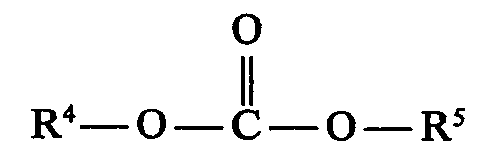
- R4 einen gegebenenfalls durch Methyl oder Halogen substituierten Phenylrest bedeutet und
- R5 die gleiche Bedeutung wie R4 hat oder R4 und R5 zusammen den 1,2-Phenylen-Rest bedeuten,
- Die verschiedenen Substituenten haben beispielsweise die folgenden Bedeutungen:
- R1 ist z. B. Phenyl, Naphtyl, 2-, 3- und 4-Fluorphenyl, 2-, 3- und 4-Chorphenyl, 2-, 3- und 4-Bromphenyl, 2,3-Dichlorphenyl, 2,3,6-Trichlorphenyl, 2-, 3- und 4-Methoxyphenyl, 2-, 3-und 4-Methylphenyl, 3,4-Dichlorphenyl, 2,6 Dichtorpheny), 2,3,4-Trichlorphenyl, 2,3,5-Trichlorphenyl und bevorzugt 3,5-Dichlorphenyl.
- R2 und R3 sind z. B. Wasserstoff oder Vinyl oder Alkyl, z. B. Methyl, Äthyl oder Methoxymethyl oder Carboäthoxy.
- R4 und R5 bedeuten z. B. 4-Methylphenyl, 4-Chlorphenyl oder bevorzugt Phenyl oder R4 und R5 zusammen 1,2-Phenylen

- Für die Durchführung der Umsetzung ist eine erhöhte Temperatur zwischen 50 und 250°C, vorzugsweise zwischen 120 und 170° C erforderlich.
- Für die Reaktion ist wichtig, daß der aromatische Kohlensäureester weitgehend rein ist (z. B. frei von Chlorameisensäurephenylester und sauren Verunreinigungen).
- Die Reaktion kann ohne Katalysator durchgeführt werden. Um aber möglichst quantitative und schnelle Umsetzungen, d.h. hohe Raum-Zeit-Ausbeuten zu erhalten, kann der Zusatz von folgenden basischen Katalysatoren von Vorteil sein: Alkalialkoholate wie Natriummethylat, Natriumäthylat, Amine z. B. tertiäre Amine (Tripropylamin, Tributylamin), Alkaliphenolate der Formel

- Die Umsetzung wird vorteilhaft ohne Lösungsmittel durchgeführt.
- Falls Löungsmittel verwendet werden, sollte deren Siedepunkt über dem der Phenole R40H und R50H liegen.
- Es ist überraschend, daß die Umsetzung mit dem Diarylcarbonat sehr rasch und ohne Katalysator erfolgt.
- Wichtig für eine gute Ausbeute bei der Umsetzung ist es, die bei der Umsetzung entstehenden Phenole R40H und R5OH möglichst quantitativ abzutrennen, vorzugsweise abzudestillieren und dafür zu sorgen, daß das als Ausgangsprodukt verwendete Diarylcarbonat nicht mitdestilliert. Zu diesem Zweck ist die Verwendung von Destillationskolonnen mit Füllkörpern besonders vorteilhaft.
- Die abdestillierten Phenole R4OH und R5OH fallen so rein an, daß sie direkt als Einsatzstoffe für die Herstellung von

- Die Umsetzung kann bei Normaldruck durchgeführt werden; ein Vakuum von ca. 1 mbar bis 950 mbar kann von Vorteil sein, um die Destillationstemperatur zu erniedrigen.
- Die als Ausgangsprodukte verwendeten Amide entstehen z. B. als Nebenprodukte bei der bekannten Herstellung der entsprechenden Oxazolidin-2,4-dione.
- Die Amide entstehen auch bei der Alkoholyse der entsprechenden Oxazolidin-2,4-dione mit Äthylenglykol oder Glyzerin.
- Das Verfahren kann allgemein formuliert werden:

- Der billigere Reaktionspartner z. B.
- Die folgenden Beispiele erläutern die Durchführung des erfindungsgemäßen Verfahrens:
-

- 26 g (0,1 mol) N-(3,5-Dichlorphenyl)-2-hydroxy-2-methyl-3-butensäureamid und 21,4 g (0,1 mol) Diphenylcarbonat werden auf 160-165°C erhitzt. Bei einem Druck von ca. 30 mbar destillieren ca. 18,4 g Phenol (Übergangstemperatur 88-95°C) über. Die verbleibende Schmelze wird auf ca. 80°C abgekühlt und es werden 25 ml Methanol zugesetzt. Man rührt 2 Stunden und kühlt auf 5°C ab. Nach dem Absaugen wäscht man zweimal mit je 10 ml Methanol und anschließend mit 50 ml Wasser.
- Ausbeute: 26,7 g 3-(3,5-Dichlorphenyl)-5-methyl-5-vinyl-1,3-oxazolidin-2,4,dion, Gehalt 99%=92,4% Ausbeute ber. für 100%iges Produkt. Fp 111°C, dünnschichtchromatographisch sauber.
-

- 27,8 g (0,1 mol) N-(3,5-Dichlorphenyl)-2-hydroxy-2-methoxymethyl-propansäureamid, 21,4 g (0,1 mol) Diphenylcarbonat und 0,7 g (0,01 mol) Natriumäthylat werden auf 140-145°C erhitzt. Bei 22 mbar wird in 1 Stunde das entstehende Phenol (Übergang 88-102°C) abdestilliert. Der Rückstand wird auf 70° C abgekühlt und mit 75 ml Methanol versetzt und 2 Stunden bei 15° C gerührt. Nach dem Absaugen wird zweimal mit je 10 ml Wasser gewaschen und getrocknet.
- Ausbeute: 13 g N-(3,5-Dichlorphenyl)-5-methyl-5-methoxy-methyl-oxazolidin-2,4-dion, das entspricht 85,5% Ausbeute.
- Fp:112°C (dünnschichtchromatographisch sauber).
- Gehalt: 100% (bestimmt durch Hochdruckflüssigkeitschromatographie). Die folgenden Vorschriften erläutern die Herstellung derAmide durch Alkoholyse.
-

- 214,5 g (0,75 mol) 3-(3,5-Dichlorphenyl)-5-methyl-5-vinyl-1,3-oxazolidin-2,4-dion werden mit 750 ml (13,5 mol) Athylenglykol und 8,25 g (0,056 mol) Tripropylamin 2 Stunden bei 150° C gerührt.
- Bei ca. 80°C wird anschließend am Rotationsverdampfer mit der Vakuumpumpe (ca. 0,2 mbar) das restliche Äthylenglykol abdestilliert. Der Rückstand, der beim Stehen über Nacht auskristallisiert, wiegt 198 g und kann aus 150 ml Toluol unkristallisiert werden. Man erhält 128 g N-(3,5-Dichlorphenyl)-2-hydroxy-2-methyl-3-butensäureamid.
- Fp 116° C. IR- und H-NMR-Spektren stimmen mit der Struktur überein.

-

- 30,4g (0,1 mol) N-(3,5-Dichlorphenyl)-5-methyl-5-methoxy-methyl-oxazolidin-2,4-dion und 100 ml (1,8 mol) Äthylenglykol, sowie 1,1 g (0,0075 mol) Tripropylamin werden 2 Stunden bei 150°C gerührt. Aufarbeitung wie in Vorschrift 1 beschrieben. Umkristallisieren aus Toluol.
- Ausbeute: 22 g = 79,1% N-(3,5-Dichlorphenyl)-2-hydroxy-2-methoxymethylpropansäureamid. Fp:140°C.
in sehr guter Ausbeute erhält, wenn man ein Amid der Formel


und die bei der Umsetzung entstehenden Phenole R40H und R5OH abtrennt, vorzugsweise abdestilliert.
Claims (3)

durch Umsetzung eines Hydroxycarbonsäureamids mit einem Diorganylcarbonat, dadurch gekennzeichnet, daß man ein Amid der Formel

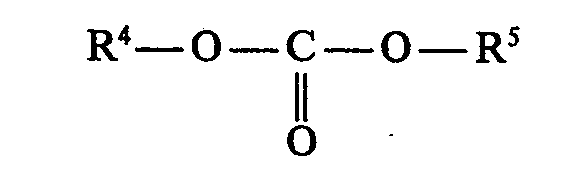
und die bei der Umsetzung entstehenden Phenole R40H und R5OH abtrennt, vorzugsweise abdestilliert.
Priority Applications (1)
| Application Number | Priority Date | Filing Date | Title |
|---|---|---|---|
| AT82100306T ATE9801T1 (de) | 1981-01-24 | 1982-01-18 | Verfahren zur herstellung von oxazolidin-2,4dionen. |
Applications Claiming Priority (2)
| Application Number | Priority Date | Filing Date | Title |
|---|---|---|---|
| DE3102359A DE3102359A1 (de) | 1981-01-24 | 1981-01-24 | Verfahren zur herstellung von oxazolidin-2,4-dionen |
| DE3102359 | 1981-01-24 |
Publications (2)
| Publication Number | Publication Date |
|---|---|
| EP0056966A1 EP0056966A1 (de) | 1982-08-04 |
| EP0056966B1 true EP0056966B1 (de) | 1984-10-10 |
Family
ID=6123295
Family Applications (1)
| Application Number | Title | Priority Date | Filing Date |
|---|---|---|---|
| EP82100306A Expired EP0056966B1 (de) | 1981-01-24 | 1982-01-18 | Verfahren zur Herstellung von Oxazolidin-2,4-dionen |
Country Status (6)
| Country | Link |
|---|---|
| EP (1) | EP0056966B1 (de) |
| AT (1) | ATE9801T1 (de) |
| DE (2) | DE3102359A1 (de) |
| DK (1) | DK150140C (de) |
| GR (1) | GR77325B (de) |
| IE (1) | IE52262B1 (de) |
Families Citing this family (2)
| Publication number | Priority date | Publication date | Assignee | Title |
|---|---|---|---|---|
| DE19613333A1 (de) * | 1996-04-03 | 1997-10-09 | Bayer Ag | Verfahren zur Herstellung von Oxazolidin-2,4-dionen |
| WO2013089734A1 (en) * | 2011-12-15 | 2013-06-20 | Colgate-Palmolive Company | Aqueous oral care compositions |
Family Cites Families (7)
| Publication number | Priority date | Publication date | Assignee | Title |
|---|---|---|---|---|
| US2338220A (en) * | 1942-01-31 | 1944-01-04 | Mallinckrodt Chemical Works | Process of making oxazolidinediones |
| US2909467A (en) * | 1958-07-09 | 1959-10-20 | Us Vitamin Pharm Corp | 3-(d-alpha-methylphenethyl)-5-methyl-1, 3-oxazolidine-2, 4-dione |
| US2928840A (en) * | 1958-11-26 | 1960-03-15 | Us Vitamin Pharm Corp | 3-(o-substituted phenyl) oxazolidinediones and process therefor |
| DE1813434A1 (de) * | 1968-12-07 | 1970-06-25 | Bayer Ag | Verfahren zur Herstellung von omikron-Hydroxy-aralkylaethern |
| DE2527677A1 (de) * | 1975-06-21 | 1977-01-20 | Bayer Ag | Verfahren zur herstellung von 2,4- dioxo-1,2,3,4-tetrahydro-s-triazino- eckige klammer auf 1,2-a eckige klammer zu -benzimidazolen |
| DE2813873A1 (de) * | 1978-03-31 | 1979-10-11 | Basf Ag | Verfahren zur herstellung von oxazolidin-2,4-dionen |
| DE2827414A1 (de) * | 1978-06-22 | 1980-01-10 | Basf Ag | Verfahren zur herstellung von oxazolidin-2,4-dionen |
-
1981
- 1981-01-24 DE DE3102359A patent/DE3102359A1/de not_active Withdrawn
- 1981-12-17 GR GR66823A patent/GR77325B/el unknown
-
1982
- 1982-01-18 DE DE8282100306T patent/DE3260914D1/de not_active Expired
- 1982-01-18 EP EP82100306A patent/EP0056966B1/de not_active Expired
- 1982-01-18 AT AT82100306T patent/ATE9801T1/de not_active IP Right Cessation
- 1982-01-22 DK DK027382A patent/DK150140C/da not_active IP Right Cessation
- 1982-01-22 IE IE138/82A patent/IE52262B1/en unknown
Also Published As
| Publication number | Publication date |
|---|---|
| IE820138L (en) | 1982-07-24 |
| GR77325B (de) | 1984-09-11 |
| EP0056966A1 (de) | 1982-08-04 |
| DK150140B (da) | 1986-12-15 |
| IE52262B1 (en) | 1987-08-19 |
| DE3260914D1 (en) | 1984-11-15 |
| DE3102359A1 (de) | 1982-08-19 |
| ATE9801T1 (de) | 1984-10-15 |
| DK150140C (da) | 1987-06-15 |
| DK27382A (da) | 1982-07-25 |
Similar Documents
| Publication | Publication Date | Title |
|---|---|---|
| EP0004582B1 (de) | Verfahren zur Herstellung von Oxazolidin-2,4-dionen | |
| EP0069926B1 (de) | Verfahren zur Herstellung von Fumarsäuremonoestern | |
| EP0143384A2 (de) | Verfahren zur Herstellung von Beta-Hydroxyethyl-(1,2,4-triazol)-Derivaten | |
| EP0454624B1 (de) | Verfahren zur Herstellung von 1,3-Diketonen | |
| DE3235933A1 (de) | Verfahren zur herstellung bicyclischer orthoesteramide | |
| EP0056966A1 (de) | Verfahren zur Herstellung von Oxazolidin-2,4-dionen | |
| EP0782991B1 (de) | Verfahren zur Herstellung von 2-substituierten 5-Chlorimidazol-4-carbaldehyden | |
| DE1643350A1 (de) | Furfuryloxycarbonylfluorid und seine Verwendung zur Synthese von Furfuryloxycarbonylaminosaeuren | |
| EP0293742B1 (de) | Verfahren zur Herstellung von 4-Nitro-5-imidazolylethern und -thioethern | |
| EP0007415B1 (de) | Verfahren zur Herstellung von Oxazoliden-2,4-dionen | |
| EP0378046B1 (de) | Verfahren zur Herstellung von 3-Phenylpyrrolderivaten | |
| DE3940572A1 (de) | Verfahren zur herstellung eines bis(3,3-bis(4-hydroxy-alkylphenyl)-butansaeure) diolesters | |
| EP0173190A2 (de) | Verfahren zur Herstellung von 5-Acylpyrimidinen | |
| EP0182168B1 (de) | Verfahren zur Herstellung von Hydroxymethylen-alkoxyessigsäureestern | |
| EP0508943B1 (de) | Verfahren zur Herstellung von halogenierten Carbonsäureestern | |
| EP0002477B1 (de) | Verfahren zur Herstellung von 1,1-Dihalogen-4-methyl-1,3-pentadienen | |
| DE1946262A1 (de) | Derivate des 2,3-Dihydro-4H-1,2,4,6-thiatriazin-3-on-1-dioxids | |
| DE3411202C2 (de) | Verfahren zur Herstellung von 2-Amino-s-triazinen | |
| EP0060419A1 (de) | Verfahren zur Herstellung von o- und p-Acylphenolen | |
| EP0317888B1 (de) | Neue fluorierte Nitroalkylverbindungen und ein Verfahren zur Herstellung von neuen und bekannten fluorierten Nitroalkylverbindungen | |
| EP0504107B1 (de) | Verfahren zur Herstellung von chlorierten Carbonsäureestern | |
| EP0294686B1 (de) | Verfahren zur Herstellung von Iminokohlensäurediarylestern | |
| EP0150380A1 (de) | Verfahren zur Herstellung von N-vinylierten ungesättigten fünfgliedrigen N-Heterocyclen | |
| DE1543942C (de) | Verfahren zur Herstellung von 1 Oxa 2 methyl 3 carbonylarmno 4 tnia cyclohe xen(2)en | |
| DE1543957C (de) | Verfahren zur Herstellung von Bishydroxy dialkylbenzyl) sulfiden Ausscheidung aus 1242617 |
Legal Events
| Date | Code | Title | Description |
|---|---|---|---|
| PUAI | Public reference made under article 153(3) epc to a published international application that has entered the european phase |
Free format text: ORIGINAL CODE: 0009012 |
|
| 17P | Request for examination filed |
Effective date: 19820429 |
|
| AK | Designated contracting states |
Designated state(s): AT BE CH DE FR GB IT LU NL SE |
|
| ITF | It: translation for a ep patent filed | ||
| GRAA | (expected) grant |
Free format text: ORIGINAL CODE: 0009210 |
|
| AK | Designated contracting states |
Designated state(s): AT BE CH DE FR GB IT LI LU NL SE |
|
| REF | Corresponds to: |
Ref document number: 9801 Country of ref document: AT Date of ref document: 19841015 Kind code of ref document: T |
|
| REF | Corresponds to: |
Ref document number: 3260914 Country of ref document: DE Date of ref document: 19841115 |
|
| ET | Fr: translation filed | ||
| PG25 | Lapsed in a contracting state [announced via postgrant information from national office to epo] |
Ref country code: LU Free format text: LAPSE BECAUSE OF NON-PAYMENT OF DUE FEES Effective date: 19850131 |
|
| PLBE | No opposition filed within time limit |
Free format text: ORIGINAL CODE: 0009261 |
|
| STAA | Information on the status of an ep patent application or granted ep patent |
Free format text: STATUS: NO OPPOSITION FILED WITHIN TIME LIMIT |
|
| 26N | No opposition filed | ||
| PGFP | Annual fee paid to national office [announced via postgrant information from national office to epo] |
Ref country code: NL Payment date: 19890131 Year of fee payment: 9 |
|
| PGFP | Annual fee paid to national office [announced via postgrant information from national office to epo] |
Ref country code: FR Payment date: 19891213 Year of fee payment: 9 |
|
| PGFP | Annual fee paid to national office [announced via postgrant information from national office to epo] |
Ref country code: AT Payment date: 19891218 Year of fee payment: 9 |
|
| PGFP | Annual fee paid to national office [announced via postgrant information from national office to epo] |
Ref country code: SE Payment date: 19891219 Year of fee payment: 9 Ref country code: CH Payment date: 19891219 Year of fee payment: 9 |
|
| PGFP | Annual fee paid to national office [announced via postgrant information from national office to epo] |
Ref country code: LU Payment date: 19891220 Year of fee payment: 9 |
|
| PGFP | Annual fee paid to national office [announced via postgrant information from national office to epo] |
Ref country code: BE Payment date: 19891229 Year of fee payment: 9 |
|
| PGFP | Annual fee paid to national office [announced via postgrant information from national office to epo] |
Ref country code: DE Payment date: 19900108 Year of fee payment: 9 |
|
| ITTA | It: last paid annual fee | ||
| PGFP | Annual fee paid to national office [announced via postgrant information from national office to epo] |
Ref country code: GB Payment date: 19900131 Year of fee payment: 9 |
|
| PG25 | Lapsed in a contracting state [announced via postgrant information from national office to epo] |
Ref country code: GB Effective date: 19910118 Ref country code: AT Effective date: 19910118 |
|
| PG25 | Lapsed in a contracting state [announced via postgrant information from national office to epo] |
Ref country code: SE Effective date: 19910119 |
|
| PG25 | Lapsed in a contracting state [announced via postgrant information from national office to epo] |
Ref country code: DE Effective date: 19910121 |
|
| PG25 | Lapsed in a contracting state [announced via postgrant information from national office to epo] |
Ref country code: LI Effective date: 19910131 Ref country code: CH Effective date: 19910131 Ref country code: BE Effective date: 19910131 |
|
| PG25 | Lapsed in a contracting state [announced via postgrant information from national office to epo] |
Ref country code: NL Effective date: 19910801 |
|
| GBPC | Gb: european patent ceased through non-payment of renewal fee | ||
| NLV4 | Nl: lapsed or anulled due to non-payment of the annual fee | ||
| PG25 | Lapsed in a contracting state [announced via postgrant information from national office to epo] |
Ref country code: FR Effective date: 19910930 |
|
| REG | Reference to a national code |
Ref country code: CH Ref legal event code: PL |
|
| REG | Reference to a national code |
Ref country code: FR Ref legal event code: ST |
|
| EUG | Se: european patent has lapsed |
Ref document number: 82100306.8 Effective date: 19910910 |