EP0057496A2 - Plasmides chimères - Google Patents
Plasmides chimères Download PDFInfo
- Publication number
- EP0057496A2 EP0057496A2 EP82300032A EP82300032A EP0057496A2 EP 0057496 A2 EP0057496 A2 EP 0057496A2 EP 82300032 A EP82300032 A EP 82300032A EP 82300032 A EP82300032 A EP 82300032A EP 0057496 A2 EP0057496 A2 EP 0057496A2
- Authority
- EP
- European Patent Office
- Prior art keywords
- plasmid
- pab
- micro
- organism
- pub
- Prior art date
- Legal status (The legal status is an assumption and is not a legal conclusion. Google has not performed a legal analysis and makes no representation as to the accuracy of the status listed.)
- Withdrawn
Links
Images


Classifications
-
- C—CHEMISTRY; METALLURGY
- C12—BIOCHEMISTRY; BEER; SPIRITS; WINE; VINEGAR; MICROBIOLOGY; ENZYMOLOGY; MUTATION OR GENETIC ENGINEERING
- C12N—MICROORGANISMS OR ENZYMES; COMPOSITIONS THEREOF; PROPAGATING, PRESERVING, OR MAINTAINING MICROORGANISMS; MUTATION OR GENETIC ENGINEERING; CULTURE MEDIA
- C12N15/00—Mutation or genetic engineering; DNA or RNA concerning genetic engineering, vectors, e.g. plasmids, or their isolation, preparation or purification; Use of hosts therefor
- C12N15/09—Recombinant DNA-technology
- C12N15/63—Introduction of foreign genetic material using vectors; Vectors; Use of hosts therefor; Regulation of expression
- C12N15/74—Vectors or expression systems specially adapted for prokaryotic hosts other than E. coli, e.g. Lactobacillus, Micromonospora
- C12N15/75—Vectors or expression systems specially adapted for prokaryotic hosts other than E. coli, e.g. Lactobacillus, Micromonospora for Bacillus
Definitions
- the present invention relates to plasmids, and in particular to chimeric plasmids suitable for use in recombinant DNA (genetic engineering) techniques.
- a key element in the transfer of foreign DNA into a host organism is the transfer vector.
- One group of transfer vectors that are commonly employed in genetic engineering techniques are the plasmids. These are circular extrachromosomal DNA that autonomously replicate in susceptible host organisms. They are generally found in microbial cells and represent only a small % of a cell's total DNA.
- the molecular weight of plasmid DNA is generally in the region of a few million daltons. Many of the plasmids that have been isolated so far, have been found to code for a variety of cell functions, including resistance to antibiotics or heavy metals, or the production of bacteriocins. Plasmids may be used in their natural form or maybe constructed from DNA isolated from two or more different sources. This latter type of plasmid is known as a chimeric plasmid.
- the transfer of genetic information from one organism to another using a plasmid as a transfer vector is usually performed as follows. First the circular plasmid DNA is opened to afford a linear molecule. This step is preferably performed by a restriction endonuclease enzyme. These enzymes catalyse the hydrolysis of DNA molecules at specific sites within the nucleotide chain, the position of hydrolysis being determined by the presence of a specific nucleotide sequence within the DNA molecule.
- one end of the linear plasmid is then combined with a fragment of foreign DNA and the combined molecule is then re-circularised.
- the recircularised (recombinant) DNA is then transferred to the host organism, this transfer being known as cell transformation.
- cells containing recombinant DNA are isolated from those which are recombinant DNA free by a selection process. If the recombinant plasmid is resistant to, for example, a given antibiotic, then selection is effected by treatment of the cells (both transformed and recombinant DNA free) with the said antibiotic. Only transformed cells will survive the treatment and they may therefore be isolated.
- Plasmids are therefore particularly suitable transfer vectors because they are able to enter a host organism and replicate during host multiplication; they confer, for example, antibiotic resistance to transformed cells and therefore allow the selection of these transformed cells to take place; and they combine with and retain foreign (heterologous) DNA fragments.
- the plasmids used as transfer vectors should, in addition, have at least one further characteristic, namely a large number of single restriction enzyme cleavage sites within their structures.
- single restriction enzyme cleavage site is meant one cleavage site for a particular restriction enzyme per plasmid molecule.
- the presence of a single restriction enzyme cleavage site within a plasmid molecule means that, on digestion of the plasmid with the particular restriction enzyme, the sugar phosphate backbone of the molecule is ruptured in one position only on each of the plasmid's polynucleotide strands.
- digestion of the plasmid with such a restriction enzyme converts the circular plasmid into a linear double-stranded DNA molecule (preferably with cohesive termini) without loss of any of the original circular plasmid's nucleotides.
- the presence of a large number of single restriction enzyme cleavage sites within a plasmid molecule affords a correspondingly wide choice of positions for effecting this linearisation.
- the present invention provides plasmids that not only fulfil the usual requirements for transfer vectors in recombinant DNA techniques but also, have the desired large number of single restriction enzyme cleavage sites, many of which lie outside the plasmids' essential genetic areas.
- plasmid selected from the group consisting of:-
- a deletion derivative of a Tc r Neor (group a) plasmid is a plasmid with part or parts of the Tc r Neo r plasmid's nucleotide chain excised
- an insertion derivative is a plasmid with one or more foreign (heterologous) DNA fragments inserted into the Tc r No r
- a deletion/insertion derivative is a plasmid with part or parts of the Tc r Neo r
- a rearrangement derivative is a plasmid derived from a precursorplasmid by rearranging (esp reversing) part of the precursor plasmid's nucleotide chain.
- a non-chimeric plasmid is a plasmid which has not been constructed by the in-vitro ligation
- Tc r Neo r plasmid is pAB 324, as hereinafter defined.
- Chimeric plasmid pAB 324 is both tetracycline and neomycin resistant, codes for the pUB 110 replicon and has a molecular weight of about 6.0 Md.
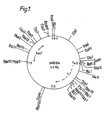
- the nucleotide structure of chimeric plasmid pAB 324 has the following order of cleavage sites, Xba I, Ava I, Bam HI, Pvu II, Tha L Hae II, Cau II, Hae III, Hae I Hind IF, Bgl II, Hae III Hand II, Eco RI, Hind III, Hae III, Bcl I, Hind II/Hpa I, Pvu II/Bal I, Hae III, Tha I, Cau II, Bcl I, Hind II, Bst EII, Eco RI, Tha I, Eco
- plasmid pAB 324 It is particularly advantageous property of plasmid pAB 324 that it has single cleavage sites for the restriction enzymes Ava I, Bam HI, Bal I, Bgl II, Bst EII, Hga I, Hind III, Hpa I, Xba I and Xho I.
- This property makes pAB 324 a very useful transfer vector, expecially for use in micro-organisms wherein the pUB 110 replicon present in pAB 324 will operate.
- Preferred micro-organisms include B. subtilis, especially the strain B.
- subtilis NCIB 11621 deposited on 12 December 1980 at the National Collection of Industrial Bacteria, Aberdeen, Scotland (equivalent to B subtilis ATCC deposited on 1981 at the American Type Culture Collection, Maryland, USA) or the strain B subtilis NCIB 11623 deposited on 12 December 1980 at NCIB Aberdeen, Scotland (equivalent to B subtilis ATCC deposited on 1981 at ATCC, Maryland, USA).
- the present invention further provides a process for the production of plasmid pAB 324 wherein:-
- Any suitable strain of B.subtilis may be used, preferably however the strain B.subtilis NCIB 11621 or 11623 (ATCC ) is employed. Selection by tetracycline and neomycin is preferably performed at antibiotic levels between about 6 and 25 ⁇ g/ml. Plasmid DNA may be isolated by any of the methods well known to those skilled in this art, for example, by extraction of total DNA from the Tc r Neo T cells, followed by separation of plasmid from chromosomal DNA.
- Plasmid pAB 124 is a deletion/insertion derivative of pAB 324. It expresses only tetracycline resistant genes, codes for both the pAB 124 and the pUB 110 replicon and has a molecular weight of about 5.9 Md.
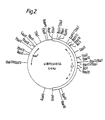
- nucleotide structure of chimeric plasmid pAB 124: pUB 110 has the following order of cleavage sites:
- chimeric plasmid pAB 124: pUB 110 It is particularly advantageous property of the chimeric plasmid pAB 124: pUB 110 that it has single cleavage sites for the restriction endonucleases Ava I, Bam HI, Bal I, Bgl II, Bst EII, Hga I, and Hpa I. Digestion of the plasmid with any one of these restriction enzymes will afford an open-chain structure which retains the full nucleotide sequence of the circular plasmid pAB 124: pUB 110, in many cases this open chain structure will also possess cohesive termini, at both the 5 / - and 3 / - ends of the molecule.
- Chimeric plasmid pAB 124: pUB 110 may be prepared by the following process wherein:
- pAB 124 is a tetracycline resistant plasmid originally derived from the thermophilic bacillus, B. stearothermophilus, as described by A H A Bingham et al, J Gen Microbiol, 1979, 114, 401.
- a transformed micro-organism Bacillus subtilis (pAB 124) was deposited on 12 December 1980 at the National Collection of Industrial Bacteria (NCIB), Aberdeen, Scotland as B.subtilis NCIB 11622 (equivalent to ATCC deposited on 1981 at ATCC, Maryland, USA).
- pAB 124 may be isolated from any suitable natural source or from any suitably transformed micro-organism, in particular B. subtilis NCIB 11622 (ATCC ) by DNA extraction, followed by separation of plasmid from chromosomal DNA.
- B. subtilis NCIB 11622 ATCC
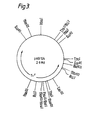
- nucleotide structure of pAB 124 has the following order of cleavage sites, Xba I, Hae III, Eco RI, Hae III, Bcl I, Hind II/Hpa I, Pvu II/Bal I, Hae III, Tha I, Cau II, Bcl I, Hind II, Bst EII, Eco RI, Tha I, Eco RI, Hga I, Tha I/Bcl I, Xba I.
- the restriction enzyme cleavage map corresponding to the above order of cleavage sites is illustrated in Figure 3 (infra).
- pUB 110 is a neomycin/Kanamycin resistant plasmid originally derived from Staphylococcus aureus as described by R W Lacey et al, J Med. Microbiol, 1974, 7, 285, and has been characterised by T J Gryczan et al, J.Bact, 1978, 134, 318.
- pUB 110 may be isolated from any suitable natural source or from any suitable transformed micro-organism, in particular B.subtilis NCIB 11624 (ATCC ) by DNA extraction followed by separation of plasmid from chromosomal DNA.
- B.subtilis NCIB 11624 ATCC
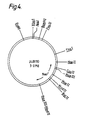
- the nucleotide structure of pUB 110 has the following order of cleavage sites, Xba I, Ava.I, Bam HI, Pvu II, Tha I, Hae II, Cau II, Hae III, Hae II, Hind II, Bgl II, Hae III/Hind II, Eco RI, Xba I.
- the restriction enzyme cleavage map corresponding to the above order of cleavage.sites is illustrated in Figure 4 (infra).
- pUB 110 may be performed by any suitable method well known in the recombinant DNA art.
- the openings (of pAB 124 and pUB 110) may be performed by hydrodynamic shear by digestion with an appropriate restriction enzyme to form, for example, non-cohesive (flush-ended) termini or by limited treatment with a non-specific endonuclease (eg DNase I).
- open-chain pAB 124 and open-chain pub 110 are modified to provide, respectively, linear pAB 124 and linear pUB 110, each with Xba I cohesive termini by any suitable method.
- open-chain pAB 124 and open-chain pUB with non-cohesive termini may each be joined to an appropriate synthetic oligodeoxynucleotide to provide Xba I specificity at their 5 / - and 3 / - ends. (The ends with a phosphate group on, respectively, the 5 / - and 3 / - carbon).
- the synthetically modified open-chain pAB 124 and pUB 110 may then be digested with restriction enzyme Xba I to provide linear pAB 124 and linear pUB 110 with the required Xba I cohesive termini.
- linear pAB 124 and linear pUB 110 each with Xba I cohesive termini, being obtained by digesting pAB 124 and pUB 110 respectively with the restriction endonuclease Xba I.
- Linear pAB 124 and linear pUB 110 each having the required Xba I cohesive termini are then joined by annealing the cohesive termini of the two.linear plasmids and then covalently bonding the two plasmids to each other (sealing the nicks between the plasmids) by ligation (using DNA ligase).
- the chimeric plasmid pAB 124: pUB 110 may be obtained in substantially pure form by transforming the mixture obtained from step (c) above into cells of a suitable host micro-organism, selecting the Tc r only cells and isolating pAB 124: pUB 110 from the selected tetracycline resistant cells.
- pAB 124: pUB 110 may be obtained in substantially pure form by transforming the mixture into cells of a suitable host micro-organism, selecting the Tc r Neo r cells, and isolating pAB 124: pUB 110 from the plasmid pUB 110 and other nucleic acids contained in these Tcr Neo r cells.
- pAB 124 by transformation into a host organism, selection for Tc r or Tc r Neo resistance and isolation may be performed by any of the methods well known in the art. Any host organism in which the pAB 124 replicon, the pUB 110 replicon or both of these replicons are active may be used. Preferred organisms are, for example, B.subtilis, or a thermophilic bacillus such as B.stearothermophilus.
- Tetracycline concentrations of between about 6 and 25 ⁇ g/ml are preferred.
- pAB 124 pUB 110 being a hybrid of both pAB 124 and pUB 110, contains both Tc r genes (from pAB 124) and Neo r genes (from pUB 110). It is therefore a surprising feature of pAB 124: pUB 110 that only the Tc r gene is expressed.
- pAB 124: pUB 110 also codes for both the pAB 124 and pUB 110 replicon. This may allow pAB 124: pUB 110 to replicate in micro-organisms in which the pAB 124 replicon operates, the pUB 110 replicon operates or both the pAB 124 and pUB 110 replicon operate. For example replication of pAB 124: pUB 110 will take place in B.subtilis.
- Transformation of plasmid pAB 324 into competent cells of B.subtilis NCIB 11621 (ATCC ) gives 3050 Neo r and 3250 Tc r transformants per ⁇ g DNA, all of which may be shown to have a Neo r Tc r phenotype by replica plating.
- the plasmid pAB 324 therefore gains, by comparison with its precursor pAB 124: pUB 110 the ability to express Neo r genes. It is believed that this ability results from the deletion of part of the nucleotide structure of pAB 124: pUB 110, although the invention is not in any way limited by this explanation.
- a comparison of the cleavage site maps of pAB 124: pUB 110 and pAB 324 indicates two regions of homology. One corresponding to the neomycin resistance genes, the other to the tetracycline resistance genes. Between these two regions a deletion has occurred where one Eco RI, one Xba I and one Hae III site in pAB 124: pUB 110 has been deleted in pAB 324, and a Hind III site not present in pAB 124: pUB 110 has been generated in pAB 324.
- pAB 324, and pAB 124: pUB 110 show a quite large insert, in pAB 324, adjacent to the Xba I site.
- This insert contains a unique Xho I site that is not present in pAB 124: pUB 110, with a small deletion to the right where one Tha I and one Bcl I site present in pAB 124: pUB 110 has been deleted.
- the insert in pAB 324 containing the Xho I site is derived from the B.subtilis chromosome.
- pAB 324 or other Tc r Neo r plasmids according to this invention may be used as transfer vectors in recombinant DNA technology either in their original form or with certain parts of their nucleotide chains deleted.
- deletion products may be produced by any suitable method, for example by hydrodynamic shear, or restriction enzyme cleavage, followed by recircularisation.
- deletions will preferably occur in a non-essential part or parts of the Tc r Neo r plasmids nucleotide structure. Suitable deletions will leave resultant plasmid with the ability to replicate in a suitable host organism and, preferably, also to confer antibiotic resistance (especially T c r , Neo r or both) onto said host.
- the micro-organism suitable for transformation by the new deleted plasmid may be, for example, B subtilis or a thermophilic bacillus, such as B.stearothermophilus.
- pAB 624 is a tetracycline resistant plasmid which codes for the pUB 110 replicon. (c.f. pAB 324 which is both Tc r and Neo r and codes for the pUB 110 replicon).
- pAB 624 has a molecular weight of about 5.0 Md.
- the nucleotide structure of pAB 624 has the following order of cleavage sites, Xba I, Ava I, Mbo I, Hae III/Hind II, Eco RI, Hind III, Hae III, Bcl I/Mbo I, Hind II/Hpa I, Pvu II/Bal I, Hae III, Tha I, Cau II, Bcl I/Mbo I, Hind II, Bst EII, Eco RI, Tha I, Eco RI, Hga I, Xho I, Xba I.
- the restriction enzyme cleavage map corresponding to the above order of cleavage sites is illustrated in Figure 5 (infra).
- pAB 624 It is a particularly advantageous property of pAB 624 that it has single cleavage sites for the restriction enzymes Ava I, Bal I, Bst EII, Cau II, Hga I Hind III, Hpa I, Pvu II, Xba I and Xho I.
- This property makes pAB 624 a very useful transfer vector, especially for use in micro-organisms in which the pUB 110 replicon present in pAB 624 will operate.
- Preferred micro-organisms include B.subtilis, especially the strain B.subtilis NCIB 11621 or 11623 (ATCC or ).
- pAB 624 may be prepared from pAB 324 by any suitable method. Preferably, however, pAB 624 is prepared by:
- pAB 624 may then be obtained in substantially pure form by transforming the mixture obtained after recircularisation of the longer linear DNA molecule into a suitable host micro-organism, selecting the cells that are only resistant to tetracycline and isolating pAB 624 from the selected tetracycline resistant cells.
- Suitable host micro-organisms include any micro-organisms in which the pUB 110 replicon operates, particularly
- B. subtilis especially the strain B. subtilis NCIB 11621 or 11623 (ATCC or ).
- Tetracycline concentrations of between about 6 and 25 ⁇ g/ml are preferred.
- Insertion of one or more heterologous DNA fragments into a Tc Neo r plasmid, such as pAB 324, or into a deletion derivative thereof, such as pAB 624, may be performed by, for example:
- the foreign INA fragment may be obtained by, for example, digestion with one or more restriction enzymes or fragmentation by physical methods (sonication, homogenisation etc) of the complete DNA molecules derived from sources, heterologous to the plasmid, such as eukaryotic or prokaryotic sources.
- the foreign DNA fragment may be synthesised chemically or enzymatically, for example, by using the enzyme reverse transcriptase derived from RNA tumour viruses.
- the foreign DNA fragment may itself be significant in the medical, industrial or research fields or it may, for example, be a structural gene coding for a protein having such significance.
- Such proteins would include the hormone insulin, a growth hormone, an interferon, a virus antigen such as hepatitis B virus antigen and other therapeutically active proteins or peptides.
- a virus antigen such as hepatitis B virus antigen and other therapeutically active proteins or peptides.
- the insertion of the foreign DNA fragment into a Tc r Neo r plasmid according to this invention or deletion derivatives thereof may yield still further plasmids useful as transfer vectors.
- the chosen plasmid (Tc r Neor plasmid or deletion derivatives thereof) is first cleaved in a non-essential part of its nucleotide structure to give a linear molecule.
- This step may be performed by, for example, digestion of the plasmid with a suitable restriction enzyme (in particular an enzyme with only one cleavage site in the plasmid molecule).
- the linear plasmid and the foreign DNA fragment, obtained by a suitable method, are then separately treated with the enzyme ⁇ exonuclease, an enzyme that removes nucleotides from the 5 / - end of DNA strands.
- the linear plasmid is then mixed with a deoxyribonucleotide triphosphate (e.g. deoxyadenosine triphosphate, dATP) in the presence of the enzyme terminal transferase.
- a deoxyribonucleotide triphosphate e.g. deoxyadenosine triphosphate, dATP
- dATP deoxyadenosine triphosphate
- This step provides the 3 / - termini of the linear plasmid with a homopolymeric tail comprising a polydeoxyribo- nucleotide (e.g. poly (dA)).
- the foreign DNA fragment is then similarly treated with terminal transferase, but in the present of the deoxyribonucleotide triphosphate that is complementary to that added to the linear plasmid (e.g. deoxyribo- thymidine triphosphate (dTTP)).
- deoxyribonucleotide triphosphate that is complementary to that added to the linear plasmid (e.g. deoxyribo- thymidine triphosphate (dTTP)).
- the ⁇ exonuclease step may be omitted if the terminal transferase steps are performed in the presence of cobalt ions).
- the linear plasmid and the foreign DNA fragment now contain homopolymeric tails that are complementary in sequence, and, thus, when they are mixed under annealing conditions they are able to associate by formation of hydrogen bonds at the 3/- terminal sequences.
- Reaction of the annealed product with DNA polymerase and DNA ligase in the presence of deoxyribonucleotides produces a recombinant DNA molecule consisting of the reformed plasmid with an inserted foreign DNA fragment that is flanked by two tailing sequences.
- the plasmid (Tc r Neo r plasmid according to the present invention or deletion derivatives thereof) is cleaved by a restriction enzyme at a single site within a non-essential part of the plasmid's structure.
- the fragment of foreign DNA is then obtained from a suitable source by digestion of the foreign DNA with the same restriction enzyme used to cleave the plasmid.
- the linear plasmid and foreign DNA fragment now have the same cohesive termini and thus, when they are mixed under annealing conditions, hydrogen bonds are formed between their complementary base pairs.
- the new composite molecules are then sealed by ligation, to form a recombinant DNA molecule comprising the entire plasmid and a foreign DNA fragment.
- the plasmid (Tc r N eo r plasmid according to the present invention or deletion derivatives thereof) is cleaved in a non-essential part of its structure by a restriction enzyme A.
- the linear plasmid is then treated with an S1 Nuclease enzyme to remove the linear plasmid's single stranded ends and to form a molecule with non-cohesive termini.
- This modified plasrid is then joined at both of its termini to a synthetic linker (a chemically synthesised double-stranded oligodeoxyribonucleotide) specific for a second restriction enzyme B. Digestion of the linear plasmid now affords a molecule having the cohesive termini characteristic of restriction enzyme B.
- the fragment of foreign DNA is obtained from a suitable source by digestion of the foreign DNA with restriction enzyme B.
- the linear plasmid and the foreign DNA fragment now have the since cohesive termini and thus, when they are mixed hydrogen bonds are formed between their complementary base pairs.
- the new composite molecules are then sealed by ligation.
- the Tc r Neo r plasmid is transformed, into a suitable host micro-organism and deletion of part of the plasmid's nucleotide structure; insertion of a foreign DNA fragment, from the host micro-organism's chromosomal DNA into the plasmid; or both deletion and insertion may occur.
- a particularly preferred micro-organism for the above procedures, in the insertion of foreign DNA into the plasmids of the present invention, is B.subtilis, especially the strain B.subtilis NCIB 11621 or 11623 (ATCC or ).
- Insertion derivatives of the Tc r Neo r plasmids of this invention or deletion derivatives thereof should retain the ability to replicate in a suitable host organism and, preferably, to confer antibiotic resistance (especially Tc r , Neo or both) onto said host.
- the inserted heterologous fragment is a structural gene (one which codes for a protein)
- this gene should be expressed in the host organism.
- the reading frame of the structural gene will be in register with the reading frame of the Tc r Neo r or deletion plasmid and the direction of transcription of the structural gene is the same as the direction of transcription of the Tc r Neo r or deletion plasmid.
- the structural gene is operatively linked to an expression control sequence within the Tc r Neo r or deletion plasmid.
- the micro-organism suitable for transformation by the new insertion plasmid derivative of the Tc r Neo or deletion plasmid will be one in which the recombinant DNA (Tc r Neo r or deletion plasmid plus insertion) replicates and may be one in which the recombinant DNA expresses antibiotic resistance, especially Tc r , Neo r or both, and, if the heterologous fragment is a structural gene, expresses the structural gene.
- Preferred micro-organisms will be either B subtilis or a thermophilic bacillus, such as B.stearothermophilus,
- pAB 724 is a tetracycline resistant plasmid which codes for the pUB 110 replicon.
- pAB 724 has a molecular weight of 6.0 Md.
- the nucleotide structure of pAB 724 has the following order of cleavage sites, Xba I, Ava I, Mbo I, Hind II, Hae II, Hae III, Cau II, Hae II, Tha I, Pvu II, Mbo I, Hae III/ Hind II, Eco RI, Hind III, Hae III, Bel I/Mbo I, Hpa I/Hind II, Bal I/ Pvu II, Hae III, Tha I, Cau II, Bel I/Mbo I, Hind II, Bst EII, Eco RI, Tha I, Eco RI, Hga I, Xho I and Xba I.
- the restriction enzyme cleavage map corresponding to the above order of cleavage sites is illustrated in Figure 6 (infra).
- .It is a particularly advantageous property of plasmid pAB 724 that it has single cleavage sites for restriction enzymes Ava I, Bal I, Bst EII, Hga I, Hind III, Hpa I, Xba I and Xho I.
- This property makes pAB 724 a very useful transfer vector, especially for use in micro-organisms wherein the pUB 110 replicon, present in pAB 724, will operate.
- Preferred micro-organisms include B.subtilis, especially the strain B.subtilis NCIB 11621 or 11623 (ATCC or ).
- pAB 724 may be prepared by any suitable method. Preferably however pAB 724 is prepared from pAB 624 by:
- pAB 724 formed by pAB 324 and pAB 624 are reformed. Therefore in order to isolate substantially pure pAB 724 from the mixture obtained from step (c) above, said mixture is first transformed into a suitable host organism, the cells resistant only to tetracycline are selected and pAB 724 is isolated from the selected tetracycline resistant cells.
- cells containing pAB 724 may also be selected from cells containing unchanged pAB 624 by treating the plasmids obtained from the respective cells with the restriction enzyme Mbo I. Cells which contain a plasmid with four Mbo I sites are those transformed with pAB 724.
- pAB 724 may be prepared from pAB 324 as follows:
- step (c) in order to isolate substantially pure pAB 724 from the mixture obtained from step (c), said mixture is first transformed into a suitable host micro-organism and the cells resistant only to tetracycline are selected. Cells containing pAB 724 are then selected from cells containing pAB 624 by treating the plasmids obtained from the respective cells with the restriction enzyme Mbo I. Cells which contain a plasmid with four Mbo I sites are those transformed with pAB 724.
- Suitable host micro-organisms for transformation in either of the above methods include any micro-organism in which the pUB 110 replicon operates, particularly B.subtilis especially the strain B.subtilis NCIB 11621 or 11623 (ATCC or ).
- Tetracycline concentrations of between about 6 and 25 ug/ml are preferred.
- pAB 724 is also a rearrangement derivative of pAB 324, the Bam HI, Bgl II 1 Md segment of pAB 324 being reversed in pAB 724.
- the insertion derivatives of the deletion derivatives of the Tc Neo r plasmids, the deletion-insertion (D-I) plasmids, for example pAB 724 may be used as transfer vectors in recombinant DNA technology either in their original form (as hereinbefore set out) or with certain parts of their nucleotide chains deleted.
- Such deletion products may be produced by any suitable method. For example by hydrodynamic shear, or restriction enzyme cleavage, followed by recircularisation.
- deletions from the D-I plasmids will preferably occur in a non-essential part or parts of the D-I plasmid's nucleotide structure.
- suitable deletions will leave the resultant plasmid with the ability to replicate in a suitable host organism and, preferably, also to confer antibiotic resistance (especially Tc r , Neo r or both) onto said host.
- the micro-organism suitable for transformation by the new deleted plasmid may be, for example, B.subtilis or a thermophilic bacillus, such as B stearothermophilus.
- Insertion of one or more heterologous DNA fragments into a D-I plasmid, such as pAB 724, or a deletion derivative thereof (a D-I-D plasmid) may be performed by, for example, any of the insertion procedures outlined for insertion into a Tc r Neo r plasmid.
- Suitable fragments of heterologous DNA may include those listed under the insertion derivatives of Tc r Near plasmids.
- the insertion of the heterologous DNA fragment into a D-I or D-I-D plasmid may yield still further plasmids suitable as transfer vectors.
- Insertion derivatives of a D-I or a D-I-D plasmid should preferable retain the ability to replicate in a suitable host organism and to confer antibiotic resistance (especially Tc r , Neo r or both) onto said host.
- the inserted heterologous fragment is a structural gene (one which codes for a protein)
- this gene should be expressed in the host organism.
- the reading frame of the structural gene will be in register with the reading frame of the D-I or the D-I-D plasmid and the direction of transcription of the structural gene is the same as the direction of trans- scription of the D-I or the D-I-D plasmid.
- the structural gene is operatively linked to an expression control sequence within the D-I or the D-I-D plasmid.
- the micro-organism suitable for transformation by the new insertion plasmid derivative of the D-I or the D-I-D plasmid will be one in which the recombinant DNA (plasmid plus insertion) replicates and may be one in which the recombinant DNA expresses antibiotic resistance especially Tc r , Neo r or both, and, if the heterologous fragment is a structural gene, expresses the structural gene.
- Preferred micro-organisms will be B.subtilis or a thermophilic bacillus, such as B.stearothermophilus.
- D-I plasmids derived from a Tc r Neo r plasmid according to the present invention may also be prepared by a synthetic route which is independent of the Tc r Neo r plasmid.
- a D-I plasmid is pAB 124: pUB 110, a deletion-insertion derivative of the Tc r Neo r plasmid, pAB 3?4.
- pAB 124: pUB 110 expresses only tetracycline resistant genes, codes for both the pAB 124 and the pUB 110 replicon and has a molecular weight of about 5.9 Md.
- This plasmid may be prepared by combining pAB 124 and pUB 110.
- pAB 124: pUB 110 may be used as a transfer vector in recombinant DNA technology either in its original form (ashereinbefore set out) or with certain parts of its nucleotide chain deleted. Such deletion products, which do not include the removal of the pAB 124 nucleotide sequence (leaving pUB 110) or the removal of the pUB 110 nucleotide sequence (leaving pAB 124) may be produced by any suitable process. For example, treatment of pAB 124: pUB 110 with the restriction endonuclease Hae II, will remove a DNA fragment with a molecular weight of about 0.28 Md.
- Recircularisation (by, for example, annealing followed by logation) of the linear molecule, from which the 0.28 Md fragment has been deleted, affords a new plasmid pAB 024, with a molecular weight of about 5.6 Md, and with the following order of restriction enzyme cleavage sites (with reference only to the chosen restriction enzymes), Xba I, Ava I, Bam HI, Pvu II, Tha.
- deletions from pAB 124: pUB 110 will preferably occur in a non-essential part or parts of pAB 124: pUB 110's nucleotide structure.
- suitable deletions from pAB 124: pUB 110 would leave the resultant deleted plasmid with the ability to replicate in a suitable host organism and preferably also to confer antibiotic resistance (especially Tc r , Neo r or both) onto said host.
- the micro-organism suitable for transformation by the new deleted plasmid may be, for example, B.subtilis or it may be a thermophilic bacillus such as B stearothermophilus.
- insertion of a foreign (heterologous) DNA fragment into plasmid pAB 124: pUB 110 or plasmids, derived from pAB 124: pUB 110, with part of the nucleotide sequence of pAB 124: pUB 110 deleted may be performed by any of the methods well known to those skilled in the art. For example by:
- Suitable fragments of heterologous DNA may include, for example, DNA which is significant per se in the medical, industrial or research fields, or DNA which codes for a protein having such significance.
- proteins would include the hormone insulin, a growth hormone, an interferon, a virus antigen, such as hepatitis B virus antigen, and other therapeutically active proteins or peptides.
- the insertion of the heterologous DNA fragment into pAB 124: pUB 110 or deletion derivatives thereof may yield still further plasmids suitable as transfer vectors.
- Insertion derivatives of pAB 124: pUB 110 or deletion derivatives thereof should retain the ability to replicate in a suitable host organism and preferably to confer antibiotic resistance (especially Tc r , Near or both) onto said host.
- the inserted heterologous fragment is a structural gene (one which codes for a protein)
- this gene should be expressed in the host organism.
- the reading frame of the structural gene will be in register with the reading frame of pAB 124: pUB 110 or its derivative, and the direction of transcription of the structural gene is the same as the direction of transcription of pAB 124: pUB 110 or its derivative.
- the structural gene is operatively linked to an expression control sequence within pAB 124: pUB 110 or its derivative.
- the micro-organism suitable for transformation by the new insertion plasmid derivative of pAB 124: pUB 110 or deletion derivative will be one in which the recombinant DNA (plasmid plus insertion) replicates and may be one in which the recombinant DNA expresses anti- bitotic resistance, especially Tc r , Neo r or both, and, if the heterologous fragment is a structural gene, expresses the structural gene.
- Preferred micro-organisms will be either B subtilis or a thermophilic bacillus such as B stearothermophilus.
- the plasmids of the present invention especially pAB 024, pAB 124: pUB 110, pAB 324, pAB 624 and pAB 724, being plasmids with the ability to replicate in a suitable host organism, with the ability to confer antibiotic resistance onto a host organism, and having a large number of single restriction enzyme cleavage sites, many of them in non-essential genetic areas of the plasmids, are particularly suitable for use as transfer vectors in recombinant DNA techniques.
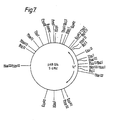
- FIGS 1 to 4 and 7 are with reference to the chosen restriction enzymes only, Figures 5 and 6 are with reference.to the chosen restriction enzymes plus Mbo I.
- TES buffer (30mM Tris - HC1 pH 8.0, 5mM Na 2 EDTA, 50mM NaC1) and suspended in 3.0ml TES buffer containing 25% (w/v) sucrose; 0.5ml 0.2M Na 2 EDTA pH 8.0 and 1.0ml lysozyme (10mg/ml in TES buffer) were then added. The mixture was vortexed and kept on ice for 10 min., before transferring to a 37°C water bath for a further 10 min.
- Lysis was accomplished by adding sodium dodecyl sulphate (SDS, 0.5m1, 10% (w/v)) followed by 1.0ml 5M NaCl and the mixture was left at 4°C for 16 hours.
- a cleared lysate was obtained by centrifuging at 45,000g for 1 hr.
- the cleared lysates were extracted twice with an equal volume of chloroform/3 - methylbutan-1-ol (24: 1, by vol), centrifuged at 6000g for 5 min and the upper aqueous phase was carefully removed from the denatured protein at the interface.
- the precipitate of SDS in the aqueous phase was removed by centrifuging at 45,000g for 10 min.
- Polyethylene glycol (PEG) 6000 was added to a final concentration of 10% (w/v) to the cleared lysates after alkali denaturation; the mixture was stirred gently until the PEG had dissolved and then left for 3 hr at 0°C.
- the precipitated DNA was removed by centrifuging at 12,000g for 15 min., resuspended in a small volume of TES buffer and extracted three times with an equal volume of chloroform/3 - methylbutan-1-ol (24: 1, by vol); centrifuging at 6000g for 5 min. removed the PEG at the interface and any remaining PEG precipitate in the aqueous phase was removed by centrifuging at 45,000g for 10 min.
- Caesium chloride (20g) was dissolved in 4 ml TESS (30mM Tris; 50mM NaCl; 5mM Na 2 EDTA; 25% sucrose (w/v); in distilled water; pH to 8.0 with 4 NHCl), 2.5ml. ethidium bromide (1 mg.ml -1 in TES) and all the PEG concentrated DNA extract. The final volume of all the additions was made up to 2.0 ml with TES. Diethylpyrocarbonate, 5 ⁇ l (Sigma Ltd, London) was added and the solution mixed gently for 5 min, to inactivate nuclease activity. The solution was then divided equally between 4 x 10 ml polycarbonate centrifuge tubes and centrifuged for 24 h at 150000 xg (10°C) in a MSE65 ultracentrifuge (2.6.1).
- the DNA bands were visualised in the gradients by fluorescence with UV light and the top of gradient including the chromosomal DNA band was carefully removed using a piece of thin tubing connected to a peristaltic pump (LKB, South Croydon, Surrey). After rinsing the tubing with distilled water, the plasmid band was then removed in a similar manner, and dialysed against 51 of TE1 buffer for 17 h (4°C). The DNA was then precipitated by adding 1/10th volume of 4 M sodium acetate and 1 volume propan-2-ol, and leaving on solid C0 2 for 5 min. The DNA was collected by centrifugation for 2 min in a microcentrifuge (Quick Fit Instrumentation, UK) and the supernatant discarded. Residual liquid in the tubes was removed by blowing N 2 over the sample, and the plasmid DNA was then suspended in a small volume of TE1 buffer.
- Plasmid DNA was treated twice with an equal volume of buffer-saturated phenol (freshly distilled over N 2 ) equilibrated in 100mM Tris - HC1 pH 8.0, 10mM Na 2 EDTA, 50mM NaCl and mixed gently for 5 min.
- the phenol phase was removed after centrifuging at 10,000g for 5 min. and the aqueous phase was extracted twice with chloroform/3 - methylbutan-1-ol (24: 1, by vol) and three times with diethyl ether.
- the aqueous phase was adjusted to 0.3M solution and two volumes of cold (-20°C) ethanol were added.
- the precipitated plasmid DNA was removed by centrifuging at 40,000g for 20 min (-5°C) and then suspended in 500 ⁇ l of 10mM Tris - HCl pH 8.0, 10mM NaCl, 0.5mM Na 2 EDTA. After two extractions with chloroform/3 - methylbutan-1-ol (24: 1, by vol), the DNA solution was dialysed for 24 hr against two changes of the same buffer.
- Bacillus subtilis NCIB 11621 (ATCC ) was grown overnight at 37°C in 200ml SMS medium (10ml 50% glucose, 2g (NH 4 ) 2 SO 4 , 14 g K 2 HPO 4 , 6g KH 2 PO 4 , 0.2g. MgSO 4 . 7H 2 O, 1g Na 3 citrate, per litre of solution in distilled water) supplemented with 0.5ml tryptophan (2mg/ml) and then diluted with an equal volume of similar medium (prewarmed).
- SMS medium 50% glucose, 2g (NH 4 ) 2 SO 4 , 14 g K 2 HPO 4 , 6g KH 2 PO 4 , 0.2g. MgSO 4 . 7H 2 O, 1g Na 3 citrate, per litre of solution in distilled water
- the absorbance (540nm) was monitored at 30 min intervals, and at a value equivalent to maximum competance (15 to 60 min after cessation of exponential growth) 1ml samples of the culture were added to plasmid DNA (0.5 to 5 ⁇ g) in 50 ⁇ l polyethylene glycol 6000 (50%, w/v) and incubated for 1 hr at 37°C with vigorous aeration. Pre-warmed TYS medium (5ml) was then added and incubation was continued for a furthur hour.
- Ava I, Bam HI, Bcl I, Bgl II, Bst EII, Hae II, Hae III, Hind II, Hind III, Hpa I, Tha I, Xba I and Xbo I were obtained from Uniscience Ltd., Cambridge.
- Bal I, Hga I and Pvu II were obtained from C P Laboratories, PO Box 22, Bishops Stortford.
- Cau II, Eco RI and Mbo I were obtained from Dr R Roberts, Cold Spring Harbor Lab, Cold Spring Harbor, New York, USA.
- Digestions with Bam HI, Bcl I, Bgl II, Cau II and Xba I were performed in 10mM-Tris/HC1, pH 7.4, 10mM NaCl, 10mM MgCl 2 , 0.5mM dithiothreitol (DTT) and 0.5mg gelatine ml -1 .
- Digestion with Hae III, Hind II, Hind III and Hpa I were performed in 20mM Tris/HCl pH 7.4, 50mM NaCl, 20mM MgCl 2 , 0.5mM DTT and 0.5mg gelatine ml -1 .
- Digestions with Eco RI were performed in 100mM Tris/HCl pH 7.4, 5.0mM NaCl, 20mM MgCl 2 , 0.5mM DTT and 0.5mg gelatine ml -1 .
- Digestions with Ava I, Bst EII, Hae II, Tha I and Xho I were performed in the buffers recommended by the Bethesda Research Lab Corp., 411 North Stone- street Avenue, Rockville, Maryland 20850, USA.
- Digestions with Bal I, Hga I and Pvu II were performed in the buffers recommended by C P Laboroatories, Bishops Stortford.
- Digestion with Mbo I was performed in the buffer recommended by Dr R Roberts, Cold Spring Harbor Lab.
- Reaction mixtures contained 0.5 to 1.0 ⁇ g plasmid DNA in a final volume of 20 to 25 ⁇ l.
- the plasmid DNA was incubated with 1 unit of endonuclease at 37°C, except for Bcl I, Bst EII, Cau II and Tha I which were incubated at 50°C.
- the reactions were terminated by adding Na2EDTA to a final concentration of 10mM (Bel I, Bst EII, Cau II, Tha I) or heating at 66°C.
- plasmid DNA was first digested with the enzyme requiring the lower ionic strength, and then the buffer was adjusted with 10 X concentrated components prior to the addition of the second enzyme.
- the size of the plasmid DNA fragments obtained from the above digestions was measured graphically after subjecting the fragments to agarose - gel electrophoresis.
- ELectrophoresis was carried out for 5 hr at 150V (30mA) and the DNA was visualised by fluorescence with an uv mineralight transluminator, 254nm (Ultra violet Products, Winchester). Photographs were taken on Ilford FP4 film with a Practica super TL camera and a Soligor ⁇ 49 G orange filter.
- the sizes of unknown fragment were determined graphically from a 10 x enlargement of a photograph (35mm) and were taken as an average of three estimations.
- B subtilis (pAB 124) NCIB 11622 was prepared according to the method of A H A Bingham et al, J Gen Microbiol, 1979, 114, 401 by isolating pAB 124 from Bacillus stearothermophilus, and transforming the isolated plasmid pAB 124 into competent cells of B subtilis NCIB 11621 (ATCC ) (trp - , r - m - ).
- B subtilis (pAB 124) NCIB 11622 was cultured on TYS medium, (bactotryptone (20g/1), yeast extract (10g/1), NaCl (10g/1)) containing tetracycline (12mg/l). Cultures were grown at 37°C for 8 to 10 hours.
- Plasmid pAB 124 was then isolated from the above cell culture by the protocol set out above.
- a restriction enzyme site cleavage map of pAB 124 is shown in Figure 3.
- B subtilis (pUB 110) NCIB 11624 was prepared according to the method of T J Gryczan et al, J Bact, 1978, 134, 318-29 by isolating pUB 110 from Staphyloccoccus aureus, and transforming the isolated plasmid pUB 110 into competent cells of B subtilis NCIB 11623 (ATCC ) (trp , r - . m ).
- B subtilis (pUB 110) NCIB 11624 was cultured on TYS medium (bactotryptone (20g/l), yeast extract (10g/1), NaCl (10g/1)) containing neomycin (12mg/1). Cultures were grown at 37°C for 8 to 10 hours.
- Plasmid pUB 110 was then isolated from the above cell culture, by the isolation protocol set out above.
- a restriction enzyme site cleavage map of pUB 110 is shown at Figure 4.
- Plasmid DNA (1 ⁇ g) of pAB 124 and pUB 110 was digested with 1 unit Xba I restriction endonuclease for 60 min at 37°C, mixed, and the endonuclease inactivated by heating at 66°C for 15 min. When cool, the DNA was precipitated with cold (-20°C) ethanol, resuspended in 20 ⁇ l ligase buffer (66mM Tris - HC1 pH 7.6, 6.6.mM MgCl 2 , 10mM dithiothreitol, 0.4mM ATP) at 4°C. 0.05 units of T4 - DNA ligase (supplied by Uniscience Ltd) was then added and ligation carried out at 4°C for 20 hr.
- ligase buffer 66mM Tris - HC1 pH 7.6, 6.6.mM MgCl 2 , 10mM dithiothreitol, 0.4mM ATP
- the recombinant molecules were then transformed into competent cells of B subtilis NCIB 11621 (ATCC ) and transformants resistant only to tetracycline were selected by replica plating of the cells on two TSBA plates (tryptone(oxoid) 17g/l, soya peptone (oxoid) 3g/l, NaCl 5g/1, K 2 HPO 4 2.5 g /l, Glucose 2.5g/l in a litre solution in distilled water, pH to 7.3 with 2N HCl) containing respectively 12mg/1 of tetracycline and 12mg/1 of neomycin.
- ATCC B subtilis NCIB 11621
- Tc r transformants were then cultured on TYS medium containing tetracycline (12mg/1), at 37°C for 8 to 10 hours.
- Plasmid DNA was isolated from the cell culture, by the isolation protocol set out above, and plasmid pAB 124: pUB 110 was separated from residual plasmid pAB 124 by removing the closed circular covalent (CCC) species from agarose gels using the freeze-squeeze method of R W J Thuring et al, Anal Biochem, 1975, 66, 213 -20.
- CCC closed circular covalent
- the purified chimeric plasmid pAB 124: pUB 110 was then transformed into competent cells of B subtilis NCIB 11621 (ATCC ).
- Plasmid DNA (1 ⁇ g) of pAB 124 and pUB 110 was digested with 1 unit Xba I restriction endonuclease for 60 min at 37°C, mixed, and the endonuclease inactivated by heating at 66°C for 15 min. When cool, the DNA was precipitated with cold (-20°C) ethanol, resuspended in 20 ⁇ l ligase buffer (66mM Tris - HCl pH 7.6, 6.6mM MgCl 2 , 10mM dithiothreitol, 0.4mM ATP) at 4°C. 0.05 units of T 4 - DNA ligase (supplied by Uniscience Ltd) was then added and ligation carried out at 4°C for 20 hr.
- ligase buffer 66mM Tris - HCl pH 7.6, 6.6mM MgCl 2 , 10mM dithiothreitol, 0.4mM ATP
- the recombinant molecules were then transformed into competent cells of B subtilis NCIB 11621 (ATCC ) and Neo r Tc r transformants selected on TSBA plate containing 12 mg/l of both tetracycline and neomycin.
- Tc r Neo r transformants were then cultured on TYS medium containing tetracycline and neomycin, both at a concentration of 12mg/l, at 37°C for 8 to 10 hours.
- Plasmid DNA was isolated from the cell culture by the isolation protocol set out above, and plasmid pAB 124: pUB 110 was separated from plasmid pUB 110 by removing the CCC species from agarose gels using the freeze-squeeze method of Thuring et al.
- the purified chimeric plasmid pAB 124: pUB 110 was then transformed into competent cells of B subtilis NCIB 11621 (ATCC ).
- a restriction enzyme cleavage site map of pAB 124: pUB 110 is shown at Figure 2.
- Plasmid pAB 124 pUB 110 (1 ⁇ g) was digested to completion with Hae II and then the enzyme was denatured by heating at 66°C for 15 min.
- a preparative 0.8% (w/v) agarose gel in 90mM Tris, 90mM boric acid, 3mM Na 2 EDTA, 0.5 ⁇ g/ml ethidium bromide was used to separate the large Hae II - Hae II fragment that carries the tetracycline resistant gene from the small (0.28Md) Hae II - Hae II fragment.
- the large band was excised from the gel and the DNA eluted by slicing the gel into small pieces and extracting the DNA, by the freeze-squeeze method of Thuring. (Anal. Biochem., 1975, 66, 213).
- the INA was then precipitated with cold (-20°C) ethanol. The precipitate was collected by centrifugation, followed by removal of the ethanol. It was then resuspended in T4 ligase buffer (66mM Tris - HCl pH 7.6, 6.6mM MgCl 2 , 10mM dithiothreitol, 0.4mM ATP) and incubated overnight at 4°C with 0.05 units of T4 - DNA ligase.
- T4 ligase buffer 66mM Tris - HCl pH 7.6, 6.6mM MgCl 2 , 10mM dithiothreitol, 0.4mM ATP
- the ligated mixture was used to transform competent cells of B subtilis NCIB 11621 (ATCC ), and Tc r transformants were selected on TSBA plate containing 12 mg/l of tetracycline.
- Tc r transformants were then cultured on TYS medium containing tetracycline at a concentration of 12mg/l. Finally plasmid pAB 024 was isolated from the cell cultures by the isolation protocol set out above.
- a restriction enzyme cleavage site map of pAB 024 is shown at Figure 7.
- Plasmid pAB 124 pUB 110 was used to transform competent cells of B subtilis NCIB 11621 (ATCC ), and Tc r Neo r transformants were selected on TSBA plate containing 12mg/l of both tetracycline and neomycin.
- Tc r Neo r transformants were then cultured on TYS medium containing both tetracycline and neomycin at a concentration of 12mg/l. Plasmid pAB 324 was then isolated from the cell cultures by the isolation protocol set out above.
- the purified pAB 324, a Tc r Neo r plasmid according to the present invention was then transformed into competent cells of B subtilis NCIB 11621 (ATCC ).
- Plasmid pAB 324 (1 ⁇ g) was digested to completion with both Bgl II and Bam HI. In both cases the enzyme was denatured by heating at 66°C for 15 min.
- a preparative 0.8% (w/v) agarose gel in 90mM Tris, 90mM boric acid, 3mM Na 2 EDTA, 0.5 ⁇ g/ml ethidium bromide was used to separate the large Bam HI - Bgl II fragment that carries the tetracycline resistant gene from the small (1.0Md) Bam HI - Bgl II fragment..
- the large band was excised from the gel and the DNA eluted by slicing the gel into small pieces snd extracting the DNA as described in Example 4 above.
- the large Barn HI - Bgl II fragment was then precipitated with cold (-20°C) ethanol. The precipitate was collected by centrifugation, followed by removal of the ethanol. It was then resuspended in T4 ligase buffer (66mM Tris - HCl, pH 7.6, 6.6mM MgCl 2 , 10mM dithiothreitol, 0.4mM ATP), and incubated overnight at 4°C with 0.05 units of T4 - DNA ligase.
- T4 ligase buffer 66mM Tris - HCl, pH 7.6, 6.6mM MgCl 2 , 10mM dithiothreitol, 0.4mM ATP
- the ligated mixture was used to transform competent cells of B subtilis NCIB 11621 (ATCC ), and Tc r only transformants were selected on two TSBA plates, containing respectively 12mg/l of tetracycline and neomycin.
- Tc r only transformants were then cultured on TYS medium containing tetracycline at a concentration of 12mg/l. Finally plasmid pAB 624 was isolated from the cell cultures by the isolation protocol set out above.
- the purified pAB 624, a deletion derivative of pAB 324, was then transformed into competent cells of B subtilis NCIB 11621 (ATCC
- a restriction enzyme cleavage sits map of pAB 624 is shown at Figure 5.
- the small Bam HI - Bgl II fragment was then precipitated with cold (-20°C) ethanol.
- the precipitate was collected by centrifugation, followed by removal of the ethanol. It was then used in the construction of chimeric plasmid pAB 724 (infra).
- Plasmid 624 (1 ⁇ g) was partially digested with Mbo I. The enzyme was then denatured by heating at 66°C for 15 mins. The DNA was then precipitated with cold (-20°C) ethanol. The precipitate was collected by centrifugation, followed by removal of the ethanol. It was then resuspended in T4 ligase buffer. The small Bam HI - Bgl II fragment (collected in Ekample 6, supra) was then added and the mixture was incubated overnight at 4°C in the presence of 0.05 units of T4 - DNA ligase.
- the ligated mixture was used to transform competent cells of B subtilis NCIB 11621 (ATCC ), and cells which were resistant to tetracycline only were selected.
- Tc r only transformants were then cultured on TYS medium containing tetracycline at a concentration of 12mg/l. Plasmid DNA was then isolated from the cell cultures by the isolation protocol set out above.
- pAB 724 identified by the presence of four Mbo I sites, was then separated from any residual pAB 624, identified by the presence of three Mbo I sites, by employing the freeze-squeeze of Thuring et al on agarose gel.
- a restriction enzyme cleavage site map of pAB 724 is shown at Figure 6.
- Plasmid pAB 324 (1 ⁇ g) was digested to completion with both Bgl II and Barn HI. In both cases the enzyme was denatured by heating at 66°C for 15 min. When cool, the DNA was precipitated with cold (-20°C) ethanol, resuspended in 20 ⁇ l ligase buffer (66mM Tris-HCl pH 7.6, 6.6mM MgCl 2 , 10mM dithiothreitol, 0.4mM ATP) at 4°C. 0.05 units of T 4 - DNA ligase (supplied by Uniscience Ltd) was then added and ligation carried out at 4°C for 20 hours.
- ligase buffer 66mM Tris-HCl pH 7.6, 6.6mM MgCl 2 , 10mM dithiothreitol, 0.4mM ATP
- the recombinant molecules were then transformed into competent cells of B subtilis NCIB 11621 (ATCC ) and Tc r only transformants were selected by replica plating on two TSBA plates, containing respectively 12mg/l of tetracycline and neomycin.
- pAB 624 and pAB 724 could then be obtained in substantially pure form by either of the following processes:
- pAB 724 identified by the presence of four Mbo I sites
- pAB 624 identified by the presence of three Mbo I sites
- the purified pAB 624 and pAB 724 were then transformed separately, into competent cells of B subtilis NCIB 11621 (ATCC ). ii.
- the Tc r only transformants containing pAB 724 were then selected from cells containing pAB 624 by treating the plasmid DNA obtained from the respective cells (by the isolation procedure set out above) with the restriction enzyme Mbo I. Cells which contained a plasmid with four Mbo I sites were those transformed with pAB 724 whilst those which contained a plasmid with three Mbo I sites were those transformed with pAB 624.
- pAB 724 containing cells were then cultured on TYS medium containing tetracycline at a concentration of 12mg/ml. Plasmid DNA was then isolated from the cell cultures by the isolation protocol set out above. The purified pAB 724 was then transformed into competent cells of B subtilis NCIB 11621 (ATCC ).
- pAB 624 containing cells were separately cultured on TYS medium containing 12mg/ml of tetracycline. Plasmid DNA was then isolated from the cell cultures by the isolation protocol set out above. The purified pAB 624 was then transformed into competent cells of B subtilis NCIB 11621 (ATCC ).
Landscapes
- Genetics & Genomics (AREA)
- Health & Medical Sciences (AREA)
- Engineering & Computer Science (AREA)
- Life Sciences & Earth Sciences (AREA)
- Chemical & Material Sciences (AREA)
- Bioinformatics & Cheminformatics (AREA)
- Organic Chemistry (AREA)
- Biotechnology (AREA)
- General Engineering & Computer Science (AREA)
- Zoology (AREA)
- Wood Science & Technology (AREA)
- Biomedical Technology (AREA)
- Microbiology (AREA)
- Plant Pathology (AREA)
- Molecular Biology (AREA)
- Physics & Mathematics (AREA)
- Biochemistry (AREA)
- General Health & Medical Sciences (AREA)
- Biophysics (AREA)
- Micro-Organisms Or Cultivation Processes Thereof (AREA)
Applications Claiming Priority (2)
| Application Number | Priority Date | Filing Date | Title |
|---|---|---|---|
| GB8100246 | 1981-01-06 | ||
| GB8100246 | 1981-01-06 |
Publications (2)
| Publication Number | Publication Date |
|---|---|
| EP0057496A2 true EP0057496A2 (fr) | 1982-08-11 |
| EP0057496A3 EP0057496A3 (fr) | 1983-03-16 |
Family
ID=10518822
Family Applications (1)
| Application Number | Title | Priority Date | Filing Date |
|---|---|---|---|
| EP82300032A Withdrawn EP0057496A3 (fr) | 1981-01-06 | 1982-01-05 | Plasmides chimères |
Country Status (1)
| Country | Link |
|---|---|
| EP (1) | EP0057496A3 (fr) |
Cited By (1)
| Publication number | Priority date | Publication date | Assignee | Title |
|---|---|---|---|---|
| EP0063953A3 (fr) * | 1981-04-29 | 1983-10-19 | Biogen N.V. | Vecteurs de clonage de bacillus, molécules de DNA recombinant, hôtes de bacillus transformés par celles-ci et méthode pour l'expression de séquences de DNA étrangères et pour la production de polypeptides codés par ce DNA |
Family Cites Families (1)
| Publication number | Priority date | Publication date | Assignee | Title |
|---|---|---|---|---|
| GB2048894A (en) * | 1979-05-11 | 1980-12-17 | Gist Brocades Nv | Plasmid |
-
1982
- 1982-01-05 EP EP82300032A patent/EP0057496A3/fr not_active Withdrawn
Cited By (1)
| Publication number | Priority date | Publication date | Assignee | Title |
|---|---|---|---|---|
| EP0063953A3 (fr) * | 1981-04-29 | 1983-10-19 | Biogen N.V. | Vecteurs de clonage de bacillus, molécules de DNA recombinant, hôtes de bacillus transformés par celles-ci et méthode pour l'expression de séquences de DNA étrangères et pour la production de polypeptides codés par ce DNA |
Also Published As
| Publication number | Publication date |
|---|---|
| EP0057496A3 (fr) | 1983-03-16 |
Similar Documents
| Publication | Publication Date | Title |
|---|---|---|
| US4237224A (en) | Process for producing biologically functional molecular chimeras | |
| Noegel et al. | Determination of the functions of hemolytic plasmid pHly152 of Escherichia coli | |
| US4740470A (en) | Biologically functional molecular chimeras | |
| US5175101A (en) | Recombinant restriction enzyme sau3ai | |
| US4649119A (en) | Cloning systems for corynebacterium | |
| EP0077664B1 (fr) | ADN recombinant et bacille coliforme contenant le matériel génétique pour la production de staphylokinase, et la production de staphylokinase | |
| EP0032238B1 (fr) | Bactériophage recombinant pour clonage hétérologue de microorganismes du genre bacillus et procédé pour sa production | |
| EP0293391A1 (fr) | Genes streptococcyques clones codant la proteine g et leur utilisation pour construire des micro-organismes recombinants produisant la proteine g | |
| EP0143841B1 (fr) | Plasmide viral hybride et micro-organismes le contenant | |
| US4663285A (en) | Chimeric plasmids | |
| EP0133321B1 (fr) | Gène d'ADN, procédé pour sa production et plasmide contenant ce gène | |
| EP0149241B1 (fr) | Séquence de bases d'ADN contenant des régions impliquées dans la production et la sécrétion d'une protéine, ADN recombinant comprenant la totalité ou une partie de la séquence de base d'ADN et méthode pour la production de protéines utilisant cet ADN recombinant | |
| EP0108301B2 (fr) | Procédé de clonage hétérologue d'un gène dans un microorganisme du genre bacillus | |
| US4673642A (en) | Plasmid P SVH 1 and its use | |
| GB2090600A (en) | Plasmids | |
| EP0138075A1 (fr) | Méthode pour la génération et détection de variantes d'enzymes à thermostabilité et activité élevée | |
| JP2540039B2 (ja) | プラスミドベクタ− | |
| JPS61224991A (ja) | 専門化リボソームおよびその使用方法 | |
| CA1191097A (fr) | Plasmide servant de vecteur de clonage pour bacillus subtilis | |
| Rak | gal mRNA initiated within IS 2: I. Hybridization studies | |
| EP0162725B1 (fr) | Vecteur plasmidique chimère | |
| US4585739A (en) | Plasmid for foreign gene expression in B. subtilis | |
| EP0619373A2 (fr) | Procédé de clonage et de production de l'endonucléase de restriction BglII et de la méthylase correspondante | |
| JP2540031B2 (ja) | 組換えdna分子 | |
| JPH0787790B2 (ja) | 新規な遺伝子dnaおよびアルカリ性プロテア−ゼの製造法 |
Legal Events
| Date | Code | Title | Description |
|---|---|---|---|
| PUAI | Public reference made under article 153(3) epc to a published international application that has entered the european phase |
Free format text: ORIGINAL CODE: 0009012 |
|
| AK | Designated contracting states |
Designated state(s): CH DE NL SE |
|
| PUAL | Search report despatched |
Free format text: ORIGINAL CODE: 0009013 |
|
| AK | Designated contracting states |
Designated state(s): CH DE LI NL SE |
|
| 17P | Request for examination filed |
Effective date: 19830113 |
|
| STAA | Information on the status of an ep patent application or granted ep patent |
Free format text: STATUS: THE APPLICATION IS DEEMED TO BE WITHDRAWN |
|
| 18D | Application deemed to be withdrawn |
Effective date: 19880309 |
|
| RIN1 | Information on inventor provided before grant (corrected) |
Inventor name: BRUTON, CHRISTOPHER JOHN Inventor name: ATKINSON, ANTHONY Inventor name: BINGHAM, ALISTAIR HAROLD ARTHUR |