EP0061459B1 - Procede de synthese de derives phenoxyalcanes - Google Patents
Procede de synthese de derives phenoxyalcanes Download PDFInfo
- Publication number
- EP0061459B1 EP0061459B1 EP81902253A EP81902253A EP0061459B1 EP 0061459 B1 EP0061459 B1 EP 0061459B1 EP 81902253 A EP81902253 A EP 81902253A EP 81902253 A EP81902253 A EP 81902253A EP 0061459 B1 EP0061459 B1 EP 0061459B1
- Authority
- EP
- European Patent Office
- Prior art keywords
- group
- formula
- chosen
- compound
- alkyl
- Prior art date
- Legal status (The legal status is an assumption and is not a legal conclusion. Google has not performed a legal analysis and makes no representation as to the accuracy of the status listed.)
- Expired
Links
- 0 C*C(*)(**)Oc1cc([U])c(*)cc1* Chemical compound C*C(*)(**)Oc1cc([U])c(*)cc1* 0.000 description 2
Classifications
-
- C—CHEMISTRY; METALLURGY
- C07—ORGANIC CHEMISTRY
- C07C—ACYCLIC OR CARBOCYCLIC COMPOUNDS
- C07C59/00—Compounds having carboxyl groups bound to acyclic carbon atoms and containing any of the groups OH, O—metal, —CHO, keto, ether, groups, groups, or groups
- C07C59/40—Unsaturated compounds
- C07C59/58—Unsaturated compounds containing ether groups, groups, groups, or groups
- C07C59/64—Unsaturated compounds containing ether groups, groups, groups, or groups containing six-membered aromatic rings
- C07C59/66—Unsaturated compounds containing ether groups, groups, groups, or groups containing six-membered aromatic rings the non-carboxylic part of the ether containing six-membered aromatic rings
- C07C59/68—Unsaturated compounds containing ether groups, groups, groups, or groups containing six-membered aromatic rings the non-carboxylic part of the ether containing six-membered aromatic rings the oxygen atom of the ether group being bound to a non-condensed six-membered aromatic ring
-
- C—CHEMISTRY; METALLURGY
- C07—ORGANIC CHEMISTRY
- C07C—ACYCLIC OR CARBOCYCLIC COMPOUNDS
- C07C303/00—Preparation of esters or amides of sulfuric acids; Preparation of sulfonic acids or of their esters, halides, anhydrides or amides
- C07C303/24—Preparation of esters or amides of sulfuric acids; Preparation of sulfonic acids or of their esters, halides, anhydrides or amides of esters of sulfuric acids
Definitions
- This invention relates to a process for the synthesis of organic compounds and in particular to the process for the synthesis of (4-hydroxyphenoxy)alkane derivatives.
- (4-Hydroxyphenoxy)alkane derivatives such as, for example, alkyl 2-(4-hydroxyphenoxy)propionates, are useful intermediates for the synthesis of a wide range of (aryloxyphenoxy)alkane derivatives which have been shown to have herbicidal activity.
- (4-hydroxyphenoxy)alkane derivatives have been prepared either:
- both of these processes suffer the disadvantage of using relatively expensive hydroquinone (derivatives) and the first process suffers the additional disadvantage of requiring the use of relatively expensive reagents to cleave the alkyl residue from the 4-alkoxy group.
- (4-hydroxyphenoxy)alkane derivatives may be prepared from the appropriate phenol obviating the need to use a hydroquinone or a 4-alkoxyphenol.
- the sulfate ester of formula II may be readily formed by the oxidation of a phenol with persulfuric acid or a salt thereof. Accordingly, in a preferred embodiment the invention provides a process forthe synthesis of a compound of formula I as hereinbefore defined which process comprises:
- the compounds of formula I wherein R' and R 2 are not the same, are optically active and the present invention also includes a process for the preparation of the individual stereo isomers of such compounds, and mixtures of those stereo isomers in addition to the racemic mixture of stereo isomers.
- suitable inorganic bases include the alkali and alkaline earth metal hydroxides and carbonates
- ammonia and suitable organic bases include amines of the formula NR 7 R 8 R 9 wherein R 7 , R 8 and R 9 are independently chosen from the group consisting of hydrogen, C 1 to C 6 alkyl, C, to C 6 hydroxyalkyl, phenyl and benzyl.
- heterocyclic groups include 1-pyrrolyl, 1-imidazolyl, 1-pyrazolyl, 1-pyrrolidinyl, 1-imidazolidinyl, 1-pyrazolidinyl, 1-piperidyl, 1-piperazinyl and 4-morpholinyl.
- Q in the compound of formula II is not critical. Suitable Q include hydrogen and cations as the alkali and alkaline earth metal ions and the ammonium ion.
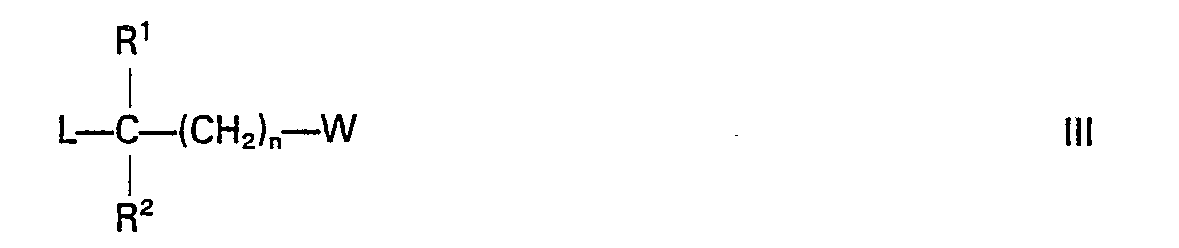
- suitable leaving groups may be chosen from halogen, C, to C 6 alkylsulfonyl, C, to C 6 haloalkylsulfonyl, arylsulfonyl such as benzenesulfonyl, aralkylsulfonyl such as benzylsulfonyl, alkarylsulfonyl such as p-toluene sulfonyl, C, to C 6 alkylsulfonyloxy, C 1 to C 6 haloalkylsulfonyloxy, arylsulfonyloxy such as benzenesulfonyloxy, aralkysulfonyloxy such as benzylsulfonyloxy, alkarylsulfonyloxy such as p-toluenesulfonyloxy, C 1 to C 6 alkylsulfonyloxy, arylsulfonyl
- R" and R 12 are chosen from C 1 to C s alkyl, phenyl and benzyl or_NR 10 R 11 R 12 is a heterocyclic group such as, for example, 1-methyl-1-pyrrolio, 1-methyl-1-imidazolio, 1-methyl-1-pyrrolidinio, 1-methyl-1-pyrrolinio, 1-methyl-1-imidazolinio, 1-methyl-1-piperidinio, 4-methyl-4-morpholinio, 1-pyridinio, 1-pyrazinio, 1-pyrimidino and 1-pyridazinio, and X ⁇ is a suitable anion including the anions of strong acids such as, for example, hydrochloric acid, hydrobromic acid, hydriodic acid, tetrafluoroboric acid, hexafluorophosphoric acid, hexa- fluoroantimonoic acid, methansulfonic acid, fluorosulfonic acid, fluoromethanesulfonic acid and trifluo
- Preferred R' and R 2 include hydrogen and C 1 to C 6 alkyl.
- More preferred-R 1 is methyl and more preferred R 2 is hydrogen.
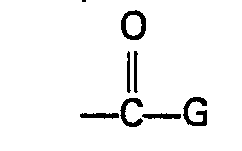
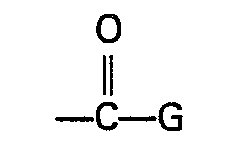
- Preferred W is the group wherein G is chosen from the group consisting of hydroxy, C 1 to C 10 alkoxy, C 1 to C 10 haloalkoxy, C 2 to C 10 alkenyloxy, C 2 to C 10 alkynyloxy, C 1 to C 10 alkylthio, C 2 to C 10 alkenylthio, C 2 to C 10 alkynylthio, phenoxy, benzyloxy, cyclohexyloxy, the group C 1 to C 10 alkoxy substituted with a substituent chosen from the group consisting of C 1 to C 6 alkoxy, amino, N ⁇ (C 1 to C 6 alkyl)amino, N,N-di(C 1 to C 6 alkyl)amino and N,N,N-tri(C 1 to C 6 alkyl)ammonio, the group NR 4 R 5 wherein R 4 and R 5 are independently chosen from hydrogen, C 1 to C 6 alkyl, C 1 to C 6 hydroxyalkyl, C 1 to
- W is the group wherein G is chosen from the group consisting of hydroxy, C 1 to C 10 alkoxy, C 2 to C 10 alkenyloxy, C 2 to C 10 alkynyloxy and the group OM wherein M is an alkali metal or alkaline earth metal ion.
- Preferred n is 0.
- preferred Q include the alkali metals such as, for example, sodium and potassium, and ammonium.
- preferred L include the halogen atoms chlorine, bromine and iodine, methanesulfonyl, trifluoromethanesulfonyl, p-toluenesulfonyl, methanesulfonyloxy, trifluoromethane- sulfonyloxy, p-toluenesulfonyloxy, trifluoromethanesulfonamido and 1-pyrimidino p-toluenesulfonate.
- Step a) of the process of the invention may be carried out under a wide range of operating conditions.
- the reaction is carried out in the presence of an alkaline material.
- Suitable alkaline materials include the alkali metal and alkaline earth metal hydroxides and carbonates such as, for example, sodium hydroxide, potassium hydroxide, sodium carbonate and potassium carbonate.
- Step a) of the process of the invention is also preferably carried out in the presence of an organic solvent.
- Suitable solvents include: alcohols such as, for example, methanol, ethanol, n-propanol and isopropanol; ketones such as, for example, acetone, methyl ethyl ketone and methyl isobutyl ketone; and dipolar aprotic solvents such as, for example, dimethylformamide, dimethylacetamide, dimethylsulfoxide, N-methylpyrrolidone, hexamethylphosphoramide and sulfolan.
- reaction conditions required to effect the reaction in step a) of the process of the invention will vary with the specific reactants and solvent used. In general the reaction is facilitated by the application of heat and usually a reaction temperature in the range of from 40 to 150°C and a reaction time of between 0.5 and 20 hours is satisfactory. However, higher or lower reaction temperatures and/or shorter or longer reaction times may be employed is desired.
- the compound of formula I may be formed by hydrolysis of the sulfate ester according to step b) of the process of the invention.
- the sulfate ester formed in step a) of the process of the invention may be hydrolysed without isolation from the reaction mixture, or alternatively the sulfate ester may be isolated from the reaction mixture and then hydrolysed.
- step b) of the process of the invention is carried out without the isolation of the sulfate ester
- the compound of formula I may be formed in situ by acid hydrolysis.
- the reaction mixture formed in step a) of the process of the invention may be acidified, for example with a mineral acid, for example, hydrochloric acid or an organic acid, for example, acetic acid, to hydrolyse the sulfate ester.
- a mineral acid for example, hydrochloric acid or an organic acid, for example, acetic acid
- the hydrolysis reaction is facilitated by the application of heat.
- the sulfate ester formed in step a) of the process of the invention may be isolated from the reaction mixture before hydrolysis.
- the sulfate ester may be isolated by removing the solvent from the reaction mixture formed in step a) of the process of the invention.
- the reaction mixture may be extracted with a water-immiscible organic solvent, optionally after acidification of the reaction mixture, to remove any unreacted compound of formula III from the reaction mixture.
- the solvent may then be removed from the aqueous solution, for example by distillation, distillation under reduced pressure, evaporation or freeze-drying, and the sulfate ester may be purified as required.
- the sulfate ester may then be hydrolysed to form a compound of formula I, for example, by hydrolysis with an aqueous mineral acid such as hydrochlorjc acid or an organic acid such as acetic acid.
- the sulfate ester of formula II which is used in step a) of the process of the present invention is formed by the oxidation of a phenol of formula IV with persulfuric acid or a salt thereof.
- the oxidation of phenols using persulfate is generally called Elbs Oxidation and this reaction is used in the art for the preparation of dihydroxybenzenes via the corresponding sulfate ester as outIined in the Merck Index 9th - (Merck, N. J. 1976), page ONR-27.
- the oxidation may be carried out under a wide range of conditions. However, preferably the oxidation is carried out in aqueous alkaline solution using a salt of persulfuric acid.
- Suitable bases include the alkali metal and alkaline earth metal oxides, hydroxides and carbonates.
- Suitable salts of persulfuric acid include the ammonium salt and the alkali metal salts such as sodium persulfate and potassium persulfate.
- the compound of formula IV is dissolved in an aqueous alkaline solution and the oxidizing agent is added slowly to the solution which is maintained at or below ambient temperature during the addition.
- the sulfate ester of formula II may be reacted directly, without isolation, with the compound of formula III or alternatively the sulfate ester may be isolated from the reaction mixture and then reacted with the compound of formula III.
- step a) of the process of the invention is carried out without isolation of the sulfate ester, conveniently, the compound of formula III may be simply added to the oxidation reaction mixture and step a) of the process may be carried out in the reaction mixture formed in the oxidation process.
- any unreacted compound of formula IV may be removed from the oxidation reaction mixture before carrying out step a) of the process of the invention by, for example, acidifying the aqueous reaction mixture formed (eg by the addition of an acid or carbon dioxide) and extracting the aqueous acid solution with a relatively polar, water-immiscible organic solvent. Any unreacted compound of formula IV extracted into the organic solvent may be recovered and recycled.
- the sulfate ester of formula II formed in the oxidation process may be isolated before reaction with the compound of formula III.
- the sulfate ester may be isolated by removing the solvent from the reaction mixture formed in the oxidation process and extracting the sulfate ester from the residue.
- the aqueous reaction mixture formed may be acidified (eg by the addition of an acid or carbon dioxide) and extracted with a relatively polar, water-immiscible organic solvent to remove any unreacted compound of formula IV from the reaction mixture.
- the aqueous phase may then be made basic, for example made alkaline to litmus with sodium hydrogen carbonate.
- the solvent may then be removed from the alkaline solution, for example by distillation, distillation under reduced pressure, evaporation or freeze-drying, and the sulfate ester may then be extracted from the residue.
- the solvent used to extract the sulfate ester from the residue will depend to a large extent on the solubility properties of the sulfate ester. However, in general the solvent used will be a polar organic solvent, such as, for example, ethanol or acetone, in order to effect maximum recovery of the sulfate ester combined with as small an amount of inorganic salts as possible.
- the sulfate ester containing solution may be used directly in step a) of the process of the invention or the sulfate ester may be separated for example by removal of the solvent, and further purified as required.
- the process of the invention is particularly suitable for the preparation of compounds of formula I wherein n is 0 and W is the group that is compounds of formula V.
- 2-(4-hydroxyphenoxy)propionate may be prepared by:
- the 2-(4-hydroxyphenoxy)propionate is prepared by oxidizing phenol with a persulfate salt in aqueous alkaline solution to give a 4-hydroxyphenylsulfate salt and
- the 2-(4-hydroxyphenoxy)propionate may be converted to another propionic acid derivative such as an acid salt, acid ester, acid amide, acid halide, nitrile, alcohol or alkyl halide utilizing methods known in the art for the preparation of carboxylic acid derivatives.
- another propionic acid derivative such as an acid salt, acid ester, acid amide, acid halide, nitrile, alcohol or alkyl halide utilizing methods known in the art for the preparation of carboxylic acid derivatives.
- the residue was acidified and extracted with aqueous 90% ethanol (500 ml).
- the aqueous ethanolic solution was made strongly basic and then heated under reflux while ethyl 2-bromopropionate (18 g, 0.1 mole) was added dropwise. After heating under reflux for a period of 2 hours the hot solution was acidified with concentrated hydrochloric acid and then stirred overnight at room temperature.
- the solvent was removed by distillation under reduced pressure and the residue was dissolved in ethanol (500 ml). Concentrated sulfuric acid (1 ml) was added to the ethanolic solution and the mixture was heated under reflux for a period of 48 hours. The solvent was removed by distillation under reduced pressure and the residue was partitioned between water and dichloromethane.
- the product was characterised by comparison with an authentic sample of ethyl 2-(4-hydroxy- phenoxy)propionate.
- the pmr spectrum of the product was identical with the pmr spectrum of the authentic sample and chromatographic behaviour of the product on thin-layer chromatography was identical with the authentic sample.
- the compound was characterized by comparison with an authentic sample of ethyl 2-(4-hydroxy- phenoxy)propionate prepared by a different route.
- the pmr spectrum of the product was identical with the pmr spectrum of the authentic sample.
- the infra-red spectrum of the product (film; v in cm-'): 3420, 2980, 1725, 1500, 1442, 1370, 1208, 1130, 1095, 1048, 1012, 943, 825, 755) was identical with the infra-red spectrum of the authentic sample.
- the aqueous solution was neutralized by the addition of dilute 2M hydrochloric acid (50 ml) and extracted with ethyl acetate (4 x 100 ml). The combined ethyl acetate extracts were dried over anhydrous magnesium sulfate and the solvent was removed by distillation under reduced pressure to give 2-(4-hydroxyphenoxy)propionic acid (0.75 g; 82%) as a brown solid, mp 140°C.
- the product was characterised by esterification in ethanol (sulfuric acid catalysis) to give ethyl 2-(4-hydroxyphenoxy)propionate as a brown oil (0.72 g; 68% overall yield).
- Potassium persulphate (27 g, 0.1 mole) was added in portions, as a finely ground powder, over a period of 8 hours, to a stirred solution of 2-fluorophenol (11.2 g, 0.1 mole) and sodium hydroxide (12 g, 0.3 mole) in water (400 ml) at 20°C. The mixture was stirred at 20° for 16 hours and then treated with carbon dioxide to bring the pH to 10. Unreacted 2-fluorophenol (3.9 g) was removed by extraction with diethyl ether (3 x 50 ml). The aqueous layer was concentrated under vacuum to pale brown powder (45 g) which was placed in a soxhlet and extracted with absolute ethanol (250 ml) for 6 hours. Evaporation of the ethanol gave crude potassium 3-fluoro-4-hydroxyphenylsulphate (9.5 g) as a pale brown powder.
- the (4-hydroxyphenoxy)alkanes which may be prepared according to the process of the invention are useful intermediates for the synthesis of a wide range of herbicidal (aryloxyphenoxy)alkane derivatives.
- the 2-(4-hydroxyphenoxy)propionic acid derivatives which may be prepared according to the process of the invention are useful intermediates in the preparation of a number of herbicidal 2-(4-aryloxy- phenoxy)propionic acid derivatives.
- both of these processes suffer the disadvantage of using relatively expensive hydroquinone (derivatives).
- the first process suffers the additional disadvantage of requiring the use of relatively expensive reagents to cleave the alkyl residue from the 4-alkoxy group while the second process suffers the additional disadvantage of possible reaction at both hydroxyl groups to give bisialkane) derivatives of hydroquinones.
Landscapes
- Chemical & Material Sciences (AREA)
- Organic Chemistry (AREA)
- Organic Low-Molecular-Weight Compounds And Preparation Thereof (AREA)
Claims (10)

procédé qui est caractérisé en ce qu'il comprend les étapes successives consistant:



Applications Claiming Priority (4)
| Application Number | Priority Date | Filing Date | Title |
|---|---|---|---|
| AUPE515980 | 1980-08-21 | ||
| AU5159/80 | 1980-08-21 | ||
| AU8174/81 | 1981-03-27 | ||
| AUPE817481 | 1981-03-27 |
Publications (3)
| Publication Number | Publication Date |
|---|---|
| EP0061459A1 EP0061459A1 (fr) | 1982-10-06 |
| EP0061459A4 EP0061459A4 (fr) | 1982-12-27 |
| EP0061459B1 true EP0061459B1 (fr) | 1986-10-29 |
Family
ID=25642408
Family Applications (1)
| Application Number | Title | Priority Date | Filing Date |
|---|---|---|---|
| EP81902253A Expired EP0061459B1 (fr) | 1980-08-21 | 1981-07-31 | Procede de synthese de derives phenoxyalcanes |
Country Status (3)
| Country | Link |
|---|---|
| US (1) | US4837355A (fr) |
| EP (1) | EP0061459B1 (fr) |
| WO (1) | WO1982000639A1 (fr) |
Families Citing this family (6)
| Publication number | Priority date | Publication date | Assignee | Title |
|---|---|---|---|---|
| US4537984A (en) * | 1983-05-19 | 1985-08-27 | Nissan Chemical Industries Ltd. | Process for producing 2-(4-hydroxyphenoxy) propionate derivatives |
| JPS61109753A (ja) * | 1984-10-31 | 1986-05-28 | Nissan Chem Ind Ltd | 2−(4−ヒドロキシフエノキシ)アルカン酸類の製造方法 |
| US8952596B2 (en) * | 2009-02-27 | 2015-02-10 | Seiko Epson Corporation | Surface acoustic wave resonator, surface acoustic wave oscillator, and electronic instrument |
| JP4645923B2 (ja) | 2009-02-27 | 2011-03-09 | セイコーエプソン株式会社 | 弾性表面波共振子、および弾性表面波発振器 |
| JP5678486B2 (ja) | 2010-06-17 | 2015-03-04 | セイコーエプソン株式会社 | 弾性表面波共振子、弾性表面波発振器および電子機器 |
| CN102391104A (zh) * | 2011-09-16 | 2012-03-28 | 南通嘉禾化工有限公司 | 一种(r)-(+)-2-对羟基苯氧基丙酸的合成及其分离工艺 |
Family Cites Families (1)
| Publication number | Priority date | Publication date | Assignee | Title |
|---|---|---|---|---|
| US3717669A (en) * | 1968-06-18 | 1973-02-20 | American Home Prod | 2-phenoxyalkanoic acid esters |
-
1981
- 1981-07-31 WO PCT/AU1981/000101 patent/WO1982000639A1/fr not_active Ceased
- 1981-07-31 US US06/367,229 patent/US4837355A/en not_active Expired - Fee Related
- 1981-07-31 EP EP81902253A patent/EP0061459B1/fr not_active Expired
Also Published As
| Publication number | Publication date |
|---|---|
| EP0061459A4 (fr) | 1982-12-27 |
| EP0061459A1 (fr) | 1982-10-06 |
| US4837355A (en) | 1989-06-06 |
| WO1982000639A1 (fr) | 1982-03-04 |
Similar Documents
| Publication | Publication Date | Title |
|---|---|---|
| EP0257781B1 (fr) | Procédé de production de dérivés de thiazolidinedione | |
| CN101945861B (zh) | 一种苯甲酰胺类化合物的制备方法 | |
| SU867298A3 (ru) | Способ получени производных пиперидина или их солей | |
| KR940001774B1 (ko) | 치환 및 이치환 피리딘-2,3-디카르복실레이트의 제조방법과 치환된 니코티네이트의 제조방법 | |
| CA2453505C (fr) | Preparation de composes d'aminopyrimidine | |
| EP0306996A2 (fr) | Procédé de préparation de dérivés de l'acide 3,5-dioxo cyclohexane carboxylique | |
| CN114805314B (zh) | 一种恩赛特韦的合成方法 | |
| SK280477B6 (sk) | Spôsob prípravy 5-(substituovaný metyl)-2,3--pyrid | |
| US4837355A (en) | Process for the synthesis of phenoxyalkane derivatives | |
| US4977264A (en) | Process for the production of 4,5-dichloro-6-ethylpyrimidine | |
| US4665212A (en) | Process for preparing 2-(4-hydroxyphenoxy) alkanoic acid compounds | |
| US5739342A (en) | Process for the preparation of nicotinic acids | |
| HU208533B (en) | Process for selective etherification of ascorbinic acid derivatives | |
| AU545426B2 (en) | Process | |
| US4908476A (en) | Synthesis of 2-(4-hydroxyphenoxy)alkanoic acids | |
| US4267336A (en) | Process for producing 4-(pyridyl-2-oxy)-phenoxyalkanecarboxylic acid or its derivatives | |
| EP0058173B1 (fr) | Procede de synthese de derives aryloxy | |
| KR100517632B1 (ko) | 3-시아노-2,4-디할로게노-5-플루오로-벤조산의 제조방법 | |
| CA1155843A (fr) | Preparation de derives de 4-aryloxy-phenol | |
| CA1224796A (fr) | Synthese des derives de phenoxyalkane | |
| JP3031279B2 (ja) | 2−アルコキシ−6−(トリフルオロメチル)ピリミジン−4−オルの製造方法 | |
| US5654338A (en) | Preparation of optically active α-(hydroxyphenoxy)alkanecarboxylic acids and derivatives thereof | |
| US4935522A (en) | Process for producing ethyl 2-[4'-(6"-chloro-2"-benzoxazolyloxy)phenoxy]propionate | |
| EP0891972A1 (fr) | Derives d'acide benzoique a substitution 3-(isoxazol-5-yl) et leur procede de production | |
| US4939303A (en) | 3,3-dimethylhex-5-en-2-one derivatives, preparation and use thereof |
Legal Events
| Date | Code | Title | Description |
|---|---|---|---|
| PUAI | Public reference made under article 153(3) epc to a published international application that has entered the european phase |
Free format text: ORIGINAL CODE: 0009012 |
|
| AK | Designated contracting states |
Designated state(s): CH DE FR GB |
|
| 17P | Request for examination filed |
Effective date: 19820902 |
|
| GRAA | (expected) grant |
Free format text: ORIGINAL CODE: 0009210 |
|
| AK | Designated contracting states |
Kind code of ref document: B1 Designated state(s): CH DE FR GB LI |
|
| REF | Corresponds to: |
Ref document number: 3175518 Country of ref document: DE Date of ref document: 19861204 |
|
| ET | Fr: translation filed | ||
| PLBE | No opposition filed within time limit |
Free format text: ORIGINAL CODE: 0009261 |
|
| STAA | Information on the status of an ep patent application or granted ep patent |
Free format text: STATUS: NO OPPOSITION FILED WITHIN TIME LIMIT |
|
| 26N | No opposition filed | ||
| PGFP | Annual fee paid to national office [announced via postgrant information from national office to epo] |
Ref country code: FR Payment date: 19900611 Year of fee payment: 10 |
|
| PGFP | Annual fee paid to national office [announced via postgrant information from national office to epo] |
Ref country code: GB Payment date: 19900614 Year of fee payment: 10 |
|
| PGFP | Annual fee paid to national office [announced via postgrant information from national office to epo] |
Ref country code: CH Payment date: 19900619 Year of fee payment: 10 |
|
| PGFP | Annual fee paid to national office [announced via postgrant information from national office to epo] |
Ref country code: DE Payment date: 19900629 Year of fee payment: 10 |
|
| PG25 | Lapsed in a contracting state [announced via postgrant information from national office to epo] |
Ref country code: LI Effective date: 19910731 Ref country code: GB Effective date: 19910731 Ref country code: CH Effective date: 19910731 |
|
| PG25 | Lapsed in a contracting state [announced via postgrant information from national office to epo] |
Ref country code: FR Effective date: 19920331 |
|
| REG | Reference to a national code |
Ref country code: CH Ref legal event code: PL |
|
| GBPC | Gb: european patent ceased through non-payment of renewal fee | ||
| PG25 | Lapsed in a contracting state [announced via postgrant information from national office to epo] |
Ref country code: DE Effective date: 19920401 |
|
| REG | Reference to a national code |
Ref country code: FR Ref legal event code: ST |