EP0062362B1 - Stabilisants pour polymères d'halogénures de vinyle - Google Patents
Stabilisants pour polymères d'halogénures de vinyle Download PDFInfo
- Publication number
- EP0062362B1 EP0062362B1 EP82200216A EP82200216A EP0062362B1 EP 0062362 B1 EP0062362 B1 EP 0062362B1 EP 82200216 A EP82200216 A EP 82200216A EP 82200216 A EP82200216 A EP 82200216A EP 0062362 B1 EP0062362 B1 EP 0062362B1
- Authority
- EP
- European Patent Office
- Prior art keywords
- zinc
- acetate
- grams
- stabilizers
- member selected
- Prior art date
- Legal status (The legal status is an assumption and is not a legal conclusion. Google has not performed a legal analysis and makes no representation as to the accuracy of the status listed.)
- Expired
Links
- 0 *CC(C1)C1=C1CCCCC1 Chemical compound *CC(C1)C1=C1CCCCC1 0.000 description 3
- IWDCLRJOBJJRNH-UHFFFAOYSA-N Cc(cc1)ccc1O Chemical compound Cc(cc1)ccc1O IWDCLRJOBJJRNH-UHFFFAOYSA-N 0.000 description 1
- ZFRKQXVRDFCRJG-UHFFFAOYSA-N Cc1c[nH]c2c1cccc2 Chemical compound Cc1c[nH]c2c1cccc2 ZFRKQXVRDFCRJG-UHFFFAOYSA-N 0.000 description 1
Classifications
-
- C—CHEMISTRY; METALLURGY
- C08—ORGANIC MACROMOLECULAR COMPOUNDS; THEIR PREPARATION OR CHEMICAL WORKING-UP; COMPOSITIONS BASED THEREON
- C08K—Use of inorganic or non-macromolecular organic substances as compounding ingredients
- C08K5/00—Use of organic ingredients
- C08K5/0091—Complexes with metal-heteroatom-bonds
-
- C—CHEMISTRY; METALLURGY
- C07—ORGANIC CHEMISTRY
- C07D—HETEROCYCLIC COMPOUNDS
- C07D209/00—Heterocyclic compounds containing five-membered rings, condensed with other rings, with one nitrogen atom as the only ring hetero atom
- C07D209/02—Heterocyclic compounds containing five-membered rings, condensed with other rings, with one nitrogen atom as the only ring hetero atom condensed with one carbocyclic ring
- C07D209/04—Indoles; Hydrogenated indoles
- C07D209/10—Indoles; Hydrogenated indoles with substituted hydrocarbon radicals attached to carbon atoms of the hetero ring
- C07D209/18—Radicals substituted by carbon atoms having three bonds to hetero atoms with at the most one bond to halogen, e.g. ester or nitrile radicals
- C07D209/20—Radicals substituted by carbon atoms having three bonds to hetero atoms with at the most one bond to halogen, e.g. ester or nitrile radicals substituted additionally by nitrogen atoms, e.g. tryptophane
-
- C—CHEMISTRY; METALLURGY
- C07—ORGANIC CHEMISTRY
- C07F—ACYCLIC, CARBOCYCLIC OR HETEROCYCLIC COMPOUNDS CONTAINING ELEMENTS OTHER THAN CARBON, HYDROGEN, HALOGEN, OXYGEN, NITROGEN, SULFUR, SELENIUM OR TELLURIUM
- C07F3/00—Compounds containing elements of Groups 2 or 12 of the Periodic Table
- C07F3/003—Compounds containing elements of Groups 2 or 12 of the Periodic Table without C-Metal linkages
-
- C—CHEMISTRY; METALLURGY
- C07—ORGANIC CHEMISTRY
- C07F—ACYCLIC, CARBOCYCLIC OR HETEROCYCLIC COMPOUNDS CONTAINING ELEMENTS OTHER THAN CARBON, HYDROGEN, HALOGEN, OXYGEN, NITROGEN, SULFUR, SELENIUM OR TELLURIUM
- C07F7/00—Compounds containing elements of Groups 4 or 14 of the Periodic Table
- C07F7/22—Tin compounds
- C07F7/2224—Compounds having one or more tin-oxygen linkages
-
- C—CHEMISTRY; METALLURGY
- C08—ORGANIC MACROMOLECULAR COMPOUNDS; THEIR PREPARATION OR CHEMICAL WORKING-UP; COMPOSITIONS BASED THEREON
- C08K—Use of inorganic or non-macromolecular organic substances as compounding ingredients
- C08K5/00—Use of organic ingredients
- C08K5/16—Nitrogen-containing compounds
- C08K5/17—Amines; Quaternary ammonium compounds
- C08K5/175—Amines; Quaternary ammonium compounds containing COOH-groups; Esters or salts thereof
Definitions
- Vinyl halide polymers in particular polyvinyl chloride, are commonly used in both plasticized and unplasticized forms. Making these forms often subjects the polymer to high temperatures during processing.
- the processing of vinyl halide polymers requires the addition of one or more stabilizers to prevent degradation of polyvinyl halide, as evidenced by gross color change or "burning". Burning is the term used to describe the darkening of the vinyl material from a light or clear to black color. This color change is the product of thermal decomposition through dehydrohalogenation.
- the polymer exhibits an inferior mechanical quality after dehydrohalogenation as evidenced by an increase in brittleness.
- vinyl halide polymers are discolored on extended exposure to light as often occurs in outdoor applications.
- organotin stabilizers have been employed with satisfactory results. However, organotin stabilizers are costly, and the supply of tin assures that the price will continue to increase. Some toxicity problems are also present in the use of certain organotin stabilizers. A combination of barium and cadmium carboxylate and phenate stabilizers have been used, exhibiting good stabilization properties, but not without some problems. There are toxicity problems associated with cadmium stabilizers in both the production of the stabilizers and in the end use. In fact, recent government actions, both in the United States and abroad, indicate a movement towards decreasing the allowable workplace exposure level to cadmium.
- Antimony stabilizers such as antimony mercaptides have also been used to prevent degradation.
- Lead carboxylates have effected excellent results as stabilizers for vinyl halide resins.
- end use toxicity and production level toxicity associated with lead compounds is well known.
- Zinc and calcium carboxylate combinations have been employed as stabilizing agents. However, such combinations have not been free of difficulties. Most zinc compounds used either alone or in combination as stabilizers lead to rapid degradation or "burning" of polyvinyl halides after a very short period of good color. In order to achieve acceptable stabilizing performance from zinc-calcium combinations, many co- additives or co-stabilizers must be employed, thereby increasing the cost of the stabilizer systems.
- zinc compounds as stabilizers for vinyl halide resins has many advantages.
- zinc is basically non-toxic, and therefore avoids the inherent toxicity problems associated with cadmium and lead stabilizers. There appear to be no toxicity problems associated with zinc compounds at either the production level or in the end use level.
- zinc compounds exhibit excellent stability against photodegradation. While tin mercaptides produce acceptable results as stabilizers, zinc compounds are far superior in their ability to stabilize polyvinyl halides against the degradative effects of light.
- Another objective of this invention is to provide novel metallic amino acid complexes which have stabilizing capabilities for vinyl halide polymers.
- This invention relates to metal amino acid complexes which are used as polyvinyl halide stabilizers.
- the compounds of this invention are described as mixed ligands or metal chelates of amino acids containing one or two molecules of amino acid.
- the stabilizers can be carefully distinguished from known stabilizers in that the chelation is done internally before use or on the same molecule. This is in contrast to the known use of external chelation of zinc molecules by the addition of chelating agents to known zinc stabilizers in the polymer as in Japanese Publication Patent Bulletin 1977: 19,744. This present invention results in the intentional chelating of zinc through amino acids.
- the chelator or ligand must control the production or activity of zinc chloride generated during heating of polyvinyl chloride.
- Hydrochloride acid produced by dehydrohalogenation, interacts with metal stabilizers to produce metal halides which accelerate the degradation of polyvinyl chloride. If the control of the metal activity is achieved through an external chelator, the chelation is the result of a more or less random process whereby the chelator finds a metal molecule.
- internal chelation results in better stabilizers for polyvinyl halides, in particular, polyvinyl chloride and copolymers thereof.
- United States Patent No. 3 983 085 to Yoshida et al. discloses both internal and external chelating agents. Due to the fact that external chelation is involved, sufficient control of the activity of the metal halide is not achieved. Also, the acylation of the basic amino acid is remote from the chelation site. The added presence of an amide linkage may produce over-chelation in that the metal amino acid salt is not active enough to produce acceptable stabilization. The acylation of the basic amino acid also introduces an additional step in the preparation of the materials, thereby increasing costs.
- Japanese Published Patent Bulletin 1979: 55,047 discloses amino acid metal salts or their derivatives of the general formula: where R' is an amino acid residue; M is a metal belonging to group II, III or IV of the periodic table; R 2 is a group selected from the group comprising alkyl, alkoxy, and hydroxygroups and can be the same or different groups; m is an integer of 1-4; n is an integer of 0-3; and m + n is 2-4.
- This patent bulletin does not disclose or suggest the use of carboxylates as an additional active ligand on the metal atom, or an activator. Carboxylates perform better as activators than alkyl, alkoxy or hydroxyl groups. In addition, carboxylates should confer greater stability to the stabilizing compound.
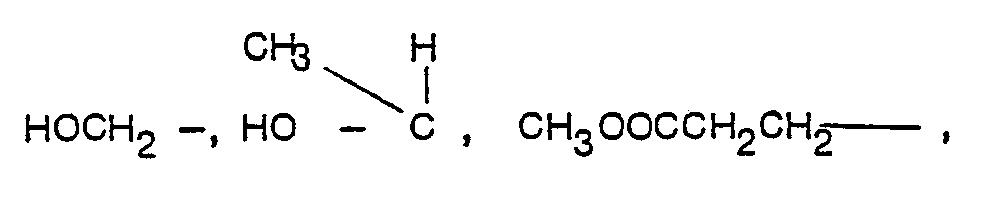
- the amino acid metal compounds of the invention have the following formula I: wherein M is a member selected from the group of divalent metals consisting of zinc, magnesium, calcium, barium, strontium, manganese, tin II and tin IV (R 5 ) 2 wherein R s is a lower alkyl of C 1 ⁇ C 8 ; R, is a member selected from the group consisting of H ⁇ , C 1 ⁇ C 12 alkyl-, and CH 3 SCH 2 CH 2 - with the proviso that R 1 cannot be CH 3 SCH 2 CH 2 - when M is zinc;
- the invention also includes bis amino acid metal complexes of the following formula II: wherein
- Zinc monoglutamate has been disclosed as a stabilizer for polyvinyl chloride in U.S. Patent 3 652 619. However, zinc monoglutamate does not display sufficient activity when used alone as stabilizer.
- Zinc bis (glutamate) is disclosed in "The Preparation and Isolation of Metallo Glutamic Acid Complexes" by David Sabine and Sr. Helen Therese Nyberg and Michael Cefola published in Archives of Biochemistry and Biophysics.
- Vinyl halide polymers may be used in various forms such as profile, siding, pipe, bottles, and flexible films or sheets.
- various end uses determine the level of acceptability for the performance of a polyvinyl halide stabilizer.
- the performance level of stabilizer in a flexible film formulation may not need to be as high as that required for a siding formulation because of higher heat or more strenuous processing conditions in the latter case and because of various end use conditions such as exposure to light.
- the most useful parameters derived from the various testing methods are the time to the first color appearance and time to blackness.
- the time to first color appearance is the amount of time required to produce a noticeable color change in the polymer.
- the time to blackness is the time required to totally burn or darken or blacken the polymer.
- the static oven test is merely the subjecting of the polymer to a certain temperature inside an oven. Periodic checks of the polymer, approximately every 15 minutes, are taken, and the results are recorded.
- Metrastat test a variation of the static oven test.
- a strip of the polymer formulation is subjected to a certain temperature in an oven and is removed from the oven on a conveyor at a predetermined rate. Therefore, it is possible to determine more closely both the time to first color appearance and total darkness or total blackness of the stabilized formulation by relating the position of the color change on the strip to the time that part of the strip remained in the oven.
- a description of the Metrastat test can be found in Plastics Engineering, December 1977.
- conventional stabilizers for vinyl halides are used in conjunction with co-stabilizers.
- the novel metal amino acid complexes described herein may also be used with co-stabilizers.
- Beta-diketones have heretofore been used as co-stabilizers in conventional zinc-calcium stabilizer formulations.
- Dehydroacetic acid has been used as a co-stabilizer previously. Use of dehydroacetic acid in conjunction with carboxylates is disclosed in U.S. Patent No. 3 346 536 to Argus Chemical Corporation. Interestingly enough, this reference specifically excludes use with nitrogen-containing carboxylic acid compounds. However, the use of dehydroacetic acid as co-stabilizer in conjunction with the novel metal amino acid complexes disclosed herein is particularly desirable.
- co-stabilizers can be used in combination with the dehydroacetic acid or other Beta-Diketones co-stabilizers and the novel metal amino acid complexes.
- Phosphites, expoxides, anti-oxidants, alkaline earth organic salts, and polyols, are all suited for use as additional co-stabilizers in accordance with this invention.
- phosphites that are particularly useful in this invention are included tris-nonylphenyl phosphite, diphenylisodecyl phosphite, THOP (tetraphenyl dipropylene diphosphite, triphenyl phosphite, tridecyl phosphite, diphenyl mono (2-ethyl hexyl) phosphite, monophenyldiisodecyl phosphite, tricresyl phosphite, stearyl neopentylene phosphite, dineopentylene triethylene glycol phosphite, diphenyl phosphite, and monophenyl phosphite.
- Typical epoxides used as co-stabilizers include epoxidized soybean oil and epoxidizes linseed oil as well as epoxidized tall oil, epoxidized cottonseed oil, epoxidized palm oil, glycidyl p-methoxy phenyl ether, and cyclohexene oxide.
- Antioxidants commonly employed as co-stabilizers include 2,6-ditertiary-butyl-4-methyl phenol, isopropylidene bisphenol, 2,6-di.:t-butyl phenol, 2,4-di-t-butyl phenol, catechol, resorcinol, 2,6-di-t-butyl-4-methoxy phenol, as well as phenyl amines and thiodipropionic acid esters.
- Alkaline earth organic salts typically utilized as co-stabilizers in connection with vinyl halide polymers include calcium stearate, barium stearate, barium nonyl phenate, calcium octoate, calcium benzoate, magnesium stearate, calcium aceto acetate, and strontium laurate.
- Polyols that are commonly employed as co-stabilizers for vinyl halide polymers include pentaerythritol, dipentaerythritol, sorbitol, mannitol, and trimethylol propane.
- Lubricants permit polyvinyl chloride to be worked and fused, yet avoid sticking to the rolls.
- Common lubricants include metallic fatty acid soaps, and various waxes.
- Fillers such as calcium carbonate, and pigments, such as titanium dioxide, are often added in the stabilizing formulation of conventional polyvinyl chloride stabilizers. Such fillers and pigments are readily adaptable for use in connection with the stabilizing compounds disclosed herein.
- the following is a table showing a specific formulation and parts per weight of ingredients of a stabilizing package for a rigid formulation of polyvinyl chloride.
- the first reaction type is:
- glycinatozinc neodecanoate is prepared starting with zinc neodecanoate and glycine.
- Tricinatozinc acetate was prepared by dissolving 17.9 grams of tricine (i.e. N[(trishydroxymethyl)methyl]-a-aminoacetic acid) and 21.9 grams of zinc acetate dihydrate in 250 ml of water in a 500 ml, three-neck flask equipped with a magnetic stirrer and reflux condenser. The solution was refluxed for three hours at which time the solution appeared clear. The water was then evaporated to recover a solid product of tricinatozinc acetate with an NMR spectrum which indicated 1:1 mole ratio of tricinate to acetate.
- tricine i.e. N[(trishydroxymethyl)methyl]-a-aminoacetic acid
- Sarcosinatozinc acetate was prepared by reacting 8.9 grams of sarcosine with 21.9 grams of zinc acetate dihydrate in 250 ml of water in a 500 ml, three-neck flask equipped with a magnetic stirrer and reflux condenser. The solution was refluxed for three hours at which time the solution appeared clear. Evaporation of the water yielded a solid product of sacrosinatozinc acetate with an NMR spectrum which indicated a 1:1 mole ratio of sacrosinate to acetate.
- Bicinatozinc acetate was prepared by reacting 16.3 grams of bicine (i.e. N.N-bis(hydroxyethyl)-a-amino acetic acid) and 21.9 grams of zinc acetate dihydrate in 250 ml of water in a 500 ml three-neck flask equipped with a magnetic stirrer and reflux condenser. The solution was refluxed for three hours at which time the solution appeared clear. The water then evaporated and a solid product of bicinatozinc acetate was recovered. An NMR spectrum indicated a 1:1 mole ratio of bicinate to acetate.
- Tricinatocalcium acetate was prepared by reacting 35.8 grams of tricine and 31.6 grams of calcium acetate in 250 ml of water in a 500 ml three-neck flask equipped with a magnetic stirrer and reflux condenser. The solution was refluxed for three hours at which time the solution appeared clear. Water was evaporated to recover a waxy solid product of tricinatocalcium acetate.
- Sacrosinatomagnesium acetate was prepared by reacting 8.9 grams of sarcosine and 21.5 grams of magnesium acetate tetrahydrate in 250 ml of water in a 500 ml three-neck flask equipped with a magnetic stirrer and reflux condenser. The solution was refluxed three hours at which time the solution appeared clear. The water was evaporated, and a white crunchy powder was recovered as sarcosinatomagnesium acetate.
- Glycinatomagnesium acetate was prepared by reacting 7.5 grams of glycine and 21.5 grams of magnesium acetate tetrahydrate in 250 ml of water in a 500 ml three-neck flask equipped with a magnetic stirrer and reflux condenser. The solution was refluxed for three hours at which time the solution appeared clear. The water was evaporated to recover the product glycinatomagnesium acetate.
- Zinc bis (bicinate) was prepared by reacting 21.9 grams of zinc acetate dihydrate and 32.6 grams of bicine in 250 ml of water in a 500 ml flask equipped with a magnetic stirrer and reflux condenser. The solution was refluxed for twenty-four hours and the water was then evaporated to recover the product zinc bis(bicinate).
- Zinc bis(tricinate) was prepared by reacting 21.9 grams of zinc acetate dihydrate with 35.8 grams of tricine in 250 ml of water in a 500 ml flask equipped with a magnetic stirrer and reflux condenser. The solution was refluxed for twenty-four hours, and the water was then evaporated to recover a product of zinc bis(tricinate).
- glycinatotin (II) acetate and glycinatomanganese acetate are prepared following the steps as outlined in the above Examples by substituting an equivalent amount of tin acetate and manganese acetate, respectively, for the zinc acetate.
- the second reaction type is typified by the following equation:
- Glycinatozinc acetate' half-acetic acid was prepared by adding 219.49 grams of zinc acetate dihydrate to 500 ml toluene in a two-litre reaction kettle equipped with a mechanical stirrer, reflux condenser, and a Dean-Stark Trap. Four ml of water were added to the stirring mixture. 75.07 grams of glycine and 500 ml of toluene were added to the mixture. The mixture was heated to reflux by an oil bath controlled to stay below 140°C. Water was collected immediately in a Dean-Stark Trap. Following an hour of reaction time, a solid mass formed at the bottom of the kettle. Stirring of the mixture became impossible after four hours of reaction time.
- the kettle was immediately immersed in an ice bath to facilitate removal of the product from the glass wall.
- a white chunky solid was filtered from the mixture, and upon drying, the solid was ground and rinsed with 200 ml of toluene through a vacuum filter.
- the product was dried in a forced air oven at about 70°C.
- Glycinatostrontium acetate was prepared by reaction 51.42 grams of strontium acetate, 18.77 grams of glycine and 9.01 grams of water in 50 ml of xylene in a 1-litre round-bottom one-neck flask, equipped with a magnetic stirrer, reflux condenser and Dean-Stark Trap. The solution was heated at reflux temperature for six hours, and the solid product was isolated by filtration.
- Dibutyltin glycinate stearate was prepared by adding 14.22 grams of stearic acid in 300 ml of toluene to a 500 ml one-neck round-bottom flask. The solution of stearic acid toluene was warmed. Subsequently, 3.75 grams of glycine and 12.45 grams of dibutyltin oxide were added to the stearic acid toluene solution. The apparatus was equipped with magnetic stirrer, reflux condenser and Dean-Stark Trap. After prolonged refluxing, 0.9 ml of water was collected in the Dean-Stark Trap. The reaction was then stopped and the solvent was stripped to recover a waxy semi-solid product of dibutyltin glycinate stearate.
- Dibutyltin methioninate stearate was prepared by dissolving 14.22 grams of stearic acid and 300 ml of toluene in a 500 ml one-neck, round-bottom flask equipped with a magnetic stirrer, reflux condenser and Dean-Stark Trap.
- the stearic acid toluene solution was warmed and, subsequently, 7.46 grams of methionine as 12.45 grams of dibutyltin oxide were added. After prolonged reflux, a quantitive amount of water was collected in the Dean-Stark Trap. The reaction was stopped, and the solvent stripped to recover the product of dibutyltin methioninate stearate.
- Glycinatozinc stearate was prepared by reacting 8.14 grams of zinc oxide, 7.51 grams glycine, and 42.68 grams of stearic acid in 500 ml of toluene in a one-litre one-neck round-bottom flask equipped with a magnetic stirrer, reflux condenser and Dean-Stark Trap. The mixture was refluxed for 12 hours and then filtered hot. The filter cake was the product, glycinatozinc stearate. The filtrate, after removal of toluene, yielded 96% of the excess stearic acid.
- Glycinatobarium acetate was prepared by reacting 30.67 grams of barium oxide, 15.01 grams of glycine and 12.01 grams of acetic acid in 500 ml of xylene in one litre, one-neck round-bottom flask equipped with a magnetic stirrer, reflux condenser and Dean-Stark Trap. The mixture was refluxed for six hours, and the solid product was isolated by filtration.
- Glycinatozinc octoate was prepared by reacting 16.3 grams of zinc oxide, 28.8 grams of octanoic acid and 15.0 grams of gylcine in 500 ml of toluene in a one litre, one-neck round-bottom flask equipped with a magnetic stirrer, reflux condenser and Dean-Stark Trap. The mixture was refluxed for twenty-two hours, during which time water was collected in the Dean-Stark Trap. The toluene was stripped from the solution and the glycinatozinc octoate was recovered as a white paste.
- Glycinatozinc acetate was prepared by reacting 8.1 grams of zinc oxide, 6.0 grams of acetic acid and 7.5 grams of glycine in 500 ml of water in a one litre, one-neck flask, equipped with a magnetic stirrer and reflux condenser. The solution was refluxed for three hours. The water was evaporated and the solid product of glycinatozinc acetate was recovered.
- Glycinatozincacetic acid half-acetate was prepared by reacting 8.1 grams of zinc oxide, 9.0 grams of acetic acid and 7.5 grams of glycine in 500 mi of water.
- the apparatus was a one-litre, one-neck flask, equipped with a magnetic stirrer and reflux condenser. The solution was refluxed for three hours, and then the water was evaporated to recover the solid product of glycinatozinc acetate' half-acetic acid.
- Triptophanatozinc acetate was prepared by reacting 20.4 grams of tryptophan, 6.0 grams of acetic acid and 8.1 grams zinc oxide in 500 ml of water in a one-litre, one-neck round-bottom flask equipped with a condenser and magnetic stirrer. The solution was refluxed for three hours, and the solid product was isolated by evaporating the water.
- Glycinatozinc benzoate was prepared by reacting 12.2 grams of benzoic acid, 7.5 grams of glycine and 8.1 grams of zinc oxide in 1000 ml of water in a two-litre flask equipped with a magnetic stirrer and reflux condenser. The mixture was refluxed for two hours. The product was isolated by evaporation of the water.
- Zinc oxide glycinatozinc acetate was prepared by reacting 81.4 grams of zinc oxide, 30.0 grams of acetic acid and 37.5 grams of glycine in 500 ml of water in a one-litre flask equipped with a magnetic stirrer and reflux condenser. The mixture was refluxed for four hours. The product was recovered by the evaporation of the solvent.
- the fifth reaction type is typified by the following equation:
- Zinc bis(methyl-glutamate) was prepared by reacting 12.2 grams of zinc oxide and 48.3 grams of mono-methyl-glutamate in 500 ml of toluene in a one-litre, one-neck round-bottom flask equipped with a magnetic stirrer, reflux condenser and Dean-Stark Trap. The mixture was refluxed to obtain a theoretical amount of water in the Dean-Stark Trap. A white powdery product was recovered by filtration.
- Zinc bis(bicinate) was prepared by reacting 8.1 grams of zinc oxide and 32.6 grams of bicine in 500 ml of water in a one-litre, one-neck flask equipped with a magnetic stirrer, and reflux condenser. The solution was refluxed for twenty-four hours and the solid product of zinc bis(bicinate) was recovered by filtration.
- Zinc bis(tricinate) was prepared by reacting 8.1 grams of zinc oxide and 35.8 grams tricine in 500 ml of water in a one-litre, one-neck round-bottom flask equipped with a magnetic stirrer and reflux condenser. The solution was refluxed for twenty-four hours, and the product was isolated by filtration.
- Barium bis(tricinate) was prepared by reacting 15.3 grams of barium oxide and 35.8 grams tricine in 500 ml of water in a one-litre, round-bottom flask equipped with a magnetic stirrer and reflux condenser. The solution was refluxed for twenty-four hours after which time the product, barium bis(tricinate), was recovered by evaporation of the solvent.
- Calcium bis(bicinate) was prepared by reacting 5.6 grams of calcium oxide with 32.6 grams of bicine in 500 ml of water in a one-litre, round-bottom flask equipped with a magnetic stirrer and a reflux condenser. The solution was refluxed for twenty-four hours, and the product was isolated by evaporation of the solvent.
- the sixth reaction type is typified by the following equation:
- Glutamatozinc acetate was prepared by reacting 123.3 grams of zinc mono-glutamate dihydrate and 45.0 grams of acetic acid in a one-litre, one-neck flask with 500 ml of water. The apparatus was equipped with a magnetic stirrer and reflux condenser. The mixture was reacted at reflux temperature fortwenty-four hours. The cloudy solution was filtered and the filtrate was stripped to recover the solid product, glutamatozinc acetate.
- Samples for the testing were prepared by milling. Unplasticized polyvinyl chloride formulations were weighed out and hand-mixed thoroughly. The mixture was introduced on a two-roll mill (15 cm x 30 cm) at 177°C. The mixture was banded and mill mixed for four minutes, and further milled for one minute. Plasticized polyvinyl halide formulations were milled similarly, except that the roll temperature was maintained at 160°C.
- plasticized and unplasticized polyvinyl halide formulations were tested by taking strips approximately 1.5 cm x 25 cm of the formulation and subjecting them to an automatic time geared oven (metrastat) or by manually retrieving samples at definite time intervals from the oven. The samples may then be mounted on display cards for comparison. Unplasticized polyvinyl chloride formulations were tested for thirty or sixty minutes at 205°C. The plasticized polyvinyl halide formulations were tested for 120 minutes at 185° or 190°C.
- Table 1 shows the effect of the novel metal amino acid complex for a plasticized polyvinyl chloride formulation.
- the various formulations were subjected to heating at 185°C for 120 minutes. Samples were taken every fifteen minutes.
- Column 4 shows the effect of the novel metal amino acid complex of this invention, glycinatozinc stearate, on the time to dark unacceptable color and time to degradation, as opposed to conventional zinc stabilizers as reported in columns 2 and 3.
- Column 6 shows the effect of the present invention in combination with calcium stearate in prolonging the time to first discoloration, the time to dark unacceptable color and the time to degradation.
- Table 2 details the times to coloration for a plasticized polyvinyl chloride formulation which was subjected to heating at 185°C for 120 minutes. Samples were taken every 15 minutes.
- Column 5 shows the stabilizing effects that the novel metal amino acid complex of this invention has on a polyvinyl chloride formulation.
- Column 4 shows the effect of the glycinatozinc acetate. half-acetic acid when used as the sole stabilizer while column 5 shows the effects when used with conventional co-stabilizers.
- Column 6 shows the results when conventional zinc stabilizers are used in conjunction with conventional co-stabilizers.
- Column 7 shows the results of the present invention used in conjunction with conventional co-stabilizers and pigments and fillers.
- Table 3 lists the results of subjecting a polyvinyl chloride formulation to heating at 205°C for 30 minutes. Samples were taken every five minutes. Column 1 shows the tendency of the polyvinyl chloride formulation to discolor immediately and produce black color after five minutes. Column 2 gives the figures for conventional zinc stabilizers whereas column 3 shows an increase in the time to discoloration and degradation with the use of the novel metal amino acid complex of the present invention.
- Table 4 gives the results of subjecting an unplasticized polyvinyl chloride formulation to heating at 205°C for thirty minutes in the Metrastat oven.
- Column 2 shows the effect that dehydroacetic acid has on improving the stabilizing capabilities of the novel metal amino acid complex of the present invention.
- Column 3 through 8 show the enhancing effects that butylated hydroxy toluene and pentaerythritol have on the stabilized resin system.
- Table 5 shows the results of subjecting an unplasticized polyvinyl chloride formulation to heating at 205°C for 60 minutes in the Metrastat oven.
- Column 1 shows a control formulation without any stabilizers.
- Column 2 shows the stabilizing effects of glycinatozinc acetate ' half-actinic acid.
- Column 3 shows the effects of glycinato calcium acetate.
- Column 4 shows the stabilizing effects of glyinato magnesium acetate and column 5 shows the effects of glycinato strontium acetate.
- Table 6 shows the results of subjecting unplasticized polyvinyl chloride formulations to heating at 205°C for sixty minutes in the Metrastat oven.
- Column 1 shows the results for an unstabilized polyvinyl chloride formulation.
- Column 2 shows the results for a polyvinyl chloride formulation stabilized with glycinatozinc acetate'half-acetic acid.
- column 3 shows polyvinyl chloride stabilized with glycinatozinc acetate'acetic acid.
- Column 4 shows the stabilizing capabilities of a physical mixture of stabilizer components and column 5 shows the stabilizing capability of the glycinatozinc acetate half-acetic acid'10% calcium stearate.
- Table 7 shows the results of subjecting a polyvinyl chloride formulation to heating at 205°C for thirty minutes. Samples were taken every 5 minutes. Columns 1, 2 and 3 show the stabilizing capabilities of novel metal amino acid complexes of the present invention which may be compared with the results of columns 4 and 5 which show the stabilizing ability of a prior art example and a conventional stabilizer.
- Table 8 shows the results of subjecting an unplasticized polyvinyl chloride formulation to heating at 205°C for thirty minutes. Samples were taken every five minutes. Column 1 shows the unstabilized condition of the vinyl halide resin. Columns 2, 3, 4 and 5 detail the results for the use of zinc glycinate, zinc methioninate, zinc mono-glutamate dihydrate and zinc aspartate trihydrate, respectively, as stabilizers in the vinyl chloride resin. Columns 6 and 7 show the enhancing effect of dehydroacetic acid, butylated . hydroxy toluene, and pentaerythritol on a vinyl halide resin stabilized by a metal amino acid complex of the present invention.
- Table 9 shows the effect of subjecting a plasticized polyvinyl chloride formulation to heating at 185°C for 120 minutes. Samples were taken every 15 minutes, Column 1 shows the tendency of the vinyl halide resin to discolor without any stabilizers. Column 2 shows the stabilizing effect of zinc bis(glutamate). Column 3 shows the stabilizing effects of zinc bis(glutamate) in combination with calcium bis(glutamate) monohydrate. Column 4 shows the effect of increasing calcium bis(glutamate) monohydrate in the formulation of column 3. Column 5 shows the effect of a further increase of the calcium bis(glutamate) mono-hydrate in the system. Column 6 shows the effect of zinc bis(glutamate) used in conjunction with magnesium bis(glutamate).
- Table 10 shows the effects of subjecting a plasticized formulation of polyvinyl chloride to heating at 190°C for 120 minutes in the Metrastat oven.
- Column 1 shows the stabilizing capabilities of a barium- cadmium commercial stabilizer.
- Column 2 shows the stabilizing effects of zinc bis(bicinate).
- Column 3 shows the stabilizing effects of tricinatozinc acetate.
- Column 4 shows the stabilizing capability of glutamatozinc acetate.
- Column 6 shows the stabilizing capabilities of glutamatozinc acetate used in conjunction with both zinc monoglutamate dihydrate and zinc bis(glutamate).
Landscapes
- Chemical & Material Sciences (AREA)
- Organic Chemistry (AREA)
- Health & Medical Sciences (AREA)
- Chemical Kinetics & Catalysis (AREA)
- Medicinal Chemistry (AREA)
- Polymers & Plastics (AREA)
- Compositions Of Macromolecular Compounds (AREA)
- Indole Compounds (AREA)
- Organic Low-Molecular-Weight Compounds And Preparation Thereof (AREA)
- Addition Polymer Or Copolymer, Post-Treatments, Or Chemical Modifications (AREA)
Claims (10)




Priority Applications (1)
| Application Number | Priority Date | Filing Date | Title |
|---|---|---|---|
| AT82200216T ATE14435T1 (de) | 1981-03-30 | 1982-02-22 | Stabilisatoren fuer vinylhalogenid-polymere. |
Applications Claiming Priority (2)
| Application Number | Priority Date | Filing Date | Title |
|---|---|---|---|
| US06/249,161 US4425280A (en) | 1981-03-30 | 1981-03-30 | Metal amino acids |
| US249161 | 1981-03-30 |
Publications (3)
| Publication Number | Publication Date |
|---|---|
| EP0062362A1 EP0062362A1 (fr) | 1982-10-13 |
| EP0062362B1 true EP0062362B1 (fr) | 1985-07-24 |
| EP0062362B2 EP0062362B2 (fr) | 1990-02-28 |
Family
ID=22942289
Family Applications (1)
| Application Number | Title | Priority Date | Filing Date |
|---|---|---|---|
| EP82200216A Expired - Lifetime EP0062362B2 (fr) | 1981-03-30 | 1982-02-22 | Stabilisants pour polymères d'halogénures de vinyle |
Country Status (11)
| Country | Link |
|---|---|
| US (1) | US4425280A (fr) |
| EP (1) | EP0062362B2 (fr) |
| JP (1) | JPS57162739A (fr) |
| AR (1) | AR240913A1 (fr) |
| AT (1) | ATE14435T1 (fr) |
| AU (1) | AU544803B2 (fr) |
| BR (1) | BR8201775A (fr) |
| CA (1) | CA1166642A (fr) |
| DE (1) | DE3264824D1 (fr) |
| NZ (1) | NZ199786A (fr) |
| ZA (1) | ZA82444B (fr) |
Families Citing this family (23)
| Publication number | Priority date | Publication date | Assignee | Title |
|---|---|---|---|---|
| NZ210420A (en) * | 1983-12-06 | 1988-04-29 | Merrell Dow Pharma | D-amino acid oxidase substrates and pharmaceutical compositions |
| US4673631A (en) * | 1984-12-15 | 1987-06-16 | Canon Kabushiki Kaisha | Toner, charge-imparting material and composition containing metal complex |
| US4599152A (en) | 1985-05-24 | 1986-07-08 | Albion Laboratories | Pure amino acid chelates |
| US4992494A (en) * | 1987-06-01 | 1991-02-12 | Ferro Corporation | Halogen-containing resin composition |
| EP0294126A3 (fr) * | 1987-06-01 | 1990-08-01 | Ferro Corporation | Composition à base de résine contenant un halogène |
| JP2613214B2 (ja) * | 1987-06-01 | 1997-05-21 | 日産フエロ有機化学株式会社 | 新規なハロゲン含有樹脂組成物 |
| EP0336982A4 (en) * | 1987-10-12 | 1992-01-22 | Ferro Corporation | Halogenated resin composition |
| US5061815A (en) * | 1988-07-06 | 1991-10-29 | Zinpro Corporation | Metal lysine complexes and method for producing metal lysine complexes |
| US5661177A (en) * | 1988-11-09 | 1997-08-26 | Chimie Et Biologie | Zinc cysteate its preparation and uses in pharmacy and cosmetology |
| FR2638748B1 (fr) * | 1988-11-09 | 1991-02-08 | Roche Posay Labo Pharma | Le cysteate de zinc, sa preparation et ses applications pharmaceutiques et cosmetologiques |
| GB9209641D0 (en) * | 1992-05-02 | 1992-06-17 | Johnson Matthey Plc | Improvements in radiolabelling |
| US5631031A (en) * | 1994-06-13 | 1997-05-20 | Meade; Thomas L. | Water-insoluble amino acid salt |
| JP3773330B2 (ja) * | 1997-08-01 | 2006-05-10 | 旭電化工業株式会社 | 塩化ビニル系樹脂組成物 |
| WO1999012877A1 (fr) * | 1997-09-09 | 1999-03-18 | Firmenich S.A. | Reduction enantioselective de cetones avec un systeme agent silanique/compose metallique/ligand chiral |
| US6166071A (en) * | 2000-03-13 | 2000-12-26 | Albion International, Inc. | Zinc amino acid chelates having ligands comprised of glycine and a sulfur-containing amino acids |
| EP1325012A4 (fr) * | 2000-10-11 | 2005-08-10 | Albion Int | Composition et procede pour preparer des chelates d'acide amine exempts d'ions interferants |
| CA2456440A1 (fr) * | 2001-08-16 | 2003-02-27 | Dover Chemical Corporation | Complexes de carboxylate metallique polybasique dispersible dans un polymere |
| US7247328B2 (en) * | 2002-05-31 | 2007-07-24 | Zinpro Corporation | Chromium (III) alpha amino acid complexes |
| US7129375B2 (en) * | 2002-10-16 | 2006-10-31 | Zinpro Corporation | Metal complexes of α amino dicarboxylic acids |
| US7022351B2 (en) * | 2003-01-14 | 2006-04-04 | Zinpro Corporation | Composition for supplementing animals with solutions of essential metal amino acid complexes |
| JP2004315787A (ja) * | 2003-04-11 | 2004-11-11 | Rohm & Haas Co | ハロゲン含有ビニルポリマーのための熱安定剤組成物 |
| DE102021205168A1 (de) | 2021-05-20 | 2022-11-24 | Fraunhofer-Gesellschaft zur Förderung der angewandten Forschung eingetragener Verein | Verwendung mindestens einer Schwefel enthaltenden Aminosäure zur Stabilisierung von thermoplastischen Kunststoff-Recyclaten, stabilisiertes thermo-plastisches Kunststoffrecyclat, Stabilisatorzusammensetzung, Masterbatch sowie Formmasse bzw. Formteil |
| CN115449127B (zh) * | 2022-09-02 | 2024-01-12 | 浙江工业大学 | 一种透明pvc用双阴离子型锌盐热稳定剂及其制备方法与应用 |
Family Cites Families (16)
| Publication number | Priority date | Publication date | Assignee | Title |
|---|---|---|---|---|
| US2883406A (en) | 1955-04-21 | 1959-04-21 | Sun Oil Co | Phenol addition salts |
| US2781372A (en) | 1956-02-10 | 1957-02-12 | Hans S Mannheimer | Detergent sulphonic acid and sulphate salts of certain amphoteric detergents |
| US3037997A (en) | 1956-10-12 | 1962-06-05 | Olin Mathieson | Lead salts of substituted propionic acid |
| US2840603A (en) | 1956-10-12 | 1958-06-24 | Dow Chemical Co | Vinylphenyl aliphatic aminocarboxylic acids |
| US3008814A (en) | 1959-07-08 | 1961-11-14 | Du Pont | Antiknock motor fuels |
| US3127372A (en) | 1960-10-05 | 1964-03-31 | Stabilization of polyolefevs | |
| US3652619A (en) * | 1969-12-29 | 1972-03-28 | Commercial Solvents Corp | Organo-zinc alkanolamine complex for stabilizing vinyl halide resins |
| US3780095A (en) | 1970-04-08 | 1973-12-18 | Byk Gulden Lomberg Chem Fab | Acylated anilino-carboxylic acids and their salts |
| US3662026A (en) | 1970-06-01 | 1972-05-09 | Cities Service Co | Process for preparing graft copolymers containing n,n-di(beta-hydroxyethyl) glycine salts |
| JPS5218443B2 (fr) * | 1972-06-10 | 1977-05-21 | ||
| JPS5139203B2 (fr) * | 1973-07-10 | 1976-10-26 | ||
| US3983085A (en) * | 1974-07-24 | 1976-09-28 | Ajinomoto Co., Inc. | Stabilized halogen-containing resin compositions |
| US4093639A (en) | 1975-04-14 | 1978-06-06 | Ciba-Geigy Corporation | Metal salts of N-hydroxyalkylated or N-aminoalkylated branched α-aminoacids |
| JPS5455047A (en) * | 1977-10-11 | 1979-05-01 | Showa Denko Kk | Vinyl chloride resin composition |
| JPS54100448A (en) | 1978-01-24 | 1979-08-08 | Sanyo Trading Co | Vinyl pyridine*styrene*butadiene copolymerr containing composition and use thereof as adhesive |
| US4312815A (en) | 1980-03-31 | 1982-01-26 | The Dow Chemical Company | Preparation of a zinc chelate having improved stability |
-
1981
- 1981-03-30 US US06/249,161 patent/US4425280A/en not_active Expired - Lifetime
-
1982
- 1982-01-18 AR AR288149A patent/AR240913A1/es active
- 1982-01-22 ZA ZA82444A patent/ZA82444B/xx unknown
- 1982-02-16 AU AU80519/82A patent/AU544803B2/en not_active Expired
- 1982-02-19 NZ NZ199786A patent/NZ199786A/en unknown
- 1982-02-22 DE DE8282200216T patent/DE3264824D1/de not_active Expired
- 1982-02-22 EP EP82200216A patent/EP0062362B2/fr not_active Expired - Lifetime
- 1982-02-22 AT AT82200216T patent/ATE14435T1/de not_active IP Right Cessation
- 1982-03-10 JP JP57036719A patent/JPS57162739A/ja active Granted
- 1982-03-29 CA CA000399646A patent/CA1166642A/fr not_active Expired
- 1982-03-29 BR BR8201775A patent/BR8201775A/pt not_active IP Right Cessation
Also Published As
| Publication number | Publication date |
|---|---|
| EP0062362B2 (fr) | 1990-02-28 |
| BR8201775A (pt) | 1983-03-01 |
| US4425280A (en) | 1984-01-10 |
| ZA82444B (en) | 1982-12-29 |
| AU544803B2 (en) | 1985-06-13 |
| AU8051982A (en) | 1982-10-07 |
| ATE14435T1 (de) | 1985-08-15 |
| CA1166642A (fr) | 1984-05-01 |
| NZ199786A (en) | 1986-03-14 |
| EP0062362A1 (fr) | 1982-10-13 |
| DE3264824D1 (en) | 1985-08-29 |
| AR240913A2 (es) | 1991-03-27 |
| JPS57162739A (en) | 1982-10-06 |
| AR240913A1 (es) | 1991-03-27 |
| JPH0420907B2 (fr) | 1992-04-07 |
Similar Documents
| Publication | Publication Date | Title |
|---|---|---|
| EP0062362B2 (fr) | Stabilisants pour polymères d'halogénures de vinyle | |
| JPH02284946A (ja) | 熱安定化された塩素含有樹脂組成物 | |
| EP0432495A1 (fr) | Composition de résine stabilisée contenant de l'halogène | |
| US3492267A (en) | Stabilizing poly(vinyl chloride) | |
| GB2321460A (en) | Monomeric and oligomeric bisphosphites as stabilisers for polymers such as PVC and as additives for lubricants, hydraulic fluids and metal processing fluids | |
| JPS58201834A (ja) | 塩化ビニル系重合体安定化用組成物 | |
| US4298520A (en) | Phenolic ester synthetic resin stabilizers | |
| US4129553A (en) | Organic phosphites and their use as stabilizers | |
| US2935491A (en) | Synergistic stabilizer composition containing a benzoate, a phenolate, and triphenyl phosphite | |
| EP0524354B1 (fr) | Composition de chlorure de polyvinyl et stabilisateurs | |
| CA1189306A (fr) | Composition antioxydante hydrolytiquement stable | |
| EP0143464B1 (fr) | Compositions à base de pentaérythritol-spiro-bis-phosphite ayant une stabilité à l'hydrolyse | |
| EP0623649B1 (fr) | Esters de polyols de thioacides de zinc comme stabilisateurs à la chaleur pour transformation de PVC | |
| US4125500A (en) | Cyclic phosphites of sugar alcohols and polymers stabilized therewith | |
| US5225467A (en) | Cellulose ester resin stabilizer and cellulose ester resin compositions stabilized therewith | |
| US4367304A (en) | Novel organic antimony-sulfur compounds and their use as stabilizers for chlorine-containing thermoplasts | |
| US3453300A (en) | Preparation of zinc ethyl acetoacetate chelate | |
| US4125501A (en) | Phosphites of sugar alcohols and polymers stabilized therewith | |
| US3733288A (en) | Alkaline earth metal phenoxide esters and polyvinyl chloride resin compositions containing the same as stabilizers | |
| JPS62153331A (ja) | 新規含ハロゲン樹脂組成物 | |
| US4207270A (en) | Phosphites of polyalcohols | |
| US20060194704A1 (en) | Highly over-based light colored liquid alkaline earth metal carboxylate | |
| US2970981A (en) | Vinyl chloride resins comprising a stabilizing amount of a phosphine | |
| US4992494A (en) | Halogen-containing resin composition | |
| US4668711A (en) | Stabilized polyvinylchloride molding compositions |
Legal Events
| Date | Code | Title | Description |
|---|---|---|---|
| PUAI | Public reference made under article 153(3) epc to a published international application that has entered the european phase |
Free format text: ORIGINAL CODE: 0009012 |
|
| AK | Designated contracting states |
Designated state(s): AT BE CH DE FR GB IT LI LU NL SE |
|
| 17P | Request for examination filed |
Effective date: 19830411 |
|
| ITF | It: translation for a ep patent filed | ||
| GRAA | (expected) grant |
Free format text: ORIGINAL CODE: 0009210 |
|
| AK | Designated contracting states |
Designated state(s): AT BE CH DE FR GB IT LI LU NL SE |
|
| REF | Corresponds to: |
Ref document number: 14435 Country of ref document: AT Date of ref document: 19850815 Kind code of ref document: T |
|
| REF | Corresponds to: |
Ref document number: 3264824 Country of ref document: DE Date of ref document: 19850829 |
|
| ET | Fr: translation filed | ||
| PLBI | Opposition filed |
Free format text: ORIGINAL CODE: 0009260 |
|
| 26 | Opposition filed |
Opponent name: BASF AKTIENGESELLSCHAFT Effective date: 19860307 |
|
| NLR1 | Nl: opposition has been filed with the epo |
Opponent name: BASF AKTIENGESELLSCHAFT |
|
| PUAH | Patent maintained in amended form |
Free format text: ORIGINAL CODE: 0009272 |
|
| STAA | Information on the status of an ep patent application or granted ep patent |
Free format text: STATUS: PATENT MAINTAINED AS AMENDED |
|
| 27A | Patent maintained in amended form |
Effective date: 19900228 |
|
| AK | Designated contracting states |
Kind code of ref document: B2 Designated state(s): AT BE CH DE FR GB IT LI LU NL SE |
|
| NLR2 | Nl: decision of opposition | ||
| ITF | It: translation for a ep patent filed | ||
| ET3 | Fr: translation filed ** decision concerning opposition | ||
| NLR3 | Nl: receipt of modified translations in the netherlands language after an opposition procedure | ||
| ITTA | It: last paid annual fee | ||
| EPTA | Lu: last paid annual fee | ||
| EAL | Se: european patent in force in sweden |
Ref document number: 82200216.8 |
|
| PGFP | Annual fee paid to national office [announced via postgrant information from national office to epo] |
Ref country code: FR Payment date: 20010131 Year of fee payment: 20 |
|
| PGFP | Annual fee paid to national office [announced via postgrant information from national office to epo] |
Ref country code: SE Payment date: 20010201 Year of fee payment: 20 Ref country code: DE Payment date: 20010201 Year of fee payment: 20 |
|
| PGFP | Annual fee paid to national office [announced via postgrant information from national office to epo] |
Ref country code: GB Payment date: 20010202 Year of fee payment: 20 Ref country code: CH Payment date: 20010202 Year of fee payment: 20 Ref country code: AT Payment date: 20010202 Year of fee payment: 20 |
|
| PGFP | Annual fee paid to national office [announced via postgrant information from national office to epo] |
Ref country code: NL Payment date: 20010213 Year of fee payment: 20 |
|
| PGFP | Annual fee paid to national office [announced via postgrant information from national office to epo] |
Ref country code: LU Payment date: 20010215 Year of fee payment: 20 |
|
| PGFP | Annual fee paid to national office [announced via postgrant information from national office to epo] |
Ref country code: BE Payment date: 20010309 Year of fee payment: 20 |
|
| BE20 | Be: patent expired |
Free format text: 20020222 *FERRO CORP. |
|
| REG | Reference to a national code |
Ref country code: GB Ref legal event code: IF02 |
|
| PG25 | Lapsed in a contracting state [announced via postgrant information from national office to epo] |
Ref country code: LI Free format text: LAPSE BECAUSE OF EXPIRATION OF PROTECTION Effective date: 20020221 Ref country code: GB Free format text: LAPSE BECAUSE OF EXPIRATION OF PROTECTION Effective date: 20020221 Ref country code: CH Free format text: LAPSE BECAUSE OF EXPIRATION OF PROTECTION Effective date: 20020221 |
|
| PG25 | Lapsed in a contracting state [announced via postgrant information from national office to epo] |
Ref country code: NL Free format text: LAPSE BECAUSE OF EXPIRATION OF PROTECTION Effective date: 20020222 Ref country code: LU Free format text: LAPSE BECAUSE OF EXPIRATION OF PROTECTION Effective date: 20020222 Ref country code: AT Free format text: LAPSE BECAUSE OF EXPIRATION OF PROTECTION Effective date: 20020222 |
|
| REG | Reference to a national code |
Ref country code: GB Ref legal event code: PE20 Effective date: 20020221 |
|
| REG | Reference to a national code |
Ref country code: CH Ref legal event code: PL |
|
| EUG | Se: european patent has lapsed |
Ref document number: 82200216.8 |
|
| NLV7 | Nl: ceased due to reaching the maximum lifetime of a patent |
Effective date: 20020222 |