EP0062615B1 - Tetrasubstituierte Phthalsäurederivate, Verfahren zu deren Herstellung und Verwendung - Google Patents
Tetrasubstituierte Phthalsäurederivate, Verfahren zu deren Herstellung und Verwendung Download PDFInfo
- Publication number
- EP0062615B1 EP0062615B1 EP82810148A EP82810148A EP0062615B1 EP 0062615 B1 EP0062615 B1 EP 0062615B1 EP 82810148 A EP82810148 A EP 82810148A EP 82810148 A EP82810148 A EP 82810148A EP 0062615 B1 EP0062615 B1 EP 0062615B1
- Authority
- EP
- European Patent Office
- Prior art keywords
- formula
- alkyl
- compound
- phenyl
- mmol
- Prior art date
- Legal status (The legal status is an assumption and is not a legal conclusion. Google has not performed a legal analysis and makes no representation as to the accuracy of the status listed.)
- Expired
Links
- 238000000034 method Methods 0.000 title claims description 12
- 238000002360 preparation method Methods 0.000 title claims description 4
- 150000003021 phthalic acid derivatives Chemical class 0.000 title description 4
- XNGIFLGASWRNHJ-UHFFFAOYSA-N o-dicarboxybenzene Natural products OC(=O)C1=CC=CC=C1C(O)=O XNGIFLGASWRNHJ-UHFFFAOYSA-N 0.000 title 1
- -1 2,3-dihydroxyprop-1-yl Chemical group 0.000 claims description 76
- 150000001875 compounds Chemical class 0.000 claims description 66
- 229920000642 polymer Polymers 0.000 claims description 26
- 239000000460 chlorine Substances 0.000 claims description 23
- 125000001997 phenyl group Chemical group [H]C1=C([H])C([H])=C(*)C([H])=C1[H] 0.000 claims description 23
- 125000000217 alkyl group Chemical group 0.000 claims description 19
- 125000000954 2-hydroxyethyl group Chemical group [H]C([*])([H])C([H])([H])O[H] 0.000 claims description 13
- 150000003949 imides Chemical class 0.000 claims description 13
- 239000001257 hydrogen Substances 0.000 claims description 12
- 229910052739 hydrogen Inorganic materials 0.000 claims description 12
- 150000001412 amines Chemical class 0.000 claims description 11
- 125000005440 p-toluyl group Chemical group [H]C1=C([H])C(=C([H])C([H])=C1C(*)=O)C([H])([H])[H] 0.000 claims description 11
- 239000003999 initiator Substances 0.000 claims description 10
- 150000003839 salts Chemical class 0.000 claims description 10
- WKBOTKDWSSQWDR-UHFFFAOYSA-N Bromine atom Chemical group [Br] WKBOTKDWSSQWDR-UHFFFAOYSA-N 0.000 claims description 9
- 125000004432 carbon atom Chemical group C* 0.000 claims description 9
- 238000004132 cross linking Methods 0.000 claims description 9
- 239000001301 oxygen Substances 0.000 claims description 9
- 229910052760 oxygen Inorganic materials 0.000 claims description 9
- 125000001797 benzyl group Chemical group [H]C1=C([H])C([H])=C(C([H])=C1[H])C([H])([H])* 0.000 claims description 8
- GDTBXPJZTBHREO-UHFFFAOYSA-N bromine Chemical group BrBr GDTBXPJZTBHREO-UHFFFAOYSA-N 0.000 claims description 8
- 229910052794 bromium Chemical group 0.000 claims description 8
- 229910052801 chlorine Inorganic materials 0.000 claims description 8
- 229920000098 polyolefin Polymers 0.000 claims description 8
- 150000003254 radicals Chemical class 0.000 claims description 8
- 125000004204 2-methoxyphenyl group Chemical group [H]C1=C([H])C(*)=C(OC([H])([H])[H])C([H])=C1[H] 0.000 claims description 7
- 125000004172 4-methoxyphenyl group Chemical group [H]C1=C([H])C(OC([H])([H])[H])=C([H])C([H])=C1* 0.000 claims description 7
- QVGXLLKOCUKJST-UHFFFAOYSA-N atomic oxygen Chemical compound [O] QVGXLLKOCUKJST-UHFFFAOYSA-N 0.000 claims description 7
- RTZKZFJDLAIYFH-UHFFFAOYSA-N ether Substances CCOCC RTZKZFJDLAIYFH-UHFFFAOYSA-N 0.000 claims description 7
- 125000003854 p-chlorophenyl group Chemical group [H]C1=C([H])C(*)=C([H])C([H])=C1Cl 0.000 claims description 7
- 125000000636 p-nitrophenyl group Chemical group [H]C1=C([H])C(=C([H])C([H])=C1*)[N+]([O-])=O 0.000 claims description 7
- 125000005425 toluyl group Chemical group 0.000 claims description 6
- 239000002253 acid Substances 0.000 claims description 5
- 125000001309 chloro group Chemical group Cl* 0.000 claims description 5
- 125000005843 halogen group Chemical group 0.000 claims description 5
- 125000001931 aliphatic group Chemical group 0.000 claims description 4
- 125000005036 alkoxyphenyl group Chemical group 0.000 claims description 4
- 125000006501 nitrophenyl group Chemical group 0.000 claims description 4
- 125000003837 (C1-C20) alkyl group Chemical group 0.000 claims description 3
- 125000006713 (C5-C10) cycloalkyl group Chemical group 0.000 claims description 3
- 125000003545 alkoxy group Chemical group 0.000 claims description 3
- 150000008064 anhydrides Chemical class 0.000 claims description 3
- 150000002148 esters Chemical class 0.000 claims description 3
- 125000005059 halophenyl group Chemical group 0.000 claims description 3
- JIQNWFBLYKVZFY-UHFFFAOYSA-N methoxycyclohexatriene Chemical compound COC1=C[C]=CC=C1 JIQNWFBLYKVZFY-UHFFFAOYSA-N 0.000 claims description 3
- ZYHQGITXIJDDKC-UHFFFAOYSA-N 2-[2-(2-aminophenyl)ethyl]aniline Chemical compound NC1=CC=CC=C1CCC1=CC=CC=C1N ZYHQGITXIJDDKC-UHFFFAOYSA-N 0.000 claims description 2
- 125000004203 4-hydroxyphenyl group Chemical group [H]OC1=C([H])C([H])=C(*)C([H])=C1[H] 0.000 claims description 2
- 125000005037 alkyl phenyl group Chemical group 0.000 claims description 2
- UKJLNMAFNRKWGR-UHFFFAOYSA-N cyclohexatrienamine Chemical group NC1=CC=C=C[CH]1 UKJLNMAFNRKWGR-UHFFFAOYSA-N 0.000 claims description 2
- 229920006395 saturated elastomer Polymers 0.000 claims description 2
- 125000004435 hydrogen atom Chemical group [H]* 0.000 claims 6
- 125000004400 (C1-C12) alkyl group Chemical group 0.000 claims 4
- 125000000008 (C1-C10) alkyl group Chemical group 0.000 claims 3
- 231100000489 sensitizer Toxicity 0.000 claims 1
- YXFVVABEGXRONW-UHFFFAOYSA-N Toluene Chemical compound CC1=CC=CC=C1 YXFVVABEGXRONW-UHFFFAOYSA-N 0.000 description 84
- YMWUJEATGCHHMB-UHFFFAOYSA-N Dichloromethane Chemical compound ClCCl YMWUJEATGCHHMB-UHFFFAOYSA-N 0.000 description 63
- BWHMMNNQKKPAPP-UHFFFAOYSA-L potassium carbonate Chemical compound [K+].[K+].[O-]C([O-])=O BWHMMNNQKKPAPP-UHFFFAOYSA-L 0.000 description 48
- WYURNTSHIVDZCO-UHFFFAOYSA-N Tetrahydrofuran Chemical compound C1CCOC1 WYURNTSHIVDZCO-UHFFFAOYSA-N 0.000 description 47
- 239000000203 mixture Substances 0.000 description 37
- ZMXDDKWLCZADIW-UHFFFAOYSA-N N,N-Dimethylformamide Chemical compound CN(C)C=O ZMXDDKWLCZADIW-UHFFFAOYSA-N 0.000 description 27
- 239000000243 solution Substances 0.000 description 26
- 229910000027 potassium carbonate Inorganic materials 0.000 description 24
- YLQBMQCUIZJEEH-UHFFFAOYSA-N tetrahydrofuran Natural products C=1C=COC=1 YLQBMQCUIZJEEH-UHFFFAOYSA-N 0.000 description 23
- 238000001953 recrystallisation Methods 0.000 description 18
- ZMANZCXQSJIPKH-UHFFFAOYSA-N Triethylamine Chemical compound CCN(CC)CC ZMANZCXQSJIPKH-UHFFFAOYSA-N 0.000 description 15
- XDTMQSROBMDMFD-UHFFFAOYSA-N Cyclohexane Chemical compound C1CCCCC1 XDTMQSROBMDMFD-UHFFFAOYSA-N 0.000 description 14
- RMVRSNDYEFQCLF-UHFFFAOYSA-N thiophenol Chemical compound SC1=CC=CC=C1 RMVRSNDYEFQCLF-UHFFFAOYSA-N 0.000 description 12
- PMZURENOXWZQFD-UHFFFAOYSA-L Sodium Sulfate Chemical compound [Na+].[Na+].[O-]S([O-])(=O)=O PMZURENOXWZQFD-UHFFFAOYSA-L 0.000 description 9
- 238000004519 manufacturing process Methods 0.000 description 9
- 229910052938 sodium sulfate Inorganic materials 0.000 description 9
- 235000011152 sodium sulphate Nutrition 0.000 description 9
- 239000000284 extract Substances 0.000 description 7
- QPFMBZIOSGYJDE-UHFFFAOYSA-N 1,1,2,2-tetrachloroethane Chemical compound ClC(Cl)C(Cl)Cl QPFMBZIOSGYJDE-UHFFFAOYSA-N 0.000 description 6
- WLHCBQAPPJAULW-UHFFFAOYSA-N 4-methylbenzenethiol Chemical compound CC1=CC=C(S)C=C1 WLHCBQAPPJAULW-UHFFFAOYSA-N 0.000 description 6
- 238000006243 chemical reaction Methods 0.000 description 6
- 238000001035 drying Methods 0.000 description 6
- 238000001704 evaporation Methods 0.000 description 6
- 230000008020 evaporation Effects 0.000 description 6
- 229910052727 yttrium Inorganic materials 0.000 description 6
- HEISYCJVQSETRI-UHFFFAOYSA-N 2,3,4,5-tetrachloro-6-(2-hydroxyethylcarbamoyl)benzoic acid Chemical compound OCCNC(=O)C1=C(Cl)C(Cl)=C(Cl)C(Cl)=C1C(O)=O HEISYCJVQSETRI-UHFFFAOYSA-N 0.000 description 5
- TYMPRCZWCNKBSX-UHFFFAOYSA-N 2,3,4,5-tetrachloro-6-(methylcarbamoyl)benzoic acid Chemical compound CN=C(O)C1=C(Cl)C(Cl)=C(Cl)C(Cl)=C1C(O)=O TYMPRCZWCNKBSX-UHFFFAOYSA-N 0.000 description 5
- VVBLNCFGVYUYGU-UHFFFAOYSA-N 4,4'-Bis(dimethylamino)benzophenone Chemical compound C1=CC(N(C)C)=CC=C1C(=O)C1=CC=C(N(C)C)C=C1 VVBLNCFGVYUYGU-UHFFFAOYSA-N 0.000 description 5
- UFHFLCQGNIYNRP-UHFFFAOYSA-N Hydrogen Chemical compound [H][H] UFHFLCQGNIYNRP-UHFFFAOYSA-N 0.000 description 5
- 239000007795 chemical reaction product Substances 0.000 description 5
- 239000003795 chemical substances by application Substances 0.000 description 5
- 238000000576 coating method Methods 0.000 description 5
- 125000001188 haloalkyl group Chemical group 0.000 description 5
- 125000002496 methyl group Chemical group [H]C([H])([H])* 0.000 description 5
- 239000008096 xylene Substances 0.000 description 5
- CSCPPACGZOOCGX-UHFFFAOYSA-N Acetone Chemical compound CC(C)=O CSCPPACGZOOCGX-UHFFFAOYSA-N 0.000 description 4
- ZAMOUSCENKQFHK-UHFFFAOYSA-N Chlorine atom Chemical compound [Cl] ZAMOUSCENKQFHK-UHFFFAOYSA-N 0.000 description 4
- HEDRZPFGACZZDS-UHFFFAOYSA-N Chloroform Chemical compound ClC(Cl)Cl HEDRZPFGACZZDS-UHFFFAOYSA-N 0.000 description 4
- XEKOWRVHYACXOJ-UHFFFAOYSA-N Ethyl acetate Natural products CCOC(C)=O XEKOWRVHYACXOJ-UHFFFAOYSA-N 0.000 description 4
- CTQNGGLPUBDAKN-UHFFFAOYSA-N O-Xylene Chemical compound CC1=CC=CC=C1C CTQNGGLPUBDAKN-UHFFFAOYSA-N 0.000 description 4
- JUJWROOIHBZHMG-UHFFFAOYSA-N Pyridine Chemical compound C1=CC=NC=C1 JUJWROOIHBZHMG-UHFFFAOYSA-N 0.000 description 4
- 125000003342 alkenyl group Chemical group 0.000 description 4
- 125000000304 alkynyl group Chemical group 0.000 description 4
- MVPPADPHJFYWMZ-UHFFFAOYSA-N chlorobenzene Chemical compound ClC1=CC=CC=C1 MVPPADPHJFYWMZ-UHFFFAOYSA-N 0.000 description 4
- 125000001495 ethyl group Chemical group [H]C([H])([H])C([H])([H])* 0.000 description 4
- VLKZOEOYAKHREP-UHFFFAOYSA-N n-Hexane Chemical compound CCCCCC VLKZOEOYAKHREP-UHFFFAOYSA-N 0.000 description 4
- 239000012074 organic phase Substances 0.000 description 4
- 239000003960 organic solvent Substances 0.000 description 4
- 238000007639 printing Methods 0.000 description 4
- 230000035945 sensitivity Effects 0.000 description 4
- 150000003512 tertiary amines Chemical class 0.000 description 4
- 125000000391 vinyl group Chemical group [H]C([*])=C([H])[H] 0.000 description 4
- XLYOFNOQVPJJNP-UHFFFAOYSA-N water Substances O XLYOFNOQVPJJNP-UHFFFAOYSA-N 0.000 description 4
- SMZOUWXMTYCWNB-UHFFFAOYSA-N 2-(2-methoxy-5-methylphenyl)ethanamine Chemical compound COC1=CC=C(C)C=C1CCN SMZOUWXMTYCWNB-UHFFFAOYSA-N 0.000 description 3
- ZWEHNKRNPOVVGH-UHFFFAOYSA-N 2-Butanone Chemical compound CCC(C)=O ZWEHNKRNPOVVGH-UHFFFAOYSA-N 0.000 description 3
- KUDUQBURMYMBIJ-UHFFFAOYSA-N 2-prop-2-enoyloxyethyl prop-2-enoate Chemical compound C=CC(=O)OCCOC(=O)C=C KUDUQBURMYMBIJ-UHFFFAOYSA-N 0.000 description 3
- 125000003903 2-propenyl group Chemical group [H]C([*])([H])C([H])=C([H])[H] 0.000 description 3
- LWXGUIBLWSFORO-UHFFFAOYSA-N 4,5,6,7-tetrakis[(4-nitrophenyl)sulfanyl]isoindole-1,3-dione Chemical compound C1=CC([N+](=O)[O-])=CC=C1SC(C(=C1SC=2C=CC(=CC=2)[N+]([O-])=O)SC=2C=CC(=CC=2)[N+]([O-])=O)=C(C(=O)NC2=O)C2=C1SC1=CC=C([N+]([O-])=O)C=C1 LWXGUIBLWSFORO-UHFFFAOYSA-N 0.000 description 3
- WAJKEACARCPFMI-UHFFFAOYSA-N 4,7-dichloro-5,6-bis(phenylsulfanyl)-2-benzofuran-1,3-dione Chemical compound C=1C=CC=CC=1SC=1C(Cl)=C2C(=O)OC(=O)C2=C(Cl)C=1SC1=CC=CC=C1 WAJKEACARCPFMI-UHFFFAOYSA-N 0.000 description 3
- WFDIJRYMOXRFFG-UHFFFAOYSA-N Acetic anhydride Chemical compound CC(=O)OC(C)=O WFDIJRYMOXRFFG-UHFFFAOYSA-N 0.000 description 3
- WEVYAHXRMPXWCK-UHFFFAOYSA-N Acetonitrile Chemical compound CC#N WEVYAHXRMPXWCK-UHFFFAOYSA-N 0.000 description 3
- UHOVQNZJYSORNB-UHFFFAOYSA-N Benzene Chemical compound C1=CC=CC=C1 UHOVQNZJYSORNB-UHFFFAOYSA-N 0.000 description 3
- CERQOIWHTDAKMF-UHFFFAOYSA-N Methacrylic acid Chemical compound CC(=C)C(O)=O CERQOIWHTDAKMF-UHFFFAOYSA-N 0.000 description 3
- OKKJLVBELUTLKV-UHFFFAOYSA-N Methanol Chemical compound OC OKKJLVBELUTLKV-UHFFFAOYSA-N 0.000 description 3
- IMNFDUFMRHMDMM-UHFFFAOYSA-N N-Heptane Chemical compound CCCCCCC IMNFDUFMRHMDMM-UHFFFAOYSA-N 0.000 description 3
- HEMHJVSKTPXQMS-UHFFFAOYSA-M Sodium hydroxide Chemical compound [OH-].[Na+] HEMHJVSKTPXQMS-UHFFFAOYSA-M 0.000 description 3
- 238000003848 UV Light-Curing Methods 0.000 description 3
- 125000005396 acrylic acid ester group Chemical group 0.000 description 3
- NIXOWILDQLNWCW-UHFFFAOYSA-N acrylic acid group Chemical group C(C=C)(=O)O NIXOWILDQLNWCW-UHFFFAOYSA-N 0.000 description 3
- 229910052783 alkali metal Inorganic materials 0.000 description 3
- 150000008365 aromatic ketones Chemical class 0.000 description 3
- 239000002585 base Substances 0.000 description 3
- 238000010438 heat treatment Methods 0.000 description 3
- 150000002431 hydrogen Chemical class 0.000 description 3
- 238000002156 mixing Methods 0.000 description 3
- 239000012452 mother liquor Substances 0.000 description 3
- 125000004108 n-butyl group Chemical group [H]C([H])([H])C([H])([H])C([H])([H])C([H])([H])* 0.000 description 3
- 125000003356 phenylsulfanyl group Chemical group [*]SC1=C([H])C([H])=C([H])C([H])=C1[H] 0.000 description 3
- 238000006116 polymerization reaction Methods 0.000 description 3
- 238000010992 reflux Methods 0.000 description 3
- 238000007363 ring formation reaction Methods 0.000 description 3
- 239000002904 solvent Substances 0.000 description 3
- 238000003756 stirring Methods 0.000 description 3
- AUHHYELHRWCWEZ-UHFFFAOYSA-N tetrachlorophthalic anhydride Chemical compound ClC1=C(Cl)C(Cl)=C2C(=O)OC(=O)C2=C1Cl AUHHYELHRWCWEZ-UHFFFAOYSA-N 0.000 description 3
- MYRTYDVEIRVNKP-UHFFFAOYSA-N 1,2-Divinylbenzene Chemical compound C=CC1=CC=CC=C1C=C MYRTYDVEIRVNKP-UHFFFAOYSA-N 0.000 description 2
- RYHBNJHYFVUHQT-UHFFFAOYSA-N 1,4-Dioxane Chemical compound C1COCCO1 RYHBNJHYFVUHQT-UHFFFAOYSA-N 0.000 description 2
- VOBUAPTXJKMNCT-UHFFFAOYSA-N 1-prop-2-enoyloxyhexyl prop-2-enoate Chemical compound CCCCCC(OC(=O)C=C)OC(=O)C=C VOBUAPTXJKMNCT-UHFFFAOYSA-N 0.000 description 2
- IOGPNQBHEDPNQK-UHFFFAOYSA-N 2,4,5-trichloro-6-(methylcarbamoyl)-3-(4-methylphenyl)sulfanylbenzoic acid Chemical compound ClC1=C(C(O)=O)C(C(O)=NC)=C(Cl)C(Cl)=C1SC1=CC=C(C)C=C1 IOGPNQBHEDPNQK-UHFFFAOYSA-N 0.000 description 2
- IEDRXXONUOFAQP-UHFFFAOYSA-N 2,5-dichloro-6-(2-hydroxyethylcarbamoyl)-3,4-bis[(4-methylphenyl)sulfanyl]benzoic acid Chemical compound C1=CC(C)=CC=C1SC1=C(Cl)C(C(O)=O)=C(C(O)=NCCO)C(Cl)=C1SC1=CC=C(C)C=C1 IEDRXXONUOFAQP-UHFFFAOYSA-N 0.000 description 2
- ZTPGXQNXGNGHAW-UHFFFAOYSA-N 2,5-dichloro-6-(phenylcarbamoyl)-3,4-bis(phenylsulfanyl)benzoic acid Chemical compound C=1C=CC=CC=1SC=1C(Cl)=C(C(=O)NC=2C=CC=CC=2)C(C(=O)O)=C(Cl)C=1SC1=CC=CC=C1 ZTPGXQNXGNGHAW-UHFFFAOYSA-N 0.000 description 2
- YIKLYWDTVWKAON-UHFFFAOYSA-N 2-(butylcarbamoyl)-3,4,5,6-tetrachlorobenzoic acid Chemical compound CCCCNC(=O)C1=C(Cl)C(Cl)=C(Cl)C(Cl)=C1C(O)=O YIKLYWDTVWKAON-UHFFFAOYSA-N 0.000 description 2
- WJPFSCVBIZBTCM-UHFFFAOYSA-N 2-(butylcarbamoyl)-3,4,5,6-tetrakis(phenylsulfanyl)benzoic acid Chemical compound C=1C=CC=CC=1SC1=C(SC=2C=CC=CC=2)C(SC=2C=CC=CC=2)=C(C(O)=O)C(C(O)=NCCCC)=C1SC1=CC=CC=C1 WJPFSCVBIZBTCM-UHFFFAOYSA-N 0.000 description 2
- VYRJSNISHPDWKL-UHFFFAOYSA-N 2-(butylcarbamoyl)-3,4,6-trichloro-5-phenylsulfanylbenzoic acid Chemical compound ClC1=C(C(O)=O)C(C(O)=NCCCC)=C(Cl)C(Cl)=C1SC1=CC=CC=C1 VYRJSNISHPDWKL-UHFFFAOYSA-N 0.000 description 2
- GGKJZPKOCNLQEM-UHFFFAOYSA-N 2-(butylcarbamoyl)-3,6-dichloro-4,5-bis(phenylsulfanyl)benzoic acid Chemical compound C=1C=CC=CC=1SC=1C(Cl)=C(C(O)=O)C(C(O)=NCCCC)=C(Cl)C=1SC1=CC=CC=C1 GGKJZPKOCNLQEM-UHFFFAOYSA-N 0.000 description 2
- 125000004974 2-butenyl group Chemical group C(C=CC)* 0.000 description 2
- ONIKNECPXCLUHT-UHFFFAOYSA-N 2-chlorobenzoyl chloride Chemical compound ClC(=O)C1=CC=CC=C1Cl ONIKNECPXCLUHT-UHFFFAOYSA-N 0.000 description 2
- SVONRAPFKPVNKG-UHFFFAOYSA-N 2-ethoxyethyl acetate Chemical compound CCOCCOC(C)=O SVONRAPFKPVNKG-UHFFFAOYSA-N 0.000 description 2
- GTELLNMUWNJXMQ-UHFFFAOYSA-N 2-ethyl-2-(hydroxymethyl)propane-1,3-diol;prop-2-enoic acid Chemical compound OC(=O)C=C.OC(=O)C=C.OC(=O)C=C.CCC(CO)(CO)CO GTELLNMUWNJXMQ-UHFFFAOYSA-N 0.000 description 2
- 125000001494 2-propynyl group Chemical group [H]C#CC([H])([H])* 0.000 description 2
- LPUUYZVKCMCHLO-UHFFFAOYSA-N 4,5,6,7-tetrachloroisoindole-1,3-dione Chemical compound ClC1=C(Cl)C(Cl)=C2C(=O)NC(=O)C2=C1Cl LPUUYZVKCMCHLO-UHFFFAOYSA-N 0.000 description 2
- RJWPFDFBACMFFI-UHFFFAOYSA-N 4,5,6,7-tetrakis(phenylsulfanyl)-2-benzofuran-1,3-dione Chemical compound O=C1OC(=O)C(C(=C(SC=2C=CC=CC=2)C=2SC=3C=CC=CC=3)SC=3C=CC=CC=3)=C1C=2SC1=CC=CC=C1 RJWPFDFBACMFFI-UHFFFAOYSA-N 0.000 description 2
- UQBWCGBDKIPMNG-UHFFFAOYSA-N 4,5,7-trichloro-6-phenylsulfanyl-2-benzofuran-1,3-dione Chemical compound ClC=1C(Cl)=C2C(=O)OC(=O)C2=C(Cl)C=1SC1=CC=CC=C1 UQBWCGBDKIPMNG-UHFFFAOYSA-N 0.000 description 2
- WMJDRYOGZLNQQI-UHFFFAOYSA-N 4,7-dibromo-5,6-bis(phenylsulfanyl)-2-benzofuran-1,3-dione Chemical compound C=1C=CC=CC=1SC=1C(Br)=C2C(=O)OC(=O)C2=C(Br)C=1SC1=CC=CC=C1 WMJDRYOGZLNQQI-UHFFFAOYSA-N 0.000 description 2
- UHTBZMVRVDXHHM-UHFFFAOYSA-N 4,7-dibromo-5,6-bis[(4-chlorophenyl)sulfanyl]isoindole-1,3-dione Chemical compound C1=CC(Cl)=CC=C1SC(C(=C1Br)SC=2C=CC(Cl)=CC=2)=C(Br)C2=C1C(=O)NC2=O UHTBZMVRVDXHHM-UHFFFAOYSA-N 0.000 description 2
- PVJUVGHTRRNFKA-UHFFFAOYSA-N 4-bromo-5,6,7-tris[(4-chlorophenyl)sulfanyl]isoindole-1,3-dione Chemical compound C1=CC(Cl)=CC=C1SC1=C(C(=O)NC2=O)C2=C(Br)C(SC=2C=CC(Cl)=CC=2)=C1SC1=CC=C(Cl)C=C1 PVJUVGHTRRNFKA-UHFFFAOYSA-N 0.000 description 2
- NIFAOMSJMGEFTQ-UHFFFAOYSA-N 4-methoxybenzenethiol Chemical compound COC1=CC=C(S)C=C1 NIFAOMSJMGEFTQ-UHFFFAOYSA-N 0.000 description 2
- AXBVSRMHOPMXBA-UHFFFAOYSA-N 4-nitrothiophenol Chemical compound [O-][N+](=O)C1=CC=C(S)C=C1 AXBVSRMHOPMXBA-UHFFFAOYSA-N 0.000 description 2
- 239000004925 Acrylic resin Substances 0.000 description 2
- 229920000178 Acrylic resin Polymers 0.000 description 2
- PAYRUJLWNCNPSJ-UHFFFAOYSA-N Aniline Chemical compound NC1=CC=CC=C1 PAYRUJLWNCNPSJ-UHFFFAOYSA-N 0.000 description 2
- LZZYPRNAOMGNLH-UHFFFAOYSA-M Cetrimonium bromide Chemical compound [Br-].CCCCCCCCCCCCCCCC[N+](C)(C)C LZZYPRNAOMGNLH-UHFFFAOYSA-M 0.000 description 2
- RYGMFSIKBFXOCR-UHFFFAOYSA-N Copper Chemical compound [Cu] RYGMFSIKBFXOCR-UHFFFAOYSA-N 0.000 description 2
- XTHFKEDIFFGKHM-UHFFFAOYSA-N Dimethoxyethane Chemical compound COCCOC XTHFKEDIFFGKHM-UHFFFAOYSA-N 0.000 description 2
- IAZDPXIOMUYVGZ-UHFFFAOYSA-N Dimethylsulphoxide Chemical compound CS(C)=O IAZDPXIOMUYVGZ-UHFFFAOYSA-N 0.000 description 2
- MYMOFIZGZYHOMD-UHFFFAOYSA-N Dioxygen Chemical compound O=O MYMOFIZGZYHOMD-UHFFFAOYSA-N 0.000 description 2
- LFQSCWFLJHTTHZ-UHFFFAOYSA-N Ethanol Chemical compound CCO LFQSCWFLJHTTHZ-UHFFFAOYSA-N 0.000 description 2
- PXGOKWXKJXAPGV-UHFFFAOYSA-N Fluorine Chemical compound FF PXGOKWXKJXAPGV-UHFFFAOYSA-N 0.000 description 2
- QIGBRXMKCJKVMJ-UHFFFAOYSA-N Hydroquinone Chemical compound OC1=CC=C(O)C=C1 QIGBRXMKCJKVMJ-UHFFFAOYSA-N 0.000 description 2
- KFZMGEQAYNKOFK-UHFFFAOYSA-N Isopropanol Chemical compound CC(C)O KFZMGEQAYNKOFK-UHFFFAOYSA-N 0.000 description 2
- CSNNHWWHGAXBCP-UHFFFAOYSA-L Magnesium sulfate Chemical compound [Mg+2].[O-][S+2]([O-])([O-])[O-] CSNNHWWHGAXBCP-UHFFFAOYSA-L 0.000 description 2
- YNAVUWVOSKDBBP-UHFFFAOYSA-N Morpholine Chemical compound C1COCCN1 YNAVUWVOSKDBBP-UHFFFAOYSA-N 0.000 description 2
- LRHPLDYGYMQRHN-UHFFFAOYSA-N N-Butanol Chemical compound CCCCO LRHPLDYGYMQRHN-UHFFFAOYSA-N 0.000 description 2
- 206010034972 Photosensitivity reaction Diseases 0.000 description 2
- GLUUGHFHXGJENI-UHFFFAOYSA-N Piperazine Chemical compound C1CNCCN1 GLUUGHFHXGJENI-UHFFFAOYSA-N 0.000 description 2
- NQRYJNQNLNOLGT-UHFFFAOYSA-N Piperidine Chemical compound C1CCNCC1 NQRYJNQNLNOLGT-UHFFFAOYSA-N 0.000 description 2
- SMWDFEZZVXVKRB-UHFFFAOYSA-N Quinoline Chemical compound N1=CC=CC2=CC=CC=C21 SMWDFEZZVXVKRB-UHFFFAOYSA-N 0.000 description 2
- VYPSYNLAJGMNEJ-UHFFFAOYSA-N Silicium dioxide Chemical compound O=[Si]=O VYPSYNLAJGMNEJ-UHFFFAOYSA-N 0.000 description 2
- PPBRXRYQALVLMV-UHFFFAOYSA-N Styrene Chemical compound C=CC1=CC=CC=C1 PPBRXRYQALVLMV-UHFFFAOYSA-N 0.000 description 2
- DKGAVHZHDRPRBM-UHFFFAOYSA-N Tert-Butanol Chemical compound CC(C)(C)O DKGAVHZHDRPRBM-UHFFFAOYSA-N 0.000 description 2
- GSEJCLTVZPLZKY-UHFFFAOYSA-N Triethanolamine Chemical compound OCCN(CCO)CCO GSEJCLTVZPLZKY-UHFFFAOYSA-N 0.000 description 2
- 239000006096 absorbing agent Substances 0.000 description 2
- 150000001340 alkali metals Chemical class 0.000 description 2
- RWCCWEUUXYIKHB-UHFFFAOYSA-N benzophenone Chemical compound C=1C=CC=CC=1C(=O)C1=CC=CC=C1 RWCCWEUUXYIKHB-UHFFFAOYSA-N 0.000 description 2
- 239000012965 benzophenone Substances 0.000 description 2
- HTZCNXWZYVXIMZ-UHFFFAOYSA-M benzyl(triethyl)azanium;chloride Chemical compound [Cl-].CC[N+](CC)(CC)CC1=CC=CC=C1 HTZCNXWZYVXIMZ-UHFFFAOYSA-M 0.000 description 2
- HQABUPZFAYXKJW-UHFFFAOYSA-N butan-1-amine Chemical compound CCCCN HQABUPZFAYXKJW-UHFFFAOYSA-N 0.000 description 2
- DKPFZGUDAPQIHT-UHFFFAOYSA-N butyl acetate Chemical compound CCCCOC(C)=O DKPFZGUDAPQIHT-UHFFFAOYSA-N 0.000 description 2
- 239000011248 coating agent Substances 0.000 description 2
- 229920001577 copolymer Polymers 0.000 description 2
- 125000000753 cycloalkyl group Chemical group 0.000 description 2
- 125000000113 cyclohexyl group Chemical group [H]C1([H])C([H])([H])C([H])([H])C([H])(*)C([H])([H])C1([H])[H] 0.000 description 2
- PAFZNILMFXTMIY-UHFFFAOYSA-N cyclohexylamine Chemical compound NC1CCCCC1 PAFZNILMFXTMIY-UHFFFAOYSA-N 0.000 description 2
- VTXVGVNLYGSIAR-UHFFFAOYSA-N decane-1-thiol Chemical compound CCCCCCCCCCS VTXVGVNLYGSIAR-UHFFFAOYSA-N 0.000 description 2
- JQVDAXLFBXTEQA-UHFFFAOYSA-N dibutylamine Chemical compound CCCCNCCCC JQVDAXLFBXTEQA-UHFFFAOYSA-N 0.000 description 2
- 229960004132 diethyl ether Drugs 0.000 description 2
- 230000000694 effects Effects 0.000 description 2
- DNJIEGIFACGWOD-UHFFFAOYSA-N ethanethiol Chemical compound CCS DNJIEGIFACGWOD-UHFFFAOYSA-N 0.000 description 2
- 229940052303 ethers for general anesthesia Drugs 0.000 description 2
- 239000000945 filler Substances 0.000 description 2
- 229910052731 fluorine Inorganic materials 0.000 description 2
- 239000011737 fluorine Substances 0.000 description 2
- 239000003112 inhibitor Substances 0.000 description 2
- 239000000976 ink Substances 0.000 description 2
- ZXEKIIBDNHEJCQ-UHFFFAOYSA-N isobutanol Chemical compound CC(C)CO ZXEKIIBDNHEJCQ-UHFFFAOYSA-N 0.000 description 2
- 239000007788 liquid Substances 0.000 description 2
- QSHDDOUJBYECFT-UHFFFAOYSA-N mercury Chemical compound [Hg] QSHDDOUJBYECFT-UHFFFAOYSA-N 0.000 description 2
- 229910052753 mercury Inorganic materials 0.000 description 2
- 229910052751 metal Inorganic materials 0.000 description 2
- 239000002184 metal Substances 0.000 description 2
- 125000005394 methallyl group Chemical group 0.000 description 2
- 239000000178 monomer Substances 0.000 description 2
- 229910052757 nitrogen Inorganic materials 0.000 description 2
- 230000020477 pH reduction Effects 0.000 description 2
- 229920002120 photoresistant polymer Polymers 0.000 description 2
- 230000036211 photosensitivity Effects 0.000 description 2
- LGRFSURHDFAFJT-UHFFFAOYSA-N phthalic anhydride Chemical class C1=CC=C2C(=O)OC(=O)C2=C1 LGRFSURHDFAFJT-UHFFFAOYSA-N 0.000 description 2
- 229920000647 polyepoxide Polymers 0.000 description 2
- 239000000047 product Substances 0.000 description 2
- UMJSCPRVCHMLSP-UHFFFAOYSA-N pyridine Natural products COC1=CC=CN=C1 UMJSCPRVCHMLSP-UHFFFAOYSA-N 0.000 description 2
- 230000001235 sensitizing effect Effects 0.000 description 2
- 239000007787 solid Substances 0.000 description 2
- 125000000999 tert-butyl group Chemical group [H]C([H])([H])C(*)(C([H])([H])[H])C([H])([H])[H] 0.000 description 2
- IMFACGCPASFAPR-UHFFFAOYSA-N tributylamine Chemical compound CCCCN(CCCC)CCCC IMFACGCPASFAPR-UHFFFAOYSA-N 0.000 description 2
- QAEDZJGFFMLHHQ-UHFFFAOYSA-N trifluoroacetic anhydride Chemical compound FC(F)(F)C(=O)OC(=O)C(F)(F)F QAEDZJGFFMLHHQ-UHFFFAOYSA-N 0.000 description 2
- GETQZCLCWQTVFV-UHFFFAOYSA-N trimethylamine Chemical compound CN(C)C GETQZCLCWQTVFV-UHFFFAOYSA-N 0.000 description 2
- 229920002554 vinyl polymer Polymers 0.000 description 2
- JNELGWHKGNBSMD-UHFFFAOYSA-N xanthone Chemical compound C1=CC=C2C(=O)C3=CC=CC=C3OC2=C1 JNELGWHKGNBSMD-UHFFFAOYSA-N 0.000 description 2
- DGVVWUTYPXICAM-UHFFFAOYSA-N β‐Mercaptoethanol Chemical compound OCCS DGVVWUTYPXICAM-UHFFFAOYSA-N 0.000 description 2
- 125000004178 (C1-C4) alkyl group Chemical group 0.000 description 1
- 125000006704 (C5-C6) cycloalkyl group Chemical group 0.000 description 1
- UOCLXMDMGBRAIB-UHFFFAOYSA-N 1,1,1-trichloroethane Chemical compound CC(Cl)(Cl)Cl UOCLXMDMGBRAIB-UHFFFAOYSA-N 0.000 description 1
- MYWOJODOMFBVCB-UHFFFAOYSA-N 1,2,6-trimethylphenanthrene Chemical compound CC1=CC=C2C3=CC(C)=CC=C3C=CC2=C1C MYWOJODOMFBVCB-UHFFFAOYSA-N 0.000 description 1
- KOMNUTZXSVSERR-UHFFFAOYSA-N 1,3,5-tris(prop-2-enyl)-1,3,5-triazinane-2,4,6-trione Chemical compound C=CCN1C(=O)N(CC=C)C(=O)N(CC=C)C1=O KOMNUTZXSVSERR-UHFFFAOYSA-N 0.000 description 1
- XYVUMSLDGNBERJ-UHFFFAOYSA-N 1,3-bis(ethenyl)urea Chemical compound C=CNC(=O)NC=C XYVUMSLDGNBERJ-UHFFFAOYSA-N 0.000 description 1
- 150000005208 1,4-dihydroxybenzenes Chemical class 0.000 description 1
- HNAGHMKIPMKKBB-UHFFFAOYSA-N 1-benzylpyrrolidine-3-carboxamide Chemical compound C1C(C(=O)N)CCN1CC1=CC=CC=C1 HNAGHMKIPMKKBB-UHFFFAOYSA-N 0.000 description 1
- VMKOFRJSULQZRM-UHFFFAOYSA-N 1-bromooctane Chemical compound CCCCCCCCBr VMKOFRJSULQZRM-UHFFFAOYSA-N 0.000 description 1
- DURPTKYDGMDSBL-UHFFFAOYSA-N 1-butoxybutane Chemical compound CCCCOCCCC DURPTKYDGMDSBL-UHFFFAOYSA-N 0.000 description 1
- IGGDKDTUCAWDAN-UHFFFAOYSA-N 1-vinylnaphthalene Chemical compound C1=CC=C2C(C=C)=CC=CC2=C1 IGGDKDTUCAWDAN-UHFFFAOYSA-N 0.000 description 1
- 125000004206 2,2,2-trifluoroethyl group Chemical group [H]C([H])(*)C(F)(F)F 0.000 description 1
- ZOSOCJSAVXQUEW-UHFFFAOYSA-N 2,3,4,5-tetrakis(decylsulfanyl)-6-(2-hydroxyethylcarbamoyl)benzoic acid Chemical compound CCCCCCCCCCSC1=C(SCCCCCCCCCC)C(SCCCCCCCCCC)=C(C(O)=NCCO)C(C(O)=O)=C1SCCCCCCCCCC ZOSOCJSAVXQUEW-UHFFFAOYSA-N 0.000 description 1
- CUKYDWHJDVXWEZ-UHFFFAOYSA-N 2,3,4,5-tetrakis[(2-methoxyphenyl)sulfanyl]-6-(phenylcarbamoyl)benzoic acid Chemical compound COC1=CC=CC=C1SC(C(=C(C(O)=O)C(C(O)=NC=1C=CC=CC=1)=C1SC=2C(=CC=CC=2)OC)SC=2C(=CC=CC=2)OC)=C1SC1=CC=CC=C1OC CUKYDWHJDVXWEZ-UHFFFAOYSA-N 0.000 description 1
- JQMQGAZAJPIBFD-UHFFFAOYSA-N 2,3,4,5-tetrakis[(4-methoxyphenyl)sulfanyl]-6-(methylcarbamoyl)benzoic acid Chemical compound C1=CC(OC)=CC=C1SC(C(=C(C(O)=O)C(C(O)=NC)=C1SC=2C=CC(OC)=CC=2)SC=2C=CC(OC)=CC=2)=C1SC1=CC=C(OC)C=C1 JQMQGAZAJPIBFD-UHFFFAOYSA-N 0.000 description 1
- HMHAHQYOSZUBMK-UHFFFAOYSA-N 2,3,4,5-tetrakis[(4-nitrophenyl)sulfanyl]-6-(octylcarbamoyl)benzoic acid Chemical compound C=1C=C([N+]([O-])=O)C=CC=1SC1=C(SC=2C=CC(=CC=2)[N+]([O-])=O)C(SC=2C=CC(=CC=2)[N+]([O-])=O)=C(C(O)=O)C(C(O)=NCCCCCCCC)=C1SC1=CC=C([N+]([O-])=O)C=C1 HMHAHQYOSZUBMK-UHFFFAOYSA-N 0.000 description 1
- XBUUZEZQZJKICM-UHFFFAOYSA-N 2,4,5-trichloro-3-(4-methoxyphenyl)sulfanyl-6-(methylcarbamoyl)benzoic acid Chemical compound C1=CC(OC)=CC=C1SC1=C(Cl)C(Cl)=C(C(O)=NC)C(C(O)=O)=C1Cl XBUUZEZQZJKICM-UHFFFAOYSA-N 0.000 description 1
- NOZMUAVKJFVTJG-UHFFFAOYSA-N 2,4,5-trichloro-6-(2-hydroxyethylcarbamoyl)-3-(4-methylphenyl)sulfanylbenzoic acid Chemical compound C1=CC(C)=CC=C1SC1=C(Cl)C(Cl)=C(C(O)=NCCO)C(C(O)=O)=C1Cl NOZMUAVKJFVTJG-UHFFFAOYSA-N 0.000 description 1
- IKXHRTKHYLVMFA-UHFFFAOYSA-N 2,5-bis(decylsulfanyl)-6-(2-hydroxyethylcarbamoyl)-3,4-bis[(4-methylphenyl)sulfanyl]benzoic acid Chemical compound C=1C=C(C)C=CC=1SC1=C(SCCCCCCCCCC)C(C(O)=NCCO)=C(C(O)=O)C(SCCCCCCCCCC)=C1SC1=CC=C(C)C=C1 IKXHRTKHYLVMFA-UHFFFAOYSA-N 0.000 description 1
- JCEPDLJQZYWAQK-UHFFFAOYSA-N 2,5-dichloro-3,4-bis(ethylsulfanyl)-6-(methylcarbamoyl)benzoic acid Chemical compound CCSC1=C(Cl)C(C(O)=O)=C(C(O)=NC)C(Cl)=C1SCC JCEPDLJQZYWAQK-UHFFFAOYSA-N 0.000 description 1
- UGIUSKOPEPUWFK-UHFFFAOYSA-N 2-(2-hydroxyethylcarbamoyl)-3,4,5,6-tetrakis[(4-methylphenyl)sulfanyl]benzoic acid Chemical compound C1=CC(C)=CC=C1SC(C(=C(C(O)=O)C(C(O)=NCCO)=C1SC=2C=CC(C)=CC=2)SC=2C=CC(C)=CC=2)=C1SC1=CC=C(C)C=C1 UGIUSKOPEPUWFK-UHFFFAOYSA-N 0.000 description 1
- OEPOKWHJYJXUGD-UHFFFAOYSA-N 2-(3-phenylmethoxyphenyl)-1,3-thiazole-4-carbaldehyde Chemical compound O=CC1=CSC(C=2C=C(OCC=3C=CC=CC=3)C=CC=2)=N1 OEPOKWHJYJXUGD-UHFFFAOYSA-N 0.000 description 1
- QZSAUZGQHZSISN-UHFFFAOYSA-N 2-(butylcarbamoyl)-3,6-bis[(4-nitrophenyl)sulfanyl]-4,5-bis(phenylsulfanyl)benzoic acid Chemical compound C=1C=CC=CC=1SC1=C(SC=2C=CC=CC=2)C(SC=2C=CC(=CC=2)[N+]([O-])=O)=C(C(O)=O)C(C(O)=NCCCC)=C1SC1=CC=C([N+]([O-])=O)C=C1 QZSAUZGQHZSISN-UHFFFAOYSA-N 0.000 description 1
- GVNVAWHJIKLAGL-UHFFFAOYSA-N 2-(cyclohexen-1-yl)cyclohexan-1-one Chemical compound O=C1CCCCC1C1=CCCCC1 GVNVAWHJIKLAGL-UHFFFAOYSA-N 0.000 description 1
- DSCJETUEDFKYGN-UHFFFAOYSA-N 2-Methoxybenzenethiol Chemical compound COC1=CC=CC=C1S DSCJETUEDFKYGN-UHFFFAOYSA-N 0.000 description 1
- GVNHOISKXMSMPX-UHFFFAOYSA-N 2-[butyl(2-hydroxyethyl)amino]ethanol Chemical compound CCCCN(CCO)CCO GVNHOISKXMSMPX-UHFFFAOYSA-N 0.000 description 1
- OJPDDQSCZGTACX-UHFFFAOYSA-N 2-[n-(2-hydroxyethyl)anilino]ethanol Chemical compound OCCN(CCO)C1=CC=CC=C1 OJPDDQSCZGTACX-UHFFFAOYSA-N 0.000 description 1
- 125000005999 2-bromoethyl group Chemical group 0.000 description 1
- 125000001340 2-chloroethyl group Chemical group [H]C([H])(Cl)C([H])([H])* 0.000 description 1
- OMIGHNLMNHATMP-UHFFFAOYSA-N 2-hydroxyethyl prop-2-enoate Chemical compound OCCOC(=O)C=C OMIGHNLMNHATMP-UHFFFAOYSA-N 0.000 description 1
- VKIGAWAEXPTIOL-UHFFFAOYSA-N 2-hydroxyhexanenitrile Chemical compound CCCCC(O)C#N VKIGAWAEXPTIOL-UHFFFAOYSA-N 0.000 description 1
- GWZMWHWAWHPNHN-UHFFFAOYSA-N 2-hydroxypropyl prop-2-enoate Chemical compound CC(O)COC(=O)C=C GWZMWHWAWHPNHN-UHFFFAOYSA-N 0.000 description 1
- 150000004786 2-naphthols Chemical class 0.000 description 1
- VFZKVQVQOMDJEG-UHFFFAOYSA-N 2-prop-2-enoyloxypropyl prop-2-enoate Chemical compound C=CC(=O)OC(C)COC(=O)C=C VFZKVQVQOMDJEG-UHFFFAOYSA-N 0.000 description 1
- 125000004189 3,4-dichlorophenyl group Chemical group [H]C1=C([H])C(Cl)=C(Cl)C([H])=C1* 0.000 description 1
- CARNFEUGBMWTON-UHFFFAOYSA-N 3-(2-prop-2-enoxyethoxy)prop-1-ene Chemical compound C=CCOCCOCC=C CARNFEUGBMWTON-UHFFFAOYSA-N 0.000 description 1
- 125000006275 3-bromophenyl group Chemical group [H]C1=C([H])C(Br)=C([H])C(*)=C1[H] 0.000 description 1
- 125000000474 3-butynyl group Chemical group [H]C#CC([H])([H])C([H])([H])* 0.000 description 1
- 125000004179 3-chlorophenyl group Chemical group [H]C1=C([H])C(*)=C([H])C(Cl)=C1[H] 0.000 description 1
- QOXOZONBQWIKDA-UHFFFAOYSA-N 3-hydroxypropyl Chemical group [CH2]CCO QOXOZONBQWIKDA-UHFFFAOYSA-N 0.000 description 1
- QRFTXHFUNIFHST-UHFFFAOYSA-N 4,5,6,7-tetrabromoisoindole-1,3-dione Chemical compound BrC1=C(Br)C(Br)=C2C(=O)NC(=O)C2=C1Br QRFTXHFUNIFHST-UHFFFAOYSA-N 0.000 description 1
- CPUYSXBDJMMBSD-UHFFFAOYSA-N 4,5,6,7-tetrakis[(4-methylphenyl)sulfanyl]-2-benzofuran-1,3-dione Chemical compound C1=CC(C)=CC=C1SC(C(=C1SC=2C=CC(C)=CC=2)SC=2C=CC(C)=CC=2)=C(C(=O)OC2=O)C2=C1SC1=CC=C(C)C=C1 CPUYSXBDJMMBSD-UHFFFAOYSA-N 0.000 description 1
- 125000004800 4-bromophenyl group Chemical group [H]C1=C([H])C(*)=C([H])C([H])=C1Br 0.000 description 1
- VZXOZSQDJJNBRC-UHFFFAOYSA-N 4-chlorobenzenethiol Chemical compound SC1=CC=C(Cl)C=C1 VZXOZSQDJJNBRC-UHFFFAOYSA-N 0.000 description 1
- 125000004860 4-ethylphenyl group Chemical group [H]C1=C([H])C(=C([H])C([H])=C1*)C([H])([H])C([H])([H])[H] 0.000 description 1
- 125000001255 4-fluorophenyl group Chemical group [H]C1=C([H])C(*)=C([H])C([H])=C1F 0.000 description 1
- SXIFAEWFOJETOA-UHFFFAOYSA-N 4-hydroxy-butyl Chemical group [CH2]CCCO SXIFAEWFOJETOA-UHFFFAOYSA-N 0.000 description 1
- JHWGFJBTMHEZME-UHFFFAOYSA-N 4-prop-2-enoyloxybutyl prop-2-enoate Chemical compound C=CC(=O)OCCCCOC(=O)C=C JHWGFJBTMHEZME-UHFFFAOYSA-N 0.000 description 1
- RZVAJINKPMORJF-UHFFFAOYSA-N Acetaminophen Chemical compound CC(=O)NC1=CC=C(O)C=C1 RZVAJINKPMORJF-UHFFFAOYSA-N 0.000 description 1
- HRPVXLWXLXDGHG-UHFFFAOYSA-N Acrylamide Chemical compound NC(=O)C=C HRPVXLWXLXDGHG-UHFFFAOYSA-N 0.000 description 1
- NIXOWILDQLNWCW-UHFFFAOYSA-M Acrylate Chemical compound [O-]C(=O)C=C NIXOWILDQLNWCW-UHFFFAOYSA-M 0.000 description 1
- NLHHRLWOUZZQLW-UHFFFAOYSA-N Acrylonitrile Chemical compound C=CC#N NLHHRLWOUZZQLW-UHFFFAOYSA-N 0.000 description 1
- BVKZGUZCCUSVTD-UHFFFAOYSA-M Bicarbonate Chemical class OC([O-])=O BVKZGUZCCUSVTD-UHFFFAOYSA-M 0.000 description 1
- 229910014265 BrCl Inorganic materials 0.000 description 1
- NLZUEZXRPGMBCV-UHFFFAOYSA-N Butylhydroxytoluene Chemical compound CC1=CC(C(C)(C)C)=C(O)C(C(C)(C)C)=C1 NLZUEZXRPGMBCV-UHFFFAOYSA-N 0.000 description 1
- VGCXGMAHQTYDJK-UHFFFAOYSA-N Chloroacetyl chloride Chemical compound ClCC(Cl)=O VGCXGMAHQTYDJK-UHFFFAOYSA-N 0.000 description 1
- 101150065749 Churc1 gene Proteins 0.000 description 1
- 239000004641 Diallyl-phthalate Substances 0.000 description 1
- XBPCUCUWBYBCDP-UHFFFAOYSA-N Dicyclohexylamine Chemical compound C1CCCCC1NC1CCCCC1 XBPCUCUWBYBCDP-UHFFFAOYSA-N 0.000 description 1
- QOSSAOTZNIDXMA-UHFFFAOYSA-N Dicylcohexylcarbodiimide Chemical compound C1CCCCC1N=C=NC1CCCCC1 QOSSAOTZNIDXMA-UHFFFAOYSA-N 0.000 description 1
- ZAFNJMIOTHYJRJ-UHFFFAOYSA-N Diisopropyl ether Chemical compound CC(C)OC(C)C ZAFNJMIOTHYJRJ-UHFFFAOYSA-N 0.000 description 1
- 239000004593 Epoxy Substances 0.000 description 1
- JIGUQPWFLRLWPJ-UHFFFAOYSA-N Ethyl acrylate Chemical compound CCOC(=O)C=C JIGUQPWFLRLWPJ-UHFFFAOYSA-N 0.000 description 1
- GYCMBHHDWRMZGG-UHFFFAOYSA-N Methylacrylonitrile Chemical compound CC(=C)C#N GYCMBHHDWRMZGG-UHFFFAOYSA-N 0.000 description 1
- FXHOOIRPVKKKFG-UHFFFAOYSA-N N,N-Dimethylacetamide Chemical compound CN(C)C(C)=O FXHOOIRPVKKKFG-UHFFFAOYSA-N 0.000 description 1
- SECXISVLQFMRJM-UHFFFAOYSA-N N-Methylpyrrolidone Chemical compound CN1CCCC1=O SECXISVLQFMRJM-UHFFFAOYSA-N 0.000 description 1
- WHNWPMSKXPGLAX-UHFFFAOYSA-N N-Vinyl-2-pyrrolidone Chemical compound C=CN1CCCC1=O WHNWPMSKXPGLAX-UHFFFAOYSA-N 0.000 description 1
- WEFBJXCZDYHBQY-UHFFFAOYSA-N OCCSC1=C(SCCO)C(SCCO)=C(C(O)=NCCO)C(C(O)=O)=C1SCCO Chemical compound OCCSC1=C(SCCO)C(SCCO)=C(C(O)=NCCO)C(C(O)=O)=C1SCCO WEFBJXCZDYHBQY-UHFFFAOYSA-N 0.000 description 1
- ISWSIDIOOBJBQZ-UHFFFAOYSA-N Phenol Chemical compound OC1=CC=CC=C1 ISWSIDIOOBJBQZ-UHFFFAOYSA-N 0.000 description 1
- 229920002367 Polyisobutene Polymers 0.000 description 1
- 239000004743 Polypropylene Substances 0.000 description 1
- XBDQKXXYIPTUBI-UHFFFAOYSA-M Propionate Chemical compound CCC([O-])=O XBDQKXXYIPTUBI-UHFFFAOYSA-M 0.000 description 1
- 102100038239 Protein Churchill Human genes 0.000 description 1
- VMHLLURERBWHNL-UHFFFAOYSA-M Sodium acetate Chemical compound [Na+].CC([O-])=O VMHLLURERBWHNL-UHFFFAOYSA-M 0.000 description 1
- FAPWRFPIFSIZLT-UHFFFAOYSA-M Sodium chloride Chemical class [Na+].[Cl-] FAPWRFPIFSIZLT-UHFFFAOYSA-M 0.000 description 1
- 244000028419 Styrax benzoin Species 0.000 description 1
- 235000000126 Styrax benzoin Nutrition 0.000 description 1
- 235000008411 Sumatra benzointree Nutrition 0.000 description 1
- QHWKHLYUUZGSCW-UHFFFAOYSA-N Tetrabromophthalic anhydride Chemical compound BrC1=C(Br)C(Br)=C2C(=O)OC(=O)C2=C1Br QHWKHLYUUZGSCW-UHFFFAOYSA-N 0.000 description 1
- 239000007983 Tris buffer Substances 0.000 description 1
- XTXRWKRVRITETP-UHFFFAOYSA-N Vinyl acetate Chemical compound CC(=O)OC=C XTXRWKRVRITETP-UHFFFAOYSA-N 0.000 description 1
- BZHJMEDXRYGGRV-UHFFFAOYSA-N Vinyl chloride Chemical compound ClC=C BZHJMEDXRYGGRV-UHFFFAOYSA-N 0.000 description 1
- QYKIQEUNHZKYBP-UHFFFAOYSA-N Vinyl ether Chemical class C=COC=C QYKIQEUNHZKYBP-UHFFFAOYSA-N 0.000 description 1
- IXNQUYZGOOXJMC-UHFFFAOYSA-N [N].CCOCC Chemical compound [N].CCOCC IXNQUYZGOOXJMC-UHFFFAOYSA-N 0.000 description 1
- 238000010521 absorption reaction Methods 0.000 description 1
- 230000002378 acidificating effect Effects 0.000 description 1
- 150000003926 acrylamides Chemical class 0.000 description 1
- 150000001252 acrylic acid derivatives Chemical class 0.000 description 1
- 239000012190 activator Substances 0.000 description 1
- 239000000654 additive Substances 0.000 description 1
- 150000001338 aliphatic hydrocarbons Chemical class 0.000 description 1
- 125000005907 alkyl ester group Chemical group 0.000 description 1
- 150000005215 alkyl ethers Chemical class 0.000 description 1
- 150000003863 ammonium salts Chemical class 0.000 description 1
- PYKYMHQGRFAEBM-UHFFFAOYSA-N anthraquinone Natural products CCC(=O)c1c(O)c2C(=O)C3C(C=CC=C3O)C(=O)c2cc1CC(=O)OC PYKYMHQGRFAEBM-UHFFFAOYSA-N 0.000 description 1
- 150000004056 anthraquinones Chemical class 0.000 description 1
- 239000012736 aqueous medium Substances 0.000 description 1
- 239000008346 aqueous phase Substances 0.000 description 1
- 125000001204 arachidyl group Chemical group [H]C([*])([H])C([H])([H])C([H])([H])C([H])([H])C([H])([H])C([H])([H])C([H])([H])C([H])([H])C([H])([H])C([H])([H])C([H])([H])C([H])([H])C([H])([H])C([H])([H])C([H])([H])C([H])([H])C([H])([H])C([H])([H])C([H])([H])C([H])([H])[H] 0.000 description 1
- 150000004945 aromatic hydrocarbons Chemical class 0.000 description 1
- 125000003118 aryl group Chemical group 0.000 description 1
- WURBFLDFSFBTLW-UHFFFAOYSA-N benzil Chemical compound C=1C=CC=CC=1C(=O)C(=O)C1=CC=CC=C1 WURBFLDFSFBTLW-UHFFFAOYSA-N 0.000 description 1
- 229960002130 benzoin Drugs 0.000 description 1
- QRUDEWIWKLJBPS-UHFFFAOYSA-N benzotriazole Chemical compound C1=CC=C2N[N][N]C2=C1 QRUDEWIWKLJBPS-UHFFFAOYSA-N 0.000 description 1
- 239000012964 benzotriazole Substances 0.000 description 1
- VBQDSLGFSUGBBE-UHFFFAOYSA-N benzyl(triethyl)azanium Chemical class CC[N+](CC)(CC)CC1=CC=CC=C1 VBQDSLGFSUGBBE-UHFFFAOYSA-N 0.000 description 1
- YOUGRGFIHBUKRS-UHFFFAOYSA-N benzyl(trimethyl)azanium Chemical group C[N+](C)(C)CC1=CC=CC=C1 YOUGRGFIHBUKRS-UHFFFAOYSA-N 0.000 description 1
- 239000011230 binding agent Substances 0.000 description 1
- ZPOLOEWJWXZUSP-WAYWQWQTSA-N bis(prop-2-enyl) (z)-but-2-enedioate Chemical compound C=CCOC(=O)\C=C/C(=O)OCC=C ZPOLOEWJWXZUSP-WAYWQWQTSA-N 0.000 description 1
- QUDWYFHPNIMBFC-UHFFFAOYSA-N bis(prop-2-enyl) benzene-1,2-dicarboxylate Chemical compound C=CCOC(=O)C1=CC=CC=C1C(=O)OCC=C QUDWYFHPNIMBFC-UHFFFAOYSA-N 0.000 description 1
- 238000009835 boiling Methods 0.000 description 1
- CODNYICXDISAEA-UHFFFAOYSA-N bromine monochloride Chemical compound BrCl CODNYICXDISAEA-UHFFFAOYSA-N 0.000 description 1
- 239000001273 butane Substances 0.000 description 1
- OBNCKNCVKJNDBV-UHFFFAOYSA-N butanoic acid ethyl ester Natural products CCCC(=O)OCC OBNCKNCVKJNDBV-UHFFFAOYSA-N 0.000 description 1
- 125000006487 butyl benzyl group Chemical group 0.000 description 1
- 235000010354 butylated hydroxytoluene Nutrition 0.000 description 1
- 125000002837 carbocyclic group Chemical group 0.000 description 1
- 150000001718 carbodiimides Chemical class 0.000 description 1
- 150000004649 carbonic acid derivatives Chemical class 0.000 description 1
- 125000003262 carboxylic acid ester group Chemical group [H]C([H])([*:2])OC(=O)C([H])([H])[*:1] 0.000 description 1
- 150000001733 carboxylic acid esters Chemical class 0.000 description 1
- WOWHHFRSBJGXCM-UHFFFAOYSA-M cetyltrimethylammonium chloride Chemical compound [Cl-].CCCCCCCCCCCCCCCC[N+](C)(C)C WOWHHFRSBJGXCM-UHFFFAOYSA-M 0.000 description 1
- 239000004020 conductor Substances 0.000 description 1
- 238000001816 cooling Methods 0.000 description 1
- 229910052802 copper Inorganic materials 0.000 description 1
- 239000010949 copper Substances 0.000 description 1
- 150000003950 cyclic amides Chemical class 0.000 description 1
- 150000004292 cyclic ethers Chemical class 0.000 description 1
- 125000000640 cyclooctyl group Chemical group [H]C1([H])C([H])([H])C([H])([H])C([H])([H])C([H])(*)C([H])([H])C([H])([H])C1([H])[H] 0.000 description 1
- 125000001511 cyclopentyl group Chemical group [H]C1([H])C([H])([H])C([H])([H])C([H])(*)C1([H])[H] 0.000 description 1
- ISAOCJYIOMOJEB-UHFFFAOYSA-N desyl alcohol Natural products C=1C=CC=CC=1C(O)C(=O)C1=CC=CC=C1 ISAOCJYIOMOJEB-UHFFFAOYSA-N 0.000 description 1
- FBCCMZVIWNDFMO-UHFFFAOYSA-N dichloroacetyl chloride Chemical compound ClC(Cl)C(Cl)=O FBCCMZVIWNDFMO-UHFFFAOYSA-N 0.000 description 1
- 150000004816 dichlorobenzenes Chemical class 0.000 description 1
- 235000014113 dietary fatty acids Nutrition 0.000 description 1
- XXBDWLFCJWSEKW-UHFFFAOYSA-N dimethylbenzylamine Chemical compound CN(C)CC1=CC=CC=C1 XXBDWLFCJWSEKW-UHFFFAOYSA-N 0.000 description 1
- AFOSIXZFDONLBT-UHFFFAOYSA-N divinyl sulfone Chemical class C=CS(=O)(=O)C=C AFOSIXZFDONLBT-UHFFFAOYSA-N 0.000 description 1
- 239000000975 dye Substances 0.000 description 1
- 239000003822 epoxy resin Substances 0.000 description 1
- 238000005530 etching Methods 0.000 description 1
- CCGKOQOJPYTBIH-UHFFFAOYSA-N ethenone Chemical compound C=C=O CCGKOQOJPYTBIH-UHFFFAOYSA-N 0.000 description 1
- 150000002170 ethers Chemical class 0.000 description 1
- SUPCQIBBMFXVTL-UHFFFAOYSA-N ethyl 2-methylprop-2-enoate Chemical compound CCOC(=O)C(C)=C SUPCQIBBMFXVTL-UHFFFAOYSA-N 0.000 description 1
- 239000000194 fatty acid Substances 0.000 description 1
- 229930195729 fatty acid Natural products 0.000 description 1
- 150000004665 fatty acids Chemical class 0.000 description 1
- 239000000835 fiber Substances 0.000 description 1
- 239000011888 foil Substances 0.000 description 1
- 239000011521 glass Substances 0.000 description 1
- 235000019382 gum benzoic Nutrition 0.000 description 1
- 239000010440 gypsum Substances 0.000 description 1
- 229910052602 gypsum Inorganic materials 0.000 description 1
- LNEPOXFFQSENCJ-UHFFFAOYSA-N haloperidol Chemical compound C1CC(O)(C=2C=CC(Cl)=CC=2)CCN1CCCC(=O)C1=CC=C(F)C=C1 LNEPOXFFQSENCJ-UHFFFAOYSA-N 0.000 description 1
- GNOIPBMMFNIUFM-UHFFFAOYSA-N hexamethylphosphoric triamide Chemical compound CN(C)P(=O)(N(C)C)N(C)C GNOIPBMMFNIUFM-UHFFFAOYSA-N 0.000 description 1
- NUKZAGXMHTUAFE-UHFFFAOYSA-N hexanoic acid methyl ester Natural products CCCCCC(=O)OC NUKZAGXMHTUAFE-UHFFFAOYSA-N 0.000 description 1
- 229920001903 high density polyethylene Polymers 0.000 description 1
- 239000004700 high-density polyethylene Substances 0.000 description 1
- 125000002887 hydroxy group Chemical group [H]O* 0.000 description 1
- 230000001771 impaired effect Effects 0.000 description 1
- 238000011065 in-situ storage Methods 0.000 description 1
- 150000007529 inorganic bases Chemical class 0.000 description 1
- 229910052740 iodine Inorganic materials 0.000 description 1
- 238000006317 isomerization reaction Methods 0.000 description 1
- 125000001449 isopropyl group Chemical group [H]C([H])([H])C([H])(*)C([H])([H])[H] 0.000 description 1
- 239000004922 lacquer Substances 0.000 description 1
- 229920001684 low density polyethylene Polymers 0.000 description 1
- 239000004702 low-density polyethylene Substances 0.000 description 1
- 229910052943 magnesium sulfate Inorganic materials 0.000 description 1
- 235000019341 magnesium sulphate Nutrition 0.000 description 1
- 239000000463 material Substances 0.000 description 1
- 238000005259 measurement Methods 0.000 description 1
- 239000002609 medium Substances 0.000 description 1
- 229920001179 medium density polyethylene Polymers 0.000 description 1
- 239000004701 medium-density polyethylene Substances 0.000 description 1
- FQPSGWSUVKBHSU-UHFFFAOYSA-N methacrylamide Chemical compound CC(=C)C(N)=O FQPSGWSUVKBHSU-UHFFFAOYSA-N 0.000 description 1
- CRVGTESFCCXCTH-UHFFFAOYSA-N methyl diethanolamine Chemical compound OCCN(C)CCO CRVGTESFCCXCTH-UHFFFAOYSA-N 0.000 description 1
- 125000000896 monocarboxylic acid group Chemical group 0.000 description 1
- YWFWDNVOPHGWMX-UHFFFAOYSA-N n,n-dimethyldodecan-1-amine Chemical compound CCCCCCCCCCCCN(C)C YWFWDNVOPHGWMX-UHFFFAOYSA-N 0.000 description 1
- UQKAOOAFEFCDGT-UHFFFAOYSA-N n,n-dimethyloctan-1-amine Chemical compound CCCCCCCCN(C)C UQKAOOAFEFCDGT-UHFFFAOYSA-N 0.000 description 1
- IJDNQMDRQITEOD-UHFFFAOYSA-N n-butane Chemical compound CCCC IJDNQMDRQITEOD-UHFFFAOYSA-N 0.000 description 1
- 125000001280 n-hexyl group Chemical group C(CCCCC)* 0.000 description 1
- OFBQJSOFQDEBGM-UHFFFAOYSA-N n-pentane Natural products CCCCC OFBQJSOFQDEBGM-UHFFFAOYSA-N 0.000 description 1
- 125000000740 n-pentyl group Chemical group [H]C([H])([H])C([H])([H])C([H])([H])C([H])([H])C([H])([H])* 0.000 description 1
- 125000004123 n-propyl group Chemical group [H]C([H])([H])C([H])([H])C([H])([H])* 0.000 description 1
- 239000012299 nitrogen atmosphere Substances 0.000 description 1
- 238000007645 offset printing Methods 0.000 description 1
- 230000003287 optical effect Effects 0.000 description 1
- 150000007530 organic bases Chemical class 0.000 description 1
- NWVVVBRKAWDGAB-UHFFFAOYSA-N p-methoxyphenol Chemical compound COC1=CC=C(O)C=C1 NWVVVBRKAWDGAB-UHFFFAOYSA-N 0.000 description 1
- FZUGPQWGEGAKET-UHFFFAOYSA-N parbenate Chemical compound CCOC(=O)C1=CC=C(N(C)C)C=C1 FZUGPQWGEGAKET-UHFFFAOYSA-N 0.000 description 1
- UCUUFSAXZMGPGH-UHFFFAOYSA-N penta-1,4-dien-3-one Chemical class C=CC(=O)C=C UCUUFSAXZMGPGH-UHFFFAOYSA-N 0.000 description 1
- 125000003538 pentan-3-yl group Chemical group [H]C([H])([H])C([H])([H])C([H])(*)C([H])([H])C([H])([H])[H] 0.000 description 1
- PNJWIWWMYCMZRO-UHFFFAOYSA-N pent‐4‐en‐2‐one Natural products CC(=O)CC=C PNJWIWWMYCMZRO-UHFFFAOYSA-N 0.000 description 1
- 239000012071 phase Substances 0.000 description 1
- 238000003408 phase transfer catalysis Methods 0.000 description 1
- 239000003444 phase transfer catalyst Substances 0.000 description 1
- 150000004714 phosphonium salts Chemical class 0.000 description 1
- 238000000016 photochemical curing Methods 0.000 description 1
- 230000002165 photosensitisation Effects 0.000 description 1
- 239000003504 photosensitizing agent Substances 0.000 description 1
- 125000005543 phthalimide group Chemical class 0.000 description 1
- 239000000049 pigment Substances 0.000 description 1
- 239000006223 plastic coating Substances 0.000 description 1
- 229920001083 polybutene Polymers 0.000 description 1
- 229920000728 polyester Polymers 0.000 description 1
- 229920000570 polyether Polymers 0.000 description 1
- 229920001228 polyisocyanate Polymers 0.000 description 1
- 239000005056 polyisocyanate Substances 0.000 description 1
- 229920001155 polypropylene Polymers 0.000 description 1
- 229910052700 potassium Inorganic materials 0.000 description 1
- 239000002244 precipitate Substances 0.000 description 1
- 238000001556 precipitation Methods 0.000 description 1
- 230000002028 premature Effects 0.000 description 1
- 150000003141 primary amines Chemical class 0.000 description 1
- BDERNNFJNOPAEC-UHFFFAOYSA-N propan-1-ol Chemical compound CCCO BDERNNFJNOPAEC-UHFFFAOYSA-N 0.000 description 1
- FVSKHRXBFJPNKK-UHFFFAOYSA-N propionitrile Chemical compound CCC#N FVSKHRXBFJPNKK-UHFFFAOYSA-N 0.000 description 1
- 239000005297 pyrex Substances 0.000 description 1
- 150000003242 quaternary ammonium salts Chemical class 0.000 description 1
- 230000005855 radiation Effects 0.000 description 1
- 125000002914 sec-butyl group Chemical group [H]C([H])([H])C([H])([H])C([H])(*)C([H])([H])[H] 0.000 description 1
- 150000003335 secondary amines Chemical class 0.000 description 1
- 238000007493 shaping process Methods 0.000 description 1
- 239000000377 silicon dioxide Substances 0.000 description 1
- 229920002545 silicone oil Polymers 0.000 description 1
- 229910052708 sodium Inorganic materials 0.000 description 1
- 239000011734 sodium Substances 0.000 description 1
- 239000001632 sodium acetate Substances 0.000 description 1
- 235000017281 sodium acetate Nutrition 0.000 description 1
- 238000004528 spin coating Methods 0.000 description 1
- 239000003381 stabilizer Substances 0.000 description 1
- 239000007858 starting material Substances 0.000 description 1
- 239000000126 substance Substances 0.000 description 1
- 125000001424 substituent group Chemical group 0.000 description 1
- KDYFGRWQOYBRFD-UHFFFAOYSA-L succinate(2-) Chemical compound [O-]C(=O)CCC([O-])=O KDYFGRWQOYBRFD-UHFFFAOYSA-L 0.000 description 1
- 150000005846 sugar alcohols Polymers 0.000 description 1
- 150000003462 sulfoxides Chemical class 0.000 description 1
- 239000000454 talc Substances 0.000 description 1
- 229910052623 talc Inorganic materials 0.000 description 1
- LMBFAGIMSUYTBN-MPZNNTNKSA-N teixobactin Chemical compound C([C@H](C(=O)N[C@@H]([C@@H](C)CC)C(=O)N[C@@H](CO)C(=O)N[C@H](CCC(N)=O)C(=O)N[C@H]([C@@H](C)CC)C(=O)N[C@@H]([C@@H](C)CC)C(=O)N[C@@H](CO)C(=O)N[C@H]1C(N[C@@H](C)C(=O)N[C@@H](C[C@@H]2NC(=N)NC2)C(=O)N[C@H](C(=O)O[C@H]1C)[C@@H](C)CC)=O)NC)C1=CC=CC=C1 LMBFAGIMSUYTBN-MPZNNTNKSA-N 0.000 description 1
- 150000005621 tetraalkylammonium salts Chemical class 0.000 description 1
- IBWGNZVCJVLSHB-UHFFFAOYSA-M tetrabutylphosphanium;chloride Chemical compound [Cl-].CCCC[P+](CCCC)(CCCC)CCCC IBWGNZVCJVLSHB-UHFFFAOYSA-M 0.000 description 1
- CBXCPBUEXACCNR-UHFFFAOYSA-N tetraethylammonium Chemical group CC[N+](CC)(CC)CC CBXCPBUEXACCNR-UHFFFAOYSA-N 0.000 description 1
- 125000003698 tetramethyl group Chemical group [H]C([H])([H])* 0.000 description 1
- YRHRIQCWCFGUEQ-UHFFFAOYSA-N thioxanthen-9-one Chemical compound C1=CC=C2C(=O)C3=CC=CC=C3SC2=C1 YRHRIQCWCFGUEQ-UHFFFAOYSA-N 0.000 description 1
- RKBCYCFRFCNLTO-UHFFFAOYSA-N triisopropylamine Chemical compound CC(C)N(C(C)C)C(C)C RKBCYCFRFCNLTO-UHFFFAOYSA-N 0.000 description 1
- XHGIFBQQEGRTPB-UHFFFAOYSA-N tris(prop-2-enyl) phosphate Chemical compound C=CCOP(=O)(OCC=C)OCC=C XHGIFBQQEGRTPB-UHFFFAOYSA-N 0.000 description 1
- 238000009827 uniform distribution Methods 0.000 description 1
- 229920001567 vinyl ester resin Polymers 0.000 description 1
- 150000003738 xylenes Chemical class 0.000 description 1
Classifications
-
- C—CHEMISTRY; METALLURGY
- C07—ORGANIC CHEMISTRY
- C07D—HETEROCYCLIC COMPOUNDS
- C07D209/00—Heterocyclic compounds containing five-membered rings, condensed with other rings, with one nitrogen atom as the only ring hetero atom
- C07D209/02—Heterocyclic compounds containing five-membered rings, condensed with other rings, with one nitrogen atom as the only ring hetero atom condensed with one carbocyclic ring
- C07D209/44—Iso-indoles; Hydrogenated iso-indoles
- C07D209/48—Iso-indoles; Hydrogenated iso-indoles with oxygen atoms in positions 1 and 3, e.g. phthalimide
-
- C—CHEMISTRY; METALLURGY
- C07—ORGANIC CHEMISTRY
- C07D—HETEROCYCLIC COMPOUNDS
- C07D209/00—Heterocyclic compounds containing five-membered rings, condensed with other rings, with one nitrogen atom as the only ring hetero atom
- C07D209/02—Heterocyclic compounds containing five-membered rings, condensed with other rings, with one nitrogen atom as the only ring hetero atom condensed with one carbocyclic ring
- C07D209/44—Iso-indoles; Hydrogenated iso-indoles
- C07D209/50—Iso-indoles; Hydrogenated iso-indoles with oxygen and nitrogen atoms in positions 1 and 3
-
- C—CHEMISTRY; METALLURGY
- C07—ORGANIC CHEMISTRY
- C07D—HETEROCYCLIC COMPOUNDS
- C07D307/00—Heterocyclic compounds containing five-membered rings having one oxygen atom as the only ring hetero atom
- C07D307/77—Heterocyclic compounds containing five-membered rings having one oxygen atom as the only ring hetero atom ortho- or peri-condensed with carbocyclic rings or ring systems
- C07D307/87—Benzo [c] furans; Hydrogenated benzo [c] furans
- C07D307/89—Benzo [c] furans; Hydrogenated benzo [c] furans with two oxygen atoms directly attached in positions 1 and 3
-
- C—CHEMISTRY; METALLURGY
- C07—ORGANIC CHEMISTRY
- C07D—HETEROCYCLIC COMPOUNDS
- C07D307/00—Heterocyclic compounds containing five-membered rings having one oxygen atom as the only ring hetero atom
- C07D307/77—Heterocyclic compounds containing five-membered rings having one oxygen atom as the only ring hetero atom ortho- or peri-condensed with carbocyclic rings or ring systems
- C07D307/87—Benzo [c] furans; Hydrogenated benzo [c] furans
- C07D307/90—Benzo [c] furans; Hydrogenated benzo [c] furans with an oxygen atom in position 1 and a nitrogen atom in position 3, or vice versa
-
- C—CHEMISTRY; METALLURGY
- C08—ORGANIC MACROMOLECULAR COMPOUNDS; THEIR PREPARATION OR CHEMICAL WORKING-UP; COMPOSITIONS BASED THEREON
- C08K—Use of inorganic or non-macromolecular organic substances as compounding ingredients
- C08K5/00—Use of organic ingredients
- C08K5/36—Sulfur-, selenium-, or tellurium-containing compounds
- C08K5/37—Thiols
- C08K5/378—Thiols containing heterocyclic rings
-
- Y—GENERAL TAGGING OF NEW TECHNOLOGICAL DEVELOPMENTS; GENERAL TAGGING OF CROSS-SECTIONAL TECHNOLOGIES SPANNING OVER SEVERAL SECTIONS OF THE IPC; TECHNICAL SUBJECTS COVERED BY FORMER USPC CROSS-REFERENCE ART COLLECTIONS [XRACs] AND DIGESTS
- Y10—TECHNICAL SUBJECTS COVERED BY FORMER USPC
- Y10S—TECHNICAL SUBJECTS COVERED BY FORMER USPC CROSS-REFERENCE ART COLLECTIONS [XRACs] AND DIGESTS
- Y10S430/00—Radiation imagery chemistry: process, composition, or product thereof
- Y10S430/1053—Imaging affecting physical property or radiation sensitive material, or producing nonplanar or printing surface - process, composition, or product: radiation sensitive composition or product or process of making binder containing
- Y10S430/1055—Radiation sensitive composition or product or process of making
- Y10S430/128—Radiation-activated cross-linking agent containing
Definitions
- the present invention relates to new tetra-substituted phthalic acid derivatives, i. H. Phthalic anhydrides, imides or isoimides, processes for their preparation and the use of the new tetra-substituted phthalic acid derivatives as sensitizers for light-crosslinkable polymers or as initiators, preferably in a mixture with amines, for the photopolymerization of ethylenically unsaturated compounds or for the photochemical crosslinking of polyolefins.
- new tetra-substituted phthalic acid derivatives i. H. Phthalic anhydrides, imides or isoimides
- processes for their preparation and the use of the new tetra-substituted phthalic acid derivatives as sensitizers for light-crosslinkable polymers or as initiators, preferably in a mixture with amines, for the photopolymerization of ethylenically unsaturated compounds or for the photochemical cross
- alkylated or halogenated, especially chlorinated, thioxanthones are among the best known and most effective sensitizers for photo-induced crosslinking reactions.
- a prerequisite for a successful application of this type is good compatibility of the sensitizer in the polymer, i. H. the sensitizer must be miscible with the polymer up to increased concentrations. Furthermore, the sensitizers must be readily soluble in the solvents used in the processing of the polymers.
- the aforementioned thioxanthones do not meet these requirements in every respect; in particular, they separate easily in the polymer, as a result of which the sensitizing effect is severely impaired.
- the compounds of the formula I are extremely suitable for use as sensitizers for light-crosslinkable polymers. They are particularly characterized by good compatibility with the polymer, good solubility in common organic solvents and high photosensitivity.
- the UV absorption can be influenced in such a way that the compounds according to the invention are sensitizing even when irradiated with boring UV light (up to approx. 450 nm) Have an effect and thus cause the crosslinking of the photosensitive polymers.
- Photosensitizing phthalimides and phthalic anhydrides with donors in the 3- to 6-position have so far not been known.
- the compounds of formula I are also suitable, preferably in a mixture with organic amines, as initiators for the photopolymerization of ethylenically unsaturated compounds or for the photochemical crosslinking of polyolefins.
- alkyl, monohydroxyalkyl, haloalkyl, alkenyl and alkynyl groups R, R 'or R "and alkyl substituents in groups R, R' or R" can be straight-chain or branched.
- Haloalkyl groups R can be substituted by one or more halogen atoms, such as chlorine or bromine and in particular fluorine.
- alkyl monohydroxyalkyl, -CH 2 COO-C 1-4 -alkyl, haloalkyl, alkenyl, alkynyl and -N (C 1-4 -alkyl) 2 groups and, by definition, esters or ethers of Monohydroxyalkyl groups R, R 'or R "may be mentioned: methyl, ethyl, n-propyl, isopropyl, n-, sec- and tert-butyl, n-pentyl, 2- or 3-pentyl, n-hexyl, N-heptyl, 3-heptyl, n-octyl, n-decyl, n-dodecyl, n-tridecyl, n-tetradecyl, n-hexadecyl, n-octadecyl and eicosyl; 2-hydroxyethyl, 2- and 3-hydroxyprop
- -CH 2 CH 2 0COCH CHCH 3 , ⁇ CH 2 CH 2 OCH 3 , ⁇ CH 2 CH 2 CH 2 OC 2 H 5 , ⁇ CH 2 CH 2 O ⁇ n ⁇ C 4 H 9 and ⁇ CH 2 CH 2 CH 2 O ⁇ n ⁇ C 8 H 17 .
- Alkyl groups R, R 'and R " are preferably straight-chain and have 1-12 and in particular 1-10 C atoms.
- Preferred alkenyl and alkynyl groups R, R' or R" are: vinyl (R 'or R "), allyl , Methallyl, 2-butenyl and 2-propynyl.
- cycloalkyl groups R, R 'or R are cyclopentyl, cyclohexyl, cyclooctyl and cyclododecyl. Cyclohexyl is preferred. As toluyl group R' or R", p-toluyl is particularly suitable.
- Halophenyl, nitrophenyl, alkylphenyl and alkoxyphenyl groups R can be substituted one or more times. Phenyl groups with one or two of the substituents mentioned are preferred. As halogen atoms come e.g. B. fluorine, bromine and especially chlorine.
- Examples of such groups are: 3-chloro- or 3-bromophenyl, 3,4-dichlorophenyl, 2,5-dichlorophenyl, 3,4-dibromophenyl, 4-chloro-, 4-bromo- or 4-fluorophenyl; 3-or 4-nitrophenyl, 3,5-dinitrophenyl; o- m- and p-toluyl, 3,4-dimethylphenyl, 4-ethylphenyl, 4-n-butylphenyl; 2-, 3- or 4-methoxyphenyl, 3- and 4-ethoxyphenyl, 2,5-dimethoxyphenyl, 3,4-diethoxyphenyl, 4-n-propoxyphenyl, 4-isopropoxyphenyl and 4-n-butoxyphenyl.
- the R independently independently of one another represent straight-chain C 1 0 12 alkyl, 2-hydroxyethyl, ⁇ CH 2 CH 2 C 8 F 17 , phenyl, p -Toluyl, 2- or 4-methoxyphenyl, 4-chlorophenyl, 2,5-dichlorophenyl or 4-nitrophenyl, R 'hydrogen, C 1-10 straight-chain alkyl, phenyl, p-toluyl or 2-hydroxyethyl and R "straight-chain C. 1-10 alkyl, phenyl, p-toluyl or r represents 2-hydroxyethyl.
- X, Y, Y 1 , Y 2 and R have the meaning given under formula I.
- the reaction with compounds of the formula III or salts thereof to give compounds of the formula I can accordingly be carried out directly or stepwise. Mixtures of different compounds of the formula I can also be formed.
- Suitable salts of compounds of the formula III are both salts with inorganic and organic bases.
- Alkali metal and quaternary ammonium salts such as the Na, K, tetramethyl, tetraethyl, benzyltrimethyl and benzyltriethylammonium salts are preferred.
- the salts mentioned can be used as such or can be formed in situ in a manner known per se.
- the compounds of the formula II are preferably reacted in the presence of a base with a compound of the formula III.
- the bases used are advantageously tertiary amines, such as triethylamine or pyridine; Alkali metal acetates, bicarbonates or carbonates, especially triethylamine and especially potassium carbonate. It is expedient to use 1.0 to 3 equivalents of base, based on the compound of the formula III.
- the above reaction can be carried out in an aqueous medium, but is advantageously carried out in the presence of an inert organic solvent at temperatures between 0 ° C. and the boiling point of the solvent, preferably at 0-30 ° C.
- Suitable inert organic solvents are e.g. B. optionally chlorinated aliphatic or aromatic hydrocarbons, such as methylene chloride, 1,1,2,2-tetrachloroethane, chloroform, benzene, toluene, xylenes, chlorobenzene or dichlorobenzenes; aliphatic and cyclic ethers, such as diethyl ether, diisopropyl ether, di-n-butyl ether, 1,2-dimethoxyethane, tetrahydrofuran and dioxane; Alkyl esters of aliphatic monocarboxylic acids with a total of 2-8 carbon atoms, such as methyl, ethyl and n-butyl acetate, ethyl butyrate and n-butyl ester; N, N-dialkylamides of aliphatic monocarboxylic acids with 1-3 C atoms in the acid part, such as
- the reaction with the compounds of the formula III or their salts can also be carried out in a two-phase mixture with phase transfer catalysis. Dabie the aqueous phase is conveniently with z. B. HCO 3 - , CO 3 2- or OH-alkaline (pH 7-14).
- the organic phase consists of a water-immiscible inert organic solvent, e.g. B. dichloromethane, chloroform, toluene or chlorobenzene.
- the phase transfer catalysts used are advantageously tetraalkylammonium or phosphonium salts, e.g. B. benzyltriethylammonium chloride, cetyltrimethylammonium chloride or tetrabutylphosphonium chloride.
- the reaction temperatures are preferably between 0 ° C and 150 ° C.
- the anhydrides of the formula I obtained by the above processes can be reacted with amines H 2 NR 'or H 2 NR "to give the corresponding amide acids, which can be cyclized to imides or isoimides in a manner known per se.
- Cyclization to imides of the formula I is generally carried out simply by heating or using conventional dehydrating agents, such as acetic anhydride ..
- the cyclization to isoimides of the formula 1 can be carried out, for example, according to the methods described in US Patents 2,995,577, 2,998,429, 3,035,065, 3,035. 065 and 4,179,444.
- Suitable dehydrating agents for conversion into isoimides of the formula I are, for example, ketene, carbodiimides, trifluoroacetic anhydride, chloroacetyl chloride or dichloroacetyl chloride, optionally in a mixture with tertiary amines.
- Any isomerization of the isoimides of the formula 1 to corresponding imides can also be carried out in a manner known per se, e.g. By merely heating or following the procedures described in U.S. Patents 2,980,694 and 4,132,751 described methods, for example by treatment with alkali metal or ammonium salts of lower fatty acids, such as sodium acetate or triethylammonium acetate, or mixtures of tertiary amines and phenol.
- alkali metal or ammonium salts of lower fatty acids such as sodium acetate or triethylammonium acetate, or mixtures of tertiary amines and phenol.
- the compounds of the formula I can be used as sensitizers for light-crosslinkable polymers of the most varied types.
- Such polymers are e.g. B. for the production of printing plates for the offset printing process, for the production of photo offset lacquers, for unconventional photography, for. B. used for the production of photographic images by means of photopolymerization or photocrosslinking.
- Such polymers are used in particular as so-called photoresists for the production of printed circuits by methods known per se.
- the side of the circuit board provided with the light-sensitive layer is exposed by a slide negative having the conductor pattern and then developed, whereupon the unexposed areas of the layer are removed by developing liquid.
- any materials per se can be used as polymers whose sensitivity to light (sensitivity to actinic rays) can be increased by using the sensitizers according to the invention.
- the compounds of the formula I are very particularly suitable as sensitizers for polymers of the type described in German Offenlegungsschrift 2,626,769, ie polymers which, as light-sensitive groups, have those of the formula VI have, in which G 1 and G 2 independently of one another alkyl with 1-4 C atoms, especially methyl, or G 1 and G 2 together mean the addition to a five- to six-membered carbocyclic ring.
- the compounds of the formula I can be incorporated into the light-crosslinkable polymers in a manner known per se.
- the level of sensitizer in the polymer can vary widely depending on the application and the number of light-crosslinkable groups present in the polymer, but is generally between about 0.1 and 20% based on the weight of the polymer.
- the compounds of the formula I are also used as photoinitiators.
- the invention therefore also relates to the use of the compounds mentioned together with amines as initiators for the photopolymerization of ethylenically unsaturated compounds or for the photochemical crosslinking of polyolefins.
- the organic amines used can be aliphatic, aromatic, araliphatic, cycloaliphatic or heterocyclic amines.
- They can be primary, secondary or tertiary amines.
- examples include: butylamine, dibutylamine, tributylamine, cyclohexylamine, benzyldimethylamine, dicyclohexylamine, triethylamine, phenyldiethanolamine, piperidine, piperazine, morpholine, pyridine, quinoline, p-dimethylaminobenzoic acid ethyl ester or Michler's ketone (4,4'-bisophenone) (4,4'-bis-benzophen) .
- aliphatic tertiary amines are trimethylamine, triethylamine, tri-isopropylamine, tributylamine, dodecyldimethylamine, octyldimethylamine, triethanolamine, tris (hydroxypropyl) amine, N-methyldiethanolamine or N-butyldiethanolamine.
- the preferred mixtures mentioned contain the compounds of the formula and the organic amines preferably in a weight ratio of 4: 1 to 1: 4.
- photopolymerizable compounds are unsaturated monomers, such as esters of acrylic or methacrylic acid, e.g. B. methyl, ethyl, n- or tert-butyl, n.octyl- the hydroxyethyl acrylate, methyl or ethyl methacrylate, ethylene diacrylate, butane di-diacrylate, hexanediol diacrylate, neopentyl diacrylate, trimethylolpropane trisacrylate, pentaerythritol-tetra-tetra-acrylate or pentaerythritol-tetra-tetra-acrylate or tetra-acrylate-tetra-acrylate or Acrylonitrile, methacrylonitrile, acrylamide, methacrylamide, N-substituted (meth) acrylamides; Vinyl esters such as B.
- vinyl acetate, propionate, acrylate or succinate other vinyl compounds, such as vinyl ethers, vinyl ketones, vinyl sulfones, styrene, alkylstyrenes, halogenstyrenes, divinylbenzene, N, N'-divinylurea, vinylnaphthalene, N-vinylpyrrolidone, vinyl chloride or vinylidene chloride; Allyl compounds such as diallyl phthalate, diallyl maleate, triallyl isocyanurate, triallyl phosphate or ethylene glycol diallyl ether and the mixtures of such unsaturated monomers.
- the mixtures according to the invention are particularly suitable for the photopolymerization of acrylic acid esters and their mixtures.
- unsaturated acrylic resins include, for example, reaction products of polyepoxides (epoxy resins) with acrylic acid or methacrylic acid or reaction products of polyisocyanates with hydroxyalkyl acrylates, and the reaction products of hydroxyl-containing polyesters or polyethers with acrylic or methacrylic acid.
- unsaturated acrylic resins are usually mixed with one or more acrylates of a mono-, di- or polyalcohol, e.g. B.
- ethyl, butylbenzyl, 2-ethylhexyl or 2-hydroxypropyl acrylate ethylene glycol diacrylate, propylene glycol diacrylate, butanediol diacrylate, hexanediol diacrylate, trimethylol propane trisacrylate or pentaerythritol tetraacrylate used.
- the invention also relates to photopolymerizable systems consisting of a) at least one ethylenically unsaturated compound, b) a mixture of A) and B) and optionally c) other additives, such as inhibitors, stabilizers, UV absorbers, fillers, pigments, dyes , Thixotropy agents and leveling agents, e.g. B. silicone oil.
- additives such as inhibitors, stabilizers, UV absorbers, fillers, pigments, dyes , Thixotropy agents and leveling agents, e.g. B. silicone oil.
- hydroquinone, hydroquinone derivatives, p-methoxyphenol or ⁇ -naphthols are used as inhibitors, which are intended to protect against premature polymerization, especially during the production of the systems, by mixing the components.
- a UV absorber such. B. those of the benzotriazole or benzophenone type can be used.
- fillers such. B. silica, talc
- Such photopolymerizable systems are preferred in the proportions 99.5-80% by weight of a) and c) and 0.5-20% by weight of b), component A) preferably consisting of a compound of the formula I. "wherein m, n, X, R, R 'and R" have the preferred meanings given above.
- component a) an acrylic acid ester or a mixture of several acrylic acid esters is preferably used.
- Combinations with known photoinitiators which generate radicals by photofragmentation can also be used form, such as, for example, benzoin ethers, dialkoxyacetophenones or benzil ketals, can be used.
- the initiator mixtures according to the invention are of great importance for the photocuring of printing inks and white pigmented layers, since the drying time of the binder is a decisive factor for the production speed of graphic products and should be in the order of fractions of a second.
- the initiators according to the invention are also very suitable for photocurable systems for the production of printing plates.
- Another area of application is the UV curing of metal coatings, for example in the coating of sheet metal for tubes, cans or bottle closures, as well as the UV curing of plastic coatings, for example floor or wall coverings based on PVC.
- Examples of the UV curing of paper coatings are the colorless coating of labels, record sleeves or book covers.
- the mixtures according to the invention can also be used as initiators for the photochemical crosslinking of polyolefins.
- polypropylene, polybutene, polyisobutylene and copolymers such as. B. ethylene-propylene copolymers in question, but preferably low, medium or high density polyethylene.
- the photoinitiators are generally added to the photopolymerizable systems by simple stirring, since most of these systems are liquid or readily soluble.
- the initiators are usually dissolved, which ensures their uniform distribution and the transparency of the polymers.
- the polymerization is carried out according to the known methods of photopolymerization by irradiation with light which is rich in short-wave radiation. As light sources such. B.
- the photoinitiator is added to the polyolefin before or during shaping processing, for example by powdery mixing or by mixing with the plasticized polyolefin.
- Crosslinking takes place by irradiation of the shaped object in solid form, for example in the form of foils or fibers.
- Tetrakis (n-decylthio) phthalic acid-N-2-hydroxyethylimide Tetrakis (n-decylthio) phthalic acid-N-2-hydroxyethylimide.
- Tetrakis (o-methoxyphenylthio) phthalic acid-N-phenylimide Tetrakis (o-methoxyphenylthio) phthalic acid-N-phenylimide.
- Tetrakis (p-toluylthio) phthalic anhydride Tetrakis (p-toluylthio) phthalic anhydride.
- a polymer with the following structure and composition is produced:
- the average molecular weight of the polymer thus obtained (determined by scattered light measurement in CHCl 3 ) is 3 ⁇ 10 6 ; Intrinsic viscosity ⁇ limit 0.8 dl / g (CHC1 3 , 20 ° C).
- Vacuum table with 8 mm thick Pyrex glass filter Vacuum table with 8 mm thick Pyrex glass filter.
- the determination of S rel is based on the method described by WS De Forest (“Photoresist •, McGraw Hill Book Company, New York, 1975, pages 113 ff) for determining the photosensitivity.
Landscapes
- Chemical & Material Sciences (AREA)
- Organic Chemistry (AREA)
- Health & Medical Sciences (AREA)
- Chemical Kinetics & Catalysis (AREA)
- Medicinal Chemistry (AREA)
- Polymers & Plastics (AREA)
- Indole Compounds (AREA)
- Organic Low-Molecular-Weight Compounds And Preparation Thereof (AREA)
- Furan Compounds (AREA)
- Polymerisation Methods In General (AREA)
Description
- Die vorliegende Erfindung betrifft neue tetrasubstituierte Phthalsäurederivate, d. h. Phthalsäureanhydride, -imide oder -isoimide, Verfahren zu deren Herstellung und die Verwendung der neuen tetrasubstituierten Phthalsäurederivate als Sensibilisatoren für lichtvernetzbare Polymere oder als Initiatoren, bevorzugt im Gemisch mit Aminen, für die Photopolymerisation äthylenisch ungesättigter Verbindungen oder für die photochemische Vernetzung von Polyolefinen.
- Gegebenenfalls alkylierte oder halogenierte, besonders chlorierte, Thioxanthone gehören zu den bekanntesten und wirksamsten Sensibilisatoren für photoinduzierte Vernetzungsreaktionen. Voraussetzung für eine erfolgreiche derartige Anwendung ist eine gute Veträglichkeit des Sensibilisators im Polymeren, d. h. der Sensibilisator muss bis zu erhöhten Konzentrationen mit dem Polymeren mischbar sein. Ferner müssen die Sensibilisatoren in den bei der Verarbeitung der Polymeren zur Anwendung gelangenden Lösungsmitteln gut löslich sein. Die vorerwähnten Thioxanthone genügen diesen Anforderungen nicht in jeder Hinsicht ; insbesondere entmischen sie sich leicht im Polymeren, wordurch deren Sensibilisatorwirkung stark beeinträchtigt wird.
- Es ist auch bekannt, dass man die Photopolymerisation von äthylenisch ungesättigten Verbindungen durch aromatische Ketone vom Typ des Benzophenons, des Anthrachinons, Xanthons und Thioxanthons initiieren kann, Es ist weiterhin aus der US Patentschrift 3.759.807 bekannt, dass die Initiatorwirkung solcher aromatischer Ketone durch den Zusatz von organischen Aminen beschleunigt werden kann. Da diese Amine allein meist keine Initiatorwirkung besitzen, wirken sie in Kombination mit aromatischen Ketonen als Aktivatoren oder Beschleuniger. Technisch ist dies von grosser Wichtigkeit, da die Produktionsgeschwindigkeit von photochemisch gehärteten Überzügen oder Druckfarben in erster Linie von der Polymerisationsgeschwindigkeit der ungesättigten Verbindung abhängt.
- Es wurden nun neue tetrasubstituierte Phthalsäurederivate der Formel I

- m eine ganze Zahl von 1 bis 4 ist,
- n 0, 1, 2, oder 3 darstellt und die Summe von m + n = 4 ist,
- Yi und Y2 Sauerstoff und Y -N-R' oder -0- oder eines von
- Y1 und Y2 Sauerstoff und das andere =N-R" und Y -0- bedeuten,
- X ein Halogenatom, besonders Chlor oder Brom,
- die R (bei m > 1) unabhängig voneinander C1-C20-Alkyl, C3-5-Alkenyl, C3-5-Alkinyl, C2-4-Monohydroxyalkyl 2,3-Dihydroxy-1-propyl, ―CH2COOH, ―CH2COO―C1-4-Alkyl, C2-12-Halogenalkyl, Benzyl, C5-12-Cycloalkyl, Phenyl, Halogenphenyl, Nitrophenyl, Alkyl- oder Alkoxyphenyl mit je 1-4 C-Atomen im Alkyl oder Alkoxy, Monohydroxyphenyl, Monoaminophenyl oder Monoacetylaminophenyl und
- R' Wasserstoff, C1-20-Alkyl, C2-5-Alkenyl, C3-5-Alkinyl, C5-10-Cycloalkyl, Benzyl, Phenyl, Toluyl, C2-8-Monohydroxyalkyl, gesättigter oder ungesättigter aliphatischer C1-4-Carbonsäureester von C2-8-Monohydroxyalkyl, C1-12-Alkyläther von C2-rMonohydroxyalkyl, ―N(C1-4-Alkyl)2,
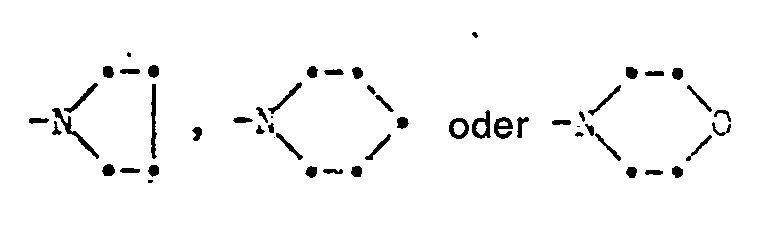
- R" dieselbe Bedeutung wie R' haben kann, aber nicht Wasserstoff darstellt, mit der Massgabe, dass die Gruppen -SR bei M = 1, 2 oder 3 in den Stellungen 4, 4,5 oder 3, 4,5 gebunden sind.
- Die Varbindungen der Formel I eignen sich ausgezeichnet zur Verwendung als Sensibilisatoren für lichtvernetzbare Polymere. Sie zeichnen sich insbesondere durch eine gute Verträglichkeit mit dem Polymeren, eine gute Löslichkeit in üblichen organischen Lösungsmitteln und eine hohe Photoempfindlichkeit aus. Überdies kann die UV-Absorption so beeinflusst werden, dass die erfindungsgemässen Verbindungen auch bei Bestrahlung mit langweiligem UV-Licht (bis ca. 450 nm) eine sensibilisierende Wirkung ausüben und so die Vernetzung der photoempfindlichen Polymeren bewirken. Photosensibilisierende Phthalimide und Phthalsäureanhydride mit Donoren in 3- bis 6-Stellung waren bisher nicht bekannt.
- Die Verbindungen der Formel I eignen sich ferner, bevorzugt im Gemisch mit organischen Aminen, als Initiatoren für die Photopolymerisation äthylenisch ungesättigter Verbindungen oder für die photochemische Vernetzung von Polyolefinen.
- Definitionsgemässe Alkyl-, Monohydroxyalkyl-, Halogenalkyl-, Alkenyl- und Alkinylgruppen R, R' oder R" sowie Alkylsubstituenten in Gruppen R, R' oder R" können geradkettig oder verzweigt sein. Halogenalkylgruppen R können durch ein oder mehrere Halogenatome, wie Chlor oder Brom und insbesondere Fluor, substituiert sein. Als Beispiele definitionsgemässer Alkyl-, Monohydroxyalkyl-, -CH2COO-C1-4-Alkyl-, Halogenalkyl-, Alkenyl-, Alkinyl- und -N(C1-4-Alkyl)2-Gruppen sowie definitionsgemässer Ester oder Aether von Monohydroxyalkylgruppen R, R' oder R" seien erwähnt : Methyl, Aethyl, n-Propyl, Isopropyl, n-, sek- und tert-Butyl, n-Pentyl, 2- oder 3-Pentyl, n-Hexyl, N-Heptyl, 3-Heptyl, n-Octyl, n-Decyl, n-Dodecyl, n-Tridecyl, n-Tetradecyl, n-Hexadecyl, n-Octadecyl und Eicosyl ; 2-Hydroxyäthyl, 2- und 3-Hydroxypropyl, 3- und 4-Hydroxybutyl ; ―CH2COOCH3, ―CH2COOC2H5 ; 2-Chloräthyl, 2-Bromäthyl, 2,2,2-Trifluoräthyl, ―CH2CH2C4F9, ―CH2CH2C6F13, ―CH2CH2C8F17 und ―CH2CH2C10F21 ; Vinyl, Allyl, Methallyl, 2-Butenyl, 4-Pentenyl ; 2-Propinyl, 3-Butinyl und 4-Pentinyl ; N,N-dimethylamino, N,N-Diäthylamino, N-Methyl-N-äthylamino, N,N-Di-n-propylamino, N,N-Di-n-butylami- no; ―CH2CH2OCOCH3, ―CH2CH2CH2OCOC2H5, ―CH2CH2OCO―n · C4H9, -CH2CH20COCH=CH2, ―CH2CH2OCOC(CH3)=CH2. -CH2CH20COCH=CHCH3, ―CH2CH2OCH3, ―CH2CH2CH2OC2H5, ―CH2CH2O―n · C4H9 und ―CH2CH2CH2O―n · C8H17.
- Alkylgruppen R, R' und R" sind bevorzugt geradkettig und weisen 1-12 und insbesondere 1-10 C-Atome auf. Bevorzugte Alkenyl- und Alkinylgruppen R, R' oder R" sind : Vinyl (R' oder R"), Allyl, Methallyl, 2-Butenyl und 2-Propinyl. Halogenalkylgruppen R sind vorzugsweise ebenfalls geradkettig und weisen 1-10 C-Atome auf. Besonders bevorzugt sind ―CH2CF3 und vor allem ―CH2CH2CpF2p+1 mit p = 6, 8 oder 10.
- Beispiele von Cycloalkylgruppen R, R' oder R" sind Cyclopentyl, Cyclohexyl, Cyclooctyl und Cyclododecyl. Bevorzugt ist Cyclohexyl. Als Toluylgruppe R' bzw. R" kommt vor allem p-Toluyl in Betracht.
- Halogenphenyl-, Nitrophenyl-, Alkylphenyl- und Alkoxyphenylgruppen R können ein- oder mehrfach substituiert sein. Bevorzugt sind Phenylgruppen mit einem oder zwei der genannten Substituenten. Als Halogenatome kommen z. B. Fluor, Brom und insbesondere Chlor in Betracht. Beispiele derartiger Gruppen sind : 3-Chlor- oder 3-Bromphenyl, 3,4-Dichlorphenyl, 2,5-Dichlorphenyl, 3,4-Dibromphenyl, 4-Chlor-, 4-Brom- oder 4-Fluorphenyl ; 3-oder 4-Nitrophenyl, 3,5-Dinitrophenyl ; o- m- und p-Toluyl, 3,4-Dimethylphenyl, 4-Aethylphenyl, 4-n-butylphenyl ; 2-, 3- oder 4-Methoxyphenyl, 3- und 4-Aethoxyphenyl, 2,5-Dimethoxyphenyl, 3,4-Diäthoxyphenyl, 4-n-Propoxyphenyl, 4-Isopropoxyphenyl und 4-n-Butoxyphenyl.
- Bevorzugt sind Verbindungen der Formel I, worin für Y, Y1, Y2, m und n das unter Formel I Angegebene gilt, X Chlor oder Brom, die R (bei m > 1) unabhängig voneinander geradkettiges C1-12-Alkyl, 2-Hydroxyäthyl, Phenyl, p-Toluyl, 2-, 3- oder 4-Methoxyphenyl, 4-Chlorphenyl, 2,5-Dichlorphenyl, 4-Nitrophenyl, 4-Acetylaminophenyl, 2- oder 4-Aminophenyl, 4-Hydroxyphenyl oder ―CH2CH2CpF2p+1 mit p = 6, 8 oder 10 und R' Wasserstoff, geradkettiges Cl-12-Alkyl, C5-6-Cycloalkyl, Benzyl, Phenyl, Toluyl oder C2-4-Monohydroxyalkyl darstellen und R" dieselbe Bedeutung wie R' haben kann, jedoch nicht Wasserstoff darstellt. Besonders bevorzugt stellen dabei die R unabhängig voneinander geradkettiges C1012-Alkyl, 2-Hydroxyäthyl, ―CH2CH2C8F17, Phenyl, p-Toluyl, 2- oder 4-Methoxyphenyl, 4-Chlorphenyl, 2,5-Dichlorphenyl oder 4-Nitrophenyl, R' Wasserstoff, geradkettiges C1-10-Alkyl, Phenyl, p-Toluyl oder 2-Hydroxyäthyl und R" geradkettiges C1-10-alkyl, Phenyl, p-Toluyl oder 2-Hydroxyäthyl dar.
- Ganz besonders bevorzugt sind Verbindungen der Formel I, worin für Y, Y1, Y2, m und n das unter Formel I Angegebene gilt, X Chlor oder Brom, die R unabhängig voneinander geradkettiges C1-2-Alkyl, vor allem C1-10-Alkyl, 2-Hydroxyäthyl, ―CH2CH2C8F17, Phenyl, p-Toluyl, 2- oder 4-Methoxyphenyl, 4-Chlorphenyl oder 4-Nitrophenyl, R' Wasserstoff, geradkettiges C1-10-Alkyl, besonders C1-4-Alkyl, 2-Hydroxyäthyl oder Phenyl und R" Phenyl darstellen. Bei m = 2 haben die R in den Gruppen -SR bevorzugt je dieselbe Bedeutung. Des weiteren bevorzugt sind Verbindungen der Formel I mit m = 4, wobei die R der in 3,6- und 4,5-Stellung gebundenen Gruppen -SR je paarweise dieselbe Bedeutung haben oder aber alle vier R gleiche Gruppen darstellen.
- Die Verbindungen der Formel 1 können in an sich bekannter Weise hergestellt werden, z. B. dadurch, dass man eine Verbindung der Formel II

RSH (111)
oder Salzen von Verbindungen der Formel III umsetzt, dabei erhaltene Verbindungen der Formel I mit n = 1, 2 oder 3 gegebenenfalls mit weiterer Verbindung der Formel III bzw. weiterem Salz davon umsetzt und gegebenenfalls Verbindungen der Formel I, worin eines von Y1 und Y2 Sauerstoff und das andere =N-R" und Y -0- bedeuten, zu den entsprechenden Imiden isomerisiert. In den Formeln II und III haben X, Y, Y1, Y2 und R die unter Formel I angegebene Bedeutung. Die Umsetzung mit Verbindungen der Formel III oder Salzen davon zu Verbindungen der Formel I kann demnach direkt oder stufenweise erfolgen. Dabei können auch Gemische verschiedener Verbindungen der Formel I entstehen. - Als Salze von Verbindungen der Formel III kommen sowohl Salze mit anorganischen als auch organischen Basen in Betracht. Bevorzugt sind Alkalimetall- und quaternäre Ammoniumsalze, wie die Na, K-, Tetramethyl-, Tetraäthyl-, Benzyltrimethyl- und Benzyltriäthylammoniumsalze. Die genannten Salze können als solche eingesetzt oder in an sich bekannter Weise in situ gebildet werden. Bevorzugt setzt man die Verbindungen der Formel II in Gegenwart einer Base mit einer Verbindung der Formel III um. Als Basen verwendet man dabei mit Vorteil tertiäre Amine, wie Triäthylamin oder Pyridin ; Alkalimetallacetate, -hydrogencarbonate oder -carbonate, vor allem Triäthylamin und besonders Kaliumcarbonat. Zweckmässig verwendet man 1,0 bis 3 Äquivalente Base, bezogen auf die Verbindung der Formel 111.
- Die obige Umsetzung kann in wässrigem Medium durchgeführt werden, wird jedoch mit Vorteil in Gegenwart eines inerten organischen Lösungsmittels bei Temperaturen zwischen 0°C und der Siedetemperatur des Lösungsmittels, bevorzugt bei 0-30 °C, vorgenommen.
- Geeignete inerte organische Lösungsmittel sind z. B. gegebenenfalls chlorierte aliphatische oder aromatische Kohlenwassertoffe, wie Methylenchlorid, 1,1,2,2-Tetrachloräthan, Chloroform, Benzol, Toluol, Xylole, Chlorbenzol oder Dichlorbenzole ; aliphatische und cyclische Aether, wie Diäthyläther, Diisopropyläther, Di-n-butyläther, 1,2-Dimethoxyäthan, Tetrahydrofuran und Dioxan ; Alkylester von aliphatischen Monocarbonsäuren mit insgesamt 2-8 C-Atomen, wie Essigsäuremethyl-, -äthyl- und -n-butylester, Buttersäureäthyl, und -n-butylester ; N,N-Dialkylamide von aliphatischen Monocarbonsäuren mit 1-3 C-Atomen im Säureteil, wie N,N-Dimethylformamid und N,N-Dimethylacetamid ; cyclische Amide, wie N-Methylpyrrolidon ; Dialkylsulfoxide, wie Dimethylsulfoxid ; aliphatische Ketone, wie Aceton und Methyläthylketon ; Alkylnitrile mit 2-5 C-Atomen, wie Acetonitril und Propionitril ; Hexamethylphosphorsäuretriamid ; Alkanole mit bis zu 6 C-Atomen, wie Methanol, Aethanol, Propanol, Isopropanol, n-Butanol, lso- und tert-Butanol. Bevorzugte Lösungsmittel sind 1,1,2,2-Tetrachloräthan und vor allem Tetrahydrofuran und N,N-Dimethylformamid.
- Handelt es sich bei den Ausgangsverbindungen der Formel II um Imide, so kann die Umsetzung mit den Verbindungen der Formel III bzw. deren Salzen auch im Zweiphasengemisch unter Phasen-Transfer-Katalyse durchgeführt werden. Dabie wird die wässrige Phase zweckmässig mit z. B. HCO3 -, CO3 2- oder OH- alkalisch gestellt (pH 7-14). Die organische Phase besteht aus einem mit Wasser nicht mischbaren inerten organischen Lösungsmittel, z. B. Dichlormethan, Chloroform, Toluol oder Chlorbenzol. Als Phasen-Transferkatalysatoren verwendet man mit Vorteil Tetraalkylammonium- oder -phosphoniumsalze, z. B. Benzyltriäthylammoniumchlorid, Cetyltrimethylammoniumchlorid oder Tetrabutylphosphoniumchlorid. Dabei liegen die Reaktionstemperaturen vorzugsweise zwischen 0°C und 150 °C.
- Verbindungen der Formel I, worin Y1 und Y2 Sauerstoff und Y -NH- oder -0- darstellen, können auch dadurch erhalten werden, dass man eine Verbindung der Formel IV
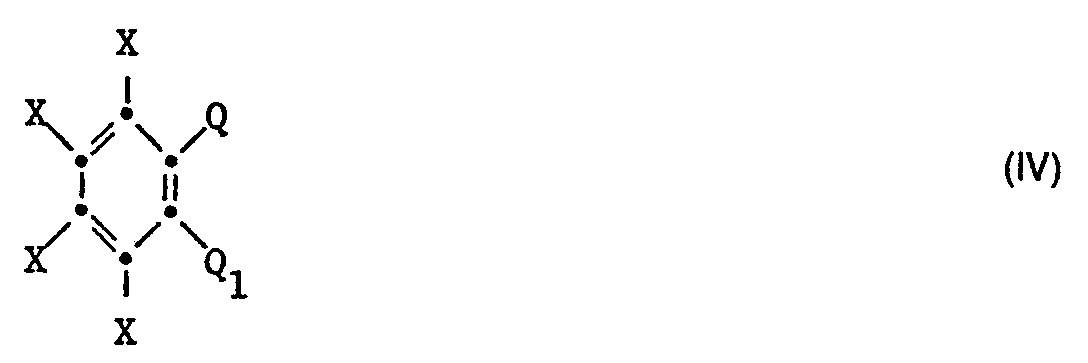

- Die nach den obigen Verfahren erhaltenen Anhydride der Formel I können gewünschtenfalls mit Aminen H2N-R' bzw. H2N-R" zu den entsprechenden Amidsäuren umgesetzt werden, die auf an sich bekannte Weise zu Imiden bzw. Isoimiden cyclisiert werden können. Die Cyclisierung zu Imiden der Formel I erfolgt im allgemeinen durch blosses Erhitzen oder unter Verwendung üblicher Dehydratisierungsmittel, wie Acetanhydrid. Die Cycliserung zu Isoimiden der Formel 1 kann z. B. nach den in den U.S. Patenschriften 2.995.577, 2.998.429, 3.035.065, 3.035.065 und 4.179.444 beschriebenen Verfahren vorgenommen werden. Geeignete Dehydratisierungsmittel zur Überführung in Isoimide der Formel I sind beispielsweise Keten, Carbodiimide, Trifluoracetanhydrid, Chloracetylchlorid oder Dichloracetylchlorid, gegebenenfalls im Gemisch mit tertiären Aminen. Isoimide der Formel I werden bevorzugt nach dieser Methode hergestellt.
- Die allfällige Isomerisierung der Isoimide der Formel 1 zu entsprechenden Imiden kann ebenfalls in an sich bekannter Weise erfolgen, z. B. durch blosses Erhitzen oder nach den in den U.S. Patentschriften 2.980.694 und 4.132.751 beschriebenen Verfahren, beispielsweise durch Behandeln mit Alkalimetall- oder Ammoniumsalzen niederer Fettsäuren, wie Natriumacetat oder Triäthylammoniumacetat, oder Gemischen aus tertiären Aminen und Phenol.
- Die Verbindungen der Formel I können als Sensibilisatoren für lichtvernetzbare Polymere der verschiedensten Art eingesetzt werden. Derartige Polymere werden z. B. zur Herstellung von Druckplatten für das Offsetdruckverfahren, zur Herstellung von Photooffset-Lacken, für die unkonventionelle Photographie, z. B. zur Herstellung von photographischen Bildern mittels Photopolymerisation oder Photovernetzung verwendet. Solche Polymere finden insbesondere Anwendung als sogenannte Photoresists zur Herstellung von gedruckten Schaltungen nach an sich bekannten Methoden. Dabei wird die mit der lichtempflindlichen Schicht versehene Seite der Leiterplatte durch ein das Leiterbild aufweisendes Dianegativ belichtet und dann entwickelt, worauf man die unbelichteten Stellen der Schicht durch Entwicklungsflüssigkeit herausholt.
- Als Polymere können an sich beliebige Materialien verwendet werden, deren Lichtempfindlichkeit (Empfindlichkeit gegenüber aktinischen Strahlen) sich durch den Einsatz der erfindungsgemässen Sensibilisatoren erhöhen lässt. Ganz besonders eignen sich die Verbindungen der Formel I als Sensibilisatoren für Polymere der in der deutschen Offenlegungsschrift 2.626.769 beschriebenen Art, d. h. Polymere, die als lichtempfindliche Gruppen solche der Formel VI

- Die Verbindungen der Formel I können auf an sich bekannte Weise in die lichtvernetzbaren Polymeren eingearbeitet werden. Der Gehalt an Sensibilisator im Polymeren kann je nach Anwendungszweck und Anzahl der im Polymeren vorhandenen lichtvernetzbaren Gruppen stark variieren, liegt jedoch im allgemeinen zwischen etwa 0,1 und 20% bezogen auf das Gewicht des Polymeren.
- Schliesslich finden die Verbindungen der Formel I auch Anwendung als Photoinitiatoren. Die Erfindung betrifft daher auch die Verwendung der genannten Verbindungen zusammen mit Aminen als Initiatoren für die Photopolymerisation äthylenisch ungesättigter Verbindungen oder für die photochemische Vernetzung von Polyolefinen.
- Die verwendeten organischen Amine können aliphatische, aromatische, araliphatische, cycloaliphatische oder heterocyclische Amine sein.
- Sie können primäre, sekundäre oder tertiäre Amine sein. Beispiele hierfür sind : Butylamin, Dibutylamin, Tributylamin, cyclohexylamin, Benzyldimethylamin, Dicyclohexylamin, Triäthylamin, Phenyldi-äthanolamin, Piperidin, Piperazin, Morpholin, Pyridin, Chinolin, p-Dimethylaminobenzoesäureäthylester oder Michlers Keton (4,4'-Bis-dimethylamino-benzophenon).
- Bevorzugt sind Gemische aus
- A) einer Verbindung der Formel I, worin m, n, X, R, R' und R" die im Vorangehenden angegebenen bevorzugten Bedeutungen haben, und
- B) einem aliphatischen tertiären Amin, einem p-Dimethylaminobenzoesäurealkylester oder Michlers Keton.
- Beispiele für aliphatische tertiäre Amine sind Trimethylamin, Triäthylamin, Tri-isopropyl-amin, Tributylamin, Dodecyldimethylamin, Octyl-dimethylamin, Triäthanolamin, Tris(hydroxypropyl)amin, N-Methyldiäthanolamin oder N-Butyl-diäthanolamin.
- Besonders bevorzugt sind Gemische aus
- A) einer Verbindung der Formel I, worin m, n, X, R, R' und R" die im Vorangehenden angegebenen bevorzugten Bedeutungen haben, und
- B) Triäthanolamin oder einem C104-Alkyldiäthanolamin.
- Die genannten bevorzugten Gemische enthalten die Verbindungen der Formel und die organischen Amine bevorzugt in einem Gewichtsverhältnis von 4 : 1 bis 1 : 4.
- Photopolymerisierbare Verbindungen sind beispielsweise ungesättigte Monomere, wie Ester von Acryl- oder Methacrylsäure, z. B. Methyl-, Aethyl-, n- oder tert.-Butyl-, n.Octyl- der Hydroxyäthylacrylat, Methyl- oder Aethylmethacrylat, Aethylendiacrylat, Butandiodiacrylat, Hexandioldiacrylat, Neopentyldiacrylat, Trimethylolpropan-trisacrylat, Pentaerythrit-tetraacrylat oder Pentaerythrit-trisacrylat ; Acrylnitril, Methacrylnitril, Acrylamid, Methacrylamid, N-substituierte (Meth)-acrylamide ; Vinylester wie z. B. Vinylacetat, -propionat, -acrylat oder -succinat; sonstige Vinylverbindungen, wie Vinyläther, Vinylketone, Vinylsulfone, Styrol, alkylstyrole, halogenstyrole, Divinylbenzol, N,N'-Divinylharnstoff, Vinylnaphthalin, N-Vinylpyrrolidon, Vinylchlorid oder Vinylidenchlorid ; Allylverbindungen, wie Diallylphthalat, Diallylmaleat, Triallylisocyanurat, Triallylphosphat oder Aethylenglykoldiallyläther und die Mischungen von solchen umgesättigten Monomeren. Besonders geeignet sind die erfindungsgemässen Gemische für die Photopolymerisation von Acrylsäureestern und deren Gemischen.
- Weitere Beispiele sind ungesättigte Acrylharze. Hierzu zählen beispielsweise Umsetzungsprodukte von Polyepoxiden (Epoxidharzen) mit Acrylsäure oder Methacrylsäure oder Umsetzungsprodukte von Polyisocyanaten mit Hydroxyalkylacrylaten sowie die Umsetzungsprodukte von hydroxylgruppenhaltigen Polyestern oder Polyäthern mit Acryl- oder Methacrylsäure. Diese ungesättigten Acrylharze werden meist im Gemisch mit einem oder mehreren Acrylaten eines Mono-, Di- oder Polyalkohols, z. B. Aethyl-, ButylBenzyl-, 2-Aethylhexyl- oder 2-Hydroxypropylacrylat, Aethylenglykoldiacrylat, Propylenglykoldiacrylat, Butandioldiacrylat, Hexandioldiacrylat, Trimethylol-propan-trisacrylat oder Pentaerythrit-tetraacrylat, verwendet.
- Gegenstand der Erfindung sind auch photopolymerisierbare Systeme, bestehend aus a) mindestens einer äthylenisch ungesättigten Verbindung, b) einem definitionsgemässen Gemisch aus A) und B) und gegebenenfalls c) sonstigen Zusatzstoffen, wie Inhibitoren, Stabilisatoren, UV-Absorbern, Füllstoffen, Pigmenten, Farbstoffen, Thixotropiemitteln und Verlaufshilfsmitteln, z. B. Silikonöl. Als Inhibitoren, welche vor allem während der Herstellung der Systeme durch Mischen der Komponenten vor einer vorzeitigen Polymerisation schützen sollen, werden beispielsweise Hydrochinon, Hydrochinon-derivate, p-Methoxyphenol oder ß-Naphthole verwendet. Als UV-Absorber können z. B. solche vom Benztriazol-oder Benzophenontyp eingesetzt werden. Als Füllstoffe kommen z. B. Kieselsäure, Talkum oder Gips in Betracht.
- Bevorzugt sind derartige photopolymerisierbare Systeme in den Mengenverhältnissen 99,5-80 Gew.- % von a) und c) und 0,5-20 Gew.-% von b), wobei die Komponente A) vorzugsweise aus einer Verbindung der Formel I besteht, worin m, n, X, R, R' und R" die im Vorangehenden angegebenen bevorzugten Bedeutungen haben. Als Komponente a) verwendet man bevorzugt einen Acrylsäureester oder ein Gemisch mehrerer Acrylsäureester. Es können auch Kombinationen mit bekannten Photoinitiatoren, die durch Photofragmentierung Radikale bilden, wie z. B. Benzoinäther, Dialkoxyacetophenone oder Benzilketale, verwendet werden.
- Grosse Bedeutung haben die erfindungsgemässen Initiatorgemische für die Photohärtung von Druckfarben und weiss pigmentierten Schichten, da die Trocknungszeit des Bindemittels ein massgeblicher Faktor für die Produktionsgeschwindigkeit graphischer Erzeugnisse ist und in der Grössenordnung von Bruchteilen von Sekunden liegen soll. Gut geeignet sind die erfindungsgemässen Initiatoren auch für photohärtbare Systeme zur Herstellung von Druckplatten. Ein weiteres Einsatzgebiet ist die UV-Härtung von Metallbeschichtungen, beispielsweise bei der Lackierung von Blechen für Tuben, Dosen oder Flaschenverschlüssen, sowie die UV-Härtung von Kunststoffbeschichtungen, beispielsweise von Fussböden- oder Wandbelägen auf PVC-Basis. Beispiele für die UV-Härtung von Papierbeschichtungen sind die farblose Lackierung von Etiketten, Schallplatten-Hüllen oder Buchumschlägen.
- Die erfindungsgemässen Gemische können auch als Initiatoren zur photochemischen Vernetzung von Polyolefinen verwendet werden. Hierfür kommen z. B. Polypropylen, Polybuten, Polyisobutylen sowie Copolymerisate, wie z. B. Aethylen-Propylen-Copolymere in Frage, vorzugsweise jedoch Polyäthylen von niedriger, mittlerer oder hoher Dichte. Der Zusatz der Photoinitiatoren zu den photopolymerisierbaren Systemen geschieht im allgemeinen duch einfaches Einrühren, da die meisten dieser Systeme flüssig oder gut löslich sind. Meist kommt es zu einer Lösung der Initiatoren, wodurch deren gleichmässige Verteilung sowie die Transparenz der Polymerisate gewährleistet sind. Die Polymerisation erfolgt nach den bekannten Methoden der Photopolymerisation durch Bestrahlung mit Licht, das reich an kurzwelliger Strahlung ist. Als Lichtquellen sind z. B. Quecksilbermitteldruck-, -hochdruck- und -niederdruckstrahler, sowie superaktinische Leuchtstoffröhen geeignet, deren Emissionsmaxima im Bereich zwischen 250 und 450 nm liegen. Bei der photochemischen Vernetzung von Polyolefinen wird der Photoinitiator dem Polyolefin vor oder während der formgebenden Verarbeitung zugesetzt, beispielsweise durch pulverförmiges Vermischen oder durch Mischen mit dem plastifizierten Polyolefin. Die Vernetzung erfolgt durch Bestrahlung des geformten Gegenstandes in fester Form, beispielsweise in Form von Folien oder Fasern.
- 5,72 g (20 mMol) Tetrachlorphthalsäureanhydrid, 4,84 g (44 mMol), Thiophenol, 6,08 g (60 mMol) Triäthylamin und 50 ml 1,1,2,2-Tetrachloräthan werden 18 Std. bei 60 °C gerührt. Nach dem Eindampfen wird der Rückstand in 1 N NaOH-Lösung gelöst, die Lösung wird angesäuert und mit Methylenchlorid/ Aceton extrahiert. Nach dem Umkristallisieren aus Toluol/Cyclohexan am Rückfluss erhält man 2,41 g (30 % d. Th.) 4,5-Bis-(Phenylthio)-3,6-dichlorphthalsäureanhydrid ; Smp. 204-7 °C.
- Analyse für C20H10Cl2O3S2 (Molgewicht 433,22) :

- Aus der Mutterlauge werden 0,91 g (13% d. Th.) 4-Phenylthio-3,5,6-trichlorphthalsäureanhydrid erhalten ; Smp. 162-4 °C.
- Analyse für C14H5Cl3O3S (Molgewicht 359,61) :

- 30,88 g (108 mMol) Tetrachlorphthalsäureanhydrid, 48,79 g (443 mMol) Triophenol, 91,06 g (659 mMol) Kaliumcarbonat und 300 ml Tetrahydrofuran werden 3 Std. am Rückfluss gerührt. Man dampft ein und nimmt den Rückstand in Methylenchlorid/2N HCI-Lösung auf. Die organische Phase wird abgetrennt, über Natriumsulfat getrocknet und eingedampft. Nach dem Umkristallisiern aus Toluol/Cyclohexan erhält man 44,71 g (71 % d. Th.) Tetrakis-(Phenylthio)-phthalsäureanhydrid ; Smp. 141-2 °C.
- Analyse für C32H2003S4 (Molgewicht 580,75) :

- 2 g (4,31 mMol) Tetrabromphthalsäureanhydrid, 0,975 g (8,84 mMol) Thiophenol, 2,41 g (17,47 mMol) Kaliumcarbonat und 20 ml Tetrahydrofuran werden 2 Std. bei 0°C und 2 Std. bei 25 °C gerührt. Das Gemisch wird mit 2 N CHI-Lösung angesäuert und mit Tetrahydrofuran/Toluol extrahiert. Die Extrakte werden über Natriumsulfat getrocknet und eingedampft. Nach dem Umkristallisieren aus Toluol/Cyclohexan erhält man 1,68 g (75 % d. Th.) 4,5-Bis-(Phenylthio)-3,6-dibromphthalsäureanhydrid ; Smp. 183-4 °C.
- Analyse für C20H10Br2O3S2 (Molgewicht 522,23) :

- 2 g (5,86 mMol) Tetrachlorphthalsäure-N-n-butylimid werden mit 2,43 g (17,59 mMol) Kaliumcarbonat in 15 ml Tetrahydrofuran bei 0 °C vorgelegt. Während 2 Std. wird eine Lösung von 680 mg (6,16 mMol) Thiophenolin 10 ml Tetrahydrofuran zugetropft. Das Gemisch wird 3 Std. bei 0 °C gerührt und während 6 Std. allmählich auf 25 °C erwärmt, dann mit 2 N HCI-Lösung angesäuert und mit Tetrahydrofuran/Toluol extrahiert. Nach dem Trocknen über Natriumsulfat wird die organische Phase eingedampft und der Rückstand wird mehrmals umkristallisiert. Man erhält 0,17 g (7% d. Th.) 4-Phenylthio-3,5,6-trichlor- phthalsäure-N-n-butylimid ; Smp. 159-63 °C.
- Analyse für C18H14Cl3NO2S (Molgewicht 414,73) :

- 20 g (58,65 mMol) Tetrachlorphthalsäure-N-n-butylimid, 33,64 g (243 mMol) Kaliumcarbonat, 13,57 g (123 mMol) Thiophenol und 150 ml Tetrahydrofuran werden 18 Std. bei 25 °C gerührt. Das Gemisch wird angesäuert und mit Methylenchlorid extrahiert. Die Extrakte werden getrocknet und eingedampft. Nach dem Umkristallisieren aus Toluol/Cyclohexan erhält man 23,88 g (83 % d. Th.) 4,5-Bis-(Phenylthio)-3,6-dichlorphthalsäure-N-n-butylimid ; Smp. 215-6 °C.
- Analyse für C24H19Cl2NO2S2 (Molgewicht 488,45) :

- 20 g (58,65 mMol) Tetrachlorphthalsäure-N-n-butylimid, 26,49 g (240,5 mMol) Thiophenol, 49,04 g (355 mMol) Kaliumcarbonat und 200 ml Essigsäureäthylester werden 18 Std. bei 25 °C gerührt und wie in den vorangehenden Beispielen beschrieben aufgearbeitet. Nach dem Umkristallisieren aus Toluol/Cyclohexan erhält man 35,99 g (97 % d. Th.) Tetrakis-(Phenylthio)-phthalsäure-N-n-butylimid ; Smp. 159-60 °C.
- Analyse für C36H29NO2S4 (Molgewicht 635,87) :

- 2 g (6,08 mMol) Tetrachlorphthalsäure-n-2-hydroxyäthylimid, 0,79 g (6,38 mMol) p-Thiokresol, 2,52 g (18,24 mMol) Kaliumcarbonat und 20 ml Tetrahydrofuran werden 20 Std. bei 25 °C gerührt. Man säuert mit verdünnter HCI-Lösung an, extrahiert mit Methylenchlorid und trocknet über Natriumsulfat. Nach dem Umkristallisieren aus Toluol erhält man 1,41 g (56 % d. Th.) der genannten Verbindung ; Smp. 205-9 °C.
- Analyse für C17H12Cl3NO3S (Molgewicht 416,71) :

- 20 g (60,8 mMol) Tetrachlorphthalsäure-N-2-hydroxyäthylimid, 15,86 g (127,67 mMol) p-Thiokresol, 34,03 g (246,22 mMol) Kaliumcarbonat und 200 ml Tetrahydrofuran werden 2,5 Tage bei 25 °C gerührt. Man säuert an und extrahiert mit Methylenchlorid. Nach dem Umkristallisieren aus Toluol erhält man 26,42 g (86% d. Th.) der obigen Verbindung ; Smp. 211-2 °C.
- Analyse für C24H21Cl2NO3S3 (Molgewicht 506,46) :

- 2 g (6,08 mMol) Tetrachlorphthalsäure-N-2-hydroxyäthylimid, 3,1 g (24,93 mMol) p-Thiokresol, 5,08 g (36,78 mMol) Kaliumcarbonat und 20 ml N,N-Dimethylformamid werden 1 Std. bei 25 °C gerührt. Nach dem Eindampfen wird mit verdünnter HCI-Lösung angesäuert und mit Methylenchlorid extrahiert. Nach dem Umkristallisieren aus Toluol/Cyclohexan erhält man 3,21 g (78 % d. Th.) der oben genannten Verbindung ; Smp. 161-2 °C.
- Analyse für C38H33NO3S4 (Molgewicht 679,93) :

- 2 g (7,02 mMol) Tetrachlorphthalimid, 4,36 g (28,08 mMol) p-Nitrothiophenol, 5,82 g (42,12 mMol) Kaliumcarbonat und 30 ml Tetrahydrofuran werden 14 Std. bei 25 °C gerührt. Man säuert an, extrahiert mit Tetrahyrofuran/Toluol, trocknet die Extrakte und dampft ein. Der Rückstand wird mit Methylenchlorid gewaschen und aus Dioxan/Toluol umkristallisiert. Man erhält 3,02 g (57 % d. Th.) Tetrakis-(p-Nitrophe- nylthio)-phthalimid : Smp. 297-301 °C.
- Analyse für C32H17N5O10S4 (Molgewicht 759,76):

- 2 g (6,7 mMol) Tetrachlorphthalsäure-N-methylimid, 4,23 g (30,15 mMol) p-Methoxythiophenol, 6,25 g (45,2 mMol) Kaliumcarbonat und 20 ml Tetrahydrofuran werden 4 Std. bei 25 °C gerührt. Das Gemisch wird mit 2 N HCI-Lösung angesäuert und mit Methylenchlorid extrahiert. Die Extrakte werden über Natriumsulfat getrocknet und eingedampft. Nach dem Umkristallisieren aus Toluol/Cyclohexan erhält man 4,68 g (98 % d. Th.) der oben genannten Verbindung ; Smp. 168-70 °C.
- Analyse für C37H31NO6S4 (Molgewicht 713,90) :

- 2 g (4,09 mMol) 4,5-Bis-(Phenylthio)-3,6-dichlorphthalsäure-N-n-butylimid, 1,46 g (9,41 mMol) p-Nitrothiophenol, 2,55 g (18,45 mMol) Kaliumcarbonat und 20 ml Tetrahydrofuran werden 20 Std. 50 °C gerührt. Man kühlt ab, säuert an und extrahiert mit Methylenchlorid. Nach dem Umkristallisieren aus Tetrahydrofuran erhält man 1,9 g (78% d. Th.) der genannten Verbindung ; Smp. 175-7 °C.
- Analyse für C36H27N3O6S4 (Molgewicht 725,87) :

- 2 g (6,08 mMol) Tetrachlorphthalsäure-N-2-hydroxyäthylimid, 5,30 g (30,4 mMol) n-Decanthiol, 6,30 g (45,6 mMol) Kaliumcarbonat und 20 ml N,N-Dimethylformamid werden 7 Std. bei 25 °C gerührt. Das Gemisch wird angesäuert und mit Methylenchlorid extrahiert. Nach dem Umkristallisieren aus n-Hexan bei 0°C erhält man 3,75 g (70 % d. Th.) der obigen Verbindung ; Smp. 57-8 °C.
- Analyse für C50H89NO3S4 (Molgewicht 880,51) :

- 2 g (4,46 mMol) Tetrabromphthalimid, 1,61 g (11,15 mMol) p-Chlorthiophenol, 2,31 g (16,73 mMol) Kaliumcarbonat und 20 ml Tetrahydrofuran werden 14 Std. bei 25 °C gerührt. Nach dem Ansäuern mit verdünnter HCI-Lösung wird mit Tetrahydrofuran/Toluol extrahiert, die Extrakte werden getrocknet und eingedampft. Durch Umkristallisieren aus Toluol/Cyclohexan werden 0,61 g (25% d. Th.) 3,4,5-Tris-(p-Chlorphenylthio)-6-bromphthalimid erhalten ; Smp. 164-9 °C.
- Analyse für C26H13BrCl3NO2S3 (Molgewicht 653,84) :

- Aus der Mutterlauge werden 0,15 g (6% d. Th.) 4,5-Bis-(p-Chlorphenylthio)-3,6-dibromphthalimid erhalten ; Smp. 310-5 °C.
- Analyse für C20H9Br2Cl2NO2S2 (Molgewicht 558,07) :

- 2 g (6,08 mMol) Tetrachlorphthalsäure-N-2-hydroxyäthylimid, 2,14 g (27,36 mMol) 2-Mercapto- äthanol, 5,46 g (39,52 mMol) Kaliumcarbonat und 20 ml N,N-Dimethylformamid werden 4 Std. bei 25 °C gerührt. Das Gemisch wird mit verdünnter HCI-Lösung angesäuert und mit Tetrahydrofuran/Toluol extrahiert. Nach dem Trocknen über Magnesiumsulfat werden die Extrakte eingedampft. Der Rückstand ergibt, aus Toluol/Cyclohexan umkristallisiert, 0,74 g (24 % d. Th.) der obigen Verbindung ; Smp. 152-7 °C.
- Analyse für C18H25NO7S2 (Molgewicht 495,64) :

- 2 g (3,95 mMol) 4,5-Bis-(p-Toluylthio)-3,6-dichlorphthalsäure-N-2-hydroxyäthylimid, 1,51 g (8,69 mMol) n-Decan-1-thiol, 2,29 g (16,58 mMol) Kaliumcarbonat und 20 ml N,N-Dimethylformamid werden 1 Std. bei 25°C gerührt. Nach dem Einengen wird der Rückstand in Methylenchlorid/verdünnter HCI-Lösung aufgenommen. Die Extrakte werden über Natriumsulfat getrocknet und eingedampft. Nach dem Ausfällen aus n-Hexan erhält man 300 mg (10 % d. Th.) der obigen Verbindung (Substanz wachsartig).
- Analyse für C44H61NO3S4 (Molgewicht 780,22) :

- 41,41 g (138 mMol) Tetrachlorphthalsäure-N-methylimid, 19,42 g (138 mMol) p-Methoxythiophenol, i7,43 g Kaliumcarbonat und 410 ml Tetrahydrofuran werden 24 Std. bei 25 °C gerührt. Nach dem Eindampfen wird angesäuert und mit Methylenchlorid extrahiert. Nach dem Trocknen und Eindampfen cristallisiert man aus Toluol um. Man erhält 35,38 g (64 % d. Th.) des obigen Imids ; Smp. 182-6 °C.
- Analyse für C16H10NO3S (Molgewicht 402,68) :

- 2 g (3,71 mMol) Tetrabromphthalsäure-N-phenylimid, 2,34 g (16,7 mMol) o-Methoxythiophenol, 3,34 g (24,2 mMol) Kaliumcarbonat und 20 ml Tetrahydrofuran werden 24 Std. bei 25 °C gerührt. Nach dem Ansäuern wird mit Methylenchlorid extrahiert, getrocknet, eingedampft und aus Toluol umkristallisiert. Man erhält 2,75 g (96 % d. Th.) des obigen Imids ; Smp. 142-6 °C.
- Analyse für C42H33NO6S4 (Molgewicht 775,97) :

- 1 g (1,32 mMol) Tetrakis-(p-Nitrophenylthio)-phthalimid (hergestellt gemäss Beispiel 10), 0,57 g (2,97 mMol) 1-Bromoctan, 0,68 g (4,96 mMol) Kaliumcarbonat und 10 ml N,N-Dimethylformamid werden 5 Std. bei 25 °C gerührt. Das Gemisch wird eingeengt, und der Rückstand wird angesäuert und mit Methylenchlorid extrahiert. Nach dem Umkristallisieren aus Toluol/Cyclohexan erhält man 1,02 g (89 % d. Th.) des obigen Imids ; Smp. 202-4 °C.
- Analyse für C40H33N5O10S4 (Molgewicht 871,97) :

- 3 g (10,04 mMol) Tetrachlorphthalsäure-N-methylimid, 1,48 g (20,08 mMol) Aethanthiol, 5,55 g (40 mMol) Kaliumcarbonat und 30 ml N,N-Dimethylformalid werden 4 Std. bei 0 °C gerührt. Das Gemisch wird in Wasser aufgenommen und angesäuert, und das Reaktionsprodukt wird abfiltriert. Der Rückstand wird in Tetrahydrofuran/Toluol gelöst, die Lösung wird getrocknet und eingedampft. Nach dem Umkristallisieren aus Toluol/Cyclohexan erhält man 1,75 g (63 % d. Th.) des obigen Imids ; Smp. 154-5 °C.
- Analyse für C13H13Cl2NO2S2 (Molgewicht 350,28) :

- 1 g (3,51 mMol) Tetrachlorphthalimid, 2,18 g (4,56 mMol) n―C8F17CH2CH2―SH, 1,89 g (13,7 mMol) Kaliumcarbonat und 15 ml N,N-Dimethylformamid werden 10 Std. bei 0 °C gerührt. Das Gemisch wird angesäuert und mit viel Wasser verrührt, der Niederschlag wird abfiltriert und in Tetrahydrofuran/Toluol gelöst. Die organische Phase wird mit NaHCO3- und gesättigter NaCI-Lösung gewaschen, über Natriumsulfat getrocknet und eingedampft. Nach dem Umkristallisieren aus Toluol erhält man 2,53 g (99 % d. Th.) des obigen Imids ; Smp. 158-61 °C.
- Analyse für C28H9Cl2F34NO2S2 (Molgewicht 1 172,34) :

- 2 g (6,7 mMol) Tetrachlorphthalsäure-N-methylimid, 950 mg (6,9 mmol) Kaliumcarbonat, 120 mg (0,33 mMol) Hexadecyltrimethylammoniumbromid, 20 ml Xylol und 0,86 ml Wasser werden bei 100°C stark gerührt, und während 10 Minuten wird eine Lösung von 860 mg 6,9 mMol) p-Thiokresol in 20 ml Xylol zugetropft. Nach 30 Minuten wird abgekühlt, mit 2 N HCI-Lösung angesäuert und mit Methylenchlorid extrahiert. Nach dem Trocken über Natriumsulfat, dem Eindampfen und Umkristallisieren aus Toluol/Cyclohexan erhält man 310 mg (12 % d. Th.) des obigen Imids ; Smp. 209-16 °C.
- Analyse für C16H10Cl3NO2S (Molgewicht 386,68) :

- 10,0 g (23 mMol) 4,5-Bis-(Phenylthio)-3,6-dichlorphthalsäureanhydrid und 100 ml Methylenchlorid werden vorgelegt. Unter Rühren wird eine Lösung von 2,147 g (23 mMol) Anilin in 25 ml Diäthyläther zugetropft. Nach 18 Std. Rühren und Kühlen wird das Reaktionsprodukt abfiltriert und getrocknet. Man erhält 10,05 g (82 % d. Th.) 4,5-Bis-(Phenylthio)-3,6-dichlorphthalsäuremono-N-phenylamid ; Smp. 193-200 °C (Zers.).
- Analyse für C26H17NS2O3Cl2 (Molgewicht 526,45) :

- 8,5 g (16 mMol) 4,5-Bis-(Phenylthio)-3,6-dichlorphthalsäure-mono-N-phenylamid und 40 ml CH2Cl2 werden vorgelegt. Dann werden 3,328 g (16 mMol) Dicyclohexylcarbodiimid in 20 ml CH2CI2 zugetropft. Das Gemisch wird 18 Std. bei 25 °C gerührt, filtriert und die Mutterlauge wird eingedampft. Nach dem Umkristallisieren aus Methylenchlorid/n-Heptan erhält man 7,9 g (97 % d. Th.) 4,5-Bis-(Phenylthio)-3,6-dichlorphthalsäure-N-phenyl-isoimid : Smp. 158-160 °C.
- Analyse für C26H15Cl2S2NO2 (Molgewicht 508,44):

- 2 g (6,69 mMol) Tetrachlorphthalsäure-N-methylimid werden bei 100 °C in 20 ml Xylol gelöst ; 0,86 ml Wasser, 0,95 g Kaliumcarbonat und 120 mg Hexadecyltrimethylammoniumbromid werden zugegeben und bei 100 °C eine Lösung von 0,86 g (6,89 mMol) p-Thiokresol in 1 ml Xylol zugetropft. Nach 30 Minuten wird das Gemisch abgekühlt, mit 2-n. HCI-Lösung angesäuert und mit Methylenchlorid extrahiert. Man trocknet mit Natriumsulfat, dampft die Lösung ein und kristallisiert den Rückstand aus Toluol/Cyclohexan um. Man erhält 0,69 g (27 %) der genannten Verbindung ; Smp. 212-216°.
- Analyse für C16H10Cl3NO2S (Molgewicht 386,68) :

- 20 g (70 mMol) Tetrachlorphthalsäureanhydrid, 37,36 g (301 mMol) p-Thiokresol, 60,91 g (441 mMol) Kaliumcarbonat und 200 ml Tetrahydrofuran werden während 2 Stunden am Rückfluss gerührt. Nach dem Eindampfen wird der Rückstand mit verdünnter HCI-Lösung angesäuert und mit Methylenchlorid extrahiert. Nach dem Umkristallisieren aus Cyclohexan erhält man 31,25 g (70 %) der genannten Verbindung ; Smp. 129-132°.
- Analyse für C36H28O3S4 (Molgewicht 636,86) :

- Es wird ein Polymeres mit folgender Struktur und Zusammensetzung hergestellt:

- 465,5 g (1,963 Mol) β-(Dimethylmaleinimidyl)-äthyl-methacrylat [hergestellt gemäss deutscher Offenlegungsschrift 2.626.769] werden zusammen mit 49,15 g (0,49 Mol) Acrylsäureäthylester unter Stickstoff in 960 ml 1-Acetoxy-2-äthoxyäthan gelöst. Bei 80 °C lässt man unter Stickstoffatmosphäre eine Lösung von 3,86 g Azoisobutyronitril in 25 ml 1-Acetoxy-2-äthoxyäthan zulaufen und polymerisiert dann währen 6 Stunden. Die noch heisse Lösung wird mit 2,57 g 2,6-Di-tert-butyl-p-kresol stabilisiert. Das durchschnittliche Molekulargewicht des so erhaltenen Polymeren (bestimmt durch Streulichtmessung in CHCl3) beträgt 3 x 10⁶ ; Grenzviskosität η grenz 0,8 dl/g (CHC13, 20 °C).
- Zu 100 g der oben beschriebenen Polymerlösung in 1-Acetoxy-2-äthoxyäthan, verdünnt mit N,N-Dimethylformamid werden je 5 x 10⁻³ Mol der in der Tabelle angegebenen Sensibilisatoren zugegeben, wobei sich die Menge (Konzentration) auf den Feststoffgehalt bezieht. Die Polymerlösungen mit dem gelösten Sensibilisator werden durch Aufschleudern (500 Umdrehungen/Minute während 1 Minute) so auf kupferkaschierte Epoxidplatten aufgetragen, dass nach dem Trocknen (15 Minuten bei 80 °C) eine 1-3 µ dicke Polymerschicht auf dem Kupfer gebildet wird. Die beschichteten Platten werden durch eine Negativ-Vorlage (Stufenkeil : Stouffer 21-Step-Sensitivity-Guide) mit einer 400 Watt Quecksilberhochdrucklampe im Abstand von 55 cm zum Vakuumtisch belichtet.
- Vakuumtisch mit vorgeschaltetem Pyrex-Glasfilter von 8 mm Dicke.
- Nach der Belichtung wird das Bild in einem 1,1,1-Trichloräthanbad während 2 Minuten entwickelt, wobei die unvernetzten Anteile herausgelöst werden. Das resultierende Reliefbild des abgebildeten Stufenkeils wird durch Aetzen der blanken Kupferteile mit einer 50 %igen FeCl3-Lösung sichtbar gemacht. In der folgenden Tabelle bedeutet Srel die relative Empfindlichkeit. Sie ist ein Faktor, der angibt, um wieviel länger oder kürzer als 3 Minuten belichtet werden muss, um noch die Stufe 7 (optische Dichte des Stufenkeils = 1) abzubilden. Es gilt folgende Beziehung


Claims (10)

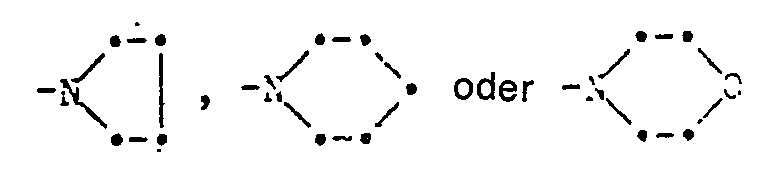


Applications Claiming Priority (2)
| Application Number | Priority Date | Filing Date | Title |
|---|---|---|---|
| CH2364/81 | 1981-04-08 | ||
| CH236481 | 1981-04-08 |
Publications (2)
| Publication Number | Publication Date |
|---|---|
| EP0062615A1 EP0062615A1 (de) | 1982-10-13 |
| EP0062615B1 true EP0062615B1 (de) | 1984-11-28 |
Family
ID=4232064
Family Applications (1)
| Application Number | Title | Priority Date | Filing Date |
|---|---|---|---|
| EP82810148A Expired EP0062615B1 (de) | 1981-04-08 | 1982-04-02 | Tetrasubstituierte Phthalsäurederivate, Verfahren zu deren Herstellung und Verwendung |
Country Status (5)
| Country | Link |
|---|---|
| US (2) | US4459414A (de) |
| EP (1) | EP0062615B1 (de) |
| JP (1) | JPS57181055A (de) |
| CA (1) | CA1180330A (de) |
| DE (1) | DE3261341D1 (de) |
Families Citing this family (9)
| Publication number | Priority date | Publication date | Assignee | Title |
|---|---|---|---|---|
| US4585876A (en) * | 1982-11-25 | 1986-04-29 | Ciba-Geigy Corporation | Novel xanthones and thioxanthones |
| US4578470A (en) * | 1983-06-20 | 1986-03-25 | General Electric Company | Bis-imides containing heterocyclic aromatic rings |
| CH656126A5 (de) * | 1983-08-18 | 1986-06-13 | Ciba Geigy Ag | Durch 2-propynyloxygruppen substituierte phthalsaeureanhydride. |
| DE3337857A1 (de) * | 1983-10-18 | 1985-04-25 | Bayer Ag, 5090 Leverkusen | Neue flammschutzmittel, ihre herstellung und ihre verwendung zur flammfestausruestung von polycarbonaten |
| EP0152377B1 (de) * | 1984-02-10 | 1987-12-09 | Ciba-Geigy Ag | Härtbare Zusammensetzung und deren Verwendung |
| EP0465421A1 (de) * | 1990-07-04 | 1992-01-08 | Ciba-Geigy Ag | Isoindolinonverbindungen mit langkettigen Alkylthioethergruppen |
| US6017471A (en) | 1993-08-05 | 2000-01-25 | Kimberly-Clark Worldwide, Inc. | Colorants and colorant modifiers |
| US5827875A (en) * | 1996-05-10 | 1998-10-27 | Bristol-Myers Squibb Company | Inhibitors of microsomal triglyceride transfer protein and method |
| CN101239943B (zh) * | 2003-04-08 | 2012-10-24 | 富士胶片株式会社 | 酞菁化合物及其中间体的制备方法以及这些中间体化合物 |
Family Cites Families (15)
| Publication number | Priority date | Publication date | Assignee | Title |
|---|---|---|---|---|
| DE2000623C3 (de) * | 1970-01-08 | 1979-06-28 | Agfa-Gevaert Ag, 5090 Leverkusen | Photographisches Verfahren zur Herstellung von Bildern |
| CH564525A5 (de) * | 1972-01-17 | 1975-07-31 | Ciba Geigy Ag | |
| BE794089A (fr) * | 1972-01-17 | 1973-07-16 | Ciba Geigy | Pigments derivant de l'iso-indolinone |
| US3850964A (en) * | 1973-03-30 | 1974-11-26 | Gen Electric | Method for making aromatic bis(ether anhydride)s |
| US3850965A (en) * | 1973-03-30 | 1974-11-26 | Gen Electric | Method for making aromatic ether anhydrides and products made thereby |
| US3922284A (en) * | 1973-03-30 | 1975-11-25 | Gen Electric | N-Substituted aromatic thioetherophthalimides |
| US4017299A (en) * | 1973-07-25 | 1977-04-12 | American Cyanamid Company | Phthalimide derivatives as plant growth regulants |
| US3933862A (en) * | 1974-08-23 | 1976-01-20 | General Electric Company | Aromatic dithio dianhydrides |
| US4025505A (en) * | 1975-02-04 | 1977-05-24 | Ciba-Geigy Corporation | Aromatic dicarboxamides |
| US4079041A (en) * | 1975-06-18 | 1978-03-14 | Ciba-Geigy Corporation | Crosslinkable polymeric compounds |
| IL52413A (en) * | 1977-06-29 | 1980-01-31 | Teva Pharma | Process for the preparazione of 5-chloro-6-sulfamyl-isoindolinone derivatives |
| US4197133A (en) * | 1977-10-14 | 1980-04-08 | Ciba-Geigy Corporation | Photo-curable compositions of matter containing bis-azidophthalimidyl derivatives |
| US4250096A (en) * | 1977-10-14 | 1981-02-10 | Ciba-Geigy Corporation | 3- and 4-Azidophthalic acid derivatives |
| US4238873A (en) * | 1978-03-13 | 1980-12-16 | Entropy Limited | Apparatus for collecting and transporting heat energy |
| CH644362A5 (de) * | 1980-05-06 | 1984-07-31 | Ciba Geigy Ag | 3,5-disubstituierte phthalsaeureimide. |
-
1982
- 1982-03-29 US US06/363,188 patent/US4459414A/en not_active Expired - Fee Related
- 1982-04-02 DE DE8282810148T patent/DE3261341D1/de not_active Expired
- 1982-04-02 EP EP82810148A patent/EP0062615B1/de not_active Expired
- 1982-04-06 CA CA000400566A patent/CA1180330A/en not_active Expired
- 1982-04-07 JP JP57056797A patent/JPS57181055A/ja active Pending
-
1984
- 1984-04-04 US US06/596,865 patent/US4537977A/en not_active Expired - Fee Related
Also Published As
| Publication number | Publication date |
|---|---|
| US4537977A (en) | 1985-08-27 |
| EP0062615A1 (de) | 1982-10-13 |
| JPS57181055A (en) | 1982-11-08 |
| DE3261341D1 (en) | 1985-01-10 |
| CA1180330A (en) | 1985-01-02 |
| US4459414A (en) | 1984-07-10 |
Similar Documents
| Publication | Publication Date | Title |
|---|---|---|
| DE3018891C2 (de) | ||
| EP0033720B1 (de) | Thioxanthoncarbonsäureester, -thioester und -amide, deren Verwendung als Sensibilisatoren oder Photoinitiatoren und Polymere | |
| DE69320241T2 (de) | Chemisch amplifizierte Resistzusammensetzung | |
| DE69702605T2 (de) | Fotoerzeugung von Aminen aus alpha-Aminoacetophenonen | |
| EP0255486B1 (de) | Titanocene und deren Verwendung | |
| DE69807322T2 (de) | Fotoaktivierbare stickstoffhaltige basen, die auf alpha-aminoketonen basieren | |
| DE69903453T2 (de) | Ungesättigte oxim-derivate und ihre anwendung als latente säuren | |
| DE19928742B4 (de) | Neue O-Acyloxim-Photostarter | |
| DE19758946B4 (de) | Photoinitiatormischungen, deren Verwendung und sie enthaltende photopolymerisierbare Zusammensetzungen | |
| DE19753655B4 (de) | α-Aminoacetophenonverbindungen, Massen, die diese Verbindungen enthalten und deren Verwendung als Photostarter | |
| EP0284561B1 (de) | Neue alpha-Aminoacetophenone als Photoinitiatoren | |
| DE69809029T2 (de) | Nicht-flüchtige phenylglyoxalsäureester | |
| EP0108037B1 (de) | Propiophenonderivate als Photoinitiatoren für die Photopolymerisation | |
| EP0256981B1 (de) | Titanocene und deren Verwendung | |
| DE2851472A1 (de) | Lichtempfindliche massen | |
| DE69806739T2 (de) | Photoaktivierbare, stickstoff enthaltende basen auf basis von alpha-aminoalkenen | |
| DE19644797A1 (de) | Oximsulfonsäureester und deren Verwendung als latente Sulfonsäuren | |
| DE10061947A1 (de) | Oximester-Photostarter | |
| DE3117568C2 (de) | ||
| EP0401166B1 (de) | Neue, stickstoffhaltige Titanocene und deren Verwendung | |
| DE2717778B2 (de) | Lichtempfindliches Gemisch | |
| EP0510443B1 (de) | Negativ arbeitendes strahlungsempfindliches Gemisch und damit hergestelltes strahlungsempfindliches Aufzeichnungsmaterial | |
| EP0062615A1 (de) | Tetrasubstituierte Phthalsäurederivate, Verfahren zu deren Herstellung und Verwendung | |
| CH644362A5 (de) | 3,5-disubstituierte phthalsaeureimide. | |
| EP0005530A1 (de) | Neue Mercaptophenylketone und deren Verwendung als Initiatoren für die Photopolymerisation äthylenisch ungesättigter Verbindungen |
Legal Events
| Date | Code | Title | Description |
|---|---|---|---|
| PUAI | Public reference made under article 153(3) epc to a published international application that has entered the european phase |
Free format text: ORIGINAL CODE: 0009012 |
|
| 17P | Request for examination filed |
Effective date: 19820405 |
|
| AK | Designated contracting states |
Designated state(s): CH DE FR GB IT NL SE |
|
| ITF | It: translation for a ep patent filed | ||
| GRAA | (expected) grant |
Free format text: ORIGINAL CODE: 0009210 |
|
| AK | Designated contracting states |
Designated state(s): CH DE FR GB IT LI NL SE |
|
| REF | Corresponds to: |
Ref document number: 3261341 Country of ref document: DE Date of ref document: 19850110 |
|
| ET | Fr: translation filed | ||
| PLBE | No opposition filed within time limit |
Free format text: ORIGINAL CODE: 0009261 |
|
| STAA | Information on the status of an ep patent application or granted ep patent |
Free format text: STATUS: NO OPPOSITION FILED WITHIN TIME LIMIT |
|
| 26N | No opposition filed | ||
| PGFP | Annual fee paid to national office [announced via postgrant information from national office to epo] |
Ref country code: FR Payment date: 19900226 Year of fee payment: 9 |
|
| PGFP | Annual fee paid to national office [announced via postgrant information from national office to epo] |
Ref country code: DE Payment date: 19900307 Year of fee payment: 9 |
|
| PGFP | Annual fee paid to national office [announced via postgrant information from national office to epo] |
Ref country code: GB Payment date: 19900331 Year of fee payment: 9 |
|
| PGFP | Annual fee paid to national office [announced via postgrant information from national office to epo] |
Ref country code: SE Payment date: 19900410 Year of fee payment: 9 |
|
| ITTA | It: last paid annual fee | ||
| PGFP | Annual fee paid to national office [announced via postgrant information from national office to epo] |
Ref country code: NL Payment date: 19900430 Year of fee payment: 9 |
|
| PGFP | Annual fee paid to national office [announced via postgrant information from national office to epo] |
Ref country code: CH Payment date: 19900704 Year of fee payment: 9 |
|
| PG25 | Lapsed in a contracting state [announced via postgrant information from national office to epo] |
Ref country code: GB Effective date: 19910402 |
|
| PG25 | Lapsed in a contracting state [announced via postgrant information from national office to epo] |
Ref country code: SE Effective date: 19910403 |
|
| PG25 | Lapsed in a contracting state [announced via postgrant information from national office to epo] |
Ref country code: LI Effective date: 19910430 Ref country code: CH Effective date: 19910430 |
|
| PG25 | Lapsed in a contracting state [announced via postgrant information from national office to epo] |
Ref country code: NL Effective date: 19911101 |
|
| GBPC | Gb: european patent ceased through non-payment of renewal fee | ||
| NLV4 | Nl: lapsed or anulled due to non-payment of the annual fee | ||
| PG25 | Lapsed in a contracting state [announced via postgrant information from national office to epo] |
Ref country code: FR Effective date: 19911230 |
|
| REG | Reference to a national code |
Ref country code: CH Ref legal event code: PL |
|
| PG25 | Lapsed in a contracting state [announced via postgrant information from national office to epo] |
Ref country code: DE Effective date: 19920201 |
|
| REG | Reference to a national code |
Ref country code: FR Ref legal event code: ST |
|
| EUG | Se: european patent has lapsed |
Ref document number: 82810148.5 Effective date: 19911108 |