EP0063411B1 - Dérivés d'acide méthanephosphonique substitué, leur utilisation comme herbicides, compositions herbicides les contenant et procédés pour les préparer - Google Patents
Dérivés d'acide méthanephosphonique substitué, leur utilisation comme herbicides, compositions herbicides les contenant et procédés pour les préparer Download PDFInfo
- Publication number
- EP0063411B1 EP0063411B1 EP82301421A EP82301421A EP0063411B1 EP 0063411 B1 EP0063411 B1 EP 0063411B1 EP 82301421 A EP82301421 A EP 82301421A EP 82301421 A EP82301421 A EP 82301421A EP 0063411 B1 EP0063411 B1 EP 0063411B1
- Authority
- EP
- European Patent Office
- Prior art keywords
- alkyl
- carbon atoms
- compound
- formula
- group
- Prior art date
- Legal status (The legal status is an assumption and is not a legal conclusion. Google has not performed a legal analysis and makes no representation as to the accuracy of the status listed.)
- Expired
Links
Classifications
-
- C—CHEMISTRY; METALLURGY
- C07—ORGANIC CHEMISTRY
- C07F—ACYCLIC, CARBOCYCLIC OR HETEROCYCLIC COMPOUNDS CONTAINING ELEMENTS OTHER THAN CARBON, HYDROGEN, HALOGEN, OXYGEN, NITROGEN, SULFUR, SELENIUM OR TELLURIUM
- C07F9/00—Compounds containing elements of Groups 5 or 15 of the Periodic Table
- C07F9/02—Phosphorus compounds
- C07F9/28—Phosphorus compounds with one or more P—C bonds
- C07F9/38—Phosphonic acids [RP(=O)(OH)2]; Thiophosphonic acids ; [RP(=X1)(X2H)2(X1, X2 are each independently O, S or Se)]
- C07F9/40—Esters thereof
- C07F9/4003—Esters thereof the acid moiety containing a substituent or a structure which is considered as characteristic
- C07F9/4006—Esters of acyclic acids which can have further substituents on alkyl
-
- A—HUMAN NECESSITIES
- A01—AGRICULTURE; FORESTRY; ANIMAL HUSBANDRY; HUNTING; TRAPPING; FISHING
- A01N—PRESERVATION OF BODIES OF HUMANS OR ANIMALS OR PLANTS OR PARTS THEREOF; BIOCIDES, e.g. AS DISINFECTANTS, AS PESTICIDES OR AS HERBICIDES; PEST REPELLANTS OR ATTRACTANTS; PLANT GROWTH REGULATORS
- A01N57/00—Biocides, pest repellants or attractants, or plant growth regulators containing organic phosphorus compounds
- A01N57/18—Biocides, pest repellants or attractants, or plant growth regulators containing organic phosphorus compounds having phosphorus-to-carbon bonds
-
- C—CHEMISTRY; METALLURGY
- C07—ORGANIC CHEMISTRY
- C07F—ACYCLIC, CARBOCYCLIC OR HETEROCYCLIC COMPOUNDS CONTAINING ELEMENTS OTHER THAN CARBON, HYDROGEN, HALOGEN, OXYGEN, NITROGEN, SULFUR, SELENIUM OR TELLURIUM
- C07F9/00—Compounds containing elements of Groups 5 or 15 of the Periodic Table
- C07F9/02—Phosphorus compounds
- C07F9/28—Phosphorus compounds with one or more P—C bonds
- C07F9/38—Phosphonic acids [RP(=O)(OH)2]; Thiophosphonic acids ; [RP(=X1)(X2H)2(X1, X2 are each independently O, S or Se)]
- C07F9/3804—Phosphonic acids [RP(=O)(OH)2]; Thiophosphonic acids ; [RP(=X1)(X2H)2(X1, X2 are each independently O, S or Se)] not used, see subgroups
- C07F9/3808—Acyclic saturated acids which can have further substituents on alkyl
-
- C—CHEMISTRY; METALLURGY
- C07—ORGANIC CHEMISTRY
- C07F—ACYCLIC, CARBOCYCLIC OR HETEROCYCLIC COMPOUNDS CONTAINING ELEMENTS OTHER THAN CARBON, HYDROGEN, HALOGEN, OXYGEN, NITROGEN, SULFUR, SELENIUM OR TELLURIUM
- C07F9/00—Compounds containing elements of Groups 5 or 15 of the Periodic Table
- C07F9/02—Phosphorus compounds
- C07F9/547—Heterocyclic compounds, e.g. containing phosphorus as a ring hetero atom
- C07F9/553—Heterocyclic compounds, e.g. containing phosphorus as a ring hetero atom having one nitrogen atom as the only ring hetero atom
- C07F9/572—Five-membered rings
Definitions
- This invention relates to substituted methylphosphonic acid derivatives useful as herbicides, and to herbicidal compositions and processes utilising them.
- R is (1) a group R 1 0 wherein R 1 is hydrogen, a cation, or an esterifying radical as hereinbelow defined; or (2) a group R 2 R 3 N ⁇ wherein R 2 is hydrogen or an optionally substituted alkyl, alkenyl, or alkynyl group, and R 3 is hydrogen, an optionally substituted alkyl, alkenyl or alkynyl group or a phenyl group or an acyl group, or R 2 and R 3 together with the nitrogen atom to which they are attached, form a heterocyclic ring;
- R 1 , R 4 or R 5 When either R 1 , R 4 or R 5 is a cation, it may be for example a metal cation or an ammonium or substituted ammonium cation.
- Metal cations include for example alkali metal cations (e.g. lithium, sodium and potassium) and alkaline earth metal cations (e.g. calcium and magnesium).
- Substituted ammonium cations include, for example, mono-, di-, tri- and tetra- alkyl substituted ammonium cations in which the alkyl group or groups may each contain for example from one to 20 carbon atoms (e.g. 1 to 6 carbon atoms) and which may optionally be substituted with one or more phenyl, halogen or hydroxy groups.
- substituted ammonium cations include ethylammonium, methylammonium, isopropylammonium, benzyltrimethyl ammonium, 2-hydroxyethylammonium and tri(2-hydroxyethyl)ammonium.
- R 1 is an esterifying radical, it may be an optionally substituted alkyl or cycloalkyl radical.
- the alkyl radical contains from 1 to 20 (e.g. from 1 to 6) carbon atoms, and the cycloalkyl radical contains from 3 to 6 carbon atoms.
- the substituents which may be present in the alkyl or cycloalkyl radical are selected from halogen (fluorine, chlorine, bromine or iodine); alkoxy of 1 to 6 carbon atoms; alkylthio of 1 to 6 carbon atoms; and phenyl optionally substituted by one or more atoms of fluorine, chlorine, bromine or iodine or C 1 -C 6 alkoxy, CF 3 , NO 2 , CN, or C 1 ⁇ C 6 alkyl or C 2 - 6 alkenyl groups.
- halogen fluorine, chlorine, bromine or iodine
- alkoxy of 1 to 6 carbon atoms alkylthio of 1 to 6 carbon atoms
- phenyl optionally substituted by one or more atoms of fluorine, chlorine, bromine or iodine or C 1 -C 6 alkoxy, CF 3 , NO 2 , CN, or C 1 ⁇ C 6 alky
- the esterifying radical R 1 may also be an alkenyl or alkynyl radical, optionally substituted by one or more of the substituents recited above for alkyl and cycloalkyl.
- the alkenyl or alkynyl radical contains from 2 to 6 carbon atoms.
- the esterifying radical R 1 may also be a phenyl radical optionally substituted by one or more C 1 ⁇ C 6 alkyl, C 2 ⁇ C 6 alkenyl, C 1 -C 6 alkoxy, C 1 -C 6 alkylthio, C 1 -C 6 alkylsulphinyl, C 1 -C 6 alkanesulphonyl, nitro, cyano, carboxy, carbamoyl, alkoxycarbonyl of 2-6 carbon atoms, CF 3 , or halogen (i.e. fluorine, chlorine, bromine or iodine).
- halogen i.e. fluorine, chlorine, bromine or iodine
- R 2 is a substituted alkyl, alkenyl or alkynyl group
- the substituent or substituents are any of the values recited above for substituents in the definition of R 1 when R 1 is a substituted alkyl group.
- R 3 is a substituted alkyl, alkenyl, alkynyl group
- the substituent or substituents are any of the values recited in the definition of R 1 above when R 1 is a substituted alkyl group.
- R 3 is an acyl radical it may for example be an alkanesulphonyl radical (e.g. a C 1 -C 6 alkanesulphonyl radical) or an alkanoyl radical (e.g.
- heterocyclic ring is a 5- or 6-membered saturated ring optionally substituted by one or more methyl groups and may for example be a pyrrolidine, piperidine, or morpholine ring, each of which may optionally bear one or more methyl substituents.
- R is a group R 2 R 3 N ⁇
- preferred compounds are those in which R 2 and R 3 are both alkyl groups, or in which the group R 2 R 3 N ⁇ constitutes a heterocyclic ring as defined above.
- group R 6 When the group R 6 is an alkyl radical it may for example have from 1 to 12 carbon atoms, (e.g. 1 to 6 carbon atoms). When the group R 6 is an alkenyl or alkynyl radical it may have for example from 2 to 12 carbon atoms.
- the substituents which may be present when R 6 is a substituted alkyl, alkenyl or alkynyl radical are selected from those substituents recited above for the case when R 1 is a substituted alkyl radical.
- R 6 is carboxy, hydroxy, alkoxycarbonyl containing 2 to 6 carbon atoms and phosphonyl wherein R' is as defined above.
- Examples of compounds according to the invention include the following:- (m.p. 127-128 °C) and salts and esters thereof; that is to say compounds in which one or both of the hydrogen atoms of the group are replaced by a cation as defined above, or in which one of the hydrogen atoms of the group is replaced by an ester radical as defined above and the remaining hydrogen atom is optionally replaced by a cation.
- the compounds may be prepared by a variety of methods.
- One method of preparation of compounds in which R is an R 1 O group is illustrated in outline in Scheme A below:
- an appropriate substituted carbonyl chloride R'OCOCOCI eg. ethoxalyl chloride, C 2 H 5 OCOCOCl
- R'OCOCOCI eg. ethoxalyl chloride, C 2 H 5 OCOCOCl
- the ester group R 7 may be for example an alkyl radical of 1 to 6 carbon atoms.
- acid acceptors include tertiary amines (eg. triethylamine, pyridine, and N,N-dimethylaniline) and alkali metal carbonates (eg. potassium carbonate).
- the reaction may be conducted at ambient temperature, or the reaction mixture may be cooled (eg. to 0-5°C) to moderate the vigour of the reaction if desired.
- the reaction is carried out in a solvent or diluent for the reactants.
- the product (III) may be isolated by standard methods.
- the substituted carbonyl chlorides R'OCOCOCI used in Scheme A are in general known compounds. Where individual compounds have not previously been described in the chemical literature, they may be prepared by methods analogous to those used to prepare the known compounds. Esters of aminomethylphosphonic acid are also known compounds, as is aminomethylphosphonic acid itself.
- the ester groups R 7 of the phosphonic acid part of the molecule (III) are removed. This may be carried out, for example, by treating the ester (III) with trimethylsilyl bromide or iodide.
- the trimethylsilyl may be generated in situ by using a mixture of hexamethyldisilane and iodine or trimethylsilyl chloride and sodium iodide.
- the reaction is preferably carried out in an aprotic diluent or solvent (eg. acetonitrile) for the reactants.
- the reaction may be accelerated by heating, for example to a temperature in the range from 50-120°C, eg. 70-100°C.
- the reaction mixture is then treated with water and the phosphonic acid derivative (IV) isolated by standard methods.
- the reaction after dilution with water may be extracted with a water- immiscible organic solvent, and the water layer then separated and evaporated to give the phosphonic acid derivative (IV) which may be further purified if required.
- the carboxylic ester group is hydrolysed.
- alkaline hydrolysis under mild conditions is used, for example treatment with an alkali metal hydroxide in aqueous solution at room temperature.
- the sodium salt may be recovered by evaporation of the aqueous solution under reduced pressure.
- the free acid itself i.e. N-(carboxycarbonyl)aminomethylphosphonic acid
- R is an R Z R 3 N- group
- Compounds of the invention in which R is an R Z R 3 N- group may be prepared by reaction of an oxamoyl chloride R 2 R 3 NCOCOCl with an aminomethylphosphonic ester in the presence of an acid acceptor, followed by removal of the ester groups from the phosphonic acid part of the molecule, following the method described in Stages (a) and (b) of Scheme A for the compounds in which R is an R 1 0 group.
- R is as previously defined and each group R 8 is hydrogen, a cation, or an alkyl group e.g. a C 1 -C 6 alkyl group.
- an acylimidazole derivative is reacted with aminomethylphosphonic acid or an ester thereof in presence of a base.
- the reaction is preferably carried out in a solvent or diluent which is inert towards the reactants and usually proceeds at ambient temperature.
- the base may be for example a tertiary amine (e.g. triethylamine).
- the acyl imidazole compounds are either known or may be prepared by conventional methods. When both groups R 8 are alkyl groups it will be necessary to de-esterify the product of the reaction by treatment with for example trimethylsilyl iodide as described above.
- each group R 8 stands for hydrogen, a cation, or an alkyl group (e.g. an alkyl group of 1 to 6 carbon atoms) and Z stands for an alkoxy group (e.g. an alkoxy group of 1 to 6 carbon atoms) or an optionally substituted phenoxy group.
- the reaction is preferably carried out in a solvent or diluent which is inert towards the reactants, and may be accelerated by heating, for example to a temperature in the range 50-150°C.
- a de-alkylating agent for example trimethylsilyl iodide, as described above, to obtain a compound according to the invention.
- R stands for a group R 1 O
- a compound having a particular group R 1 0 may be converted into a compound having a different group R 1 0 by transesterification.
- R 1 O stands for an ethoxy group
- R 1 0 is a methoxy group by heating with an excess of methanol as shown in Scheme D below:
- the process may conveniently be carried out when the phosphonic acid residue is in the form of a salt.
- the isopropylamine salt is shown, but other salts may be employed.
- the compound which is to be converted is heated (e.g. to a temperature in the range 50-150°C) with an excess of the alcohol R'OH which is to supply the new group R 1 O.
- a fairly lengthy period of heating e.g. 12 hours or more may be required.
- the product is isolated by removing the excess of the alcohol R'OH and further purified if desired.
- Compounds of formula (II) according to the invention may be prepared by treatment of compounds of formula (I) under basic conditions with a halide R°X wherein X is chlorine, bromine or iodine.
- the compounds represented by formula (I) and (II) are tautomers of one another; it may be expected that in any particular case the compounds exist essentially as represented by formula (I) but that there may be a small proportion of the compound of formula (II) in dynamic equilibrium with the tautomer of formula (I).
- the invention provides a process of inhibiting the growth of unwanted plants, which comprises applying to the plants, or to the locus thereof, a phytotoxic amount of a compound of the formula (I) or (II) as hereinbefore defined.
- the compounds of the invention are herbicidally active against a wide range of mono- and di-cotyledonous plants including perennials.
- the rate at which the compounds are to be applied in the process of the invention may vary, depending for example upon the identity of the particular compound chosen for use and the plant species whose growth is to be inhibited, but in general amounts of from 0.1 to 10.0 kilograms per hectare (eg. 0.1 to 2.0 kg hectare) will be suitable. Application rates down to 0.03 kg/ha have proved effective on some species. The skilled worker in the herbicidal art will be able to establish appropriate application rates by standard procedures without undue experimentation.
- the compounds used in the process of the invention are preferably applied in the form of a composition, in which the active ingredient is mixed with a carrier comprising a solid or liquid diluent.
- the invention provides a herbicidal composition, comprising as an active ingredient a compound of the formula (I) or (II) as hereinbefore defined, in admixture with a solid or liquid diluent.
- the composition also comprises a surface-active agent.
- the solid compositions of the invention may be for example, in the form of dusting powders, or may take the form of granules.
- Suitable solid diluents include, for example, kaolin, bentonite, kieselguhr, dolomite, calcium carbonate, talc, powdered magnesia, and Fuller's earth.
- Solid compositions may also be in the form of dispersible powders or grains comprising in addition to the active ingredient, a wetting agent to facilitate the dispersion of the powder or grains in liquids.
- Such powders or grains may include fillers, suspending agents and the like.
- Liquid compositions include aqueous solutions, dispersions and emulsions containing the active ingredient preferably in the presence of one or more surface-active agents.
- Water or organic liquids may be used to prepare solutions, dispersions, or emulsions of the active ingredient.
- the liquid compositions of the invention may also contain one or more corrosion inhibitors for example lauryl isoquinolinium bromide.
- Surface active agents may be of the cationic, anionic or non-ionic type.
- Suitable agents of the cationic type include for example quaternary ammonium compounds, for example cetyltrimethyl ammonium bromide.
- Suitable agents of the anionic type include for example soaps, salts of aliphatic mono-esters of sulphuric acid, for example sodium lauryl sulphate; and salts of sulphonated aromatic compounds, for example sodium dodecyl-benzenesulphonate, sodium, calcium and ammonium ligno-sulphonate, butyl naphthalene sulphonate, and a mixture of the sodium salts of diisopropyl- and triisopropylnaphthalene sulphonic acid.
- Suitable agents of the non-ionic type include, for example, the condensation products of ethylene oxide with fatty alcohols such as oleyl alcohol and cetyl alcohol, or with alkyl phenols such as octylphenol, nonylphenol, and octylcresol.
- Other non-ionic agents are the partial esters derived from long chain fatty acids and hexitol anhydrides, for example sorbitol monolaurate; the condensation products of the said partial esters with ethylene oxide and the lecithins.
- non-ionic agents include the ethylene oxide condensates of long chain primary-amines, for example tallow amine (which comprises mainly C, 6 -Cl, primary aliphatic amines) condensed with 20 molar proportions of ethylene oxide.
- tallow amine which comprises mainly C, 6 -Cl, primary aliphatic amines
- compositions which are to be used in the form of aqueous solutions, dispersions or emulsions are generally supplied in the form of concentrate containing a high proportion of the active ingredient, the concentrate being diluted with water before use.
- concentrates are usually required to withstand storage for prolonged periods and after such storage to be capable of dilution with water in order to form aqueous preparations which remain homogenous for a sufficient time to enable them to be applied by conventional spray equipment.
- compositions of the invention may contain, in addition to carriers and surface-active agents, various other constituents to increase their usefulness. They may contain, for example, buffering salts to maintain the pH of the composition within a desired range; antifreeze agents, for example urea or propylene glycol; adjuvants, for example, oils and humectants; and sequestrants, for example citric acid and ethylenediaminetetracetic acid, which help to prevent the formation of insoluble precipitates when the compositions are diluted with hard water.
- Aqueous dispersions may contain anti-settling agents and anti- caking agents.
- the compositions may in general contain a dye or pigment to impart a characteristic colour. Agents for increasing viscosity may be added to reduce the formation of fine droplets during spraying, and thereby reduce spray drift. Other additives for particular purposes will be known to those skilled in the formulation art.
- concentrates may conveniently contain from 10 to 85% and preferably from 25 to 60% by weight of active ingredient.
- Dilute preparations ready for use may contain varying amounts of the active ingredient, depending upon the purpose for which they are to be used; however, dilute preparations suitable for many purposes contain between 0.01% and 10% and preferably between 0.1% and 1% by weight of the active ingredient.
- the compounds of the invention can be used in association (for example in the form of a mixture) with another herbicide.
- herbicides examples include:
- This Example illustrates the preparation of N-(carboxycarbonyl)aminomethylphosphonic acid (Compound No. 1 of Table 1) having the structure in the form of a sodium salt and also as the free acid.
- N-(ethoxycarbonylcarbonyl)aminomethylphosphonic acid (Compound No. 5 of Table 1) was 0.43 g and the compound had a melting point of 144-145°C.
- a quantity (1.80 g) of the phosphonic acid derivative so prepared was added to sodium hydroxide (0.68 g) in water (10 ml) and the resulting solution stirred at room temperature for 4 hours.
- a sample of the solution was evaporated under reduced pressure to give a white soiid. This was dissolved in deuterium oxide and was examined by nuclear magnetic resonance (NMR) spectroscopy. It was seen that hydrolysis of the ethyl ester was incomplete. Accordingly, a further amount (0.34 g) of sodium hydroxide dissolved in a little water was added to the reaction solution. The solution was stirred for a further four hours and then evaporated under reduced pressure.
- This Example illustrates a preparation of the monoisopropylamine salt of N-(carboxycarbonyl)-aminomethylphosphonic acid.
- N-(Carboxycarbonyl)aminomethylphosphonic acid (Compound 1 of Table 1, 0.5 g), dissolved in water (5 ml) was treated with isopropylamine (0.156 g). The solution was stirred for one hour and the water removed under reduced pressure. Trituration with a little dry acetone gave the isopropylamine salt (Compound 2 of Table 1) as a white solid (0.62 g).
- the di-p-methoxyaniline salt of N-(carboxycarbonyl)aminomethylphosphonic acid (Compound no. 3 of Table 1) was similarly prepared, using two molar proportions of p-methoxyaniline in place of isopropylamine.
- This Example illustrates a preparation of the monoisopropylamine salt of N-(methoxy- carbonylcarbonyl)aminomethylphosphonic acid.
- This Example illustrates a method of preparing N-(ethoxycarbonylcarbonyl)aminomethylphosphonic acid (Compound 5 of Table 1) different from that illustrated in Example 1.
- Aminomethylphosphonic acid (0.56 g) was suspended with stirring in dimethylformamide, and two molar proportions of triethylamine added (1.01 g). The minimum amount of water required to produce a clear solution (2 ml) was then added. A solution of N-(ethoxycarbonylcarbonyl)imidazole (1.0 g; 1.2 molar proportions) in dry dimethylformamide (5 ml) was then added dropwise with stirring. The resulting mixture was stirred at room temperature for 2 hours and the solvents then removed under reduced pressure. The semi-solid residue was triturated with chloroform. The white solid which resulted was collected and dried.
- the proton magnetic resonance spectrum of the product indicated that it contained a mixture of 2 parts of N-(ethoxycarbonylcarbonyl)aminomethylphosphonic acid with 1 part of aminomethylphosphonic acid, both acids being present as imidazole salts. High pressure liquid chromatography using reference samples of these compounds confirmed this identification of the product.
- Mono-ethyl N-(ethoxycarbonylcarbonyl)aminomethylphosphate was prepared following the above procedure but using mono-ethyl aminomethylphosphonate hydrochloride as starting material.
- This Example illusrates a preparation of the monoisopropylamine salt of N-(ethoxycarbonylcarbonyl)-aminomethylphosphonic acid.
- This Example illustrates a preparation of the monoisopropylamine salt of N-(isopropoxycarbonyl- carbonyl)aminomethylphosphonic acid (Compond no. 7 of Table 1).
- Compound 9 of Table 1 was prepared by a similar procedure using diethyl N-(allyloxycarbonyl- carbonyl)aminomethylphosphonate as starting material in place of diethyl N-(isopropoxycarbonyl- carbonyl)aminomethylphosphonate.
- the starting material for this Example and for Compound 9 were prepared respectively from the reaction isisopropoxalyl chloride, and allyloxalyl chloride respectively with diethyl aminomethylphosphonate, following the procedure described in Example 1 for the preparation of diethyl N-(ethoxycarbonylcarbonyl)aminomethyl phosphonate from the reaction of ethoxalyl chloride with diethyl aminomethylphosphonate.
- This Example illustrates a method of preparing Compound 10 of Table 1.
- Diethyl N-(ethoxycarbonylcarbonyl)aminomethyl phosphonate (6.8 g) was stirred with concentrated ammonia solution (d 0.88, 30 ml) overnight. The precipitate which formed was washed with water (2 x 30 ml) and chloroform (2 x 30 ml) and dried to give diethyl N-(carbamoylcarbonyl)aminomethyl phosphonate (4.14 g) with a melting point of 165-167°C.
- This Example illustrates a method of preparing Compounds 11 to 16 of Table 1 by reaction of an appropriate amine with diethyl N-(ethoxycarbonyl)aminomethylphosphonate, and subsequent removal of the phosphonic ester groups by treatment with trimethylsilyl bromide.
- an equimolar amount of the amine was left to stand with the diethyl N-(ethoxycarbonyl- carbonyl)aminomethylphosphonate in ethanol solution at room temperature overnight and the solvent then removed under reduced pressure. The residue was then recrystallised from chloroform-hexane.
- the diethyl N-(ethoxycarbonylcarbonyl)aminomethylphosphonate was heated with an equimolar amount of aniline at 160° for 4 hours and the product recrystallised from chloroform/hexane.
- the phosphonate ester was heated at 80°C for 4 hours with an equimolar amount of pyrrolidine, and the product then recrystallised from chloroform/hexane.
- the melting points of these amide-esters are given in the Table below.
- the amide-esters were converted to compounds 11 to 16 of Table 1 by treatment with trimethylsilyl bromide following the procedure described in Step (b) of Example 7, but using dichloromethane as the solvent rather than acetonitrile.
- the compound (0.07 g) was formulated for test by mixing it with 0.7 ml of a solution containing a mixture of 1 part Tween 85 to 2 parts of Synperonic NPE 1800 dissolved in cyclohexanone, the concentration of the solution being 5 grams of the mixture per 100 ml of cyclohexanone.
- Tween 85 is a Trade Mark for a surface-active agent comprising a condensate of sorbitan trioleate with 20 molar proportions of ethylene oxide.
- Synperonic NPE 1800 is a Trade mark for a surface-active agent comprising a condensate of p-nonylphenol, propylene oxide, and ethylene oxide.
- the mixture of the compound with the cyclohexanone solution was shaken with glass beads and diluted to 7 ml with water.
- the spray composition so prepared was sprayed on to young pot plants (post-emergence test) of the species named in Table 1 below, at a rate equivalent to 1000 litres per hectare (10 kilograms of test compound per hectare). Damage to plants was assessed 14 days after spraying, by comparison with untreated plants, on a scale of 0 to 3, where 0 is no effect and 3 represents 75 to 100% kill.
- a test for pre-emergence herbicidal activity seeds of the test species were placed on the surface of plastic trays of soil and were sprayed with the composition prepared as described above at the rate of 1000 litres per hectare. The seeds were then covered with further soil. Three weeksafter spraying, the seedlings in the sprayed trays were compared with the seedlings in unsprayed control trays, the damage being assessed on the same scale of 0 to 3. The results are given in Table 2 below.
- This Example illustrates the herbicidal activity of compounds 2, 3 and 7 of Table 1.
- the compounds were tested according to the procedure described in Example 9. The results are given in the Table below.
- This Example illustrates the herbicidal properties of compounds of Table 1. The compounds were submitted to herbicide tests as described below.
- Each compound was formulated for test by mixing an appropriate amount of it with 5 ml of an emulsion prepared by diluting 160 ml of a solution containing 21.8 grams per litre of Span 80 and 78.2 grams per litre of Tween 20 in methylcyclohexanone to 500 ml with water.
- Span 80 is a Trade Mark for a surface-active agent comprising sorbitan monolaurate.
- Tween 20 is a Trade Mark for a surface-active agent comprising a condensate of 20 molar proportions of ethylene oxide with sorbitan monolaurate. The mixture of the compound and the emulsion was then shaken with glass beads and diluted to 40 ml with water.
- the spray compositions so prepared was sprayed on to young pot plants (post-emergence test) of the species named in the Table below, at a rate equivalent to 10000 litres per hectare. Damage to plants was assessed 14 days after spraying by comparison with untreated plants, on a scale of 0 to 5 where 0 is 0 to 20% damage and 5 is complete kill. In the Table of results, a dash (-) means that no test was made.
- a test was also carried out to detect pre-emergence herbicidal activity. Seeds of the test species were placed on the surface of fibre trays of soil and were sprayed with the compositions at the rate of 1000 litres per hectare. The seeds were then covered with further soil. Three weeks after spraying, the seedlings in the sprayed fibre trays were compared with the seedlings in unsprayed control trays, the damage being assessed on the same scale of 0 to 5.
- This Example illustrates the herbicidal effects of compound 5, of Table 1 against certain perennial weed plants.
- the test plants were grown in plastic pots, in John Innes No. 1 compost for about 12 weeks, so that they had developed a well established underground system of rhizomes, stolons, or tubers.
- the compound under test was applied as a post-emergence spray to the foliage of the test plants, in a spray volume of 200 litres per hectare.
- a surfactant comprising a condensate of 20 molar proportions of ethylene oxide with tallow amine was incorporated in the spray solution at a concentration of 0.5 grams per 100 ml.
- the foliage was then cut off at soil level.
- the regrowth was harvested after a further four weeks.
- the fresh weight of the regrowth was expressed as a percentage of the regrowth of untreated control plants.
Landscapes
- Chemical & Material Sciences (AREA)
- Organic Chemistry (AREA)
- Life Sciences & Earth Sciences (AREA)
- General Health & Medical Sciences (AREA)
- Health & Medical Sciences (AREA)
- Biochemistry (AREA)
- Molecular Biology (AREA)
- Dentistry (AREA)
- Engineering & Computer Science (AREA)
- Wood Science & Technology (AREA)
- Zoology (AREA)
- Environmental Sciences (AREA)
- Plant Pathology (AREA)
- Pest Control & Pesticides (AREA)
- Agronomy & Crop Science (AREA)
- Agricultural Chemicals And Associated Chemicals (AREA)
- Plural Heterocyclic Compounds (AREA)
Claims (9)


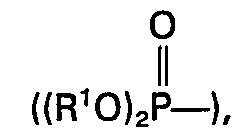
ou (d) un radical phényle éventuellement substitué par un ou plusieurs substituants alkyle en C1 à C6, alcényle en C2 à C6, alkoxy en C1 à C6, alkylthio en C1 à C6, alkylsulfinyle en C1 à C6, alcanesulfonyle en C1 à C6, nitro, cyano, carboxy, carbamoyle, alkoxycarbonyle en C2 à C6 ou CF3, ou des atomes de fluor, de chlore, de brome ou d'iode,
ou bien (2) un groupe R2N3― dans lequel R2 est l'hyrogène ou un groupe, alkyle, alcényle ou alcynyle, chacun pouvant éventuellement être substitué par un halogène, un substituant alkoxy ayant 1 à 6 atomes de carbone, alkylthio ayant 1 à 6 atomes de carbone ou phényle éventuellement substitué par un ou plusieurs atomes d'halogènes ou groupes alkoxy en C1 à C6, alkyle en C1 à C6, alcényle en C2 à C6, CF3, N02 ou CN; R3 peut avoir l'une quelconque des valeurs indiquées ci-dessus pour R2 ou peut en outre être un groupe phényle ou un groupe acyle; ou bien R2 et R3 peuvent former conjointement avec l'atome d'azote auquel ils sont liés, un noyau hétérocyclique saturé pentagonal ou hexagonal éventuellement substitué par un ou plusieurs groupes méthyle; R4 est l'hydrogène ou un cation; R5 est l'hydrogène, un cation ou un groupe alkyle; et R6 est l'hydrogène ou un radical alkyle, alcényle ou alcynyle, chacun d'eux pouvant éventuellement être substitué par un halogène, un radical alkoxy ayant 1 à 6 atomes de carbone, alkylthio ayant 1 à 6 atomes de carbone, hydroxy, carboxy, alkoxycarbonyle ayant 2 à 6 atomes de carbone ou phosphonyle


Priority Applications (1)
| Application Number | Priority Date | Filing Date | Title |
|---|---|---|---|
| AT82301421T ATE13675T1 (de) | 1981-04-16 | 1982-03-19 | Substituierte methanphosphonsaeurederivate, ihre verwendung als herbizide, sie enthaltende herbizide zusammensetzungen und verfahren zu ihrer herstellung. |
Applications Claiming Priority (2)
| Application Number | Priority Date | Filing Date | Title |
|---|---|---|---|
| GB8112177 | 1981-04-16 | ||
| GB8112177 | 1981-04-16 |
Publications (2)
| Publication Number | Publication Date |
|---|---|
| EP0063411A1 EP0063411A1 (fr) | 1982-10-27 |
| EP0063411B1 true EP0063411B1 (fr) | 1985-06-05 |
Family
ID=10521229
Family Applications (1)
| Application Number | Title | Priority Date | Filing Date |
|---|---|---|---|
| EP82301421A Expired EP0063411B1 (fr) | 1981-04-16 | 1982-03-19 | Dérivés d'acide méthanephosphonique substitué, leur utilisation comme herbicides, compositions herbicides les contenant et procédés pour les préparer |
Country Status (13)
| Country | Link |
|---|---|
| US (1) | US4454073A (fr) |
| EP (1) | EP0063411B1 (fr) |
| JP (1) | JPS57181092A (fr) |
| AT (1) | ATE13675T1 (fr) |
| AU (1) | AU550038B2 (fr) |
| CA (1) | CA1173840A (fr) |
| DE (1) | DE3264004D1 (fr) |
| GB (1) | GB2097001A (fr) |
| HU (1) | HU187677B (fr) |
| IE (1) | IE52391B1 (fr) |
| IL (1) | IL65377A (fr) |
| NZ (1) | NZ200124A (fr) |
| ZA (1) | ZA822182B (fr) |
Families Citing this family (2)
| Publication number | Priority date | Publication date | Assignee | Title |
|---|---|---|---|---|
| DE3426718A1 (de) * | 1984-07-20 | 1986-01-23 | Hoechst Ag, 6230 Frankfurt | (alpha)-acyloximino-alkanphosphon-(und-phosphin)-saeure ester, ihre herstellung und verwendung im pflanzenschutz |
| DE3600664A1 (de) * | 1986-01-13 | 1987-07-16 | Nattermann A & Cie | Pflanzenbehandlungsmittel |
Family Cites Families (4)
| Publication number | Priority date | Publication date | Assignee | Title |
|---|---|---|---|---|
| US3920733A (en) * | 1973-08-06 | 1975-11-18 | Monsanto Co | Ureidoalkylphosphonic acids |
| NL7514315A (nl) * | 1974-12-11 | 1976-06-15 | Monsanto Co | Werkwijze voor de bereiding van carbonylaldimino- methaanfosfonaten. |
| US3961934A (en) * | 1974-12-19 | 1976-06-08 | Monsanto Company | Method for increasing the sucrose content of growing plants |
| US4414158A (en) * | 1980-04-29 | 1983-11-08 | Ciba-Geigy Corporation | Phosphonomethylglycylhydroxamic acid and novel herbicidally active salts thereof |
-
1982
- 1982-03-19 GB GB8208145A patent/GB2097001A/en not_active Withdrawn
- 1982-03-19 EP EP82301421A patent/EP0063411B1/fr not_active Expired
- 1982-03-19 DE DE8282301421T patent/DE3264004D1/de not_active Expired
- 1982-03-19 AT AT82301421T patent/ATE13675T1/de not_active IP Right Cessation
- 1982-03-23 IE IE678/82A patent/IE52391B1/en unknown
- 1982-03-24 NZ NZ200124A patent/NZ200124A/en unknown
- 1982-03-26 AU AU81991/82A patent/AU550038B2/en not_active Ceased
- 1982-03-26 US US06/362,276 patent/US4454073A/en not_active Expired - Fee Related
- 1982-03-30 ZA ZA822182A patent/ZA822182B/xx unknown
- 1982-03-30 IL IL65377A patent/IL65377A/xx unknown
- 1982-03-31 CA CA000399935A patent/CA1173840A/fr not_active Expired
- 1982-04-14 HU HU821129A patent/HU187677B/hu not_active IP Right Cessation
- 1982-04-16 JP JP57063773A patent/JPS57181092A/ja active Pending
Also Published As
| Publication number | Publication date |
|---|---|
| ATE13675T1 (de) | 1985-06-15 |
| HU187677B (en) | 1986-02-28 |
| AU8199182A (en) | 1982-10-21 |
| US4454073A (en) | 1984-06-12 |
| IE820678L (en) | 1982-10-16 |
| ZA822182B (en) | 1982-11-24 |
| NZ200124A (en) | 1985-05-31 |
| CA1173840A (fr) | 1984-09-04 |
| JPS57181092A (en) | 1982-11-08 |
| AU550038B2 (en) | 1986-02-27 |
| GB2097001A (en) | 1982-10-27 |
| EP0063411A1 (fr) | 1982-10-27 |
| IL65377A (en) | 1987-01-30 |
| DE3264004D1 (en) | 1985-07-11 |
| IE52391B1 (en) | 1987-10-14 |
Similar Documents
| Publication | Publication Date | Title |
|---|---|---|
| EP0023785B1 (fr) | Dérivés de l'acide quinoxalinyloxyphénoxyalcoyle carboxyliques, leur préparation et leur utilisation comme herbicides | |
| EP0004414B1 (fr) | Mélanges de dérivés herbicides d'acides pyridyloxyphénoxypropanoiques avec d'autres herbicides et procédé pour combattre les mauvaises herbes | |
| EP0018080B1 (fr) | Composés herbicides, leur préparation, compositions et procédé pour leur application | |
| EP0044163A2 (fr) | Dérivés d'acides quinazolinyloxy(amino)phénoxycarboxyliques, leur procédé de préparation, compositions herbicides les contenant et leur application comme herbicides | |
| EP0029319B1 (fr) | Dérivés d'acides quinolinyloxy(amino)phénoxyalcanoiques, procédé pour leur préparation, compositions herbicides les contenant, et leur utilisation comme herbicides | |
| EP0013143A2 (fr) | Anilinopyrimidines substituées, compositions les contenant et leur utilisation comme herbicides, procédés pour leur préparation et intermédiaires utiles à leur préparation | |
| EP0078613B1 (fr) | Dérivés d'acide propylphosphonique substitué, leur utilisation comme herbicides, compositions herbicides les contenant et procédé pour les préparer | |
| EP0024932A2 (fr) | Dérivés d'acides carboxyliques de 1,2,4-benzotriazinyloxyphénoxyalcane, procédés pour leur préparation, leur utilisation comme herbicides et leur préparation | |
| EP0013144B1 (fr) | Dérivés de diphénylamines substituées, leurs compositions et usages herbicides, et procédés pour leur préparation | |
| EP0063418B1 (fr) | Dérivés des acides indanyloxy- et tétralinyloxy-phénoxy-propioniques, leur procédé de préparation, procédés herbicides et compositions herbicides les utilisant | |
| EP0060607B1 (fr) | Dérivés de l'acide 2-(2-halo-4-(6-haloquinoxalin-2-yloxy)phénoxy) propionique, leur procédé de synthèse, compositions herbicides les contenants, et leur utilisation comme herbicides | |
| EP0124982B1 (fr) | Dérivés de l'éther diphénylique à activité herbicide | |
| US4454073A (en) | N-[Carboxyl(carbamoyl)carbonyl)-aminomethyl phosphonic acids | |
| EP0013145A2 (fr) | Anilinopyridines substituées, procédés et intermédiaires pour leur préparation, compositions et leur utilisation comme herbicides | |
| EP0122037B1 (fr) | Diphényléthers substitués utiles comme herbicides | |
| EP0228788B1 (fr) | Dérivés herbicides de composés de benzoylhydrazinium substitués | |
| US5120869A (en) | Herbicidal compounds | |
| EP0024931B1 (fr) | Dérivés d'acides carboxyliques de 1,2,4-benzotriazinylaminophénoxy alcane, procédés pour leur préparation et leur utilisation comme herbicides | |
| EP0049029B1 (fr) | Dérivés d'acides cinnolinyloxy(amino)phénoxyalkanecarboxyliques, leur procédé de préparation, compositions herbicides les contenant et leur utilisation comme herbicides | |
| EP0063866B1 (fr) | Dérivés de l'acide quinolin-3-yloxy(amino) phenoxyalkane carboxylique, leurs procédés de préparation, les compositions herbicides les contenant, et leur application comme herbicides | |
| EP0066976B1 (fr) | Dérivés d'arylsulfonylurées, leur utilisation comme herbicides et compositions herbicides les contenant | |
| EP0004171A1 (fr) | Dérivés de pyrazolotriazinedione, procédé pour leur préparation et compositions herbicides les contenant | |
| EP0124985A1 (fr) | Dérivés du diphényléther à activité herbicide | |
| GB2137989A (en) | 5-Phenoxy-N-sulphonyl-benzamide herbicidal compounds |
Legal Events
| Date | Code | Title | Description |
|---|---|---|---|
| PUAI | Public reference made under article 153(3) epc to a published international application that has entered the european phase |
Free format text: ORIGINAL CODE: 0009012 |
|
| AK | Designated contracting states |
Designated state(s): AT BE CH DE FR GB IT LI LU NL SE |
|
| 17P | Request for examination filed |
Effective date: 19830317 |
|
| ITF | It: translation for a ep patent filed | ||
| GRAA | (expected) grant |
Free format text: ORIGINAL CODE: 0009210 |
|
| AK | Designated contracting states |
Designated state(s): AT BE CH DE FR GB IT LI LU NL SE |
|
| PG25 | Lapsed in a contracting state [announced via postgrant information from national office to epo] |
Ref country code: SE Effective date: 19850605 |
|
| REF | Corresponds to: |
Ref document number: 13675 Country of ref document: AT Date of ref document: 19850615 Kind code of ref document: T |
|
| REF | Corresponds to: |
Ref document number: 3264004 Country of ref document: DE Date of ref document: 19850711 |
|
| ET | Fr: translation filed | ||
| PLBE | No opposition filed within time limit |
Free format text: ORIGINAL CODE: 0009261 |
|
| STAA | Information on the status of an ep patent application or granted ep patent |
Free format text: STATUS: NO OPPOSITION FILED WITHIN TIME LIMIT |
|
| 26N | No opposition filed | ||
| PGFP | Annual fee paid to national office [announced via postgrant information from national office to epo] |
Ref country code: FR Payment date: 19910211 Year of fee payment: 10 Ref country code: AT Payment date: 19910211 Year of fee payment: 10 |
|
| PGFP | Annual fee paid to national office [announced via postgrant information from national office to epo] |
Ref country code: CH Payment date: 19910219 Year of fee payment: 10 |
|
| PGFP | Annual fee paid to national office [announced via postgrant information from national office to epo] |
Ref country code: GB Payment date: 19910222 Year of fee payment: 10 Ref country code: BE Payment date: 19910222 Year of fee payment: 10 |
|
| PGFP | Annual fee paid to national office [announced via postgrant information from national office to epo] |
Ref country code: LU Payment date: 19910225 Year of fee payment: 10 |
|
| PGFP | Annual fee paid to national office [announced via postgrant information from national office to epo] |
Ref country code: DE Payment date: 19910228 Year of fee payment: 10 |
|
| ITTA | It: last paid annual fee | ||
| PGFP | Annual fee paid to national office [announced via postgrant information from national office to epo] |
Ref country code: NL Payment date: 19910331 Year of fee payment: 10 |
|
| EPTA | Lu: last paid annual fee | ||
| PG25 | Lapsed in a contracting state [announced via postgrant information from national office to epo] |
Ref country code: LU Free format text: LAPSE BECAUSE OF NON-PAYMENT OF DUE FEES Effective date: 19920319 Ref country code: GB Effective date: 19920319 Ref country code: AT Effective date: 19920319 |
|
| PG25 | Lapsed in a contracting state [announced via postgrant information from national office to epo] |
Ref country code: LI Effective date: 19920331 Ref country code: CH Effective date: 19920331 Ref country code: BE Effective date: 19920331 |
|
| BERE | Be: lapsed |
Owner name: IMPERIAL CHEMICAL INDUSTRIES P.L.C. Effective date: 19920331 |
|
| PG25 | Lapsed in a contracting state [announced via postgrant information from national office to epo] |
Ref country code: NL Effective date: 19921001 |
|
| NLV4 | Nl: lapsed or anulled due to non-payment of the annual fee | ||
| GBPC | Gb: european patent ceased through non-payment of renewal fee | ||
| PG25 | Lapsed in a contracting state [announced via postgrant information from national office to epo] |
Ref country code: FR Effective date: 19921130 |
|
| REG | Reference to a national code |
Ref country code: CH Ref legal event code: PL |
|
| PG25 | Lapsed in a contracting state [announced via postgrant information from national office to epo] |
Ref country code: DE Effective date: 19921201 |
|
| REG | Reference to a national code |
Ref country code: FR Ref legal event code: ST |