EP0063773A1 - Orally active tolciclate and tolnaftate - Google Patents
Orally active tolciclate and tolnaftate Download PDFInfo
- Publication number
- EP0063773A1 EP0063773A1 EP82103281A EP82103281A EP0063773A1 EP 0063773 A1 EP0063773 A1 EP 0063773A1 EP 82103281 A EP82103281 A EP 82103281A EP 82103281 A EP82103281 A EP 82103281A EP 0063773 A1 EP0063773 A1 EP 0063773A1
- Authority
- EP
- European Patent Office
- Prior art keywords
- tolciclate
- tolnaftate
- oral administration
- agents
- days
- Prior art date
- Legal status (The legal status is an assumption and is not a legal conclusion. Google has not performed a legal analysis and makes no representation as to the accuracy of the status listed.)
- Withdrawn
Links
- 229960003916 tolciclate Drugs 0.000 title claims abstract description 32
- CANCCLAKQQHLNK-LSDHHAIUSA-N O-[[(1R,8S)-4-tricyclo[6.2.1.02,7]undeca-2(7),3,5-trienyl]] N-methyl-N-(3-methylphenyl)carbamothioate Chemical compound CN(C(=S)Oc1ccc2[C@H]3CC[C@H](C3)c2c1)c1cccc(C)c1 CANCCLAKQQHLNK-LSDHHAIUSA-N 0.000 title claims abstract description 26
- FUSNMLFNXJSCDI-UHFFFAOYSA-N tolnaftate Chemical compound C=1C=C2C=CC=CC2=CC=1OC(=S)N(C)C1=CC=CC(C)=C1 FUSNMLFNXJSCDI-UHFFFAOYSA-N 0.000 title claims description 19
- 229960004880 tolnaftate Drugs 0.000 title claims description 18
- 208000031888 Mycoses Diseases 0.000 claims abstract description 18
- 229940121375 antifungal agent Drugs 0.000 claims description 13
- 239000003429 antifungal agent Substances 0.000 claims description 11
- 239000003937 drug carrier Substances 0.000 claims description 4
- 239000008194 pharmaceutical composition Substances 0.000 claims description 3
- 239000003085 diluting agent Substances 0.000 claims 3
- 239000003814 drug Substances 0.000 abstract description 9
- 229940079593 drug Drugs 0.000 abstract description 7
- 239000000725 suspension Substances 0.000 abstract description 5
- 239000003826 tablet Substances 0.000 abstract description 3
- 239000002775 capsule Substances 0.000 abstract description 2
- 239000006188 syrup Substances 0.000 abstract description 2
- 235000020357 syrup Nutrition 0.000 abstract description 2
- 241001465754 Metazoa Species 0.000 description 15
- 241000699670 Mus sp. Species 0.000 description 9
- 239000003795 chemical substances by application Substances 0.000 description 9
- 208000015181 infectious disease Diseases 0.000 description 7
- 241000700198 Cavia Species 0.000 description 6
- DDUHZTYCFQRHIY-UHFFFAOYSA-N Negwer: 6874 Natural products COC1=CC(=O)CC(C)C11C(=O)C(C(OC)=CC(OC)=C2Cl)=C2O1 DDUHZTYCFQRHIY-UHFFFAOYSA-N 0.000 description 6
- 241001045770 Trichophyton mentagrophytes Species 0.000 description 6
- 239000008280 blood Substances 0.000 description 6
- 210000004369 blood Anatomy 0.000 description 6
- 238000000034 method Methods 0.000 description 6
- 230000000699 topical effect Effects 0.000 description 6
- IIUZTXTZRGLYTI-UHFFFAOYSA-N Dihydrogriseofulvin Natural products COC1CC(=O)CC(C)C11C(=O)C(C(OC)=CC(OC)=C2Cl)=C2O1 IIUZTXTZRGLYTI-UHFFFAOYSA-N 0.000 description 5
- UXWOXTQWVMFRSE-UHFFFAOYSA-N Griseoviridin Natural products O=C1OC(C)CC=C(C(NCC=CC=CC(O)CC(O)C2)=O)SCC1NC(=O)C1=COC2=N1 UXWOXTQWVMFRSE-UHFFFAOYSA-N 0.000 description 5
- 230000000843 anti-fungal effect Effects 0.000 description 5
- DDUHZTYCFQRHIY-RBHXEPJQSA-N griseofulvin Chemical compound COC1=CC(=O)C[C@@H](C)[C@@]11C(=O)C(C(OC)=CC(OC)=C2Cl)=C2O1 DDUHZTYCFQRHIY-RBHXEPJQSA-N 0.000 description 5
- 229960002867 griseofulvin Drugs 0.000 description 5
- 229920000609 methyl cellulose Polymers 0.000 description 5
- 239000001923 methylcellulose Substances 0.000 description 5
- 241000233866 Fungi Species 0.000 description 4
- 210000002700 urine Anatomy 0.000 description 4
- XLYOFNOQVPJJNP-UHFFFAOYSA-N water Substances O XLYOFNOQVPJJNP-UHFFFAOYSA-N 0.000 description 4
- XEKOWRVHYACXOJ-UHFFFAOYSA-N Ethyl acetate Chemical compound CCOC(C)=O XEKOWRVHYACXOJ-UHFFFAOYSA-N 0.000 description 3
- OKKJLVBELUTLKV-UHFFFAOYSA-N Methanol Chemical compound OC OKKJLVBELUTLKV-UHFFFAOYSA-N 0.000 description 3
- 239000007864 aqueous solution Substances 0.000 description 3
- 150000001875 compounds Chemical class 0.000 description 3
- 239000006185 dispersion Substances 0.000 description 3
- 239000004615 ingredient Substances 0.000 description 3
- 210000001519 tissue Anatomy 0.000 description 3
- -1 0-(l Chemical compound 0.000 description 2
- 206010017533 Fungal infection Diseases 0.000 description 2
- 241000700159 Rattus Species 0.000 description 2
- 208000002474 Tinea Diseases 0.000 description 2
- 238000010521 absorption reaction Methods 0.000 description 2
- WNLRTRBMVRJNCN-UHFFFAOYSA-N adipic acid Chemical compound OC(=O)CCCCC(O)=O WNLRTRBMVRJNCN-UHFFFAOYSA-N 0.000 description 2
- 238000004458 analytical method Methods 0.000 description 2
- 239000004599 antimicrobial Substances 0.000 description 2
- 238000002512 chemotherapy Methods 0.000 description 2
- 239000002552 dosage form Substances 0.000 description 2
- 230000000694 effects Effects 0.000 description 2
- 230000008030 elimination Effects 0.000 description 2
- 238000003379 elimination reaction Methods 0.000 description 2
- 230000002550 fecal effect Effects 0.000 description 2
- 238000009472 formulation Methods 0.000 description 2
- 238000000338 in vitro Methods 0.000 description 2
- 238000011081 inoculation Methods 0.000 description 2
- 238000005567 liquid scintillation counting Methods 0.000 description 2
- 239000000203 mixture Substances 0.000 description 2
- 231100000444 skin lesion Toxicity 0.000 description 2
- 206010040882 skin lesion Diseases 0.000 description 2
- 230000009885 systemic effect Effects 0.000 description 2
- 206010005913 Body tinea Diseases 0.000 description 1
- 241000700199 Cavia porcellus Species 0.000 description 1
- 241001480036 Epidermophyton floccosum Species 0.000 description 1
- LFQSCWFLJHTTHZ-UHFFFAOYSA-N Ethanol Chemical compound CCO LFQSCWFLJHTTHZ-UHFFFAOYSA-N 0.000 description 1
- 206010019695 Hepatic neoplasm Diseases 0.000 description 1
- 241000243190 Microsporidia Species 0.000 description 1
- 208000010195 Onychomycosis Diseases 0.000 description 1
- 241000041995 Pelargonium ovale Species 0.000 description 1
- 206010035502 Plasmodium ovale infection Diseases 0.000 description 1
- 208000035415 Reinfection Diseases 0.000 description 1
- 229930006000 Sucrose Natural products 0.000 description 1
- CZMRCDWAGMRECN-UGDNZRGBSA-N Sucrose Chemical compound O[C@H]1[C@H](O)[C@@H](CO)O[C@@]1(CO)O[C@@H]1[C@H](O)[C@@H](O)[C@H](O)[C@@H](CO)O1 CZMRCDWAGMRECN-UGDNZRGBSA-N 0.000 description 1
- GNVMUORYQLCPJZ-UHFFFAOYSA-M Thiocarbamate Chemical compound NC([S-])=O GNVMUORYQLCPJZ-UHFFFAOYSA-M 0.000 description 1
- 208000007712 Tinea Versicolor Diseases 0.000 description 1
- 206010043866 Tinea capitis Diseases 0.000 description 1
- 201000010618 Tinea cruris Diseases 0.000 description 1
- 206010056131 Tinea versicolour Diseases 0.000 description 1
- 241000893966 Trichophyton verrucosum Species 0.000 description 1
- 235000011037 adipic acid Nutrition 0.000 description 1
- 239000001361 adipic acid Substances 0.000 description 1
- 229940035676 analgesics Drugs 0.000 description 1
- 239000000730 antalgic agent Substances 0.000 description 1
- 239000003242 anti bacterial agent Substances 0.000 description 1
- 230000002160 anti-trichophyton Effects 0.000 description 1
- 229940088710 antibiotic agent Drugs 0.000 description 1
- 210000005013 brain tissue Anatomy 0.000 description 1
- 238000004587 chromatography analysis Methods 0.000 description 1
- 230000001684 chronic effect Effects 0.000 description 1
- 201000010099 disease Diseases 0.000 description 1
- 208000037265 diseases, disorders, signs and symptoms Diseases 0.000 description 1
- 230000002500 effect on skin Effects 0.000 description 1
- 230000029142 excretion Effects 0.000 description 1
- 238000002474 experimental method Methods 0.000 description 1
- 239000000284 extract Substances 0.000 description 1
- 210000004905 finger nail Anatomy 0.000 description 1
- 235000013305 food Nutrition 0.000 description 1
- 239000007903 gelatin capsule Substances 0.000 description 1
- 229940089934 grifulvin v Drugs 0.000 description 1
- 210000002216 heart Anatomy 0.000 description 1
- 230000036039 immunity Effects 0.000 description 1
- 238000001727 in vivo Methods 0.000 description 1
- 238000007912 intraperitoneal administration Methods 0.000 description 1
- 239000007928 intraperitoneal injection Substances 0.000 description 1
- 210000003734 kidney Anatomy 0.000 description 1
- 230000003902 lesion Effects 0.000 description 1
- 231100000636 lethal dose Toxicity 0.000 description 1
- 210000004185 liver Anatomy 0.000 description 1
- 208000014018 liver neoplasm Diseases 0.000 description 1
- 210000004072 lung Anatomy 0.000 description 1
- 239000000463 material Substances 0.000 description 1
- 238000013508 migration Methods 0.000 description 1
- 230000005012 migration Effects 0.000 description 1
- 210000000282 nail Anatomy 0.000 description 1
- 231100000252 nontoxic Toxicity 0.000 description 1
- 230000003000 nontoxic effect Effects 0.000 description 1
- 239000007800 oxidant agent Substances 0.000 description 1
- 238000007911 parenteral administration Methods 0.000 description 1
- 239000002504 physiological saline solution Substances 0.000 description 1
- 239000008213 purified water Substances 0.000 description 1
- 239000001044 red dye Substances 0.000 description 1
- 210000003491 skin Anatomy 0.000 description 1
- 239000011343 solid material Substances 0.000 description 1
- 239000000243 solution Substances 0.000 description 1
- 238000001228 spectrum Methods 0.000 description 1
- 210000000952 spleen Anatomy 0.000 description 1
- 239000000126 substance Substances 0.000 description 1
- 239000005720 sucrose Substances 0.000 description 1
- 238000013268 sustained release Methods 0.000 description 1
- 239000012730 sustained-release form Substances 0.000 description 1
- 230000001225 therapeutic effect Effects 0.000 description 1
- 238000002560 therapeutic procedure Methods 0.000 description 1
- 238000004809 thin layer chromatography Methods 0.000 description 1
- 201000009642 tinea barbae Diseases 0.000 description 1
- 201000003875 tinea corporis Diseases 0.000 description 1
- 201000004647 tinea pedis Diseases 0.000 description 1
- 201000005882 tinea unguium Diseases 0.000 description 1
- MWOOGOJBHIARFG-UHFFFAOYSA-N vanillin Chemical compound COC1=CC(C=O)=CC=C1O MWOOGOJBHIARFG-UHFFFAOYSA-N 0.000 description 1
- FGQOOHJZONJGDT-UHFFFAOYSA-N vanillin Natural products COC1=CC(O)=CC(C=O)=C1 FGQOOHJZONJGDT-UHFFFAOYSA-N 0.000 description 1
- 235000012141 vanillin Nutrition 0.000 description 1
- 239000003981 vehicle Substances 0.000 description 1
- 238000005303 weighing Methods 0.000 description 1
Classifications
-
- A—HUMAN NECESSITIES
- A61—MEDICAL OR VETERINARY SCIENCE; HYGIENE
- A61K—PREPARATIONS FOR MEDICAL, DENTAL OR TOILETRY PURPOSES
- A61K31/00—Medicinal preparations containing organic active ingredients
- A61K31/21—Esters, e.g. nitroglycerine, selenocyanates
- A61K31/27—Esters, e.g. nitroglycerine, selenocyanates of carbamic or thiocarbamic acids, meprobamate, carbachol, neostigmine
-
- A—HUMAN NECESSITIES
- A61—MEDICAL OR VETERINARY SCIENCE; HYGIENE
- A61P—SPECIFIC THERAPEUTIC ACTIVITY OF CHEMICAL COMPOUNDS OR MEDICINAL PREPARATIONS
- A61P31/00—Antiinfectives, i.e. antibiotics, antiseptics, chemotherapeutics
- A61P31/04—Antibacterial agents
-
- A—HUMAN NECESSITIES
- A61—MEDICAL OR VETERINARY SCIENCE; HYGIENE
- A61P—SPECIFIC THERAPEUTIC ACTIVITY OF CHEMICAL COMPOUNDS OR MEDICINAL PREPARATIONS
- A61P31/00—Antiinfectives, i.e. antibiotics, antiseptics, chemotherapeutics
- A61P31/10—Antimycotics
-
- A—HUMAN NECESSITIES
- A61—MEDICAL OR VETERINARY SCIENCE; HYGIENE
- A61K—PREPARATIONS FOR MEDICAL, DENTAL OR TOILETRY PURPOSES
- A61K9/00—Medicinal preparations characterised by special physical form
- A61K9/0087—Galenical forms not covered by A61K9/02 - A61K9/7023
- A61K9/0095—Drinks; Beverages; Syrups; Compositions for reconstitution thereof, e.g. powders or tablets to be dispersed in a glass of water; Veterinary drenches
-
- A—HUMAN NECESSITIES
- A61—MEDICAL OR VETERINARY SCIENCE; HYGIENE
- A61K—PREPARATIONS FOR MEDICAL, DENTAL OR TOILETRY PURPOSES
- A61K9/00—Medicinal preparations characterised by special physical form
- A61K9/20—Pills, tablets, discs, rods
- A61K9/2004—Excipients; Inactive ingredients
- A61K9/2013—Organic compounds, e.g. phospholipids, fats
- A61K9/2018—Sugars, or sugar alcohols, e.g. lactose, mannitol; Derivatives thereof, e.g. polysorbates
-
- A—HUMAN NECESSITIES
- A61—MEDICAL OR VETERINARY SCIENCE; HYGIENE
- A61K—PREPARATIONS FOR MEDICAL, DENTAL OR TOILETRY PURPOSES
- A61K9/00—Medicinal preparations characterised by special physical form
- A61K9/48—Preparations in capsules, e.g. of gelatin, of chocolate
- A61K9/4841—Filling excipients; Inactive ingredients
- A61K9/4858—Organic compounds
-
- Y—GENERAL TAGGING OF NEW TECHNOLOGICAL DEVELOPMENTS; GENERAL TAGGING OF CROSS-SECTIONAL TECHNOLOGIES SPANNING OVER SEVERAL SECTIONS OF THE IPC; TECHNICAL SUBJECTS COVERED BY FORMER USPC CROSS-REFERENCE ART COLLECTIONS [XRACs] AND DIGESTS
- Y02—TECHNOLOGIES OR APPLICATIONS FOR MITIGATION OR ADAPTATION AGAINST CLIMATE CHANGE
- Y02A—TECHNOLOGIES FOR ADAPTATION TO CLIMATE CHANGE
- Y02A50/00—TECHNOLOGIES FOR ADAPTATION TO CLIMATE CHANGE in human health protection, e.g. against extreme weather
- Y02A50/30—Against vector-borne diseases, e.g. mosquito-borne, fly-borne, tick-borne or waterborne diseases whose impact is exacerbated by climate change
Definitions
- This invention relates to treating fungal diseases. More particularly, this invention relates to the systemic treatment of fungal diseases by oral administration of an antifungal agent selected from tolciclate and tolnaftate and to medicaments containing said agents for oral administration.
- an antifungal agent selected from tolciclate and tolnaftate and to medicaments containing said agents for oral administration.
- the human body is subject to many fungal infections, some of which have been a problem to man since before recorded history. Modern science has been successful in treating many fungal diseases. The most success has occurred in the topical treatment on exposed areas of the body. Numerous compounds are known to be effective in such topical treatment. However, not all fungal infections occur in exposed areas and are thus not amenable to topical treatment. Some fungal diseases occur internally or deep in the dermal layer of the skin or in unexposed areas, such as under fingernails, and can only be treated systemically. Unfortunately, only a few antifungal agents are known to be systemically effective when administered orally. One of the most widely prescribed drugs for the systemic treatment of fungal diseases is griseofulvin. Since the chronic feeding of this drug to mice results in their developing liver tumors, its use is not justified in minor or trivial infections. Accordingly, there is great interest in finding antifungal agents which can be effectively and safely administered orally.
- Tolciclate and tolnaftate are known antifungal agents effective in topical treatment of fungal diseases.
- Tolciclate i.e., 0-(l,4-methano-l,2,3,4-tetrahydro-6-naphthyl)-N-methyl-N-(m-tolyl)-thiocarbamate having the formula is described in U.S. Patent No. 3,855,263.
- the patent indicates that the compound has antifungal activity when applied topically.
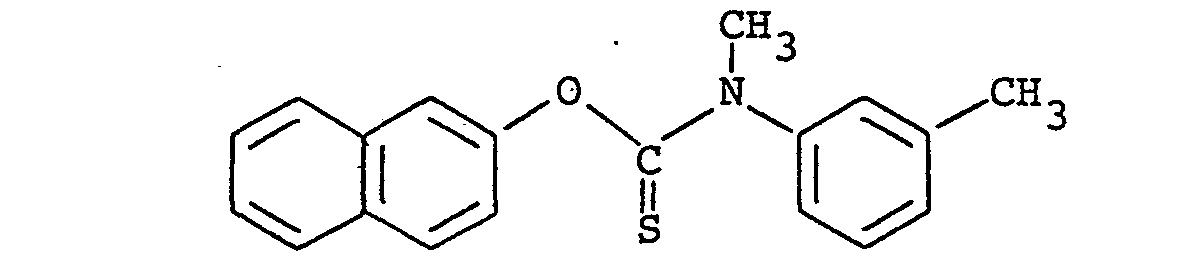
- Tolnaftate i.e., methyl-(3-methylphenyl)carba- mothioic acid O-2-naphthalenyl ester having the formula is described in U.S. Patent No. 3,334,126.
- this invention relates to (1) the method of treating fungal diseases which comprises orally administering to a person suffering therefrom a therapeutic amount of antifungal agent selected from tolciclate and tolnaftate and (2) an antifungal medicament for oral administration comprising: a. from about 10% to about 90% by weight of an antifungal agent selected from tolciclate and tolnaftate; and b. from about 90% to 10% by weight of a pharmaceutically acceptable carrier.
- the orally administered agents of this invention are relatively nontoxic.
- tolciclate when administered orally to rats, tolciclate was found to have an LD 50 of greater than 4000 mg/kg.
- LD 50 lethal dose to 50% of the animals being tested.
- Tolnaftate administered orally to rats was found to have an LD50 of greater than 5000 mg/kg.
- Typical fungus infections which can be treated systemically according to the process of this invention are ringworm infections of the skin, hair and nails, namely tinea corporis, tinea pedis, tinea cruris, tinea bar- bae, tinea capitis, tinea unguium and tinea versicolor when caused by organisms such as Microspora, Trichophyta, Epidermo- phyton floccosums, and Pityrospora, i.e., P. obiculare and P. ovale.
- Oral dosages in the order of 1 to 50 mg/kg, most preferably 5 to 25 mg/kg daily of the agents are highly effective in suppressing fungal diseases. Most preferably the agents will be administered in divided daily doses. The specific dosage will depend upon the site of the infection, type of fungus, and duration of treatment. Any pharmaceutical composition for oral administration containing the agents can be used in the process of this invention. In general, however, the agents will be administered in the form of tablets, capsules, syrups or suspensions.
- Typical dosage forms are as follows: A. The following ingredients are mixed in a blender for 5 minutes and then compressed into 200 mg. tablets:
- the gums are dispersed in about 1/2 the volume of water heated to 70°C. and then cooled to 35°C.
- the sucrose and D&C Red dye are dissolved in a small volume of the water and added to the gum dispersion.
- the tolciclate is dispersed in water and added to the gum dispersion.
- the parabens, vanillin and Alva Cherry flavoring are dissolved in alcohol and added to the dispersion.
- a quantity (7 grams) of adipic acid sufficient to adjust the pH to between 5 and 6 is added and finally the volume is adjusted to 10 liters with purified water.
- sustained release formulations and formulations containing other medicinal agents such as analgesics, antibiotics, etc.
- This example illustrates the absorption of tolciclate after oral administration and its migration to the skin.
- mice Fifteen male, Swiss-Webster mice weighing 25-30 g. were divided into groups of three. All animals were fasted overnight prior to the experiment. Food was allowed 8 hours after dosing.
- 14 C-tolciclate 0-(1,4-methano-1,2,3,4-tetrahydro-6-naphthyl)N-methyl-N-m-tolyl[methyl- 14 C]thiocarbamate, was prepared at a specific activity of 7.48 ⁇ Ci/mg. Powdered 14 C-tolciclate was suspended in 0.25% aqueous solution of methylcellulose at a concentration of 0.5 mg/ml. Each animal was gavaged with 10 mg/ml of suspension, resulting in a 5 mg/kg dose.
- Blood samples were taken at 0.5, 1, 2, 4, 8, 12, 48 and 72 hours after the dose of 14 C-tolciclate.
- 3 animals were killed and the liver, kidney, lung, skin, heart, spleen and brain tissues were removed. This procedure was repeated with 3 animals at 8, 24 and 72 hours.
- An estimation of biliary excretion was obtained by giving an intraperitoneal injection of 5 mg/kg of 14 C-tolciclate to 2 mice and following fecal elimination over a 72 hour period.
- Another group of 3 mice received a daily oral dose of 5 mg/kg of 14 C-tolciclate for 8 days. Blood was taken at 1, 5 and 8 days. The same tissues listed above were taken from this group on day 8.
- the major route of elimination was biliary, while about 25% of the dose was excreted via the urine.
- the drug was extensively metabolized, unchanged tolciclate was not found in the urine and only minute amounts were present in the blood.
- the major compound, identified by chromatography, in the skin was unmetabolized tolciclate. Based on the analysis, tolciclate levels in the skin ranged from 147-180 ng/g 4 hours after oral administration - this is a concentration that has been shown effective in in vitro antifungal testing.
- This example illustrates the effectiveness of tolciclate, tolnaftate and griseofulvin as antifungal agents when administered orally.
- mice Four groups of albino guinea pigs were observed for two weeks to make sure they were disease free. Following the observation period they were dosed according to the following regimen: one group (the control) was gavaged twice a day for 10 days with a 0.25% aqueous methylcellulose solution. The second group was gavaged twice a day for 10 days with 50 mg/kg of tolciclate suspended in a 0.25% aqueous solution of methylcellulose. The third group was gavaged twice a day for 10 days with 50 mg/kg of tolnaftate suspended in a 0.25% aqueous solution of methylcellulose. The fourth group was gavaged twice a day for 10 days with 50 mg/kg of griseofulvin in the form of a commercial elixir ("Grifulvin V" sold by Ortho Pharmaceutical Corp.).
- T. mentagrophytes "1782" fungus On the fifth day of treatment all of the animals were infected with T. mentagrophytes "1782" fungus by the following method: an area of several centimeters on the back of each guinea pig was shaved free of hair, abraded and inoculated with a suspension of a culture of T. mentagrophytes suspended in physiological saline solution. The resulting skin lesions were checked on day 7, 10 and 15 after inoculation and the size of the lesions measured.
- tolciclate was stopped 19 days after the first infection with T. mentagrophytes, 17 days later, (36 days after the first infection), all the guinea pigs were subjected to reinfection dermally with T. mentagrophytes. Those guinea pigs which had been treated with tolciclate did not become reinfected. The controls all became reinfected.
- Example 2 the data in this example may not look as impressive as the data in Example 2, Table 4, however, is has to be considered that in Example 2 the animals were treated with the medication first and then infected five days later. In Example 3 the animals are first infected and then treated with the medication five days later. It is quite unexpected to find that the treated animals retain their immunity to the fungus 17 days after the treatment was stopped. With most antifungal agents, the animal can be reinfected as soon as treatment with the agent is stopped.
Landscapes
- Health & Medical Sciences (AREA)
- Pharmacology & Pharmacy (AREA)
- Veterinary Medicine (AREA)
- Public Health (AREA)
- Chemical & Material Sciences (AREA)
- General Health & Medical Sciences (AREA)
- Medicinal Chemistry (AREA)
- Animal Behavior & Ethology (AREA)
- Life Sciences & Earth Sciences (AREA)
- Chemical Kinetics & Catalysis (AREA)
- Organic Chemistry (AREA)
- Nuclear Medicine, Radiotherapy & Molecular Imaging (AREA)
- General Chemical & Material Sciences (AREA)
- Oncology (AREA)
- Communicable Diseases (AREA)
- Emergency Medicine (AREA)
- Epidemiology (AREA)
- Acyclic And Carbocyclic Compounds In Medicinal Compositions (AREA)
Abstract
It has been found that fungal diseases can be effectively treated systemically by oral administration of tolciclate or tolnaffate. The drugs will generally be administered in divided daily doses in the form of tablets, capsules, syrups or suspensions.
Description
- This invention relates to treating fungal diseases. More particularly, this invention relates to the systemic treatment of fungal diseases by oral administration of an antifungal agent selected from tolciclate and tolnaftate and to medicaments containing said agents for oral administration.
- The human body is subject to many fungal infections, some of which have been a problem to man since before recorded history. Modern science has been successful in treating many fungal diseases. The most success has occurred in the topical treatment on exposed areas of the body. Numerous compounds are known to be effective in such topical treatment. However, not all fungal infections occur in exposed areas and are thus not amenable to topical treatment. Some fungal diseases occur internally or deep in the dermal layer of the skin or in unexposed areas, such as under fingernails, and can only be treated systemically. Unfortunately, only a few antifungal agents are known to be systemically effective when administered orally. One of the most widely prescribed drugs for the systemic treatment of fungal diseases is griseofulvin. Since the chronic feeding of this drug to mice results in their developing liver tumors, its use is not justified in minor or trivial infections. Accordingly, there is great interest in finding antifungal agents which can be effectively and safely administered orally.
- Tolciclate and tolnaftate are known antifungal agents effective in topical treatment of fungal diseases. Tolciclate, i.e., 0-(l,4-methano-l,2,3,4-tetrahydro-6-naphthyl)-N-methyl-N-(m-tolyl)-thiocarbamate having the formula

- It has now surprisingly been found that tolciclate and tolnaftate can be administered orally in divided daily doses to effectively combat fungal diseases. Accordingly, this invention relates to (1) the method of treating fungal diseases which comprises orally administering to a person suffering therefrom a therapeutic amount of antifungal agent selected from tolciclate and tolnaftate and (2) an antifungal medicament for oral administration comprising: a. from about 10% to about 90% by weight of an antifungal agent selected from tolciclate and tolnaftate; and b. from about 90% to 10% by weight of a pharmaceutically acceptable carrier.
- Unlike some antifungal agents, the orally administered agents of this invention are relatively nontoxic. For example, when administered orally to rats, tolciclate was found to have an LD50 of greater than 4000 mg/kg. By the term "LD50" is meant lethal dose to 50% of the animals being tested. Tolnaftate administered orally to rats was found to have an LD50 of greater than 5000 mg/kg.
- The agents of this invention are effective against a wide spectrum of fungal diseases. Typical fungus infections which can be treated systemically according to the process of this invention are ringworm infections of the skin, hair and nails, namely tinea corporis, tinea pedis, tinea cruris, tinea bar- bae, tinea capitis, tinea unguium and tinea versicolor when caused by organisms such as Microspora, Trichophyta, Epidermo- phyton floccosums, and Pityrospora, i.e., P. obiculare and P. ovale.
- Oral dosages in the order of 1 to 50 mg/kg, most preferably 5 to 25 mg/kg daily of the agents are highly effective in suppressing fungal diseases. Most preferably the agents will be administered in divided daily doses. The specific dosage will depend upon the site of the infection, type of fungus, and duration of treatment. Any pharmaceutical composition for oral administration containing the agents can be used in the process of this invention. In general, however, the agents will be administered in the form of tablets, capsules, syrups or suspensions.
- Typical dosage forms are as follows: A. The following ingredients are mixed in a blender for 5 minutes and then compressed into 200 mg. tablets:

- B. The following ingredients are mixed in a blender for 5 minutes and then 250 mg. portions are filled into hard gelatin capsules:

- C. The following ingredients are utilized in forming a suspension:

- The gums are dispersed in about 1/2 the volume of water heated to 70°C. and then cooled to 35°C. The sucrose and D&C Red dye are dissolved in a small volume of the water and added to the gum dispersion. Next, the tolciclate is dispersed in water and added to the gum dispersion. The parabens, vanillin and Alva Cherry flavoring are dissolved in alcohol and added to the dispersion. A quantity (7 grams) of adipic acid sufficient to adjust the pH to between 5 and 6 is added and finally the volume is adjusted to 10 liters with purified water.
- Various other dosage forms will be obvious to those skilled in the art, including sustained release formulations and formulations containing other medicinal agents such as analgesics, antibiotics, etc.
- The following examples are presented to illustrate the process of this invention.
- This example illustrates the absorption of tolciclate after oral administration and its migration to the skin.
- Fifteen male, Swiss-Webster mice weighing 25-30 g. were divided into groups of three. All animals were fasted overnight prior to the experiment. Food was allowed 8 hours after dosing.
- 14 C-tolciclate, 0-(1,4-methano-1,2,3,4-tetrahydro-6-naphthyl)N-methyl-N-m-tolyl[methyl-14C]thiocarbamate, was prepared at a specific activity of 7.48 µCi/mg. Powdered 14 C-tolciclate was suspended in 0.25% aqueous solution of methylcellulose at a concentration of 0.5 mg/ml. Each animal was gavaged with 10 mg/ml of suspension, resulting in a 5 mg/kg dose.
- Blood samples were taken at 0.5, 1, 2, 4, 8, 12, 48 and 72 hours after the dose of 14 C-tolciclate. At 4 hours post- dose, 3 animals were killed and the liver, kidney, lung, skin, heart, spleen and brain tissues were removed. This procedure was repeated with 3 animals at 8, 24 and 72 hours. An estimation of biliary excretion was obtained by giving an intraperitoneal injection of 5 mg/kg of 14 C-tolciclate to 2 mice and following fecal elimination over a 72 hour period. Another group of 3 mice received a daily oral dose of 5 mg/kg of 14C-tolciclate for 8 days. Blood was taken at 1, 5 and 8 days. The same tissues listed above were taken from this group on day 8.
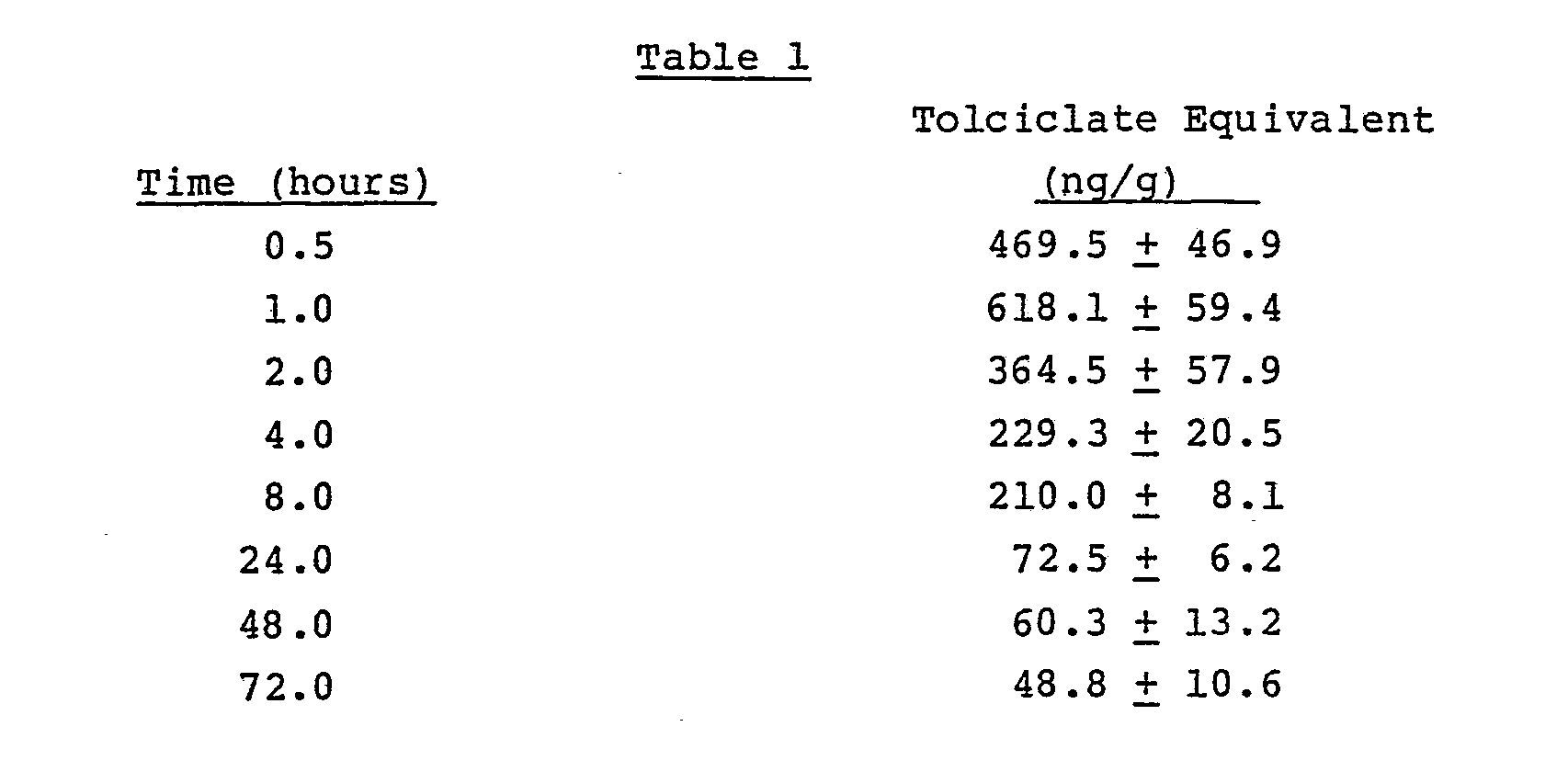
- All of the materials collected from the mice were assayed for 14 C by liquid scintillation counting on a Packard 2425 scintillation counter. Solid material was combusted using a Packard 306 Sample oxidizer prior to liquid scintillation counting. Samples of the skin and lyophilized urine were extracted with methanol and samples of the blood were extracted with ethyl acetate and the extracts analyzed by thin layer chromatography. Analysis of fecal and urine data following the single 5 mg/kg dose showed that at least 70% of the tolciclate administered orally to the mice was absorbed. The absorption appeared to be rapid with a peak level in the blood during the first hour or two. The major route of elimination was biliary, while about 25% of the dose was excreted via the urine. The drug was extensively metabolized, unchanged tolciclate was not found in the urine and only minute amounts were present in the blood. However, the major compound, identified by chromatography, in the skin was unmetabolized tolciclate. Based on the analysis, tolciclate levels in the skin ranged from 147-180 ng/g 4 hours after oral administration - this is a concentration that has been shown effective in in vitro antifungal testing.
- The blood concentration of 14 C-tolciclate in the mice following oral administration is shown in Table l'below.
- The concentration of tolciclate in the skin of the mice following a single oral dose (µg/g wet tissue) is given in Table 2.

- The concentration of tolciclate in the tissue of the mice following eight oral daily doses is given in Table 3.

- This example illustrates the effectiveness of tolciclate, tolnaftate and griseofulvin as antifungal agents when administered orally.
- Four groups of albino guinea pigs were observed for two weeks to make sure they were disease free. Following the observation period they were dosed according to the following regimen: one group (the control) was gavaged twice a day for 10 days with a 0.25% aqueous methylcellulose solution. The second group was gavaged twice a day for 10 days with 50 mg/kg of tolciclate suspended in a 0.25% aqueous solution of methylcellulose. The third group was gavaged twice a day for 10 days with 50 mg/kg of tolnaftate suspended in a 0.25% aqueous solution of methylcellulose. The fourth group was gavaged twice a day for 10 days with 50 mg/kg of griseofulvin in the form of a commercial elixir ("Grifulvin V" sold by Ortho Pharmaceutical Corp.).
- On the fifth day of treatment all of the animals were infected with T. mentagrophytes "1782" fungus by the following method: an area of several centimeters on the back of each guinea pig was shaved free of hair, abraded and inoculated with a suspension of a culture of T. mentagrophytes suspended in physiological saline solution. The resulting skin lesions were checked on day 7, 10 and 15 after inoculation and the size of the lesions measured. On days 10 and 15 clinical infections, i.e., grossly observable skin lesions, were observed in fourteen out of the fourteen controls, seven out of the fifteen tolciclate treated animals, twelve out of the twenty tolnaftate treated animals and four out of the nineteen griseofulvin treated animals. The average size of the infection site and the day it was measured are tabulated in Table 4.

- On day 10 after inoculation with T. mentagrophytes each animal was tested for the presence of fungus as described in Manual, Chemical Microbiology, 2nd Edition, Lenette, Spaulding and Truant. American Society of Microbiology, 1974, pp. 945-946. Thirteen out of the fourteen controls tested positive, indicating fungus infection on day 10. All of the treated animals were negative.
- Ten albino guinea pigs were infected dermally with T. mentagrophytes. Five days later, therapy was started by administering tolciclate orally at a dose of 100 mg/kg/day to half (i.e., five) of the guinea pigs. The other half of the guinea pigs were treated orally with methylcellulose vehicle devoid of drug as a control.
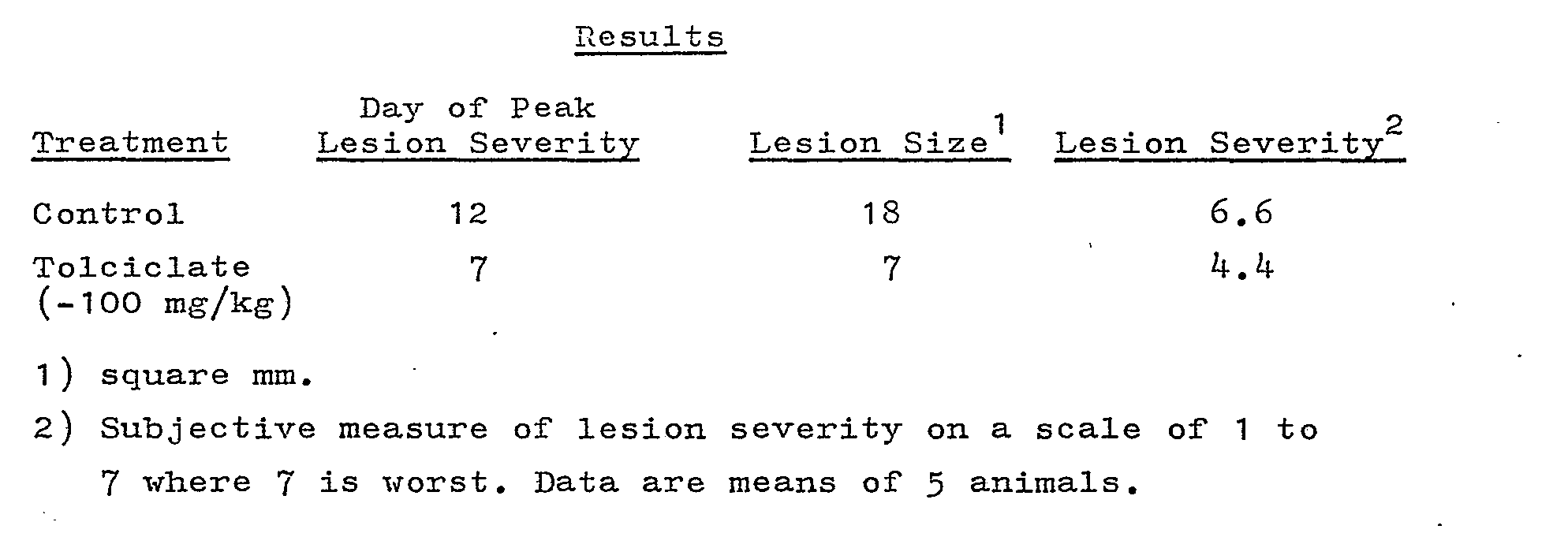
- The administration of tolciclate was stopped 19 days after the first infection with T. mentagrophytes, 17 days later, (36 days after the first infection), all the guinea pigs were subjected to reinfection dermally with T. mentagrophytes. Those guinea pigs which had been treated with tolciclate did not become reinfected. The controls all became reinfected.
- At first glance, the data in this example may not look as impressive as the data in Example 2, Table 4, however, is has to be considered that in Example 2 the animals were treated with the medication first and then infected five days later. In Example 3 the animals are first infected and then treated with the medication five days later. It is quite unexpected to find that the treated animals retain their immunity to the fungus 17 days after the treatment was stopped. With most antifungal agents, the animal can be reinfected as soon as treatment with the agent is stopped.
Claims (4)
1. A pharmaceutical composition comprising a therapeutically effective amount of an antifungal agent selected from tolciclate or tolnaftate and a pharmaceutically acceptable carrier or diluent for oral administration.
2. A pharmaceutical composition comprising a therapeutically effective amount of an antifungal agent having the formula

where R is

and a pharmaceutically acceptable carrier or diluent for oral administration.
3. Use of tolciclate or tolnaftate and a pharmaceutically acceptable carrier or diluent for oral administration in the treatment of fungal disease.
4. Use according to claim 3, characterized in that oral dosages in the order of 1 to 50 mg/kg, most preferably 5 to 25 mg/kg, daily are administered.
Applications Claiming Priority (2)
| Application Number | Priority Date | Filing Date | Title |
|---|---|---|---|
| US258830 | 1981-04-29 | ||
| US06/258,830 US4348407A (en) | 1981-04-29 | 1981-04-29 | Orally active tolciclate and tolnaftate |
Publications (1)
| Publication Number | Publication Date |
|---|---|
| EP0063773A1 true EP0063773A1 (en) | 1982-11-03 |
Family
ID=22982310
Family Applications (1)
| Application Number | Title | Priority Date | Filing Date |
|---|---|---|---|
| EP82103281A Withdrawn EP0063773A1 (en) | 1981-04-29 | 1982-04-19 | Orally active tolciclate and tolnaftate |
Country Status (4)
| Country | Link |
|---|---|
| US (1) | US4348407A (en) |
| EP (1) | EP0063773A1 (en) |
| JP (1) | JPS57183717A (en) |
| CA (1) | CA1174169A (en) |
Families Citing this family (4)
| Publication number | Priority date | Publication date | Assignee | Title |
|---|---|---|---|---|
| US5266563A (en) * | 1984-06-11 | 1993-11-30 | Biomatrix, Inc. | Hyakyribate-poly (ethylene oxide) mixtures |
| US5464610A (en) * | 1992-10-15 | 1995-11-07 | Schering-Plough Healthcare Products, Inc. | Method for treating onychomycosis |
| US6077865A (en) * | 1999-03-05 | 2000-06-20 | Som; Kamales | Topical antifungal formulation containing tolnaftate |
| US6645473B2 (en) | 2000-07-24 | 2003-11-11 | Diana L. Hauan | Combination tanning and antifungal topical system for treating tinea versicolor |
Citations (2)
| Publication number | Priority date | Publication date | Assignee | Title |
|---|---|---|---|---|
| US3334126A (en) * | 1961-06-21 | 1967-08-01 | Nippon Soda Co | Aryl n-methyl substituted thionocarbamates |
| US3855263A (en) * | 1972-03-20 | 1974-12-17 | Erba Carlo Spa | Tetrahydro-2-naphthyl ester derivatives of tinonocarbanilic acids |
-
1981
- 1981-04-29 US US06/258,830 patent/US4348407A/en not_active Ceased
-
1982
- 1982-04-19 EP EP82103281A patent/EP0063773A1/en not_active Withdrawn
- 1982-04-28 JP JP57070593A patent/JPS57183717A/en active Pending
- 1982-04-29 CA CA000401963A patent/CA1174169A/en not_active Expired
Patent Citations (2)
| Publication number | Priority date | Publication date | Assignee | Title |
|---|---|---|---|---|
| US3334126A (en) * | 1961-06-21 | 1967-08-01 | Nippon Soda Co | Aryl n-methyl substituted thionocarbamates |
| US3855263A (en) * | 1972-03-20 | 1974-12-17 | Erba Carlo Spa | Tetrahydro-2-naphthyl ester derivatives of tinonocarbanilic acids |
Non-Patent Citations (1)
| Title |
|---|
| CHEMICAL ABSTRACTS, vol. 69, no. 5, 29th July 1968, page 1675, no. 17940d, Columbus Ohio (USA); * |
Also Published As
| Publication number | Publication date |
|---|---|
| US4348407A (en) | 1982-09-07 |
| JPS57183717A (en) | 1982-11-12 |
| CA1174169A (en) | 1984-09-11 |
Similar Documents
| Publication | Publication Date | Title |
|---|---|---|
| EP1045695B1 (en) | Use of 9-deoxy-2', 9-alpha-methano-3- oxa-4,5,6- trinor-3, 7-(1',3'-interphenylene) -13,14-dihydro- prostaglandin f 1? to treat peripheral vascular disease | |
| Malone et al. | The effect of pyrazinamide (aldinamide) on experimental tuberculosis in mice | |
| US4153689A (en) | Stable insulin preparation for nasal administration | |
| EP0244080A2 (en) | Medicament for the treatment of obesity | |
| US20080300253A1 (en) | Treatment of inflammatory disorders with praziquantel | |
| JPS62240619A (en) | Anticancer | |
| GB2170707A (en) | An immuno-regulator | |
| JP2001513506A (en) | Chromium / biotin treatment for type II diabetes | |
| EP0399051B1 (en) | Polyvalent antiinflammatory agent | |
| US4107331A (en) | Zinc chelating fungicidal composition | |
| AU629533B2 (en) | Improving toxicity profiles in chemotherapy | |
| US4348407A (en) | Orally active tolciclate and tolnaftate | |
| CA1172168A (en) | Deazapurine nucleoside, formulations thereof, and use thereof in therapy | |
| US5102902A (en) | Reagents and method for therapeutic treatment of multiple sclerosis | |
| USRE32145E (en) | Orally active tolciclate .[.(and tolnaftate).]. | |
| US4343799A (en) | Use of derivatives of 6α-methylprednisolone for the prevention or reduction of adriamycin-induced cardiotoxicity | |
| EP0105448B1 (en) | The use of undecylenic acid for the manufacture of a composition for the treatment of herpes labialis | |
| US5610160A (en) | Topical 5-fluorouracil prodrug composition and method | |
| US3852454A (en) | Treatment of rheumatoid arthritis | |
| Modell | Drugs in Current Use 1958 | |
| JPH0515694B2 (en) | ||
| US3993759A (en) | Anthelmintic | |
| USRE32990E (en) | Use of undercylenic acid to treat herpes labialis | |
| Miwa et al. | In vivo activities of aldose reductase inhibitors having a 1-(arylsulfonyl) hydantoin structure | |
| JP7257091B2 (en) | Dementia treatment and preventive drug |
Legal Events
| Date | Code | Title | Description |
|---|---|---|---|
| PUAI | Public reference made under article 153(3) epc to a published international application that has entered the european phase |
Free format text: ORIGINAL CODE: 0009012 |
|
| AK | Designated contracting states |
Designated state(s): BE CH DE FR GB IT LI LU NL SE |
|
| RBV | Designated contracting states (corrected) |
Designated state(s): BE CH DE FR GB IT LI LU NL SE |
|
| 17P | Request for examination filed |
Effective date: 19830223 |
|
| STAA | Information on the status of an ep patent application or granted ep patent |
Free format text: STATUS: THE APPLICATION IS DEEMED TO BE WITHDRAWN |
|
| 18D | Application deemed to be withdrawn |
Effective date: 19860107 |
|
| RIN1 | Information on inventor provided before grant (corrected) |
Inventor name: IMONDI, ANTHONY ROCCO Inventor name: SHEMANO, IRVING |