EP0063933B1 - Stahlblech mit unterschiedlichen Mehrschichtüberzügen, geeignet für Konservendosen - Google Patents
Stahlblech mit unterschiedlichen Mehrschichtüberzügen, geeignet für Konservendosen Download PDFInfo
- Publication number
- EP0063933B1 EP0063933B1 EP82302094A EP82302094A EP0063933B1 EP 0063933 B1 EP0063933 B1 EP 0063933B1 EP 82302094 A EP82302094 A EP 82302094A EP 82302094 A EP82302094 A EP 82302094A EP 0063933 B1 EP0063933 B1 EP 0063933B1
- Authority
- EP
- European Patent Office
- Prior art keywords
- tin
- layer
- steel strip
- chromium
- plated
- Prior art date
- Legal status (The legal status is an assumption and is not a legal conclusion. Google has not performed a legal analysis and makes no representation as to the accuracy of the status listed.)
- Expired
Links
Images

Classifications
-
- C—CHEMISTRY; METALLURGY
- C25—ELECTROLYTIC OR ELECTROPHORETIC PROCESSES; APPARATUS THEREFOR
- C25D—PROCESSES FOR THE ELECTROLYTIC OR ELECTROPHORETIC PRODUCTION OF COATINGS; ELECTROFORMING; APPARATUS THEREFOR
- C25D11/00—Electrolytic coating by surface reaction, i.e. forming conversion layers
- C25D11/38—Chromatising
-
- C—CHEMISTRY; METALLURGY
- C25—ELECTROLYTIC OR ELECTROPHORETIC PROCESSES; APPARATUS THEREFOR
- C25D—PROCESSES FOR THE ELECTROLYTIC OR ELECTROPHORETIC PRODUCTION OF COATINGS; ELECTROFORMING; APPARATUS THEREFOR
- C25D5/00—Electroplating characterised by the process; Pretreatment or after-treatment of workpieces
- C25D5/10—Electroplating with more than one layer of the same or of different metals
- C25D5/12—Electroplating with more than one layer of the same or of different metals at least one layer being of nickel or chromium
-
- Y—GENERAL TAGGING OF NEW TECHNOLOGICAL DEVELOPMENTS; GENERAL TAGGING OF CROSS-SECTIONAL TECHNOLOGIES SPANNING OVER SEVERAL SECTIONS OF THE IPC; TECHNICAL SUBJECTS COVERED BY FORMER USPC CROSS-REFERENCE ART COLLECTIONS [XRACs] AND DIGESTS
- Y10—TECHNICAL SUBJECTS COVERED BY FORMER USPC
- Y10T—TECHNICAL SUBJECTS COVERED BY FORMER US CLASSIFICATION
- Y10T428/00—Stock material or miscellaneous articles
- Y10T428/12—All metal or with adjacent metals
- Y10T428/12493—Composite; i.e., plural, adjacent, spatially distinct metal components [e.g., layers, joint, etc.]
- Y10T428/12535—Composite; i.e., plural, adjacent, spatially distinct metal components [e.g., layers, joint, etc.] with additional, spatially distinct nonmetal component
- Y10T428/12542—More than one such component
- Y10T428/12549—Adjacent to each other
-
- Y—GENERAL TAGGING OF NEW TECHNOLOGICAL DEVELOPMENTS; GENERAL TAGGING OF CROSS-SECTIONAL TECHNOLOGIES SPANNING OVER SEVERAL SECTIONS OF THE IPC; TECHNICAL SUBJECTS COVERED BY FORMER USPC CROSS-REFERENCE ART COLLECTIONS [XRACs] AND DIGESTS
- Y10—TECHNICAL SUBJECTS COVERED BY FORMER USPC
- Y10T—TECHNICAL SUBJECTS COVERED BY FORMER US CLASSIFICATION
- Y10T428/00—Stock material or miscellaneous articles
- Y10T428/12—All metal or with adjacent metals
- Y10T428/12493—Composite; i.e., plural, adjacent, spatially distinct metal components [e.g., layers, joint, etc.]
- Y10T428/12535—Composite; i.e., plural, adjacent, spatially distinct metal components [e.g., layers, joint, etc.] with additional, spatially distinct nonmetal component
- Y10T428/12583—Component contains compound of adjacent metal
- Y10T428/1259—Oxide
-
- Y—GENERAL TAGGING OF NEW TECHNOLOGICAL DEVELOPMENTS; GENERAL TAGGING OF CROSS-SECTIONAL TECHNOLOGIES SPANNING OVER SEVERAL SECTIONS OF THE IPC; TECHNICAL SUBJECTS COVERED BY FORMER USPC CROSS-REFERENCE ART COLLECTIONS [XRACs] AND DIGESTS
- Y10—TECHNICAL SUBJECTS COVERED BY FORMER USPC
- Y10T—TECHNICAL SUBJECTS COVERED BY FORMER US CLASSIFICATION
- Y10T428/00—Stock material or miscellaneous articles
- Y10T428/12—All metal or with adjacent metals
- Y10T428/12493—Composite; i.e., plural, adjacent, spatially distinct metal components [e.g., layers, joint, etc.]
- Y10T428/12708—Sn-base component
- Y10T428/12722—Next to Group VIII metal-base component
-
- Y—GENERAL TAGGING OF NEW TECHNOLOGICAL DEVELOPMENTS; GENERAL TAGGING OF CROSS-SECTIONAL TECHNOLOGIES SPANNING OVER SEVERAL SECTIONS OF THE IPC; TECHNICAL SUBJECTS COVERED BY FORMER USPC CROSS-REFERENCE ART COLLECTIONS [XRACs] AND DIGESTS
- Y10—TECHNICAL SUBJECTS COVERED BY FORMER USPC
- Y10T—TECHNICAL SUBJECTS COVERED BY FORMER US CLASSIFICATION
- Y10T428/00—Stock material or miscellaneous articles
- Y10T428/12—All metal or with adjacent metals
- Y10T428/12493—Composite; i.e., plural, adjacent, spatially distinct metal components [e.g., layers, joint, etc.]
- Y10T428/12771—Transition metal-base component
- Y10T428/12861—Group VIII or IB metal-base component
- Y10T428/12937—Co- or Ni-base component next to Fe-base component
-
- Y—GENERAL TAGGING OF NEW TECHNOLOGICAL DEVELOPMENTS; GENERAL TAGGING OF CROSS-SECTIONAL TECHNOLOGIES SPANNING OVER SEVERAL SECTIONS OF THE IPC; TECHNICAL SUBJECTS COVERED BY FORMER USPC CROSS-REFERENCE ART COLLECTIONS [XRACs] AND DIGESTS
- Y10—TECHNICAL SUBJECTS COVERED BY FORMER USPC
- Y10T—TECHNICAL SUBJECTS COVERED BY FORMER US CLASSIFICATION
- Y10T428/00—Stock material or miscellaneous articles
- Y10T428/12—All metal or with adjacent metals
- Y10T428/12493—Composite; i.e., plural, adjacent, spatially distinct metal components [e.g., layers, joint, etc.]
- Y10T428/12771—Transition metal-base component
- Y10T428/12861—Group VIII or IB metal-base component
- Y10T428/12951—Fe-base component
Definitions
- the present invention relates to a steel strip having differentiated multilayer coatings and being useful for manufacture of cans. More particularly, the present invention relates to a steel strip having a multilayer coating having excellent paintability and seam weldability and being adequate for forming an outside surface layer of a can and a different multilayer coating having excellent corrosion resistance and drawability (two-piece can formability) and being adequate for forming an inside surface layer of a can and, therefore, being useful for producing cans.
- conventional surface-treated steel strip usable for producing cans include electrolytically tin-plated steel strips, hereinafter referred to as tin plates, and electrolytically chromium-treated steel strips, hereinafter referred to as TFS-CTs.
- the tin plates are mostly typical surface-treated steel strip usable for producing cans and are most widely used for cans. That is, the tin plates, which may be painted or not painted, are widely used for producing food (sanitary) cans for containing fish, meat, soups or fruits therein, beverage cans for containing carbonated bevarages or fruit juices therein, 18 liter cans and pails, since the tin plates exhibit an excellent resistance to corrosion.
- the tin plates are used for producing not only three-piece cans but also two-piece cans which are widely used to contain beverages therein because the plated tin exhibits an excellent solid lubricating property.
- TFS-CTs are mainly used to produce bevarage cans for containing bevarages therein having a relatively low corroding property, 18 liter cans and pails.
- TFS-CTs are used to produce three-piece cans but are not used to produce two-piece cans because the chromium-treated layer comprising mainly metallic chromium and hydrated chromium oxide is hard and brittle and, therefore, it is difficult to convert TFS-CTs into two-piece cans. Also even if TFS-CTs can be converted into two-piece cans, the resultant cans exhibit a remarkably decreased resistance to corrosion.
- the side seam bonding of the cans is usually effected by using a bonding material. If the side seam bonding of the cans is carried out by a seam welding process, it is necessary to remove the chromium-treated layer from TFS-CTs by means of grinding. Therefore, the seam welding process is usually not used in the case of TFS-CTs.
- the tin plates and TFS-CTs should be used for a specific use in which the characteristic properties thereof are beneficially utilized.
- the tin plates are adequate for producing three-piece cans, which are produced by a conventional can-forming method which does not include the bonding method, and two-piece cans for containing therein materials, to be stably stored for a long period of time.
- TFS-CTs are adequate for producing by the bonding method, three-piece cans for containing therein materials to be stored for a relatively short period of time.
- the weight of the plated tin is about 2.8 g/m 2 , which weight seems to be the lower limit of the weight of the plated tin layer necessary for enabling the layer to exhibit a satisfactory solid lubricating property in the formation of two-piece cans.
- weight of 2.8 g/m 2 of the plated tin layer is not sufficient for enabling the layer to exhibit a satisfactory corrosion resistance.
- the plated tin layer is usually painted before the can-forming procedure is carried out.
- the plated tin layer is usually painted after the can-forming procedure is carried out.
- TFS-CTs When TFS-CTs are used in place of tin plates, it is necessary that the entire surfaces of the TFS-CTs be painted. TFS-CTs are not adequate for producing cans for containing fruit juice therein since fruit juice is highly corrosive, or for containing materials therein which should be protected from iron ions derived from the can. Also, TFS-CTs are not adequate for producing two-piece cans which have been widely used in recent years. Therefore, the replacement of tin plates by TFS-CTs is not always acceptable.
- Japanese Patent Application Publication No. 43-12246 discloses a tin-plated steel strip in which steel strip surfaces are base plated with a nickel or nickel-tin alloy layer in an amount of from 10 to 100 mg per m 2 of each surface of the steel strip and then the surfaces of the base plated layers are plated with tin the plated steel strip is and reflowed.
- the tin-plated steel strip exhibits a satisfactory alloy-tin couple test value (ATC Value) which is a parameter of corrosion resistance.
- Japanese Patent Application Laid-open No. 49-119836 discloses a tin-plated steel strip in which a steel strip is base plated with a metallic nickel or copper layer having a thickness of from 0.005 to 1.0 micron and then surface plated with a tin layer having a thickness of from 0.1 to 2.0 microns without forming an alloy layer between the base layer and the surface layer.
- the above-mentioned reference states that the resultant tin-plated steel strip exhibits excellent paintability and corrosion resistance after being subjected to a draw and ironing (D.I) formation procedure.
- the reference is completely silent as to the paintability and weldability when the tin-plated steel strip is used to produce three-piece cans.
- the tin cost in the production of the tin-plated steel strip is high since the tin-plating is applied to both surfaces of the steel strip.
- the above-mentioned two prior arts are effective for decreasing the amount of tin to be applied to the steel strip by preliminarily plating the steel strip with nickel or copper and the resultant products are usable for producing specific cans for limited use.
- the above-mentioned prior arts failed to provide low cost materials for the production of cans which are satisfactory in respect to corrosion resistance, paintability formability, weldability and other properties necessary for producing cans.
- An object of the present invention is to provide a steel strip having differentiated multilayer coatings and being useful for the manufacture of cans, which steel strip is satisfactory in respect to corrosion resistance, paintability, can-side formability, seam weldability and two-piece can formability.
- Another object of the present invention is to provide a steel strip having differentiated multilayer coatings and being useful for the manufacture of cans, which steel strip can be produced at a low cost.
- steel strip of the present invention which has differentiated multilayer coatings and is useful for the manufacture of cans, which steel strip comprises:
- the steel strip of the present invention comprises a steel strip substrate, a first (three layer) surface coating formed on a surface of the steel strip substrate and comprising three metallic layers superimposed on each other, and a second (two layer) surface coating formed on the other surface of the steel strip substrate and comprising two metallic layers superimposed in each other.
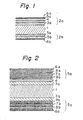
- the first (upper) surface of a substrate 1 consisting of a cold-rolled steel strip is coated with a first surface coating 2a.
- the second (lower) surface of the substrate 1 is coated with a second surface coating 2b.
- the first surface coating 2a consists of a plated nickel first base layer 3a, a plated tin intermediate layer 4 and a chromium-treated first surface layer 5a.
- the second surface coating 2b consists of a plated niclel second base layer 3b and a chromium-treated second surface layer 5b.
- the plated nickel base layers 3a and 3b can be formed by any of the conventional plating methods, for example, the electrolytic and chemical plating methods, as long as the weight of the base layers is in the range of from 10 to 5,000 mg/m 2 .
- the plated tin intermediate layer 4 can also be formed by any of the conventional plating methods, for example, the electrolytic and chemical plating methods, as long as the weight of the intermediate layer is in the range of from 50 to 11,000 mg/m 2.
- the tin intermediate layer is usually formed by means of the electrolytic plating method.
- the chromium-treated surface layers 5a and 5b have a weight of from 3 to 50 mg/m 2 in terms of metallic chromium.
- the surface layers 5a and 5b may comprise metallic chromium, crystalline chromium oxide and/or amorphous hydrated chromium oxide and can be prepared by carrying out an electrolytic chromium-plating procedure and/or an electrolytic chromic acid-treating procedure.
- the surfaces of the chromium-treated surface layers 5a and 5b are coated with oil film layers 6a and 6b by means of an electrostatic oiling method which is used for conventional tin plates.
- the oil film layers 6a and 6b are usually formed from cotton seed oil, dibutyl sebacate and/or dioctyl sebacate.
- Each of the chromium-treated surface layers 5a and 5b may be composed of a single chromium-containing layer or of a plurality of chromium-containing layers.
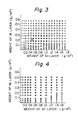
- the chromium-treated first surface layer 5a is composed of a metallic chromium layer 9a formed on the surface of the intermediate layer 4, a crystalline chromium oxide layer 7a formed on the surface of the metallic chromium layer 9a, and an amorphous hydrated chromium layer 8a formed on the crystalline chromium oxide layer 7a.
- the above-mentioned superimposed three layers can be produced by means of an electrolytic chromium treatment carried out in a single procedure or in two or more repeated procedures. That is, the three layers may be simultaneously produced by means of a single chromium treatment procedure or may be sequentially produced by means of three or more chromium treatment procedures.
- the chromium-treated second surface layer 5b is composed of a metallic chromium layer 9b, a crystalline chromium oxide layer 7b and an amorphous hydrated chromium oxide layer 8b.
- the plated nickel base layers are formed in an amount of from 10 to 5000 mg/m 2 on the surfaces of the steel strip substrate which has been degreased and pickled. If the amount of the nickel base layers is less than 10 mg/m 2 , the nickel base layers are sometimes defective to an extent that the defects can not be completely covered by the plated tin intermediate layer, the chromium-treated surface layer and/or a pointed layer formed on the chromium-treated surface layer. Therefore, the resultant product exhibits a poor resistance to corrosion.
- the resultant product is not only undesirably expensive but also exhibits a reduced seam weldability when the resultant product is used to produce cans by means of the can side-seam welding method.
- the nickel base layers may be produced by any of conventional electrolytic nickel-plating methods.
- the thicknesses of the nickel first and second base layers are variable depending on the use, can-forming method and necessary properties of the can and may be different from each other or the same as each other.
- the differential multilayer-coated steel strip of the present invention is converted into a can so that the inside surface of the can is formed by the surface of the first coating, which is composed of three layers, of the steel strip, and the outside surface of the can is formed by the surface of the second coating, which is composed of two layers, of the steel strip, it is preferable that the amount of the nickel base layer in the second coating be 100 mg/m 2 or more so that the outside surface of the can exhibits a satisfactory corrosion resistance and that the amount of the nickel base layer in the first coating be in the range of from 10 to 1000 mg/m 2.
- the amount of the nickel base layer in the second coating be 300 mg/m 2 or more.
- the differential multilayer-coated steel strip of the present invention is converted to a can in such a manner that the surface of the second coating of the steel strip forms the inside surface of the can, it is preferable that the amounts of the nickel base layers be in the range of from 100 to 5,000 mg/m 2 on the inside surface of the can and in the range of from 10 to 1,000 mg/m 2 on the outside surface of the can.
- the nickel base layer is coated with 50 to 11,000 mg/m 2 , preferably 500 to 11000 mg/m 2 , of a plated tin intermediate layer. If the amount of the tin intermediate layer is less than 50 mg/m 2 , this thin tin layer does not substantially contribute to enhancement of the corrosion resistance of the resultant steel strip. Also, in the sequential reflow procedure and/or paint-curing procedure, almost all of the tin in the thin tin layer is alloyed with iron in the steel strip substrate and with nickel in the nickel base layer. The tin-iron alloy or the tin-nickel alloy cause the surface of the resultant product to exhibit an undesirable color.
- the resultant product is undesirably expensive and exhibits a poor enamel-adhering property after a painting procedure is carried out.
- a seam welding procedure is applied to the coated steel strip having a thick tin intermediate layer, a tin-iron alloy layer having an excessively large thickness and exhibiting an increased undesirable brittleness is formed in the first coating so as to cause the seam-welded portion of the coated steel strip to exhibit a poor paint-adhering property.
- the coated steel strip is converted to a can by using a solder so that the outside surface of the can is formed by the surface of the first coating of the coated steel strip
- the amount of the tin intermediate layer be 1,000 mg/m 2 or more but not more than 11,000 m g/ m 2.
- the tin intermediate layer be placed only in the first coating on the steel strip substrate. This feature is effective not only for decreasing the entire amount of tin in the coated steel strip but also for enhancing the drawability and corrosion resistance of the coated steel strip due to the tin intermediate layer superimposed on the nickel base layer. Also, the combination of the nickel base layer and the tin intermediate layer results in an enhanced paintability and in an excellent corrosion resistance after the coated steel strip is coated with a paint.
- the surfaces of the tin intermediate layer in the first coating and of the nickel base layer in the second coating are coated with chromium-treated surface layers in an amount of 3 to 50 mg/m 2 . If the amount of each chromium-treated surface layer is less than 3 mg/m 2 , the resultant thin surface layer exhibits substantially no effect in respect to the sealing of pin holes in the nickel bore layer and/or the tin intermediate layer and exhibits an unsatisfactory enamel-adhering property when a can enamel is applied onto a paint layer formed on the first coating or the second coating. If the amount of each chromium-treated surface layer is more than 50 mg/m 2 , the resultant thick surface layer causes the resultant coated steel strip to exhibit a poor seam weldability and an unsatisfactory solderability.
- each chromium-treated surface layer be in the range of from 5 to 20 mg/ m 2 .
- each chromium-treated surface layer be composed of a metallic chromium layer, a crystalline chromium oxide layer and an amorphous hydrated chromium oxide layer superimposed on each other in the manner as indicated in Fig. 2.
- This type of chromium-treated surface layer can be produced by means of an electrolytic chromic acid treatment in the following manner.
- a tin intermediate layer surface of a first coating and a nickel base layer surface of a second coating formed on a steel strip substrate are subjected to an electrolytic treatment in an electrolytic treating liquid containing chromic anhydride (Cr0 3 ) as a principal component and S0 4 - ions and HS - ions as auxiliary components.
- the coated steel strip serves as a cathode.
- the tin intermediate layer surface in the first coating and the nickel base layer surface in the second coating on the steel strip substrate are firstly electroplated with a metallic chromium layer and are secondly simultaneously coated with a crystalline chromium oxide layer and then with an amorphous hydrated chromium oxide layer by means of an electrolytic chromic acid treatment.
- the methods for forming the chromium-treated surface layer consisting of the three layers are not limited to specific methods as long as the resultant metallic chromium layer, crystalline chromium oxide layer and amorphous hydrated chromium oxide layer are formed in the above-mentioned sequence on the tin intermediate layer surface or the nickel base layer surface.
- the metallic chromium layer have a weight of from 0.1 to 20 mg/m2 and that the sum of the crystalline chromium oxide layer and the amorphous hydrated chromium oxide layer have a weight of from 1 to 10 mg/m 2 in terms of metallic chromium.
- a metallic chromium layer having a weight of less than 0.1 mg/m 2 sometimes exhibits an unsatisfactory sealing effect for pin holes in the nickel base layer and/or the tin intermediate layer and a poor enamel-adhering property when a can enamel is applied to a painted surface thereof.
- the weight of the metallic chromium layer is more than 20 mg/m 2 , the resultant coated steel strip sometimes exhibits a poor seam weldability and an unsatisfactory solderability.
- the resultant coated steel strip sometimes exhibits a poor corrosion resistance and enamel-adhering property. If the sum of the weights of the crystalline oxide layer and the amorphous hydrated chromium oxide layer is more than 10 mg/m 2 in terms of metallic chromium, the resultant product sometimes exhibits an unsatisfactory seam weldability and a decreased solderability.
- the corrosion resistance of the first coatings of the four types of coated steel strips of the present invention used in Application Examples 1 and 2 was measured by means of the ATC test and by means of the ISV test, which will be exmplained hereinafter, in order to compare them with conventional tin plate No. 25 having plated tin layers in a weight of 2.8 g per m 2 of each surface of a substrate thereof and tin plate No. 100 having plated tin layers in a weight of 11.2 g per m 2 of each surface of a substrate thereof.
- the ATC (alloy-tin-couple) test is effective for evaluating the resistance of a metallic material to corrosion due to an acid liquid.
- a specimen to be tested was detinned to form an alloy layer.
- the alloy layer of the detinned specimen was coupled with a pure tin anode in grapefruit juice while the testing system was placed in an oxygen-free nitrogen atmosphere so as to generate a small galvanic current between the alloy layer and the pure tin anode.
- the galvanic current was measured as an ATC current.
- ISV iron solution value test is usually used in the case of tin plates to evaluate the corrosion resistance thereof.
- a specimen was immersed in a testing solution containing sulfuric acid.
- the concentration of sulfuric acid was predetermined so that the tin would exhibit an anodic property slightly higher than that of the steel in the testing solution.
- the amount of iron dissolved in the testing solution was measured.
- Table 2 clearly shows that the coated steel strip C having 2,700 mg/m 2 of a tin intermediate layer with a weight similar to the weight of the tin layer in the tin plate No. 25 exhibited an excellent corrosion resistance similar to that of the tin plate No. 100, which has tin layers in a large weight of 11,000 mg/m2..
- Table 2 also shows that the coated steel strips A and B having a tin intermediate layer in an amount of 1,200 mg/m 2 or less exhibited a corrosion resistance higher than that of the tin plate No. 25 having 2,800 mg/m2 of tin layers.
- the differential multilayer-coated steel strip of the present invention has an excellent corrosion resistance as compared with that of conventional tin plates and is effective for conserving tin.
- the differential multilayer-coated steel strip is useful for producing cans in which the inside surfaces are painted so that the inside surfaces of the cans are formed by the first coating (Ni-Sn-Cr) surface of the coated steel strip of the present invention.
- inside-painted cans were produced from conventional tin plates or TFS-CTs.
- conventional tin plates having less than 2.8 g/m 2 of tin layers and TFS-CTs are not adequate for the manufacture inside-painted cans to be used for containing therein fruit juices which have a high corroding property or fish or other foods which must be stored for a long period of time.
- only conventional tin plates having plated tin layers in a weight of 2.8 g/m 2 or more can be used to produce inside-painted cans.
- Conventional TFS-CTs which exhibit a relatively poor corrosion resistance, are usually used to produce cans for containing therein materials which are not stored for a long period of time.
- the differential multilayer-coated steel strip of the present invention is useful for producing inside-painted cans having an excellent enamel-adhering property, which is absent in conventional tin plates, and is effective for significantly conserving tin.
- the nickel base layer and the tin intermediate layer may be in a relatively small weight of 500 mg/m 2 and 1,500 mg/m 2 , respectively, because the outer surfaces of the insides of the cans are prevented from corroding by the paint layers.
- An increase in the weight of the nickel base layer and the tin intermediate layer to more than 500 mg/m 2 and to more than 1,500 mg/m 2 , respectively, is not effective for enhancing the corrosion resistance of the coated steel strip and results in an economical disadvantage, in poor paintability, and in a poor enamel-adhering property.
- the differential multilayer-coated steel strip of the present invention is used to produce inside-painted cans so that the inside surfaces of the cans are formed by the surface of the first coating of the coated steel strip in order to enhance the resistance of the painted, coated steel strip to corrosion
- the weight of the tin intermediate layer be limited to within a specific range determined in consideration of the weight of the nickel base layer, as described below.
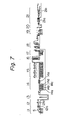
- the weight, x g/m 2 , of the tin intermediate layer and the weight, y g/m 2 m of the nickel base layer satisfy the following relationships: more preferably,
- the resultant coated steel strip of the present invention exhibits an excellent resistance of the painted surface thereof to corrosion.
- the preferable ranges of the weights of the tin intermediate layers and the nickel base layers were determined by subjecting a number of different types of coated steel strips to the UCC (Under Cutting Corrosion) test and the sulfide stain test, which tests will be explained below.
- a coated steel strip was coated with 45 mg/dm 2 of an epoxy phenol paint.
- the paint layer was cured at a temperature of 205°C for 10 minutes and then was additionally cured at a temperature of 180°C for 10 minutes.
- Twenty-four hours after the paint coating procedure was carried out test specimens were prepared from the painted steel strip. The surface of a specimen was scratched with a knife. Then the scratched specimen was immersed for 3 days in a corroding aqueous liquid containing 1.5% by weight of citric acid and 1.5% by weight of sodium chloride at a temperature of 50°C in a carbon dioxide gas atmosphere.
- the same type of specimen as that used for the UCC test was subjected to a sulfide stain test.
- the center portion of the specimen was protruded by means of an Erichsen testing machine.
- the specimen was placed in a commercial can together with boiled salmon and the can was sealed.
- the can was subjected to a retort treatment at a temperature of 125°C for 90 minutes and thereafter was allowed to naturally cool for 24 hours. After removing the specimen from the can, the appearance of the specimen was observed to determine how the specimen was stained.
- the outside surfaces of the cans were formed by the surface of the second coating of the coated steel strip of the present invention.
- the second coating contained no tin layer, which layer is expensive. Therefore, the coated steel strip of the present invention is effective for decreasing the price of cans.
- a can was produced, by means of a three-piece can-forming method, from a differential multilayer-coated steel strip of the present invention in such a manner that the outside surface of the can was formed by the surface of the first coating (Ni-Sn-Cr) and the inside surface of the can was formed by the surface of the second coating (Ni-Cr) of the coated steel strip.
- This type of can was usable for containing therein a material having a relatively poor corroding property.
- the outside of the can had an enhanced corrosion resistance and a satisfactory gloss. Accordingly, the can was adequate as an aerosol propellant can and could be produced by means of a can-side seam-welding method.
- the weights of the first and second coatings and the component layers were variable within the ranges as specified in the present invention, depending on the material to be contained in the can, the environment in which the can is to be used, and the environment in which the can is to be stored. Also, the necessity of applying a paint coating on the can depended on the above-mentioned factors.
- the cans of Application Examples 3 and 4 could be used in place of a conventional can produced from a thin tin plate, for example, the tin plate No. 25 or a TFS-CT.
- the weight of the nickel base layer be 500 mg/m 2 or more so that the inside of the resultant can exhibits a satisfactory corrosion resistance.
- the can of Application Example 3 is usable when it is necessary that the outside surface of the can have an excellent corrosion resistance since the outside surface is formed by the first coating surface of the coated steel strip of the present invention.
- the first coating of the coated steel strip used had a nickel base layer having a weight of 300 mg/m 2 , a tin intermediate layer having a weight of 5,500 mgLm 2 and a chromium treated surface layer having a weight of 1 5 mg/m2 in terms of metallic chromium.
- the outside plain surface of the can was subjected to a salt-solution spraying test in which the spraying time was varied from 2 hours to 100 hours to determine the corrosion resistance thereof.
- the results of the test are indicated by line 1 in Fig. 6.
- the same test as mentioned above was used in the case of a tin plate No. 50 can and a tin plate No. 100 can.
- the results of the tin plate No. 50 and the tin plate No. 100 are indicated by line 2 and by line 3, respectively, in Fig. 6.
- a coated steel strip is pressed to form a cup by means of a deep drawing procedure and the cup is subjected to a two- or three-step ironing procedure so as to draw and iron the side wall of the cup and form a can.
- the outside layer of the side wall of the cup is especially strongly drawn and ironed by an ironing die. If a TFS-CT (having plated chromium layers) which is hard and exhibits a poor lubricating property is subjected to the ironing procedure, a number of fine cracks are formed in the chromium layers due to the poor resistance of the chromium layers to the ironing and drawing actions.
- the fine cracks in the chromium layers result in the resultant can having a poor corrosion resistance.
- the ironing die is extremely worn by the hard chromium layers. Accordingly, TFS-CTs are not adequate for producing two-piece cans by means of a deep draw-ironing procedure.
- the tin layers When a tin plate (having tin layers) which has a low melting point of 232°C and an excellent malleability is subjected to the two-piece can-forming process, the tin layers generate heat in the ironing procedure so that they exhibit an excellent solid lubricating effect. Therefore, no cracks are formed in the tin layers and the resultant can exhibits a satisfactory corrosion resistance. Also the degree of wear of the ironing die is small. Accordingly, the tin plate can be easily formed into a two-piece can without difficulty. However, the draw-ironing procedure applied to the tin plate causes the tin layers to become thin and, therefore, unavoidably results in formation of defects in the tin layers. And defects in the tin layers cause the resultant can to have a poor corrosion resistance. In order to avoid the formation of defects, it is necessary to increase the thickness of the tin layer.
- the differential multilayer-coated steel strip of the present invention to produce cans in such a manner that the outside surface of the can is formed by the first coating (Ni-Sn-Cr) surface of the coated steel strip, it is possible to obtain advantages not only in that the two-piece can-forming process can be readily carried out due to the excellent solid lubricating property of the tin intermediate layer in the first coating of the coated steel strip but also in that the deterioration in corrosion resistance of the outside surface of the resultant can due to the two-piece can-forming procedure can be prevented by the nickel base layer in the first coating of the coated steel strip.
- the tin intermediate layer consist of pure tin so that the ironing procedure can be smoothly carried out due to the excellent solid lubricating property of the pure tin. Accordingly, an Sn-Ni alloy layer should be prevented from forming between the nickel base layer and the tin intermediate layer, which alloy layer makes the solid lubricating property of the tin intermediate layer poor. For this reason, a reflow procedure which promotes the formation of the Sn-Ni alloy layer should not be applied to the coated steel strip to be used for the production of two-piece cans.
- the differential multilayer-coated steel strip of the present invention when used to produce cans for containing therein a material having a poor corroding property, it is beneficial if the cans are formed in such a manner that the first coating (Ni-Sn-Cr) of the coated steel strip forms the outside surfaces of the cans. In such a case, the inside surfaces of the cans are formed by the second coating containing nickel which is not expensive. Therefore, the cans can be produced at a low cost. Also, the tin intermediate layer in the first coating serves as a solid lubricant in the draw-ironing procedure.
- the differential multilayer-coated steel strip of the present invention can be produced by the process as illustrated below.
- the type of steel strip substrate can be selected from various cold-rolled steel strips in consideration of the use and necessary properties of the resultant coated steel strip.
- the steel strip substrate can be selected from cold-rolled steel strips usable for producing conventional tin plates and TFS-CTs.
- the coated steel strip of the present invention can be continuously produced, for example, by means of a usual continuous electrolytic tin plate-producing process by using the apparatus as indicated in Fig. 7.
- a cold-rolled steel strip substrate S is suplied from a coil by means of an uncoiler 11 to an inlet handler 12 which comprises a shearing machine 12a and a seam welder 12b.
- the sheared, welded steel strip substrate S is forwarded through an inlet looper 13 to a plating pre-treatment apparatus 14 which comprises a degreasing vessel 14a, a washing vessel 14b, a pickling vessel 14c, a washing vessel 14d and a scrubber 14e.
- the pretreated strip S is introduced into a plating apparatus 15 which comprises two nickel-plating vessels 1 5a, two dragout vessels 15b, four tin-plating vessels 1 5c and two dragout vessels 1 5d.
- the plated strip S is forwarded through a reflow apparatus 16 to a chemical treatment apparatus 17.
- the chemical-treated strip S is oiled in an oiling apparatus 18 and then recoiled by means of a recoiler 19.
- the oiled strip S may be forwarded through an outlet looper 20 to an outlet handler 21 which comprises a shearing machine 21 a and pilers 21 b.
- both surfaces of the pretreated strip S are plated with 10 to 5,000 mg/m 2 of nickel.
- the nickel-plating vessels 15a usually, contamination of the plated nickel layer by a small amount of impurities such as sulfur, phosphorus and zinc is unavoidable, and such contamination causes a decrease in the corrosion resistance of the resultant coated steel strip.
- the impurities and a portion of the nickel layer are dissolved in the contents of the can, the corrosion resistance of the can is reduced. Accordingly, in the conventional nickel plating process, the composition, temperature and concentration of the plating liquid and plating current density are carefully controlled so as to prevent the nickel layer from being contaminated by the impurities.
- the dissolution of the impurities and nickel in the contents of the can can be restricted by the tin intermediate layer placed on the nickel layer by forming the inside surface of the can with the first coating (Ni-Sn-Cr) surface of the coated steel strip, control of the nickel-plating procedure is made easy.
- the composition of the nickel-plating liquid usable for the present invention is not limited to a specific composition.
- the nickel-plating liquid may be a usual watt's bath, a sulfamic acid bath, a sulfuric acid bath, or an other type of nickel-plating bath.
- the nickel-plated strip S is washed with water in the dragout vessel 15b so as to recover the nickel-plating liquid and the washed strip S is introduced into the tin-plating vessels 1 5c so as to plate only one surface of the strip with 50 to 11,000 mg/m 2 of tin.
- the method for plating one surface of the strip with tin is not limited to a special method. That is the tin-plating procedure can be effected by any of the conventional tin electro-plating methods for tin plates. For example, the tin-plating procedure can be carried out by using a tin-plating liquid containing phenol-sulfonic acid, which is a usual liquid used in the ferrostan line.
- the plating liquid contains sodium stannate or potassium stannate. If a halogen line is used for the tin-plating procedure, the plating liquid contains tin chloride.
- the differential multilayer-coated steel strip of the present invention can be produced at a lower cost than conventional tin plates, both surfaces of which are plated with expensive tin.
- the tin-plating liquid remaining on the surface of the tin-plated strip is washed and recovered in the dragout vessel 1 5d.
- the tin-plated surface of the strip S can be differentiated from the non-tin-plated surface of the strip S by applying a palm kernel oil or a chemical treatment solution to either of the surfaces, so as to change the gloss of the applied surface, by means of a surface-marked device (not shown in Fig. 7).
- the tin-plated surface can be easily distinguished from the non-tin-plated surface because the appearance of the tin layer is clearly different from the appearance of the nickel layer. Therefore, the above-mentioned surface-marking procedure can be omitted.
- the tin-plated strip s is subjected to a reflow procedure in the reflow apparatus 16, if necessary.
- the tin layer formed on the nickel layer of the strip S is melted. Since nickel having a melting point of 1,452°C does not melt at the melting point of tin (232°C), it is easier to control the melting condition of the tin layer formed on only one surface of the strip S than it is to control that of the conventional tin plate having two tin layers.
- the reflow procedure causes the tin layer to become more glossy. Therefore, the reflowed tin layer surface is easily distinguished from the nickel layer surface having a poor gloss.
- the forming rate of the Sn-Fe alloy layer in the reflow procedure is variable depending on the type of steel strip substrate. For example, it is known that the formation rate of the alloy layer on an AI-killed steel is smaller than that on capped steel.
- the Ni-Sn double layer formed on the steel strip substrate is effective for equalizing the Sn-Fe alloy layer-forming rates of various types of steel strip substrates.
- the Sn-Fe alloy layer can be rapidly formed in the reflow procedure by coating the AI-killed steel strip with the Ni-Sn double layers. This phenomenon causes the ATC value of the resultant coated steel strip to become small, and, therefore, causes the resultant coated steel strip to exhibit an excellent corrosion resistance.
- the plated and, optionally, reflowed strip S is subjected to a chromium treatment in the chemical- treatment apparatus 17.
- a chromium treatment in this chromium treatment, the tin intermediate layer in the first coating and the nickel base layer in the second coating are treated electrolytically or chemically with a chromium-containing treatment liquid, for example, containing chromic anhydride, trisodium phosphate and sodium dichromate, to form dense chromium-treated surface layers.
- a chromium-containing treatment liquid for example, containing chromic anhydride, trisodium phosphate and sodium dichromate
- the chromium treatment be carried out by means of an electrolytic treatment method.
- the weight of each chromium-treated surface layer is variable within the range of from 3 to 50 mg/m 2 in terms of metallic chromium.
- the chromium-treated strip S is oiled with an oiling agent in an oiling apparatus 18 which may be of a conventional electrostatic type for oiling tin plates.
- the oiling agent usually contains cotton seed oil and/or dioctyl sebacate.
- the oiled strip S is coiled by the recoiler 19.
- the coil is fed to a separate shearing line (not shown in Fig. 7) and is sheared to a desired size.
- the oiled strip S may be moved to the outlet handler 21 through the outlet looper 20. In the outlet handler 21, the strip S is sheared to a desired size and the resultant pieces of the strip are piled.
- the present invention is advantageous in that the differential multilayer-coated steel strip of the present invention can be produced by using a conventional halogen line or alkali line in place of the ferrostan line indicated in Fig. 7. Also, it is an advantage of the present invention that the plating apparatus for producing tin plates can be utilized for the production of the coated steel strip of the present invention only by modifying several upstream tin-plating vessels to nickel-plating vessels and dragout vessels.
- the tin layer which is expensive, is formed on only one surface of the steel strip so as to reduce the cost of the coated steel strip.
- a specimen was immersed in commercial orange juice contained in a vessel.
- the vessel was tightly sealed and stored at a temperature of 37°C for 6 months. Then the amount of tin dissolved in the orange juice was measured.
- An epoxyphenol type paint was applied in a weight of 45 mg/m 2 to the surface of the first coating (Ni-Sn-Cr) of a specimen, and the paint layer was cured at a temperature of 205°C for 10 minutes and then at a temperature of 180°C for 10 minutes.
- the cured paint layer was scratched with a knife and the scratched specimen was immersed in a corroding solution containing 1.5% by weight of citric acid and 1.5% by weight of sodium chloride at a temperature of 50°C for 3 days. Thereafter, an adhesive tape was adhered on the scratched paint layer surface and then rapidly peeled. The portions of the paint layer around the scratches were observed to evaluate the resistance of the specimen to corrosion under the paint layer.
- a specimen was coated in the same manner as that described in the UCC test.
- the paint-coated specimen was subjected to a cross knife-cut test.
- the paint layer on the specimen was crosshatched in a checkered pattern so as to form scratches each having a width of 2 mm and a length of 2 mm.
- An adhesive tape was applied to the crosshatched surface of the specimen and rapidly peeled from the surface. It was determined whether or not a portion of the paint layer was removed from the specimen.
- the paint-coated specimen as mentioned above was subjected to a NaCI retort treatment by using a 3% NaCi aqueous solution at a temperature of 125°C for 90 minutes.
- the treated specimen was subjected to the same cross knife-cut test as mentioned above.
- the UCC tested specimen was subjected to the same cross knife-cut test as mentioned above.
- Both surfaces of the cleaned steel strip substrate were plated with nickel under the following conditions:
- the current density and the nickel plating time were pre-determined so as to attain the weight of the nickel base layer as indicted in Table 3, that is, 5, 150, 300 or 900 mg/m 2 .
- One surface of the nickel-plated substrate was plated with tin under the following conditions:
- the current density and the plating time were predetermined so as to attain the weight of the in intermediate layer indicated in Table 3, that is, 40, 600, 1,200, 2,700, or 5,400 mg/m 2.
- Both surfaces of the plated substrate as mentioned above were treated by means of the chromium treating method indicated in Table 3 so as to attain the weight of the chromium-treated surface layers indicated in Table 3.
- the treating time was predetermined so as to form chromium-treated surface layers having the weight indicated in Table 3, that is, 2 or 10 mg/m 2 in terms of metallic chromium.
- the current density and treating time were predetermined so as to attain the weight of the chromium-treated surface layers indicated in Table 3, that is, 20 or 60 mg/m 2 in terms of metallic chromium.
- the resultant coated steel strip was washed with water and then subjected to a second chromium treatment under the following conditions:
- the current densities and the treating times in the first and second treatments were predetermined so as to attain the weights of the resultant chromium-treated surface layers indicated in Table 3.
- a three-layer chromium-treated surface layer was formed on each surface of the substrate.
- the three layer chromium surface layer consisted of 5 mg/m 2 of a metallic chromium layer, 3 mg/m 2 , in terms of metallic chromium, of a crystalline chromium oxide layer and 6 mg/m 2 , in terms of metallic chromium, of an amorphous hydrated chromium oxide layer.
- Example 7 Especially, the corrosion resistance of the coated steel strip in Example 7 was excellent.
- Comparative Example 1 the weight of the nickel base layer fell outside the scope of the present invention. Also, Comparative Example 2, the weight of the tin intermediate layer fell outside the scope of the present invention. Accordingly, the corrosion resistance under a paint layer and the enamel-adhering properties of the coated steel strips in Comparative Examples 1 and 2 were unsatisfactory.
- the coated steel strips had chromium-treated surface layers having a weight falling outside the scope of the present invention.
- the coated steel strip in Comparative Example 3 exhibited a satisfactory corrosion resistance under a paint layer, a satisfactory enamel-adhering property, and a poor seam weldability.
- the coated steel strip in Comparative Example 4 exhibited a satisfactory seam weldability, a poor corrosion resistance under a paint layer (UCC test), and a poor enamel-adhering property.
Landscapes
- Chemical & Material Sciences (AREA)
- Engineering & Computer Science (AREA)
- Chemical Kinetics & Catalysis (AREA)
- Electrochemistry (AREA)
- Materials Engineering (AREA)
- Metallurgy (AREA)
- Organic Chemistry (AREA)
- Electroplating Methods And Accessories (AREA)
Claims (8)
Applications Claiming Priority (4)
| Application Number | Priority Date | Filing Date | Title |
|---|---|---|---|
| JP61767/81 | 1981-04-23 | ||
| JP6176781A JPS5843470B2 (ja) | 1981-04-23 | 1981-04-23 | 製缶用異種重層メッキ鋼板 |
| JP11163981A JPS5912756B2 (ja) | 1981-07-17 | 1981-07-17 | 高耐食性製缶用異種重層メツキ鋼板 |
| JP111639/81 | 1981-07-17 |
Publications (2)
| Publication Number | Publication Date |
|---|---|
| EP0063933A1 EP0063933A1 (de) | 1982-11-03 |
| EP0063933B1 true EP0063933B1 (de) | 1984-09-12 |
Family
ID=26402836
Family Applications (1)
| Application Number | Title | Priority Date | Filing Date |
|---|---|---|---|
| EP82302094A Expired EP0063933B1 (de) | 1981-04-23 | 1982-04-23 | Stahlblech mit unterschiedlichen Mehrschichtüberzügen, geeignet für Konservendosen |
Country Status (4)
| Country | Link |
|---|---|
| US (1) | US4442181A (de) |
| EP (1) | EP0063933B1 (de) |
| CA (1) | CA1187660A (de) |
| DE (1) | DE3260709D1 (de) |
Families Citing this family (11)
| Publication number | Priority date | Publication date | Assignee | Title |
|---|---|---|---|---|
| CA1240949A (en) * | 1983-07-08 | 1988-08-23 | Kyoko Yamaji | Surface treated steel strip with coatings of iron-nickel alloy, tin and chromate |
| JPS60208494A (ja) * | 1984-03-31 | 1985-10-21 | Kawasaki Steel Corp | 溶接性に優れたシ−ム溶接缶用表面処理鋼板 |
| US4511631A (en) * | 1984-04-13 | 1985-04-16 | Toyo Kohan Co., Ltd. | Metallic chromium-nickel-hydrated chromium oxide-coated tin free steel and process for the production thereof |
| JPS60258499A (ja) * | 1984-06-04 | 1985-12-20 | Kawasaki Steel Corp | 電気抵抗溶接用表面処理鋼板の製造方法 |
| AU565129B2 (en) * | 1985-07-23 | 1987-09-03 | Nippon Steel Corporation | Steel sheet with ni and sn coatings for improved corrosion protection |
| JPS6376896A (ja) * | 1986-09-18 | 1988-04-07 | Nippon Steel Corp | シ−ム溶接性、耐食性に優れた表面処理鋼板の製造方法 |
| JP2943624B2 (ja) * | 1994-09-27 | 1999-08-30 | 日立電線株式会社 | 金属管及びそれを用いたケーブル |
| RU2223350C1 (ru) * | 2003-02-25 | 2004-02-10 | Московский Государственный Университет пищевых производств | Способ получения диффузионных покрытий на стали |
| CN104790002B (zh) * | 2015-03-13 | 2017-04-12 | 武汉钢铁(集团)公司 | 一种五金制品包装用双复合镀层耐磨捆带的生产方法 |
| CN104805484B (zh) * | 2015-05-08 | 2017-04-12 | 武汉钢铁(集团)公司 | 一种Cu‑Ni/Ni‑Ag双复合镀层极薄钢带的生产方法 |
| CN108145336B (zh) * | 2016-12-06 | 2020-07-28 | 江苏九天光电科技有限公司 | 一种镀镍钢带焊锡性能的检测方法 |
Family Cites Families (8)
| Publication number | Priority date | Publication date | Assignee | Title |
|---|---|---|---|---|
| DE2115052A1 (en) * | 1971-03-27 | 1972-09-28 | Hoesch Ag | Tin-plate of superior corrosion resistance - by overcoating electrolytically with nickel-contg layers |
| US3799750A (en) * | 1972-11-06 | 1974-03-26 | Steel Corp | Can stock with differential protective coatings |
| JPS5424352B2 (de) * | 1972-12-05 | 1979-08-20 | ||
| US3978803A (en) * | 1974-07-15 | 1976-09-07 | Nippon Steel Corporation | Container or can and a method for manufacturing the same |
| JPS51151635A (en) * | 1975-06-23 | 1976-12-27 | Nippon Steel Corp | Process for producing chromateetreated steel sheet having nickel diffused underlayer |
| JPS5326236A (en) * | 1976-08-25 | 1978-03-10 | Toyo Kohan Co Ltd | Surface treated steel sheet for coating |
| US4082621A (en) * | 1977-01-03 | 1978-04-04 | Allied Chemical Corporation | Plating method with lead or tin sublayer |
| JPS55158295A (en) * | 1979-05-26 | 1980-12-09 | Nippon Steel Corp | Chromium chromate treated steel sheet having superior adhesive property |
-
1982
- 1982-04-21 CA CA000401397A patent/CA1187660A/en not_active Expired
- 1982-04-21 US US06/370,349 patent/US4442181A/en not_active Expired - Lifetime
- 1982-04-23 DE DE8282302094T patent/DE3260709D1/de not_active Expired
- 1982-04-23 EP EP82302094A patent/EP0063933B1/de not_active Expired
Also Published As
| Publication number | Publication date |
|---|---|
| CA1187660A (en) | 1985-05-28 |
| US4442181A (en) | 1984-04-10 |
| EP0063933A1 (de) | 1982-11-03 |
| DE3260709D1 (en) | 1984-10-18 |
Similar Documents
| Publication | Publication Date | Title |
|---|---|---|
| US4388158A (en) | Acidic tinplating process and process for producing an iron-tin alloy on the surface of a steel sheet | |
| US4501802A (en) | Hydrated chromium oxide-coated steel strip useful for welded cans and other containers | |
| CA1324589C (en) | Thinly tin coated steel sheets having excellent rust resistance and weldability | |
| US4429021A (en) | Chromium-plated steel strip having excellent weldability and resistance to corrosion | |
| US4442181A (en) | Steel strip having differentiated multilayer coatings and being useful for manufacturing of cans | |
| CA1273600A (en) | Surface-treated steel strip having improved weldability and process for making | |
| KR890004791B1 (ko) | 전기저항용접용 표면 처리 강판의 제조방법 | |
| EP0260374B1 (de) | Verfahren zur Herstellung eines mehrfach beschichteten Stahlbandes mit ausgezeichneter Korrosionsbeständigkeit und Schweissbarkeit sowie verwendbar für Container | |
| JPS6214240B2 (de) | ||
| JPS62103390A (ja) | 製缶用薄Snメツキ鋼板及びその製造方法 | |
| JPS6240396A (ja) | 溶接性、耐食性に優れた缶用表面処理鋼板 | |
| JPS5941491A (ja) | 塗装耐食性及び溶接性に優れた製缶用表面処理鋼板 | |
| JPH0536516B2 (de) | ||
| JPS62103397A (ja) | 塗膜密着性に優れた製缶用鋼板の製造方法 | |
| JP2726008B2 (ja) | 耐食性、溶接性と塗装密着性にすぐれた高性能Sn系多層メッキ鋼板 | |
| JPS63266089A (ja) | 表面処理鋼板の製造方法 | |
| JPS6343478B2 (de) | ||
| KR830002877B1 (ko) | 도장용 표면처리강판(塗裝用表面處理鋼版)의 도금액 | |
| JPS5912756B2 (ja) | 高耐食性製缶用異種重層メツキ鋼板 | |
| JPS61272395A (ja) | 溶接性、耐食性に優れた薄Snメツキ鋼板の製造方法 | |
| JPS6327437B2 (de) | ||
| JPS63105991A (ja) | 耐食性、溶接性及び塗装性能に優れた高性能容器用表面処理鋼板の製造法 | |
| JPH041074B2 (de) | ||
| JPS6217039B2 (de) | ||
| JPS61250177A (ja) | 製缶用表面処理鋼板 |
Legal Events
| Date | Code | Title | Description |
|---|---|---|---|
| PUAI | Public reference made under article 153(3) epc to a published international application that has entered the european phase |
Free format text: ORIGINAL CODE: 0009012 |
|
| 17P | Request for examination filed |
Effective date: 19820512 |
|
| AK | Designated contracting states |
Designated state(s): BE DE FR GB IT NL |
|
| ITF | It: translation for a ep patent filed | ||
| GRAA | (expected) grant |
Free format text: ORIGINAL CODE: 0009210 |
|
| AK | Designated contracting states |
Designated state(s): BE DE FR GB IT NL |
|
| REF | Corresponds to: |
Ref document number: 3260709 Country of ref document: DE Date of ref document: 19841018 |
|
| ET | Fr: translation filed | ||
| PLBE | No opposition filed within time limit |
Free format text: ORIGINAL CODE: 0009261 |
|
| STAA | Information on the status of an ep patent application or granted ep patent |
Free format text: STATUS: NO OPPOSITION FILED WITHIN TIME LIMIT |
|
| 26N | No opposition filed | ||
| ITTA | It: last paid annual fee | ||
| PGFP | Annual fee paid to national office [announced via postgrant information from national office to epo] |
Ref country code: FR Payment date: 19950411 Year of fee payment: 14 |
|
| PGFP | Annual fee paid to national office [announced via postgrant information from national office to epo] |
Ref country code: GB Payment date: 19950412 Year of fee payment: 14 |
|
| PGFP | Annual fee paid to national office [announced via postgrant information from national office to epo] |
Ref country code: DE Payment date: 19950421 Year of fee payment: 14 |
|
| PGFP | Annual fee paid to national office [announced via postgrant information from national office to epo] |
Ref country code: NL Payment date: 19950430 Year of fee payment: 14 |
|
| PGFP | Annual fee paid to national office [announced via postgrant information from national office to epo] |
Ref country code: BE Payment date: 19950602 Year of fee payment: 14 |
|
| PG25 | Lapsed in a contracting state [announced via postgrant information from national office to epo] |
Ref country code: GB Effective date: 19960423 |
|
| PG25 | Lapsed in a contracting state [announced via postgrant information from national office to epo] |
Ref country code: BE Effective date: 19960430 |
|
| BERE | Be: lapsed |
Owner name: NIPPON STEEL CORP. Effective date: 19960430 |
|
| PG25 | Lapsed in a contracting state [announced via postgrant information from national office to epo] |
Ref country code: NL Effective date: 19961101 |
|
| GBPC | Gb: european patent ceased through non-payment of renewal fee |
Effective date: 19960423 |
|
| PG25 | Lapsed in a contracting state [announced via postgrant information from national office to epo] |
Ref country code: FR Effective date: 19961227 |
|
| PG25 | Lapsed in a contracting state [announced via postgrant information from national office to epo] |
Ref country code: DE Effective date: 19970101 |
|
| NLV4 | Nl: lapsed or anulled due to non-payment of the annual fee |
Effective date: 19961101 |
|
| REG | Reference to a national code |
Ref country code: FR Ref legal event code: ST |