EP0064026A1 - Neue dioxaheterocyclische Verbindungen, Verfahren zu deren Herstellung und diese enthaltende pharmazeutische Zusammensetzungen - Google Patents
Neue dioxaheterocyclische Verbindungen, Verfahren zu deren Herstellung und diese enthaltende pharmazeutische Zusammensetzungen Download PDFInfo
- Publication number
- EP0064026A1 EP0064026A1 EP82810162A EP82810162A EP0064026A1 EP 0064026 A1 EP0064026 A1 EP 0064026A1 EP 82810162 A EP82810162 A EP 82810162A EP 82810162 A EP82810162 A EP 82810162A EP 0064026 A1 EP0064026 A1 EP 0064026A1
- Authority
- EP
- European Patent Office
- Prior art keywords
- hydrogen
- general formula
- lower alkyl
- radical
- compounds
- Prior art date
- Legal status (The legal status is an assumption and is not a legal conclusion. Google has not performed a legal analysis and makes no representation as to the accuracy of the status listed.)
- Granted
Links
Classifications
-
- C—CHEMISTRY; METALLURGY
- C07—ORGANIC CHEMISTRY
- C07D—HETEROCYCLIC COMPOUNDS
- C07D317/00—Heterocyclic compounds containing five-membered rings having two oxygen atoms as the only ring hetero atoms
- C07D317/08—Heterocyclic compounds containing five-membered rings having two oxygen atoms as the only ring hetero atoms having the hetero atoms in positions 1 and 3
- C07D317/44—Heterocyclic compounds containing five-membered rings having two oxygen atoms as the only ring hetero atoms having the hetero atoms in positions 1 and 3 ortho- or peri-condensed with carbocyclic rings or ring systems
- C07D317/70—Heterocyclic compounds containing five-membered rings having two oxygen atoms as the only ring hetero atoms having the hetero atoms in positions 1 and 3 ortho- or peri-condensed with carbocyclic rings or ring systems condensed with ring systems containing two or more relevant rings
-
- A—HUMAN NECESSITIES
- A61—MEDICAL OR VETERINARY SCIENCE; HYGIENE
- A61P—SPECIFIC THERAPEUTIC ACTIVITY OF CHEMICAL COMPOUNDS OR MEDICINAL PREPARATIONS
- A61P7/00—Drugs for disorders of the blood or the extracellular fluid
- A61P7/10—Antioedematous agents; Diuretics
Definitions
- the invention relates to new dioxaheterocyclic compounds, processes for their preparation and pharmaceutical compositions containing them, and the use of these new substances and pharmaceutical compositions.
- R 1 represents an unsubstituted or substituted aromatic or heteroaromatic radical or an unsubstituted or lower alkylated, mono- or bicyclic cycloaliphatic or an a-branched aliphatic hydrocarbon radical
- R 2 and R 3 independently of one another are hydrogen or lower alkyl
- R 4 and R 5 independently of one another Is hydrogen, lower alkyl or halogen
- A is the radical -0-R6, where R 6 is hydrogen or an unsubstituted or substituted aliphatic or araliphatic hydrocarbon radical, or the radical wherein R 7 and R 8 are independently hydrogen or Never deralkyl, or linked together and, together with the nitrogen atom present, represent optionally lower alkyl-substituted tetrabis hexamethyleneimino or 4-morpholinyl, and the indicated divalent radical either in the 4,5- or in the 5,6-position and corresponding to R 4 and R 5 are in positions 6 and
- the invention also relates to salts of compounds of the general formula I, in which A is OR 6 and therein R 6 is hydrogen, with bases, and acid addition salts of compounds of the general formula I, the rest of which R 1 has a basic character, and the preparation of such salts .
- lower and lower radicals or compounds are understood above and below to mean those having at most 7, preferably at most 4, carbon atoms.
- An aromatic radical R 1 is in particular a 1- or 2-naphthyl radical and especially a phenyl radical.
- a heteroaromatic radical is preferably a bicyclic and in particular a monocyclic radical.
- R 1 contains in particular two nitrogen atoms or preferably one nitrogen atom and / or an oxygen or sulfur atom, and is for example a mono- or diazacyclic, oxa- or thiacyclic or oxaza- or thiazacyclic radical with 5 ring members, for example 1H-pyrrolyl, such as 1H-pyrrol-2-yl or -3-yl, 1H-pyrazolyl, such as 1H-pyrazol-3-yl, -4-yl- or -5- yl, lH-imidazolyl, such as lH-imidazol-2-yl, -4-yl or -5-yl, furyl, such as 2- or 3-furyl, thienyl,
- Sulfur atom as ring members and a fused-on benzene ring or from a 6-membered hetero ring of aromatic character with two or in particular a nitrogen atom as ring members and a fused-on benzene ring.
- bicyclic heteroaryl is, for example, 1H-indolyl, such as 1H-indol-2-yl, -3-yl, -4-yl, -5-yl or -6-yl, 1H-indazolyl, such as 1H-indazol-3-yl , 1H-benzimidazolyl, such as 1H-benzimidazol-2-yl, -3-yl, -4-yl, -5-yl or -6-yl, benzofuranyl, such as 2-, 3-, 5- or 6-benzofuranyl, Benzo [b] thienyl, such as benzo [b] thien-2-yl, -3-yl, -5-yl or -6-yl, benzoxazolyl, such as 2-, 4-, 5- or 6-benzoxazolyl, benzothiazolyl, such as 2-, 4-, 5- or 6-benzothiazolyl, or.
- quinolinyl such as 2-, 4-, 5- or 6-quinolinyl
- isoquinolinyl such as 1-, 3- or 4-isoquinolinyl
- quinazolinyl such as 2-, 4- or 6-quinazolinyl
- quinoxalinyl such as 2- or 6 -Chinoxalinyl
- phthalazinyl such as 1- or 6-phthalazinyl.
- R 1 is, for example, by halogen, such as fluorine, bromine, iodine or, in particular, chlorine, by lower alkyl, such as, for example, ethyl, propyl, isopropyl, butyl, isobutyl, tert-butyl or in particular methyl, and / or lower alkoxy , such as ethoxy, propoxy, isopropoxy, butoxy, isobutoxy and in particular methoxy, and / or trifluoromethyl substituted one or more times, preferably at most three times.
- halogen such as fluorine, bromine, iodine or, in particular, chlorine
- lower alkyl such as, for example, ethyl, propyl, isopropyl, butyl, isobutyl, tert-butyl or in particular methyl
- lower alkoxy such as ethoxy, propoxy, isopropoxy, butoxy, isobutoxy and in particular meth
- Unsubstituted or lower alkylated cycloalkyl is e.g. unsubstituted or substituted by lower alkyl, in particular methyl, ethyl, isopropyl and / or tert-butyl, one or more times, preferably at most three times, cyclopentyl, cyclohexyl, cycloheptyl, 2-norbornyl or bicyclo [2,2,2] oct-2-yl a total of at most 12 and preferably at most 10 carbon atoms.
- a-Branched lower alkyl R 1 is, for example, isopropyl, sec. butyl, tert. butyl, 1-ethyl propyl, tert. pentyl, 1-ethylbutyl or 1-propylbutyl.
- R2 and R3 are, for example, ethyl, propyl, butyl or isobutyl and in particular methyl; R 3 in particular can also be, for example, isopropyl or tert. be butyl.
- R 4 and R 5 are, for example, one of the abovementioned radicals, in particular methyl, as lower alkyl and fluorine, bromine, iodine or especially chlorine as halogen.
- R 6 is an unsubstituted or substituted aliphatic or araliphatic hydrocarbon radical, for example alkyl with at most 12 carbon atoms, in particular lower alkyl, further 2- or 3-lower alkenyl or 2-lower alkynyl, lower alkoxy lower alkyl, halogenated lower alkyl, such as geminal polyhalogen lower alkyl, or for example phenyl lower alkyl or Cinnamyl, in which the phenyl radical can be substituted, for example, in the same way as a phenyl radical R 1 .
- Alkyl R 6 is, for example, propyl, isopropyl, butyl, isobutyl, pentyl, isopentyl, neopentyl, hexyl, heptyl, octyl, nonyl, decyl, dodecyl and especially methyl or ethyl; Lower alkenyl R 6, for example allyl, 1- or 2-methylallyl, 2-butenyl or 3-butenyl; Lower alkynyl eg 2-propynyl; Lower alkoxy lower alkyl, in particular 2- or 3-lower alkoxy lower alkyl, such as 2-methoxy, 2-ethoxy, 2-isopropoxy or 2-butoxyethyl, 2- or 3-methoxypropyl, 2- or 3-ethoxypropyl, furthermore 3- or 4- Methoxybutyl or 3- or 4-ethoxybutyl, and halogenated lower alkyl, especially geminal polyhalogenated lower alkyl
- Salts of the new compounds are in particular salts of compounds of the general formula I in which A is OR6 and therein R 6 .
- Hydrogen means, with bases, especially pharmaceutically usable salts of such compounds with bases.
- Such salts with bases include, for example, alkali metal or alkaline earth metal salts, such as sodium, potassium, calcium or magnesium salts, furthermore ammonium salts with ammonia or organic amines, such as mono- or di-lower alkylamines, for example methylamine, ethylamine, dimethylamine or diethylamine, or mono- , Di- or tri (hydroxyalkyl) amines, for example 2-aminoethanol, 2- (dimethylamino) ethanol, 2- (diethylamino) ethanol, 2,2'-iminodiethanol or 2,2 ', 2 "-nitrilotriethanol into consideration.
- Suitable acid addition salts, in particular pharmaceutically acceptable acid addition salts, of compounds of the general formula I in which R 1 is basic are, for example, those with suitable inorganic acids, such as hydrohalic acids, for example hydrochloric acid or hydrobromic acid, furthermore nitric acid, sulfuric acid or phosphoric acid, or with suitable organic acids Acids, such as carboxylic acids, for example acetic acid, propionic acid, glycolic acid, succinic acid, maleic acid, hydroxymaleic acid, methylmaleic acid, fumaric acid, malic acid, tartaric acid, citric acid, benzoic acid, cinnamic acid, mandelic acid, salicylic acid, 4-amino-salicylic acid, 2-phenoxybenzoic acid, 2-phenoxybenzoic acid, acetoxy acid, Embonic acid, nicotinic acid or isonicotinic acid, or organic sulfonic acids, such as hydroxyl-containing lower alkanesulfonic acids, for
- the new dioxaheterocyclic compounds of general formula I and their salts have valuable pharmacological properties. They act in particular diuretic and natriuretic in the rat in the dose range of 10 to 1000 mg / k g per os and the dog over the dose range of 1 to 20 mg / kg per os, such as by collecting the urine during 3 hours after administration (rat) or hourly during 5 hours after administration (dog) and determination of urine volume and sodium, potassium and chlorine ions.
- the potassium excretion is only increased in higher doses and less strongly than the sodium excretion;
- the good tolerability of the compounds of the general formula I should also be emphasized.
- the administration of 10 mg / kg per os of sodium salt results in the 7,8-dihydro-5,7-dimethyl-6-oxo which melts at 161-163 °.
- 7-phenyl-6H-indeno [4,5-d] -1,3-dioxole-2-carboxylic acid and from 10 mg / kg per os sodium salt of 7,8-dihydro-5,7-dimethyl-7- (2nd -fluorophenyl) -6- oxo-6H-indeno [4,5-d] -1,3-dioxol-2-carboxylic acid in rats (6 or 3 animals per dose) compared to untreated control animals, the excretion of sodium ions 5-fold or 6 times, increased from potassium ions to 3 times or 1.8 times and from chlorine ions to 8 times or 8.5 times.
- compounds of the general formula I such as, for example, the first of the aforementioned sodium salts or the sodium salt of 6,7-di-hydro-6-methyl-5-oxo-6-phenyl-5H-indeno [5,6-d] - 1,3-dioxol-2-carboxylic acid, uricosuric effectiveness, as can be shown, for example, by experiments on the Cebus monkey (Cebus apella). In these experiments, the experimental animals are infused intravenously in pentobarbital anesthetic polyfructosan in Ringer's solution and the test substance is injected intravenously as an aqueous solution in increasing doses.
- the urine is collected for 2 to 4 10-minute periods and blood is taken arterially before the first and after the last collection period.
- the uric acid and polyfructosan clearance is calculated from their plasma and urine concentration and finally the fractional urinary acid excretion (Fractional excretion of uric acid, FE) is determined as the quotient of uric acid clearance and glomerular filtration rate.
- FE fractional urinary acid excretion
- compounds of the general formula I show effects in the dose range from 2 to 10 mg / kg iv, for example the administration of 10 mg / kg of the first or third of the aforementioned sodium salts doubles the fractional uric acid excretion.
- the compounds of general formula I and their pharmaceutically acceptable baren salts as potassium-neutral diuretics with uticosuric additional effect, for example for the treatment of edema and hypertension.
- the invention relates in particular to compounds of the general formula I in which R is lower alkyl, lower alkoxy or halogen-substituted or unsubstituted phenyl or pyridyl, R 2 is primary lower alkyl, R 3 and R 4 are independently hydrogen or lower alkyl, R 5 is hydrogen and A is the of the formula I has the meaning given, but in particular OR 6 and therein R 6 is hydrogen or lower alkyl, and the stated divalent radical is either in the 4,5- or in the 5,6-position of the benzodioxole part of the molecule, as racemic mixtures, diastereomeric antipode mixtures or especially as racemates or optical antipodes, and the salts of such compounds in which A is OR 6 and therein R 6 is hydrogen with bases.
- the invention particularly relates to compounds of the general formula I in which R is lower alkyl, lower alkoxy or halogen-substituted or unsubstituted phenyl or pyridyl, R 2 is primary lower alkyl, R 3 is hydrogen or lower alkyl, R 5 is hydrogen and A OR 6 and therein R 6 is hydrogen or means lower alkyl, and R 4 means lower alkyl bonded in the 5-position of the tricyclic and at the same time the indicated divalent radical is in the 4,5-position of the benzodioxole part of the molecule, or R 4 means hydrogen and at the same time the indicated divalent radical in 5,6- Position of the benzodioxole part of the molecule is as a racemate mixture, diastereomeric antipode mixture or in particular as a racemate or optical antipode, and the pharmaceutically acceptable salts of such compounds in which A is OR 6 and therein R 6 is hydrogen with bases.
- the invention relates above all to compounds of the general formula I in which R is lower alkyl, lower alkoxy or halogen-substituted or unsubstituted phenyl, R 2 is primary lower alkyl, R 3 and R 5 are each hydrogen and A OR 6 and therein R 6 is hydrogen or lower alkyl and R lower alkyl bound in the 5-position of the tricyclic means and at the same time the indicated divalent radical is in the 4,5-position of the benzodioxole part of the molecule, or R 4 is hydrogen and at the same time the indicated divalent radical is in the 5,6-position of the benzodioxole part of the molecule, as racemic mixtures, diastereomeric antipode mixtures or in particular as Racemates or optical antipodes, as well as the pharmaceutically acceptable salts of such compounds in which A OR 6 and therein R 6 is hydrogen, with bases.
- the invention relates primarily to compounds of the general formula I in which R 1 is lower alkyl, lower alkoxy or halogen, in particular fluorine-substituted or especially unsubstituted phenyl, R 2 is primary lower alkyl, especially methyl, R 3 and R 5 are each hydrogen and A.
- OR 6 and therein R 6 signifies hydrogen or lower alkyl
- R 4 signifies methyl bound in the 5-position of the tricyclic and at the same time the indicated divalent radical stands in the 4,5-position of the benzodioxole part of the molecule, or R 4 signifies hydrogen and at the same time the indicated divalent radical is in the 5,6-position of the benzodioxole part of the molecule
- R 1 , R 2 , R 3 , R 4 and R have the meaning given under formula I, or a salt thereof with a compound of general formula III in which Hal is halogen and A has the meaning given under the formula I, or a salt of such a compound in which A is OR 6 and therein R 6 is hydrogen, or
- a b is carboxy, lower alkoxycarbonyl or acetyl and R 1 , R 2 , R 3 , R 4 , R 5 and A have the meaning given under the formula I, the radical A replaced by hydrogen, or
- a OR 6 and therein R 6 is hydrogen, converted into a salt with a base or releases such a compound from a salt obtained, or a compound of the general Formula I of basic character converted into an acid addition salt or releases such a compound from a salt obtained.
- Hal is preferably chlorine or bromine, but can also be fluorine or iodine, it also being possible for two halogen atoms which are different from one another.
- the reactions according to method a) are preferably carried out in the Reaction conditions of inert organic solvents, for example in ethereal ones, such as, for example, dibutyl ether, 1,2-dimethoxyethane, diethylene glycol dimethyl ether, tetrahydrofuran or dioxane; alcoholic, such as methanol, ethanol, isopropanol, butanol, 2-methox] ethanol or 2-ethoxy ethanol; or amide-like, such as dimethylformamide or N, N, N ', N', N ", N" -hexamethylphosphoric triamide; or carried out in hydrocarbons, such as petroleum ether, cyclohexane, benzene or toluene.
- inert organic solvents for example in ethereal
- Reactions with free compounds of the general formula II and also with free haloacetic acids of the general formula III are preferably carried out in the presence of basic substances.
- organic or inorganic derivatives of alkali or alkaline earth metals as organic derivatives, for example, alkali metal or alkaline earth metal alkoxides, such as sodium or lithium methoxide, ethoxide, n-butoxide or tert-butoxide, or barium methoxide, or
- corresponding hydroxides such as sodium, potassium or calcium hydroxide
- carbonates such as sodium or potassium carbonate
- Suitable salts of compounds of the general formula II and of dihaloacetic acids which may be used and fall under the general formula III are, for example, corresponding alkali metal salts or alkaline earth metal salts.
- the reaction temperatures are, for example, between room temperature and about 150 ° C. and preferably between about 70 and 120 ° C.
- Veratrol which can be substituted according to the definition for R 4 and R 5
- a lower alkylidene residue is introduced into the 2-position of the ethanones obtained, for example by modification of the Mannich reaction, for example for the preparation of precursors for end products with hydrogen as residue R 3 the methylene residue, by reaction with bis- (dimethylamino) methane in the presence of acetic anhydride .
- the 1- (vic-dimethoxyphenyl) -2-R 1 -2-propen-1-one which is optionally substituted in accordance with R 3 , R 4 and R 5 and is thus obtained using a strong mineral acid, for example polyphosphoric acid, to give the corresponding 2, 3-Dihydro-5,6- (or 4,5) -dimethoxy-2-R 1 -1H-inden-1-ones cyclized.
- a strong mineral acid for example polyphosphoric acid
- lower alkyl R 2 is then in its 2-position in a manner known per se, for example by reaction with a lower alkyl halide, such as methyl iodide, in a two-phase system from a concentrated aqueous solution of tetrabutylammonium hydroxide or bromide and an inert organic solvent, for example methylene chloride. introduced.
- a lower alkyl halide such as methyl iodide
- the starting materials of the general formula II are obtained by cleaving the two methoxy groups in a manner known per se, for example by heating with 48% hydrobromic acid in anhydrous acetic acid or by heating with pyridine hydrochloride.
- Some starting materials of the general formula III are known and others can be prepared analogously to the known compounds.
- a starting material of the general formula IV in which A is carboxy and A and R 1 , R 2 , R 3 , R 4 and R 5 have the meaning given under formula I are heated in an or absence of a catalyst, for example copper powder, and / or a solvent or diluent, for example o-dichlorobenzene or 1,2,3,4-tetrahydronaphthalene, until the at least approximately equimolar amount of carbon dioxide is released.
- a catalyst for example copper powder
- a solvent or diluent for example o-dichlorobenzene or 1,2,3,4-tetrahydronaphthalene
- the process-related decarboxylation can then follow, i.e. in the same medium and in one step.
- Starting materials of the general formula IV in which A b is carboxy and A is a radical as defined under formula I with the exception of a radical OR 6 in which R 6 is hydrogen can be obtained, for example, by analogous hydrolysis in an alkaline medium with corresponding compounds Lower alkoxycarbonyl as radical A using the produce about an equimolar amount of an alkali metal hydroxide instead of the at least double molar amount.
- Another possibility for the preparation of such starting materials of the general formula IV consists in the hydrogenolysis of corresponding compounds in which benzyloxycarbonyl is present instead of A.
- a transesterification can be carried out at the same time as the reaction according to the definition, or a partial transesterification can be accepted if the ester obtained as the reaction product is general formula I is not used directly as an active ingredient, but is to be hydrolyzed to the corresponding acid.
- an inert organic solvent such as benzene or toluene, for example, can also be used as the reaction medium instead of a lower alkanol.
- the reaction according to the definition is carried out at room temperature or elevated temperature, for example at the boiling point of the reaction medium used. If necessary, the resulting ester of general formula I, as already mentioned in connection with the transesterification, can be hydrolyzed to the corresponding acid in the same operation if water is added to the reaction medium.
- Starting materials for the hydrolysis are first of all those compounds of the general formula I in which A is not a radical OR 6 , in which R 6 is hydrogen, particularly easily hydrolyzable among them, such as, for example, the lower alkyl esters, but also other functional derivatives of the end products desired carboxylic acids, such as nitriles and imido esters, especially imidone lower alkyl esters, of carboxylic acids covered by general formula I.
- the hydrolysis takes place, for example, in lower alkanolic or aqueous-lower alkanolic alkali hydroxide solutions at room temperature to about 100 ° C. or the boiling point of the reaction medium.
- Lower alkyl esters such as methyl or ethyl esters and other easily cleavable esters of carboxylic acids covered by the general formula I, can be dissolved under even milder conditions, for example in the presence of potassium or sodium carbonate at room temperature or, if necessary, slightly elevated temperatures of, for example, 40 ° C. organic medium, for example in which the reaction mixture obtained in the reaction according to a) is hydrolyzed with water in a water-miscible solvent, such as, for example, 1,2-dimethoxyethane.
- a water-miscible solvent such as, for example, 1,2-dimethoxyethane.
- the corresponding pure alkali can be obtained directly from the alkali metal salt solutions of the carboxylic acids which come under general formula I, either by concentration or evaporation and recrystallization win salt or first release the carboxylic acid, then clean it, for example, by recrystallization and, if desired, turn it back into a salt with a suitable inorganic or organic base.
- Functional derivatives of the carboxylic acids covered by the general formula I can also be converted into the free carboxylic acid of the general formula I in an acidic medium, for example by heating in a 60-70% strength sulfuric acid diluted with water or in lower alkanolic aqueous hydrochloric acid .
- Starting materials of the general.Formula VI are, for example, carboxylic acids which also fall under general formula I, carboxylic acid halides or anhydrides, in particular mixed anhydrides, activated esters, for example cyanomethyl esters, and also lower alkyl esters, which, if appropriate, are in accordance with the radical A contained in them Presence of condensing agents, with hydroxy compounds of the general formula VII or ammonia or amines of the general formula VIII, in which formulas R 6 or R 7 and R 8 have the meaning given under formula I, or salts, in particular alkali metal or alkaline earth metal salts, of the free carboxylic acids which react with reactive esters of hydroxy compounds of the general formula VII, such as halides or organic sulfonic acid esters, for example lower alkanesulfonic acid or arene sulfonic acid esters, such as methanesulfone acid or p-toluenesulfonic acid esters, or also., can be
- Free carboxylic acids can also be reacted, for example, with diazo-lower alkanes to give lower alkyl esters or with isocyanates derived from primary amines falling under general formula VI to give N-monosubstituted amides.
- the reactions of free carboxylic acids with hydroxy compounds of the general formula VII are advantageously carried out in the presence of an acidic water-releasing catalyst, such as a protonic acid, for example hydrochloric or hydrogen bromide, sulfuric, phosphoric or boric acid, benzenesulfonic or toluenesulfonic acid, or a Lewis acid, for example of boron trifluoride etherate, in an excess of the hydroxy compound used and / or in an inert solvent, for example in a hydrocarbon of the benzene series, such as benzene or toluene, a halogenated hydrocarbon, such as chloroform, methylene chloride or chlorobenzene, or in an ethereal solvent, such as tetrahydrofuran , if necessary with distillative, for example azeotropic, removal of the water released in the reaction.
- an acidic water-releasing catalyst such as a protonic acid, for example hydrochloric or hydrogen bromide,
- the reactions can also be carried out in the presence of other water-binding condensing agents, for example carbodiimides substituted by hydrocarbon radicals, such as N, N'-diethyl, N, N'-dicyclohexyl or N-ethyl-N '- (3-dimethylaminopropyl) carbodiimide , in inert organic solvents, such as those mentioned above.
- other water-binding condensing agents for example carbodiimides substituted by hydrocarbon radicals, such as N, N'-diethyl, N, N'-dicyclohexyl or N-ethyl-N '- (3-dimethylaminopropyl) carbodiimide
- inert organic solvents such as those mentioned above.
- Halides and mixed anhydrides are, for example, in the presence of acid-binding agents, for example organic, in particular tertiary nitrogen bases, such as, for example, triethylamine, ethyldiisopropylamine or pyridine, or else inorganic bases, for example alkali metal or alkaline earth metal hydroxides or carbonates, such as sodium, potassium or calcium hydroxide or carbonate, in inert organic solvents, such as those above mentioned, and if necessary implemented under heating.
- acid-binding agents for example organic, in particular tertiary nitrogen bases, such as, for example, triethylamine, ethyldiisopropylamine or pyridine, or else inorganic bases, for example alkali metal or alkaline earth metal hydroxides or carbonates, such as sodium, potassium or calcium hydroxide or carbonate, in inert organic solvents, such as those above mentioned, and if necessary implemented under heating.
- the reactions of reactive esters of carboxylic acids of the general formula I, for example the cyanomethyl esters, with hydroxy compounds of the general formula VII are carried out, for example, in a solvent which is inert to the reactants, for example in a hydrocarbon such as toluene or xylene, an ethereal solvent such as tetrahydrofuran or dioxane, or at moderate temperatures also an ester, such as ethyl acetate, in the temperature range from about 0 ° C. to about 120 ° C., preferably at room temperature to about 60 ° C.
- a solvent which is inert to the reactants for example in a hydrocarbon such as toluene or xylene, an ethereal solvent such as tetrahydrofuran or dioxane, or at moderate temperatures also an ester, such as ethyl acetate, in the temperature range from about 0 ° C. to about 120 ° C., preferably at room temperature
- hydroxy compounds of the general formula VII with a boiling point which is well above that of the esterified lower alkanol, and the reaction is carried out, for example, in excess of the hydroxy compound and / or an inert organic, preferably likewise well above, the lower alkanol boiling solvent, preferably in the presence of a catalyst, for example an alkali metal lower alkoxide, such as sodium or potassium methoxide or ethoxide, in the heat and preferably by distilling off the released lower alkanol.
- a catalyst for example an alkali metal lower alkoxide, such as sodium or potassium methoxide or ethoxide
- the hydrolysis of imidoesters, in particular imidone-lower alkyl esters, of carboxylic acids of the general formula I is carried out, for example, by means of water-containing mineral acid, such as hydrochloric acid or sulfuric acid, for example those obtained when hydrogen chloride is added to nitriles and reaction with anhydrous hydroxy compounds of the general formula VII, in particular lower alkanols
- Imidoester hydrochloride can be hydrolyzed directly to the corresponding esters after addition of water, or can also obtain the corresponding ester of the general formula I from a mixture of nitrile, hydroxy compound and sulfuric acid of suitable water content without isolating the imido ester formed in situ.
- reaction of free carboxylic acids of the general formula I with compounds of the general formula VIII takes place, for example, in the presence of the abovementioned water-binding agents and in the inert organic solvents mentioned there, but it is also possible to initially form the free carboxylic acids and the compounds of the general formula VIII Ammonium salts by heating, optionally in a suitable organic solvent of medium or higher boiling point, such as Convert xylene, chlorobenzene or 1,2,3,4-tetrahydronaphthalene, and distillative, optionally azeotropic, removal of the water released in the reaction into amides of the general formula I.
- a suitable organic solvent of medium or higher boiling point such as Convert xylene, chlorobenzene or 1,2,3,4-tetrahydronaphthalene
- Suitable reactive functional derivatives of carboxylic acids of the general formula I for reaction with compounds of the general formula VIII and as associated condensing agents and solvents are essentially the same as those specified above for reactions with hydroxy compounds of the general formula VII, with the difference that as acid-binding agents and optionally the only reaction medium instead of others, ie tertiary organic bases can also use an excess of the compound of the general formula VIII to be reacted.
- the partial hydrolysis of the corresponding nitriles mentioned as a further possibility for the formation of N-unsubstituted amides can be carried out, for example, using water-containing mineral acids, such as hydrochloric acid or dilute sulfuric acid, at room temperature or moderately elevated temperature.
- the free carboxylic acids required as starting materials for process d) and included in general formula I, which also correspond to general formula I, are in accordance with processes a), b) and / or c), and their reactive functional derivatives, e.g. can be prepared from the free carboxylic acids in a manner known per se.
- Salt-forming compounds of the formula I obtained can be converted into salts in a manner known per se, for example compounds with hydroxy as radical A with corresponding bases, such as, for example, alkali metal hydroxides, in salts with bases, or those of basic character in their acid addition salts.
- Pharmaceutically acceptable salts are preferably prepared.
- Salts obtained can be converted into the free compounds in a manner known per se, e.g. by treatment with an acidic reagent, such as a mineral acid, or with a base, e.g. an alkali metal hydroxide solution such as sodium hydroxide solution.
- an acidic reagent such as a mineral acid
- a base e.g. an alkali metal hydroxide solution such as sodium hydroxide solution.
- the compounds including their salts can also be obtained in the form of their hydrates, or their crystals can include the solvent used for the crystallization.
- the new compounds can, depending on the at least 2 number of asymmetry centers, as well as depending on the choice of starting materials, processes and procedures, in the form of mixtures of two or more racemates, of pure racemates, of diastereomeric antipode mixtures or as pure optical antipodes be preserved.
- Racemic mixtures obtained can be separated in a known manner into the pure racemates or diastereomers, for example by chromatography and / or fractional crystallization, on account of the physico-chemical differences in the constituents. Thanks to the good crystallizability, it is usually easily possible to obtain and use one of two racemates as a uniform crystallizate if desired, isolate the other racemate from the mother liquor.
- Racemates obtained can be broken down into the optical antipodes by known methods, for example by recrystallization from an optically active solvent, with the aid of microorganisms or by reacting an acidic end product of the general formula I with an optically active base which forms salts with the racemic acid, for example (+) - dehydroabietylamine or (+) - or (-) - ephedrine or reaction of a basic end product of the general formula I with an optically active acid, such as (+) - or (-) - di-0,0'- (p-Toluoyl) tartaric acid and separation of the salts obtained in this way, for example because of their different solubilities, into the diastereomers from which the antipodes can be released by the action of suitable agents.
- the more effective of the two antipodes is advantageously isolated.
- the invention also relates to those embodiments of the process according to which one starts from a compound obtainable as an intermediate at any stage of the process and carries out the missing steps or uses a starting material in the form of a salt and / or racemate or antipode or in particular forms under the reaction conditions .
- process a) one can use an optical antipode of a compound of general formula II and thus as a direct reaction product instead of a mixture of two diastereomeric racemates, a mixture of two diastereomeric optical antipodes which do not correspond to one another, i.e. obtain a diastereomeric mixture of antipodes which can be obtained using conventional physical methods as well as analogous to racemic mixtures of antipodes, i.e. converting to salts, e.g. those with organic bases, such as those already mentioned, or in other derivatives of optically active compounds, e.g. Ester with (+) - or (-) - menthol, can be broken down.
- the invention further relates to pharmaceutical preparations which contain compounds of the general formula I as active ingredients, and to processes for their preparation.
- the pharmaceutical preparations according to the invention are those for enteral, such as oral or rectal, as well as for parenteral administration to warm-blooded animals.
- the dosage of the active ingredient which is applied alone or together with the usual carrier and auxiliary materials, depends on the warm-blooded species, the Age and individual condition as well as the method of application.
- the daily doses range from 0.3 to 30 mg / kg for breasts and are preferably between 20 and 750 mg, in particular between 50 and 500 mg, for those weighing approximately 70 kg, depending on the individual condition and age.
- Corresponding oral unit dosage forms, e.g. Dragees or tablets or capsules preferably contain 10 to 250 mg, in particular 25 to 150 mg of an active ingredient according to the invention, i.e. a compound of general formula I or a pharmaceutically acceptable salt of a compound of general formula I capable of salt formation together with pharmaceutical carriers.
- compositions of the present invention are manufactured in a manner known per se, e.g. manufactured using conventional mixing, granulating, coating, solution or lyophilization processes.
- pharmaceutical preparations for oral use can be obtained by combining the active ingredient with solid carriers, optionally granulating a mixture obtained, and processing the mixture or granules, if desired or necessary after adding suitable auxiliaries, to tablets or dragee cores.
- Suitable carriers are in particular fillers, such as sugar, e.g. Lactose, sucrose, mannitol or sorbitol, cellulose preparations and / or calcium phosphates, e.g. tricalcium phosphate or calcium hydrogen phosphate, also binders such as starch paste using e.g. of corn, wheat, rice or potato starch, gelatin, tragacanth, methyl cellulose and / or polyvinylpyrrolidone, and / or, if desired, disintegrants, such as the above-mentioned starches, also carboxymethyl starch, crosslinked polyvinylpyrrolidone, agar, alginic acid or a salt thereof, like sodium alginate.
- fillers such as sugar, e.g. Lactose, sucrose, mannitol or sorbitol, cellulose preparations and / or calcium phosphates, e.g. tricalcium phosphate or calcium hydrogen phosphate, also
- Dragee kernels are provided with suitable, possibly gastric juice-resistant coatings, whereby one of the things Concentrated sugar solutions, which may contain arabic gum, talc, polyvinylpyrrolidone, polyethylene glycol and / or titanium dioxide, or lacquer solutions in suitable organic solvents or solvent mixtures, or, for the production of gastric juice-resistant coatings, solutions of suitable cellulose preparations, such as acetyl cellulose phthalate or hydroxypropyl methyl cellulose phthalate, are used. Colorants or pigments, e.g. for identification or for labeling different doses of active ingredient.
- compositions which can be used orally are plug-in capsules made of gelatin, and soft, closed capsules made of gelatin and a plasticizer, such as glycerol or sorbitol.
- the capsules can contain the active ingredient in the form of granules, e.g. in a mixture with fillers, such as lactose, binders, such as starches, and / or lubricants, such as talc or magnesium stearate, and optionally stabilizers.
- the active ingredient is preferably dissolved or suspended in suitable liquids, such as fatty oils, paraffin oil or liquid polyethylene glycols, stabilizers also being able to be added.
- suppositories into consideration consist of a combination of the active ingredient with a suppository base.
- Suitable suppository bases are e.g. natural or synthetic triglycerides, paraffin hydrocarbons, polyethylene glycols or higher alkanols.
- Gelatin rectal capsules can also be used, which contain a combination of the active ingredient with a base material; as basic materials come e.g. liquid triglycerides, polyethylene glycols or paraffin hydrocarbons in question.
- aqueous solutions of an active ingredient in water-soluble form e.g. a water-soluble salt
- further suspensions of the active ingredient such as corresponding oily injection suspensions
- suitable lipophilic solvents or vehicles such as fatty oils, e.g. Sesame oil, or synthetic fatty acid esters, e.g. Ethyl oleate or triglycerides, or aqueous injection suspensions containing viscosity increasing substances e.g. Contain sodium carboxymethyl cellulose, sorbitol and / or dextran and optionally stabilizers.
- the invention also relates to the use of the new compounds of the formula I and of pharmaceutically acceptable salts of those as pharmacologically active compounds, in particular as diuretics with additional uricosuric activity, preferably in the form of pharmaceutical preparations, in a process for the prophylactic and / or therapeutic treatment of animal or human body, especially for the treatment of edema or hypertension.
- Example 1 25.43 g (0.10 mol) of 2,3-dihydro-5,6-dihydroxy-2-methyl-2-phenyl-1H-inden-1-one and 15.7 g (12.3 ml , 0.10 mol) Ethyl dichloroacetate are boiled under reflux with 70 g (0.5 mol) of powdered anhydrous potassium carbonate in 250 ml of 1,2-dimethoxyethane with vigorous stirring in a nitrogen atmosphere, with a dark solution from the initial suspension arises from which a dark smear separates at the edge. After cooling, 250 ml of water are added and the dark solution is stirred at 40 ° C. for one hour.
- the 1,2-dimethoxyethane is then evaporated off in vacuo and the remaining aqueous solution by gradual addition of 6-n. Hydrochloric acid made Congo sour.
- the precipitated carboxylic acid is extracted with ethyl acetate.
- the ethyl acetate solution is in turn extracted with 1-n sodium bicarbonate solution, the latter solution is again made congo acid with 6-n hydrochloric acid, the carboxylic acid is again taken up in ethyl acetate and the solution obtained is evaporated.
- the remaining carboxylic acid is dissolved in 55 ml of 2N sodium hydroxide solution, bleaching earth is added to the solution and the mixture is filtered.
- Example 2 26.83 g (0.10 mol) of 2,3-dihydro-4,5-dihydroxy-2,7-dimethyl-2-phenyl-1H-inden-1-one and 15.7 g (12, 3 ml, 0.10 mol) of dichloroacetic acid ethyl ester are refluxed with 70 g (0.5 mol) of powdered anhydrous potassium carbonate in 300 ml of 1,2-dimethoxyethane with vigorous stirring in a nitrogen atmosphere for 4 hours. The reaction mixture is then cooled to 40 °, 300 ml of water are added and the mixture is stirred at 35-40 ° for one hour.
- the 1,2-dimethoxyethane is then evaporated off in vacuo in a rotary evaporator and the remaining solution is made acidic in the cold by carefully adding 6N hydrochloric acid.
- the precipitated acid is with Extracted ethyl acetate, washed the ethyl acetate solution twice with water, dried, filtered and evaporated.
- the required indenone derivative is produced as follows:
- reaction mixture is then stirred for a further 6 hours at room temperature and then poured onto 3000 ml of an ice-water mixture.
- the resulting layers are separated and the organic phase is washed successively with 2N hydrochloric acid, twice with water, then with 1N sodium bicarbonate solution and twice more with water, dried, filtered and evaporated.
- the partially crystallized residue is completely crystallized from ether-petroleum ether (boiling range 40-65 °), the 1- (4,5-dimethoxy-2-methylphenyl) -2-phenyl-1-ethanol of mp 45 -48 ° is obtained.
- Example 3 Analogously to Example 2, starting from 27.21 g (0.10 mol) of 2,3-dihydro-5,6-dihydroxy-2- (4-fluorophenyl) -2-methyl-1H-indenen-1- on and 15.7 g (0.10 mol) of ethyl dichloroacetate, the sodium salt of 6,7-dihydro-6- (4-fluorophenyl) -6-methyl-5, which crystallized as fine flakes after long standing of its aqueous solution in the cold -oxo-5H-indeno [5,6-d] -1,3-dioxol-2-carboxylic acid.
- This salt is obtained after recrystallization from water-acetone while distilling off the acetone as a trihydrate, which melts above 50 °.
- the indenone derivative used as the starting material is produced as follows:
- the 1- (3,4-dimethoxyphenyl) -2- (4-fluorophenyl) -1-ethanone melts at 102-104 ° after sintering from 100 °.
- Example 2 b) Analogously to Example 2 b) using 1-9, 3.4 g (0.40 mol) of 1- (3,4-dimethoxyphenyl) -2- (4-fluorophenyl) -1-ethanone, the 1- (3,4 -Dimethoxyphenyl) -2- (4-fluorophenyl) -2-propen-l-one, which is obtained when the reaction mixture is poured onto an ice-water mixture as colorless crystals which, after drying for 16 hours at 40 ° under approx. 130 mbar Melt 77-78 °.
- the solution is decanted from separated black-green resin, mixed with bleaching earth, filtered, concentrated to about 500 ml and the resulting suspension is mixed with about 500 ml of ethyl acetate. After distilling off the remaining methylene chloride, the crystals of the above reaction product are cooled and filtered off and washed with ethyl acetate; Mp 189-191 °.
- Example 2 d) Analogously to Example 2 d) is obtained by using 47.7 g (0.167 mol) of 2,3-dihydro-5,6-dimethoxy-2- (4-fluorophenyl) - l H-inden-1-one, the crude 2,3-dihydro-5,6-dimethoxy-2- (4-fluorophenyl) -2-methyl-1H-indene-I-one.
- the evaporation residue of the organic phase is mixed with 120 ml of ethanol, and after scratching the reaction product crystallizes out as fine needles. After cooling it is filtered off, washed with ethanol-ether and dried for 16 hours at 40 ° under 130 mbar, whereupon it melts at 100-101 °.
- Example 4 Analogously to Example 2, 28.64 g (0.10 mol) of 2,3-dihydro-4,5-dihydroxy-2,7-dimethyl-2- (4-fluorophenyl) 1H-indene are obtained -1-one the sodium salt of -7,8-dihydro-5,7-dimethyl-7- (4-fluorophenyl) -6-oxo-6H-indeno [4,5-d] -1,3-dioxol-2 -carboxylic acid as a monohydrate of mp. 188-190 °.
- the required indenone derivative is produced as follows.
- the phases are separated in a separatory funnel and the water phase is extracted twice with methylene chloride and the evaporation residue of the methylene chloride solution is added to the organic phase.
- the latter is successively with 2-n.
- Hydrochloric acid twice with water, twice with saturated sodium bicarbonate solution with subsequent filtration over bleaching earth, and again twice with water, dried over sodium sulfate, filtered and evaporated.
- the still warm residue is dissolved in ether and the ether solution by evaporation to about 700 ml constricted.
- the 2- (4-fluorophenyl) -1- (4,5-dimethoxy-2-methylphenyl) -1-ethanone crystallized. It is filtered off and washed with cold ether; M.p. 96-97 °.
- Example 2 d Analogously to Example 2 d), using 50.1 g (0.167 mol) of the indenone derivative obtained according to c), the 2,3-di-hydro-4,5-dimethoxy-2,7-dimethyl-2- ( 4-fluorophenyl) -1H-inden-1-one as a light sand-colored powder with a melting point of 102-104 °.
- Example 5 By reaction of 43.0 g (0.15 mol) of 2,3-dihydro-4,5-dihydroxy-2,7-dimethyl-2- (2-fluorophenyl) -IH-indene-1-one [ prepared analogously to Examples 4a), 1b), 2c), 2d) and 2e)] with 23.8 g (0.15 mol) of dichloroacetic acid ethyl ester in the presence of 105 g (0.75 mol) of powdered anhydrous potassium carbonate in 430 ml of 1.2 -Dimethoxyethane is obtained analogously to Example 2, crude 7,8-dihydro-5,7-dimethyl-7- (2-fluorophenyl) -6-oxo-6H-indeno [4,5-d] -1,3-dioxol-2 -carboxylic acid as the evaporation residue of the ethyl acetate solution.
- the crude acid can be purified, for example, as follows: The evaporation residue is dissolved in 500 ml 1-n. Sodium hydroxide solution, adds aqueous calcium chloride solution until the precipitation increases only slightly, and filtered the precipitate over bleaching earth. The filtrate is mixed with 2-n. Acidified hydrochloric acid and extracted with ethyl acetate. The - ethyl acetate solution is again evaporated, the residue in 2-n. Sodium hydroxide solution dissolved, the solution with 2-n. Acidified hydrochloric acid and stirred vigorously for 2 hours, the precipitate was filtered off, washed with water and dried for 40 hours at 40 ° under 130 mbar. The brittle, amorphous substance obtained in this way melts above 90 ° and gives the analytical results appropriate for the desired carboxylic acid.
- Example 6 6.50 g (0.062 mol) of 7,8-dihydro-5,7-dimethyl-6-oxo.-7-phenyl-6H-indeno [4,5-d] -1,3-dioxole- 2-carboxylic acid (released in the usual way from the sodium salt described in Example 2) are dissolved in 130 ml of anhydrous ethanol, the solution is mixed with 0.1 ml of a 5N hydrogen chloride solution in ether and boiled under reflux for one hour. Then the reaction mixture is evaporated, the residue is taken up in ether and the ethereal solution is washed once with 1N sodium bicarbonate solution and once with water, dried over sodium sulfate, filtered and evaporated.
- the diastereomeric acid released from the mother liquor of the sodium salt of the above acid of Example 2 and isolated there as a foam can be converted into the diastereomeric ethyl ester quite analogously to the above process, which, in contrast to the free acid, can be crystallized and recrystallized from ethanol and then at 93 to 94 ° melts.
- this diastereomeric ester gives the following Signals: 1.37 ppm (3H t), 1.65 ppm (3H s), 2.61 ppm (3H s), 3.20 ppm (1H d), 3.48 ppm (1H d), 4.34 ppm (2H q), 6.39 ppm (1H s), 6.75 ppm (1H s), approx.7.27 ppm (5H m).
- the separation can also be carried out by treating the racemic acid analogously first with (-) - ephedrine and triethylamine in acetonitrile, separating the (-) - ephedrine salt of the left-turning acid and the enriched right-turning acid from the remaining mother liquors converted to the corresponding salt with (+) - dehydroabietylamine and the latter is purified by recrystallization.
- the ether extract is evaporated and the residue is abs in 150 ml. Ethanol dissolved. 0.5 ml of ethereal 5-n is used. Hydrogen chloride solution and the solution is boiled under reflux for one hour, then it is evaporated to the dry state in a vacuum and the residue is taken up again in ether. The ether solution is washed once with dilute aqueous sodium bicarbonate solution and once with water, then dried over sodium sulfate, filtered and evaporated.
- the crude evaporation residue is filtered using a solvent mixture of chloroform (10 parts), hexane (10 parts) and ethyl acetate (1 part) over a bed of 140 g of silica gel and the filtrate thus purified is evaporated to dryness again.
- the evaporation residue of 13.0 g is mixed with 20 ml of aqueous 2-n. Baking soda lye added and warmed on the water bath until solution occurs. After standing for one hour at room temperature, the solution is washed with 2-n. Hydrochloric acid made acidic and the precipitated acids are extracted with ether.
- the acid obtained according to b) is processed using a known esterification method, e.g .: Chem. Ber. 95, page 1284 ff (1962), H.A. Staab and A. Mannschreck, transferred with (-) - menthol into the menthol ester and this was purified by medium pressure liquid chromatography.
- the ester of the strongly clockwise form with (-) - menthol has a mp. 108-109 ° (recrystallized from hexane).
- the strongly left-turning form of 7,8-dihydro-5,7-dimethyl-6-oxo-7 can be obtained from the left-handed phenoxyacetic acid obtained according to i) analogously to steps k) and a) to d) -phenyl-6H-indeno [4,5-d] -1,3-dioxol-2-carboxylic acid.
- optically active starting material for stage a can be obtained as follows:
- the ether phases are dried over sodium sulfate and filtered and evaporate them to dryness in a rotary evaporator under vacuum.
- the crude residue of 135 g of brown crystals is warmly dissolved in 250 ml of ethyl acetate and filtered.
- 500 ml of petroleum ether with a boiling range of 40-60 ° is added.
- the product crystallizes out and can be filtered and dried. In this way, 2,3-dihydro-2,7-dimethyl-4-hydroxy-5-methoxy-2-phenyl-IH-inden-l-one of mp 136-139 ° is obtained.
- the ether extract is dried over sodium sulfate, filtered and concentrated, the reaction product beginning to crystallize out.
- the mixture is cooled in an ice bath and then the crystals are filtered off, the 2- (2,3-dihydro-2,7-dimethyl-5-methoxy-2-phenyl-1H-inden-4-yloxy) - Acetic acid of mp. 151-152 ° receives.
- Example 9 6.48 g (0.020 mol) of 7,8-dihydro-5,7-dimethyl-6-oxo-7-phenyl-6H-indeno [4,5-d] -1,3-dioxol-2-carboxylic acid are in 10.0 ml of pure aqueous 2-n. Potassium hydroxide solution dissolved, the solution immediately filtered and left to stand for about 14 hours. The resulting crystal cake is broken up and cooled in an ice bath for 3 hours. The crystals are filtered off, washed with cold water and dried under about 130 mbar at 40 ° with air supply. The potassium salt of the above acid obtained melts at 158-160 ° and according to analysis contains an equimolar Amount of crystal water.
- Example 10 4.86 g (0.015 mol) of 7,8-dihydro-5,7-dimethyl-6-oxo-7-phenyl-6H-indeno [4,5-d] -1,3-dioxol-2- carboxylic acid are in 15.0 ml of a 1-n. Solution of 2,2 ', 2 "-Nitrilotris-ethanol (triethanolamine) dissolved in acetonitrile with heating, the solution immediately filtered and left for about 14 hours. The hard crystal cake is broken up and cooled in an ice bath for 3 hours.
- the hygroscopic crystals are filtered off , washed with a little cold acetonitrile and then dissolved in a little, ie about 12 ml warm water, the solution was inoculated at room temperature and cooled in an ice bath for 2 hours The resulting coarse crystals were filtered off, washed with cold water and under 130 mbar at 40 ° Dried with air supply The N, N, N-tris- (2-hydroxyethyl-ammonium salt of the above acid obtained melts at 140-142 °.
- Example 12 Tablets containing 100 mg of active ingredient can be produced, for example, in the following composition:
- the active ingredient is mixed with milk sugar, part of the wheat starch and with colloidal silica and the mixture is passed through a sieve.
- Another part of the wheat starch is gelatinized with 5 times the amount of water on the water bath and the powder mixture is kneaded with this paste until a weak plastic mass has formed.
- the mass is dried through a sieve with a mesh size of approx. 3 mm and the dry granulate is again passed through a sieve.
- the remaining wheat starch, talc and magnesium stearate are then mixed in.
- the mixture obtained becomes tablets from ! 250 mg each with notch (s) pressed.
- Example 13 In order to produce 1000 capsules each with an active substance content of 100 mg, 100 g of 7,8-dihydro-5,7-dimethyl-6-oxo-7-phenyl-6H-indeno [4,5-d] -1 are mixed , 3-dioxol-2-carboxylic acid with 173.0 g lactose, moisten the mixture evenly with an aqueous solution of 2.0 g gelatin and granulate it through a suitable sieve (eg sieve III according to Ph.Helv.V.). The granules are mixed with 10.0 g of dried corn starch and 15.0 g talc and fill it evenly in 1000 hard gelatin capsules of size 1.
- a suitable sieve eg sieve III according to Ph.Helv.V.
Landscapes
- Chemical & Material Sciences (AREA)
- Organic Chemistry (AREA)
- Health & Medical Sciences (AREA)
- General Health & Medical Sciences (AREA)
- Veterinary Medicine (AREA)
- Diabetes (AREA)
- Chemical Kinetics & Catalysis (AREA)
- General Chemical & Material Sciences (AREA)
- Medicinal Chemistry (AREA)
- Nuclear Medicine, Radiotherapy & Molecular Imaging (AREA)
- Bioinformatics & Cheminformatics (AREA)
- Pharmacology & Pharmacy (AREA)
- Life Sciences & Earth Sciences (AREA)
- Animal Behavior & Ethology (AREA)
- Engineering & Computer Science (AREA)
- Public Health (AREA)
- Hematology (AREA)
- Pharmaceuticals Containing Other Organic And Inorganic Compounds (AREA)
- Nitrogen And Oxygen Or Sulfur-Condensed Heterocyclic Ring Systems (AREA)
- Nitrogen Condensed Heterocyclic Rings (AREA)
- Acyclic And Carbocyclic Compounds In Medicinal Compositions (AREA)
- Heterocyclic Carbon Compounds Containing A Hetero Ring Having Oxygen Or Sulfur (AREA)
- Organic Low-Molecular-Weight Compounds And Preparation Thereof (AREA)
- Plural Heterocyclic Compounds (AREA)
- Detergent Compositions (AREA)
- Lubricants (AREA)
- Investigating Or Analysing Materials By Optical Means (AREA)
- Heterocyclic Compounds That Contain Two Or More Ring Oxygen Atoms (AREA)
Abstract
Description
- Die Erfindung betrifft neue dioxaheterocyclische Verbindungen, Verfahren zur deren Herstellung und diese enthaltende pharmazeutische Zusammensetzungen, sowie die Verwendung dieser neuen Stoffe und pharmazeutischen Zusammensetzungen.
- Die erfindungsgemässen neuen Verbindungen entsprechen der allgemeinen Formel I


- Soweit nichts anderes bemerkt, werden vor- und nachstehend unter niederen Resten oder Verbindungen solche mit höchstens 7, vorzugsweise höchstens 4 Kohlenstoffatomen,verstanden.
- Ein aromatischer Rest R1 ist insbesondere ein 1- oder 2-Naphthylrest und vor allem ein Phenylrest. Ein heteroaromatischer Rest ist vorzugsweise ein bicyclischer und insbesondere ein monocyclischer Rest. Als entsprechender monocyclischer Rest enthält R1 insbesondere zwei Stickstoffatome oder vorzugsweise ein Stickstoffatom und/oder ein Sauerstoff- oder Schwefelatom, und ist beispielsweise ein mono- oder diazacyclischer, oxa- oder thiacyclischer oder oxaza- oder thiazacyclischer Rest mit 5 Ringgliedern, z.B. lH-Pyrrolyl,wie 1H-Pyrrol-2-yl oder -3-yl, 1H-Pyrazolyl,wie 1H-Pyrazol-3-yl, -4-yl- oder -5-yl, lH-Imidazolyl,wie lH-Imidazol-2-yl, -4-yl oder -5-yl, Furyl,wie 2-oder 3-Furyl, Thienyl,wie 2- oder 3-Thienyl, Oxazolyl,wie 2-Oxazolyl, Isoxazolyl,wie 3- oder 5-Isoxazolyl, Thiazolyl,wie 2- oder 4-Thiazolyl, oder ein mono- oder diazacyclischer Rest mit 6 Ringgliedern, z.B. Pyridyl, wie 2-, 3- oder 4-Pyridyl, Pyridazinyl,wie 3-Pyridazinyl, Pyrimidinyl,wie 2-, 4- oder 5-Pyrimidinyl,oder 2-Pyrazinyl. Entsprechende bicyclische Reste R1 bestehen beispielsweise aus einem 5-gliedrigen Heteroring aromatischen Charakters mit zwei Stickstoffatomen oder mit einem Stickstoffatom und/oder einem Sauerstoff- oder
- Schwefelatom als Ringgliedern und einem ankondensierten Benzolring, oder aus einem 6-gliedrigen Heteroring aromatischen Charakters mit zwei oder insbesondere einem Stickstoffatom als Ringgliedern und einem ankondensierten Benzolring. Dementsprechend ist bicyclisches Heteroaryl z.B. 1H-Indolyl,wie 1H-Indol-2-yl, -3-yl, -4-yl, -5-yl oder -6-yl, 1H-Indazolyl,wie 1H-Indazol-3-yl, lH-Benzimidazolyl,wie 1H-Benzimidazol-2-yl, -3-yl, -4-yl, -5-yl oder -6-yl, Benzofuranyl,wie 2-, 3-, 5-oder 6-Benzofuranyl, Benzo[b]thienyl, wie Benzo[b]thien-2-yl, -3-yl, -5-yl oder -6-yl, Benzoxazolyl,wie 2-, 4-, 5- oder 6-Benzoxazolyl, Benzothiazolyl,wie 2-, 4-, 5- oder 6-Benzothiazolyl,bzw. z.B. Chinolinyl,wie 2-, 4-, 5- oder 6-Chinolinyl, Isochinolinyl,wie 1-, 3- oder 4-Isochinolinyl, Chinazolinyl,wie 2-, 4- oder 6-Chinazolinyl, Chinoxalinyl,wie 2- oder 6-Chinoxalinyl,oder Phthalazinyl,wie 1- oder 6-Phthalazinyl. Als substituierter aromatischer oder heteroaromatischer Rest ist R1 z.B. durch Halogen, wie Fluor, Brom, Jod oder insbesondere Chlor, durch Niederalkyl, wie z.B. Aethyl, Propyl, Isopropyl, Butyl, Isobutyl, tert.-Butyl oder insbesondere Methyl, und/oder Niederalkoxy, wie Aethoxy, Propoxy, Isopropoxy, Butoxy, Isobutoxy und insbesondere Methoxy, und/oder Trifluormethyl ein- oder mehrfach, vorzugsweise höchstens dreifach substituiert.
- Unsubstituiertes oder niederalkyliertes Cycloalkyl ist z.B. unsubstituiertes oder durch Niederalkyl, insbesondere Methyl, Aethyl, Isopropyl und/oder tert.Butyl ein- oder mehrfach, vorzugsweise höchstens dreifach substituiertes Cyclopentyl, Cyclohexyl, Cycloheptyl, 2-Norbornyl oder Bicyclo[2,2,2]oct-2-yl mit insgesamt höchstens 12 und vorzugsweise höchstens 10 Kohlenstoffatomen.
- a-Verzweigtes Niederalkyl R1 ist z.B. Isopropyl, Sek. butyl, Tert. butyl, 1-Aethylpropyl, Tert. pentyl, 1-Aethylbutyl oder 1-Propylbutyl.
- Als Niederalkyl sind R2 und R3 z.B. Aethyl, Propyl, Butyl oder Isobutyl und insbesondere Methyl; vor allem R3 kann aber z.B. auch Isopropyl oder Tert. butyl sein.
- R4 und R5 sind als Niederalkyl z.B. einer der vorgenannten Reste, insbesondere Methyl, und als Halogen Fluor, Brom, Jod oder vor allem Chlor. Im Rest A ist R6 als unsubstituierter oder substituierter aliphatischer oder araliphatischer Kohlenwasserstoffrest z.B. Alkyl mit höchstens 12 Kohlenstoffatomen, insbesondere Niederalkyl, weiter 2- oder 3-Niederalkenyl oder 2-Niederalkinyl, Niederalkoxyniederalkyl, halogeniertes Niederalkyl, wie geminales Polyhalogenniederalkyl, bzw. z.B. Phenylniederalkyl oder Cinnamyl, in welchen der Phenylrest z.B. in gleicher Weise wie ein Phenylrest R1 substituiert sein kann. Alkyl R6 ist z.B. Propyl, Isopropyl, Butyl, Isobutyl, Pentyl, Isopentyl, Neopentyl, Hexyl, Heptyl, Octyl, Nonyl, Decyl, Dodecyl und vor allem Methyl oder Aethyl; Niederalkenyl R6 z.B. Allyl, 1- oder 2-Methylallyl, 2-Butenyl oder 3-Butenyl; Niederalkinyl z.B. 2-Propinyl; Niederalkoxyniederalkyl insbesondere 2- oder 3-Niederalkoxyniederalkyl, wie z.B. 2-Methoxy-, 2-Aethoxy-, 2-Isopropoxy- oder 2-Butoxyäthyl, 2- oder 3-Methoxypropyl, 2- oder 3-Aethoxypropyl, ferner 3- oder 4-Methoxybutyl oder 3- oder 4-Aethoxybutyl, und halogeniertes Niederalkyl insbesondere geminal polyhalogeniertes Niederalkyl wie 2,2,2-Trifluor- oder 2,2,2-Trichloräthyl. Phenylniederalkyl R6 ist z.B. Benzyl, 2-Phenyl- äthyl, 2- oder 3-Phenylpropyl oder 2-, 3- oder 4-Phenylbutyl.
- Salze der neuen Verbindungen sind insbesondere Salze von Verbindungen der allgemeinen Formel I, worin A OR6 und darin R6. Wasserstoff bedeutet, mit Basen, vor allem pharmazeutisch verwendbare Salze solcher Verbindungen mit Basen. Als solche Salze mit Basen kommen beispielsweise Alkalimetall- oder Erdalkalimetallsalze, wie Natrium-, Kalium-, Calcium- oder Magnesiumsalze, ferner Ammoniumsalze mit Ammoniak oder organischen Aminen, wie Mono- oder Diniederalkylaminen, z.B. Methylamin, Aethylamin, Dimethylamin oder Diäthylamin, oder Mono-, Di- oder Tri(hydroxyalkyl)-aminen, z.B. 2-Aminoäthanol, 2-(Dimethylamino)-äthanol, 2-(Diäthylamino)-äthanol, 2,2'-Iminodiäthanol oder 2,2',2" -Nitrilotri-äthanol in Betracht.
- Als Säureadditionssalze, insbesondere pharmazeutisch annehmbare Säureadditionssalze, von Verbindungen der allgemeinen Formel I, in denen R1 basischen Charakter aufweist, kommen beispielsweise solche mit geeigneten anorganischen Säuren, wie Halogenwasserstoffsäuren, z.B. Chlorwasserstoffsäure oder Bromwasserstoffsäure, ferner Salpetersäure, Schwefelsäure oder Phosphorsäure, oder mit geeigneten organischen Säuren, wie Carbonsäuren, z.B. Essigsäure, Propionsäure, Glykolsäure, Bernsteinsäure, Maleinsäure, Hydroxymaleinsäure, Methylmaleinsäure, Fumarsäure, Aepfelsäure, Weinsäure, Zitronensäure, Benzoesäure, Zimtsäure, Mandelsäure, Salicylsäure, 4-Amino-salicylsäure, 2-Phenoxybenzoesäure, 2-Acetoxybenzoesäure, Embonsäure, Nicotinsäure oder Isonicotinsäure, oder organischen Sulfonsäuren, wie gegebenenfalls Hydroxy enthaltenden Niederalkansulfonsäuren, z.B. Methansulfonsäure, Aethansulfonsäure, 2-Hydroxyäthansulfonsäure oder Aethan-1,2-disulfonsäure, oder Arylsulfonsäuren, z.B. Benzolsulfonsäure, 4-Methyl-benzolsulfonsäure oder Naphthalin-2-sulfonsäure, oder weiteren sauren Substanzen, wie Ascorbinsäure, in Frage.
- Die neuen dioxaheterocyclischen Verbindungen der allgemeinen Formel I und ihre Salze besitzen wertvolle pharmakologische Eigenschaften. Sie wirken insbesondere diuretisch und natriuretisch an der Ratte im Dosisbereich von 10 bis 1000 mg/kg per os und am Hund im Dosisbereich von 1 bis 20 mg/kg per os, wie durch Sammeln des Harns während 3 Stunden nach Verabreichung (Ratte) bzw. stündlich während 5 Stunden nach Verabreichung (Hund) und Bestimmung des Harnvolumens und der Natrium-, Kalium- und Chlorionen festgestellt werden kann. Hierbei wird die Kalium-Ausscheidung erst in höheren Dosen und weniger stark gesteigert als die Natrium-Ausscheidung; hervorzuheben ist auch die gute Verträglichkeit der Verbindungen der allgemeinen Formel I. Beispielsweise wird durch die Verabreichung von 10 mg/kg per os Natriumsalz der selber bei 161-163° schmelzenden 7,8-Dihydro-5,7-dimethyl-6-oxo-7-phenyl-6H-indeno[4,5-d]-1,3-dioxol-2-carbonsäure und von 10 mg/kg per os Natriumsalz der 7,8-Dihydro-5,7-dimethyl-7-(2-fluorphenyl)-6-oxo-6H-indeno[4,5-d]-1,3-dioxol-2-carbonsäure an Ratten (6 bzw. 3 Tiere pro Dosis) im Vergleich zu unbehandelten Kontrolltieren die Ausscheidung von Natriumionen auf das 5-fache bzw. 6-fache, von Kaliumionen auf das 3-fache bzw. 1,8-fache und von Chlorionen auf das 8-fache bzw. 8,5-fache gesteigert. Am Hund wird durch die Verabreichung von 1 bzw. 5 mg/kg per os des ersten vorgenannten Natriumsalzes (3 Tiere pro Dosis) die durchschnittliche Ausscheidung pro Minute während der ersten 5 Stunden nach Verabreichung im Vergleich zur durchschnittlichen Ausscheidung pro Minute während der letzten Stunde vor Verabreichung bezüglich der Natriumionen auf das 17-fache bzw. 39-fache, bezüglich der Kaliumionen auf das 1,5-fache bzw. 2,5-fache, bezüglich der Chlorionen auf das 12-fache bzw. 29-fache und bezüglich des Harnvolumens auf das 2-fache bzw. 8-fache gesteigert. Weiter besitzen Verbindungen der allgemeinen Formel I, wie z.B. das erste der vorgenannten Natriumsalze oder das Natriumsalz der 6,7-Di- hydro-6-methyl-5-oxo-6-phenyl-5H-indeno[5,6-d]-1,3-dioxol-2-carbonsäure,uricosurische Wirksamkeit, wie sich z.B. anhand von Versuchen am Cebus-Affen (Cebus apella) zeigen lässt. Bei diesen Versuchen wird den Versuchstieren in Pentobarbital-Narkose Polyfructosan in Ringer-Lösung intravenös infundiert und die Prüfsubstanz als wässrige Lösung in ansteigenden Dosen intravenös injiziert. Vor der ersten Prüfsubstanz-Verabreichung und nach jeder Prüfsubstanzdosis wird während je 2 bis 4 10-minütigen Perioden der Harn gesammelt und vor der ersten und nach der letzten Sammelperiode jeweils arteriell Blut entnommen. Die Harnsäure- und Polyfructosan-clearance wird aus deren Plasma- und Urin-Konzentration berechnet und schliesslich die fraktionelle Harnsäureausscheidung (Fractional excretion of uric acid, FE ) als Quotient von Harnsäure-clearance und glomerulärer Filtrationsrate bestimmt. Verbindungen der allgemeinen Formel I zeigen in diesem Test Wirkungen im Dosisbereich von 2 bis 10 mg/kg i.v., z.B. bewirkt die Verabreichung von 10 mg/kg des ersten oder dritten der vorgenannten Natriumsalze eine Verdoppelung der fraktionellen Harnsäureausscheidung. Entsprechend können die Verbindungen der allgemeinen Formel I und ihre pharmazeutisch annehmbaren Salze als kaliumneutrale Diuretika mit uticosurischer Zusatzwirkung, z.B. zur Behandlung von Oedemen und der Hypertension verwendet werden.
- Die Erfindung betrifft insbesondere Verbindungen der allgemeinen Formel I, in denen R durch Niederalkyl, Niederalkoxy oder Halogen substituiertes oder unsubstituiertes Phenyl oder Pyridyl, R2 primäres Niederalkyl, R3 und R4 unabhängig voneinander Wasserstoff oder Niederalkyl, R5 Wasserstoff bedeutet und A die unter der Formel I angegebene Bedeutung hat, jedoch insbesondere OR6 und darin R6 Wasserstoff oder Niederalkyl bedeutet, und der angegebene zweiwertige Rest entweder in 4,5- oder in 5,6-Stellung des Benzodioxol-Molekülteils steht, als Racematgemische,diastereomere Antipodengemische oder insbesondere als Racemate oder optische Antipoden, sowie die Salze von solchen Verbindungen, in denen A OR6 und darin R6 Wasserstoff ist, mit Basen.
- Die Erfindung betrifft ganz besonders Verbindungen der allgemeinen Formel I, in denen R durch Niederalkyl, Niederalkoxy oder Halogen substituiertes oder unsubstituiertes Phenyl oder Pyridyl, R2 primäres Niederalkyl, R3 Wasserstoff oder Niederalkyl, R5 Wasserstoff und A OR6 und darin R6 Wasserstoff oder Niederalkyl bedeutet, und R4 Niederalkyl in 5-Stellung des Tricyclus gebunden bedeutet und zugleich der angegebene zweiwertige Rest in 4,5-Stellung des Benzodioxol-Molekülteils steht, oder R4 Wasserstoff bedeutet und zugleich der angegebene zweiwertige Rest in 5,6-Stellung des Benzodioxol-Molekülteils steht, als Racematgemische, diastereomere Antipodengemische oder insbeondere als Racemate oder optische Antipoden, sowie die pharmazeutisch annehmbaren Salze von solchen Verbindungen, in denen A OR6 und darin R6 Wasserstoff ist, mit Basen.
- Die Erfindung betrifft vor allem Verbindungen der allgemeinen Formel I, in denen R durch Niederalkyl, Niederalkoxy oder Halogen substituiertes oder unsubstituiertes Phenyl, R2 primäres Niederalkyl, R3 und R5 je Wasserstoff und A OR6 und darin R6 Wasserstoff oder Niederalkyl bedeutet und R Niederalkyl in 5-Stellung des Tricyclus gebunden bedeutet und zugleich der angegebene zweiwertige Rest in 4,5-Stellung des Benzodioxol-Molekülteils steht, oder R4 Wasserstoff bedeutet und zugleich der angegebene zweiwertige Rest in 5,6-Stellung des Benzodioxol-Molekülteils steht, als Racematgemische, diastereomere Antipodengemische oder insbesondere als Racemate oder optische Antipoden, sowie die pharmazeutisch annehmbaren Salze von solchen Verbindungen, in denen A OR6 und darin R6 Wasserstoff ist, mit Basen.
- Die Erfindung betrifft in erster Linie Verbindungen der allgemeinen Formel I, in denen R1 durch Niederalkyl, Niederalkoxy oder Halogen, insbesondere Fluor substituiertes oder vor allem unsubstituiertes Phenyl, R2 primäres Niederalkyl, vor allem Methyl, R3 und R5 je Wasserstoff und A OR6 und darin R6 Wasserstoff oder Niederalkyl bedeutet, und R4 Methyl in 5-Stellung des Tricyclus gebunden bedeutet und zugleich der angegebene zweiwertige Rest in 4,5-Stellung des Benzodioxol-Molekülteils steht, oder R4 Wasserstoff bedeutet und zugleich der angegebene zweiwertige Rest in 5,6-Stellung des Benzodioxol-Molekülteils steht, sowie die pharmazeutisch annehmbaren Salze von solchen Verbindungen, in denen A OR6 und darin R6 Wasserstoff ist, mit Basen, wie die den drei obengenannten Natriumsalzen zugrundeliegenden Carbonsäuren und ihre pharmazeutisch annehmbaren Salze mit Basen.
- Die neuen Verbindungen der allgemeinen Formel I und Salze solcher Verbindungen werden in an sich bekannter Weise hergestellt, indem man
-


-

- c) zur Herstellung einer Verbindung der allgemeinen Formel I, in welcher A OR6 und darin R6 Wasserstoff bedeutet und R1, R2, R3, R4 und R5 die unter der Formel I angegebene Bedeutung haben, oder eines Salzes dieser Verbindung in einer Verbindung der allgemeinen Formel V

- d) zur Herstellung einer Verbindung der allgemeinen Formel I, in welcher A die unter der Formel I angegebene Bedeutung hat mit Ausnahme eines Restes OR6, in welchem R6 Wasserstoff bedeutet, und R1, R2, R3, R4 und R5 die unter der Formel I angegebene Bedeutung haben, in einer Verbindung der allgemeinen Formel VI

- In den Ausgangsstoffen der allgemeinen Formel III ist Hal vorzugsweise Chlor oder Brom, kann aber auch Fluor oder Jod sein, wobei auch zwei unter sich verschiedene Halogenatome vorliegen können. Die Umsetzungen gemäss Verfahren a) werden vorzugsweise in unter den Reaktionsbedingungen inerten organischen Lösungsmitteln, beispielsweise in ätherartigen, wie z.B. Dibutyläther, 1,2-Dimethoxyäthan, Diäthylenglykoldimethyläther, Tetrahydrofuran oder Dioxan; alkoholartigen, wie z.B. Methanol, Aethanol, Isopropanol, Butanol, 2-Methox]-äthanol oder 2-Aethoxyäthanol; oder amidartigen, wie z.B. Dimethylformamid oder N,N,N',N',N",N"-Hexamethylphosphorsäuretriamid; oder in Kohlenwasserstoffen, wie z.B. Petroläther, Cyclohexan, Benzol oder Toluol durchgeführt. Umsetzungen mit freien Verbindungen der allgemeinen Formel II wie auch mit freien Halogenessigsäuren der allgemeinen Formel III werden vorzugsweise in Gegenwart von basischen Stoffen durchgeführt. Als solche können beispielsweise organische oder anorganische Derivate von Alkali- oder Erdalkalimetallen, als organische Derivate z.B. Alkalimetall- oder Erdalkalimetallalkoxide, wie Natrium- oder Lithiummethoxid, -äthoxid, -n-butoxid oder -tert.-butoxid, bzw. Barium-methoxid, oder als anorganische Derivate z.B. entsprechende Hydroxide, wie Natrium-, Kalium- oder Calciumhydroxid, oder Carbonate, wie z.B. Natrium- oder Kaliumcarbonat, verwendet werden. Insbesondere Carbonate können in grösserem, z.B. bis fünffachem Ueberschuss eingesetzt werden. Bei Verwendung von Carbonaten können auch noch weitere organische Lösungsmittel, wie Niederalkanone, z.B. Aceton oder 2-Butanon, als genügend inert in Betracht kommen. Als Salze von Verbindungen der allgemeinen Formel II und von gegebenenfalls verwendeten, unter die allgemeine Formel III fallenden Dihalogenessigsäuren eignen sich beispielsweise entsprechende Alkalimetallsalze oder Erdalkalimetallsalze. Die Reaktionstemperaturen liegen beispielsweise zwischen Raumtemperatur und etwa 150°C und vorzugsweise zwischen etwa 70 und 120°C.
- Die Ausgangsstoffe der allgemeinen Formel II sind ihrerseits neue Verbindungen, welche beispielsweise wie folgt herstellbar sind: Man kondensiert zunächst Veratrol, das entsprechend der Definition für R4 und R5 substituiert sein kann, mit einem durch Aryl oder Heteroaryl R substituierten Acetylhalogenid nach Friedel-Crafts, z.B. mittels Aluminiumchlorid in 1,2-Dichloräthan bei Raumtemperatur, zum entsprechenden, gegebenenfalls gemäss der Bedeutung von R4 und R5 substituierten 1-(vic-Dimethoxyphenyl)-2-R1-1-äthanon, von welcher Stoffgruppe einzelne Vertreter, wie das 1-(3,4-Dimethoxyphenyl)-2-phenyl-1-äthanon (3,4-Dimethoxy-desoxybenzoin) [vgl. S.F. Dyke et al., Tetrahedron 31, 1219-1222 (1975)] bekannt sind. In die 2-Stellung der erhaltenen Aethanone wird z.B. durch eine Modifikation der Mannichreaktion ein Niederalkylidenrest, z.B. zur Herstellung von Vorprodukten für Endstoffe mit Wasserstoff als Rest R3 der Methylenrest,durch Umsetzung mit Bis-(dimethylamino)-methan in Gegenwart von Acetanhydrid, eingeführt. Insbesondere zur Herstellung von Homologen, d.h. Verbindungen mit einem anderen Niederalkylidenrest,.z.B. dem Aethylidenrest, in gleicher Stellung kommen z.B. auch die Kondensation von gegebenenfalls definitionsgemäss substituiertem Veratrol mit 2-R -2-niederalkenoylchlorid, z.B. dem bekannten 2-Phenylcrotonoylchlorid, sowie weitere an sich bekannte Verfahren zur Herstellung von Desoxybenzoinen in Frage. Die so erhaltenen, gegebenenfalls entsprechend R3, R4 und R5 substituierten 1-(vic-Dimethoxyphenyl)-2-R1-2-propen-1-one werden nun mittels einer starken Mineralsäure, z.B. Polyphosphorsäure, zu den entsprechenden 2,3-Dihydro-5,6-(oder 4,5)-dimethoxy-2-R1-1H-inden-1-onen cyclisiert. In deren 2-Stellung wird gewünschtenfalls anschliessend in an sich bekannter Weise Niederalkyl R2, z.B. durch Umsetzung mit einem Niederalkylhalogenid, wie Methyljodid, in einem zweiphasischen System aus einer konzentrierten wässrigen Lösung von Tetrabutylammoniumhydroxid oder -bromid und einem inerten organischen Lösungsmittel, z.B. Methylenchlorid, eingeführt. Schliesslich erhält man die Ausgangsstoffe der allgemeinen Formel II durch Spaltung der beiden Methoxygruppen in an sich bekannter Weise, z.B. durch Erhitzen mit 48%-iger Bromwasserstoffsäure in wasserfreier Essigsäure oder durch Erhitzen mit Pyridin-hydrochlorid. Einige Ausgangsstoffe der allgemeinen Formel III sind bekannt und weitere analog zu den bekannten Verbindungen herstellbar.
- Zur Durchführung des Verfahrens b) erhitzt man beispielweise einen Ausgangsstoff der allgemeinen Formel IV, in welchem A Carboxy bedeutet und A wie auch R1, R2, R3, R4 und R5 die unter Formel I angegebene Bedeutung haben, in An- oder Abwesenheit eines Katalysators, z.B. Kupferpulver, und/oder eines Lösungs- oder Verdünnungsmittels, wie z.B. o-Dichlorbenzol oder 1,2,3,4-Tetrahydronaphthalin, bis die mindestens annähernd äquimolare Menge Kohlendioxid freigesetzt ist. Ausgangsstoffe der allgemeinen Formel IV, in denen Ab Carboxy und A OR6 und darin R6 Wasserstoff bedeutet, werden beispielsweise durch Hydrolyse von entsprechenden Verbindungen, in denen A OR6 und darin R6 Niederalkyl ist und als bzw. anstelle von Ab Niederalkoxycarbonyl oder Cyano steht, in saurem oder alkalischem Medium, beispielsweise durch Erwärmen mit einer starken Mineralsäure in wässerigem oder wässerig-organischem, z.B. wässerig-niederalkanolischem Medium, bzw. mit der mindestens doppeltmolaren Menge eines Alkalimetallhydroxids, insbesondere Natrium- oder Kaliumhydroxids, z.B..in einem Niederalkanol, wie Methanol, Aethanol, Isopropanol oder n-Butanol, oder in einem Niederalkandiol oder Monoalkyläther desselben, z.B. Aethylenglykol, 2-Methoxyäthanol oder 2-Aethoxyäthanol hergestellt, wobei den genannten Lösungsmitteln gegebenenfalls Wasser im Volumenverhältnis von ca. 10:1 bis 1:2 zugefügt wird. Ferner kann als Reaktionsmedium auch Wasser oder z.B. ein Gemisch von Wasser mit wasserlöslichen, ätherartigen Lösungsmitteln wie Dioxan oder Tetrahydrofuran, verwendet werden.
- Erfolgt die Hydrolyse in einer wasserhaltigen Mineralsäure, so kann die verfahrensgemässe Decarboxylierung daran anschliessend, d.h. im gleichen Medium und Arbeitsgang,durchgeführt werden.
- Ausgangsstoffe der allgemeinen Formel IV, in denen Ab Carboxy und A ein Rest entsprechend der Definition unter der Formel I ist mit Ausnahme eines Restes OR6, in welchem R6 Wasserstoff ist, kann man z.B. durch analoge Hydrolyse in alkalischem Medium von entsprechenden Verbindungen mit Niederalkoxycarbonyl als Rest A unter Verwendung der etwa äquimolaren Menge eines-Alkalimetallhydroxids anstelle der mindestens doppeltmolaren Menge herstellen. Eine andere Möglichkeit zur Herstellung solcher Ausgangsstoffe der allgemeinen Formel IV besteht in der Hydrogenolyse von entsprechenden Verbindungen, in denen sich anstelle von A Benzyloxycarbonyl befindet.
- Die Desalkoxycarbonylierung oder Deacetylierung von entsprechenden Ausgangsstoffen der allgemeinen Formel IV, d.h. solchen, in denen A Niederalkoxycarbonyl oder Acetyl und A irgendeinen definitionsgemässen Rest bedeutet mit Ausnahme eines Restes OR6, in welchem R6 Wasserstoff bedeutet, erfolgt beispielsweise durch Umsetzung mit der etwa äquimolaren Menge eines Alkalimetallniederalkoxides in einem wasserfreien Niederalkanol, wobei, falls A OR6 und darin R6 Niederalkyl ist, vorzugsweise dasselbe niedere Alkanol, z.B. Methanol, Aethanol, n-Butanol, als Komponente des Ausgangsesters und des Niederalkoxids wie auch als Reaktionsmedium gewählt wird. Man kann aber auch durch Verwendung eines relativ höhersiedenden, mit dem als Esterkomponente vorliegenden Niederalkanol nicht identischen Alkanols als Reaktionsmedium und Abdestillieren eines Teiles davon gleichzeitig mit der definitionsgemässen Umsetzung eine Umesterung durchführen oder aber eine partielle Umesterung in Kauf nehmen, falls der als Reaktionsprodukt anfallende Ester der allgemeinen Formel I nicht direkt als Wirkstoff verwendet, sondern zur entsprechenden Säure hydrolysiert werden soll. Ferner kann als Reaktionsmedium anstelle eines niederen Alkanols z.B. auch ein inertes organisches Lösungsmittel, wie z.B. Benzol oder Toluol, verwendet werden. Die definitionsgemässe Umsetzung wird bei Raumtemperatur oder erhöhter Temperatur, z.B. bei Siedetemperatur des verwendeten Reaktionsmediums, durchgeführt. Gegebenenfalls kann der entstandene Ester der allgemeinen Formel I, wie bereits im Zusammenhang mit der Umesterung erwähnt, im gleichen Arbeitsgang zur entsprechenden Säure hydrolysiert werden, wenn man dem Reaktionsmedium Wasser zufügt.
- Die Ausgangsstoffe der allgemeinen Formel IV, in denen A Niederalkoxycarbonyl oder Acetyl ist, sowie die weiter oben genannten Vorprodukte zu Verbindungen der allgemeinen Formel IV mit Carboxy als Rest Ab, die als bzw. anstelle von A Niederalkoxycarbonyl bzw. Cyano enthalten, können analog Verfahren a) durch Umsetzung von Verbindungen der allgemeinen Formel II mit geminalen Dihalogenverbindungen, die sich von solchen der allgemeinen Formel III durch das Vorliegen von Niederalkoxycarbonyl, Acetyl oder Cyano anstelle des neben beiden Halogenatomen befindlichen Wasserstoffatoms unterscheiden, in Gegenwart einer Base hergestellt werden.
- Bei der Herstellung von Verbindungen der allgemeinen Formel I, in denen A den Rest OR6 und darin R6 Wasserstoff bedeutet, gemäss Verfahren c) kann die Umwandlung einer Gruppe A in die Carboxygruppe in an sich bekannter Weise, insbesondere durch Hydrolyse in alkalischem oder saurem Medium erfolgen, wobei man im ersteren Falle auch direkt ein Salz erhalten kann. Ausgangsstoffe für die Hydrolyse sind zunächst solche Verbindungen der allgemeinen Formel I, in denen A kein Rest OR6 ist,in welchem R6 Wasserstoff bedeutet, besonders leicht hydrolysierbare unter ihnen, wie z.B. die Niederalkylester, im weiteren aber auch andere funktionelle Derivate der als Endstoffe gewünschten Carbonsäuren, wie z.B. Nitrile und Imidoester, insbesondere Imidoniederalkylester, von unter die allgemeine Formel I fallenden Carbonsäuren. Die Hydrolyse erfolgt beispielsweise in niederalkanolischen oder wässrig-niederalkanolischen Alkalihydroxidlösungen bei Raumtemperatur bis etwa 100°C bzw. Siedetemperatur des Reaktionsmediums. Niederalkylester, wie Methyl- oder Aethylester und andere leicht spaltbare Ester von unter die allgemeine Formel I fallenden Carbonsäuren können unter noch milderen Bedingungen, z.B. in Gegenwart von Kalium- oder Natriumcarbonat bei Raumtemperatur oder nötigenfalls schwach erhöhten Temperaturen von z.B. 40°C, in wässerig-organischem Medium, z.B. in dem beim Versetzen des bei der Umsetzung gemäss a) erhaltenen Reaktionsgemisches in einem mit Wasser mischbaren Lösungsmittel, wie z.B. 1,2-Dimethoxyäthan, mit Wasser hydrolysiert werden. Aus den dabei zunächst erhaltenen Alkalimetallsalzlösungen der unter die allgemeine Formel I fallenden Carbonsäuren kann man entweder durch Einengen bzw. Eindampfen und Umkristallisieren direkt das entsprechende reine Alkalisalz gewinnen oder zunächst die Carbonsäure freisetzen, anschliessend z.B. durch Umkristallisation reinigen und gewünschtenfalls wiederum in ein Salz mit einer geeigneten anorganischen oder organischen Base überführen. Funktionelle Derivate der unter die allgemeine Formel I fallenden Carbonsäuren lassen sich ferner auch in saurem Medium, z.B. durch Erwärmen in einer mit Wasser verdünnten, z.B. 60-70%igen Schwefelsäure oder in niederalkanolisch-wässriger Salzsäure, in die freie Carbonsäure der allgemeinen Formel I überführen.
- Die benötigten funktionellen Derivate von Carbonsäuren, d.h. Verbindungen der allgemeinen Formel V, welche unter die allgemeine Formel I fallen, werden z.B. gemäss Verfahren a) oder b), und andere funktionelle Derivate, wie z.B. Nitrile, analog zu diesen Verfahren hergestellt.
- Ausgangsstoffe der allgemeinen.Formel VI sind entsprechend dem in ihnen enthaltenen Rest A beispielsweise Carbonsäuren, die auch unter die allgemeine Formel I fallen, weiter Carbonsäurehalogenide oder -anhydride, insbesondere gemischte Anhydride, aktivierte Ester, z.B. Cyanomethylester, sowie auch Niederalkylester, die, gegebenenfalls in Gegenwart von Kondensationsmitteln, mit Hydroxyverbindungen der allgemeinen Formel VII


- Die Umsetzungen von freien Carbonsäuren mit Hydroxyverbindungen der allgemeinen Formel VII erfolgen vorteilhaft in Gegenwart eines sauren wasserabspaltenden Katalysators, wie einer Protonensäure, z.B. von Chlor- oder Bromwasserstoff-, Schwefel-, Phosphor- oder Borsäure, Benzolsulfon- oder Toluolsulfonsäure, oder einer Lewissäure, z.B. von Bortrifluorid-Aetherat, in einem Ueberschuss der eingesetzten Hydroxyverbindung und/oder in einem inerten Lösungsmittel, z.B. in einem Kohlenwasserstoff der Benzolreihe, wie Benzol oder Toluol,einem halogenierten Kohlenwasserstoff,wie Chloroform, Methylenchlorid oder Chlorbenzol, oder in einem ätherartigen Lösungsmittel, wie Tetrahydrofuran, erforderlichenfalls unter destillativer, z.B. azeotroper, Entfernung des bei der Reaktion freigesetzten Wassers. Weiter kann man die Umsetzungen auch in Gegenwart anderer wasserbindender Kondensationsmittel, z.B. von durch Kohlenwasserstoffreste substituierten Carbodiimiden, wie N,N'-Diäthyl-, N,N'-Dicyclohexyl- oder N-Aethyl-N'-(3-dimethylaminopropyl)-carbodiimid, in inerten organischen Lösungsmitteln,-z.B. den vorgenannten, durchführen. Halogenide und gemischte Anhydride werden beispielsweise in Gegenwart säurebindender Mittel, z.B. organischer, insbesondere tertiärer Stickstoffbasen, wie z.B. Triäthylamin, Aethyldiisopropylamin oder Pyridin, oder auch anorganischer Basen, z.B. von Alkalimetall- oder Erdalkalimetallhydroxiden oder -carbonaten, wie Natrium-,-Kalium- oder Calciumhydroxid bzw. -carbonat, in inerten organischen Lösungsmitteln, z.B. den obengenannten,und nötigenfalls unter Erwärmen umgesetzt. Die Umsetzungen von reaktionsfähigen Estern von Carbonsäuren der allgemeinen Formel I, z.B. den Cyanomethylestern, mit Hydroxyverbindungen der allgemeinen Formel VII werden beispielsweise in einem gegenüber den Reaktionsteilnehmern inerten Lösungsmittel, z.B. in einem Kohlenwasserstoff wie Toluol oder Xylol, einem ätherartigen Lösungsmittel, wie Tetrahydrofuran oder Dioxan, oder bei mässigen Temperaturen auch einem Ester, wie Aethylacetat, im Temperaturbereich von etwa 0°C bis etwa 120°C, vorzugsweise bei Raumtemperatur bis etwa 60°C durchgeführt. Zu Umesterungen von Niederalkylestern von Carbonsäuren der allgemeinen Formel I verwendet man vorzugsweise Hydroxyverbindungen der allgemeinen Formel VII mit deutlich über demjenigen des veresterten Niederalkanols liegendem Siedepunkt und führt die Reaktion z.B. in einem Ueberschuss der Hydroxyverbindung und/oder einem inerten organischen, vorzugsweise ebenfalls deutlich über dem Niederalkanol siedenden Lösungsmittel, vorzugsweise in Gegenwart eines Katalysators, z.B. eines Alkalimetall-niederalkoxids, wie Natrium- oder Kalium-methoxid oder -äthoxid, in der Wärme und vorzugsweise unter Abdestillieren des freigesetzten Niederalkanols durch. Die Hydrolyse von Imidoestern, insbesondere Imidoniederalkylestern, von Carbonsäuren der allgemeinen Formel I erfolgt beispielsweise mittels wasserhaltiger Mineralsäure, wie Salzsäure oder Schwefelsäure, wobei man z.B. die bei der Addition von Chlorwasserstoff an Nitrile und Umsetzung mit wasserfreien Hydroxyverbindungen der allgemeinen Formel VII,insbesondere Niederalkanolen,erhaltenen Imidoester-hydrochloride nach Zusatz von Wasser direkt zu den entsprechenden Estern hydrolysieren kann, oder z.B. auch aus einem Gemisch von Nitril, Hydroxyverbindung und Schwefelsäure von geeignetem Wassergehalt ohne Isolierung des in situ entstandenen Imidoesters den entsprechenden Ester der allgemeinen Formel I erhalten kann.
- Die Umsetzung von freien Carbonsäuren der allgemeinen Formel I mit Verbindungen der allgemeinen Formel VIII erfolgt beispielsweise in Gegenwart der obengenannten wasserbindenden Mittel und in den dort genannten inerten organischen Lösungsmitteln, man kann aber auch die aus den freien Carbonsäuren und den Verbindungen der allgemeinen Formel VIII zunächst gebildeten Ammoniumsalze durch Erhitzen, gegebenenfalls in einem geeigneten organischen Lösungsmittel von mittleren oder höherem Siedepunkt, wie z.B. Xylol, Chlorbenzol oder 1,2,3,4-Tetrahydronaphthalin, und destillative, gegebenenfalls azeotropische, Entfernung des bei der Reaktion freigesetzten Wassers, in Amide der allgemeinen Formel I überführen.
- Als reaktionsfähige funktionelle Derivate von Carbonsäuren der allgemeinen Formel I zur Umsetzung mit Verbindungen der allgemeinen Formel VIII und als zugehörige Kondensationsmittel und Lösungsmittel kommen im wesentlichen dieselben in Betracht wie sie oben für Umsetzungen mit Hydroxyverbindungen der allgemeinen Formel VII angegeben wurden, mit dem Unterschied, dass man als säurebindende Mittel und gegebenenfalls einziges Reaktionsmedium anstelle anderer, d.h. tertiärer organischer Basen auch einen Ueberschuss an der umzusetzenden Verbindung der allgemeinen Formel VIII verwenden kann. Die als weitere Möglichkeit zur Bildung N-unsubstituierter Amide erwähnte partielle Hydrolyse der entsprechenden Nitrile kann beispielsweise mittels wasserhaltiger Mineralsäuren, wie Salzsäure oder verdünnter Schwefelsäure bei Raumtemperatur oder mässig erhöhter Temperatur durchgeführt werden.
- Die als Ausgangsstoffe für das Verfahren d) benötigten, von der allgemeinen Formel I umfassten freien Carbonsäuren, die zugleich der allgemeinen Formel I entsprechen, sind gemäss Verfahren a), b) und/oder c), und deren reaktionsfähige funktionelle Derivate z.B. aus den freien Carbonsäuren in an sich bekannter Weise herstellbar.
- Erhaltene salzbildende Verbindungen der Formel I können in an sich bekannter Weise in Salze übergeführt werden, z.B. Verbindungen mit Hydroxy als Rest A mit entsprechenden Basen, wie z.B. Alkalimetallhydroxiden, in Salze mit Basen, oder solche von basischem Charakter in ihre Säureadditionssalze. Vorzugsweise werden pharmazeutisch annehmbare Salze hergestellt.
- Erhaltene Salze können in an sich bekannter Weise in die freien Verbindungen umgewandelt werden, z.B. durch Behandeln mit einem sauren Reagens, wie einer Mineralsäure, bzw. mit einer Base, z.B. einer Alkalimetallhydroxidlösung, wie Natronlauge.
- Die Verbindungen einschliesslich ihrer Salze können auch in Form ihrer Hydrate erhalten werden, oder ihre Kristalle können das zur Kristallisation verwendete Lösungsmittel einschliessen.
- Infolge der engen Beziehung zwischen den neuen Verbindungen der allgemeinen Formel I, in welchen A Hydroxy bedeutet, in freier Form und in Form ihrer Salze mit Basen, sowie von solchen Verbindungen, deren Rest R1 basischen Charakter aufweist, in freier Form und in Form von Säureadditionssalzen, sind im vorausgegangenen und nachfolgend unter den freien Verbindungen oder ihren Salzen sinn- und zweckmässig gegebenenfalls auch die entsprechenden Salze bzw. freien Verbindungen zu verstehen.
- Die neuen Verbindungen können, je nach der mindestens 2 betragenden Zahl der Asymmetriezentren, wie auch je nach der Wahl der Ausgangsstoffe, Verfahren und Arbeitsweisen, in Form von Gemischen von zwei oder mehreren Racematen, von reinen Racematen, von diastereomeren Antipodengemischen oder als reine optische Antipoden erhalten werden.
- Erhaltene Racematgemische können aufgrund der physikalisch-chemischen Unterschiede der Bestandteile in bekannter Weise in die reinen Racemate bzw. Diastereomeren aufgetrennt werden, beispielsweise durch Chromatographie und/oder fraktionierte Kristallisation. Dank der guten Kristallisierbarkeit ist es meist leicht möglich, das eine von zwei Racematen als einheititliches Kristallisat zu gewinnen und gewünschtenfalls aus der Mutterlauge das andere Racemat zu isolieren. Erhaltene Racemate lassen sich nach bekannten Methoden in die optischen Antipoden zerlegen, beispielsweise durch Umkristallisation aus einem optisch aktiven Lösungsmittel, mit Hilfe von Mikroorganismen oder durch Umsetzung eines sauren Endstoffes der allgemeinen Formel I mit einer mit der racemischen Säure Salze bildenden optisch aktiven Base, wie z.B. (+)-Dehydroabietylamin oder (+)- oder (-)-Ephedrin bzw. Umsetzung eines basischen Endstoffes der allgemeinen Formel I mit einer optisch aktiven Säure, wie z.B. (+)- oder (-)-Di-0,0'-(p-Toluoyl)-weinsäure und Trennung der auf diese Weise erhaltenen Salze, z.B. aufgrund ihrer verschiedenen Löslichkeiten, in die Diastereomeren, aus denen die Antipoden durch Einwirkung geeigneter Mittel freigesetzt werden können. Vorteilhaft isoliert man den wirksameren der beiden Antipoden.
- Die Erfindung betrifft auch diejenigen Ausführungsformen des Verfahrens, nach denen man von einer auf irgendeiner Stufe des Verfahrens als Zwischenprodukt erhältlichen Verbindung ausgeht und die fehlenden Schritte durchführt oder einen Ausgangsstoff in Form eines Salzes und/oder Racemates bzw. Antipoden verwendet oder insbesondere unter den Reaktionsbedingungen bildet. Beispielsweise kann man im Verfahren a) einen optischen Antipoden einer Verbindung der allgemeinen Formel II einsetzen und so als unmittelbares Reaktionsprodukt anstelle eines Gemisches von zwei diastereomeren Racematen ein Gemisch von zwei diastereomeren, sich nicht entsprechenden optischen Antipoden, d.h. ein diastereomeres Antipodengemisch erhalten, das sowohl mittels üblicher physikalischer Methoden als auch analog racemischen Antipodengemischen, d.h. unter Umwandlung in Salze, z.B. solche mit organischen Basen, wie der bereits genannten, oder in andere Derivate von optisch aktiven Verbindungen, z.B. Ester mit (+)- oder (-)-Menthol, zerlegt werden kann.
- Bei den Verfahren der vorliegenden Erfindung werden vorzugsweise solche Ausgangsstoffe verwendet, welche zu den eingangs als besonders wertvoll geschilderten Verbindungen führen. Neue Ausgangsstoffe und Verfahren zu ihrer Herstellung bilden ebenfalls einen Gegenstand der vorliegenden Erfindung.
- Die Erfindung betrifft im weiteren pharmazeutische Präparate, die Verbindungen der allgemeinen Formel I als Wirkstoffe enthalten, sowie Verfahren zu ihrer Herstellung.
- Bei den erfindungsgenässen pharmazeutischen Präparaten handelt es sich um solche zur enteralen, wie oralen oder rektalen, sowie zur parenteralen Verabreichung an Warmblüter.Die Dosierung des Wirkstoffs, der allein oder zusammen mit den üblichen Träger- und Hilfsmaterialien appliziert wird, hängt von den Warmblüterspezies, deren Alter und dem individuellen Zustand sowie der Applikationsweise ab. Die täglichen Dosen bewegen sich zwischen 0,3 und 30 mg/kg für Mammalien und liegen für solche von etwa 70 kg Gewicht je nach individuellem Zustand und Alter vorzugsweise zwischen 20 und 750 mg, insbesondere zwischen 50 und 500 mg. Entsprechende orale Doseneinheitsformen, z.B. Dragees oder Tabletten oder Kapseln, enthalten vorzugsweise 10 bis 250 mg, insbesondere 25 bis 150 mg eines erfindungsgemässen Wirkstoffes, d.h. einer Verbindung der allgemeinen Formel I oder eines pharmazeutisch annehmbaren Salzes einer zur Salzbildung befähigten Verbindung der allgemeinen Formel I zusammen mit pharmazeutischen Trägerstoffen.
- Die pharmazeutischen Präparate der vorliegenden Erfindung werden in an sich bekannter Weise, z.B. mittels konventioneller Misch-, Granulier-, Dragier-, Lösungs- oder Lyophilisierungsverfahren hergestellt. So kann man pharmazeutische Präparate zur oralen Anwendung erhalten, indem man den Wirkstoff mit festen Trägerstoffen kombiniert, ein erhaltenes Gemisch gegebenenfalls granuliert, und das Gemisch bzw. Granulat, wenn erwünscht oder notwendig nach Zugabe von geeigneten Hilfsstoffen, zu Tabletten oder Dragee-Kernen verarbeitet.
- Geeignete Trägerstoffe sind insbesondere FüllstoFfe, wie Zucker, z.B. Lactose, Saccharose, Mannit oder Sorbit, Cellulosepräparate und/oder Calciumphosphate, z.B..Tricalciumphosphat oder Calciumhydrogenphosphat, ferner Bindemittel, wie Stärkekleister unter Verwendung z.B. von Mais-, Weizen-, Reis- oder Kartoffelstärke, Gelatine, Traganth, Methylcellulose und/oder Polyvinylpyrrolidon, und/oder, wenn erwünscht, Sprengmittel, wie die obgenannten Stärken, ferner Carboxymethylstärke, quervernetztes Polyvinylpyrrolidon, Agar, Alginsäure oder ein Salz davon, wie Natriumalginat. Hilfsmittel sind in erster Linie Fliessregulier-und Schmiermittel, z.B. Kieselsäure, Talk, Stearinsäure oder Salze davon, wie Magnesium- oder Calciumstearat, und/oder Polyäthylenglykol. Dragee-Kerne werden mit geeigneten, gegebenenfalls Magensaft-resistenten Ueberzügen versehen, wobei man u.a. konzentrierte Zuckerlösungen, welche gegebenenfalls arabischen Gummi, Talk, Polyvinylpyrrolidon, Polyäthylenglykol und/oder Titandioxid enthalten, oder Lacklösungen in geeigneten organischen Lösungsmitteln oder Lösungsmittelgemischen, oder, zur Herstellung von Magensaft-resistenten Ueberzügen, Lösungen von geeigneten Cellulosepräparaten, wie Acetylcellulosephthalat öder Hydroxypropylmethylcellulosephthalat, verwendet. Den Tabletten oder Dragee-Ueberzügen können Farbstoffe oder Pigmente, z.B. zur Identifizierung oder zur Kennzeichnung verschiedener Wirkstoffdosen, beigefügt werden.
- Weitere, oral anwendbare pharmazeutische Präparate sind Steckkapseln aus Gelatine, sowie weiche, geschlossene Kapseln aus Gelatine und einem Weichmacher, wie Glycerin oder Sorbitol. Die Steckkapseln können den Wirkstoff in Form eines Granulats, z.B. im Gemisch mit Füllstoffen, wie Lactose, Bindemitteln, wie Stärken, und/oder Gleitmitteln, wie Talk oder Magnesiumstearat, und gegebenenfalls von Stabilisatoren, enthalten. In weichen Kapseln ist der Wirkstoff vorzugsweise in geeigneten Flüssigkeiten, wie fetten Oelen, Paraffinöl oder flüssigen Polyäthylenglykolen, gelöst oder suspendiert, wobei ebenfalls Stabilisatoren zugefügt sein können.
- Als rektal anwendbare pharmazeutische Präparate kommen z.B. Suppositorien in Betracht, welche aus einer Kombination des Wirkstoffs mit einer Suppositoriengrundmasse bestehen. Als Suppositoriengrundmasse eignen sich z.B. natürliche oder synthetische Triglyceride, Paraffinkohlenwasserstoffe, Polyäthylenglykole oder höhere Alkanole. Ferner können auch Gelatine-Rektalkapseln verwendet werden, die eine Kombination des Wirkstoffes mit einer Grundmasse enthalten; als Grundmassenstoffe kommen z.B. flüssige Triglyceride, Polyäthylenglykole oder Paraffinkohlenwasserstoffe in Frage.
- Zur parenteralen Verabreichung eignen sich in erster Linie wässrige Lösungen eines Wirkstoffes in wasserlöslicher Form, z.B. eines wasserlöslichen Salzes, ferner Suspensionen des Wirkstoffes, wie entsprechende ölige Injektionssuspensionen, wobei man geeignete lipophile Lösungsmittel oder Vehikel, wie fette Oele, z.B. Sesamöl, oder synthetische Fettsäureester, z.B. Aethyloleat oder Triglyceride, verwendet, oder wässrige Injektionssuspensionen, welche viskositätserhöhenede Stoffe, z.B. Natriumcarboxymethylcelllulose, Sorbit und/ oder Dextran und gegebenenfalls Stabilisatoren enthalten.
- Die Erfindung betrifft ebenfalls die Verwendung der neuen Verbindungen der Formel I und von pharmazeutisch annehmbaren Salzen von solchen als pharmakologisch aktive Verbindungen, insbesondere als Diuretika mit urikosurischer Zusatzwirkung, vorzugsweise in Form von pharmazeutischen Präparaten, in einem Verfahren zur prophylaktischen und/oder therapeutischen Behandlung des tierischen oder menschlichen Körpers, insbesondere zur Behandlung von Oedemen oder der Hypertension.
- Die nachfolgenden Beispiele illustrieren die oben beschriebene Erfindung; sie sollen jedoch diese in ihrem Umfang in keiner Weise einschränken. Temperaturen werden in Celsiusgraden angegeben.
- Beispiel 1: 25,43 g (0,10 Mol) 2,3-Dihydro-5,6-dihydroxy-2-methyl-2-phenyl-lH-inden-1-on und 15,7 g (12,3 ml, 0,10 Mol) Dichloressigsäure-äthylester werden-mit 70 g (0,5 Mol) pulverisiertem wasserfreiem Kaliumcarbonat in 250 ml 1,2-Dimethoxyäthan bei kräftigem Rühren in Stickstoffatmosphäre 2 Stunden unter Rückfluss gekocht, wobei aus der anfänglichen Suspension eine dunkle Lösung entsteht, von der sich am Rande eine dunkle Schmiere abscheidet. Nach dem Erkalten gibt man 250 ml Wasser zu und rührt die dunkle Lösung eine Stunde bei 40°C. Hierauf wird das 1,2-Dimethoxyäthan im Vakuum abgedampft und die zurückbleibende wässrige Lösung durch allmähliche Zugabe von 6-n. Salzsäure kongosauer gestellt. Die ausgefallene Carbonsäure wird mit Aethylacetat extrahiert. Die Aethylacetatlösung extrahiert man ihrerseits mit 1-n.Natriumbicarbonatlösung, stellt letztere Lösung wiederum mit 6-n.Salzsäure kongosauer, nimmt die Carbonsäure wiederum in Aethylacetat auf und dampft die erhaltene Lösung ein. Die zurückbleibende Carbonsäure wird in 55 ml 2-n.Natronlauge gelöst, die Lösung mit Bleicherde versetzt und filtriert. Durch Abkühlen des Filtrates im Eisbad und Animpfen wird das Natriumsalz der 6,7-Dihydro-6-methyl-5-oxo-6-phenyl-5H-indeno[5,6-d]-1,3-dioxol-2-carbonsäure in feinen, schwer filtrierbaren Blättchen zur Kristallisation gebracht. Diese werden durch einen Zellstofffilter abfiltriert, mit wenig eiskaltem Wasser gewaschen und 20 Stunden bei Raumtemperatur unter 100 mbar getrocknet. Das so erhaltene Natriumsalz schmilzt oberhalb 50°C unter Zersetzung.
- Formel der Säure:
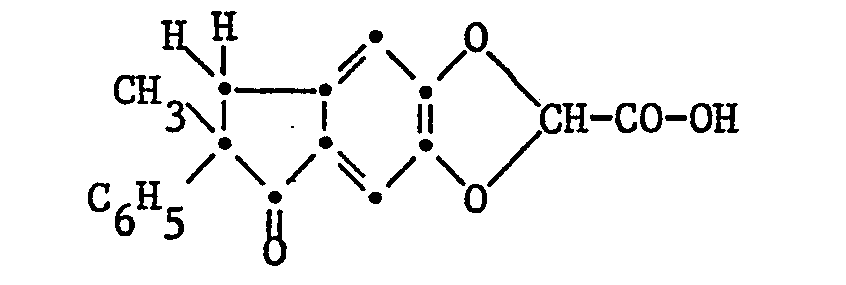
- a) Zu einer Mischung von 25,6 g (0,1 Mol) 1-(3,4-Dimethoxyphenyl)-2-phenyl-1-äthanon [vgl. S.F- Dyke et al., Tetrahedron 31, 1219-1222 (1975)] und 50 ml (ca. 0,4 Mol) Bis-(dimethylamino)-methan werden unter Rühren bei Raumtemperatur innerhalb von 10 Minuten 50 ml (0,52 Mol) Acetanhydrid zugetropft, wobei man durch Kühlen mittels Eisbad dafür sorgt, dass die Temperatur des Reaktionsgemisches nicht weiter steigt, wenn sie 40°C erreicht hat. Hierauf wird die entstandene gelbliche Lösung noch eine Stunde gerührt, wobei man die Innentemperatur auf Raumtemperatur absinken lässt. Dann wird die Reaktionslösung unter kräftigem Rühren und Animpfen vorsichtig in ein Eis-Wasser-Gemisch gegossen, so dass eine gut filtrierbare Suspension entsteht. Das kristallisierte 1-(3,4-Dimethoxyphenyl)-2-phenyl-2-propen-l-on wird bei 10° abfiltriert und 18 Stunden unter 130 mbar bei 40° getrocknet, Smp. 74-75,5°. Die Substanz wird wegen geringer Beständigkeit möglichst rasch weiterverarbeitet.
- b) Zu 135 ml (ca. 275 g) Polyphosphorsäure werden bei 95° unter Rühren innerhalb von 5 Minuten 13,4 g 1-(3,4-Dimethoxyphenyl)-2-phenyl-2-propen-l-on portionsweise zugegeben. Unter leichtem Selbsterwärmen auf etwa 100° entsteht eine hellbraune Lösung. Diese wird nach beendeter Zugabe noch eine halbe Stunde bei 95 bis 100° gerührt und dann auf Raumtemperatur abgekühlt. Unter Rühren und Eiskühlung werden 300 ml Wasser vorsichtig derart zugetropft, dass die Innentemperatur unterhalb 40° bleibt. Die entstandene grünliche Suspension wird genutscht, das Nutschgut mit Wasser gewaschen und hierauf eine Stunde bei 40° getrocknet. Das so erhaltene 2,3-Dihydro-5,6-dimethoxy-2-phenyl-1H-inden-1-on schmilzt bei 149-152° und nach Umkristallisation aus Aceton-Aethylacetat bei 154-155°.
- c) Zu 330 ml einer 40%igen wässrigen Lösung von Tetrabutylammoniumhydroxid (ca. 0,5 Mol) lässt man unter Rühren bei Raumtemperatur innerhalb einer Stunde eine Lösung von 126,7 g (0,47 Mol) 2,3-Dihydro-5,6-dimethoxy-2-phenyl-lH-inden-l-on und 142 g (62,5 ml, 0,994 Mol) Methyljodid in 2000 ml Methylenchlorid zutropfen. Unter schwacher Erwärmung entsteht dabei eine gelbliche Suspension. Diese wird noch weitere 6 Stunden bei Raumtemperatur gerührt. Dann werden die Phasen getrennt, die organische Phase zweimal mit Wasser gewaschen, getrocknet, filtriert und eingedampft. Der Rückstand wird unter Erwärmen in 300 ml Aethanol gelöst. Hierbei und beim anschliessenden Kühlen kristallisiert das 2,3-Dihydro-5,6-dimethoxy-2-methyl-2-phenyl-1H-inden-lon. Es wird abfiltriert, mit kaltem Gemisch von Aethanol und Petroläther (Siedebereich 40-65°) gewaschen und bei 40° unter ca. 130 mbar 18 Stunden getrocknet. Smp. 132-133°. Aus der Mutterlauge kann durch Eindampfen und Zusatz von ca. 200 ml Aether das Tetrabutylammonium-jodid in Form von Kristallen gewonnen werden.
- d) 5,6 g (0,020 Mol) 2,3-Dihydro-5,6-dimethoxy-2-methyl-2-phenyl-lH- inden-1-on werden in einem Gemisch von 22,7 ml (0,2 Mol) 48%iger Bromwasserstoffsäure und 25 ml wasserfreier Essigsäure 5 Stunden auf 110° erhitzt, dann mit 2 ml einer 33%igen Bromwasserstofflösung in Essigsäure versetzt und nochmals 8 Stunden auf 110° erhitzt. Nach dem Erkalten wird das Reaktionsgemisch auf Eiswasser gegossen und zweimal mit Aether extrahiert. Die vereinigten Aetherlösungen werden zweimal mit Wasser, einmal mit wässriger 1-n.Natriumbicarbonatlösung und noch zweimal mit Wasser gewaschen, getrocknet, filtriert und eingedampft. Das zurückbleibende rohe 2,3-Dihydro-5,6-dihydroxy-2-methyl-2-phenyl-1H-inden-l-on kann direkt weiterverarbeitet werden.
- Beispiel 2: 26,83 g (0,10 Mol) 2,3-Dihydro-4,5-dihydroxy-2,7-dimethyl-2-phenyl-1H-inden-1-on und 15,7 g (12,3 ml, 0,10 Mol) Dichloressigsäure-äthylester werden mit 70 g (0,5 Mol) pulverisiertem wasserfreiem Kaliumcarbonat in 300 ml 1,2-Dimethoxyäthan unter kräftigem Rühren in Stickstoffatmosphäre 4 Stunden unter Rückfluss gekocht. Dann wird das Reaktionsgemisch auf 40° abgekühlt, mit 300 ml Wasser versetzt und eine Stunde bei 35-40° gerührt. Anschliessend wird das 1,2-Dimethoxyäthan im Rotationsverdampfer unter Vakuum abgedampft und die zurückbleibende Lösung in der Kälte durch vorsichtige Zugabe von 6-n.Salzsäure kongosauer gestellt. Die ausgefallene Säure wird mit Aethylacetat extrahiert, die Aethylacetatlösung zweimal mit Wasser gewaschen, getrocknet, filtriert und eingedampft. Eine Probe des als Schaum erstarrten Rückstandes wird aus Toluol umkristallisiert; die so erhaltene 7,8-Dihydro-5,7-dimethyl-6-oxo-7-phenyl-6H-indem [4,5-d]-1,3-dioxol-2-carbonsäure schmilzt bei 161-163° (nach Sintern ab 159°). Der übrige Rückstand wird in 40 ml 2-n.Natronlauge unter Erwärmen gelöst, die warme Lösung mit Bleicherde versetzt, in der Wärme filtriert und dann im Eisbad abgekühlt. Das als feine Nädelchen auskristallisierte Natriumsalz der 7,8-Dihydro-5,7-dimethyl-6-oxo-7-phenyl-6H-indeno-[4,5-d]-1,3-dioxol-2-carbonsäure wird abfiltriert, mit eiskaltem Wasser gewaschen und unter 0,13 mbar 15 Stunden bei 30° getrocknet. Hierauf schmilzt es bei 187-190°. Formel:

- Durch Ansäuern der Mutterlauge, Extraktion mit Aether und Eindampfen im Vakuum erhält man die zur obigen Säure diastereomere Säure als amorphen Schaum.
- Das benötigte Indenonderivat wird wie folgt hergestellt:
- a) in eine Lösung von 84,1 g (0,5 Mol) 1,2-Dimethoxy-4-methylbenzol (Homobrenzcatechindimethyläther bzw. 4-Methylveratrol) in 750 ml 1,2-Dichloräthan werden unter Rühren 80,0 g (0,6 Mol) Aluminiumchlorid portionsweise eingetragen, wobei man durch Kühlen mit einem Eisbad die Temperatur bei höchstens 20° hält. Dann werden bei 15-20° innerhalb einer Stunde 85,0 g (ca. 73 ml, 0,55 Mol) Phenylacetylchlorid zugetropft, wobei mässige Chlorwasserstoffentwicklung eintritt und das Aluminiumchlorid aufgelöst wird.
- Hierauf wird das Reaktionsgemisch noch 6 Stunden bei Raumtemperatur gerührt und anschliessend auf 3000 ml Eis-Wasser-Gemisch gegossen. Die entstandenen Schichten werden getrennt und die organische Phase nacheinander mit 2-n.Salzsäure, zweimal mit Wasser, dann mit 1-n.Natriumbicarbonatlösung und noch zweimal mit Wasser gewaschen, getrocknet, filtriert und eingedampft. Der zum Teil kristallisierte Rückstand wird-aus Aether-Petroläther (Siedebereich 40-65°) vollständig zur Kristallisation gebracht, wobei das 1-(4,5-Dimethoxy-2-methylphenyl)-2-phenyl-1-äthanon vom Smp. 45-48° erhalten wird.
- b) Zu einer Mischung von 135,0 g (0,50 Mol) 1-(4,5-Dimethoxy-2-methylphenyl)-2-phenyl-l-äthanon und 250 ml Bis-(dimethylamino)-methan werden unter Rühren bei Raumtemperatur innerhalb von 20 Minuten 240 ml Acetanhydrid zugetropft, wobei man durch Kühlen mittels Eisbad den Temperaturanstieg bei 40° hält. Man rührt das Reaktionsgemisch noch eine Stunde bei 40° und giesst es dann auf 2 kg Eis-Wasser-Gemisch, wobei das Rohprodukt bereits kristallisiert. Nach 15 Minuten Rühren bei 15° wird das Rohprodukt abfiltriert, das Filtergut mit kaltem Wasser gewaschen und hierauf bei etwa 100 mbar und 30° 18 Stunden getrocknet, wobei man das 1-(4,5-Dimethoxy-2-methylphenyl)-2-phenyl-2-propen-l-on vom Smp. 57-59° erhält.
- c) In 700 ml auf 90° erwärmte Polyphosphorsäure streut man ohne Wärmezufuhr unter Rühren innerhalb 2 bis 3 Minuten 70,0 g (0,25 Mol des kristallisierten Produktes von b) ein. Dabei steigt die Temperatur auf etwa 95° und es entsteht ein violettes Gemisch. Dieses erhitztman sofort'auf 105° und rührt es noch 15 Minuten bei 105-110°. Dann kühlt man es auf 40° ab und fügt unter Rühren 1000 ml Toluol und 300 ml Methylenchlorid und hierauf 3 kg Eis zu und rührt bei 10-20° weiter, bis eine homogene Emulsion entstanden ist. Dann werden die Schichten getrennt und die organische Phase einmal mit gesättigter Natriumbicarbonatlösung und zweimal mit Wasser gewaschen. Die als organische Phase erhaltene Lösung des 2,3-Dihydro-4,5-dimethoxy-7-methyl-2-phenyl-1H-inden-l-on kann direkt für die nächste Stufe verwendet werden.
- d) Zu einer Mischung von 96,5 g Tetrabutylammoniumbromid und 60 ml konz. (etwa 10-n.)Natronlauge lässt man bei Raumtemperatur unter Rühren und Kühlen mittels Wasserbad innerhalb von 25 Minuten die gemäss c) erhaltene Lösung von etwa 0,25 Mol des gemäss c) entstandenen Indenonderivats, der zuvor 42,6 .g (18,7 ml, 0,3 Mol) Methyljodid zugefügt wurden,zulaufen und rührt das Gemisch, dessen Temperatur anfänglich leicht steigt, noch weitere 4 Stunden ohne Wärmezufuhr. Dann trennt man die organische Phase ab, wäscht sie dreimal mit Wasser, trocknet sie über Natriumsulfat, filtriert sie und dampft sie auf etwa 300 ml ein. Bei 20° wird die ausgefallene Mischung von Tetrabutylammoniumbromid und -jodid abfiltriert und mit Toluol gewaschen. Das Filtrat dampft man zur Trockne ein und versetzt den Rückstand mit etwa der zehnfachen Menge Aether. Nach einer Stunde Stehenlassen im Eisbad werden die gelblichen Kristalle abfiltriert. Das so ethaltene 2,3-Dihydro-4,5-dimethoxy-2,7-dimethyl-2-phenyl-lH-inden-l-on schmilzt bei 94-95°.
- e) Ein Gemisch von 29,6 g (0,10 Mol) des nach d) erhaltenen Indenonderivates, 115 ml 48%iger Bromwasserstoffsäure, 100 ml wasserfreier Essigsäure und 25 ml einer 33%igen Lösung von Bromwasserstoff in Essigsäure wird 8 Stunden in Stickstoffatmosphäre unter Rückfluss gekocht und nach dem Erkalten auf 1500 g Eis-Wasser-Gemisch gegossen und zweimal mit Aether extrahiert. Die vereinigten Aetherphasen werden mit Wasser, dann mit 1-n.Natriumbicarbonatlösung und noch zweimal mit Wasser gewaschen, mit Natriumsulfat getrocknet, filtriert und eingedampft. Der bräunliche Rückstand kristallisiert bei längerem Stehen. Er wird unter Erwärmen in Aether gelöst, mit Bleicherde versetzt und filtriert. Das Filtrat wird mit Cyclohexan versetzt, der Aether im Rotationsverdampfer teilweise abgedanpft und die Lösung mit der gewünschten Substanz angeimpft, wobei Kristallisation eintritt. Nach Zugabe von wenig Petroläther dampft man den Aether weiter ab und filtriert dann das auskristallisierte 2,3-Dihydro-4,5-dihydroxy-2,7-dimethyl-2-phenyl-1H-inden-1-on ab. Es schmilzt bei 160-163°.
- Beispiel 3: Analog Beispiel 2 erhält man ausgehend von 27,21 g (0,10 Mol) 2,3-Dihydro-5,6-dihydroxy-2-(4-fluorphenyl)-2-methyl-lH- inden-1-on und 15,7 g (0,10 Mol) Dichloressigsäure-äthylester das nach längerem Stehenlassen seiner wässrigen Lösung in der Kälte als feine Blättchen kristallisierende Natriumsalz der 6,7-Dihydro-6-(4-fluorphenyl)-6-methyl-5-oxo-5H-indeno[5,6-d]-1,3-dioxol-2-carbonsäure. Dieses Salz wird nach Umkristallisation aus Wasser- Aceton unter Abdestillieren des Acetons als Trihydrat erhalten, das oberhalb 50° schmilzt.
- Das als Ausgangsstoff verwendete Indenonderivat wird wie folgt hergestellt:
- a) 160 g (1,2 Mol) pulverisiertes Aluminiumchlorid werden in 1500 ml 1,2-Dichloräthan suspendiert und die Suspension auf 10° abgekühlt. Dann gibt man unter Rühren 139,0 g (1,0 Mol) Veratrol in einem Mal zu, wobei die Temperatur auf 28° ansteigt und ein grosser Teil des Aluminiumchlorids in Lösung geht. Hierauf tropft man bei 20° unter Rühren innerhalb einer Stunde 190,9 g (1,1 Mol) (4-Fluorphenyl)-acetylchlorid zu. Unter mässiger Chlorwasserstoffentwicklung und schwach exothermer Reaktion färbt sich die Reaktionslösung dunkel. Sie wird anschliessend noch 1 1/2 Stunden bei Raumtemperatur gerührt und dann auf 2 kg Eis-Wasser-Gemisch gegossen und mit 50 ml konz.Salzsäure versetzt. Die organische Phase wird abgetrennt und einmal mit 2-n. Salzsäure, zweimal mit Wasser, einmal mit 1-n.Natriumbicarbonatlösung und zweimal mit Wasser gewaschen. Die wässrige Phase wird einmal mit Chloroform extrahiert und der nach Abdanpfen des Chloroforms erhaltene Eindampfrückstand zur organischen Phase gegeben. Letztere wird nach Filtration im Vakuum eingedampft und der noch warme, ölige Rückstand mit etwa 300 ml Cyclohexan versetzt und kräftig geschüttelt, damit eine gut filtrierbare Kristallsuspension entsteht. Nach Kühlen wird diese filtriert und das Filtergut mit Cyclohexan gewaschen. Das so erhaltene 1-(3,4-Dimethoxyphenyl)-2-(4-fluorphenyl)-1-äthanon schmilzt bei 102-104° nach Sintern ab 100°.
- b) Analog Beispiel 2 b) erhält man unter Verwendung von 109, 7 g (0,40 Mol) 1-(3,4-Dimethoxyphenyl)-2-(4-fluorphenyl)-1-äthanon das 1-(3,4-Dimethoxyphenyl)-2-(4-fluorphenyl)-2-propen-l-on, das beim Giessen des Reaktionsgemisches auf Eis-Wasser-Gemisch als farblose Kristalle anfällt, welche nach 16 Stunden Trocknen bei 40° unter ca. 130 mbar bei 77-78° schmelzen.
- c) Analog Beispiel 2 c) erhält man unter Verwendung von 85, 9 g (0,30 Mol) 1-(3,4-Dimethoxyphenyl)-2-(4-fluorphenyl)-2-propen-l-on 'das 2,3-Dihydro-5,6-dimethoxy-2-(4-fluorphenyl)-1H-inden-1-on, welches beim Versetzen des Reaktionsgemisches mit Wasser kristallisiert. Die Kristalle werden mit Wasser gewaschen und getrocknet und dann in 2500 ml Methylenchlorid gelöst. Die Lösung wird von abgeschiedenem schwarzgrünem Harz dekantiert mit Bleicherde versetzt filtriert, auf etwa 500 ml eingeengt und die entstandene Suspension mit etwa 500 ml Aethylacetat versetzt. Nach Abdestillieren des restlichen Methylenchlorids kühlt und filtriert man die Kristalle des obigen Reaktionsproduktes ab und wäscht sie mit Aethylacetat; Smp. 189 - 191°.
- d) Analog Beispiel 2 d) erhält man unter Verwendung von 47,7 g (0,167 Mol) 2,3-Dihydro-5,6-dimethoxy-2-(4-fluorphenyl)-lH-inden-1- on das rohe 2,3-Dihydro-5,6-dimethoxy-2-(4-fluorphenyl)-2-methyl-lH- inden-I-on. Der Eindampfrückstand der organischen Phase wird, statt mit Aether, mit 120 ml Aethanol versetzt, wobei nach Kratzen das Reaktionsprodukt als feine Nädelchen auskristallisiert. Nach Kühlen wird es abfiltriert mit Aethanol-Aether gewaschen und 16 Stunden bei 40° unter 130 mbar getrocknet, worauf es bei 100 - 101° schmilzt.
- e) Analog Beispiel 2 e) erhält man unter Verwendung von 30,0 g (0,10 Mol) des Produktes von d) das rohe 2,3-Dihydro-5,6-dihydroxy-2-(4-fluorphenyl)-2-methyl-1H-inden-l-on als erstarrten Schaum. Das Produkt kann direkt weiterverarbeitet werden.
- Beispiel 4: Analog Beispiel 2 erhält man unter Verwendung von 28,64 g (0,10 Mol) 2,3-Dihydro-4,5-dihydroxy-2,7-dimethyl-2-(4-fluorphenyl)-lH-inden-1-on das Natriumsalz der-7,8-Dihydro-5,7-dimethyl-7-(4- fluorphenyl)-6-oxo-6H-indeno[4,5-d]-1,3-dioxol-2-carbonsäure als Monohydrat vom Smp. 188 - 190°.
- Das benötigte Indenonderivate wird wie folgt hergestellt.
- a) Eine Lösung von 1682 g (1,0 Mol) 1,2-Dimethoxy-4-methylbenzol in 1500 ml 1,2-Dichloräthan wird in einem Eisbad vorgekühlt und unter Rühren portionenweise mit 160 g (1,2 Mol) pulverisiertem Aluminiumchlorid versetzt. Dann werden unter Rühren bei 15 - 20° innerhalb 30 Minuten 190 g (1,1 Mol) (4-Fluorphenyl)-acetylchlorid zugetropft, wobei mässige Chlorwasserstoffentwicklung eintritt und das Aluminiumchlorid aufgelöst wird. Nach weiteren 5 Stunden Rühren bei Raumtemperatur wird das Reaktionsgemisch auf etwa 5 kg Eis-Wasser-Gemisch gegossen. Die Phasen werden im Scheidetrichter getrennt und die Wasserphase zweimal mit Methylenchlorid extrahiert und der Eindampfrückstand der Methylenchloridlösung wird zur organischen Phase gegeben. Letztere wird nacheinander mit 2-n. Salzsäure, zweimal mit Wasser, zweimal mit gesättigter Natriumbicarbonatlösung mit anschliessender Filtration über Bleicherde, und wieder zweimal mit Wasser gewaschen, über Natriumsulfat getrocknet, filtriert und eingedampft. Der noch warme Rückstand wird in Aether gelöst und die Aetherlösung durch Eindampfen auf ca. 700 ml eingeengt. Beim Abkühlen kristallisiert das 2-(4-Fluorphenyl)-1-(4,5-dimethoxy-2-methyl-phenyl)-1-äthanon. Es wird abgenutscht und mit kaltem Aether nachgewaschen; Smp. 96-97°.
- b) Analog Beispiel 1 b) erhält man unter Verwendung von 115,3 g (0,40 Mol) 2-(4-Fluorphenyl)-1-(4,5-Dimethoxy-2-methylphenyl)-1- äthanon das rohe 2-(4-Fluorphenyl)-l-(4,5-dimethoxy-2-methylphenyl)-2-propen-1-on, das direkt weiterverarbetet wird.
- c) Analog Beipsiel 2 c) erhält man unter Verwendung des Rohproduktes von b) (115 g, annähernd 0,4 Mol) das rohe 2,3-Dihydro-4,5-dimethoxy-2-(4-fluorphenyl)-7-methyl-1H-inden-1-on.
- d) Analog Beispiel 2 d) erhält man unter Verwendung von 50,1 g (0,167 Mol) des nach c) erhaltenen Indenonderivates das 2,3-Di- hydro-4,5-dimethoxy-2,7-dimethyl-2-(4-fluorphenyl)-1H-inden-1- on als hell-sandfarbenes Pulver vom Smp. 102 - 104°.
- e) Analog Beispiel 2 e) erhält man unter Verwendung von 31,44 g (0,10 Mol) des Reaktionsproduktes von d) das 2,3-Dihydro-4,5-dihydroxy-2,7-dimethyl-2-(4-fluorphenyl)-1H-inden-1-on als hellbraunes Pulver vom Smp. 189 - 190°.
- Beispiel 5: Durch Umsetzung von 43,0 g (0,15 Mol) 2,3-Dihydro-4,5-dihydroxy-2,7-dimethyl-2-(2-fluorphenyl)-lH-inden-l-on [analog Beispielen 4a), lb),2c), 2d) und 2e) hergestellt] mit 23,8 g (0,15 Mol) Dichloressigsäureäthylester in Gegenwart von 105 g (0,75 Mol) pulversisiertem wasserfreiem Kaliumcarbonat in 430 ml 1,2-Dimethoxyäthan erhält man analog Beispiel 2 rohe 7,8-Dihydro-5,7-dimethyl-7-(2-fluorphenyl)-6-oxo-6H-indeno[4,5-d]-1,3-dioxol-2-carbonsäure als Eindampfrückstand der Aethylacetatlösung. Die rohe Säure kann z.B. wie folgt gereinigt werden: Man löst den Eindampfrückstand in 500 ml 1-n. Natronlauge, gibt wässrige Calciumchloridlösung zu, bis die Fällung nur noch schwach zunimmt, und filtriert den Niederschlag über Bleicherde. Das Filtrat wird mit 2-n. Salzsäure angesäuert und mit Aethylacetatextrahiert. Die - Aethylacetatlösung wird wiederum eingedampft, der Rückstand in 2-n. Natronlauge gelöst, die Lösung mit 2-n. Salzsäure angesäuert und 2 Stunden kräftig gerührt, der Niederschlag abfiltriert, mit Wasser gewaschen und 40 Stunden bei 40° unter 130 mbar getrocknet. Die so erhaltene, spröde, amorphe Substanz schmilzt oberhalb 90° und ergibt für die gewünschte Carbonsäure zutreffende Analysenresultate.
- Beispiel 6: 6,.50 g (0,062 Mol) 7,8-Dihydro-5,7-dimethyl-6-oxo.-7-phenyl-6H-indeno[4,5-d]-1,3-dioxol-2-carbonsäure (in üblicher Weise freigesetzt aus dem in Beispiel 2 beschriebenen Natriumsalz) werden in 130 ml wasserfreiem Aethanol gelöst, die Lösung mit 0,1 ml einer 5-n.Chlorwasserstofflösung in Aether versetzt und eine Stunde unter Rückfluss gekocht. Dann wird das Reaktionsgemisch eingedampft, der Rückstand in Aether aufgenommen und die ätherische Lösung einmal mit 1-n.Natriumbicarbonatlösung und einmal mit Wasser gewaschen, über Natriumsulfat getrocknet, filtriert und eingedampft. Der bereits kristallisierte Rückstand wird aus Aethanol umkristallisiert, wobei man den 7,8-Dihydro-5,7-dimethyl-6-oxo-7-phenyl-6H-indeno[4,5-d]-1,3-dioxol-2-carbonsäure- äthylester als farblose Nädelchen vom Smp. 96-97° erhält. Dieser diastereomere Ester ergibt im NMR-Spektrum folgende Signale: 1,34 ppm (3H t), 1,63 ppm (3H s), 2,59 ppm (3H s), 3,14 ppm (1H d), 3,52 ppm (1H d), 4,34 ppm (2H q), 6.,38 ppm (1H s), 6,76 ppm (1H s), ca. 7,27 ppm (5H m).
- Die aus der Mutterlauge des Natriumsalzes obiger Säure des Beispiels 2 freigesetzte und dort als Schaum isolierte diastereomere Säure kann ganz analog zu obigem Verfahren in den diastereomeren Aethylester übergeführt werden, der im Gegensatz zur freien Säure aus Aethanol kristallisiert und umkristallisiert werden kann und dann bei 93 bis 94° schmilzt. Im NMR-Spektrum ergibt dieser diastereomere Ester folgende Signale: 1,37 ppm (3H t), 1,65 ppm (3H s), 2,61 ppm (3H s), 3,20 ppm (1H d), 3,48 ppm (1H d), 4,34 ppm (2H q), 6,39 ppm (1H s), 6,75 ppm (1H s), ca. 7,27 ppm (5H m).
- a) Eine Lösung von 19,9 g (61,36 mMol) der nach Beispiel 2 erhaltenen racemischen 7,8-Dihydro-5,7-dimethyl-6-oxo-7-phenyl-6H-inden[4,5-d]-1,3-dioxol-2-carbonsäure vom Smp. 161-163°, 8,76 g (30,7 mMol) (+)-Dehydroabietylamin und 3,1 g (30,6 mMol) Triäthylamin in einer Mischung von 85 ml Methanol und 8,5 ml Wasser wird mehrere Stunden bei Raumtemperatur und anschliessend unter Kühlen mit Eis stehengelassen und hierauf das entstandene Dehydroabietylamin-Salz abfiltriert, welches nach zwei Umkristallisationen aus der 20-fachen Menge einer Mischung aus 9 Teilen Methanol und einem Teil Wasser folgendes Schmelzverhalten zeigt:
- A) Bei langsamem Aufheizen <5°/min resultiert ein Smp. von 138-139°
- B) Beim Einsetzen in den auf 120° vorgeheizten Schmelzpunktbestimmungsapparat und raschem Weiterheizen mit ca. 5°/min resultiert ein Smp. von 178-180°, vorher tritt eine nematische Phase auf.
- Setzt man von obigem Dehydroabietylamin-Salz auf bekannte Art die rechtsdrehende Säure frei, so erhält man diese als amorphen Schaum, welcher folgende Drehungswerte zeigt:
-

-

- b) Aus den in der Mutterlauge obiger Trennung verbliebenen Salzen (vorwiegend Triäthylamin-Salz) wird in üblicher Weise wieder die Säure freigesetzt und isoliert und hierauf in Acetonitril als Lösungsmittel mit einem Aequivalent (-)-Ephedrin versetzt. Das nach mehrstündigem Stehenlassen und anschliessendem Eiskühlen abfiltrierte (-)-Ephedrin-Salz zeigt nach dreimaligem Umkristallisieren aus Acetonitril einen Smp. von 166-167°. Setzt man aus diesem Salz die Säure frei, erhält man einen amorphen Schaum mit folgenden Drehungswerten:
-

-

- c) Die Trennung kann auch durchgeführt werden, indem man die racemische Säure sinngemäss zuerst mit (-)-Ephedrin und Triäthylamin in Acetonitril behandelt, das (-)-Ephedrin-Salz der links drehenden Säure abtrennt und aus den verbleibenden Mutterlaugen die angereicherte rechtdrehende Säure mit (+)-Dehydroabietylamin in das entsprechende Salz überführt und letzteres durch Umkristallisation reinigt.
- a) Zu einer bei 80° unter Stickstoffatmosphäre gerührten Mischung von 17,3 g Dichloressigsäure in 72 ml wässriger 5-n.Kalilauge und 0,3 g Tri-(C8-C10-alkyl)methylammoniumchlorid wird innerhalb von einer Stunde die Lösung von (+)-2,3-Dihydro-4,5-dihydroxy-2,7-dimethyl-2-phenyl-lH-inden-1-on in 35,5 ml 2-n. Kalilauge zugetropft. Man rührt das Reaktionsgemisch anschliessend 8 Stunden bei 80°, dann kühlt man es ab, säuert es mit 6-n. Salzsäure an und extrahiert die Säuren mit Aether. Der Aetherextrakt wird eingedampft und der Rückstand wird in 150 ml abs. Aethanol gelöst. Man setzt 0,5 ml ätherische 5-n. Chlorwasserstofflösung zu und kocht die Lösung eine Stunde unter Rückfluss, dann dampft man sie im Vakuum zur Trockne ein und nimmt den Rückstand wieder in Aether auf. Die Aetherlösung wird einmal mit verdünnter wässriger Natriumbicarbonatlösung und einmal mit Wasser gewaschen, anschliessend über Natriumsulfat getrocknet, filtriert und eingedampft. Der rohe Eindampfrückstand wird mit Hilfe eines Lösungsmittelgemisches von Chloroform (10 Teile), Hexan (10 Teile) und Aethylacetat (1 Teil) über ein Bett von 140 g Kieselgel filtriert und das so gereinigte Filtrat wieder zur Trockne eingedampft. Der Eindampfrückstand von 13,0 g wird mit 20 ml wässriger 2-n. Natronlauge versetzt und auf dem Wasserbad erwärmt, bis Lösung eintritt. Nach einer Stunde Stehenlassen bei Raumtemperatur wird die Lösung mit 2-n. Salzsäure sauer gestellt und die ausfallenden Säuren werden mit Aether extrahiert. Beim Eindampfen des Aetherextraktes im Vakuum erhält man die rohen Säuren als fast farblosen amorphen,spröden Schaum, bestehend aus den beiden diastereomeren rechtsdrehenden Antipoden der 7,8-Dihydro-5,7-dimethyl-6-oxo-7-phenyl-6H-indeno[4,5-d]-1,3-dioxol-2-carbonsäure.
- b) 11,1 g (34,2 mMol) des gemäss a) erhaltenen Säuregemisches werden mit einer Lösung von 4,88 g (17,1 mMol) (+)-Dehydroabietylamin und 1,73 g (17,1 mMol) Triäthylamin in 50 ml Methanol versetzt. Nach einigen Stunden Stehenlassen im Eisbad kristallisiert das Dehydroabietylaminsalz des einen Diastereomeren in feinen Nädelchen aus und kann durch Filtration entfernt werden. (Das Salz ist identisch in allen Eigenschaften mit dem gemäss Beispiel 7a) erhaltenen (+)-Dehydroabietylaminsalz). Das Filtrat wird zur Trockene eingedampft und aus dem Rückstand die-Säure freigesetzt. Man erhält 6,9 g amorphen Schaum, zu etwa 90% bestehend aus dem stark rechtsdrehenden Diastereomeren der 7,8-Dihydro-5,7-dimethyl-6-oxo-7-phenyl-6H-indeno[4,5-d]-1,3-dioxol-2-carbonsäure mit den folgenden Drehungswerten:
-
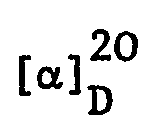
-

- c) Zur weiteren Abtrennung von diastereomeren Verunreinigungen wird die gemäss b) erhaltene Säure nach einer bekannten Veresterungsmethode, z.B.: Chem. Ber. 95, Seite 1284 ff (1962), H.A. Staab und A. Mannschreck, mit (-)-Menthol in den Mentholester übergeführt und dieser durch Mitteldruckflüssigchromatographie gereinigt. Der Ester der stark rechtsdrehenden Form mit (-)-Menthol zeigt einen Smp. von 108-109° (Umkrist. aus Hexan).
- d) 0,5 g.des nach c) gewonnenen reinen Menthylesters werden in einer Mischung von 2 ml 1-n. Natronlauge, 5 ml Wasser und 20 ml Methanol zwei Stunden bei 60° gerührt. Zum Aufarbeiten wird das Methanol im Vakuum abgedampft und der Rückstand mit Wasser verdünnt. Die Wasserphase wird zweimal mit Aether ausgezogen. Anschliessend stellt man die Wasserphase mit verdünnter Salzsäure sauer und extrahiert die ausgefällte Säure mit Aether. Man trocknet die Aetherlösung über Natriumsulfat, filtriert sie und dampft im Rotationsverdampfer unter Vakuum zur Trockene ein. Die stark rechtsdrehende Form der 7,8-Di- hydro-5,7-dimethyl-6-oxo-7-phenyl-6H-indeno[4,5-d]-l,3-dioxol-2-carbonsäure bleibt als farbloser amorpher Schaum zurück und zeigt in diesem reinen Zustand folgende Drehungswerte:
-

-
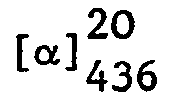
- e) Durch sinngemäss analoges Vorgehen kann man aus der gemäss i) gewonnenen linksdrehenden Phenoxyessigsäure analog zu den Schritten k) und a) bis d) die stark linksdrehende Form der 7,8-Dihydro-5,7-dimethyl-6-oxo-7-phenyl-6H-indeno[4,5-d]-1,3-dioxol-2-carbonsäure gewinnen.
- Der optisch aktive Ausgangsstoff zu Stufe a) kann wie folgt erhalten werden:
- f) 141,7 g (0,478 Mol) des nach Beispiel 2d) erhaltenen 2,3-Dihydro-4,5-dimethoxy-2,7-dimethyl-2-phenyl-lH-inden-l-on werden mit einer Mischung von 275 ml wässeriger 48%iger Bromwasserstoffsäure, 475 ml Eisessig und 72 ml HBr 33%igem Bromwasserstoff in Eisessig 45 Minuten unter leichtem Rückfluss gekocht und dann auf 3000 ml einer Eis- Wasser-Mischung gegossen. Man extrahiert das ausgefallene Produkt zweimal mit Aether und wäscht die Aetherphasen einmal mit Wasser, einmal mit verdünnter Natriumbicarbonatlösung und wieder zweimal mit Wasser. Man trocknet die Aetherphasen über Natriumsulfat, filtriert sie und dampft sie im Rotationsverdampfer unter Vakuum zur Trockene ein. Der rohe Rückstand von 135 g braunen Kristallen wird in 250 ml Aethylacetat warm gelöst und filtriert. Dann setzt man 500 ml Petroläther vom Siedebereich 40-60° zu. Beim Stehenlassen kristallisiert das Produkt aus und kann filtriert und getrocknet werden. Man erhält auf diese Art das 2,3-Dihydro-2,7-dimethyl-4-hydroxy-5-methoxy-2-phenyl-IH-inden-l-on vom Smp. 136-139°.
- g) 42,3 g (0,15 Mol) der nach e) erhaltenen 4-Hydroxyverbindung werden mit 28 g wasserfreiem, pulverisiertem Kaliumcarbonat und 32,3 g (0,19 Mol) Bromessigsäureäthylester zusammen in 400 ml Dimethylformamid 1/2 Stunde bei 60° kräftig gerührt. Man versetzt anschliessend die entstandene Suspension mit 400 ml Wasser und 80 ml konz. wässeriger Natronlauge und erhitzt die entstandene Lösung eine Stunde auf 90°. Die jetzt blassgelbe Lösung wird mit 400 g Eis versetzt und mit konz. Salzsäure sauergestellt und das ausgefällte Produkt mit Aether extrahiert. Der Aetherextrakt wird über Natriumsulfat getrocknet, filtriert und eingeengt, wobei das Reaktionsprodukt kristallin auszufallen beginnt. Zur Vervollständigung der Kristallisation kühlt man im Eisbad und filtriert dann die Kristalle ab, wobei man die 2-(2,3-Dihydro-2,7-dimethyl-5-methoxy-2-phenyl-lH- inden-4-yloxy)-essigsäure vom Smp. 151-152° erhält.
- h) Man löst 92,.6 g (0,272 Mol) der nach g) erhaltenen racemischen Säure zusammen mit 13,8 g (0,136 Mol) Triäthylamin und 16,5 g (0,136 Mol) S-(-)-1-Phenyl-äthylamin in 300 ml Acetonitril. Das bei Raumtemperatur kristallisierende Salz mit S-(-)-1-Phenyläthylamin wird abfiltriert und mehrmals aus Acetonitril umkristallisiert, bis sein Schmelzpunkt von anfänglich 142-144° auf 160-161° angestiegen ist. Setzt man aus diesem Salz nun auf bekannte Art die rechtsdrehende 2-(2,3-Dihydro-2,7-dimethyl-5-methoxy-2-phenyl-1H-inden-4-yloxy)-essigsäure frei, so erhält man einen amorphen Schaum mit folgenden Drehungswerten:
-

-
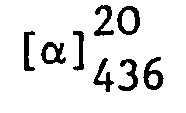
- i) Durch analoges Vorgehen erhält man beim Einsatz von R(+)-1-Phenyl- äthylamin die linksdrehende 2-(2,3-Dihydro-2,7-dimethyl-5-methoxy-2-phenyl-lH-inden-4-yloxy)-essigsäure mit den folgenden Drehungswerten:
-

-

- k) 15,2 g (44,7 mMol) der nach h) erhaltenen rechtsdrehenden Phenoxyessigsäure werden mit 80 g Pyridin-Hydrochlorid vermischt und in ein auf 200° vorgeheiztes Bad eingetaucht. Die so entstehende Schmelze wird für 4 1/2 Stunden bei gleicher Temperatur gerührt, dann giesst man die noch heisse Schmelze auf 500 g Eis, welchem man vorher 50 ml 6-n. Salzsäure zugesetzt hatte. Das ausfallende Produkt wird mit Aether extrahiert. Die Aetherextrakte wäscht man zweimal mit Wasser, trocknet über Natriumsulfat, filtriert und dampft zur Trockne ein. Man erhält ein in Form von sandfarbenem Schaum,rechtsdrehendes 2,3-Dihydro-4,5-dihydroxy-2,7-dimethyl-2-phenyl-1H-inden-1-on mit den Drehungswerten:
-

-

- Beispiel 9: 6,48g(0,020 Mol) 7,8-Dihydro-5,7-dimethyl-6-oxo-7-phenyl-6H-indeno[4,5-d]-1,3-dioxol-2-carbonsäure werden in 10,0 ml reiner wässriger 2-n. Kalilauge gelöst, die Lösung sofort filtriert und ca. 14 Stunden stehengelassen. Der entstandene Kristallkuchen wird aufgebrochen und 3 Stunden im Eisbad gekühlt. Die Kristalle werden abfiltriert, mit kaltem Wasser gewaschen und unter ca. 130 mbar bei 40° unter Luftzufuhr getrocknet. Das erhaltene Kaliumsalz der obigen Säure schmilzt bei 158-160° und enthält gemäss Analyse eine äquimolare Menge Kristallwasser.
- Beispiel 10: 4,86 g (0,015 Mol) 7,8-Dihydro-5,7-dimethyl-6-oxo-7-phenyl-6H-indeno[4,5-d]-1,3-dioxol-2-carbonsäure werden in 15,0 ml einer 1-n. Lösung von 2,2',2"-Nitrilotris-äthanol (Triäthanolamin) in Acetonitril unter Erwärmen gelöst, die Lösung sofort filtriert und ca. 14 Stunden stehengelassen. Der harte Kristallkuchen wird aufgebrochen und 3 Stunden im Eisbad gekühlt. Die hygroskopischen Kristalle werden abfiltriert, mit wenig kaltem Acetonitril gewaschen und hierauf in wenig, d.h. ca. 12 ml warmem Wasser gelöst, die Lösung bei Raumtemperatur angeimpft und 2 Stunden im Eisbad gekühlt. Die so entstandenen groben Kristalle werde abfiltriert, mit kaltem Wasser gewaschen und unter 130 mbar bei 40° unter Luftzufuhr getrocknet. Das erhaltene N,N,N-Tris-(2-hydroxyäthyl-ammoniumsalz der obengenannten Säure schmilzt bei 140-142°.
- Beispiel 11: 6,48 g (0,020 Mol) 7,8-Dihydro-5,7-dimethyl-6-oxo-7-phenyl-6H-indeno[4,5-d]-1,3-dioxol-2-carbonsäure und 2,42 g (0,020 Mol) 2-Amino-2-(hydroxymethyl)-1,3-propandiol werden in 16 ml Wasser unter Erwärmen gelöst, die Lösung filtriert und ca. 14 Stunden stehen gelassen. Der entstandene Kristallkuchen wird aufgebrochen und 3 Stunden im Eisbad gekühlt. Die Kristalle werden abfiltriert, mit kaltem Wasser gewaschen und unter 130 mbar bei 40° unter Luftzufuhr getrocknet. Das erhaltene N-[2-Hydroxy-1,1-bis-(hydroxymethyl)=äthyl]-ammoniumsalz der obengenannten Säure schmilzt bei 155-157°.
- Beispiel12: Tabletten enthaltend 100 mg Wirkstoff können beispielsweise in folgender Zusammensetzung hergestellt werden:

- Der Wirkstoff wird mit Milchzucker, einem Teil der Weizenstärke und mit kolloidaler Kieselsäure gemischt und die Mischung durch ein Sieb getreiben. Ein weiterer Teil der Weizenstärke wird mit der 5-fachen Menge Wasser auf dem Wasserbad verkleistert und die Pulvermischung mit diesem Kleister angeknetet, bis eine schwach plastische Masse entstanden ist. Die Masse wird durch ein Sieb von ca.3 mm Maschenweite getrocknet und das trockene Granulat nochmals durch ein Sieb getrieben.-Darauf werden die restliche Weizenstärke, Talk und Magnesiumstearat zugemischt. Die erhaltene Mischung wird zu Tabletten von!je 250 mg mit Bruchkerbe(n) verpresst.
- Beispiel 13:Um 1000 Kapseln mit je 100 mg Wirkstoffgehalt herzustellen, mischt man 100 g 7,8-Dihydro-5,7-dimethyl-6-oxo-7-phenyl-6H-indeno-[4,5-d]-1,3-dioxol-2-carbonsäure mit 173,0 g Lactose, befeuchtet die Mischung gleichmässig mit einer wässrigen Lösung von 2,0 g Gelatine und granuliert sie durch ein geeignetes Sieb (z.B. Sieb III nach Ph.Helv.V.). Das Granulat mischt man mit 10,0 g getrockneter Maisstärke und 15,0 g Talk und füllt es gleichmässig in 1000 Hartgelatinekapseln der Grösse 1.
- Anstelle des vorstehend verwendeten Wirkstoffes kann man in den Beispielen 12 und 13 auch eine andere Verbindung der allgemeinen Formel I oder ein Salz einer zur Salzbildung befähigten Verbindung der allgemeinen Formel I, z.B. einen der in den Beispielen 1 und 3 bis 11 beschriebenen Stoffe, verwenden.
Claims (19)


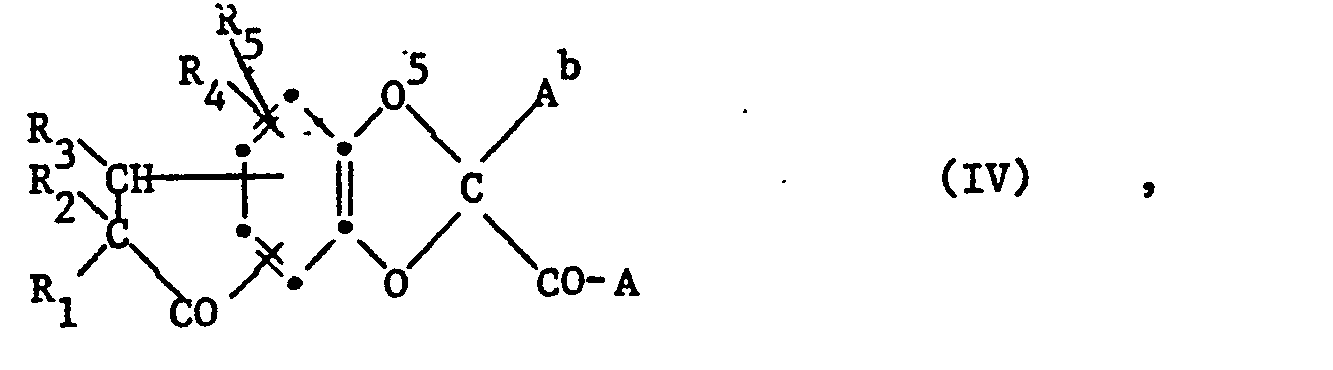


Priority Applications (1)
| Application Number | Priority Date | Filing Date | Title |
|---|---|---|---|
| AT82810162T ATE14077T1 (de) | 1981-04-24 | 1982-04-19 | Neue dioxaheterocyclische verbindungen, verfahren zu deren herstellung und diese enthaltende pharmazeutische zusammensetzungen. |
Applications Claiming Priority (2)
| Application Number | Priority Date | Filing Date | Title |
|---|---|---|---|
| CH269781 | 1981-04-24 | ||
| CH2697/81 | 1981-04-24 |
Publications (2)
| Publication Number | Publication Date |
|---|---|
| EP0064026A1 true EP0064026A1 (de) | 1982-11-03 |
| EP0064026B1 EP0064026B1 (de) | 1985-07-03 |
Family
ID=4239554
Family Applications (1)
| Application Number | Title | Priority Date | Filing Date |
|---|---|---|---|
| EP82810162A Expired EP0064026B1 (de) | 1981-04-24 | 1982-04-19 | Neue dioxaheterocyclische Verbindungen, Verfahren zu deren Herstellung und diese enthaltende pharmazeutische Zusammensetzungen |
Country Status (18)
| Country | Link |
|---|---|
| US (1) | US4500542A (de) |
| EP (1) | EP0064026B1 (de) |
| JP (1) | JPS57183785A (de) |
| AT (1) | ATE14077T1 (de) |
| AU (1) | AU8297982A (de) |
| CA (1) | CA1221976A (de) |
| DE (1) | DE3264537D1 (de) |
| DK (1) | DK183082A (de) |
| ES (2) | ES511573A0 (de) |
| FI (1) | FI821396A7 (de) |
| GR (1) | GR75466B (de) |
| IE (1) | IE52961B1 (de) |
| IL (1) | IL65595A0 (de) |
| MY (1) | MY8600506A (de) |
| NO (1) | NO821325L (de) |
| NZ (1) | NZ200393A (de) |
| PT (1) | PT74787B (de) |
| ZA (1) | ZA822779B (de) |
Families Citing this family (1)
| Publication number | Priority date | Publication date | Assignee | Title |
|---|---|---|---|---|
| US4840965A (en) * | 1987-07-07 | 1989-06-20 | Syntex (U.S.A.) Inc. | Naphthalene anti-psoriatic agents |
Citations (1)
| Publication number | Priority date | Publication date | Assignee | Title |
|---|---|---|---|---|
| DE2426505A1 (de) * | 1973-06-11 | 1975-01-09 | Richardson Merrell Inc | Derivate der 1,3-benzodioxol-2-carbonsaeure |
Family Cites Families (3)
| Publication number | Priority date | Publication date | Assignee | Title |
|---|---|---|---|---|
| US4182764A (en) * | 1973-10-11 | 1980-01-08 | Merck & Co., Inc. | Tetrazole derivatives of [1-oxo-2-aryl or thienyl-2-substituted-5-indanyloxy(or thio)]alkanoic acids |
| US4177285A (en) * | 1973-10-11 | 1979-12-04 | Merck & Co., Inc. | [1-Oxo-2-thienyl-2-substituted-5-indanyloxy (or thio)]alkanoic acids and derivatives thereof |
| PL98342B1 (pl) * | 1974-07-30 | 1978-04-29 | Sposob wytwarzania kwasu 1-keto-2-arylo-/lub tienylo/-2-podstawionego-indanyloksy-/lub tio/-5-alkanokarboksylowego |
-
1982
- 1982-04-14 GR GR67943A patent/GR75466B/el unknown
- 1982-04-19 EP EP82810162A patent/EP0064026B1/de not_active Expired
- 1982-04-19 DE DE8282810162T patent/DE3264537D1/de not_active Expired
- 1982-04-19 AT AT82810162T patent/ATE14077T1/de active
- 1982-04-21 FI FI821396A patent/FI821396A7/fi not_active Application Discontinuation
- 1982-04-21 ES ES511573A patent/ES511573A0/es active Granted
- 1982-04-22 CA CA000401439A patent/CA1221976A/en not_active Expired
- 1982-04-23 NZ NZ200393A patent/NZ200393A/en unknown
- 1982-04-23 IL IL65595A patent/IL65595A0/xx unknown
- 1982-04-23 ZA ZA822779A patent/ZA822779B/xx unknown
- 1982-04-23 PT PT74787A patent/PT74787B/de unknown
- 1982-04-23 IE IE960/82A patent/IE52961B1/en unknown
- 1982-04-23 DK DK183082A patent/DK183082A/da not_active Application Discontinuation
- 1982-04-23 NO NO821325A patent/NO821325L/no unknown
- 1982-04-23 AU AU82979/82A patent/AU8297982A/en not_active Abandoned
- 1982-04-24 JP JP57068079A patent/JPS57183785A/ja active Pending
-
1983
- 1983-06-16 ES ES523331A patent/ES8600270A1/es not_active Expired
- 1983-11-08 US US06/550,060 patent/US4500542A/en not_active Expired - Fee Related
-
1986
- 1986-12-30 MY MY506/86A patent/MY8600506A/xx unknown
Patent Citations (1)
| Publication number | Priority date | Publication date | Assignee | Title |
|---|---|---|---|---|
| DE2426505A1 (de) * | 1973-06-11 | 1975-01-09 | Richardson Merrell Inc | Derivate der 1,3-benzodioxol-2-carbonsaeure |
Also Published As
| Publication number | Publication date |
|---|---|
| JPS57183785A (en) | 1982-11-12 |
| NZ200393A (en) | 1985-08-16 |
| NO821325L (no) | 1982-10-25 |
| ES8400423A1 (es) | 1983-11-01 |
| ES523331A0 (es) | 1985-10-01 |
| FI821396L (fi) | 1982-10-25 |
| IE52961B1 (en) | 1988-04-27 |
| DK183082A (da) | 1982-10-25 |
| FI821396A0 (fi) | 1982-04-21 |
| IE820960L (en) | 1982-10-24 |
| CA1221976A (en) | 1987-05-19 |
| PT74787B (de) | 1985-01-07 |
| ES8600270A1 (es) | 1985-10-01 |
| MY8600506A (en) | 1986-12-31 |
| PT74787A (de) | 1982-05-01 |
| ZA822779B (en) | 1982-12-29 |
| IL65595A0 (en) | 1982-07-30 |
| EP0064026B1 (de) | 1985-07-03 |
| DE3264537D1 (en) | 1985-08-08 |
| AU8297982A (en) | 1982-10-28 |
| FI821396A7 (fi) | 1982-10-25 |
| US4500542A (en) | 1985-02-19 |
| ES511573A0 (es) | 1983-11-01 |
| ATE14077T1 (de) | 1985-07-15 |
| GR75466B (de) | 1984-07-23 |
Similar Documents
| Publication | Publication Date | Title |
|---|---|---|
| CH635336A5 (de) | Verfahren zur herstellung von neuen 2-phenyl-3-aroylbenzothiophenen. | |
| EP0768302A2 (de) | Hydroxypyridinone | |
| AT376976B (de) | Verfahren zur herstellung von neuen 5-substituierten oxazolidin-2,4-dionen und ihren salzen | |
| EP0041215B1 (de) | Imidazoazolalkensäureamide, neue Zwischenprodukte zu ihrer Herstellung, ihre Herstellung und ihre Verwendung in Arzneimitteln | |
| DE2165260A1 (de) | Verfahren zur Herstellung von N-substituierten Dibenzo eckige Klammer auf b,f eckige Klammer zu thiepin-10-methylaminen und zugehörige neue Zwischenprodukte | |
| EP0064027B1 (de) | Neue Benzodioxolderivate, Verfahren zu deren Herstellung und diese enthaltende pharmazeutische Zusammensetzungen | |
| DE2851028A1 (de) | Neue indolo eckige klammer auf 2.3-a eckige klammer zu chinolizidine, verfahren zu ihrer herstellung und sie enthaltende pharmazeutische zubereitung | |
| EP0000128A1 (de) | Sulfamoyl-Arylketone und Verfahren zu ihrer Herstellung sowie ihre Verwendung als Arzneimittel | |
| DE3932403A1 (de) | Neue arylsulfonamide, diese verbindungen enthaltende arzneimittel und verfahren zu ihrer herstellung | |
| WO2000051602A1 (de) | Verwendung von polycyclischen 2-amino-thiazol systemen zur herstellung von medikamenten zur prophylaxe oder behandlung von obesitas | |
| DE2605377A1 (de) | 0-aminooxime, verfahren zu ihrer herstellung und sie enthaltende arzneimittel | |
| EP0107622B1 (de) | Neue Benzodioxolderivate, Verfahren zu deren Herstellung und entsprechende pharmazeutische Zusammensetzungen | |
| DE2645865C2 (de) | ||
| DE3014813A1 (de) | 2-hydroxy-5-(1-hydroxy-2-piperazinylethyl)benzoesaeure-derivate | |
| EP0064026B1 (de) | Neue dioxaheterocyclische Verbindungen, Verfahren zu deren Herstellung und diese enthaltende pharmazeutische Zusammensetzungen | |
| EP0068240A1 (de) | 2-Acylaminomethyl-1,4-benzodiazepin-Verbindungen sowie Verfahren und Zwischenprodukte zu ihrer Herstellung und diese Verbindungen enthaltende Arzneimittel | |
| DE2736652C2 (de) | ||
| DD201788A5 (de) | Verfahren zur herstellung neuer diaryl-imidazol-verbindungen | |
| CH630887A5 (de) | Verfahren zur herstellung von 2-hydroxy-4-(2-naphthyl)-butan- oder -but-3-en-derivaten. | |
| EP0158596A2 (de) | Neue substituierte Benzodioxolderivate, Verfahren zu deren Herstellung und entsprechende pharmazeutische Zusammensetzungen | |
| EP0107623A1 (de) | Neue Benzodioxolderivate, Verfahren zu deren Herstellung und diese enthaltende pharmazeutische Zusammensetzungen | |
| DE2200375A1 (de) | Substituierte (Nitrofurylacryliden)-hydrazine und Verfahren zu deren Herstellung | |
| EP0350445A1 (de) | Substituierte Azacyclohexyl-Derivate | |
| AT365179B (de) | Verfahren zur herstellung neuer harnstoff- und amido-verbindungen | |
| WO1983002775A1 (en) | Ergot alkaloids, manufacturing process thereof and pharmaceutical preparations containing them |
Legal Events
| Date | Code | Title | Description |
|---|---|---|---|
| PUAI | Public reference made under article 153(3) epc to a published international application that has entered the european phase |
Free format text: ORIGINAL CODE: 0009012 |
|
| 17P | Request for examination filed |
Effective date: 19820421 |
|
| AK | Designated contracting states |
Designated state(s): AT BE CH DE FR GB IT LU NL SE |
|
| ITF | It: translation for a ep patent filed | ||
| GRAA | (expected) grant |
Free format text: ORIGINAL CODE: 0009210 |
|
| AK | Designated contracting states |
Designated state(s): AT BE CH DE FR GB IT LI LU NL SE |
|
| REF | Corresponds to: |
Ref document number: 14077 Country of ref document: AT Date of ref document: 19850715 Kind code of ref document: T |
|
| REF | Corresponds to: |
Ref document number: 3264537 Country of ref document: DE Date of ref document: 19850808 |
|
| ET | Fr: translation filed | ||
| PGFP | Annual fee paid to national office [announced via postgrant information from national office to epo] |
Ref country code: AT Payment date: 19860324 Year of fee payment: 5 |
|
| PG25 | Lapsed in a contracting state [announced via postgrant information from national office to epo] |
Ref country code: LU Free format text: LAPSE BECAUSE OF NON-PAYMENT OF DUE FEES Effective date: 19860430 |
|
| PLBE | No opposition filed within time limit |
Free format text: ORIGINAL CODE: 0009261 |
|
| STAA | Information on the status of an ep patent application or granted ep patent |
Free format text: STATUS: NO OPPOSITION FILED WITHIN TIME LIMIT |
|
| 26N | No opposition filed | ||
| PGFP | Annual fee paid to national office [announced via postgrant information from national office to epo] |
Ref country code: NL Payment date: 19870430 Year of fee payment: 6 |
|
| PG25 | Lapsed in a contracting state [announced via postgrant information from national office to epo] |
Ref country code: GB Effective date: 19880419 Ref country code: AT Effective date: 19880419 |
|
| PG25 | Lapsed in a contracting state [announced via postgrant information from national office to epo] |
Ref country code: SE Effective date: 19880420 |
|
| PG25 | Lapsed in a contracting state [announced via postgrant information from national office to epo] |
Ref country code: LI Effective date: 19880430 Ref country code: CH Effective date: 19880430 |
|
| BERE | Be: lapsed |
Owner name: CIBA-GEIGY A.G. Effective date: 19880430 |
|
| PG25 | Lapsed in a contracting state [announced via postgrant information from national office to epo] |
Ref country code: NL Effective date: 19881101 |
|
| NLV4 | Nl: lapsed or anulled due to non-payment of the annual fee | ||
| GBPC | Gb: european patent ceased through non-payment of renewal fee | ||
| PG25 | Lapsed in a contracting state [announced via postgrant information from national office to epo] |
Ref country code: FR Free format text: LAPSE BECAUSE OF NON-PAYMENT OF DUE FEES Effective date: 19881229 |
|
| REG | Reference to a national code |
Ref country code: CH Ref legal event code: PL |
|
| PG25 | Lapsed in a contracting state [announced via postgrant information from national office to epo] |
Ref country code: DE Effective date: 19890103 |
|
| REG | Reference to a national code |
Ref country code: FR Ref legal event code: ST |
|
| PG25 | Lapsed in a contracting state [announced via postgrant information from national office to epo] |
Ref country code: BE Effective date: 19890430 |
|
| EUG | Se: european patent has lapsed |
Ref document number: 82810162.6 Effective date: 19890726 |