EP0064704B1 - Aminométhyl-4-acyl-5-dihydro-1,3-imidazol-2-ones - Google Patents
Aminométhyl-4-acyl-5-dihydro-1,3-imidazol-2-ones Download PDFInfo
- Publication number
- EP0064704B1 EP0064704B1 EP82103739A EP82103739A EP0064704B1 EP 0064704 B1 EP0064704 B1 EP 0064704B1 EP 82103739 A EP82103739 A EP 82103739A EP 82103739 A EP82103739 A EP 82103739A EP 0064704 B1 EP0064704 B1 EP 0064704B1
- Authority
- EP
- European Patent Office
- Prior art keywords
- dihydro
- imidazol
- alkyl
- methyl
- methoxybenzoyl
- Prior art date
- Legal status (The legal status is an assumption and is not a legal conclusion. Google has not performed a legal analysis and makes no representation as to the accuracy of the status listed.)
- Expired
Links
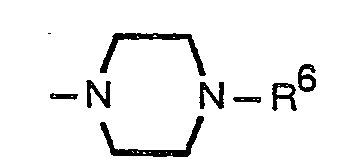
- 0 *N1CCNCC1 Chemical compound *N1CCNCC1 0.000 description 3
Classifications
-
- C—CHEMISTRY; METALLURGY
- C07—ORGANIC CHEMISTRY
- C07D—HETEROCYCLIC COMPOUNDS
- C07D233/00—Heterocyclic compounds containing 1,3-diazole or hydrogenated 1,3-diazole rings, not condensed with other rings
- C07D233/54—Heterocyclic compounds containing 1,3-diazole or hydrogenated 1,3-diazole rings, not condensed with other rings having two double bonds between ring members or between ring members and non-ring members
- C07D233/66—Heterocyclic compounds containing 1,3-diazole or hydrogenated 1,3-diazole rings, not condensed with other rings having two double bonds between ring members or between ring members and non-ring members with hetero atoms or with carbon atoms having three bonds to hetero atoms with at the most one bond to halogen, e.g. ester or nitrile radicals, directly attached to ring carbon atoms
- C07D233/70—One oxygen atom
-
- A—HUMAN NECESSITIES
- A61—MEDICAL OR VETERINARY SCIENCE; HYGIENE
- A61P—SPECIFIC THERAPEUTIC ACTIVITY OF CHEMICAL COMPOUNDS OR MEDICINAL PREPARATIONS
- A61P7/00—Drugs for disorders of the blood or the extracellular fluid
- A61P7/02—Antithrombotic agents; Anticoagulants; Platelet aggregation inhibitors
-
- A—HUMAN NECESSITIES
- A61—MEDICAL OR VETERINARY SCIENCE; HYGIENE
- A61P—SPECIFIC THERAPEUTIC ACTIVITY OF CHEMICAL COMPOUNDS OR MEDICINAL PREPARATIONS
- A61P9/00—Drugs for disorders of the cardiovascular system
- A61P9/12—Antihypertensives
Definitions
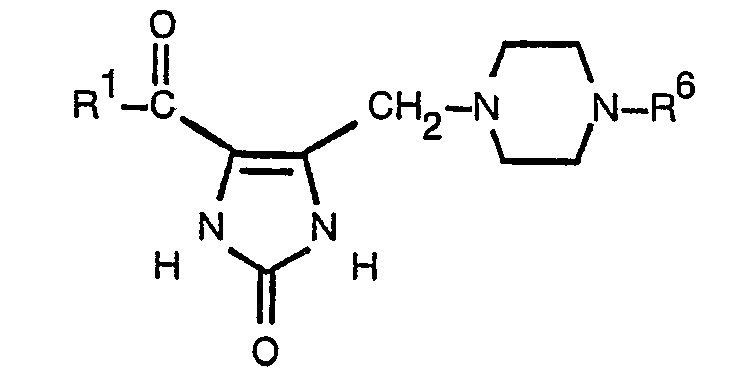
- the present invention relates to imidazoles that have an acyl and an aminomethyl substituent at the 4-and 5-positions. More particularly, it relates to compounds having the following general formula: wherein R is hydrogen, lower alkyl of 1-4 C, lower alkanoyl of 2-4 C, or benzoyl; R 1 is lower alkyl of 1-4 C, phenyl, halophenyl, methylphenyl, methoxyphenyl, methylsulfonylphenyl, dimethylaminophenyl, dimethoxyphenyl, 3,4-methylenedioxyphenyl, 2-furyl, 2-thienyl or pyridyl; R 2 is hydrogen or lower alkyl of 1-4 C; and -NR 3 R 4 is (lower alkyil) 2 amino, 1-pyrrolidinyl, 1-piperidinyl, 4-morpholinyl, wherein R 3 is lower alkyl of 1-4 C, phenyl, halophenyl, methylpheny
- the lower alkyl groups referred to above contain 1 to 4 carbon atoms. Examples of such lower alkyl groups are methyl, ethyl, propyl, isopropyl and butyl.
- the lower alkanoyl groups referred to above contain 2 to 4 carbon atoms and can be exemplified by acetyl, propionyl and butyryl.
- Examples of the halophenyl groups referred to above include fluorophenyl, chlorophenyl and bromophenyl.
- Illustrative of the pharmaceutically acceptable acid addition salts of the compounds of the present invention are salts with inorganic acids such as, for example, hydrochloric, hydrobromic, sulfuric, phosphoric and like acids; with organic carboxylic acids such as, for example, acetic, propionic, glycolic, lactic, pyruvic, malonic, succinic, fumaric, malic, tartaric, citric, ascorbic, maleic, hydroxymaleic and dihydroxymaleic, benzoic, phenylacetic, 4-aminobenzoic, 4-hydroxybenzoic, anthranilic, cinnamic, salicylic, 4-aminosalicylic, 2-phenoxybenzoic, 2-acetoxybenzoic, mandelic and like acids; and with organic sulfonic acids such as methanesulfonic acid and p-toluenesulfonic acid.
- organic carboxylic acids such as, for example, acetic, propionic, glycolic, lactic,
- quaternary ammonium salts are those formed with lower alkyl halides such as methyl bromide, methyl iodide, ethyl bromide and ethyl iodide.
- R is hydrogen in the compounds of the present invention
- tautomeric forms of the compounds are possible as follows: wherein the various groups are as defined earlier. These tautomers are acidic and can react with strong bases to form pharmaceutically acceptable salts of the following formulas: wherein the various groups are defined as above and M is a pharmaceutically acceptable alkali metal such as sodium or potassium.
- imidazol-2-one shall be taken to mean any of the tautomers or the tautomer salts as set forth above.
- the compounds of the present invention are prepared by the bromination of a 1,3-diacetyl imidazolone such as a compound of the formula: wherein Z is hydrogen to give the compound wherein Z is Br.
- the reaction is carried out using N-bromosuccinimide in the presence of a free radical initiator such as benzoyl peroxide in an appropriate solvent such as carbon tetrachloride.
- a free radical initiator such as benzoyl peroxide
- an appropriate solvent such as carbon tetrachloride.
- the specific diacetyl starting materials are obtained from the corresponding 1,3-unsubstituted imidazolone by acetylation with acetyl chloride or-acetic anhydride and the unsubstituted imidazolones used can be prepared as described in Belgian Patent specification No. 883,856 or in this description.
- the bromo compounds obtained above can be treated with hydrobromic acid in acetic acid to remove one or both of the N-acetyl groups.
- the resulting imidazolone is then treated with the appropriate amine to give the desired compounds of the present invention. If pyridine or an appropriate tertiary amine is used in the reaction, the process gives, directly, the quaternary ammonium compounds of the present invention.
- the compounds of the present invention can be used in the treatment of cardiac failure including congestive heart failure, backward heart failure, forward heart failure, left ventricular heart failure, or right ventricular heart failure or in the treatment of any other condition which requires the strengthening of heart action with a cardiotonic. In many respects, these compounds possess digitalis-like action.
- the compounds of the present invention can also be used in the treatment of hypertension including primary or essential hypertension, hormonally induced hypertension, renal hypertension and chemically induced hypertension.
- the compounds of the present invention can also be used as anti-thrombotics. They affect the coagulation of blood by preventing the aggregation of blood platelets, which play a dominant role in thrombotic conditions both in the initial event and at the occlusive stage. Arterial thrombosis, particularly in arteries supplying the heart muscle and brain, is a leading cause of death and disability.
- Antihypertensive activity for the present compounds was demonstrated using groups of 12 spontaneously hypertensive rats. Blood pressure was measured by a pressure cuff occluder around the base of the tails of the rats. The blood pressure was determined in the animals, test compound was administered orally in a vehicle at a dose of 50 mg/kg and blood pressure was measured again at 1, 2, 3, 4 and 24 hours after administration of the test compound. The difference in blood pressure observed was analyzed to establish if it was statistically significant. The vehicle used in administering the test compound did not have a significant effect on blood pressure when used alone.
- Cardiotonic activity for the present compounds was demonstrated by the following procedure.
- a Walton-Brodie strain gage arch was surgically implanted on the heart of anesthetized dogs to measure cardiac contractile force. After the vital signs of the animal were stable for 10 minutes, test compound was administered intravenously starting at a dose of 0.3 mg/kg and continuing with higher doses of 1, 3 and 10 mg/kg if no effect is observed.
- Active compounds, such as compounds of the present invention which increase cardiac contractile force measured in this way exert a true positive inotropic effect, or a cardiotonic effect.
- Antithrombotic activity for the present compounds is demonstrated by the following procedure. When adenosine diphosphate is added to citrated platelet rich human plasma, a typical aggregation of blood platelets occurs. Antithrombotic activity is determined by adding a test compound to the citrated platelet rich human plasma in concentrations of 3, 10, 30 and 100 pg/ml and subsequently adding adenosine diphosphate and observing the extent of inhibition of aggregation of blood platelets.
- the compounds may be administered in various manners to achieve the desired effect.
- the compounds may be administered alone or in the form of pharmaceutical preparations to the patient being treated either orally or parenterally, that is, intravenously or intramuscularly.
- the amount of compound administered will vary with the severity of the hypertension, cardiac failure or blood clotting and the mode of administration.
- the antihypertensively effective amount of compound is from about 0.1 mg/kg (milligrams per kilograms) of patient body weight per day to about 50 mg/kg of patient body weight per day and preferably from about 5 mg/kg of patient body weight per day to about 30 mg/kg of patient body weight per day.
- the antihypertensively effective amount of compound is from about 0.01 mg/kg of patient body weight per day up to about 50 mg/kg of patient body weight per day and preferably from about 0.1 mg/kg of patient body weight per day up to about 20.0 mg/kg of patient body weight per day.
- the cardiotonically effective amount of compound is from about 0.1 mg/kg of patient body weight per day up to about 50 mg/kg of patient body weight per day and preferably from about 0.1 mg/kg of patient body weight per day up to about 20.0 mg/kg of patient body weight per day.
- the anticoagulant effective amount of compound is from about 0.1 mg/kg of patient body weight per day up to about 100 mg/kg of patient body weight per day and preferably from about 0.1 mg/kg of patient body weight per day up to about 50 mg/kg of patient body weight per day.
- a unit dosage may contain, for example, from 10 to 100 mg of the active ingredient.
- a unit dosage may contain, for example, from 5 to 50 mg of the active ingredient. Repetitive daily administration of the compounds may be desired and will vary with the condition of the patient and the mode of administration.
- patient is taken to mean a warm blooded animal, for example, birds, such as chickens and turkeys, and mammals, such as primates, humans, sheep, horses, bovine cows and bulls, pigs, dogs, cats, rats and mice.
- birds such as chickens and turkeys
- mammals such as primates, humans, sheep, horses, bovine cows and bulls, pigs, dogs, cats, rats and mice.
- the compounds can be formulated into solid or liquid preparations such as capsules, pills, tablets, troches, powders, solutions, suspensions or emulsions.
- the solid unit dosage forms can be a capsule which can be of the ordinary gelatin type containing, for example, lubricants and inert filler, such as lactose, sucrose and cornstarch.
- the compounds of the invention can be tableted with conventional tablet bases such as lactose, sucrose and cornstarch in combination with binders, such as acacia, cornstarch or gelatin, disintegrating agents such as potato starch or alginic acid, and a lubricant such as stearic acid or magnesium stearate.
- the compounds may be administered as injectable dosages of a solution or suspension of the compound in a physiologically acceptable diluent with a pharmaceutical carrier which can be a sterile liquid such as water and oils with or without the addition of a surfactant and other pharmaceutically acceptable adjuvants.
- a pharmaceutical carrier which can be a sterile liquid such as water and oils with or without the addition of a surfactant and other pharmaceutically acceptable adjuvants.
- oils which can be employed in these preparations are those of petroleum, animal, vegetable or synthetic origin, for example, peanut oil, soybean oil and mineral oil.
- water, saline, aqueous dextrose and related sugar solutions, ethanol and glycols such as propylene glycol or polyethylene glycol can be used as liquid carriers for injectable solutions.
- Particularly preferred are combinations of the above carriers such as aqueous ethanol or propylene glycol-aqueous ethanol at alkaline pH.
- the compounds can be administered in the form of a depot injection or implant preparation which may be formulated in such a manner as to permit a sustained release of the active ingredient.
- the active ingredient can be compressed into pellets or small cylinders and implated subcutaneously or intramuscularly as depot injections or implants.
- Implants may employ inert materials such as biodegradable polymers or synthetic silicones, for example, Silastic°, silicone rubber manufactured by the Dow-Corning Corporation.
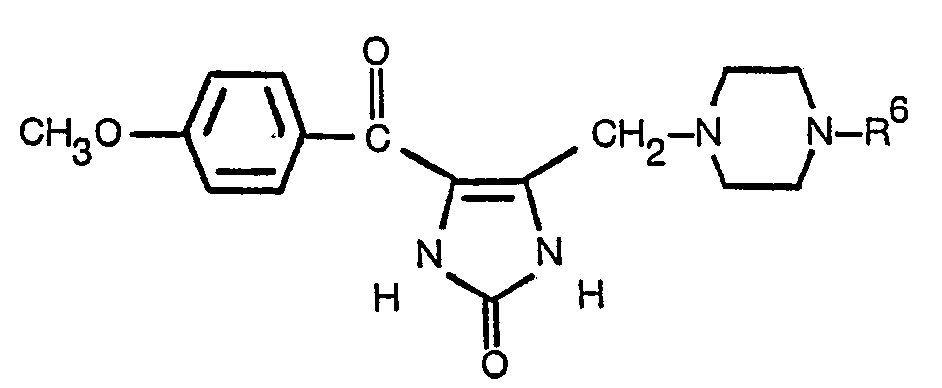
- the sodium salt of 1,3-dihydro-4-(4-methoxybenzoyl)-5-methyl-2H-imidazol-2-one is prepared from 7.0 g of 1,3-dihydro-4-(4-methoxybenzoyl)-5-methyl-2H-imidazol-2-one in 100 ml of methanol with the addition of 1.6 g of sodium methoxide.
- a mixture is prepared from 8.0 g of this sodium salt, 120 ml of dimethylsulfoxide, 15.2 g of powdered sodium hydroxide, and 19.5 g of methyl iodide. This mixture is stirred at room temperature for 60 minutes and then poured into 800 ml of water.
- a mixture of 46.4 g of 1,3-dihydro-4-(4-methoxybenzoyl)-5-methyl-2H-imidazol-2-one and 200 ml of acetic anhydride is refluxed for 2 hours.
- the mixture is distilled to remove 100 ml of acetic anhydride and acetic acid; this is replaced by fresh acetic anhydride and refluxing is resumed.
- excess acetic anhydride is evaporated under reduced pressure and the resulting residue is crystallized from ethanol to give 1,3-diacetyl-1,3-dihydro-4-(4-methoxybenzoyl)-5-methyl-2H-imidazol-2-. one melting at about 123-125°C.
- 1,3-Dihydro-4-(4-methoxybenzoyl)-5-[[4-(2-methylphenyl)-1-piperazinyl]methyl]-2H-imidazol-2-one hydrochloride is converted to the free base by standard procedures and then treated with a large excess of refluxing acetic anhydride for 4 hours.
Landscapes
- Organic Chemistry (AREA)
- Chemical & Material Sciences (AREA)
- Health & Medical Sciences (AREA)
- Pharmacology & Pharmacy (AREA)
- Nuclear Medicine, Radiotherapy & Molecular Imaging (AREA)
- Veterinary Medicine (AREA)
- Chemical Kinetics & Catalysis (AREA)
- General Chemical & Material Sciences (AREA)
- Medicinal Chemistry (AREA)
- Life Sciences & Earth Sciences (AREA)
- Engineering & Computer Science (AREA)
- Bioinformatics & Cheminformatics (AREA)
- Public Health (AREA)
- Animal Behavior & Ethology (AREA)
- General Health & Medical Sciences (AREA)
- Hematology (AREA)
- Diabetes (AREA)
- Cardiology (AREA)
- Heart & Thoracic Surgery (AREA)
- Pharmaceuticals Containing Other Organic And Inorganic Compounds (AREA)
- Plural Heterocyclic Compounds (AREA)
- Cosmetics (AREA)
Claims (14)



Priority Applications (1)
| Application Number | Priority Date | Filing Date | Title |
|---|---|---|---|
| AT82103739T ATE19241T1 (de) | 1981-05-04 | 1982-05-03 | 4-aminomethyl-5-acyl-1,3-dihydro-imidazol-2-one |
Applications Claiming Priority (2)
| Application Number | Priority Date | Filing Date | Title |
|---|---|---|---|
| US06/260,446 US4381393A (en) | 1981-05-04 | 1981-05-04 | 4-Aminomethyl-5-acyl-1,3-dihydro-2H-imidazol-2-ones |
| US260446 | 1981-05-04 |
Publications (2)
| Publication Number | Publication Date |
|---|---|
| EP0064704A1 EP0064704A1 (fr) | 1982-11-17 |
| EP0064704B1 true EP0064704B1 (fr) | 1986-04-16 |
Family
ID=22989196
Family Applications (1)
| Application Number | Title | Priority Date | Filing Date |
|---|---|---|---|
| EP82103739A Expired EP0064704B1 (fr) | 1981-05-04 | 1982-05-03 | Aminométhyl-4-acyl-5-dihydro-1,3-imidazol-2-ones |
Country Status (10)
| Country | Link |
|---|---|
| US (1) | US4381393A (fr) |
| EP (1) | EP0064704B1 (fr) |
| JP (1) | JPS57185265A (fr) |
| AT (1) | ATE19241T1 (fr) |
| AU (1) | AU546890B2 (fr) |
| CA (1) | CA1175828A (fr) |
| DE (1) | DE3270566D1 (fr) |
| ES (1) | ES511870A0 (fr) |
| IL (1) | IL65666A (fr) |
| ZA (1) | ZA822989B (fr) |
Families Citing this family (3)
| Publication number | Priority date | Publication date | Assignee | Title |
|---|---|---|---|---|
| JPS62122845A (ja) * | 1985-11-25 | 1987-06-04 | Pioneer Electronic Corp | 車載用テレビ装置 |
| ZA887662B (en) * | 1987-10-19 | 1989-06-28 | Merrell Dow Pharma | Method for reducing reperfusion injury with imidazol-2-thione-carboxamides |
| IT1230703B (it) * | 1989-01-26 | 1991-10-29 | Luso Farmaco Inst | Derivati imidazolonici ad attivita' antiipertensiva, loro metodi di preparazione e composizioni farmaceutiche che li contengono. |
Family Cites Families (6)
| Publication number | Priority date | Publication date | Assignee | Title |
|---|---|---|---|---|
| US2441933A (en) * | 1945-07-30 | 1948-05-18 | Hoffmann La Roche | Substituted imidazolones and process of making them |
| US2441935A (en) * | 1946-03-14 | 1948-05-18 | Hoffmann La Roche | Imidazolidones and method for their manufacture |
| US2514380A (en) * | 1946-12-26 | 1950-07-11 | Hoffmann La Roche | Diamines and method of production |
| US3303199A (en) * | 1963-07-15 | 1967-02-07 | Geigy Chem Corp | Certain imidazolone derivatives and process for making same |
| IL24005A (en) * | 1964-12-31 | 1970-05-21 | Robins Co Inc A H | 1,3-disubstituted-4-(2-substituted-ethyl)-2-imidazolidinones,processes for their production and pharmaceutical compositions containing them |
| NZ193935A (en) * | 1979-06-18 | 1985-05-31 | Richardson Merrell Inc | 4-aroyl-imidazol-2-one derivatives;pharmaceutical compositions |
-
1981
- 1981-05-04 US US06/260,446 patent/US4381393A/en not_active Expired - Lifetime
-
1982
- 1982-04-30 CA CA000402089A patent/CA1175828A/fr not_active Expired
- 1982-04-30 ZA ZA822989A patent/ZA822989B/xx unknown
- 1982-04-30 JP JP57071659A patent/JPS57185265A/ja active Granted
- 1982-04-30 AU AU83178/82A patent/AU546890B2/en not_active Ceased
- 1982-05-02 IL IL65666A patent/IL65666A/xx not_active IP Right Cessation
- 1982-05-03 ES ES511870A patent/ES511870A0/es active Granted
- 1982-05-03 DE DE8282103739T patent/DE3270566D1/de not_active Expired
- 1982-05-03 AT AT82103739T patent/ATE19241T1/de not_active IP Right Cessation
- 1982-05-03 EP EP82103739A patent/EP0064704B1/fr not_active Expired
Also Published As
| Publication number | Publication date |
|---|---|
| JPH024219B2 (fr) | 1990-01-26 |
| CA1175828A (fr) | 1984-10-09 |
| JPS57185265A (en) | 1982-11-15 |
| EP0064704A1 (fr) | 1982-11-17 |
| ES8308875A1 (es) | 1983-10-01 |
| DE3270566D1 (de) | 1986-05-22 |
| IL65666A (en) | 1985-12-31 |
| AU546890B2 (en) | 1985-09-26 |
| US4381393A (en) | 1983-04-26 |
| ES511870A0 (es) | 1983-10-01 |
| ATE19241T1 (de) | 1986-05-15 |
| AU8317882A (en) | 1982-11-11 |
| IL65666A0 (en) | 1982-08-31 |
| ZA822989B (en) | 1983-03-30 |
Similar Documents
| Publication | Publication Date | Title |
|---|---|---|
| US4829065A (en) | Substituted imidazolyl-alkyl-piperazine and -diazepine derivatives | |
| US5254575A (en) | 4-aryl-thiazole derivatives | |
| EP0059948B1 (fr) | Aroyl-imidazolones | |
| HU186736B (en) | Process for producing new 4-aroylimidazol2-one derivatives | |
| EP0064704B1 (fr) | Aminométhyl-4-acyl-5-dihydro-1,3-imidazol-2-ones | |
| US5091428A (en) | Substituted imidazolyl-alkyl-piperazine and -diazepine derivatives | |
| US4329470A (en) | 5-(4-Phenyl 1-piperidinyl)methyl-2,3-dihydro-2-oxo-1H-imidazole-4-carboxylic acid derivatives | |
| EP0064705B1 (fr) | Dérivés d'aminométhyl-5-dihydro-2,3-oxo-2-1H-imidazol-4-acide carboxylique | |
| EP0064707B1 (fr) | (Phényl-4-pipéridinyl-1)méthyl-4-acyl-5-dihydro-1,3-2H-imidazol-2-ones | |
| US4935417A (en) | Sustituted imidazolyl-alkyl-piperazine and -diazepine derivatives for treating cerebrovascular disease | |
| US5010075A (en) | Substituted imidazolyl-alkyl-piperazine and -diazepine derivatives | |
| EP0065165B1 (fr) | Oxyméthyl-5-acyl-4-dihydro-1,3-2H-imidazol-2-ones | |
| US4526981A (en) | [1,2-Dihydro-4(5)-acyl-2-oxo-2H-imidazol-4(5)-yl] methyl nitrates | |
| IE53316B1 (en) | 4-aminomethyl-1,3-dihydro-2h-imidazol-2-ones | |
| IE53188B1 (en) | 4-piperidinomethyl-1,3-dihydro-2h-imidazole-2-ones | |
| US5252736A (en) | Substituted imidazolyl-alkyl-piperazine and -diazepine derivatives | |
| EP0495226A2 (fr) | Utilisation de 3-aryl-5-alkylthio-4H-1,2,4-triazoles pour le traitement de l'hyperreflexie dû à un traumatisme spinal | |
| GB2173189A (en) | Ergoline derivatives and salts thereof and pharmaceutical compositions thereof | |
| EP0118205B1 (fr) | ((Aminométhyl-2-imidazolyl-1-)-5-dialkyl-1,3-pyrazolyl-4-1h)(aryl)méthanones et procédé de leur préparation | |
| WO1988002749A1 (fr) | Nouveaux derives de 2-mercaptobenzimidazole, leur procede de preparation et agents anti-ulceratifs les contenant comme principes actifs | |
| US3429893A (en) | 1-hydrocarbon-3-aryl-4-subsituted ethyl-2-imidazolidinones | |
| US4288447A (en) | Antihyperglycemic 4-substituted 2-iminoimidazolidine compositions | |
| US4288591A (en) | 4-Substituted 2-iminoimidazolidine compounds | |
| US4327098A (en) | Pharmaceutical compositions useful in the treatment of cardiovascular hypertension and containing 4-substituted-2-iminoimadazolidine compounds |
Legal Events
| Date | Code | Title | Description |
|---|---|---|---|
| PUAI | Public reference made under article 153(3) epc to a published international application that has entered the european phase |
Free format text: ORIGINAL CODE: 0009012 |
|
| AK | Designated contracting states |
Designated state(s): AT BE CH DE FR IT LI LU NL SE |
|
| 17P | Request for examination filed |
Effective date: 19830507 |
|
| GRAA | (expected) grant |
Free format text: ORIGINAL CODE: 0009210 |
|
| AK | Designated contracting states |
Kind code of ref document: B1 Designated state(s): AT BE CH DE FR IT LI LU NL SE |
|
| REF | Corresponds to: |
Ref document number: 19241 Country of ref document: AT Date of ref document: 19860515 Kind code of ref document: T |
|
| ITF | It: translation for a ep patent filed | ||
| REF | Corresponds to: |
Ref document number: 3270566 Country of ref document: DE Date of ref document: 19860522 |
|
| ET | Fr: translation filed | ||
| R20 | Corrections of a patent specification |
Effective date: 19860716 |
|
| PLBE | No opposition filed within time limit |
Free format text: ORIGINAL CODE: 0009261 |
|
| STAA | Information on the status of an ep patent application or granted ep patent |
Free format text: STATUS: NO OPPOSITION FILED WITHIN TIME LIMIT |
|
| 26N | No opposition filed | ||
| ET | Fr: translation filed | ||
| ET | Fr: translation filed |
Free format text: BO 33/87 PAGE 147: ANNULATION |
|
| ET1 | Fr: translation filed ** revision of the translation of the patent or the claims | ||
| ITTA | It: last paid annual fee | ||
| PGFP | Annual fee paid to national office [announced via postgrant information from national office to epo] |
Ref country code: SE Payment date: 19930225 Year of fee payment: 12 |
|
| PGFP | Annual fee paid to national office [announced via postgrant information from national office to epo] |
Ref country code: CH Payment date: 19930226 Year of fee payment: 12 |
|
| PGFP | Annual fee paid to national office [announced via postgrant information from national office to epo] |
Ref country code: LU Payment date: 19930317 Year of fee payment: 12 |
|
| PGFP | Annual fee paid to national office [announced via postgrant information from national office to epo] |
Ref country code: AT Payment date: 19930326 Year of fee payment: 12 |
|
| PGFP | Annual fee paid to national office [announced via postgrant information from national office to epo] |
Ref country code: BE Payment date: 19930405 Year of fee payment: 12 |
|
| PGFP | Annual fee paid to national office [announced via postgrant information from national office to epo] |
Ref country code: NL Payment date: 19930531 Year of fee payment: 12 |
|
| EPTA | Lu: last paid annual fee | ||
| PG25 | Lapsed in a contracting state [announced via postgrant information from national office to epo] |
Ref country code: LU Free format text: LAPSE BECAUSE OF NON-PAYMENT OF DUE FEES Effective date: 19940503 Ref country code: AT Effective date: 19940503 |
|
| PG25 | Lapsed in a contracting state [announced via postgrant information from national office to epo] |
Ref country code: SE Effective date: 19940504 |
|
| PG25 | Lapsed in a contracting state [announced via postgrant information from national office to epo] |
Ref country code: LI Effective date: 19940531 Ref country code: CH Effective date: 19940531 Ref country code: BE Effective date: 19940531 |
|
| ITPR | It: changes in ownership of a european patent |
Owner name: CAMBIO DOMICILIO MANDATARIO;GRUPPO LEPETIT S.P.A. |
|
| BERE | Be: lapsed |
Owner name: MERRELL DOW PHARMACEUTICALS INC. Effective date: 19940531 |
|
| PG25 | Lapsed in a contracting state [announced via postgrant information from national office to epo] |
Ref country code: NL Effective date: 19941201 |
|
| NLV4 | Nl: lapsed or anulled due to non-payment of the annual fee | ||
| EUG | Se: european patent has lapsed |
Ref document number: 82103739.7 Effective date: 19941210 |
|
| REG | Reference to a national code |
Ref country code: CH Ref legal event code: PL |
|
| EUG | Se: european patent has lapsed |
Ref document number: 82103739.7 |
|
| PGFP | Annual fee paid to national office [announced via postgrant information from national office to epo] |
Ref country code: FR Payment date: 19990504 Year of fee payment: 18 |
|
| PGFP | Annual fee paid to national office [announced via postgrant information from national office to epo] |
Ref country code: DE Payment date: 19990531 Year of fee payment: 18 |
|
| PG25 | Lapsed in a contracting state [announced via postgrant information from national office to epo] |
Ref country code: FR Free format text: LAPSE BECAUSE OF NON-PAYMENT OF DUE FEES Effective date: 20010131 |
|
| PG25 | Lapsed in a contracting state [announced via postgrant information from national office to epo] |
Ref country code: DE Free format text: LAPSE BECAUSE OF NON-PAYMENT OF DUE FEES Effective date: 20010301 |
|
| REG | Reference to a national code |
Ref country code: FR Ref legal event code: ST |