EP0064833A2 - Affinitätschromatographie in flüssiger Phase unter erhöhtem Druck - Google Patents
Affinitätschromatographie in flüssiger Phase unter erhöhtem Druck Download PDFInfo
- Publication number
- EP0064833A2 EP0064833A2 EP82302138A EP82302138A EP0064833A2 EP 0064833 A2 EP0064833 A2 EP 0064833A2 EP 82302138 A EP82302138 A EP 82302138A EP 82302138 A EP82302138 A EP 82302138A EP 0064833 A2 EP0064833 A2 EP 0064833A2
- Authority
- EP
- European Patent Office
- Prior art keywords
- binding material
- alkyl
- matrix
- ligand
- biological
- Prior art date
- Legal status (The legal status is an assumption and is not a legal conclusion. Google has not performed a legal analysis and makes no representation as to the accuracy of the status listed.)
- Granted
Links
Images

Classifications
-
- B—PERFORMING OPERATIONS; TRANSPORTING
- B01—PHYSICAL OR CHEMICAL PROCESSES OR APPARATUS IN GENERAL
- B01D—SEPARATION
- B01D15/00—Separating processes involving the treatment of liquids with solid sorbents; Apparatus therefor
- B01D15/08—Selective adsorption, e.g. chromatography
- B01D15/26—Selective adsorption, e.g. chromatography characterised by the separation mechanism
- B01D15/38—Selective adsorption, e.g. chromatography characterised by the separation mechanism involving specific interaction not covered by one or more of groups B01D15/265 and B01D15/30 - B01D15/36, e.g. affinity, ligand exchange or chiral chromatography
- B01D15/3804—Affinity chromatography
-
- B—PERFORMING OPERATIONS; TRANSPORTING
- B01—PHYSICAL OR CHEMICAL PROCESSES OR APPARATUS IN GENERAL
- B01D—SEPARATION
- B01D15/00—Separating processes involving the treatment of liquids with solid sorbents; Apparatus therefor
- B01D15/08—Selective adsorption, e.g. chromatography
- B01D15/26—Selective adsorption, e.g. chromatography characterised by the separation mechanism
- B01D15/38—Selective adsorption, e.g. chromatography characterised by the separation mechanism involving specific interaction not covered by one or more of groups B01D15/265 and B01D15/30 - B01D15/36, e.g. affinity, ligand exchange or chiral chromatography
- B01D15/3804—Affinity chromatography
- B01D15/3828—Ligand exchange chromatography, e.g. complexation, chelation or metal interaction chromatography
-
- B—PERFORMING OPERATIONS; TRANSPORTING
- B01—PHYSICAL OR CHEMICAL PROCESSES OR APPARATUS IN GENERAL
- B01J—CHEMICAL OR PHYSICAL PROCESSES, e.g. CATALYSIS OR COLLOID CHEMISTRY; THEIR RELEVANT APPARATUS
- B01J20/00—Solid sorbent compositions or filter aid compositions; Sorbents for chromatography; Processes for preparing, regenerating or reactivating thereof
- B01J20/22—Solid sorbent compositions or filter aid compositions; Sorbents for chromatography; Processes for preparing, regenerating or reactivating thereof comprising organic material
- B01J20/26—Synthetic macromolecular compounds
- B01J20/265—Synthetic macromolecular compounds modified or post-treated polymers
- B01J20/267—Cross-linked polymers
-
- B—PERFORMING OPERATIONS; TRANSPORTING
- B01—PHYSICAL OR CHEMICAL PROCESSES OR APPARATUS IN GENERAL
- B01J—CHEMICAL OR PHYSICAL PROCESSES, e.g. CATALYSIS OR COLLOID CHEMISTRY; THEIR RELEVANT APPARATUS
- B01J20/00—Solid sorbent compositions or filter aid compositions; Sorbents for chromatography; Processes for preparing, regenerating or reactivating thereof
- B01J20/281—Sorbents specially adapted for preparative, analytical or investigative chromatography
- B01J20/286—Phases chemically bonded to a substrate, e.g. to silica or to polymers
- B01J20/289—Phases chemically bonded to a substrate, e.g. to silica or to polymers bonded via a spacer
-
- B—PERFORMING OPERATIONS; TRANSPORTING
- B01—PHYSICAL OR CHEMICAL PROCESSES OR APPARATUS IN GENERAL
- B01J—CHEMICAL OR PHYSICAL PROCESSES, e.g. CATALYSIS OR COLLOID CHEMISTRY; THEIR RELEVANT APPARATUS
- B01J20/00—Solid sorbent compositions or filter aid compositions; Sorbents for chromatography; Processes for preparing, regenerating or reactivating thereof
- B01J20/30—Processes for preparing, regenerating, or reactivating
- B01J20/3092—Packing of a container, e.g. packing a cartridge or column
-
- B—PERFORMING OPERATIONS; TRANSPORTING
- B01—PHYSICAL OR CHEMICAL PROCESSES OR APPARATUS IN GENERAL
- B01J—CHEMICAL OR PHYSICAL PROCESSES, e.g. CATALYSIS OR COLLOID CHEMISTRY; THEIR RELEVANT APPARATUS
- B01J20/00—Solid sorbent compositions or filter aid compositions; Sorbents for chromatography; Processes for preparing, regenerating or reactivating thereof
- B01J20/30—Processes for preparing, regenerating, or reactivating
- B01J20/32—Impregnating or coating ; Solid sorbent compositions obtained from processes involving impregnating or coating
- B01J20/3202—Impregnating or coating ; Solid sorbent compositions obtained from processes involving impregnating or coating characterised by the carrier, support or substrate used for impregnation or coating
- B01J20/3204—Inorganic carriers, supports or substrates
-
- B—PERFORMING OPERATIONS; TRANSPORTING
- B01—PHYSICAL OR CHEMICAL PROCESSES OR APPARATUS IN GENERAL
- B01J—CHEMICAL OR PHYSICAL PROCESSES, e.g. CATALYSIS OR COLLOID CHEMISTRY; THEIR RELEVANT APPARATUS
- B01J20/00—Solid sorbent compositions or filter aid compositions; Sorbents for chromatography; Processes for preparing, regenerating or reactivating thereof
- B01J20/30—Processes for preparing, regenerating, or reactivating
- B01J20/32—Impregnating or coating ; Solid sorbent compositions obtained from processes involving impregnating or coating
- B01J20/3202—Impregnating or coating ; Solid sorbent compositions obtained from processes involving impregnating or coating characterised by the carrier, support or substrate used for impregnation or coating
- B01J20/3206—Organic carriers, supports or substrates
- B01J20/3208—Polymeric carriers, supports or substrates
- B01J20/321—Polymeric carriers, supports or substrates consisting of a polymer obtained by reactions involving only carbon to carbon unsaturated bonds
-
- B—PERFORMING OPERATIONS; TRANSPORTING
- B01—PHYSICAL OR CHEMICAL PROCESSES OR APPARATUS IN GENERAL
- B01J—CHEMICAL OR PHYSICAL PROCESSES, e.g. CATALYSIS OR COLLOID CHEMISTRY; THEIR RELEVANT APPARATUS
- B01J20/00—Solid sorbent compositions or filter aid compositions; Sorbents for chromatography; Processes for preparing, regenerating or reactivating thereof
- B01J20/30—Processes for preparing, regenerating, or reactivating
- B01J20/32—Impregnating or coating ; Solid sorbent compositions obtained from processes involving impregnating or coating
- B01J20/3202—Impregnating or coating ; Solid sorbent compositions obtained from processes involving impregnating or coating characterised by the carrier, support or substrate used for impregnation or coating
- B01J20/3206—Organic carriers, supports or substrates
- B01J20/3208—Polymeric carriers, supports or substrates
- B01J20/3212—Polymeric carriers, supports or substrates consisting of a polymer obtained by reactions otherwise than involving only carbon to carbon unsaturated bonds
-
- B—PERFORMING OPERATIONS; TRANSPORTING
- B01—PHYSICAL OR CHEMICAL PROCESSES OR APPARATUS IN GENERAL
- B01J—CHEMICAL OR PHYSICAL PROCESSES, e.g. CATALYSIS OR COLLOID CHEMISTRY; THEIR RELEVANT APPARATUS
- B01J20/00—Solid sorbent compositions or filter aid compositions; Sorbents for chromatography; Processes for preparing, regenerating or reactivating thereof
- B01J20/30—Processes for preparing, regenerating, or reactivating
- B01J20/32—Impregnating or coating ; Solid sorbent compositions obtained from processes involving impregnating or coating
- B01J20/3214—Impregnating or coating ; Solid sorbent compositions obtained from processes involving impregnating or coating characterised by the method for obtaining this coating or impregnating
- B01J20/3217—Resulting in a chemical bond between the coating or impregnating layer and the carrier, support or substrate, e.g. a covalent bond
- B01J20/3219—Resulting in a chemical bond between the coating or impregnating layer and the carrier, support or substrate, e.g. a covalent bond involving a particular spacer or linking group, e.g. for attaching an active group
-
- B—PERFORMING OPERATIONS; TRANSPORTING
- B01—PHYSICAL OR CHEMICAL PROCESSES OR APPARATUS IN GENERAL
- B01J—CHEMICAL OR PHYSICAL PROCESSES, e.g. CATALYSIS OR COLLOID CHEMISTRY; THEIR RELEVANT APPARATUS
- B01J20/00—Solid sorbent compositions or filter aid compositions; Sorbents for chromatography; Processes for preparing, regenerating or reactivating thereof
- B01J20/30—Processes for preparing, regenerating, or reactivating
- B01J20/32—Impregnating or coating ; Solid sorbent compositions obtained from processes involving impregnating or coating
- B01J20/3231—Impregnating or coating ; Solid sorbent compositions obtained from processes involving impregnating or coating characterised by the coating or impregnating layer
- B01J20/3242—Layers with a functional group, e.g. an affinity material, a ligand, a reactant or a complexing group
- B01J20/3244—Non-macromolecular compounds
- B01J20/3246—Non-macromolecular compounds having a well defined chemical structure
- B01J20/3257—Non-macromolecular compounds having a well defined chemical structure the functional group or the linking, spacer or anchoring group as a whole comprising at least one of the heteroatoms nitrogen, oxygen or sulfur together with at least one silicon atom, these atoms not being part of the carrier as such
-
- B—PERFORMING OPERATIONS; TRANSPORTING
- B01—PHYSICAL OR CHEMICAL PROCESSES OR APPARATUS IN GENERAL
- B01J—CHEMICAL OR PHYSICAL PROCESSES, e.g. CATALYSIS OR COLLOID CHEMISTRY; THEIR RELEVANT APPARATUS
- B01J20/00—Solid sorbent compositions or filter aid compositions; Sorbents for chromatography; Processes for preparing, regenerating or reactivating thereof
- B01J20/30—Processes for preparing, regenerating, or reactivating
- B01J20/32—Impregnating or coating ; Solid sorbent compositions obtained from processes involving impregnating or coating
- B01J20/3231—Impregnating or coating ; Solid sorbent compositions obtained from processes involving impregnating or coating characterised by the coating or impregnating layer
- B01J20/3242—Layers with a functional group, e.g. an affinity material, a ligand, a reactant or a complexing group
- B01J20/3244—Non-macromolecular compounds
- B01J20/3246—Non-macromolecular compounds having a well defined chemical structure
- B01J20/3257—Non-macromolecular compounds having a well defined chemical structure the functional group or the linking, spacer or anchoring group as a whole comprising at least one of the heteroatoms nitrogen, oxygen or sulfur together with at least one silicon atom, these atoms not being part of the carrier as such
- B01J20/3259—Non-macromolecular compounds having a well defined chemical structure the functional group or the linking, spacer or anchoring group as a whole comprising at least one of the heteroatoms nitrogen, oxygen or sulfur together with at least one silicon atom, these atoms not being part of the carrier as such comprising at least two different types of heteroatoms selected from nitrogen, oxygen or sulfur with at least one silicon atom
-
- B—PERFORMING OPERATIONS; TRANSPORTING
- B01—PHYSICAL OR CHEMICAL PROCESSES OR APPARATUS IN GENERAL
- B01J—CHEMICAL OR PHYSICAL PROCESSES, e.g. CATALYSIS OR COLLOID CHEMISTRY; THEIR RELEVANT APPARATUS
- B01J20/00—Solid sorbent compositions or filter aid compositions; Sorbents for chromatography; Processes for preparing, regenerating or reactivating thereof
- B01J20/30—Processes for preparing, regenerating, or reactivating
- B01J20/32—Impregnating or coating ; Solid sorbent compositions obtained from processes involving impregnating or coating
- B01J20/3231—Impregnating or coating ; Solid sorbent compositions obtained from processes involving impregnating or coating characterised by the coating or impregnating layer
- B01J20/3242—Layers with a functional group, e.g. an affinity material, a ligand, a reactant or a complexing group
- B01J20/3244—Non-macromolecular compounds
- B01J20/3246—Non-macromolecular compounds having a well defined chemical structure
- B01J20/3257—Non-macromolecular compounds having a well defined chemical structure the functional group or the linking, spacer or anchoring group as a whole comprising at least one of the heteroatoms nitrogen, oxygen or sulfur together with at least one silicon atom, these atoms not being part of the carrier as such
- B01J20/3261—Non-macromolecular compounds having a well defined chemical structure the functional group or the linking, spacer or anchoring group as a whole comprising at least one of the heteroatoms nitrogen, oxygen or sulfur together with at least one silicon atom, these atoms not being part of the carrier as such comprising a cyclic structure not containing any of the heteroatoms nitrogen, oxygen or sulfur, e.g. aromatic structures
-
- B—PERFORMING OPERATIONS; TRANSPORTING
- B01—PHYSICAL OR CHEMICAL PROCESSES OR APPARATUS IN GENERAL
- B01J—CHEMICAL OR PHYSICAL PROCESSES, e.g. CATALYSIS OR COLLOID CHEMISTRY; THEIR RELEVANT APPARATUS
- B01J20/00—Solid sorbent compositions or filter aid compositions; Sorbents for chromatography; Processes for preparing, regenerating or reactivating thereof
- B01J20/30—Processes for preparing, regenerating, or reactivating
- B01J20/32—Impregnating or coating ; Solid sorbent compositions obtained from processes involving impregnating or coating
- B01J20/3231—Impregnating or coating ; Solid sorbent compositions obtained from processes involving impregnating or coating characterised by the coating or impregnating layer
- B01J20/3242—Layers with a functional group, e.g. an affinity material, a ligand, a reactant or a complexing group
- B01J20/3244—Non-macromolecular compounds
- B01J20/3246—Non-macromolecular compounds having a well defined chemical structure
- B01J20/3257—Non-macromolecular compounds having a well defined chemical structure the functional group or the linking, spacer or anchoring group as a whole comprising at least one of the heteroatoms nitrogen, oxygen or sulfur together with at least one silicon atom, these atoms not being part of the carrier as such
- B01J20/3263—Non-macromolecular compounds having a well defined chemical structure the functional group or the linking, spacer or anchoring group as a whole comprising at least one of the heteroatoms nitrogen, oxygen or sulfur together with at least one silicon atom, these atoms not being part of the carrier as such comprising a cyclic structure containing at least one of the heteroatoms nitrogen, oxygen or sulfur, e.g. an heterocyclic or heteroaromatic structure
-
- C—CHEMISTRY; METALLURGY
- C12—BIOCHEMISTRY; BEER; SPIRITS; WINE; VINEGAR; MICROBIOLOGY; ENZYMOLOGY; MUTATION OR GENETIC ENGINEERING
- C12N—MICROORGANISMS OR ENZYMES; COMPOSITIONS THEREOF; PROPAGATING, PRESERVING, OR MAINTAINING MICROORGANISMS; MUTATION OR GENETIC ENGINEERING; CULTURE MEDIA
- C12N9/00—Enzymes; Proenzymes; Compositions thereof; Processes for preparing, activating, inhibiting, separating or purifying enzymes
-
- B—PERFORMING OPERATIONS; TRANSPORTING
- B01—PHYSICAL OR CHEMICAL PROCESSES OR APPARATUS IN GENERAL
- B01J—CHEMICAL OR PHYSICAL PROCESSES, e.g. CATALYSIS OR COLLOID CHEMISTRY; THEIR RELEVANT APPARATUS
- B01J2220/00—Aspects relating to sorbent materials
- B01J2220/40—Aspects relating to the composition of sorbent or filter aid materials
- B01J2220/49—Materials comprising an indicator, e.g. colour indicator, pH-indicator
-
- B—PERFORMING OPERATIONS; TRANSPORTING
- B01—PHYSICAL OR CHEMICAL PROCESSES OR APPARATUS IN GENERAL
- B01J—CHEMICAL OR PHYSICAL PROCESSES, e.g. CATALYSIS OR COLLOID CHEMISTRY; THEIR RELEVANT APPARATUS
- B01J2220/00—Aspects relating to sorbent materials
- B01J2220/50—Aspects relating to the use of sorbent or filter aid materials
- B01J2220/54—Sorbents specially adapted for analytical or investigative chromatography
-
- B—PERFORMING OPERATIONS; TRANSPORTING
- B01—PHYSICAL OR CHEMICAL PROCESSES OR APPARATUS IN GENERAL
- B01J—CHEMICAL OR PHYSICAL PROCESSES, e.g. CATALYSIS OR COLLOID CHEMISTRY; THEIR RELEVANT APPARATUS
- B01J2220/00—Aspects relating to sorbent materials
- B01J2220/50—Aspects relating to the use of sorbent or filter aid materials
- B01J2220/58—Use in a single column
Definitions
- the present invention relates to a process for the high pressure liquid chromatographic separation of biological or related substances and to a biological or related substance binding material for use in the said process.
- HPLC High pressure (or performance) liquid chromatography
- HPLC has a number of advantages over ether forms of liquid chromatography, for example :-
- Affinity chromatography is a well known technique for the separation of biological or related molecules which employs the biospecific interactions between the molecule being isolated and another molecule (ligand) immobilised on a stationary support (matrix).
- the ligand must interact specifically and reversibly with the molecule to be separated. It is generally immobilised on the support by reacting a ligand precursor with the matrix.
- a typical affinity chromatographic process comprises:
- this hybrid HPLAC technique the contact, washing and, optionally, elution phases are performed under a high pressure of liquid.
- a process for the high pressure liquid affinity chromatographic separation of at least one biological or related substance from a mixture wherein contact, washing and elution phases are performed on a binding material comprising a ligand, containing at least one of the groups anthraquinone, phthalocyanine or aromatic azo, coupled to a matrix through a spacer arm said binding material being so constructed that the at least one biological or related substance is retained on the binding material during the ccntact and washing phases.
- the biological or related substance may be any material that binds specifically to the ligands employed in the process of the present invention, for example peptides, polypeptides, proteins, nucleotides, polynucleotides, nucleic acids, steroids, lipids, hormones.
- the biological or related substance will be an enzyme, protein or polypeptide,for example albumin, peptidases phosphatases, kinases, such as glycerokinase hexokinase or urokinase, nucleases, such as restriction endonucleases or ribonuclease, dehydrogenases, such as glyceraldehyde - 3 - phosphate dehydrogenase lactate dehydrogenase, liver alcohol dehydrogenase or glucose - 6 - phosphate dehydrogenase, esterases, synthetases, DNA or RNA binding proteins.
- peptidases phosphatases for example albumin, peptidases phosphatases, kinases, such as glycerokinase hexokinase or urokinase, nucleases, such as restriction endonucleases or ribonuclease, dehydrogena
- the ligand is any material containing an anthraquinone, preferably a sulphonated anthraquinone, phthalocyanine or aromatic azo group which interacts with the biological or related substance to be separated both specifically and reversibly.
- the ligands of the present invention preferably are derived from ligand precursors commonly known as reactive dyes. These dyes include pyrazinyl, pyrimidinyl, pyridazinyl or sulphone derivatives of an anthraquinone (I) or an aromatic azo group (II).
- the dyes are triazinyl derivatives of anthraquinones, phthalocyanines or aromatic azo compounds.
- Such compounds have the general structure III wherein A is an organic substituent containing an anthraquinone, preferably a sulphonated anthraquinone, an aromatic azo or a phthalocyanine group; B is an organic substituent, preferably a sulphonated aromatic group, a halogen atom, preferably a chlorine atom, or an amino or substituted amino group; and C is a leaving group, preferably a chlorine atom, which is displaced in a nucleophilic substitution reaction.
- triazinyl dyes These preferred reactive dyes are commonly known as "triazinyl dyes". Examples of this type of dye that are particularly suitable for use in the separation of biological or related substances by the process of the present invention include those sold under the trade marks Cibacron (Ciba Ltd) and Procion (ICI) for example:
- the matrix is any support commonly used for affinity chromatography media which is compatible with (that is, will function as an affinity chromatography support at) HPLAC operating pressures.
- polyamino-, polyamido- or polyhydroxylic matrices may be used, including polysaccharides, such as cross-linked cellulose, agarose, dextrose and dextran, cross-linked polyamides such as polyacrylamide, and copolymers of these materials, such as cross-linked polyacrylamide-agarose gells.
- metal oxides such as alumina, titania, zirconia or, especially, silica, or glass beads may be used.
- the spacer arm may have any structure that, when combined with the matrix and the ligand, ensures that the biological substance to be separated is retained on the binding material during the contact and washing phases of HPLAC.
- the spacer arm shown below in its position in the binding material IV between the matrix and the ligand, has the structure X-R-Y Its position in a preferred binding material is shown in general formula V
- X is an organic or organometallic functional group, bound directly to the matrix, and having a structure which varies with the choice of matrix.
- X may comprise one or more of the following groups, an alkyl, a substituted alkyl, especially an alkylalcohol, a diol, a carboxylate, an ether, a thioether, an amido, an amino, an amidino, an imino carboxylate, an isourea, a carbamate or a guanidino group. These groups may be in monomeric, oligomeric or polymeric form.
- X When the matrix is polyacrylamide, X maybe a carboxy group, either alone or attached to an organic group.
- X may be -O-Si-, especially wherein R1 is H or alkyl, R 2 is an organic group which may comprise one or more of the following groups, an alkyl, a substituted alkyl, especially an alkylalcohol, a diol, an ether, an amido or an amino group, and optionally one or more of the following groups, an epoxy, a carboxylate, a thioether, an amidino, an imino carboxylate, an isourea, a carbamate or a guanidino group. Again these groups may be in monomeric, oligomeric or polymeric form.
- R 2 is one or more of alkyl, substituted alkyl and alkyl ether.
- Y is a nucleophilic group or atom directly bound to the ligand.
- Y is directly bound to the diazinyl or triazinyl ring.
- Y may be, for example, an alkyl, an ether, a thioether, an amido or an amino group or, which is preferred, it may be -NH-, -0- or -S-.
- R is an organic group and may comprise one or more of the following groups an alkyl, an alkene, an oC-aminoalkyl, an oC- oxyalkyl, an oC- thioalkyl, an alkylalcohol, a diol, a carboxylate, an ether, a thioether, an amido, an amino, an amidino, an imino carboxylate, an isourea,a carbamate, a guanidino, a hydrazino, an aromatic or a heterocyclic group. These groups may be in monomeric oligomeric or polymeric form.
- Particularly preferred groups include 4 CH 2 ) n , -NH - (CH 2n -), - 0 4 CH 2 -) n and - S -(CH 2 -) n , wherein n is from 1 to 12.
- Other preferred groups include polyethyleneimine, polyaminoacids, such as polylysine or polyarginine, polyvinylpyrrolidone, polyornithine, polyvinylamine or phenyl derivatives.
- the spacer arm may be produced between the matrix and the ligand by any of the following, non-exhaustive list of procedures:
- Examples of method a. include reacting cross-linked agarose consecutively with cyanogen bromide and an ⁇ , w - diaminoalkane to give an aminoalkyl isourea derivative followed by reaction of this modified matrix with a 2, 4 or 6 mono or dichlcro triazinyl containing ligand precursor to afford the binding material.
- silica may be reacted consecutively with w - glycidoxyalkyltrialkoxy silane and ⁇ , w - aminoalkyl substituted silica and this modified matrix may be reacted with a 2, 4 or 6 - mono or dichlorotriazinyl containing ligand precursor to afford the binding material.
- the silica may be reacted consecutively with w - thioalkyltrialkoxysilane and a mono or dichlorotriazinyl ligand precursor to afford a sulphur containing binding material.
- Examples of method b. including reacting the mono or dichloro substituted ligand precursor with an ⁇ , w - diaminoalkane and then adding this modified ligand to cyanogen bromide activated cross-linked agarose to form the binding material.
- Examples of method c. include reacting the mono or dichloro substituted ligand precursor with an oC, w - diaminoalkane, separately reacting silica with w - glycidoxyalkyltrialkokysilane and then adding the modified ligand precursor to the modified matrix to form the binding material.
- Examples of method d. include reacting silica with w - glycidoxyalkyltrialkoxysilane under acidic conditions to form a diol and then reacting the modified matrix with a 2, 4 or 6 - mono - or dichlorotriazinyl containing ligand precursor.
- the biological or related substance is bound to the binding material in the presence of metal ions, as described in our copending UK application no 8112925.
- Preferred metal ions are Co 2+ , Ni 2+ , and Zn 2+ , with Zn 2+ being particularly preferred.
- the contact solution (the solution that is passed through the binding material in the contact phase) generally comprises the mixture containing the biological or related substance and a salt of the metal ion, both dissolved in a buffer solution.
- the contact solution may simply comprise the mixture in a buffer solution. In this latter embodiment, however, before the contact solution is passed through the chromatographic column, the binding material on said column must first be treated with a buffer solution containing the metal salt.
- HPLC high pressure liquid chromatography
- affinity chromatography affinity chromatography
- the process may be performed at any pressure between about 10 and 5000 psi, preferably between about 100 and 3500 psi.
- all three affinity chromatographic phases contact, washing and eluting are performed under high pressure, but in one embodiment of the process of the present invention the eluting phase may be performed at atmospheric pressure.
- the liquid flow rate through the binding material will depend on the pressure adopted, but is typically between about 0.1 and 3.0 ml/min, preferably 0.5 and 2 ml/min.
- the binding material is generally retained on a chromatographic column of rigid construction, typically metal construction.
- the length and width of the column, together with the particle size of the binding material will generally be varied with the quantity of the biological substance to be separated.
- the column and width together with the particle size of the binding material should be increased.
- washing and eluting solutions will depend on the biological substance to be separated. Generally the composition of these solutions will be the same as that conventionally used for similar systems in the affinity chromatography art.
- the washing solution may be a buffer solution, for example potassium phosphate.
- the pH of the buffer solution will be chosen to ensure that the activity of the biological substance bound to the column is retained whilst the "non-complementary" (non-binding) constituents of the mixture are washed through the binding material.
- the eluting solution may contain a desorbing agent specific for the biological or related substance bound to the binding material.
- the desorbing agent may be, for example, a ligand presursor which is complementary to the biological substance bound to the column.
- the biological substance is an enzyme the desorbing agent may be an enzyme substrate, cofactor, inhibitor or analogues thereof.
- LDH lactate dehydrogenase
- LADH liver alcohol dehydrogenase
- a preferred desorbing agent is its cofactor NAD in admixture with an inhibitor pyrazole.
- ligands and desorbing agents the separation of mixtures of two or more biological substances may be effected in one step by the process of the present invention.
- a mixture of LDH and LADH may be separated by the process of the present invention on an appropriately modified silica - Cibacron Blue F3G-A column by passing solutions of NAD / pyruvate and NAD / pyrazole consecutively through the column.
- the biological substance Once the biological substance has been eluted from the binding material it may be identified by an appropriate assay system.
- the choice of assay system for a particular biological substance is entirely conventional and will be immediately apparent to those skilled in this art.
- a binding material for use in the high pressure liquid affinity chromatographic (HPLAC) separation of at least one biological or related substance from a mixture comprising a ligand containing at least one of the groups anthraquinone, phthalocyanine or aromatic azo, coupled to a matrix through a spacer arm said binding material being so constructed that the at least one biological or related substance is retained on the binding material during the contact and washing phases of HPLAC.
- HPLAC high pressure liquid affinity chromatographic
- the matrix and the spacer arm may be any of those preferred for use in the process of the present invention.
- the ligand is preferably derived from any of the "reactive dye” ligand precursors listed above especially the diazinyl or triazinyl dyes.
- the binding material is preferably prepared by the direct substitution of a leaving group on the ligand precursor by the matrix-spacer moiety.
- Figure 1 shows, in flow diagrammatic form, an apparatus for the automatic on line detection of lactate dehydrogenase isoenzymes by NADH gradient elution from Cibacron Blue F3G-A/amino-hexylsilica binding material
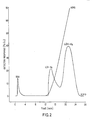
- Figure 2 shows, the UV detector response (% f.s at 290 nm and 340 nm) against time as lactate dehydrogenase isoenzymes (and bovine serum albumin) are eluted from Cibacron Blue F3G-A/aminohexyl- silica by an NADH gradient.
- the ligand precursors employed were triazinyl dyes. Triazinyl dyes were subjected in some cases to an initial purification by precipitating the dye from a methanolic solution with acetone. The dyes were then purified to homogeneity by column chromatography either on Sephadox LH20 (Trade Mark) using 60% aqueous methanol as the eluting solvent or on silica gel using the solvent system isopropanol: amyl alcohol: ethyl acetate: water (40:20:20:20 (v/v/v/v/ ); or by thin layer chromatography on silica gel using the solvent system isobutanol: n-propanol: ethyl acetate: water (20:40:10:30 (v/v/v/v/).
- Cibacron Blue F3G-A (Trade Mark) - aminohexyl Silica binding material a.
- Silica gel Li-chrosorb Si-60 (Trade Mark), 5 ⁇ m, E Merck, 5g
- ⁇ -glycidoxypropyltrimethoxysilane 1%, pH 5.5; silane Z-6040, Dow Corning
- the slurry was treated under reduced pressure in an ultrasonic bath and then heated to and maintained at 90 C for 2 hr with occasional shaking.
- the resulting epoxy-silica gel was washed thoroughly with water, dried and could be stored dry without loss of epoxy groups.
- 6-aminohexyl-Cibacron F3G-A was more than 90% pure, as measured by tlc on silica (2-butanol: 1-prapanol: ethyl acetate water; 20:40:10:30 (v/v/v/v) ) and was positive to the 2, 4, 6- trinitrobenzene sulphonic acid test for primary amines.
- step (i) above was added 10 ml 0.1M NaHCO 3 - Na C0 3 (pH 8.6) and 180 mg.
- 6-aminohexyl-Cibacron Blue F3G-A (step (ii) above), the slurry was sonicated for 10 min under reduced pressure and then incubated overnight at 30°C with gentle agitation.
- the Cibacron Blue F3G-A - aminohexyl silica binding material was washed with water (250 ml), IMKCI (250ml) 50% (v/v) aqueous methanol (200 ml), methanol (200 ml) and ether (100 ml) prior to drying in air to a blue powder.
- the immobilised dye concentration typically 5.5 to 6.7 ⁇ mol Cibacron Blue F3G-A/gm dry weight silica, was calculated using a molar extinction coefficient (Em) of 13,600 1/mol/ cm for Cibacron Blue F3G-A at 620 nm.
- Procion Blue MXR (Trade Mark) - aminohexyl Silica Binding Material
- Procion Blue MXR was purified by one of the procedures outlined above. The purified Procion Blue MXR was then added to an excess of aqueous ammonia and was allowed to react for 15 mins at 15°C. The reaction mixture was then added dropwise to 500 ml of 0.3 MHCI. The precipitated monoamino dye was removed by centrifugation at 3000 rpm for 15 min, washed once with 0.3 MHCI, resuspended in methanol and precipitated with acetone. The dye was then washed with ether and dried.
- the monoamino Procion Blue MXR was then added to 30 ml IM 1,6-diaminohexane and heated at 500C for 2 hours.
- the aminohexyl substituted dye was precipitated by adding the reaction mixture dropwise to 500 ml of 0.3 MHCI.
- the precipitated dye was removed by centrifugation at 3000 rpm for 15 min washed once with 0.3 MHCI, resuspended in methanol and precipitated with acetone.
- Epoxy-silica was prepared as outlined above under 1a.(i).
- step (iii) To 2g epoxy-silica (step (ii) above) was added 10 ml NaHCO 3 -Na CO 3 (pH 8.6) and 160 mg. 2-amino-4-aminohexyl- substituted Procion Blue MXR (step (i) above), the slurry was sonicated for 10 min under reduced pressure and then incubated overnight at 30°C with gentle agitation.
- the Procion Blue MXR - aminohexyl silica binding material was washed with water (250 ml), IM KCI (250 ml), water (250 ml), 50% (v/v) aqueous methanol (200 ml), methanol (200 ml) and ether (100 ml) prior to drying in air.
- Cibacron Blue F3G-A (Trade Mark) - thiopropyl Silica binding material
- the binding material (1.2g) was packed in polished 316' stainless steel columns (100 mm x 5mm ID, total volume 2.0 ml) using the upward slurry packing technique of P A Bristow etal, J Chromatogr, 1977, 131,57: All chromatographic procedures were performed at ambient temperatures (20-22 C).
- the pumping system comprised an Altex Model 110A solvent metering pump (Altex, California, USA) equipped with a pulse dampener.
- Ultraviolet detection was performed with a variable wavelength detector, 190-700 nm (LC-55, Perkin Elmer) and sample injections were made with a valve injector (Valco, Houston)
- Enzymes eluted from the HPLAC column were detected with an on-line detector system (S H Chang etal, J Chromatogr, 1976, 125, 103) comprising a reagent pump (Altex Model 110A); post column reactor, equilibrated to 40°C in a water bath, and a UV/visible monitor (LC-55, Perkin Elmer).
- the post column reactor comprised a polished stainless steel '316' column (100 mm x 5 mm ID, total volume 2.0 ml) containing non-porous glass beads (150 um) silanised as described by M Glad etal, J Chromatogr, 1980,200, 254 with the resulting epoxy groups hydrolysed to diols by heating the 10mM HCI at 75°C for 30 min.
- the binding material was packed into 100 mm x 5 mm stainless steel columns by the downward slurry packing technique using a Magnus Scientific Slurry packing unit.
- 1.5 gm of binding material was suspended in 25 ml methanol and packed into the column at a pressure of 2000 psi.
- the packing pressure was slowly increased to 3000 psi and this pressure was maintained until 150 ml of solvent had been collected.
- the solvent was then changed to double distilled water (degassed and filtered through a 0.45 ⁇ Millipore filter) and a further 150 ml of solvent was collected.
- the packed column was detached from the apparatus and a stainless steel sinter was fitted to each end.
- the assay solution for the on-line detection of lactate dehydrogenase comprised either 0.4M Tris-HCI pH 8.8 containing 0.75M DL-lactate and 1mM NAD + or 0.1M potassium phosphate buffer pH 7.5 containing 1mM sodium pyruvate and 0.32 mM NADH.
- the post-column reagent for the detection of liver alcohol dehydrogenase comprised Tris-HCI pH 8.8 (0.4M) containing ethanol (0.43M) and NAD + (1mM) whilst the reagent for malate dehydrogenase contained potassium phosphate buffer pH ?.5 (0.1M), oxaloacetate (0.20 mM), and NADH (0.32 mM), and the reagent for Le uconostoc mesenteroides glucose-6-phosphate dehydrogenase contained potassium phosphate buffer pH 7.5 (0.1M), D-glucose-6-phosphste (1.2 mM) end NADP + (0.4mM).
- the assay solution for the simultaneous detection of hexokinase and 3-phosphoglycerate kinase in column effluents was prepared in Triethanolamine-HCI pH 8.0 (0.1M) and contained ATP (0.41 mM), NADP + (0.31 mM), NADH (48 ⁇ m),
- D-glucose (0.125M), 3-phosphoglycerate (5.0 mM), glucose-6-phosphate dehydrogenase (1.25 ⁇ g/ml; 0.5 u/ml) and glyceraldehyde-3-phosphate dehydrogenase (38.6 ⁇ g/ml; 2.7 (u/ml).
- enzyme activity was monitored by the change in absorbance at 340 nm.
- Bovine pancreatic Ribonuclease A activity was monitored by the decrease in absorbance at 305 nm following hydrolysis of RNA to oligonucleotides.
- the assay solution contained RNA (2.2 mg/ml) in sodium acetate buffer pH 5.0 (0.1M).Alkaline phosphatase activity was monitored at 410 nm with assay medium comprising p-nitrophenyl- phosphate (disodium salt) (4 mM) in Tris-HCI pH 8.0 (0.25 M).
- Yeast Hexokinase activity was followed spectrcphotometrically (at 340 nm) by an assay procedure which employed the coupled reduction of NADP + with glucose-6-phosphate dehydrogenase.
- the reaction mixture (1 ml) contained:
- 1 unit of yeast hexokinase is defined as the amount required to produce 1 ⁇ Mole of NADPH per min at 30°C. (for details of an assay see P B Garland et al, Nature, 1962, 196, 987).
- the assay for calf intestine alkaline phosphatase which was performed at 30 o C, employed an aqueous reaction mixture, with a total volume of 1 ml., and containing:
- 1 unit of phosphatase activity is defined as the amount of enzyme required to produce 1 ⁇ Mole of p-nitrophenol per min at 30°C.
- the assay for Carboxypeptidase which was performed at 37°C, employed an aqueous reaction mixture, with a total volume of 1ml, and containing:
- Enzyme activity was measured by determining the decrease in a absorbance of the solution at 320nm (for details of this assay see J L McCulloch et al, J Biol Chem., 1971, 246, 7207).
- LADH Horse Liver Alcohol dehydrogenase
- BSA Bovine serum albumin
- Example 4 Column: as Example 4 Sample:L A DH (0.2 mg/ml) and BSA (0.6 mg/ml) in 0.1M potassium phosphate buffer (pH 7.5) Sample volume: as Example 4 Washing solution: as Example 4 Eluting solution: 0.1 mM pyrazole and 1 mM NAD + in 0.1M potassium phosphate buffer (pH 7.5) Flow rate: as Example 4 Pressures: as Example 4 Assay for on line detection: 0.4M Tris-HCI (pH 8.8) containing 0.43M EtOH and 1mM NAD + . Detector wavelengths: 280 nm (protein), 340 nm (NADH enzyme activity)
- LDH-H 4 horse liver alcohol dehydrogenase
- BSA bovine serum albumin
- GPD glucose-6-phosphate dehydrogenase
- BSA Bovine serum albumin
- LH-H 4 pig heart lactate dehydrogenase
- LH-M 4 rabbit muscle lactate dehydrogenase
- BSA bovine serum albumin
- Example 4 Sample: LDH-H 4 (0.065 mg/ml), LDH-M 4 (0.59 mg/ml) and BSA (3 mg/ml) in 0.1M potassium phosphate (pH 7.5) Sample Volume: 20 ⁇ l Washing solution: as Example 4 Eluting solution: an increasing gradient of NADH (conc 0mM) to 4mM) in 0.1M potassium phosphate buffer (pH 7.5); 20 ml mixing volume Flow rate: as Example 4 Pressures: 1000 psi (sample pump), 200 psi (reagent pump) Assay for on line 1mM sodium pyruvate, 0.32mM NADH in detection 0.1M phosphate buffer (pH 7.5) Detector wavelength: 290nm (protein), 340nm (NADH, isoenzyme activity).
- FIG. 1 illustrates the experimental set-up required for automatic recording of the entire chromatographic profile shortly after the last isoenzyme peak has emerged from the analytical column.
- the system automatically corrects for the increased absorbance in the post-column enzyme detector due to the NADH gradient.
- the automatic recording apparatus illustrated in Figure 1 comprises a gradient maker (1) which provides an increasing NADH(E gradient to a first pump (2).
- the pump (2) pumps the eluting solution through an injection valve (3) and an HPLAC column (4).
- the effluent flow from the HPLAC column (4) is passed through a UV-detector (5) set at 290nm to monitor protein in the void volume and, subsequently, the gradient profile due to absorbance of NADH(G 1,400 1/mol/cm at 290mm) before being split equally at a T-piece (6).
- One half of the split flow passes on to the post column reactor (7) where, immediately prior to the column (7), it is mixed with half of the split flow from the reagent pump (8).
- the effluent from the post column reactor (7) flows directly through the sample cuvette of the enzyme activity detector (9) set at 340nm.
- the other half of the flow of assay mixture from the reagent pump (8) is mixed with the effluent from the UV detector (5), bypasses the post column reactor (7) and passes through the reference cuvette of the enzyme activity detector (9).
- Figure 2 illustrates a typical fully automated chromatographic profile representing the NADH gradient elution of BSA, LDH-H 4 and LDH-M 4 under the conditions of the present Example.
- Example 4 Crude bovine pancreatic extract containing crystalline ribonuclease A (10mg/ml) Sample volume: 50 ⁇ l Column washing solution: 10 mM sodium acetate (pH 5.0) Column eluting solution: 10mM Cytidine 2 /- monophosphate disodium salt (50 ⁇ l) Flow rate: 1ml/min (sample pump), 2ml/min (reagent pump) Pressures: as Example 4 Assay for on line RNA (2.2 mg/ml) in 0.1M sodium acetate detection (pH 5.0) Detector wavelengths: 280nm (protein), 305nm (enzyme activity)
- the precipitate formed was then removed by centrifugation or filtration and thoroughly washed with 0.3M HCI. The precipitate was then washed with acetone until the supernatant fraction remained colourless and then dried in air to a deep green powder.
- the resulting product, 6 - aminohexyl - Procion Green H4G was more than 90% pure, as measured by tlc on silica (2 - butanol : 1 - propanol : ethyl acetate : 20:40:10:30 (v/v/v/v)) and was positive to the 2, 4, 6 - trinitrobenzene sulphonic acid test for primary amines.
- step (iii) To 2g epoxy-silica (step (i) above) was added 10ml. 0.1M NaHCO 3 - Na 2 C0 3 (pH 8.6) and 180mg 6 - aminohexyl - Procion Green H4G (step (ii) above), the slurry was sonicated for 10 min under reduced pressure and then incubated overnight at 30°C with gentle agitation. The Procion Green H4G - aminohexyl - epoxysilica binding material was washed with water (250ml), 50% (v/v) aqueous methanol (200ml), methanol (200ml) and ether (100ml) prior to drying in air to a green powder.
- the binding material (1.2g) was packed in polished '316' stainless steel columns (100mm x 5mm; I D, total volume 2.Oml) using the upward slurry packing technique of P.A. Bristow et al, J Chromatogr., 1977, 131, 57. All chromatographic procedures were performed at ambient temperature (20 - 22 0 C).
- the pumping system comprised an Altex Model 110A solvent metering pump (Altex, California, USA) equipped with a pulse dampener. Ultraviolet detection was performed with a variable wavelength detector, 190 - 700nm (LC - 55, Perkin Elmer) and sample injections were made with a valve injector (Valco, Houston).
- Enzymes eluted from the High Pressure Liquid Affinity Chromatography (HPLAC) column were detected with an on-line detector system (S.H.Chang et al, J Chromatogr., 1976, 125, 103) comprising a reagent pump (Altex Model 110A), post column reactor, equilibrated to 40°C in a water bath, and a UV/visible monitor (LC - 55, Perkin Elmer).
- HPLAC High Pressure Liquid Affinity Chromatography
- the post column reactor comprised a polished stainless steel '316' column (100mm x 5mm; I.D., total volume, 2.0ml) containing non porous glass beads (150 ⁇ m) silanised as described by M Glad et al J Chromatogr., 1980, 200, 254 with the resulting epoxy groups hydrolysed to diols by heating in 10mM HCI at 75°C for 30 min.
- the binding material was packed into 100mm x 5mm stainless steel columns by the downward slurry packing technique using a Magnus Scientific slurry packing unit. 1.5gm of binding material was suspended in 25ml methanol and packed into the column at a pressure of 2000 psi. The packing pressure was slowly increased to 3000 psi and this pressure was maintained until 150ml of solvent had been collected. The solvent was then changed to double distilled water (degassed and filtered through a 0.45 ⁇ Millipore filter) and a further 150ml of solvent was collected. The packed column was detached from the apparatus and a stainless steel sinter was fitted to each end. When not in use the column were sealed at both ends with plastic plugs and stored at 15°C.
- the column was packed with Procion Green H4G - aminohexyl - epoxysilica binding material by the method described above (10B). It was then equilibrated, at a sample pump pressure of 1200 psi - reagent pump pressure of 200 psi and a flow rate of 1 ml/min, with 10mM HEPES buffer (pH 7.5).
- the contact solution (0.1ml), made up of yeast hexokinase (0.2mg/ml), 10iu/mg) and magnesium chloride (to 10mM) dissolved in 10mM HEPES buffer (pH 7.5), was then loaded onto the column under pressure (sample pump 1200 psi, reagent pump 200 psi).
- Example 10 The procedure of Example 10 was repeated except that Yeast hexokinase was replaced by Carboxypeptidase G as the enzyme, Procion Green H4G was replaced by Procion Yellow HA as the dye and magnesium chloride (10mM) was replaced by zinc chloride (0.2mM) as the source of metal ions. Using the assay procedure described above the % (by activity) of Carboxypeptidase G that was retained on the column was determined. This was found to be 100% of enzyme activity.
- Example 11 The HPLAC procedure of Example 11 was repeated except that alkaline phosphatase replaced carboxypeptidase G as the enzyme. Using the assay procedure described above the % (by activity) of alkaline phosphatase that was retained on the column was determined. This was found to be 0%.
- silica gel (Li-chrosorb Si - 60 (Trade Mark), 5 ⁇ m, E. Merck, 5g.) was suspended in 200 ml of an aqueous solution of ⁇ - glycidoxypropyltrimethoxysilane (1%, pH 5.5-, silane Z - 6040, Dow Corning). The slurry was treated under vacuum in an ultrasonic bath and was then heated to and maintained at 90°C for 2 hr. with occasional shaking. The solution was then cooled and the pH was adjusted to 3.5. Further heating at 90°C for 1 hr. converted the oxirane groups of the gel to glycol groups.
- Procion Blue MXR - glycol silylated silica binding material was prepared as described in Example 13A except that Procion Blue MXR replaced Procion Brown MX - 5BR as the dye.
- Sample A mixture of BSA (10 fg) and LDH-H4 (10 ⁇ g) in 10mM HEPES buffer (pH7). Sample: 20 ⁇ l volume Column washing solution: 10mM HEPES buffer (pH7) Column eluting solution: a) 0.5M KC1 in 10mM HEPES buffer (pH7) (200 ⁇ l), or b) 0.1mM NAD + /0.1M Pyruvate in 10mM HEPES (pH7) (200 ⁇ l).
- Flow rate 1ml/min at both sample and reagent pumps Pressure: 500 psi (3.5 MPa) at sample and reagent pump; LDH assay: 1mM sodium pyruvate, 0.32mM NADH in 0.1M phosphate buffer (pH 7.5). Detector wavelength: 280nm.
- LDH-M4 Large scale purification of crude rabbit muscle lactate dehydrogenase (LDH-M4) Column: as Example 14 (2.5cm x 30cm) Sample: LDH-M4 (100mg, 130 u/mg) and BSA (100mg) in 10mM HEPES (pH 7.0) Sample: 100 ml.
Landscapes
- Chemical & Material Sciences (AREA)
- Analytical Chemistry (AREA)
- Organic Chemistry (AREA)
- Chemical Kinetics & Catalysis (AREA)
- Life Sciences & Earth Sciences (AREA)
- Health & Medical Sciences (AREA)
- Bioinformatics & Cheminformatics (AREA)
- Zoology (AREA)
- Wood Science & Technology (AREA)
- Engineering & Computer Science (AREA)
- Genetics & Genomics (AREA)
- Biomedical Technology (AREA)
- Biotechnology (AREA)
- Inorganic Chemistry (AREA)
- Microbiology (AREA)
- Molecular Biology (AREA)
- Medicinal Chemistry (AREA)
- Biochemistry (AREA)
- General Engineering & Computer Science (AREA)
- General Health & Medical Sciences (AREA)
- Measuring Or Testing Involving Enzymes Or Micro-Organisms (AREA)
- Treatment Of Liquids With Adsorbents In General (AREA)
Applications Claiming Priority (2)
| Application Number | Priority Date | Filing Date | Title |
|---|---|---|---|
| GB8112897 | 1981-04-27 | ||
| GB8112897 | 1981-04-27 |
Publications (3)
| Publication Number | Publication Date |
|---|---|
| EP0064833A2 true EP0064833A2 (de) | 1982-11-17 |
| EP0064833A3 EP0064833A3 (en) | 1983-06-22 |
| EP0064833B1 EP0064833B1 (de) | 1986-06-25 |
Family
ID=10521382
Family Applications (1)
| Application Number | Title | Priority Date | Filing Date |
|---|---|---|---|
| EP82302138A Expired EP0064833B1 (de) | 1981-04-27 | 1982-04-26 | Affinitätschromatographie in flüssiger Phase unter erhöhtem Druck |
Country Status (4)
| Country | Link |
|---|---|
| US (1) | US4431544A (de) |
| EP (1) | EP0064833B1 (de) |
| DE (1) | DE3271828D1 (de) |
| GB (1) | GB2097280B (de) |
Cited By (16)
| Publication number | Priority date | Publication date | Assignee | Title |
|---|---|---|---|---|
| EP0143423A3 (en) * | 1983-11-25 | 1986-03-12 | J.T. Baker Chemical Co. | Polyethylenimide bound chromatographic packing |
| FR2570615A1 (fr) * | 1984-09-26 | 1986-03-28 | Centre Nat Rech Scient | Nouveau complexe d'elution notamment pour chromatographie d'affinite |
| EP0147804A3 (en) * | 1983-12-28 | 1986-05-28 | Daicel Chemical Industries, Ltd. | Separating agent |
| EP0157549A3 (de) * | 1984-03-27 | 1986-09-03 | Sumitomo Chemical Company, Limited | An eine Phthalocyanin-Verbindung gebundenes Siliziumgel und Methode zur Behandlung von polyzyklischen organischen Substanzen |
| EP0190606A3 (en) * | 1985-02-04 | 1987-04-29 | F. Hoffmann-La Roche & Co. Aktiengesellschaft | Sorbent for the purification of proteins |
| EP0199222A3 (en) * | 1985-04-22 | 1987-05-06 | J.T. Baker Chemical Co. | Acylated polyethylenimine bound chromatographic packing |
| EP0219031A3 (de) * | 1985-10-16 | 1988-11-23 | Rhone-Poulenc Inc. | Verfahren zur Reinigung von Kälberlab |
| US4818394A (en) * | 1983-12-28 | 1989-04-04 | Daicel Chemical Industries, Ltd. | Separating agent |
| EP0157364B1 (de) * | 1984-04-02 | 1990-09-19 | Daicel Chemical Industries, Ltd. | Aliphatische oder aromatische Polysaccharidester enthaltendes Trennungsmittel |
| EP0156382B1 (de) * | 1984-03-29 | 1990-10-24 | Daicel Chemical Industries, Ltd. | Trennungsmittel welches ein acyliertes oder carbamoyl-substituiertes Polysaccharid enthält |
| EP0434858A1 (de) * | 1989-12-27 | 1991-07-03 | Societe Des Produits Nestle S.A. | Reaktionsprodukt eines gepfropften Dextranomeres und eines Phthalocyaninfarbstoffs und dessen Verwendung |
| EP0542627A1 (de) * | 1991-11-15 | 1993-05-19 | Clonatec | Diagnostisches Reagenz, dessen Verwendung in einem Verfahren zur Bestimmung eines Analyten sowie Vorrichtung zur Durchführung dieses Verfahren |
| USRE34457E (en) * | 1983-12-28 | 1993-11-30 | Daicel Chemical Industries, Inc. | Separating agent |
| USRE38435E1 (en) * | 1983-12-28 | 2004-02-24 | Daicel Chemical Industries, Ltd. | Separating agent |
| CN104483399A (zh) * | 2014-11-07 | 2015-04-01 | 无锡济民可信山禾药业股份有限公司 | 黄氏响声丸制剂的质量控制方法 |
| JP2018524167A (ja) * | 2015-07-20 | 2018-08-30 | ダブリュ.エル.ゴア アンド アソシエイツ,インコーポレイティドW.L. Gore & Associates, Incorporated | アフィニティークロマトグラフィー装置 |
Families Citing this family (37)
| Publication number | Priority date | Publication date | Assignee | Title |
|---|---|---|---|---|
| SE445649B (sv) * | 1983-06-08 | 1986-07-07 | Jorgen Hermansson | Anvendning av en fast berare med immobiliserad orosomucoid for separation, forfarande for framstellning av separationsmaterial, separationsanordning samt separationsmaterial |
| US5229002A (en) * | 1984-03-29 | 1993-07-20 | Daicel Chemical Industries, Ltd. | Separation agent comprising acyl- or carbamoyl-substituted polysaccharide |
| US5368737A (en) * | 1984-03-29 | 1994-11-29 | Daicel Chemical Industries, Ltd. | Separation agent comprising acyl-or carbamoyl-substituted polysaccharide |
| US5489387A (en) * | 1984-03-29 | 1996-02-06 | Daicel Chemical Industries, Ltd. | Separation agent comprising acyl- or carbamoyl-substituted polysaccharide |
| US5562614A (en) * | 1993-11-22 | 1996-10-08 | Advanced Cardiovascular Systems, Inc. | Programmable manifold system for automatic fluid delivery |
| US5310687A (en) * | 1984-10-31 | 1994-05-10 | Igen, Inc. | Luminescent metal chelate labels and means for detection |
| US5167811A (en) * | 1984-11-28 | 1992-12-01 | Trustees Of The University Of Pennsylvania | Affinity chromatography using dried calcium alginate-magnetite separation media in a magnetically stabilized fluidized bed |
| US5167812A (en) * | 1984-11-28 | 1992-12-01 | Trustees Of The Univ. Of Penna. | Affinity chromatogry using dried calcium alginate-magnetite separation media in a magnetically stabilized fluidized bed |
| US4675113A (en) * | 1984-11-28 | 1987-06-23 | University Patents, Inc. | Affinity chromatography using dried calcium alginate-magnetite separation media in a magnetically stabilized fluidized bed |
| GB2178533B (en) * | 1985-07-22 | 1989-07-19 | Asahi Chemical Ind | Analytical method of enzyme precursors and device therefor |
| GB2184732B (en) * | 1985-12-26 | 1990-07-11 | Showa Denko Kk | Active support substance and adsorbent for chromatography |
| JPH087217B2 (ja) * | 1986-04-09 | 1996-01-29 | オリンパス光学工業株式会社 | アフイニテイ−クロマトグラフイ−を応用した免疫学的測定方法 |
| US5240602A (en) * | 1987-06-08 | 1993-08-31 | Chromatochem, Inc. | Chromatographic material |
| US6251278B1 (en) * | 1987-06-08 | 2001-06-26 | Chromatochem, Inc. | Process for separating a substance from a mixture |
| US4867884A (en) * | 1988-02-24 | 1989-09-19 | The United States Of America As Represented By The Secretary Of Agriculture | Separation of cyclodextrins by affinity chromatography |
| US4919804A (en) * | 1988-03-01 | 1990-04-24 | University Of Florida | Ultrasound driven synthesis of reversed and normal phase stationary phases for liquid chromatography |
| US5035803A (en) * | 1989-02-14 | 1991-07-30 | The Regents Of The University Of California | High yield water-soluble polymer silica separation resins |
| US5064668A (en) * | 1989-06-30 | 1991-11-12 | Nabisco Brands, Inc. | Process for separation of sterol compounds from fluid mixtures |
| US5063070A (en) * | 1989-06-30 | 1991-11-05 | Nabisco Brands, Inc. | Processes for separation of sterol compounds from fluid mixtures using substantially insoluble compounds |
| US5091117A (en) * | 1990-04-16 | 1992-02-25 | Nabisco Brands, Inc. | Process for the removal of sterol compounds and saturated fatty acids |
| CA2061519C (en) * | 1991-02-20 | 2004-05-18 | Naoki Asakawa | Packings combining protein to a support via a spacer |
| US5354461A (en) * | 1991-02-20 | 1994-10-11 | Eisai Co., Ltd. | Packings combining protein to a support via a spacer |
| DE9300912U1 (de) * | 1993-01-23 | 1993-04-29 | Macherey, Nagel GmbH & Co. Handelsgesellschaft, 52355 Düren | Trennmaterial für die Chromatographie |
| CA2189646C (en) * | 1994-06-24 | 1999-05-25 | Francis E. Dwulet | A purified mixture of collagenases and two other proteases obtained from clostridium histolyticum |
| US5989888A (en) * | 1996-01-24 | 1999-11-23 | Roche Diagnostics Corporation | Purified mixture of collagenase I, collagenase II and two other proteases |
| US5830741A (en) * | 1996-12-06 | 1998-11-03 | Boehringer Mannheim Corporation | Composition for tissue dissociation containing collagenase I and II from clostridium histolyticum and a neutral protease |
| AR027004A1 (es) * | 2000-12-18 | 2003-03-12 | Vilmax S A C I F I A | Nuevos colorantes anionicos para el tenido de cuero, papel, caton y sustratos textiles; mezclas de colorantes que incluyen estos nuevos productos ysustratos tenidos utilizando los colorantes mencionados. |
| US20070289072A1 (en) * | 2000-12-18 | 2007-12-20 | Vilmax S.A.C.I.F.I.A. | New anionic coloring agents to dye leather, paper, cardboard and textile substrates: mixtures of coloring agents including these new products, and substrates dyed using the above coloring agents |
| US6887377B2 (en) * | 2001-02-01 | 2005-05-03 | Sigma-Aldrich Co. | Affinity matrices with enhanced visibility for molecular pull-down and immunoprecipitation applications |
| KR100528959B1 (ko) * | 2003-02-11 | 2005-11-16 | 학교법인 포항공과대학교 | 쿠커비투릴이 결합된 실리카 겔 |
| KR100638478B1 (ko) * | 2004-04-20 | 2006-10-25 | 학교법인 포항공과대학교 | 이치환 쿠커비투릴이 결합된 실리카겔 |
| BRPI0513526A (pt) * | 2004-07-19 | 2008-05-06 | Grace Gmbh & Co Kg | componentes de aparelho e métodos de utilizar componentes de aparelho para detectar a presença de um analisado |
| US20090095676A1 (en) * | 2005-05-16 | 2009-04-16 | Masahiko Numata | Carrier for Liquid Chromatography, Chromatographic Columns Packed With the Carrier, and Method of Separation of Organic Substances With the Columns |
| US20100159564A1 (en) * | 2007-11-30 | 2010-06-24 | Dwulet Francis E | Protease resistant recombinant bacterial collagenases |
| EP2316030B1 (de) | 2008-07-25 | 2019-08-21 | Wagner, Richard W. | Proteinscreeningverfahren |
| EP3475706B1 (de) | 2016-06-27 | 2021-08-11 | Juno Therapeutics, Inc. | Mhc-e-beschränkte epitopen, bindungsmoleküle, und zugehörige verfahren und verwendungen |
| US20200182884A1 (en) | 2016-06-27 | 2020-06-11 | Juno Therapeutics, Inc. | Method of identifying peptide epitopes, molecules that bind such epitopes and related uses |
Family Cites Families (6)
| Publication number | Priority date | Publication date | Assignee | Title |
|---|---|---|---|---|
| US4016149A (en) * | 1973-09-10 | 1977-04-05 | Research Corporation | Selective removal of albumin from blood fluid and compositions therefore |
| US4093612A (en) * | 1975-08-04 | 1978-06-06 | Research Corporation | Selective removal of albumin from blood fluids and compositions therefore |
| US4335017A (en) * | 1975-12-15 | 1982-06-15 | United Kingdom Atomic Energy Authority | Composite materials comprising deformable xerogel within the pores of particulate rigid supports useful in chromatography |
| US4118316A (en) * | 1976-10-13 | 1978-10-03 | Calgon Corporation | Quaternized siliceous supports for gel permeation chromatography |
| GB1602432A (en) * | 1976-12-15 | 1981-11-11 | Atomic Energy Authority Uk | Affinity chromatography |
| DE2966596D1 (en) * | 1978-01-24 | 1984-03-08 | Secr Defence | Improvements in or relating to media for affinity chromatography |
-
1982
- 1982-04-26 US US06/372,020 patent/US4431544A/en not_active Expired - Fee Related
- 1982-04-26 EP EP82302138A patent/EP0064833B1/de not_active Expired
- 1982-04-26 DE DE8282302138T patent/DE3271828D1/de not_active Expired
- 1982-04-26 GB GB8212034A patent/GB2097280B/en not_active Expired
Cited By (23)
| Publication number | Priority date | Publication date | Assignee | Title |
|---|---|---|---|---|
| EP0143423A3 (en) * | 1983-11-25 | 1986-03-12 | J.T. Baker Chemical Co. | Polyethylenimide bound chromatographic packing |
| EP0147804A3 (en) * | 1983-12-28 | 1986-05-28 | Daicel Chemical Industries, Ltd. | Separating agent |
| USRE38435E1 (en) * | 1983-12-28 | 2004-02-24 | Daicel Chemical Industries, Ltd. | Separating agent |
| USRE34457E (en) * | 1983-12-28 | 1993-11-30 | Daicel Chemical Industries, Inc. | Separating agent |
| US4818394A (en) * | 1983-12-28 | 1989-04-04 | Daicel Chemical Industries, Ltd. | Separating agent |
| EP0157549A3 (de) * | 1984-03-27 | 1986-09-03 | Sumitomo Chemical Company, Limited | An eine Phthalocyanin-Verbindung gebundenes Siliziumgel und Methode zur Behandlung von polyzyklischen organischen Substanzen |
| EP0156382B1 (de) * | 1984-03-29 | 1990-10-24 | Daicel Chemical Industries, Ltd. | Trennungsmittel welches ein acyliertes oder carbamoyl-substituiertes Polysaccharid enthält |
| EP0157364B1 (de) * | 1984-04-02 | 1990-09-19 | Daicel Chemical Industries, Ltd. | Aliphatische oder aromatische Polysaccharidester enthaltendes Trennungsmittel |
| FR2570615A1 (fr) * | 1984-09-26 | 1986-03-28 | Centre Nat Rech Scient | Nouveau complexe d'elution notamment pour chromatographie d'affinite |
| EP0177411A1 (de) * | 1984-09-26 | 1986-04-09 | Etablissement Public dit: CENTRE NATIONAL DE LA RECHERCHE SCIENTIFIQUE (CNRS) | Elutionskomplex für Affinitätschromatographie und Affinitätsfällung |
| US4666604A (en) * | 1984-09-26 | 1987-05-19 | Centre National De La Recherche Scientifique | New elution complex more especially for affinity chromatography and affinity precipitation |
| EP0190606A3 (en) * | 1985-02-04 | 1987-04-29 | F. Hoffmann-La Roche & Co. Aktiengesellschaft | Sorbent for the purification of proteins |
| EP0199222A3 (en) * | 1985-04-22 | 1987-05-06 | J.T. Baker Chemical Co. | Acylated polyethylenimine bound chromatographic packing |
| EP0219031A3 (de) * | 1985-10-16 | 1988-11-23 | Rhone-Poulenc Inc. | Verfahren zur Reinigung von Kälberlab |
| EP0434858A1 (de) * | 1989-12-27 | 1991-07-03 | Societe Des Produits Nestle S.A. | Reaktionsprodukt eines gepfropften Dextranomeres und eines Phthalocyaninfarbstoffs und dessen Verwendung |
| EP0542627A1 (de) * | 1991-11-15 | 1993-05-19 | Clonatec | Diagnostisches Reagenz, dessen Verwendung in einem Verfahren zur Bestimmung eines Analyten sowie Vorrichtung zur Durchführung dieses Verfahren |
| FR2683911A1 (fr) * | 1991-11-15 | 1993-05-21 | Clonatec Sa | Reactif de diagnostic, ses applications dans un procede pour la determination qualitative et quantitative rapide d'un analyte dans un fluide a tester et dispositif pour la mise en óoeuvre dudit procede. |
| WO1993010452A1 (fr) * | 1991-11-15 | 1993-05-27 | Clonatec | Reactif de diagnostic, ses applications dans un procede pour la determination d'un analyte et dispositif pour la mise en ×uvre dudit procede |
| CN104483399A (zh) * | 2014-11-07 | 2015-04-01 | 无锡济民可信山禾药业股份有限公司 | 黄氏响声丸制剂的质量控制方法 |
| CN104483399B (zh) * | 2014-11-07 | 2016-10-26 | 江西省药明扬海医药科技有限公司 | 黄氏响声丸制剂的质量控制方法 |
| JP2018524167A (ja) * | 2015-07-20 | 2018-08-30 | ダブリュ.エル.ゴア アンド アソシエイツ,インコーポレイティドW.L. Gore & Associates, Incorporated | アフィニティークロマトグラフィー装置 |
| US10974170B2 (en) | 2015-07-20 | 2021-04-13 | W. L. Gore & Associates, Inc. | Affinity chromatography devices |
| US10974169B2 (en) | 2015-07-20 | 2021-04-13 | W. L. Gore & Associates, Inc. | Affinity chromatography devices |
Also Published As
| Publication number | Publication date |
|---|---|
| GB2097280A (en) | 1982-11-03 |
| DE3271828D1 (en) | 1986-07-31 |
| GB2097280B (en) | 1984-11-07 |
| US4431544A (en) | 1984-02-14 |
| EP0064833B1 (de) | 1986-06-25 |
| EP0064833A3 (en) | 1983-06-22 |
Similar Documents
| Publication | Publication Date | Title |
|---|---|---|
| EP0064833A2 (de) | Affinitätschromatographie in flüssiger Phase unter erhöhtem Druck | |
| EP0064378A2 (de) | Affinitätschromatographie unter Verwendung von Metallionen | |
| Lowe et al. | High-performance liquid affinity chromatography of proteins on Cibacron Blue F3G-A bonded silica | |
| Nilsson et al. | Immobilization of enzymes and affinity ligands to various hydroxyl group carrying supports using highly reactive sulfonyl chlorides | |
| Larsson et al. | High-Performance Liquid Affinity | |
| US4430496A (en) | Strong anion exchange composition and methods | |
| CA2200735C (en) | Chromatographic resins and methods for using same | |
| US7351801B2 (en) | Method, use and kit for separating albumin from contaminants in a liquid | |
| Lindner et al. | Design and applications of biomimetic anthraquinone dyes: purification of calf intestinal alkaline phosphatase with immobilised terminal ring analogues of CI reactive blue 2 | |
| Chibata et al. | Immobilized tannin—a novel adsorbent for protein and metal ion | |
| Labrou et al. | Biomimetic dye affinity chromatography for the purification of bovine heart lactate dehydrogenase | |
| EP0423938A1 (de) | Ligand enthaltendes Medium für chromatographische Trennung, Verfahren zur dessen Herstellung und dessen Verwendung zur Isolierung von synthetischen oder natürlichen Molekülen von einer Fluidmischung | |
| Burton et al. | Design and applications of biomimetic anthraquinone dyes: III. Anthraquinone-immobilised CI Reactive Blue 2 analogues and their interaction with horse liver alcohol dehydrogenase and other adenine nucleotide-binding proteins | |
| US4290892A (en) | Anion exchange chromatographic separation of polyfunctional compounds | |
| US4340496A (en) | Anion exchange chromatographic composition for separation of polyfunctional compounds | |
| Labrou | Dye-ligand affinity chromatography for protein separation and purification | |
| Naumann et al. | Affinity chromatography of bovine heart lactate dehydrogenase using dye ligands linked directly or spacer-mediated to bead cellulose | |
| Clonis et al. | Monosized adsorbents for high-performance affinity chromatography: application to the purification of calf intestinal alkaline phosphatase and human urine urokinase | |
| Labrou | Dye-ligand affinity adsorbents for enzyme purification | |
| US7368561B2 (en) | Isolation of antisense oligonucleotides | |
| Chronopoulou et al. | Synthesis and Evaluation of Dye-Ligand Affinity Adsorbents for Protein Purification | |
| D'Souza et al. | Purification of papain by immobilized metal affinity chromatography (IMAC) on chelating carboxymethyl cellulose | |
| Chronopoulou et al. | Synthesis and application of dye-ligand affinity adsorbents | |
| Tsamadis et al. | Downstream processing of diagnostic enzymes: Optimised protocols for the simultaneous separation and purification of lactate dehydrogenase and pyruvate kinase from rabbit muscle | |
| Li et al. | Affinity chromatography of yeast alcohol dehydrogenase using immobilized monochlorotriazine colourless compounds |
Legal Events
| Date | Code | Title | Description |
|---|---|---|---|
| PUAI | Public reference made under article 153(3) epc to a published international application that has entered the european phase |
Free format text: ORIGINAL CODE: 0009012 |
|
| AK | Designated contracting states |
Designated state(s): BE DE FR IT NL SE |
|
| PUAL | Search report despatched |
Free format text: ORIGINAL CODE: 0009013 |
|
| AK | Designated contracting states |
Designated state(s): BE DE FR IT NL SE |
|
| 17P | Request for examination filed |
Effective date: 19830627 |
|
| ITF | It: translation for a ep patent filed | ||
| GRAA | (expected) grant |
Free format text: ORIGINAL CODE: 0009210 |
|
| AK | Designated contracting states |
Kind code of ref document: B1 Designated state(s): BE DE FR IT NL SE |
|
| REF | Corresponds to: |
Ref document number: 3271828 Country of ref document: DE Date of ref document: 19860731 |
|
| ET | Fr: translation filed | ||
| PLBE | No opposition filed within time limit |
Free format text: ORIGINAL CODE: 0009261 |
|
| STAA | Information on the status of an ep patent application or granted ep patent |
Free format text: STATUS: NO OPPOSITION FILED WITHIN TIME LIMIT |
|
| 26N | No opposition filed | ||
| PGFP | Annual fee paid to national office [announced via postgrant information from national office to epo] |
Ref country code: FR Payment date: 19930310 Year of fee payment: 12 |
|
| PGFP | Annual fee paid to national office [announced via postgrant information from national office to epo] |
Ref country code: SE Payment date: 19930316 Year of fee payment: 12 |
|
| PGFP | Annual fee paid to national office [announced via postgrant information from national office to epo] |
Ref country code: DE Payment date: 19930322 Year of fee payment: 12 |
|
| PGFP | Annual fee paid to national office [announced via postgrant information from national office to epo] |
Ref country code: BE Payment date: 19930329 Year of fee payment: 12 |
|
| ITTA | It: last paid annual fee | ||
| PGFP | Annual fee paid to national office [announced via postgrant information from national office to epo] |
Ref country code: NL Payment date: 19930430 Year of fee payment: 12 |
|
| PG25 | Lapsed in a contracting state [announced via postgrant information from national office to epo] |
Ref country code: SE Effective date: 19940427 |
|
| PG25 | Lapsed in a contracting state [announced via postgrant information from national office to epo] |
Ref country code: BE Effective date: 19940430 |
|
| BERE | Be: lapsed |
Owner name: THE PUBLIC HEALTH LABORATORY SERVICE BOARD Effective date: 19940430 |
|
| PG25 | Lapsed in a contracting state [announced via postgrant information from national office to epo] |
Ref country code: NL Effective date: 19941101 |
|
| NLV4 | Nl: lapsed or anulled due to non-payment of the annual fee | ||
| PG25 | Lapsed in a contracting state [announced via postgrant information from national office to epo] |
Ref country code: FR Effective date: 19941229 |
|
| PG25 | Lapsed in a contracting state [announced via postgrant information from national office to epo] |
Ref country code: DE Effective date: 19950103 |
|
| EUG | Se: european patent has lapsed |
Ref document number: 82302138.1 Effective date: 19941110 |
|
| REG | Reference to a national code |
Ref country code: FR Ref legal event code: ST |