EP0067708A2 - Catalyseur et procédé d'hydrotraitement - Google Patents
Catalyseur et procédé d'hydrotraitement Download PDFInfo
- Publication number
- EP0067708A2 EP0067708A2 EP82303091A EP82303091A EP0067708A2 EP 0067708 A2 EP0067708 A2 EP 0067708A2 EP 82303091 A EP82303091 A EP 82303091A EP 82303091 A EP82303091 A EP 82303091A EP 0067708 A2 EP0067708 A2 EP 0067708A2
- Authority
- EP
- European Patent Office
- Prior art keywords
- catalyst
- metals
- catalysts
- hydrogenating component
- radii
- Prior art date
- Legal status (The legal status is an assumption and is not a legal conclusion. Google has not performed a legal analysis and makes no representation as to the accuracy of the status listed.)
- Granted
Links
- 239000003054 catalyst Substances 0.000 title claims abstract description 241
- 238000000034 method Methods 0.000 title claims abstract description 46
- 239000011148 porous material Substances 0.000 claims abstract description 120
- 229910052751 metal Inorganic materials 0.000 claims abstract description 73
- 239000002184 metal Substances 0.000 claims abstract description 73
- 150000002739 metals Chemical class 0.000 claims abstract description 56
- 229930195733 hydrocarbon Natural products 0.000 claims abstract description 35
- 150000002430 hydrocarbons Chemical class 0.000 claims abstract description 35
- 239000004215 Carbon black (E152) Substances 0.000 claims abstract description 34
- 229910052739 hydrogen Inorganic materials 0.000 claims abstract description 26
- 239000001257 hydrogen Substances 0.000 claims abstract description 26
- UFHFLCQGNIYNRP-UHFFFAOYSA-N Hydrogen Chemical compound [H][H] UFHFLCQGNIYNRP-UHFFFAOYSA-N 0.000 claims abstract description 25
- IJGRMHOSHXDMSA-UHFFFAOYSA-N Atomic nitrogen Chemical compound N#N IJGRMHOSHXDMSA-UHFFFAOYSA-N 0.000 claims abstract description 23
- 229910052757 nitrogen Inorganic materials 0.000 claims abstract description 12
- 229910052809 inorganic oxide Inorganic materials 0.000 claims abstract description 7
- QSHDDOUJBYECFT-UHFFFAOYSA-N mercury Chemical compound [Hg] QSHDDOUJBYECFT-UHFFFAOYSA-N 0.000 claims abstract description 7
- 229910052753 mercury Inorganic materials 0.000 claims abstract description 7
- 238000003795 desorption Methods 0.000 claims abstract description 6
- 230000035515 penetration Effects 0.000 claims abstract description 6
- PNEYBMLMFCGWSK-UHFFFAOYSA-N aluminium oxide Inorganic materials [O-2].[O-2].[O-2].[Al+3].[Al+3] PNEYBMLMFCGWSK-UHFFFAOYSA-N 0.000 claims description 23
- VYPSYNLAJGMNEJ-UHFFFAOYSA-N Silicium dioxide Chemical compound O=[Si]=O VYPSYNLAJGMNEJ-UHFFFAOYSA-N 0.000 claims description 20
- 239000000203 mixture Substances 0.000 claims description 15
- 150000001875 compounds Chemical class 0.000 claims description 9
- 239000007789 gas Substances 0.000 claims description 8
- 239000000377 silicon dioxide Substances 0.000 claims description 8
- JKQOBWVOAYFWKG-UHFFFAOYSA-N molybdenum trioxide Inorganic materials O=[Mo](=O)=O JKQOBWVOAYFWKG-UHFFFAOYSA-N 0.000 claims description 6
- 229910052720 vanadium Inorganic materials 0.000 claims description 6
- ZOKXTWBITQBERF-UHFFFAOYSA-N Molybdenum Chemical compound [Mo] ZOKXTWBITQBERF-UHFFFAOYSA-N 0.000 claims description 5
- -1 VIB metals Chemical class 0.000 claims description 5
- 238000010348 incorporation Methods 0.000 claims description 5
- 229910052750 molybdenum Inorganic materials 0.000 claims description 5
- 239000011733 molybdenum Substances 0.000 claims description 5
- GPPXJZIENCGNKB-UHFFFAOYSA-N vanadium Chemical compound [V]#[V] GPPXJZIENCGNKB-UHFFFAOYSA-N 0.000 claims description 5
- 239000000463 material Substances 0.000 abstract description 13
- 229910052717 sulfur Inorganic materials 0.000 abstract description 10
- 239000011593 sulfur Substances 0.000 abstract description 10
- NINIDFKCEFEMDL-UHFFFAOYSA-N Sulfur Chemical compound [S] NINIDFKCEFEMDL-UHFFFAOYSA-N 0.000 abstract description 8
- 230000000694 effects Effects 0.000 description 57
- 238000007324 demetalation reaction Methods 0.000 description 29
- 239000002245 particle Substances 0.000 description 25
- 238000009826 distribution Methods 0.000 description 22
- 238000012360 testing method Methods 0.000 description 18
- 230000000704 physical effect Effects 0.000 description 15
- 238000012423 maintenance Methods 0.000 description 14
- 238000011068 loading method Methods 0.000 description 12
- PXHVJJICTQNCMI-UHFFFAOYSA-N Nickel Chemical compound [Ni] PXHVJJICTQNCMI-UHFFFAOYSA-N 0.000 description 10
- 239000003921 oil Substances 0.000 description 10
- 238000006243 chemical reaction Methods 0.000 description 9
- 239000000376 reactant Substances 0.000 description 9
- 238000010025 steaming Methods 0.000 description 8
- 238000011282 treatment Methods 0.000 description 7
- XEEYBQQBJWHFJM-UHFFFAOYSA-N Iron Chemical group [Fe] XEEYBQQBJWHFJM-UHFFFAOYSA-N 0.000 description 6
- 230000002902 bimodal effect Effects 0.000 description 6
- 238000001354 calcination Methods 0.000 description 6
- 238000006477 desulfuration reaction Methods 0.000 description 6
- 230000023556 desulfurization Effects 0.000 description 6
- 230000007423 decrease Effects 0.000 description 5
- 230000000977 initiatory effect Effects 0.000 description 5
- 229910052759 nickel Inorganic materials 0.000 description 5
- 238000002360 preparation method Methods 0.000 description 5
- 239000007787 solid Substances 0.000 description 5
- 244000127759 Spondias lutea Species 0.000 description 4
- 239000010779 crude oil Substances 0.000 description 4
- 230000003247 decreasing effect Effects 0.000 description 4
- 230000008021 deposition Effects 0.000 description 4
- 150000002736 metal compounds Chemical class 0.000 description 4
- 229910044991 metal oxide Inorganic materials 0.000 description 4
- 150000004706 metal oxides Chemical class 0.000 description 4
- 239000000243 solution Substances 0.000 description 4
- QGJOPFRUJISHPQ-UHFFFAOYSA-N Carbon disulfide Chemical compound S=C=S QGJOPFRUJISHPQ-UHFFFAOYSA-N 0.000 description 3
- OAICVXFJPJFONN-UHFFFAOYSA-N Phosphorus Chemical compound [P] OAICVXFJPJFONN-UHFFFAOYSA-N 0.000 description 3
- 238000005299 abrasion Methods 0.000 description 3
- 229910017052 cobalt Inorganic materials 0.000 description 3
- 239000010941 cobalt Substances 0.000 description 3
- GUTLYIVDDKVIGB-UHFFFAOYSA-N cobalt atom Chemical compound [Co] GUTLYIVDDKVIGB-UHFFFAOYSA-N 0.000 description 3
- 229910052976 metal sulfide Inorganic materials 0.000 description 3
- 229910052698 phosphorus Inorganic materials 0.000 description 3
- 239000011574 phosphorus Substances 0.000 description 3
- BASFCYQUMIYNBI-UHFFFAOYSA-N platinum Chemical group [Pt] BASFCYQUMIYNBI-UHFFFAOYSA-N 0.000 description 3
- 239000010453 quartz Substances 0.000 description 3
- OKTJSMMVPCPJKN-UHFFFAOYSA-N Carbon Chemical group [C] OKTJSMMVPCPJKN-UHFFFAOYSA-N 0.000 description 2
- VYZAMTAEIAYCRO-UHFFFAOYSA-N Chromium Chemical compound [Cr] VYZAMTAEIAYCRO-UHFFFAOYSA-N 0.000 description 2
- XZMCDFZZKTWFGF-UHFFFAOYSA-N Cyanamide Chemical compound NC#N XZMCDFZZKTWFGF-UHFFFAOYSA-N 0.000 description 2
- CPLXHLVBOLITMK-UHFFFAOYSA-N Magnesium oxide Chemical compound [Mg]=O CPLXHLVBOLITMK-UHFFFAOYSA-N 0.000 description 2
- KDLHZDBZIXYQEI-UHFFFAOYSA-N Palladium Chemical compound [Pd] KDLHZDBZIXYQEI-UHFFFAOYSA-N 0.000 description 2
- GWEVSGVZZGPLCZ-UHFFFAOYSA-N Titan oxide Chemical compound O=[Ti]=O GWEVSGVZZGPLCZ-UHFFFAOYSA-N 0.000 description 2
- MCMNRKCIXSYSNV-UHFFFAOYSA-N Zirconium dioxide Chemical compound O=[Zr]=O MCMNRKCIXSYSNV-UHFFFAOYSA-N 0.000 description 2
- 230000003197 catalytic effect Effects 0.000 description 2
- 229910052804 chromium Inorganic materials 0.000 description 2
- 239000011651 chromium Substances 0.000 description 2
- 239000000571 coke Substances 0.000 description 2
- 230000000052 comparative effect Effects 0.000 description 2
- 230000009849 deactivation Effects 0.000 description 2
- 238000013467 fragmentation Methods 0.000 description 2
- 238000006062 fragmentation reaction Methods 0.000 description 2
- 238000010438 heat treatment Methods 0.000 description 2
- 229910052742 iron Inorganic materials 0.000 description 2
- 239000003209 petroleum derivative Substances 0.000 description 2
- 230000001737 promoting effect Effects 0.000 description 2
- 239000003079 shale oil Substances 0.000 description 2
- 239000002904 solvent Substances 0.000 description 2
- 239000011269 tar Substances 0.000 description 2
- WFKWXMTUELFFGS-UHFFFAOYSA-N tungsten Chemical compound [W] WFKWXMTUELFFGS-UHFFFAOYSA-N 0.000 description 2
- 229910052721 tungsten Inorganic materials 0.000 description 2
- 239000010937 tungsten Substances 0.000 description 2
- 102100027674 CTD small phosphatase-like protein Human genes 0.000 description 1
- 101710156847 CTD small phosphatase-like protein Proteins 0.000 description 1
- RWSOTUBLDIXVET-UHFFFAOYSA-N Dihydrogen sulfide Chemical compound S RWSOTUBLDIXVET-UHFFFAOYSA-N 0.000 description 1
- MYMOFIZGZYHOMD-UHFFFAOYSA-N Dioxygen Chemical compound O=O MYMOFIZGZYHOMD-UHFFFAOYSA-N 0.000 description 1
- 208000007542 Paresis Diseases 0.000 description 1
- KJTLSVCANCCWHF-UHFFFAOYSA-N Ruthenium Chemical compound [Ru] KJTLSVCANCCWHF-UHFFFAOYSA-N 0.000 description 1
- 244000166071 Shorea robusta Species 0.000 description 1
- 235000015076 Shorea robusta Nutrition 0.000 description 1
- 229910000831 Steel Inorganic materials 0.000 description 1
- 230000004913 activation Effects 0.000 description 1
- 239000008186 active pharmaceutical agent Substances 0.000 description 1
- 150000001298 alcohols Chemical class 0.000 description 1
- 229940001007 aluminium phosphate Drugs 0.000 description 1
- 229910000147 aluminium phosphate Inorganic materials 0.000 description 1
- QGAVSDVURUSLQK-UHFFFAOYSA-N ammonium heptamolybdate Chemical compound N.N.N.N.N.N.O.O.O.O.O.O.O.O.O.O.O.O.O.O.O.O.O.O.O.O.O.O.O.O.[Mo].[Mo].[Mo].[Mo].[Mo].[Mo].[Mo] QGAVSDVURUSLQK-UHFFFAOYSA-N 0.000 description 1
- 239000007864 aqueous solution Substances 0.000 description 1
- 229910052785 arsenic Inorganic materials 0.000 description 1
- RQNWIZPPADIBDY-UHFFFAOYSA-N arsenic atom Chemical compound [As] RQNWIZPPADIBDY-UHFFFAOYSA-N 0.000 description 1
- 238000011021 bench scale process Methods 0.000 description 1
- 229910052799 carbon Inorganic materials 0.000 description 1
- 238000006555 catalytic reaction Methods 0.000 description 1
- 239000003245 coal Substances 0.000 description 1
- WHDPTDWLEKQKKX-UHFFFAOYSA-N cobalt molybdenum Chemical compound [Co].[Co].[Mo] WHDPTDWLEKQKKX-UHFFFAOYSA-N 0.000 description 1
- 238000009792 diffusion process Methods 0.000 description 1
- 229910001873 dinitrogen Inorganic materials 0.000 description 1
- 229910001882 dioxygen Inorganic materials 0.000 description 1
- 238000006073 displacement reaction Methods 0.000 description 1
- 238000001035 drying Methods 0.000 description 1
- 230000005484 gravity Effects 0.000 description 1
- 150000002431 hydrogen Chemical class 0.000 description 1
- 229910000037 hydrogen sulfide Inorganic materials 0.000 description 1
- 229910052741 iridium Inorganic materials 0.000 description 1
- GKOZUEZYRPOHIO-UHFFFAOYSA-N iridium atom Chemical compound [Ir] GKOZUEZYRPOHIO-UHFFFAOYSA-N 0.000 description 1
- 239000000395 magnesium oxide Substances 0.000 description 1
- 238000002156 mixing Methods 0.000 description 1
- DDTIGTPWGISMKL-UHFFFAOYSA-N molybdenum nickel Chemical compound [Ni].[Mo] DDTIGTPWGISMKL-UHFFFAOYSA-N 0.000 description 1
- WUJISAYEUPRJOG-UHFFFAOYSA-N molybdenum vanadium Chemical compound [V].[Mo] WUJISAYEUPRJOG-UHFFFAOYSA-N 0.000 description 1
- 229910000510 noble metal Inorganic materials 0.000 description 1
- 239000010742 number 1 fuel oil Substances 0.000 description 1
- 239000004058 oil shale Substances 0.000 description 1
- 229910052762 osmium Inorganic materials 0.000 description 1
- SYQBFIAQOQZEGI-UHFFFAOYSA-N osmium atom Chemical compound [Os] SYQBFIAQOQZEGI-UHFFFAOYSA-N 0.000 description 1
- 229910052763 palladium Inorganic materials 0.000 description 1
- 208000012318 pareses Diseases 0.000 description 1
- 239000008188 pellet Substances 0.000 description 1
- 239000003208 petroleum Substances 0.000 description 1
- 238000011020 pilot scale process Methods 0.000 description 1
- 229910052697 platinum Inorganic materials 0.000 description 1
- 238000007670 refining Methods 0.000 description 1
- 229920005989 resin Polymers 0.000 description 1
- 239000011347 resin Substances 0.000 description 1
- 230000000717 retained effect Effects 0.000 description 1
- 229910052703 rhodium Inorganic materials 0.000 description 1
- 239000010948 rhodium Substances 0.000 description 1
- MHOVAHRLVXNVSD-UHFFFAOYSA-N rhodium atom Chemical compound [Rh] MHOVAHRLVXNVSD-UHFFFAOYSA-N 0.000 description 1
- 229910052707 ruthenium Inorganic materials 0.000 description 1
- 238000007493 shaping process Methods 0.000 description 1
- 229910001220 stainless steel Inorganic materials 0.000 description 1
- 239000010935 stainless steel Substances 0.000 description 1
- 239000010959 steel Substances 0.000 description 1
- 238000013517 stratification Methods 0.000 description 1
- 239000000126 substance Substances 0.000 description 1
- 150000004763 sulfides Chemical class 0.000 description 1
- 150000003464 sulfur compounds Chemical class 0.000 description 1
- 235000021163 supper Nutrition 0.000 description 1
- 239000011275 tar sand Substances 0.000 description 1
- 238000010998 test method Methods 0.000 description 1
- XLYOFNOQVPJJNP-UHFFFAOYSA-N water Substances O XLYOFNOQVPJJNP-UHFFFAOYSA-N 0.000 description 1
Images


Classifications
-
- C—CHEMISTRY; METALLURGY
- C10—PETROLEUM, GAS OR COKE INDUSTRIES; TECHNICAL GASES CONTAINING CARBON MONOXIDE; FUELS; LUBRICANTS; PEAT
- C10G—CRACKING HYDROCARBON OILS; PRODUCTION OF LIQUID HYDROCARBON MIXTURES, e.g. BY DESTRUCTIVE HYDROGENATION, OLIGOMERISATION, POLYMERISATION; RECOVERY OF HYDROCARBON OILS FROM OIL-SHALE, OIL-SAND, OR GASES; REFINING MIXTURES MAINLY CONSISTING OF HYDROCARBONS; REFORMING OF NAPHTHA; MINERAL WAXES
- C10G49/00—Treatment of hydrocarbon oils, in the presence of hydrogen or hydrogen-generating compounds, not provided for in a single one of groups C10G45/02, C10G45/32, C10G45/44, C10G45/58 or C10G47/00
- C10G49/02—Treatment of hydrocarbon oils, in the presence of hydrogen or hydrogen-generating compounds, not provided for in a single one of groups C10G45/02, C10G45/32, C10G45/44, C10G45/58 or C10G47/00 characterised by the catalyst used
- C10G49/04—Treatment of hydrocarbon oils, in the presence of hydrogen or hydrogen-generating compounds, not provided for in a single one of groups C10G45/02, C10G45/32, C10G45/44, C10G45/58 or C10G47/00 characterised by the catalyst used containing nickel, cobalt, chromium, molybdenum, or tungsten metals, or compounds thereof
-
- B—PERFORMING OPERATIONS; TRANSPORTING
- B01—PHYSICAL OR CHEMICAL PROCESSES OR APPARATUS IN GENERAL
- B01J—CHEMICAL OR PHYSICAL PROCESSES, e.g. CATALYSIS OR COLLOID CHEMISTRY; THEIR RELEVANT APPARATUS
- B01J23/00—Catalysts comprising metals or metal oxides or hydroxides, not provided for in group B01J21/00
- B01J23/16—Catalysts comprising metals or metal oxides or hydroxides, not provided for in group B01J21/00 of arsenic, antimony, bismuth, vanadium, niobium, tantalum, polonium, chromium, molybdenum, tungsten, manganese, technetium or rhenium
- B01J23/24—Chromium, molybdenum or tungsten
- B01J23/28—Molybdenum
-
- B—PERFORMING OPERATIONS; TRANSPORTING
- B01—PHYSICAL OR CHEMICAL PROCESSES OR APPARATUS IN GENERAL
- B01J—CHEMICAL OR PHYSICAL PROCESSES, e.g. CATALYSIS OR COLLOID CHEMISTRY; THEIR RELEVANT APPARATUS
- B01J23/00—Catalysts comprising metals or metal oxides or hydroxides, not provided for in group B01J21/00
- B01J23/70—Catalysts comprising metals or metal oxides or hydroxides, not provided for in group B01J21/00 of the iron group metals or copper
- B01J23/76—Catalysts comprising metals or metal oxides or hydroxides, not provided for in group B01J21/00 of the iron group metals or copper combined with metals, oxides or hydroxides provided for in groups B01J23/02 - B01J23/36
- B01J23/84—Catalysts comprising metals or metal oxides or hydroxides, not provided for in group B01J21/00 of the iron group metals or copper combined with metals, oxides or hydroxides provided for in groups B01J23/02 - B01J23/36 with arsenic, antimony, bismuth, vanadium, niobium, tantalum, polonium, chromium, molybdenum, tungsten, manganese, technetium or rhenium
- B01J23/85—Chromium, molybdenum or tungsten
- B01J23/88—Molybdenum
-
- B—PERFORMING OPERATIONS; TRANSPORTING
- B01—PHYSICAL OR CHEMICAL PROCESSES OR APPARATUS IN GENERAL
- B01J—CHEMICAL OR PHYSICAL PROCESSES, e.g. CATALYSIS OR COLLOID CHEMISTRY; THEIR RELEVANT APPARATUS
- B01J27/00—Catalysts comprising the elements or compounds of halogens, sulfur, selenium, tellurium, phosphorus or nitrogen; Catalysts comprising carbon compounds
- B01J27/14—Phosphorus; Compounds thereof
- B01J27/16—Phosphorus; Compounds thereof containing oxygen, i.e. acids, anhydrides and their derivates with N, S, B or halogens without carriers or on carriers based on C, Si, Al or Zr; also salts of Si, Al and Zr
-
- B—PERFORMING OPERATIONS; TRANSPORTING
- B01—PHYSICAL OR CHEMICAL PROCESSES OR APPARATUS IN GENERAL
- B01J—CHEMICAL OR PHYSICAL PROCESSES, e.g. CATALYSIS OR COLLOID CHEMISTRY; THEIR RELEVANT APPARATUS
- B01J35/00—Catalysts, in general, characterised by their form or physical properties
- B01J35/60—Catalysts, in general, characterised by their form or physical properties characterised by their surface properties or porosity
-
- B—PERFORMING OPERATIONS; TRANSPORTING
- B01—PHYSICAL OR CHEMICAL PROCESSES OR APPARATUS IN GENERAL
- B01J—CHEMICAL OR PHYSICAL PROCESSES, e.g. CATALYSIS OR COLLOID CHEMISTRY; THEIR RELEVANT APPARATUS
- B01J37/00—Processes, in general, for preparing catalysts; Processes, in general, for activation of catalysts
- B01J37/08—Heat treatment
- B01J37/10—Heat treatment in the presence of water, e.g. steam
-
- B—PERFORMING OPERATIONS; TRANSPORTING
- B01—PHYSICAL OR CHEMICAL PROCESSES OR APPARATUS IN GENERAL
- B01J—CHEMICAL OR PHYSICAL PROCESSES, e.g. CATALYSIS OR COLLOID CHEMISTRY; THEIR RELEVANT APPARATUS
- B01J35/00—Catalysts, in general, characterised by their form or physical properties
- B01J35/60—Catalysts, in general, characterised by their form or physical properties characterised by their surface properties or porosity
- B01J35/61—Surface area
- B01J35/615—100-500 m2/g
-
- B—PERFORMING OPERATIONS; TRANSPORTING
- B01—PHYSICAL OR CHEMICAL PROCESSES OR APPARATUS IN GENERAL
- B01J—CHEMICAL OR PHYSICAL PROCESSES, e.g. CATALYSIS OR COLLOID CHEMISTRY; THEIR RELEVANT APPARATUS
- B01J35/00—Catalysts, in general, characterised by their form or physical properties
- B01J35/60—Catalysts, in general, characterised by their form or physical properties characterised by their surface properties or porosity
- B01J35/63—Pore volume
- B01J35/638—Pore volume more than 1.0 ml/g
-
- B—PERFORMING OPERATIONS; TRANSPORTING
- B01—PHYSICAL OR CHEMICAL PROCESSES OR APPARATUS IN GENERAL
- B01J—CHEMICAL OR PHYSICAL PROCESSES, e.g. CATALYSIS OR COLLOID CHEMISTRY; THEIR RELEVANT APPARATUS
- B01J35/00—Catalysts, in general, characterised by their form or physical properties
- B01J35/60—Catalysts, in general, characterised by their form or physical properties characterised by their surface properties or porosity
- B01J35/64—Pore diameter
- B01J35/647—2-50 nm
-
- B—PERFORMING OPERATIONS; TRANSPORTING
- B01—PHYSICAL OR CHEMICAL PROCESSES OR APPARATUS IN GENERAL
- B01J—CHEMICAL OR PHYSICAL PROCESSES, e.g. CATALYSIS OR COLLOID CHEMISTRY; THEIR RELEVANT APPARATUS
- B01J35/00—Catalysts, in general, characterised by their form or physical properties
- B01J35/60—Catalysts, in general, characterised by their form or physical properties characterised by their surface properties or porosity
- B01J35/64—Pore diameter
- B01J35/651—50-500 nm
-
- B—PERFORMING OPERATIONS; TRANSPORTING
- B01—PHYSICAL OR CHEMICAL PROCESSES OR APPARATUS IN GENERAL
- B01J—CHEMICAL OR PHYSICAL PROCESSES, e.g. CATALYSIS OR COLLOID CHEMISTRY; THEIR RELEVANT APPARATUS
- B01J35/00—Catalysts, in general, characterised by their form or physical properties
- B01J35/60—Catalysts, in general, characterised by their form or physical properties characterised by their surface properties or porosity
- B01J35/66—Pore distribution
- B01J35/69—Pore distribution bimodal
-
- C—CHEMISTRY; METALLURGY
- C10—PETROLEUM, GAS OR COKE INDUSTRIES; TECHNICAL GASES CONTAINING CARBON MONOXIDE; FUELS; LUBRICANTS; PEAT
- C10G—CRACKING HYDROCARBON OILS; PRODUCTION OF LIQUID HYDROCARBON MIXTURES, e.g. BY DESTRUCTIVE HYDROGENATION, OLIGOMERISATION, POLYMERISATION; RECOVERY OF HYDROCARBON OILS FROM OIL-SHALE, OIL-SAND, OR GASES; REFINING MIXTURES MAINLY CONSISTING OF HYDROCARBONS; REFORMING OF NAPHTHA; MINERAL WAXES
- C10G2300/00—Aspects relating to hydrocarbon processing covered by groups C10G1/00 - C10G99/00
- C10G2300/10—Feedstock materials
- C10G2300/107—Atmospheric residues having a boiling point of at least about 538 °C
Definitions
- This invention relates to upgrading of hydrocarbon feed materials by catalytic hydrotreating. More particularly, the invention relates to an improved catalyst and process for hydrodemetallation of heavy hydrocarbons.
- hydrotreating catalysts typically comprise a hydrogenating component and a porous, refractory inorganic oxide support.
- Physical properties that are important from the standpoint of demetallation activity include surface area, pore volume and pore size distribution.
- General guidelines with respect to catalysts suitable for demetallation use are disclosed in U .S. 3,130,320 (Gleim et al.).
- the catalysts 6f Gleim et al. comprise a metallic component having hydrogenating activity, e.g., a Group V, VI, iron group or platinum group metal component, composited with a refractory inorganic oxide having surface areas and pore volumes that can vary over wide ranges.
- Catalyst physical properties include surface areas of about 50-700 m 2 /g, pore diameters of about 20-600 A and pore volumes of 0.1-20 cc/g.
- catalyst particles having a high level of small or intermediate-sized pores because, for a given total pore volume, distribution thereof in many smaller pores gives higher surface area than distribution in a smaller number of larger pores. While smaller pores are thus desirable from the standpoint of maximizing surface area, such pores also are more susceptible to plugging than larger pores, and thus, if too many pores of too small size are present, demetallation activity often declines substantially during process use. If activity declines too rapidly, losses in productivity and/or increases in catalyst replacement costs are incurred.
- a balance must be struck between and among catalyst physical properties to ensure a desirable combination of activity, activity maintenance and suitability for process use. It is an object of this invantion to provide a catalyst having such a desirable balance of properties. A further object of the invention is to provide an improved hydrotreating process using such catalyst. A more specific object is to provide an improved process for upgrading hydrocarbon feeds susceptible to upgrading in terms of reduction in metals content. Another object of the invention is to provide a catalyst useful for demetallation and desulfurization of hydrocarbon feeds containing
- the objects of this invention can be attained by the provision of cata- lysts having a spacific combination of surface area, pore volume, pore size distribution and bulk dansity tailored to provide high hydrotreating activity and exceptional activity maingtenance along with a high degree of flexibility in terms of suitability for process use.
- the catalysts of this invention have moderate-to-high surface areas and pore volumes which, in conjunction with bimodal distribution of pore sizes and concentration of distribution of pore sizes and concentration micropore volume in pores large enough to accommodate metals-containing components of hydrocarbon feeds, contribute to the superior activity and activity maintenance properties of the catalyst.
- the invented have the capacity to continue removing metals at metals leadings as high as 150- 2003 based upon catalyst weight.
- the catalysts can exhibit substantial desulfurization activity in addition to demetallation activity.
- Bulk density varies ovar a relatively narrow range which, at its upper end, is well suited for fixed bed use, while at its lower end, is well suited for expanded bed use. Throughout the range, bulk density is hign enough to ansure economically acceptable enough to provide a high population of active sites available for catalyzing the reactions involved in demetallation, desulfurization and so forth.
- Con- centration of micrepore volume in pares large enough to accommodate metals-containing components of hydrocarbon feeds contributes to activity and maintenance of activity in that a high level of sites is provided in pores to which metals-containing components have access and plugging of pores is minimized.
- the bimodal pore size distribution of the invented catalysts also provides an appreciable level of macropores which serve as low surface area channels throughout the catalyst particles which facilitate rapid diffusion of reactants into the smaller pores where demetallation reactions occur. It can be theorized that without the macropore network, metal sulfides and/or coke would deposit rapidly in the smaller pores near the external surface of the catalyst particles. This, in turn, would result in pore mouth plugging and catalyst deactivation.
- the low surface area of the macropores of the invented catalysis limits the concentration of active sites to which reactants are exposed during passage through the macropore network Vietnamese that reaction in macropores is limited and access to the smaller high surface area pores is maintained.
- Proposale that may be of interest with respect to the present invention in disclosing attempts to provide hydrotreating catalysts having specific combinations of physical properties include U.S. 3,887,455 (Hamner et al.) which discloses particulate solids of "critical pre-selected pore size distribution, extremely low density, and ultra high porosity" for use in denitrogenation, desulfurezation and demetallation of heavy crudes and resids, which particulate solids stratify during use in ebullated bed processes due to deposition of metals and/or coke to as to facilitate removal of spent solids.
- the particulate solids may be a catalyst comprising a hydrogenating component supported on an inorganic oxide.
- the particulate solids have at least about 53 of total pore volume in pores having radii of about 50 to about 150 , less than 20% of pore volume in pores having radii of 0-50 , surface area of at least about 200-600 m 2 /g and total pore volume of 0.8-3.0 cc/g.
- Catalyst density ranges from 0.25-0.7 g/cc depending largely on hydrogenating metal content.
- Example 1 of Hamner et al. illustrates stratification of a mixture of alumina pellets with catalysts having properties within the aforesaid ranges although no denitrogenation, desulfurizaton or demetallation results are reported.
- Examples 2 and 3 simulate use of the patentee's catalysts to reduce metals content of a heavy hydrocarbon feed from 480 ppm to 50 ppm in a first stage and from 50 ppm to less than 5 ppm in a second stage.
- Hamner et al. fails to disclose or suggest either the surface area or bimodal pore size distribution of the invented catalysts.
- U.S. 3, 876 ,523(Rosinski et al.) discloses hydrodametallation-hydrodesulfurization catalysts comprising a hydrogenating component composited with a refractory support and having a bimodal dis- tribution of pores such that not less than 60 of pore volume is in pores of 50-100. A radius and not less than about 53 of pore volume is in pores greater than 250. A radius. Unlike the invented catalysts, those according to Rosinski et al.
- U.S. 3,898,155 discloses sinultan demetallation and desulfurization of heavy using catalysts comprising VIB metal and at least one Group VIII metal composited with an alumina support, such catalysts having a bimodal distribution of pores such that macropore (>300. A pore radius) volume is 10-40%of total pore volume, micropore (0-300. A pore radius) volume is 60-90%of total pore volume and at least 80of such micropore volume is in pores having radii of at least 50. According to wilson's broad teaching, the disclosed catalysts have surface areas of at least 100 m 2 /g, total pore volumes of at least 0.5 cc/g and average pore diameters of at least 100. calculated as 4V/A.
- total pore volume of the invented catalysts is at least 0.9 cc/ g and typical micropore (radii up to 600 ⁇ ) volume of the invented catalysts is greater than wilson's total pore volume, though it is noted that a portion of Wilson's macropore radius range falls within the micropore range of the invented catalysts. Further, wilson fails to disclose or suggest the invented catalysts' combination of surface area and bulk density.
- U.S. 4,102,322 discloses hydrotreating catalysts comprising a rigidly interconnected pack of irregularly shaped particles of specified sizes. There is a bimodal distribution of pores in the pack, with access pores of 500-75,000 ⁇ radii contributing at least about 3of pore volume. Bur- face area of the disclosed catalysts ranges from 0.l to above 500 m 2 /g, with 120-200 m 2 /g being pre-0.1 to above 500 m 2 /g, .with 1200-200 m 2 /g being pre- ferred.
- the patentee also teaches that the catalysts have total pore volume of 0.6 cc/g with about thereof being in too form of micropores ( ⁇ 500 and about being in the form of interconnected, access mabropores. Column 4 lines 33-33.
- the atentee fails to disclose or suggest either the total pore volume or pore size distribution of the invanted catalysts.
- the catalysts of our invention comprise a hydrogenating component composited with a support, such catalysts having BET surface area of 150 to about 190 m2/g, pore volume of about 0.8 to about 1.2 cc/g as determined by nitrogen desorption in micropores having radii up to 600 ⁇ , with at least 0.7 cc/g of such micropore volume in pores having radii of 50 to 600 ⁇ , pore volume of 0.1 to about 0.5 cc/g as determined by mercury penetration in macropores having radii of 600 to 25,000 ⁇ and bulk density of 0.3 to 0.5 g/cc.
- a hydrogenating component composited with a support such catalysts having BET surface area of 150 to about 190 m2/g, pore volume of about 0.8 to about 1.2 cc/g as determined by nitrogen desorption in micropores having radii up to 600 ⁇ , with at least 0.7 cc/g of such micropore volume in pores having radii of 50 to 600 ⁇ , pore volume of 0.1
- the invented catalysts are particulary useful first stage catalysts in multi-stage hydrotreating processes in which predominant first stage reactions comprise vanadium as well as combinations thereof.
- specific examples of the Group VIB and VIII metals includes chromium, molybdenum, tungsten, iron, cobalt, nickel, ruthenium, rhodium, palladium, osmium, iridium and platinum. These can be present in elemental form, as oxides or sulfides, or as combinations thereof.
- those of Group VIB are preferred because, unlike the Group VIII metals and vanadium, the Group VIB metals promote substantial desulfurization in addition to demetallation.
- Group VIB metals molybdenum is most preferred from the standpoint of overall activity, with tungsten being less preferred and chromium being least preferred.
- the non-noble metals iron, cobalt and nickel are preferred from the standpoint of demetallation activity and cost, with cobalt and nickel being most preferred.
- preferred combinations being those comprising at least one Group VI3 metal in order to attain both desulfurization and demetallation activity. Specific examples of preferred combinations include cobalt-molybdenum, nickel-molybdenum and vanadium-molybdenum.
- the support component of the invented catalysts comprises at least one porous refractory inorganic oxide.
- the precise composition of the support is relatively unimportant so long as the required physical properties are attained.
- useful supports include alumina, silica, silica-alumina, silica-stabilized-alumina, phosphated-alumina, silica-stabilized-phosphated-alumina, fluorided-alumina, alumina-aluminium phosphate boria-alumina, magnesia- alumina, boria, magnesia, titania, zirconia, and the like.
- Support compositions presently prefered from the standpoint of catalyst performance are those comprising alumina and at least one oxide of phosphorus and those comprising alumina and silica. that the catalyst is easily damaged during use and must be replaced rapidly.
- BET surface area ranges from about 150 to about 180 m 2 /g. Best results are attained when the majority of catalyst particles have surface areas of about 160 to about 170 m 2 /g.
- micropore volume is 0.8 to about 1.2 cc/g as determined by nitrogen desorption and macropore volume is about 0.1 to about 0.5 cc/g as determined by mercury penetration.
- micropores are defined as pores with radii up to 600 ⁇ while macropores are pores with radii 600-25,000 ⁇ . hereinahove, a relatively of 600-25,000 ⁇ .
- a relatively large micropore volume appears to be important from the standpoint of attaining high exposure of reactants to catalytically active sites, while a small but appreciable macropore volume is necessary to ensure access to the micropores and activity maintenance.
- micropore volume preferably ranges from about 0.9 to about 1.3 cc/g and macropore volume preferably ranges from about 0.15 to about 0.50 cc/g. steaming to increase average pore diameter without appreciably decreasing pore volume. Steaming of such supports as well as other suitable supports is described in detail in our copending applications Serial Nos 274,553 and 274,499, respectively filed of even date herewith.
- Relative proportions of hydrogenating component and support are not critical, though if too little hydrogenating component is present, initial activity will be lower than desired such that an activation period, during which feed metals are laid down on the catalyst, will be required for the catalyst to reach maximum activity.
- the invented catalysts contain sufficient hydrogenating component that maximum demetallation activity is achieved before deposition of appreciable levels of metals from a feed. It also is preferred to limit hydrogenating component concentration somewhat because metals holding capacity typically decreases with increasing hydrogenating metal concentration. More preferably, hydrogenating component concentration ranges from about 2.5 to about 15 wt.3, calculated as metal oxide and based on total catalyst weight, in order to balance initial activity against metals holding capacity. Most preferably hydrogenating component content ranges from about 3.5 to about 8 wt. ⁇ .
- Catalyst physical properties that are important from the standpoint of demetallation activity and suitability for process use include surface area, pore volume, pore size distribution and bulk density, access of reactants to active sites however mechanical strenghts and bulk density decrease so much that the catalyst is easily damaged during use and must be replaced rapidly.
- BET surface area ranges from about 150 to about 180 m 2 /g. Best results are attained when the majority of catalyst particles have surface areas of about 160 to about 170 m 2 /g.
- micropore volume is 0.3 to about 1.2 cc/g as determined by nitrogen desorption and macropore volume is about 0.1 to about 0.5 cc/g as determined by mercury penetration.
- micropores are defined as pores with radii up to 600 ⁇ while macropores are pores with radii of 600-25,000 ⁇ .
- a relatively large micropore volume appears to be important from the standpoint of attaining high exposure of reactants to catalytically active sites, while a small but appreciable macropore volume is necessary to ensure access to the micropores and activity maintenance. If either micro- or macroporevolume too high however, catalyst mechanical strength and bulk density can suffer.
- cc/g and macropore volume preferably ranges from about 0.15 to about 0.50 cc/g.
- Total pore volume i.e., the sun of micropore volume and macropore volume ranges from 0.9 to about preferred from the standpoint of attaining a desirable overall combination of demetallation activity, activity maintenance and other properties.
- Micropore distribution also is important from the standpoint of demetallation activity and activity maintenance. As noted hereinabove, at least 0.7 cc/g ofmicropore volume is concentrated in pores having radii of 50 to 600 ⁇ . Preferably, at least 0.75 cc/g of micropore volume is in pores having radii of 50-600 ⁇ in order to maximize activity and minimize activity decline. Micropore volume in pores 50-600 ⁇ in radius preferably is distributed such that about 15 to about 60% thereof is provided by pores having radii of 5O-100 ⁇ and about 40 to about 85% thereof is provided by pores having radii of 100-600 ⁇ .
- micropore volume in pores having radii less than 50 ⁇ it also is desirable to limit micropore volume in pores having radii less than 50 ⁇ to below about 0.15 cc/g as such pores contribute only insubstantially, if at all, to activity. Best results in terms of demetallation activity and activity maintenance are attained witn catalysts containing up to about 0.15 cc/g micropore volume in pores having radii less than 50 ⁇ at least about 0.8 cc/g of micropore volume in pores having radii of 50-600 ⁇ , and of that, about 20 to about 55% in pores having radii of 50 to 100 ⁇ and about 45 to about 80% in pores having radii of 100 to 600 ⁇ .
- Bulk density while not critical from the stand- best suited for expanded bed use. Below about 0.8 g/cc it is difficult to load enough catalyst into typical reactors to attain economically feasible results, and the catalyst is too light to be used in expanded bed processes without substantial carryover. Bulk densities above about 0.5 g/cc are suitable from the standpoint of process utility but are difficult to attain given the surface areas and pore volumes of the invented catalysts. Bulk densities that are preferred from the standpoint of balancing catalyst loading requirements against physical properties important with respect to demetallation range from about 0.38 to about 0.45 g/cc.
- Catalyst size varies comewhat depending on the particular process to be used.Preferred catalysts range from about 1/50 to about 1,16 -inch diameter. Catalyst Shape can vary videly lepending on process requirements.
- the inventes catalysts can be prepared by any suitable method Movemently, a support of predetermined shape and size is impregnated with appro- priate amounte in a more solutions of compound of the metal or metals of the hydrogenating component, such compounds being convertible to metal oxides on calcination. Alternately, a solution or solutions of metal compounds convertible to oxides is mixed with powdered support and then shaped.
- the preferred solvent for the impregnating solutions is water owing to its cost; however, alcohols as well as various other solvents for the metal compounds can be used if desired. Soluble compounds of the hydrogenating metals are well known to persons skilled in the art.
- the result is heated in the presence of a gas containing molecular oxygen at a temperature and for a time sufficient to convert the metal compound or compounds to metal oxides.
- a gas containing molecular oxygen at a temperature and for a time sufficient to convert the metal compound or compounds to metal oxides.
- Preferred temperatures range from about 300 to about 1,200°F (about 427 to about 649°C) and preferred times range from about 1/2 to about 20 hours.
- the support component of the invented catalyse can vary widely in terms of composition so long as the required physical properties of the final catalyst can be attained. In order to attain such properties it often is necessary to employ pre-shapec suppers having appropriate properties in preparation of the catalyst.
- surface area and/or pore volume of the support is at least slightly grsatsr than that of the final catalyst as incorporation of metals and calcination catalyst as of metals and calcination tend to slightly decrease surface area and pore volume. Pore size distribution also must be similar.
- Certain support materials having higher than desired surface area and/or insufficient pore volume in pores of sizes that contribute significantly to activity and maintenance thereof can be rendered suitable for use according to this invention, for example, by heating in the presence of steam as discussed in greater detail hereinbelow.
- steam discussed in greater detail hereinbelow.
- supports that are not pre-shaped, in which case steps should be taken to ensure that the final catalyst will have the proper physical properties after calcination and shaping operations.
- a specific catalyst according to the present invention is one comprising a hydrogenating component and a phosphated-alumina support which, prior to incorporation of hydrogenating component, is calcined in the presence of steam to open its pores as described in detail in our aforesaid, copending application Serial No. 274,553 filed of even date herewith and incorporated herein by reference.
- the phosphated alumina Prior to calcination in the presence of steam, the phosphated alumina preferably has a surface area of about 190 to about 400 m 2 /g and pore volume of about 0.9 to about 1.5 cc/g; however, steaming serves to increase average pore diameter without appreciably decreasing pore volume such that a final catalyst having physical properties required according to the present invention can be attained.
- Another specific catalyst according to the present invention is one comprising a hydrogenating component and a support comprising at least two refractory inorganic oxides.
- Supports comprising alumina and silica, particularly those such as silica-stabilized aluminas having about 2 to about 10 wt. silica based upon support weight, give particularly good results in terms of demetallation activity and activity maintenance.
- Such supports can be heated in the presence of steam prior to deposition of hydrogenatinf component if necessary or desirable Serial No. 274,499 filed of even date herewith and incorporated herein by reference.
- preferred combination of refractory oxides that gives good results in terms of steaming and ultimate catalyst performance is alumina in combination with silica, particularly about 2 to about 10 wt ⁇ silica based upon support weight.
- the invented catalysts Prior to use in hydrotreating of hydrocarbon feeds the invented catalysts may be subjected to a presulfiding treatment if desired.
- presulfiding treatment when the hydrogenating component consists of one or more Group VIB metals, presulfiding treatment has little effect on catalyst performance.
- the hydrogenating component contains other metals it is preferred to conduct the presulfiding treatment to convert the metals of the hydrogenating component to partially reduced metal sulfides which typically are more active than the elemental metals or the metal oxides.
- a sulfiding pretreatment that is preferred from the standpoint of cost and convenience involves contacting a catalyst with a mixture of hydrogen and hydrogen sulfide at varying pressure and increasing temperature over a period of time.
- Other suitable presulfiding treatments involve contacting the catalyst with hydrogen and carbon disulfide or a light hydrocarbon oil containing sulfur compounds at elevated temperature for a period of time sufficient to effect conversion of the metal components of the hydrogenating component to metal sulfides.
- the process according to this invention comprises contacting a hydrocarbon feed susceptible to upgrading with hydrogen in the presence of the above-described catalysts under hydrotreating conditions. Cwing to the high constellation activity of the invented catalysts, the same preferably are used to hydrotreat feeds having at least appreciable metals content, e.g., at least about 30 ppm. Examples include crude oils, topped crude oils, petroleum hydrocarbon residua, atmospheric and vacuum resids, oils obtained from tar sands, residua derived from tar sand oil, and hydrocarbon streams derived from coal or oil shale.
- Catalyst in the form of spheres or extrudate preferably about 0.01 to about 0.1 inch (about 0.25 to about 2.5 mm) in diameter, give good results in terms of promoting adecate contact between catalyst and feed components while avoiding excessive pressure drop through a catalyst bed. More preferably, particles of about 1/32 to about 1/16-inch (about 0.79 to about 1.6 mm) diameter are used. cloverleaf, cross, and "C"-shaped catalysts such as are disclosed in commonly assigned U.S.
- a packed catalyst bed is expanded and mobilized by upflow of hydrocarbon feed and hydrogen-containing gas at space velocities effective to provide adequate mobilization and expansion, and thereby promote contact between catalyst particles and reactants, without substantial carryover of catalyst particles.
- catalyst bulk density is important from the standpoint of attaining appropriate bed expansion and mobilization at economically practical space velocities.
- Catalyst particle size and shape also are important in this regard.
- Preferred catalysts for expanded bed use are extrudates of about 0.02 to about 0.05 inch (about 0.5 to about 1.3 mm) diameter, with about 1/32-inch (about 3.73 mm) being most preferred.
- a preferred expanded bed process, particularly for treatment of high metals or high metals and sulfur content feed is an ebullated bed process.
- catalyst preferably is present in an amount sufficient to occupy at least about 10 volume % of the expanded bed and is continuously added to the reaction zone to compensate for spent catalyst which is continuously withdrawn.
- Specific details with respect to ebullated bed processes are found in Example III hereinbelow and U.S. 3,133,236 (Van Oriesen), U.S. 2, 337, 465 and its U.S. 25,770 (both Johanson) and U.S. 3,630,387 (Hounce et al.), which are incorporated herein by reference.
- hydrotreating conditions according to this invention will vary depending largely on the particular feed employed. Suitable conditions for various feeds are summarized in the following table: *Specific examples of distillates and gas oils particularly well suited for hydrotreating according to the invention are those derived from oil shales which often contain substantial levels of arsenic.
- high metals or high metals and high sulfur content feed comprising resid is contacted with hydrogen in the presence of an ebullating bed of the invented catalyst at an average temperature of about 730 to about 900°F (about 371 to about 482°C), total pressure of about 500 to about 6,000 psig (about 3.55 to about 41.5 MPa) , hydrogen partial pressure of about 500 to about 3,000 psia (about 3.45 .
- Preferred operating conditions comprise an average temperature of about 730 to about 310°F (about 388 to about 432°C), total pressure of about 1,200 to about 3,000 psig (about 8.4 to about 20.3 MPa), hydrogen partial pressure of about 1,200 to about 2,000 psia (about 8.3 to about 13.8 MPa), hydrogen flow rate or hydrogen addition rate of about 8,000 SCFB (712 m 3 /m 3 ), and LHSV of about 0.4 to about 2.0 volumes of hydrocarbon per hour per volume of catalyst.
- Preferred feeds for such operations include vacuum and atmospheric resids derived from petroleum crudes, coal and shale oils having at least 100 ppm metals and an appreciable level of sulfur as well as blends of such resids with lighter materials e.g., heavy vacuum gas oils.
- a particularly preferred process for using the invented catalysts is in multi-stage hydrotreating of high metals and sulfur content feeds wherein metals content of the feed is reduced by treatment in an initial stage in which the invented catalyst is used, followed by one or more subsequent stage or stages in which a catalyst having high hydrodesulfurization activity is used. Individual stages can be conducted in single or multiple zones.
- Hydro- desulfurication catalysts particularly well suited for use in conjunction with the invented catalysts in such multi-stage processes are disclosed in our commonly assigned U.S. 4,131,502, and 4,212,729, commonly assigned U.S. 4,224,144 (Hensley et al.), our commonly assigned, allowed application Serial No. 168, 297 filed July 14, 1980 and commonly assigned application Serial No. 131, 433, filed August 4, 1980, in the name of Hensley, Quick and Hopkins. All of such patents and applications are incorporated herein by reference.
- micropore volume and pore size distribution were determined by nitrogen desorption using a Digisorb 2500 instrument.
- Macropore volumes were determined by mercury penetration using a mercury porosimeter.
- a pilot scale catalyst comprising 4 wt.% Mo03 composited with a support comprising 96 wt.% A1 2 0 3 and 4 wt.% Si0 2 was prepared for us by American Cyanamid, Inc. Physical properties of the catalyst were as follows:
- Demetallation activity of the catalyst was tested according to the following procedure. Prior to use, the catalyst was soreened to 14-20 mesh (U.S. Steve Furiur), $corresponding to 1 41-0.35 mm particle size, and calcined in still air at 538°C (1000°F) for 1 hour. Subsequently, the catalyst was cooled in a desiccator.
- Catalyst was packed into a bench-scale test unit having automatic controls for pressure, flow of reactants, and temperature.
- the reactor was made of 0.953 cm (3/8-inch) inside-diameter stainless- steel, heavy-walled tubing. A 0.318 cm (1/8-inch) outside-diameter thermowell extended up through the center of the reactor.
- the reactor was heated by an electrically-heated steel block.
- the 14-20-mesh catalyst material was supported on 8-10 mesh (2.38-1.68 mm) alundum particles. Approximately 15 cubic centimeters of catalyst were employed as the catalyst bed in each test. This amount of catalyst provided a catalyst bed length of about 25.4 cm (10 in).
- a 25.4 cm (10 in) layer of 8-10 mesh (2.38-1.68 mm) alundum particles was placed over the catalyst bed in the reactor for each test.
- the catalyst that was employed was located in the annular space between the thermowell and the internal wall of the 0.953 cm (3/8-inch) inside-diameter reactor.
- the unit was brought to operating conditions and hydrogen and hydrocarbon feed were charged to the reactor, the latter by means of a positive displacement pump (Ruska). Hydrogen addition rate ranged from 890 to 1424 m 3 /m 3 (5000-8000 SCFB) and hydrocarbon space velocity (LHSV) was 1 cc hydrocarbon per hour per cc of catalyst. Operating conditions included a total pressure of 12.5 MPa (1800 psig) and temperature of 416°C (780°F).
- the Ardeshir feed is representative of typical high metals, high sulfur feeds of the type particularly well suited for hydrotreating with the invented catalysts while the Jobo feed, also well suited for treatment according to this invention, is an extremely high metals feed and was used primarily to attain high metals loading at a rapid rate.
- the Ardeshir feed was run on days 1 to 6, resulting in a metals loading of 10 wt % based upon catalyst weight. On day 7, the feed was changed to Jobo which then was run through day 20 resulting in 51.7 wt % metals loading. Ardeshir was again run from day 21 to day 24 and metals loading increased to 57.8 wt %. Jobo was run from day 25 to day 41, resulting in 110 wt % metals loading. From day 42 to day 45, Ardeshir was again run such that at day 45, metals loading was 116 wt %.
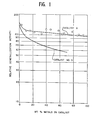
- Relative activity of each catalyst is plotted against the wt.% of metals (nickel and vanadium) that were retained on the catalyst. This relative activity was obtained by dividing the volume of a reference catalyst (CATALYST NO. 2, EXAMPLE II), having an assigned activity value of 100, by the volume of the experimental catalyst that is needed to reduce the metals content of the feed to the " same metals content when operating at constant temperature and pressure. As can be seen from the figure, relative demetallation activity of CATALYST A was high at the start of the test and remained hiqh even at 100% metals loading.
- Catalysts Nos. 1 and 4 were prepared using supports obtained from Katalco Corporation which were prepared to contain from about 8 wt% to about 10 wt% oxides of phosphorus, calculated as P 2 0 5 . Bulk densities of the supports used to prepare Catalysts Nos.
- Catalyst No. 2 was prepared by steaming the support of Catalyst No. 1, and then incorporating the hydrogenating component while Catalyst No. 3 was prepared by steaming the support of Catalyst No. 4 and then incorporating the hydrogenating component.
- Catalysts Nos. 1 and 2 were prepared in the form of 0.79mm (1/32-in) extrudates while Catalysts Nos. 3 and 4 were prepared as O.lcm (1/25-in) spheres. Bulk densities of all of the catalysts were about 0.4 g/cc.
- This catalyst which was obtained in the form of 0.79-mm (1/32-in) extrudates, had a BET surface area of 187 m 2 /gm, a pore volume of 1.042 cc/gm and an average pore diameter of 222 ⁇ .
- Macropore volume was 0.17 cc/g and micropore volume was 0.86 cc/g with 0.68 cc/g of that in pores having radii of 50-600 A. Its pore size distribution provided 17.7% of the pore volume in 0-50 A pores, 45.5% of the pore volume in 50-100 A pores, 20.6% of the pore volume in 100-600 pores, and 16.2% of the pore volume in 600-25,000 ⁇ pores.
- Bulk density was 0.47 g/cc.
- Demetallation performance of catalysts 1-5 was evaluated in accordance with the procedure of Example I except that an Ardeshir feed was used in each test.
- three points (the first three in Figure 2) were generated using an Ardeshir vacuum resid having API gravity of 4.8° and containing 24.0 wt.% oils, 14 wt.% asphaltenes, 61.3 wt.% resins, 25.6 wt.% carbon residue, 83.68 wt.% carbon, 9.88 wt.% hydrogen, 0.52 wt.% nitrogen, 5.1 wt.% sulfur, 63 ppm nickel and 227 ppm vanadium.
- the remaining points for Catalyst No. 1 were generated using the Ardeshir feed described in Table 3. All other data in Figure 2 was generated with the A rdeshir feed described in Table 3.
- Catalysts Nos. 2 and 3 having properties according to the present invention, exhibited high initial activity and excellent activity maintenance even at high metals loadings.
- Comparative Catalysts 1 and 4 which had higher surface areas than Catalysts Nos. 2 and 3, and inferior pore structure, also had good initial activity but activity declined rapidly.
- Comparative Catalyst No. 5 which had insufficient volume in micropores having radii of 50-600 A and low metals content, had poor initial activity though it increased somewhat on deposition of metals from the feed. Activity maintenance of Catalyst No. 5 was inferior.
- Catalyst No. 6 A large pilot plant batch of catalyst was obtained from the Katalco Corporation. This catalyst, which is identified hereinafter as Catalyst No. 6, was found to contain 4.0 wt% molybdenum trioxide, based upon the weight of the catalyst, supported on a support containing alumina and 8.7 wt% phosphorus calculated as P 2 0 5 and based upon the weight of the support. Bulk density was about 0.4 g/cc.
- Catalyst No. 6 had the properties presented hereinbelow in Table 5.
- the test was conducted to show the ability of Catalyst No. 6 to demetallize a high-sulfur vacuum residual oil blend, which is identified hereinafter as Feed No. 2.
- the test was carried out at an inlet pressure of 2,000 psig (13.89 MPa), a catalyst bed temperature of 402°C (756°F),'a LHSV of 0.6 cc of hydrocarbon per hour per cc of catalyst, and a hydrogen addition rate of about 712 m 3 /m 3 (4,000 SCFB).
- Samples of product coming from the reactor section were obtained on the eighth day and the twenty-first day of operation.
- the temperature of operation on the eighth day was 402°C (756°F) while the temperature on the twenty-first day was 403°C (757°F).
- Results of this test are presented hereinbelow in Table 6.
- This example shows the performance of a catalyst having only a small amount of macropores, i.e., pores having radii within the range of 600-25,000 ⁇ .
- Catalyst No. 7 A commercial catalyst was obtained from the Katalco Corporation. This catalyst, which is identified hereinafter as Catalyst No. 7, possessed the composition and properties presented hereinbelow in Table 7.
- the macropore volume of Catalyst No. 7 is less than half of that of the invented catalysts.
- Catalyst No. 7 was tested as described hereinabove in Example II under operating conditions similar to those employed in the tests of Example II using the Ardeshir feed described in Table 3. The results of this test are presented in the accompanying Figure 3. Also shown in Figure 3 are the results of the test described hereinabove with Catalyst No. 3 of Example II which had 17.3% of its total pore volume, corresponding to 0.19 cc/g, provided by macropores.
- FIG. 3 shows that Catalyst No. 7 had a higher rate of deactivation than did Catalyst No. 3. Hence, Catalyst No. 7, which had only 3.7% of its pore volume in macropores, performed in a manner that was inferior to that of Catalyst No. 3, an embodiment of the catalyst of the present invention.
- Catalyst No. 3 is an improved catalyst for the demetallization of heavy hydrocarbon streams containing a substantial amount of metals.
- Catalyst No. 8 An experimental catalyst was prepared for us by the Davison Chemical Division of W. R. Grace and Co. in the form of 0.8 mm (1/32-in) extrudates. This catalyst, identified hereinafter as Catalyst No. 8, was prepared to contain 4 wt% Mo03, based upon the weight of the catalyst, on a support of alumina and 6 wt% silica, based upon the weight of the support. The catalyst support had been steamed according to Serial No. 274,499.
- Catalyst No. 8 was found to have the properties presented hereinbelow in Table 8.
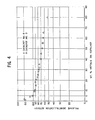
- Catalyst No. 8 was tested as described hereinabove in Example II under conditions similar to those employed in Example II using the Ardeshir feed described in Table 3. The results of this test are presented in the accompanying Figure 4. Also shown in Figure 4 are the results of the test described hereinabove with Catalyst No. 3 of
- FIG. 4 shows that Catalyst No. 8, having properties in accordance with the present invention, provided performance similar to that of Catalyst No. 3. These data indicate that Catalyst No. 8 is an improved catalyst for the demetallization of heavy hydrocarbon streams containing a substantial amount of metals.
Landscapes
- Chemical & Material Sciences (AREA)
- Engineering & Computer Science (AREA)
- Chemical Kinetics & Catalysis (AREA)
- Organic Chemistry (AREA)
- Materials Engineering (AREA)
- Oil, Petroleum & Natural Gas (AREA)
- General Chemical & Material Sciences (AREA)
- Physics & Mathematics (AREA)
- Thermal Sciences (AREA)
- Catalysts (AREA)
- Production Of Liquid Hydrocarbon Mixture For Refining Petroleum (AREA)
Applications Claiming Priority (2)
| Application Number | Priority Date | Filing Date | Title |
|---|---|---|---|
| US27450081A | 1981-06-17 | 1981-06-17 | |
| US274500 | 1981-06-17 |
Publications (3)
| Publication Number | Publication Date |
|---|---|
| EP0067708A2 true EP0067708A2 (fr) | 1982-12-22 |
| EP0067708A3 EP0067708A3 (en) | 1983-05-25 |
| EP0067708B1 EP0067708B1 (fr) | 1985-11-21 |
Family
ID=23048452
Family Applications (1)
| Application Number | Title | Priority Date | Filing Date |
|---|---|---|---|
| EP82303091A Expired EP0067708B1 (fr) | 1981-06-17 | 1982-06-15 | Catalyseur et procédé d'hydrotraitement |
Country Status (5)
| Country | Link |
|---|---|
| EP (1) | EP0067708B1 (fr) |
| JP (1) | JPS57209640A (fr) |
| AU (1) | AU547464B2 (fr) |
| CA (1) | CA1187468A (fr) |
| DE (1) | DE3267561D1 (fr) |
Cited By (11)
| Publication number | Priority date | Publication date | Assignee | Title |
|---|---|---|---|---|
| US4440631A (en) * | 1982-06-15 | 1984-04-03 | Chiyoda Chemical Engineering & Construction Co., Ltd. | Process for hydrocracking heavy hydrocarbon oils and catalyst therefor |
| EP0084273A3 (fr) * | 1982-01-04 | 1984-05-23 | The Standard Oil Company | Procédé pour la production de gaz de synthèse |
| FR2546175A1 (fr) * | 1983-05-20 | 1984-11-23 | Intevep Sa | Procede de production d'un catalyseur d'hydrodemetallation de bruts lourds et de residus |
| FR2560789A1 (fr) * | 1984-03-06 | 1985-09-13 | Raffinage Cie Francaise | Catalyseurs d'hydrotraitement d'hydrocarbures et applications de ces catalyseurs |
| EP0159097A3 (en) * | 1984-04-16 | 1987-11-19 | Shell Internationale Research Maatschappij B.V. | Process for the catalytic conversion of heavy hydrocarbon oils |
| US4738944A (en) * | 1986-12-05 | 1988-04-19 | Union Oil Company Of California | Ni-P-Mo catalyst and hydroprocessing use thereof |
| EP0293859A1 (fr) * | 1987-06-05 | 1988-12-07 | Nippon Shokubai Co., Ltd. | Catalyseur pour l'oxydation de l'acroléine et son procédé de préparation |
| US4846961A (en) * | 1986-12-05 | 1989-07-11 | Union Oil Company Of California | Hydroprocessing catalyst with a Ni-P-Mo |
| EP0447705A1 (fr) * | 1988-12-29 | 1991-09-25 | Uop | Système catalytique poreux solide à l'acide phosphorique et procédé pour l'utiliser |
| EP0529923A1 (fr) * | 1991-08-28 | 1993-03-03 | Uop | Composition catalytique comprenant une solution solide amorphe d'oxydes de phosphore, aluminium et silicium |
| FR2732622A1 (fr) * | 1995-04-10 | 1996-10-11 | Rhone Poulenc Chimie | Procede pour l'adsorption de composes organometalliques chelates et billes d'alumine comprenant un compose organometallique chelate |
Families Citing this family (4)
| Publication number | Priority date | Publication date | Assignee | Title |
|---|---|---|---|---|
| JPS60232244A (ja) * | 1984-05-02 | 1985-11-18 | Nippon Mining Co Ltd | 重質油の水素化脱金属用触媒及びこれを用いる重質油の脱金属方法 |
| NL1027750C2 (nl) * | 2003-12-19 | 2006-07-13 | Shell Int Research | Systemen, methoden en katalysatoren voor het produceren van een ruwe-oliehoudend product. |
| JP4818163B2 (ja) * | 2007-03-01 | 2011-11-16 | 日揮触媒化成株式会社 | アルミナ担体及びそれを用いた水素化脱金属触媒並びにそれらの製造方法 |
| TWI666310B (zh) * | 2013-03-15 | 2019-07-21 | Advanced Refining Technologies Llc | 觸媒組成物、加氫處理重烴類部分之方法及製備沉澱氧化鋁組成物的方法 |
Family Cites Families (14)
| Publication number | Priority date | Publication date | Assignee | Title |
|---|---|---|---|---|
| GB579477A (en) * | 1943-03-05 | 1946-08-06 | Houdry Process Corp | Improvements in the catalytic dehydrogenation of hydrocarbons |
| US3383301A (en) * | 1966-01-20 | 1968-05-14 | Gulf Research Development Co | Residue desulfurization with catalyst whose pore volume is distributed over wide range of pore sizes |
| US3830731A (en) * | 1972-03-20 | 1974-08-20 | Chevron Res | Vacuum residuum and vacuum gas oil desulfurization |
| US3898155A (en) * | 1973-12-19 | 1975-08-05 | Gulf Research Development Co | Heavy oil demetallization and desulfurization process |
| NL7412337A (nl) * | 1974-09-18 | 1976-03-22 | Shell Int Research | Werkwijze voor de bereiding van nieuwe kata- lysatoren. |
| JPS51122105A (en) * | 1975-04-18 | 1976-10-26 | Toa Nenryo Kogyo Kk | Process for hydrofining of hydrocarbon oil |
| US4218308A (en) * | 1976-05-26 | 1980-08-19 | Toa Nenryo Kogyo Kabushiki Kaisha | Hydrogenation catalyst |
| US4070413A (en) * | 1976-10-28 | 1978-01-24 | Uop Inc. | Dehydrogenation of saturated hydrocarbons |
| AU530497B2 (en) * | 1978-09-28 | 1983-07-21 | Amoco Corporation | Catalyst comprising hydrogenation component on support containing alumina and phosphorus oxides |
| US4225421A (en) * | 1979-03-13 | 1980-09-30 | Standard Oil Company (Indiana) | Process for hydrotreating heavy hydrocarbons |
| US4224144A (en) * | 1979-03-19 | 1980-09-23 | Standard Oil Company (Indiana) | Hydrotreating a hydrocarbon stream to remove nitrogen and sulfur |
| US4267033A (en) * | 1979-10-22 | 1981-05-12 | Mobil Oil Corporation | Upgrading of aromatic liquids |
| US4317746A (en) * | 1980-11-28 | 1982-03-02 | Union Oil Company Of California | Hydrotreating catalysts |
| JPS5830344A (ja) * | 1981-05-12 | 1983-02-22 | シエブロン・リサ−チ・コンパニ− | 重質油の水素化脱金属触媒とその製法 |
-
1982
- 1982-05-28 AU AU84292/82A patent/AU547464B2/en not_active Ceased
- 1982-06-07 CA CA000404559A patent/CA1187468A/fr not_active Expired
- 1982-06-15 DE DE8282303091T patent/DE3267561D1/de not_active Expired
- 1982-06-15 EP EP82303091A patent/EP0067708B1/fr not_active Expired
- 1982-06-16 JP JP57102333A patent/JPS57209640A/ja active Granted
Cited By (15)
| Publication number | Priority date | Publication date | Assignee | Title |
|---|---|---|---|---|
| EP0084273A3 (fr) * | 1982-01-04 | 1984-05-23 | The Standard Oil Company | Procédé pour la production de gaz de synthèse |
| US4440631A (en) * | 1982-06-15 | 1984-04-03 | Chiyoda Chemical Engineering & Construction Co., Ltd. | Process for hydrocracking heavy hydrocarbon oils and catalyst therefor |
| FR2546175A1 (fr) * | 1983-05-20 | 1984-11-23 | Intevep Sa | Procede de production d'un catalyseur d'hydrodemetallation de bruts lourds et de residus |
| FR2560789A1 (fr) * | 1984-03-06 | 1985-09-13 | Raffinage Cie Francaise | Catalyseurs d'hydrotraitement d'hydrocarbures et applications de ces catalyseurs |
| EP0157674A1 (fr) * | 1984-03-06 | 1985-10-09 | Total Raffinage Distribution S.A. | Utilisation de catalyseurs d'hydrotraitement d'hydrocarbures |
| EP0159097A3 (en) * | 1984-04-16 | 1987-11-19 | Shell Internationale Research Maatschappij B.V. | Process for the catalytic conversion of heavy hydrocarbon oils |
| US4738944A (en) * | 1986-12-05 | 1988-04-19 | Union Oil Company Of California | Ni-P-Mo catalyst and hydroprocessing use thereof |
| US4846961A (en) * | 1986-12-05 | 1989-07-11 | Union Oil Company Of California | Hydroprocessing catalyst with a Ni-P-Mo |
| EP0293859A1 (fr) * | 1987-06-05 | 1988-12-07 | Nippon Shokubai Co., Ltd. | Catalyseur pour l'oxydation de l'acroléine et son procédé de préparation |
| EP0447705A1 (fr) * | 1988-12-29 | 1991-09-25 | Uop | Système catalytique poreux solide à l'acide phosphorique et procédé pour l'utiliser |
| EP0529923A1 (fr) * | 1991-08-28 | 1993-03-03 | Uop | Composition catalytique comprenant une solution solide amorphe d'oxydes de phosphore, aluminium et silicium |
| FR2732622A1 (fr) * | 1995-04-10 | 1996-10-11 | Rhone Poulenc Chimie | Procede pour l'adsorption de composes organometalliques chelates et billes d'alumine comprenant un compose organometallique chelate |
| EP0737512A1 (fr) * | 1995-04-10 | 1996-10-16 | Rhone-Poulenc Chimie | Procédé pour l'adsorption de composés organométalliques chélatés et billes d'alumine comprenant un composé organométallique chélaté |
| US5756791A (en) * | 1995-04-10 | 1998-05-26 | Rhone-Poulenc Chimie | Process for the adsorption of chelated organometallic compounds and alumina beads including a chelated organometallic compound |
| CN1060783C (zh) * | 1995-04-10 | 2001-01-17 | 法国石油管理局 | 螯合有机金属化合物的吸附方法与包含其在内的氧化铝颗粒 |
Also Published As
| Publication number | Publication date |
|---|---|
| JPH0431737B2 (fr) | 1992-05-27 |
| AU547464B2 (en) | 1985-10-24 |
| EP0067708B1 (fr) | 1985-11-21 |
| DE3267561D1 (en) | 1986-01-02 |
| AU8429282A (en) | 1982-12-23 |
| CA1187468A (fr) | 1985-05-21 |
| JPS57209640A (en) | 1982-12-23 |
| EP0067708A3 (en) | 1983-05-25 |
Similar Documents
| Publication | Publication Date | Title |
|---|---|---|
| US4549957A (en) | Hydrotreating catalyst and process | |
| US4454026A (en) | Hydrotreating catalyst and process | |
| US4395328A (en) | Catalyst and support, their methods of preparation, and processes employing same | |
| US4431525A (en) | Three-catalyst process for the hydrotreating of heavy hydrocarbon streams | |
| US4181602A (en) | Process for the hydrotreating of heavy hydrocarbon streams | |
| US4456699A (en) | Catalyst and support, and their methods of preparation | |
| EP0876443B1 (fr) | Procede d'hydroconversion au moyen d'un catalyseur a repartition de dimensions de pores specifique, sans ajout de silice | |
| JP2832033B2 (ja) | 窒素または硫黄含有炭化水素油の接触ハイドロプロセシング方法 | |
| US5389595A (en) | Hydroprocessing catalyst, its use, and method of preparation | |
| CA1132078A (fr) | Methode de demetallisation et de desulfuration des hydrocarbures visqueux | |
| US4460707A (en) | Hydroprocessing catalyst and method for preparing it | |
| US5200060A (en) | Hydrotreating process using carbides and nitrides of group VIB metals | |
| JPS62260888A (ja) | 炭化水素供給原料のマイルドな水素化分解方法 | |
| EP0067708B1 (fr) | Catalyseur et procédé d'hydrotraitement | |
| US5928499A (en) | Hydroconversion process employing catalyst with specified pore size distribution, median pore diameter by surface area, and pore mode by volume | |
| US4657664A (en) | Process for demetallation and desulfurization of heavy hydrocarbons | |
| US4188284A (en) | Process for the hydrotreating of heavy hydrocarbon streams | |
| US4846961A (en) | Hydroprocessing catalyst with a Ni-P-Mo | |
| WO1993021283A1 (fr) | Catalyseur de demetallisation | |
| EP0270224B1 (fr) | Catalyseur de nickel, phosphore, molybdène et son utilisation pour l'hydrotraitement | |
| US4886582A (en) | Resid hydroprocessing catalyst and method of preparation | |
| WO1995011079A1 (fr) | Catalyseur d'hydrotraitement au phosphore et son procede de preparation | |
| EP0876442A1 (fr) | PROCEDE D'HYDROCONVERSION UTILISANT UN CATALYSEUR NiMoP CHARGE DE PHOSPHORE AVEC UNE REPARATITION SPECIFIEE DE LA TAILLE DES PORES | |
| US5100855A (en) | Mixed catalyst system for hyproconversion system | |
| US4548710A (en) | Hydrocarbon processing |
Legal Events
| Date | Code | Title | Description |
|---|---|---|---|
| PUAI | Public reference made under article 153(3) epc to a published international application that has entered the european phase |
Free format text: ORIGINAL CODE: 0009012 |
|
| AK | Designated contracting states |
Designated state(s): DE FR GB IT NL |
|
| PUAL | Search report despatched |
Free format text: ORIGINAL CODE: 0009013 |
|
| AK | Designated contracting states |
Designated state(s): DE FR GB IT NL |
|
| 17P | Request for examination filed |
Effective date: 19830614 |
|
| ITF | It: translation for a ep patent filed | ||
| RAP1 | Party data changed (applicant data changed or rights of an application transferred) |
Owner name: AMOCO CORPORATION |
|
| GRAA | (expected) grant |
Free format text: ORIGINAL CODE: 0009210 |
|
| AK | Designated contracting states |
Designated state(s): DE FR GB IT NL |
|
| REF | Corresponds to: |
Ref document number: 3267561 Country of ref document: DE Date of ref document: 19860102 |
|
| ET | Fr: translation filed | ||
| PLBE | No opposition filed within time limit |
Free format text: ORIGINAL CODE: 0009261 |
|
| STAA | Information on the status of an ep patent application or granted ep patent |
Free format text: STATUS: NO OPPOSITION FILED WITHIN TIME LIMIT |
|
| 26N | No opposition filed | ||
| PG25 | Lapsed in a contracting state [announced via postgrant information from national office to epo] |
Ref country code: DE Effective date: 19900301 |
|
| ITTA | It: last paid annual fee | ||
| PGFP | Annual fee paid to national office [announced via postgrant information from national office to epo] |
Ref country code: GB Payment date: 19910402 Year of fee payment: 10 |
|
| PG25 | Lapsed in a contracting state [announced via postgrant information from national office to epo] |
Ref country code: GB Effective date: 19920615 |
|
| GBPC | Gb: european patent ceased through non-payment of renewal fee |
Effective date: 19920615 |
|
| PGFP | Annual fee paid to national office [announced via postgrant information from national office to epo] |
Ref country code: NL Payment date: 20010319 Year of fee payment: 20 |
|
| PGFP | Annual fee paid to national office [announced via postgrant information from national office to epo] |
Ref country code: FR Payment date: 20010531 Year of fee payment: 20 |
|
| PG25 | Lapsed in a contracting state [announced via postgrant information from national office to epo] |
Ref country code: NL Free format text: LAPSE BECAUSE OF EXPIRATION OF PROTECTION Effective date: 20020615 |
|
| NLV7 | Nl: ceased due to reaching the maximum lifetime of a patent |
Effective date: 20020615 |