EP0069955A2 - Magnetic memory medium - Google Patents
Magnetic memory medium Download PDFInfo
- Publication number
- EP0069955A2 EP0069955A2 EP82105967A EP82105967A EP0069955A2 EP 0069955 A2 EP0069955 A2 EP 0069955A2 EP 82105967 A EP82105967 A EP 82105967A EP 82105967 A EP82105967 A EP 82105967A EP 0069955 A2 EP0069955 A2 EP 0069955A2
- Authority
- EP
- European Patent Office
- Prior art keywords
- storage medium
- magnetic storage
- medium according
- magnetic
- polyurethane
- Prior art date
- Legal status (The legal status is an assumption and is not a legal conclusion. Google has not performed a legal analysis and makes no representation as to the accuracy of the status listed.)
- Granted
Links
- 230000005291 magnetic effect Effects 0.000 title claims abstract description 52
- 229920002635 polyurethane Polymers 0.000 claims abstract description 42
- 239000004814 polyurethane Substances 0.000 claims abstract description 42
- 239000011230 binding agent Substances 0.000 claims abstract description 29
- LYCAIKOWRPUZTN-UHFFFAOYSA-N Ethylene glycol Chemical compound OCCO LYCAIKOWRPUZTN-UHFFFAOYSA-N 0.000 claims abstract description 24
- 229920000728 polyester Polymers 0.000 claims abstract description 21
- 238000003860 storage Methods 0.000 claims abstract description 17
- 239000000203 mixture Substances 0.000 claims abstract description 15
- 125000004432 carbon atom Chemical group C* 0.000 claims abstract description 11
- BVKZGUZCCUSVTD-UHFFFAOYSA-N carbonic acid Chemical compound OC(O)=O BVKZGUZCCUSVTD-UHFFFAOYSA-N 0.000 claims abstract description 5
- 239000004433 Thermoplastic polyurethane Substances 0.000 claims abstract description 4
- 125000005442 diisocyanate group Chemical group 0.000 claims abstract description 4
- 150000002334 glycols Chemical class 0.000 claims abstract description 4
- 229920002803 thermoplastic polyurethane Polymers 0.000 claims abstract description 4
- OFOBLEOULBTSOW-UHFFFAOYSA-N Malonic acid Chemical compound OC(=O)CC(O)=O OFOBLEOULBTSOW-UHFFFAOYSA-N 0.000 claims abstract description 3
- WGCNASOHLSPBMP-UHFFFAOYSA-N hydroxyacetaldehyde Natural products OCC=O WGCNASOHLSPBMP-UHFFFAOYSA-N 0.000 claims abstract description 3
- 239000000049 pigment Substances 0.000 claims description 18
- WNLRTRBMVRJNCN-UHFFFAOYSA-N adipic acid Chemical compound OC(=O)CCCCC(O)=O WNLRTRBMVRJNCN-UHFFFAOYSA-N 0.000 claims description 10
- 229920001577 copolymer Polymers 0.000 claims description 7
- BZHJMEDXRYGGRV-UHFFFAOYSA-N Vinyl chloride Chemical compound ClC=C BZHJMEDXRYGGRV-UHFFFAOYSA-N 0.000 claims description 6
- UPMLOUAZCHDJJD-UHFFFAOYSA-N 4,4'-Diphenylmethane Diisocyanate Chemical compound C1=CC(N=C=O)=CC=C1CC1=CC=C(N=C=O)C=C1 UPMLOUAZCHDJJD-UHFFFAOYSA-N 0.000 claims description 4
- 239000001361 adipic acid Substances 0.000 claims description 4
- 235000011037 adipic acid Nutrition 0.000 claims description 4
- CDQSJQSWAWPGKG-UHFFFAOYSA-N butane-1,1-diol Chemical compound CCCC(O)O CDQSJQSWAWPGKG-UHFFFAOYSA-N 0.000 claims description 4
- WERYXYBDKMZEQL-UHFFFAOYSA-N butane-1,4-diol Chemical compound OCCCCO WERYXYBDKMZEQL-UHFFFAOYSA-N 0.000 claims description 4
- 229920002554 vinyl polymer Polymers 0.000 claims description 4
- XTXRWKRVRITETP-UHFFFAOYSA-N Vinyl acetate Chemical compound CC(=O)OC=C XTXRWKRVRITETP-UHFFFAOYSA-N 0.000 claims description 2
- 125000002887 hydroxy group Chemical group [H]O* 0.000 claims description 2
- 229920002037 poly(vinyl butyral) polymer Polymers 0.000 claims description 2
- ACCCMOQWYVYDOT-UHFFFAOYSA-N hexane-1,1-diol Chemical compound CCCCCC(O)O ACCCMOQWYVYDOT-UHFFFAOYSA-N 0.000 claims 2
- QZPSOSOOLFHYRR-UHFFFAOYSA-N 3-hydroxypropyl prop-2-enoate Chemical compound OCCCOC(=O)C=C QZPSOSOOLFHYRR-UHFFFAOYSA-N 0.000 claims 1
- CERQOIWHTDAKMF-UHFFFAOYSA-M Methacrylate Chemical compound CC(=C)C([O-])=O CERQOIWHTDAKMF-UHFFFAOYSA-M 0.000 claims 1
- DHKHKXVYLBGOIT-UHFFFAOYSA-N acetaldehyde Diethyl Acetal Natural products CCOC(C)OCC DHKHKXVYLBGOIT-UHFFFAOYSA-N 0.000 claims 1
- 125000002777 acetyl group Chemical class [H]C([H])([H])C(*)=O 0.000 claims 1
- 239000000758 substrate Substances 0.000 abstract description 3
- 239000006185 dispersion Substances 0.000 description 23
- 238000000576 coating method Methods 0.000 description 17
- 239000011248 coating agent Substances 0.000 description 16
- 230000000052 comparative effect Effects 0.000 description 10
- -1 aromatic dicarboxylic acids Chemical class 0.000 description 9
- 230000005415 magnetization Effects 0.000 description 9
- 238000000034 method Methods 0.000 description 7
- XEEYBQQBJWHFJM-UHFFFAOYSA-N Iron Chemical compound [Fe] XEEYBQQBJWHFJM-UHFFFAOYSA-N 0.000 description 6
- DNIAPMSPPWPWGF-UHFFFAOYSA-N Propylene glycol Chemical compound CC(O)CO DNIAPMSPPWPWGF-UHFFFAOYSA-N 0.000 description 6
- 238000000227 grinding Methods 0.000 description 6
- 238000012856 packing Methods 0.000 description 6
- 238000005299 abrasion Methods 0.000 description 5
- 239000000654 additive Substances 0.000 description 5
- UQSXHKLRYXJYBZ-UHFFFAOYSA-N iron oxide Inorganic materials [Fe]=O UQSXHKLRYXJYBZ-UHFFFAOYSA-N 0.000 description 5
- 239000000696 magnetic material Substances 0.000 description 5
- 239000004721 Polyphenylene oxide Substances 0.000 description 4
- 125000001931 aliphatic group Chemical group 0.000 description 4
- 229920000570 polyether Polymers 0.000 description 4
- 239000002904 solvent Substances 0.000 description 4
- ZWEHNKRNPOVVGH-UHFFFAOYSA-N 2-Butanone Chemical compound CCC(C)=O ZWEHNKRNPOVVGH-UHFFFAOYSA-N 0.000 description 3
- ZMXDDKWLCZADIW-UHFFFAOYSA-N N,N-Dimethylformamide Chemical compound CN(C)C=O ZMXDDKWLCZADIW-UHFFFAOYSA-N 0.000 description 3
- YXFVVABEGXRONW-UHFFFAOYSA-N Toluene Chemical compound CC1=CC=CC=C1 YXFVVABEGXRONW-UHFFFAOYSA-N 0.000 description 3
- IISBACLAFKSPIT-UHFFFAOYSA-N bisphenol A Chemical compound C=1C=C(O)C=CC=1C(C)(C)C1=CC=C(O)C=C1 IISBACLAFKSPIT-UHFFFAOYSA-N 0.000 description 3
- 238000003490 calendering Methods 0.000 description 3
- 230000002349 favourable effect Effects 0.000 description 3
- 235000013980 iron oxide Nutrition 0.000 description 3
- VBMVTYDPPZVILR-UHFFFAOYSA-N iron(2+);oxygen(2-) Chemical class [O-2].[Fe+2] VBMVTYDPPZVILR-UHFFFAOYSA-N 0.000 description 3
- 239000000463 material Substances 0.000 description 3
- 150000003673 urethanes Chemical class 0.000 description 3
- QIGBRXMKCJKVMJ-UHFFFAOYSA-N Hydroquinone Chemical compound OC1=CC=C(O)C=C1 QIGBRXMKCJKVMJ-UHFFFAOYSA-N 0.000 description 2
- 229920000877 Melamine resin Polymers 0.000 description 2
- WYURNTSHIVDZCO-UHFFFAOYSA-N Tetrahydrofuran Chemical compound C1CCOC1 WYURNTSHIVDZCO-UHFFFAOYSA-N 0.000 description 2
- 229920002433 Vinyl chloride-vinyl acetate copolymer Polymers 0.000 description 2
- YIMQCDZDWXUDCA-UHFFFAOYSA-N [4-(hydroxymethyl)cyclohexyl]methanol Chemical compound OCC1CCC(CO)CC1 YIMQCDZDWXUDCA-UHFFFAOYSA-N 0.000 description 2
- 239000003082 abrasive agent Substances 0.000 description 2
- 239000002253 acid Substances 0.000 description 2
- 150000007513 acids Chemical class 0.000 description 2
- 229940053200 antiepileptics fatty acid derivative Drugs 0.000 description 2
- 125000003118 aryl group Chemical group 0.000 description 2
- 239000008199 coating composition Substances 0.000 description 2
- 150000001875 compounds Chemical class 0.000 description 2
- 238000004132 cross linking Methods 0.000 description 2
- 235000014113 dietary fatty acids Nutrition 0.000 description 2
- 150000002009 diols Chemical class 0.000 description 2
- 239000000194 fatty acid Substances 0.000 description 2
- 229930195729 fatty acid Natural products 0.000 description 2
- XXMIOPMDWAUFGU-UHFFFAOYSA-N hexane-1,6-diol Chemical compound OCCCCCCO XXMIOPMDWAUFGU-UHFFFAOYSA-N 0.000 description 2
- 229910052742 iron Inorganic materials 0.000 description 2
- 239000012948 isocyanate Substances 0.000 description 2
- 150000002513 isocyanates Chemical class 0.000 description 2
- 239000004922 lacquer Substances 0.000 description 2
- 239000000314 lubricant Substances 0.000 description 2
- 239000002184 metal Substances 0.000 description 2
- 229910052751 metal Inorganic materials 0.000 description 2
- 229910001092 metal group alloy Inorganic materials 0.000 description 2
- 238000002156 mixing Methods 0.000 description 2
- SLCVBVWXLSEKPL-UHFFFAOYSA-N neopentyl glycol Chemical compound OCC(C)(C)CO SLCVBVWXLSEKPL-UHFFFAOYSA-N 0.000 description 2
- 229940117969 neopentyl glycol Drugs 0.000 description 2
- BDJRBEYXGGNYIS-UHFFFAOYSA-N nonanedioic acid Chemical compound OC(=O)CCCCCCCC(O)=O BDJRBEYXGGNYIS-UHFFFAOYSA-N 0.000 description 2
- XNGIFLGASWRNHJ-UHFFFAOYSA-N phthalic acid Chemical compound OC(=O)C1=CC=CC=C1C(O)=O XNGIFLGASWRNHJ-UHFFFAOYSA-N 0.000 description 2
- WLJVNTCWHIRURA-UHFFFAOYSA-N pimelic acid Chemical compound OC(=O)CCCCCC(O)=O WLJVNTCWHIRURA-UHFFFAOYSA-N 0.000 description 2
- 239000004014 plasticizer Substances 0.000 description 2
- 239000004417 polycarbonate Substances 0.000 description 2
- 229920000515 polycarbonate Polymers 0.000 description 2
- 229920003225 polyurethane elastomer Polymers 0.000 description 2
- 239000000843 powder Substances 0.000 description 2
- TYFQFVWCELRYAO-UHFFFAOYSA-N suberic acid Chemical compound OC(=O)CCCCCCC(O)=O TYFQFVWCELRYAO-UHFFFAOYSA-N 0.000 description 2
- PUPZLCDOIYMWBV-UHFFFAOYSA-N (+/-)-1,3-Butanediol Chemical compound CC(O)CCO PUPZLCDOIYMWBV-UHFFFAOYSA-N 0.000 description 1
- HFVMEOPYDLEHBR-UHFFFAOYSA-N (2-fluorophenyl)-phenylmethanol Chemical compound C=1C=CC=C(F)C=1C(O)C1=CC=CC=C1 HFVMEOPYDLEHBR-UHFFFAOYSA-N 0.000 description 1
- JNYAEWCLZODPBN-JGWLITMVSA-N (2r,3r,4s)-2-[(1r)-1,2-dihydroxyethyl]oxolane-3,4-diol Chemical class OC[C@@H](O)[C@H]1OC[C@H](O)[C@H]1O JNYAEWCLZODPBN-JGWLITMVSA-N 0.000 description 1
- FKTHNVSLHLHISI-UHFFFAOYSA-N 1,2-bis(isocyanatomethyl)benzene Chemical compound O=C=NCC1=CC=CC=C1CN=C=O FKTHNVSLHLHISI-UHFFFAOYSA-N 0.000 description 1
- RYHBNJHYFVUHQT-UHFFFAOYSA-N 1,4-Dioxane Chemical compound C1COCCO1 RYHBNJHYFVUHQT-UHFFFAOYSA-N 0.000 description 1
- RTBFRGCFXZNCOE-UHFFFAOYSA-N 1-methylsulfonylpiperidin-4-one Chemical compound CS(=O)(=O)N1CCC(=O)CC1 RTBFRGCFXZNCOE-UHFFFAOYSA-N 0.000 description 1
- IIZPXYDJLKNOIY-JXPKJXOSSA-N 1-palmitoyl-2-arachidonoyl-sn-glycero-3-phosphocholine Chemical compound CCCCCCCCCCCCCCCC(=O)OC[C@H](COP([O-])(=O)OCC[N+](C)(C)C)OC(=O)CCC\C=C/C\C=C/C\C=C/C\C=C/CCCCC IIZPXYDJLKNOIY-JXPKJXOSSA-N 0.000 description 1
- CFWRDBDJAOHXSH-SECBINFHSA-N 2-azaniumylethyl [(2r)-2,3-diacetyloxypropyl] phosphate Chemical compound CC(=O)OC[C@@H](OC(C)=O)COP(O)(=O)OCCN CFWRDBDJAOHXSH-SECBINFHSA-N 0.000 description 1
- CKPKHTKLLYPGFM-UHFFFAOYSA-N 6,6-dimethylheptane-1,1-diol Chemical compound CC(CCCCC(O)O)(C)C CKPKHTKLLYPGFM-UHFFFAOYSA-N 0.000 description 1
- 239000004970 Chain extender Substances 0.000 description 1
- XDTMQSROBMDMFD-UHFFFAOYSA-N Cyclohexane Chemical compound C1CCCCC1 XDTMQSROBMDMFD-UHFFFAOYSA-N 0.000 description 1
- JOYRKODLDBILNP-UHFFFAOYSA-N Ethyl urethane Chemical compound CCOC(N)=O JOYRKODLDBILNP-UHFFFAOYSA-N 0.000 description 1
- 229910000640 Fe alloy Inorganic materials 0.000 description 1
- 239000005057 Hexamethylene diisocyanate Substances 0.000 description 1
- NTIZESTWPVYFNL-UHFFFAOYSA-N Methyl isobutyl ketone Chemical compound CC(C)CC(C)=O NTIZESTWPVYFNL-UHFFFAOYSA-N 0.000 description 1
- UIHCLUNTQKBZGK-UHFFFAOYSA-N Methyl isobutyl ketone Natural products CCC(C)C(C)=O UIHCLUNTQKBZGK-UHFFFAOYSA-N 0.000 description 1
- 239000004743 Polypropylene Substances 0.000 description 1
- 229920001328 Polyvinylidene chloride Polymers 0.000 description 1
- 229920002472 Starch Polymers 0.000 description 1
- KDYFGRWQOYBRFD-UHFFFAOYSA-N Succinic acid Natural products OC(=O)CCC(O)=O KDYFGRWQOYBRFD-UHFFFAOYSA-N 0.000 description 1
- ULUAUXLGCMPNKK-UHFFFAOYSA-N Sulfobutanedioic acid Chemical class OC(=O)CC(C(O)=O)S(O)(=O)=O ULUAUXLGCMPNKK-UHFFFAOYSA-N 0.000 description 1
- 150000001241 acetals Chemical class 0.000 description 1
- 150000001252 acrylic acid derivatives Chemical class 0.000 description 1
- 125000005396 acrylic acid ester group Chemical group 0.000 description 1
- 239000000853 adhesive Substances 0.000 description 1
- 238000004026 adhesive bonding Methods 0.000 description 1
- 230000001070 adhesive effect Effects 0.000 description 1
- 230000002411 adverse Effects 0.000 description 1
- 238000005054 agglomeration Methods 0.000 description 1
- 230000002776 aggregation Effects 0.000 description 1
- 150000001298 alcohols Chemical class 0.000 description 1
- 150000003863 ammonium salts Chemical class 0.000 description 1
- JFCQEDHGNNZCLN-UHFFFAOYSA-N anhydrous glutaric acid Natural products OC(=O)CCCC(O)=O JFCQEDHGNNZCLN-UHFFFAOYSA-N 0.000 description 1
- 239000011324 bead Substances 0.000 description 1
- 230000009286 beneficial effect Effects 0.000 description 1
- 239000012876 carrier material Substances 0.000 description 1
- 229920002678 cellulose Polymers 0.000 description 1
- 239000001913 cellulose Substances 0.000 description 1
- 229910010293 ceramic material Inorganic materials 0.000 description 1
- 239000007795 chemical reaction product Substances 0.000 description 1
- 229910000424 chromium(II) oxide Inorganic materials 0.000 description 1
- 238000005520 cutting process Methods 0.000 description 1
- 150000004985 diamines Chemical class 0.000 description 1
- KORSJDCBLAPZEQ-UHFFFAOYSA-N dicyclohexylmethane-4,4'-diisocyanate Chemical compound C1CC(N=C=O)CCC1CC1CCC(N=C=O)CC1 KORSJDCBLAPZEQ-UHFFFAOYSA-N 0.000 description 1
- MTHSVFCYNBDYFN-UHFFFAOYSA-N diethylene glycol Chemical compound OCCOCCO MTHSVFCYNBDYFN-UHFFFAOYSA-N 0.000 description 1
- 239000002270 dispersing agent Substances 0.000 description 1
- GTZOYNFRVVHLDZ-UHFFFAOYSA-N dodecane-1,1-diol Chemical compound CCCCCCCCCCCC(O)O GTZOYNFRVVHLDZ-UHFFFAOYSA-N 0.000 description 1
- 239000003822 epoxy resin Substances 0.000 description 1
- 150000004665 fatty acids Chemical class 0.000 description 1
- 230000005294 ferromagnetic effect Effects 0.000 description 1
- 239000003302 ferromagnetic material Substances 0.000 description 1
- 238000001914 filtration Methods 0.000 description 1
- 239000010419 fine particle Substances 0.000 description 1
- 238000009472 formulation Methods 0.000 description 1
- 238000009499 grossing Methods 0.000 description 1
- LNEPOXFFQSENCJ-UHFFFAOYSA-N haloperidol Chemical compound C1CC(O)(C=2C=CC(Cl)=CC=2)CCN1CCCC(=O)C1=CC=C(F)C=C1 LNEPOXFFQSENCJ-UHFFFAOYSA-N 0.000 description 1
- SZVJSHCCFOBDDC-UHFFFAOYSA-N iron(II,III) oxide Inorganic materials O=[Fe]O[Fe]O[Fe]=O SZVJSHCCFOBDDC-UHFFFAOYSA-N 0.000 description 1
- 239000000787 lecithin Substances 0.000 description 1
- 229940067606 lecithin Drugs 0.000 description 1
- 235000010445 lecithin Nutrition 0.000 description 1
- 239000007788 liquid Substances 0.000 description 1
- 238000004519 manufacturing process Methods 0.000 description 1
- 239000011159 matrix material Substances 0.000 description 1
- 150000002734 metacrylic acid derivatives Chemical class 0.000 description 1
- 150000002739 metals Chemical class 0.000 description 1
- 238000003801 milling Methods 0.000 description 1
- 239000003921 oil Substances 0.000 description 1
- 239000002245 particle Substances 0.000 description 1
- UWJJYHHHVWZFEP-UHFFFAOYSA-N pentane-1,1-diol Chemical compound CCCCC(O)O UWJJYHHHVWZFEP-UHFFFAOYSA-N 0.000 description 1
- 229920006287 phenoxy resin Polymers 0.000 description 1
- 239000013034 phenoxy resin Substances 0.000 description 1
- 150000003014 phosphoric acid esters Chemical class 0.000 description 1
- 238000007747 plating Methods 0.000 description 1
- 229920000058 polyacrylate Polymers 0.000 description 1
- 229920000647 polyepoxide Polymers 0.000 description 1
- 229920006267 polyester film Polymers 0.000 description 1
- 229920000139 polyethylene terephthalate Polymers 0.000 description 1
- 239000005020 polyethylene terephthalate Substances 0.000 description 1
- 229920000642 polymer Polymers 0.000 description 1
- 229920000098 polyolefin Polymers 0.000 description 1
- 229920001155 polypropylene Polymers 0.000 description 1
- 229920001343 polytetrafluoroethylene Polymers 0.000 description 1
- 239000004810 polytetrafluoroethylene Substances 0.000 description 1
- 229920005749 polyurethane resin Polymers 0.000 description 1
- 239000004800 polyvinyl chloride Substances 0.000 description 1
- 229920000915 polyvinyl chloride Polymers 0.000 description 1
- 239000005033 polyvinylidene chloride Substances 0.000 description 1
- 238000002360 preparation method Methods 0.000 description 1
- 229920005989 resin Polymers 0.000 description 1
- 239000011347 resin Substances 0.000 description 1
- 239000004576 sand Substances 0.000 description 1
- 229920002545 silicone oil Polymers 0.000 description 1
- 238000005245 sintering Methods 0.000 description 1
- 239000008107 starch Substances 0.000 description 1
- 235000019698 starch Nutrition 0.000 description 1
- 239000011232 storage material Substances 0.000 description 1
- 150000003871 sulfonates Chemical class 0.000 description 1
- YLQBMQCUIZJEEH-UHFFFAOYSA-N tetrahydrofuran Natural products C=1C=COC=1 YLQBMQCUIZJEEH-UHFFFAOYSA-N 0.000 description 1
- DVKJHBMWWAPEIU-UHFFFAOYSA-N toluene 2,4-diisocyanate Chemical compound CC1=CC=C(N=C=O)C=C1N=C=O DVKJHBMWWAPEIU-UHFFFAOYSA-N 0.000 description 1
- ILJSQTXMGCGYMG-UHFFFAOYSA-N triacetic acid Chemical compound CC(=O)CC(=O)CC(O)=O ILJSQTXMGCGYMG-UHFFFAOYSA-N 0.000 description 1
- 238000007740 vapor deposition Methods 0.000 description 1
- 239000001993 wax Substances 0.000 description 1
- 238000009736 wetting Methods 0.000 description 1
- 238000004804 winding Methods 0.000 description 1
- 229910000859 α-Fe Inorganic materials 0.000 description 1
Classifications
-
- G—PHYSICS
- G11—INFORMATION STORAGE
- G11B—INFORMATION STORAGE BASED ON RELATIVE MOVEMENT BETWEEN RECORD CARRIER AND TRANSDUCER
- G11B5/00—Recording by magnetisation or demagnetisation of a record carrier; Reproducing by magnetic means; Record carriers therefor
- G11B5/62—Record carriers characterised by the selection of the material
- G11B5/68—Record carriers characterised by the selection of the material comprising one or more layers of magnetisable material homogeneously mixed with a bonding agent
- G11B5/70—Record carriers characterised by the selection of the material comprising one or more layers of magnetisable material homogeneously mixed with a bonding agent on a base layer
- G11B5/702—Record carriers characterised by the selection of the material comprising one or more layers of magnetisable material homogeneously mixed with a bonding agent on a base layer characterised by the bonding agent
- G11B5/7021—Record carriers characterised by the selection of the material comprising one or more layers of magnetisable material homogeneously mixed with a bonding agent on a base layer characterised by the bonding agent containing a polyurethane or a polyisocyanate
-
- Y—GENERAL TAGGING OF NEW TECHNOLOGICAL DEVELOPMENTS; GENERAL TAGGING OF CROSS-SECTIONAL TECHNOLOGIES SPANNING OVER SEVERAL SECTIONS OF THE IPC; TECHNICAL SUBJECTS COVERED BY FORMER USPC CROSS-REFERENCE ART COLLECTIONS [XRACs] AND DIGESTS
- Y10—TECHNICAL SUBJECTS COVERED BY FORMER USPC
- Y10S—TECHNICAL SUBJECTS COVERED BY FORMER USPC CROSS-REFERENCE ART COLLECTIONS [XRACs] AND DIGESTS
- Y10S428/00—Stock material or miscellaneous articles
- Y10S428/90—Magnetic feature
-
- Y—GENERAL TAGGING OF NEW TECHNOLOGICAL DEVELOPMENTS; GENERAL TAGGING OF CROSS-SECTIONAL TECHNOLOGIES SPANNING OVER SEVERAL SECTIONS OF THE IPC; TECHNICAL SUBJECTS COVERED BY FORMER USPC CROSS-REFERENCE ART COLLECTIONS [XRACs] AND DIGESTS
- Y10—TECHNICAL SUBJECTS COVERED BY FORMER USPC
- Y10T—TECHNICAL SUBJECTS COVERED BY FORMER US CLASSIFICATION
- Y10T428/00—Stock material or miscellaneous articles
- Y10T428/31504—Composite [nonstructural laminate]
- Y10T428/31551—Of polyamidoester [polyurethane, polyisocyanate, polycarbamate, etc.]
- Y10T428/31609—Particulate metal or metal compound-containing
-
- Y—GENERAL TAGGING OF NEW TECHNOLOGICAL DEVELOPMENTS; GENERAL TAGGING OF CROSS-SECTIONAL TECHNOLOGIES SPANNING OVER SEVERAL SECTIONS OF THE IPC; TECHNICAL SUBJECTS COVERED BY FORMER USPC CROSS-REFERENCE ART COLLECTIONS [XRACs] AND DIGESTS
- Y10—TECHNICAL SUBJECTS COVERED BY FORMER USPC
- Y10T—TECHNICAL SUBJECTS COVERED BY FORMER US CLASSIFICATION
- Y10T428/00—Stock material or miscellaneous articles
- Y10T428/31504—Composite [nonstructural laminate]
- Y10T428/31855—Of addition polymer from unsaturated monomers
- Y10T428/31935—Ester, halide or nitrile of addition polymer
-
- Y—GENERAL TAGGING OF NEW TECHNOLOGICAL DEVELOPMENTS; GENERAL TAGGING OF CROSS-SECTIONAL TECHNOLOGIES SPANNING OVER SEVERAL SECTIONS OF THE IPC; TECHNICAL SUBJECTS COVERED BY FORMER USPC CROSS-REFERENCE ART COLLECTIONS [XRACs] AND DIGESTS
- Y10—TECHNICAL SUBJECTS COVERED BY FORMER USPC
- Y10T—TECHNICAL SUBJECTS COVERED BY FORMER US CLASSIFICATION
- Y10T428/00—Stock material or miscellaneous articles
- Y10T428/31504—Composite [nonstructural laminate]
- Y10T428/31942—Of aldehyde or ketone condensation product
Definitions
- the invention relates to a magnetic storage medium consisting of a non-magnetic substrate and a magnetic layer built thereon, which contains at least one polyurethane as a binder.
- the properties required for use can only be achieved by using binders or binder combinations with excellent mechanical behavior. It is essential that the binder tierun even at high Pigmen-- g en still strong adhesive forces to the pigment surface exercise.
- polyester urethanes such as those in DE-AS 1 106 959 or polyether urethanes as described in US Pat. No. 2,899,411 have proven particularly useful.
- these polyurethanes often have disadvantages. In many cases, pigment wetting and dispersion are adversely affected, so that any sintering during the grinding process is only insufficiently distributed or agglomeration of the pigment particles is not adequately prevented, which leads to reduced packing densities and hence poorer alignment.
- Another disadvantage of the polyurethanes mentioned is that the required elasticity is often accompanied by an insufficient hardness and a tendency towards surface stickiness. It is therefore state of the art to combine appropriate polyurethanes with other binders. For example, a mixture of polyurethanes with polyesters is described in DE-AS 1 269 661. In the In practice, however, the disadvantages mentioned are not sufficiently avoided.
- Other proposed binder combinations are e.g. B. Mixtures of polyurethanes with phenoxy resins according to DE-AS 1 295 011, with vinylidene chloride-acrylonitrile copolymers according to DE-AS 2 037 605 or with polycarbonates according to DE-OS 2 114 611.
- the polyurethane can be prepared by processes known per se and are partly described in DE-OS 24 02 799.
- linear polyesters with an aliphatic molecular weight of 1,200 - 6,000 there are reaction products of Ydicarboxylic acids, such as succinic, glutaric, adipic, azelaic, pimelic, and suberic acid, and aromatic dicarboxylic acids, such as terephthalic, isophthalic, phthalic acid and mixtures these acids, and / or hydroxycarboxylic acids such as ⁇ -hydroxycaproic acid, but especially adipic acid with dihydric alcohols, such as ethylene glycol, propylene glycol (1,2) and (1,3), butylene glycol (1,4) and (2,3) neopentyl glycol , Hexanediol- (1,6), 1,4-dimethylolcyclohexane, trimethylhexanediol- (1,6) and dodecanedio
- Suitable starting components for the preparation of the polyurethanes are diisocyanates, such as 1; 6-hexamethylene diisocyanate, 4,4'-diphenylmethane diisocyanate, tolylene diisocyanate, xylylene diisocyanate, 4,4'-diisocyanatodicyclohexylmethane.
- the low molecular diol components that serve as chain extender components are glycols, such as ethylene glycol, propylene glycol - (1,2) and - (1,3) butanediol - (1,4), pentanediol - (1,5) Neopentylglycol, hexanediol- (1,6) 1,4 dimethylolcyclohexane, trimethylhexanediol - (1,6) dodecanediol - (1,12) bis - (2-hydroxyethyl ether) of hydroquinone, bisphenol A or hydrogenated bisphenol A.
- glycols such as ethylene glycol, propylene glycol - (1,2) and - (1,3) butanediol - (1,4), pentanediol - (1,5) Neopentylglycol, hexanediol- (1,6) 1,4 dimethylolcyclohexane, trimethyl
- a mixture is used as chain extension of the diols mentioned, in particular a mixture of ethylene glycol and butanediol-1,4, and that used in a molar ratio of "20: 80 to 80: 20 '.
- the polyurethanes used according to the invention are essentially free of reactive end groups and are generally produced at an NCO / OH ratio of 0.95-1.05, preferably 0.97-1.01. Suitable polyurethanes have a hardness of 80-100 Shore A, a tensile strength of 30-75 MPa and an elongation at break of more than 300, in particular 320-520%.
- the polyurethanes according to the invention can be used as sole binders and give magnetic layers with a high packing density and very good mechanical stability, the invention is not restricted to this. To optimize the various parameters, it can be beneficial to combine the polyurethanes with other binders. Likewise, of course, all other options for coordinating the layer properties are open, e.g. B. the addition of additives such as lubricants, plasticizers, abrasives and others, and optionally the crosslinking of the layers with isocyanates or melamine resins.
- the magnetic layers are produced in a known manner, by dispersing the magnetic material in solutions of the claimed polyurethane binders, optionally with additives, and by applying a layer of this dispersion to a non-magnetic substrate:
- All liquids customary for dissolving polyurethanes can be used as solvents, provided their solvency is sufficient.
- Examples are dimethylformamide, dioxane, tetrahydrofuran, cyclohexane and others, optionally also in combination with one another or with others, e.g. Methyl ethyl ketone, toluene, methyl isobutyl ketone.
- All ferromagnetic materials suitable for storage purposes can be considered as magnetizable material.
- Examples are y-iron oxides, magnetites, mixed phases made of magnetite and y-iron oxides, co-doped iron oxides, ferrites, Cr0 2 , metallic pigments such as pure iron or ferromagnetic metal alloys.
- dispersion aids will be used to produce the magnetic dispersion, which in any case must be matched to the pigment, the solvent and the other formulation components as well as the properties of the finished layer.
- the selection is made from the large number of known surface-active compounds, such as. B. lecithin,
- Cephalin fatty acid amines or diamines or their ammonium salts, ethoxylated fatty acid derivatives, aliphatic or aromatic optionally ethoxylated phosphoric acid esters, sulfosuccinic acid esters, sorbitan esters, aliphatic or aromatic sulfonic acids or sulfonates, fatty alcohol sulfates and others.
- polymers or resins can be used as combination partners, e.g. B. polyvinyl chloride, vinyl chloride-vinyl acetate copolymers, polyvinylidene chloride, copolymers of vinyl chloride with acrylates or meth - acrylates, polyvinyl acetals such as polyvinyl formal or polyvinyl butyral, polyacrylates, epoxy resins, polyester.
- the crosslinking of the magnetic layers with reactive compounds can be particularly important.
- Aliphatic or aromatic, polyfunctional isocyanates or melamine resins are preferred for this purpose.
- lubricants such as. B. fatty acids or fatty acid derivatives, silicone oils, paraffins, waxes, fluorinated oils, dispersions of polytetrafluoroethylene.
- Other possible additives include plasticizers, abrasives, viscosity regulators and the like.
- the coating dispersion is produced in a known manner by mixing the magnetic material with a suitable solvent by kneader, stirrer, dissolver, or by means of other mixing units.
- the solvent can contain the dissolved binder in whole or in part, as well as dispersants or other additives.
- the premixed dispersion is usually subjected to a milling process until the magnetic pigment is sufficiently distributed.
- the grinding takes place e.g. B. in ball mills, bead mills, sand mills or the like. If necessary, residual binder or additives are mixed in after the grinding process has ended.
- the subsequent coating of the non-magnetic carrier material with the magnetic dispersion is carried out in accordance with the prior art by means of a reverse roll coater, halftone printing, and extruder caster.
- Films made of polyester, such as polyethylene terephthalate, polyolefins, such as polypropylene, cellulose derivatives such as triacetate, polycarbonates or rigid layers made of non-magnetic metals such as Al, or ceramic materials can be used as layer supports.
- the further processing of the coated materials such as surface smoothing by calendering, cutting and finishing, is carried out in a known manner.
- the mixture is predispersed in a disperser and ground in a stirred ball mill for 3.5 hours. After filtration, the coating composition having a film thickness of 5 is / molded to a polyester film of 12 / um starch and calendered. Bands with a width of 3.81 mm are cut from the material and assembled in CC.
- the "magnetic tape coating is produced as described in Example 1, but with the only difference that a polyester polyurethane according to DE-AS 1 106 959 is used instead of the polyurethane used according to the invention.
- a magnetic coating dispersion is prepared as in Example 1, with the difference that a polyether polyurethane according to US Pat. No. 2,899,411 is used instead of the polyurethane used according to the invention.
- a magnetic coating dispersion is produced from
- Example 1 The mixture is processed into a magnetic tape as in Example 1.
- the magnetic coating composition is produced as in Example 2 with the only difference that a polyester polyurethane according to DE-AS 1 106 959 is used instead of the polyurethane used according to the invention.
- a magnetic coating dispersion is produced from
- the magnetic coating dispersion is prepared as in Example 3, with the only difference that a polyester polyurethane according to DE-AS 1 106 959 is used instead of the polyurethane used according to the invention.
- the magnetic coating dispersion to be tested is made from
- the batch After predispersion with a dissolver, the batch is ground in a Perl mill in circulation. With a throughput of the grinding volume in 1 hour, the grinding time is 20 hours.
- the lacquer is further processed as in Example 1.
- Example 4 The procedure for producing the magnetic coating is as in Example 4, but the polyurethane used according to the invention is replaced by a polyurethane according to DE-AS 1 106 959.
- a magnetic coating dispersion is produced The processing corresponds to example 4.
- the coating dispersion is prepared as in Example 5, but with the difference that a polyester polyurethane according to DE-AS 1 106 959 is used instead of the polyurethane of the invention.
- a magnetic coating dispersion is produced
- the tape is produced as in Example 1
- Example 6 The procedure is as in Example 6, but instead of the polyurethane of the invention, a polyester polyurethane according to DE-AS 1 106 959 is used.
- a coating dispersion is tested in accordance with Example 6, but using a polyether polyurethane as in US Pat. 2,899,411.
- the procedure for producing a magnetic dispersion is as in Example 4, but instead of the OH group-containing copolymer of vinyl chloride and vinyl acetate, a copolymer of vinyl chloride and hydroxyporpylacrylate is used.
- Example 7 The procedure is as in Example 7, but is used instead of Polyurethane of the invention is a polyester polyurethane according to DE-AS 1 106 959.
- a coating lacquer is produced as in Example 8, with the only difference that a polyether polyurethane according to US Pat. No. 2,899,411 is used instead of the polyurethane used according to the invention.
Landscapes
- Paints Or Removers (AREA)
- Magnetic Record Carriers (AREA)
Abstract
Die Erfindung betrifft ein magnetisches Speichermedium, bestehend aus einem unmagnetischen Schichtträger mit einer bindemittelhaltigen Magnetschicht, wobei als Bindemittel 25 - 100% eines von reaktiven Endgruppen praktisch freien, thermoplastischen Polyurethans, hergestellt durch Umsetzung eines linearen Polyesters aus mindestens einer Dicarbonsäure mit 2 - 8 C-Atomen und oder Hydroxycarbonsäure mit 4 - 6 C-Atomen und mindestens einem Glykol mit 2 - 6 C-Atomen, wobei das Molekulargewicht des Polyesters zwischen 1 200 und 6 000 beträgt, mindestens eines Diisocyanates und einer Mischung von mindestens zwei Glykolen mit 2 - 20 C-Atomen, wobei der Molenbruch der Einzelkomponenten 0,8 nicht übersteigt, verwendet wird. Das Polyurethan hat eine Härte von 80 - 100 Shore A, eine Zugfestigkeit von 30 - 75 MPa und eine Bruchdehnung von 320 - 520%.The invention relates to a magnetic storage medium consisting of a non-magnetic substrate with a binder-containing magnetic layer, the binder being 25-100% of a thermoplastic polyurethane which is virtually free of reactive end groups, produced by reacting a linear polyester from at least one dicarboxylic acid with 2-8 C- Atoms and or hydroxycarboxylic acid with 4 to 6 carbon atoms and at least one glycol with 2 to 6 carbon atoms, the molecular weight of the polyester being between 1 200 and 6 000, at least one diisocyanate and a mixture of at least two glycols with 2 to 20 C atoms, the mole fraction of the individual components not exceeding 0.8, is used. The polyurethane has a hardness of 80 - 100 Shore A, a tensile strength of 30 - 75 MPa and an elongation at break of 320 - 520%.
Description
Die Erfindung betrifft ein magnetisches Speichermedium, bestehend aus einem unmagnetischen Schichtträger und einer darauf aufgebauten Magnetschicht, die als Bindemittel mindestens ein Polyurethan enthält.The invention relates to a magnetic storage medium consisting of a non-magnetic substrate and a magnetic layer built thereon, which contains at least one polyurethane as a binder.
Die gegenwärtigen Anstrengungen zur Verbesserung der magnetischen Aufzeichnungsmedien zielen vor allem auf die Erhöhung der Speicherdichte. Die dazu notwendigen Magnetmaterialien mit hoher Sättigungsmagnetisierung und hoher remanenter Magnetisierung enthalten z. B. Co-dotierte Eisenoxide, Magnetite oder Metallpulver. Es ist vor allem wichtig, das Magnetpigment in den Aufzeichnungsschichten möglichst dicht zu packen. Die ideale Aufzeichnungsschicht sollte zu 100 % aus magnetischem Material bestehen. Obzwar die Bemühungen, solche Speichermedien z. B. durch Aufdampfen oder Plattieren zum Teil bereits erfolgreich sind, enthält doch z. Zt. die Masse der erzeugten Speicherschichten teilchenförmige magnetische Pigmente in einer Bindemittel-Matrix. Das Streben geht dahin, erhöhte Päckungsdichte durch Verringerung des Bindemittelanteils und verbessertes Signal-Rausch-Verhältnis durch den Einsatz immer feinteiligerer Pigmente mit ausgeprägter Acicularität zu erreichen. In beiden Fällen wird jedoch die mechanische Stabilität der Schichten immer kritischer.Current efforts to improve magnetic recording media are primarily aimed at increasing storage density. The necessary magnetic materials with high saturation magnetization and high remanent magnetization contain z. B. Co-doped iron oxides, magnetites or metal powder. It is particularly important to pack the magnetic pigment as densely as possible in the recording layers. The ideal recording layer should consist of 100% magnetic material. Although the efforts to such storage media such. B. are already successful by vapor deposition or plating, but contains z. Currently the mass of the storage layers produced is particulate magnetic pigments in a binder matrix. The pursuit goes there, increased packing density by reducing the proportion of binding agent and improved signal-to-noise ratio ratio by using increasingly finely divided pigments with pronounced acicularity. In both cases, however, the mechanical stability of the layers is becoming increasingly critical.
Die für den Einsatz notwendigen Eigenschaften, vor allem Abriebfestigkeit und Gleitfähigkeit, können nur durch Verwendung von Bindemitteln oder Bindemittel-Kombinationen mit ausgezeichnetem mechanischen Verhalten erreicht werden. Wesentlich ist, daß die Bindemittel auch bei hohen Pigmen-- tierungen noch starke Haftkräfte auf die Pigmentoberfläche ausüben.The properties required for use, especially abrasion resistance and lubricity, can only be achieved by using binders or binder combinations with excellent mechanical behavior. It is essential that the binder tierun even at high Pigmen-- g en still strong adhesive forces to the pigment surface exercise.
Es ist bekannt, daß Magnetschichten, die starken mechanischen Beanspruchungen unterworfen werden, als Bindemittel vorteilhafterweise Polyurethanelastomere enthalten. Besonders bewährt haben sich Polyesterurethane wie sie in der DE-AS 1 106 959, oder Polyetherurethane, wie sie in der US-Patentschrift 2 899 411 beschrieben sind. Jedoch weisen diese Polyurethane als alleinige Bindemittel oft Nachteile auf. In vielen Fällen wird die Pigmentbenetzung und -dispergierung ungünstig beeinflußt, so daß eventuelle Versinterungen beim Mahlprozeß nur ungenügend verteilt werden oder eine Agglomeration der Pigmentteilchen nicht ausreichend verhindert wird, was zu verringerten Packungsdichten und damit schlechterer Ausrichtbarkeit führt. Ein weiterer Nachteil der genannten Polyurethane ist, daß die erforderliche Elastizität häufig mit einer zu geringen Härte und einer Tendenz zur Oberflächenklebrigkeit einhergeht. Es ist daher Stand der Technik, entsprechende Polyurethane mit anderen Bindemitteln zu kombinieren. Beispielsweise wird in der DE-AS 1 269 661 eine Abmischung von Polyurethanen mit Polyestern beschrieben. In der Praxis werden die genannten Nachteile jedoch nicht ausreichend vermieden. Andere vorgeschlagene Bindemittel-Kombinationen sind z. B. Mischungen aus Polyurethanen mit Phenoxyharzen laut DE-AS 1 295 011, mit Vinylidenchlorid-Acrylnitril-Copolymerisaten entsprechend DE-AS 2 037 605 oder mit Polycarbonaten nach DE-OS 2 114 611. Kombinationen von Polyurethanharzen mit Vinylchlorid-Vinylacetat-Copolymerisaten entsprechend DE-AS 1 282 700 oder Kombinationen von Polyurethanelastomeren mit Copolymerisaten aus Vinylchlorid und Acrylsäureestern, wie z. B. in der DE-OS 2 255 802 oder DE-OS 2 234 822 beschrieben, weisen gute Pigmentdispergierfähigkeit auf und ergeben Schichten mit guter Packungsdichte. Diese weisen jedoch mit feinteiligen Pigmenten, wie z. B. Magnetiten oder Eisenpulvern, nicht die erforderliche Abriebfestigkeit auf.It is known that magnetic layers which are subjected to high mechanical loads advantageously contain polyurethane elastomers as binders. Polyester urethanes such as those in DE-AS 1 106 959 or polyether urethanes as described in US Pat. No. 2,899,411 have proven particularly useful. However, as the sole binder, these polyurethanes often have disadvantages. In many cases, pigment wetting and dispersion are adversely affected, so that any sintering during the grinding process is only insufficiently distributed or agglomeration of the pigment particles is not adequately prevented, which leads to reduced packing densities and hence poorer alignment. Another disadvantage of the polyurethanes mentioned is that the required elasticity is often accompanied by an insufficient hardness and a tendency towards surface stickiness. It is therefore state of the art to combine appropriate polyurethanes with other binders. For example, a mixture of polyurethanes with polyesters is described in DE-AS 1 269 661. In the In practice, however, the disadvantages mentioned are not sufficiently avoided. Other proposed binder combinations are e.g. B. Mixtures of polyurethanes with phenoxy resins according to DE-AS 1 295 011, with vinylidene chloride-acrylonitrile copolymers according to DE-AS 2 037 605 or with polycarbonates according to DE-OS 2 114 611. Combinations of polyurethane resins with vinyl chloride-vinyl acetate copolymers according to DE -AS 1 282 700 or combinations of polyurethane elastomers with copolymers of vinyl chloride and acrylic acid esters, such as. B. in DE-OS 2 255 802 or DE-OS 2 234 822, have good pigment dispersibility and give layers with good packing density. However, these have fine-particle pigments, such as. B. magnetites or iron powders, not the required abrasion resistance.
Es hat sich nun gezeigt, daß die beschriebenen und zum Teil bisher bewährten Bindemittel-Kombinationen die steigenden Qualitätsanforderungen bezüglich der Schichteigenschaften oft nicht mehr erfüllen, wenn sehr feinteilige und/oder relativ weiche Pigmente, wie z. B. stark aciculare Eisenoxide, Magnetite oder metallisches Eisen bzw. Metall-Legierungen eingesetzt werden, so daß mechanische Schwierigkeiten, insbesonders verstärkter Abrieb, resultiert.It has now been shown that the binder combinations described and in some cases proven so far often no longer meet the increasing quality requirements with regard to the layer properties when very finely divided and / or relatively soft pigments, such as, for. B. strongly acicular iron oxides, magnetites or metallic iron or metal alloys are used, so that mechanical difficulties, in particular increased abrasion, results.
Aufgabe der vorliegenden Erfindung ist es daher, magnetische Speichermedien, bestehend aus unmagnetischen Schichtträgern und Magnetbeschichtungen zu schaffen, welche auch mit feinteiligen und/oder mechanisch empfindlichen Pigmenten hohe Pigmentpackungsdichten und überlegene mechanische Eigenschaften aufweisen.It is therefore an object of the present invention to provide magnetic storage media consisting of non-magnetic supports and magnetic coatings which, even with finely divided and / or mechanically sensitive pigments, have high pigment packing densities and superior mechanical properties.
Diese Aufgabe wird erfindungsgemäß dadurch gelöst, daß als Bindemittel spezielle Polyesterurethane eingesetzt werden und zwar 25 - 100 % von reaktiven Endgruppen praktisch freie, thermoplastische Polyurethane, erhalten durch Umsetzung
- a) eines linearen Polyesters aus mindestens einer Dicarbonsäure mit 2 - 8 C-Atomen und/oder Hydroxycarbonsäure mit 4 - 6 C-Atomen und mindestens einem Glykol mit 2 - 12 C-Atomen und mit einem Molekulargewicht zwischen 1 200 und 6 000,
- b) mit mindestens einem Diisocyanat und
- c) einer Mischung von mindestens zwei Glykolen mit 2 - 20 C-Atomen, wobei der Molbruch der Einzelkomponenten 0,8 nicht übersteigt.
- a) a linear polyester composed of at least one dicarboxylic acid having 2 to 8 carbon atoms and / or hydroxycarboxylic acid having 4 to 6 carbon atoms and at least one glycol having 2 to 12 carbon atoms and having a molecular weight between 1,200 and 6,000,
- b) with at least one diisocyanate and
- c) a mixture of at least two glycols with 2 to 20 carbon atoms, the molar fraction of the individual components not exceeding 0.8.
Es hat sich nicht nur ergeben, daß mit Polyurethanen entsprechend der Erfindung, überraschend günstige mechanische Schichteigenschaften bezüglich Abriebfestigkeit und geringem Wickelkleben erzielt werden, sondern es wurde als weiterer unerwartet günstiger Effekt gefunden, daß die beschriebenen Poly- urethane sehr gute Dispergiereigenschaften für Pigmente aufweisen. Dadurch können höhere Pigment-Packungsdichten erreicht werden. Darüber hinaus ermöglicht die gute Dispergierfähigkeit den Einsatz der erfindungsgemäßen Polyurethane auch als alleinige Bindemittel, so daß die Bandbreite möglicher Rezeptur-Kombinationen zur Abstimmung der gewünschten Schichteigenschaften wesentlich erweitert wird.It has not only result that abrasion resistance and low winding gluing are with polyurethanes according to the invention, surprisingly favorable mechanical sheet properties with respect to obtained but it has been found further unexpectedly favorable effect that the described poly - having urethane very good dispersion of pigments. This enables higher pigment packing densities to be achieved. In addition, the good dispersibility also enables the polyurethanes according to the invention to be used as sole binders, so that the range of possible recipe combinations for coordinating the desired layer properties is substantially expanded.
Wenngleich die Zusammenhänge zwischen den mechanischen Eigenschaften der reinen Bindemittel und den resultierenden Eigenschaften der Magnetschichten im einzelnen noch nicht geklärt sind, wird angenommen, daß die günstigen Eigenschaften der beanspruchten Polyurethane auf der Kombination von relativ hoher Härte bei großer Elastizität und zugleich sehr gutem Pigmentbindevermögen beruhen.Although the relationships between the mechanical properties of the pure binders and the resulting properties of the magnetic layers have not yet been clarified, it is believed that the favorable properties of the claimed polyurethanes are based on the combination of relatively high hardness with great elasticity and at the same time very good Pigment binding capacity.
Die rolyurethane können nach an sich bekannten Verfahren hergestellt werden und sind teilweise in der DE-OS 24 02 799 beschrieben. Als lineare Polyester mit einem Molekulargewicht aliphatischen von 1 200 - 6 000 kommen Umsetzungsprodukte vonYDicarbonsäuren, wie Bernstein-, Glutar-, Adipin-, Azelain-, Pimelin-, und Korksäure, und aromatischen Dicarbonsäuren, wie Terephthal-, Isophthal-, Phthalsäure und Mischungen dieser Säuren, und/oder Hydroxycarbonsäuren wie ∈-Hydroxycapronsäure, insbesondere aber Adipinsäure mit zweiwertigen Alkoholen, wie Ethylenglykol, Prophylenglykol- (1,2) und (1,3), Butylenglykol- (1,4) und (2,3) Neopentylglykol,Hexandiol- (1,6), 1,4- Dimethylolcyclohexan, Trimethylhexandiol- (1,6) und Dodecandiol- (1,12) infrage. Als einzusetzende Ausgangskomponenten für die Herstellung der Polyurethane kommenDiisocyanate, wie 1;6 - Hexamethylendiisocyanat, 4,4'Diphenylmethandiisocyanat, Toluylendiisocyanat, Xylylendiisocyanat, 4,4' -Diisocyanato-dicyclohexylmethan in Betracht. Die nieder-molekularen Diol-Komponenten, die als Kettenverlängerer-Komponenten dienen, sind Glykole, wie Ethylenglykol, Propylenglykol -(1,2) und -(1,3) Butandiol -(1,4), Pentandiol -(1,5) Neopentylglycol, Hexandiol- (1,6) 1,4 Dimethylolcyclohexan, Trimethylhexandiol -(1,6) Dodecandiol -(1,12) Bis -(2-Hydroxyethylether) von Hydrochinon, Bisphenol A oder hydrierten Bisphenol A. Als Kettenverlängerung wird ein Gemisch der genannten Diole, insbesondere eine Mischung aus Ethylenglykol und Butandiol -1,4, eingesetzt und zwar in einem molaren Mengenverhältnis von'20 : 80 bis 80 : 20'. Die erfindungsgemäß verwendeten Polyurethane sind im wesentlichen frei von reaktiven Endgruppen und werden im allgemeinen bei einem NCO/OH-Verhältnis von 0,95 - 1,05, vorzugsweise 0,97 bis 1,01, hergestellt. Geeignete Polyurethane haben eine Härte von 80 - 100 Shore A, eine Zugfestigkeit von 30 - 75 MPa und eine Bruchdehnung über 300, insbesondere von 320 - 520 %.The polyurethane can be prepared by processes known per se and are partly described in DE-OS 24 02 799. As linear polyesters with an aliphatic molecular weight of 1,200 - 6,000 there are reaction products of Ydicarboxylic acids, such as succinic, glutaric, adipic, azelaic, pimelic, and suberic acid, and aromatic dicarboxylic acids, such as terephthalic, isophthalic, phthalic acid and mixtures these acids, and / or hydroxycarboxylic acids such as ∈-hydroxycaproic acid, but especially adipic acid with dihydric alcohols, such as ethylene glycol, propylene glycol (1,2) and (1,3), butylene glycol (1,4) and (2,3) neopentyl glycol , Hexanediol- (1,6), 1,4-dimethylolcyclohexane, trimethylhexanediol- (1,6) and dodecanediol- (1,12). Suitable starting components for the preparation of the polyurethanes are diisocyanates, such as 1; 6-hexamethylene diisocyanate, 4,4'-diphenylmethane diisocyanate, tolylene diisocyanate, xylylene diisocyanate, 4,4'-diisocyanatodicyclohexylmethane. The low molecular diol components that serve as chain extender components are glycols, such as ethylene glycol, propylene glycol - (1,2) and - (1,3) butanediol - (1,4), pentanediol - (1,5) Neopentylglycol, hexanediol- (1,6) 1,4 dimethylolcyclohexane, trimethylhexanediol - (1,6) dodecanediol - (1,12) bis - (2-hydroxyethyl ether) of hydroquinone, bisphenol A or hydrogenated bisphenol A. A mixture is used as chain extension of the diols mentioned, in particular a mixture of ethylene glycol and butanediol-1,4, and that used in a molar ratio of "20: 80 to 80: 20 '. The polyurethanes used according to the invention are essentially free of reactive end groups and are generally produced at an NCO / OH ratio of 0.95-1.05, preferably 0.97-1.01. Suitable polyurethanes have a hardness of 80-100 Shore A, a tensile strength of 30-75 MPa and an elongation at break of more than 300, in particular 320-520%.
Obwohl prinzipiell die erfindungsgemäßen Polyurethane als alleinige Bindemittel einsetzbar sind und Magnetschichten mit hoher Packunsdichte und sehr guter mechanischer Stabilität ergeben, ist die Erfindung nicht darauf beschränkt. So kann es für die Optimierung der vielfältigen Parameter günstig sein, die Polyurethane auch mit anderen Bindemitteln zu kombinieren. Ebenso stehen natürlich alle weiteren Möglichkeiten zur Abstimmung der Schichteigenschaften offen, z. B. die Zugabe von Additiven wie Gleitmitteln, Weichmachern, Schleifmitteln und anderen, sowie gegebenenfalls die Vernetzung der Schichten mit Isocyanaten oder Melaminharzen.Although in principle the polyurethanes according to the invention can be used as sole binders and give magnetic layers with a high packing density and very good mechanical stability, the invention is not restricted to this. To optimize the various parameters, it can be beneficial to combine the polyurethanes with other binders. Likewise, of course, all other options for coordinating the layer properties are open, e.g. B. the addition of additives such as lubricants, plasticizers, abrasives and others, and optionally the crosslinking of the layers with isocyanates or melamine resins.
Die Magnetschichten werden in bekannter Weise erzeugt, durch Dispergierung des magnetischen Materials in Lösungen der beanspruchten Polyurethan-Bindemittel, ggf. mit Zusätzen, und durch Aufbringen einer Schicht dieser Dispersion auf einen unmagnetischen Schichtträger:The magnetic layers are produced in a known manner, by dispersing the magnetic material in solutions of the claimed polyurethane binders, optionally with additives, and by applying a layer of this dispersion to a non-magnetic substrate:
Als Lösemittel können alle zur Lösung von Polyurethanen gebräuchlichen Flüssigkeiten verwendet werden, sofern ihre Lösefähigkeit ausreicht. Beispiele sind Dimethylformamid, Dioxan, Tetrahydrofuran, Cyclohexan und andere, gegebenenfalls auch in Kombination miteinander oder mit anderen, wie z.B. Methyl-Ethyl-Keton, Toluol, Methyl-Isobutylketon.All liquids customary for dissolving polyurethanes can be used as solvents, provided their solvency is sufficient. Examples are dimethylformamide, dioxane, tetrahydrofuran, cyclohexane and others, optionally also in combination with one another or with others, e.g. Methyl ethyl ketone, toluene, methyl isobutyl ketone.
Als magnetisierbares Material kommen alle für Speicherzwecke geeigneten ferromagnetischen Stoffe in Betracht. Beispiele sindy-Eisenoxide, Magnetite, Mischphasen aus Magnetit und y-Eisenoxiden, Co-dotierte Eisenoxide, Ferrite, Cr02, metallische Pigmente wie Reineisen oder ferromagnetische Metall-Legierungen.All ferromagnetic materials suitable for storage purposes can be considered as magnetizable material. Examples are y-iron oxides, magnetites, mixed phases made of magnetite and y-iron oxides, co-doped iron oxides, ferrites, Cr0 2 , metallic pigments such as pure iron or ferromagnetic metal alloys.
In der Regel wird man zur Herstellung der Magnetdispersion Dispergierhilfsmittel einsetzen, die in jedem Fall auf das vorgelegte Pigment, das Lösemittel und die übrigen Rezepturbestandteile sowie die Eigenschaften der fertigen Schicht abgestimmt sein müssen. Die Auswahl erfolgt aus der Vielzahl bekannter oberflächenaktiver Verbindungen, wie z. B. Lecithin,As a rule, dispersion aids will be used to produce the magnetic dispersion, which in any case must be matched to the pigment, the solvent and the other formulation components as well as the properties of the finished layer. The selection is made from the large number of known surface-active compounds, such as. B. lecithin,
Cephalin, Fettsäureamine oder -diamine bzw. deren Ammoniumsalze, ethoxylierte Fettsäurederivate, aliphatische oder aromatische ggf. ethoxylierte Phosphorsäureester, Sulfobernsteinsäureester, Sorbitan-Ester, aliphatische oder aromatische Sulfonsäuren oder Sulfonate, Fettalkoholsulfate und andere mehr.Cephalin, fatty acid amines or diamines or their ammonium salts, ethoxylated fatty acid derivatives, aliphatic or aromatic optionally ethoxylated phosphoric acid esters, sulfosuccinic acid esters, sorbitan esters, aliphatic or aromatic sulfonic acids or sulfonates, fatty alcohol sulfates and others.
Zusätzlich zu den erfindungsgemäß verwendeten Polyurethan-Bindemittelnkönnen, falls zur Erzielung bestimmter Schichteigenschaften erforderlich, andere Polymere oder Harze als Kombinationspartner eingesetzt werden, wie z. B. Polyvinylchlorid, Vinylchlorid-Vinylacetat-Copolymere, Polyvinylidenchlorid, Copolymere aus Vinylchlorid mit Acrylaten oder Meth- acrylaten, Polyvinylacetale wie Polyvinylformal oder Polyvinylbutyral, Polyacrylate, Epoxidharze, Polyester.In addition to the polyurethane binders used according to the invention, if necessary to achieve certain layer properties, other polymers or resins can be used as combination partners, e.g. B. polyvinyl chloride, vinyl chloride-vinyl acetate copolymers, polyvinylidene chloride, copolymers of vinyl chloride with acrylates or meth - acrylates, polyvinyl acetals such as polyvinyl formal or polyvinyl butyral, polyacrylates, epoxy resins, polyester.
Besonders wichtig kann in bestimmten Fällen die Vernetzung der Magnetschichten mit reaktiven Verbindungen sein. Bevorzugt werden dazu aliphatische oder aromatische, polyfunktionelle Isocyanate oder auch Melaminharze.In certain cases, the crosslinking of the magnetic layers with reactive compounds can be particularly important. Aliphatic or aromatic, polyfunctional isocyanates or melamine resins are preferred for this purpose.
Weitere Rezepturbestandteile können je nach den gewünschten Eigenschaften der Dispersion oder der fertigen Schicht Verwendung finden. In Frage kommen vor allem Gleitmittel wie z. B. Fettsäuren oder Fettsäurederivate, Silikonöle, Paraffine, Wachse, fluorierte Öle, Dispersionen von Polytetrafluorethylen. Mögliche andere Zusätze sind beispielsweise Weichmacher, Schleifmittel, viskositätsregulierende Stoffe u. a.Depending on the desired properties of the dispersion or the finished layer, further recipe components can be used. Above all, lubricants such as. B. fatty acids or fatty acid derivatives, silicone oils, paraffins, waxes, fluorinated oils, dispersions of polytetrafluoroethylene. Other possible additives include plasticizers, abrasives, viscosity regulators and the like. a.
Die Herstellung der Beschichtungsdispersion erfolgt in bekannter Weise durch Vermischen des magnetischen Materials mit einem geeigneten Lösemittel durch Kneter, Rührer, Dissolver, oder mittels anderer Mischaggregate. Das Lösemittel kann das gelöste Bindemittel ganz oder nur Teile davon enthalten, ebenso Dispergatoren oder andere Additive. Die vorgemischte Dispersion wird üblicherweise bis zur ausreichenden Verteilung des magnetischen Pigments einem Mahlprozeß unterworfen. Die Mahlung erfolgt z. B. in Kugelmühlen, Perlmühlen, Sandmühlen o. ä. Gegebenenfalls werden restliche Bindemittelanteile oder Additive nach Beendigung des Mahlvorganges zugemischt. Die anschließende Beschichtung des unmagnetischen Trägermaterials mit der Magnetdispersion erfolgt entsprechend dem Stand der Technik mittels Reverse-Roll-Coater, Rasterdruck-, Extrudergießer. Als Schichtträger können Folien aus Polyester, wie Polyethylenterephthalat, Polyolefine, wie Polypropylen, Cellulosederivate wie -triacetat, Polycarbonate oder starre Schichtträger aus nicht magnetischen Metallen wie Al, oder keramische Materialien eingesetzt werden. Die weitere Bearbeitung der beschichteten Materialien, wie die Oberflächenglättung durch Kalanderung, das Schneiden und Konfektionieren, erfolgt in bekannter Weise.The coating dispersion is produced in a known manner by mixing the magnetic material with a suitable solvent by kneader, stirrer, dissolver, or by means of other mixing units. The solvent can contain the dissolved binder in whole or in part, as well as dispersants or other additives. The premixed dispersion is usually subjected to a milling process until the magnetic pigment is sufficiently distributed. The grinding takes place e.g. B. in ball mills, bead mills, sand mills or the like. If necessary, residual binder or additives are mixed in after the grinding process has ended. The subsequent coating of the non-magnetic carrier material with the magnetic dispersion is carried out in accordance with the prior art by means of a reverse roll coater, halftone printing, and extruder caster. Films made of polyester, such as polyethylene terephthalate, polyolefins, such as polypropylene, cellulose derivatives such as triacetate, polycarbonates or rigid layers made of non-magnetic metals such as Al, or ceramic materials can be used as layer supports. The further processing of the coated materials, such as surface smoothing by calendering, cutting and finishing, is carried out in a known manner.
Nachfolgend wird die Erfindung anhand von Beispielen näher erläutert;The invention is explained in more detail below with the aid of examples;
Zur Herstellung der Magnetbeschichtungsdispersion wird eine Mischung aus folgenden Komponenten hergestellt:


Die Mischung wird in einem Disperser vordispergiert und in einer Rührwerkskugelmühle 3,5 Std. gemahlen. Nach Filtration wird der Beschichtungslack mit einer Schichtdicke von 5 /um auf eine Polyesterfolie von 12 /um Stärke vergossen und kalandriert. Aus dem Material werden Bänder mit 3,81 mm Breite geschnitten und in CC konfektioniert.The mixture is predispersed in a disperser and ground in a stirred ball mill for 3.5 hours. After filtration, the coating composition having a film thickness of 5 is / molded to a polyester film of 12 / um starch and calendered. Bands with a width of 3.81 mm are cut from the material and assembled in CC.
Die"Mägnetbandbeschichtung wird hergestellt wie in Beispiel 1 beschrieben, jedoch mit dem alleinigen Unterschied, daß statt des erfindungsgemäß verwendeten Polyurethans ein Polyester-Polyurethan entsprechend DE-AS 1 106 959 eingesetzt wird.The "magnetic tape coating is produced as described in Example 1, but with the only difference that a polyester polyurethane according to DE-AS 1 106 959 is used instead of the polyurethane used according to the invention.
Man stellt eine Magnetbeschichtungsdispersion her wie in Beispiel 1, mit dem Unterschied, daß anstelle des erfindungsgemäß verwendeten Polyurethans ein Polyether-Polyurethan gemäß US-Patentschrift 2 899 411 eingesetzt wird.A magnetic coating dispersion is prepared as in Example 1, with the difference that a polyether polyurethane according to US Pat. No. 2,899,411 is used instead of the polyurethane used according to the invention.
Es wird eine Magnetbeschichtungsdispersion hergestellt aus

Die Mischung wird wie in Beispiel 1 zu einem Magnetband verarbeitet.The mixture is processed into a magnetic tape as in Example 1.
Die Magnetbeschichtungsmasse wird hergestellt wie in Beispiel 2 mit dem einzigen Unterschied, daß anstelle des erfindungsgemäß verwendeten Polyurethans ein Polyester-Polyurethan entsprechend DE-AS 1 106 959 eingesetzt wird.The magnetic coating composition is produced as in Example 2 with the only difference that a polyester polyurethane according to DE-AS 1 106 959 is used instead of the polyurethane used according to the invention.
Es wird eine Magnetbeschichtungsdispersion hergestellt aus


Die Verarbeitung der Dispersion und die Herstellung des Magnetbandes erfolgt wie in Beispiel 1The dispersion is processed and the magnetic tape is produced as in Example 1
Die Magnetbeschichtungsdispersion wird hergestellt wie in Beispiel 3 mit dem alleinigen Unterschied, daß anstelle des erfindungsgemäß verwendeten Polyurethans ein Polyester-Polyurethan gemäß DE-AS 1 106 959 eingesetzt wird.The magnetic coating dispersion is prepared as in Example 3, with the only difference that a polyester polyurethane according to DE-AS 1 106 959 is used instead of the polyurethane used according to the invention.
Die zu prüfende Magnetbeschichtungsdispersion wird hergestellt aus

Nach Vordispergierung mit einem Dissolver wird der Ansatz in einer Perl-Mühle im Umlauf gemahlen. Bei einem Durchsatz des Mahlvolumens in 1 Std. beträgt die Mahldauer 20 Std. Die Weiterverarbeitung des Lackes erfolgt wie in Beispiel 1.After predispersion with a dissolver, the batch is ground in a Perl mill in circulation. With a throughput of the grinding volume in 1 hour, the grinding time is 20 hours. The lacquer is further processed as in Example 1.
Man verfährt bei der Herstellung der Magnetbeschichtung wie in Beispiel 4, ersetzt jedoch das erfindungsgemäß verwendete Polyurethan durch ein Polyurethan entsprechend DE-AS 1 106 959.The procedure for producing the magnetic coating is as in Example 4, but the polyurethane used according to the invention is replaced by a polyurethane according to DE-AS 1 106 959.
Man stellt eine Magnetbeschichtungsdispersion her, aus

Die Herstellung der Beschichtungsdispersion erfolgt wie in Beispiel 5, jedoch mit dem Unterschied, daß anstelle des Polyurethans der Erfindung ein Polyester-Polyurethan entsprechend DE-AS 1 106 959 eingesetzt wird.The coating dispersion is prepared as in Example 5, but with the difference that a polyester polyurethane according to DE-AS 1 106 959 is used instead of the polyurethane of the invention.
Man stellt eine Magnetbeschichtungsdispersion her, aus

Die Bandherstellung erfolgt wie in Beispiel 1The tape is produced as in Example 1
Man verfährt wie in Beispiel 6, verwendet jedoch anstelle des Polyurethans der Erfindung ein Polyester-Polyurethan nach DE-AS 1 106 959.The procedure is as in Example 6, but instead of the polyurethane of the invention, a polyester polyurethane according to DE-AS 1 106 959 is used.
Man prüft eine Beschichtungsdispersion entsprechend Beispiel 6, jedoch unter Einsatz eines Polyether-Polyurethans wie in US-Pat. 2 899 411 beschrieben.A coating dispersion is tested in accordance with Example 6, but using a polyether polyurethane as in US Pat. 2,899,411.
Man verfährt bei der Herstellung einer Magnetdispersion wie in Beispiel 4, jedoch wird anstelle des OH-gruppenhaltigen Copolymerisats aus Vinylchlorid und Vinylacetat ein Copolymerisat aus Vinylchlorid und Hydroxyporpylacrylat eingesetzt.The procedure for producing a magnetic dispersion is as in Example 4, but instead of the OH group-containing copolymer of vinyl chloride and vinyl acetate, a copolymer of vinyl chloride and hydroxyporpylacrylate is used.
Man verfährt wie in Beispiel 7, verwendet jedoch anstelle des Polyurethans der Erfindung ein Polyester-Polyurethan gemäß DE-AS 1 106 959.The procedure is as in Example 7, but is used instead of Polyurethane of the invention is a polyester polyurethane according to DE-AS 1 106 959.
Für eine magnetische Beschichtungsdispersion werden verarbeitet

Die Mahlung und Bandherstellung erfolgen wie in Beispiel 4.The grinding and belt production take place as in Example 4.
Man stellt einen Beschichtungslack her wie in Beispiel 8, mit dem alleinigen Unterschied, daß anstelle des erfindungsgemäß verwendeten Polyurethans ein Polyether-Polyurethan nach US 2 899 411 eingesetzt wird.A coating lacquer is produced as in Example 8, with the only difference that a polyether polyurethane according to US Pat. No. 2,899,411 is used instead of the polyurethane used according to the invention.
Die Magnetspeichermaterialien werden nach folgenden Kriterien beurteilt:
- a) am unkalanderten Band:

- b) am kalanderten Band:
- - Verhältnis von remanenter Magnetisierung zur Magnetisierung bei 1 000 Oe Feldstärke
(MR/M1000) - - Verhältnis der remanenten Magnetisierungen in Längsund Querrichtung des Bandes (OR =
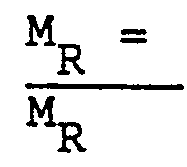
- - Oberflächenbeschaffenheit durch Beurteilung im Mikroskop (Differential-Interferenz-Kontrast)
- - Abriebfestigkeit bei Gebrauch: Nach Konfektionierung der Prüfbänder in Compactkassetten wird ein Lauftest auf einem handelsüblichen CC-Rekorder durchgeführt. Nach 14 Durchläufen werden das Band und Bandführungsteile auf abgeriebenes Magnetmaterial geprüft.
- - Verhältnis von remanenter Magnetisierung zur Magnetisierung bei 1 000 Oe Feldstärke
- a) on the uncalendered belt:
- b) on the calendered belt:
- - Ratio of remanent magnetization to magnetization at 1 000 Oe field strength
(M R / M 1000 ) - - Ratio of the remanent magnetizations in the longitudinal and transverse direction of the belt (OR =
- - Surface quality by assessment in a microscope (differential interference contrast)
- - Abrasion resistance in use: After the test tapes have been assembled in compact cassettes, a running test is carried out on a commercially available CC recorder. After 14 runs, the tape and tape guide parts are checked for abraded magnetic material.
- - Ratio of remanent magnetization to magnetization at 1 000 Oe field strength
Die Ergebnisse sind in Tabelle 1 zusammengefaßt.

Claims (10)
besteht.1. Magnetic storage medium consisting of a non-magnetic layer support and at least one magnetizable layer thereon, which contains finely divided magnetic pigments and polyurethanes as binders, characterized in that the binder consists of 25-100% of a thermoplastic polyurethane practically free of reactive end groups, produced by reaction
consists.
Applications Claiming Priority (2)
| Application Number | Priority Date | Filing Date | Title |
|---|---|---|---|
| DE3127884 | 1981-07-15 | ||
| DE19813127884 DE3127884A1 (en) | 1981-07-15 | 1981-07-15 | MAGNETIC STORAGE MEDIUM |
Publications (3)
| Publication Number | Publication Date |
|---|---|
| EP0069955A2 true EP0069955A2 (en) | 1983-01-19 |
| EP0069955A3 EP0069955A3 (en) | 1983-09-07 |
| EP0069955B1 EP0069955B1 (en) | 1985-05-02 |
Family
ID=6136938
Family Applications (1)
| Application Number | Title | Priority Date | Filing Date |
|---|---|---|---|
| EP82105967A Expired EP0069955B1 (en) | 1981-07-15 | 1982-07-05 | Magnetic memory medium |
Country Status (4)
| Country | Link |
|---|---|
| US (1) | US4477531A (en) |
| EP (1) | EP0069955B1 (en) |
| JP (1) | JPS5817538A (en) |
| DE (2) | DE3127884A1 (en) |
Cited By (3)
| Publication number | Priority date | Publication date | Assignee | Title |
|---|---|---|---|---|
| EP0122567A1 (en) * | 1983-04-08 | 1984-10-24 | The B.F. GOODRICH Company | Magnetic recording tape |
| US5032285A (en) * | 1990-01-12 | 1991-07-16 | Nalco Chemical Company | Reverse emulsion breaking method using amine containing polymers |
| EP0691644A1 (en) | 1994-07-09 | 1996-01-10 | BASF Magnetics GmbH | Magnetic recording medium |
Families Citing this family (17)
| Publication number | Priority date | Publication date | Assignee | Title |
|---|---|---|---|---|
| DE3332504A1 (en) * | 1983-09-09 | 1985-03-28 | Basf Ag, 6700 Ludwigshafen | MAGNETIC RECORDING CARRIERS |
| DE3332564A1 (en) * | 1983-09-09 | 1985-03-28 | Basf Ag, 6700 Ludwigshafen | MAGNETIC RECORDING CARRIERS |
| US4525424A (en) * | 1983-12-30 | 1985-06-25 | International Business Machines Corporation | Flexible magnetic recording media having a polyester-polyurethane binder and chromium dioxide pigment |
| US4568611A (en) * | 1985-04-03 | 1986-02-04 | Morton Thiokol, Inc. | Polyester-polyurethane composition and use thereof |
| JPH0766517B2 (en) * | 1985-10-19 | 1995-07-19 | 富士写真フイルム株式会社 | Magnetic recording medium |
| DE3707440A1 (en) * | 1987-03-07 | 1988-09-15 | Basf Ag | MAGNETIC RECORDING CARRIERS |
| US5366788A (en) * | 1989-03-28 | 1994-11-22 | Basf Magnetics Gmbh | Compact cassette having a liner made of high glass-transition-temperature polymer materials |
| DE3927659A1 (en) * | 1989-08-22 | 1991-02-28 | Basf Ag | MAGNETIC RECORDING DEVICE |
| DE4039749A1 (en) * | 1990-12-13 | 1992-06-17 | Basf Magnetics Gmbh | MAGNETIC RECORDING DEVICE |
| DE4039748A1 (en) * | 1990-12-13 | 1992-06-17 | Basf Magnetics Gmbh | MAGNETIC RECORDING CARRIERS |
| DE59205483D1 (en) * | 1991-12-18 | 1996-04-04 | Basf Magnetics Gmbh | Magnetic recording media |
| DE4234325A1 (en) * | 1992-10-12 | 1994-04-14 | Basf Magnetics Gmbh | Magnetic recording media |
| DE19651672A1 (en) * | 1996-12-12 | 1998-06-18 | Emtec Magnetics Gmbh | Magnetic recording media |
| DE19734893A1 (en) * | 1997-08-12 | 1999-02-18 | Emtec Magnetics Gmbh | Polyurethanes that can be produced without solvents and their use as binders for magnetic recording media |
| DE10064299A1 (en) * | 2000-12-22 | 2002-07-04 | Emtec Magnetics Gmbh | Use of poly (meth) acrylate units with sulfonate groups in binders for magnetic storage media |
| JP4656596B2 (en) * | 2001-03-27 | 2011-03-23 | 荒川化学工業株式会社 | Polyurethane resin solution, printing ink binder, paint binder and adhesive binder |
| CN114149559B (en) * | 2021-12-07 | 2023-12-15 | 黎明化工研究设计院有限责任公司 | A high-strength, high-elongation thermoplastic polyurethane material and its preparation method and use |
Family Cites Families (12)
| Publication number | Priority date | Publication date | Assignee | Title |
|---|---|---|---|---|
| DE1130612B (en) * | 1961-01-03 | 1962-05-30 | Agfa Ag | Process for the production of layered magnetic memories for sound, image and pulse recording |
| NL277788A (en) * | 1961-04-28 | 1900-01-01 | ||
| DE1906548A1 (en) * | 1968-02-12 | 1969-09-18 | Fuji Photo Film Co Ltd | Magnetic recording medium |
| US3650828A (en) * | 1969-09-04 | 1972-03-21 | Karex Inc | Magnetic coating formulation for recording tape |
| BE791618A (en) * | 1971-11-20 | 1973-05-21 | Basf Ag | MAGNETIC LAYER RECORDING SUPPORT AND METHOD FOR ITS MANUFACTURING |
| DE2255802C3 (en) * | 1972-11-15 | 1981-10-15 | Basf Ag, 6700 Ludwigshafen | Layer magnetogram carrier |
| US3929659A (en) * | 1973-06-18 | 1975-12-30 | Du Pont | Crosslinked rubber/resin binders for chromium dioxide recording members |
| DE2350062C3 (en) * | 1973-10-05 | 1982-04-22 | Basf Ag, 6700 Ludwigshafen | Layer magnetogram carrier |
| DE2442762C2 (en) * | 1974-09-06 | 1983-02-24 | Basf Ag, 6700 Ludwigshafen | Layered magnetogram carrier with polyurethane elastomer binders in the magnetic layer |
| JPS5841565B2 (en) * | 1978-06-01 | 1983-09-13 | 東洋紡績株式会社 | magnetic recording medium |
| DE2753694C3 (en) * | 1977-12-02 | 1982-05-13 | Basf Ag, 6700 Ludwigshafen | Magnetic recording media with polyurethane elastomer binders in the magnetic layer |
| DE3005009A1 (en) * | 1980-02-11 | 1981-08-20 | Basf Ag, 6700 Ludwigshafen | MAGNETIC RECORDING CARRIERS |
-
1981
- 1981-07-15 DE DE19813127884 patent/DE3127884A1/en not_active Withdrawn
-
1982
- 1982-07-05 EP EP82105967A patent/EP0069955B1/en not_active Expired
- 1982-07-05 DE DE8282105967T patent/DE3263387D1/en not_active Expired
- 1982-07-08 US US06/396,238 patent/US4477531A/en not_active Expired - Lifetime
- 1982-07-09 JP JP57118741A patent/JPS5817538A/en active Granted
Cited By (3)
| Publication number | Priority date | Publication date | Assignee | Title |
|---|---|---|---|---|
| EP0122567A1 (en) * | 1983-04-08 | 1984-10-24 | The B.F. GOODRICH Company | Magnetic recording tape |
| US5032285A (en) * | 1990-01-12 | 1991-07-16 | Nalco Chemical Company | Reverse emulsion breaking method using amine containing polymers |
| EP0691644A1 (en) | 1994-07-09 | 1996-01-10 | BASF Magnetics GmbH | Magnetic recording medium |
Also Published As
| Publication number | Publication date |
|---|---|
| EP0069955A3 (en) | 1983-09-07 |
| US4477531A (en) | 1984-10-16 |
| JPH0313648B2 (en) | 1991-02-25 |
| DE3127884A1 (en) | 1983-02-03 |
| JPS5817538A (en) | 1983-02-01 |
| EP0069955B1 (en) | 1985-05-02 |
| DE3263387D1 (en) | 1985-06-05 |
Similar Documents
| Publication | Publication Date | Title |
|---|---|---|
| EP0069955B1 (en) | Magnetic memory medium | |
| EP0099533A2 (en) | Magnetic recording medium | |
| DE2753694A1 (en) | MAGNETIC RECORDING MEDIA WITH POLYURETHANE ELASTOMER BINDERS IN THE MAGNETIC LAYER | |
| DE69416231T2 (en) | Magnetic media binders | |
| DE69121075T2 (en) | Polyurethane polymers containing heterocyclic thione groups and their use in magnetic recording media | |
| EP0100017B1 (en) | Magnetic-recording carriers | |
| EP0142798B1 (en) | Magnetic-recording medium | |
| EP0169524B1 (en) | Magnetic recording medium | |
| DE3525169C2 (en) | ||
| DE3540077C2 (en) | ||
| EP0150005B1 (en) | Magnetic storage medium | |
| EP0392360B1 (en) | Method for manufacturing magnetic recording media | |
| DE3227161A1 (en) | Magnetic recording support | |
| EP0210500B1 (en) | Process for producing magnetic-recording media | |
| EP0083011B1 (en) | Process for producing magnetic recording mediums | |
| DE69110117T3 (en) | Magnetic record carrier. | |
| EP0490223B1 (en) | Magnetic recording media | |
| EP0173213B1 (en) | Process for producing magnetic recording media | |
| DE69219616T2 (en) | VINYL CHLORIDE AND HETEROCYCLIC, THION FUNCTIONAL POLYURETHANE POLYMER BLENDS AND THEIR USE IN MAGNETIC RECORDING CARRIERS | |
| EP0414111B1 (en) | Magnetic recording medium | |
| EP0281873B1 (en) | Magnetic-recording support | |
| DE2234822B2 (en) | Process for the production of magnetic storage media | |
| EP0168760A2 (en) | Process for producing magnetic-recording supports | |
| EP0315016B1 (en) | Magnetic recording medium | |
| EP0218234B1 (en) | Process for stabilizing needle-shaped ferromagnetic chromium dioxide |
Legal Events
| Date | Code | Title | Description |
|---|---|---|---|
| PUAI | Public reference made under article 153(3) epc to a published international application that has entered the european phase |
Free format text: ORIGINAL CODE: 0009012 |
|
| 17P | Request for examination filed |
Effective date: 19820705 |
|
| AK | Designated contracting states |
Designated state(s): DE FR GB IT NL |
|
| PUAL | Search report despatched |
Free format text: ORIGINAL CODE: 0009013 |
|
| AK | Designated contracting states |
Designated state(s): DE FR GB IT NL |
|
| ITF | It: translation for a ep patent filed | ||
| GRAA | (expected) grant |
Free format text: ORIGINAL CODE: 0009210 |
|
| AK | Designated contracting states |
Designated state(s): DE FR GB IT NL |
|
| REF | Corresponds to: |
Ref document number: 3263387 Country of ref document: DE Date of ref document: 19850605 |
|
| ET | Fr: translation filed | ||
| PLBE | No opposition filed within time limit |
Free format text: ORIGINAL CODE: 0009261 |
|
| STAA | Information on the status of an ep patent application or granted ep patent |
Free format text: STATUS: NO OPPOSITION FILED WITHIN TIME LIMIT |
|
| 26N | No opposition filed | ||
| REG | Reference to a national code |
Ref country code: GB Ref legal event code: 746 |
|
| ITPR | It: changes in ownership of a european patent |
Owner name: OFFERTA DI LICENZA AL PUBBLICO |
|
| ITTA | It: last paid annual fee | ||
| REG | Reference to a national code |
Ref country code: GB Ref legal event code: 732 |
|
| ITPR | It: changes in ownership of a european patent |
Owner name: CESSIONE;BASF MAGNETICS GMBH |
|
| NLS | Nl: assignments of ep-patents |
Owner name: BASF MAGNETICS GMBH TE MANNHEIM, BONDSREPUBLIEK DU |
|
| REG | Reference to a national code |
Ref country code: FR Ref legal event code: TP |
|
| PGFP | Annual fee paid to national office [announced via postgrant information from national office to epo] |
Ref country code: FR Payment date: 19940624 Year of fee payment: 13 |
|
| PGFP | Annual fee paid to national office [announced via postgrant information from national office to epo] |
Ref country code: GB Payment date: 19940701 Year of fee payment: 13 |
|
| PGFP | Annual fee paid to national office [announced via postgrant information from national office to epo] |
Ref country code: NL Payment date: 19940731 Year of fee payment: 13 |
|
| PG25 | Lapsed in a contracting state [announced via postgrant information from national office to epo] |
Ref country code: GB Effective date: 19950705 |
|
| PG25 | Lapsed in a contracting state [announced via postgrant information from national office to epo] |
Ref country code: NL Effective date: 19960201 |
|
| GBPC | Gb: european patent ceased through non-payment of renewal fee |
Effective date: 19950705 |
|
| NLV4 | Nl: lapsed or anulled due to non-payment of the annual fee |
Effective date: 19960201 |
|
| PG25 | Lapsed in a contracting state [announced via postgrant information from national office to epo] |
Ref country code: FR Effective date: 19960430 |
|
| REG | Reference to a national code |
Ref country code: FR Ref legal event code: ST |
|
| REG | Reference to a national code |
Ref country code: FR Ref legal event code: ST |
|
| REG | Reference to a national code |
Ref country code: FR Ref legal event code: ST |
|
| PGFP | Annual fee paid to national office [announced via postgrant information from national office to epo] |
Ref country code: DE Payment date: 19980930 Year of fee payment: 17 |
|
| PG25 | Lapsed in a contracting state [announced via postgrant information from national office to epo] |
Ref country code: DE Free format text: LAPSE BECAUSE OF NON-PAYMENT OF DUE FEES Effective date: 20000503 |