EP0071177A2 - Ultraviolet light screening resin composition - Google Patents
Ultraviolet light screening resin composition Download PDFInfo
- Publication number
- EP0071177A2 EP0071177A2 EP82106579A EP82106579A EP0071177A2 EP 0071177 A2 EP0071177 A2 EP 0071177A2 EP 82106579 A EP82106579 A EP 82106579A EP 82106579 A EP82106579 A EP 82106579A EP 0071177 A2 EP0071177 A2 EP 0071177A2
- Authority
- EP
- European Patent Office
- Prior art keywords
- resin
- resin composition
- compound
- carbon atoms
- alkyl
- Prior art date
- Legal status (The legal status is an assumption and is not a legal conclusion. Google has not performed a legal analysis and makes no representation as to the accuracy of the status listed.)
- Granted
Links
Images

Classifications
-
- G—PHYSICS
- G03—PHOTOGRAPHY; CINEMATOGRAPHY; ANALOGOUS TECHNIQUES USING WAVES OTHER THAN OPTICAL WAVES; ELECTROGRAPHY; HOLOGRAPHY
- G03C—PHOTOSENSITIVE MATERIALS FOR PHOTOGRAPHIC PURPOSES; PHOTOGRAPHIC PROCESSES, e.g. CINE, X-RAY, COLOUR, STEREO-PHOTOGRAPHIC PROCESSES; AUXILIARY PROCESSES IN PHOTOGRAPHY
- G03C11/00—Auxiliary processes in photography
- G03C11/08—Varnishing, e.g. application of protective layers on finished photographic prints
- G03C11/10—Varnishing, e.g. application of protective layers on finished photographic prints for protection from ultraviolet light
-
- C—CHEMISTRY; METALLURGY
- C08—ORGANIC MACROMOLECULAR COMPOUNDS; THEIR PREPARATION OR CHEMICAL WORKING-UP; COMPOSITIONS BASED THEREON
- C08L—COMPOSITIONS OF MACROMOLECULAR COMPOUNDS
- C08L101/00—Compositions of unspecified macromolecular compounds
-
- B—PERFORMING OPERATIONS; TRANSPORTING
- B41—PRINTING; LINING MACHINES; TYPEWRITERS; STAMPS
- B41M—PRINTING, DUPLICATING, MARKING, OR COPYING PROCESSES; COLOUR PRINTING
- B41M7/00—After-treatment of prints, e.g. heating, irradiating, setting of the ink, protection of the printed stock
- B41M7/0027—After-treatment of prints, e.g. heating, irradiating, setting of the ink, protection of the printed stock using protective coatings or layers by lamination or by fusion of the coatings or layers
-
- C—CHEMISTRY; METALLURGY
- C08—ORGANIC MACROMOLECULAR COMPOUNDS; THEIR PREPARATION OR CHEMICAL WORKING-UP; COMPOSITIONS BASED THEREON
- C08K—Use of inorganic or non-macromolecular organic substances as compounding ingredients
- C08K5/00—Use of organic ingredients
- C08K5/16—Nitrogen-containing compounds
- C08K5/20—Carboxylic acid amides
-
- C—CHEMISTRY; METALLURGY
- C08—ORGANIC MACROMOLECULAR COMPOUNDS; THEIR PREPARATION OR CHEMICAL WORKING-UP; COMPOSITIONS BASED THEREON
- C08K—Use of inorganic or non-macromolecular organic substances as compounding ingredients
- C08K5/00—Use of organic ingredients
- C08K5/16—Nitrogen-containing compounds
- C08K5/34—Heterocyclic compounds having nitrogen in the ring
- C08K5/3412—Heterocyclic compounds having nitrogen in the ring having one nitrogen atom in the ring
- C08K5/3415—Five-membered rings
- C08K5/3417—Five-membered rings condensed with carbocyclic rings
-
- G—PHYSICS
- G03—PHOTOGRAPHY; CINEMATOGRAPHY; ANALOGOUS TECHNIQUES USING WAVES OTHER THAN OPTICAL WAVES; ELECTROGRAPHY; HOLOGRAPHY
- G03C—PHOTOSENSITIVE MATERIALS FOR PHOTOGRAPHIC PURPOSES; PHOTOGRAPHIC PROCESSES, e.g. CINE, X-RAY, COLOUR, STEREO-PHOTOGRAPHIC PROCESSES; AUXILIARY PROCESSES IN PHOTOGRAPHY
- G03C1/00—Photosensitive materials
- G03C1/76—Photosensitive materials characterised by the base or auxiliary layers
- G03C1/815—Photosensitive materials characterised by the base or auxiliary layers characterised by means for filtering or absorbing ultraviolet light, e.g. optical bleaching
- G03C1/8155—Organic compounds therefor
-
- G—PHYSICS
- G03—PHOTOGRAPHY; CINEMATOGRAPHY; ANALOGOUS TECHNIQUES USING WAVES OTHER THAN OPTICAL WAVES; ELECTROGRAPHY; HOLOGRAPHY
- G03G—ELECTROGRAPHY; ELECTROPHOTOGRAPHY; MAGNETOGRAPHY
- G03G15/00—Apparatus for electrographic processes using a charge pattern
- G03G15/01—Apparatus for electrographic processes using a charge pattern for producing multicoloured copies
Definitions
- This invention relates to a novel ultraviolet light screening resin composition, and more specifically to a resin composition which absorbs a light with a wavelength below 370 nm almost completely and screens the ultraviolet light substantially completely.
- Ultraviolet light screening resin compositions are used in coating materials for preventing the discoloration of printed matters, photos, colored steel plates, etc. and the change of properties of foods, chemicals, liquid crystals, etc. as well as in molded articles such as films, bottles, etc.
- Additives known so far for absorbing an ultraviolet light and imparting an ultraviolet light screening ability to resins are:
- An object of this invention is to provide a novel ultraviolet light absorbing compound that possesses no defects ascribable to the above existing compounds 1 - 3 having the ultraviolet absorbability.
- the present inventors have found that some compounds known so far as intermediates of dyestuffs and pigments and their similar compounds have strong absorbability of an ultraviolet light and excells in heat stability, sublimation resistance and compatibility with organic substances, and that when these compounds are added to resin materials, there result excellent ultraviolet light screening resin compositions.
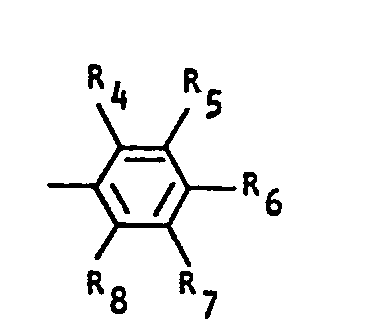
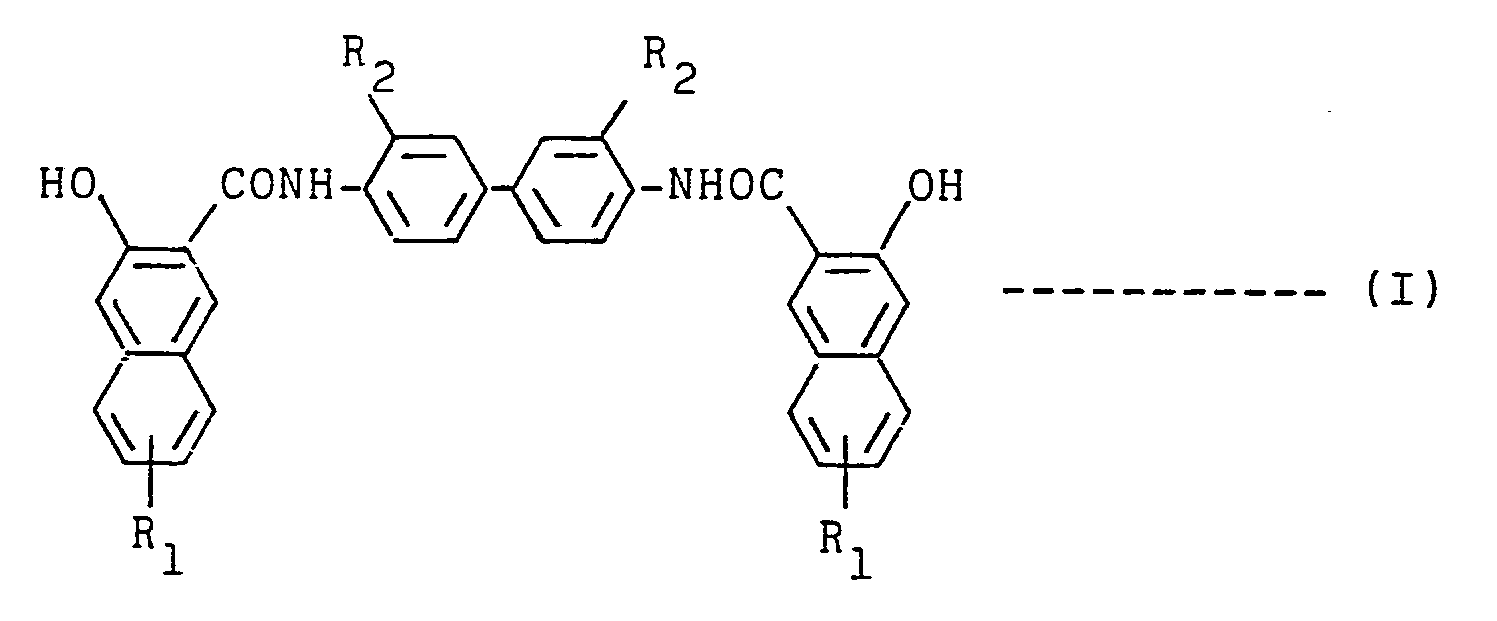
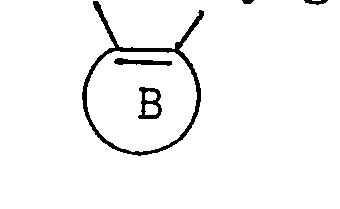
- a resin composition containing at least one compound (A) selected from compounds of formulas and wherein R l and R 2 each denote a hydrogen atom, halogen atom, or alkyl or alkoxy group having 1 to 10 carbon atoms, denotes or R 3 denotes a hydrogen atom, alkyl group having 1 to 10 carbon atoms, naphthyl group or substituent of formula wherein R 4 to R 8 , which may be the same or different, each denote a hydrogen atom, halogen atom, nitro group, or alkyl or alkoxy group having 1 to 10 carbon atoms.
- R l and R 2 each denote a hydrogen atom, halogen atom, or alkyl or alkoxy group having 1 to 10 carbon atoms
- R 3 denotes a hydrogen atom, alkyl group having 1 to 10 carbon atoms, naphthyl group or substituent of formula wherein R 4 to R 8 , which may be the same or different, each denote a hydrogen
- the proportion of the compound (A) used in this invention on the basis of the resin varies greatly depending on the use purpose of the resin.
- the compound (A) is in general added in an amount of 0.005 to 900 parts by weight per 100 parts by weight of the resin, preferably 1 to 150 parts by weight on the same basis in the case of a coating resin and 0.01 to 50 parts by weight on the same basis in the case of a molding resin.
- thermoplastic resins and thermosetting resins such as polyolefins, ethylene-vinyl acetate copolymer, polystyrene, ABS resin, polyvinyl chloride, polyvinylidene chloride, vinyl chloride- vinyl acetate copolymer, polycarbonate, acrylic resin, epoxy resin, polyester, polyamide, polyurethane, nitrocellulose and copolymers composed of monomers making up these polymers.
- the compound (A) of this invention is added to the resins usually molded at high temperatures, such as polycarbonate, acrylic resin, polyester, etc.
- the properties of the compound (A) as excellent heat resistance and sublimation resistance are exhibited and a sufficient effect is provided with the addition of a small amount of the compound (A).
- the existing ultraviolet absorbers are used, the loss owing to degradation and sublimation is great. Therefore, they must be added to the above resins in large amounts.
- the resin composition to which has been added the compound (A) used in this invention shows the quite excellent ultraviolet screening effect as mentioned above.
- the compound (A) is used similarly to the conventional ultraviolet absorbers, exhibiting an effect which is the same as or more than the conventional ones. Not only that, it is markedly effective for improving light resistance of resins added themselves and therefore can be used in coating materials for preventing the discoloration or the change of properties, molded articles such as films and bottles, and so forth.
- Colorants such as dyestuffs, pigments, etc., fillers, stabilizers, and so forth, other than the compound (A), can be added to the resin composition of this invention if required.
- each of the compounds (0.5 part by weight) shown in Table 1 was blended with 99.5 parts by weight of polymethyl methacrylate and the blend was then hot pressed at 160°C to form a sheet 0.2 mm in thickness. It was ascertained by a microscope of 400 magnifications that each of the mixed compounds was uniformly dispersed in polymethyl methacrylate. The resulting sheet was then tested for transmittance of an ultraviolet visible spectrum using a spectrophotometer and it was found that the ultraviolet light with a wavelength below 380 nm was almost completely screened.
- Figure 1 is a graph representing the transmittance of the ultraviolet visible spectrum of the sheet in Example 1.
- Figure 2 is a graph representing the transmittance of the ultraviolet visible spectrum of the sheet in Example 11.
- Example 11 The procedure of Example 11 was repeated except that the amount of Naphthol AS-BR was changed from 1.0 part by weight to 0.1 part by weight. In consequence, a 0.1 mm thick sheet was obtained. The sheet was tested for transmittance of an ultraviolet visible spectrum, and it was found that the ultraviolet light with a wavelength below 370 nm was almost completely screened.
- Example 11 The procedure of Example 11 was repeated except that the amount of Naphthol AS-BR was changed from 1.0 part by weight to 20 parts by weight. As a result, there was obtained a 0.1 mm thick sheet. The resulting sheet was tested for transmittance of an ultraviolet visible spectrum and it was found that the ultraviolet light with a wavelength below 395 nm was screened almost completely.
- Figure 3 is a graph representing the transmittance of the ultraviolet visible spectrum of the coated film in Example 16.
- Example 16 The procedure of Example 16 was repeated except that the amount of Naphthol AS-LC was changed from 10 parts by weight to 0.4 part by weight. Consequently, a coated polypropylene film resulted. The coated film was tested for transmittance of an ultraviolet visible spectrum, and it was found that the ultraviolet light with a wavelength below 375 nm was screened almost completely.
- Example 16 The procedure of Example 16 was repeated except that the amount of Naphthol AS-LC was changed from 10 parts by weight to 30 parts by weight. As a result, there was obtained a coated polypropylene film. The coated film was tested for transmittance of an ultraviolet visible spectrum, and it was found that the ultraviolet light with a wavelength below 395 nm was screened almost completely.
- a heat loss was determined in order to compare the compounds used in this invention and the commercially available typical ultraviolet absorbers with respect to the heat stability and submimation resistance.
Landscapes
- Chemical & Material Sciences (AREA)
- Physics & Mathematics (AREA)
- General Physics & Mathematics (AREA)
- Health & Medical Sciences (AREA)
- Chemical Kinetics & Catalysis (AREA)
- Medicinal Chemistry (AREA)
- Polymers & Plastics (AREA)
- Organic Chemistry (AREA)
- Engineering & Computer Science (AREA)
- Materials Engineering (AREA)
- Compositions Of Macromolecular Compounds (AREA)
- Greenhouses (AREA)
Abstract


Description
- This invention relates to a novel ultraviolet light screening resin composition, and more specifically to a resin composition which absorbs a light with a wavelength below 370 nm almost completely and screens the ultraviolet light substantially completely.
- Ultraviolet light screening resin compositions are used in coating materials for preventing the discoloration of printed matters, photos, colored steel plates, etc. and the change of properties of foods, chemicals, liquid crystals, etc. as well as in molded articles such as films, bottles, etc.
- Additives known so far for absorbing an ultraviolet light and imparting an ultraviolet light screening ability to resins are:
- ① ultraviolet absorbers such as benzophenone, benzotriazole, etc.
- ② inorganic compounds such as transparent iron oxide, finely divided titanium oxide, etc.
- ③ organic dyestuffs and pigments.
- An object of this invention is to provide a novel ultraviolet light absorbing compound that possesses no defects ascribable to the above existing compounds ① - ③ having the ultraviolet absorbability.
- The present inventors have found that some compounds known so far as intermediates of dyestuffs and pigments and their similar compounds have strong absorbability of an ultraviolet light and excells in heat stability, sublimation resistance and compatibility with organic substances, and that when these compounds are added to resin materials, there result excellent ultraviolet light screening resin compositions.
- That is, according to this invention, there is provided a resin composition containing at least one compound (A) selected from compounds of formulas



- Many of the compounds (A) are already known as intermediates of dyestuffs and pigments. Examples thereof include
- Naphthol AS(3-hydroxy-2-naphthanilide),
- Naphthol AS-E(4'-chloro-3-hydroxy-2-naphthanilide),
- Naphthol AS-MCA(3'-chloro-3-hydroxy-2-naphthanilide),
- Naphthol AS-BS(3-hydroxy-3'-nitro-2-naphthanilide),
- Naphthol AS-AN(3-hydroxy-4'-nitro-2-naphthanilide),
- Naphthol AS-D(3-hydroxy-2-naphtho-0-toluidide),
- Naphthol AS-RT(3-hydroxy-2-naphtho-p-toluidide),
- Naphthol AS-TR(4'-chloro-3-hydroxy-2-naphtho-0- toluidide),
- Naphthol AS-KB(5'-chloro-3-hydroxy-2-naphtho-0- toluidide),
- Naphthol AS-MX(3-hydroxy-2-naphtho-2,4-xylidide),
- Naphthol AS-OL(3-hydroxy-2-naphth-0-anisidide),
- Naphthol AS-CA(5'-chloro-3-hydroxy-2-naphtho-anisidide),
- Naphthol AS-RL(3-hydroxy-2-naphth-p-anisidide),
- Naphthol AS-LT(3-hydroxy-2'-methyl-2-naphth-p-anisidide),
- Naphthol AS-BG(3-hydroxy-2',5'-dimethoxy-2-naphthanilide),
- Naphthol AS-ITR(5'-chloro-3-hydroxy-2',4'-dimethoxy-2-naphthanilide),
- Naphthol AS-LC(4'-chloro-3-hydroxy-2',5'-dimethoxy-2-naphthanilide),
- Naphthol AS-PH(3-hydroxy-2-naphtho-0-phenetidide),
- Naphthol AS-VL(3-hydroxy-2-naphtho-p-phenetidide),
- Naphthol AS-BO(3-hydroxy-N-1-naphthyl-2-naphthamide),
- Naphthol AS-SW(3-hydroxy-N-2-naphthyl-2-naphthamide),
- Naphthol AS-BM(3,3"-dihydroxy-4',4'"-bi-2-naphtho-0- toluidide),
- Naphthol AS-BR(3,3"-dihydroxy-4',4"'-bi-2-naphth-0- anisidide),
- Naphthol AS-S(3-hydroxy-N-[2-methoxy-3-dibenzofuryl]-2-naphamide),
- Naphthol AS-GR(3-hydroxy-2-0-anthrotoluidide), Naphthol AS-SR(2-hydroxy-2'-methyl-llH-benzo(a) carbazole-3-carbox-p-anisidide),
- Naphthol AS-SG(2-hydroxy-llH-benzo(a)carbazole-3-carbox-p-anisidide),
- Naphthol AS-LB(41-chloro-2-hydroxy-l-carbazole- carboxanilide), and
- Naphthol AS-BT(2-hydroxy-2',5'-dimethoxy-3-dibenzofuran- carboxanilide)
- The proportion of the compound (A) used in this invention on the basis of the resin varies greatly depending on the use purpose of the resin. However, the compound (A) is in general added in an amount of 0.005 to 900 parts by weight per 100 parts by weight of the resin, preferably 1 to 150 parts by weight on the same basis in the case of a coating resin and 0.01 to 50 parts by weight on the same basis in the case of a molding resin.
- Examples of resins that can be used to form the resin composition of this invention include thermoplastic resins and thermosetting resins such as polyolefins, ethylene-vinyl acetate copolymer, polystyrene, ABS resin, polyvinyl chloride, polyvinylidene chloride, vinyl chloride- vinyl acetate copolymer, polycarbonate, acrylic resin, epoxy resin, polyester, polyamide, polyurethane, nitrocellulose and copolymers composed of monomers making up these polymers. Above all, where the compound (A) of this invention is added to the resins usually molded at high temperatures, such as polycarbonate, acrylic resin, polyester, etc., such characteristics of the compound (A) as excellent heat resistance and sublimation resistance are exhibited and a sufficient effect is provided with the addition of a small amount of the compound (A). Where the existing ultraviolet absorbers are used, the loss owing to degradation and sublimation is great. Therefore, they must be added to the above resins in large amounts.
- The resin composition to which has been added the compound (A) used in this invention shows the quite excellent ultraviolet screening effect as mentioned above. The compound (A) is used similarly to the conventional ultraviolet absorbers, exhibiting an effect which is the same as or more than the conventional ones. Not only that, it is markedly effective for improving light resistance of resins added themselves and therefore can be used in coating materials for preventing the discoloration or the change of properties, molded articles such as films and bottles, and so forth.
- Any of the following methods of adding the compound (A) to the resin can be suitably employed.
- (1) A method wherein the compound (A) is directly added at the time of molding or processing.
- (2) A method wherein a compound is prepared in advance and processed.
- (3) A method wherein a master batch in a high concentration is formed and added to the resin at the time of processing.
- (4) A method wherein the compound (A) is added at the time of polymerizing the resin.
- Colorants such as dyestuffs, pigments, etc., fillers, stabilizers, and so forth, other than the compound (A), can be added to the resin composition of this invention if required.
- The following Examples and Referential Example will illustrate the present invention.
- The structure of the compound (A) used in each Example is shown in Table - 1.


- Each of the compounds (0.5 part by weight) shown in Table 1 was blended with 99.5 parts by weight of polymethyl methacrylate and the blend was then hot pressed at 160°C to form a sheet 0.2 mm in thickness. It was ascertained by a microscope of 400 magnifications that each of the mixed compounds was uniformly dispersed in polymethyl methacrylate. The resulting sheet was then tested for transmittance of an ultraviolet visible spectrum using a spectrophotometer and it was found that the ultraviolet light with a wavelength below 380 nm was almost completely screened.
- In the drawing attached hereto, Figure 1 is a graph representing the transmittance of the ultraviolet visible spectrum of the sheet in Example 1.
- One part by weight each of the compounds shown in Table 1 was blended with 99.0 parts by weight of polyethylene terephthalate, and the blend was then dried with heating for 10 hours under reduced pressure of 0.1 mmHg. Subsequently, the resulting product was extruded from an extruder of 290°C to afford a 0.1 mm thick sheet. The compound was uniformly compatibilized with each of these sheets. The sheet was tested for transmittance of an ultraviolet visible spectrum, and it was found that the ultraviolet light with a wavelength below 380 nm was screened almost completely.
- In the attached drawing, Figure 2 is a graph representing the transmittance of the ultraviolet visible spectrum of the sheet in Example 11.
- The procedure of Example 11 was repeated except that the amount of Naphthol AS-BR was changed from 1.0 part by weight to 0.1 part by weight. In consequence, a 0.1 mm thick sheet was obtained. The sheet was tested for transmittance of an ultraviolet visible spectrum, and it was found that the ultraviolet light with a wavelength below 370 nm was almost completely screened.
- The procedure of Example 11 was repeated except that the amount of Naphthol AS-BR was changed from 1.0 part by weight to 20 parts by weight. As a result, there was obtained a 0.1 mm thick sheet. The resulting sheet was tested for transmittance of an ultraviolet visible spectrum and it was found that the ultraviolet light with a wavelength below 395 nm was screened almost completely.
- Ten parts by weight each of the compounds shown in Table 1, 20 parts by weight of a polyamide resin(Sanmide S-150: a product of Sanyo Chemical Industries, Ltd.) and 70 parts by weight of a mixed organic solvent of ethyl acetate, isopropyl alcohol and toluene at a ratio of 1:3:6 were kneaded by attriter. Subsequently, the resulting mixture was coated on a
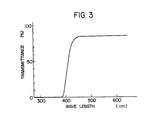
polypropylene film 50 µm in thickness by means of a gravure printing machine so that a coating thickness after dried became 5 µm. The coated film was then tested for transmittance of an ultraviolet visible spectrum, and it was found that the ultraviolet light with a wavelength below 380 nm was screened almost completely. - In the attached drawing, Figure 3 is a graph representing the transmittance of the ultraviolet visible spectrum of the coated film in Example 16.
- The procedure of Example 16 was repeated except that the amount of Naphthol AS-LC was changed from 10 parts by weight to 0.4 part by weight. Consequently, a coated polypropylene film resulted. The coated film was tested for transmittance of an ultraviolet visible spectrum, and it was found that the ultraviolet light with a wavelength below 375 nm was screened almost completely.
- The procedure of Example 16 was repeated except that the amount of Naphthol AS-LC was changed from 10 parts by weight to 30 parts by weight. As a result, there was obtained a coated polypropylene film. The coated film was tested for transmittance of an ultraviolet visible spectrum, and it was found that the ultraviolet light with a wavelength below 395 nm was screened almost completely.
- A heat loss was determined in order to compare the compounds used in this invention and the commercially available typical ultraviolet absorbers with respect to the heat stability and submimation resistance.
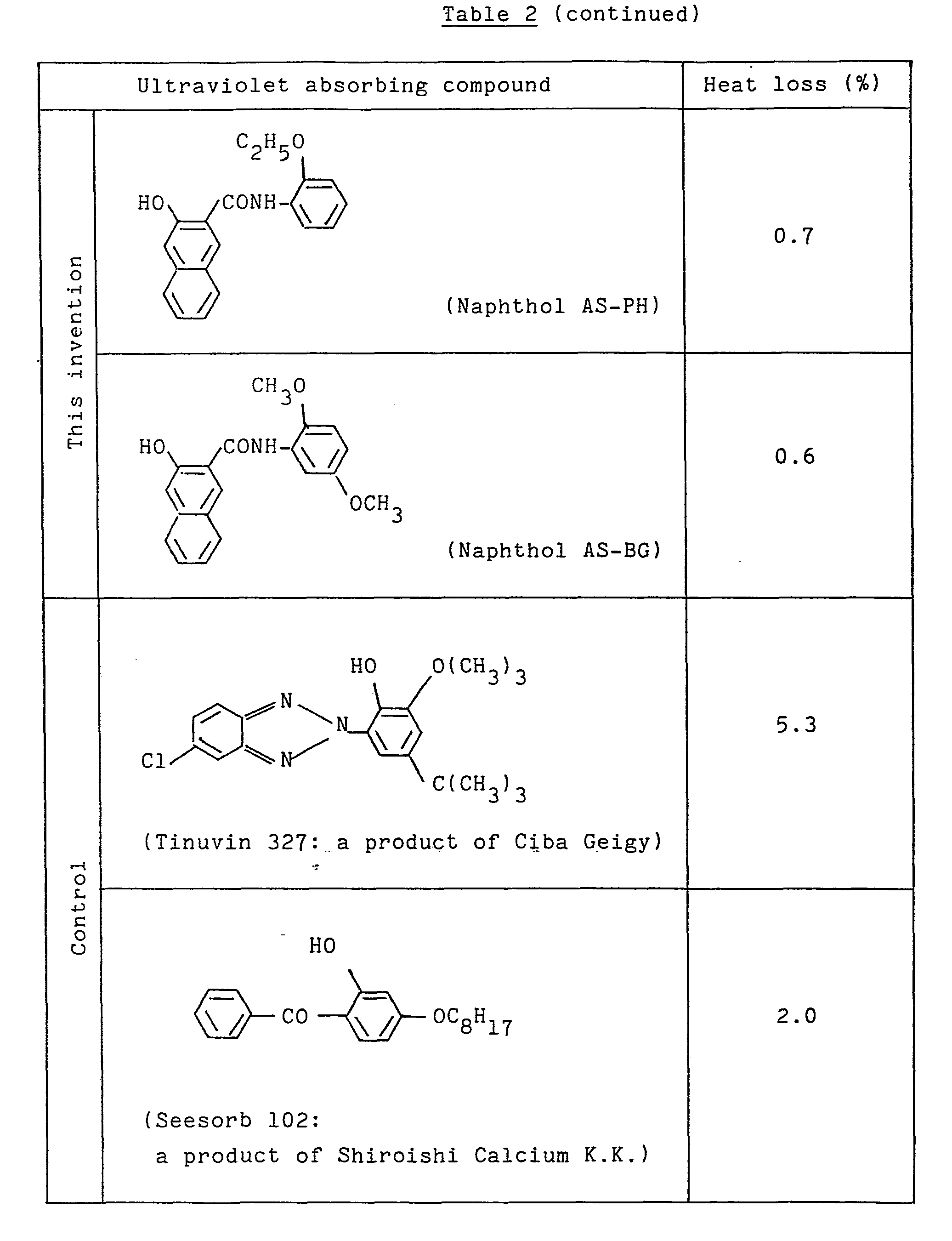
- Five grams each of the compounds used in this invention and the known ultraviolet absorbers was weighed accurately and left in a dryer of 200oC for 3 hours. The weight was then measured and the heat loss was determined. The results are shown in Table 2.
- From Table 2, it becomes apparent that the heat loss of the compounds used in this invention is about 1/3 to 1/10 of the heat loss of the known ultraviolet absorbers.


The most preferable compounds are Naphthol AS-ITR, Naphthol AS-LC, Naphthol AS-BM and Naphthol AS-BR.
Claims (12)


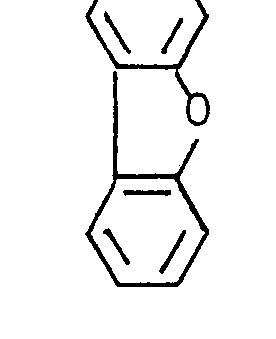


and a compound of formula


Applications Claiming Priority (2)
| Application Number | Priority Date | Filing Date | Title |
|---|---|---|---|
| JP114463/81 | 1981-07-23 | ||
| JP56114463A JPS5817158A (en) | 1981-07-23 | 1981-07-23 | Ultraviolet-screening resin composition |
Publications (3)
| Publication Number | Publication Date |
|---|---|
| EP0071177A2 true EP0071177A2 (en) | 1983-02-09 |
| EP0071177A3 EP0071177A3 (en) | 1983-08-24 |
| EP0071177B1 EP0071177B1 (en) | 1987-04-01 |
Family
ID=14638362
Family Applications (1)
| Application Number | Title | Priority Date | Filing Date |
|---|---|---|---|
| EP82106579A Expired EP0071177B1 (en) | 1981-07-23 | 1982-07-21 | Ultraviolet light screening resin composition |
Country Status (5)
| Country | Link |
|---|---|
| US (1) | US4431762A (en) |
| EP (1) | EP0071177B1 (en) |
| JP (1) | JPS5817158A (en) |
| KR (1) | KR890002714B1 (en) |
| DE (1) | DE3275950D1 (en) |
Cited By (3)
| Publication number | Priority date | Publication date | Assignee | Title |
|---|---|---|---|---|
| FR2595988A1 (en) * | 1986-03-19 | 1987-09-25 | Panthout Michel | Process for the artificial yellowing of reproductions of old postcards |
| EP0643039A1 (en) * | 1993-09-14 | 1995-03-15 | Teijin Limited | Ultraviolet ray-absorbing aromatic compound and polymeric composition containing the same |
| WO1999024394A3 (en) * | 1997-11-06 | 1999-08-19 | Univ Pittsburgh | Compounds for the antemortem diagnosis of alzheimer's disease and in vivo imaging and prevention of amyloid deposition |
Families Citing this family (7)
| Publication number | Priority date | Publication date | Assignee | Title |
|---|---|---|---|---|
| JP3137707B2 (en) * | 1992-01-22 | 2001-02-26 | 帝人株式会社 | Wholly aromatic polyamide composition |
| US6593406B2 (en) * | 2000-12-08 | 2003-07-15 | Toray Plastics (America), Inc. | Polyester overlamination film with enhanced UV stabilization properties |
| US20040005419A1 (en) * | 2002-07-02 | 2004-01-08 | Mcgrath Thomas M. | Container for product integrity and identification |
| CN1735973A (en) * | 2003-01-20 | 2006-02-15 | 夏普株式会社 | Transparent resin composition for optical sensor filter, optical sensor and production method therefor |
| WO2011093443A1 (en) | 2010-01-29 | 2011-08-04 | 日本ゼオン株式会社 | Fused heterocyclic compound and composition |
| EP2530119B1 (en) * | 2010-01-29 | 2015-09-30 | Zeon Corporation | Acrylic rubber composition and rubber crosslinked product |
| US12134709B2 (en) * | 2019-07-09 | 2024-11-05 | The Boeing Company | Coatings for sterilization with UV light |
Family Cites Families (19)
| Publication number | Priority date | Publication date | Assignee | Title |
|---|---|---|---|---|
| US1935930A (en) * | 1933-11-21 | Derivatives of z | ||
| US2653928A (en) * | 1953-09-29 | Heterocyclic azo-dyestuff | ||
| US2653927A (en) * | 1953-09-29 | Xocxa-so | ||
| US1960375A (en) * | 1930-10-20 | 1934-05-29 | Gen Aniline Works Inc | Anthracene derivative |
| US2144704A (en) * | 1935-03-20 | 1939-01-24 | Gen Aniline Works Inc | Intermediate for water-insoluble azo dyestuffs |
| US2249537A (en) * | 1939-02-14 | 1941-07-15 | Eastman Kodak Co | Reversible gel compositions of polyvinyl alcohols and hydroxybenzaromatic amides andtheir preparation |
| FR1028768A (en) * | 1950-05-04 | 1953-05-27 | Kodak Pathe | Process for protecting photographic images against ultraviolet light and resulting products |
| US2874090A (en) * | 1954-08-24 | 1959-02-17 | Heyden Newport Chemical Corp | Sunburn preventive n-salicoyl-p-aminophenol compositions |
| US2911314A (en) * | 1954-12-17 | 1959-11-03 | Gen Aniline & Film Corp | Coloration of synthetic polymeric material |
| US2964494A (en) * | 1958-05-08 | 1960-12-13 | Eastman Kodak Co | Poly-alpha-olefin composition containing nu-methyl-4'-hydroxybenzanilide |
| US3022268A (en) * | 1958-07-17 | 1962-02-20 | Du Pont | Polyethylene composition |
| NL125091C (en) * | 1958-09-10 | |||
| US3389004A (en) * | 1966-02-23 | 1968-06-18 | Koppers Co Inc | Ultraviolet light stabilizers for plastic materials |
| US3907569A (en) * | 1973-01-31 | 1975-09-23 | Horizons Inc | Ultraviolet holdback of nonsilver photosensitive systems by incorporating therein certain organic additives |
| DE2337023C3 (en) * | 1973-07-20 | 1979-09-06 | Hoechst Ag, 6000 Frankfurt | Process for the preparation of aldehydes from 2-hydroxynaphthalene-3-carboxylic acid arylamides |
| JPS5849391B2 (en) * | 1974-12-17 | 1983-11-04 | 日本カーバイド工業株式会社 | Long-lasting UV-absorbing composite film |
| JPS54160630A (en) * | 1978-06-12 | 1979-12-19 | Nippon Carbide Kogyo Kk | Cultivation of watermelon |
| US4334932A (en) * | 1980-04-23 | 1982-06-15 | Ciba-Geigy Corporation | Pigment formulations, processes for their preparation and their use for pigmenting aqueous, alcoholic or aqueous-alcoholic printing ink systems and colored lacquer systems |
| JPS5744141A (en) * | 1980-08-29 | 1982-03-12 | Ricoh Co Ltd | Heat development type diazo copying material |
-
1981
- 1981-07-23 JP JP56114463A patent/JPS5817158A/en active Granted
-
1982
- 1982-07-21 US US06/400,383 patent/US4431762A/en not_active Expired - Fee Related
- 1982-07-21 DE DE8282106579T patent/DE3275950D1/en not_active Expired
- 1982-07-21 EP EP82106579A patent/EP0071177B1/en not_active Expired
- 1982-07-23 KR KR8203293A patent/KR890002714B1/en not_active Expired
Cited By (5)
| Publication number | Priority date | Publication date | Assignee | Title |
|---|---|---|---|---|
| FR2595988A1 (en) * | 1986-03-19 | 1987-09-25 | Panthout Michel | Process for the artificial yellowing of reproductions of old postcards |
| EP0643039A1 (en) * | 1993-09-14 | 1995-03-15 | Teijin Limited | Ultraviolet ray-absorbing aromatic compound and polymeric composition containing the same |
| US5532412A (en) * | 1993-09-14 | 1996-07-02 | Teijin Limited | Ultraviolet ray-absorbing aromatic compound and polymeric composition containing the same |
| US6417178B1 (en) | 1994-07-19 | 2002-07-09 | University Of Pittsburgh | Amyloid binding nitrogen-linked compounds for the antemortem diagnosis of alzheimer's disease, in vivo imaging and prevention of amyloid deposits |
| WO1999024394A3 (en) * | 1997-11-06 | 1999-08-19 | Univ Pittsburgh | Compounds for the antemortem diagnosis of alzheimer's disease and in vivo imaging and prevention of amyloid deposition |
Also Published As
| Publication number | Publication date |
|---|---|
| JPS6210580B2 (en) | 1987-03-06 |
| KR840000626A (en) | 1984-02-25 |
| JPS5817158A (en) | 1983-02-01 |
| EP0071177B1 (en) | 1987-04-01 |
| DE3275950D1 (en) | 1987-05-07 |
| KR890002714B1 (en) | 1989-07-25 |
| US4431762A (en) | 1984-02-14 |
| EP0071177A3 (en) | 1983-08-24 |
Similar Documents
| Publication | Publication Date | Title |
|---|---|---|
| US3079366A (en) | Substituted arylaminoethylenes as ultraviolet absorbers | |
| US5266447A (en) | Photochromic composition | |
| US5523027A (en) | Long-wavelength UV light absorber | |
| JP2846091B2 (en) | Indole compounds and their uses | |
| EP0071177A2 (en) | Ultraviolet light screening resin composition | |
| EP0108290B1 (en) | Light stable thermoplastic resin compositions | |
| US5514740A (en) | Near-infrared absorbing transparent resin composition and article molded therefrom | |
| US4077971A (en) | Tetrahydrophthalimide methyl-2-phenylbenzatriazoles | |
| EP0184808B1 (en) | Photochromic photosensitive compositions | |
| US3816492A (en) | Nickel cyclohexylamine complexes of 2,2'-thiobis(p-alkylphenol)and use in polyolefins | |
| CA1053839A (en) | Polymer compositions containing titanium dioxide having improved visible and ultraviolet and light stability | |
| US3389099A (en) | Ultraviolet light stabilizers for plastic materials | |
| US3190860A (en) | Azo polymeric compositions capable of being integrally colored and which are resistant to ultra-violet light | |
| WO2001036533A1 (en) | Non-exuding optically brightened polyolefin blends | |
| US3340225A (en) | 1, 8-naphthalimides as ultraviolet light stabilizers for plastic materials | |
| US2691642A (en) | Stabilized polyvinylidene chloride compositions containing fluorenone azines | |
| US4017469A (en) | Photodegradable polyolefin compositions | |
| US3313771A (en) | Alpha-phenylsulfonyl cinnamates and cinnamonitriles as ultraviolet light stabilizers for plastic materials | |
| US3026283A (en) | Decolorizing synthetic resins | |
| US3380961A (en) | Ultraviolet light and oxidation stabilizers | |
| EP0382294B1 (en) | Photochromic composition endowed with light fatigue resistance and photochromic articles which contain it | |
| EP1697227A1 (en) | Method of protecting organic material from light | |
| WO2021198528A1 (en) | High darkness and high gloss dimensionally stable thermoplastic smma molding composition | |
| US3843597A (en) | Nickel cyclohexylamine complexes of 2,2-thiobis(p-alkylphenol),light stabilizers for polyolefins | |
| US3395184A (en) | 4-benzoyl-6-(dialkyl-hydroxybenzyl) resorcinol ultraviolet light and oxidation stabilizers for plastic materials |
Legal Events
| Date | Code | Title | Description |
|---|---|---|---|
| PUAI | Public reference made under article 153(3) epc to a published international application that has entered the european phase |
Free format text: ORIGINAL CODE: 0009012 |
|
| AK | Designated contracting states |
Designated state(s): DE FR GB IT |
|
| PUAL | Search report despatched |
Free format text: ORIGINAL CODE: 0009013 |
|
| AK | Designated contracting states |
Designated state(s): DE FR GB IT |
|
| 17P | Request for examination filed |
Effective date: 19831122 |
|
| ITF | It: translation for a ep patent filed | ||
| GRAA | (expected) grant |
Free format text: ORIGINAL CODE: 0009210 |
|
| AK | Designated contracting states |
Kind code of ref document: B1 Designated state(s): DE FR GB IT |
|
| REF | Corresponds to: |
Ref document number: 3275950 Country of ref document: DE Date of ref document: 19870507 |
|
| ET | Fr: translation filed | ||
| PLBE | No opposition filed within time limit |
Free format text: ORIGINAL CODE: 0009261 |
|
| STAA | Information on the status of an ep patent application or granted ep patent |
Free format text: STATUS: NO OPPOSITION FILED WITHIN TIME LIMIT |
|
| 26N | No opposition filed | ||
| ITTA | It: last paid annual fee | ||
| PGFP | Annual fee paid to national office [announced via postgrant information from national office to epo] |
Ref country code: GB Payment date: 19920713 Year of fee payment: 11 |
|
| PGFP | Annual fee paid to national office [announced via postgrant information from national office to epo] |
Ref country code: DE Payment date: 19920715 Year of fee payment: 11 |
|
| PGFP | Annual fee paid to national office [announced via postgrant information from national office to epo] |
Ref country code: FR Payment date: 19920716 Year of fee payment: 11 |
|
| PG25 | Lapsed in a contracting state [announced via postgrant information from national office to epo] |
Ref country code: GB Effective date: 19930721 |
|
| GBPC | Gb: european patent ceased through non-payment of renewal fee |
Effective date: 19930721 |
|
| PG25 | Lapsed in a contracting state [announced via postgrant information from national office to epo] |
Ref country code: FR Effective date: 19940331 |
|
| PG25 | Lapsed in a contracting state [announced via postgrant information from national office to epo] |
Ref country code: DE Effective date: 19940401 |
|
| REG | Reference to a national code |
Ref country code: FR Ref legal event code: ST |