EP0071365A2 - Améliorations du brassage domestique - Google Patents
Améliorations du brassage domestique Download PDFInfo
- Publication number
- EP0071365A2 EP0071365A2 EP82303689A EP82303689A EP0071365A2 EP 0071365 A2 EP0071365 A2 EP 0071365A2 EP 82303689 A EP82303689 A EP 82303689A EP 82303689 A EP82303689 A EP 82303689A EP 0071365 A2 EP0071365 A2 EP 0071365A2
- Authority
- EP
- European Patent Office
- Prior art keywords
- container
- yeast
- sugar
- bag
- fermentation
- Prior art date
- Legal status (The legal status is an assumption and is not a legal conclusion. Google has not performed a legal analysis and makes no representation as to the accuracy of the status listed.)
- Granted
Links
Images

Classifications
-
- C—CHEMISTRY; METALLURGY
- C12—BIOCHEMISTRY; BEER; SPIRITS; WINE; VINEGAR; MICROBIOLOGY; ENZYMOLOGY; MUTATION OR GENETIC ENGINEERING
- C12C—BEER; PREPARATION OF BEER BY FERMENTATION; PREPARATION OF MALT FOR MAKING BEER; PREPARATION OF HOPS FOR MAKING BEER
- C12C11/00—Fermentation processes for beer
- C12C11/003—Fermentation of beerwort
-
- C—CHEMISTRY; METALLURGY
- C12—BIOCHEMISTRY; BEER; SPIRITS; WINE; VINEGAR; MICROBIOLOGY; ENZYMOLOGY; MUTATION OR GENETIC ENGINEERING
- C12C—BEER; PREPARATION OF BEER BY FERMENTATION; PREPARATION OF MALT FOR MAKING BEER; PREPARATION OF HOPS FOR MAKING BEER
- C12C13/00—Brewing devices, not covered by a single group of C12C1/00 - C12C12/04
- C12C13/10—Home brew equipment
-
- C—CHEMISTRY; METALLURGY
- C12—BIOCHEMISTRY; BEER; SPIRITS; WINE; VINEGAR; MICROBIOLOGY; ENZYMOLOGY; MUTATION OR GENETIC ENGINEERING
- C12G—WINE; PREPARATION THEREOF; ALCOHOLIC BEVERAGES; PREPARATION OF ALCOHOLIC BEVERAGES NOT PROVIDED FOR IN SUBCLASSES C12C OR C12H
- C12G1/00—Preparation of wine or sparkling wine
- C12G1/02—Preparation of must from grapes; Must treatment and fermentation
- C12G1/0206—Preparation of must from grapes; Must treatment and fermentation using a home wine making vessel
Definitions
- This invention relates to improvements in the brewing of beers, wines, stouts, lagers, ciders and other alcoholic beverages and is of particular value to the amateur.brewer or vintner who brews his alcoholic beverages in his home.
- the "home brewing" of beers can involve the enthusiast in the purchase of materials such as grain, malt, hops, finings of isinglas , yeasts, yeast growth stimulants, hop extracts, hop oils, and sugars - for example granulated, invert or glucose syrups.
- the production of wines in the home can involve .the purchase of grape juice concentrate, sugars, yeasts, tannins, colourings, clarification aids and many other more or less vital ingredients.
- Simpler techniques require the purchase of "kits”. These usually include a can of fermentable material, such as grape juice or concentrated malt extract with or without added hop extracts, in an appropriate quantity to make a recommended volume of wine or beer.
- the yeast is invariable packed separately from the fermentable material.
- the process of fermentation requires the enthusiast to provide a container of sufficient size to contain the fermentable material in solution, in water, to which the yeast is finally added and to contain the mixture during fermentation.
- the vessels sold for this purpose are usually of semi-rigid polyethylene or similar plastics material and are often furnished with a vent at the top (to allow the egress of the copious amounts of carbon dioxide produced during the fermentation) and a tap at or near the bottom to allow the withdrawal of the brew after fermentation. It is normally recommended, by kit manufacturers, that the brew be withdrawn into strong bottles, when fermentation has ceased.
- Sterility and cleanliness of all equipment is vital to the production of good wines and beers. This can be accomplished-by treating all equipment either with, boiling water or a solution of sodium metabisulphite in water. This is, however, a step which is often either forgotten altogether by the amateur or carried out unsatisfactorily.
- a further disadvantage is that the various ingredients must be mixed in appropriate measured proportions with water at the required temperature and with extensive stirring, and then be transferred to the fermentation vessel.
- a brewing kit comprising a substantially closed, substantially sterile container containing concentrated fermentable material, optionally sugar, and yeast in premeasured amounts such as to yield a fermentation mixture only after dilution with recommended amounts of water, the container having a filling means for introducing such water therein and being of an adequate volume to contain the so diluted contents and hence to permit and contain the fermentation.
- sterile as used herein is intended to mean that the container is sufficiently clean to maintain the purity of the yeast culture contained therein. Under such conditions of purity the yeast will have a life of at least 1 year. No sterilisation, with for example metabisulphite, is necessary before the brewing procedure takes place.
- concentrated fermentable material as used herein is meant to include concentrated malt extract as is used conventionally in the brewing of beers, stouts and lagers, and also concentrated grape juice extract as is used conventionally in the brewing of wine.
- the term is also meant to include dried grape juice.
- the yeast may be brewer's yeast or vintner's yeast preferably in the dry granular form.
- the concentrated malt extract may be provided as an extremely viscous concentrate or as a dried powder. Dried or concentrated apple juice solids may also be used if cider is to be brewed.
- the relative proportions of the ingredients forming the contents of the container may vary widely depending upon the nature of the alcoholic beverage being made.
- the container may include from 10 to 2000 parts by weight of concentrated fermentable material and from 10 to 2000 parts by weight of sugar per part by weight of dry yeast solids, the ratio by weight of the concentrated fermentable material to thesugar being in the range from 1:8 to 8:1.
- the amount of water added to the container to cause fermentation may also vary widely and typically this may be such that the fermentation mixture contains from 2.1 to 49 parts by weight of water per part by weight of solids (fermentable material plus sugar).
- the container may additionally include premeasured amounts of burnt sugar and/or hop extract and/or hop oil and/or oatmeal extract and/or fruit flavourings and/or yeast growth stimulants or promoters and/or finings (isinglass) and/or salts and/or tannins and/or citric acid and/or colouring and/or other ingredients as are conventionally used to produce alcoholic beverages of differing character.
- the container may also include a sterilising agent such as sodium metabisulphite in case the water subsequently admitted when fermentation is desired is non-sterile.
- the ingredients in the container do-not include added water, although some water may of course inevitably be present as a component of the concentrated fermentable material or as water of crystallisation of the sugar. Certainly the sugar concentration must be too high to permit fermentation to occur until such time as the appropriate or recommended amount of water is added.
- yeast can be present in the container in the form of an intimate mixture with the other ingredients provided that these ingredients are in a suitably concentrated form.
- a second aspect of the present invention provides a composition in the form of an intimate mixture comprising concentrated- fermentable material, optionally sugar and dried yeast in premeasured amounts, the water content of, and the concentration of sugar in, the composition being such that the fermentation activity of the yeast does not occur until aqueous dilution of the composition takes place.
- the fermentable material has a solids content of 70% w/v or more. It is desirable that this solids oontent should be as high as possible and thus in a preferred embodiment, powdered (belt dried or spray. dried) malt extracts are used which have a solids content in excess of 94% w/v. Likewise it is preferred for the sugar to be in the granulated or crystalline state. Sugar syrups of less than 70% w/v should be avoided. Similarly grape juice concentrates having a solids content of less than about 70% are of little value if the yeast is to be intimately admixed therewith since spontaneous fermentation can occur, resulting in premature spoilage of the final wine.
- the composition may comprise approximately 66% by weight of malt extract solids either in the form of a dry powder or as a solution in water of not less than 70% solids and approximately 33% by weight of dry sugar, with a minor amount of dried yeast.
- the components of the composition may be present as 1250 g in total, comprising approximately 833 g of malt extract solids, the balance being dry sugar and about 1 g of dried yeast, the only water initially present being that added as part of the malt extract concentrate.
- a feature of the composition is that the sugar concentration therein is sufficient to inhibit fermentation, that is to prevent the glycolysis reaction taking place which normally occurs between the sugar and the fermentable material, in the presence of yeast.
- Theaddition of water to dilute the composition produces a fermentation mixture in which the sugar concentration is reduced to a level which will permit glycolytic catalysis to occur, and hence alcohol production to take place.
- the specific gravity of the malt extract concentrate is about 1.4 . while that of the diluted fermentation mixture is about 1.02-1.09.
- the container is preferably in the form of a bag formed from a sheet of plastics material which is impermeable to water, oxygen and carbon dioxide and having a size sufficient to hold a predetermined recommended quantity of liquid, for example 2 gallons (about 9 litres) or 5 gallons (about 22 litres) but any volume would be feasible.
- the filling means may consist of a neck formed in the bag wall and a closure member therefore which may be in the form of a tap to allow the brew to be removed.
- the bag may also be furnished with a simple vent for the egress of carbon dioxide. The vent may be in the form of a simple pressure relief valve.
- the bag is provided within a restraint, which though not necessarily airtight or water tight in its own right, is strong.enough to support the bag which is, of itself, water and gas tight but incapable (when unsupported) of containing such pressures.
- the restraint is a net, fabricated from string or similar filament enveloping the bag.
- the restraint is in the form of an outer sack in which the plastics bag is located.
- the outer sack is formed from a woven material and, in the case where the inner bag is formed of . an inelastic material the dimensions of the sack should be somewhat less than the corresponding dimensions of the bag so that the pressure developed in the inner bag during fermentation is distributed over the entire surface of thd- sack.
- the container is provided with a vent for the egress of surplus carbon dioxide.
- a vent should preferably be in the form of a valve which opens when the internal pressure exceeds a desireable pressure so that carbon dioxide is allowed out and then closes, preventing further gas release, when the pressure has fallen back to an acceptable level.
- the valve should not leak when the carbon dioxide pressure is below the desirable value.
- a valve should be inexpensive enough to be included in every container and be disposable when the dispensing of the brew from the container has been completed.
- a suitable valve for this purpose takes the form of a tube communicating with the interior of the container at its proximal end and closed at its distal end by a resilient member which has been pierced with a needle or sharp blade.
- the size of the needle or blade used and the composition and thickness of the resilient member will determine exactly the pressure above which the carbon dioxide will be released from the container and below which it will.not be so released.
- the container is desirable, though not essential, for the container to be in the form of a bag made from a laminated material with the inner wal-1 of the laminate being composed of low density polyethylene.
- polyethylene is extremely porous with respect to carbon dioxide and a bag composed entirely of polyethylene would be unlikely to sustain carbon dioxide pressure within itself for longer than a few hours.
- the outer wall of the laminate is composed of a material such as a linear polyester, aluminised polyester, polyvinylidene chloride, or.linear polyamide (nylon) which confers not only structural strength to the bag, but also acts as a barrier to the diffusion of carbon dioxide.
- nylon linear polyester, aluminised polyester, polyvinylidene chloride, or.linear polyamide
- a bag consisting of two layers of suitable polyethylene laminate layed with their polyethylene surfaces in contact and each having an area of 300 sq. ins. (about 1950 sq.cm), for example of dimensions 24" x 121 ⁇ 2" (about 61 x 32 cm), is adequate to (eventually) contain 10 litres of fermentation liquor, though in general a longer/narrower bag is preferred to a squarer bag.
- a bag of similar material of dimensions 18" x 30" (about 46 x 76 cms) is sufficient to eventually contain 22.litres of liquor.
- the bat is preferably heat sealed around three edges, leaving one end open for the introduction of the . fermentable material etc, whereafter it may also be heat sealed. It is particularly preferred for the air in the bag to be evacuated before it is finally sealed.
- the neck of the filling means is preferably heat sealed into the bag and allows the home brewer to introduce the prescribed amount of cold water into the bag and eventually obtain the resultant brew.
- the closure member for the neck preferably incorporates a tap to allow the contents to be removed as desired. Suitable taps for this purpose are the so- called "Press Taps" manufactured by Waddington and Duval.
- the neck should be positioned so that, when the contents are dispensed, settled yeasts and other materials are below the level of the neck and are not distrubed by the outflow.
- a third aspect of the present invention provides a method of producing an alcoholic beverage which comprises providing a substantially closed, substantially sterile container having a filling means and containing a composition comprising premeasured amounts of fermentable material, sugar and optionally yeast, introducing water, and yeast if not already included in the composition, into the container via the filling means to form a fermentation mixture; fermenting; allowing the fermented mixture to clear by settling; and removing the resultant clear alcoholic beverage produced via the filling means.
- fermentation takes place under anaerobic conditions. This enhances the glycolytic pathway leading to the production of alcohol and impedes the oxidative respiration of the yeast, which would tend to use up the sugar but produce no alcohol.
- the fermentation reaction generally subsides after about one week at room temperature, and thereafter the reaction mixture may be allowed to clear under gravity. Alternatively, finings may be added and these rapidly clear the mixture.
- the beverage produced in accordance with the method of the present invention may.be drunk directly or may be transferred for example into a bottle containing a small amount of sugar in order to permit secondary fermentation to take place, so enhancing effervescence in the beverage.
- the kit is easy to carry when purchased, and may be disposed of completely after use in normal household waste.
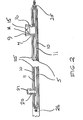
- a brewing kit generally designated 1 comprising a container in the form of a plastics bag 3 in a flattened configuration, which bag contains an intimate mixture 5 of premeasured amounts of concentrated fermentable material, dry sugar, - dried yeast, and other ingredients as hereinbefore described.
- the water and sugar contents of the mixture are such that the fermentation activity of the yeast is inhibited.
- the bag is provided with a filling means comprising a neck 7 closed by a removable tap 9. It also includes a pressure relief valve 20,21.
- the bag 3 is formed by superposing two generally rectangular sheets each formed by laminating together a 50 mu film of nylon 10 and a 30 m ⁇ film of polyethylene 11 and heat sealing the polyethylene faces of the sheets together at three edges.
- the neck 7 is moulded from low density polyethylene and is secured to the bag by heat sealing.
- the tap 9 is in the form of a "Scholler" valve which is fitted to the neck.
- the "Scholler” valve includes a generally disc-like portion 14 which ordinarily forms a resilient liquid tight seal against the neck 7 when the valve is fitted to the neck.
- the disc like portion 14 can, however, be distorted by applying lateral pressure to upstanding limb 15 by means of the thumb or the like whereby the seal between the portion 14 and the neck 7is broken to allow the contents of the bag to be removed via opening 16.in the closure member.
- the pressure relief valve comprises a tube 20 moulded from low density polyethylene and secured to the bag by heat sealing. Mounted on the end of the tube 20 is a rubber teat having a dome 21.
- the rubber teat is manufactured by West Pharma Rubber Ltd, under the designation R9, and furnished with a pierced hole or cut.
- the mixture 5 is introduced into the bag 3 and the bag is evacuated before it is heat sealed along its remaining edge.
- the bag is then enclosed in an outer sack 25 provided with two apertures through which the filling means and pressure relief valve of the bag 1 protrude.
- the sack 25 is made of a fabric woven from an ethylene/propylene copolymer and coated with polyethylene.
- the sack 25 is slightly smaller than the bag 3 and its seams are sewn for increased strength.
- the sack has a strap 26 at one end.
- the neck 7 is opened thereby releasing the vacuum in the bag 3.
- An appropriate recommended amount of water is introduced into the bag 3 via the neck 7 and the tap 9 is then replaced.
- the dome 21 of the teat has already been pierced e.g. with a No.16 syringe needle and the sack containing the bag is then hung up in a suitable place by the strap 26.
- the water dilutes the mixture 5 such that fermentation may commence and the pressure relief valve maintains the carbon dioxide content in the bag at the desired value.
- the brew is allowed to settle before it is dispensed from the tap 9.
- a mixture of 1.8 Kg of EDME HOPPED MALT EXTRACT, 1Kg of granulated sugar, 7 gms of dried yeast were introduced into a 22 litre plastics bag as described in the drawings.
- the bag was then sealed and enveloped in a strong s ' ack as described.
- the contents were diluted with 20 litres of cold water via the removable tap.
- the dome of the rubber teat had been pierced and the bag and its contents were supported in a vertical position via the strap of the sack for two weeks. After this time, a clear, highly potable beer could be withdrawn from the tap on demand.
- Example 1 was repeated using a mixture of 1450 gms Munton & Fison dry powdered Spraymalt A, 1Kg sugar, 7 gms dried yeast pellets, 0.1 ml Isohopcon ( a hop extract manufactured by Pauls & Whites Ltd, Reigate) and 0.01 ml essential oils of hops.
- the mixture was diluted to 221 ⁇ 2 litres with cold tap water. Fermentation-for two weeks yielded 221 ⁇ 2 litres of excellent bright beer.
- the mixture was allowed to ferment and the pressure of carbon dioxide within the bag was maintained throughout at 2-3psi (about 0.13 - 0.2 Bar), by providing an approximately sized hole in the rubber dome of the pressure relief valve. After three weeks, a very potable and tasty wine of bright dry fruity character was obtained. It effervesced pleasantly in the glass on withdrawal from the bag via the tap. Its specific gravity had declined to 1.001.
- the contents of the bag were diluted to 9 litres by the simple addition of cold water via the filling means.
- the specific gravity of.the diluted mixture was 1.09.
- the sack was supported by its strap from a hook on a wall at an ambient temperature of 17 0 C for 5 weeks.
- a pressure of 2-3 psi (about 0.13 - 0.2 Bar) developed within the-bag and was restrained by the sack.
- a wine of considerable excellence and flavour was obtained from the tap.
- the wine was bright and fruity and had a sparkling light character. Its specific gravity was 0.998.
Landscapes
- Organic Chemistry (AREA)
- Chemical & Material Sciences (AREA)
- Engineering & Computer Science (AREA)
- Genetics & Genomics (AREA)
- Wood Science & Technology (AREA)
- Bioinformatics & Cheminformatics (AREA)
- General Engineering & Computer Science (AREA)
- General Health & Medical Sciences (AREA)
- Health & Medical Sciences (AREA)
- Life Sciences & Earth Sciences (AREA)
- Biochemistry (AREA)
- Zoology (AREA)
- Food Science & Technology (AREA)
- Soy Sauces And Products Related Thereto (AREA)
- Distillation Of Fermentation Liquor, Processing Of Alcohols, Vinegar And Beer (AREA)
- Packages (AREA)
- Packging For Living Organisms, Food Or Medicinal Products That Are Sensitive To Environmental Conditiond (AREA)
Priority Applications (1)
| Application Number | Priority Date | Filing Date | Title |
|---|---|---|---|
| AT82303689T ATE23187T1 (de) | 1981-07-23 | 1982-07-14 | Verbessertes selbstbrauverfahren. |
Applications Claiming Priority (2)
| Application Number | Priority Date | Filing Date | Title |
|---|---|---|---|
| GB8122738 | 1981-07-23 | ||
| GB8122738 | 1981-07-23 |
Publications (3)
| Publication Number | Publication Date |
|---|---|
| EP0071365A2 true EP0071365A2 (fr) | 1983-02-09 |
| EP0071365A3 EP0071365A3 (en) | 1983-08-03 |
| EP0071365B1 EP0071365B1 (fr) | 1986-10-29 |
Family
ID=10523441
Family Applications (1)
| Application Number | Title | Priority Date | Filing Date |
|---|---|---|---|
| EP82303689A Expired EP0071365B1 (fr) | 1981-07-23 | 1982-07-14 | Améliorations du brassage domestique |
Country Status (4)
| Country | Link |
|---|---|
| EP (1) | EP0071365B1 (fr) |
| AT (1) | ATE23187T1 (fr) |
| AU (1) | AU551857B2 (fr) |
| DE (1) | DE3273993D1 (fr) |
Cited By (20)
| Publication number | Priority date | Publication date | Assignee | Title |
|---|---|---|---|---|
| GB2157314A (en) * | 1984-04-10 | 1985-10-23 | John Valentine Cross | Home brewing system |
| GB2168997A (en) * | 1984-12-19 | 1986-07-02 | Sodastream Ltd | Production of alcoholic beverages and kits therefor |
| GB2179672A (en) * | 1985-08-30 | 1987-03-11 | Sodastream Ltd | Ingredients kit for the production of alcoholic beverages |
| GB2183673A (en) * | 1985-11-21 | 1987-06-10 | David James Bellchambers | Device for the preparation of alcoholic beverages |
| WO1988005815A1 (fr) * | 1987-01-29 | 1988-08-11 | Bkg Holdings Limited | Enveloppe pressurisee |
| GB2202549A (en) * | 1987-03-20 | 1988-09-28 | Philip John Whitney | Foldable fermenter |
| GB2227004A (en) * | 1988-12-01 | 1990-07-18 | Liot Sa | Package containing concentrated egg products |
| GB2288584A (en) * | 1994-04-19 | 1995-10-25 | Continental Wine Experts Ltd | Package for home brewing |
| EP0678574A3 (fr) * | 1994-04-19 | 1996-12-18 | Continental Wine Experts Ltd | Emballage pour brassage domestique. |
| GB2306970A (en) * | 1995-11-07 | 1997-05-14 | Sachetpack Ltd | Yeast composition/package for home brewing |
| US5935843A (en) * | 1992-02-13 | 1999-08-10 | Osprey Biotechnics, Inc. | Method and apparatus for waste degradation |
| WO1999050383A3 (fr) * | 1998-04-01 | 1999-11-18 | Miracle Beer Company Limited | Micro-brasserie |
| FR2890973A1 (fr) * | 2005-09-19 | 2007-03-23 | Jean Michel Lebeault | Cuves de fermentation alcoolique pour la production d'un jus alcoolise. |
| WO2008041008A1 (fr) | 2006-10-06 | 2008-04-10 | Byotrol Plc | Procédé d'essai pour une activité biocide |
| US20110103716A1 (en) * | 2009-10-15 | 2011-05-05 | Bill Reilly | Liquid package and uses thereof |
| GB2483286A (en) * | 2010-09-03 | 2012-03-07 | John David Frankland | Vented bag with tap for brewing |
| GB2508869A (en) * | 2012-12-13 | 2014-06-18 | Ian Walker | Fermentation enclosure |
| WO2014016187A3 (fr) * | 2012-07-23 | 2014-06-26 | Granmalt Ag | Procédé de brassage de bière |
| US10448778B2 (en) | 2013-06-28 | 2019-10-22 | Watsonbrew Ip Limited | Beverage apparatus and method |
| US20240245070A1 (en) * | 2021-05-27 | 2024-07-25 | Ferdinand VAN HEERDEN | Processing of seeds of fruit |
Family Cites Families (7)
| Publication number | Priority date | Publication date | Assignee | Title |
|---|---|---|---|---|
| US2694641A (en) * | 1950-11-03 | 1954-11-16 | Harry G Atwood | Fermentation compositions and devices |
| GB1201183A (en) * | 1967-08-02 | 1970-08-05 | Domestic Bottlers Ltd | Improvements in or relating to fermentation |
| GB1323622A (en) * | 1970-10-02 | 1973-07-18 | Donn Bacchus Ltd | Fermentation of fermentable substrates |
| US3760711A (en) * | 1971-12-23 | 1973-09-25 | Plastimade Inc | Apparatus in the form of a kit for home wine making |
| US3946780A (en) * | 1973-01-04 | 1976-03-30 | Sellers John C | Fermentation container |
| GB1492992A (en) * | 1975-10-23 | 1977-11-23 | Brewicon Todd A | Production of wine |
| FR2457076A1 (fr) * | 1979-05-21 | 1980-12-19 | Dietetique Cie Gle | Preparation et procede pour la fabrication d'une boisson dietetique levuree |
-
1982
- 1982-07-14 DE DE8282303689T patent/DE3273993D1/de not_active Expired
- 1982-07-14 AT AT82303689T patent/ATE23187T1/de not_active IP Right Cessation
- 1982-07-14 EP EP82303689A patent/EP0071365B1/fr not_active Expired
- 1982-07-22 AU AU86299/82A patent/AU551857B2/en not_active Ceased
Cited By (28)
| Publication number | Priority date | Publication date | Assignee | Title |
|---|---|---|---|---|
| GB2157314A (en) * | 1984-04-10 | 1985-10-23 | John Valentine Cross | Home brewing system |
| GB2168997A (en) * | 1984-12-19 | 1986-07-02 | Sodastream Ltd | Production of alcoholic beverages and kits therefor |
| GB2179672A (en) * | 1985-08-30 | 1987-03-11 | Sodastream Ltd | Ingredients kit for the production of alcoholic beverages |
| GB2183673A (en) * | 1985-11-21 | 1987-06-10 | David James Bellchambers | Device for the preparation of alcoholic beverages |
| US4902521A (en) * | 1987-01-29 | 1990-02-20 | Bkg Holdings Limited | Fermentation pressure pack |
| WO1988005815A1 (fr) * | 1987-01-29 | 1988-08-11 | Bkg Holdings Limited | Enveloppe pressurisee |
| GB2202549A (en) * | 1987-03-20 | 1988-09-28 | Philip John Whitney | Foldable fermenter |
| GB2227004A (en) * | 1988-12-01 | 1990-07-18 | Liot Sa | Package containing concentrated egg products |
| GB2227004B (en) * | 1988-12-01 | 1993-06-16 | Liot Sa | Package for concentrated egg products |
| US5935843A (en) * | 1992-02-13 | 1999-08-10 | Osprey Biotechnics, Inc. | Method and apparatus for waste degradation |
| GB2288584B (en) * | 1994-04-19 | 1997-12-03 | Continental Wine Experts Ltd | Package for home brewing |
| GB2288584A (en) * | 1994-04-19 | 1995-10-25 | Continental Wine Experts Ltd | Package for home brewing |
| EP0678574A3 (fr) * | 1994-04-19 | 1996-12-18 | Continental Wine Experts Ltd | Emballage pour brassage domestique. |
| GB2306970B (en) * | 1995-11-07 | 1998-04-22 | Sachetpack Ltd | Yeast composition/package for use in home-brewing |
| GB2306970A (en) * | 1995-11-07 | 1997-05-14 | Sachetpack Ltd | Yeast composition/package for home brewing |
| WO1997017423A3 (fr) * | 1995-11-07 | 1997-07-17 | Sachetpack Ltd | Emballage pour la production d'une substance alcoolisee a domicile |
| WO1999050383A3 (fr) * | 1998-04-01 | 1999-11-18 | Miracle Beer Company Limited | Micro-brasserie |
| FR2890973A1 (fr) * | 2005-09-19 | 2007-03-23 | Jean Michel Lebeault | Cuves de fermentation alcoolique pour la production d'un jus alcoolise. |
| WO2008041008A1 (fr) | 2006-10-06 | 2008-04-10 | Byotrol Plc | Procédé d'essai pour une activité biocide |
| US8408790B2 (en) * | 2009-10-15 | 2013-04-02 | Bill Reilly | Liquid package and uses thereof |
| US20110103716A1 (en) * | 2009-10-15 | 2011-05-05 | Bill Reilly | Liquid package and uses thereof |
| GB2483286A (en) * | 2010-09-03 | 2012-03-07 | John David Frankland | Vented bag with tap for brewing |
| GB2483286B (en) * | 2010-09-03 | 2014-09-17 | John David Frankland | A method of storage preserving transporting and dispensing fermenting beverages |
| WO2014016187A3 (fr) * | 2012-07-23 | 2014-06-26 | Granmalt Ag | Procédé de brassage de bière |
| GB2508869A (en) * | 2012-12-13 | 2014-06-18 | Ian Walker | Fermentation enclosure |
| WO2014091245A1 (fr) * | 2012-12-13 | 2014-06-19 | Ian Walker | Enceinte de fermentation |
| US10448778B2 (en) | 2013-06-28 | 2019-10-22 | Watsonbrew Ip Limited | Beverage apparatus and method |
| US20240245070A1 (en) * | 2021-05-27 | 2024-07-25 | Ferdinand VAN HEERDEN | Processing of seeds of fruit |
Also Published As
| Publication number | Publication date |
|---|---|
| EP0071365A3 (en) | 1983-08-03 |
| DE3273993D1 (en) | 1986-12-04 |
| AU551857B2 (en) | 1986-05-15 |
| AU8629982A (en) | 1983-01-27 |
| EP0071365B1 (fr) | 1986-10-29 |
| ATE23187T1 (de) | 1986-11-15 |
Similar Documents
| Publication | Publication Date | Title |
|---|---|---|
| EP0071365B1 (fr) | Améliorations du brassage domestique | |
| US9803163B2 (en) | Systems for carbonating customized beverages | |
| RU2154389C2 (ru) | Способ приготовления хлебного кваса и состав для приготовления хлебного кваса | |
| US4746518A (en) | Process for the preparation of alcohol-free drinks with a yeast aroma | |
| US12359149B2 (en) | Kombucha-based alcoholic beverage brewing system and method | |
| US20230084750A1 (en) | Single-serve capsule for preparing alcoholic beer | |
| US20090028999A1 (en) | Beer brewing kit and brewing method to prepare wort for the kit | |
| US3798331A (en) | Neutral fermented alcoholic beverage | |
| GB1563475A (en) | Alcoholic beverage making composition and process | |
| US20230081190A1 (en) | Process of manufacturing a packaged liquid beer concentrate | |
| US4138499A (en) | Preparation of beer with reduced calories | |
| GB2157314A (en) | Home brewing system | |
| GB2145427A (en) | Home brewing kit | |
| RU2096446C1 (ru) | Способ производства пива | |
| NZ294950A (en) | Manufacturing an alcoholic beverage; pasteurisation at a lower temperature | |
| JP4162362B2 (ja) | 活性清酒及びその製造方法 | |
| US1302552A (en) | Manufacture of alcohol-reduced beverages. | |
| GB2072218A (en) | Sorghum beer | |
| JP2006166758A (ja) | 大麦、小麦及び麦芽を使用しない発泡アルコール飲料の製造方法及びその製造方法により製造した発泡アルコール飲料、並びに麦芽アルコール飲料の製造方法及びその製造方法により製造した麦芽アルコール飲料 | |
| GB2168997A (en) | Production of alcoholic beverages and kits therefor | |
| EP0110527A1 (fr) | Méthode et composition pour la fermentation de solutions sucrées | |
| NO855123L (no) | Fremgangsmaate ved fremstilling av alkoholiske drikker. | |
| JPS62232374A (ja) | 固定化酵母を用いた酒類の連続醗酵法 | |
| CN1076842A (zh) | 一种植物发酵饮料的制法 | |
| US20210348092A1 (en) | Method of Producing Beer or a Beer-Like Beverage and a Beer Concentrate |
Legal Events
| Date | Code | Title | Description |
|---|---|---|---|
| PUAI | Public reference made under article 153(3) epc to a published international application that has entered the european phase |
Free format text: ORIGINAL CODE: 0009012 |
|
| AK | Designated contracting states |
Designated state(s): AT BE CH DE FR GB IT LI LU NL SE |
|
| PUAL | Search report despatched |
Free format text: ORIGINAL CODE: 0009013 |
|
| AK | Designated contracting states |
Designated state(s): AT BE CH DE FR GB IT LI LU NL SE |
|
| 17P | Request for examination filed |
Effective date: 19840201 |
|
| RAP1 | Party data changed (applicant data changed or rights of an application transferred) |
Owner name: SODASTREAM LIMITED |
|
| GRAA | (expected) grant |
Free format text: ORIGINAL CODE: 0009210 |
|
| AK | Designated contracting states |
Kind code of ref document: B1 Designated state(s): AT BE CH DE FR GB IT LI LU NL SE |
|
| REF | Corresponds to: |
Ref document number: 23187 Country of ref document: AT Date of ref document: 19861115 Kind code of ref document: T |
|
| ITF | It: translation for a ep patent filed | ||
| ET | Fr: translation filed | ||
| REF | Corresponds to: |
Ref document number: 3273993 Country of ref document: DE Date of ref document: 19861204 |
|
| PG25 | Lapsed in a contracting state [announced via postgrant information from national office to epo] |
Ref country code: LU Free format text: LAPSE BECAUSE OF NON-PAYMENT OF DUE FEES Effective date: 19870731 |
|
| PGFP | Annual fee paid to national office [announced via postgrant information from national office to epo] |
Ref country code: NL Payment date: 19870731 Year of fee payment: 6 |
|
| PLBI | Opposition filed |
Free format text: ORIGINAL CODE: 0009260 |
|
| 26 | Opposition filed |
Opponent name: STATUS FURNISHING LIMITED TRADING AS BILGREY SAMSO Effective date: 19870728 |
|
| NLR1 | Nl: opposition has been filed with the epo |
Opponent name: STATUS FURNISHING LIMITED TRADING AS BILGREY SAMSO |
|
| PG25 | Lapsed in a contracting state [announced via postgrant information from national office to epo] |
Ref country code: AT Effective date: 19890714 |
|
| PG25 | Lapsed in a contracting state [announced via postgrant information from national office to epo] |
Ref country code: SE Effective date: 19890715 |
|
| PG25 | Lapsed in a contracting state [announced via postgrant information from national office to epo] |
Ref country code: LI Effective date: 19890731 Ref country code: CH Effective date: 19890731 Ref country code: BE Effective date: 19890731 |
|
| PGFP | Annual fee paid to national office [announced via postgrant information from national office to epo] |
Ref country code: GB Payment date: 19890731 Year of fee payment: 8 |
|
| BERE | Be: lapsed |
Owner name: SODASTREAM LTD Effective date: 19890731 |
|
| PG25 | Lapsed in a contracting state [announced via postgrant information from national office to epo] |
Ref country code: NL Effective date: 19900201 |
|
| NLV4 | Nl: lapsed or anulled due to non-payment of the annual fee | ||
| PG25 | Lapsed in a contracting state [announced via postgrant information from national office to epo] |
Ref country code: FR Free format text: LAPSE BECAUSE OF NON-PAYMENT OF DUE FEES Effective date: 19900330 |
|
| REG | Reference to a national code |
Ref country code: CH Ref legal event code: PL |
|
| PG25 | Lapsed in a contracting state [announced via postgrant information from national office to epo] |
Ref country code: DE Effective date: 19900403 |
|
| REG | Reference to a national code |
Ref country code: FR Ref legal event code: ST |
|
| PG25 | Lapsed in a contracting state [announced via postgrant information from national office to epo] |
Ref country code: GB Effective date: 19900714 |
|
| PLBN | Opposition rejected |
Free format text: ORIGINAL CODE: 0009273 |
|
| STAA | Information on the status of an ep patent application or granted ep patent |
Free format text: STATUS: OPPOSITION REJECTED |
|
| 27O | Opposition rejected |
Effective date: 19900721 |
|
| GBPC | Gb: european patent ceased through non-payment of renewal fee | ||
| EUG | Se: european patent has lapsed |
Ref document number: 82303689.2 Effective date: 19900418 |