EP0073577A2 - Commande de congélateur pour distributeur de crème glacée - Google Patents
Commande de congélateur pour distributeur de crème glacée Download PDFInfo
- Publication number
- EP0073577A2 EP0073577A2 EP82304118A EP82304118A EP0073577A2 EP 0073577 A2 EP0073577 A2 EP 0073577A2 EP 82304118 A EP82304118 A EP 82304118A EP 82304118 A EP82304118 A EP 82304118A EP 0073577 A2 EP0073577 A2 EP 0073577A2
- Authority
- EP
- European Patent Office
- Prior art keywords
- motor
- auger
- compressor
- mode
- mixture
- Prior art date
- Legal status (The legal status is an assumption and is not a legal conclusion. Google has not performed a legal analysis and makes no representation as to the accuracy of the status listed.)
- Ceased
Links
Images
Classifications
-
- G—PHYSICS
- G05—CONTROLLING; REGULATING
- G05D—SYSTEMS FOR CONTROLLING OR REGULATING NON-ELECTRIC VARIABLES
- G05D24/00—Control of viscosity
- G05D24/02—Control of viscosity characterised by the use of electric means
-
- A—HUMAN NECESSITIES
- A23—FOODS OR FOODSTUFFS; TREATMENT THEREOF, NOT COVERED BY OTHER CLASSES
- A23G—COCOA; COCOA PRODUCTS, e.g. CHOCOLATE; SUBSTITUTES FOR COCOA OR COCOA PRODUCTS; CONFECTIONERY; CHEWING GUM; ICE-CREAM; PREPARATION THEREOF
- A23G9/00—Frozen sweets, e.g. ice confectionery, ice-cream; Mixtures therefor
- A23G9/04—Production of frozen sweets, e.g. ice-cream
- A23G9/22—Details, component parts or accessories of apparatus insofar as not peculiar to a single one of the preceding groups
- A23G9/228—Arrangement and mounting of control or safety devices
-
- F—MECHANICAL ENGINEERING; LIGHTING; HEATING; WEAPONS; BLASTING
- F25—REFRIGERATION OR COOLING; COMBINED HEATING AND REFRIGERATION SYSTEMS; HEAT PUMP SYSTEMS; MANUFACTURE OR STORAGE OF ICE; LIQUEFACTION SOLIDIFICATION OF GASES
- F25C—PRODUCING, WORKING OR HANDLING ICE
- F25C2700/00—Sensing or detecting of parameters; Sensors therefor
- F25C2700/08—Power to drive the auger motor of an auger type ice making machine
-
- Y—GENERAL TAGGING OF NEW TECHNOLOGICAL DEVELOPMENTS; GENERAL TAGGING OF CROSS-SECTIONAL TECHNOLOGIES SPANNING OVER SEVERAL SECTIONS OF THE IPC; TECHNICAL SUBJECTS COVERED BY FORMER USPC CROSS-REFERENCE ART COLLECTIONS [XRACs] AND DIGESTS
- Y02—TECHNOLOGIES OR APPLICATIONS FOR MITIGATION OR ADAPTATION AGAINST CLIMATE CHANGE
- Y02P—CLIMATE CHANGE MITIGATION TECHNOLOGIES IN THE PRODUCTION OR PROCESSING OF GOODS
- Y02P60/00—Technologies relating to agriculture, livestock or agroalimentary industries
- Y02P60/80—Food processing, e.g. use of renewable energies or variable speed drives in handling, conveying or stacking
- Y02P60/85—Food storage or conservation, e.g. cooling or drying
Definitions
- This invention relates to soft-serve freezers of the type used to manufacture and dispense products such as frozen custard, ice cream, ice milk and the like.
- the invention is concerned with providing control for minimizing electric power consumption, minimizing wear of moving parts and apprising the operator of the condition of the product so that it can be assuredly put in optimum consistency before it is served.
- soft-serve freezers are comprised of a freezing cylinder that is charged with a suitable mix from a storage hopper.
- a motor driven auger is located concentrically within the cylinder and it serves to agitate and whip the mix during freezing and to force the mix out through a spigot when it is manually opened to dispense product.
- soft-serve freezers are used to dispense an ice cream or custard mix which has a suitable consistency for being consumed as an ice cream cone or a sundae, for example.
- dispensation of product to customers may occur at high or low periodicity.
- the product must be available at a temperature and consistency that provides customer satisfaction when it is served.
- An important object of the present invention is to provide a control system which minimizes electric energy consumption by the dispensing freezer, particularly when it is standing in an idle condition but is maintained in a state of readiness for serving product.
- An adjunct to this object is to provide for the freezer going automatically into an electric energy-saving mode such as overnight or at other times during which product is not being dispensed or is being dispensed infrequently.
- Another object is to provide for only refrigerating the product during the energy-saving mode, that is, avoiding use of the auger agitator during this mode.
- a corollary to this object is that the creamy mix does not become overagitated or excessively aerated which is manifested by the dispensed product being too fluidic and unattractive as is the case in some pre-existing dispensing freezers.
- Another object is to provide for avoiding unnecessary operational intervals of the auger, not only for the purpose of conserving electric power, but also for minimizing wear of the drive system and wear between the auger blades and the freezing cylinder.
- a very important object is to provide a visual indication of the condition of the mix so that the operator can respond by taking simple measures to optimize the condition.
- a corollary to this object is to provide a visual indication to the operator that the freezer has been in its energy- minimizing mode for such a long time that agitation of the mix is required before a serving is dispensed.
- a visual indication such as by means of a lamp and legend, is provided to the operator as an indication that a push-button switch should be pressed to bring about optimization of the consistency of the mix by agitating it and refrigerating it further in contemplation of dispensing the next serving.
- a visual indication is provided a short time thereafter, as to when the mix is ready to serve.
- Another feature of the new control system is that it determines and controls consistency of the mix precisely by monitoring the wattage consumed by the auger drive motor.
- Three inaccurate but commonly used prior art methods for determining consistency were to simply monitor motor current, refrigeration suction line'temperature or pressure or the mechanical torque imposed on the auger.
- liquid ice cream mix is frozen to the walls of a cylinder and an auger in the cylinder scrapes the mix off and mixes or agitates it. As temperature of the mix inside of the cylinder falls and continued freezing takes place, the viscosity of the mix increases.
- auger as used herein is intended to be a generic designation for any paddles, augers or beaters and the like which may be used to agitate the consummable mixture in the cylinder.
- the operator pushes a "push-to-serve" switch (hereinafter called a “make-ready” switch) for turning the auger drive motor and, shortly thereafter, turning the refrigerator compressor motor on.
- a "push-to-serve” switch hereinafter called a "make-ready” switch
- The-auger and compressor motors will remain on until the product has reached its proper consistency at which time the refrigerator and auger motors turn off and an indicator lamp associated with a push-button switch indicates to the operator that the product is ready to serve.
- the amount of time that the refrigerator compressor stays off is governed by the ambient temperature.
- the refrigerator is run periodically to compensate for the heat loss through the auger cylinder insulation.
- a timer is automatically reset to start its timing of the refrigerator off periods after the freezer has shut off. If no product is dispensed, the system goes automatically into an idle cycle or energy-saving mode. After the off period, as previously described, only the refrigeration will come on at automatically timed intervals.
- periodic refrigeration such as for less than a minute, may occur variously at 5 to 15 minute intervals, depending on ambient temperature.
- the auger motor does not turn on during a per- determined number of these intervals, typically somewhere between 2 and 6 intervals, depending on how the timer is programmed. After a predetermined number of these idle mode short refrigeration intervals occur, the "make-ready light turns on, indicating to the operator that the freezer should be switched to its make-ready mode if dispensing product is contemplated.
- the agitating auger and refrigerator are operated concurrently.
- auger motor wattage indicates that the mix has reached a proper consistency for serving
- the auger motor shuts off and the idle cycles are reinstated if no product mix is served.
- the auger drive motor and compressor drive motor will turn on and stay on as long as the dispenser spigot is open.
- the auger drive motor and compressor will remain on for a short minimum time or until the controller senses that the ice cream mix product in the freezer cylinder has reached its proper consistency. If product is dispensed after a certain number of idle period cycles, the timer resets and starts counting over after the freezer shuts off and the controller starts its idle cycles over again.
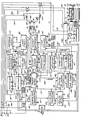
- FIGURE 1 The basic components of a soft-serve freezer are depicted in the lower right portion of FIGURE 1. These components include a refrigerator unit designated by a block labelled as a compressor and having the reference numeral 10.
- the refrigerator unit is conventional in that it contains a compressor and a compressor drive motor within a single sealed housing .
- a pair of power lines 11 and 12 supply electrical energy to the refrigerator motor.
- Motors used with such compressors are typically capacitor types.
- three motor input leads marked C, S and R indicate the conventional capacitor, start and run circuits of the motor.
- the capacitor switching relay is indicated by the block marked 13 and is conventional.
- the ice cream mix product conditioning, freezing and dispensing unit is designated generally by the numeral 15.
- This unit comprises a metal cylinder 16 having a fluid product input port 17.
- a hopper not shown, is usually mounted above the input port for feeding unfrozen ice cream mix or the like-to the interior of cylinder 16.
- Refrigeration coil 14 is in heat exchange relationship with the exterior of cylinder 16 for the purpose of cooling the mix to increase the viscosity. Insulation which normally surrounds the freezer coil 14 and cylinder 16 is symbolized by the rectangle marked 18.
- cylinder 16 there is an auger 19 that is driven by a motor 20 through the agency of a speed reducer pulley and belt system 26.
- the auger scrapes the frozen product from the interior walls of cylinder 16 and mixes it with the remainder of the product in the cylinder to obtain a mixture of uniform consistency or viscosity.
- Consummable product is dispensed by operating the lever 21 of a spigot 22.
- the power input lines to auger drive motor 20 are designated by the reference numerals 23 and 24.
- the power input terminals for the dispensing freezer are identified by the numeral 30.
- the power line voltage may be 240 volts ac.
- Previously mentioned power lines 11 and 12 which supply the motor in refrigerator compressor unit 10 are again identified in the upper left region of FIGURE 1. Tracing these lines will reveal that they include a pair of relay contacts 31 which are shown in their open circuit position in the far right region of the drawing. These contacts are operated by means of a relay coil 32. When relay coil 32 is energized, contacts 31 close and cause the motor in refrigerator compressor 10 to run.
- Two conductors 36 and 37 are connected to the secondary winding terminals of transformer 35 through one side of a double pole-double throw switch SWlA.
- the other side, SW1B will be pointed out later.
- Conductor 36 leads directly to relay coil 34 and to a jumper 38 which allows relay coil 34 and the other relay coil 32 to be energized from supply line 36.
- Line 37 serves as a common return line.
- Relay coil 34 is in a circuit with contacts 39 that are operated by a relay coil 41. Contacts 39 must be closed to establish current flow from line 36 to relay coil 34 and to common line 37.
- Another set of contacts 40, operated by a relay coil 42 are in a circuit with relay coil 32.
- the other side, SW1B, of the aforementioned double pole-double throw is in series with relay coil 32.
- the ganged switch contacts SWlA and SW1B are closed when it is desired to power-up or put the system in operation.
- switch SW1B is closed and contacts 40 are closed, compressor motor relay coil 32 becomes energized by reason of current flowing from line 38, through relay coil 32, switch SW1B, contacts 40 and to common line 37.
- Auger motor controlling contacts 39 are operated by relay coil 41 whose operating voltage, by way of example and not limitation, may be 12 volts.
- the other relay coil 42 whose energization brings about energization of relay coil 32 and the refrigerator compressor motor, is supplied with the same voltage as relay coil 41.
- the negative supply line is marked 43 and inspection of the circuit will reveal how it makes a common connection to relay coils 41 and 42.
- the negative line 43 for these relays- leads from a dc power supply unit that is designated generally by the reference numeral 44.
- the input lines 45 to this power supply connect to the output terminals of the secondary winding of step-down transformer 35.
- the input to power supply 44 may be 24 volts and the output may be 12 volts at the option of the circuit designer.
- the input to power supply 44 may be 24 volts and the output may be 12 volts at the option of the circuit designer.
- line 46 running from relay coil 41 becomes energized with +12 V dc from power supply 44, contacts 40 will close to bring about energization of relay coil 32 which closes contacts 31 and results in energization of the __motor in refrigerator compressor 10.
- the other is labelled “make ready” and SW4.
- SW3 will normally be called the spigot switch and SW4 will be called the make-ready switch.
- the spigot switch closes every time the spigot lever 21 is operated to deliver soft-serve product out of spigot 22.
- the make-ready switch SW4 is operated manually when it is necessary to bring about final conditioning of the product in the auger cylinder in contemplation of dispensing product.
- the make-ready switch is a push-button type where the push-button is labelled "push to serve" which really means push to make ready for serving.
- the make-ready indicator lamp is given the numeral 55. In the commercial embodiment-, this lamp provides a red light. Another indicator lamp 56 is shown adjacent make-ready indicator lamp 55.
- Indicator lamp 56 provides a green light in the commercial embodiment where it is covered by a light-transmitting shield that is labelled "ready-to-serve". In FIGURE 1 it is simply labelled “ready”. When this green light is produced by energization of lamp 56, the operator is informed that the final make-ready interval has been completed and that mix of proper consistency can be withdrawn from the spigot.
- proper consistency of the mix in cylinder 16 for serving is determined by sensing the wattage consumed by auger motor 20.
- the resistive torque imposed by auger 19 on motor 20 causes the motor to reach a particular wattage input level.
- Relying upon auger drive motor 20 wattage for indicating stiffness of the ice cream mix requires simultaneous detection of auger motor current and voltage.
- a current transformer 57 is connected around power line 23 which supplies auger drive motor 20.
- the leads'58 and 59 from the secondary winding of current transformer 57 run to a rectifier that is symbolized by the block marked 60 and labelled rectifier. This is a precision rectifier whose output line is marked 61.
- This output connects to an input A of a multiplier 62.
- the dc output 61 from rectifier 60 to input A is a voltage signal that is proportional to the current flowing to auger drive motor 20.
- a line leading from rectifier output line 52 to input B of the multiplier 62 supplies the multiplier with rectified and unfiltered voltage.
- the dc voltage to input B is proportional to the ac voltage that is applied to auger motor 20.
- a voltage compensator (volt. comp.) 66 is interposed between a dc output of power supply 44 and input C of multiplier 62. The compensator provides a signal to the multiplier 62 representative of the reciprocal of phase angle, 9.
- Auger motor torque and wattage input increases as the soft-serve mix freezes to a thicker viscosity.
- the corresponding signal on output line 64 of multiplier 62 is used to cause shutdown of the motor in refrigerator compressor unit 10 since it, of course, began to operate when freeze- down was initiated by closing switches SW1A and SW1B. The manner in which the controller functions to effectuate' the freezedown cycle will be discussed in greater detail later.
- the compressor 10 and auger drive motor 20 will run until the mix has reached proper consistency and then the system will go into its energy-saving mode wherein the compressor will remain off for substantial time intervals and then turn on for short intervals to keep the mix in a satisfactorily viscous condition.
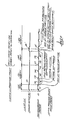
- FIGURE 2 timing diagram In this diagram, the timing functions of the auger motor and refrigerator motor are labelled correspondingly. Observe in FIGURE 2 that, during the freezedown cycle which was just briefly discussed, the auger drive motor 20 will turn on in response to the momentary make-ready switch SW4 being operated and a few seconds later the refrigerator motor will turn on. Both will run for that period of time which is required to bring up the soft-serve ice cream mix in the auger cylinder 16 to the proper viscosity or consistency. During this time, make-ready indicator lamp 55 will be energized for displaying a red indication to the operator.
- the refrigerator motor is initially off for a time interval marked 72 and then it turns on for a typical time interval 73 which is followed by off intervals such as those marked 74, 76, 78 and 80 between which there are short refrigerator "on-time" intervals 75, 77 and 79.
- the controller is provided with means for permitting the frequency and durations of the off and on periods to be selected.
- the number of on-off cycles such as 72,73 and 74,75 and 76,77 before which the auger motor must be commanded to run may be selected.
- the mix is assumed to remain in a ready-to-serve condition.
- the amount of time that the compressor stays off is governed by the ambient temperature.
- the off periods such as the one marked 72 might have a fifteen-minute duration if the ambient temperature were 70 F/and have a shorter duration such as five minutes if the ambient temperature is high such as near 100 F (32,8°C)
- the off periods are, of course, shorter if the ambient temperature is high, since a greater heat gain by the mix in the cylinder 16 through the freezer insulation from the environment can be expected under high ambient temperature conditions.
- the refrigerator on-time periods such as the one marked 73, during the idle or energy-saving mode, are governed strictly by a selectable timing function independently of ambient temperature.
- the green ready light 56 will remain on to indicate to the operator that the mix is ready to serve.
- the interval during which the green lamp remains energized is indicated on the diagram.
- the controller effectuates energization of the red make-ready lamp -55 to indicate to the operator that make-ready switch SW4 should be depressed when dispensation of mix from the spigot 22 is contemplated.
- this make-ready switch will cause the auger motor 20 and the refrigerator compressor 10 to be energized and, if no mix were dispensed, the auger motor and compressor would run until proper consistency of the mix is reached, resulting in the torque on the motor increasing and its wattage increasing to bring about termination of compressor and auger operation as previously mentioned.
- the timer At any time that product is dispensed, however, the timer, to be discussed later, is automatically reset to start its timing of the off periods of the refrigerator after it shuts off. In fact, if product is dispensed after only two idle period or energy saving cycles, the timer will reset and renew the off-on timing cycles.
- both the auger drive motor ZO and the refrigerator compressor 10 turn on. As will be seen later when the controller structure is further described, both will stay on as long as the spigot is open.
- the auger drive motor 20 and the compressor 10 will remain on for a minimum of a certain number of seconds, such as twelve, or until the wattage dependent consistency monitor senses that the product has reached its proper consistency.
- FIGURE 2 exemplifies at points marked 81 and 81' where the motors would have shut off because the set point wattage was reached but both of the compressor and auger motor turned on again because the spigot was opened to withdraw product. A detailed description of the structural and functional features of the circuitry in FIGURE 1 will now be resumed.
- One of the output lines 87 from the latch circuit is a control signal input to a switching circuit 88 which is identified an an "output auger' circuit since it is involved in causing auger motor 20 to run.
- a switching circuit 88 which is identified an "output auger' circuit since it is involved in causing auger motor 20 to run.
- Output auger circuit 88 provides a signal by way of line 89 to a time delay circuit which is represented by a block having that legend and the reference numeral 90.
- Time delay circuit 90 is indicated to be a three-second timer but it can be set for other time periods. The purpose of the time delay circuit is to cause the motor in refrigerator compressor 10 to turn on a short time after the auger motor turns on and to turn off a short time after the auger motor turns off. Thus, switching transients are not reflected as extensively through the entire control system. In any event, after the short time delay interval imposed by timer 90 has expired, it provides a signal by way of its output line 91 to a circuit that has the legend "output compressor" and is identified by the numeral 92.
- Output compressor circuit 92 is a switching circuit involved in causing the refrigerator 10 motor to run and is enabled by the signal from the time delay circuit 90. Circuit 92 responds by supplying a positive voltage by way of line 47 to compressor motor relay coil 42. This causes contacts 40 to close and energize relay coil 32. When the latter coil is energized, line contacts 31 close to energize the motor in refrigerator compressor unit 10 by way of power lines 11 and 12. The motors for the auger and compressor are now running concurrently. The viscosity of the mix in cylinder 16 is now increasing. The current to the auger motor 20 is being sensed by way of current transformer 57 and the multiplier 62 is producing the output signal on line 64 which is representative of the wattage being supplied to auger drive motor 20 as was previously explained.
- the signal on line 64 representative of auger motor wattage is an input to a block labelled consistency adjustment and having the reference numeral 95.
- Block 95 is basically an analog signal comparator. It is supplied with a positive dc voltage that can be raised or lowered by adjusting potentiometers 96, 97 and 99. Potentiometers 96 and 97 are sized such that they can provide a large change in voltage, acting as a coarse adjustment. Switch 98 can be switched to put potentiometer 96 in the circuit to set the consistency adjustment circuit 95 for making skakes or to put potentiometer 97 in the circuit for obtaining a suitable mix consistency or viscosity for making cones.
- the signal from the multiplier on line 64 is fed to the negative side of the comparator.
- the signal from the circuit including potentiometer 99, 96 or 97 and switch 98 is fed to the positive side of the comparator.
- the output 100 of the comparator switches to ground.
- Each switching spike which occurs as the product approaches consistency causes the LED 106 to flash. This aids in setting the control to the desired consistency cutout point.
- latch circuit 86 should not open to cause the auger and refrigerator motors to stop until a predetermined number of spikes occur. This is accomplished with the averaging circuit that is represented by the block marked 101.
- the averaging circuit 101 smooths the spikes, which actually result from the auger motor encountering short term variations in load. For instance, the mix in the cylinder 16 may be more frozen or solidified in some zones than in others so that auger 19 encounters variable countertorque as it rotates or there may be imperfections in the drive system that cause load variations.
- the smooth analog output signal from averaging circuit 101 is fed by way of a line 102 back to latch 86 which is basically a comparator. If the wattage being consumed by the auger drive motor 20 corresponds to a viscosity below a set point, the output signal on line 102 will be below a threshold level. Hence, the latch 86 will remain set. As consistency of the mix increases, however, the output signal on line 102 from the averaging circuit will eventually exceed the set point and the threshold level of the latch circuit 86 in which case the latch circuit will be switched to turn off. The signal state on output line 87 of latch circuit 86 then changes and the output auger circuitry 88 responds by deenergizing relay 41 to bring about deenergization of the auger drive motor 20.
- the previously mentioned three-second time delay 90 in FIGURE 1 responds to a signal on line 89 indicative of the output auger or switching circuit 88 having changed state by initiating another three-second time delay period. At the end of this period the time delay operates the output compressor switching circuit 92, that is, the latter effectuates deenergization of the refrigerator compressor motor control relay 42 to thereby terminate refrigeration. This corresponds to the point in time marked 71 in FIGURE 2.
- the system now goes into its power-saving mode as will be described shortly hereinafter.
- minimum run timer which has the reference numeral 95.
- this timer measures a twelve-second interval. Its purposes are to make sure that whenever the motors are energized they will run for at least twelve seconds to pass out of their starting current interval and to agitate and assure a consistently blended mix before starting to sense its consistency.
- the minimum run timer 103 responds to the latch circuit 86 being set by providing a signal that results in the consistency adjustment circuit maintaining an output signal that is below the set point so that the signal feeding through the averaging circuit 101 remains for 12 seconds.
- start-up lamp set circuit 108 When power first comes on, start-up lamp set circuit 108 provides an input signal to the flip-flop circuitry in block 110 to cause the output state of the flip-flop to be that which results in the red make-ready lamp 55 going on. It will go on even before the momentary make-ready switch SW4 has been turned on to initiate mix freezing and agitation. The fact that the make-ready lamp 55 is on suggests to the operator that the make-ready switch SW4 should be operated. Thus, the start-up lamp set circuit 108 is a way of being positive that the red make-ready lamp 55 will go on when power is first turned on.
- Means are provided for turning off the make-ready lamp 55 and turning on the green ready lamp 56 when set point consistency of the mix has been attained.
- An output auger" detector circuit symbolized by the block marked 113 is involved in this function. It detects whether or not the auger motor 20 is energized. It has a signal input line 114 fed from an output of the output auger switching circuit 88. The output auger detector circuit 113 detects when the auger is on and when it shuts off upon set point being reached, there is a signal level change on line 114 which causes the auger output detector 113 to deliver a signal by way of its output line 115 to the make-ready lamp or flip-flop circuit 110. This signal changes the output state of the flip-flop.
- the output state change causes the'lamp driver circuit 112 to turn off the red make-ready lamp 55 and turn on green ready lamp 56.
- the operator is now apprised visually that the mix is in a ready-to-serve condition.
- the auger output detector circuit 113 and start-up lamp set circuit 108 are involved in controlling the lamp when the system is in the power-up mode. They are also involved at any time that the auger motor and refrigerator motor are switched on by operation of make-ready switch SW4 or spigot switch SW3 and the make-ready light 55 is on prior to activating a switch.
- the lamps are controlled by other means during the times when the system is in the electrical energy-saving mode which will now be described.
- the auger motor and the refrigerator motor turn off at the points in time marked 70 and 71, respectively. If no mix product is withdrawn through spigot 22, that is, if spigot switch SW3 is not operated, the system will go into its energy-saving mode wherein it only uses that minimum of electric power which is required to keep the mix at a temperature that will result in it having a reasonably high viscosity but not necessarily uniform viscosity through the volume of the cylinder 16. In other words, during the energy-saving mode only the refrigerator compressor will turn on for short intervals between long intervals and the auger drive motor will not run during that time unless it is :commanded to do so by the operator.
- the first time-delay period following proper mix consistency having been reached is indicated by the numeral 72. It is followed by short intervals such as the one marked 73 during which the refrigerator motor is turned on for a short interval. How this is done will now be discussed in reference to FIGURE 1.
- the off time of the refrigerator compressor 10 during the energy-saving mode depends on the ambient temperature.
- the on time is governed by a measured time interval and remains constant at whatever time it is set.
- the ambient temperature is sensed by an electronic temperature-to-voltage converter which is symbolized by the block marked 120 in the left region of FIGURE 1.
- This is a commercially available circuit element. It provides an analog signal on its output line 121 which corresponds in magnitude to prevailing ambient temperature.
- the slope of the temperature versus output signal amplitude is settable by adjusting a potentiometer 119.
- a typical contemplated ambient temperature range that must be taken into account for a soft serve freezer such as is here under consideration is 70 0 F/t o
- the analog output signal from the temperature converter 120 is fed by way of line 121 to a voltage-to-time converter represented by the block marked 122.
- the converter circuit 122 is basically a voltage controlled oscillator which outputs pulses on line 123 at a rate which increases and decreases in correspondence with ambient temperature. The objective is to use the pulse rate as a measure of time to have the refrigerator motor off cycles be shorter as ambient temperature rises to compensate for the greater loss through the refrigerator coil insulation 18 as ambient temperature increases.
- the quiescent or refrigerator off time periods are determined with a pulse-counting circuit which is symbolized by the block marked 124 and which, for the sake of illustration and not limitation, is designated as a divide-by-10 counter.
- a pulse-counting circuit which is symbolized by the block marked 124 and which, for the sake of illustration and not limitation, is designated as a divide-by-10 counter.
- the output pulse rate from the converter 122 is one pulse every half minute, dividing by ten or counting every tenth pulse would result in an output signal from divide-by-ten counter every 5 minutes. This might correspond roughly to an ambient temperature of about 70°F (21.1°C) and a measured time period of about 15 minutes.
- a signal is sent from divide-by-ten counter 124 by way of a line 125 to a compressor run timer represented by the block marked 126.
- Timer 126 may be based on a type 556 integrated circuit timer, not shown.
- the signal is coupled through the time delay circuit to the output compressor circuit 92 which then effectuates grounding of relay coil line 47 to energize coil 42 and cause the refrigerator compressor motor to turn on.
- the length of time that the compressor remains on during this and ensuing energy-saving mode cycles is determined by compressor run timer 126.
- timer 126 may keep the refrigerator compressor on for about 50 seconds although this is a matter of choice and depends on the paramenters of a particular freezer system.
- the refrigerator on time is adjustable but constant for any particular adjustment. Selection of adjustment of the on-time interval can be made with a potentiometer 128 which is in a time constant circuit, not fully shown, associated with the timer 126.
- Typical refrigerator run intervals during the energy-saving mode are illustrated by the intervals marked 73, 75 77 and 79 in FIGURE 2.
- compressor output circuit 92 sends a reset signal by way of line 129 to the pulse counter 124 to zero it to begin timing out the next refrigerator off period.
- the controller provides for indicating to the operator that the mix should be agitated and refrigerated or made ready before any lmix is dispensed from spigot 22.
- Another counter symbolized by the block marked 130 is provided for giving the operator this indication.
- Counter 130 bears the legend, divide by 3, but it should be understood that this is a programmable counter that might be set to divide by 2 through 6, for instance.
- Counter 130 has an input line 131 from counter 124.
- counter 130 is a divide-by-3 counter for the sake of example, it will respond to counting three of the refrigerator off-time periods that are measured by counter 124 by producing an output signal at that time on a line 132.
- Line 132 is coupled to the make-ready lamps or flip-flop circuit 110.
- the flip-flop circuit changes state and refelcts this change through its output line 111.
- the result is that the green ready lamp 56 which has been on, is turned off.
- the red make-ready lamp 55 is turned on. This indicates to the operator that make-ready switch SW4 should be closed to effectuate operation of the compressor and auger to assure that the mix in cylinder 16 has a high enough and uniform enough viscosity before any mix is dispensed through the spigot 22.
- the operator can simply forego actuating the make-ready switch SW4 until an impending sale.
- the refrigerator long off-time and short on-time periods will continue to occur cyclically and no power will unnecessarily be consumed by the auger motor.
- the red make-ready lamp comes on if there have been three consecutive refrigerator off or idle period cycles. If product is dispensed after two idle period cycles, for instance, the divide-by-ten counter 124 will reset and start counting over after the refrigerator compressor shuts off and starts its idle cycles over again.
- the divide-by-three counter 130 also resets in response to a reset signal by way of line 133 from auger output circuit 88. Then the divide-by-three counter starts counting for another three cycles in this illustrative embodiment.
Landscapes
- Engineering & Computer Science (AREA)
- Life Sciences & Earth Sciences (AREA)
- Chemical & Material Sciences (AREA)
- Food Science & Technology (AREA)
- Polymers & Plastics (AREA)
- Physics & Mathematics (AREA)
- General Physics & Mathematics (AREA)
- Automation & Control Theory (AREA)
- Confectionery (AREA)
- Devices That Are Associated With Refrigeration Equipment (AREA)
Applications Claiming Priority (2)
| Application Number | Priority Date | Filing Date | Title |
|---|---|---|---|
| US298677 | 1981-09-02 | ||
| US06/298,677 US4383417A (en) | 1981-09-02 | 1981-09-02 | Soft-serve freezer control |
Related Child Applications (2)
| Application Number | Title | Priority Date | Filing Date |
|---|---|---|---|
| EP85111023A Division EP0179238A3 (fr) | 1981-09-02 | 1982-08-04 | Commande de congélateur pour distributeur de crème glacée |
| EP85111023.9 Division-Into | 1982-08-04 |
Publications (2)
| Publication Number | Publication Date |
|---|---|
| EP0073577A2 true EP0073577A2 (fr) | 1983-03-09 |
| EP0073577A3 EP0073577A3 (fr) | 1983-06-29 |
Family
ID=23151546
Family Applications (2)
| Application Number | Title | Priority Date | Filing Date |
|---|---|---|---|
| EP82304118A Ceased EP0073577A3 (fr) | 1981-09-02 | 1982-08-04 | Commande de congélateur pour distributeur de crème glacée |
| EP85111023A Withdrawn EP0179238A3 (fr) | 1981-09-02 | 1982-08-04 | Commande de congélateur pour distributeur de crème glacée |
Family Applications After (1)
| Application Number | Title | Priority Date | Filing Date |
|---|---|---|---|
| EP85111023A Withdrawn EP0179238A3 (fr) | 1981-09-02 | 1982-08-04 | Commande de congélateur pour distributeur de crème glacée |
Country Status (3)
| Country | Link |
|---|---|
| US (1) | US4383417A (fr) |
| EP (2) | EP0073577A3 (fr) |
| CA (1) | CA1181833A (fr) |
Cited By (2)
| Publication number | Priority date | Publication date | Assignee | Title |
|---|---|---|---|---|
| EP0162023A3 (fr) * | 1984-05-15 | 1986-07-30 | Filippi, Cesarina | Appareil domestique pour la fabrication de crème glacée muni d'un dispositif d'arrêt automatique des pales d'agitation |
| EP0382275A1 (fr) * | 1989-02-08 | 1990-08-16 | Unilever N.V. | Procédé et appareil pour la fabrication de crème glacée |
Families Citing this family (18)
| Publication number | Priority date | Publication date | Assignee | Title |
|---|---|---|---|---|
| US4736593A (en) * | 1985-12-06 | 1988-04-12 | Williams J Dolph | Frozen beverage machine |
| US5103649A (en) * | 1990-03-19 | 1992-04-14 | Imi Cornelius Inc. | Frozen carbonated beverage apparatus and method and control system therefor |
| US5095710A (en) * | 1990-03-19 | 1992-03-17 | Imi Cornelius Inc. | Frozen carbonated beverage apparatus and method and control system therefor |
| US5706661A (en) * | 1995-09-29 | 1998-01-13 | Frank; Jimmy I. | Apparatus and method for controlling the consistency and quality of a frozen carbonated beverage product |
| US5743097A (en) * | 1996-01-23 | 1998-04-28 | Frank; Jimmy I. | Apparatus and method for controlling the flow rate of refrigerant to a refrigeration device |
| US20010037656A1 (en) * | 1996-02-16 | 2001-11-08 | Ross Harold F. | Ice cream machine including a baffled evaporator |
| US6370892B1 (en) * | 1996-02-16 | 2002-04-16 | Harold F. Ross | Batch process and apparatus optimized to efficiently and evenly freeze ice cream |
| US6430952B1 (en) | 1997-04-18 | 2002-08-13 | Bun-O-Matic Corporation | Cold drink system |
| US6463746B1 (en) * | 2000-09-27 | 2002-10-15 | Scotsman Ice Systems | Ice producing machine and method with gear motor monitoring |
| US6651448B2 (en) | 2002-02-12 | 2003-11-25 | Harold F. Ross | Ice cream machine including a controlled input to the freezing chamber |
| US6662592B2 (en) | 2002-02-12 | 2003-12-16 | Harold F. Ross | Ice cream machine including a secondary cooling loop |
| US6637214B1 (en) | 2002-05-21 | 2003-10-28 | V & L Tool, Inc. | Frozen custard machine |
| JP2005003260A (ja) * | 2003-06-11 | 2005-01-06 | Hoshizaki Electric Co Ltd | オーガ式製氷機の保護装置 |
| US7047758B2 (en) * | 2003-10-15 | 2006-05-23 | Ross's Manufacturing, Llc | Ice cream machine with specialized motor |
| DK176397B1 (da) * | 2005-10-07 | 2007-11-26 | Gram Equipment As | Fremgangsmåde og styring af en termisk behandlingsenhed samt termisk behandlingsenhed |
| WO2016028046A1 (fr) * | 2014-08-19 | 2016-02-25 | 주식회사 아이스트로 | Appareil de fabrication de crème glacée, procédé de fabrication de crème glacée, et procédé de distribution de crème glacée |
| US9986664B1 (en) * | 2014-12-01 | 2018-05-29 | Amazon Technologies, Inc. | Variable time delay on datacenter pod direct cooling |
| US10512276B2 (en) | 2015-02-09 | 2019-12-24 | Fbd Partnership, Lp | Multi-flavor food and/or beverage dispenser |
Family Cites Families (11)
| Publication number | Priority date | Publication date | Assignee | Title |
|---|---|---|---|---|
| US1449458A (en) * | 1921-08-30 | 1923-03-27 | Lowell A Sutermeister | Apparatus for manufacture of ice cream |
| US1987258A (en) * | 1933-02-11 | 1935-01-08 | Bertram Y Kinzey | Refrigerating apparatus |
| US2116002A (en) * | 1936-10-15 | 1938-05-03 | Penn Electric Switch Co | Refrigerating system |
| US3013398A (en) * | 1957-10-31 | 1961-12-19 | Gen Equipment Mfg Co Inc | Viscosity control system and apparatus |
| US3059444A (en) * | 1959-09-16 | 1962-10-23 | Cherry Burrell Corp | Freezing apparatus |
| US3188826A (en) * | 1961-10-27 | 1965-06-15 | Apaw Sa | Apparatus for automatically controlling the hardness of ice cream in continuous ice cream machines |
| US3180104A (en) * | 1962-09-25 | 1965-04-27 | Duke H C & Son Inc | Apparatus for sensing the change of viscosity of a liquid |
| DE2225460C3 (de) * | 1972-05-25 | 1978-10-26 | Prosenbauer & Co. Maschinenhandel, Wien | Vorrichtung zur Bereitung und Ausgabe von gefrorenen Erfrischungsprodukten und gekühlten Getränken |
| US3898859A (en) * | 1974-02-13 | 1975-08-12 | Duke H C & Son Inc | Apparatus and method for the preparation of soft serve products |
| US4257237A (en) * | 1979-05-15 | 1981-03-24 | King-Seeley Thermos Co. | Electrical control circuit for ice making machine |
| US4275567A (en) * | 1980-03-31 | 1981-06-30 | Beatrice Foods Co. | Method and apparatus for controlling operation of a soft-serve machine |
-
1981
- 1981-09-02 US US06/298,677 patent/US4383417A/en not_active Ceased
-
1982
- 1982-06-23 CA CA000405865A patent/CA1181833A/fr not_active Expired
- 1982-08-04 EP EP82304118A patent/EP0073577A3/fr not_active Ceased
- 1982-08-04 EP EP85111023A patent/EP0179238A3/fr not_active Withdrawn
Cited By (2)
| Publication number | Priority date | Publication date | Assignee | Title |
|---|---|---|---|---|
| EP0162023A3 (fr) * | 1984-05-15 | 1986-07-30 | Filippi, Cesarina | Appareil domestique pour la fabrication de crème glacée muni d'un dispositif d'arrêt automatique des pales d'agitation |
| EP0382275A1 (fr) * | 1989-02-08 | 1990-08-16 | Unilever N.V. | Procédé et appareil pour la fabrication de crème glacée |
Also Published As
| Publication number | Publication date |
|---|---|
| US4383417A (en) | 1983-05-17 |
| CA1181833A (fr) | 1985-01-29 |
| EP0073577A3 (fr) | 1983-06-29 |
| EP0179238A2 (fr) | 1986-04-30 |
| EP0179238A3 (fr) | 1986-12-30 |
Similar Documents
| Publication | Publication Date | Title |
|---|---|---|
| US4383417A (en) | Soft-serve freezer control | |
| US4712920A (en) | Apparatus for manufacturing soft ice cream and the like | |
| USRE32360E (en) | Soft-serve freezer control | |
| US5095710A (en) | Frozen carbonated beverage apparatus and method and control system therefor | |
| EP3442351B1 (fr) | Distributeur de produit alimentaire semi-liquide visqueux et procédé et système de régulation des caractéristiques d'un produit alimentaire | |
| US4838702A (en) | Electric control apparatus for icecream-making machine | |
| US4703628A (en) | Apparatus for preparing frozen products | |
| US4551025A (en) | Apparatus for manufacturing soft ice cream and the like | |
| US5103649A (en) | Frozen carbonated beverage apparatus and method and control system therefor | |
| US4275567A (en) | Method and apparatus for controlling operation of a soft-serve machine | |
| US5158506A (en) | Ice-cream manufacturing apparatus and refrigeration controller therefor | |
| US6490872B1 (en) | Apparatus and a method for clean-in-place for a semi-frozen food dispensing machine | |
| US5212954A (en) | Frozen confection machine and heating apparatus and method therefore | |
| US4548054A (en) | Mixing apparatus and method | |
| EP0105586A2 (fr) | Appareil pour la fabrication de produits alimentaires congelés | |
| JP2004147654A (ja) | 使用する混液に基づいてアイスクリーム生産サイクルを制御し、最適化する方法 | |
| EP0423898A2 (fr) | Système électronique programmable pour machines à production de pâtes consumables, plus spécialement pour la fabrication de glaces | |
| JP2003505011A (ja) | 半冷凍食品ディスペンシング機械の弁およびドアアセンブリ | |
| WO1997026801A1 (fr) | Appareil et procede de regulation du debit de refrigerant dans un refrigerateur | |
| GB2145208A (en) | Refrigeration system | |
| EP0391449B1 (fr) | Machine de fabrication de glace à vis sans fin | |
| US20090179040A1 (en) | Method and apparatus for an ice level determiner | |
| US3456839A (en) | Dispenser for chilled edible products | |
| US3479835A (en) | Machine for dispensing a semi-solid,chilled,edible product | |
| US3279205A (en) | Soft serve freezer control |
Legal Events
| Date | Code | Title | Description |
|---|---|---|---|
| PUAI | Public reference made under article 153(3) epc to a published international application that has entered the european phase |
Free format text: ORIGINAL CODE: 0009012 |
|
| AK | Designated contracting states |
Designated state(s): DE GB IT |
|
| PUAL | Search report despatched |
Free format text: ORIGINAL CODE: 0009013 |
|
| AK | Designated contracting states |
Designated state(s): DE GB IT |
|
| 17P | Request for examination filed |
Effective date: 19830822 |
|
| STAA | Information on the status of an ep patent application or granted ep patent |
Free format text: STATUS: THE APPLICATION HAS BEEN REFUSED |
|
| 18R | Application refused |
Effective date: 19870117 |
|
| RIN1 | Information on inventor provided before grant (corrected) |
Inventor name: MARTINEAU, TOM NEWHOUSE |