EP0077415A1 - Mischungen von Polycarbonatelastomeren mit einkondensierten hydrierten Dimerfettsäureestern mit Polyolefinen und gegebenenfalls anderen Polycarbonaten - Google Patents
Mischungen von Polycarbonatelastomeren mit einkondensierten hydrierten Dimerfettsäureestern mit Polyolefinen und gegebenenfalls anderen Polycarbonaten Download PDFInfo
- Publication number
- EP0077415A1 EP0077415A1 EP81108608A EP81108608A EP0077415A1 EP 0077415 A1 EP0077415 A1 EP 0077415A1 EP 81108608 A EP81108608 A EP 81108608A EP 81108608 A EP81108608 A EP 81108608A EP 0077415 A1 EP0077415 A1 EP 0077415A1
- Authority
- EP
- European Patent Office
- Prior art keywords
- weight
- fatty acid
- polycarbonate
- dimer fatty
- bis
- Prior art date
- Legal status (The legal status is an assumption and is not a legal conclusion. Google has not performed a legal analysis and makes no representation as to the accuracy of the status listed.)
- Granted
Links
- 229920000515 polycarbonate Polymers 0.000 title claims abstract description 38
- 239000004417 polycarbonate Substances 0.000 title claims abstract description 38
- -1 fatty-acid esters Chemical class 0.000 title claims abstract description 37
- 235000014113 dietary fatty acids Nutrition 0.000 title claims abstract description 34
- 239000000194 fatty acid Substances 0.000 title claims abstract description 34
- 229930195729 fatty acid Natural products 0.000 title claims abstract description 34
- 239000000203 mixture Substances 0.000 title claims abstract description 26
- 229920001971 elastomer Polymers 0.000 title claims description 9
- 239000000806 elastomer Substances 0.000 title claims description 9
- 229920000098 polyolefin Polymers 0.000 title abstract description 7
- 239000000539 dimer Substances 0.000 claims abstract description 32
- 125000003118 aryl group Chemical group 0.000 claims abstract description 12
- 229920001169 thermoplastic Polymers 0.000 claims abstract description 9
- 239000004416 thermosoftening plastic Substances 0.000 claims abstract description 9
- IISBACLAFKSPIT-UHFFFAOYSA-N bisphenol A Chemical compound C=1C=C(O)C=CC=1C(C)(C)C1=CC=C(O)C=C1 IISBACLAFKSPIT-UHFFFAOYSA-N 0.000 claims description 18
- 150000004665 fatty acids Chemical class 0.000 claims description 17
- 229920000728 polyester Polymers 0.000 claims description 11
- 229920000573 polyethylene Polymers 0.000 claims description 8
- 239000004698 Polyethylene Substances 0.000 claims description 7
- 238000000034 method Methods 0.000 claims description 7
- 125000002496 methyl group Chemical group [H]C([H])([H])* 0.000 claims description 7
- 239000000460 chlorine Substances 0.000 claims description 6
- WKBOTKDWSSQWDR-UHFFFAOYSA-N Bromine atom Chemical compound [Br] WKBOTKDWSSQWDR-UHFFFAOYSA-N 0.000 claims description 5
- ZAMOUSCENKQFHK-UHFFFAOYSA-N Chlorine atom Chemical compound [Cl] ZAMOUSCENKQFHK-UHFFFAOYSA-N 0.000 claims description 5
- ISWSIDIOOBJBQZ-UHFFFAOYSA-N Phenol Chemical compound OC1=CC=CC=C1 ISWSIDIOOBJBQZ-UHFFFAOYSA-N 0.000 claims description 5
- 229910052801 chlorine Inorganic materials 0.000 claims description 5
- 229910052736 halogen Inorganic materials 0.000 claims description 5
- 150000002367 halogens Chemical class 0.000 claims description 5
- ACCCMOQWYVYDOT-UHFFFAOYSA-N hexane-1,1-diol Chemical compound CCCCCC(O)O ACCCMOQWYVYDOT-UHFFFAOYSA-N 0.000 claims description 5
- 229910052739 hydrogen Inorganic materials 0.000 claims description 5
- 239000006085 branching agent Substances 0.000 claims description 4
- 230000008020 evaporation Effects 0.000 claims description 4
- 238000001704 evaporation Methods 0.000 claims description 4
- SMZOUWXMTYCWNB-UHFFFAOYSA-N 2-(2-methoxy-5-methylphenyl)ethanamine Chemical compound COC1=CC=C(C)C=C1CCN SMZOUWXMTYCWNB-UHFFFAOYSA-N 0.000 claims description 3
- NIXOWILDQLNWCW-UHFFFAOYSA-N 2-Propenoic acid Natural products OC(=O)C=C NIXOWILDQLNWCW-UHFFFAOYSA-N 0.000 claims description 3
- YGYAWVDWMABLBF-UHFFFAOYSA-N Phosgene Chemical compound ClC(Cl)=O YGYAWVDWMABLBF-UHFFFAOYSA-N 0.000 claims description 3
- 125000001931 aliphatic group Chemical group 0.000 claims description 3
- 229920000402 bisphenol A polycarbonate polymer Polymers 0.000 claims description 3
- GDTBXPJZTBHREO-UHFFFAOYSA-N bromine Substances BrBr GDTBXPJZTBHREO-UHFFFAOYSA-N 0.000 claims description 3
- 229910052794 bromium Inorganic materials 0.000 claims description 3
- 150000001875 compounds Chemical class 0.000 claims description 3
- 239000001257 hydrogen Substances 0.000 claims description 3
- 238000005259 measurement Methods 0.000 claims description 3
- QHPQWRBYOIRBIT-UHFFFAOYSA-N 4-tert-butylphenol Chemical compound CC(C)(C)C1=CC=C(O)C=C1 QHPQWRBYOIRBIT-UHFFFAOYSA-N 0.000 claims description 2
- 238000012696 Interfacial polycondensation Methods 0.000 claims description 2
- 125000005396 acrylic acid ester group Chemical group 0.000 claims description 2
- 125000005587 carbonate group Chemical group 0.000 claims description 2
- 239000003054 catalyst Substances 0.000 claims description 2
- XXMIOPMDWAUFGU-UHFFFAOYSA-N hexane-1,6-diol Chemical compound OCCCCCCO XXMIOPMDWAUFGU-UHFFFAOYSA-N 0.000 claims description 2
- 150000002431 hydrogen Chemical class 0.000 claims description 2
- 125000005027 hydroxyaryl group Chemical group 0.000 claims description 2
- 238000000465 moulding Methods 0.000 claims description 2
- 239000000049 pigment Substances 0.000 claims description 2
- 229920002397 thermoplastic olefin Polymers 0.000 claims description 2
- HEMHJVSKTPXQMS-UHFFFAOYSA-M Sodium hydroxide Chemical compound [OH-].[Na+] HEMHJVSKTPXQMS-UHFFFAOYSA-M 0.000 claims 15
- 238000012360 testing method Methods 0.000 claims 14
- 239000000243 solution Substances 0.000 claims 9
- XLYOFNOQVPJJNP-UHFFFAOYSA-N water Substances O XLYOFNOQVPJJNP-UHFFFAOYSA-N 0.000 claims 9
- YMWUJEATGCHHMB-UHFFFAOYSA-N Dichloromethane Chemical compound ClCCl YMWUJEATGCHHMB-UHFFFAOYSA-N 0.000 claims 6
- YXFVVABEGXRONW-UHFFFAOYSA-N Toluene Chemical compound CC1=CC=CC=C1 YXFVVABEGXRONW-UHFFFAOYSA-N 0.000 claims 6
- IJGRMHOSHXDMSA-UHFFFAOYSA-N Atomic nitrogen Chemical compound N#N IJGRMHOSHXDMSA-UHFFFAOYSA-N 0.000 claims 4
- CTQNGGLPUBDAKN-UHFFFAOYSA-N O-Xylene Chemical compound CC1=CC=CC=C1C CTQNGGLPUBDAKN-UHFFFAOYSA-N 0.000 claims 4
- NBIIXXVUZAFLBC-UHFFFAOYSA-N Phosphoric acid Chemical compound OP(O)(O)=O NBIIXXVUZAFLBC-UHFFFAOYSA-N 0.000 claims 4
- 229940106691 bisphenol a Drugs 0.000 claims 4
- 238000001125 extrusion Methods 0.000 claims 4
- 239000008096 xylene Substances 0.000 claims 4
- ZMANZCXQSJIPKH-UHFFFAOYSA-N Triethylamine Chemical compound CCN(CC)CC ZMANZCXQSJIPKH-UHFFFAOYSA-N 0.000 claims 3
- 238000009833 condensation Methods 0.000 claims 3
- 230000005494 condensation Effects 0.000 claims 3
- 238000003756 stirring Methods 0.000 claims 3
- GJYCVCVHRSWLNY-UHFFFAOYSA-N 2-butylphenol Chemical compound CCCCC1=CC=CC=C1O GJYCVCVHRSWLNY-UHFFFAOYSA-N 0.000 claims 2
- VGGSQFUCUMXWEO-UHFFFAOYSA-N Ethene Chemical compound C=C VGGSQFUCUMXWEO-UHFFFAOYSA-N 0.000 claims 2
- 239000005977 Ethylene Substances 0.000 claims 2
- NHTMVDHEPJAVLT-UHFFFAOYSA-N Isooctane Chemical compound CC(C)CC(C)(C)C NHTMVDHEPJAVLT-UHFFFAOYSA-N 0.000 claims 2
- 239000002253 acid Substances 0.000 claims 2
- 229910000147 aluminium phosphate Inorganic materials 0.000 claims 2
- 230000000052 comparative effect Effects 0.000 claims 2
- JVSWJIKNEAIKJW-UHFFFAOYSA-N dimethyl-hexane Natural products CCCCCC(C)C JVSWJIKNEAIKJW-UHFFFAOYSA-N 0.000 claims 2
- ROORDVPLFPIABK-UHFFFAOYSA-N diphenyl carbonate Chemical group C=1C=CC=CC=1OC(=O)OC1=CC=CC=C1 ROORDVPLFPIABK-UHFFFAOYSA-N 0.000 claims 2
- 238000002474 experimental method Methods 0.000 claims 2
- 230000008014 freezing Effects 0.000 claims 2
- 238000007710 freezing Methods 0.000 claims 2
- 239000007788 liquid Substances 0.000 claims 2
- 239000000155 melt Substances 0.000 claims 2
- 229910052757 nitrogen Inorganic materials 0.000 claims 2
- 239000012299 nitrogen atmosphere Substances 0.000 claims 2
- 239000012074 organic phase Substances 0.000 claims 2
- 239000011541 reaction mixture Substances 0.000 claims 2
- 238000010992 reflux Methods 0.000 claims 2
- HTLZVHNRZJPSMI-UHFFFAOYSA-N N-ethylpiperidine Chemical compound CCN1CCCCC1 HTLZVHNRZJPSMI-UHFFFAOYSA-N 0.000 claims 1
- 101100409194 Rattus norvegicus Ppargc1b gene Proteins 0.000 claims 1
- CQEYYJKEWSMYFG-UHFFFAOYSA-N butyl acrylate Chemical compound CCCCOC(=O)C=C CQEYYJKEWSMYFG-UHFFFAOYSA-N 0.000 claims 1
- 238000006243 chemical reaction Methods 0.000 claims 1
- 238000005260 corrosion Methods 0.000 claims 1
- 230000007797 corrosion Effects 0.000 claims 1
- 238000005336 cracking Methods 0.000 claims 1
- 238000001514 detection method Methods 0.000 claims 1
- 238000004455 differential thermal analysis Methods 0.000 claims 1
- 238000002845 discoloration Methods 0.000 claims 1
- 239000000835 fiber Substances 0.000 claims 1
- 238000010438 heat treatment Methods 0.000 claims 1
- 229920001903 high density polyethylene Polymers 0.000 claims 1
- 239000004700 high-density polyethylene Substances 0.000 claims 1
- 238000007654 immersion Methods 0.000 claims 1
- 238000001746 injection moulding Methods 0.000 claims 1
- 239000012528 membrane Substances 0.000 claims 1
- 238000005191 phase separation Methods 0.000 claims 1
- 229920005638 polyethylene monopolymer Polymers 0.000 claims 1
- 239000011734 sodium Substances 0.000 claims 1
- 239000012899 standard injection Substances 0.000 claims 1
- VEORPZCZECFIRK-UHFFFAOYSA-N 3,3',5,5'-tetrabromobisphenol A Chemical compound C=1C(Br)=C(O)C(Br)=CC=1C(C)(C)C1=CC(Br)=C(O)C(Br)=C1 VEORPZCZECFIRK-UHFFFAOYSA-N 0.000 description 5
- ODJUOZPKKHIEOZ-UHFFFAOYSA-N 4-[2-(4-hydroxy-3,5-dimethylphenyl)propan-2-yl]-2,6-dimethylphenol Chemical compound CC1=C(O)C(C)=CC(C(C)(C)C=2C=C(C)C(O)=C(C)C=2)=C1 ODJUOZPKKHIEOZ-UHFFFAOYSA-N 0.000 description 5
- SDDLEVPIDBLVHC-UHFFFAOYSA-N Bisphenol Z Chemical compound C1=CC(O)=CC=C1C1(C=2C=CC(O)=CC=2)CCCCC1 SDDLEVPIDBLVHC-UHFFFAOYSA-N 0.000 description 5
- QIGBRXMKCJKVMJ-UHFFFAOYSA-N Hydroquinone Chemical compound OC1=CC=C(O)C=C1 QIGBRXMKCJKVMJ-UHFFFAOYSA-N 0.000 description 5
- KYPYTERUKNKOLP-UHFFFAOYSA-N Tetrachlorobisphenol A Chemical compound C=1C(Cl)=C(O)C(Cl)=CC=1C(C)(C)C1=CC(Cl)=C(O)C(Cl)=C1 KYPYTERUKNKOLP-UHFFFAOYSA-N 0.000 description 5
- GHMLBKRAJCXXBS-UHFFFAOYSA-N resorcinol Chemical compound OC1=CC=CC(O)=C1 GHMLBKRAJCXXBS-UHFFFAOYSA-N 0.000 description 5
- AZZWZMUXHALBCQ-UHFFFAOYSA-N 4-[(4-hydroxy-3,5-dimethylphenyl)methyl]-2,6-dimethylphenol Chemical compound CC1=C(O)C(C)=CC(CC=2C=C(C)C(O)=C(C)C=2)=C1 AZZWZMUXHALBCQ-UHFFFAOYSA-N 0.000 description 4
- 150000002009 diols Chemical class 0.000 description 4
- 125000004464 hydroxyphenyl group Chemical group 0.000 description 4
- 238000004519 manufacturing process Methods 0.000 description 4
- BLDLRWQLBOJPEB-UHFFFAOYSA-N 2-(2-hydroxyphenyl)sulfanylphenol Chemical class OC1=CC=CC=C1SC1=CC=CC=C1O BLDLRWQLBOJPEB-UHFFFAOYSA-N 0.000 description 3
- 229930185605 Bisphenol Natural products 0.000 description 3
- LYCAIKOWRPUZTN-UHFFFAOYSA-N Ethylene glycol Chemical compound OCCO LYCAIKOWRPUZTN-UHFFFAOYSA-N 0.000 description 3
- PEDCQBHIVMGVHV-UHFFFAOYSA-N Glycerine Chemical compound OCC(O)CO PEDCQBHIVMGVHV-UHFFFAOYSA-N 0.000 description 3
- VCCBEIPGXKNHFW-UHFFFAOYSA-N biphenyl-4,4'-diol Chemical group C1=CC(O)=CC=C1C1=CC=C(O)C=C1 VCCBEIPGXKNHFW-UHFFFAOYSA-N 0.000 description 3
- MTHSVFCYNBDYFN-UHFFFAOYSA-N diethylene glycol Chemical compound OCCOCCO MTHSVFCYNBDYFN-UHFFFAOYSA-N 0.000 description 3
- 239000000178 monomer Substances 0.000 description 3
- 229960001755 resorcinol Drugs 0.000 description 3
- ARXKVVRQIIOZGF-UHFFFAOYSA-N 1,2,4-butanetriol Chemical compound OCCC(O)CO ARXKVVRQIIOZGF-UHFFFAOYSA-N 0.000 description 2
- BSWWXRFVMJHFBN-UHFFFAOYSA-N 2,4,6-tribromophenol Chemical compound OC1=C(Br)C=C(Br)C=C1Br BSWWXRFVMJHFBN-UHFFFAOYSA-N 0.000 description 2
- VXHYVVAUHMGCEX-UHFFFAOYSA-N 2-(2-hydroxyphenoxy)phenol Chemical compound OC1=CC=CC=C1OC1=CC=CC=C1O VXHYVVAUHMGCEX-UHFFFAOYSA-N 0.000 description 2
- XSVZEASGNTZBRQ-UHFFFAOYSA-N 2-(2-hydroxyphenyl)sulfinylphenol Chemical compound OC1=CC=CC=C1S(=O)C1=CC=CC=C1O XSVZEASGNTZBRQ-UHFFFAOYSA-N 0.000 description 2
- QUWAJPZDCZDTJS-UHFFFAOYSA-N 2-(2-hydroxyphenyl)sulfonylphenol Chemical compound OC1=CC=CC=C1S(=O)(=O)C1=CC=CC=C1O QUWAJPZDCZDTJS-UHFFFAOYSA-N 0.000 description 2
- KYGLCUAXJICESS-UHFFFAOYSA-N 2-[2,3-di(propan-2-yl)phenyl]phenol Chemical compound CC(C)C1=CC=CC(C=2C(=CC=CC=2)O)=C1C(C)C KYGLCUAXJICESS-UHFFFAOYSA-N 0.000 description 2
- XBQRPFBBTWXIFI-UHFFFAOYSA-N 2-chloro-4-[2-(3-chloro-4-hydroxyphenyl)propan-2-yl]phenol Chemical compound C=1C=C(O)C(Cl)=CC=1C(C)(C)C1=CC=C(O)C(Cl)=C1 XBQRPFBBTWXIFI-UHFFFAOYSA-N 0.000 description 2
- YMTYZTXUZLQUSF-UHFFFAOYSA-N 3,3'-Dimethylbisphenol A Chemical compound C1=C(O)C(C)=CC(C(C)(C)C=2C=C(C)C(O)=CC=2)=C1 YMTYZTXUZLQUSF-UHFFFAOYSA-N 0.000 description 2
- VPWNQTHUCYMVMZ-UHFFFAOYSA-N 4,4'-sulfonyldiphenol Chemical class C1=CC(O)=CC=C1S(=O)(=O)C1=CC=C(O)C=C1 VPWNQTHUCYMVMZ-UHFFFAOYSA-N 0.000 description 2
- VWGKEVWFBOUAND-UHFFFAOYSA-N 4,4'-thiodiphenol Chemical compound C1=CC(O)=CC=C1SC1=CC=C(O)C=C1 VWGKEVWFBOUAND-UHFFFAOYSA-N 0.000 description 2
- SUCTVKDVODFXFX-UHFFFAOYSA-N 4-(4-hydroxy-3,5-dimethylphenyl)sulfonyl-2,6-dimethylphenol Chemical compound CC1=C(O)C(C)=CC(S(=O)(=O)C=2C=C(C)C(O)=C(C)C=2)=C1 SUCTVKDVODFXFX-UHFFFAOYSA-N 0.000 description 2
- BWCAVNWKMVHLFW-UHFFFAOYSA-N 4-[1-(4-hydroxy-3,5-dimethylphenyl)cyclohexyl]-2,6-dimethylphenol Chemical compound CC1=C(O)C(C)=CC(C2(CCCCC2)C=2C=C(C)C(O)=C(C)C=2)=C1 BWCAVNWKMVHLFW-UHFFFAOYSA-N 0.000 description 2
- OBZFGWBLZXIBII-UHFFFAOYSA-N 4-[3-(4-hydroxy-3,5-dimethylphenyl)-3-methylbutyl]-2,6-dimethylphenol Chemical compound CC1=C(O)C(C)=CC(CCC(C)(C)C=2C=C(C)C(O)=C(C)C=2)=C1 OBZFGWBLZXIBII-UHFFFAOYSA-N 0.000 description 2
- NIRYBKWMEWFDPM-UHFFFAOYSA-N 4-[3-(4-hydroxyphenyl)-3-methylbutyl]phenol Chemical compound C=1C=C(O)C=CC=1C(C)(C)CCC1=CC=C(O)C=C1 NIRYBKWMEWFDPM-UHFFFAOYSA-N 0.000 description 2
- 125000004203 4-hydroxyphenyl group Chemical group [H]OC1=C([H])C([H])=C(*)C([H])=C1[H] 0.000 description 2
- UFHFLCQGNIYNRP-UHFFFAOYSA-N Hydrogen Chemical compound [H][H] UFHFLCQGNIYNRP-UHFFFAOYSA-N 0.000 description 2
- OYHQOLUKZRVURQ-HZJYTTRNSA-N Linoleic acid Chemical compound CCCCC\C=C/C\C=C/CCCCCCCC(O)=O OYHQOLUKZRVURQ-HZJYTTRNSA-N 0.000 description 2
- ZJCCRDAZUWHFQH-UHFFFAOYSA-N Trimethylolpropane Chemical compound CCC(CO)(CO)CO ZJCCRDAZUWHFQH-UHFFFAOYSA-N 0.000 description 2
- 150000001335 aliphatic alkanes Chemical class 0.000 description 2
- WERYXYBDKMZEQL-UHFFFAOYSA-N butane-1,4-diol Chemical compound OCCCCO WERYXYBDKMZEQL-UHFFFAOYSA-N 0.000 description 2
- 150000004649 carbonic acid derivatives Chemical class 0.000 description 2
- MVPPADPHJFYWMZ-UHFFFAOYSA-N chlorobenzene Chemical compound ClC1=CC=CC=C1 MVPPADPHJFYWMZ-UHFFFAOYSA-N 0.000 description 2
- 238000006471 dimerization reaction Methods 0.000 description 2
- 125000002887 hydroxy group Chemical group [H]O* 0.000 description 2
- 235000020778 linoleic acid Nutrition 0.000 description 2
- OYHQOLUKZRVURQ-IXWMQOLASA-N linoleic acid Natural products CCCCC\C=C/C\C=C\CCCCCCCC(O)=O OYHQOLUKZRVURQ-IXWMQOLASA-N 0.000 description 2
- 229910052760 oxygen Inorganic materials 0.000 description 2
- 238000002360 preparation method Methods 0.000 description 2
- YPFDHNVEDLHUCE-UHFFFAOYSA-N propane-1,3-diol Chemical compound OCCCO YPFDHNVEDLHUCE-UHFFFAOYSA-N 0.000 description 2
- 229910052717 sulfur Inorganic materials 0.000 description 2
- 239000003784 tall oil Substances 0.000 description 2
- 239000013638 trimer Substances 0.000 description 2
- 229930195735 unsaturated hydrocarbon Natural products 0.000 description 2
- 125000000391 vinyl group Chemical group [H]C([*])=C([H])[H] 0.000 description 2
- 229920002554 vinyl polymer Polymers 0.000 description 2
- SZCWBURCISJFEZ-UHFFFAOYSA-N (3-hydroxy-2,2-dimethylpropyl) 3-hydroxy-2,2-dimethylpropanoate Chemical compound OCC(C)(C)COC(=O)C(C)(C)CO SZCWBURCISJFEZ-UHFFFAOYSA-N 0.000 description 1
- 125000004178 (C1-C4) alkyl group Chemical group 0.000 description 1
- SZSSMFVYZRQGIM-UHFFFAOYSA-N 2-(hydroxymethyl)-2-propylpropane-1,3-diol Chemical compound CCCC(CO)(CO)CO SZSSMFVYZRQGIM-UHFFFAOYSA-N 0.000 description 1
- LCZVSXRMYJUNFX-UHFFFAOYSA-N 2-[2-(2-hydroxypropoxy)propoxy]propan-1-ol Chemical compound CC(O)COC(C)COC(C)CO LCZVSXRMYJUNFX-UHFFFAOYSA-N 0.000 description 1
- TXBCBTDQIULDIA-UHFFFAOYSA-N 2-[[3-hydroxy-2,2-bis(hydroxymethyl)propoxy]methyl]-2-(hydroxymethyl)propane-1,3-diol Chemical compound OCC(CO)(CO)COCC(CO)(CO)CO TXBCBTDQIULDIA-UHFFFAOYSA-N 0.000 description 1
- PTJWCLYPVFJWMP-UHFFFAOYSA-N 2-[[3-hydroxy-2-[[3-hydroxy-2,2-bis(hydroxymethyl)propoxy]methyl]-2-(hydroxymethyl)propoxy]methyl]-2-(hydroxymethyl)propane-1,3-diol Chemical compound OCC(CO)(CO)COCC(CO)(CO)COCC(CO)(CO)CO PTJWCLYPVFJWMP-UHFFFAOYSA-N 0.000 description 1
- HVXRCAWUNAOCTA-UHFFFAOYSA-N 4-(6-methylheptyl)phenol Chemical compound CC(C)CCCCCC1=CC=C(O)C=C1 HVXRCAWUNAOCTA-UHFFFAOYSA-N 0.000 description 1
- CIIUIRUKNKELEO-UHFFFAOYSA-N 4-[2,5-di(propan-2-yl)phenyl]-2,6-dimethylphenol Chemical compound CC(C)C1=CC=C(C(C)C)C(C=2C=C(C)C(O)=C(C)C=2)=C1 CIIUIRUKNKELEO-UHFFFAOYSA-N 0.000 description 1
- RIBPTGQSXYJRBQ-UHFFFAOYSA-N 4-[2,5-di(propan-2-yl)phenyl]phenol Chemical compound CC(C)C1=CC=C(C(C)C)C(C=2C=CC(O)=CC=2)=C1 RIBPTGQSXYJRBQ-UHFFFAOYSA-N 0.000 description 1
- CDBAMNGURPMUTG-UHFFFAOYSA-N 4-[2-(4-hydroxycyclohexyl)propan-2-yl]cyclohexan-1-ol Chemical compound C1CC(O)CCC1C(C)(C)C1CCC(O)CC1 CDBAMNGURPMUTG-UHFFFAOYSA-N 0.000 description 1
- WXNZTHHGJRFXKQ-UHFFFAOYSA-N 4-chlorophenol Chemical compound OC1=CC=C(Cl)C=C1 WXNZTHHGJRFXKQ-UHFFFAOYSA-N 0.000 description 1
- CKPKHTKLLYPGFM-UHFFFAOYSA-N 6,6-dimethylheptane-1,1-diol Chemical class CC(CCCCC(O)O)(C)C CKPKHTKLLYPGFM-UHFFFAOYSA-N 0.000 description 1
- UUAGPGQUHZVJBQ-UHFFFAOYSA-N Bisphenol A bis(2-hydroxyethyl)ether Chemical compound C=1C=C(OCCO)C=CC=1C(C)(C)C1=CC=C(OCCO)C=C1 UUAGPGQUHZVJBQ-UHFFFAOYSA-N 0.000 description 1
- 0 CC(C1=C(C)C=C(*C(C)(C)c(cc2C)cc(*)c2OC)CC1*)OC(C)=O Chemical compound CC(C1=C(C)C=C(*C(C)(C)c(cc2C)cc(*)c2OC)CC1*)OC(C)=O 0.000 description 1
- BVKZGUZCCUSVTD-UHFFFAOYSA-L Carbonate Chemical compound [O-]C([O-])=O BVKZGUZCCUSVTD-UHFFFAOYSA-L 0.000 description 1
- IAYPIBMASNFSPL-UHFFFAOYSA-N Ethylene oxide Chemical compound C1CO1 IAYPIBMASNFSPL-UHFFFAOYSA-N 0.000 description 1
- VQTUBCCKSQIDNK-UHFFFAOYSA-N Isobutene Chemical group CC(C)=C VQTUBCCKSQIDNK-UHFFFAOYSA-N 0.000 description 1
- QVHMSMOUDQXMRS-UHFFFAOYSA-N PPG n4 Chemical compound CC(O)COC(C)COC(C)COC(C)CO QVHMSMOUDQXMRS-UHFFFAOYSA-N 0.000 description 1
- 239000005062 Polybutadiene Substances 0.000 description 1
- 229920002367 Polyisobutene Polymers 0.000 description 1
- 239000004721 Polyphenylene oxide Substances 0.000 description 1
- 239000004743 Polypropylene Substances 0.000 description 1
- GOOHAUXETOMSMM-UHFFFAOYSA-N Propylene oxide Chemical class CC1CO1 GOOHAUXETOMSMM-UHFFFAOYSA-N 0.000 description 1
- UWHCKJMYHZGTIT-UHFFFAOYSA-N Tetraethylene glycol, Natural products OCCOCCOCCOCCO UWHCKJMYHZGTIT-UHFFFAOYSA-N 0.000 description 1
- XTXRWKRVRITETP-UHFFFAOYSA-N Vinyl acetate Chemical compound CC(=O)OC=C XTXRWKRVRITETP-UHFFFAOYSA-N 0.000 description 1
- DHSSJEOOCSPBAC-UHFFFAOYSA-N [1,3,3-tris(hydroxymethyl)cyclohexyl]methanol Chemical compound OCC1(CO)CCCC(CO)(CO)C1 DHSSJEOOCSPBAC-UHFFFAOYSA-N 0.000 description 1
- ORLQHILJRHBSAY-UHFFFAOYSA-N [1-(hydroxymethyl)cyclohexyl]methanol Chemical compound OCC1(CO)CCCCC1 ORLQHILJRHBSAY-UHFFFAOYSA-N 0.000 description 1
- YIMQCDZDWXUDCA-UHFFFAOYSA-N [4-(hydroxymethyl)cyclohexyl]methanol Chemical compound OCC1CCC(CO)CC1 YIMQCDZDWXUDCA-UHFFFAOYSA-N 0.000 description 1
- 239000000654 additive Substances 0.000 description 1
- 125000002947 alkylene group Chemical group 0.000 description 1
- DTOSIQBPPRVQHS-PDBXOOCHSA-N alpha-linolenic acid Chemical compound CC\C=C/C\C=C/C\C=C/CCCCCCCC(O)=O DTOSIQBPPRVQHS-PDBXOOCHSA-N 0.000 description 1
- 235000020661 alpha-linolenic acid Nutrition 0.000 description 1
- 238000000149 argon plasma sintering Methods 0.000 description 1
- 230000001588 bifunctional effect Effects 0.000 description 1
- 229910052799 carbon Inorganic materials 0.000 description 1
- 125000004432 carbon atom Chemical group C* 0.000 description 1
- BVKZGUZCCUSVTD-UHFFFAOYSA-N carbonic acid Chemical compound OC(O)=O BVKZGUZCCUSVTD-UHFFFAOYSA-N 0.000 description 1
- 150000001924 cycloalkanes Chemical class 0.000 description 1
- 150000005690 diesters Chemical class 0.000 description 1
- SZXQTJUDPRGNJN-UHFFFAOYSA-N dipropylene glycol Chemical compound OCCCOCCCO SZXQTJUDPRGNJN-UHFFFAOYSA-N 0.000 description 1
- GTZOYNFRVVHLDZ-UHFFFAOYSA-N dodecane-1,1-diol Chemical class CCCCCCCCCCCC(O)O GTZOYNFRVVHLDZ-UHFFFAOYSA-N 0.000 description 1
- 239000000975 dye Substances 0.000 description 1
- 230000032050 esterification Effects 0.000 description 1
- 238000005886 esterification reaction Methods 0.000 description 1
- 150000002170 ethers Chemical class 0.000 description 1
- 239000000945 filler Substances 0.000 description 1
- 239000003063 flame retardant Substances 0.000 description 1
- 125000000524 functional group Chemical group 0.000 description 1
- 238000005227 gel permeation chromatography Methods 0.000 description 1
- 239000003365 glass fiber Substances 0.000 description 1
- 150000002334 glycols Chemical class 0.000 description 1
- 229920000578 graft copolymer Polymers 0.000 description 1
- 125000005843 halogen group Chemical group 0.000 description 1
- 150000002402 hexoses Chemical class 0.000 description 1
- 238000005984 hydrogenation reaction Methods 0.000 description 1
- 150000002576 ketones Chemical class 0.000 description 1
- 229960004488 linolenic acid Drugs 0.000 description 1
- KQQKGWQCNNTQJW-UHFFFAOYSA-N linolenic acid Natural products CC=CCCC=CCC=CCCCCCCCC(O)=O KQQKGWQCNNTQJW-UHFFFAOYSA-N 0.000 description 1
- SLCVBVWXLSEKPL-UHFFFAOYSA-N neopentyl glycol Chemical compound OCC(C)(C)CO SLCVBVWXLSEKPL-UHFFFAOYSA-N 0.000 description 1
- VJQGGZWPOMJLTP-UHFFFAOYSA-N octadecane-1,1-diol Chemical class CCCCCCCCCCCCCCCCCC(O)O VJQGGZWPOMJLTP-UHFFFAOYSA-N 0.000 description 1
- OEIJHBUUFURJLI-UHFFFAOYSA-N octane-1,8-diol Chemical class OCCCCCCCCO OEIJHBUUFURJLI-UHFFFAOYSA-N 0.000 description 1
- 239000003960 organic solvent Substances 0.000 description 1
- WXZMFSXDPGVJKK-UHFFFAOYSA-N pentaerythritol Chemical compound OCC(CO)(CO)CO WXZMFSXDPGVJKK-UHFFFAOYSA-N 0.000 description 1
- UWJJYHHHVWZFEP-UHFFFAOYSA-N pentane-1,1-diol Chemical class CCCCC(O)O UWJJYHHHVWZFEP-UHFFFAOYSA-N 0.000 description 1
- 150000002972 pentoses Chemical class 0.000 description 1
- 150000002989 phenols Chemical class 0.000 description 1
- 229920002857 polybutadiene Polymers 0.000 description 1
- 229920001748 polybutylene Polymers 0.000 description 1
- 229920000570 polyether Polymers 0.000 description 1
- 229920001223 polyethylene glycol Polymers 0.000 description 1
- 229920000642 polymer Polymers 0.000 description 1
- 229920005862 polyol Polymers 0.000 description 1
- 150000003077 polyols Chemical class 0.000 description 1
- 229920001155 polypropylene Polymers 0.000 description 1
- 229920001451 polypropylene glycol Polymers 0.000 description 1
- 238000010526 radical polymerization reaction Methods 0.000 description 1
- 239000000376 reactant Substances 0.000 description 1
- 230000035484 reaction time Effects 0.000 description 1
- 230000001105 regulatory effect Effects 0.000 description 1
- 229920006395 saturated elastomer Polymers 0.000 description 1
- 239000003381 stabilizer Substances 0.000 description 1
- 150000005846 sugar alcohols Polymers 0.000 description 1
- 150000003457 sulfones Chemical class 0.000 description 1
- 150000003462 sulfoxides Chemical class 0.000 description 1
- ZIBGPFATKBEMQZ-UHFFFAOYSA-N triethylene glycol Chemical compound OCCOCCOCCO ZIBGPFATKBEMQZ-UHFFFAOYSA-N 0.000 description 1
- QXJQHYBHAIHNGG-UHFFFAOYSA-N trimethylolethane Chemical compound OCC(C)(CO)CO QXJQHYBHAIHNGG-UHFFFAOYSA-N 0.000 description 1
- 235000021122 unsaturated fatty acids Nutrition 0.000 description 1
- 150000004670 unsaturated fatty acids Chemical class 0.000 description 1
Classifications
-
- C—CHEMISTRY; METALLURGY
- C08—ORGANIC MACROMOLECULAR COMPOUNDS; THEIR PREPARATION OR CHEMICAL WORKING-UP; COMPOSITIONS BASED THEREON
- C08L—COMPOSITIONS OF MACROMOLECULAR COMPOUNDS
- C08L69/00—Compositions of polycarbonates; Compositions of derivatives of polycarbonates
Definitions
- Polycarbonate elastomers with condensed in hydrogenated dimer fatty acid esters are known from German Offenlegungsschrift 2 935 317 (Le A 19 828); there it is already stated that such polycarbonates can be mixed with other polycarbonate elastomers or with other thermoplastics, such as, for example, bisphenol A polycarbonates.
- thermoplastic polycarbonates with polyester carbonates and / or polyether carbonates are known from European Patent Application 4020 (Le A 18 725).
- thermoplastic polycarbonates with polyolefins such as polyethylene, polypropylene or polyisobutylene are also known (US Pat. No. 3,442,224). According to US Pat. No. 3,813,358, mixtures of this type are modified by adding a third component, which is a graft polymer onto polybutadiene.
- the sum of components a) + b) is from 98% by weight to 90% by weight, preferably from 97% by weight to 94% by weight, and component c) in amounts by weight from 2 to 10% by weight, preferably 3 to 6% by weight, based in each case on the total amount by weight of a) + b) + c), which in each case makes up 100% by weight.
- the weight ratio of components a): b) is largely variable; component b) can be from 0 to 67% by weight, based on the sum of a) + b).
- High molecular weight, thermoplastic, aromatic polycarbonates according to component b) according to the invention the polycondensates obtainable by known processes (see, for example, Schnell, Chemistry and Physics of Polycarbonates, Intenscience Publishers, 1964) by mixtures of diphenols, in particular dihydroxydiarylalkanes with phosgene or diesters of carbonic acid, where, in addition to the unsubstituted dihydroxydiarylalkanes, those are also suitable whose Wear aryl residues in the o- and / or m-position to the hydroxyl group methyl group or halogen atoms.
- Branched polycarbonates are also suitable (see, for example, DE-PS 2 500 092 (Le A 16 142)).
- These polycarbonates have average weight average molecular weights Mw between 10,000 and 100,000, preferably between 20,000 and 40,000, determined by measurements of the rel. Viscosity in CH 2 C1 2 at 25 ° C and a concentration of 0.5% by weight.
- Suitable diphenols are, for example, hydroquinone, resorcinol, 4,4'-dihydroxydiphenyl, bis (hydroxyphenyl) alkanes such as, for example, C 1 -C 8 alkylene or C 2 -C 8 alkylidene bisphenols, bis (hydroxyphenyl) -cycloalkanes such as C5-C1S-cycloalkylene or C 5 -C 15 -cycloalkylidene bisphenols, bis- (hydroxyphenyl) sulfides, ethers, ketones, sulfoxides or sulfones. Furthermore, ⁇ , ⁇ '-bis (hydroxyphenyl) diisopropylbenzene and the corresponding ring-alkylated or ring-halogenated compounds.
- Polycarbonates based on bis- (4-hydroxy-phenyl) propane-2,2 (bisphenol A), bis- (4-hydroxy-3,5-dichlorophenyl) propane-2,2 (tetrachlorobisphenol A) are particularly preferred.
- Polyolefins (component c) which are suitable according to the invention are polymers of aliphatic unsaturated hydrocarbons, such as, for example, ethylene, propylene, butylene or isobutylene, which are obtained by conventional processes, e.g. Radical polymerization are obtained and have average weight average or molecular weights Mw (measured by gel chromatography methods) between 5000 and 3,000,000. Both high pressure polyolefin and low pressure polyolefin are useful.
- the unsaturated hydrocarbons can also be mixed with other vinyl monomers such as e.g. Vinyl acetate, acrylic acid or acrylic acid ester can be copolymerized in a known manner, the proportion of vinyl monomers being at most 30% by weight, preferably up to 25% by weight.
- Mw weight average
- ⁇ rel g e-measurement on solutions of 0.5 g in 100 ml CH 2 Cl 2 at 25 ° C
- the suitable diphenols can be used alone or in groups.
- Suitable branching agents are those with three or more than three functional groups, in particular those be used with three or more than three phenolic hydroxyl groups, the usual known amounts of branching agent between 0.05 and 2 mol%, based on the incorporated diphenols.
- the production of branched polycarbonates is described for example in DT-OS 1 570 533 and DT-OS 1 595 762 as well as in US Pat. Nos. 3,544,514 and US-RE 27682.
- the customary phenols such as, for example, p-tert-butylphenol, p-isooctylphenol, p-chlorophenol, 2,4,6-tribromophenol and phenol, can be used as chain terminators in the customary amounts, which vary depending on the molecular weight of the polycarbonate elastomers to be set certainly.
- Hydrogenated dimer fatty acid esters suitable as segments are aliphatic hydroxyl-terminated polyesters obtainable from hydrogenated dimer fatty acid with a number average molecular weight Mn of about 300 to 800, preferably 500 to 600, and a diol, the hydroxyl-terminated polyesters being excess diol over the hydrogenated dimer fatty acid in are available in a known manner, for example in the presence of esterification catalysts and temperatures between 150 ° and 200 ° and reaction times between 20 h and 50 h.
- the suitable hydrogenated dimer fatty acid esters have number average molecular weights Mn from 800 to 20,000, preferably from 1,000 to 15,000 and in particular from 2,000 to 10,000.
- the desired molecular weight of the hydrogenated dimer fatty acid esters is regulated in a known manner.
- Hydrogenated dimer fatty acid means the hydrogenated dimerization product of unsaturated fatty acids (C 18 ) such as tall oil, linoleic and linolenic acid.
- unsaturated fatty acids C 18
- the production and structure of the dimerized fatty acid is described in J. Am. Chem. Soc. 66, 84 (1944) and in U.S. Patent 2,347,562.
- the preferred commercial dimer fatty acid compositions are virtually free of monomer and high trimer fractions and are fully saturated.
- a hydrogenated dimer fatty acid which is produced, for example, by dimerization of linoleic acid or tall oil fatty acid and subsequent hydrogenation is preferably suitable. Mixtures of dimer fatty acids and trimer fatty acids can also be used for this purpose.
- Suitable diols are, if appropriate, in a mixture with one another, for example ethylene glycol, 1,2- and 1,3-propylene glycol, 1,2-, 2,3-, 1,3- and 1,4-butanediol, pentanediols, neopentyl glycol, Hexanediols, e.g.
- 1,6-hexanediol trimethylhexanediols, 1,8-octanediols, decanediols, dodecanediols, octadecanediols, 2,2-dimethyl-1,3-propanediol-2,2-dimethyl-3-hydroxypropionate, diethylene glycol, triethylene glycol, tetraethylene glycol, Dipropylene glycol, tripropylene glycol, tetrapropylene glycol, 1,4-cyclohexane dimethanol, 1,1-cyclohexane dimethanol, perhydro bisphenols e.g. 4,4 '- (1-methylethylidene) bis-cyclohexanol, 2,2-bis (4- (2-hydroxyethoxy) phenyl) propane.
- Polyhydric alcohols can be included such as glycerol, 1,2,4-butanetriol, trimethylolethane, trimethylolpropane, trimethylol butane, pentaerythritol, etrosen T, di- and trimethylolpropane, pentoses, 2,2,6,6-tetrakis (hydroxymethyl) - cyclohexane, hexoses, dipentaerythritol and tri-pentaerythritol.
- Ethylene oxide or propylene oxide adducts to such polyols are also suitable, provided that an average number of 60 carbon atoms per molecule is not exceeded, polyethylene glycols, polypropylene glycols and polybutylene glycols.
- component a) of the mixtures according to the invention Further details for the production of component a) of the mixtures according to the invention can be found in the above-mentioned DE-OS 2 935 317 (Le A 19 828).
- the mixtures according to the invention are prepared from components a) and c) and optionally b) in a customary manner by any process, for example by mixing and coextruding the individual components in bulk, in single-screw or twin-screw extruders at temperatures between preferably 250 ° C. and 300 ° C, or in special cases over the solutions of the corresponding components in inert organic solvents such as CH 2 C1 2 or chlorobenzene with mixing and subsequent evaporation in evaporation extruders.
- inert organic solvents such as CH 2 C1 2 or chlorobenzene
- the mixtures according to the invention have a surprisingly good property profile. In particular, they have a reduced tendency to form stress cracks, in particular against super gasoline, which is also coupled with improved low-temperature impact strength (down to approximately -40 ° C.).
- the mixtures according to the invention which in a conventional manner analogously to the previously known two-component mixtures of components b) and c) to form moldings, films etx. can be processed, preferably used in the automotive sector, for example for the production of profile parts, bumpers, body parts and similar molded parts.
- the mixtures according to the invention can be mixed with dyes, pigments, stabilizers against heat and UV exposure, fillers, glass fibers, flame retardants and the like in the customary manner.
- Suitable additives of this type are those suitable for thermoplastic aromatic polycarbonates.
Landscapes
- Chemical & Material Sciences (AREA)
- Health & Medical Sciences (AREA)
- Chemical Kinetics & Catalysis (AREA)
- Medicinal Chemistry (AREA)
- Polymers & Plastics (AREA)
- Organic Chemistry (AREA)
- Compositions Of Macromolecular Compounds (AREA)
- Polyesters Or Polycarbonates (AREA)
Abstract
Description
- Aus der deutschen Offenlegungsschrift 2 935 317 (Le A 19 828) sind Polycarbonat-elastomere mit einkondensierten hydrierten Dimerfettsäureestern bekannt; dort wird auch bereits ausgeführt, daß derartige Polycarbonate mit anderen Polycarbonatelastomeren oder mit anderen Thermoplasten, wie beispielsweise Bisphenol-A-Polycarbonaten abgemischt werden können.
- Aus der europäischen Offenlegungsschrift 4020 (Le A 18 725) sind Abmischungen von thermoplastischen Polycarbonaten mit Polyestercarbonaten und/oder Polyethercarbonaten bekannt.
- Bekannt sind auch Abmischungen von thermoplastischen Polycarbonaten mit Polyolefinen wie Polyethylen, Polypropylen oder Polyisobutylen (US-Patent 3 442 224). Gemäß US-Patent 3 813 358 werden derartige Mischungen noch durch den Zusatz einer dritten Komponente modifiziert, welche ein Pfropfpolymerisat auf Polybutadien darstellt.
- Gegenstand der vorliegenden Erfindung sind Mischungen aus
- a) hochmolekularen, segmentierten, thermoplastisch verarbeitbaren, aromatischen Polycarbonaten mit 5 bis 70 Gew.-%, vorzugsweise 20 bis 65 Gew.-% einkondensierten hydrierten Dimerfettsäureestern, und gegebenenfalls
- b) anderen hochmolekularen, aromatischen, thermoplastischen Polycarbonaten, dadurch gekennzeichnet, daß sie
- c) thermoplastische Polyolefine, insbesondere Polyethylen enthalten.
- In den erfindungsgemäßen Mischungen liegen die Summe der Komponenten a) + b) in Gewichtsmengen von 98 Gew.-% bis 90 Gew.-%, vorzugsweise 97 Gew.-% bis 94 Gew.-%, und die Komponente c) in Gewichtsmengen von 2 bis 10 Gew.-%, vorzugsweise von 3 bis 6 Gew.-% von bezogen jeweils auf die gesamte Gewichtsmenge aus a) + b) + c) welche jeweils 100 Gew.-% ausmacht.
- In der Summe der Komponenten a) + b) wiederum sind die einkondensierten, hydrierten Dimerfettsäureesterreste in Gewichtsmengen von 3 bis 30 Gew.-%, vorzugsweise 5 Gew.-% bis 20 Gew.-% enthalten. Unter diesen Voraussetzungen ist das Gewichtsverhältnis der Komponenten a):b) weitgehend variabel; die Komponente b) kann von 0 bis 67 Gew.-%, bezogen auf die Summe aus a)+b) vorliegen.
- Hochmolekulare, thermoplastische, aromatische Polycarbonate gemäß erfindungsgemäßer Komponente b) sind die nach bekannten Verfahren (sh. beispielsweise Schnell, Chemistry and Physics of Polycarbonates, Intenscience Publishers, 1964) durch Mischungen von Diphenolen, insbesondere Dihydroxydiarylalkanen mit Phosgen oder Diestern der Kohlensäure erhältlichen Polykondensate in Betracht, wobei außer den unsubstituierten Dihydroxydiarylalkanen auch solche geeignet sind, deren Arylreste in o- und/oder m-Stellung zur Hydroxylgruppe Methylgruppe oder Halogenatome tragen. Ebenso sind verzweigte Polycarbonate geeignet (sh. beispielsweise DE-PS 2 500 092 (Le A 16 142)).
- Diese Polycarbonate haben mittlere Gewichtsmittel Molekulargewichte Mw zwischen 10 000 und 100 000, vorzugsweise zwischen 20 000 und 40 000, ermittelt durch Messungen der rel. Viskosität in CH2C12 bei 25°C und einer Konzentration von 0,5 Gew.-%.
- Geeignete Diphenole sind z.B. Hydrochinon, Resorcin, 4,4'-Dihydroxydiphenyl, Bis-(hydroxy-phenyl)alkane wie beispielsweise C1-C8-Alkylen- bzw. C2-C8-Alkylidenbisphenole, Bis-(hydroxy-phenyl)-cyclo- alkane wie beispielsweise C5-C1S-Cycloalkylen- bzw. C5-C15-Cycloalkylidenbisphenole, Bis-(hydroxy-phenyl)-sulfide, -ether, -ketone, -sulfoxide oder -sulfone. Ferner α,α'-Bis-(hydroxyphenyl)-diisopropylbenzol sowie die entsprechenden kernalkylierten bzw. kernhalogenierten Verbindungen.
- Bevorzugte Polycarbonate gemäß Komponente b) sind solche, die an wiederkehrenden bifunktionellen Struktureinheiten (außer gegebenenfalls den üblichen monofunktionellen und eventuell den üblichen tri-oder mehr als trifunktionellen Strukturelementen) nur solche der folgenden Formel (I) enthalten:

- X C1-C5-Alkylen, C2-C5-Alkyliden, C6-Cycloalkylen, C6-Cycloalkyliden, eine Einfachbindung, O, S oder S02 ist, R1 bis R4 gleich oder verschieden und H, Cl Br, CH3 oder C2H5 sind und n 0 oder 1 ist.
- Insbesondere bevorzugt sind Polycarbonate auf Bis-(4-hydroxy-phenyl)-propan-2,2 (Bisphenol A), Bis-(4-hydroxy-3,5-dichlor-phenyl)-propan-2,2 (Tetrachlorbisphenol A), Bis-(4-hydroxy-3,5-dibromphenyl)-propan-2,2 (Tetrabrombisphenol A), Bis-(4-hydroxy-3,5-dimethyl-phenyl)-propan-2,2 (Tetramethylbisphenol A) und Bis-(4-hydroxy-phenyl)-cyclohexan-1,1 (Bisphenol Z).
- Weitere Informationen über aromatische Polycarbonate und deren Herstellung und Verwendung sind beispielsweise in den US-Patenten 3 028 365, 3 275 601 und 3 062 781 beschrieben.
- Erfindungsgemäß geeignete Polyolefine (Komponente c) sind Polymere von aliphatischen ungesättigten Kohlenwasserstoffen, wie beispielsweise Ethylen, Propylen, Butylen oder Isobutylen, die nach üblichen Verfahren z.B. Radikalpolymerisation erhalten werden und mittlere Gewichtsmittel oder Molekulargewichte Mw (gemessen nach gelchromatographischen Methoden) zwischen 5000 und 3 000 000 haben. Es ist sowohl Hochdruckpolyolefin als auch Niederdruckpolyolefin brauchbar. Die ungesättigten Kohlenwasserstoffe können auch mit anderen Vinylmonomeren wie z.B. Vinylacetat, Acrylsäure oder Acrylsäureester in bekannter Weise copolymerisiert sein, wobei der Anteil an Vinylmonomeren maximal 30 Gew.-%, vorzugsweise bis 25 Gew.-% beträgt.
- Hochmolekulare segmentierte thermoplastisch bearbeitbare aromatische Polycarbonate mit einkondensierten hydrierten Dimerfettsäureestern die erfindungsgemäß als Komponente a) geeignet sind, sowie deren Herstellung sind in der deutschen Offenlegungsschrift 2 935 517 (Le A 19 828) beschrieben.
- Sie haben mittlere Molekulargewichte Mw (Gewichtsmittel) von 25 000 bis 200 000, vorzugsweise von 40 000 bis 150 000, ermittelt nach der Lichtstreumethode mit dem Streulichtphotometer. Die relativen Lösungsviskositäten ηrel (ge-messen an Lösungen von 0,5 g in 100 ml CH2Cl2 bei 25°C) liegen zwischen 1,2 und 3, vorzugsweise zwischen 1,25 und 3.
- Diese Produkte sind vorzugsweise erhältlich durch Umsetzung von hydrierten Dimerfettsäureestern mit Hydroxyarylcarbonatendgruppen der Formel (II)

- -O-A-O- der bivalente Diolat-Rest von aliphatisch Hydroxy-terminierten hydrierten Dimerfettsäureestern mit Mn (Zahlenmittel des Molekulargewichts) von 800 bis 20 000, vorzugsweise von 1000 bis 15 000 und insbesondere von 2000 bis 10 000 ist,
- X eine Einfachbindung, -CH2-,
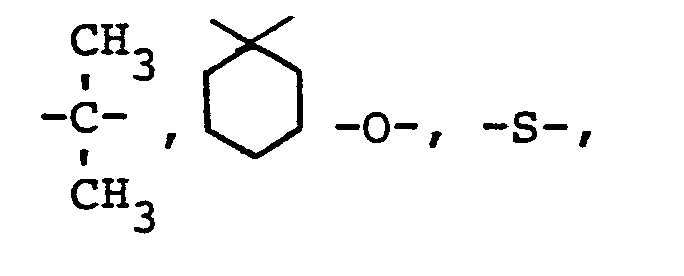

- Y bis Y4 gleich oder verschieden sind, und Wasserstoff, C1-C4-Alkyl, vorzugsweise Methyl oder Halogen, vorzugsweise Chlor oder Brom, bedeuten,
- Geeignete andere Diphenole sind beispielsweise
- Hydrochinon
- Resorcin
- Dihydroxydiphenyle
- Bis-(hydroxyphenyl)-alkane
- Bis-(hydroxyphenyl)-cycloalkane
- Bis-(hydroxyphenyl)-sulfide
- Bis-(hydroxyphenyl)-ether
- Bis-(hydroxyphenyl)-sulfoxide
- Bis-(hydroxyphenyl)-sulfone und
- α, α-Bis-(hydroxyphenyl)-diisopropylbenzole
- sowie deren kernalkylierte und kernhalogenierte Verbindungen. Diese und weitere geeignete Diphenole sind z.B. in den US-Patentschriften 3 271 367 und 2 999 846 und in den deutschen Offenlegungsschriften 2 063 050, 2 211 957 aufgeführt.
- Geeignete andere Diphenole sind insbesondere solche der Formel (III)

- X eine Einfachbindung -CH2-;


- Y1 bis Y4 gleich oder verschieden sind, und Wasserstoff C1-C4-Alkyl, vorzugsweise Methyl, oder Halogen, vorzugsweise Chlor oder Brom
- Geeignete andere Diphenole sind beispielsweise
- 4,4'-Dihydroxydiphenyl
- 2,2-Bis-(4-hydroxyphenyl)-propan
- 2,4-Bis-(4-hydroxyphenyl)-2-methylbutan
- 1,1-Bis-(4-hydroxyphenyl)-cyclohexan
- α,α-Bis-(4-hydroxyphenyl)-p-diisopropylbenzol
- 2,2-Bis-(3-methyl-4-hydroxyphenyl)-propan
- 2,2-Bis-(3-chlor-4-hydroxyphenyl)-propan
- Bis-(3,5-dimethyl-4-hydroxyphenyl)-methan
- 2,2-Bis-(3,5-dimethyl-4-hydroxyphenyl)-propan
- Bis-(3,5-Dimethyl-4-hydroxyphenyl)-sulfon
- 2,4-Bis-(3,5-dimethyl-4-hydroxyphenyl)-2-methylbutan
- 1,1-Bis-(3,5-dimethyl-4-hydroxyphenyl)-cyclohexan
- α,α'-Bis-(3,5-dimethyl-4-hydroxyphenyl)-p-diisopropyl- benzol
- 2,2-Bis-(3,5-dichlor-4-hydroxyphenyl)-propan
- 2,2-Bis-(3,5-dibrom-4-hydroxyphenyl)-propan.
- Bevorzugte andere Diphenole sind beispielsweise
- 2,2-Bis-(4-hydroxyphenyl)-propan
- 1,1-Bis-(4-hydroxyphenyl)-cyclohexan
- 2,2-Bis-(3,5-dichlor-4-hydroxyphenyl)-propan
- 2,2-Bis-(3,5-dibrom-4-hydroxyphenyl)-propan
- 2,2-Bis-(3,5-dimethyl-4-hydroxyphenyl)-propan
- Bis-(3,5-dimethyl-4-hydroxyphenyl)-methan und
- Bis-(4-hydroxyphenyl)-sulfid.
- Die geeigneten Diphenole können sowohl allein als auch zu mehreren eingesetzt werden.
- Geeignete Verzweiger sind solche mit drei oder mehr als drei funktionellen Gruppen, insbesondere solche mit drei oder mehr als drei phenolischen Hydroxylgruppen eingesetzt werden, wobei die üblicherweise bekannten Mengen an Verzweiger zwischen 0,05 und 2 Mol-%, bezogen auf eingebaute Diphenole, einzuhalten sind. Die Herstellung verzweigter Polycarbonate ist beispielsweise in den DT-OS 1 570 533 und DT-OS 1 595 762 sowie in dem US-PS 3 544 514 bzw. US-RE 27682 beschrieben.
- Als Kettenabbrecher sind die üblicherweise gebräuchlichen Phenole wie beispielsweise p-tert.-Butylphenol, p-Isooctylphenol, p-Chlorphenol, 2,4,6-Tribromphenol und Phenol in den üblichen Mengen einsetzbar, die sich nach dem jeweils einzustellenden Molekulargewicht der Polycarbonat-Elastomeren bestimmt.
- Als Segmente geeignete hydrierte Dimerfettsäureester sind aliphatisch Hydroxyl- terminierte Polyester erhältlich aus hydrierter Dimerfettsäure mit einem Molekulargewicht (Zahlenmittel) Mn von etwa 300 bis 800, vorzugsweise 500 bis 600, und einem Diol, wobei die hydroxylterminierten Polyester durch Überschuß an Diol gegenüber der hydrierten Dimerfettsäure in bekannter Weise erhältlich sind, beispielsweise in Gegenwart von Veresterungskatalysatoren und Temperaturen zwischen 150° und 200° und Reaktionszeiten zwischen 20 h und 50 h. Die geeigneten hydrierten Dimerfettsäureester haben mittlere Molekulargewichte (Zahlenmittel) Mn von 800 bis 20000, vorzugsweise von 1000 bis 15000 und insbesondere von 2000 bis 10000.
- Durch das jeweilige Reaktantenverhältnis von Diol zu hydrierter Dimerfettsäure wird jeweils das gewünschte Molekulargewicht der hydrierten Dimerfettsäureester in bekannter Weise geregelt.
- Unter hydrierter Dimerfettsäure versteht man das hydrierte Dimerisationsprodukt von ungesättigten Fettsäuren (C18) wie Tallöl-, Linol- und Linolensäure. Die Herstellung und die Struktur der dimerisierten Fettsäure wird in J. Am. Chem. Soc. 66, 84 (1944) und in US-PS 2 347 562 beschrieben. Die bevorzugten handelsüblichen Dimerfettsäurezusammensetzungen sind praktisch frei von Monomer- und hohen Trimerfraktionen und vollständig gesättigt. Vorzugsweise geeignet ist eine hydrierte Dimerfettsäure, die z.B. durch Dimerisierung von Linolsäure oder Tallölfettsäure und anschließender Hydrierung hergestellt wird. Es können für diesen Anwendungszweck auch Gemische aus Dimerfettsäuren und Trimerfettsäuren verwendet werden.
- Als geeignete Diole kommen, gegebenenfalls, im Gemisch miteinander, beispielsweise Ethylenglykol, 1,2- und 1,3-Propylenglykol, 1,2-, 2,3-, 1,3- und 1,4-Butandiol, Pentandiole, Neopentylglykol, Hexandiole z.B. 1,6-Hexandiol, Trimethylhexandiole, 1,8-Octandiole, Decandiole, Dodecandiole, Octadecandiole, 2,2-Dimethyl-1,3-propandiol-2,2-dimethyl-3-hydroxypropionat, Diethylenglykol, Triethylenglykol, Tetraethylenglykol, Dipropylenglykol, Tripropylenglykol, Tetrapropylenglykol, 1,4-Cyclohexandimethanol, 1,1-Cyclohexan-dimethanol, Perhydrobisphenole z.B. 4,4'-(1-Methylethyliden)-bis-cyclohexanol, 2,2-Bis-(4-(2-hydroxyethoxy)-phenyl)-propan.
- Auch mehrwertige Alkohole können mitverwendet werden wie beispielsweise Glycerin, 1,2,4-Butantriol, Trimethylolethan, Trimethylolpropan, Trimethylolbutan, Pentaerythrit, Tetrosen, Di- und Trimethylolpropan, Pentosen, 2,2,6,6-Tetrakis-(hydroxymethyl)-cyclohexan, Hexosen, Dipentaerythrit und Tri-pentaerythrit. Ferner kommen Ethylenoxid- bzw. Propylenoxidaddukte an solche Polyole, sofern dabei eine mittlere Zahl von 60 Kohlenstoffatomen pro Molekül nicht überschritten wird, Polyethylenglykole, Polypropylenglykole und Polybutylenglykole in Frage.
- Weitere Einzelheiten für die Herstellung der Komponente a) der erfindungsgemäßen Mischungen können der oben genannten DE-OS 2 935 317 (Le A 19 828) entnommen werden.
- Die Herstellung der erfindungsgemäßen Mischungen aus den Komponenten a), und c) und gegebenenfalls b) erfolgt in üblicher Weise nach beliebigen Verfahren, beispielsweise durch Vermischen und Koextrusion der einzelnen Komponenten in Substanz, in Einwellen oder Zweiwellenextrudern bei Temperaturen zwischen vorzugsweise 250°C und 300°C, oder in speziellen Fällen über die Lösungen der entsprechenden Komponenten in inerten organischen Lösungsmitteln wie beispielsweise CH2C12 oder Chlorbenzol unter Mischen und anschließendem Ausdampfen in Ausdampfextrudern.
- Die erfindungsgemäßen Mischungen haben ein überraschend gutes Eigenschaftsbild. Insbesondere haben sie eine reduzierte Spannungsrißbildungstendenz, insbesondere gegen Superbenzin, die noch mit einer verbesserten Tieftemperaturschlagzähigkeit (bis etwa -40°C) gekoppelt ist.
- Somit werden die erfindungsgemäßen Mischungen, die in üblicher Weise analog den bereits bekannten Zweiermischungen aus den Komponenten b) und c) zu Formkörpern, Folien etx. verarbeitet werden können, bevorzugt auf dem Automobilsektor eingesetzt, beispielsweise zur Herstellung von Profilteilen, Stoßstangen, Karosserieteilen und ähnlichen Formteilen.
- Die erfindungsgemäßen Mischungen können in üblicher Weise mit Farbstoffen, Pigmenten, Stabilisatoren gegen Hitze und UV-Einwirkung, Füllstoffen, Glasfasern, Flammschutzmitteln und ähnlichem versetzt werden. Geeignete Zusatzstoffe dieser Art sind die für thermoplastische aromatische Polycarbonate geeigneten.
mit anderen Diphenolen, Kettenabbrechern und Kohlensäurehalogeniden und gegebenenfalls Verzweigern nach dem bekannten Verfahren der Phasengrenzflächenpolykondensation, wobei diese Produkte zwischen 5 und 70 Gew.-%, vorzugsweise zwischen 20 und 65 Gew.-%, an einkondensierten, hydrierten Dimerfettsäureestern und zwischen 95 und 30 Gew.-%, vorzugsweise zwischen 80 und 35 Gew.-%, an aromatischen Carbonatstruktureinheiten auf Basis der anderen Diphenole enthalten.
bedeuten.
Claims (28)


wobei die Summe der Komponenten a) + b) zwischen 98 Gew.-% und 90 Gew.-% und die Komponente c) zwischen 2 Gew.-% und 10 Gew.-%, bezogen jeweils auf gesamte Gewichtsmenge aus a) + b) + c) liegen und wobei die Gewichtsmenge an einkondensierten, hydriertem Dimerfettsäureester von 3 bis 30 Gew.-%, bezogen auf Gewichtsmenge aus a) + b), beträgt.

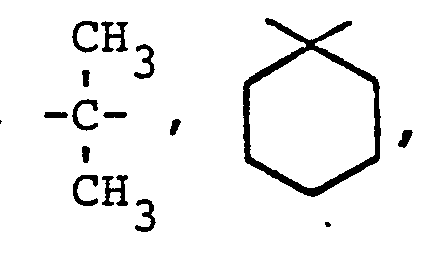

mit anderen Diphenolen, Kettenabbrechern und Kohlensäurehalogeniden und gegebenenfalls Verzweigern nach dem bekannten Verfahren der Phasengrenzflächenpolykondensation erhältlich sind.
Priority Applications (8)
| Application Number | Priority Date | Filing Date | Title |
|---|---|---|---|
| DE8181108608T DE3174252D1 (en) | 1981-10-21 | 1981-10-21 | Mixtures of polycarbonate elastomers containing hydrogenated dimeric fatty-acid esters in a condensed form with polyolefines and, optionally, other polycarbonates |
| EP81108608A EP0077415B1 (de) | 1981-10-21 | 1981-10-21 | Mischungen von Polycarbonatelastomeren mit einkondensierten hydrierten Dimerfettsäureestern mit Polyolefinen und gegebenenfalls anderen Polycarbonaten |
| AU88691/82A AU8869182A (en) | 1981-10-21 | 1982-09-24 | Polycarbonate elastomers |
| US06/429,329 US4435544A (en) | 1981-10-21 | 1982-09-30 | Mixtures of polycarbonate elastomers, containing hydrogenated dimeric fatty acid esters as condensed units, and polyolefines and, optionally, other polycarbonates |
| JP57181512A JPS5880343A (ja) | 1981-10-21 | 1982-10-18 | ポリカ−ボネ−トエラストマ−混合物 |
| CA000413709A CA1184335A (en) | 1981-10-21 | 1982-10-19 | Mixtures of polycarbonate elastomers, containing hydrogenated dimeric fatty acid esters as condensed units, and polyolefines and, if appropriate, other polycarbonates |
| BR8206122A BR8206122A (pt) | 1981-10-21 | 1982-10-20 | Misturas de policarbonatos aromaticos,moleculares superiores,segmentados,elaboraveis termoplasticamente |
| ES516716A ES8402856A1 (es) | 1981-10-21 | 1982-10-21 | Procedimiento para mejorar la tendencia a la formacion de grietas bajo tension en los elastomeros de policarbonatos. |
Applications Claiming Priority (1)
| Application Number | Priority Date | Filing Date | Title |
|---|---|---|---|
| EP81108608A EP0077415B1 (de) | 1981-10-21 | 1981-10-21 | Mischungen von Polycarbonatelastomeren mit einkondensierten hydrierten Dimerfettsäureestern mit Polyolefinen und gegebenenfalls anderen Polycarbonaten |
Publications (2)
| Publication Number | Publication Date |
|---|---|
| EP0077415A1 true EP0077415A1 (de) | 1983-04-27 |
| EP0077415B1 EP0077415B1 (de) | 1986-04-02 |
Family
ID=8187965
Family Applications (1)
| Application Number | Title | Priority Date | Filing Date |
|---|---|---|---|
| EP81108608A Expired EP0077415B1 (de) | 1981-10-21 | 1981-10-21 | Mischungen von Polycarbonatelastomeren mit einkondensierten hydrierten Dimerfettsäureestern mit Polyolefinen und gegebenenfalls anderen Polycarbonaten |
Country Status (8)
| Country | Link |
|---|---|
| US (1) | US4435544A (de) |
| EP (1) | EP0077415B1 (de) |
| JP (1) | JPS5880343A (de) |
| AU (1) | AU8869182A (de) |
| BR (1) | BR8206122A (de) |
| CA (1) | CA1184335A (de) |
| DE (1) | DE3174252D1 (de) |
| ES (1) | ES8402856A1 (de) |
Cited By (3)
| Publication number | Priority date | Publication date | Assignee | Title |
|---|---|---|---|---|
| DE4029808A1 (de) * | 1990-09-20 | 1992-03-26 | Bayer Ag | Segmentierte, aromatische polycarbonate |
| EP0691378A2 (de) | 1994-07-08 | 1996-01-10 | Bayer Ag | Verwendung von Polycarbonat-Polyisobutylen-Blockco-kondensaten als Kompatibilisatoren für Polycarbonat-Polyisobutylen-Mischungen |
| EP0743343A3 (de) * | 1995-05-17 | 1997-03-26 | Mitsubishi Eng Plastics Corp | Polycarbonatmischung für die Profilextrusion |
Families Citing this family (1)
| Publication number | Priority date | Publication date | Assignee | Title |
|---|---|---|---|---|
| US4680370A (en) * | 1985-09-30 | 1987-07-14 | The Dow Chemical Company | Branched polycarbonate composition from tris(hydroxyaryl)phosphorus compound |
Citations (2)
| Publication number | Priority date | Publication date | Assignee | Title |
|---|---|---|---|---|
| EP0024672A1 (de) * | 1979-08-31 | 1981-03-11 | Bayer Ag | Hochmolekulare, segmentierte, thermoplastisch verarbeitbare, aromatische Polycarbonate mit einkondensierten Dimerfettsäureestern, ihre Herstellung und ihre Verwendung |
| EP0028753A1 (de) * | 1979-11-08 | 1981-05-20 | Bayer Ag | Thermoplastische Formmassen aus Polycarbonat, Polyolefin und Butadienpolymerisat |
Family Cites Families (5)
| Publication number | Priority date | Publication date | Assignee | Title |
|---|---|---|---|---|
| BE634842A (de) | 1962-07-11 | |||
| US3442224A (en) * | 1966-12-23 | 1969-05-06 | Pullman Inc | Floor board support structure |
| US3801673A (en) | 1972-01-03 | 1974-04-02 | Gen Electric | Process for preparing polycarbonate alloys |
| US3813358A (en) | 1972-01-03 | 1974-05-28 | Gen Electric | Polycarbonate molding composition comprising an aromatic polycarbonate graft copolymer and a modifier |
| US4358563A (en) | 1981-02-17 | 1982-11-09 | General Electric Company | Polycarbonate composition |
-
1981
- 1981-10-21 DE DE8181108608T patent/DE3174252D1/de not_active Expired
- 1981-10-21 EP EP81108608A patent/EP0077415B1/de not_active Expired
-
1982
- 1982-09-24 AU AU88691/82A patent/AU8869182A/en not_active Abandoned
- 1982-09-30 US US06/429,329 patent/US4435544A/en not_active Expired - Lifetime
- 1982-10-18 JP JP57181512A patent/JPS5880343A/ja active Granted
- 1982-10-19 CA CA000413709A patent/CA1184335A/en not_active Expired
- 1982-10-20 BR BR8206122A patent/BR8206122A/pt unknown
- 1982-10-21 ES ES516716A patent/ES8402856A1/es not_active Expired
Patent Citations (2)
| Publication number | Priority date | Publication date | Assignee | Title |
|---|---|---|---|---|
| EP0024672A1 (de) * | 1979-08-31 | 1981-03-11 | Bayer Ag | Hochmolekulare, segmentierte, thermoplastisch verarbeitbare, aromatische Polycarbonate mit einkondensierten Dimerfettsäureestern, ihre Herstellung und ihre Verwendung |
| EP0028753A1 (de) * | 1979-11-08 | 1981-05-20 | Bayer Ag | Thermoplastische Formmassen aus Polycarbonat, Polyolefin und Butadienpolymerisat |
Cited By (4)
| Publication number | Priority date | Publication date | Assignee | Title |
|---|---|---|---|---|
| DE4029808A1 (de) * | 1990-09-20 | 1992-03-26 | Bayer Ag | Segmentierte, aromatische polycarbonate |
| EP0691378A2 (de) | 1994-07-08 | 1996-01-10 | Bayer Ag | Verwendung von Polycarbonat-Polyisobutylen-Blockco-kondensaten als Kompatibilisatoren für Polycarbonat-Polyisobutylen-Mischungen |
| EP0743343A3 (de) * | 1995-05-17 | 1997-03-26 | Mitsubishi Eng Plastics Corp | Polycarbonatmischung für die Profilextrusion |
| US5783620A (en) * | 1995-05-17 | 1998-07-21 | Mitsubishi Engineering-Plastics Corporation | Thermoplastic resin composition for profile extrusion |
Also Published As
| Publication number | Publication date |
|---|---|
| CA1184335A (en) | 1985-03-19 |
| JPS6242946B2 (de) | 1987-09-10 |
| DE3174252D1 (en) | 1986-05-07 |
| EP0077415B1 (de) | 1986-04-02 |
| AU8869182A (en) | 1983-04-28 |
| ES516716A0 (es) | 1984-03-01 |
| ES8402856A1 (es) | 1984-03-01 |
| BR8206122A (pt) | 1983-09-20 |
| JPS5880343A (ja) | 1983-05-14 |
| US4435544A (en) | 1984-03-06 |
Similar Documents
| Publication | Publication Date | Title |
|---|---|---|
| EP0414053B1 (de) | Polycarbonate aus substituierten Cyclohexylidenbisphenolen | |
| DE2930787A1 (de) | Vernetzbare polycarbonat-elastomere, ein verfahren zu ihrer herstellung und ihre verwendung fuer medizinische verpackungen nach erfolgter vernetzung | |
| EP0004020B1 (de) | Polycarbonat-Formmassen mit verbesserten zähelastischen Eigenschaften | |
| EP0025937A2 (de) | Thermoplastische Polycarbonate, Verfahren zu ihrer Herstellung, Bis-halogen-kohlensäureester von Hexahydro-furo(3,2-b) furan-3,6-diolen, sowie Polycarbonatmassen | |
| DE2310742A1 (de) | Entflammungshemmende thermoplastische zusammensetzungen | |
| EP0000060B1 (de) | Verfahren zur Herstellung von Kohlensäure-bis-diphenol-estern von über Carbonat-Gruppen-verlängerten Polyalkylenoxiddiolen und ihre Verwendung zur Herstellung von hochmolekularen, segmentierten, thermoplastisch verarbeitbaren Polyäther-Polycarbonaten. | |
| DE2827325A1 (de) | Verfahren zur herstellung von aliphatisch-aromatischen polycarbonaten mit diphenolcarbonat-endgruppen und ihre verwendung zur herstellung von thermoplastisch verarbeitbaren, hochmolekularen, segmentierten, aliphatisch-aromatischen polycarbonat-elastomeren | |
| DE4419229A1 (de) | Neue Polyester aus Dimerfettsäure und Dimerfettdiol und ihre Verwendung zur Herstellung von Polyestercarbonaten | |
| DE2651639A1 (de) | Verfahren zur herstellung von kohlensaeureestern von polyesterpolyolen | |
| DE2702626A1 (de) | Verfahren zur herstellung von neuen hochmolekularen, segmentierten polycarbonat-elastomeren und neue verfahrensgemaess erhaltene polycarbonat- elastomere | |
| EP0097861B1 (de) | Aromatische Polyestercarbonate mit hoher Kerbschlagzähigkeit und Verfahren zu ihrer Herstellung | |
| EP0201830B1 (de) | Verfahren zur Herstellung von Copolyphosphonaten mit hoher Kerbschlagzähigkeit | |
| EP0065728B1 (de) | Neue Copolyestercarbonate und deren Abmischung mit bekannten Polycarbonaten zu thermoplastischen Formmassen | |
| DE3308691A1 (de) | Willkuerlich verzweigtes polycarbonat aus einem bisphenol und einem polyolchlorformiat und verfahren zu seiner herstellung | |
| EP0077415B1 (de) | Mischungen von Polycarbonatelastomeren mit einkondensierten hydrierten Dimerfettsäureestern mit Polyolefinen und gegebenenfalls anderen Polycarbonaten | |
| EP0024672A1 (de) | Hochmolekulare, segmentierte, thermoplastisch verarbeitbare, aromatische Polycarbonate mit einkondensierten Dimerfettsäureestern, ihre Herstellung und ihre Verwendung | |
| DE2726417C2 (de) | ||
| DE2636784A1 (de) | Verfahren zur herstellung von kohlensaeure-bis-diphenolestern von polyalkylenoxiddiolen und ihre verwendung zur herstellung von hochmolekularen, segmentierten, thermoplastisch verarbeitbaren polyaether-polycarbonaten | |
| DE69700722T2 (de) | Redistribution von Polycarbonat | |
| EP0472064A2 (de) | Ternäre Mischungen | |
| EP0368104A2 (de) | Thermoplastische Polyestercarbonat-Polysiloxan-Blockcopolymere | |
| EP0014412B1 (de) | Thermoplastische Massen und Verfahren zu ihrer Herstellung | |
| EP0102573A1 (de) | Polycarbonate mit konjugierte Doppelbindungen enthaltenden Endgruppen, gegebenenfalls im Gemisch mit bekannten aromatischen Polycarbonaten, ihre Herstellung und ihre Verwendung | |
| DE2726376C2 (de) | ||
| DE4029808A1 (de) | Segmentierte, aromatische polycarbonate |
Legal Events
| Date | Code | Title | Description |
|---|---|---|---|
| PUAI | Public reference made under article 153(3) epc to a published international application that has entered the european phase |
Free format text: ORIGINAL CODE: 0009012 |
|
| 17P | Request for examination filed |
Effective date: 19811021 |
|
| AK | Designated contracting states |
Designated state(s): DE FR GB IT NL SE |
|
| GRAA | (expected) grant |
Free format text: ORIGINAL CODE: 0009210 |
|
| AK | Designated contracting states |
Kind code of ref document: B1 Designated state(s): DE FR GB IT NL SE |
|
| ITF | It: translation for a ep patent filed | ||
| ET | Fr: translation filed | ||
| REF | Corresponds to: |
Ref document number: 3174252 Country of ref document: DE Date of ref document: 19860507 |
|
| PLBE | No opposition filed within time limit |
Free format text: ORIGINAL CODE: 0009261 |
|
| STAA | Information on the status of an ep patent application or granted ep patent |
Free format text: STATUS: NO OPPOSITION FILED WITHIN TIME LIMIT |
|
| 26N | No opposition filed | ||
| PGFP | Annual fee paid to national office [announced via postgrant information from national office to epo] |
Ref country code: DE Payment date: 19900922 Year of fee payment: 10 |
|
| PGFP | Annual fee paid to national office [announced via postgrant information from national office to epo] |
Ref country code: GB Payment date: 19901010 Year of fee payment: 10 |
|
| PGFP | Annual fee paid to national office [announced via postgrant information from national office to epo] |
Ref country code: FR Payment date: 19901016 Year of fee payment: 10 |
|
| PGFP | Annual fee paid to national office [announced via postgrant information from national office to epo] |
Ref country code: SE Payment date: 19901030 Year of fee payment: 10 |
|
| PGFP | Annual fee paid to national office [announced via postgrant information from national office to epo] |
Ref country code: NL Payment date: 19901031 Year of fee payment: 10 |
|
| PG25 | Lapsed in a contracting state [announced via postgrant information from national office to epo] |
Ref country code: GB Effective date: 19911021 |
|
| PG25 | Lapsed in a contracting state [announced via postgrant information from national office to epo] |
Ref country code: SE Effective date: 19911022 |
|
| ITTA | It: last paid annual fee | ||
| PG25 | Lapsed in a contracting state [announced via postgrant information from national office to epo] |
Ref country code: NL Effective date: 19920501 |
|
| NLV4 | Nl: lapsed or anulled due to non-payment of the annual fee | ||
| GBPC | Gb: european patent ceased through non-payment of renewal fee | ||
| PG25 | Lapsed in a contracting state [announced via postgrant information from national office to epo] |
Ref country code: FR Effective date: 19920630 |
|
| PG25 | Lapsed in a contracting state [announced via postgrant information from national office to epo] |
Ref country code: DE Effective date: 19920701 |
|
| REG | Reference to a national code |
Ref country code: FR Ref legal event code: ST |
|
| EUG | Se: european patent has lapsed |
Ref document number: 81108608.1 Effective date: 19920510 |