EP0077460B1 - Purine compounds endowed with immunomodulating activity - Google Patents
Purine compounds endowed with immunomodulating activity Download PDFInfo
- Publication number
- EP0077460B1 EP0077460B1 EP82108243A EP82108243A EP0077460B1 EP 0077460 B1 EP0077460 B1 EP 0077460B1 EP 82108243 A EP82108243 A EP 82108243A EP 82108243 A EP82108243 A EP 82108243A EP 0077460 B1 EP0077460 B1 EP 0077460B1
- Authority
- EP
- European Patent Office
- Prior art keywords
- formula
- group
- compounds
- hydroxy
- purine
- Prior art date
- Legal status (The legal status is an assumption and is not a legal conclusion. Google has not performed a legal analysis and makes no representation as to the accuracy of the status listed.)
- Expired
Links
- 0 C[n]1c2nc(*)nc(O)c2nc1 Chemical compound C[n]1c2nc(*)nc(O)c2nc1 0.000 description 1
Images

Classifications
-
- C—CHEMISTRY; METALLURGY
- C07—ORGANIC CHEMISTRY
- C07D—HETEROCYCLIC COMPOUNDS
- C07D473/00—Heterocyclic compounds containing purine ring systems
-
- C—CHEMISTRY; METALLURGY
- C07—ORGANIC CHEMISTRY
- C07D—HETEROCYCLIC COMPOUNDS
- C07D473/00—Heterocyclic compounds containing purine ring systems
- C07D473/26—Heterocyclic compounds containing purine ring systems with an oxygen, sulphur, or nitrogen atom directly attached in position 2 or 6, but not in both
- C07D473/28—Oxygen atom
- C07D473/30—Oxygen atom attached in position 6, e.g. hypoxanthine
Definitions
- This invention relates to a new series of specific immuno-modulator compounds, of the general formula I wherein:
- Another object of this invention provides a process for the preparation of purine derivatives of formula I..
- Still another object of this invention is to provide pharmaceutical compositions with immuno- modulating activity containing as the active principle one or more compounds of the formula (I).
- immuno-modulating activity means the ability to interact with immunocompetent cells providing them with activation messages.
- EP-A-0 036 077 discloses hydroxyalkyl-purine esters which, although structurally similar, have a kind of immunostimulating activity (mechanism of action, target cells and action sites and modes) which is completely different from that of the compounds of the invention.
- a drug containing twelve different polypeptides extracted from calf's thymus is known.
- Such a drug aims to stimulate immune control against viruses, bacteria and even neoplastic cell's attacks.
- the aminoacidic sequence of the different extracted polypeptides is yet unknown. Moreover, .their specific action in the regulation of the immunitary functions is not clear.
- the activation of the immune system is aspecific and it does not seem to have selectivity on one or another lymphocytic functions (stimulation or depression of antibody response, etc.).
- a-aminoacids are in the laevorotatory form, although they can be used also in the dextrorotatory or racemic forms.
- a-aminoacids which can be contained in the compounds of formula (I) are glycine, alanine, valine, leucine, isoleucine, serine, threonine, aspartic acid, glutamic acid, arginine, lysine, cysteine, cystine, methionine, phenylalanine, thyrosine, tryptophan, proline and histidine.
- the hydroxypyrimidine ring of the purinic nucleus is in the enolic form, as shown in the formula (I), or in the tautomeric ketoform, or in an equilibrium mixture of both forms.
- the activation of the carboxy group is performed by any one of the agents which are usually employed for this purpose, such as dicyclohexylcarbodiimide, N,N'-carbonyldiimidazole, and analogous reagents.
- agents which are usually employed for this purpose such as dicyclohexylcarbodiimide, N,N'-carbonyldiimidazole, and analogous reagents.
- n, m and A have the above mentioned meanings.
- the step from (IV) to (lb) can be carried out through activation of the carboxyl group of IV, in a way per se known, and reaction with an aminoacid or a peptide in which again the carboxyl group is protected if desired.
- m and A are as above defined and A' has the same meaning above defined, provided that the carboxy group is protected.
- the step from (V) to (lc) can be readily accomplished by simple cleavage of the protective group.
- the compounds according to the invention or the corresponding intermediates can be prepared from similar compounds having, instead of the hydroxy group on the pyrimidine ring, a chlorine atom, which can be transformed into the hydroxy group by a nucleophilic displacement reaction which is per se known.
- the starting materials (II), of the formula P-(CH 2 ) n -OH, wherein n is an integer from 1 to 6, can be prepared as described by Schaeffer H. S. et al.; J. Med. Chem. 1968, p. 21, according to the following scheme:
- the structure of the compound was determined by transformation into its methyl ester, m.p. 183-185°C, which has been identified by NMR and mass spectra.
- the residue is purified by column chromatography on silica gel using ethyl acetate/methanol (1:1) as eluent.
- the chloride hydrochloride obtained from 300 mg (1.07 mmoles) of (IV, 2) is suspended in 5 ml of anhydrous dimethylformamide.
- 330 mg of N a -Z-L-arginine (mmoles 1.07) and 0.2 ml of triethylamine dissolved in 4 ml of dimethylformamide are added.
- the reaction mixture is stirred for three hours, the solvent is then removed and the crude product is purified by gel filtration.
- the eluate is lyophylized and the product is dissolved in 30 ml of methanol.
- the compounds of this invention have been shown to possess a specific immunomodulator activity which is superior to that of the control drugs, such as methisoprinol, already widely employed in clinical medicine.
- Fig. 1 the effects of the compound of example 7 (lb-4) are shown in comparison with methisoprinol on the stimulation by phytohemagglutinin (PHA) of lymphocytes extracted by patients affected by Hodgkin's disease and off-therapy since, at least, 17 months.
- PHA phytohemagglutinin
- Fig. 2 the results of the study of the effect of (lb-4) on the polymorphonuclear (PMN) lymphocytes membrane-stimulated oxidative metabolic activity are reported: polymorphonuclear leucocytes (2.5 x 10 4 / ml) in phosphate buffer solution (PBS) were incubated for 15' at 37°C with ferricytochrome C (1.5 mg/ml) in the presence or absence of superoxide dismutase (SOD) (0.125 mg/ml) after the addition of 50 ⁇ l of stimulating agent.
- PBS phosphate buffer solution
- the amount of reduced cytochrome C in the cell free supernatant was determined spectrophotometrically at 550 nm and the 02 release calculated according to a standard formula.
- Appropriate control tubes contained fixed doses of (lb-4) (from 0.01 y/ml to 200 y/ml). From the results, statistically evaluated by a T-test for paired data, it is evident a statistically significant enhancement in the superoxide production at a dose of 1 y/ml of (lb-4). At higher dosages, probably because of complex mechanisms of metabolic regulation, there is a gradual decrease of the O2 production. An enhanced production of superoxide anion is indicative of a more effective phagocytic activity.
- Ib-4 is also active, at doses ranging from 0.001 to 40 ⁇ g/ml, in inhibiting the incorporation of labelled thymidine stimulated by phytohemagglutinin (PHA) or lypopolysaccharides (LPS), in spleen cells from BALB/C mice 8-10 weeks old.
- PHA phytohemagglutinin
- LPS lypopolysaccharides
- (Ib-4) The effect of (Ib-4) on the suppressor cell has also been studied using lymphocytes from healthy volunteers, incubated for 48 hours with different drug concentrations then washed and incubated either with autologous lymphocytes stimulated by concanavalin A for 3 days or with allogeneic mitomycin- treated lymphocytes for 5 days (Mixed Lymphocytes Reaction): (lb-4), at concentrations between 0.1 and 1.5 pg/ml, gave an inhibition of the proliferative response of about 60% in comparison with controls.
- Lymphocytes were incubated at 4° for 24 hours, then isolated and incubated for 90 min. in the presence or absence of different concentrations of the drug prior to the assay. Data were expressed as % of cells forming rosettes: as an example, compound (lb-2) gave an enhancement of the percentage from 35 to 50%, at concentrations from 1 and 3 ⁇ g/ml; higher concentrations, the percentage of active E-rosettes decreased.
- the compounds of the invention proved at last to be active in vivo (mice C 57 Be/6) in enhancing the anti sheeps red blood cells and anti-TNF (Trinitrophenyl)-LPS (lypopolysaccharides), responses, at dosages ranging from 0.1 to 5 mg/kg.
- the compounds of the invention proved to be non-cytotoxic even at very high concentrations (60-120 ⁇ g/ml), in a human mononuclear peripheral blood cells culture, with a cell viability greater than 98%.
Landscapes
- Chemical & Material Sciences (AREA)
- Organic Chemistry (AREA)
- Pharmaceuticals Containing Other Organic And Inorganic Compounds (AREA)
Description
- This invention relates to a new series of specific immuno-modulator compounds, of the general formula I

- R is hydrogen or NH2
- n is an integer from 1 to 6;
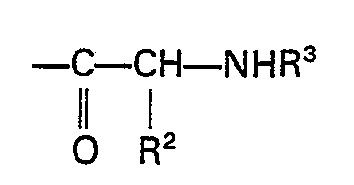
- R1 represents a chain of the formula:
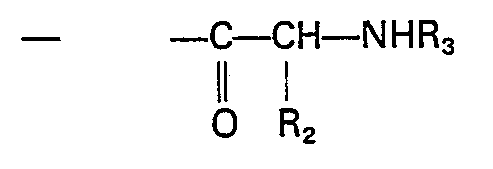


- or, when n = 1, a chain of formula


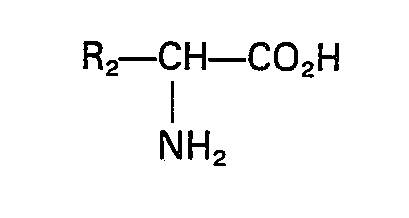
- wherein R2 is the residue of an a-aminoacid having formula

- and R2 is selected in the group consisting of hydrogen, methyl, isopropyl, isobutyl, 2-butyl, hydroxymethyl, 1-hydroxy-ethyl, carboxymethyl, aminocarbonylmethyl, 2-carboxyethyl, 4-amino-butyl, 5-imidazolylmethyl, 3-guanidino-propyl, benzyl, 4-hydroxy-benzyl, 3-indolyl-methyl, thiomethyl, methylthioethyl, or a group having formula

- R3 is hydrogen or, taken together with R2, forms a pyrrolidine ring,
- R4 is OH,
- m and p are integers ranging independently from 2 to 6,
- A is a group of formula

- wherein R2 andr, have the above mentioned meanings or a group of formula

- wherein R4 has the above mentioned meaning.
- Another object of this invention provides a process for the preparation of purine derivatives of formula I..
- Still another object of this invention is to provide pharmaceutical compositions with immuno- modulating activity containing as the active principle one or more compounds of the formula (I).
- According to the invention "immuno-modulating activity" means the ability to interact with immunocompetent cells providing them with activation messages.
- EP-A-0 036 077 discloses hydroxyalkyl-purine esters which, although structurally similar, have a kind of immunostimulating activity (mechanism of action, target cells and action sites and modes) which is completely different from that of the compounds of the invention.
- The recent immuno-pharmacological investigations have also developed a series of extractive polypeptides, with thymic hormone functions, which are employed in clinical medicine as coadjuvants for the treatment of some infectious diseases, especially viral ones, and of malignant neoplastic forms.
- For instance, a drug containing twelve different polypeptides extracted from calf's thymus is known. Such a drug aims to stimulate immune control against viruses, bacteria and even neoplastic cell's attacks.
- The aminoacidic sequence of the different extracted polypeptides is yet unknown. Moreover, .their specific action in the regulation of the immunitary functions is not clear.
- Other immuno-pharmacological studies led to the discovery, among synthetic derivatives of adenosine, of some principles active on the human immune system, giving, as the clinical result, an immune activation against numerous viral -DNA or -RNA strains.
- However, also in this case, the activation of the immune system is aspecific and it does not seem to have selectivity on one or another lymphocytic functions (stimulation or depression of antibody response, etc.).
- It seems likely that the activation exercised by those drugs on non-committed lymphocytic functions is casual.
- It is therefore the main object of the present invention to provide specific immunomodulating compounds, able to activate only cellular compartments with specific functions.
- According to the invention, it has been found that such an object can be attained by the use of compounds of the above formula (I). Preferably the a-aminoacids are in the laevorotatory form, although they can be used also in the dextrorotatory or racemic forms.
- a-aminoacids which can be contained in the compounds of formula (I) are glycine, alanine, valine, leucine, isoleucine, serine, threonine, aspartic acid, glutamic acid, arginine, lysine, cysteine, cystine, methionine, phenylalanine, thyrosine, tryptophan, proline and histidine.
- According to the invention, it is not important whether the hydroxypyrimidine ring of the purinic nucleus is in the enolic form, as shown in the formula (I), or in the tautomeric ketoform, or in an equilibrium mixture of both forms.
- The nature and the sequence of the amino acids linked to the purine ring involve a qualitative change of the hormone-like message, which constitutes the chemico-cellular function of compounds (I).
- Therefore, with such compounds, it is possible to activate only those cellular compartments with specific functions. In comparison with analogous compounds already known they allow a clinical use much better definite for pathological disorders such as immunodeficiencies, disreactive or autoimmune diseases and malignant neoplastic diseases.
- As mentioned above, the processes for the preparation of compounds of formula I, are also within the scope of the invention.
- These processes are briefly summarized in the following schemes, wherein, for the sake of brevity, P represents the hydroxypurine part of the formula I


- The activation of the carboxy group is performed by any one of the agents which are usually employed for this purpose, such as dicyclohexylcarbodiimide, N,N'-carbonyldiimidazole, and analogous reagents.

- The step from (IV) to (lb) can be carried out through activation of the carboxyl group of IV, in a way per se known, and reaction with an aminoacid or a peptide in which again the carboxyl group is protected if desired.

- Moreover, the compounds according to the invention or the corresponding intermediates can be prepared from similar compounds having, instead of the hydroxy group on the pyrimidine ring, a chlorine atom, which can be transformed into the hydroxy group by a nucleophilic displacement reaction which is per se known.
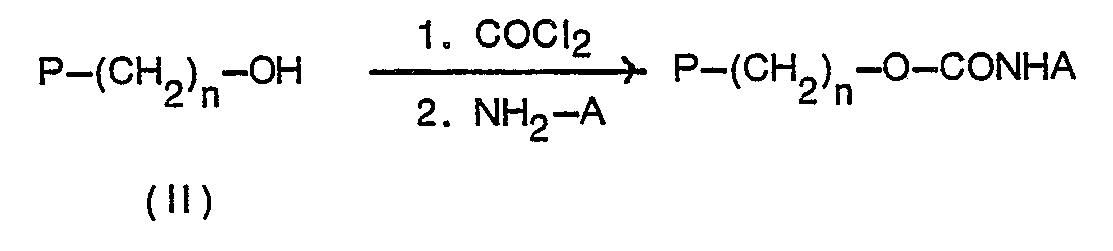
- The starting materials (II), of the formula P-(CH2)n-OH, wherein n is an integer from 1 to 6, can be prepared as described by Schaeffer H. S. et al.; J. Med. Chem. 1968, p. 21, according to the following scheme:

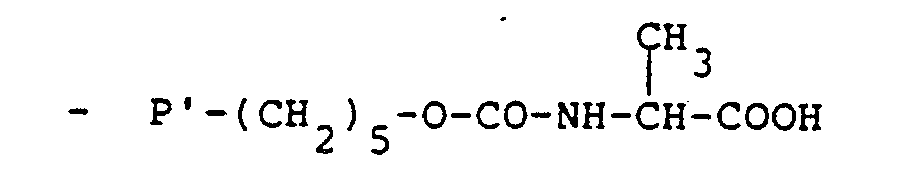
- In table I, there are reported melting points and elemental analysis data for the intermediates, wherein n is 2 to 6, and of the corresponding hemisuccinates (IV), prepared by reaction with succinic anhydride in pyridine. Both in the table and in the following examples, P' represents the residue


- The following examples further illustrate the invention, without limiting it, with reference both to single compounds and to the preparation processes.
-

- 1.24 g of succinic anhydride (12.3 mmoles) are dissolved in 20 ml of hot pyridine; then 0.740 g of 9-(2-hydroxyethyl)-6-hydroxy-purine (4.1 mmoles) and a tip of spatula of DMAP (dimethylaminopyrimidine) is added. The mixture is refluxed under stirring for 22 hours. Then the pyridine is evaporated and the residue is washed twice with ethanol to eliminate the excess succinic acid.
- After filtration, the residue is oven dried. M.p. 210-215°C. The compound is unitary in TLC (EtOH 80%-triethylamine 20%). The structure of the compound is confirmed by the IR spectrum.
- 0.200 g (1 mmole) of 9-(2-hydroxyethyl)-6-chloro-purine are treated with 1 g of succinic anhydride in conditions similar to those described in the previous example.
- The pyridine is evaporated and the residue is dissolved in 10 ml of formic acid; the mixture is refluxed for 30 minutes. After cooling, 20 ml of methanol are added and the precipitate is filtered with suction. 205 mg of hemisuccinate (IV, 2) are thus obtained.
-

- 100 mg of hemisuccinate (IV, 2) are dissolved in 5 ml of SOCI2 at room temperature. The reaction mixture is stirred for 24 hours at room temperature. The excess, thionyl chloride is evaporated under reduced pressure (water pump), the white solid residue is dissolved in anhydrous ethyl ether filtered with suction and washed with ethyl ether many times. There are obtained quantitative yields of 6-hydroxy-9-(2-(2-chlorocarbonyl-ethyl)-carbonyloxy-ethyl)-purine hydrochloride, as a white microcrystalline solid with decomposition point >200°C.
- The structure of the compound was determined by transformation into its methyl ester, m.p. 183-185°C, which has been identified by NMR and mass spectra.
-

- 371 g (1 mmole) of O-benzyl-N-Boc-thyrosine are dissolved in anhydrous DMSO and treated with 368 mg (2 mmoles) of carbonyldiimidazole. The reaction mixture is heated to 70°C for 5 hours and then added to a solution of 9-(2-hydroxy-ethyl)-6-hydroxypurine (280 mg, 1 mmole) in 5 ml of pre-heated (70°C) dimethylsulfoxyde, containing 20 mg of 4-dimethylamino-pyridine. The reaction mixture is kept at 70-80°C for about 2 hours, then it is cooled and treated with water (50 ml). The separated oil is extracted with ethyl acetate (2 x 25 ml), the pooled extracts are dried and freed from the solvent by evaporation under reduced pressure. The oily residue, without further purification, is dissolved in 20 ml of ethanol, treated with 5 ml of cyclohexene and 120 mg of palladium-charcoal at 10% and refluxed under stirring for 2 hours. During this time a precipitate is formed, which is dissolved in acetic acid. The charcoal is filtered off, 4-5 drops of trifluoroacetic acid are added and the mixture is refluxed for 30 minutes. The solvent is evaporated under vacuum and the residue is washed with methanol. Compound (la, 1) is obtained in a 87% yield.
- Colourless crystals with m.p. 235-240°C.
- NMR in DMSO (6 from TMS):

-

- 371 mg (1 mmole) of O-benzyl-N-Boc-thyrosine are dissolved in anhydrous acetonitrile (20 ml). To the solution 198 mg of 9-(2-hydroxyethyl)-6-chloro-purine, 210 mg of dicyclohexylcarbodiimide and 25 mg of 4-pyrrolidino-pyridine are added. After heating at 60°C for 12 hours, the reaction mixture is cooled, the dicyclohexylurea is filtered off and the solvent is eliminated from the filtrate by distillation under reduced pressure. The residue, without further purification, is dissolved in a 50/50 mixture of methanol/acetic acid. To the so obtained
solution 100 mg of palladium/charcoal and 500 mg of ammonium formiate are added. After stirring at room temperature for 30 minutes, the catalyst is filtered off and the solvent is removed from the filtrate by evaporation under reduced pressure. - The residue is treated with 50% trifluoroacetic acid containing 10% anisole for about 1 hour. Methanol (15 ml) is added, the temperature is kept at 5°C for 24 hours. The precipitate produced is filtered, which is identical to the product described in example 4, method A.
-

- A) 2.8 g (10 mmoles) of 9-(2-hydroxyethyl)-6-hydroxy-purine hemisuccinate prepared in example 1, are transformed in the chloride hydrochloride as described in example 2. The so-obtained amorphous powder is suspended in 20 ml of anhydrous CH2Cl2 and treated with 4.95 g (30 mmoles) of glycine benzyl ester in 30 ml of CH2CI2. The reaction mixture is stirred at room temperature for 3 hours, then filtered. The filtrate, washed with 30 ml of saturated NaHC03 solution and with 30 ml of saturated NaCl solution, is dried on Na2SO4 and evaporated under reduced pressure.
- The residue is purified by column chromatography on silica gel using ethyl acetate/methanol (1:1) as eluent.
- After crystallization from ethanol, 2.3 g (52% yield) of 6-hydroxy-9-{2-[2-(benzyloxy)carbonylmethyl- aminocarbonyl)ethyl]carbonyloxy}ethyl purine, as a white crystalline powder melting at 158-160°C, are obtained.
- Elemental analysis: C20H21N5O6

- NMR (CDCl3 + DMSO-d6; δTMS)

- B) 220 mg (0.5 mmoles) of the compound prepared in A), are dissolved in methanol and treated, under stirring, with 86 mg (1.6 mmoles) of ammonium formiate and 100 mg of palladium on charcoal (10%).
- The mixture is stirred for 1 hr at 40°C, 40 mg of ammonium formiate are then added and stirring is continued for 1 hour more. When the end of the debenzylation reaction is evidenced by TLC (ethyl acetate/ methanol 1:1), the reaction mixture is filtered on celite and the filtrate is evaporated. The crude product is treated with ethanol, filtered and the precipitate is crystallized from methanol/water (90:10). 97 mg (55% yield) of white crystalline (lb-1), melting at 186-190°C with decomposition are obtained.
- Elemental analysis: C13H15N5O6

- NMR (CD30D + TFA), 6 TMS:

-

- A) 2.8 g (10 mmoles) of 9-(2-hydroxyethyl)-6-hydroxy-purine hemisuccinate (IV-2) are transformed into the chloride hydrochloride and treated with 5.2 g (30 mmoles) of DL-alanine benzyl ester dissolved in 30 ml of CH2CI2.
- The reaction mixture is stirred at room temperature for 6 hours and then worked up as described in example 4A. 2.6 g (57%) of 6-hydroxy-9-{2-[2-(1-benzyloxycarbonylethylaminocarbonyl)-ethyl]carbonyloxy}ethyl purine are obtained by crystallization from water as white crystals melting at 140-142°C.
- Elemental analysis: C21H23N5O6

- NMR (CDCL3 + DMSO; δ TMS):

- B) 226 mg (0.5 mmoles) of the compound obtained as described in A) are dissolved in methanol (20 ml) and debenzylated as in example 4B. After crystallization from ethanol there are obtained, 103 mg (57%) of (lb-2) as a white crystalline solid melting at 172-178°C
- Elemental analysis: C14H17N5O6

- NMR (CD3OD + TFA; 5 TMS):

-

- A) 3.70 g (10 mmoles) of Nε-carbobenzyloxy-L-lysine benzylester and 0.25 ml of triethylamine are dissolved in anhydrous methylene chloride (50 ml) and added to a suspension in CH2Cl2 of the chloride hydrochloride obtained from 2.8 g (10 mmoles) of hydroxyethyl derivative (IV-2). The reaction mixture is stirred for 4 hours at room temperature, then filtered. The filtrate is evaporated under reduced pressure and the residue is treated with ethanol to give a white precipitate which is crystallized from ethanol/water (90:10) yielding 3.28 g (52%) of Nε-carbobenzyloxy-N°-{3-[2-(6-hydroxypurinyl-9)ethoxy-carbonyl]-propionyl}lysine benzyl ester, melting at 134-136°C
- Elemental analysis: C32H36N6O8

- NMR (CDCl3 + DMSO; δ TMS):

- B) 632 mg of the preceding compound are debenzylated according to the method described in example 4B.
- 403 mg of crude (IB-3) are obtained, which were crystallized from water to give 345 mg (76%) of pure (lb-3) as a white, hygroscopic powder. M.p. undefined.
- NMR (DMSO + D,O; 5 TMS):

-

- The chloride hydrochloride obtained from 300 mg (1.07 mmoles) of (IV, 2) is suspended in 5 ml of anhydrous dimethylformamide. To this suspension, under stirring, 330 mg of Na-Z-L-arginine (mmoles 1.07) and 0.2 ml of triethylamine dissolved in 4 ml of dimethylformamide are added. The reaction mixture is stirred for three hours, the solvent is then removed and the crude product is purified by gel filtration. The eluate is lyophylized and the product is dissolved in 30 ml of methanol. To the solution, 100 mg of ammonium formiate and 50 mg of palladium/charcoal are added; after three hours at 40-45°C, under stirring, the reaction mixture is filtered on celite, the solution is saturated with HCI. The precipitate is filtered, washed with isopropanol and dried under vacuum with P205. 195 mg of (lb-4) as a white, amorphous and hygroscopic product, melting with decomposition at >200°C (sealed tube).
- NMR (DMSO + D,O); δ TMS:

- 8.03 and 8.06 5 2H (singlet) purine hydrogens.
-
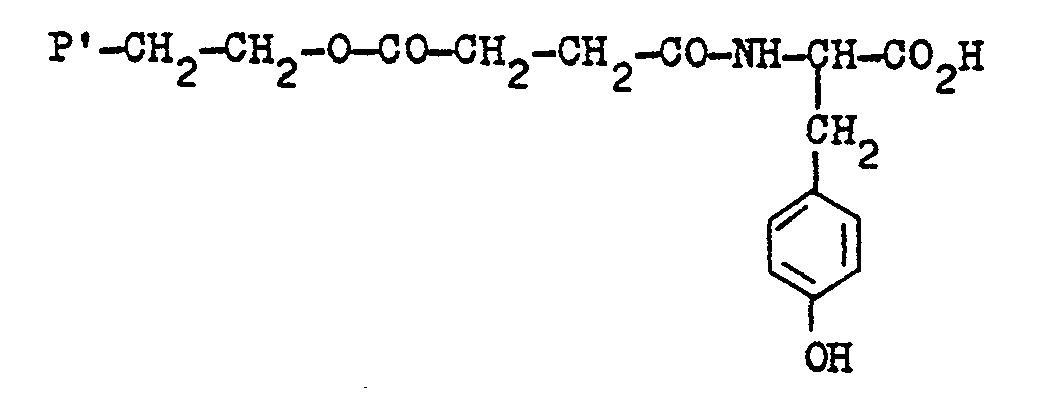
- 181 mg (1 mmole) of L-thyrosine are added to a solution of 400 mg of sodium hydrogenocarbonate in 10 ml of deionized water. To the so obtained solution 340 mg of chloride hydrochloride of example 2 are added, keeping the reaction temperature below 10°C.
- When the reaction is completed (30') the pH is adjusted to 7 with 5% HCI, and the solution is freeze- dried. The lyophilizate is treated with anhydrous hot methanol and the so obtained solution is cooled and centrifugated. The supernatant, after evaporation of the solvent under vacuum gives a white microcrystalline product, which shows analytical and spectroscopical features corresponding to compound (lb-5).
- NMR (DMSO; 5 TMS):

-

- A) To 2.2 g (9 mmoles) of 9-(6-hydroxyhexyl)-ipoxantine (II, 6), suspended in 50 ml of anhydrous toluene are added, under stirring, 5 ml of a 20% solution of phosgene in toluene. The reaction mixture is stirred for 3 hours at room temperature, a flow of anhydrous nitrogen is let in to remove the excess phosgene and 5.2 g (30 mmoles) of DL-alanine benzyl ester, dissolved in 30 ml of CH2CI2, are added. After 1 hour stirring the precipitate is filtered and the filtrate is evaporated under reduced pressure. The residue is treated with ethanol, filtered and crystallized from water to give a white crystalline powder in a 7% yield (m.p. 167-168°C).
- Elemental analysis: C22H27N5O5

- NMR (DMS; δ TMS):

- B) 440 mg (1 mmole) of the preceding compound are debenzylated according to the method described in the example 4B. 318 mg (90%) of the acylalanine derivative (lc-1) are obtained as a white powder (m.p. >220°C)..
- Elemental analysis: C15H21N5O5
- NMR (DMSO + D,O; 6 TMS):

-

- A) According to the same method described in the example 9, starting from 9-(5-hydroxypentyl)-hypoxantine (11-5), 6-hydroxy-9-{5-[2-(benzyloxycarbonyl-ethylamino-carbamoyl)oxy]pentyl}purine (m.p. 184°C.
- Elemental analysis: C21H25N5O5

- NMR (DMSO; δ TMS):

- B) Starting from the preceding compound, following the same procedure of the example 9B, (Ic-2) has been obtained (m.p. 200°C, decomposition).
- Elemental analysis: C14H19N5O5

- NMR (DMSO + D,O: δ TMS):

- The compounds of this invention have been shown to possess a specific immunomodulator activity which is superior to that of the control drugs, such as methisoprinol, already widely employed in clinical medicine.
- In Fig. 1, the effects of the compound of example 7 (lb-4) are shown in comparison with methisoprinol on the stimulation by phytohemagglutinin (PHA) of lymphocytes extracted by patients affected by Hodgkin's disease and off-therapy since, at least, 17 months. The PHA response of lymphocytes of these patients are below normal range.
- The in vitro effect of (lb, 4) and methisoprinol on the stimulation by PHA of lymphocytes was studied by cultivating PHA stimulated lymphocytes in the presence of these compounds at different doses: methisoprinol at 100, 200, 400 y/ml; (lb-4) at 0.1,0.5,1 and 5 y/ml. The plot of Fig. 1 is representative of the general trend found on lymphocytes extracted from several patients: compound (lb-4) produces a marked enhancement of the PHA response, already at a dose of 0.1 y/ml, while methisoprinol needs a higher dosage (200-400 y/ml) to induce a stimulating effect which is less than that produced by (lb-4).
- Moreover it is important to consider that concentrations of 0.1-1 y/ml are physiologic and easily achieved in vivo; on the contrary it is difficult to achieve in vivo concentrations as high as those needed by methisoprinol for its maximum effects.
- The experimental results are therefore indicative of a more effective therapeutic use of the compounds of this invention in comparison with methisoprinol.
- In Fig. 2 the results of the study of the effect of (lb-4) on the polymorphonuclear (PMN) lymphocytes membrane-stimulated oxidative metabolic activity are reported: polymorphonuclear leucocytes (2.5 x 10⁴/ ml) in phosphate buffer solution (PBS) were incubated for 15' at 37°C with ferricytochrome C (1.5 mg/ml) in the presence or absence of superoxide dismutase (SOD) (0.125 mg/ml) after the addition of 50µl of stimulating agent.
- The amount of reduced cytochrome C in the cell free supernatant was determined spectrophotometrically at 550 nm and the 02 release calculated according to a standard formula. Appropriate control tubes contained fixed doses of (lb-4) (from 0.01 y/ml to 200 y/ml). From the results, statistically evaluated by a T-test for paired data, it is evident a statistically significant enhancement in the superoxide production at a dose of 1 y/ml of (lb-4). At higher dosages, probably because of complex mechanisms of metabolic regulation, there is a gradual decrease of the O2 production. An enhanced production of superoxide anion is indicative of a more effective phagocytic activity.
- Ib-4 is also active, at doses ranging from 0.001 to 40 µg/ml, in inhibiting the incorporation of labelled thymidine stimulated by phytohemagglutinin (PHA) or lypopolysaccharides (LPS), in spleen cells from BALB/C mice 8-10 weeks old. The inhibition of the proliferation in vitro is dose-dependent and it is probably due to activation of suppressor cell mechanism. In the following table the results of thymidine incorporation in a 106 cells/ml culture have been listed.

- The effect of (Ib-4) on the suppressor cell has also been studied using lymphocytes from healthy volunteers, incubated for 48 hours with different drug concentrations then washed and incubated either with autologous lymphocytes stimulated by concanavalin A for 3 days or with allogeneic mitomycin- treated lymphocytes for 5 days (Mixed Lymphocytes Reaction): (lb-4), at concentrations between 0.1 and 1.5 pg/ml, gave an inhibition of the proliferative response of about 60% in comparison with controls. The effect of the compounds object of this invention on the ability of T-lymphocytes to form "active" E-rosettes, has also been studied (Pasino e coll., Boll. lst. Sieroter. Mil. 60, 4, 297-301, 1981).
- Lymphocytes were incubated at 4° for 24 hours, then isolated and incubated for 90 min. in the presence or absence of different concentrations of the drug prior to the assay. Data were expressed as % of cells forming rosettes: as an example, compound (lb-2) gave an enhancement of the percentage from 35 to 50%, at concentrations from 1 and 3 µg/ml; higher concentrations, the percentage of active E-rosettes decreased.
- The compounds of the invention proved at last to be active in vivo (mice C 57 Be/6) in enhancing the anti sheeps red blood cells and anti-TNF (Trinitrophenyl)-LPS (lypopolysaccharides), responses, at dosages ranging from 0.1 to 5 mg/kg. On the basis of the Trypan-blue exclusion test, the compounds of the invention proved to be non-cytotoxic even at very high concentrations (60-120 µg/ml), in a human mononuclear peripheral blood cells culture, with a cell viability greater than 98%.
Claims (7)








Priority Applications (1)
| Application Number | Priority Date | Filing Date | Title |
|---|---|---|---|
| AT82108243T ATE22892T1 (en) | 1981-09-24 | 1982-09-08 | PURINE COMPOUNDS EXHIBITING IMMUNEGULATORY ACTION. |
Applications Claiming Priority (4)
| Application Number | Priority Date | Filing Date | Title |
|---|---|---|---|
| IT24120/81A IT1140205B (en) | 1981-09-24 | 1981-09-24 | SPECIFIC IMMUNO-MODULATOR COMPOUNDS, PROCEDURE FOR THEIR PREPARATION AND PHARMACEUTICAL COMPOSITIONS CONTAINING THEM |
| IT2412081 | 1981-09-24 | ||
| IT2284882 | 1982-08-13 | ||
| IT22848/82A IT1152372B (en) | 1982-08-13 | 1982-08-13 | SPECIFIC IMMONU-MODULATOR COMPOUNDS, PROCEDURE FOR THEIR PREPARATION AND PHARMACEUTICAL COMPOSITIONS CONTAINING THEM |
Publications (3)
| Publication Number | Publication Date |
|---|---|
| EP0077460A2 EP0077460A2 (en) | 1983-04-27 |
| EP0077460A3 EP0077460A3 (en) | 1984-03-21 |
| EP0077460B1 true EP0077460B1 (en) | 1986-10-15 |
Family
ID=26328276
Family Applications (1)
| Application Number | Title | Priority Date | Filing Date |
|---|---|---|---|
| EP82108243A Expired EP0077460B1 (en) | 1981-09-24 | 1982-09-08 | Purine compounds endowed with immunomodulating activity |
Country Status (10)
| Country | Link |
|---|---|
| US (1) | US4567182A (en) |
| EP (1) | EP0077460B1 (en) |
| KR (1) | KR870001029B1 (en) |
| AU (1) | AU564576B2 (en) |
| CA (1) | CA1258149A (en) |
| DE (1) | DE3273785D1 (en) |
| IN (1) | IN156319B (en) |
| LU (1) | LU88813I2 (en) |
| NL (1) | NL960015I2 (en) |
| PH (1) | PH19112A (en) |
Families Citing this family (13)
| Publication number | Priority date | Publication date | Assignee | Title |
|---|---|---|---|---|
| IL73682A (en) * | 1983-12-20 | 1991-08-16 | Medivir Ab | Antiviral pharmaceutical compositions containing 9-hydroxy aliphatic derivatives of guanine,some new such derivatives and process for their preparation |
| IT1213495B (en) * | 1986-09-17 | 1989-12-20 | Sigma Tau Ind Farmaceuti | ALPHA-N PREPARATION PROCESS - [(IPOXATIN-9-IL) PENTYLOXYCARBONYL] ARGININE |
| GB8719367D0 (en) * | 1987-08-15 | 1987-09-23 | Wellcome Found | Therapeutic compounds |
| GB8725939D0 (en) * | 1987-11-05 | 1987-12-09 | Wellcome Found | Therapeutic compounds |
| IT1223604B (en) * | 1987-12-24 | 1990-09-29 | Co Pharma Corp Srl | PURINIC DERIVATIVES WITH PHARMACOLOGICAL ACTION |
| GB8829571D0 (en) * | 1988-12-19 | 1989-02-08 | Wellcome Found | Antiviral compounds |
| DE68922903T2 (en) * | 1988-12-19 | 1995-11-23 | Wellcome Found | Antiviral pyrimidine and purine compounds, processes for their preparation and pharmaceutical preparations containing them. |
| IT1241452B (en) * | 1990-06-28 | 1994-01-17 | Sigma Tau Ind Farmaceuti | OLIGOPEPTIDIC DERIVATIVES OF IPOXANTINE EQUIPPED WITH IMMUNOMODULATING ACTIVITY AND PHARMACEUTICAL COMPOSITIONS THAT CONTAIN THEM |
| IT1244501B (en) * | 1991-03-22 | 1994-07-15 | Sigma Tau Ind Farmaceuti | AMINO ACYL AND OLIGOPEPTIDIC DERIVATIVES OF ALLOPURINOL EQUIPPED WITH IMMUNOSTIMULANT ACTIVITY AND PHARMACEUTICAL COMPOSITIONS CONTAINING THEM |
| US5994361A (en) * | 1994-06-22 | 1999-11-30 | Biochem Pharma | Substituted purinyl derivatives with immunomodulating activity |
| US5559114A (en) * | 1994-12-16 | 1996-09-24 | Exley; Ray W. | Treatment of autoimmune disease using 2-amino purine derivatives |
| US6455734B1 (en) * | 2000-08-09 | 2002-09-24 | Magnesium Diagnostics, Inc. | Antagonists of the magnesium binding defect as therapeutic agents and methods for treatment of abnormal physiological states |
| CN100345545C (en) * | 2003-06-18 | 2007-10-31 | 中国科学院上海药物研究所 | 6-amino-alpha(R)-hydroxyl-9H-purin-9-ethyl butyrate immunological suppression effect |
Family Cites Families (2)
| Publication number | Priority date | Publication date | Assignee | Title |
|---|---|---|---|---|
| GB1523865A (en) * | 1974-09-02 | 1978-09-06 | Wellcome Found | Purine compunds and salts thereof |
| US4340726A (en) * | 1980-03-14 | 1982-07-20 | Newport Pharmaceuticals International, Inc. | Esters |
-
1982
- 1982-09-07 AU AU88080/82A patent/AU564576B2/en not_active Expired
- 1982-09-08 DE DE8282108243T patent/DE3273785D1/en not_active Expired
- 1982-09-08 EP EP82108243A patent/EP0077460B1/en not_active Expired
- 1982-09-09 PH PH27842A patent/PH19112A/en unknown
- 1982-09-13 CA CA000411280A patent/CA1258149A/en not_active Expired
- 1982-09-14 US US06/418,189 patent/US4567182A/en not_active Expired - Lifetime
- 1982-09-17 IN IN1081/CAL/82A patent/IN156319B/en unknown
- 1982-09-24 KR KR8204321A patent/KR870001029B1/en not_active Expired
-
1996
- 1996-06-12 NL NL960015C patent/NL960015I2/en unknown
- 1996-09-20 LU LU88813C patent/LU88813I2/en unknown
Also Published As
| Publication number | Publication date |
|---|---|
| IN156319B (en) | 1985-06-22 |
| NL960015I1 (en) | 1996-10-01 |
| PH19112A (en) | 1986-01-06 |
| EP0077460A3 (en) | 1984-03-21 |
| CA1258149A (en) | 1989-08-01 |
| AU564576B2 (en) | 1987-08-20 |
| KR840001575A (en) | 1984-05-07 |
| AU8808082A (en) | 1983-03-31 |
| KR870001029B1 (en) | 1987-05-25 |
| DE3273785D1 (en) | 1986-11-20 |
| EP0077460A2 (en) | 1983-04-27 |
| US4567182A (en) | 1986-01-28 |
| NL960015I2 (en) | 1998-03-02 |
| LU88813I2 (en) | 1998-03-20 |
Similar Documents
| Publication | Publication Date | Title |
|---|---|---|
| EP0077460B1 (en) | Purine compounds endowed with immunomodulating activity | |
| JP3981407B2 (en) | Substituted 0 ▲ top 6-benzylguanine | |
| JP3090305B2 (en) | 2- (2-amino-1,6-dihydro-6-oxo-purin-9-yl) methoxy-1,3-propanediol derivative | |
| EP0268377B1 (en) | Glutamic acid derivatives, processes and intermediates for their preparation and pharmaceutical formulations containing them | |
| JP3247769B2 (en) | Novel piperazine and homopiperazine derivatives, pharmaceutical compositions containing these compounds and processes for producing these compounds | |
| US5543414A (en) | Achiral amino acid acyl esters of ganciclovir and its derivatives | |
| HU206200B (en) | Process for producing compounds comprising condensed quinoline ring system | |
| CZ305396A3 (en) | Process for preparing purines and intermediates for such preparation | |
| EP0366385B1 (en) | Guanine derivatives having antiviral activity and their pharmaceutically acceptable salts | |
| EP1198458B1 (en) | Ceramide analogs, process for their preparation and their use as antitumor agents | |
| Lee et al. | Antitumor agents. 86. Synthesis and cytotoxicity of. alpha.-methylene-. gamma.-lactone-bearing purines | |
| EP0058134B1 (en) | Novel bis- and poly-disulfides having immunostimulant activity | |
| CA1086316A (en) | Purine acyclic nucleosides | |
| JP3072600B2 (en) | Novel compound, production method thereof and pharmaceutical composition containing the same | |
| US5145854A (en) | 1-formyl-5,8,10-trideazafolates | |
| EP0272063B1 (en) | Mitomycin derivatives | |
| EP0096125B1 (en) | Amino and amido derivatives of chloro nitro amino and alkylamino pyrazines useful as adjuncts to radiation therapy | |
| KR100485997B1 (en) | Selected Derivatives of K-252 | |
| IT8222848A1 (en) | SPECIFIC IMMUNO-MODULATORY COMPOUNDS, PROCEDURE FOR THEIR PREPARATION AND PHARMACEUTICAL COMPOSITIONS CONTAINING THEM | |
| Montgomery et al. | N-Alkyl derivatives of purine-6 (1H)-thione | |
| JPH0345074B2 (en) | ||
| CS199666B2 (en) | Process for preparing 9-substituted purines | |
| CS211335B1 (en) | 2- (4-Phenoxyacetylpiperazin-1-yl) -4-amino-6,7-dimethoxyquinazoline, its salts and processes for its preparation | |
| NO166185B (en) | ANALOGY PROCEDURE FOR THE PREPARATION OF THERAPEUTIC ACTIVE 2-AMINO-7- (2-THIENTYLMETHYL) -4-PYRROLO (2,3-D) PYRIMIDONE OR A PHARMACEUTICAL ACCEPTABLE BASE OR ACID ADDICTION. |
Legal Events
| Date | Code | Title | Description |
|---|---|---|---|
| PUAI | Public reference made under article 153(3) epc to a published international application that has entered the european phase |
Free format text: ORIGINAL CODE: 0009012 |
|
| AK | Designated contracting states |
Designated state(s): AT BE CH DE FR GB IT LI LU NL SE |
|
| 17P | Request for examination filed |
Effective date: 19831004 |
|
| PUAL | Search report despatched |
Free format text: ORIGINAL CODE: 0009013 |
|
| AK | Designated contracting states |
Designated state(s): AT BE CH DE FR GB IT LI LU NL SE |
|
| GRAA | (expected) grant |
Free format text: ORIGINAL CODE: 0009210 |
|
| AK | Designated contracting states |
Kind code of ref document: B1 Designated state(s): AT BE CH DE FR GB IT LI LU NL SE |
|
| REF | Corresponds to: |
Ref document number: 22892 Country of ref document: AT Date of ref document: 19861115 Kind code of ref document: T |
|
| ITF | It: translation for a ep patent filed | ||
| REF | Corresponds to: |
Ref document number: 3273785 Country of ref document: DE Date of ref document: 19861120 |
|
| ET | Fr: translation filed | ||
| PLBE | No opposition filed within time limit |
Free format text: ORIGINAL CODE: 0009261 |
|
| STAA | Information on the status of an ep patent application or granted ep patent |
Free format text: STATUS: NO OPPOSITION FILED WITHIN TIME LIMIT |
|
| 26N | No opposition filed | ||
| ITTA | It: last paid annual fee | ||
| EPTA | Lu: last paid annual fee | ||
| EAL | Se: european patent in force in sweden |
Ref document number: 82108243.5 |
|
| REG | Reference to a national code |
Ref country code: GB Ref legal event code: CTFF Free format text: GBCTFFSPC/GB95/020, 950718 |
|
| REG | Reference to a national code |
Ref country code: CH Ref legal event code: SPCF Free format text: CHSPCFUICM 53116/950628, 960222 Ref country code: CH Ref legal event code: PFA Free format text: CO PHARMA CORPORATION S.R.L. TRANSFER- SIGMA-TAU INDUSTRIE FARMACEUTICHE RIUNITE S.P.A. |
|
| REG | Reference to a national code |
Ref country code: SE Ref legal event code: SPCF Free format text: 9690019, 950329 |
|
| NLS | Nl: assignments of ep-patents |
Owner name: SIGMA-TAU INDUSTRIE FARMACEUTICHE RIUNITE S.P.A |
|
| REG | Reference to a national code |
Ref country code: NL Ref legal event code: AC1 Free format text: NLAC1 960015, 960612 |
|
| REG | Reference to a national code |
Ref country code: GB Ref legal event code: 732E |
|
| REG | Reference to a national code |
Ref country code: FR Ref legal event code: TP |
|
| REG | Reference to a national code |
Ref country code: CH Ref legal event code: SPCG Free format text: IKS 53116/19950628, 19960222, EXPIRES:20070607 |
|
| REG | Reference to a national code |
Ref country code: SE Ref legal event code: SPCF Free format text: 9790018, 950329 |
|
| REG | Reference to a national code |
Ref country code: GB Ref legal event code: CTFG Free format text: GBCTFGSPC/GB95/20, 970828, EXPIRES:20070907 |
|
| BECA | Be: change of holder's address |
Free format text: 970617 *SIGMA-TAU INDUSTRIE FARMACEUTICHE RIUNITE S.P.A.:VIALE SHAKESPEARE 47, I-00144 ROME |
|
| REG | Reference to a national code |
Ref country code: NL Ref legal event code: KC1 Free format text: NLKC1 960015, 20020908, EXPIRES: 20070907 |
|
| REG | Reference to a national code |
Ref country code: LU Ref legal event code: CCP Free format text: LUCCP 88813, EXPIRES: 20070908 |
|
| MEDD | It: supplementary protection certificate for pharmaceutical products: granted |
Free format text: CCP 616, 19980514; SIGMA TAU INDUSTRIE FARMACEUTICHE RIUNITE S.P.A. |
|
| REG | Reference to a national code |
Ref country code: FR Ref legal event code: CP Free format text: PRODUCT NAME: VALACICLOVIR HYDROCLORHYDE; NAT. REGISTRATION NO/DATE: NL 20 459 19950208; FIRST REGISTRATION: IE - PA 17/111/1 19941212 Spc suppl protection certif: 98C0035 Filing date: 19981026 |
|
| REG | Reference to a national code |
Ref country code: FR Ref legal event code: CR Free format text: FRCR 98C0035, 981026 |
|
| REG | Reference to a national code |
Ref country code: FR Ref legal event code: CP |
|
| CCPV | Be: grant of a complementary protection certificate |
Free format text: 097C0035, EXPIRES: 20070908 |
|
| PGFP | Annual fee paid to national office [announced via postgrant information from national office to epo] |
Ref country code: GB Payment date: 20010822 Year of fee payment: 20 |
|
| PGFP | Annual fee paid to national office [announced via postgrant information from national office to epo] |
Ref country code: SE Payment date: 20010823 Year of fee payment: 20 |
|
| PGFP | Annual fee paid to national office [announced via postgrant information from national office to epo] |
Ref country code: LU Payment date: 20010905 Year of fee payment: 20 |
|
| PGFP | Annual fee paid to national office [announced via postgrant information from national office to epo] |
Ref country code: FR Payment date: 20010925 Year of fee payment: 20 |
|
| PGFP | Annual fee paid to national office [announced via postgrant information from national office to epo] |
Ref country code: DE Payment date: 20010926 Year of fee payment: 20 Ref country code: CH Payment date: 20010926 Year of fee payment: 20 Ref country code: BE Payment date: 20010926 Year of fee payment: 20 |
|
| PGFP | Annual fee paid to national office [announced via postgrant information from national office to epo] |
Ref country code: NL Payment date: 20010930 Year of fee payment: 20 Ref country code: AT Payment date: 20010930 Year of fee payment: 20 |
|
| REG | Reference to a national code |
Ref country code: GB Ref legal event code: IF02 |
|
| PG25 | Lapsed in a contracting state [announced via postgrant information from national office to epo] |
Ref country code: LI Free format text: LAPSE BECAUSE OF EXPIRATION OF PROTECTION Effective date: 20020907 Ref country code: GB Free format text: LAPSE BECAUSE OF EXPIRATION OF PROTECTION Effective date: 20020907 Ref country code: CH Free format text: LAPSE BECAUSE OF EXPIRATION OF PROTECTION Effective date: 20020907 |
|
| PG25 | Lapsed in a contracting state [announced via postgrant information from national office to epo] |
Ref country code: NL Free format text: LAPSE BECAUSE OF EXPIRATION OF PROTECTION Effective date: 20020908 Ref country code: LU Free format text: LAPSE BECAUSE OF EXPIRATION OF PROTECTION Effective date: 20020908 Ref country code: AT Free format text: LAPSE BECAUSE OF EXPIRATION OF PROTECTION Effective date: 20020908 |
|
| BE20 | Be: patent expired |
Owner name: *SIGMA-TAU INDUSTRIE FARMACEUTICHE RIUNITE S.P.A. Effective date: 20020908 |
|
| REG | Reference to a national code |
Ref country code: CH Ref legal event code: PL |
|
| REG | Reference to a national code |
Ref country code: GB Ref legal event code: PE20 Effective date: 20020907 Ref country code: GB Ref legal event code: CTFE Free format text: GBCTFESPC/GB95/020: 20020908, EXPIRES: 20070907 |
|
| EUG | Se: european patent has lapsed |
Ref document number: 82108243.5 |
|
| NLV7 | Nl: ceased due to reaching the maximum lifetime of a patent |
Effective date: 20020908 |
|
| REG | Reference to a national code |
Ref country code: FR Ref legal event code: CX Free format text: 98C0035, 19981026 Spc suppl protection certif: 98C0035 Filing date: 19981026 |
|
| REG | Reference to a national code |
Ref country code: CH Ref legal event code: SPCL Spc suppl protection certif: C00077460/01 |
|
| REG | Reference to a national code |
Ref country code: GB Ref legal event code: SPCE Free format text: SPC/GB95/020:, EXPIRES: 20070907 Spc suppl protection certif: SPC/GB95/020 Expiry date: 20070907 |
|
| REG | Reference to a national code |
Ref country code: BE Ref legal event code: CCRE Free format text: PRODUCT NAME: VALACICLOVIR; NAT REG. NO/DATE: 725 IS 144 F 3; FIRST REG.: IE PA 17/111/1 19941212 Spc suppl protection certif: 97C0035 Filing date: 19970623 Expiry date: 20020908 Extension date: 20070908 |