EP0079906B1 - Abkömmlinge der (e)-beta-farnesene verwendbar als schädlingsbekämpfungsmittel - Google Patents
Abkömmlinge der (e)-beta-farnesene verwendbar als schädlingsbekämpfungsmittel Download PDFInfo
- Publication number
- EP0079906B1 EP0079906B1 EP82901525A EP82901525A EP0079906B1 EP 0079906 B1 EP0079906 B1 EP 0079906B1 EP 82901525 A EP82901525 A EP 82901525A EP 82901525 A EP82901525 A EP 82901525A EP 0079906 B1 EP0079906 B1 EP 0079906B1
- Authority
- EP
- European Patent Office
- Prior art keywords
- group
- compound according
- represent
- formula
- carbon
- Prior art date
- Legal status (The legal status is an assumption and is not a legal conclusion. Google has not performed a legal analysis and makes no representation as to the accuracy of the status listed.)
- Expired
Links
- 150000000096 trans-beta-farnesene derivatives Chemical class 0.000 title description 19
- 241000238631 Hexapoda Species 0.000 title description 5
- 150000001875 compounds Chemical class 0.000 claims abstract description 117
- 241000607479 Yersinia pestis Species 0.000 claims abstract description 10
- 241001124076 Aphididae Species 0.000 claims description 58
- 229910052739 hydrogen Inorganic materials 0.000 claims description 33
- 239000000203 mixture Substances 0.000 claims description 31
- 239000001257 hydrogen Substances 0.000 claims description 30
- -1 4,8-dimethyl-3,7-nonadienyl group Chemical group 0.000 claims description 27
- 238000000034 method Methods 0.000 claims description 26
- 125000001931 aliphatic group Chemical group 0.000 claims description 25
- 239000000575 pesticide Substances 0.000 claims description 24
- UFHFLCQGNIYNRP-UHFFFAOYSA-N Hydrogen Chemical compound [H][H] UFHFLCQGNIYNRP-UHFFFAOYSA-N 0.000 claims description 18
- 125000002496 methyl group Chemical group [H]C([H])([H])* 0.000 claims description 15
- 125000000217 alkyl group Chemical group 0.000 claims description 12
- 125000004429 atom Chemical group 0.000 claims description 12
- 230000006378 damage Effects 0.000 claims description 12
- 229910052757 nitrogen Inorganic materials 0.000 claims description 12
- 125000004432 carbon atom Chemical group C* 0.000 claims description 10
- 239000011203 carbon fibre reinforced carbon Substances 0.000 claims description 10
- 229910052799 carbon Inorganic materials 0.000 claims description 8
- 150000002431 hydrogen Chemical class 0.000 claims description 8
- 125000004435 hydrogen atom Chemical group [H]* 0.000 claims description 5
- 238000005304 joining Methods 0.000 claims description 5
- 125000004433 nitrogen atom Chemical group N* 0.000 claims description 5
- QVGXLLKOCUKJST-UHFFFAOYSA-N atomic oxygen Chemical group [O] QVGXLLKOCUKJST-UHFFFAOYSA-N 0.000 claims description 4
- 229910052760 oxygen Inorganic materials 0.000 claims description 4
- 239000001301 oxygen Substances 0.000 claims description 4
- 150000001721 carbon Chemical group 0.000 claims description 3
- 125000005843 halogen group Chemical group 0.000 claims description 3
- 125000001841 imino group Chemical group [H]N=* 0.000 claims description 3
- 239000004480 active ingredient Substances 0.000 claims description 2
- 125000004122 cyclic group Chemical group 0.000 claims description 2
- 125000003342 alkenyl group Chemical group 0.000 claims 1
- 125000001246 bromo group Chemical group Br* 0.000 claims 1
- QLCCYHMHQIOAMD-JJNGWGCYSA-N didecyl 4-[(3e)-4,8-dimethylnona-3,7-dienyl]cyclohexa-1,4-diene-1,2-dicarboxylate Chemical compound CCCCCCCCCCOC(=O)C1=C(C(=O)OCCCCCCCCCC)CC(CC\C=C(/C)CCC=C(C)C)=CC1 QLCCYHMHQIOAMD-JJNGWGCYSA-N 0.000 claims 1
- CUZDAJXNUPOQCR-FEZSWGLMSA-N dinonyl 4-[(3e)-4,8-dimethylnona-3,7-dienyl]cyclohexa-1,4-diene-1,2-dicarboxylate Chemical compound CCCCCCCCCOC(=O)C1=C(C(=O)OCCCCCCCCC)CC(CC\C=C(/C)CCC=C(C)C)=CC1 CUZDAJXNUPOQCR-FEZSWGLMSA-N 0.000 claims 1
- UILMKYZKNVQKON-FDEZRRJOSA-N diundecyl 4-[(3e)-4,8-dimethylnona-3,7-dienyl]cyclohexa-1,4-diene-1,2-dicarboxylate Chemical compound CCCCCCCCCCCOC(=O)C1=C(C(=O)OCCCCCCCCCCC)CC(CC\C=C(/C)CCC=C(C)C)=CC1 UILMKYZKNVQKON-FDEZRRJOSA-N 0.000 claims 1
- 125000001570 methylene group Chemical group [H]C([H])([*:1])[*:2] 0.000 claims 1
- JSNRRGGBADWTMC-UHFFFAOYSA-N (6E)-7,11-dimethyl-3-methylene-1,6,10-dodecatriene Chemical compound CC(C)=CCCC(C)=CCCC(=C)C=C JSNRRGGBADWTMC-UHFFFAOYSA-N 0.000 abstract description 113
- JSNRRGGBADWTMC-QINSGFPZSA-N (E)-beta-Farnesene Natural products CC(C)=CCC\C(C)=C/CCC(=C)C=C JSNRRGGBADWTMC-QINSGFPZSA-N 0.000 abstract description 48
- 238000005698 Diels-Alder reaction Methods 0.000 abstract description 32
- YSNRTFFURISHOU-UHFFFAOYSA-N beta-farnesene Natural products C=CC(C)CCC=C(C)CCC=C(C)C YSNRTFFURISHOU-UHFFFAOYSA-N 0.000 abstract description 4
- 230000000694 effects Effects 0.000 description 45
- VLKZOEOYAKHREP-UHFFFAOYSA-N n-Hexane Chemical compound CCCCCC VLKZOEOYAKHREP-UHFFFAOYSA-N 0.000 description 24
- 239000002585 base Substances 0.000 description 23
- 230000004048 modification Effects 0.000 description 21
- 238000012986 modification Methods 0.000 description 21
- FQTLCLSUCSAZDY-ATGUSINASA-N Nerolidol Chemical compound CC(C)=CCC\C(C)=C\CC[C@](C)(O)C=C FQTLCLSUCSAZDY-ATGUSINASA-N 0.000 description 20
- 238000006243 chemical reaction Methods 0.000 description 20
- 239000000047 product Substances 0.000 description 20
- PNEYBMLMFCGWSK-UHFFFAOYSA-N Alumina Chemical compound [O-2].[O-2].[O-2].[Al+3].[Al+3] PNEYBMLMFCGWSK-UHFFFAOYSA-N 0.000 description 19
- FQTLCLSUCSAZDY-UHFFFAOYSA-N (+) E(S) nerolidol Natural products CC(C)=CCCC(C)=CCCC(C)(O)C=C FQTLCLSUCSAZDY-UHFFFAOYSA-N 0.000 description 18
- 241000196324 Embryophyta Species 0.000 description 18
- 238000002360 preparation method Methods 0.000 description 17
- IJGRMHOSHXDMSA-UHFFFAOYSA-N Atomic nitrogen Chemical compound N#N IJGRMHOSHXDMSA-UHFFFAOYSA-N 0.000 description 16
- RTZKZFJDLAIYFH-UHFFFAOYSA-N Diethyl ether Chemical compound CCOCC RTZKZFJDLAIYFH-UHFFFAOYSA-N 0.000 description 14
- XLYOFNOQVPJJNP-UHFFFAOYSA-N water Substances O XLYOFNOQVPJJNP-UHFFFAOYSA-N 0.000 description 14
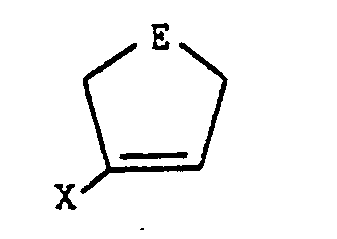
- 0 *C1=CCNC1 Chemical compound *C1=CCNC1 0.000 description 12
- VZGDMQKNWNREIO-UHFFFAOYSA-N tetrachloromethane Chemical compound ClC(Cl)(Cl)Cl VZGDMQKNWNREIO-UHFFFAOYSA-N 0.000 description 12
- 241000700605 Viruses Species 0.000 description 11
- WASNIKZYIWZQIP-AWEZNQCLSA-N nerolidol Natural products CC(=CCCC(=CCC[C@@H](O)C=C)C)C WASNIKZYIWZQIP-AWEZNQCLSA-N 0.000 description 11
- 230000009885 systemic effect Effects 0.000 description 10
- KWYUFKZDYYNOTN-UHFFFAOYSA-M Potassium hydroxide Chemical compound [OH-].[K+] KWYUFKZDYYNOTN-UHFFFAOYSA-M 0.000 description 9
- HEMHJVSKTPXQMS-UHFFFAOYSA-M Sodium hydroxide Chemical compound [OH-].[Na+] HEMHJVSKTPXQMS-UHFFFAOYSA-M 0.000 description 9
- 239000002253 acid Substances 0.000 description 9
- 230000018044 dehydration Effects 0.000 description 9
- 238000006297 dehydration reaction Methods 0.000 description 9
- JUJWROOIHBZHMG-UHFFFAOYSA-N Pyridine Chemical compound C1=CC=NC=C1 JUJWROOIHBZHMG-UHFFFAOYSA-N 0.000 description 8
- 230000003647 oxidation Effects 0.000 description 8
- 238000007254 oxidation reaction Methods 0.000 description 8
- RAHZWNYVWXNFOC-UHFFFAOYSA-N sulfur dioxide Inorganic materials O=S=O RAHZWNYVWXNFOC-UHFFFAOYSA-N 0.000 description 8
- HGINCPLSRVDWNT-UHFFFAOYSA-N Acrolein Chemical compound C=CC=O HGINCPLSRVDWNT-UHFFFAOYSA-N 0.000 description 7
- IEPRKVQEAMIZSS-WAYWQWQTSA-N Diethyl maleate Chemical compound CCOC(=O)\C=C/C(=O)OCC IEPRKVQEAMIZSS-WAYWQWQTSA-N 0.000 description 7
- LFQSCWFLJHTTHZ-UHFFFAOYSA-N Ethanol Chemical compound CCO LFQSCWFLJHTTHZ-UHFFFAOYSA-N 0.000 description 7
- 241000721621 Myzus persicae Species 0.000 description 7
- 230000009471 action Effects 0.000 description 7
- 125000004185 ester group Chemical group 0.000 description 7
- JSNRRGGBADWTMC-NTCAYCPXSA-N (Z)-beta-Farnesene Natural products CC(C)=CCC\C(C)=C\CCC(=C)C=C JSNRRGGBADWTMC-NTCAYCPXSA-N 0.000 description 6
- 239000002270 dispersing agent Substances 0.000 description 6
- 238000010438 heat treatment Methods 0.000 description 6
- 239000003016 pheromone Substances 0.000 description 6
- 150000003839 salts Chemical class 0.000 description 6
- 239000000243 solution Substances 0.000 description 6
- FQTLCLSUCSAZDY-SZGZABIGSA-N (E)-Nerolidol Natural products CC(C)=CCC\C(C)=C/CC[C@@](C)(O)C=C FQTLCLSUCSAZDY-SZGZABIGSA-N 0.000 description 5
- OKTJSMMVPCPJKN-UHFFFAOYSA-N Carbon Chemical compound [C] OKTJSMMVPCPJKN-UHFFFAOYSA-N 0.000 description 5
- IEPRKVQEAMIZSS-UHFFFAOYSA-N Di-Et ester-Fumaric acid Natural products CCOC(=O)C=CC(=O)OCC IEPRKVQEAMIZSS-UHFFFAOYSA-N 0.000 description 5
- 239000003795 chemical substances by application Substances 0.000 description 5
- FPYJFEHAWHCUMM-UHFFFAOYSA-N maleic anhydride Chemical compound O=C1OC(=O)C=C1 FPYJFEHAWHCUMM-UHFFFAOYSA-N 0.000 description 5
- LLAZQXZGAVBLRX-UHFFFAOYSA-N methyl 2,5-dioxopyrrole-1-carboxylate Chemical compound COC(=O)N1C(=O)C=CC1=O LLAZQXZGAVBLRX-UHFFFAOYSA-N 0.000 description 5
- CRDAMVZIKSXKFV-PVMFERMNSA-N (2-cis,6-trans)-farnesol Chemical compound CC(C)=CCC\C(C)=C\CC\C(C)=C/CO CRDAMVZIKSXKFV-PVMFERMNSA-N 0.000 description 4
- WXUORIPPVZWCPN-UHFFFAOYSA-N 4-(4,8-dimethylnona-3,7-dienyl)cyclohex-4-ene-1,2-dicarboxylic acid Chemical compound CC(C)=CCCC(C)=CCCC1=CCC(C(O)=O)C(C(O)=O)C1 WXUORIPPVZWCPN-UHFFFAOYSA-N 0.000 description 4
- 241000710149 Beet yellows virus Species 0.000 description 4
- 241000723762 Potato virus Y Species 0.000 description 4
- OFOBLEOULBTSOW-UHFFFAOYSA-N Propanedioic acid Natural products OC(=O)CC(O)=O OFOBLEOULBTSOW-UHFFFAOYSA-N 0.000 description 4
- 239000003708 ampul Substances 0.000 description 4
- 239000003153 chemical reaction reagent Substances 0.000 description 4
- 239000003085 diluting agent Substances 0.000 description 4
- 239000003995 emulsifying agent Substances 0.000 description 4
- 150000002148 esters Chemical group 0.000 description 4
- 125000001495 ethyl group Chemical group [H]C([H])([H])C([H])([H])* 0.000 description 4
- 238000009472 formulation Methods 0.000 description 4
- 239000011521 glass Substances 0.000 description 4
- 239000007788 liquid Substances 0.000 description 4
- VZCYOOQTPOCHFL-UPHRSURJSA-N maleic acid Chemical compound OC(=O)\C=C/C(O)=O VZCYOOQTPOCHFL-UPHRSURJSA-N 0.000 description 4
- 239000011976 maleic acid Substances 0.000 description 4
- 230000007935 neutral effect Effects 0.000 description 4
- UORVCLMRJXCDCP-UHFFFAOYSA-N propynoic acid Chemical compound OC(=O)C#C UORVCLMRJXCDCP-UHFFFAOYSA-N 0.000 description 4
- UMJSCPRVCHMLSP-UHFFFAOYSA-N pyridine Natural products COC1=CC=CN=C1 UMJSCPRVCHMLSP-UHFFFAOYSA-N 0.000 description 4
- 230000009467 reduction Effects 0.000 description 4
- FKHIFSZMMVMEQY-UHFFFAOYSA-N talc Chemical compound [Mg+2].[O-][Si]([O-])=O FKHIFSZMMVMEQY-UHFFFAOYSA-N 0.000 description 4
- 238000012360 testing method Methods 0.000 description 4
- CRDAMVZIKSXKFV-UHFFFAOYSA-N trans-Farnesol Natural products CC(C)=CCCC(C)=CCCC(C)=CCO CRDAMVZIKSXKFV-UHFFFAOYSA-N 0.000 description 4
- VZCYOOQTPOCHFL-UHFFFAOYSA-N trans-butenedioic acid Natural products OC(=O)C=CC(O)=O VZCYOOQTPOCHFL-UHFFFAOYSA-N 0.000 description 4
- CXENHBSYCFFKJS-UHFFFAOYSA-N (3E,6E)-3,7,11-Trimethyl-1,3,6,10-dodecatetraene Natural products CC(C)=CCCC(C)=CCC=C(C)C=C CXENHBSYCFFKJS-UHFFFAOYSA-N 0.000 description 3
- KYZTYNDZROBZOQ-UHFFFAOYSA-N 3-(4,8-dimethylnona-3,7-dienyl)-2,5-dihydrothiophene 1,1-dioxide Chemical compound CC(C)=CCCC(C)=CCCC1=CCS(=O)(=O)C1 KYZTYNDZROBZOQ-UHFFFAOYSA-N 0.000 description 3
- DGIPPASEBXHFFC-UHFFFAOYSA-N 4-(4,8-dimethylnona-3,7-dienyl)-1,2-dimethyl-3,6-dihydropyridazine Chemical compound CN1CC=C(CCC=C(C)CCC=C(C)C)CN1C DGIPPASEBXHFFC-UHFFFAOYSA-N 0.000 description 3
- QTBSBXVTEAMEQO-UHFFFAOYSA-N Acetic acid Chemical compound CC(O)=O QTBSBXVTEAMEQO-UHFFFAOYSA-N 0.000 description 3
- 235000000536 Brassica rapa subsp pekinensis Nutrition 0.000 description 3
- 241000499436 Brassica rapa subsp. pekinensis Species 0.000 description 3
- 239000004215 Carbon black (E152) Substances 0.000 description 3
- XEKOWRVHYACXOJ-UHFFFAOYSA-N Ethyl acetate Chemical compound CCOC(C)=O XEKOWRVHYACXOJ-UHFFFAOYSA-N 0.000 description 3
- PEEHTFAAVSWFBL-UHFFFAOYSA-N Maleimide Chemical compound O=C1NC(=O)C=C1 PEEHTFAAVSWFBL-UHFFFAOYSA-N 0.000 description 3
- RWRDLPDLKQPQOW-UHFFFAOYSA-N Pyrrolidine Chemical compound C1CCNC1 RWRDLPDLKQPQOW-UHFFFAOYSA-N 0.000 description 3
- ZMANZCXQSJIPKH-UHFFFAOYSA-N Triethylamine Chemical compound CCN(CC)CC ZMANZCXQSJIPKH-UHFFFAOYSA-N 0.000 description 3
- 230000008901 benefit Effects 0.000 description 3
- 230000005540 biological transmission Effects 0.000 description 3
- FUSUHKVFWTUUBE-UHFFFAOYSA-N buten-2-one Chemical compound CC(=O)C=C FUSUHKVFWTUUBE-UHFFFAOYSA-N 0.000 description 3
- YTIVTFGABIZHHX-UHFFFAOYSA-N butynedioic acid Chemical compound OC(=O)C#CC(O)=O YTIVTFGABIZHHX-UHFFFAOYSA-N 0.000 description 3
- 125000003178 carboxy group Chemical group [H]OC(*)=O 0.000 description 3
- 238000004587 chromatography analysis Methods 0.000 description 3
- 239000000356 contaminant Substances 0.000 description 3
- 238000006114 decarboxylation reaction Methods 0.000 description 3
- FAMRKDQNMBBFBR-BQYQJAHWSA-N diethyl azodicarboxylate Substances CCOC(=O)\N=N\C(=O)OCC FAMRKDQNMBBFBR-BQYQJAHWSA-N 0.000 description 3
- STRNXFOUBFLVIN-UHFFFAOYSA-N diethyl but-2-ynedioate Chemical compound CCOC(=O)C#CC(=O)OCC STRNXFOUBFLVIN-UHFFFAOYSA-N 0.000 description 3
- 125000006575 electron-withdrawing group Chemical group 0.000 description 3
- 239000000839 emulsion Substances 0.000 description 3
- BTLHMPDMEVTHGN-UHFFFAOYSA-N ethyl 5-(4,8-dimethylnona-3,7-dienyl)-3,6-dihydro-1H-pyridazine-2-carboxylate Chemical compound CCOC(=O)N1CC=C(CCC=C(C)CCC=C(C)C)CN1 BTLHMPDMEVTHGN-UHFFFAOYSA-N 0.000 description 3
- FAMRKDQNMBBFBR-UHFFFAOYSA-N ethyl n-ethoxycarbonyliminocarbamate Chemical compound CCOC(=O)N=NC(=O)OCC FAMRKDQNMBBFBR-UHFFFAOYSA-N 0.000 description 3
- 229930009668 farnesene Natural products 0.000 description 3
- 229930195733 hydrocarbon Natural products 0.000 description 3
- 150000002430 hydrocarbons Chemical class 0.000 description 3
- 230000007062 hydrolysis Effects 0.000 description 3
- 238000006460 hydrolysis reaction Methods 0.000 description 3
- 239000002917 insecticide Substances 0.000 description 3
- 230000000361 pesticidal effect Effects 0.000 description 3
- 239000003208 petroleum Substances 0.000 description 3
- 230000008569 process Effects 0.000 description 3
- 239000007858 starting material Substances 0.000 description 3
- 125000004079 stearyl group Chemical group [H]C([*])([H])C([H])([H])C([H])([H])C([H])([H])C([H])([H])C([H])([H])C([H])([H])C([H])([H])C([H])([H])C([H])([H])C([H])([H])C([H])([H])C([H])([H])C([H])([H])C([H])([H])C([H])([H])C([H])([H])C([H])([H])[H] 0.000 description 3
- 239000004291 sulphur dioxide Substances 0.000 description 3
- 235000010269 sulphur dioxide Nutrition 0.000 description 3
- 239000000260 (2E,6E)-3,7,11-trimethyldodeca-2,6,10-trien-1-ol Substances 0.000 description 2
- FQTLCLSUCSAZDY-QKXCFHHRSA-N (3S,6Z)-nerolidol Chemical compound CC(C)=CCC\C(C)=C/CC[C@](C)(O)C=C FQTLCLSUCSAZDY-QKXCFHHRSA-N 0.000 description 2
- QFMDFTQOJHFVNR-UHFFFAOYSA-N 1-[2,2-dichloro-1-(4-ethylphenyl)ethyl]-4-ethylbenzene Chemical compound C1=CC(CC)=CC=C1C(C(Cl)Cl)C1=CC=C(CC)C=C1 QFMDFTQOJHFVNR-UHFFFAOYSA-N 0.000 description 2
- LBLZFHTWUDYPHN-UHFFFAOYSA-N 1-[4-(4,8-dimethylnona-3,7-dienyl)cyclohex-3-en-1-yl]ethanone Chemical compound CC(C)=CCCC(C)=CCCC1=CCC(C(C)=O)CC1 LBLZFHTWUDYPHN-UHFFFAOYSA-N 0.000 description 2
- QGZKDVFQNNGYKY-UHFFFAOYSA-N Ammonia Chemical compound N QGZKDVFQNNGYKY-UHFFFAOYSA-N 0.000 description 2
- PAYRUJLWNCNPSJ-UHFFFAOYSA-N Aniline Chemical compound NC1=CC=CC=C1 PAYRUJLWNCNPSJ-UHFFFAOYSA-N 0.000 description 2
- KAKZBPTYRLMSJV-UHFFFAOYSA-N Butadiene Chemical compound C=CC=C KAKZBPTYRLMSJV-UHFFFAOYSA-N 0.000 description 2
- QXNVGIXVLWOKEQ-UHFFFAOYSA-N Disodium Chemical class [Na][Na] QXNVGIXVLWOKEQ-UHFFFAOYSA-N 0.000 description 2
- DHMQDGOQFOQNFH-UHFFFAOYSA-N Glycine Chemical compound NCC(O)=O DHMQDGOQFOQNFH-UHFFFAOYSA-N 0.000 description 2
- LSDPWZHWYPCBBB-UHFFFAOYSA-N Methanethiol Chemical compound SC LSDPWZHWYPCBBB-UHFFFAOYSA-N 0.000 description 2
- UIIMBOGNXHQVGW-UHFFFAOYSA-M Sodium bicarbonate Chemical compound [Na+].OC([O-])=O UIIMBOGNXHQVGW-UHFFFAOYSA-M 0.000 description 2
- 239000000009 alarm pheromone Substances 0.000 description 2
- 229910052783 alkali metal Inorganic materials 0.000 description 2
- 125000004453 alkoxycarbonyl group Chemical group 0.000 description 2
- 150000001413 amino acids Chemical class 0.000 description 2
- 238000013459 approach Methods 0.000 description 2
- 150000004181 beta-farnesene derivatives Chemical class 0.000 description 2
- WTEOIRVLGSZEPR-UHFFFAOYSA-N boron trifluoride Chemical compound FB(F)F WTEOIRVLGSZEPR-UHFFFAOYSA-N 0.000 description 2
- PAFZNILMFXTMIY-UHFFFAOYSA-N cyclohexylamine Chemical compound NC1CCCCC1 PAFZNILMFXTMIY-UHFFFAOYSA-N 0.000 description 2
- 125000002704 decyl group Chemical group [H]C([H])([H])C([H])([H])C([H])([H])C([H])([H])C([H])([H])C([H])([H])C([H])([H])C([H])([H])C([H])([H])C([H])([H])* 0.000 description 2
- 150000005690 diesters Chemical class 0.000 description 2
- 238000009826 distribution Methods 0.000 description 2
- 238000007590 electrostatic spraying Methods 0.000 description 2
- 238000002474 experimental method Methods 0.000 description 2
- 239000012535 impurity Substances 0.000 description 2
- 239000011261 inert gas Substances 0.000 description 2
- 239000012280 lithium aluminium hydride Substances 0.000 description 2
- 238000004519 manufacturing process Methods 0.000 description 2
- UKWHYYKOEPRTIC-UHFFFAOYSA-N mercury(ii) oxide Chemical compound [Hg]=O UKWHYYKOEPRTIC-UHFFFAOYSA-N 0.000 description 2
- 125000000325 methylidene group Chemical group [H]C([H])=* 0.000 description 2
- CBFCDTFDPHXCNY-UHFFFAOYSA-N octyldodecane Natural products CCCCCCCCCCCCCCCCCCCC CBFCDTFDPHXCNY-UHFFFAOYSA-N 0.000 description 2
- 125000001117 oleyl group Chemical group [H]C([*])([H])C([H])([H])C([H])([H])C([H])([H])C([H])([H])C([H])([H])C([H])([H])C([H])([H])/C([H])=C([H])\C([H])([H])C([H])([H])C([H])([H])C([H])([H])C([H])([H])C([H])([H])C([H])([H])C([H])([H])[H] 0.000 description 2
- 150000002903 organophosphorus compounds Chemical class 0.000 description 2
- 239000007800 oxidant agent Substances 0.000 description 2
- 230000002085 persistent effect Effects 0.000 description 2
- 229910052698 phosphorus Inorganic materials 0.000 description 2
- XHXFXVLFKHQFAL-UHFFFAOYSA-N phosphoryl trichloride Chemical compound ClP(Cl)(Cl)=O XHXFXVLFKHQFAL-UHFFFAOYSA-N 0.000 description 2
- 230000000885 phytotoxic effect Effects 0.000 description 2
- 239000002244 precipitate Substances 0.000 description 2
- 239000005871 repellent Substances 0.000 description 2
- 230000002940 repellent Effects 0.000 description 2
- 238000005070 sampling Methods 0.000 description 2
- 229920006395 saturated elastomer Polymers 0.000 description 2
- SQGYOTSLMSWVJD-UHFFFAOYSA-N silver(1+) nitrate Chemical compound [Ag+].[O-]N(=O)=O SQGYOTSLMSWVJD-UHFFFAOYSA-N 0.000 description 2
- 239000002904 solvent Substances 0.000 description 2
- 241000894007 species Species 0.000 description 2
- 239000007921 spray Substances 0.000 description 2
- 238000003860 storage Methods 0.000 description 2
- 239000010902 straw Substances 0.000 description 2
- MBDNRNMVTZADMQ-UHFFFAOYSA-N sulfolene Chemical group O=S1(=O)CC=CC1 MBDNRNMVTZADMQ-UHFFFAOYSA-N 0.000 description 2
- 239000012085 test solution Substances 0.000 description 2
- 231100000167 toxic agent Toxicity 0.000 description 2
- 239000003440 toxic substance Substances 0.000 description 2
- 238000012546 transfer Methods 0.000 description 2
- 230000009385 viral infection Effects 0.000 description 2
- CRDAMVZIKSXKFV-GNESMGCMSA-N (2-trans,6-cis)-farnesol Chemical compound CC(C)=CCC\C(C)=C/CC\C(C)=C\CO CRDAMVZIKSXKFV-GNESMGCMSA-N 0.000 description 1
- CRDAMVZIKSXKFV-YFVJMOTDSA-N (2-trans,6-trans)-farnesol Chemical compound CC(C)=CCC\C(C)=C\CC\C(C)=C\CO CRDAMVZIKSXKFV-YFVJMOTDSA-N 0.000 description 1
- USVVENVKYJZFMW-ONEGZZNKSA-N (e)-carboxyiminocarbamic acid Chemical compound OC(=O)\N=N\C(O)=O USVVENVKYJZFMW-ONEGZZNKSA-N 0.000 description 1
- 238000007115 1,4-cycloaddition reaction Methods 0.000 description 1
- LLVWLCAZSOLOTF-UHFFFAOYSA-N 1-methyl-4-[1,4,4-tris(4-methylphenyl)buta-1,3-dienyl]benzene Chemical group C1=CC(C)=CC=C1C(C=1C=CC(C)=CC=1)=CC=C(C=1C=CC(C)=CC=1)C1=CC=C(C)C=C1 LLVWLCAZSOLOTF-UHFFFAOYSA-N 0.000 description 1
- GBKPNGVKZQBPCZ-UHFFFAOYSA-N 2-(2,5-dioxopyrrol-1-yl)acetic acid Chemical compound OC(=O)CN1C(=O)C=CC1=O GBKPNGVKZQBPCZ-UHFFFAOYSA-N 0.000 description 1
- HVNJSCGJARXZDD-UHFFFAOYSA-N 3,6-dihydropyridazine Chemical group C1C=CCN=N1 HVNJSCGJARXZDD-UHFFFAOYSA-N 0.000 description 1
- GMRIWSRTYDHQHX-UHFFFAOYSA-N 4-(4,8-dimethylnona-3,7-dienyl)cyclohex-3-ene-1-carbaldehyde Chemical compound CC(C)=CCCC(C)=CCCC1=CCC(C=O)CC1 GMRIWSRTYDHQHX-UHFFFAOYSA-N 0.000 description 1
- BZVOJBNKYQYFHZ-UHFFFAOYSA-N 5-(4,8-dimethylnona-3,7-dienyl)-3a,4,7,7a-tetrahydro-2-benzofuran-1,3-dione Chemical compound C1C(CCC=C(C)CCC=C(C)C)=CCC2C(=O)OC(=O)C12 BZVOJBNKYQYFHZ-UHFFFAOYSA-N 0.000 description 1
- 241000496365 Aphis sambuci Species 0.000 description 1
- 229910015900 BF3 Inorganic materials 0.000 description 1
- 241000894006 Bacteria Species 0.000 description 1
- 235000016068 Berberis vulgaris Nutrition 0.000 description 1
- 241000335053 Beta vulgaris Species 0.000 description 1
- 241000982105 Brevicoryne brassicae Species 0.000 description 1
- 229920000742 Cotton Polymers 0.000 description 1
- 235000015001 Cucumis melo var inodorus Nutrition 0.000 description 1
- 240000002495 Cucumis melo var. inodorus Species 0.000 description 1
- 239000005947 Dimethoate Substances 0.000 description 1
- SNRUBQQJIBEYMU-UHFFFAOYSA-N Dodecane Natural products CCCCCCCCCCCC SNRUBQQJIBEYMU-UHFFFAOYSA-N 0.000 description 1
- 239000004471 Glycine Substances 0.000 description 1
- 241000219146 Gossypium Species 0.000 description 1
- 240000005979 Hordeum vulgare Species 0.000 description 1
- 235000007340 Hordeum vulgare Nutrition 0.000 description 1
- 235000008694 Humulus lupulus Nutrition 0.000 description 1
- 244000025221 Humulus lupulus Species 0.000 description 1
- 241001251909 Hyalopterus pruni Species 0.000 description 1
- 206010061217 Infestation Diseases 0.000 description 1
- 229910021578 Iron(III) chloride Inorganic materials 0.000 description 1
- 239000002841 Lewis acid Substances 0.000 description 1
- 241000218922 Magnoliophyta Species 0.000 description 1
- 239000005949 Malathion Substances 0.000 description 1
- PHSPJQZRQAJPPF-UHFFFAOYSA-N N-alpha-Methylhistamine Chemical compound CNCCC1=CN=CN1 PHSPJQZRQAJPPF-UHFFFAOYSA-N 0.000 description 1
- 241000819999 Nymphes Species 0.000 description 1
- 244000046052 Phaseolus vulgaris Species 0.000 description 1
- 235000010627 Phaseolus vulgaris Nutrition 0.000 description 1
- OAICVXFJPJFONN-UHFFFAOYSA-N Phosphorus Chemical compound [P] OAICVXFJPJFONN-UHFFFAOYSA-N 0.000 description 1
- 231100000674 Phytotoxicity Toxicity 0.000 description 1
- 239000005923 Pirimicarb Substances 0.000 description 1
- 239000004721 Polyphenylene oxide Substances 0.000 description 1
- 229920002396 Polyurea Polymers 0.000 description 1
- 238000006742 Retro-Diels-Alder reaction Methods 0.000 description 1
- BUGBHKTXTAQXES-UHFFFAOYSA-N Selenium Chemical compound [Se] BUGBHKTXTAQXES-UHFFFAOYSA-N 0.000 description 1
- VYPSYNLAJGMNEJ-UHFFFAOYSA-N Silicium dioxide Chemical compound O=[Si]=O VYPSYNLAJGMNEJ-UHFFFAOYSA-N 0.000 description 1
- 244000061456 Solanum tuberosum Species 0.000 description 1
- 235000002595 Solanum tuberosum Nutrition 0.000 description 1
- NINIDFKCEFEMDL-UHFFFAOYSA-N Sulfur Chemical group [S] NINIDFKCEFEMDL-UHFFFAOYSA-N 0.000 description 1
- 235000021307 Triticum Nutrition 0.000 description 1
- 241000209140 Triticum Species 0.000 description 1
- 125000004018 acid anhydride group Chemical group 0.000 description 1
- 230000002378 acidificating effect Effects 0.000 description 1
- 239000000853 adhesive Substances 0.000 description 1
- 230000001070 adhesive effect Effects 0.000 description 1
- 239000003463 adsorbent Substances 0.000 description 1
- 230000002776 aggregation Effects 0.000 description 1
- 238000004220 aggregation Methods 0.000 description 1
- 230000001476 alcoholic effect Effects 0.000 description 1
- 150000001298 alcohols Chemical class 0.000 description 1
- 150000008044 alkali metal hydroxides Chemical class 0.000 description 1
- 125000002947 alkylene group Chemical group 0.000 description 1
- HSFWRNGVRCDJHI-UHFFFAOYSA-N alpha-acetylene Natural products C#C HSFWRNGVRCDJHI-UHFFFAOYSA-N 0.000 description 1
- 125000003277 amino group Chemical group 0.000 description 1
- 229910021529 ammonia Inorganic materials 0.000 description 1
- 239000003963 antioxidant agent Substances 0.000 description 1
- 230000003078 antioxidant effect Effects 0.000 description 1
- 230000002824 aphicidal effect Effects 0.000 description 1
- 239000013011 aqueous formulation Substances 0.000 description 1
- 239000008346 aqueous phase Substances 0.000 description 1
- 125000006615 aromatic heterocyclic group Chemical group 0.000 description 1
- 125000003118 aryl group Chemical group 0.000 description 1
- 239000005667 attractant Substances 0.000 description 1
- 230000009286 beneficial effect Effects 0.000 description 1
- 239000003124 biologic agent Substances 0.000 description 1
- VEMKTZHHVJILDY-UXHICEINSA-N bioresmethrin Chemical compound CC1(C)[C@H](C=C(C)C)[C@H]1C(=O)OCC1=COC(CC=2C=CC=CC=2)=C1 VEMKTZHHVJILDY-UXHICEINSA-N 0.000 description 1
- 230000015572 biosynthetic process Effects 0.000 description 1
- XRGPFNGLRSIPSA-UHFFFAOYSA-N butyn-2-one Chemical compound CC(=O)C#C XRGPFNGLRSIPSA-UHFFFAOYSA-N 0.000 description 1
- 239000002775 capsule Substances 0.000 description 1
- 150000004657 carbamic acid derivatives Chemical class 0.000 description 1
- 229960005286 carbaryl Drugs 0.000 description 1
- CVXBEEMKQHEXEN-UHFFFAOYSA-N carbaryl Chemical compound C1=CC=C2C(OC(=O)NC)=CC=CC2=C1 CVXBEEMKQHEXEN-UHFFFAOYSA-N 0.000 description 1
- 125000002837 carbocyclic group Chemical group 0.000 description 1
- CREMABGTGYGIQB-UHFFFAOYSA-N carbon carbon Chemical compound C.C CREMABGTGYGIQB-UHFFFAOYSA-N 0.000 description 1
- 125000002915 carbonyl group Chemical group [*:2]C([*:1])=O 0.000 description 1
- 125000002843 carboxylic acid group Chemical group 0.000 description 1
- 239000000969 carrier Substances 0.000 description 1
- 150000001768 cations Chemical class 0.000 description 1
- 235000013339 cereals Nutrition 0.000 description 1
- 230000008859 change Effects 0.000 description 1
- 230000031902 chemoattractant activity Effects 0.000 description 1
- AOGYCOYQMAVAFD-UHFFFAOYSA-N chlorocarbonic acid Chemical compound OC(Cl)=O AOGYCOYQMAVAFD-UHFFFAOYSA-N 0.000 description 1
- 239000012612 commercial material Substances 0.000 description 1
- 238000011109 contamination Methods 0.000 description 1
- 238000001816 cooling Methods 0.000 description 1
- 230000002950 deficient Effects 0.000 description 1
- BVVRPLNLVUMGSL-VXPUYCOJSA-N didecyl (z)-but-2-enedioate Chemical compound CCCCCCCCCCOC(=O)\C=C/C(=O)OCCCCCCCCCC BVVRPLNLVUMGSL-VXPUYCOJSA-N 0.000 description 1
- CHYJLUHGBWCIFG-UHFFFAOYSA-N didecyl but-2-ynedioate Chemical compound CCCCCCCCCCOC(=O)C#CC(=O)OCCCCCCCCCC CHYJLUHGBWCIFG-UHFFFAOYSA-N 0.000 description 1
- 150000001993 dienes Chemical class 0.000 description 1
- JXSJBGJIGXNWCI-UHFFFAOYSA-N diethyl 2-[(dimethoxyphosphorothioyl)thio]succinate Chemical compound CCOC(=O)CC(SP(=S)(OC)OC)C(=O)OCC JXSJBGJIGXNWCI-UHFFFAOYSA-N 0.000 description 1
- XWYIDWPGNSFJRU-UHFFFAOYSA-N diethyl 4-(4,8-dimethylnona-3,7-dienyl)-3,6-dihydropyridazine-1,2-dicarboxylate Chemical compound CCOC(=O)N1CC=C(CCC=C(C)CCC=C(C)C)CN1C(=O)OCC XWYIDWPGNSFJRU-UHFFFAOYSA-N 0.000 description 1
- NLPCGLUEBUPKNZ-UHFFFAOYSA-N diethyl 4-(4,8-dimethylnona-3,7-dienyl)cyclohex-4-ene-1,2-dicarboxylate Chemical compound CCOC(=O)C1CC=C(CCC=C(C)CCC=C(C)C)CC1C(=O)OCC NLPCGLUEBUPKNZ-UHFFFAOYSA-N 0.000 description 1
- 125000005594 diketone group Chemical group 0.000 description 1
- MCWXGJITAZMZEV-UHFFFAOYSA-N dimethoate Chemical compound CNC(=O)CSP(=S)(OC)OC MCWXGJITAZMZEV-UHFFFAOYSA-N 0.000 description 1
- IIUTXRQQMBQPQF-UHFFFAOYSA-N dioctadecyl but-2-ynedioate Chemical compound CCCCCCCCCCCCCCCCCCOC(=O)C#CC(=O)OCCCCCCCCCCCCCCCCCC IIUTXRQQMBQPQF-UHFFFAOYSA-N 0.000 description 1
- 235000021186 dishes Nutrition 0.000 description 1
- 239000006185 dispersion Substances 0.000 description 1
- 125000003438 dodecyl group Chemical group [H]C([H])([H])C([H])([H])C([H])([H])C([H])([H])C([H])([H])C([H])([H])C([H])([H])C([H])([H])C([H])([H])C([H])([H])C([H])([H])C([H])([H])* 0.000 description 1
- 235000013399 edible fruits Nutrition 0.000 description 1
- 230000032050 esterification Effects 0.000 description 1
- 238000005886 esterification reaction Methods 0.000 description 1
- 125000005677 ethinylene group Chemical group [*:2]C#C[*:1] 0.000 description 1
- 229930002886 farnesol Natural products 0.000 description 1
- 229940043259 farnesol Drugs 0.000 description 1
- ZNOLGFHPUIJIMJ-UHFFFAOYSA-N fenitrothion Chemical compound COP(=S)(OC)OC1=CC=C([N+]([O-])=O)C(C)=C1 ZNOLGFHPUIJIMJ-UHFFFAOYSA-N 0.000 description 1
- 239000000706 filtrate Substances 0.000 description 1
- 239000012467 final product Substances 0.000 description 1
- 238000004508 fractional distillation Methods 0.000 description 1
- 239000002316 fumigant Substances 0.000 description 1
- 239000005556 hormone Substances 0.000 description 1
- 229940088597 hormone Drugs 0.000 description 1
- 150000004678 hydrides Chemical class 0.000 description 1
- 230000006872 improvement Effects 0.000 description 1
- 238000002347 injection Methods 0.000 description 1
- 239000007924 injection Substances 0.000 description 1
- 230000000749 insecticidal effect Effects 0.000 description 1
- RBTARNINKXHZNM-UHFFFAOYSA-K iron trichloride Chemical compound Cl[Fe](Cl)Cl RBTARNINKXHZNM-UHFFFAOYSA-K 0.000 description 1
- 238000002955 isolation Methods 0.000 description 1
- 229930014550 juvenile hormone Natural products 0.000 description 1
- 239000002949 juvenile hormone Substances 0.000 description 1
- 150000003633 juvenile hormone derivatives Chemical class 0.000 description 1
- 229930191400 juvenile hormones Natural products 0.000 description 1
- 238000009533 lab test Methods 0.000 description 1
- 150000007517 lewis acids Chemical class 0.000 description 1
- 229910052943 magnesium sulfate Inorganic materials 0.000 description 1
- 230000014759 maintenance of location Effects 0.000 description 1
- 229960000453 malathion Drugs 0.000 description 1
- 150000002688 maleic acid derivatives Chemical class 0.000 description 1
- 125000002960 margaryl group Chemical group [H]C([*])([H])C([H])([H])C([H])([H])C([H])([H])C([H])([H])C([H])([H])C([H])([H])C([H])([H])C([H])([H])C([H])([H])C([H])([H])C([H])([H])C([H])([H])C([H])([H])C([H])([H])C([H])([H])C([H])([H])[H] 0.000 description 1
- 230000007246 mechanism Effects 0.000 description 1
- 229940101209 mercuric oxide Drugs 0.000 description 1
- 229910052987 metal hydride Inorganic materials 0.000 description 1
- 150000004681 metal hydrides Chemical class 0.000 description 1
- 150000004702 methyl esters Chemical class 0.000 description 1
- 125000001421 myristyl group Chemical group [H]C([*])([H])C([H])([H])C([H])([H])C([H])([H])C([H])([H])C([H])([H])C([H])([H])C([H])([H])C([H])([H])C([H])([H])C([H])([H])C([H])([H])C([H])([H])C([H])([H])[H] 0.000 description 1
- SYSQUGFVNFXIIT-UHFFFAOYSA-N n-[4-(1,3-benzoxazol-2-yl)phenyl]-4-nitrobenzenesulfonamide Chemical class C1=CC([N+](=O)[O-])=CC=C1S(=O)(=O)NC1=CC=C(C=2OC3=CC=CC=C3N=2)C=C1 SYSQUGFVNFXIIT-UHFFFAOYSA-N 0.000 description 1
- QJGQUHMNIGDVPM-UHFFFAOYSA-N nitrogen group Chemical group [N] QJGQUHMNIGDVPM-UHFFFAOYSA-N 0.000 description 1
- 125000001400 nonyl group Chemical group [H]C([*])([H])C([H])([H])C([H])([H])C([H])([H])C([H])([H])C([H])([H])C([H])([H])C([H])([H])C([H])([H])[H] 0.000 description 1
- VUPLFBCMRHSHFN-UHFFFAOYSA-N octacos-14-ene-13,16-dione Chemical group CCCCCCCCCCCCC(=O)C=CC(=O)CCCCCCCCCCCC VUPLFBCMRHSHFN-UHFFFAOYSA-N 0.000 description 1
- MXRKRSJPFGPMEQ-UHFFFAOYSA-N octacos-14-yne-13,16-dione Chemical group CCCCCCCCCCCCC(=O)C#CC(=O)CCCCCCCCCCCC MXRKRSJPFGPMEQ-UHFFFAOYSA-N 0.000 description 1
- 125000002347 octyl group Chemical group [H]C([*])([H])C([H])([H])C([H])([H])C([H])([H])C([H])([H])C([H])([H])C([H])([H])C([H])([H])[H] 0.000 description 1
- 239000002420 orchard Substances 0.000 description 1
- 150000007530 organic bases Chemical class 0.000 description 1
- 125000000962 organic group Chemical group 0.000 description 1
- 125000004430 oxygen atom Chemical group O* 0.000 description 1
- 125000000913 palmityl group Chemical group [H]C([*])([H])C([H])([H])C([H])([H])C([H])([H])C([H])([H])C([H])([H])C([H])([H])C([H])([H])C([H])([H])C([H])([H])C([H])([H])C([H])([H])C([H])([H])C([H])([H])C([H])([H])C([H])([H])[H] 0.000 description 1
- 244000045947 parasite Species 0.000 description 1
- 125000002958 pentadecyl group Chemical group [H]C([*])([H])C([H])([H])C([H])([H])C([H])([H])C([H])([H])C([H])([H])C([H])([H])C([H])([H])C([H])([H])C([H])([H])C([H])([H])C([H])([H])C([H])([H])C([H])([H])C([H])([H])[H] 0.000 description 1
- 229960000490 permethrin Drugs 0.000 description 1
- RLLPVAHGXHCWKJ-UHFFFAOYSA-N permethrin Chemical compound CC1(C)C(C=C(Cl)Cl)C1C(=O)OCC1=CC=CC(OC=2C=CC=CC=2)=C1 RLLPVAHGXHCWKJ-UHFFFAOYSA-N 0.000 description 1
- 125000004437 phosphorous atom Chemical group 0.000 description 1
- 239000011574 phosphorus Substances 0.000 description 1
- YFGYUFNIOHWBOB-UHFFFAOYSA-N pirimicarb Chemical compound CN(C)C(=O)OC1=NC(N(C)C)=NC(C)=C1C YFGYUFNIOHWBOB-UHFFFAOYSA-N 0.000 description 1
- 230000008635 plant growth Effects 0.000 description 1
- 229920000570 polyether Polymers 0.000 description 1
- 235000012015 potatoes Nutrition 0.000 description 1
- 244000062645 predators Species 0.000 description 1
- 230000002265 prevention Effects 0.000 description 1
- 150000003138 primary alcohols Chemical class 0.000 description 1
- DOKHEARVIDLSFF-UHFFFAOYSA-N prop-1-en-1-ol Chemical compound CC=CO DOKHEARVIDLSFF-UHFFFAOYSA-N 0.000 description 1
- 239000002728 pyrethroid Substances 0.000 description 1
- 238000000197 pyrolysis Methods 0.000 description 1
- 239000000376 reactant Substances 0.000 description 1
- 239000012429 reaction media Substances 0.000 description 1
- 230000000717 retained effect Effects 0.000 description 1
- 230000002441 reversible effect Effects 0.000 description 1
- 238000007363 ring formation reaction Methods 0.000 description 1
- 210000003296 saliva Anatomy 0.000 description 1
- 150000003333 secondary alcohols Chemical class 0.000 description 1
- 229910052711 selenium Inorganic materials 0.000 description 1
- 239000011669 selenium Substances 0.000 description 1
- 230000035945 sensitivity Effects 0.000 description 1
- 229930004725 sesquiterpene Natural products 0.000 description 1
- 150000004354 sesquiterpene derivatives Chemical class 0.000 description 1
- 239000000741 silica gel Substances 0.000 description 1
- 229910002027 silica gel Inorganic materials 0.000 description 1
- 229910001961 silver nitrate Inorganic materials 0.000 description 1
- 235000017557 sodium bicarbonate Nutrition 0.000 description 1
- 229910000030 sodium bicarbonate Inorganic materials 0.000 description 1
- 238000001228 spectrum Methods 0.000 description 1
- 230000002269 spontaneous effect Effects 0.000 description 1
- 238000010561 standard procedure Methods 0.000 description 1
- 238000003756 stirring Methods 0.000 description 1
- 238000006467 substitution reaction Methods 0.000 description 1
- 239000004094 surface-active agent Substances 0.000 description 1
- 239000000725 suspension Substances 0.000 description 1
- 230000002459 sustained effect Effects 0.000 description 1
- 150000003512 tertiary amines Chemical class 0.000 description 1
- 231100000331 toxic Toxicity 0.000 description 1
- 230000002588 toxic effect Effects 0.000 description 1
- 231100000419 toxicity Toxicity 0.000 description 1
- 230000001988 toxicity Effects 0.000 description 1
- 125000002889 tridecyl group Chemical group [H]C([*])([H])C([H])([H])C([H])([H])C([H])([H])C([H])([H])C([H])([H])C([H])([H])C([H])([H])C([H])([H])C([H])([H])C([H])([H])C([H])([H])C([H])([H])[H] 0.000 description 1
- 125000002948 undecyl group Chemical group [H]C([*])([H])C([H])([H])C([H])([H])C([H])([H])C([H])([H])C([H])([H])C([H])([H])C([H])([H])C([H])([H])C([H])([H])C([H])([H])[H] 0.000 description 1
- 239000002676 xenobiotic agent Substances 0.000 description 1
Classifications
-
- C—CHEMISTRY; METALLURGY
- C07—ORGANIC CHEMISTRY
- C07C—ACYCLIC OR CARBOCYCLIC COMPOUNDS
- C07C403/00—Derivatives of cyclohexane or of a cyclohexene or of cyclohexadiene, having a side-chain containing an acyclic unsaturated part of at least four carbon atoms, this part being directly attached to the cyclohexane or cyclohexene or cyclohexadiene rings, e.g. vitamin A, beta-carotene, beta-ionone
- C07C403/02—Derivatives of cyclohexane or of a cyclohexene or of cyclohexadiene, having a side-chain containing an acyclic unsaturated part of at least four carbon atoms, this part being directly attached to the cyclohexane or cyclohexene or cyclohexadiene rings, e.g. vitamin A, beta-carotene, beta-ionone having side-chains containing only carbon and hydrogen atoms
-
- A—HUMAN NECESSITIES
- A01—AGRICULTURE; FORESTRY; ANIMAL HUSBANDRY; HUNTING; TRAPPING; FISHING
- A01N—PRESERVATION OF BODIES OF HUMANS OR ANIMALS OR PLANTS OR PARTS THEREOF; BIOCIDES, e.g. AS DISINFECTANTS, AS PESTICIDES OR AS HERBICIDES; PEST REPELLANTS OR ATTRACTANTS; PLANT GROWTH REGULATORS
- A01N49/00—Biocides, pest repellants or attractants, or plant growth regulators, containing compounds containing the group, wherein m+n>=1, both X together may also mean —Y— or a direct carbon-to-carbon bond, and the carbon atoms marked with an asterisk are not part of any ring system other than that which may be formed by the atoms X, the carbon atoms in square brackets being part of any acyclic or cyclic structure, or the group, wherein A means a carbon atom or Y, n>=0, and not more than one of these carbon atoms being a member of the same ring system, e.g. juvenile insect hormones or mimics thereof
-
- A—HUMAN NECESSITIES
- A01—AGRICULTURE; FORESTRY; ANIMAL HUSBANDRY; HUNTING; TRAPPING; FISHING
- A01N—PRESERVATION OF BODIES OF HUMANS OR ANIMALS OR PLANTS OR PARTS THEREOF; BIOCIDES, e.g. AS DISINFECTANTS, AS PESTICIDES OR AS HERBICIDES; PEST REPELLANTS OR ATTRACTANTS; PLANT GROWTH REGULATORS
- A01N57/00—Biocides, pest repellants or attractants, or plant growth regulators containing organic phosphorus compounds
- A01N57/36—Biocides, pest repellants or attractants, or plant growth regulators containing organic phosphorus compounds having phosphorus as a ring member
-
- C—CHEMISTRY; METALLURGY
- C07—ORGANIC CHEMISTRY
- C07C—ACYCLIC OR CARBOCYCLIC COMPOUNDS
- C07C1/00—Preparation of hydrocarbons from one or more compounds, none of them being a hydrocarbon
- C07C1/20—Preparation of hydrocarbons from one or more compounds, none of them being a hydrocarbon starting from organic compounds containing only oxygen atoms as heteroatoms
- C07C1/24—Preparation of hydrocarbons from one or more compounds, none of them being a hydrocarbon starting from organic compounds containing only oxygen atoms as heteroatoms by elimination of water
-
- C—CHEMISTRY; METALLURGY
- C07—ORGANIC CHEMISTRY
- C07C—ACYCLIC OR CARBOCYCLIC COMPOUNDS
- C07C61/00—Compounds having carboxyl groups bound to carbon atoms of rings other than six-membered aromatic rings
- C07C61/16—Unsaturated compounds
- C07C61/35—Unsaturated compounds having unsaturation outside the rings
-
- C—CHEMISTRY; METALLURGY
- C07—ORGANIC CHEMISTRY
- C07C—ACYCLIC OR CARBOCYCLIC COMPOUNDS
- C07C63/00—Compounds having carboxyl groups bound to a carbon atoms of six-membered aromatic rings
- C07C63/33—Polycyclic acids
- C07C63/337—Polycyclic acids with carboxyl groups bound to condensed ring systems
- C07C63/34—Polycyclic acids with carboxyl groups bound to condensed ring systems containing two condensed rings
-
- C—CHEMISTRY; METALLURGY
- C07—ORGANIC CHEMISTRY
- C07D—HETEROCYCLIC COMPOUNDS
- C07D209/00—Heterocyclic compounds containing five-membered rings, condensed with other rings, with one nitrogen atom as the only ring hetero atom
- C07D209/02—Heterocyclic compounds containing five-membered rings, condensed with other rings, with one nitrogen atom as the only ring hetero atom condensed with one carbocyclic ring
- C07D209/44—Iso-indoles; Hydrogenated iso-indoles
- C07D209/48—Iso-indoles; Hydrogenated iso-indoles with oxygen atoms in positions 1 and 3, e.g. phthalimide
-
- C—CHEMISTRY; METALLURGY
- C07—ORGANIC CHEMISTRY
- C07D—HETEROCYCLIC COMPOUNDS
- C07D237/00—Heterocyclic compounds containing 1,2-diazine or hydrogenated 1,2-diazine rings
- C07D237/02—Heterocyclic compounds containing 1,2-diazine or hydrogenated 1,2-diazine rings not condensed with other rings
- C07D237/04—Heterocyclic compounds containing 1,2-diazine or hydrogenated 1,2-diazine rings not condensed with other rings having less than three double bonds between ring members or between ring members and non-ring members
-
- C—CHEMISTRY; METALLURGY
- C07—ORGANIC CHEMISTRY
- C07D—HETEROCYCLIC COMPOUNDS
- C07D333/00—Heterocyclic compounds containing five-membered rings having one sulfur atom as the only ring hetero atom
- C07D333/02—Heterocyclic compounds containing five-membered rings having one sulfur atom as the only ring hetero atom not condensed with other rings
- C07D333/46—Heterocyclic compounds containing five-membered rings having one sulfur atom as the only ring hetero atom not condensed with other rings substituted on the ring sulfur atom
- C07D333/48—Heterocyclic compounds containing five-membered rings having one sulfur atom as the only ring hetero atom not condensed with other rings substituted on the ring sulfur atom by oxygen atoms
-
- C—CHEMISTRY; METALLURGY
- C07—ORGANIC CHEMISTRY
- C07B—GENERAL METHODS OF ORGANIC CHEMISTRY; APPARATUS THEREFOR
- C07B2200/00—Indexing scheme relating to specific properties of organic compounds
- C07B2200/09—Geometrical isomers
-
- C—CHEMISTRY; METALLURGY
- C07—ORGANIC CHEMISTRY
- C07C—ACYCLIC OR CARBOCYCLIC COMPOUNDS
- C07C2521/00—Catalysts comprising the elements, oxides or hydroxides of magnesium, boron, aluminium, carbon, silicon, titanium, zirconium or hafnium
- C07C2521/02—Boron or aluminium; Oxides or hydroxides thereof
- C07C2521/04—Alumina
-
- C—CHEMISTRY; METALLURGY
- C07—ORGANIC CHEMISTRY
- C07C—ACYCLIC OR CARBOCYCLIC COMPOUNDS
- C07C2601/00—Systems containing only non-condensed rings
- C07C2601/12—Systems containing only non-condensed rings with a six-membered ring
- C07C2601/16—Systems containing only non-condensed rings with a six-membered ring the ring being unsaturated
Definitions
- This invention relates to derivatives of (E)- ⁇ -farnesene and to their use in insect control.
- the sesquiterpene, (E)- ⁇ -farnesene (1) is the main component of the alarm pheromone of many species of aphid and it has been suggested that this compound might be used in aphid control.
- the suggestions have included the use of the alarm pheromone to increase the effectiveness of insecticidal sprays by increasing mobility of aphids and thereby increasing contact with the toxicant, the dispersion of aphids from their feeding sites by treating these sites with the pheromone and the restriction of virus spread by aphids through similar treatment.
- the present invention comprises a compound of formula wherein X represents a 4,8-dimethyl-3,7-nonadienyl group and represents one of the cyclic groupings wherein Y, Y', Y" and Y"' each represent hydrogen, or any two of these which are adjacent represent the second bond of a carbon-arbon double bond joining the positions to which they are attached and the other two represent hydrogen, R 1 and R 2 each separately represent hydrogen or a monovalent aliphatic hydrocarbon group, R and R' each separately represent a monovalent aliphatic hydrocarbon group, R 3 represents hydrogen or methyl, V represents a group ⁇ (CH 2 CH 2 O) n' H in which n' is an integer and W represents the same or a different group ⁇ (CH 2 CH 2 O) n' H or a monovalent aliphatic hydrocarbon group, B represents oxygen, an imino group or a group >N ⁇ D ⁇ CO 2 R 1 in which D-represents a direct bond between the nitrogen atom and the
- Such compounds of formula (2) are all obtainable either as a Diels-Alder adduct of ⁇ -farnesene and a dienophile or by modification of such an adduct. Whilst the activity of the natural pheromone resides in the (E) or trans compound it is not necessarily the case with the compounds of the present invention that adducts of (Z)- ⁇ -farnesene are devoid of worthwhile activity. It will be seen from the Examples that the adducts are for convenience prepared from a mixture of (E)- and (Z)- ⁇ -farnesene in which the (E) form is the major component so that the (E) derived compound therefore predominates in the mixture of Diels-Alder adducts obtained. However, although the invention is discussed hereinafter with particular reference to the (E)- ⁇ -farnesene adducts it is possible that the (Z) derived compounds may contribute some activity to the mixture.
- the terminal 1,3-diene system of the (E)- ⁇ -farnesene reacts with the dienophile forming an (E)- ⁇ -farnesene derivative of formula (2A) wherein A represents the residue of the dienophile.
- a wide variety of electron deficient dienophiles may be used in forming (E)- ⁇ -farnesene derivatives of formula (2) according to the present invention.
- the dienophile contains a carbon-carbon double or triple bond or a nitrogen-nitrogen double bond with an electron withdrawing group attached to at least one of the multiply bonded carbon or nitrogen atoms. In practice the dienophiles used often have such a group attached to each multiply bonded atom.
- Examples of such electron withdrawing groups present in dienophiles used to prepare the compounds (2) include various groups comprising a carbonyl group linked to another organic group, such as groups CO.OR in which R is a monovalent aliphatic hydrocarbon group which may, for example, contain a group R such as methyl, ethyl, decyl, octadecyl or other groups of this type described hereinafter; groups C.OR in which R is as just defined and which may, for example, contain alkyl groups as just described; carboxyl; formyl- and the divalent groups carbonyloxycarbonyl and carbonyliminocarbonyl which are joined to both of the multiply bonded atoms.
- groups CO.OR in which R is a monovalent aliphatic hydrocarbon group which may, for example, contain a group R such as methyl, ethyl, decyl, octadecyl or other groups of this type described hereinafter; groups C.OR in which R is as just defined
- dienophiles which are of some particular interest are diethyl maleate, didecylmaleate, diethyl acetylene dicarboxylate, didecyl acetylene dicarboxylate, diethyl azodicarboxylate and other related diesters containing two esters groups CO.OR or one ester group CO.OR and a second CO.OR' as discussed hereinafter: azodicarboxylic acid, particularly maleic acid and especially acetylene dicarboxylic acid diesters containing ester groups derived from dihydroxy alcohols of the type HO ⁇ (CH 2 CH 2 O) n' H in which n' is preferably an integer as discussed hereinafter; 1,2-bis-(tridecanoyl)-ethylene, 1,2-bis-(tridecanoyl)-acetylene and related diketones; acetylene dicaroxylic acid, maleic acid and particularly maleic anhydride; maleimide and derivatives thereof in which
- dienophile which are however of particular interest in the context of the present invention, include compounds containing a sulphur atom joined by double bonds to two atoms, and compounds containing a phosphorus atom joined to one or particularly more electronegative atoms, for example three atoms such as halogen atoms.
- dienophiles are sulphur dioxide and phosphorus tribromide.
- the dienophile residue A which is shown in formula (2) above will correspond to the dienophile but with the number of bonds between the two atoms reduced by one and with each atom instead possessing a free valency for bonding of the residue A into a six membered ring.
- dienophile residue A With a dienophile of the type which contains an atom such as xoygen or phosphorus carrying a lone pair of electrons not involved in the attachment to these atoms of other, electronegative, atoms then the dienophile residue A will correspond to the dienophile but with these lone pair electrons providing the free valency for bonding of the residue A into a five membered ring.
- the Diels-Alder adduct may not only be used directly in aphid control but may also in some cases first be converted to a derivative of the adduct before use.
- the dienophile residue A shown in formula (2) and/or the remainder of the ring containing A is modified by one, or where appropariate by a combination of two or more of the modifications (for example 2 and 3 or 2, and 4) listed below.
- One group of compounds according to the present invention which is of particular interest is represented by formula (3): wherein X represents a 4,8-dimethyl-3,7-nonadienyi group, Y, Y', Y" and Y"' each represent hydrogen or any two of these which are adjacent represent the second bond of a carbon-carbon double bond joining the positions to which they are attached and the other two represent hydrogen, and R and R' each separately represent an aliphatic hydrocarbon group.
- all four groups Y, Y', Y", Y'" are hydrogen or, more especially, Y' and Y'" are hydrogen and Y and Y" represent the second bond of a carbon-carbon double bond.
- the groups R and R' may each represent a different aliphatic hydrocarbon group but are most conveniently the same.
- the aliphatic hydrocarbon group may be branched or unbranched and saturated or unsaturated. The presence of a high degree of branching may lead to a reduction in activity but branching of the type which involves the carbon atom attached to the group -CO.O-, i.e.
- ester group being derived from other than a primary alcohol and particularly a secondary alcohol, may be of value in conferring upon the compound a greater level of stability in the field.
- good levels of activity are obtainable with saturated aliphatic hydrocarbon groups (alkyl groups)
- the presence of unsaturation in R and R', for example one double bond may increase the dispersibility of the compound without any disadvantageous effect and may even lead to an improvement in activity.
- the range of size of the aliphatic hydrocarbon groups R (and R') can be quite considerable ranging from 1 up to 18 or 20, or even as high as 28 or 30, depending on whether the chain is branched and/or unsaturated, and on the exact nature of the activity against aphids which the compound is required to exhibit.
- R and R' are selected from unbranched alkyl groups a range of size of C l to C 16 may conveniently be used to produce compounds of formula (3) effective in preventing the settling of aphids. Above this range the activity tends to change to an arrestant one causing aggregation rather than repulsion of the aphids, although such activity may itself be of value as discussed hereinafter.
- a preferred range within that of C 8 ⁇ C 16 is C 8 ⁇ C 14 or C 8 ⁇ C 12 , compounds in which R and R' are each unbranched alkyl groups of 9, 10 or 11 carbon atoms being of particular interest, the level of repellent activity generally increasing from 9 to 10 and from 10 to 11 carbon atoms, and then falling thereafter.
- the preferences indicated above for straight chain alkyl groups may often be generally applied.
- R and R' Specific examples of groups from which R and R' may be selected are octyl, nonyl, decyl, undecyl, dodecyl, tridecyl, tetradecyl, pentadecyl, hexadecyl, heptadecyl, octadecyl, oleyl, 1-methyldecyl, 1-methylnonyl, 1-methyloctyl, 5-decenyl, 10-undecenyl, 5-undecenyl, and 6-undecenyl.
- diester compounds include compounds of formula (6) and (7): wherein X, Y, Y', Y" and Y"' are as defined above, V represents a group ⁇ (CH 2 CH 2 O) n' H in which n is an integer conveniently from 1 to 9 or 10 and preferably 1 to 5 or 6, and W represents the same or different group ⁇ (CH 2 CH 2 O) n' H or a group R as defined above.
- Preferred compounds have groups Y, Y', Y" and Y'" as discussed above, groups V and W which are each -(CH 2 CH 2 0) n ,H and conveniently the same group of this type, and values of n of 2, or 4.
- Compounds of formula (6) are of greater interest than those of formula (7).
- Another group of compounds of especial interest are those of formula (8): wherein X, Y, Y', Y" and Y"' are as above, B is -0-, -NH- or >N ⁇ D ⁇ CO 2 R 1 in which D represents a direct bond between the nitrogen atom and the group CO 2 R or a divalent aliphatic hydrocarbon group, and R' represents hydrogen, a salt cation or a group R as above.
- D represents a direct bond between the nitrogen atom and the group CO 2 R or a divalent aliphatic hydrocarbon group
- R' represents hydrogen, a salt cation or a group R as above.
- the interest in these compounds resides particularly in the fact that they may exhibit at least some degree of systemic activity.
- B is preferably oxygen or especially a group >N ⁇ D ⁇ CO 2 R 1 , particularly when D is of one to four carbon atoms, for example methylene, and/or when R 1 is hydrogen or a salt cation, and Y, Y', Y" and Y"' are preferably each hydrogen.
- (E)- ⁇ -farnesene provides a convenient starting material for the preparation of the compounds according to the present invention.
- a preferred route to (E)- ⁇ -farnesene is the dehydration of (E)-nerolidol (9) or of (E,E) or (Z,E)-farnesol (10):
- (E)- and (Z)-nerolidol and (Z,Z) (E,Z)- and (E,E)-farnesol only certain of which are capable of yielding the desired (E)- ⁇ -farnesene on dehydration.
- a much superior process for the production of (E)- ⁇ -farnesene from (E)-nerolidol comprises passing (E)-nerolidol through heated aluminium oxide.
- the yield of ⁇ -farnesenes which can be obtained from commercial nerolidol by the process of the present invention typically lies in a range from 40% to 70% with a proportion of the (E) isomer to the (Z) isomer in the mixture which is typically about 2:1.
- the aluminium oxide (alumina) used should be substantially free of active acidic sites.
- the yields obtained with commercial neutral alumina are thus only very low and whilst commercially available basic alumina may be employed, it has been found that enhanced yields result from using commercially available alumina, particularly neutral alumina, and exposing this before use to a base, particularly a nitrogenous base such as ammonia or especially an organic base including mono, secondary and particularly tertiary amines.
- the bases which may be used include linear aliphatic bases such as triethylamine or analogues thereof containing three, similar or different, alkyl groups (e.g. lower alkyl groups) cyclic aliphatic bases such as cyclohexylamine, carbocyclic aromatic bases such as aniline, and both non-aromatic and aromatic heterocyclic bases such as pyrrolidine and pyridine.
- the passage of the nerolidol through a mass of alumina means that the nerolidol and particularly the farnesene produced therefrom is in contact with the alumina for only a relatively short period, the residence time perhaps being of the order of only about one minute, as compared with the more conventional type of rection carried o.ut in a vessel in which reactants and products are maintained together for some time. It is believed that the rapid completion of the reaction followed by the rapid removal of the volatile farnesene from the reaction site may be responsible for the high yields which may be obtained.
- the nerolidol is passed through a heated column of alumina, for example by the application of a vacuum or the use of a stream of inert gas such as nitrogen.
- the nerolidol may be allowed to drip on to the hot alumina in such a column which is maintained under vacuum.
- the base is conveniently passed through the column just prior to its use for the dehydration, conveniently again employing vacuum or an inert gas stream.
- the alumina may conveniently already be at an elevated temperature when treated with the base, for example the same temperature as is used for the dehydration.
- This temperature is selected in order to avoid pyrolysis and cyclization resulting from the use of too high a temperature and to avoid lack of reaction or loss of yield resulting from too low a temperature.
- the dehydration is preferably carried out using a temperature in the range from 125° to 350°C, conveniently 180° to 220°C, for example about 200°C.
- the nerolidol is in the vapour state and may conveniently be contacted with the heated alumina under a vacuum which enables the nerolidol to be vaporised at a lower temperature than otherwise, a convenient vacuum being 1.3 x 10- 2 bars or less, particularly 1.3 x 10- 3 bars or less, for example 1.3 to 2.7 x 10- 4 bars.
- the product from the dehydration may conveniently be purified by chromatography on an adsorbent such as silica gel with a hydrocarbon solvent such as hexane as an eluant to remove any oxygen-containing impurities or alternatively may be used directly.
- chromatography for example on silver nitrate, may be used to remove the (Z)-isomer and other, minor, isomeric hydrocarbon impurities from the (E)- ⁇ -farnesene, it is preferred in practice to use the (E), (Z) mixture as such.
- (E)- ⁇ -farnesene is susceptible to aerial oxidation (particularly as the product produced according to the present invention is substantially free of a-farnesenes) and if storage under nitrogen is not used then even at -20°C in the dark oxidation will cause a 20% loss of activity after seven days storage. Accordingly, the compound is preferably stored under nitrogen in sealed ampoules and in use is then generally as active as the natural pheromone allowing for the percentage of the active ingredient (E)- ⁇ -farnesene which it contains.
- Preparation of (E)-(3-farnesene derivatives according to the present invention conveniently involves rection of (E)-(3-farnesene with the particular dienophile under conditions similar to those described in the literature for the reaction of that dienophile with other dienes such as buta-1,3-diene, etc. Diels-Alder reactions generally require a variety of conditions ranging from simple admixture at room temperature to heating at sometimes quite elevated temperatures.
- the various Diels-Alder adducts according to the present invention will generally, excepted as discussed hereinafter, influence the distribution of aphids on plants in a similar fashion to (E)- ⁇ -farnesene. .It is not certain at the present time whether this activity arises from a release of (E)- ⁇ -farnesene in the field, from the retention of the activity of the parent compound in the derivatives themselves or from another cause. It is believed, however, that the primary cause of activity may depend on the particular type of Diels-Alder adduct.
- the primary cause of activity may arise from the occurrence of a reverse 1,4-cyclo-addition reaction or retro Diels-Alder reaction, for example: it is believed that the former, N-heterocyclic, system may be generated under field conditions from various related N-substituted systems.
- the primary cause of activity may well result from the activity of the compound as such.
- a particular advantage of the present invention lies in the variety of Diels-Alder adducts which may be prepared from (E)- ⁇ -farnesene, thus enabling a compound having the best properties for a particular situation, in terms of solubility and compatibility with plants or other pest control agents, etc., to be selected.
- the aducts described hereinbefore derivatives capable of generating a 3,6-dihydropyridazine structure or especially derivatives having a sulpholene structure are preferred when release of (E)-(3-farnesene as such is desirable but, where this is not necessarily required, the adducts with diethyl maleate and diethyl acetylene 1,2-dicarboxylate and related compounds are of particular value.
- the alarm activity of (E)- ⁇ -farnesene and of the derivatives of the present invention is effective for many aphid species, for example Myzus persicae (Sulz.) although there are some species where little activity is shown, for example Brevicoryne brassicae(L.), Aphis sambuci(L.) and Hyalopterus pruni(Geoffroy).
- Aphid control is required in relation to a wide variety of crops including Angiosperms, Gymosperms, etc.
- the present invention is thus applicable to arable, orchard and horticultural crops including particularly beet, potatoes, cereals such as wheat and barley, beans, hops, cotton and various fruit crops.
- the derivatives may be formulated in various ways, depending on the particular use as discussed hereinafter, usually by conventional procedures. However, they are often applied together with some form of diluent or carrier.
- the present invention thus includes a pest control composition comprising an (E)-(3-farnesene derivative which is obtainable as a Diels-Alder adduct of (E)- ⁇ -farnesene and a dienophile or by modification of such an adduct in a manner as defined hereinbefore togther with a diluent or carrier.
- diluents or carriers suitable for agricultural applications, particularly to plants may be used including aqueous formulations, oily formulations, etc.
- aqueous formulations oily formulations, etc.
- formulation of particular interest is an emulsion in water which may, if desired, employ emulsifying agents, particularly non-ionic surface active agents and especially those based on a polyether structure, for example polyoxyethylene stearate and nonylphenylpolyoxyethylanol.
- An alternative type of formulation is microencapsulation, for example in a polyurea capsule, since the derivatives, although more stable than (E)- ⁇ -farnesene itself, may benefit from some protection against aerial oxidation, particularly in certain of their uses described hereinafter.
- antioxidant for example an N-phenyl-N'-alkyl-p-phenylenediamine or B.H.T. in microencapsulated or other formulations. It will be appreciated, however that ultra low volume techniques may enable one to reduce or even dispense with the use of a diluent or carrier.
- One of the main areas of use of compounds according to the present invention in pest control involves their use as an aphid dispersant in conjunction with a pesticidal (aphicidal) spray in order to increase contact of the aphid with the toxicant through the increased movement of the aphids on the crop.
- aphid dispersant in conjunction with a pesticidal (aphicidal) spray in order to increase contact of the aphid with the toxicant through the increased movement of the aphids on the crop.
- a pesticidal aphicidal
- Such a procedure most usually involves application, to a crop on which aphids are present or which they may be expected to infest, of the (E)- ⁇ -farnesene derivative followed shortly thereafter by a pesticide composition.
- pesticides may be used including particularly pyrethroid pesticides, for example permethrin, organophosphorus pesticides, for example malathion, or fenitrothion and some carbamates, for example carbaryl, etc.
- pyrethroid pesticides for example permethrin
- organophosphorus pesticides for example malathion, or fenitrothion
- carbamates for example carbaryl, etc.
- the pesticide will usually be required to have some degree of contact action.
- the systemic activity of pesticides or the trans-laminar or fumigant action of compounds such as pirimicarb will not normally be enhanced by the use of repellant or dispersant derivatives.
- Such dispersant compounds may also enhance the action of other pest control agents such as adhesives, hormones and biological agents including viruses, bacteria, parasitoids, parasites and predators. This has the advantage of bringing into use pesticides and other agents to which aphids have not the opportunity to develop any significant level resistance as they have to some of the commonly used systemic aphicides.
- the period between application of the derivative and the pesticide can be quite short, not normally being longer than about 15 minutes, and one convenient mode of application involves the use of a tractor with a boom at the front which dispenses the derivative and one at the back which dispenses the pesticide composition. Providing the two are compatible it is also possible to apply the derivative and pesticide mixed in a single composition.
- the present invention further comprises a method of aphid control which comprises applying to a crop an (E)- ⁇ -farnesene derivative as described hereinbefore in conjunction with a pesticide.
- a further main area of use of (E)- ⁇ -farnesene derivatives according to the present invention involves their use in the control of aphid behaviour per se as opposed to when associated with their destruction. Since this use, unlike that just described, requires activity to be sustained over an extended period, the derivatives of the present invention are much more suited to it than (E)- ⁇ -farnesene itself and it represents the most important aspect of the use of these derivatives in aphid control.
- the settling and larviposition of aphids on plants leads to damage of those plants through (a) feeding, (b) moulds growing on the honey dew formed by aphids, and (c) injection of xenobiotics from aphid saliva during feeding and sampling which causes distorted plant growth, etc., and the application to plants of the derivatives will control or prevent such damage.
- a further area of use of the dertivatives in the control of crop damage lies in the control of virus transmission by aphids.
- the feeding, and the sampling by the insects which precedes feeding also produce crop damage by encouraging the spread of any virus infection present within the crop.
- the semi-persistent beet yellow virus and the non-persistent potato virus Y are normally acquired very rapidly by aphids such as Myzus persicae and transmitted by them.
- Application of the derivatives to plants through influencing aphid behaviour as described above will also prevent or control such transmission and represents a very important use of the present invention.
- the present invention further comprises a method for the control of crop damage by aphids which comprises applying to a crop an (E)- ⁇ -farnesene derivative as described hereinbefore.
- the derivatives may be administered in admixture with or in conjunction with other crop damage control agents including certain pyrethroids that control virus transmission by aphids, or indeed with any other types of agricultural agent with which their use can conveniently be combined.
- Treatment of a crop with an (E)- ⁇ -farnesene derivative according to the present invention is of value for the control of crop damage which it will achieve.
- the derivative is one such as is discussed above which also shows aphid toxicity, for example an organo phosphorus compound
- control is exerted in two ways, ' i.e. both through control of damaging aphid activity and through aphid destruction.
- those derivatives not possessing a toxic action in their own right it is preferred, whilst applying the derivative to the crop, to take the opportunity of also applying a pesticide either concomittantly with or immediately after the derivative.
- such a pesticide preferably has some contact action
- a systemic pesticide whilst applying the derivative although the latter will, unless one of the attractant compounds according to the present invention is employed, then function substantially only through control of crop damage rather than also through enhancement of the effect of the pesticide.
- the (E)- ⁇ -farnesene derivatives of the present invention may be applied to crops using standard techniques or newly developed methods. Application may be made before or following infestation of the crop. Electrostatic spraying is one existing technique which is of particular interest for the application of the derivatives to crops. Thus, aphids often feed on the lower surfaces of leaves and electrostatic spraying will achieve improved coverage of such parts of the plant. With many of the compounds of the present invention only a contact effect is present so that good coverage of the plant is important. With certain compounds, however, and particularly those of formula (8) a level of systemic activity may also be present so that the compound is translocated through a plant to areas other than those directly contacted by the compound.
- crop application levels will depend on the particular derivative used and on the particular use being made of it, it may be stated as a guide that a rate of application to crops from about 10 mg to 1 kg/ha, conveniently 100 mg to 100 g/ha, for example 300 mg/ha is often suitable. These rates are applicable whether the derivative is applied alone or with a pesticide.
- the pesticides may conveniently be applied at conventional dosage rates.
- the (E)- ⁇ -farnesene derivatives of the present invention in view of their structural similarities to the juvenile hormones, are also of interest for the control of pests other than aphids, particularly other insects such as the holometabolous insects. Broadly similar techniques may then conveniently be used to those described above in relation to aphid control. Morover, it is possible that the compounds may exert beneficial effects in pest control and over the virus infection of plants through mechanisms additional to those specifically discussed above.
- the various Diels-Alder adducts are prepared from (E)- ⁇ -farnesene which is in admixture with a minor amount of (Z)- ⁇ -farnesene.
- the various active adducts containing an (E)-(4,8-dimethyl-3,7-nonadienyl) group are the therefore obtained in admixture with the corresponding adduct containing (Z)-(4,8-dimethyl-3,7-nonadienyl) group having the cis rather than the trans configuration about the double bond joining the 3 and 4 portions. It will be appreciated that either such cis compounds are an inactive but quite acceptable contaminant of the trans compounds or, as indicated above, contribute some worthwhile activity to the mixture.
- the preparation is carried out using glass Quickfit type apparatus comprising a column having a sinter at the base thereof and which is surrounded by a heating coil.
- a dropping funnel with a bypass tube and above this funnel is a small column on top of which is fitted a vacuum gauge and at the side of which is a downwardly pointing tapped take off terminating in a small round bottom flask.
- an air cooled trap having a take off to a pump.
- Neutral alumina (50 g) is placed in the main column and is heated to 200°C under a vacuum (1.3-2.7 x 10- 4 bars) provided by a rotary pump.
- the Diels-Alder adduct of Example 2 (4.0 g) is hydrolysed by placing it in a solution of potassium hydroxide (5.0 g) in water (5.0 g) and ethanol (25.0 ml) for 4 days at room temperature. The resulting solution is partitioned with water (25 ml) and light petroleum (60/80°; 25 ml) and the aqueous phase is acidified with acetic acid and partitioned with light petroleum (60/80°; 25 ml).
- the light petroleum solution is dried (MgS0 4 ) and the concentrated to give the title compound (III) as a yellow oil (2.5 g, 77%); 1.5022; M + (m/z as % of base peak): 306 (38.6); ⁇ (CCl 4 ) 1.30 (t, 3H), 1.70 (m, 9H), 2.08 (m, 8H), 3.40 (m, 2H), 3.96 (br, s, 2H), 4.22 (q, 2H), 4.30 (br, t, 1 H), 5.20 (m, 2H), 5.60 (br, t, 1 H).
- (E)- ⁇ -farnesene is reacted with various diesters of maleic acid and acetylene dicarboxylic acid (obtained commercially or prepared by standard esterification procedures from the appropriate acid and alcohol, for example by heating together and removing the water continuously as it is formed) in an analogous fashion to that described in Examples 9 and 10, respectively, using a reaction temperature of 180°C and a time of 2 hours for the maleic acid esters and of 80-90°C and 2 hours for the acetylene dicarboxylic acid esters.
- Compound X is distilled but the other compounds are purified by chromatography as in Example 10.
- compounds containing a group ⁇ D ⁇ CO 2 R 1 may be prepared directly through a Diels-Alder reaction with a maleimide N-substituted by a group -D-C0 2 R', for example with N-carboxymethyl maleimide which is accessible by reactions described in the art, such as those discussed under modification 6 involving the sequence ⁇ NH ⁇ ⁇ ⁇ N(CO 2 R) ⁇ ⁇ -N(D ⁇ CO 2 R 1 ) ⁇ .
- the (E)- ⁇ -farnesene derivatives I to X and XIII were emulsified with water at 1% and 0.5% w/v concentration using 0.1% w/v of Ethylan BV as emulsifying agent and the emulsion was painted onto one half of a Brassica pekinensis leaf. The other half of the leaf was treated with emulsifier and water only. Aphids (Myzus persicae, ca 20) were placed on the leaf and their escape prevented by enclosing the leaf between two petri dishes. After 24 hours, the numbers of aphids settled on the two leaf halves were counted for 10 replicates. The results are given in Table 3 and show the numbers of aphids on the treated and control halves of the leaf for each derivative together with the statistical significance of difference, P.
- ns indicates that, at that concentration, the results with the compound were not statistically different from those with the control. it will be seen therefore that all of the compounds show significant activity at 1% and most also show such activity at 0.5%.
- ns has the same meaning as in Table 3. It will be seen that the highest level of activity is to be found in the compounds containing an OR group of nine, ten or eleven carbon atoms, the level of activity being observed to increase with increasing carbon number for these three compounds, Reference to Table 3 shows that in the case of the C lo compounds, the compound in which the six membered ring contains two double bonds (IX) is more active than in which only one double bond is present (XIII).
- Aphids were confined on half-leaves treated with an emulsion (generally at 1% w/v) of the compound prepared using 0.1 % w/v of Ethylan BV or with water containing the emulsifier only. Confinement on the leaves was for a period of 4 hours when testing for BYV acquisition and for 2.5 minutes when testing for PVY acquisition. To detect for virus acquisition the aphids were transferred to indicator seedlings and the number of plants infected by test and control aphids were compared.
- pairs of leaves were then arranged with the stem of one leaf in the test solution and the stem of the other leaf in water and were allowed to remain like this for several hours (preliminary studies with red ink confirming that this procedure allows an even distribution throughout the leaf to occur).
- a petri dish containing 20 Myzus persicae apterae was placed above the upper halves of the two leaves, the dish thus covering an equal area of control and treated leaf. The number of aphids on each leaf were counted after 24 hours.
Landscapes
- Chemical & Material Sciences (AREA)
- Organic Chemistry (AREA)
- Life Sciences & Earth Sciences (AREA)
- Dentistry (AREA)
- Wood Science & Technology (AREA)
- Plant Pathology (AREA)
- Health & Medical Sciences (AREA)
- Engineering & Computer Science (AREA)
- Agronomy & Crop Science (AREA)
- General Health & Medical Sciences (AREA)
- Pest Control & Pesticides (AREA)
- Zoology (AREA)
- Environmental Sciences (AREA)
- Insects & Arthropods (AREA)
- Organic Low-Molecular-Weight Compounds And Preparation Thereof (AREA)
- Agricultural Chemicals And Associated Chemicals (AREA)
- Furan Compounds (AREA)
- Indole Compounds (AREA)
Claims (34)




Priority Applications (1)
| Application Number | Priority Date | Filing Date | Title |
|---|---|---|---|
| AT82901525T ATE25074T1 (de) | 1981-05-28 | 1982-05-28 | Abkoemmlinge der (e)-beta-farnesene verwendbar als schaedlingsbekaempfungsmittel. |
Applications Claiming Priority (2)
| Application Number | Priority Date | Filing Date | Title |
|---|---|---|---|
| GB8116357 | 1981-05-28 | ||
| GB8116357 | 1981-05-28 |
Publications (2)
| Publication Number | Publication Date |
|---|---|
| EP0079906A1 EP0079906A1 (de) | 1983-06-01 |
| EP0079906B1 true EP0079906B1 (de) | 1987-01-21 |
Family
ID=10522110
Family Applications (1)
| Application Number | Title | Priority Date | Filing Date |
|---|---|---|---|
| EP82901525A Expired EP0079906B1 (de) | 1981-05-28 | 1982-05-28 | Abkömmlinge der (e)-beta-farnesene verwendbar als schädlingsbekämpfungsmittel |
Country Status (6)
| Country | Link |
|---|---|
| US (1) | US4546110A (de) |
| EP (1) | EP0079906B1 (de) |
| JP (1) | JPS58500808A (de) |
| DE (1) | DE3275183D1 (de) |
| GB (1) | GB2106503B (de) |
| WO (1) | WO1982004249A1 (de) |
Cited By (3)
| Publication number | Priority date | Publication date | Assignee | Title |
|---|---|---|---|---|
| US8846587B2 (en) | 2011-03-24 | 2014-09-30 | Elevance Renewable Sciences, Inc. | Functionalized monomers and polymers |
| US9012385B2 (en) | 2012-02-29 | 2015-04-21 | Elevance Renewable Sciences, Inc. | Terpene derived compounds |
| US9315748B2 (en) | 2011-04-07 | 2016-04-19 | Elevance Renewable Sciences, Inc. | Cold flow additives |
Families Citing this family (15)
| Publication number | Priority date | Publication date | Assignee | Title |
|---|---|---|---|---|
| EP0188845A1 (de) * | 1985-01-04 | 1986-07-30 | Denka Chemie B.V. | Insektizide Zusammensetzung und Verfahren zur Bekämpfung von Blattläusen |
| NL8602604A (nl) * | 1986-10-16 | 1988-05-16 | Tno | Toepassing van farneseen in de land- of tuinbouw of bij de bescherming van voorraden respectievelijk voor de bereiding van preparaten, alsmede werkwijze voor het bestrijden van insecten en acarina met toepassing van farneseen. |
| US5308613A (en) * | 1991-03-14 | 1994-05-03 | Consep Membranes, Inc. | Indirect aphid control with low concentration of EBF |
| US7592295B1 (en) | 2008-10-10 | 2009-09-22 | Amyris Biotechnologies, Inc. | Farnesene dimers and/or farnesane dimers and compositions thereof |
| WO2012103156A1 (en) | 2011-01-25 | 2012-08-02 | Amyris, Inc. | Surfactants |
| PT2697187T (pt) | 2011-04-13 | 2020-06-16 | Amyris Inc | Olefinas e métodos para produção das mesmas |
| WO2012158250A1 (en) | 2011-05-13 | 2012-11-22 | Amyris, Inc. | Plasticizers |
| JP5981548B2 (ja) | 2011-08-17 | 2016-08-31 | ダウ グローバル テクノロジーズ エルエルシー | バイオ再生可能な生分解性界面活性剤 |
| LT2748084T (lt) | 2011-08-24 | 2019-08-26 | APG Polytech, LLC | Gaminiai, turintys deguonį pašalinančių medžiagų |
| WO2013028307A1 (en) | 2011-08-24 | 2013-02-28 | Amyris, Inc. | Derivatives of hydrocarbon terpenes |
| US20150057204A1 (en) | 2013-03-12 | 2015-02-26 | Elevance Renewable Sciences, Inc. | Maleanized Ester Derivatives |
| US20140274832A1 (en) | 2013-03-12 | 2014-09-18 | Elevance Renewable Sciences, Inc. | Maleinized ester derivatives |
| CN111362770B (zh) * | 2018-12-25 | 2023-03-14 | 万华化学集团股份有限公司 | 一种制备倍半香茅烯的方法 |
| EP4284791A1 (de) * | 2021-02-01 | 2023-12-06 | DSM IP Assets B.V. | Verfahren zur herstellung von zwischenprodukten |
| US12358856B1 (en) * | 2024-05-03 | 2025-07-15 | Amyris, Inc. | Compositions and methods for the purification of isoprenoids |
Family Cites Families (10)
| Publication number | Priority date | Publication date | Assignee | Title |
|---|---|---|---|---|
| GB896039A (en) * | 1959-07-16 | 1962-05-09 | Dragoco Gerberding Co Gmbh | Method of producing derivatives of the 1,1-dimethyl-octahydronaphthalene series |
| NL295726A (de) * | 1962-07-25 | |||
| GB1009289A (en) * | 1964-05-04 | 1965-11-10 | Int Flavors & Fragrances Inc | Production of myrcene sulphone hydrate |
| US3517104A (en) * | 1969-05-28 | 1970-06-23 | Pasquale P Minieri | Fungicidal compositions and methods employing dialkyltin,1,4-endoalkylene - 2,3 - dihydrophthages and -1,2,3,6-tetrahydrophthalates |
| US3825661A (en) * | 1969-11-14 | 1974-07-23 | Lilly Co Eli | Insect control employing compounds having juvenile hormone-like activity |
| US3845088A (en) * | 1971-08-04 | 1974-10-29 | J Findlay | Cyclopentane or cyclohexane substituted unsaturated hydrocarbon esters having juvenile hormone activity |
| BE789755A (fr) * | 1971-10-08 | 1973-04-06 | Lilly Co Eli | Procede de preparation de produits mimetiques d'hormones juveniles |
| US3930023A (en) * | 1971-10-08 | 1975-12-30 | Lilly Co Eli | Insect control with certain synthetic hormones |
| US4007137A (en) * | 1975-10-07 | 1977-02-08 | International Flavors & Fragrances Inc. | Process for producing mixture containing 4-(4-methyl-4-hydroxyamyl)Δ3 -cyclohexenecarboxaldehyde, product produced, and its perfume uses |
| NL8103905A (nl) * | 1981-08-21 | 1983-03-16 | Tno | Insecticide preparaat, werkwijze ter bereiding en ter toepassing daarvan. |
-
1982
- 1982-05-28 DE DE8282901525T patent/DE3275183D1/de not_active Expired
- 1982-05-28 WO PCT/GB1982/000156 patent/WO1982004249A1/en not_active Ceased
- 1982-05-28 GB GB08215628A patent/GB2106503B/en not_active Expired
- 1982-05-28 US US06/463,875 patent/US4546110A/en not_active Expired - Fee Related
- 1982-05-28 JP JP57501607A patent/JPS58500808A/ja active Pending
- 1982-05-28 EP EP82901525A patent/EP0079906B1/de not_active Expired
Cited By (6)
| Publication number | Priority date | Publication date | Assignee | Title |
|---|---|---|---|---|
| US8846587B2 (en) | 2011-03-24 | 2014-09-30 | Elevance Renewable Sciences, Inc. | Functionalized monomers and polymers |
| US9334347B2 (en) | 2011-03-24 | 2016-05-10 | Elevance Renewable Sciences, Inc. | Functionalized monomers and polymers |
| US9738618B2 (en) | 2011-03-24 | 2017-08-22 | Elevance Renewable Sciences, Inc. | Malienated derivatives |
| US10294210B2 (en) | 2011-03-24 | 2019-05-21 | Elevance Renewable Sciences, Inc. | Maleinated derivatives |
| US9315748B2 (en) | 2011-04-07 | 2016-04-19 | Elevance Renewable Sciences, Inc. | Cold flow additives |
| US9012385B2 (en) | 2012-02-29 | 2015-04-21 | Elevance Renewable Sciences, Inc. | Terpene derived compounds |
Also Published As
| Publication number | Publication date |
|---|---|
| EP0079906A1 (de) | 1983-06-01 |
| GB2106503A (en) | 1983-04-13 |
| US4546110A (en) | 1985-10-08 |
| JPS58500808A (ja) | 1983-05-19 |
| GB2106503B (en) | 1985-07-10 |
| WO1982004249A1 (en) | 1982-12-09 |
| DE3275183D1 (en) | 1987-02-26 |
Similar Documents
| Publication | Publication Date | Title |
|---|---|---|
| EP0079906B1 (de) | Abkömmlinge der (e)-beta-farnesene verwendbar als schädlingsbekämpfungsmittel | |
| DE1543805B1 (de) | Substituierte 3-Furylmethylester und Verfahren zu deren Herstellung sowie deren Verwendung als Insekticide | |
| DD273768A5 (de) | Pflanzenwachstums-regulatorzusammensetzung | |
| CH629651A5 (en) | Acaricide and aphicide | |
| EP0269656A1 (de) | Neue malonsäurederivate und zusammensetzungen, die sie enthalten, zur verzögerung des pflanzenwachstums. | |
| DE2348930B2 (de) | Insektizide Mittel auf Basis von Chrysanthemumsäureestern | |
| DE3004177A1 (de) | Optisch aktive alpha -cyan-3-(4-halogenphenoxy)-benzyl-2-(4-chlorphenyl)-isovalerat-derivate, verfahren zu ihrer herstellung und ihre verwendung | |
| DE3004368A1 (de) | Stereoisomerengemische von alpha -cyan-3-(4-halogenphenoxy)-benzyl-2-(4- chlorphenyl)-isovalerat-derivaten, verfahren zu ihrer herstellung und ihre verwendung | |
| DE1518432B2 (de) | 2-methoxy-3,6-dichlorbenzylalkohol und dessen ester, verfahren zu ihrer herstellung und ihre verwendung als pestizide bzw. herbizide | |
| EP0069761B1 (de) | (+)-4-substituierte 2-indanole und insektizide esterderivate | |
| Dawson et al. | Structure/activity studies on aphid alarm pheromone derivatives and their field use against transmission of barley yellow dwarf virus | |
| US2891889A (en) | Insecticidal compositions containing cyclethrin | |
| GB2152926A (en) | Aromatic amide pesticides | |
| US3166591A (en) | Phenoxyacetamides for the control of pests | |
| DE2520739A1 (de) | Pestizid | |
| DD298926A5 (de) | Pestizide | |
| CH616687A5 (de) | ||
| US3690861A (en) | Method for killing meristematic buds | |
| JPH05271170A (ja) | アミド化合物並びにそれを用いた害虫忌避剤及び害虫駆除剤 | |
| US4346251A (en) | 4-Substituted-2-indanols | |
| CN119684122B (en) | Pinene analogue containing ester group and preparation and application thereof | |
| US3578694A (en) | Alkyl carbalkoxyalkyl and alkyl alkanoyloxyalkyl sulfites | |
| EP0061713B1 (de) | Ester von Cyclopropancarboxylsäure, Verfahren zu ihrer Herstellung und insektizide und akarizide Zusammenstellungen | |
| US3777017A (en) | Esters of 1,4-benzodioxan-2-carboxylic acid as attractants for the european chafer | |
| US3564038A (en) | Alkyl keto-alkyl sulfites |
Legal Events
| Date | Code | Title | Description |
|---|---|---|---|
| PUAI | Public reference made under article 153(3) epc to a published international application that has entered the european phase |
Free format text: ORIGINAL CODE: 0009012 |
|
| 17P | Request for examination filed |
Effective date: 19830114 |
|
| AK | Designated contracting states |
Designated state(s): AT BE CH DE FR GB LI LU NL SE |
|
| GRAA | (expected) grant |
Free format text: ORIGINAL CODE: 0009210 |
|
| AK | Designated contracting states |
Kind code of ref document: B1 Designated state(s): AT BE CH DE FR GB LI LU NL SE |
|
| REF | Corresponds to: |
Ref document number: 25074 Country of ref document: AT Date of ref document: 19870215 Kind code of ref document: T |
|
| REF | Corresponds to: |
Ref document number: 3275183 Country of ref document: DE Date of ref document: 19870226 |
|
| ET | Fr: translation filed | ||
| PG25 | Lapsed in a contracting state [announced via postgrant information from national office to epo] |
Ref country code: LU Free format text: LAPSE BECAUSE OF NON-PAYMENT OF DUE FEES Effective date: 19870531 |
|
| PGFP | Annual fee paid to national office [announced via postgrant information from national office to epo] |
Ref country code: NL Payment date: 19870531 Year of fee payment: 6 |
|
| PLBE | No opposition filed within time limit |
Free format text: ORIGINAL CODE: 0009261 |
|
| STAA | Information on the status of an ep patent application or granted ep patent |
Free format text: STATUS: NO OPPOSITION FILED WITHIN TIME LIMIT |
|
| 26N | No opposition filed | ||
| PG25 | Lapsed in a contracting state [announced via postgrant information from national office to epo] |
Ref country code: GB Effective date: 19890528 Ref country code: AT Effective date: 19890528 |
|
| PG25 | Lapsed in a contracting state [announced via postgrant information from national office to epo] |
Ref country code: SE Effective date: 19890529 |
|
| PG25 | Lapsed in a contracting state [announced via postgrant information from national office to epo] |
Ref country code: LI Effective date: 19890531 Ref country code: CH Effective date: 19890531 Ref country code: BE Effective date: 19890531 |
|
| PG25 | Lapsed in a contracting state [announced via postgrant information from national office to epo] |
Ref country code: NL Effective date: 19891201 |
|
| NLV4 | Nl: lapsed or anulled due to non-payment of the annual fee | ||
| GBPC | Gb: european patent ceased through non-payment of renewal fee | ||
| PG25 | Lapsed in a contracting state [announced via postgrant information from national office to epo] |
Ref country code: FR Free format text: LAPSE BECAUSE OF NON-PAYMENT OF DUE FEES Effective date: 19900131 |
|
| REG | Reference to a national code |
Ref country code: CH Ref legal event code: PL |
|
| PG25 | Lapsed in a contracting state [announced via postgrant information from national office to epo] |
Ref country code: DE Effective date: 19900201 |
|
| REG | Reference to a national code |
Ref country code: FR Ref legal event code: ST |
|
| EUG | Se: european patent has lapsed |
Ref document number: 82901525.4 Effective date: 19900412 |