EP0082586A2 - Procédé pour la liquéfaction de matériaux carbonés solides - Google Patents
Procédé pour la liquéfaction de matériaux carbonés solides Download PDFInfo
- Publication number
- EP0082586A2 EP0082586A2 EP82304209A EP82304209A EP0082586A2 EP 0082586 A2 EP0082586 A2 EP 0082586A2 EP 82304209 A EP82304209 A EP 82304209A EP 82304209 A EP82304209 A EP 82304209A EP 0082586 A2 EP0082586 A2 EP 0082586A2
- Authority
- EP
- European Patent Office
- Prior art keywords
- liquefaction
- solvent
- product
- bottoms
- normally
- Prior art date
- Legal status (The legal status is an assumption and is not a legal conclusion. Google has not performed a legal analysis and makes no representation as to the accuracy of the status listed.)
- Ceased
Links
Images
Classifications
-
- C—CHEMISTRY; METALLURGY
- C10—PETROLEUM, GAS OR COKE INDUSTRIES; TECHNICAL GASES CONTAINING CARBON MONOXIDE; FUELS; LUBRICANTS; PEAT
- C10G—CRACKING HYDROCARBON OILS; PRODUCTION OF LIQUID HYDROCARBON MIXTURES, e.g. BY DESTRUCTIVE HYDROGENATION, OLIGOMERISATION, POLYMERISATION; RECOVERY OF HYDROCARBON OILS FROM OIL-SHALE, OIL-SAND, OR GASES; REFINING MIXTURES MAINLY CONSISTING OF HYDROCARBONS; REFORMING OF NAPHTHA; MINERAL WAXES
- C10G1/00—Production of liquid hydrocarbon mixtures from oil-shale, oil-sand, or non-melting solid carbonaceous or similar materials, e.g. wood, coal
- C10G1/006—Combinations of processes provided in groups C10G1/02 - C10G1/08
Definitions
- This invention relates to a process for converting coal or similar solid carbonaceous materials. More particularly, this invention relates to an improved process for liquefying coal and similar solid carbonaceous materials.
- the normally solid, bottoms product can be subjected to further liquefaction in a separate stage or stages until such time as the carbon content of the normally solid, bottoms product has been reduced to a point where the carbon content thereof is sufficiently low such that discarding thereof does not significantly and adversely affect the economics of the process.
- Staged liquefaction significantly increases both investment and operating costs as a result of the additional equipment required and as a result of the energy and other utilities required to effect the further liquefaction. It has also been proposed, heretofore, to recycle all or a portion of the normally solid, bottoms product to a single or plural liquefaction stage.
- the foregoing and other objects and advantages are accomplished by liquefying a coal or similar solid carbonaceous material in the presence of a hydrogen donor solvent at elevated temperatures and pressures and thereafter extracting at least a portion of the reactive bottoms from the normally solid bottoms product.
- the extraction will be accomplished with a hydrogen donor solvent derived from the solid carbonaceous material subjected to liquefaction.
- the raffinate from the extraction, without separation of the solvent, will be recycled to the liquefaction stage thereby increasing the overall liquid yield of the process.
- the normally solid bottoms product remaining after extraction will contain less carbon than the feed to the extraction step and may be discarded, directly, with less adverse impact on economics than would be the case if the original, unextracted normally solid bottoms product were discarded.
- maximum conversion of the solid carbonaceous material and maximum thermal efficiency will be realized either by burning the remaining normally solid bottoms product or by further treating the same to produce a useful fuel.
- the present invention relates to an improved process for liquefying coal and similar solid carbonaceous materials such as trash, coke and the like, wherein the yield of liquid products is increased in a more thermally efficient manner and a normally solid bottoms product containing less reactive carbon produced thereby.
- the "liquefaction is accomplished at an elevated temperature and pressure and in the presence of a hydrogen donor solvent which is prepared from a portion of the liquefaction liquid product. At least a portion of the hydrogen donor solvent used during liquefaction will be used to extract the normally solid bottoms product obtained from the liquefaction and at least a portion of the carbonaceous materials extracted from the normally solid bottoms product will be present during liquefaction.
- the method of the present invention can be used to liquefy any solid carbonaceous material which can, effectively, be hydrogenated and liquefied.
- solid carbonaceous materials include, but are not necessarily limited to, coal, trash, biomass, coke and the like.
- the method of this invention is particularly useful in the liquefaction of coal and may be used to liquefy any of the coals known in the prior art including anthracite, bituminous coal, subbituminous coal, lignite, peat, brown coal and the like.
- the solid carbonaceous material will be ground to a finely divided state.
- the particular particle size or particle size range, actually employed, however, is not critical to the invention and, indeed, essentially any particle size can be employed. Notwithstanding this, generally, the solid carbonaceous material which is liquefied in accordance with this invention, will be ground to a particle size of less than 1/4 inch and preferably to a particle size of less than about 8 mesh (M.B.S.Sieve size).
- the solid carbonaceous material After the solid carbonaceous material has been sized, the same will be slurried with a hydrogen donor solvent. As indicated more fully hereinafter, at least a portion of the hydrogen donor solvent used in preparing the slurry will have been used to extract the normally solid bottoms product from the liquefaction step. In general, the solid carbonaceous material will be slurried with sufficient donor solvent to produce a slurry containing a solvent: solid carbonaceous material ratio within the range from about 0.8:1 to about 10:1 on a weight basis.
- the recitation hydrogen donor solvent shall mean a hydrogen donor solvent produced from a portion of the liquefaction liquid product and will include any non-donor species that might be contained therein.
- the hydrogen donor solvent used in the process of this invention may be any portion of the liquefaction product from liquefaction containing at least about 0.8 weight percent of donatable hydrogen based on the weight of total solvent or which can be treated to contain at least about 0.8 weight percent of donatable hydrogen based on the weight of total solvent.
- Particularly effective solvents are distillate fractions cut from the liquefaction product and having an initial boiling point within the range from about 350°F to about 425°F and a final boiling point within the range from about 700° to about 900°F.
- these fractions will not contain at least about 0.8 weight percent of donatable hydrogen based on the weight of total solvent but do contain sufficient aromatic concentrations as to permit the production of a suitable hydrogen donor solvent by hydrogenating at least a portion of the aromatics to a corresponding hydroaromatic compound.
- compounds capable of donating hydrogen during liquefaction are well-known in the prior art and many are described in U.S. Patent 3,867,275.
- Compounds capable of donating hydrogen during liquefaction include the indanes, the dihydroflourines, the C 10 -C 12 tetra-hydro- naphathalenes, the hexahydrofluorenes, the dehydro-, tetra- hydrohexahydro-, and octohydrophenanthrenes, the C 12 -C 13 acenaphthenes, the tetrahydro-, hexahydro-, and decahydro- pyrenes, the di-, tetra-, and octahydroanthracenes, and other derivatives of partially saturated aromatic compounds.
- hydrogenation of various coal liquefaction liquid products will produce one or more of these known hydrogen donor compounds.
- the process may be started-up or operated with any of the known hydrogen donor compounds mentioned above. Either as a pure compound or as a mixture of such compounds either alone or in combination with components which will not donate hydrogen at liquefaction conditions.
- Hydrogenated creosote oil may also be used during start-up or at other times when a solvent derived from the solid carbonaceous material subject to liquefaction is not available.--Generally, the creosote oil will be hydrogenated in the same manner as is the solvent derived from the solid carbonaceous materials subjected to liquefaction, which method is described in further detail hereinafter.
- the slurry will then be subjected to liquefaction at a temperature within the range from about 700 to about 950°F and at a pressure within the range from about 800 to about 3000 psig.
- a temperature within the range from about 700 to about 950°F and at a pressure within the range from about 800 to about 3000 psig In general, from about 20 to about 100 weight percent of the total solvent used in preparing the slurry will have first been used to extract reactive bottoms from the normally solid bottoms product produced during liquefaction. This solvent will contain from about 5 to 50 weight percent reactive bottoms.
- the liquefaction will, therefore, be accomplished in the presence of from about 0.05 to 0.5 parts of reactive bottoms per part of coal, based on weight. During liquefaction, the reactive bottoms will be converted to gaseous and liquid products thereby increasing the total conversion of solid carbonaceous material and the yield of normally liquid products.
- the solid carbonaceous material will be converted in part to a normally gaseous product, and part to a normally liquid product, and in part, to a normally solid bottoms product.
- the normally solid bottoms product will have an initial boiling point within the range of about 900°F to about 1100°F and will contain unconverted carbonaceous material, inorganic material and high boiling but converted carbonaceous material.
- the high boiling, but converted carbonaceous material could be further reduced in molecular weight if the bottoms were subjected to further liquefaction or if the entire bottoms were recycled.
- the unconverted material could be converted if the bottoms were subjected to further liquefaction or if the bottoms were recycled to a liquefaction stage.
- the more difficult to convert portion of the unconverted carbonaceous material (fusinite) would not, normally, be converted through further liquefaction or recycle of the bottoms.
- the inorganic material (ash) would not be converted through further liquefaction of the bottoms or via recycle thereof.
- the extraction will be accomplished at a temperature within the range from about 50 to about 600°F and at a pressure within the range from about 0 to about 750 psig.
- the extraction may be accomplished with any suitable means known in the prior art to be effective for the extraction of a soluble or extractable portion of a normally solid material with a liquid.
- the extraction will be accomplished in a well-mixed vessel so as to ensure good contact between the normally solid bottoms product and the solvent used during extraction.
- the solvent containing the extracted-portion of the normally solid bottoms product can then be separated from the relatively unreactive portion of the normally solid bottoms product by any suitable means such as decanting, centrifugation, filtration or the like.
- the solvent portion may be used directly in the preparation of a slurry of the solid carbonaceous material to be subjected to liquefaction. Any solvent that might be entrained in the ash and fusinite rich raffinate stream could be removed by flash vaporization or by displacement with water. The remaining bottoms, especially when the carbon content thereof is relatively low, could be discarded.
- the liquefaction will, generally be accomplished at a temperature within the range from about 700 to about 900°F and at a pressure within the range from about 800 to 3000 psig. Any number of liquefaction stages or zones may be used to effect the liquefaction but a single stage is generally preferred since this reduces the initial investment cost and the energy requirement for effecting the liquefaction.
- the total nominal holding time required is that sufficient to effect at least a partial liquefaction of the solid carbonaceous material and will, generally, range from about 10 to about 200 minutes.
- the liquefaction will result in the production of a gaseous product, a normally liquid product and a normally solid bottoms product.
- these products may be separated into respective phases using conventional techniques.
- the gaseous products may be flashed overhead and the liquid and solids then separated using filtration, centrifugation or distillation. Of these, distillation is preferred.
- the gaseous product may be upgraded to a pipeline gas or the same may be burned to provide energy for the liquefaction process. Alternatively, all or a portion of the gaseous product may be reformed to provide hydrogen for the liquefaction process.
- the liquid product may be fractioned into essentially any desired product distribution and/or a portion thereof may also be used directly as a fuel or upgraded using conventional techniques.
- a portion of the liquid product will be separated and used as a solvent or diluent in the liquefaction process of this invention.
- This portion of the liquid product will be hydrogenated to increase the amount of donatable hydrogen therein prior to its use as a solvent or diluent.
- a naphtha fraction will be recovered and the naphtha fraction will be further processed to yield a high quality gasoline or similar fuel boiling in the naptha range.
- At least a portion of the normally solid bottoms product will be withdrawn, extracted by contacting with at least a portion of the solvent separated from the liquid product and this solvent containing the extracted components from the normally solid bottoms product will be used in the preparation of a solid carbonaceous material slurry which is, ultimately, subjected to liquefaction in the process of this invention.
- this solvent containing the extracted components from the normally solid bottoms product will be used in the preparation of a solid carbonaceous material slurry which is, ultimately, subjected to liquefaction in the process of this invention.
- from about 1 to about 6 parts of solvent or diluent per part of normally solid bottoms product, by weight will be contacted with the bottoms product in the extraction step.
- Slurry preparation will then be controlled to provide from about 0.05 to about 0.5 parts of "reactive" components per part of solid carbonaceous material fed to the liquefaction stage or zone.
- a coal will be liquefied in a single stage liquefaction operation in a temperature within the range from about 80 to about 880°F, and at a pressure within the range from about 1500 to about 2000 psig.
- the coal will be slurried with a solvent or diluent cut from the coal liquefaction liquid product and hydrogenated such that the solvent contains at least 45 weight percent hydrogen donor species and contains at least 1.25 weight percent donatable hydrogen. All of the solvent used in preparing the slurry will have been used to extract reactive material from the normally solid bottoms product produced during liquefaction.
- the slurry after preparation will contain from about 0.1 to about 0.3 parts of reactive material from the bottoms per part of coal when fed to the liquefaction stage or zone.
- the solvent to coal ratio in the slurry will-be within the range from about 1:1 to about 5:1.
- The-nominal holding time during liquefaction will be within the range from about 40 to about 140 minutes.
- the extraction will be accomplished at a temperature within the range from about 100 to about 400°F and at a pressure within the range from 0 to about 500 psig.
- the contacting between the solvent and the normally solid bottoms product will be accomplished in a countercurrent baffled contacting vessel at a solvent to normally solid bottoms product ratio within the range from about 4:1 to about 8:1 (v/v).
- the baffled contacting vessel will be disposed vertically with the solvent flowing upwardly-and with the normally solid bottoms product settling downwardly. The solvent will then be withdrawn at or near the top of the baffled contacting vessel and the normally solid bottoms product free of extracted reactive material will be withdrawn at or near the bottom.
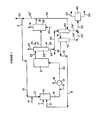
- a finely divided coal or similar solid carbonaceous material is introduced into mixing vessel 10 through line 11 and slurried with a hydrogen donor solvent or diluent introduced through line 12.
- the solvent will be all or a portion of a distillate fraction cut from the liquefaction liquid product, which fraction will be hydrogenated to produce a solvent containing at least 45 weight percent hydrogen donor species and which will be used in the extraction of reactive solid carbonaceous materials from the normally solid bottoms product.
- any additional solvent required to effect the liquefaction may be recycled through line 13.
- any of the known useful hydrogen donor solvents or diluents may be introduced into line 13 through line 14.
- the coal or similar solid carbonaceous material will also be mixed with reactive material extracted from said bottoms.
- the reactive material will be contained in the solvent fed into mixing vessel 10 through line 12.
- the reactive material and solid carbonaceous material will be combined in a ratio within the range from about 0.1:1 to about 0.3:1 by weight.
- the reactive material and solid carbonaceous material will be combined with sufficient solvent including that used in the extraction step and introduced into mixing vessel 10 through line 12 to produce a slurry wherein the solvent-to-solid carbonaceous material ratio is within the range from 4:1 to about 8:1.
- the slurry is withdrawn from mixing vessel 10 through line 16 and passed through preheater 17.
- the slurry will, generally, be preheated to the desired temperature and generally to a temperature of about 50 to about 100°F below the temperature at which liquefaction is accomplished.
- steam will be flashed overhead through line 18.
- the slurry of solid carbonaceous material will be combined with molecular hydrogen.
- the molecular hydrogen will be added prior to preheating through line 19. This is not, however, critical, and the hydrogen could be added downstream of preheater 17 or added directly into the liquefaction vessel.
- the hydrogen will be introduced after the steam is flashed overhead.
- the hydrogen will be produced either by the steam reforming of product gas from the liquefaction; by gasification of the nonreactive portion of the solid bottoms product or by gasification of solid carbonaceous material in a separate step, all in accordance with conventional technology.
- sufficient hydrogen will be introduced to provide from about 2 to about 10 weight percent, preferably from about 3 to about 8 weight percent, molecular hydrogen based on dry, solid carbonaceous material.
- the slurry is withdrawn from the preheater through line 20 and passed directly to liquefaction vessel 21.
- the solid carbonaceous material is at least partially liquefied and, generally, at least partially gasified, generally, in the absence of any added catalyst.
- the liquefaction vessel will be sized so as to provide a nominal holding time within the range from about 40 to about 140 minutes and in a preferred embodiment, a single vessel will be employed.
- the temperature within the liquefaction zone-21 will, preferably, be within the range from about 800 to about 880°F and the pressure will be, preferably, controlled within the range from about 1500 to abou t 2000 psig.
- the combined product from liquefaction vessel 21 is withdrawn through line 22 and passed to separating means 23.
- the separating means may be a combined atmospheric and vacuum distillation column wherein gaseous products and products boiling below the naphtha boiling range are withdrawn overhead through line 24 while a bottoms product comprising unconverted solid carbonaceous material, mineral matter and converted materials having an initial boiling point within the range from about 950°F to about 1050°F is withdrawn through line 25.
- a naphtha product having an initial boiling point of about 150°F and a final boiling point within the range from about 350°F to about 425°F is withdrawn through line 26;
- a middle distillate fraction having an initial boiling point within the range from about 350°F to about 425°F and a final boiling point within the range from about 650°F to about 850°F is withdrawn through line 27 and
- a vacuum gas-oil fraction having an initial boiling point within the range from about 650°F to about 850°F and a final boiling point within the range from about 950°F to about 1050°F is withdrawn through line 28.
- the overhead, gaseous material will comprise gaseous and lower hydrocarbons, steam, carbon oxides, acid gases such as S0 2 and R 2 S, any ammonia which may have been produced during liquefaction and any hydrogen not consumed during liquefaction.
- This stream may be scrubbed and further divided to yield a high Btu gas, lighter hydrocarbons and hydrogen.
- any hydrogen recovered from this stream will be reused in either the liquefaction or hydrogenation step.
- the naptha stream may be subjected to further upgrading to yield a good quality gasoline and the heavier stream/withdrawn through line 28 may be upgraded to produce a heavy fuel oil or hydrocracked and reformed to yield a gasoline boiling fraction.
- the solvent boiling range material or at least a portion thereof will be catalytically hydrogenated to increase the concentration of hydrogen donor species and at least a portion of the hydrogenated fraction will then be used to extract reactive material from at least a portion of the normally solid bottoms product withdrawn through line 25.
- the particular separation scheme employed is not critical to the present invention and, indeed, any of the separation techniques known in the prior art could be used to affect a separation of the gaseous, liquid and solid products.
- the gaseous product could be flashed directly after liquefaction and the liquid-solid mixture then subjected to separation via distillation, filtration, extraction, centrifugation or the like.
- a bottoms product containing unreacted coal, mineral matter and high boiling hydrocarbons will be available for extraction with.a solvent separated from the liquefaction product.
- the solvent fraction withdrawn through line 27 will be hydrogenated before the same is used either as the extraction solvent or the liquefaction solvent or diluent.
- the hydrogenation Will be accomplished catalytically at conditions known to be effective for this purpose in the prior art.
- hydrogenation is accomplished in hydrogenation vessel 29 with molecular hydrogen introduced through line 30.
- the hydrogen actually used may be from any source but in a preferred embodiment will be produced either through the steam reforming of at least a portion of the gaseous product from liquefaction, by gasification of at least a portion of the normally solid bottoms product or by the gasification of a portion of the solid carbonaceous material being subjected to liquefaction.
- unreacted hydrogen and the gaseous products of hydrogenation are withdrawn through line 31.
- this gaseous product may be treated to recover recycle hydrogen.
- the hydrogenation product is withdrawn through line 32.
- the hydrogenation product includes that portion of the solvent to be used in the extraction step, that portion of the solvent, if any, to be returned directly to mixing vessel 10 and any excess solvent that may have been produced. That portion of the hydrogenation product to be used as a solvent during extraction is withdrawn through line 39 and the remaining portion of the hydrogenation product is withdrawn through line 32 1 . Any excess solvent may be withdrawn through line 33 as product or stored for future use during liquefaction. That portion of the solvent, if any, fed directly to mixing vessel 10 is recycled through line 13.
- the hydrogenation will be accomplished at a temperature within the range from about 600°F to about 950°F and a pressure within the range from about 650 to about 2000 psig, preferably 1000 to 1500 psig.
- the hydrogen treat rate during the hydrogenation generally will be within the range from about 1000 to about 10,000 scf/bbl. Any of the known hydrogenation catalysts may be employed but a nickel moly catalyst is most preferred.
- the bottoms product withdrawn through line 25 may be divided and all or a portion thereof subjected to extraction.
- the portion to be subjected to extraction will be withdrawn through line 34 and fed to contacting vessel 40.
- the entire normally solid bottoms product will be passed through contacting vessel 40.
- Any portion of the bottoms product not subjected to extraction may be withdrawn through line 35 and processed in accordance with conventional technology. In general, from about 80 to about 100 weight percent of the bottoms product will be subjected to extraction.
- the fraction of hydrogenated product from hydrogenation vessel 29 used as the extraction solvent is introduced at or near the bottom of contacting vessel 40 and flows upwardly through the contacting vessel and is withdrawn at or near the top thereof through line 41.
- the bottoms introduced through line 34 flow generally downwardly and are withdrawn from the contacting vessel at or near the bottom thereof through line 34'.
- the solvent withdrawn through line 41 containing the extracted reactive materials is then passed through knock-out drum 42 to faciliate the separation of any unreactive materials contained-therein.
- the unreactive materials will be separated from knock-out drum 42 through line 43'.
- the unreactive materials separated in the knock-out drum may then be combined with unreactive materials separated from the contacting vessel 40 in line 43 and introduced into separator 46.
- entrained solvent may be flashed overhead and the remaining portion of the normally solid bottoms product withdrawn through line 48.
- the recovered solvent though, not illustrated, may be combined with solvent withdrawn from knock-out drum 42 or with solvent withdrawn from hydrogenation vessel 29 through line 32.
- the solvent generally free of unreactive materials, is withdrawn from knock-out drum 42 through line 12 and fed to mixing vessel 10.
- the remaining portion of the normally solid bottoms product withdrawn through line 48 may be directly discarded or otherwise treated in accordance with conventional technology to recover the energy value thereof.
- the extraction will be accomplished at a temperature within the range from about 100 to about 400°F and at a pressure within the range from about 0 to about 500 psig.
- the treat rate in contacting vessel 40 will be within the range from about 4 v/v/hour to 8 v/v/hour.
- contacting vessel 40 could be a stirred vessel and the entire solvent/normally solid bottoms product could be withdrawn and passed to a gravity separator. The major portion of the solvent could, then, be separated by withdrawing the same from the decanting vessel at a point above the solid level. Solvent entrained in the remaining solids portion could then be separated in the same manner as illustrated.
- a run was completed in a 100 pound per day continuous unit using an Illinois seam coal (Illinois No. 6) as the solid carbonaceous material and a hydrogenated recycle liquid having an initial boiling point of about 400°F and a final boiling point of about 800°F and containing from about 40 to about 45 weight percent hydrogen donor species was used as the extraction solvent and as the solvent or diluent for liquefaction.
- the unit was operated in a mode similar to that illustrated in Figure 1. All of the solvent withdrawn from hydrogenation vessel 29 was used to extract bottoms from the separation vessel. As withdrawn, the bottoms contain 40 weight percent of toluene soluble material.
- the bottoms were extracted with the hydrogen donor solvent at 300°F and 0 psig with a nominal contacting time of 5 minutes. After extraction, the remaining portion of the normally solid bottoms product contained 10 weight percent toluene soluble material. Use of the solvent intended for slurry preparation to extract the bottoms therefore resulted in the recovery of about 75 weight percent of the reactive material from the bottoms and the gaseous and liquid product yields were increased accordingly.
- a run was completed in a 100 pound per day continuous unit using an Wyodak coal as the solid carbonaceous material and a hydrogenated recycle liquid having an intial boiling point of about 400°F and a final bailing point of about 800°F and containing from about 40 to about 45 weight percent hydrogen donor species was used as the extraction solvent and as the solvent or diluent for liquefaction.
- the unit was operated in a mode similar to that illustrated in Figure 1. All of the solvent withdrawn from hydrogenation vessel 29 was used to extract bottoms from the separation vessel. As withdrawn, the bottoms contain 50 weight percent of toluene soluble material. The bottoms were extracted with the hydrogen donor solvent at 300°F and 0 psig with a nominal contacting time of 5 minutes.
- the remaining portion of the normally solid bottoms product contained 10 weight percent toluene soluble material.
- Use of the solvent intended for slurry preparation to extract the bottoms therefore resulted in the recovery of about 80 weight percent of the reactive material from the bottoms and the gaseous and liquid product yields were increased accordingly.
Landscapes
- Chemical & Material Sciences (AREA)
- Engineering & Computer Science (AREA)
- Oil, Petroleum & Natural Gas (AREA)
- Life Sciences & Earth Sciences (AREA)
- Wood Science & Technology (AREA)
- Chemical Kinetics & Catalysis (AREA)
- General Chemical & Material Sciences (AREA)
- Organic Chemistry (AREA)
- Production Of Liquid Hydrocarbon Mixture For Refining Petroleum (AREA)
- Working-Up Tar And Pitch (AREA)
Applications Claiming Priority (2)
| Application Number | Priority Date | Filing Date | Title |
|---|---|---|---|
| US33258381A | 1981-12-21 | 1981-12-21 | |
| US332583 | 1981-12-21 |
Publications (2)
| Publication Number | Publication Date |
|---|---|
| EP0082586A2 true EP0082586A2 (fr) | 1983-06-29 |
| EP0082586A3 EP0082586A3 (fr) | 1984-10-10 |
Family
ID=23298880
Family Applications (1)
| Application Number | Title | Priority Date | Filing Date |
|---|---|---|---|
| EP82304209A Ceased EP0082586A3 (fr) | 1981-12-21 | 1982-08-10 | Procédé pour la liquéfaction de matériaux carbonés solides |
Country Status (6)
| Country | Link |
|---|---|
| EP (1) | EP0082586A3 (fr) |
| JP (1) | JPS58109587A (fr) |
| AU (1) | AU552352B2 (fr) |
| BR (1) | BR8204822A (fr) |
| CA (1) | CA1190167A (fr) |
| ZA (1) | ZA825107B (fr) |
Cited By (2)
| Publication number | Priority date | Publication date | Assignee | Title |
|---|---|---|---|---|
| EP0203240A1 (fr) * | 1985-04-26 | 1986-12-03 | Exxon Research And Engineering Company | Procédé de liquéfaction du charbon avec rendement augmenté de naphte |
| US9061953B2 (en) | 2013-11-19 | 2015-06-23 | Uop Llc | Process for converting polycyclic aromatic compounds to monocyclic aromatic compounds |
Families Citing this family (1)
| Publication number | Priority date | Publication date | Assignee | Title |
|---|---|---|---|---|
| US4596650A (en) * | 1984-03-16 | 1986-06-24 | Lummus Crest, Inc. | Liquefaction of sub-bituminous coal |
Family Cites Families (1)
| Publication number | Priority date | Publication date | Assignee | Title |
|---|---|---|---|---|
| ZA774819B (en) * | 1976-08-20 | 1978-06-28 | Exxon Research Engineering Co | Multiple-stage hydrogen-donor coal liquefaction process |
-
1982
- 1982-07-16 ZA ZA825107A patent/ZA825107B/xx unknown
- 1982-07-19 CA CA000407523A patent/CA1190167A/fr not_active Expired
- 1982-08-10 EP EP82304209A patent/EP0082586A3/fr not_active Ceased
- 1982-08-18 BR BR8204822A patent/BR8204822A/pt unknown
- 1982-08-19 AU AU87423/82A patent/AU552352B2/en not_active Expired - Fee Related
- 1982-08-20 JP JP57143528A patent/JPS58109587A/ja active Pending
Cited By (2)
| Publication number | Priority date | Publication date | Assignee | Title |
|---|---|---|---|---|
| EP0203240A1 (fr) * | 1985-04-26 | 1986-12-03 | Exxon Research And Engineering Company | Procédé de liquéfaction du charbon avec rendement augmenté de naphte |
| US9061953B2 (en) | 2013-11-19 | 2015-06-23 | Uop Llc | Process for converting polycyclic aromatic compounds to monocyclic aromatic compounds |
Also Published As
| Publication number | Publication date |
|---|---|
| JPS58109587A (ja) | 1983-06-29 |
| CA1190167A (fr) | 1985-07-09 |
| AU8742382A (en) | 1983-06-30 |
| AU552352B2 (en) | 1986-05-29 |
| ZA825107B (en) | 1983-04-27 |
| BR8204822A (pt) | 1983-08-02 |
| EP0082586A3 (fr) | 1984-10-10 |
Similar Documents
| Publication | Publication Date | Title |
|---|---|---|
| US4485008A (en) | Liquefaction process | |
| US3488279A (en) | Two-stage conversion of coal to liquid hydrocarbons | |
| US4079005A (en) | Method for separating undissolved solids from a coal liquefaction product | |
| US4338183A (en) | Method of solvent extraction of coal by a heavy oil | |
| US4251346A (en) | Process for coal liquefaction | |
| EP0051345B1 (fr) | Liquéfaction au solvant donneur de charbons avec recyclage des produits de queue sous pression élevée | |
| US3705092A (en) | Solvent extraction of coal by a heavy oil | |
| US4372838A (en) | Coal liquefaction process | |
| US4332666A (en) | Coal liquefaction process wherein jet fuel, diesel fuel and/or ASTM No. 2 fuel oil is recovered | |
| US4394215A (en) | Apparatus for converting coal into liquid products | |
| US4197183A (en) | Processing of tar sands | |
| US4338182A (en) | Multiple-stage hydrogen-donor coal liquefaction | |
| EP0268612A1 (fr) | Procede ionique integre de liquefaction | |
| US4081360A (en) | Method for suppressing asphaltene formation during coal liquefaction and separation of solids from the liquid product | |
| US4347116A (en) | Two-stage coal liquefaction | |
| US4374725A (en) | Process for coal liquefaction | |
| CA1125207A (fr) | Procede de liquefaction du charbon en plusieurs etapes de temperature, avec obtention d'un donneur d'hydrogene | |
| US4394248A (en) | Coal liquefaction process | |
| EP0082586A2 (fr) | Procédé pour la liquéfaction de matériaux carbonés solides | |
| US4077881A (en) | Separation of insoluble material from coal liquefaction product by gravity settling | |
| US4461694A (en) | Coal liquefaction process with enhanced process solvent | |
| US4944866A (en) | Process for the hydrogenation of coal | |
| US4764270A (en) | Simultaneous upgrading of tar sand bitumen and coal by corefining | |
| GB2123025A (en) | Solvent extraction of coal by a heavy oil | |
| EP0121343B1 (fr) | Procédé de liquéfaction ionique intégré |
Legal Events
| Date | Code | Title | Description |
|---|---|---|---|
| PUAI | Public reference made under article 153(3) epc to a published international application that has entered the european phase |
Free format text: ORIGINAL CODE: 0009012 |
|
| AK | Designated contracting states |
Designated state(s): DE FR GB |
|
| PUAL | Search report despatched |
Free format text: ORIGINAL CODE: 0009013 |
|
| AK | Designated contracting states |
Designated state(s): DE FR GB |
|
| 17P | Request for examination filed |
Effective date: 19850306 |
|
| 17Q | First examination report despatched |
Effective date: 19860304 |
|
| STAA | Information on the status of an ep patent application or granted ep patent |
Free format text: STATUS: THE APPLICATION HAS BEEN REFUSED |
|
| 18R | Application refused |
Effective date: 19870514 |
|
| RIN1 | Information on inventor provided before grant (corrected) |
Inventor name: BAUMAN, RICHARD FRANK |