EP0084902B2 - Verfahren zum Warmwalzen von Stahl wobei der Wärmeverlust des Walzgutes durch ein oder mehrere Hitzeschilder vermindert wird und Vorrichtung zur Durchführung des Verfahrens - Google Patents
Verfahren zum Warmwalzen von Stahl wobei der Wärmeverlust des Walzgutes durch ein oder mehrere Hitzeschilder vermindert wird und Vorrichtung zur Durchführung des Verfahrens Download PDFInfo
- Publication number
- EP0084902B2 EP0084902B2 EP83200059A EP83200059A EP0084902B2 EP 0084902 B2 EP0084902 B2 EP 0084902B2 EP 83200059 A EP83200059 A EP 83200059A EP 83200059 A EP83200059 A EP 83200059A EP 0084902 B2 EP0084902 B2 EP 0084902B2
- Authority
- EP
- European Patent Office
- Prior art keywords
- heat
- screen
- coolant
- reflecting surface
- reflecting
- Prior art date
- Legal status (The legal status is an assumption and is not a legal conclusion. Google has not performed a legal analysis and makes no representation as to the accuracy of the status listed.)
- Expired - Lifetime
Links
- 238000000034 method Methods 0.000 title claims description 13
- 230000008569 process Effects 0.000 title claims description 13
- 229910000831 Steel Inorganic materials 0.000 title claims description 11
- 239000010959 steel Substances 0.000 title claims description 11
- 238000005098 hot rolling Methods 0.000 title claims description 6
- 239000002826 coolant Substances 0.000 claims description 26
- 238000001816 cooling Methods 0.000 claims description 15
- 239000000463 material Substances 0.000 claims description 14
- 238000005096 rolling process Methods 0.000 claims description 12
- 229910001220 stainless steel Inorganic materials 0.000 claims description 9
- 239000010935 stainless steel Substances 0.000 claims description 9
- 239000007788 liquid Substances 0.000 claims description 7
- 238000002310 reflectometry Methods 0.000 claims description 7
- XLYOFNOQVPJJNP-UHFFFAOYSA-N water Substances O XLYOFNOQVPJJNP-UHFFFAOYSA-N 0.000 claims description 6
- 238000007599 discharging Methods 0.000 claims description 3
- 239000012530 fluid Substances 0.000 claims description 2
- 230000005494 condensation Effects 0.000 description 3
- 238000009833 condensation Methods 0.000 description 3
- 238000005265 energy consumption Methods 0.000 description 3
- 229910052751 metal Inorganic materials 0.000 description 3
- 239000002184 metal Substances 0.000 description 3
- 230000005855 radiation Effects 0.000 description 3
- 239000004411 aluminium Substances 0.000 description 2
- 229910052782 aluminium Inorganic materials 0.000 description 2
- XAGFODPZIPBFFR-UHFFFAOYSA-N aluminium Chemical compound [Al] XAGFODPZIPBFFR-UHFFFAOYSA-N 0.000 description 2
- 239000000498 cooling water Substances 0.000 description 2
- 230000014759 maintenance of location Effects 0.000 description 2
- 150000002739 metals Chemical class 0.000 description 2
- 230000037361 pathway Effects 0.000 description 2
- 230000009467 reduction Effects 0.000 description 2
- 239000007921 spray Substances 0.000 description 2
- 238000010521 absorption reaction Methods 0.000 description 1
- 230000009286 beneficial effect Effects 0.000 description 1
- 230000008859 change Effects 0.000 description 1
- 238000009749 continuous casting Methods 0.000 description 1
- 230000003247 decreasing effect Effects 0.000 description 1
- 230000006866 deterioration Effects 0.000 description 1
- 230000000694 effects Effects 0.000 description 1
- 238000010438 heat treatment Methods 0.000 description 1
- 230000000630 rising effect Effects 0.000 description 1
- 239000000126 substance Substances 0.000 description 1
- 230000007704 transition Effects 0.000 description 1
Images


Classifications
-
- C—CHEMISTRY; METALLURGY
- C21—METALLURGY OF IRON
- C21D—MODIFYING THE PHYSICAL STRUCTURE OF FERROUS METALS; GENERAL DEVICES FOR HEAT TREATMENT OF FERROUS OR NON-FERROUS METALS OR ALLOYS; MAKING METAL MALLEABLE, e.g. BY DECARBURISATION OR TEMPERING
- C21D9/00—Heat treatment, e.g. annealing, hardening, quenching or tempering, adapted for particular articles; Furnaces therefor
- C21D9/0006—Details, accessories not peculiar to any of the following furnaces
-
- B—PERFORMING OPERATIONS; TRANSPORTING
- B21—MECHANICAL METAL-WORKING WITHOUT ESSENTIALLY REMOVING MATERIAL; PUNCHING METAL
- B21B—ROLLING OF METAL
- B21B45/00—Devices for surface or other treatment of work, specially combined with or arranged in, or specially adapted for use in connection with, metal-rolling mills
- B21B45/008—Heat shields
-
- Y—GENERAL TAGGING OF NEW TECHNOLOGICAL DEVELOPMENTS; GENERAL TAGGING OF CROSS-SECTIONAL TECHNOLOGIES SPANNING OVER SEVERAL SECTIONS OF THE IPC; TECHNICAL SUBJECTS COVERED BY FORMER USPC CROSS-REFERENCE ART COLLECTIONS [XRACs] AND DIGESTS
- Y02—TECHNOLOGIES OR APPLICATIONS FOR MITIGATION OR ADAPTATION AGAINST CLIMATE CHANGE
- Y02P—CLIMATE CHANGE MITIGATION TECHNOLOGIES IN THE PRODUCTION OR PROCESSING OF GOODS
- Y02P70/00—Climate change mitigation technologies in the production process for final industrial or consumer products
- Y02P70/10—Greenhouse gas [GHG] capture, material saving, heat recovery or other energy efficient measures, e.g. motor control, characterised by manufacturing processes, e.g. for rolling metal or metal working
Definitions
- This invention relates to a process of hot-rolling steel wherein heat loss from the steel is reduced by means of one or more heat-reflecting screens having a radiant heat-reflecting surface facing the work, wherein the screen is in a humid environment.
- the invention also relates to apparatus comprising a heat-reflecting screen suitable for use in such a process.
- the known heat shields include heat-absorbing screens and heat-reflecting screens.
- Absorbing screens function by absorbing a large part of the incident heat radiation and consequently becoming heated to a high temperature so that heat is radiated from the screen back to the work.
- Reflecting screens have surfaces with a high reflection coefficient so that a large part of the incident heat radiation is reflected back to the work. Some part of the incident radiant heat energy is of course inevitably absorbed by such reflecting screens.
- heat-absorbing screens are not suitable because of their thermal inertia.
- an absorption screen is not suitable for this purpose because there is insufficient time for the screen to be heated by the billet head.
- Heat-absorbing and heat-reflecting screens are referred to in the European patent application bearing the publication No. 0 005 340.
- the screens therein described comprise a heat-absorbing or heat-reflecting plate on their front side, i.e. the side facing the work, and behind the plate there is a heat-insulating core or backing for reducing heat loss by radiation from the rear side of the plate. The plate is therefore maintained at a high temperature during use.
- the said European patent application specifies stainless steel, which can be made either heat-reflecting or heat-absorbing, as a suitable material for the front plate of the screens.
- a process of hot-rolling steel wherein heat loss from the work is reduced by means of a heat-reflecting screen having a radiant heat-reflecting surface facing the work, wherein the screen is in a humid environment, characterised in that decrease in the reflectivity of the screen in course of time is reduced by cooling the screen during use, the screen being cooled by continuously flowing fluid coolant in heat-conducting relationship to the screen and the extent of cooling being such that the temperature of the surface is kept above the dew point of such environment.
- the screen is in a humid environment, the temperature of the screen is therefore kept above the dew point.
- the air humidity may for example be locally very high, partly as a result of the use of high pressure sprays or jets for removing the oxide layer from the metal to be rolled and partly because of water vapour rising from the oxide drain beneath the table.
- a cooled screen can be used in accordance with the present invention for reducing heat loss from the work during rolling, or during transition from one rolling stage to another.
- the invention is applicable for example in a hot strip rolling mill, a blooming mill, a plate rolling mill or a mill for rolling non-flat (profiled) sections.
- Such a reduction of heat loss can have the consequence that the work can leave the furnace at a lower temperature.
- the invention can for example be applied for reducing heat loss from the billet heads.
- a cooled screen can also be used in accordance with the present invention for reducing heat loss from work pieces to be rolled while they are stored, e.g. on a delay table, following their remo- wal from a continuous casting or some other heating furnace.
- a delay table e.g., a delay table
- conservation of the heat of the work preparatory to rolling is considered to be part of the rolling process.
- the heat-reflecting screen is preferably of panel or plate form, but other forms can be used.
- the rate at which cold must be supplied to the screen in order to reduce reflectivity deterioration during its use depends on the material of the screen. For a given screen material, an appropriate cooling rate can be determined by tests. Indications of recommended operating temperatures of particular cooled screens are given hereinafter.
- Attractive materials from the economic point of view include stainless steel and anodised aluminium. When using such materials it is advisable for the cooling to be sufficient at least to keep the temperature of the heat-reflecting surface below 300°C and below 600°C respectively.
- the material forming the heat-reflecting surface is stainless steel. This material is preferred because it provides a useful combination of properties. In particular, the material can provide a surface which has a very satisfactory heat-reflectivity and which has a good resistance to chemical change.
- a heat-reflecting screen whose reflecting surface is formed by stainless steel and is cooled to a temperature below 300°C. Tests have shown that when a stainless steel heat-reflecting screen is cooled to that extent the efficiency retention is much better than when using the screen without cooling it. An uncooled stainless steel screen suffers a marked decrease in reflectivity during only a very short period of use, (e.g. one day). It has been found that if an identical screen is kept cooled during use to maintain its reflective surface below 300°C there is no perceptible reduction in the heat reflection coefficient during many weeks of continuous use and is likely that the screen will remain effective even over a period of some years.
- the cooling is achieved by continuously flowing a gaseous or liquid coolant in heat-conducting relationship to the screen.
- the screen may for example be formed by a plate or other body forming a wall of a hollow structure through which the coolant is passed.
- air is used as the coolant.
- This coolant is very convenient to use.
- the air supplied to the screen can be derived from the atmosphere at ordinary temperature and the used air leaving the screen can be simply exhausted to atmosphere.
- the required air flow can be generated by means of a fan. Cooling fins may be associated with the screen to afford an extended heat-exchange surface.
- a liquid coolant is used, preferably water.
- the liquid coolant can be conducted along a duct or ducts which is or are in heat-conducting relationship with the rear of the plate or other body having the heat-reflecting surface, or which is or are formed within that body.
- cooling water is discharged e.g. sprayed, so as to flow over the rear of said body.
- the liquid can be conducted to a position behind the said body by at least one cooling water supply pipe having discharge orifices from which the coolant discharges in the form of sprays against the rear of the body.
- An open or closed water cooling system can be used.
- the temperature of the heat reflecting surface is preferably kept at least several degrees, e.g. 10°C above the dew point to prevent condensation. This can be obtained by using coolant which has been heated to a temperature above the dew point.
- the screen can, have a rear lining or backing which has some heat-insulating effect such that the reflecting surface of the screen is kept sufficiently above the temperature of the coolant to avoid condensation of water on such surface. It is very suitable to provide a said lining or backing which is porous.
- the invention also relates to apparatus comprising a heat-reflecting screen suitable for use in a process according to the invention as hereinbefore defined.
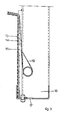
- a heat-reflecting screen suitable for use in a steel rolling mill for reducing heat loss from the work, is characterised in that in or in heat-conducting relationship to the body of material providing the heat-reflecting surface of the screen, there is at least one pathway along which coolant can be passed for cooling said heat-reflecting surface, and in that the body providing said heat-reflecting surface has a lining or backing having a thermally insulating property for creating a temperature gradient between the coolant and said heat-reflecting surface.
- the body of material providing said heat-reflecting surface is in the form of a plate or panel.
- Preferred apparatus according to the invention includes means for discharging liquid coolant against the rear side of the body providing the heat-reflecting surface.
- Preferably said lining is porous.
- the said coolant pathway(s) form(s) part of an open water-cooling system.
Landscapes
- Chemical & Material Sciences (AREA)
- Engineering & Computer Science (AREA)
- Mechanical Engineering (AREA)
- Materials Engineering (AREA)
- Thermal Sciences (AREA)
- Crystallography & Structural Chemistry (AREA)
- Physics & Mathematics (AREA)
- Metallurgy (AREA)
- Organic Chemistry (AREA)
- Metal Rolling (AREA)
- Heat Treatments In General, Especially Conveying And Cooling (AREA)
- Coating With Molten Metal (AREA)
- Heat Treatment Of Steel (AREA)
Claims (15)
Applications Claiming Priority (2)
| Application Number | Priority Date | Filing Date | Title |
|---|---|---|---|
| NL8200265A NL8200265A (nl) | 1982-01-26 | 1982-01-26 | Werkwijze voor het warmwalsen van staal en reflectiescherm te gebruiken daarbij. |
| NL8200265 | 1982-01-26 |
Publications (3)
| Publication Number | Publication Date |
|---|---|
| EP0084902A1 EP0084902A1 (de) | 1983-08-03 |
| EP0084902B1 EP0084902B1 (de) | 1985-11-06 |
| EP0084902B2 true EP0084902B2 (de) | 1990-02-07 |
Family
ID=19839133
Family Applications (1)
| Application Number | Title | Priority Date | Filing Date |
|---|---|---|---|
| EP83200059A Expired - Lifetime EP0084902B2 (de) | 1982-01-26 | 1983-01-14 | Verfahren zum Warmwalzen von Stahl wobei der Wärmeverlust des Walzgutes durch ein oder mehrere Hitzeschilder vermindert wird und Vorrichtung zur Durchführung des Verfahrens |
Country Status (7)
| Country | Link |
|---|---|
| US (1) | US4527409A (de) |
| EP (1) | EP0084902B2 (de) |
| JP (1) | JPS58173011A (de) |
| CA (1) | CA1211965A (de) |
| DE (1) | DE3361131D1 (de) |
| ES (1) | ES8403339A1 (de) |
| NL (1) | NL8200265A (de) |
Families Citing this family (10)
| Publication number | Priority date | Publication date | Assignee | Title |
|---|---|---|---|---|
| FR2565511B1 (fr) * | 1984-06-07 | 1988-05-13 | Air Liquide | Procede et installation de protection d'un metal solide contre l'oxydation pendant une operation de laminage |
| GB8428129D0 (en) * | 1984-11-07 | 1984-12-12 | Encomech Eng Services | Heat retaining means |
| FR2607036B1 (fr) * | 1986-11-24 | 1992-07-03 | Usinor Aciers | Tunnel amovible de maintien en temperature d'un produit lamine a chaud dans un train de laminage continu |
| US4986857A (en) * | 1988-05-19 | 1991-01-22 | Middelburg Steel And Alloys (Proprietary) Limited | Hot working and heat treatment of corrosion resistant steels |
| WO1991002603A1 (fr) * | 1989-08-18 | 1991-03-07 | Vologodsky Politekhnichesky Institut | Procede et dispositif de regulation de la temperature d'un feuillard de metal pendant son laminage a chaud |
| RU2201819C1 (ru) * | 2001-11-02 | 2003-04-10 | Республиканское Унитарное Предприятие "Белорусский Металлургический Завод" | Способ производства сортового проката и катанки на непрерывном стане |
| US7204894B1 (en) | 2004-03-18 | 2007-04-17 | Nucor Corporation | Annealing of hot rolled steel coils with clam shell furnace |
| US7454246B2 (en) * | 2005-09-08 | 2008-11-18 | Massachusetts Eye & Ear Infirmary | Sensor signal alignment |
| DE102013219507A1 (de) * | 2013-05-03 | 2014-11-06 | Sms Siemag Aktiengesellschaft | Warmwalzwerk |
| DE102013223040A1 (de) | 2013-11-12 | 2015-05-13 | Sms Siemag Ag | Verfahren zum Verarbeiten von erhitztem Gut |
Family Cites Families (10)
| Publication number | Priority date | Publication date | Assignee | Title |
|---|---|---|---|---|
| US1675950A (en) * | 1925-10-22 | 1928-07-03 | Central Nat Bank Of Cleveland | Method of cooling work blanks |
| US2529689A (en) * | 1944-03-23 | 1950-11-14 | Selas Corp Of America | Process of heat-treating metal work of elongated extent |
| US2529690A (en) * | 1945-06-29 | 1950-11-14 | Selas Corp Of America | Heating apparatus |
| US3264856A (en) * | 1963-06-26 | 1966-08-09 | Canada Steel Co | Hot strip mill |
| GB1040420A (en) * | 1963-11-19 | 1966-08-24 | United Eng Foundry Co | Method and apparatus for controlling the temperature of hot strip |
| US3750629A (en) * | 1970-10-23 | 1973-08-07 | Koninklijke Hoogovens En Staal | Cooled furnace and a cooling system therefor |
| US4343168A (en) * | 1977-05-04 | 1982-08-10 | Laws William R | Heat shield arrangements for a rolling mill |
| EP0005340B1 (de) * | 1978-04-27 | 1983-01-26 | Encomech Engineering Services Limited | Hitzeschild-Anordnung für Band- und Stangenmaterial |
| US4382586A (en) * | 1978-05-15 | 1983-05-10 | Reese Thurston F | Metal cooling bed for controlling rate of cooling |
| DE3001684C2 (de) * | 1980-01-18 | 1985-10-31 | Hoesch Ag, 4600 Dortmund | Vorrichtung zur Einhaltung einer gleichmäßigen Temperatur über die Bandbreite eines warmen Walzbandes |
-
1982
- 1982-01-26 NL NL8200265A patent/NL8200265A/nl not_active Application Discontinuation
-
1983
- 1983-01-14 EP EP83200059A patent/EP0084902B2/de not_active Expired - Lifetime
- 1983-01-14 DE DE8383200059T patent/DE3361131D1/de not_active Expired
- 1983-01-19 CA CA000419763A patent/CA1211965A/en not_active Expired
- 1983-01-20 US US06/459,679 patent/US4527409A/en not_active Expired - Fee Related
- 1983-01-25 ES ES519238A patent/ES8403339A1/es not_active Expired
- 1983-01-26 JP JP58009999A patent/JPS58173011A/ja active Pending
Also Published As
| Publication number | Publication date |
|---|---|
| CA1211965A (en) | 1986-09-30 |
| US4527409A (en) | 1985-07-09 |
| NL8200265A (nl) | 1983-08-16 |
| EP0084902A1 (de) | 1983-08-03 |
| DE3361131D1 (en) | 1985-12-12 |
| ES519238A0 (es) | 1984-03-16 |
| EP0084902B1 (de) | 1985-11-06 |
| JPS58173011A (ja) | 1983-10-11 |
| ES8403339A1 (es) | 1984-03-16 |
Similar Documents
| Publication | Publication Date | Title |
|---|---|---|
| EP0084902B2 (de) | Verfahren zum Warmwalzen von Stahl wobei der Wärmeverlust des Walzgutes durch ein oder mehrere Hitzeschilder vermindert wird und Vorrichtung zur Durchführung des Verfahrens | |
| CN101534971B (zh) | 热轧钢带的冷却方法 | |
| Dhiman et al. | Freezing-induced splashing during impact of molten metal droplets with high Weber numbers | |
| CA2291457A1 (en) | Coiling temperature control method and system | |
| CN105764624B (zh) | 用于处理被加热的材料的方法 | |
| CA1266210A (en) | Re-radiating heat shield | |
| GR3025426T3 (en) | Process for rolling soft metals | |
| Samarasekera et al. | The application of microstructural engineering to the hot rolling of steel | |
| WO2002004145A3 (en) | Method and apparatus for the direct production of scale-free thin metal strip | |
| US6122950A (en) | Hot rolling train for rolling thin strips | |
| US9694405B2 (en) | Hot-rolling mill | |
| CA2218781C (en) | Process and device for cooling an article | |
| RU2122475C1 (ru) | Секция теплоизоляционного экрана рольганга полосового стана горячей прокатки | |
| JP2001252707A (ja) | 圧延装置及び圧延方法 | |
| CN222679661U (zh) | 一种设置有冷却机构的热剪装置 | |
| JPH0533112A (ja) | 合金化溶融亜鉛めつき鋼板の製造方法及び装置 | |
| SU1187341A1 (ru) | Способ принудительного воздушного охлаждени проката на холодильнике | |
| JPH10235515A (ja) | 高珪素鋼帯の温間スリット方法および設備 | |
| JPS5938286B2 (ja) | 金属ストリツプの冷却方法 | |
| WO2023148771A1 (en) | Apparatus for cooling of hot rolled sheet coils | |
| Suzuki et al. | Recent Technology of Heating and Cooling in Continuous Heat Treatment Furnaces.(Retroactive Coverage) | |
| JPH11156422A (ja) | 厚鋼板の冷却装置およびその冷却方法 | |
| Samarasekera et al. | Critical challenges in the prediction of mechanical properties of hot-rolled steel strip | |
| JPS59107714A (ja) | 金属ストリツプ圧延における圧延材の幅方向温度調整方法 | |
| Lee et al. | Cooling Heat Transfer from a Rotating Roll by Impinging Water Spray Jets |
Legal Events
| Date | Code | Title | Description |
|---|---|---|---|
| PUAI | Public reference made under article 153(3) epc to a published international application that has entered the european phase |
Free format text: ORIGINAL CODE: 0009012 |
|
| AK | Designated contracting states |
Designated state(s): BE DE FR GB IT LU |
|
| 17P | Request for examination filed |
Effective date: 19831205 |
|
| ITF | It: translation for a ep patent filed | ||
| GRAA | (expected) grant |
Free format text: ORIGINAL CODE: 0009210 |
|
| AK | Designated contracting states |
Designated state(s): BE DE FR GB IT LU |
|
| REF | Corresponds to: |
Ref document number: 3361131 Country of ref document: DE Date of ref document: 19851212 |
|
| ET | Fr: translation filed | ||
| PG25 | Lapsed in a contracting state [announced via postgrant information from national office to epo] |
Ref country code: LU Free format text: LAPSE BECAUSE OF NON-PAYMENT OF DUE FEES Effective date: 19860131 |
|
| PLBI | Opposition filed |
Free format text: ORIGINAL CODE: 0009260 |
|
| 26 | Opposition filed |
Opponent name: THYSSEN STAHL AG Effective date: 19860731 |
|
| ITTA | It: last paid annual fee | ||
| PGFP | Annual fee paid to national office [announced via postgrant information from national office to epo] |
Ref country code: LU Payment date: 19890105 Year of fee payment: 7 |
|
| PGFP | Annual fee paid to national office [announced via postgrant information from national office to epo] |
Ref country code: GB Payment date: 19890114 Year of fee payment: 7 |
|
| PG25 | Lapsed in a contracting state [announced via postgrant information from national office to epo] |
Ref country code: FR Effective date: 19890131 |
|
| PGFP | Annual fee paid to national office [announced via postgrant information from national office to epo] |
Ref country code: BE Payment date: 19890131 Year of fee payment: 7 |
|
| PUAH | Patent maintained in amended form |
Free format text: ORIGINAL CODE: 0009272 |
|
| STAA | Information on the status of an ep patent application or granted ep patent |
Free format text: STATUS: PATENT MAINTAINED AS AMENDED |
|
| PG25 | Lapsed in a contracting state [announced via postgrant information from national office to epo] |
Ref country code: GB Effective date: 19900114 |
|
| PG25 | Lapsed in a contracting state [announced via postgrant information from national office to epo] |
Ref country code: BE Effective date: 19900131 |
|
| 27A | Patent maintained in amended form |
Effective date: 19900207 |
|
| AK | Designated contracting states |
Kind code of ref document: B2 Designated state(s): BE DE FR GB IT LU |
|
| EN3 | Fr: translation not filed ** decision concerning opposition | ||
| BERE | Be: lapsed |
Owner name: HOOGOVENS GROEP B.V. Effective date: 19900131 |
|
| GBPC | Gb: european patent ceased through non-payment of renewal fee | ||
| REG | Reference to a national code |
Ref country code: FR Ref legal event code: ST |
|
| PGFP | Annual fee paid to national office [announced via postgrant information from national office to epo] |
Ref country code: DE Payment date: 19901231 Year of fee payment: 9 |
|
| PG25 | Lapsed in a contracting state [announced via postgrant information from national office to epo] |
Ref country code: DE Effective date: 19921001 |