EP0085552A2 - Zirkoniumlegierungen - Google Patents
Zirkoniumlegierungen Download PDFInfo
- Publication number
- EP0085552A2 EP0085552A2 EP83300454A EP83300454A EP0085552A2 EP 0085552 A2 EP0085552 A2 EP 0085552A2 EP 83300454 A EP83300454 A EP 83300454A EP 83300454 A EP83300454 A EP 83300454A EP 0085552 A2 EP0085552 A2 EP 0085552A2
- Authority
- EP
- European Patent Office
- Prior art keywords
- layer
- alpha
- alloy
- process according
- precipitates
- Prior art date
- Legal status (The legal status is an assumption and is not a legal conclusion. Google has not performed a legal analysis and makes no representation as to the accuracy of the status listed.)
- Ceased
Links
Images


Classifications
-
- C—CHEMISTRY; METALLURGY
- C22—METALLURGY; FERROUS OR NON-FERROUS ALLOYS; TREATMENT OF ALLOYS OR NON-FERROUS METALS
- C22F—CHANGING THE PHYSICAL STRUCTURE OF NON-FERROUS METALS AND NON-FERROUS ALLOYS
- C22F1/00—Changing the physical structure of non-ferrous metals or alloys by heat treatment or by hot or cold working
- C22F1/16—Changing the physical structure of non-ferrous metals or alloys by heat treatment or by hot or cold working of other metals or alloys based thereon
- C22F1/18—High-melting or refractory metals or alloys based thereon
- C22F1/186—High-melting or refractory metals or alloys based thereon of zirconium or alloys based thereon
-
- C—CHEMISTRY; METALLURGY
- C22—METALLURGY; FERROUS OR NON-FERROUS ALLOYS; TREATMENT OF ALLOYS OR NON-FERROUS METALS
- C22F—CHANGING THE PHYSICAL STRUCTURE OF NON-FERROUS METALS AND NON-FERROUS ALLOYS
- C22F3/00—Changing the physical structure of non-ferrous metals or alloys by special physical methods, e.g. treatment with neutrons
Definitions
- This invention relates to alpha zirconium alloy intermediate and final products, and processes for their fabrication. More particularly, this invention is especially concerned with Zircaloy alloys having a particular microstructure, and the method of producing this microstructure through the use of high energy beam heat treatments, such that the material has improved long term corrosion resistance In a high temperature steam environment.
- the Zircaloy alloys were initially developed as cladding materials for nuclear components used within a high temperature pressurized water reactor environment (U.S. Patent No. 2,772,964).
- a Zircaloy-2 alloy is an alloy of zirconium comprising about 1.2 to 1.7 weight percent tin, about 0.07 to 0.20 weight percent iron, about 0.05 to 0.15 weight percent chromium, and about 0.03 to 0.08 weight percent nickel.
- a Zircaloy-4 alloy is an alloy of zirconium comprising about 1.2 to 1.7 weight percent tin, about 0.12 to 0.18 weight percent iron, and about 0.05 to 0.15 weight percent chromium (see U.S. Patent No. 3,148,055).
- Nuclear grade Zircaloy-2 or Zircaloy-4 alloys are made by repeated vacuum consumable electrode melting to produce a final ingot having a diameter typically between about 16 and 25 inches.
- the ingot is then conditioned to remove surface contamination, heated into the beta, alpha + beta phase or high temperature alpha phase and then worked to some intermediate sized and shaped billet. This primary ingot breakdown may be performed by forging, rolling, extruding or combinations of these methods.
- the intermediate billet is then beta solution treated by heating above the alpha + beta/beta transus temperature and then held in the beta phase for a specified period of time and then quenched in water. After this step it is further thermomechanically worked to a final desired shape at a temperature typically below the alpha/ alpha + beta transus temperature.
- the intermediate billet may be beta treated by heating to approximately 1050°C and subsequently water quenched to a temperature below the alpha + beta to alpha transus temperature. This beta treatment serves to improve the chemical homogeneity of the billet and also produces a more isotropic texture in the material.
- the billet may first be alpha worked by heating it to about 750°C and then forging the hot billet to a size and shape appropriate for extrusion. Once it has attained the desired size and shape (substantially round cross-section), the billet is prepared for extrusion. This preparation includes drilling an axial hole along the center line of the. billet, machining the outside diameter to desired dimensions, and applying a suitable lubricant to the surfaces of the billet. The billet diameter is then reduced by extrusion through a frustoconical die and over a mandrel at a temperature of about 700°C or greater. The as- extruded cylinder may then be optionally annealed at about 700°C.
- the extruded billet Before leaving the primary fabricator, the extruded billet may be cold worked by pilgering to further reduce its wall thickness and outside diameter. At this stage the intermediate product is known as a TREX (Tube Reduced Extrusion). The extrusion or TREX may then be sent to a tube mill for fabrication into the final product.
- TREX Tube Reduced Extrusion
- the extrusion or TREX goes through several cold pilger steps with anneals at about 675-700° between each reduction step.
- a final anneal which may be a full recrystallization anneal, partial recrystallization anneal, or stress relief anneal.
- the anneal may be performed at a temperature as high as 675-700°C.
- Other tube forming methods such as sinking, rocking and drawing, may also completely or partially substitute for the pilgering method.
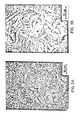
- the precipitates for the most part are randomly distributed, through the alpha phase matrix, but bands or "stringers" of precipitates are frequently observed.
- the larger precipitates are approximately 1 micron in diameter and the average particle size is approximately 0.3 microns (3000 angstroms) in diameter.
- these members exhibit a strong anisotropy in their crystallographic texture which tends to preferentially align hydrides produced during exposure to high temperature and pressure steam in a circumferential direction in the alpha matrix and helps to provide the required creep and tensile properties in the circumferential direction.
- the alpha matrix itself may be characterized by a heavily cold worked or dislocated structure, a partially recrystallized structure or a fully recrystallized structure, depending upon the type of final anneal given the material.
- the intermediate billet may be processed substantially as described above, with the exception that the reductions after the beta solution treating process are typically performed by hot, warm and/or cold rolling the material at a temperature within the alpha phase or just above the alpha to alpha plus beta transus temperature.
- Alpha phase hot forging may also be performed. Examples of such processing techniques are described in U.S. Patent Specification No. 3,645,800.
- beta treating is performed on the final product in accordance with U.S. Patent Specification No. 4,238,251 or U.S. Patent Specification No. 4,279,667
- the crystallographic anisotropy of the alpha worked material so treated tends to be diminished and results in a higher proportion of the hydrides formed in the material during exposure to high temperature, high pressure aqueous environments being aligned substantially parallel to the radial or thickness direction of the material. Hydrides aligned in this direction can act as stress raisers and adversely affect the mechanical performance of the component.
- the high temperature steam corrosion resistance of an alpha zirconium alloy body can be significantly improved by rapidly scanning the surface of the body with a high energy beam so as to cause at least partial recrystallization or partial dissolution of at least a portion of the precipitates.
- the high energy beam employed is a laser beam and the alloys treated are selected from the groups of Zircaloy-2 alloys, Zircaloy-4 alloys and zirconium-niobium alloys. These materials are preferably in a cold worked condition at the time of treatment by the high energy beam and may also be further cold worked subsequently.
- intermediate as well as final products having the microstructures resulting from the above high energy beam rapid scanning treatments are also a subject of the present invention and include, cylindrical, tubular, and rectangular cross-section material.
- the high temperature, high pressure steam corrosion resistance of an alpha zirconium alloy body can also be improved by beta treating a first layer of the body which is beneath and adjacent to a first surface of said body so as to produce a Widmanstatten grain structure with two dimensional linear arrays of precipitates at the platelet boundaries in this first layer, while also forming a second layer containing alpha recrystallized grains beneath the first layer.
- the material so treated is then cold worked in one or more steps to final size, with intermediate alpha anneals between cold working steps.
- any intermediate alpha or final alpha anneals performed after high energy beam beta treatment are performed at a temperature below approximately 600°C to minimize precipitate coarsening. It has been found that Zircaloy bodies surface beta treated in accordance with this aspect of the invention are easily cold worked. It has also been found that typically both the alpha recrystallized layer as well as the beta treated layer when processed in accordance with the present invention possess good high temperature, high pressure steam corrosion resistance.
- the beta treating is performed by a rapidly scanning high energy beam such as a laser beam.
- the degree of cold working after beta treating may be sufficient to redistribute the two dimensional linear arrays of precipitates in a substantially random manner while retaining good high temperature, high pressure steam corrosion resistance.
- Beta treated and one-step cold worked alpha zirconium bodies in accordance with this second aspect of the invention are characterized by two microstructural layers. Both layers have anisotropic crystallographic textures; however, it is believed that the outermost layer, that is, the layer that received the beta treatment, is less anisotropic than the inner layer. This difference, however, diminishes as the number of cold working steps and intermediate anneals after beta treating increases.
- the laser treatments utilized in this illustration of the present invention are shown in Table I.
- a 10.6 p wavelength, 5 kilowatt laser beam was rastered over an area of 0.2 in. x 0.4 in. (0.508 cm x 1.08 cm) of conventionally fabricated, stress relief annealed, final size Zircaloy-4 tubing, the tubing having a mechanically polished (400-600 grit) outer surface, was simultaneously rotated and translated through the beam area under the conditions shown in Table I. As the tube rotation and tube withdrawal rates decreased, more energy was transmitted to the specimen surface and higher temperatures were attained.
- Sections of the laser treated tubing were pickled in 45% H 2 0, 45% HNO 3 and 10% HF to remove the oxide that had formed during the processing, and were subsequently corrosion tested in 454°C (850°F), 1500 psi steam to determine the effect of the various treatments on high temperature corrosion resistance. After five days corrosion exposure, all samples that had experienced rotation rates greater than 285 rpm had disintegrated, while those with comparable or slower rotation rates had black shiny oxide films.
- Table III A summary of the corrosion data obtained after 30 days exposure in 454°C steam is presented in Table III, as are data obtained on beta-annealed + water quenched Zircaloy-4 control coupons which were included in the exposures. It can be seen that the laser treated tubing generally had lower weight gains than the beta treated Zircaloy-4 control coupons. For comparison, conventionally processed cladding disintegrates after 5-10 days in the corrosion environment utilized.
- the above examples clearly illustrate that laser treating of Zircaloy-4 tubing so as to provide an incident specific surface energy at the treated surface of between approximately 288 and 488 joules per centimeter squared can produce Zircaloy-4 material which forms a thin, adherent and continuous oxide film upon exposure to high temperature and high pressure steam. Based on these corrosion test results it is believed that Zircaloy-4 material so treated will possess good corrosion resistance in boiling water reactor and pressurized water reactor environments.
- the subject treatments are also applicable to other alpha zirconium alloys such as Zircaloy-2 alloys and zirconium-niobium alloys. It is also believed that the excellent corrosion resistance obtained by the described high energy beam heat treatment can be retained after further cold working and low temperature annealing of the material.
- the material to be treated may be in a cold worked (with or without a stress relief anneal) or in a recrystallized condition prior to laser treatment.
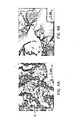
- conventionally processed Zircaloy-2 and Zircaloy-4 tubes are scanned with a high energy laser beam which beta treats a first layer of tube material beneath and adjacent to the outer circumferential surface, producing a Widmanstatten grain and precipitate morphology in this layer while forming a second layer of alpha recrystallized material beneath this first layer (see Figure 5) .
- the treated tubes are then cold worked to final size and have been found to have excellent high temperature, high pressure steam corrosion resistance.
- scanning refers to relative motion between the beam and the workpiece, and either the beam or the workpiece may be actually moving. In all the examples the workpiece is moved past a stationary beam.
- the laser surface treatments utilized in these illustrations of the present invention are shown in Table IV.
- a continuous wave C0 2 laser emitting a 10.6 11 wavelength, 12 kilowatt laser beam was utilized.
- An annular beam was substantially focused onto the outer diameter surface of the tubing and irradiated an arc encompassing about 330° of the tube circumference.
- the materials were scanned by the laser by moving the tubes through the ring-like beam. While being treated in a chamber continually being purged with argon, the tubes were rotated at a speed of approximately 1500 revolutions per minute while also being translated at the various speeds shown in inches per minute (IPM) in Table IV, so as to attain laser scanning of the entire tube O.D. surface.
- IPM inches per minute
- the tubes treated included conventionally processed cold pilgered Zircaloy-2 and Zircaloy-4 tubes having a 0.65 inch diameter x 0.07 inch wall thickness, and a 0.7 inch diameter x 0.07 inch wall thickness, respectively.
- the tubes had a mill pickled surface. Ingot chemistries of the material used for the various runs are shown in Table V.
- the tubes were cold pilgered in one step and processed (e.g. centerless ground and pickled) to final size, 0.484 inch diameter x'0.0328 inch wall thickness, and 0.374 inch diameter x 0.023 inch wall thickness for the Zircaloy-2 and Zircaloy-4 heats, respectively.
- the intermediate product in the surface beta treated condition, would have an outer layer having a Widmanstatten microstructure adjacent and beneath one surface, and an inner layer, beneath the outer layer, having recrystallized grain structure with the fine precipitate size of the copending application.
- Subsequent working and annealing in accordance with the present invention would produce a final product having a substantially random precipitate distribution and a fine precipitate size in its inner layer.
- the material be aged at 400-600°C after cold working. This aging will occur during intermediate and final anneals performed on the material after the laser surface treatment.
Landscapes
- Chemical & Material Sciences (AREA)
- Mechanical Engineering (AREA)
- Crystallography & Structural Chemistry (AREA)
- Engineering & Computer Science (AREA)
- Materials Engineering (AREA)
- Metallurgy (AREA)
- Organic Chemistry (AREA)
- Thermal Sciences (AREA)
- Physics & Mathematics (AREA)
- Manufacture And Refinement Of Metals (AREA)
- Heat Treatment Of Nonferrous Metals Or Alloys (AREA)
- Heat Treatment Of Articles (AREA)
- Other Surface Treatments For Metallic Materials (AREA)
Applications Claiming Priority (2)
| Application Number | Priority Date | Filing Date | Title |
|---|---|---|---|
| US34378882A | 1982-01-29 | 1982-01-29 | |
| US343788 | 1982-01-29 |
Publications (2)
| Publication Number | Publication Date |
|---|---|
| EP0085552A2 true EP0085552A2 (de) | 1983-08-10 |
| EP0085552A3 EP0085552A3 (de) | 1983-08-24 |
Family
ID=23347676
Family Applications (1)
| Application Number | Title | Priority Date | Filing Date |
|---|---|---|---|
| EP83300454A Ceased EP0085552A3 (de) | 1982-01-29 | 1983-01-28 | Zirkoniumlegierungen |
Country Status (7)
| Country | Link |
|---|---|
| EP (1) | EP0085552A3 (de) |
| JP (1) | JPS58133357A (de) |
| KR (1) | KR840003293A (de) |
| CA (1) | CA1225572A (de) |
| ES (2) | ES8703945A1 (de) |
| YU (1) | YU10483A (de) |
| ZA (1) | ZA8383B (de) |
Cited By (9)
| Publication number | Priority date | Publication date | Assignee | Title |
|---|---|---|---|---|
| FR2580524A1 (fr) * | 1985-02-13 | 1986-10-24 | Westinghouse Electric Corp | Procede pour realiser des tubes sans couture ou sans cordon de soudure en metaux ou alliage non ferreux |
| FR2585593A1 (fr) * | 1985-08-02 | 1987-02-06 | Westinghouse Electric Corp | Procede de fabrication d'un tube metallique et tube ainsi obtenu, notamment le traitement des gaines pour combustible nucleaire |
| EP0425465A1 (de) * | 1989-10-27 | 1991-05-02 | Sandvik Aktiebolag | Verfahren zur Herstellung von Kapselrohren für Brennstäbe von Kernreaktoren |
| RU2145739C1 (ru) * | 1994-12-20 | 2000-02-20 | Фраматом | Способ изготовления трубы и труба, служащая защитной оболочкой стержня ядерного топлива |
| FR2849865A1 (fr) * | 2003-01-13 | 2004-07-16 | Cezus Co Europ Zirconium | Procede de fabrication d'un demi-produit en alliage de zirconium pour l'elaboration d'un produit plat et utilisation |
| FR2849866A1 (fr) * | 2003-01-13 | 2004-07-16 | Cezus Co Europ Zirconium | Procede de fabrication d'un demi-produit en alliage de zirconium pour l'elaboration d'un produit long et utilisation |
| CN102260841A (zh) * | 2011-07-13 | 2011-11-30 | 燕山大学 | 一种具有α/β双态组织锆铌合金的制备方法 |
| CN102816981A (zh) * | 2012-08-13 | 2012-12-12 | 燕山大学 | 一种具有梯度组织结构锆铌合金的制备方法 |
| CN117551953A (zh) * | 2023-11-29 | 2024-02-13 | 北京科技大学 | 一种高Sc含量Al-Sc合金靶材的激光细化方法 |
Families Citing this family (1)
| Publication number | Priority date | Publication date | Assignee | Title |
|---|---|---|---|---|
| JP4883439B2 (ja) * | 2005-09-16 | 2012-02-22 | 春治 星野 | 安全降下避難具 |
Family Cites Families (7)
| Publication number | Priority date | Publication date | Assignee | Title |
|---|---|---|---|---|
| US3865635A (en) * | 1972-09-05 | 1975-02-11 | Sandvik Ab | Method of making tubes and similar products of a zirconium alloy |
| DE2651870C2 (de) * | 1975-11-17 | 1987-04-30 | General Electric Co., Schenectady, N.Y. | Verfahren zum Herstellen eines Bauteils aus einer Zirkoniumlegierung |
| CA1067256A (en) * | 1976-02-17 | 1979-12-04 | Bernard H. Kear | Skin melted articles |
| US4151014A (en) * | 1977-05-31 | 1979-04-24 | Western Electric Company, Inc. | Laser annealing |
| JPS5550453A (en) * | 1978-10-06 | 1980-04-12 | Hitachi Ltd | Heat treating method for zirconium alloy |
| US4279667A (en) * | 1978-12-22 | 1981-07-21 | General Electric Company | Zirconium alloys having an integral β-quenched corrosion-resistant surface region |
| US4294631A (en) * | 1978-12-22 | 1981-10-13 | General Electric Company | Surface corrosion inhibition of zirconium alloys by laser surface β-quenching |
-
1983
- 1983-01-06 ZA ZA8383A patent/ZA8383B/xx unknown
- 1983-01-17 CA CA000419617A patent/CA1225572A/en not_active Expired
- 1983-01-18 YU YU00104/83A patent/YU10483A/xx unknown
- 1983-01-28 JP JP58013619A patent/JPS58133357A/ja active Pending
- 1983-01-28 EP EP83300454A patent/EP0085552A3/de not_active Ceased
- 1983-01-28 ES ES519379A patent/ES8703945A1/es not_active Expired
- 1983-01-29 KR KR1019830000352A patent/KR840003293A/ko not_active Ceased
-
1984
- 1984-05-16 ES ES532527A patent/ES8600415A1/es not_active Expired
Cited By (13)
| Publication number | Priority date | Publication date | Assignee | Title |
|---|---|---|---|---|
| FR2580524A1 (fr) * | 1985-02-13 | 1986-10-24 | Westinghouse Electric Corp | Procede pour realiser des tubes sans couture ou sans cordon de soudure en metaux ou alliage non ferreux |
| US4690716A (en) * | 1985-02-13 | 1987-09-01 | Westinghouse Electric Corp. | Process for forming seamless tubing of zirconium or titanium alloys from welded precursors |
| FR2585593A1 (fr) * | 1985-08-02 | 1987-02-06 | Westinghouse Electric Corp | Procede de fabrication d'un tube metallique et tube ainsi obtenu, notamment le traitement des gaines pour combustible nucleaire |
| EP0425465A1 (de) * | 1989-10-27 | 1991-05-02 | Sandvik Aktiebolag | Verfahren zur Herstellung von Kapselrohren für Brennstäbe von Kernreaktoren |
| RU2145739C1 (ru) * | 1994-12-20 | 2000-02-20 | Фраматом | Способ изготовления трубы и труба, служащая защитной оболочкой стержня ядерного топлива |
| FR2849866A1 (fr) * | 2003-01-13 | 2004-07-16 | Cezus Co Europ Zirconium | Procede de fabrication d'un demi-produit en alliage de zirconium pour l'elaboration d'un produit long et utilisation |
| FR2849865A1 (fr) * | 2003-01-13 | 2004-07-16 | Cezus Co Europ Zirconium | Procede de fabrication d'un demi-produit en alliage de zirconium pour l'elaboration d'un produit plat et utilisation |
| WO2004072317A1 (fr) * | 2003-01-13 | 2004-08-26 | Compagnie Europeenne Du Zirconium - Cezus | Procede de fabrication d'un demi-produit en alliage de zirconium pour l'elaboration d'un produit long et utilisation |
| WO2004072318A1 (fr) * | 2003-01-13 | 2004-08-26 | Compagnie Europeenne Du Zirconium-Cezus | Procede de fabrication d’un demi-produit en alliage de zirconium pour l’elaboration d’un produit plat et utilisation |
| US7763132B2 (en) | 2003-01-13 | 2010-07-27 | Compagnie Europeenne Du Zirconium-Cezus | Method of producing a zirconium alloy semi-finished product for the production of elongated product and use thereof |
| CN102260841A (zh) * | 2011-07-13 | 2011-11-30 | 燕山大学 | 一种具有α/β双态组织锆铌合金的制备方法 |
| CN102816981A (zh) * | 2012-08-13 | 2012-12-12 | 燕山大学 | 一种具有梯度组织结构锆铌合金的制备方法 |
| CN117551953A (zh) * | 2023-11-29 | 2024-02-13 | 北京科技大学 | 一种高Sc含量Al-Sc合金靶材的激光细化方法 |
Also Published As
| Publication number | Publication date |
|---|---|
| ES519379A0 (es) | 1987-03-01 |
| JPS58133357A (ja) | 1983-08-09 |
| ES532527A0 (es) | 1985-10-01 |
| ES8703945A1 (es) | 1987-03-01 |
| EP0085552A3 (de) | 1983-08-24 |
| YU10483A (en) | 1985-12-31 |
| ES8600415A1 (es) | 1985-10-01 |
| KR840003293A (ko) | 1984-08-20 |
| CA1225572A (en) | 1987-08-18 |
| ZA8383B (en) | 1983-12-28 |
Similar Documents
| Publication | Publication Date | Title |
|---|---|---|
| US4584030A (en) | Zirconium alloy products and fabrication processes | |
| CA1214978A (en) | Zirconium alloy products and fabrication processes | |
| EP0071193B1 (de) | Verfahren zur Herstellung einer Legierung auf der Basis von Zirkonium | |
| EP1111623B1 (de) | Zirkonium-Niob-Zinn-Legierungen für Kernreaktorbrennstäbe und Bauteile, die einen hohen Abbrand ermöglichen | |
| US4938921A (en) | Method of manufacturing a zirconium-based alloy tube for a nuclear fuel element sheath and tube thereof | |
| EP1225243B2 (de) | Verfahren zur Herstellung eines Bleches oder eines Rohres aus Niob entaltenden Zirkonium-Legierung für Kernbrennstoff mit hohem Abbrand | |
| US5383228A (en) | Method for making fuel cladding having zirconium barrier layers and inner liners | |
| KR100364093B1 (ko) | 핵연료어셈블리용 튜브제조방법 및 이에 의해 얻어진 튜브 | |
| US4450020A (en) | Method of manufacturing cladding tubes of a zirconium-based alloy for fuel rods for nuclear reactors | |
| EP0622470B1 (de) | Verfahren zur Herstellung von Zircaloy Rohren mit hohem Widerstand gegen Rissausbreitung | |
| KR930009986B1 (ko) | 지르코늄-니오붐 합금으로 부터 얇은 벽을 가지는 관을 제조하는 방법 | |
| US4648912A (en) | High energy beam thermal processing of alpha zirconium alloys and the resulting articles | |
| KR20020085198A (ko) | 우수한 내식성과 기계적 특성을 갖는 지르코늄 합금핵연료 피복관 및 그 제조 방법 | |
| EP0085552A2 (de) | Zirkoniumlegierungen | |
| US4360389A (en) | Zirconium alloy heat treatment process | |
| EP0908897B1 (de) | Zirkonium-Zinn-Eisen-Legierungen für Kernreaktorbrennstäbe und Bauteile, die einen hohen Abbrand ermöglichen | |
| EP0899747B1 (de) | Verfahren zur Herstellung von Zirkonium-Zinn-Eisen-Legierungen für Kernreaktorbrennstäbe und Bauteile, die einen hohen Abbrand ermöglichen | |
| EP0405172B1 (de) | Zircaloy-Rohr mit Einfachscheitel-Radialtextur | |
| US4765174A (en) | Texture enhancement of metallic tubing material having a hexagonal close-packed crystal structure | |
| KR100353125B1 (ko) | 원자로용지르콘계합금제튜브의제조방법및그용도 | |
| CA1080513A (en) | Zirconium alloy heat treatment process and product | |
| US4717434A (en) | Zirconium alloy products | |
| JP2921783B2 (ja) | 水素遅延破壊抵抗性ジルコニウム合金無継目圧力管とその製造方法 | |
| EP0425465A1 (de) | Verfahren zur Herstellung von Kapselrohren für Brennstäbe von Kernreaktoren | |
| EP0949349A1 (de) | Grobkornschutzglühung für Zirkon-Legierungen |
Legal Events
| Date | Code | Title | Description |
|---|---|---|---|
| PUAI | Public reference made under article 153(3) epc to a published international application that has entered the european phase |
Free format text: ORIGINAL CODE: 0009012 |
|
| PUAL | Search report despatched |
Free format text: ORIGINAL CODE: 0009013 |
|
| AK | Designated contracting states |
Designated state(s): BE CH DE FR GB IT LI SE |
|
| AK | Designated contracting states |
Designated state(s): BE CH DE FR GB IT LI SE |
|
| 17P | Request for examination filed |
Effective date: 19840210 |
|
| STAA | Information on the status of an ep patent application or granted ep patent |
Free format text: STATUS: THE APPLICATION HAS BEEN REFUSED |
|
| 18R | Application refused |
Effective date: 19890107 |
|
| RIN1 | Information on inventor provided before grant (corrected) |
Inventor name: SABOL, GEORGE PAUL Inventor name: MCDONALD, SAMUEL GILBER Inventor name: NURMINEN, JOHN ISAAC |