EP0086747A2 - Neue Phenoxy-phenoxy-alkanoyl-thioamide als Herbizide - Google Patents
Neue Phenoxy-phenoxy-alkanoyl-thioamide als Herbizide Download PDFInfo
- Publication number
- EP0086747A2 EP0086747A2 EP83810051A EP83810051A EP0086747A2 EP 0086747 A2 EP0086747 A2 EP 0086747A2 EP 83810051 A EP83810051 A EP 83810051A EP 83810051 A EP83810051 A EP 83810051A EP 0086747 A2 EP0086747 A2 EP 0086747A2
- Authority
- EP
- European Patent Office
- Prior art keywords
- phenoxy
- formula
- chlorophenoxy
- meaning given
- dichlorophenoxy
- Prior art date
- Legal status (The legal status is an assumption and is not a legal conclusion. Google has not performed a legal analysis and makes no representation as to the accuracy of the status listed.)
- Granted
Links
Classifications
-
- C—CHEMISTRY; METALLURGY
- C07—ORGANIC CHEMISTRY
- C07C—ACYCLIC OR CARBOCYCLIC COMPOUNDS
- C07C319/00—Preparation of thiols, sulfides, hydropolysulfides or polysulfides
- C07C319/14—Preparation of thiols, sulfides, hydropolysulfides or polysulfides of sulfides
- C07C319/16—Preparation of thiols, sulfides, hydropolysulfides or polysulfides of sulfides by addition of hydrogen sulfide or its salts to unsaturated compounds
-
- A—HUMAN NECESSITIES
- A01—AGRICULTURE; FORESTRY; ANIMAL HUSBANDRY; HUNTING; TRAPPING; FISHING
- A01N—PRESERVATION OF BODIES OF HUMANS OR ANIMALS OR PLANTS OR PARTS THEREOF; BIOCIDES, e.g. AS DISINFECTANTS, AS PESTICIDES OR AS HERBICIDES; PEST REPELLANTS OR ATTRACTANTS; PLANT GROWTH REGULATORS
- A01N39/00—Biocides, pest repellants or attractants, or plant growth regulators containing aryloxy- or arylthio-aliphatic or cycloaliphatic compounds, containing the group or, e.g. phenoxyethylamine, phenylthio-acetonitrile, phenoxyacetone
- A01N39/02—Aryloxy-carboxylic acids; Derivatives thereof
Definitions
- the present invention relates to new phenoxy-phenoxy) -alkanoyl-thioamides, their preparation of herbicidal compositions which contain these thioamides as active ingredients, the use of phenoxy-phenoxy-alkanoyl-thioamides as herbicides and a process for the selective control of weeds in crops of useful plants, especially in crops of cereals and rice.
- Preferred alkyl groups R 1 , R 3 and R 4 are methyl and ethyl.
- Phenoxy-phenoxy-alkanocarboxylic acid derivatives with herbicidal activity are known, for example from German Offenlegungsschrift No. 2,223,894, 2,433,004, 2,531,643, 2,639,796 and 2,732,442. They are used in part as selective herbicides in cereal crops, where however, their effects are not always satisfactory because, in order to achieve safe weed control, amounts of active substance are often necessary which are phytotoxic to sensitive crops such as millet or rice.
- the present phenoxy-phenoxy-alkanoyl-thioamides of the formula I destroy the weeds in crops of cereals and rice with little application or damage them in such a way that they wither and no longer mean competition for the crop plants.
- the compounds of the formula I also have strong plant growth-regulating, in particular plant growth-inhibiting, properties. Both monocots and dicots are impaired in their growth.
- the amides of the formula Ia are particularly active wherein R 1 is methyl or ethyl and X 1 and X 2 have the meaning given above. as well as the amidines of the formula Ib. wherein R 1 is methyl or ethyl and X 1 and X 2 have the meaning given above.
- the phenoxy-phenoxy-alkanoyl-thioamides of formula 1 are stable compounds. Their handling and application pose no problems. Proposed application rates are between 0.05 and 5 kg per hectare; preferably between 0.1 and 1.5 kg.
- the phenoxy-phenoxy-alkanoyl-thioamides of the formula 1 according to the invention are prepared in a manner known per se by condensing a 3- (2-chlorophenoxy) phenol of the formula II wherein X1 and X2 have the meaning given, with an a-halo - C l -C 4 alkanitrile of the formula III wherein Hal is a halogen atom, preferably chlorine or bromine and R 1 has the level meaning and the resulting a- [3- (2-chlorophenoxy) phenoxy] alkanoyl nitrile of the formula IV wherein X 1 , X 2 and R 1 have the meaning given, treated with hydrogen sulfide in an inert basic solvent until the nitrile is converted to the thioamide and, if appropriate, the amide of the formula Ia obtained wherein X 1 , X 2 and R 1 have the given meaning, with a formamide of the formula V. wherein R 3 and R 4 have the
- Suitable derivatives of the formamidine of the formula V are, for example, dimethylformamide-dimethyl-acetal, dimethylformamide-diethyl acetal, pyrrolidino-formamide-dimethyl-acetal, piperidinoformamide-diethyl acetal.
- the reaction is carried out in an inert organic solvent, at temperatures which are between room temperature and 200 ° C. It can be operated at normal pressure or in an autoclave at excess pressure.
- Suitable basic solvents are e.g. Pyridine, collidine, dimethylformamide.
- Suitable basic condensing agents are e.g. organic tertiary amines such as the triethylamine or inorganic bases such as sodium carbonate bicarbonate or potassium carbonate.
- the invention also relates to herbicidal and plant growth regulators which comprise a new active ingredient of the formula I, and to processes for pre- and post-emergent weed control and for inhibiting the growth of monocotyledonous and dicotyledonous plants, in particular grasses.
- the compounds of the formula I are used in unchanged form or, preferably, as agents together with the auxiliaries customary in formulation technology and are therefore used, for example, to form emulsion concentrates, directly sprayable or dilutable solutions thin emulsions, wettable powders, soluble powders, dusts, granules, also encapsulations in, for example, polymeric substances processed in a known manner.
- the application methods such as spraying, atomizing, dusting, scattering or pouring, are selected in the same way as the type of agent, in accordance with the desired objectives and the given conditions.
- the formulations i.e. the agents, preparations or compositions containing the active ingredient of formula I and optionally a solid or liquid additive are prepared in a known manner, e.g. by intimately mixing and / or grinding the active ingredients with extenders, e.g. with solvents, solid carriers, and optionally surface-active compounds (surfactants).
- extenders e.g. with solvents, solid carriers, and optionally surface-active compounds (surfactants).
- Possible solvents are: aromatic hydrocarbons, preferably the fractions C 8 to C 12 ' such as xylene mixtures or substituted naphthalenes, phthalic acid esters such as dibutyl or dicotyl phthalate, aliphatic hydrocarbons such as cyclohexane or paraffins, alcohols or glycols and their ethers and esters such as Ethanol, ethylene glycol, ethyl glycol monomethyl or ethyl ether, ketones such as cyclohexanone, strongly polar solvents such as N-methyl-2-pyrrolidone, dimethyl sulfoxide or dimethylformamide, and optionally epoxidized vegetable oils such as epoxidized coconut oil or soybean oil; or water.
- aromatic hydrocarbons preferably the fractions C 8 to C 12 ' such as xylene mixtures or substituted naphthalenes
- phthalic acid esters such as dibutyl or dicotyl phthalate
- Natural rock flours such as calcite, talc, kaolin, montmorillonite or attapulgite, are generally used as solid carriers, for example for dusts and dispersible powders.
- highly disperse silica or highly disperse absorbent polymers can also be added.
- Porous types such as pumice, broken brick, sepiolite or bentonite come as granular, adsorptive granulate carriers, and non-sorptive ones Carrier materials such as calcite or sand in question.
- a large number of pregranulated materials of inorganic or organic nature such as, in particular, dolomite or comminuted plant residues can be used.
- suitable surface-active compounds are nonionic, cationic and / or anionic surfactants with good emulsifying, dispersing and wetting properties.
- surfactants are also to be understood as mixtures of surfactants.
- Suitable anionic surfactants can be both so-called water-soluble soaps and water-soluble synthetic surface-active compounds.
- soaps are the alkali, alkaline earth or optionally substituted ammonium salts of higher fatty acids (C 10 -C 22 ), such as the Na or K salts of oleic or stearic acid, or of natural fatty acid mixtures, for example from coconut or Tallow oil can be obtained.
- the fatty acid methyl taurine salts should also be mentioned.
- the fatty sulfonates or sulfates are generally present as alkali, alkaline earth or optionally substituted ammonium salts and have an alkyl radical with 8 to 22 carbon atoms, alkyl also including the alkyl part of acyl radicals, for example the Na or Ca salt lignin sulfonic acid, dodecylsulfuric acid ester or a fatty alcohol sulfate mixture made from natural fatty acids.
- This subheading also includes the salts of sulfuric acid esters and sulfonic acids from fatty alcohol / ethylene oxide adducts.
- the sulfonated benzimidazole derivatives preferably contain 2-sulfonic acid groups and a fatty acid residue with 8-22 carbon atoms.
- Alkylarylsulfonates are, for example, the sodium, calcium or triethanolamine salts of dodecylbenzenesulfonic acid, dibutylnaphthalenesulfonic acid or a naphthalenesulfonic acid / formaldehyde condensation product.
- Corresponding phosphates such as e.g. Salts of the phosphoric acid ester of a p-nonylphenol (4-14) ethylene oxide adduct in question.
- Suitable ionic surfactants are primarily polyglycol ether derivatives of aliphatic or cycloaliphatic alcohols, saturated or unsaturated fatty acids and alkylphenols, which can contain 3 to 30 glycol ether groups and 8 to 20 carbon atoms in the (aliphatic) hydrocarbon radical and 6 to 18 carbon atoms in the alkyl radical of the alkylphenols.
- nonionic surfactants are the water-soluble polyethylene oxide adducts with polypropylene glycol having 1 to 10 carbon atoms in the alkyl chain and containing 20 to 250 ethylene glycol ether groups and 10 to 100 propylene glycol ether groups.
- the compounds mentioned usually contain 1 to 5 ethylene glycol units per propylene glycol unit.
- nonionic surfactants are nonylphenol polyethoxyethanols, castor oil polyglycol ethers, polypropylene-polyethylene oxide adducts, tributylphenoxypolyethanol, polyethylene glycol and octylphenoxypolyethoxyethanol.
- the cationic surfactants are primarily quaternary ammonium salts which contain at least one alkyl radical having 8 to 22 carbon atoms as N substituents and have low, optionally halogenated alkyl, benzyl or low hydroxyalkyl radicals as further substituents.
- the salts are preferably in the form of halides, methyl sulfates or ethyl sulfates, e.g. the stearyltrimethylammonium chloride or the benzyldi (2-chloroethyl) ethylammonium bromide.
- the pesticidal preparations generally contain 0.1 to 95%, in particular 0.1 to 80%, active ingredient of the formula I, 1 to 99.9% of a solid or liquid additive and 0 to 25%, in particular 0.1 to 25 % of a surfactant.
- the use forms can be diluted down to 0.001% of active ingredient.
- the application rates are generally 0.01 to 10 kg ai / ha, preferably 0.025 to 5 kg ai / ha.
- the agents can also contain other additives such as stabilizers, defoamers, viscosity regulators, binders, adhesives and fertilizers or other active ingredients to achieve special effects.
- temperatures are in degrees Celsius, the pressures in millibars mb.
- the active ingredient is mixed well with the additives and ground well in a suitable mill.
- Spray powder is obtained which can be diluted with water to form suspensions of any desired concentration.
- Emulsions of any desired concentration can be prepared from this concentrate by dilution with water.
- Ready-to-use dusts are obtained by mixing the active ingredient with the carrier and grinding it in a suitable mill.
- the active ingredient is mixed with the additives, ground and moistened with water. This mixture is extruded and then dried in an air stream.
- the finely ground active ingredient is evenly applied in a mixer to the kaolin moistened with polyethylene glycol. In this way, dust-free coating granules are obtained.
- the finely ground active ingredient is intimately mixed with the additives. This gives a suspension concentrate from which suspensions of any desired concentration can be prepared by dilution with water.
- Compound no. 1 destroys or damages the weeds very much while the rice shows only minor damage.
Landscapes
- Life Sciences & Earth Sciences (AREA)
- Organic Chemistry (AREA)
- Chemical & Material Sciences (AREA)
- Dentistry (AREA)
- Health & Medical Sciences (AREA)
- Engineering & Computer Science (AREA)
- Plant Pathology (AREA)
- General Health & Medical Sciences (AREA)
- Wood Science & Technology (AREA)
- Zoology (AREA)
- Environmental Sciences (AREA)
- Pest Control & Pesticides (AREA)
- Agronomy & Crop Science (AREA)
- Agricultural Chemicals And Associated Chemicals (AREA)
- Organic Low-Molecular-Weight Compounds And Preparation Thereof (AREA)
Abstract

- X1 Chlor oder Trifluormethyl
- X2 Chlor oder Nitro
- R1 C1-C4 Alkyl
- R2 Amino oder eine Aminogruppe
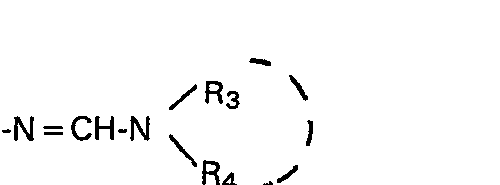
- R3 und R4 einzeln je Wasserstoff oder Ci-C4 Alkyl oder zusammen C4-C5 Alkylen bedeuten,
haben herbizide und den Pflanzenwuchs regulierende Eigenschaften. Sie eignen sich zur selektiven Bekämpfung von Unkräutern in Nutzpflanzenkulturen, speziell in Getreide- und Reiskulturen.
Description
- Die vorliegende Erfindung betrifft neue Phenoxy-phenoxy)-alkanoyl-thioamide, deren Herstellung herbizide Mittel, welche diese Thioamide als Wirkstoff enthalten, die Verwendung der Phenoxy-phenoxy-alkanoyl-thioamide als Herbizide sowie ein Verfahren zur selektiven Bekämpfung von Unkräutern, in Nutzpflanzenkulturen, vor allem in Kulturen von Getreide und Reis.
- Die Phenoxy-phenoxy-alkanoyl-thioamide entsprechen der Formel I

- X1 Chlor oder Trifluormethyl,
- X2 Chlor oder Nitro,
- R C1-C4 Alkyl
- R2 die Amino- oder eine Amidino-Gruppe

- R3 und R4 einzeln je Wasserstoff oder C1-C4 Alkyl oder zusammen eine C4-C5-Alkylenkette bilden.
- Bevorzugte Alkylgruppen R1, R3 und R4 sind Methyl und Aethyl.
- Phenoxy-phenoxy-alkanocarbonsäurederivate mit herbizider Wirkung sind bekannt, beispielsweise aus den deutschen Offenlegungsschriften Nr. 2 223 894, 2 433 004, 2 531 643, 2 639 796 und 2 732 442. Sie werden zum Teil als Selektivherbizide in Getreidekulturen verwendet, wobei jedoch ihre Wirkung nicht immer befriedigt, weil zur Erreichung einer sicheren Unkrautkontrolle oft Wirkstoffmengen nötig sind, die gegenüber empfindlichen Kulturen wie Hirse oder Reis phytotoxisch wirken.
- Die vorliegenden Phenoxy-phenoxy-alkanoyl-thioamide der Formel I vernichten in geringer Aufwandmenge die Unkräuter in Kulturen von Getreide und Reis oder schädigen sie so, dass sie verkümmern und keine Konkurrenz für die Kulturpflanzen mehr bedeuten.
- Die Verbindungen der Formel I haben ausserdem starke pflanzenwuchsregulierende, insbesondere pflanzenwuchshemmende, Eigenschaften. Es werden sowohl Monokotyledonen als auch Dikotyledonen in ihrem Wachstum beeinträchtigt.
- Besonders aktiv sind die Amide der Formel Ia


- Als Einzelverbindungen sind aufgefallen:
- a-[-3-(2-Chlor-4-trifluormethylphenoxy)-6-chlorphenoxy]-thiopropionyl- amid,
- a-[3-(2-Chlor-4-trifluormethylphenoxy)-6-chlorphenoxy]-thiopropionyl- dimethylamidin,
- α-[3-(2,4-Dichlorphenoxy)-6-chlorphenoxy]-thiopropionyl-amid,
- α-[3-(2,4-Dichlorphenoxy)-6-chlorphenoxy]-thiopropionyl-dimethyl- amidin,
- a-[3-(2,4-Dichlorphenoxy)-6-chlorphenoxy]-thiobutyrylamid,
- a-[3-(2,4-Dichlorphenoxy)-6-chlorphenoxy]-thioburyryl-dimethylamidin,
- α-[3-(2,4-Dichlorphenoxy)-6-nitrophenoxy]-thiopropionyl-amid
- α-[3-(2,4-Dichlorphenoxy)-6-nitrophenoxy]-thiopropionyl-dimethyl- amidin.
- Die Phenoxy-phenoxy-alkanoyl-thioamide der Formel 1 sind stabile Verbindungen. Ihre Handhabung und Applikation wirft keine Probleme auf. Vorgeschlagene Aufwandmengen liegen zwischen 0,05 und 5 kg pro Hektar; vorzugsweise zwischen 0,1 und 1,5 kg.
- Die Herstellung der erfindungsgemässen Phenoxy-phenoxy-alkanoyl-thioamide der Formel 1 erfolgt in an sich bekannter Weise durch kondensieren eines 3-(2-Chlorophenoxy)phenols der Formel II


- Geeignete Derivate des Formamidins der Formel V sind beispielsweise Dimethylformamid-dimethyl-acetal, Dimethylformamid-diäthylacetal, Pyrrolidino-formamid-dimethyl-acetal, Piperidinoformamid-diäthyl-acetal.
- Die Reaktion wird in einem inerten organischen Lösungsmittel durchgeführt, bei Temperaturen die zwischen Raumtemperatur und 200°C liegen. Es kann bei Normaldruck oder im Autoklaven bei Ueberdruck gearbeitet werden.
- Geeignete basische Lösungsmittel sind z.B. Pyridin, Collidin, Dimethylformamid.
- Als basische Kondensationsmittel eignen sich z.B. organische tertiäre Amine, wie das Triäthylamin oder anorganische Basen wie Natriumcarbonat-bicarbonat oder Kaliumcarbonat.
- Die als Ausgangsmaterial verwendeten Phenoxy-phenole sind zum grossen Teil bekannt und ihre Herstellung ist in der neuen Patentliteratur beschrieben worden. Wir verweisen auf die DOS 2 223 894, 2 433 066, 2 433 067, 2 531 643, 2 639 796.
- Die Erfindung betrifft auch herbizide und pflanzenwuchsregulierende Mittel, welche einen neuen Wirkstoff der Formel I enthalten, sowie Verfahren zur pre- und post-emergenten Unkrautbekämpfung und zur Hemmung des Pflanzenwuchses von monokotylen und dikotylen Pflanzen, insbesondere von Gräsern.
- Die Verbindungen der Formel I werden in unveränderter Form oder vorzugsweise als Mittel zusammen mit den in der Formulierungstechnik üblichen Hilfsmittel eingesetzt und werden daher z.B. zu Emulsionskonzentraten, direkt versprühbaren oder verdünnbaren Lösungen, verdünnten Emulsionen, Spritzpulvern, löslichen Pulvern, Stäubemitteln, Granulaten, auch Verkapselungen in z.B. polymeren Stoffen in bekannter Weise verarbeitet. Die Anwendungsverfahren wie Versprühen, Vernebeln, Verstäuben, Verstreuen oder Giessen werden gleich wie die Art der Mittel den angestrebten Zielen und den gegebenen Verhältnissen entsprechend gewählt.
- Die Formulierungen, d.h. die den Wirkstoff der Formel I und gegebenenfalls einen festen oder flüssigen Zusatzstoff enthaltenden Mittel, Zubereitungen oder Zusammensetzungen werden in bekannter Weise hergestellt, z.B. durch inniges Vermischen und/oder Vermahlen der Wirkstoffe mit Streckmitteln, wie z.B. mit Lösungsmitteln, festen Trägerstoffen, und gegebenenfalls oberflächenaktiven Verbindungen (Tensiden).
- Als Lösungsmittel können in Frage kommen: Aromatische Kohlenwasserstoffe, bevorzugt die Fraktionen C8 bis C12' wie z.B. Xylolgemische oder substituierte Naphthaline, Phthalsäureester wie Dibutyl- oder Dicotylphthalat, aliphatische Kohlenwasserstoffe wie Cyclohexan oder Paraffine, Alkohole oder Glykole sowie deren Aether und Ester, wie Aethanol, Aethylenglykol, Aethylglykolmonomethyl- oder äthyläther, Ketone wie Cyclohexanon, stark polare Lösungsmittel wie N-Methyl-2-pyrrolidon, Dimethylsulfoxid oder Dimethylformamid, sowie gegebenenfalls epoxidierte Pflanzenöle, wie epoxidiertes Kokosnussöl oder Sojaöl; oder Wasser.
- Als feste Trägerstoffe, z.B. für Stäubemittel und dispergierbare Pulver, werden in der Regel natürliche Gesteinsmehle verwendet, wie Calcit, Talkum, Kaolin, Montmorillonit oder Attapulgit. Zur Verbesserung der physikalischen Eigenschaften können auch hochdisperse Kieselsäure oder hochdisperse saugfähige Polymerisate zugesetzt werden. Als gekörnte, adsorptive Granulatträger kommen poröse Typen wie z.B. Bimsstein, Ziegelbruch, Sepiolit oder Bentonit, als nicht sorptive Trägermaterialien z.B. Calcit oder Sand in Frage. Darüberhinaus kann eine Vielzahl von vorgranulierten Materialien anorganischer oder organischer Natur wie insbesondere Dolomit oder zerkleinerte Pflanzenrückstände verwendet werden.
- Als oberflächenaktive Verbindungen kommen je nach der Art des zu formulierenden Wirkstoffes der Formel I nichtionogene, kation- und / oder anionaktive Tenside mit guten Emulgier-, Dispergier- und Netzeigenschaften in Betracht. Unter Tensiden sind auch Tensidgemische zu verstehen.
- Geeignete anionische Tenside können sowohl sog. wasserlösliche Seifen als auch wasserlösliche synthetische oberflächenaktive Verbindungen sein.
- Als Seifen seien die Alkali-, Erdalkali- oder gegebenenfalls substituierte Ammoniumsalze von höheren Fettsäuren (C10-C22), wie z.B. die Na- oder K-Salze der Oel- oder Stearinsäure, oder von natürlichen Fettsäuregemischen, die z.B. aus Kokosnuss- oder Talgöl gewonnen werden können, genannt. Ferner sind auch die Fettsäure-methyl-taurinsalze zu erwähnen.
- Häufiger werden jedoch sogenannte synthetische Tenside verwendet, insbesondere Fettsulfonate, Fettsulfate, sulfonierte Benzimidazolderivate oder Alkylarylsulfonate.
- Die Fettsulfonate oder -sulfate liegen in der Regel als Alkali-, Erdalkali- oder gegebenenfalls substituierte Ammoniumsalze vor und weisen einen Alkylrest mit 8 bis 22 C-Atomen auf, wobei Alkyl auch den Alkylteil von Acylresten einschliesst, z.B. das Na- oder Ca-Salz der Ligninsulfonsäure, des Dodecylschwefelsäureesters oder eines aus natürlichen Fettsäuren hergestellten Fettalkoholsulfatgemisches. Hierher gehören auch die Salze der Schwefelsäureester und Sulfonsäuren von Fettalkohol-Aethylenoxid-Addukten. Die sulfonierten Benzimidazolderivate enthalten vorzugsweise 2-Sulfonsäuregruppen und einen Fettsäurerest mit 8-22 C-Atomen. Alkylarylsulfonate sind z.B. die Na-, Ca- oder Triäthanolaminsalze der Dodecylbenzolsulfonsäure, der Dibutylnaphthalinsulfonsäure oder eines Naphthalinsulfonsäure-Formaldehydkondensationsproduktes.
- Ferner kommen auch entsprechende Phosphate wie z.B. Salze des Phosphorsäureesters eines p-Nonylphenol-(4-14)-Aethylenoxid-Adduktes in Frage.
- Als ionische Tenside kommen in erster Linie Polyglykolätherderivate von aliphatischen oder cycloaliphatischen Alkoholen, gesättigten oder ungesättigten Fettsäuren und Alkylphenolen in Frage, die 3 bis 30 Glykoläthergruppen und 8 bis 20 Kohlenstoffatome im (aliphatischen) Kohlenwasserstoffrest und 6 bis 18 Kohlenstoffatome im Alkylrest der Alkylphenole enthalten können.
- Weitere geeignete nichtionische Tenside sind die wasserlöslichen, 20 bis 250 Aethylenglykoläthergruppen und 10 bis 100 Propylenglykoläthergruppen enthaltenden Polyäthylenoxidaddukte an Polypropylenglykol mit 1 bis 10 Kohlenstoffatomen in der Alkylkette. Die genannten Verbindungen enthalten üblicherweise pro Propylenglykol-Einheit 1 bis 5 Aethylenglykoleinheiten.
- Als Beispiele nichtionischer Tenside seien Nonylphenolpolyäthoxy- äthanole, Ricinusölpolyglykoläther, Polypropylen-Polyäthylenoxidaddukte, Tributylphenoxypolyäthanol, Polyäthylenglykol und Octylphenoxypolyäthoxyäthanol erwähnt.
- Ferner kommen auch Fettsäureester von Polyoxyäthylensorbitan wie das Polyoxyäthylensorbitan-trioleat in Betracht.
- Bei den kationischen Tensiden handelt es sich vor allem um quaternäre Ammoniumsalze, welche als N-Substituenten mindestens einen Alkylrest mit 8 bis 22 C-Atomen enthalten und als weitere Substituenten niedrige, gegebenenfalls halogenierte Alkyl-, Benzyl oder niedrige Hydroxyalkylreste aufweisen. Die Salze liegen vorzugsweise als Halogenide, Methylsulfate oder Aethylsulfate vor, z.B. das Stearyltrimethylammoniumchlorid oder das Benzyldi(2-chloräthyl)-öthylammoniumbromid.
- Die in der Formulierungstechnik gebräuchlichen Tenside sind u.a. in folgenden Publikationen beschrieben:
- "Mc Cutcheon's Detergents and Emulsifiers Annual" MC
- Publishing Corp., Ringwood, New Jersey, 1979.
- Sisely and. Wood, "Encyclopedia of Surface Active Agents".
- Chemical Publishing Co., Inc. New York, 1964.
- Die pestiziden Zubereitungen enthalten in der Regel 0,1 bis 95 %, insbesondere 0,1 bis 80 %, Wirkstoff der Formel I, 1 bis 99,9 % eines festen oder flüssigen Zusatzstoffes und 0 bis 25 %, insbesondere 0,1 bis 25 % eines Tensides.
- Insbesondere setzen sich bevorzugte Formulierungen folgendermassen zusammen: (% = Gewichtsprozent)
-

-

-

-

-

- Während als Handelsware eher konzentrierte Mittel bevorzugt werden, verwendet der Endverbraucher in der Regel verdünnte Mittel. Die Anwendungsformen können bis hinab zu 0,001 % an Wirkstoff verdünnt werden. Die Aufwandmengen betragen in der Regel 0,01 bis 10 kg AS/ha, vorzugsweise 0,025 bis 5 kg AS/ha.
- Die Mittel können auch weitere Zusätze wie Stabilisatoren, Entschäumer, Viskositätsregulatoren, Bindemittel, Haftmittel sowie Dünger oder andere Wirkstoffe zur Erzielung spezieller Effekte enthalten.
- In den folgenden Beispielen sind die Temperaturen in Celsiusgraden °C, die Drucke in Millibar mb angegeben.
- Beispiel 1: Herstellung von a-[3-(2LChlor-4Ltrifluormethylphenoxy)-6-chlorphenoxy]thiopropionyl-amid

- a) Man rührt über Nacht bei 100° Badtemperatur eine Mischung von 60 g 3-Hydroxy-2',4-dichlor-4'-trifluormethyl-diphenyläther, 42,9 g Brompropionitril, 51,5 g Kaliumcarbonat, und eine Spatelspitze Kaliumjodid. Nach dem Abkühlen wird das Reaktionsgemisch filtriert und das Filtrat eingedampft. Es bleiben 55 g α-[3-(2'-Chlor-4'-trifluormethylphenoxy)-6-chlorphenoxy]propionitril als rotbraunes Oel vom Brechungsindex

- b) Man löst 37,6 g dieses Propionitrils in 35 ml Pyridin, gibt 14 ml Triäthylamin dazu und leitet dann unter Rühren während 2 Stunden Schwefelwasserstoff in die Lösung. Nach beendeter Reaktion wird die Lösung in Wasser gegossen und die organische Phase mit Aethylacetat extrahiert. Nach Trocknen über Natriumsulfat, Verdampfen des Lösungsmittels und Reinigung des Rückstandes durch Chromatographie über eine Silikagelkolonne, erhält man das Titelprodukt als rotes Oel, welches beim Stehen kristallisiert. Ausbeute: 37 g kristallines Produkt mit Schmelzpunkt 83-89°C.
- Beispiel 2: Herstellung von α-[3-(2'-Chlor-4'-trifluormethylphenoxy)-6-chlorphenoxy]thiopropionyl-dimethylamidin

- Man rührt während 3 Stunden bei 40°C 20,5 g des gemäss Beispiel 1 erhaltenen α-[3-(2'-Chlor-4'-trifluormethylphenoxy)-6-chlorphenoxy)-thiopropionyl-amides zusammen mit 25 ml N,N-Dimethylformamid-dimethyl-acetal [(CH3)2-N-CH(OCH3)2] Nach dem Abkühlen wird das überschüssige Acetal abdestilliert und es bleiben 20,6 g Titelprodukt als viskoses Oel zurück.
- In analoger Weise zu diesen Beispielen erhält man folgende Verbindungen R1,


-

- Der Wirkstoff wird mit den Zusatzstoffen gut vermischt und in einer geeigneten Mühle gut vermahlen. Man erhält Spritzpulver, die sich mit Wasser zu Suspensionen jeder gewünschten Konzentration verdünnen lassen.

- Aus diesem Konzentrat können durch Verdünnen mit Wasser Emulsionen jeder gewünschten Konzentration hergestellt werden.

- Man erhält anwendungsfertige Stäubemittel, indem der Wirkstoff mit dem Träger vermischt und auf einer geeigneten Mühle vermahlen wird.

- Der Wirkstoff wird mit den Zusatzstoffen vermischt, vermahlen und mit Wasser angefeuchtet. Dieses Gemisch wird extrudiert und anschliessend im Luftstrom getrocknet.
-

- Der fein gemahlene Wirkstoff wird in einem Mischer auf das mit Polyäthylenglykol angefeuchtete Kaolin gleichmässig aufgetragen. Auf diese Weise erhält man staubfreie Umhüllungs-Granulate.

- Der fein gemahlene Wirkstoff wird mit den Zusatzstoffen innig vermischt. Man erhält so ein Suspensions-Konzentrat, aus welchem durch Verdünnen mit Wasser Suspensionen jeder gewünschten Konzentration hergestellt werden können.
-

- Verschiedene Kulturpflanzen und Unkräutern werden aus den Samen in Töpfen im Gewächshaus aufgezogen, bis sie das 4- bis 6-Blatt-Stadium erreicht haben. Dann werden die Pflanzen mit wässerigen Wirkstoffemulsionen in verschiedenen Konzentrationen gespritzt. Die behandelten Pflanzen werden dann bei optimaien Bedingungen von Licht, Begiessung, Temperatur (22-25°C) und 50-70% relativer Luftfeuchtigkeit gehalten. Nach 2 Wochen wird der Versuch ausgewertet und der Zustand der Pflanzen gemäss folgender Skala beurteilt.
- 9 = Pflanze gedeiht wie unbehandelte Kontrolle keine phytotoxischen Symptome
- 7-8 = leichte reversible Schäden
- 6 = reversibler Schaden
- 5 = 50 % Schaden
- 4 = irreversibler Schaden
- 2,3 = schwere Schäden, Pflanze verkümmert
- 1 = Pflanze abgestorben
- Die Resultate sind untenstehend zusammengefasst.

- In einem weiteren Versuch wird die Eignung der Verbindung Nr. 1, Unkräuter selektiv in Reiskulturen zu bekämpfen untersucht. Als Vergleichssubstanzen dienen verschiedene bekannte Herbizide
- A) 4-Nitro-2',4',6'-trichlor-diphenyl-äther bekannt aus dem US Patent No. 3 080 225
- B) 2',4'-Dichlor-4-nitro-diphenyl-äther "hitrofen" bekannt aus dem US Patent Nr. 3 080 225
- C) 2-Chlor-2',6'-diäthyl-N-(butoxymethyl)-acetanilid "butachlor", bekannt aus dem US Patent Nr. 3 442 945
- D) 0-[ß-naphthyl]-milchsäureanilid bekannt aus dem US Patent Nr. 3 489 671
- E) l,3-Dimethyl-4-(3',4'-dichlorbenzoyl)-5-para-tolylsulfonyl-imidazol, bekannt aus DOS 2 513 750.
- Der Versuch wird wie folgt durchgeführt:
- Reispflänzchen, welche 25 Tage alt sind, werden im Gewächshaus in grosse rechteckige Eternitschalen verpflanzt. Zwischen die Reihen der Reispflanzen werden dann Samen der in Reiskulturen vorkommenden Unkräuter Echinochloa crus galli, Gyperus difformis, Ammania und Rotala gesät. Die Schalen werden gut bewässert und bei einer Temperatur von ca. 25°C und hoher Luftfeuchtigkeit gehalten. Nach 12 Tagen, wenn die Unkräuter aufgelaufen sind und das 2-3 Blattstadium erreicht haben, wird die Erde in der Schale mit einer 2,5 cm hohen Schicht Wasser bedeckt. Die Verbindungen werden dann als Emulsionskonzentrate mittels einer Pipette zwischen die Pflanzenreihe appliziert, wobei man das Emulsionskonzentrat so verdünnt und aufträgt, dass es einer Applikationsmenge im Feld von 2 kg Wirkstoff pro Hektar entspricht. Der Versuch wird nach 4 Wochen ausgewertet. Die Bewertung der Pflanzen geschieht gemäss der oben gegebenen Skala. Die Resultate sind in der folgenden Tabelle zusammengefasst.
-

- Die Verbindung Nr. 1 vernichtet oder schädigt die Unkräuter sehr stark während der Reis nur ganz unbedeutende Schäden aufweist.
Claims (16)


Applications Claiming Priority (2)
| Application Number | Priority Date | Filing Date | Title |
|---|---|---|---|
| CH88682 | 1982-02-12 | ||
| CH886/82 | 1982-02-12 |
Publications (3)
| Publication Number | Publication Date |
|---|---|
| EP0086747A2 true EP0086747A2 (de) | 1983-08-24 |
| EP0086747A3 EP0086747A3 (en) | 1985-01-30 |
| EP0086747B1 EP0086747B1 (de) | 1987-01-07 |
Family
ID=4197468
Family Applications (1)
| Application Number | Title | Priority Date | Filing Date |
|---|---|---|---|
| EP83810051A Expired EP0086747B1 (de) | 1982-02-12 | 1983-02-07 | Neue Phenoxy-phenoxy-alkanoyl-thioamide als Herbizide |
Country Status (9)
| Country | Link |
|---|---|
| US (1) | US4629498A (de) |
| EP (1) | EP0086747B1 (de) |
| JP (1) | JPS58152865A (de) |
| KR (1) | KR840003613A (de) |
| CA (1) | CA1196652A (de) |
| DE (1) | DE3368922D1 (de) |
| IL (1) | IL67882A (de) |
| PH (1) | PH18557A (de) |
| ZA (1) | ZA83951B (de) |
Family Cites Families (8)
| Publication number | Priority date | Publication date | Assignee | Title |
|---|---|---|---|---|
| NL263559A (de) * | 1960-04-13 | |||
| US3442945A (en) * | 1967-05-22 | 1969-05-06 | Monsanto Co | Phytotoxic alpha-halo-acetanilides |
| DE2223894C3 (de) * | 1972-05-17 | 1981-07-23 | Hoechst Ag, 6000 Frankfurt | Herbizide Mittel auf Basis von Phenoxycarbonsäurederivaten |
| DE2613697A1 (de) * | 1976-03-31 | 1977-10-13 | Hoechst Ag | Herbizide mittel |
| JPS52153630A (en) * | 1976-06-16 | 1977-12-20 | Matsushita Electric Ind Co Ltd | Semiconductor memory device |
| EP0003295B1 (de) * | 1978-01-20 | 1981-11-25 | Ciba-Geigy Ag | Neue Phenoxy-phenoxy-alkancarbonsäurederivate mit herbizider Wirkung, deren Herstellung, sie enthaltende Mittel und deren Verwendung |
| DE2906237A1 (de) * | 1979-02-17 | 1980-08-28 | Bayer Ag | Phenoxycarbonsaeureamide, verfahren zu ihrer herstellung und ihre verwendung als herbizide |
| EP0034120B1 (de) * | 1980-02-12 | 1983-12-14 | Ciba-Geigy Ag | Neue Phenoxy-phenoxy-carbonsäurederivate |
-
1983
- 1983-02-04 KR KR1019830000434A patent/KR840003613A/ko not_active Withdrawn
- 1983-02-07 DE DE8383810051T patent/DE3368922D1/de not_active Expired
- 1983-02-07 EP EP83810051A patent/EP0086747B1/de not_active Expired
- 1983-02-08 PH PH28490A patent/PH18557A/en unknown
- 1983-02-10 IL IL67882A patent/IL67882A/xx unknown
- 1983-02-10 CA CA000421280A patent/CA1196652A/en not_active Expired
- 1983-02-11 ZA ZA83951A patent/ZA83951B/xx unknown
- 1983-02-12 JP JP58021972A patent/JPS58152865A/ja active Pending
-
1985
- 1985-05-02 US US06/729,891 patent/US4629498A/en not_active Expired - Fee Related
Also Published As
| Publication number | Publication date |
|---|---|
| IL67882A (en) | 1986-04-29 |
| EP0086747A3 (en) | 1985-01-30 |
| US4629498A (en) | 1986-12-16 |
| ZA83951B (en) | 1983-11-30 |
| EP0086747B1 (de) | 1987-01-07 |
| CA1196652A (en) | 1985-11-12 |
| DE3368922D1 (en) | 1987-02-12 |
| KR840003613A (ko) | 1984-09-15 |
| IL67882A0 (en) | 1983-06-15 |
| PH18557A (en) | 1985-08-09 |
| JPS58152865A (ja) | 1983-09-10 |
Similar Documents
| Publication | Publication Date | Title |
|---|---|---|
| EP0191736B1 (de) | Verwendung von Chinolinderivaten zum Schützen von Kulturpflanzen | |
| DE2640730C2 (de) | Benzoxazolyloxy- und Benzothiazolyloxy-phenoxy-Verbindungen und diese enthaltende herbizide Mittel | |
| EP0126713B1 (de) | Cyclohexandion-carbonsäurederivate mit herbizider und das Pflanzenwachstum regulierender Wirkung | |
| EP0248968A1 (de) | (R)-2-[4-(5-Chlor-3-fluorpyridin-2-yloxy)-phenoxy]-propionsäure-propinylester mit herbizider Wirkung | |
| EP0003805A1 (de) | Pyridazonverbindungen und diese enthaltende herbizide Zusammensetzungen | |
| EP0148119B1 (de) | 2-Phenoxypropions ure-cyanamide | |
| EP0211805A2 (de) | Neue N-(2-Fluorphenyl)-azolidine | |
| EP0156773B1 (de) | Cyclohexenon-carbonsäurederivate mit herbizider und das Pflanzenwachstum regulierender Wirkung | |
| EP0075840B1 (de) | Heterocyclische Phenyläther, Verfahren zu deren Herstellung und diese enthaltende herbizide Mittel | |
| EP0058639B1 (de) | 2-(4-(6-Halogen-chinoxalinyl-2-oxy)-phenoxy)-propionsäureester, Verfahren zu ihrer Herstellung sowie ihre Verwendung als Herbizide und Pflanzenwuchsregulatoren | |
| EP0007089B1 (de) | Acylanilide mit herbicider und fungicider Wirkung, Verfahren zu ihrer Herstellung und ihre Verwendung | |
| EP0305332A2 (de) | Imidazol-Derivate | |
| EP0259265B1 (de) | 3-Methylphthalimide | |
| EP0165203B1 (de) | Neue Phosphon- und Phosphinsäurederivate mit herbizider Wirkung | |
| EP0259264A1 (de) | Neue 4-Methylphthalimide | |
| EP0086747B1 (de) | Neue Phenoxy-phenoxy-alkanoyl-thioamide als Herbizide | |
| EP0071572B1 (de) | Derivate der 2-Nitro-4- oder 5-Pyridyloxy-phenylphosphonsäure, Verfahren zu ihrer Herstellung, ihre Verwendung als Herbizide und/oder Pflanzenwachstumsregulatoren und/oder Mikrobizide, sowie zur Herstellung der Derivate verwendete Zwischenprodukte, Verfahren zu deren Herstellung und deren Verwendung als Herbizide | |
| EP0034120B1 (de) | Neue Phenoxy-phenoxy-carbonsäurederivate | |
| EP0149427B1 (de) | (Poly-)Oxyalkylamino-diphenyläther mit herbizider Wirkung | |
| EP0098440B1 (de) | 3,7-Dichlor-chinolinderivate, Verfahren zu ihrer Herstellung und ihre Verwendung zur Bekämpfung unerwünschten Pflanzenwuchses | |
| EP0005516B1 (de) | Substituierte Pyridazone, Verfahren zu ihrer Herstellung und ihre Anwendung als Herbizide | |
| EP0072348A2 (de) | Neue Phenoxyphenyl-aminosäure-Derivate, ihre Herstellung, sie enthaltende Mittel sowie ihre Verwendung | |
| EP0407341B1 (de) | Selektiv-herbizides Mittel | |
| EP0059167B1 (de) | 3-Halogenalkoxy-4-nitro-2'-chlor-4'-trifluormethyl-diphenyläther, Verfahren zu deren Herstellung, sie enthaltende Mittel sowie deren Verwendung als Herbizide | |
| EP0166694B1 (de) | Diphenyläther-hydroxylamine mit herbizider Wirkung |
Legal Events
| Date | Code | Title | Description |
|---|---|---|---|
| PUAI | Public reference made under article 153(3) epc to a published international application that has entered the european phase |
Free format text: ORIGINAL CODE: 0009012 |
|
| 17P | Request for examination filed |
Effective date: 19830209 |
|
| AK | Designated contracting states |
Designated state(s): BE CH DE FR GB IT LI NL |
|
| PUAL | Search report despatched |
Free format text: ORIGINAL CODE: 0009013 |
|
| AK | Designated contracting states |
Designated state(s): BE CH DE FR GB IT LI NL |
|
| GRAA | (expected) grant |
Free format text: ORIGINAL CODE: 0009210 |
|
| AK | Designated contracting states |
Kind code of ref document: B1 Designated state(s): BE CH DE FR GB IT LI NL |
|
| PG25 | Lapsed in a contracting state [announced via postgrant information from national office to epo] |
Ref country code: NL Effective date: 19870107 Ref country code: IT Free format text: LAPSE BECAUSE OF FAILURE TO SUBMIT A TRANSLATION OF THE DESCRIPTION OR TO PAY THE FEE WITHIN THE PRESCRIBED TIME-LIMIT;WARNING: LAPSES OF ITALIAN PATENTS WITH EFFECTIVE DATE BEFORE 2007 MAY HAVE OCCURRED AT ANY TIME BEFORE 2007. THE CORRECT EFFECTIVE DATE MAY BE DIFFERENT FROM THE ONE RECORDED. Effective date: 19870107 Ref country code: BE Effective date: 19870107 |
|
| REF | Corresponds to: |
Ref document number: 3368922 Country of ref document: DE Date of ref document: 19870212 |
|
| ET | Fr: translation filed | ||
| NLV1 | Nl: lapsed or annulled due to failure to fulfill the requirements of art. 29p and 29m of the patents act | ||
| PLBE | No opposition filed within time limit |
Free format text: ORIGINAL CODE: 0009261 |
|
| STAA | Information on the status of an ep patent application or granted ep patent |
Free format text: STATUS: NO OPPOSITION FILED WITHIN TIME LIMIT |
|
| 26N | No opposition filed | ||
| PG25 | Lapsed in a contracting state [announced via postgrant information from national office to epo] |
Ref country code: LI Effective date: 19880229 Ref country code: CH Effective date: 19880229 |
|
| PG25 | Lapsed in a contracting state [announced via postgrant information from national office to epo] |
Ref country code: FR Free format text: LAPSE BECAUSE OF NON-PAYMENT OF DUE FEES Effective date: 19881028 |
|
| REG | Reference to a national code |
Ref country code: CH Ref legal event code: PL |
|
| PG25 | Lapsed in a contracting state [announced via postgrant information from national office to epo] |
Ref country code: DE Effective date: 19881101 |
|
| PG25 | Lapsed in a contracting state [announced via postgrant information from national office to epo] |
Ref country code: GB Free format text: LAPSE BECAUSE OF NON-PAYMENT OF DUE FEES Effective date: 19881122 |
|
| REG | Reference to a national code |
Ref country code: FR Ref legal event code: ST |